Skip to content
Artwork for The Specialized Podcast

The Specialized Podcast

Specialized

Going behind the curtain to talk to the riders and creators working hard to make your ride better.

Play
  • 23 episodes
  • Avg 54 min
  • English
Counted on this page — what you have heard stays on this device, so it is not something the list can be paged by.
  • S1 · E26
    October 1 · 39 min

    Gary Fisher | Before Mountain Biking

    Gary Fisher: from Northern California counterculture to the fire roads of Marin and the birth of mountain biking. Before mountain biking was a sport, it was a bunch of outsiders riding old bikes where bikes weren’t supposed to go. Gary Fisher was one of them. He grew up racing bikes when cycling in America was deeply fringe. He was part of the scene with the Grateful Dead, Ken Kesey and the wild creative culture of the Bay Area in the ’60s. Then he found himself in Marin County as bikes, open space, counterculture, competition and a handful of restless riders collided. Something new started happening, riding on the dirt of Mount Tamalpais. The bikes were old. The brakes got so hot they had to be repacked. The rides became races. Repack became a local obsession. And Gary remembers having a thought that turned out to be right: “I think this might be popular worldwide.” It was. In this episode, Gary sits down with Ben to tell the story through the eyes of someone who was there: the Larkspur Canyon Gang, Charlie Kelly, Repack, Tom Ritchey, the company called Mountain Bikes and the early machines built specifically for this new way of riding. But the story doesn’t end with the birth of the mountain bike. Gary takes us through decades of questioning what a bike could be, from suspension and geometry to bigger wheels, and explains why being an outsider made it easier to challenge ideas everyone else took for granted. Most importantly, Gary comes back to the reason any of it mattered. The mountain bike didn’t become a worldwide movement because one person invented it. It grew because people rode it, loved it, shared it and made it their own. This is the story of a few outsiders, a particular place and moment, and a new way of riding that changed cycling forever. This episode covers: • Gary’s first rides and races in Northern California • Growing up as a cyclist when cyclists were outsiders • LSD, The Grateful Dead, Ken Kesey and the Bay Area counterculture • Witnessing the assasination attempt on Mick Jagger at Altamont and returning to the bike • Marin County before mountain biking existed • The Larkspur Canyon Gang and riding dirt before there was a sport for it • The pre-war bikes that became the original clunkers • Repack and the moment Gary realized this thing could become huge • The creation of Mountain Bikes, the brand and business Gary started with Charlie Kelly that coined the term “Mountain Bike” • The first purpose-built mountain bikes • How a community of riders turned an experiment into a movement • Challenging convention with suspension, geometry and bigger wheels • Why Gary still believes bikes are about “health and happiness” • What it feels like to see mountain biking spread around the world • Why riding “helps you forget” and “helps you remember”

    • Transcript
  • S1 · E25
    September 18 · 57 min

    Kate Courtney: MTB World Champ to Road Rookie.

    Kate Courtney: from Mountain Bike World Champ to U.S. National Road Champ, with sights set on the ‘28 Olympic Road Race. Kate is one of the most accomplished mountain bikers in the world. Today, she's chasing an entirely new dream: earning a spot on the U.S. road team for the Los Angeles 2028 Olympic Games. In the most ambitious reinvention in modern cycling, Kate has left the discipline that made her famous to start over in the World Tour Peloton. And yet, it's a homecoming. Kate started racing in high school with Specialized. She won her first World Championship with Specialized. Now she's back, joining forces with Specialized and FDJ-SUEZ as she takes on the biggest challenge of her life. In this episode, Kate sits down with Ben Edwards to discuss the decision that changed everything. What started with a broken wrist and a disrupted mountain bike season became something much bigger. Leadville. Marathon Worlds. Cape Epic. One new challenge led to another until a broken wrist that disrupted her season and an unexpected call from USA Cycling inviting her to race Road Nationals led Kate to realized she wasn't looking for a way back to her old path in Cross Country. She was looking for a completely new challenge. The results came quickly. Kate won the U.S. Professional Road National Championship and earned a place on the American team for the Road World Championships. But that's only part of the story. This conversation explores what it's like to become a beginner again after reaching the top of your sport. Kate shares the lessons she's learning inside one of the strongest teams in cycling, the challenge of mastering road tactics and team racing, and why she believes growth comes from pursuing possibility rather than certainty. They also discuss the Tour de France Femmes, the road to LA28, the mission behind the She Sends Foundation, and the power of embracing a beginner's mindset at every stage of life. This is a conversation about reinvention, risk, and the courage to go all in on a dream that might not seem possible. This episode covers: • Why Kate left mountain biking after becoming a World Champion • The injury that unexpectedly changed her career trajectory • How Leadville, Marathon Worlds, and Cape Epic sparked a new dream • Returning to Specialized and joining FDJ-SUEZ • Winning the U.S. Professional Road National Championship • Learning the demands of WorldTour racing • Racing the Tour of Britain • Chasing a spot on the team at the Tour de France Femmes • The road to the Los Angeles 2028 Olympics • Why a beginner's mindset matters at the highest level of sport • The lessons of growth, failure, and reinvention • The mission of the She Sends Foundation • Why "going for it" is a philosophy for life, not just racing Subscribe to Specialized Bicycles on YouTube for more conversations with the engineers, athletes, and creators shaping the future of cycling. Get More from Specialized TikTok: @specializedbicycles Instagram: @iamspecialized Specialized MTB Instagram @iamspecialized_mtb Specialized Factory Racing Instagram: @specialized_factoryxc Facebook: specializedbicycles Outride: @outride

    • Transcript
  • S1 · E24
    September 16 · 55 min

    Robert Egger | The Trouble Maker Behind Tarmac, Venge, and More

    A singular design force, Robert Egger has spent more than four decades helping to create the future of cycling at Specialized. He is a designer, fabricator, racer, concept-builder, and one of the creative forces behind products like the Tarmac, Venge, Specialized helmets, and more. But what sets Robert apart is not just what he designed. It is how he thinks. For Robert, great design is not only about function. It is about desire, emotion, movement, and making products that inspire riders to ride more and enable them to ride better. In this episode, Ben Capron talks with Robert about growing up on a Wisconsin dairy farm, building bikes from old parts, finding freedom on two wheels, and talking his way into a job at Specialized after telling Mike Sinyard he could make better gear than what was on the shop floor. Mike hired him and told him to prove it. Robert did. They get into Robert’s hands-on design process, the early days of Specialized helmet design, the philosophy behind Tarmac and Venge, the role of provocative concept bikes, and how Levo X grew out of the idea that bikes can do more than ever before. The episode also features Specialized designer Luiz Dias on the new Evade 4 helmet and the challenge of making a helmet faster, cooler, and more comfortable all at once. This episode covers: Robert’s “Don’t change it, make it better” philosophy Tarmac, Venge, and modern race-bike design Robert’s origin story in bikes Building bikes from scrap as a kid How he met Mike Sinyard and joined Specialized Why fabrication is central to his design process The thinking behind great product design Early Specialized helmet development Why concept bikes still matter Levo X and the rise of Electric Overland Why e-bikes expand fun, utility, and possibility What makes riders fall in love with a product What Robert hopes bikes continue to do for people Subscribe to Specialized Bicycles on YouTube for more conversations with the engineers, athletes, and creators shaping the future of cycling. Get More from Specialized TikTok: @specializedbicycles Instagram: @iamspecialized Specialized MTB Instagram @iamspecialized_mtb Specialized Factory Racing Instagram: @specialized_factoryxc Facebook: specializedbicycles Outride: @outride

    • Transcript
  • S1 · E23
    August 19 · 36 min

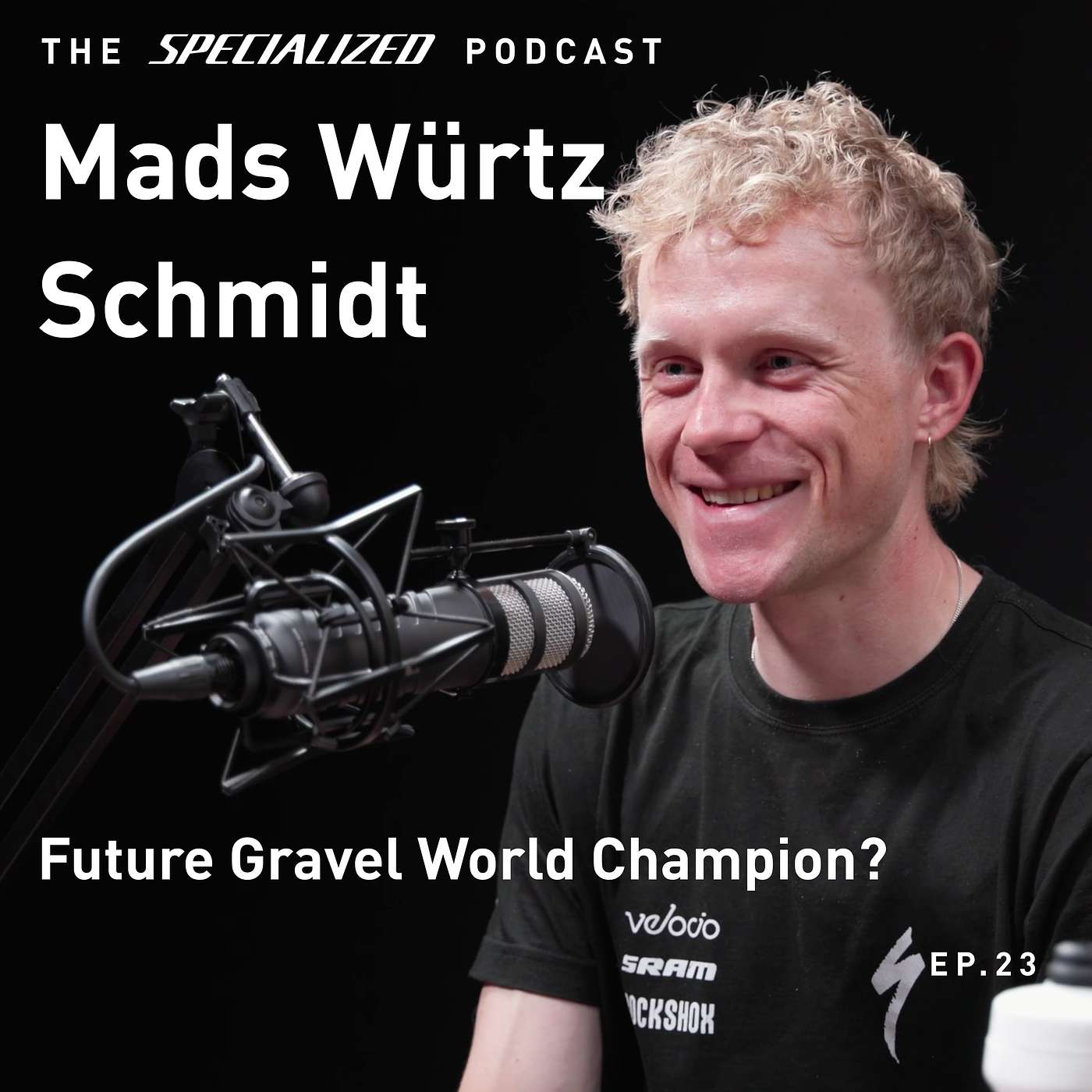
    Mads Würtz Schmidt | The Comeback that Rewrote Gravel.

    He was a junior world champion who battled injuries, stress, and a lost contract until he thought his career was over. So what pulled him back? In this episode, host Ben Capron sits down with Mads Würtz Schmidt, the Danish former WorldTour rider who rebuilt himself in gravel and is now the sport's most dominant force. Mads opens up about the years that nearly broke him. After one strong road season, injuries and setbacks piled up, the pressure he put on himself became too much, and stress pushed him out of the sport entirely. When his contract wasn't renewed, he was devastated. The comeback is the heart of this conversation. Working with mindfulness coach Patrick Sweeney, supported by his fiancée, and becoming a father helped Mads let go of the past, control what he can control, and identify with the process rather than the results. He and his fiancée bet one year on gravel, went all in, and turned the gamble into a new life at the front of the sport. That reset changed how he races and how he lives. Mads explains why he no longer chases results but the daily work behind them, how structure became his best friend, and how a nearly three-year-old daughter who doesn't care whether he won or lost keeps him grounded through every high and low. The second big story is how Specialized Off-Road is rewriting gravel itself, turning a sport built on every-rider-for-themselves into a team game. Mads describes racing alongside Keegan Swenson and Matt Beers, and how a group of riders coming from road and mountain backgrounds is changing the way gravel is won. He digs into the trust at the core of it. Mads brings WorldTour tactics to the team's race plans, and in the decisive moments his teammates rely on his read of the race, most memorably when he told Matt Beers it was go time and sat glued to his wheel while Beers buried the field. Becoming friends and sacrificing for each other, he says, is what makes the wins possible. The conversation also gets into equipment and craft. Mads admits he's no gear nerd, and cheerfully owns a costly tire mistake in the mud at Santa Vall. But he's learning fast from Keegan and Matt, chasing their lines on descents, and he's clearly sold on the new Crux 5: a true high-performance race bike that, paired with Terra aero wheels, carries speed, corners with confidence, and in his words, “rides like a weapon”. Along the way, Mads reflects on the pressure of early success as a junior world champion, watching his generation of Danish stars breakthrough while he felt left behind, and how learning to make friends with reality finally let him find the fire again. This is the story of a rider who rebuilt himself: not by chasing results, but by rediscovering his passion, and proving that the right people,the right mindset, and a team that races as one can turn setbacks into the ride of your life. This episode covers: The injuries, stress, and lost contract that nearly ended his career How mindfulness work with Patrick Sweeney helped him reset Why he identifies with the process, not the results How fatherhood reshaped his structure, priorities, and perspective The one-year bet on gravel that changed everything How Specialized Off-Road is turning gravel into a team sport Racing alongside Keegan Swenson, Matt Beers, and Sofia Gómez Villafañe What road racing taught him about tactics and trust The teamwork behind the decisive moves that win races Learning off-road technique and lines from Keegan and Matt Why the new Crux 5 and Terra Aero wheels feel like a weapon The pressure of early success and finally finding the fire again Get More from Specialized TikTok: @specializedbicycles Instagram: @iamspecialized Specialized MTB Instagram @iamspecialized_mtb Specialized Factory Racing Instagram: @specialized_factoryxc Facebook: specializedbicycles Outride: @outride

    • Transcript
  • S1 · E22
    July 1 · 41 min

    Tarmac SL9 | Engineered to Win

    The Tarmac SL8 is already the winningest bike in the WorldTour. So how do you make it faster? In this episode, guest host Ben Edwards sits down with members of the Specialized engineering and product team at the global press launch for the new S-Works Tarmac SL9 on the Costa Brava. Ben is joined by Lio Bardina, aero engineer; Denis Kürner, senior design engineer for road performance bikes and lead engineer on Tarmac; and Alex Jerome, category leader for road and gravel products. Together, they go deep inside the development of the new S-Works Tarmac SL9, a bike engineered to be the fastest to the finish in the more aggressive road racing of today and the future. The team explains why the goal was not simply to make the lightest bike or the most aero bike, but the fastest bike to the finish line. That meant using the equation of speed to optimize aerodynamics, weight, rolling resistance, ride quality, handling, stiffness, and real-world rider data to deliver the fastest time to finish and the Tarmac promise: ‘One Bike to Rule Them All’. They discuss how racing has changed since the launch of the Tarmac SL8, with higher speeds, longer breakaways, and decisive race moments happening farther from the finish. Those changes shaped the design of the SL9, including its narrower Speed Sniffer head tube, reshaped Flow Fork with deeper, inwards twisted fork blades, dropped downtube, S-Works Rapide aero seatpost, Win Fin, and refined tube shapes. The team explains why the Tarmac doesn’t need to look like a trending aero bike to be the fastest bike in the world. Rather than designing for appearance or optimizing for the fastest bike without a rider on it, Specialized modeled what actually determines time to finish: WorldTour courses, rider power files, real wind angles, rolling resistance, and data from the velodrome, road, and the WinTunnel, including testing with a moving-leg mannequin. One example makes the impact clear: based on simulation of Demi Vollering’s 2024 Tour de France Femmes performance, the SL9 could have made her 14 seconds faster over the final 83 kilometers of the race. In a Tour decided by four seconds, that is the difference between losing and winning yellow. The episode also goes inside the engineering challenge of improving aerodynamics while preserving the ride quality athletes already loved on the SL8. The S-Works SL9 delivers four watts of aero savings at 45 kilometers per hour, while the frame gains just two grams, coming in at 687 grams. This is the story of how Specialized updated an icon: not by chasing a single number, but by building the fastest Tarmac ever for the moments that decide the biggest races in the world. This episode covers: How modern road racing has become faster and more aggressive Why long-range attacks and solo breakaways influenced the SL9 Why the goal was fastest to the finish, not simply lightest or most aero How the equation of speed shaped the development process Why real-world wind angles matter more than traditional aero assumptions How Specialized uses rider power files and race data in simulation Why the SL9 does not need to look like a traditional aero bike How the team achieved four watts of aero savings at 45 kilometers per hour How the new head tube, fork, seatpost, and Win Fin improve speed Why the moving-leg mannequin changed the way the bike was designed How athlete feedback shaped ride quality, handling, stiffness, and compliance What the SL9 simulation showed from Demi Vollering’s 2024 Tour de France Femmes Why small gains can decide the biggest races in the world Guests: Lio Bardina Denis Kürner Alex Jerome Subscribe to Specialized Bicycles on YouTube for more conversations with the engineers, athletes, and creators shaping the future of cycling. Get More from Specialized TikTok: @specializedbicycles Instagram: @iamspecialized Specialized MTB Instagram @iamspecialized_mtb Specialized Factory Racing Instagram: @specialized_factoryxc Facebook: specializedbicycles Outride: @outride

    • Transcript
  • S1 · E21
    June 25 · 41 min

    Mads Würtz Schmidt | How He Won Unbound

    Mads Würtz Schmidt came to Unbound with one clear goal: to win. Then he delivered one of the biggest victories of his career. In this episode, host Ben Capron sits down with Mads shortly after the race to hear the story of his Unbound victory in his own words. Mads takes us inside the race, from the early positioning and shifting dynamics at the front to the decisive moments that shaped the finish. He explains what was happening in the lead group, how he managed the pressure and uncertainty of a race this long, and when he began to believe the win was possible. The most dramatic moment came when a mechanical problem threatened to end his day. Teammate Keegan Swenson stopped, offered Mads his wheel, and gave him a simple instruction: take my wheel, then go win. Mads tells the full story of the exchange—including how, in the urgency of the moment, he threw his own wheel onto the ground without considering that Keegan would still need it. Keegan was left behind to sort out the mess while Mads returned to the race. The moment revealed something bigger than tactics. Keegan is one of the greatest gravel racers in the world, but he was willing to sacrifice his own race for the good of the team. Mads explains what that gesture meant to him and why the victory belonged to more than one rider. Mads also talks about the physical and mental demands of Unbound, the importance of staying calm when plans begin to unravel, and how preparation creates the confidence to make clear decisions deep into a long and unpredictable race. They discuss the growing role of teamwork in gravel, how riders balance individual ambition with collective goals, and why racing as a true team can create opportunities that no rider could produce alone. This is the inside story of how Mads Würtz Schmidt won Unbound: a race shaped by preparation, composure, sacrifice, and one teammate telling another to take his wheel and go win. This episode covers: How Mads approached Unbound with the goal of winning What he remembers most clearly from the race How the decisive moments developed at the front The mechanical problem that nearly ended his chances Why Keegan Swenson stopped and gave Mads his wheel What happened during the chaotic wheel exchange How Mads returned to the race after the mechanical Why Keegan’s sacrifice represented true teamwork How Mads managed the pressure and uncertainty of Unbound When he began to believe he could win How preparation creates confidence during a long race Why composure matters when the original plan falls apart How team tactics are changing professional gravel racing The balance between individual ambition and team success Why the Unbound victory belonged to the entire team Guest: Mads Würtz Schmidt Follow Mads: Instagram: madswurtzschmidt Subscribe to Specialized Bicycles on YouTube for more conversations with the engineers, athletes, and creators shaping the future of cycling. Get More from Specialized TikTok: @specializedbicycles Instagram: @iamspecialized Specialized MTB Instagram @iamspecialized_mtb Specialized Factory Racing Instagram: @specialized_factoryxc Facebook: specializedbicycles Outride: @outride

    • Transcript
  • S1 · E20
    June 6 · 48 min

    Lael Wilcox | Around the World, Faster Than Anyone

    Lael Wilcox is one of the greatest ultra-endurance cyclists ever. She holds the women’s record for the fastest ride around the world, has set records on the Tour Divide, Trans Am, Baja Divide, and so much more. She's also helped reshape what is possible in bikepacking, especially for women. This episode was recorded days before Lael's attempt to go around the world a second time, faster than anyone. In this episode, host Ben Capron sits down with Lael to talk about the spirit behind her attempt. Not just the miles, logistics, equipment, or record, but the mindset that lets someone take on a challenge this big and still keep it joyful. Lael shares how ultra-endurance cycling has changed as more women enter the sport and raise the level of competition. She talks about riding to the Tour Divide from Alaska, getting stuck in peanut butter mud, working through dark moments, and learning that not all suffering is useful. Her approach is simple and powerful: if you are doing your best, let it go. If you want to quit, you can always quit later. They also get into her 2024 around-the-world ride, why she turned it into a rolling invitation for people to join. This time the route is faster, the pace is higher, the support crew is bigger, and the goal is clear: ride around the world faster than anyone ever has. Along the way, Lael and Ben talk about comfort as performance, why sleep and fueling make you faster, the role of the Specialized Roubaix in her around-the-world setup, and why women can compete at the highest level in ultra-distance cycling. They also discuss GRIT, the girls’ cycling mentorship program Lael started to help young riders build confidence, adventure, and independence through bikes. This episode covers: Why Lael is going back around the world to chase the overall record How her 2024 ride became a rolling party with everyone invited Why ultra-endurance is changing as more women enter the sport What it means to compete without losing joy Why suffering is not the point How Lael works through dark moments on the bike The meaning behind “you can always quit later” Why comfort is performance in ultra-distance riding How sleep, fueling, and recovery can make riders faster Why Roubaix was the right bike for riding around the world How Lael thinks about equipment, efficiency, and durability Why women can compete at the highest level in ultra-distance cycling How GRIT helps young girls build confidence through bikes Why bikes can expand what people believe is possible Guest: Lael Wilcox Follow Lael: Instagram - @laelwilcox Subscribe to Specialized Bicycles on YouTube for more conversations with the engineers, athletes, and creators shaping the future of cycling. Get More from Specialized TikTok: @specializedbicycles Instagram: @iamspecialized Specialized MTB Instagram @iamspecialized_mtb Specialized Factory Racing Instagram: @specialized_factoryxc Facebook: specializedbicycles Outride: @outride

    • Transcript
  • S1 · E19
    May 28 · 42 min

    Crux 5 | The Equation of Gravel Speed

    Gravel racing has changed. What used to feel like an endurance event has become a full-speed race, with stronger athletes, higher speeds, sharper tactics, and bigger consequences for every equipment choice. Crux has always been loved for its light weight, lively ride, and pure race feel. But as gravel racing got faster, Specialized had to answer a harder question: how do you make Crux faster without losing what riders already love about it? In this episode, guest host Ben Edwards sits down with Leo Cadena, Doug Russell, and Alex Jerome just north of Barcelona to go inside the creation of Crux 5. They discuss the evolution of gravel racing, the shift from cyclocross roots to a dedicated gravel race platform, and the engineering work behind making a bike that is not simply light or aero, but faster against the only metric that matters: time to finish. They get into Specialized’s equation of speed, Formula 1 style simulation, moving-leg mannequin wind tunnel testing, race-course telemetry, tire rolling resistance, 55 mm tire clearance, the new Terra cockpit, Terra wheels, and the challenge of preserving the Crux ride feel while building a faster bike for modern gravel racing. This episode covers: How gravel evolved from an event into a race Why Crux 5 was built as a dedicated gravel race bike The equation of speed and why time to finish matters most How Specialized balances aero, weight, rolling resistance, and ride quality Why bike-only aero testing does not tell the full story How moving-leg mannequins make wind tunnel testing more realistic How race telemetry from Unbound and other courses shapes product decisions Why tire choice and tire clearance can decide a race The role of 50 mm and 55 mm tires in modern gravel performance How Crux 5 became 15.2 watts faster than Crux 4 Why the new Terra cockpit matters for comfort, control, and aero efficiency How Crux 5 keeps the light, lively ride that made Crux so loved What simulated Unbound time savings reveal about real race performance Why the future of gravel race bikes is about systems, not isolated numbers Guests: Leo Cadena, Doug Russell, Alex Jerome Get More from Specialized TikTok: @specializedbicycles Instagram: @iamspecialized Specialized MTB Instagram @iamspecialized_mtb Specialized Factory Racing Instagram: @specialized_factoryxc Facebook: specializedbicycles Outride: @outride

    • Transcript
  • S1 · E18
    May 14 · 42 min

    Outride | Science Says Ride to Think Better and Feel Better

    What if science proved what riders already know? That riding clears your head. Sharpens your focus. Improves your mood. Connects you to yourself, to others, and to the world around you. In this episode of the Specialized Podcast, host Ben Capron sits down with Esther Walker, Executive Director of the Outride Foundation, to explore the growing body of research showing how riding bikes positively impacts brain health, mental well-being, cognitive performance, and human connection. Outride began with a simple question inspired by Specialized founder Mike Sinyard after reading an article titled Cycling Is My Ritalin: could riding a bike measurably improve focus and cognitive function, particularly for people with ADHD? That question launched years of scientific research in partnership with institutions like Stanford University and helped spark programs that have now reached more than 400 schools and impacted more than 500,000 students across North America. Rather than hype or speculation, this episode offers a human and science-backed look at why riding helps us think, feel, and flourish,covering: How riding improves focus, executive function, mood, and stress regulation Why consistency matters more than intensity when it comes to brain health How Stanford researchers measured real-time brain activity while riding The connection between cycling, neuroplasticity, memory, and reduced dementia risk How Riding for Focus brings bikes, helmets, curriculum, and teacher training into schools The power of confidence, skill building, and joy in helping students flourish Stories from communities like the Navajo Nation, where bikes are opening new pathways for health, connection, and opportunity How programs like Silver Stallion Bicycle & Coffee Works help sustain cycling culture through service, skills, and community Why athletes like Demi Vollering, Christopher Blevins, and Haley Batten help amplify the Outride mission How riders, schools, communities, brands, and volunteers can all help more people experience the benefits of cycling Whether you ride every day, support young riders, work in education, or simply believe bikes can change lives, this conversation is a reminder that riding is more than fitness or speed. It is a powerful tool for focus, connection, confidence, and well-being. Follow Outride: @outride Subscribe to Specialized Bicycles on YouTube for more conversations with the engineers, athletes, and creators shaping the future of cycling. Get More from Specialized TikTok: @specializedbicycles Instagram: @iamspecialized Specialized MTB Instagram @iamspecialized_mtb Specialized Factory Racing Instagram: @specialized_factoryxc Facebook: specializedbicycles Outride: @outride

    • Transcript
  • S1 · E17
    May 8 · 1 hr 3 min

    Body Geometry | Remco’s Secret to More Power and Less Pain.

    How do top pros like Remco Evenepoel and Demi Vollering stay powerful, efficient, and pain-free for hours at race intensity? They do not leave fit to chance. They rely on ergonomically designed, scientifically proven Body Geometry bike fit and products built to increase performance and comfort. In this conversation about power, pain, fit, science, and the ergonomic advantage behind the fastest riders in the world, guests Jason Williams and Ashley Sult explain how Body Geometry became one of Specialized’s biggest performance advantages. They get into the origin of Body Geometry, why Specialized started studying the rider as much as the bike, and how fit data drives the product development of saddles, shoes, gloves, handlebars, and frame geometry. Ashley explains what happens when contact points are wrong, how small problems compound over time, and why the right support and adjusting the bike to fit the body improves comfort, reduces injury risk, and help riders produce power more efficiently by being more comfortable. Together, they call bullshit on old adages like “no pain, no gain”, and they make complex science understandable to identify and solve common problems like pain in the posterior, feet, neck and hands, and losing power through poor fit. They also cover the process Specialized uses to design products around the human body. This episode covers: Why virtually every rider loses power through poor fit Why better comfort translated to better performance How rider data informs product development What professional athletes reveal about fit at the highest level, and what that means to you Why the best equipment helps the bike disappear beneath the rider How Body Geometry helps riders reduce pain and improve performance Why Remco, Demi, and many top pros rely on precise fit and ergonomic products Why rider pain is not something to suffer through How Body Geometry started and why it became core to Specialized Why fit, product, and performance have to work together What the varus wedge does and why foot alignment matters How longitudinal arch support and the metatarsal button improve foot stability Why saddle width, shape, and pressure mapping matter for real riders GUESTS: Jason Williams and Ashley Sult Subscribe to Specialized Bicycles on YouTube for more conversations with the engineers, athletes, and creators shaping the future of cycling. Get More from Specialized TikTok: @specializedbicycles Instagram: @iamspecialized Specialized MTB Instagram @iamspecialized_mtb Specialized Factory Racing Instagram: @specialized_factoryxc Facebook: specializedbicycles Outride: @outride

    • Transcript
  • S1 · E16
    April 28 · 55 min

    Epic 9 | Creating the Fastest XC Bike Ever

    You know Christopher Blevins from his record-breaking 2025 season, where he finished #1 in UCI XC points, claimed both the XCO and XCC overall titles, and helped the Specialized Factory XC Team sweep the World Cup podium twice aboard Epic 8. So why change the bike? Because lead engineer Jason McDonald and the rest of the Specialized Science Club knew they could make it faster. In this episode, Jason explains how the team started with Epic 8’s world-beating benchmark, then removed what held it back: 206 grams gone, making Epic 9 the lightest full-suspension XC race bike on the planet. Then he gets into how suspension friction was cut by 11%, how kinematics were optimized, and how it all adds up to unmatched efficiency, capability, and speed per watt. Christopher shares what modern World Cup XC racing demands at full speed, how Epic 9 feels on course, and why control, confidence, and composure now matter as much as efficiency and weight. This episode covers: • Why Specialized built Epic 9 after Epic 8’s dominant season • What actually slows riders down in modern XC racing • What “Made In Racing” actually means: turning data, rider feedback, and engineering into speed • The engineering behind the 1,589 g frame • Why lighter only matters if the bike stays fast, controlled, and composed • How Epic 9 blends Epic World Cup crispness with Epic 8 capability • The role of 11% lower pivot friction in ride feel and traction • How Wide Open, Magic Middle, and Sprint-On-Lock damping settings work in real racing • Why efficiency is more than stiffness and weight • How Body Geometry data shaped Epic 9 fit and handling • What Christopher feels when the bike disappears and flow takes over It is a conversation about speed, science, flow, and devotion beyond reason to making the fastest XC bike in the world even faster. GUESTS: Christopher Blevins and Jason McDonald Get More from Specialized TikTok: / specializedbicycles Instagram: / iamspecialized Facebook: https://www.fb.com/specializedbicycles Outride: / outride

    • Transcript
  • April 22 · 1 hr 17 min

    Finn Iles | Ride To Redemption

    Setbacks do not always stop the story. If we have the grit, they become the path to become better than ever. For downhill phenom Finn Iles, the past couple seasons have been painful, frustrating, and shaped by an invisible back injury that forced him to rethink how he trains, prepares, races, and lives. And that is exactly what makes this moment so compelling. He is healthier, hungrier, and faster than ever and ready to send it in 2026 with purpose. In this episode of the Specialized Bicycles Podcast, Ben Capron sits down with Iles for a direct conversation about the love of riding, freedom, flow, the long road back, and why he enters 2026 humble, hungry, and ready to win. The story moves from growing up in British Columbia, chasing his brother through some of the best riding on earth, to becoming a Junior World Champion, a World Cup winner, and one of the most thoughtful riders in downhill racing. But more than results, this conversation reveals what drives him. Riding is where the noise disappears. It is where the mind clears and the feeling of freedom takes over. But this is not just about talent. It is about devotion to process. Finn makes it clear that process is everything. The work behind the scenes. The routine. The repetition. The discipline to check every box so that when the gate drops, the mind is free. For him, preparation is not separate from performance. It is the thing that makes performance possible. That is what makes this episode hit harder. The obstacle became the path. Injury forced patience. Pain forced awareness. And the comeback has been built the same way Finn approaches racing itself: deliberately, honestly, and one step at a time. He talks openly about learning to trust the process, trust the people around him, and rebuild without rushing, all so he can come back stronger. The conversation also goes inside the development of the new Demo 11, a project Finn has helped shape over multiple seasons. From prototype bikes to production bike, from endless testing to finally having a stable platform to build from, he describes the process as one of the most amazing things he’s done in his career. That matters here, too. It is another expression of the same mindset: keep building, keep refining, keep earning speed. And now the focus sharpens. Val di Sole. A decade after winning Junior Worlds there, Finn heads toward 2026 motivated, healthier, and with a track that suits him in his sights. After everything he dealt with in 2025, he sounds like a rider who has done the work, learned from the setback, and is ready to win. This episode goes beyond racing, covering: Why downhill feels like freedom How to clear the mind for ultimate performance Why preparation is the foundation of speed What really happens in the start gate How injury changed his body, mindset, and process Why the obstacle became the path What 2025 taught him through pain and setbacks Why Val di Sole matters so much in 2026 The role Finn has played in developing Demo 11 Why redemption is earned through the work It is a conversation about freedom, preparation, resilience, and the road back to winning. Get More from Specialized TikTok: @specializedbicycles Instagram: @iamspecialized Specialized MTB Instagram @iamspecialized_mtb Specialized Factory Racing Instagram: @specialized_factoryxc Facebook: specializedbicycles Outride: @outride

    • Transcript
  • S1 · E14
    April 22 · 57 min

    Loïc Bruni | Faster Than Fear

    When the gate drops, hesitation loses. And Super Bruni wins when it matters most. A five-time World Champion and one of the fastest downhill racers in history, Loïc Bruni has built his career on precision, composure, and the rare ability to deliver when the pressure is highest. In this episode of the Specialized Podcast, Ben Capron sits down with Bruni for a direct conversation about speed, pressure, and the mindset behind championship performance. The story moves from growing up in the south of France, surrounded by the roots of downhill racing, to becoming one of the sport’s defining riders. From there, it goes inside the mental demands of downhill, the pursuit of flow state, and developing the Demo 11 in pursuit of finding more speed when the margins are almost nothing. But this is not just about racing. It is a philosophy. Feel. Trust yourself. Commit fully. From fear and focus to redemption, mind games, and the balance between obsession and joy, Bruni shares what it takes to stay fast, keep evolving, and show up when it matters most. The conversation also goes inside the development of the new Demo 11, a no-compromise race bike built through deep trust between rider and brand, and a process focused on one thing: maximum speed. This episode goes beyond racing, covering: What downhill racing really demands What happens in Bruni’s mind before the gate drops Why flow state cannot be forced The pressure and heartbreak of the 2025 season What redemption looks like in 2026 Growing up in the heart of European downhill The influence of Nico Vouilloz and technical obsession How Bruni balances focus, fun, and longevity The mindset behind winning runs The development of Demo 11 It is a conversation about pressure, precision, and performing when it matters most. Subscribe to Specialized Bicycles on YouTube for more conversations with the engineers, athletes, and creators shaping the future of cycling. Get More from Specialized Get More from Specialized TikTok: @specializedbicycles Instagram: @iamspecialized Specialized MTB Instagram @iamspecialized_mtb Specialized Factory Racing Instagram: @specialized_factoryxc Facebook: specializedbicycles Outride: @outride

    • Transcript
  • S1 · E13
    April 14 · 1 hr 5 min

    Mike Sinyard | Innovate or Die

    He sold his VW bus to ride across Europe. That decision changed cycling forever. Mike Sinyard didn’t set out to build Specialized. He set out to ride. He sold his VW bus and rode through Europe. What came back was something bigger. A way of seeing the world. The start of Specialized. And a relentless belief that the bicycle can change the world. In this episode of the Specialized Podcast, Ben Capron sits down with Sinyard for a direct conversation about where it all began, and what still drives him today. The story moves from the freedom of early childhood rides, to importing Italian components, to building the first Specialized products designed to solve real problems for riders. From there, it tracks the launch of the Stumpjumper and the birth of mountain biking as we know it, and into becoming one of the winningest brand across all major disciplines, including winning the Tour de France. But this is not just a history lesson. It is a philosophy. Innovate or Die. The Rider Is the Boss. Do the Right Thing. Use science to make it better. From Body Geometry to World Cup racing to the rise of Turbo electric bikes, Sinyard shares how these ideas have shaped every chapter of Specialized. Along the way, the conversation expands beyond product into something bigger. The power of the bicycle to change health, mindset, and the trajectory of people’s lives. The work of Outride. And the belief that bikes can pedal the planet forward. The episode closes where it began. With a simple idea. Ride a bike. Change your life. This episode goes beyond origin stories, covering: How a trip through Europe sparked Specialized Why the first product was a tire, and what it taught him The launch of the Stumpjumper and the birth of mountain biking The philosophy behind “Innovate or Die” How Body Geometry redefined comfort, performance, and health Why racing remains essential to innovation The vision behind Turbo and the rise of electric bikes The mission of Outride and the connection between bikes and the brain What the bicycle can do for humanity What still inspires him after 50 years It is a conversation about freedom, innovation, and the enduring power of the bicycle. Get More from Specialized Get More from Specialized TikTok: @specializedbicycles Instagram: @iamspecialized Specialized MTB Instagram @iamspecialized_mtb Specialized Factory Racing Instagram: @specialized_factoryxc Facebook: specializedbicycles Outride: @outride

    • Transcript
  • S1 · E12
    April 9 · 1 hr

    Rob Roskopp | Raw and Unfiltered.

    Rob Roskopp was a driving force during skateboarding’s most explosive era as a skater and in business. Later he brought that same raw, instinctual approach into mountain biking, building, growing, and exiting a rider-driven brand along the way. In this episode of the Specialized Bicycles Podcast, Ben Capron sits down with Roskopp for a direct conversation about creativity, risk, and what it means to stay authentic while building a business for riders. His story moves from the hardcore originality of early skate culture to ripping on dirt, to bringing that same mindset into product and business. Trusting feel. Backing riders. Creating things that actually make riding better. Today, that path has led him to Specialized, where he helps advance mountain bike product and contribute to strategy. Along the way, he reflects on identity, progression, and growing a business while staying true to what matters. The conversation closes on something simple, but timely. Less hate. More connection. More shared stoke. This episode goes beyond origin stories, covering: How skate culture shaped his approach to riding, product, and business Why instinct and feel still matter in modern product development What it takes to grow without losing authenticity His current work advancing mountain bike product at Specialized Why positivity and shared experience matter more than ever It is a conversation about edge, evolution, and building for riders, then and now. Get More from Specialized TikTok: @specializedbicycles Instagram: @iamspecialized Specialized MTB Instagram @iamspecialized_mtb Specialized Factory Racing Instagram: @specialized_factoryxc Facebook: specializedbicycles Outride: @outride

    • Transcript
  • S1 · E11
    March 31 · 1 hr 4 min

    Christopher Blevins - Presence & Performance

    You likely know Christopher Blevins from his celebrated career in cross-country racing that culminated in a record-breaking 2025 season, where he finished #1 in UCI XC points and claimed both the overall XCO and XCC titles. What you may not know is the process behind that success, the mindset that shaped it, and the deeper ‘why’ that keeps driving him forward. In this episode of the Specialized Bicycles Podcast, Ben Capron sits down with Christopher for an open conversation about the season that changed everything, the inner work that made it possible, and his goals for the future. His story moves from growing up in Durango and racing BMX as a kid, to finding his way through doubt and reconnecting with his purpose, to becoming one of the most thoughtful and dynamic riders in any sport. Along the way, he reflects on the part he plays in R&D at Specialized, creativity, community, and the role mindfulness plays in helping him perform at his best. The conversation also looks ahead to what’s next, including his goals for 2026, and the 2028 Olympics. This episode goes further than race results, covering: • What stood out most from his landmark 2025 season • How process, presence, and adaptability shaped his success • The role of mindfulness in racing and daily life • How BMX, road, and XC each helped form him as a rider • His goals for 2026 and the road to the 2028 Olympics • Why community, creativity, and service matter beyond competition It is a conversation about flow, focus, and the deeper purpose behind one of the most compelling and inspirational riders in sport. GUEST: Christopher Blevins Follow Christopher Blevins Instagram: @christopherblevs Get More from Specialized TikTok: @specializedbicycles Instagram: @iamspecialized Specialized MTB Instagram @iamspecialized_mtb Specialized Factory Racing Instagram: @specialized_factoryxc Facebook: specializedbicycles Outride: @outride

    • Transcript
  • S1 · E10
    March 26 · 1 hr 19 min

    The Fastest Gravel Wheels Ever Made.

    Go inside the design of the fastest gravel wheels ever made. Roval Category Leader Chris Wehan and Olympian + Unbound Champion Sofia Gomez Villafañe pull back the curtain on the development of Roval Terra Aero CLX and Terra CLX III—two wheels built for the fastest gravel races on earth. We break down Virtual 70 aerodynamics, real‑world tire + rim system performance, 21% more compliance, massive flat‑protection gains, and how these wheels influence race strategy at Unbound Gravel, Big Sugar, Sea Otter, the UCI Gravel World Championships, and more. If you’re into gravel tech, race‑day speed, equipment testing, or behind‑the‑scenes product development, this episode delivers the full story: the motivation, the engineering challenges, the breakthroughs, and the athlete feedback that shaped the final result. Topics we cover: • Why aero matters now in modern gravel racing • Virtual 70 and why Terra Aero is faster without going deeper • 21% compliance gains on Terra CLX III and where you feel them • Flat protection and why bead hook design can save your race • What Sofia feels on course—and how speed shows up in hour 5 and 6 • How Roval’s engineering team partnered with athletes from the very first prototype • Which wheel to choose for Unbound, Big Sugar, Worlds, or everyday gravel riding Featuring: Sofia Gomez Villafañe — Unbound Gravel Champion, Big Sugar winner, Olympian, Multi-time National Champion Chris Wehan — Category Leader, Roval Components, Pretty fast on a bike Built for the roughest terrain. Designed for the fastest riders. Developed for real‑world race conditions across Kansas, Arkansas, California, and every gravel course in between. Subscribe to Specialized Bicycles on YouTube for more conversations with the engineers, athletes, and creators shaping the future of cycling. Get More from Specialized TikTok: @specializedbicycles Instagram: @iamspecialized Facebook: specializedbicycles Outride: @outride

    • Transcript
  • S1 · E9
    March 3 · 32 min

    Demi Vollering. "You have a long life to go, you have to be careful with your body."

    You likely know Demi Vollering for her Tour de France Femmes victory, her run of classics wins and Grand Tours, and the way she has pushed the level of women’s racing with every season. What you may not know is how her journey began, the confidence she built on the way to her first win, and the goals that still drive her forward. In this episode of the Specialized Bicycles Podcast, guest host Ben Edwards sits down with Demi and Hannah Troop, S-Racing Road Liaison, for an open conversation about the path behind her success and the work that continues to shape her career. Her story moves from the moment she discovered cycling, to her fast rise through the women’s peloton, to the long‑standing partnership with Specialized and what that relationship means to her. Through it all she has helped elevate the sport while showing that staying healthy and grounded is essential for performing at the highest level. This episode goes further than her results, covering: • How Demi discovered cycling and her journey toward her first win • The key moments in her career and what she still dreams of achieving • How she prepares for her goals in the upcoming racing season • Her partnership with Specialized and how this connection helps her continue to improve • How women’s cycling has evolved and why athlete wellbeing matters more than ever It is a conversation about ambition, growth, and the mindset behind a champion who keeps finding new ways to rise. GET MORE FROM SPECIALIZED: Instagram: @iamspecialized Instagram: @iamspecialized_mtb TikTok: @specializedbicycles Facebook: specializedbicycles Subscribe to Specialized Bicycles on YouTube for more conversations with the engineers, athletes, and creators shaping the future of cycling. Outride Instagram: @outride

  • S1 · E8
    February 24 · 49 min

    Levo R: The Birth of Electric Rally | Guest Brian Gordon, Mountain Bike Product Manager

    Levo just became a family. With Levo R, Specialized introduces “Electric Rally”—full‑power e‑MTB that feels lighter, sharper, and more connected on trail, all while delivering the SuperNatural ride feel riders love. In this episode, host Ben Capron talks with Brian Gordon, Mountain Bike Product Manager at Specialized, about how full‑power e‑MTBs evolved from brute strength to intuitive control, what has to be true for a bike to feel SuperNatural, and how “usable power” shows up on steep tech climbs, loose-over-hard corners, and slick root webs. Together they map the Levo lineup: Levo 4 as Electric Trail (benchmark versatility and balance) and Levo R as Electric Rally (full power with rally‑car precision). From rider archetypes to real setup guidance, Brian breaks down who benefits most from each bike and why. Then they dive into Levo R’s three pillars: SuperNatural Power via the Turbo 3.1 system (up to 850 W peak and 111 Nm, metered with adaptive traction control), Super Agile through a purpose‑built 140/130 chassis, a frame that’s hundreds of grams lighter, rally‑ready spec, and the GENIE shock that delivers coil‑like comfort with bottom‑out control. They also cover practical details that matter every ride, like geometry adjust, storage, and serviceability. Finally, they demystify Super Range with a modular system—840 Wh, 600 Wh, and a 280 Wh extender—plus efficiency gains you can actually feel over long days. You’ll hear how to choose the right battery for your rides, why charging to 80% can extend longevity, and how Levo R’s efficiency translates to consistent support and less heat fade. The conversation ends where great rides begin: the emotional heart of Electric Rally and what the perfect Levo R day feels like. GUEST: Brian Gordon Mountain Bike Product Manager, Specialized GET MORE FROM SPECIALIZED: Instagram: @iamspecialized Instagram: @iamspecialized_mtb TikTok: @specializedbicycles Facebook: specializedbicycles Subscribe to Specialized Bicycles on YouTube for more conversations with the engineers, athletes, and creators shaping the future of cycling. Outride Instagram: @outride

  • S1 · E7
    February 17 · 48 min

    Levo 4: Better Over Time with Marco Sonderegger, Director of Turbo Technology

    The award-winning Turbo Levo 4 just got more powerful, smoother, and more customizable, thanks to an over-the-air update you can install right from the Specialized App. In this episode, host Ben Capron talks with Marco Sonderegger, Director of Turbo Technology at Specialized, for a deep dive into how Levo 4 continues to evolve, and what it really takes to create a SuperNatural ride feel. Alongside what’s new in the latest OTA update, up to 22% more peak power, more torque, refined control, and new personalization, Ben and Marco dig into the nuances behind the numbers: how rider feedback shapes real improvements, how to manage range as performance increases, and what features like MicroTune and overrun actually do on the trail. It’s a technical-yet-human, rider-first conversation about nuance, tradeoffs, and the thousands of decisions behind a ride that feels like “You, Only Faster.” GUEST: Marco Sonderegger Director of Turbo Technology, Specialized GET MORE FROM SPECIALIZED: Instagram: @iamspecialized Instagram: @iamspecialized_mtb TikTok: @specializedbicycles Facebook: specializedbicycles Subscribe to Specialized Bicycles on YouTube for more conversations with the engineers, athletes, and creators shaping the future of cycling. Outride Instagram: @outride

Showing 1–20 of 23 episodes