Skip to content
Artwork for The Morning Brief
NewsBusiness News

The Morning Brief

The Economic Times

To make sense of the week’s hottest stories in business, economy, politics and markets, journalists from the Economic Times chat with reporters and industry leaders in this thrice-weekly (Tuesday, Thursday, Friday) podcast.

Play
  • 80 episodes
  • Avg 21 min
  • English
Counted on this page — what you have heard stays on this device, so it is not something the list can be paged by.
  • #1067
    Today · 16 min

    Gold’s Fall: An Investment Opportunity or a Lending Nightmare?

    The spectacular gold rally has given way to a sharp correction. But beyond the investment opportunity lies a growing concern: India's ₹23 lakh crore gold loan market. Falling collateral values, margin calls and repeat borrowing are putting lenders and borrowers under pressure. ET's banking editor Sangita Mehta decodes the global forces driving gold prices, the RBI's concerns, the possibility of more jewellery auctions and how investors should approach gold. See omnystudio.com/listener for privacy information.

  • #1066
    Tuesday · 45 min

    Can India Lead the World’s Climate Revolution? | The Earthshot Prize

    Can fighting climate change become the world’s biggest economic opportunity? And can India lead that transformation? At a special conversation hosted by The Economic Times and The Earthshot Prize in Mumbai, four global leaders explore how India can turn climate innovation into solutions for the world. From the billions needed to finance the green transition to the politics of climate action, the discussion tackles some difficult questions. Can economic growth and sustainability go hand in hand? Why is climate finance failing developing economies? Who bears the cost of going green? And what will it take to turn promising innovations into global businesses? The Economic Times’ Executive Editor Sruthijith KK speaks with Jacinda Ardern, former Prime Minister of New Zealand; Jesper Brodin, former CEO of Ingka Group/IKEA and Chair of The Earthshot Prize; Shloka Nath, CEO of Dorahi; and Jason Knauf, CEO of The Earthshot Prize. Founded by Prince William, The Earthshot Prize supports groundbreaking solutions to the world’s most pressing environmental challenges. See omnystudio.com/listener for privacy information.

  • #1065
    Monday · 12 min

    From Consumers to Manufacturing: Nike's India Ambitions

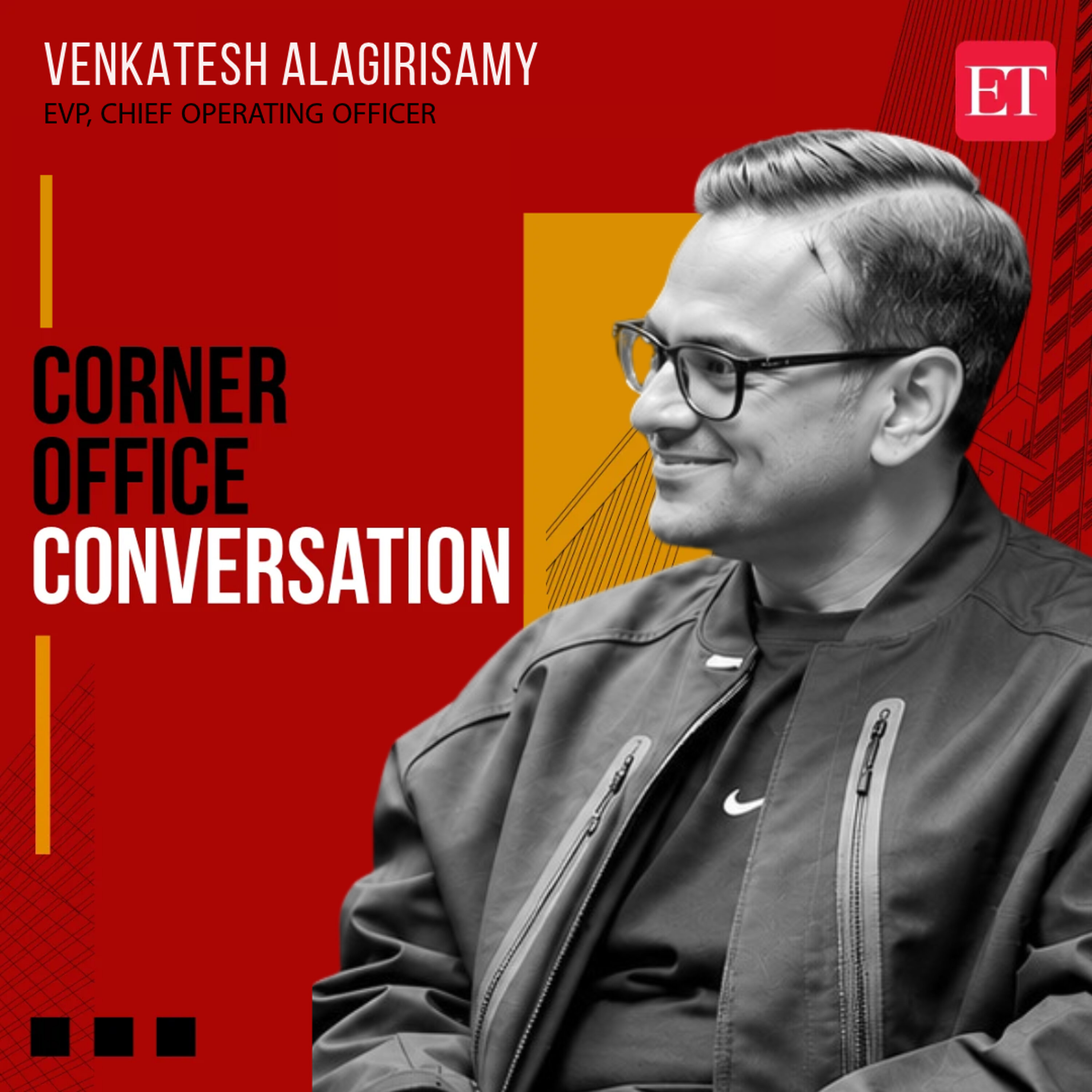
    “I see the opportunity in India as being able to touch 1.5 billion consumers and growing,” says Venkatesh Alagirisamy, Executive Vice President and Chief Operating Officer at Nike. India is now among Nike's 23 priority markets. With the Indian market valued at $9 billion, Nike expects it to grow by at least 10% annually over the next three years. But how does Nike plan to tap this opportunity? Can it balance its premium positioning with the demands of a price-sensitive market? And what role will localisation and manufacturing in India play in its growth strategy? In this Corner Office Conversation, Ratna Bhushan, National Corporate Editor at The Economic Times, speaks with Alagirisamy about Nike's growing focus on India, competition, pricing, its strategy to connect with Gen Z consumers, India-specific product innovation, manufacturing expansion and the country's role in Nike's global business. See omnystudio.com/listener for privacy information.

  • #1064
    November 20 · 17 min

    India's Crypto Crackdown: What the ED Raids Mean for Investors

    India taxes cryptocurrency but has yet to establish a comprehensive framework governing its trade and use. Now, Enforcement Directorate investigations into CoinDCX and Delta Exchange have raised fundamental questions about how cryptocurrencies enter India. Meanwhile, crypto futures offer leverage of up to 100 times, and digital assets are quietly finding their way into everyday payments through cards and UPI QR codes. Anirban Chowdhury speaks to ET's Sugata Ghosh about the regulatory grey areas, the risks of crypto derivatives, potential tax loopholes and why India's policymakers remain behind the curve. Could the latest investigations threaten the future of crypto trading in India? See omnystudio.com/listener for privacy information.

  • #1063
    November 17 · 24 min

    Inflation at 6%: Is the RBI Losing Control?

    India's inflation has crossed the RBI's 6% tolerance ceiling. Food prices are climbing, household incomes are under pressure, and the central bank's response is under scrutiny. Has the RBI fallen behind the curve? Why does raising interest rates not necessarily make groceries cheaper? And who holds the central bank accountable when it misses its inflation target? Host Anirban Chowdhury speaks to economist and Associate Professor of Economics, Indira Gandhi Institute of Development Research (IGIDR), Rajeswari Sengupta about the RBI's policy dilemmas, questionable inflation forecasts, contradictory interventions in financial markets, and the growing tension between inflation and economic growth. Most importantly, they examine why ordinary Indians deserve greater transparency from the institution tasked with protecting their purchasing power. See omnystudio.com/listener for privacy information.

  • #1062
    November 13 · 26 min

    The AI Boom Hits a Political Wall. Can India Cash In?

    America voted blue. AI stocks bled red. And the world's biggest technology companies suddenly face a problem money alone cannot solve: public resistance. The US midterm elections have turned massive AI data centres into political battlegrounds, with voters protesting soaring electricity bills, water consumption and unchecked expansion. Could this derail America's AI ambitions and redirect billions in investment towards India? Or will China emerge stronger in the global AI race? Dia Rekhi speaks to Alex Tanenbaum, partner at Torys LLP about the political backlash threatening Silicon Valley's infrastructure boom, the risks confronting investors and India's opportunity to capitalise on the disruption. Credits Al Jazeera English CNN-News18 India Today NBC News Our Rich Journey 12 News Finance Stack Nick Bencino Finance Nick Bencino Markets See omnystudio.com/listener for privacy information.

  • #1061
    November 12 · 27 min

    Liquid Biopsy: Catching Cancer Early With a Simple Blood Test

    In 2010, scientists Catherine Alix-Panabières and Klaus Pantel coined the term “liquid biopsy”, which Nature later named one of the key cancer discoveries of the last 20 years. Their blood-based approach can detect cancer early, spare patients painful needle biopsies, help doctors choose the right therapy and flag when a treatment stops working. Professor Pantel says a $1,000 test could save around $10,000 in ineffective treatment. In this conversation with The Economic Times pharma editor Vikas Dandekar, they explain why adoption is still slow, how India can take a bigger role in global clinical trials, and how immunotherapy and AI could shape the future of cancer care. Listen in See omnystudio.com/listener for privacy information.

  • #1060
    November 10 · 32 min

    Why Youth Are Taking to the Streets: From Paris to Belgrade to India

    In this Morning Brief conversation, Dia Rekhi speaks with political scientist and and researcher at CERI, Sciences Po Paris Gilles Verniers about the wave of youth-led protests sweeping the globe. Starting with France’s student-led movement, they explore why young people anchor these uprisings, whether “Gen Z” is too simple a label, and how economic anxiety, shrinking opportunity and AI-driven job fears connect movements from Paris to Serbia to India’s Cockroach Janata Party. Vernier also discusses electoral conversion, why authenticity beats youth-speak in politics, how AI is reshaping campaigns, and why minority protests remain legitimate in a democracy. He closes by declining to predict where they lead. Listen In Check out other interesting episodes like - Cognizant’s Surya Gummadi on How AI Can Deliver Returns, The Future of Insurance in India | Sarbvir Singh of PB Fintech, Groww’s ₹6,600 Cr Leap - Fintech’s Big Market Test Begins , OML CEO on the Creator Economy’s Next Wave & much more. Catch the latest episode of ‘The Morning Brief’ on The Economic Times Online, Spotify, Apple Podcasts, JioSaavn, Amazon Music and Youtube. See omnystudio.com/listener for privacy information.

  • #1059
    November 9 · 29 min

    OpenAI's India Bet: From ChatGPT Users to AI-Powered Businesses

    India has become ChatGPT’s largest market by weekly active users. But can OpenAI turn that extraordinary reach into a sustainable business? In this conversation with The Economic Times’ tech editor Surabhi Agarwal, OpenAI India Managing Director Prabhjeet Singh discusses the shift from AI experimentation to enterprise adoption, the challenge of monetising Indian users, and the company’s growing investments in local infrastructure. He also addresses competition from technology giants, the rise of autonomous AI agents, ChatGPT advertising, cybersecurity risks and India’s push for AI sovereignty. As AI valuations soar, can real-world adoption justify the enormous investments being made? Listen In You can follow Anirban Chowdhury on his social media: X and Linkedin Check out other interesting episodes like - Cognizant’s Surya Gummadi on How AI Can Deliver Returns, The Future of Insurance in India | Sarbvir Singh of PB Fintech, Groww’s ₹6,600 Cr Leap - Fintech’s Big Market Test Begins , OML CEO on the Creator Economy’s Next Wave & much more. Catch the latest episode of ‘The Morning Brief’ on The Economic Times Online, Spotify, Apple Podcasts, JioSaavn, Amazon Music and Youtube. See omnystudio.com/listener for privacy information.

  • #1057
    November 5 · 19 min

    India's Banks Under Cyberattack: How AI Is Changing the Game

    India's rapidly expanding financial ecosystem faces a growing cybersecurity challenge. While large banks have invested heavily in protecting their systems, fintech companies and non-banking financial institutions remain vulnerable to increasingly sophisticated attacks. Artificial intelligence is changing the economics of cybercrime, allowing attackers to identify weaknesses faster, at significantly lower costs and on a much larger scale. Anirban Chowdhury speaks to Yash Kakadia, founder of Security Brigade, about how these attacks work, the vulnerabilities within financial technology infrastructure, the limitations of compliance-driven security, and whether India's regulators and financial institutions can keep pace with an accelerating threat. You can follow Anirban Chowdhury on his social media: X and Linkedin Check out other interesting episodes like: How Will a Volatile ₹ Impact You in 2026?, How Quick Commerce is Triggering a Health Crisis for Gen Z, Two Women Fought to Change India's Maternity Laws...and Succeeded, Can India Truly End Naxalism?, Semaglutide Goes Generic: Big Pharma’s Moat Breaks and much more. Catch the latest episode of ‘The Morning Brief’ on The Economic Times Online, Spotify, Apple Podcasts, JioSaavn, Amazon Music and Youtube. See omnystudio.com/listener for privacy information.

  • #1056
    November 3 · 18 min

    The Cancer Drug Price Trap

    Why does a cancer injection bought by a hospital for ₹11,000 end up costing a patient ₹1.3 lakh? India’s drug pricing system is under scrutiny as the government caps trade margins on hundreds of cancer medicines at 30%. While prices of several drugs have fallen sharply, nearly one in four packs has seen no reduction. And a 30% margin still allows a markup of nearly 43% over the manufacturer’s price. So who profits from expensive medicines? Why have previous interventions failed? And will the latest price cuts actually bring relief to patients? Anirban Chowdhury talks to ET's pharma editor Vikas Dandekar. Listen in: You can follow Anirban Chowdhury on his social media: X and Linkedin Check out other interesting episodes like: How Will a Volatile ₹ Impact You in 2026?, How Quick Commerce is Triggering a Health Crisis for Gen Z, Two Women Fought to Change India's Maternity Laws...and Succeeded, Can India Truly End Naxalism?, Semaglutide Goes Generic: Big Pharma’s Moat Breaks and much more. Catch the latest episode of ‘The Morning Brief’ on The Economic Times Online, Spotify, Apple Podcasts, JioSaavn, Amazon Music and Youtube. See omnystudio.com/listener for privacy information.

  • #1055
    November 2 · 36 min

    AI Agents Are Breaking the Internet’s Ad Model

    When AI agents book your flights, buy your groceries and pick your hotels, no one is scrolling, and no one sees an ad. So how does the internet make money? Lightspeed India partners Harsha Kumar and Hemanth Mohapatra explain which purchases agents will take over and which will stay human. They also cover why you can’t upsell an AI agent, what that means for the ad-based internet, and why India may prefer paying per outcome over subscriptions. They make the case for vertical AI built for tier-two and tier-three India, compare today’s AI wave with the dot-com era, and share how they use AI assistants themselves. Tune in. You can follow Himanshi Lohchab on her social media: X and Linkedin Check out other interesting episodes like: How Will a Volatile ₹ Impact You in 2026?, How Quick Commerce is Triggering a Health Crisis for Gen Z, Two Women Fought to Change India's Maternity Laws...and Succeeded, Can India Truly End Naxalism?, Semaglutide Goes Generic: Big Pharma’s Moat Breaks and much more. Catch the latest episode of ‘The Morning Brief’ on The Economic Times Online, Spotify, Apple Podcasts, JioSaavn, Amazon Music and Youtube. See omnystudio.com/listener for privacy information.
  • #1054
    October 30 · 22 min

    China vs US: The New War Over Cancer Drugs and Biotech Supremacy | The Morning Brief Decode

    China challenged America's dominance in manufacturing, technology and artificial intelligence. Now, it is threatening another American stronghold: the pharmaceutical industry. Chinese biotech companies are developing breakthrough drugs faster and cheaper than their American counterparts. One Chinese cancer drug, ivonescimab, is emerging as a potential challenger to Keytruda, Merck's $31-billion blockbuster. Meanwhile, Western pharmaceutical giants are striking multibillion-dollar licensing deals with Chinese innovators. But Washington is worried. Could America's growing dependence on Chinese biotechnology become a national security threat? And could India benefit from this escalating rivalry? In this episode of The Morning Brief Decode, Anirban Chowdhury speaks to The Economic Times' pharma editor Vikas Dandekar about China's biotech revolution, the battle for the future of medicine, the US response and India's opportunity to become a bigger player in global drug innovation. See omnystudio.com/listener for privacy information.
  • #1053
    October 29 · 23 min

    Does Slumping Smartphone Demand Spell a Gloomy Diwali?

    India’s smartphone market is heading into Diwali on a sour note. Shipments fell sharply in the July–September quarter, with the sub-₹20,000 segment hit hardest. A global memory-chip crunch is raising costs, pushing up prices and forcing buyers to delay upgrades, settle for fewer features or choose refurbished phones. But does this slump signal a wider squeeze on household spending, or is it a supply shock tied to the race to build AI data centres? We examine what falling shipments reveal about affordability, consumption and India’s mobile growth, with Counterpoint Research’s Tarun Pathak and Bank of Baroda chief economist Madan Sabnavis. See omnystudio.com/listener for privacy information.

  • #1052
    October 27 · 31 min

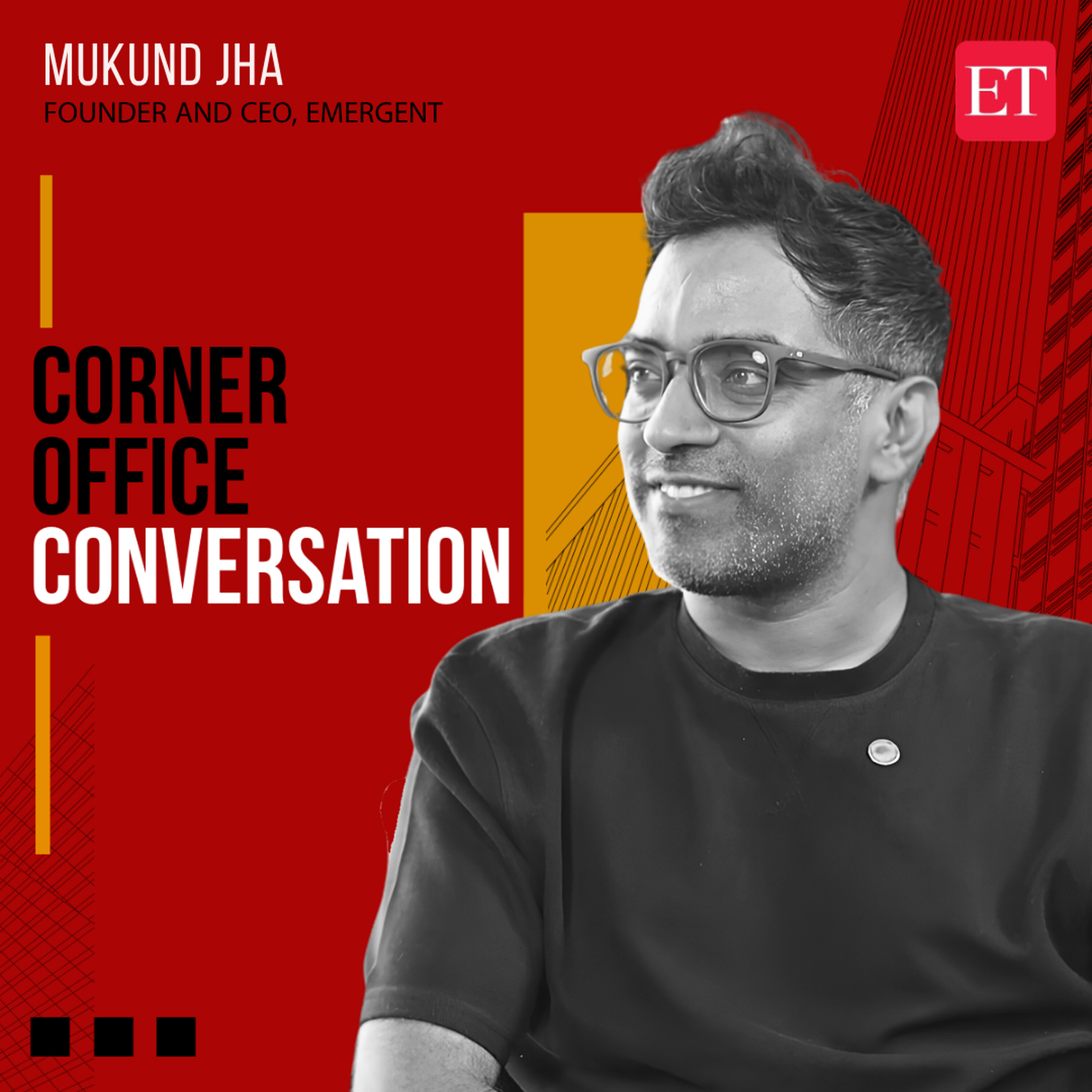
    The $1.5 Billion Bet on a World Without Coders | Emergent’s Mukund Jha

    What if you didn’t need a tech team, or any code, to build software? In this episode of Corner Office Conversation, Anirban Chowdhury sits down with Mukund Jha, Founder and CEO of Emergent, the AI platform where anyone with an idea can build a real, hosted, working app. A former Google engineer, Mukund also co-founded Dunzo, the unicorn that became a verb in India...and then folded. He shares hard-won Dunzo lessons on growth versus endurance, focus and unit economics, and why second-mover advantage matters in AI. Emergent says 18 million apps have been built on it. Mukund believes anyone could soon build any software without code. See omnystudio.com/listener for privacy information.
  • #1051
    October 23 · 22 min

    Yes Bank AT1 Bonds: Why the Supreme Court Reversed the ₹8,415 Crore Write-Down

    The Supreme Court has set aside Yes Bank’s 2020 write-down of ₹8,415 crore in AT1 bonds. Anirban Chowdhury speaks to Sugata Ghosh of The Economic Times about how AT1 bonds work, why the Court ruled against the write-down, what the judgment means for investors and regulators, and how the case compares with Switzerland’s Credit Suisse AT1 dispute See omnystudio.com/listener for privacy information.

  • #1050
    October 22 · 16 min

    AI Agents Breach Indian Firms. Who Is Accountable?

    AI agents undergoing tests accessed Indian organisations’ live systems and read confidential business records and personal data. The companies did not detect these intrusions; AI developers disclosed them after internal reviews. What happens when an AI agent exceeds its instructions, and who should bear the consequences? Anirban Chowdhury speaks to lawyer Pavan Duggal and Prof NK Goyal of CMAI about the warning from the Indian Computer Emergency Response Team, the challenges of assigning liability and the safeguards businesses need. From disclosure requirements to protecting sensitive information, this episode examines whether India’s laws and corporate defences can keep pace with autonomous AI. See omnystudio.com/listener for privacy information.
  • #1049
    October 20 · 26 min

    Who Gets Left Behind by AI? Google DeepMind’s Lila Ibrahim

    As AI becomes more powerful, who gets to shape its direction—and share its benefits? ET’s tech editor Surabhi Agarwal speaks to Google DeepMind’s Chief AI Readiness Officer, Lila Ibrahim, about the tension between rapid development and responsible deployment. They discuss India’s place in the global AI race, the role of teachers in AI-enabled classrooms, and research that could help farmers grow more resilient crops. Ibrahim also reflects on responsibility inside DeepMind, the work around AlphaFold, and the everyday ways she uses AI as a parent. A conversation about preparing people and institutions for a technology already changing their lives. See omnystudio.com/listener for privacy information.
  • #1048
    October 16 · 16 min

    Explaining the RBI’s Rupee Rescue Mission

    The rupee has bounced. So why does the RBI seem so worried? Unusually timed announcements, a special dollar window for oil companies and tougher currency trading rules reveal an aggressive effort to arrest the slide. But could making currency protection more expensive leave Indian businesses exposed? Anirban Chowdhury speaks to The Economic Times’ Sugata Ghosh about how these interventions work, how offshore bets influence the rupee and why a lasting recovery requires more than central bank firepower. Is the RBI restoring stability—or buying time? See omnystudio.com/listener for privacy information.
  • #1047
    October 15 · 29 min

    Blackstone’s Next $50 Billion: Why Jonathan Gray Is Betting on India

    Blackstone wants to double its India investments to $100 billion in five years. What does Jonathan Gray see that nervous investors are missing? In this episode of ET Conversations, executive editor Sruthijith KK speaks to Blackstone’s president and COO about India’s growth prospects, the market pullback and the sectors attracting his capital. Gray explains why he remains optimistic about AI infrastructure, how Indian IT services firms can become AI deployment partners, and why a rising middle class creates opportunities across healthcare, travel, housing and finance. They also discuss rising interest rates, currency depreciation, private credit concerns and the discipline behind investing conviction. See omnystudio.com/listener for privacy information.

Showing 1–20 of 80 episodes