Skip to content
Artwork for The Luba Show
TechnologyBusinessEntrepreneurship

The Luba Show

Luba Yudasina

Conversations with the human behind the ambition.

Play
  • 29 episodes
  • weekly
  • Avg 1 hr 22 min
  • English
Counted on this page — what you have heard stays on this device, so it is not something the list can be paged by.
  • #32
    Thursday · 51 min

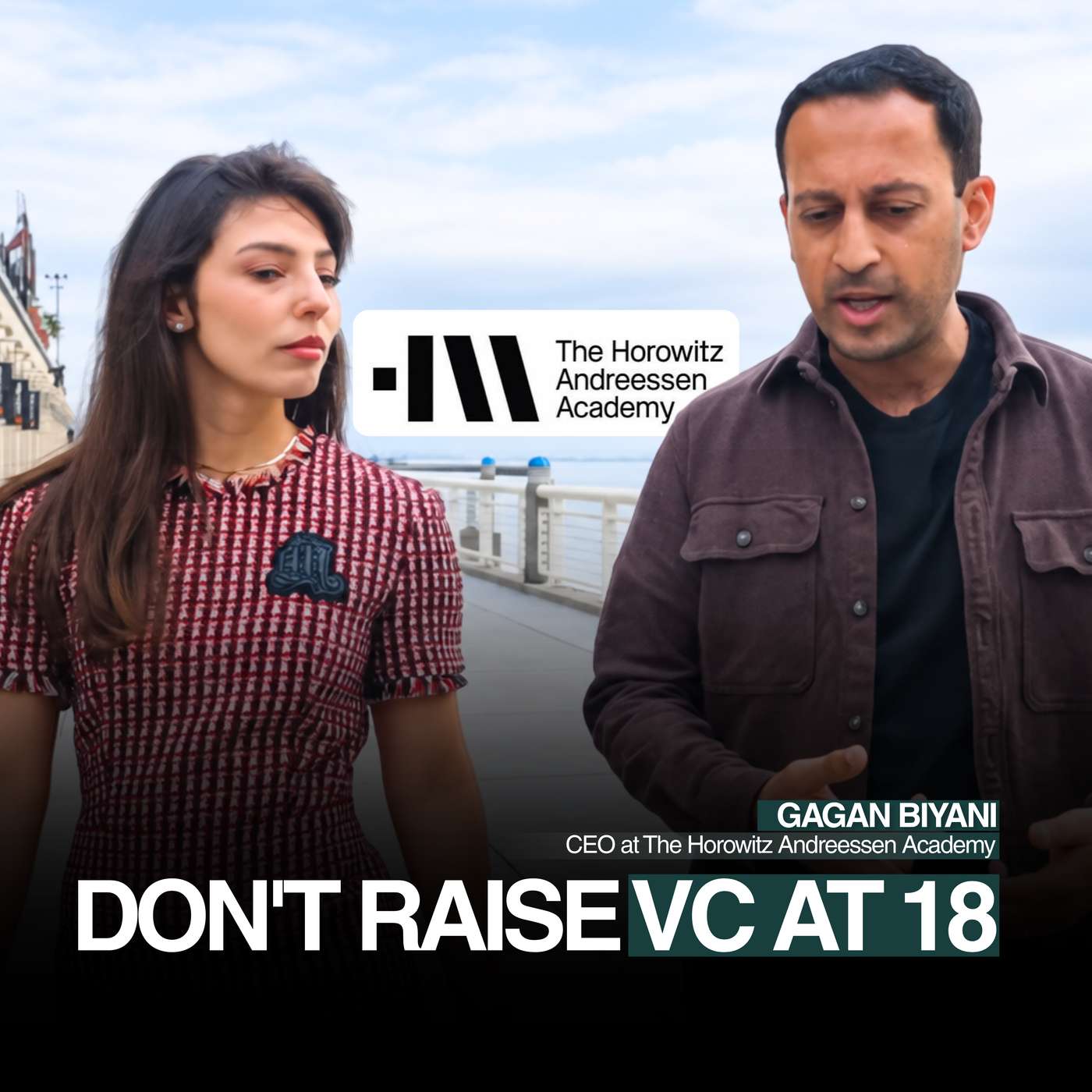
    He Co-founded $2B Udemy. Now a16z Gave Him $42M To Rethink College - Gagan Biyani

    Today I walk with Gagan Biyani, founder and CEO of the Horowitz Andreessen Academy. Gagan co-founded Udemy, which grew into a multibillion-dollar public company, built Sprig, co-founded Maven, and started his first profitable business at 13, and now he's building a16z's new school for young builders, backed by $42 million. He gets into the $60M company he had to shut down, why his investors backed him again anyway, and why a Harvard dropout means nothing to him. We get into: -Starting a debate camp at 13 that ran 50% EBITDA margins, and landing in the principal's office for it -Sprig: $60M raised, 1,300 employees, a shutdown, and investors who backed his next company anyway -Why the Academy flips college around, with students building instead of attending class -The call from Andrew Chen and ten meetings with Marc Andreessen and Ben Horowitz that became the Academy -Why he tells 18-year-olds that raising VC is a ten-year commitment so much more! 𝐓𝐈𝐌𝐄𝐒𝐓𝐀𝐌𝐏𝐒 (00:00) Trailer (01:01) Gagan Biyani, Founder & CEO, Horowitz Andreessen Academy (02:23) A one-year fellowship built around building, not class (03:55) The three skills that are AI proof (08:16) Grandparents from Rajasthan who never finished high school (09:31) Starting a debate camp at 13 with 50% margins (12:59) Why schools are afraid of student agency (18:33) Seven jobs, three years, and rarely going to class (18:46) Why most professors don't care about teaching (25:41) What Udemy and Maven taught him (33:32) Raising $60M at Sprig, shutting down, and getting backed again (38:16) Why raising VC at 18 is a ten-year commitment (39:21) The call from Andrew Chen that started the Academy (41:18) Why the best builders will pick a16z over MIT or Harvard (43:17) 50 founding students, tuition-free (45:46) Why a Harvard dropout means nothing to him (51:42) Outro Follow Gagan LinkedIn: https://www.linkedin.com/in/gaganbiyani/ X: https://x.com/gaganbiyani Follow Luba Instagram: https://www.instagram.com/lifeoflubaa/ LinkedIn: https://www.linkedin.com/in/yudasinal/
  • #31
    Wednesday · 1 hr 15 min

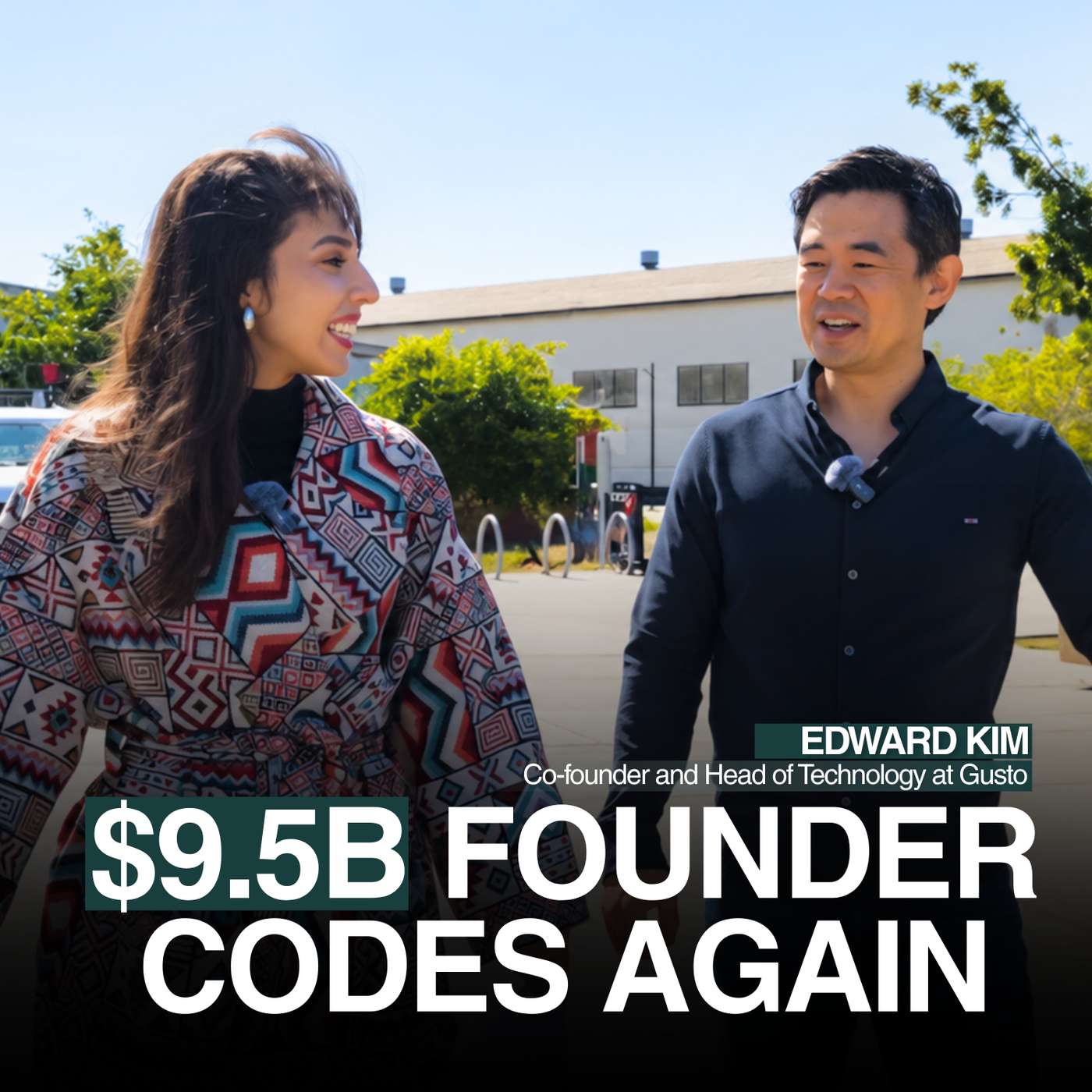
    $9.5B Gusto Founder Went Back to Being an Engineer to Build an AI CoFounder - Edward Kim

    Today I walk with Edward Kim, co-founder and CTO of Gusto. Edward built Gusto with two Stanford classmates into a $9.5B payroll platform running 300,000 small businesses, made over $1M selling Android apps on the side, and after a decade managing engineers, he's writing code again to ship an AI co-founder for the back office his mom used to run when he was a kid. He gets into why his doctor dad handed him a Paul Graham essay in the car, and the unfairness technical co-founders feel while business co-founders raise the money. We get into: -Making $700K a year selling Android apps after his first startup shut down -Why his doctor dad handing him a Paul Graham essay changed his career -His mom running the entire back office of his dad's medical practice while raising three kids -The unfairness technical co-founders feel while business co-founders get wined and dined by investors -Going back to code after 10 years managing engineers to ship an AI co-founder for small businesses so much more! (00:00) Trailer (00:51) Edward Kim, Co-Founder and CTO, Gusto (00:57) The elaborate escape rooms he builds for his wife Yuna (03:04) The San Francisco half marathon on a bet that reconnected him with Josh (05:32) Making $700,000 a year selling Android apps (10:25) Screenshot It, the $7 app for a feature Android didn't have (18:31) His mom running the entire back office of his dad's medical practice (26:22) The Paul Graham essay his doctor dad handed him in the car (29:51) Getting into Y Combinator with Gary as a partner (32:49) The unfairness technical co-founders feel while business co-founders raise money (36:51) After 15 years of co-founding, why the workload evens out (56:07) Building Gusto Co-Founder for the small business back office (1:15:01) His life philosophy in one sentence (1:15:08) Outro Follow Edward LinkedIn: https://www.linkedin.com/in/edawerd/ X: https://x.com/edawerd Follow Luba Instagram: https://www.instagram.com/lifeoflubaa/ LinkedIn: https://www.linkedin.com/in/yudasinal/ X: https://x.com/LubaYudasina

  • #30
    September 17 · 1 hr 16 min

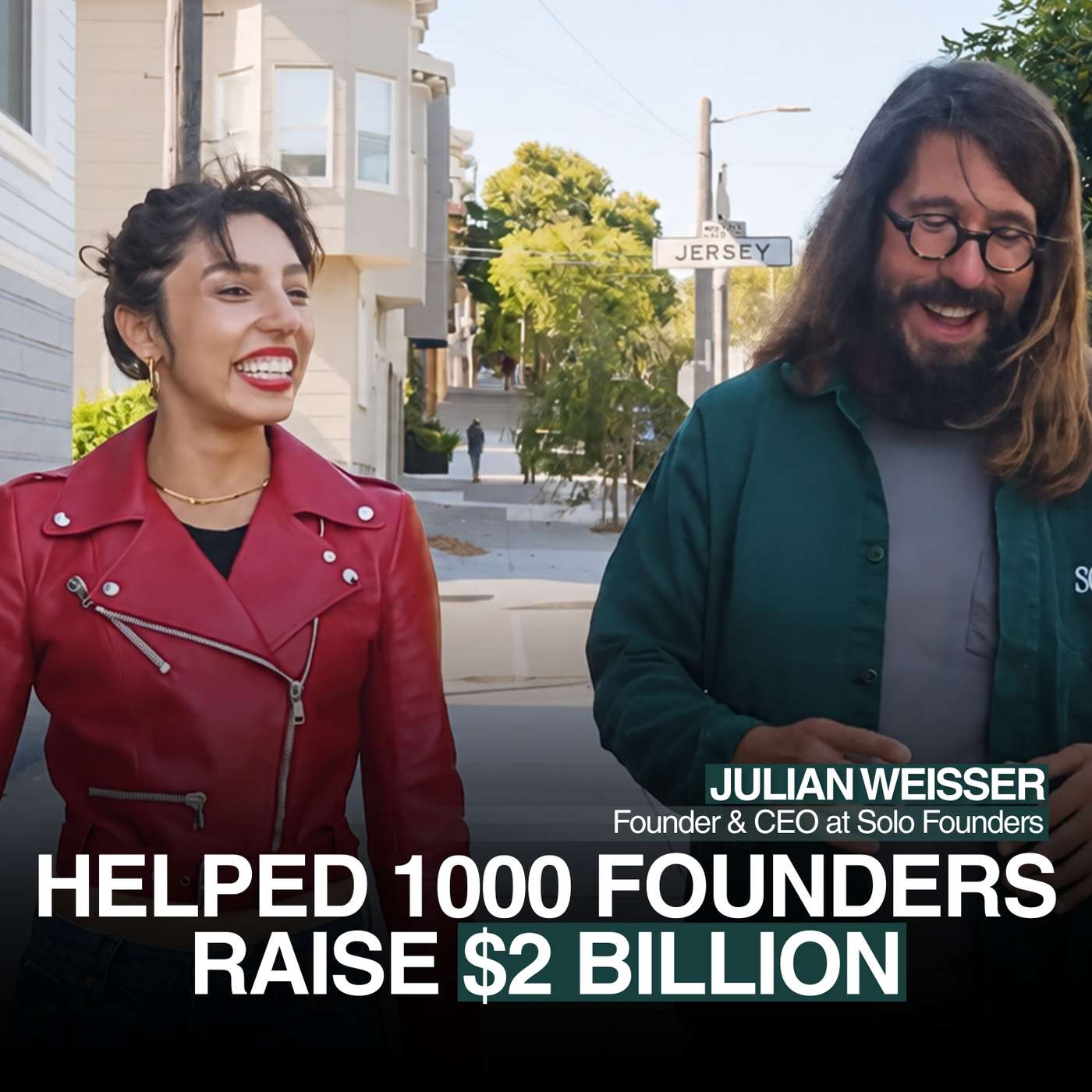
    He Helped Founders Raise $2 Billion. Now He's Sold on Solo Founding - Julian Weisser

    Today I walk with Julian Weisser, founder of Solo Founders and co-founder of On Deck. Julian has run 27 ODF cohorts, helped more than 1,000 founders collectively raise over $2 billion, and spent eight years matching people with co-founders, and now he believes AI has made the co-founder optional. He gets into the $400,000 payout demand from a co-founder who did two months of work, and why he compares co-founders to car phones now that solo founders have the cell phone. We get into: - Calling his own teenage taste in jazz "musical masturbation," and the moment that actually taught him to love it - The $400,000 payout a co-founder demanded for two months of work, and why there was no mechanism to force them out - His run co-founding On Deck, where 27 cohorts helped over 1,000 founders raise $2B+, and why he thinks the co-founder problem is basically already solved - The Hacker News post that got almost no response except one email from Dropbox's first employee so much more! Timestamps (00:00) Trailer (00:51) Julian Weisser, Founder, Solo Founders (02:06) Calling his old jazz taste "musical masturbation" (20:17) 27 cohorts, thousands of founders, more reps than any VC (35:50) The $400K co-founder payout demand (39:45) The Hacker News post that led to Dropbox's first employee (44:45) Golden Gate Park was built from sand dunes (54:50) Why co-founders have seasons, not forever contracts (58:53) The "oddballs" who never wanted co-founders, including Loyal's Celine Halioua (1:00:59) Co-founders are the car phone. Solo founders are the cell phone. (1:06:47) Why owning less equity can mean more freedom (1:16:18) His two-word life philosophy: keep going (1:16:34) Outro Follow Julian X: https://x.com/julianweisser LinkedIn: https://www.linkedin.com/in/julianweisser/ Follow Luba Instagram: https://www.instagram.com/lifeoflubaa/ LinkedIn: https://www.linkedin.com/in/yudasinal/ X: https://x.com/LubaYudasina
  • #29
    September 14 · 1 hr 3 min

    Amplitude went public at a $5.6 billion valuation. Now its CEO is rebuilding all 800 employees around AI

    Automate Compliance (and get $1,000 off!!) - https://vanta.com/luba Today I walk with Spenser Skates, co-founder and CEO of Amplitude. Spenser shut down his first startup, a voice-to-text texting app called Sonalight, a year after it got into Y Combinator, spent years going through what he calls an identity crisis moving from founder to CEO, and has grown Amplitude into a public company of roughly 800 people, and now he's rebuilding it around Wave, an AI engine that rewrites products using their own data. We get into: Why he and his co-founder Curtis intentionally shut down Sonalight a year after Y Combinator, even after a Demo Day that got them press and tens of thousands of downloads The customer research rule he now enforces at Amplitude: talk to 30 teams before writing a line of the original product, and only build if a real chunk of them say yes Wave, Amplitude's new AI engine that scans a product's own data and rewrites its features, including one fix that tripled a customer's AI usage overnight Why he thinks the most ambitious operators, including a SaaS "legend" he looked up to, are driven by insecurity rather than confidence The Norman Borlaug story that convinced a 20-something Spenser to bet his entire career on tech instead of academic research So much more! TIMESTAMPS (00:00) Trailer (01:08) Spenser Skates, Co-Founder & CEO, Amplitude (01:36) Why video games stopped feeling like real achievement (08:50) Growing up in Cambridge and hating a life scripted by other people (15:04) The Norman Borlaug story that convinced him to bet on tech (20:14) Convincing Curtis to leave Google and co-found a company (24:55) Playing StarCraft until 2am while pretending to build the startup (29:04) The exact test for knowing when to kill a startup (32:30) Why half a founding team's time should go to customers, not code (35:02) The identity crisis of going from founder to CEO of 800 people (40:35) Burning the boats on the old Amplitude to go all in on AI (42:33) Wave: the AI engine that rewrites products using their own data (48:49) Why insecurity, not confidence, drives the most ambitious operators (56:01) Betting on his partner Anne and being "single until Series B" (1:05:00) Outro Follow Spenser LinkedIn: https://www.linkedin.com/in/spenserskates X: https://x.com/spenserskates Follow Luba Instagram: https://www.instagram.com/lifeoflubaa/ LinkedIn: https://www.linkedin.com/in/yudasinal/
  • #28
    September 10 · 51 min

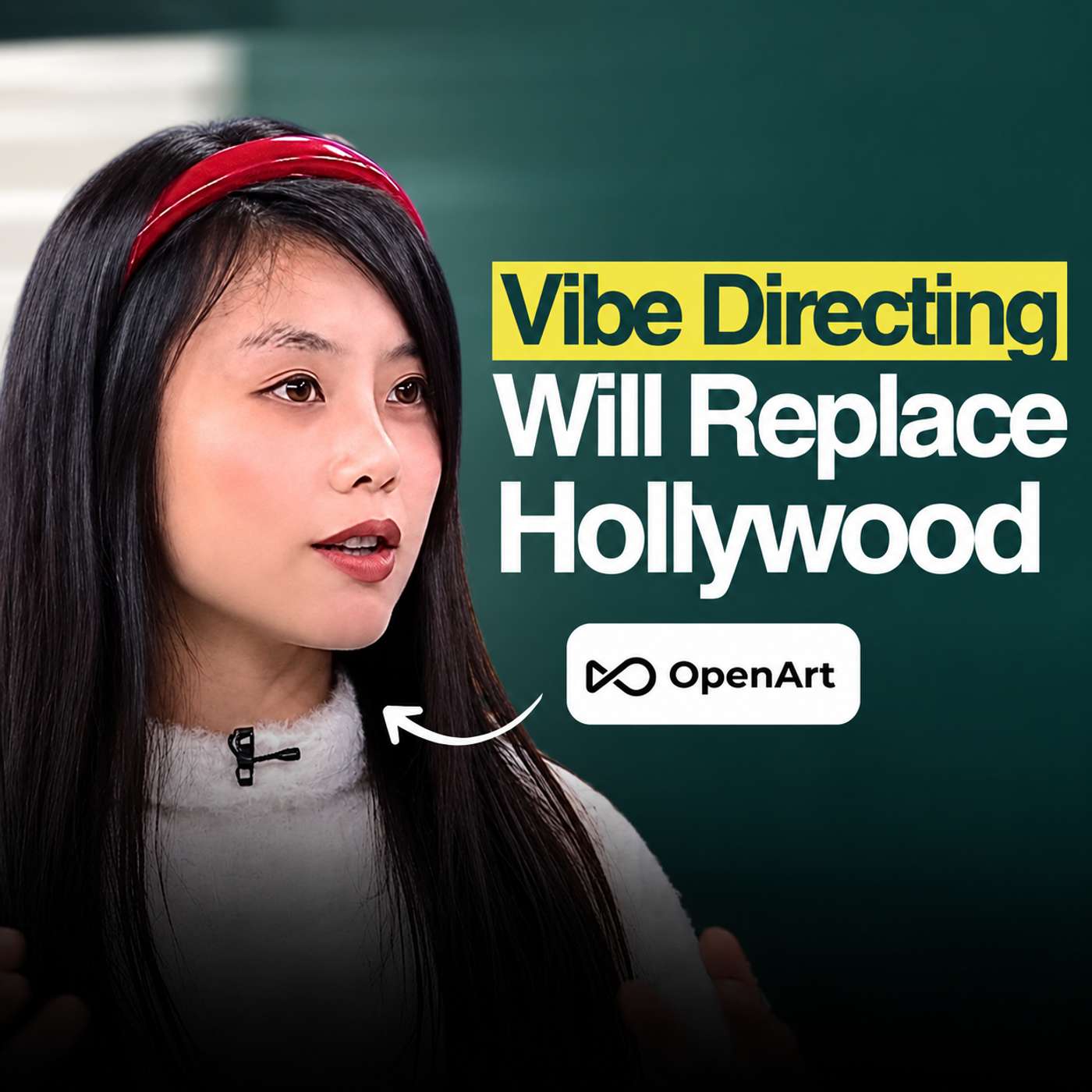
    From $10M to $70M ARR in 12 Months, The Story of OpenArt - Coco Mao

    Automate Compliance (and get $1,000 off!!) - https://vanta.com/luba Today I walk with Coco Mao, CEO and co-founder of OpenArt, an AI visual storytelling platform. Coco spent years as an engineer at Google, ran her own startup inside Google's internal startup incubator, and built OpenArt through six months of weekly pivots until a prototype built in under three days went viral on Hacker News, and now she's betting the entire company on a new category she calls vibe directing. We get into: Why she quit her Google side-hustles, including the Amazon fidget-toy business she overstocked right before founding OpenArt The six-month stretch of weekly pivots that ended with a three-day prototype going viral on Hacker News OpenArt's bet on "vibe directing," the video-agent category she compares directly to vibe coding What actually separates good AI-generated work from "total slop": idea and taste, not the tools Launching the AI Personality Awards with Fanvue, and why she thinks AI influencers will make human creators more valuable, not less So much more! Timestamps (00:00) Trailer (00:54) Coco Mao, CEO & Co-Founder, OpenArt (03:11) Selling fidget toys on Amazon before quitting Google (04:56) Meeting co-founder Jon inside Google's startup incubator (08:01) Betting on AI art in 2022, a non-consensus space (08:18) The weekly pivot that led to a Hacker News-viral prototype (14:09) Naming OpenArt and getting mistaken for OpenAI (14:56) Raising a seed round on speed, not metrics (19:11) Hire fast, fire very fast (20:01) Why OpenArt survived while image-gen rivals disappeared (23:00) Vibe directing: the next category after vibe coding (28:08) What separates good AI work from total slop (39:40) Launching the AI Personality Awards with Fanvue (43:46) The hardest part of scaling: reinventing yourself (50:22) The one founder belief she now thinks is wrong (51:20) Outro Follow Coco LinkedIn: https://www.linkedin.com/in/kechunmao/ X: https://x.com/cocokechun Follow Luba Instagram: https://www.instagram.com/lifeoflubaa/ LinkedIn: https://www.linkedin.com/in/yudasinal/ X: https://x.com/LubaYudasina
  • #27
    September 7 · 1 hr 8 min

    He Turned A Newsletter Into A Venture Fund - Packy McCormick (Not Boring Capital)

    Today I walk with Packy McCormick, founder of Not Boring and Not Boring Capital. Packy built Not Boring into a top newsletter on Substack, spent years in finance before leaving to write full time, and now invests in the same kinds of companies he writes about through Not Boring Capital. He gets into the moment his growth flatlined during the 2022 market crash and what it freed him to do, and why he considers Not Boring's founding mission basically complete. We get into: Why he passed on investing in the friend who now runs a robotics company valued at $1 billion The real "nobody gives a s***" moment that came after Not Boring's meteoric growth crashed in 2022 The clay pot experiment behind why he still writes 30 imperfect essays a year instead of a few polished ones Why he thinks Anthropic's careful, downside-focused posture on AI is a little too pessimistic Why he doubles down on his strengths instead of trying to fix a below-average memory So much more! Automate Compliance (and get $1,000 off!!) - https://vanta.com/luba TIMESTAMPS (00:00) Packy McCormick, Founder, Not Boring & Not Boring Capital (01:02) Weekly business coaching calls with his mom (06:15) Passing on the friend who built a $1 billion robotics company (20:19) The moment nobody gave a s*** anymore (31:02) Being scared of infinity as a kid (34:50) Why Anthropic's pessimism wears him out (36:19) Retiring Not Boring's founding mission (41:09) Telling his pregnant wife he was starting over (45:27) The clay pot experiment behind his writing process (56:00) Double down on strengths, not weaknesses (58:52) What made Colossus's writer profiles so good (1:03:18) $470 million for micro nuclear reactors (1:04:19) The GLP-1 side effect nobody saw coming (1:07:58) What brought him joy this week Follow Packy LinkedIn: https://www.linkedin.com/in/packym/ X: https://x.com/packyM Website: https://www.notboring.co Follow Luba Instagram: https://www.instagram.com/lifeoflubaa/ LinkedIn: https://www.linkedin.com/in/yudasinal/ X: https://x.com/LubaYudasina

  • #26
    September 3 · 1 hr 16 min

    He Put AI Inside The Terminal Before Codex Existed- Zach Lloyd

    Automate Compliance (and get $1,000 off!!) - https://vanta.com/luba Today I walk with Zach Lloyd, founder and CEO of Warp. Zach is a former Principal Engineer at Google, where he led the Google Sheets team. Zach scaled his first startup, SelfMade, to 150 employees before it fell apart, and now he’s raised over $73 million for Warp from Sequoia and Google Ventures. He's betting the whole company on AI. He talks about the AI feature Warp built before Claude Code and ChatGPT existed, why not going harder at it is one of his biggest regrets as a founder, and what it's like having Marc Benioff as his cousin. We get into: The AI feature Warp shipped before ChatGPT even existed, and why building something like Claude Code six months early still turned into one of his biggest regrets His first startup, SelfMade, scaling to 150 employees and multiple millions in revenue without ever finding real product market fit Why he calls hiring "just sales," and why he'd rather hand over equity than compete on salary Why he barely opens a spreadsheet anymore, and which AI-era tools he thinks actually survive so much more! Timestamps (00:00) Trailer (00:59) Zach Lloyd, Founder & CEO, Warp (01:03) Grandfather Lloyd K Lloyd, San Francisco's original salesman (04:42) Marc Benioff is his cousin (21:33) The humility lesson from Google Sheets' original creator (27:07) SelfMade: 150 employees, still not a real business (34:04) Why hiring is really just sales (39:32) Nearing a million terminal users (41:18) Building AI before Claude Code and Codex existed (42:52) Only going halfway in on AI (1:03:09) Why he barely opens a spreadsheet anymore (1:10:10) Warp is automating 30% of its own engineering work (1:11:12) Building automated cloud factories (1:14:49) Almost naming the company Cursor (1:15:48) Never living on Saint Mark's again Follow Zach LinkedIn: https://www.linkedin.com/in/zachlloyd/ X: https://x.com/zachlloydtweets Website: https://warp.dev Follow Luba Instagram: https://www.instagram.com/lifeoflubaa/ LinkedIn: https://www.linkedin.com/in/yudasinal/ X: https://x.com/LubaYudasina
  • #25
    August 31 · 1 hr 15 min

    She Wants To Disrupt A $100 Billion Space With AI - Michelle Lim

    Automate Compliance (and get $1,000 off!!) - https://vanta.com/luba Today I walk with Michelle Lim, CEO of Flint, an autonomous web and ads building platform. Michelle interned at Meta, Slack, and Robinhood, grew Warp from employee number two to 500,000 developers over four years across engineering, marketing, and sales, and now she's building Flint to charge by outcome instead of software. She gets into her origin story that pushed her to fix marketing after four years at Warp, and why she thinks the market VCs have valued at $10 billion is actually worth $100 billion. We get into: -Why turning down medical school made her "a family disappointment," and the villain origin story that pushed her to build Flint after four years fixing marketing at Warp -Her "five Infinity Stones" framework: engineering, product, marketing, customer success, and sales, for knowing exactly when she was ready to leave Warp and start her own company -Why VCs have historically stayed away from funding marketing startups, and her bet that AI turns a market capped at HubSpot's $10 billion into a $100 billion opportunity -Her framework for writing LinkedIn hooks that lead with credibility and actually convert strangers into customers and hires So much more! Timestamps (00:00) Trailer (00:32) Intro (01:21) Singapore's definition of success: doctor, lawyer, or government scholar (02:31) Applying to Yale on a whim, thanks to a one-school early action rule (06:16) Why a startup was "one of the lowest prestige things" she could do at Yale (10:48) Discovering computer science through a Yale entrepreneurship club (16:21) What she took, and left behind, from Meta, Slack, Robinhood, and Warp (19:48) Winning an hour alone with Mark Zuckerberg on her best internship project (22:12) Sheryl Sandberg's leadership lesson: repeat the same story until it lands (27:59) Her framework for writing LinkedIn hooks that actually convert (35:53) Bodies "piling up" in Covid-era New York, and the push to join Warp (40:53) Telling Warp's CEO upfront that she wanted to be a founder (47:47) The "five Infinity Stones" framework for knowing when to start Flint (54:47) Why VCs avoid funding marketing startups, and her bet on a $100 billion market (1:00:23) Meeting her co-founder through a 200-question questionnaire, and his parents' interview (1:09:14) Never try to save money on a lawyer Follow Michelle LinkedIn: https://www.linkedin.com/in/michlimlim/ X: https://x.com/michlimlim Follow Luba Instagram: https://www.instagram.com/lifeoflubaa/ LinkedIn: https://www.linkedin.com/in/yudasinal/ X: https://x.com/LubaYudasina
  • #24
    August 25 · 44 min

    He's Bringing Supersonic Flight BACK - Blake Scholl

    Automate Compliance (and get $1,000 off!!) - https://vanta.com/luba Today I walk with Blake Scholl, founder and CEO of Boom Supersonic. Blake was roughly Amazon's 200th engineer, spent more than a decade building XB-1 into the first supersonic jet made outside a government or military, and got the US ban on supersonic flight repealed after breaking the sound barrier, and now he's scaling Boom toward carrying passengers in 2030. He gets into the six years Boom spent waiting on Rolls-Royce for an engine, and why that breakup turned out to be the best gift the company ever got. We get into: Why he'd rather be a "dark matter entrepreneur" who tried and failed than spend his life asking what if The six years Boom spent trying to get Rolls-Royce to build a custom engine, and why losing that deal is what made the business financially viable Why "work on something you know about" is terrible advice, since what you know is far easier to change than what you love How a parenting lesson turned into the practice that built candor inside Boom's staff meetings So much more! 𝐓𝐈𝐌𝐄𝐒𝐓𝐀𝐌𝐏𝐒 (00:00) Trailer (00:41) Intro (01:39) The day XB-1 broke the sound barrier (05:40) 2,000 pounds overweight and called the Theranos of aviation (09:15) How big a dent can we make in the universe (12:01) Bill Gates and the dark matter entrepreneur (14:55) Mom's advice: work on something you already know (17:12) The flying lesson at 19 that decided everything (23:17) Starting Boom with three kids under two (24:39) The mistake dinner that became a staff meeting (27:22) Why the Rolls-Royce breakup was the best gift Boom got (30:37) Brian Chesky and permission to make the big swing (34:29) Amazon at engineer 200 and automating ads at 22 (37:58) Congestion price the entire road network (40:12) "I'd be proud of you for trying" (43:58) The $750K prize to fly supersonic (44:33) Outro Follow Blake LinkedIn: https://www.linkedin.com/in/blakescholl/ X: https://x.com/bscholl Website: https://boomsupersonic.com/ Follow Luba Instagram: https://www.instagram.com/lifeoflubaa/ LinkedIn: https://www.linkedin.com/in/yudasinal/ X: https://x.com/LubaYudasina
  • #23
    August 17 · 1 hr 26 min

    She Backed Twitter. Now She's Betting on Founders Who Are "AI-Pilled.” - Ann Miura-Ko

    Automate Compliance (and get $1,000 off!!) - https://vanta.com/luba Today I walk with Ann Miura-Ko, co-founding partner of Floodgate. Ann has spent almost 18 years building Floodgate around a deliberately small, non-consensus fund model, made early bets on companies like Lyft and TaskRabbit, and teaches entrepreneurship at Stanford, and now she's watching AI rewrite the lean startup playbook in real time. She gets into the AI agent inside one portfolio company that quietly caught millions of dollars in missed credit, and why she believes not losing is not the same as winning. We get into: • Why she waited nearly 18 years to grow Floodgate's fund size, and how staying small means a $1 billion exit still moves the needle for her investors • Making debate opponents cry for a slice of pizza, and the permission that gave her to be disagreeable for the rest of her career • SmarterDx, the company she couldn't get other investors to take seriously at Series A, that went on to exit for over $1 billion • The math behind "founder friendly" investing, and why a $100M exit barely registers against a $1 billion fund So much more! TIMESTAMPS (00:00) Ann Miura-Ko, Co-Founding Partner, Floodgate (01:35) Making debate opponents cry for a slice of pizza (05:41) Truth-seeking VS defending your ego (11:12) How Mike Maples treated her as an intellectual equal from day one (18:04) Being told she was "average" before finding her calling (26:07) How AI is rewriting the lean startup playbook (36:35) Floodgate's bet to stay small while other firms scale up (39:53) The AI agent that caught millions in missed credits (46:43) SmarterDx: the $1B exit no other investor wanted (48:49) The real math behind a "founder friendly" investor (53:55) Category design and why Lyft had to break the law to launch (1:08:39) The Toyota Corolla he drove for 25 years to buy her a piano (1:11:53) Being the only woman in her electrical engineering class (1:16:37) Turning 50 and her year of saying yes Follow Ann LinkedIn: https://www.linkedin.com/in/amiura/ X: https://x.com/annimaniac Follow Luba Instagram: https://www.instagram.com/lifeoflubaa/ LinkedIn: https://www.linkedin.com/in/yudasinal/ X: https://x.com/LubaYudasina
  • #22
    August 5 · 1 hr 37 min

    He Scaled Plaid to $300M ARR. Now a16z Just Bet $55M on Him — Jean-Denis Greze (Town)

    Automate Compliance (and get $1,000 off!!) - https://vanta.com/luba Today I walk with Jean-Denis Greze, co-founder and CEO of Town, an AI on-ramp platform for individuals and businesses. Jean-Denis is the former CTO of Plaid, led engineering through a blocked $5.3B Visa acquisition, and walked away from the C-suite at 45 to start over from zero, and now he's turned a scrapped AI tax-prep startup into a $55M Series A company backed by Andreessen Horowitz. He gets into the week he decided to kill a business that was actually working, and why he refuses to call Town an "AI assistant." We get into: Why he waited until 45, after seven years as Plaid's CTO, to become a founder for the first time The week he and his co-founder killed a working, revenue-generating tax-prep startup because it wasn't going to be a rocket ship Town's real bet: not a smarter AI assistant, but an onboarding layer that gets normal people leverage from AI without writing a single prompt His "accelerators, table stakes, foundations" framework for staying ahead of OpenAI, Gemini, and Google Why turning "uncool" work into cult culture, from Dropbox's Team Cash to Plaid's colorful tights, built teams that stuck around so much more! Timestamps [00:00:00] Trailer [00:00:43] Intro [00:01:41] Leaving Plaid at 45 to become a founder [00:06:01] Redefining success beyond IPOs and revenue [00:11:56] The YC prodigy myth VS two decades of hard-earned instinct [00:19:47] The stress gap between being an exec and being the founder [00:25:35] Time-boxing family, health, and friends at Series A [00:32:11] Betting on AI tax prep and grinding for a year [00:38:13] The week they decided to shut down a profitable business [00:41:53] The worst three weeks: telling the team and winding down right [00:57:47] The accidental prototype that became Town [01:04:15] Why Town calls itself an on-ramp, not an AI assistant [01:12:29] Beating OpenAI, Gemini, and Google's home-field advantage [01:20:31] Team Cash: making "uncool" work fun at Dropbox and Plaid [01:32:02] Landing Andreessen Horowitz and Forerunner for the Series A [01:37:41] Outro Follow Jean-Denis LinkedIn: linkedin.com/in/jeandenisgreze X: https://x.com/jgreze Website: https://town.com Follow Luba Instagram: https://www.instagram.com/lifeoflubaa/ LinkedIn: https://www.linkedin.com/in/yudasinal/ X: https://x.com/LubaYudasina
  • #21
    July 30 · 1 hr 1 min

    She Raised $100M+ to Reversibly Cryopreserve Humans — Laura Deming (Until)

    Today I walk with Laura Deming, co-founder of Until, a reverse cryopreservation company in San Francisco. Laura got interested in longevity at eight, started working in Cynthia Kenyon's lab at UCSF at 12, and spent years backing the field as an investor through the Longevity Fund. She now builds technology to pause biological time, starting with donor organs and building toward whole-body medical hibernation. We get into: -The conference talk she was not supposed to give, and how it ended her VC chapter -What "transcend death" actually means once you press on it, tested with a teleporter to Mars -Why San Francisco kills intuition, and the breakdown in her mid-20s that made her protect hers -The big magnet, and rewarming an organ in about a minute -Why transplant patients live inside a two-hour radius with a pager on them at all times so much more! Timestamps 00:00:00 Trailer 00:00:48 Intro 00:01:35 "I love science" and the things that have stayed constant 00:05:13 A childhood without rules and reconstructing what normal means 00:07:03 What is actually worth preserving when a person dies 00:13:00 The Dreaming Machine and the film that never got made 00:19:02 When you could not say the word aging out loud in the lab 00:22:55 Emailing Cynthia Kenyon at 12 and the day her life started 00:28:49 The talk that made her leave VC for cryo 00:32:39 San Francisco as an intuition killer 00:35:04 Molecules in clockwork synchrony and feeling loved by the universe 00:44:39 The big magnet and rewarming an organ in about a minute 00:46:19 The two-hour radius and the pager that runs a transplant patient's life 00:53:50 Her best arguments against her own work 00:58:44 The teleporter to Mars and what dies in the process 01:01:42 Outro Follow Laura X: https://x.com/LauraDeming?lang=en LinkedIn: https://www.linkedin.com/in/laura-deming-b255362a/ Website: https://www.untillabs.com/ Follow Luba I Instagram: https://www.instagram.com/lifeoflubaa/ LinkedIn: https://www.linkedin.com/in/yudasinal/ X: https://x.com/LubaYudasina
  • #20
    July 23 · 2 hr 1 min

    The Investor Who Backed 10 Unicorns Explains the AI Bubble - Avichal Garg (Electric Capital)

    Today I sit down with Avichal Garg, co-founder and General Partner at Electric Capital. Avichal has built and sold companies, worked inside early Google and Facebook, served as a visiting partner at Y Combinator, and now backs founders across crypto and frontier tech. We get into: -Why founders are more like artists than operators -What actually compounds a person's trajectory -His "software eating money" thesis behind Electric Capital -Why honesty ends up being the real edge in venture so much more! Timestamps 00:00:00 Trailer 00:00:44 Intro 00:01:00 Watches, luxury markets, and the AI parallel 00:12:48 Opportunity is a luxury 00:14:43 Founders as artists, not just operators 00:18:26 Authenticity and cutting through market noise 00:24:38 Betting on outliers as a life philosophy 00:37:58 Storytelling as a founder superpower 00:55:41 How Elad Gil helped launch Electric 01:07:55 Why crypto was the wedge for Electric 01:19:28 Why he prefers market corrections 01:31:00 The firms Electric was modeled after 01:36:21 Honesty as the core operating principle 01:42:15 Over-committing resources to founders 01:51:03 Dodging SBF and reading fake authenticity 02:01:40 Outro Follow Avichal LinkedIn - https://www.linkedin.com/in/avichalgarg/ X: https://x.com/avichal?lang=en Follow Luba Instagram: https://www.instagram.com/lifeoflubaa/ Linkedin:https://www.linkedin.com/in/yudasinal/ X: https://x.com/LubaYudasina
  • #19
    July 16 · 57 min

    $6.8B GovTech Founder On Why Most Startups Fail Selling to Government - Ben Rudolph

    Today I'm talking to Ben Rudolph, co-founder and CTO of Peregrine Technologies, to trace his path from Stanford gymnastics to building one of the fastest-growing companies in government technology. They discuss his time at the UN working with refugees, the 18 months he and co-founder Nick Noone spent embedded inside a police department, surviving the early "wilderness" of company building, and how Peregrine grew into a multi-billion dollar business. The conversation also covers leadership lessons, company values, and balancing fatherhood with running a fast-scaling company. Timestamps: 00:00:00 Trailer 00:01:18 Intro 00:01:21 Stanford gymnastics and meeting Nick 00:09:06 Working with refugees at the UN 00:16:20 Deciding to start the company 00:19:10 Moving into a police department for 18 months 00:26:44 Where the Peregrine name comes from 00:31:23 Winning the California RFP 00:41:47 Growth from wilderness to product-market fit 00:44:58 Biggest mistake and hardest lessons as a leader 00:48:39 Becoming a father while scaling the company 00:48:52 How Peregrine uses AI internally and externally 00:56:01 Life philosophy and closing thoughts 00:57:00 Outro Links: Ben Rudolph Website: https://www.benrudolph.info/ Instagram: https://www.instagram.com/__benrudolph/?hl=en LinkedIn: https://www.linkedin.com/in/brudolph Luba Yudasina Instagram: https://www.instagram.com/lifeoflubaa X: https://x.com/LubaYudasina LinkedIn: https://www.linkedin.com/in/yudasinal/

  • #18
    July 9 · 1 hr 8 min

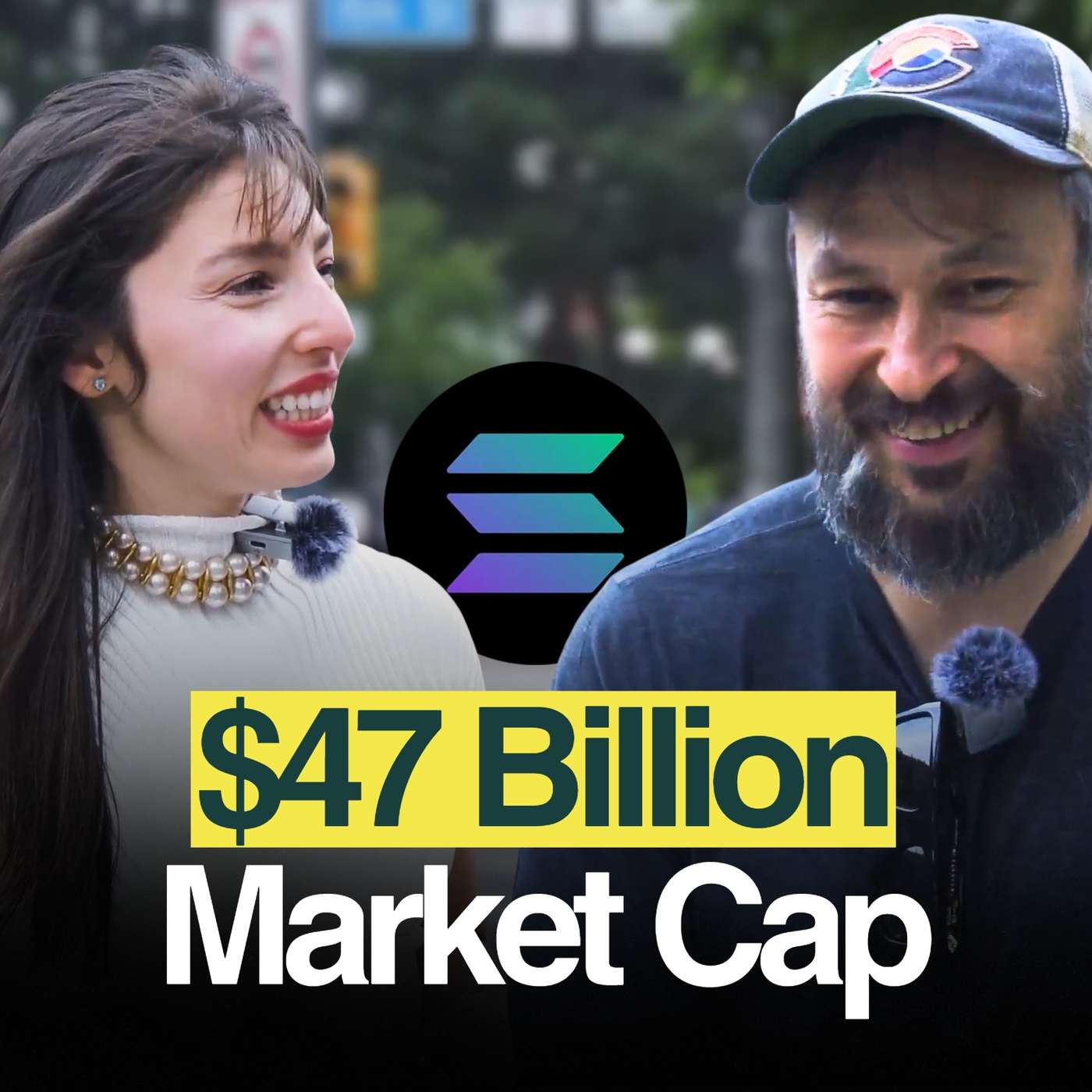
    $47 Billion Crypto Founder Shares His Story - Anatoly Yakovenko (Solana)

    Today I’m speaking with Anatoly Yakovenko, co-founder and CEO of Solana, to trace his journey from a childhood in the Soviet Union to building one of the largest blockchain networks in the world. They discuss his years at Qualcomm, the eureka moment that led to Solana, surviving the FTX collapse, and how he uses AI to run multiple side projects. The conversation closes with reflections on stress, risk, parenting, and his definition of success. Timestamps: 00:00:00 Trailer 00:01:06 Intro 00:01:17 Growing up in the Soviet Union 00:04:02 Immigrating to the United States 00:07:34 Career dreams and studying computer science 00:09:47 First startup and early lessons 00:11:19 13 years at Qualcomm 00:22:32 Meeting Raj and founding Solana 00:26:44 Fundraising and early investors 00:28:41 Surviving the FTX collapse 00:40:19 Solana's mission and impact 00:43:54 Using AI to run side projects 00:49:39 Hardest decisions as a leader 00:52:51 Outlook on crypto and Solana's future 00:59:22 Twitter, being public, and politics 01:05:52 Beliefs on human nature and life philosophy 01:09:34 Outro Links: Anatoly Yakovenko Instagram: https://www.instagram.com/solanafounder/?hl=en X: https://x.com/toly?lang=en LinkedIn: https://www.linkedin.com/in/anatoly-yakovenko Luba Yudasina Instagram: Luba Yudasina (@lifeoflubaa) • Instagram photos and videos X: luba yudasina (@LubaYudasina) / X LinkedIn: https://www.linkedin.com/in/yudasinal

  • #17
    July 2 · 1 hr 12 min

    From Being Rejected by Every VC to Starting Her Own Fund - Leah Solivan (Founder of TaskRabbit)

    I got to walk with Leah Solivan, founder of TaskRabbit and now Managing Director of Precedent VC, through her journey from IBM engineer to startup founder to venture capitalist. We got into the early days of building TaskRabbit, the decision to sell the company to IKEA, and her transition into investing. Leah also shared her philosophy on evaluating founders, the AI-powered deal scoring tool she built, and the story behind her upcoming book, Breaking Precedent Timestamps: 00:00:00 Trailer 00:01:12 Intro 00:01:21 Ballet background and SF Ballet board 00:06:12 TaskRabbit's origin story 00:10:52 Move to the Bay Area 00:23:00 Selling TaskRabbit to IKEA 00:33:03 Letting go of founder identity 00:35:37 Launching Precedent VC 00:38:26 AI-powered deal scoring system 00:41:26 Investing philosophy and founder fit 00:54:30 Founder green and red flags 00:58:26 Why she wrote Breaking Precedent 01:07:12 Parenting and work-life balance 01:10:46 Defining success 01:12:20 Outro Links: Leah Solivan Website: Leah Solivan Instagram: Leah Solivan (@leah_solivan) • Instagram photos and videos LinkedIn: Leah Solivan | LinkedIn Luba Yudasina Instagram: Luba Yudasina (@lifeoflubaa) • Instagram photos and videos X: luba yudasina (@LubaYudasina) / X LinkedIn: https://www.linkedin.com/in/yudasinal

    • Chapters
  • #15
    June 11 · 45 min

    Joe Cohen: 2 Electric Vehicles in 2 Years With Just $14M and 20 People

    Today I’m talking to Joe Cohen, founder and CEO of Infinite Machine, a company building electric vehicles. But this conversation is really about something bigger: what it means to live freely and build things that matter. Joe has built companies across education, fashion, software, and now vehicles — and what ties them together is his obsession with freedom, accessibility, and enabling people to do life on their own terms. He calls it the “infinite game” — a framework that shapes how he thinks about business, creativity, and life itself. It’s a conversation about ambition, creativity, and what it actually takes to build something meaningful — without losing sight of why you’re building it in the first place. Topics covered The “infinite game” framework and why finite thinking limits your potential From Universe (empowerment through creation) to Infinite Machine (freedom through mobility) Why “autonomous humans” is the core mission behind everything he builds Building a company with your brother and the importance of going separate ways first Hiring for low ego and autonomy — how to spot these qualities SO much more! Timestamps 0:00 Intro 0:40 The motivation to make things 1:55 The infinite game 2:40 Deciding to be an entrepreneur 5:55 Artist vs capitalist 7:34 Why freedom matters 9:29 What is an autonomous human 10:26 Vehicles as tools for freedom 13:14 What's next for Infinite Machine 14:27 How Infinite Machine started 15:08 Going your own way as brothers 16:35 Different paths, same vision 17:36 Design in the DNA 18:42 How brothers handle design disagreements 22:35 The C2 app and Friday feedback 23:33 Building trust 25:38 Team culture and hiring 27:21 Friday show and tell ritual 30:26 Nurturing creativity 32:22 Fundraising 36:47 Manufacturing stories 37:46 Managing stress 39:09 Meditating daily for 13 years 42:56 Life philosophy 44:58 Top books Links Joseph Cohen Instagram: https://www.instagram.com/jmc/?hl=en X: https://x.com/josephcohen LinkedIn: linkedin.com/in/josephmcohen Luba Yudasina Instagram: https://www.instagram.com/lifeoflubaa X: https://x.com/LubaYudasina LinkedIn: https://www.linkedin.com/in/yudasinal

  • #14
    June 4 · 1 hr 23 min

    Robbie Bent: From Near Death to Building a Multi-Million Dollar Wellness Cult

    Today I’m talking to Robbie Bent, CEO and co-founder of Othership. Othership has scaled from a DIY backyard ice bath to a cult-like wellness brand with multiple sold-out locations across North America and plans to open a first-of-its-kind “social spa” on the Upper East Side. Robbie is a former drug addict-turned founder who’s built something genuinely novel: a space where emotional processing and human connection are the product, and sauna and cold plunge are the delivery mechanisms. What’s rare about his story is that he’s done it with four co-founders — two couples working full-time together after seven years — and he’s obsessive about building the best version of the product, not the fastest path to profit. We talk about the long-term vision, the willingness to go all-in on something nobody thought would work, and what it means to build a company around healing and community in a culture obsessed with optimization. Robbie gets vulnerable about the financial terror of physical retail, the near-death moments when he thought it was over, and why he turned down aggressive investor terms to maintain control and equity. Topics covered - From backyard experiment to $2M+ first location — and how he knew it was real - Why he thinks fear doesn’t disappear when you succeed — it just evolves - The almost-zero odds of building a successful company with two couples as co-founders - How a sauna and cold plunge became a Trojan horse for emotional healing and friendship - Why he’s terrified of competition (and how that terror drives everything he does) - From ADHD, boredom with early fatherhood to being present — the shift that changed his priorities SO much more! Timestamps 00:00 Intro 01:52 The 20-year vision 05:50 Horse trough to $2M 10:00 Building with 4 co-founders 15:39 The New York crisis 22:10 Why didn't he quit 24:25 What still scares him 27:19 The social spa experiment 31:16 Does fear ever disappear? 34:00 His anxiety toolkit 39:25 Health and clarity 40:21 Competition and abundance 43:08 Product creates community 49:48 From addiction to healing 53:58 How his wife changed him 58:35 Fatherhood evolution 01:02:18 The balance act (work, family, health, friends) 01:07:53 Other cultures and values 01:12:46 Learning from founder stories 01:16:31 Bathhouse inspiration worldwide 01:21:05 Creative retreats and psilocybin 01:23:14 Acceptance Links Robbie Bent Instagram: https://instagra.com/robbiebent X: https://x.com/robbiebent LinkedIn: Robbie Bent Luba Yudasina Instagram: https://www.instagram.com/lifeoflubaa X: https://x.com/LubaYudasina LinkedIn: https://www.linkedin.com/in/yudasinal

  • #13
    May 29 · 35 min

    Sam Parr: How to Build a $20M Empire Without Destroying Your Marriage

    Today I'm talking to Sam Parr, Co-Founder of Hampton and Founder of The Hustle, and co-host of My First Million. Sam built The Hustle to over 1.5 million subscribers, sold it for more than $20 million, and now runs one of the most exclusive founder communities in the world. Sam is a Midwestern kid turned serial entrepreneur: from running a hot dog stand to building a media empire to co-hosting My First Million, one of the biggest business podcasts out there. He's also one of the most refreshingly honest people I've ever talked to about money, marriage, and what it actually takes to build a life you're proud of. We go deep on relationships, ambition, and what it means to commit — to a partner, to a company, to a version of yourself you haven't become yet. Topics we cover Why he and his wife had a "co-founder conversation" six months into dating and how it changed everything What billionaires all agree on about luck that most people starting out don't want to hear His controversial take: overnight successes are real — and sometimes you should quit faster How he uses negative visualization to stay grateful SO much more! Timestamps 00:00 Intro 01:55 When Money Doesn't Feel Real 05:55 Why My Wife Bet on Me 08:35 Run Your Marriage Like a Startup 13:43 Luck Is Real 16:57 Commit Then Figure It Out 21:43 Imagine the Worst, Feel Grateful 24:51 40 Hours Can Make You Rich 27:06 Am I a One-Hit Wonder? 30:43 How to Make Anyone Open Up Links Sam Parr Instagram: https://instagram.com/thesamparr X: https://x.com/thesamparr YouTube: https://www.youtube.com/@MyFirstMillionPod Luba Yudasina Instagram: https://www.instagram.com/lifeoflubaa X: https://x.com/LubaYudasina LinkedIn: https://www.linkedin.com/in/yudasinal

  • #12
    May 21 · 59 min

    Kevin Zhang: Inside the Mind of an Investor Writing $35M Checks

    Today I'm talking to Kevin Zhang, Partner at Bain Capital Ventures. BCV sits inside Bain Capital, a $200 billion investment manager spanning private equity, credit, life sciences, and real estate, and Kevin has been there nearly a decade, leading early-stage bets from seed through Series B across AI, crypto, longevity, and industrials. We talk about confidence, self-doubt, and what it actually takes to back people before it's obvious. Kevin opens up about feeling like there was a pane of glass between him and the people who got to make big decisions — and the slow, honest process of earning his own seat at the table. We cover "Hyperstition": why enough people believing in something can make it true Why he thinks imposter syndrome is often just an accurate self-assessment The BCV Fellowship: a secret program to find star talent years before they start companies Full stack capitalism: why the most ambitious founders need more than just venture dollars His dream second career: political talent scout SO much more! Timestamps 00:00 Intro 01:01 The Invisible Glass Ceiling 08:40 Surviving the Almost-Dead Startup 13:40 Full Stack Capitalism 19:24 Bet on People, Not Sectors 23:32 Spotting Greatness Early 27:05 Build Conviction 30:36 Beyond the SaaS Playbook 36:34 Understanding Society 39:21 Why He Stayed at Bain Capital 43:52 Investing in Founders 47:24 Rapid Fire Links Kevin Zhang X: https://x.com/kevinzhang LinkedIn: https://www.linkedin.com/in/kevinzhang711/ Luba Yudasina Instagram: https://instagram.com/lifeoflubaa X: https://x.com/LubaYudasina LinkedIn: https://linkedin.com/in/yudasinal

Showing 1–20 of 29 episodes