Skip to content
Artwork for The Glenn Show
Society & CultureNewsPolitics

The Glenn Show

Glenn Loury

Race, inequality, and economics in the US and throughout the world from Glenn Loury.

glennloury.substack.com
Play
  • 49 episodes
  • a few times a week
  • Avg 47 min
  • English
Counted on this page — what you have heard stays on this device, so it is not something the list can be paged by.
  • Friday · 59 min

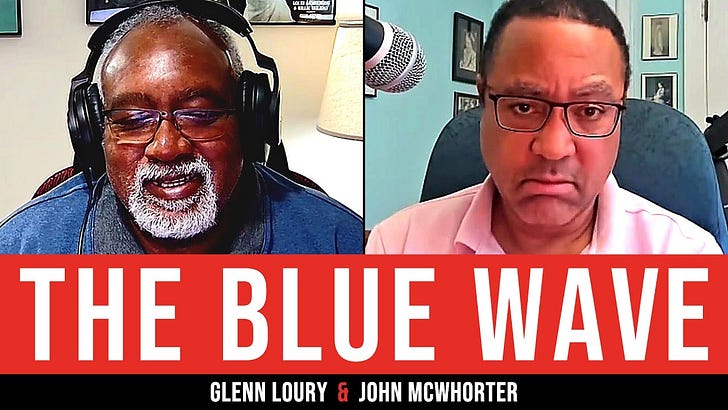
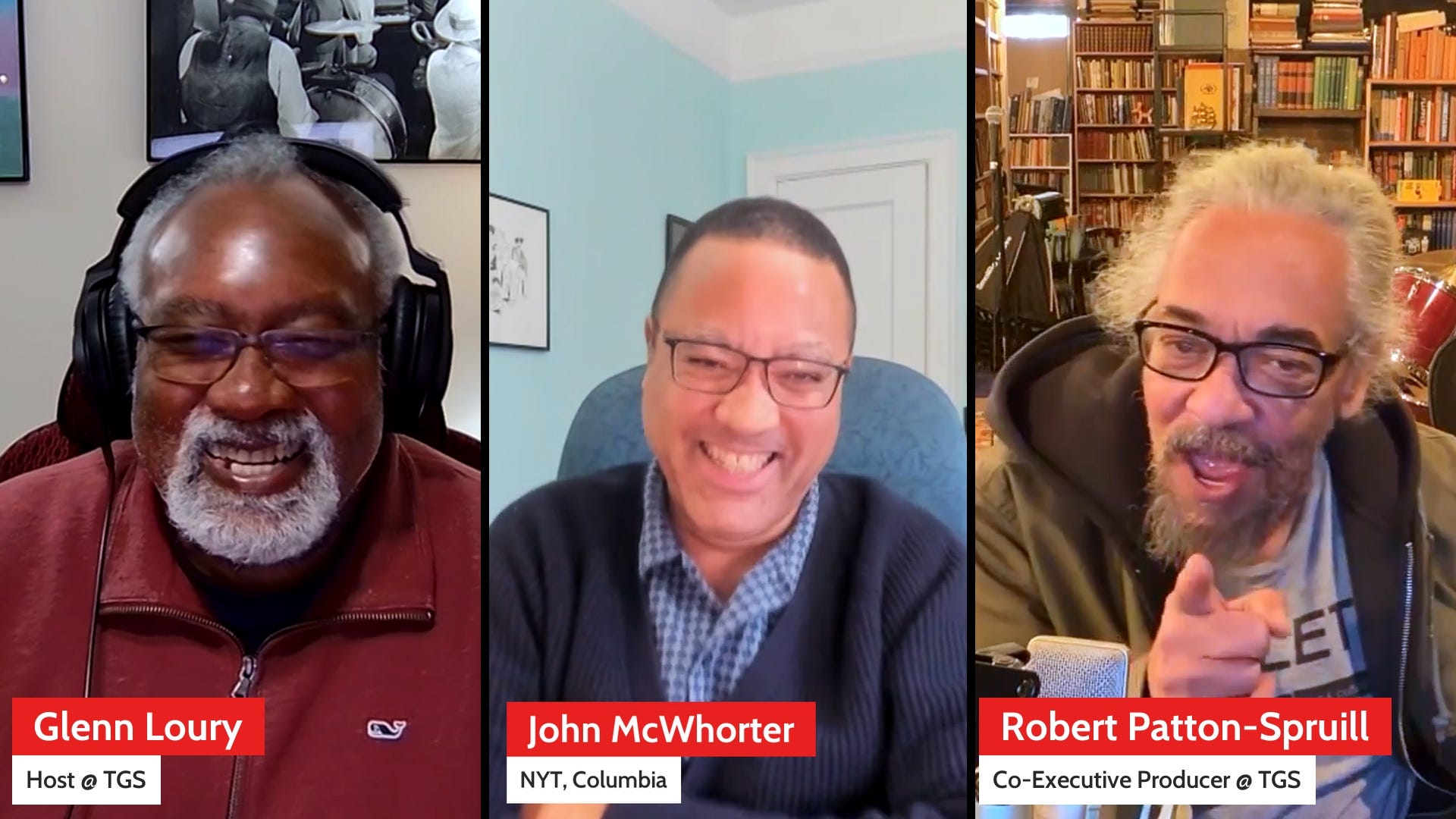
    TGS Live: John McWhorter on Racial Epithets, Israel, and the Midterms + Q&A [Free Version]

    Support The Glenn Show at https://glennloury.substack.com In this episode, Glenn and John McWhorter discuss Americans' changing views of Israel, racial insults, and the consequences of the midterm elections, including big wins for black governors and a black senator in Mississippi. The Glenn Show is almost entirely audience-supported, so to those of us who are already full subscribers, let me extend a heartfelt thank you. And if you’re not yet a full subscriber, please consider becoming one. The Glenn Show can only do what it does through the generosity of viewers and listeners. For a mere $6/month or $50/year, you’ll get access to weekly livestreams, monthly Q&A episodes with John McWhorter, commenting privileges, access to the full Substack archives, and other exclusive bonus content. This is a public episode. If you'd like to discuss this with other subscribers or get access to bonus episodes, visit glennloury.substack.com/subscribe

    • Transcript
  • November 16 · 2 min

    TGS Live: John McWhorter on Racial Epithets, Israel, and the Midterms + Q&A

    This is a free preview of a paid episode. To hear more, visit glennloury.substack.com Support The Glenn Show at https://glennloury.substack.com In this episode, Glenn and John McWhorter discuss Americans' changing views of Israel, racial insults, and the consequences of the midterm elections, including big wins for black governors and a black senator in Mississippi. In the Q&A, they take questions about former Nvidia CEO Jensen Huang’s scandal and resignation, Glenn's recent conversation with Amy Wax, language and humor, and other topics. The Glenn Show is almost entirely audience-supported, so to those of us who are already full subscribers, let me extend a heartfelt thank you. And if you’re not yet a full subscriber, please consider becoming one. The Glenn Show can only do what it does through the generosity of viewers and listeners. For a mere $6/month or $50/year, you’ll get access to weekly livestreams, monthly Q&A episodes with John McWhorter, commenting privileges, access to the full Substack archives, and other exclusive bonus content.

    • Transcript
  • November 13 · 1 hr 27 min

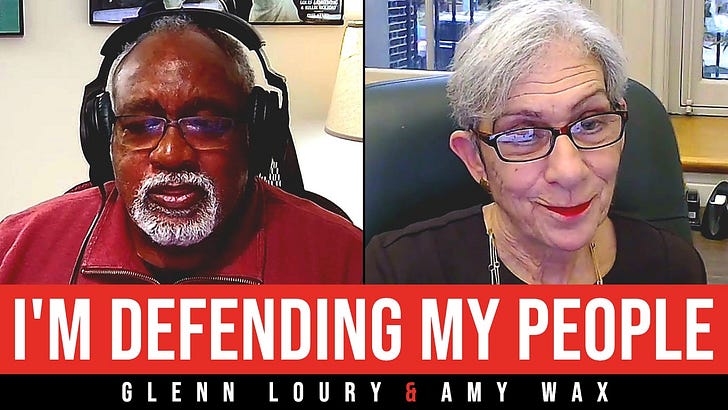
    TGS Live: Amy Wax on Affirmative Action and the Two Race Realisms [Free Version]

    Support The Glenn Show at https://glennloury.substack.com In this episode of The Glenn Show, Amy Wax of the University of Pennsylvania Carey Law School joins Glenn to talk about the ongoing struggle over affirmative actions following the Supreme Court's 2023 Students for Fair Admissions decision. Then, Glenn and Amy move on to a discussion of race realism and its potential consequences. The Glenn Show is almost entirely audience-supported, so to those of us who are already full subscribers, let me extend a heartfelt thank you. And if you’re not yet a full subscriber, please consider becoming one. The Glenn Show can only do what it does through the generosity of viewers and listeners. For a mere $6/month or $50/year, you’ll get access to weekly livestreams, monthly Q&A episodes with John McWhorter, commenting privileges, access to the full Substack archives, and other exclusive bonus content. This is a public episode. If you'd like to discuss this with other subscribers or get access to bonus episodes, visit glennloury.substack.com/subscribe

    • Transcript
  • November 10 · 3 min

    TGS Live: Amy Wax on Affirmative Action and the Two Race Realisms

    This is a free preview of a paid episode. To hear more, visit glennloury.substack.com I was joined on last Friday’s livestream by my friend Amy Wax, a professor at the University of Pennsylvania’s Carey School of Law, who offered a characteristically provocative engagement with issues of affirmative action, race, and intelligence. After I reviewed last Tuesday’s election results with Robert Patton-Spruill and Mark Sussman, Amy and I had a long conversation about the some of the most controversial topics out there. The Glenn Show is almost entirely audience-supported, so to those of us who are already full subscribers, let me extend a heartfelt thank you. And if you’re not yet a full subscriber, please consider becoming one. The Glenn Show can only do what it does through the generosity of viewers and listeners. For a mere $6/month or $50/year, you’ll get access to weekly livestreams, monthly Q&A episodes with John McWhorter, commenting privileges, access to the full Substack archives, and other exclusive bonus content. Those who haven’t been paying close attention to affirmative action since the Supreme Court’s 2023 Students for Fair Admissions decision will want to watch the show’s second segment closely. In it, Amy runs through a litany of issues involving schools, admissions criteria, and institutional practices that suggest the Court’s prohibition of race-conscious university admissions has hardly put the controversy to rest. The formal rules may have changed, but underlying conflicts over merit, racial representation, and equality continue to play out in schools, communities, and courts. I’ve long argued that affirmative action is a poor substitute for investments in development. Racial preferences at the point of selection obscure deeper problems in development processes prior to selection. The most salient issue is not who gets into what school but the processes and networks that create students who are prepared to flourish in whichever schools they attend. And there are other factors further complicating our understanding of opportunity, development, and achievement, like the incompletely understood relationship between development and inborn capacity, or “nature versus nurture,” if you like. And that can be an even touchier subject than affirmative action, as it raises the possibility that group disparities in performance may indicate empirical but yet-to-be isolated biological factors. Just ask a race realist how guarded people can get when that topic comes up. Self-described “race realists” often lament that they’re shut out of mainstream social and scientific debates before their ideas are subjected to disinterested analysis, or even before anyone bothers asking what a “race realist” is. So I asked Amy what she means when she describes herself with that term. Her answer was illuminating. She proposed a distinction between two facets of the paradigm, which she labeled “race realism 1” and “race realism 2.” The first involves acknowledging an empirical fact: average scores on tests of cognitive ability differ across racial groups. The second addresses the causes of those differences. To what extent do they reflect genetic inheritance, and to what extent do they arise from environmental circumstances and processes of human development? Amy accepts the first proposition but remains agnostic about the second. Acknowledging differences in measured cognitive performance, she emphasized, does not require endorsing any particular explanation for their origins. Maintaining that distinction is crucial, since merely pointing out group differences is sometimes regarded as a dog-whistling endorsement of innate racial hierarchies. We have incomplete knowledge when it comes to the scientific issue of intelligence and heritability. We have good evidence that genetic factors influence differences in cognitive ability between individuals, but establishing that observed differences between racial groups have a genetic origin would require disentangling environmental influences from inheritance. That is an extremely complicated problem, one we have only gone only a little way toward solving. Accordingly, epistemological modesty—admitting what we don’t know—is the wisest posture at present, though we must remain open to further scientific developments. Still, I do not think we can hand the entire debate about race and intelligence over to geneticists, no matter what they find. As a social scientist, I’m more interested in considering the consequences of measured differences between groups than I am in pursuing the origins of those differences. How we educate our young people and nurture their abilities, and how we respond to the obvious fact that some people are smarter than others are fundamentally social questions. My own work has emphasized that human development takes place within networks of relationships, institutions, and expectations. Understanding the distribution of abilities across populations is not merely a matter of innate endowment, because abilities realized in the classroom or the workplace aren’t bestowed at birth. They’re cultivated by families, friends, teachers, and the skeins of signification embodied by individual identities. Should genetics eventually explain why some people develop extraordinary cognitive abilities while others do not, those explanations would leave a host of crucial questions unanswered. How should we distribute educational opportunities? Are there conditions under which racial preferences are justifiable? Are we obliged to provide those without highly rewarded abilities some subsidizing benefits? While democratic principles do not require that we treat everyone as though they possess equal abilities, they do require that we respect the dignity of each person equally. They require that we maintain the moral proposition of the equal worth of persons even while acknowledging that talent is unequally distributed. In time, science may be able to expand our understanding of the unequal distribution of ability, a development we should welcome. But that would not resolve complex questions about the development of our capacities, how we accord moral recognition, and how we reward those who realize their potential. In other words, scientific knowledge regarding the origins of human ability can aid in the improvement and maintenance of a decent society, but it cannot do so on its own. Our traditions, our institutions, our communities, and our commitments to one another knead raw human material into its final shape. Only a small portion of that molding process can be captured by standardized test results. Yet we cannot afford to ignore or suppress scientific truth in the name of a superficial morality. When and if the evidence about innate cognitive differences between groups comes in, we’ll do ourselves no good behaving in ways that contradict it. Accepting the evidence will almost certainly lead to a certain degree of discomfort, but we cannot act as though science absolves us of our responsibilities to each other. Maintaining those responsibilities even in the face of hard evidence about group differences may well, at some future date, provide a monumental challenge to our society. We must prepare ourselves now. Engaging in good-faith discussions, like the one I had with Amy, is a good first step. If we cannot even do that, we may well be setting ourselves up for disaster.

    • Transcript
  • November 6 · 58 min

    TGS Live: Anthony Scaramucci on Trump and Money in Elections [Free Version]

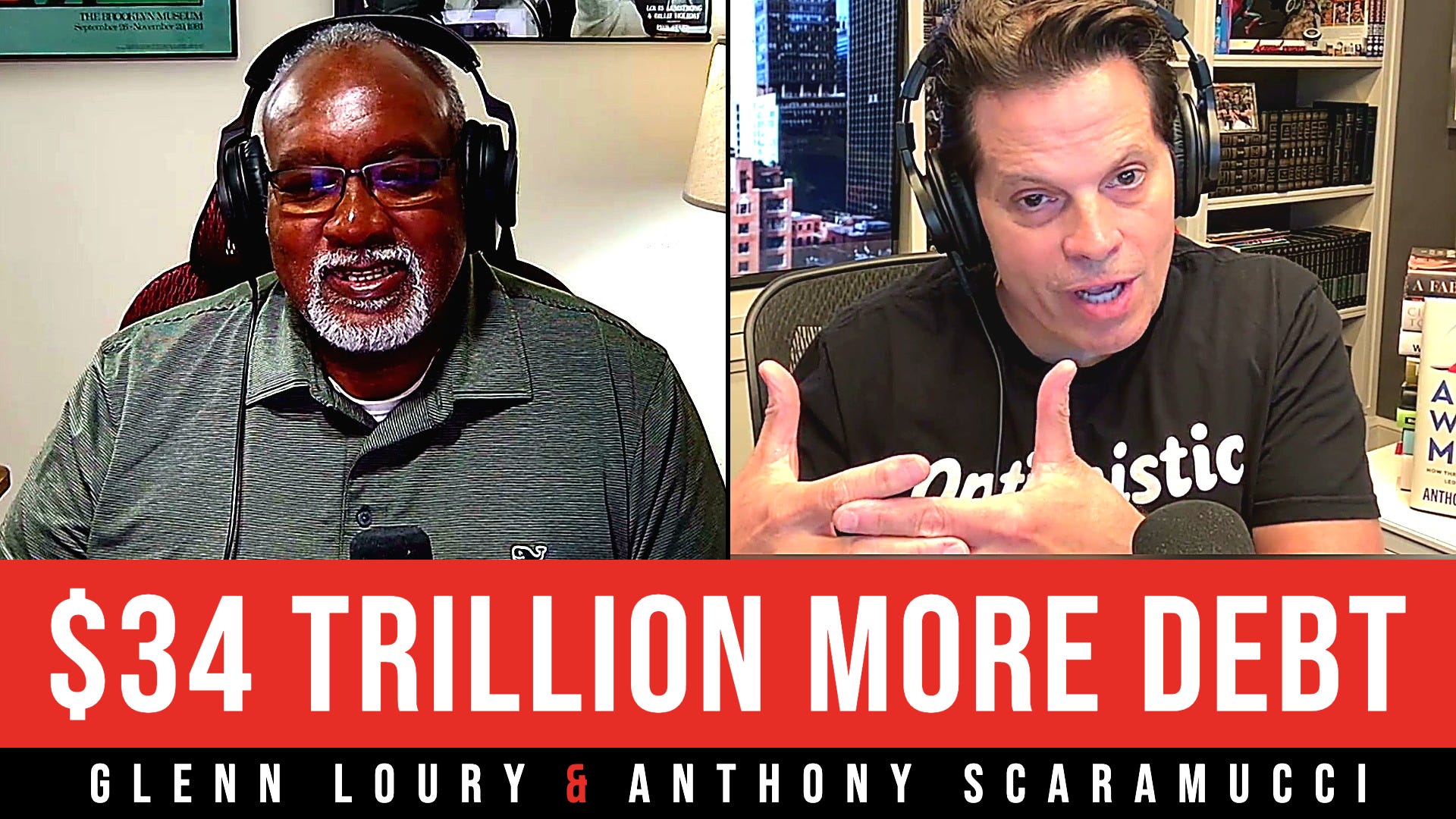
    Support The Glenn Show at https://glennloury.substack.com Glenn sits down with Anthony Scaramucci, whose new book, All the Wrong Moves: How Three Catastrophic Decisions Led to the Rise of Trump, argues that elite missteps on trade, labor, finance, and monetary policy, rather than racism and ignorance, let Trump exploit real economic anxieties. Anthony says too much wealth and power at the top has narrowed opportunity for everyone else, and he backs a constitutional amendment to curb election spending, even though he supports Citizens United. Anthony also talks about his working-class upbringing on Long Island and his brief time in the Trump administration. The Glenn Show is almost entirely audience-supported, so to those of us who are already full subscribers, let me extend a heartfelt thank you. And if you’re not yet a full subscriber, please consider becoming one. The Glenn Show can only do what it does through the generosity of viewers and listeners. For a mere $6/month or $50/year, you’ll get access to weekly livestreams, monthly Q&A episodes with John McWhorter, commenting privileges, access to the full Substack archives, and other exclusive bonus content. This is a public episode. If you'd like to discuss this with other subscribers or get access to bonus episodes, visit glennloury.substack.com/subscribe

    • Transcript
  • November 2 · 3 min

    TGS Live: Anthony Scaramucci on Trump and Money in Elections

    This is a free preview of a paid episode. To hear more, visit glennloury.substack.com Support The Glenn Show at https://glennloury.substack.com Glenn sits down with Anthony Scaramucci, whose new book, All the Wrong Moves: How Three Catastrophic Decisions Led to the Rise of Trump, argues that elite missteps on trade, labor, finance, and monetary policy, rather than racism and ignorance, let Trump exploit real economic anxieties. Anthony says too much wealth and power at the top has narrowed opportunity for everyone else, and he backs a constitutional amendment to curb election spending, even though he supports Citizens United. Anthony also talks about his working-class upbringing on Long Island and his brief time in the Trump administration. The Glenn Show is almost entirely audience-supported, so to those of us who are already full subscribers, let me extend a heartfelt thank you. And if you’re not yet a full subscriber, please consider becoming one. The Glenn Show can only do what it does through the generosity of viewers and listeners. For a mere $6/month or $50/year, you’ll get access to weekly livestreams, monthly Q&A episodes with John McWhorter, commenting privileges, access to the full Substack archives, and other exclusive bonus content.

    • Transcript
  • October 30 · 1 hr 1 min

    TGS Live: Curt Mills on the Iran War & Trump’s Legacy [Free Version]

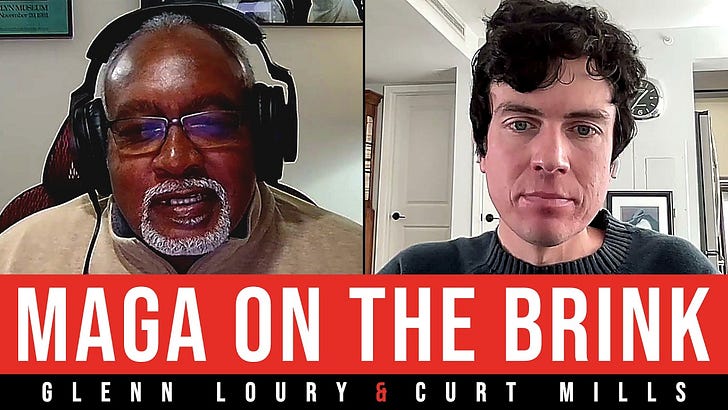
    Support The Glenn Show at https://glennloury.substack.com Glenn sits down with Curt Mills, executive director of the American Conservative, to examine the six-month-old Iran War. Mills lays out the conservative case against it and discusses Israel’s geopolitical position, noting that Netanyahu’s government likely pushed the U.S. toward war and that continued support for Israel could fracture Trump’s coalition. Glenn, who backed Trump’s anti-interventionist pitch, says he’s far more sympathetic to Mills than to the hawks. Mills also points to generational differences, suggesting younger conservatives’ wariness of war may eventually reshape the right. The Glenn Show is almost entirely audience-supported, so to those of us who are already full subscribers, let me extend a heartfelt thank you. And if you’re not yet a full subscriber, please consider becoming one. The Glenn Show can only do what it does through the generosity of viewers and listeners. For a mere $6/month or $50/year, you’ll get access to weekly livestreams, monthly Q&A episodes with John McWhorter, commenting privileges, access to the full Substack archives, and other exclusive bonus content. This is a public episode. If you'd like to discuss this with other subscribers or get access to bonus episodes, visit glennloury.substack.com/subscribe

    • Transcript
  • October 26 · 2 min

    TGS Live: Curt Mills on the Iran War & Trump’s Legacy

    This is a free preview of a paid episode. To hear more, visit glennloury.substack.com Support The Glenn Show at https://glennloury.substack.com Glenn sits down with Curt Mills, executive director of the American Conservative, to examine the six-month-old Iran War. Mills lays out the conservative case against it and discusses Israel’s geopolitical position, noting that Netanyahu’s government likely pushed the U.S. toward war and that continued support for Israel could fracture Trump’s coalition. Glenn, who backed Trump’s anti-interventionist pitch, says he’s far more sympathetic to Mills than to the hawks. Mills also points to generational differences, suggesting younger conservatives’ wariness of war may eventually reshape the right. In overtime, Glenn, Robert Patton-Spruill, and Mark Sussman discuss Mark’s reaction to Glenn's Parkinson’s announcement and how Glenn felt about sharing it. The Glenn Show is almost entirely audience-supported, so to those of us who are already full subscribers, let me extend a heartfelt thank you. And if you’re not yet a full subscriber, please consider becoming one. The Glenn Show can only do what it does through the generosity of viewers and listeners. For a mere $6/month or $50/year, you’ll get access to weekly livestreams, monthly Q&A episodes with John McWhorter, commenting privileges, access to the full Substack archives, and other exclusive bonus content.

    • Transcript
  • October 23 · 52 min

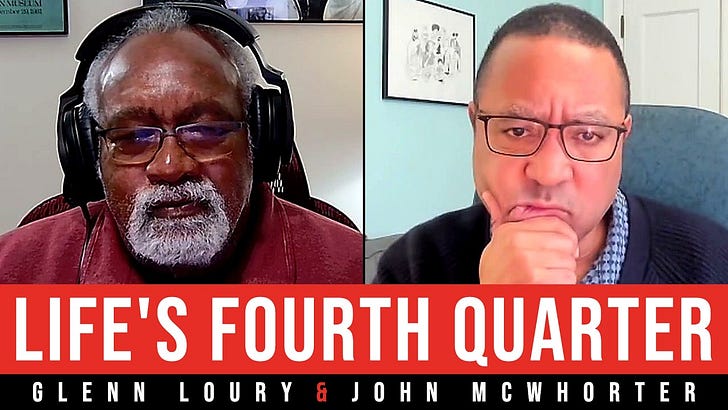
    TGS Live: Life’s Fourth Quarter with John McWhorter [Free Version]

    Support The Glenn Show at https://glennloury.substack.com Glenn opens last week's livestream by telling longtime conversation partner John McWhorter that doctors believe he has Parkinson's disease, a progressive neurodegenerative condition. He explains that managing it will mean drug therapy and physical therapy, but also an existential reckoning with how to live, and eventually die, with the illness. Glenn says periodic updates will become a regular part of the show, since it is ultimately about living honestly and with integrity. The two then move on to John's column on land acknowledgments, linguistics, and questions from the chat. The Glenn Show is almost entirely audience-supported, so to those of us who are already full subscribers, let me extend a heartfelt thank you. And if you’re not yet a full subscriber, please consider becoming one. The Glenn Show can only do what it does through the generosity of viewers and listeners. For a mere $6/month or $50/year, you’ll get access to weekly livestreams, monthly Q&A episodes with John McWhorter, commenting privileges, access to the full Substack archives, and other exclusive bonus content. This is a public episode. If you'd like to discuss this with other subscribers or get access to bonus episodes, visit glennloury.substack.com/subscribe

    • Transcript
  • October 19 · 3 min

    TGS Live: Life’s Fourth Quarter with John McWhorter

    This is a free preview of a paid episode. To hear more, visit glennloury.substack.com Support The Glenn Show at https://glennloury.substack.com Glenn opens last week's livestream by telling longtime conversation partner John McWhorter that doctors believe he has Parkinson's disease, a progressive neurodegenerative condition. He explains that managing it will mean drug therapy and physical therapy, but also an existential reckoning with how to live, and eventually die, with the illness. Loury says periodic updates will become a regular part of the show, since it is ultimately about living honestly and with integrity. The two then move on to McWhorter's column on land acknowledgments, linguistics, and questions from the chat. The Glenn Show is almost entirely audience-supported, so to those of us who are already full subscribers, let me extend a heartfelt thank you. And if you’re not yet a full subscriber, please consider becoming one. The Glenn Show can only do what it does through the generosity of viewers and listeners. For a mere $6/month or $50/year, you’ll get access to weekly livestreams, monthly Q&A episodes with John McWhorter, commenting privileges, access to the full Substack archives, and other exclusive bonus content.

    • Transcript
  • October 16 · 57 min

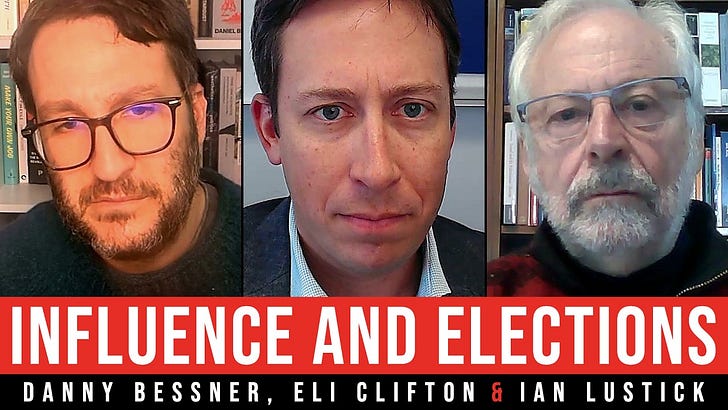
    TGS Live: Daniel Bessner, Ian Lustick, and Eli Clifton on Israel’s Lobby [Free Version]

    Support The Glenn Show at https://glennloury.substack.com Glenn sat out last week's livestream, handing hosting duties to historian Daniel Bessner for a conversation with Ian Lustick and Eli Clifton, authors of Israel's Lobby: America in the Grip of a Foreign Power. Though all three are sharply critical of Israel's actions in Gaza and of U.S. support for them, Danny presses his guests on whether criticism of the lobby risks sliding into antisemitism, whether Israeli influence can truly compel lawmakers, and whether the alliance serves American interests The Glenn Show is almost entirely audience-supported, so to those of us who are already full subscribers, let me extend a heartfelt thank you. And if you’re not yet a full subscriber, please consider becoming one. The Glenn Show can only do what it does through the generosity of viewers and listeners. For a mere $6/month or $50/year, you’ll get access to weekly livestreams, monthly Q&A episodes with John McWhorter, commenting privileges, access to the full Substack archives, and other exclusive bonus content. This is a public episode. If you'd like to discuss this with other subscribers or get access to bonus episodes, visit glennloury.substack.com/subscribe

    • Transcript
  • October 12 · 2 min

    TGS Live: Daniel Bessner, Ian Lustick, and Eli Clifton on Israel’s Lobby

    This is a free preview of a paid episode. To hear more, visit glennloury.substack.com Support The Glenn Show at https://glennloury.substack.com Glenn sat out last week's livestream, handing hosting duties to historian Daniel Bessner for a conversation with Ian Lustick and Eli Clifton, authors of Israel's Lobby: America in the Grip of a Foreign Power. Though all three are sharply critical of Israel's actions in Gaza and of U.S. support for them, Danny presses his guests on whether criticism of the lobby risks sliding into antisemitism, whether Israeli influence can truly compel lawmakers, and whether the alliance serves American interests The Glenn Show is almost entirely audience-supported, so to those of us who are already full subscribers, let me extend a heartfelt thank you. And if you’re not yet a full subscriber, please consider becoming one. The Glenn Show can only do what it does through the generosity of viewers and listeners. For a mere $6/month or $50/year, you’ll get access to weekly livestreams, monthly Q&A episodes with John McWhorter, commenting privileges, access to the full Substack archives, and other exclusive bonus content.

    • Transcript
  • October 9 · 1 hr 4 min

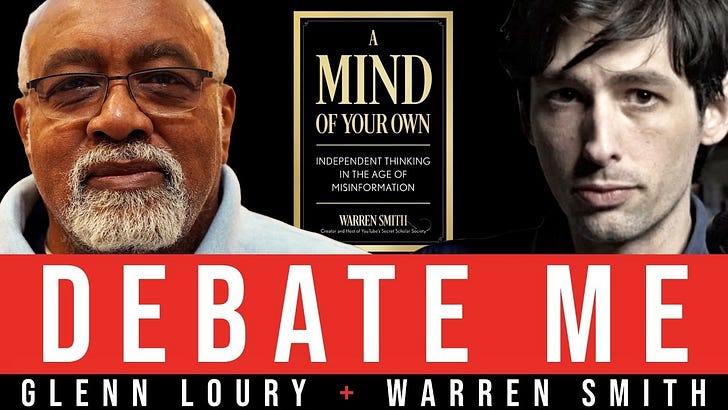
    TGS Live: Warren Smith on Critical Thinking for Influencers

    Support The Glenn Show at https://glennloury.substack.com Glenn talks with filmmaker and YouTuber Warren Smith, author of A Mind of Your Own: Critical Thinking in the Age of Misinformation, a guide for young people navigating claims on platforms like YouTube and TikTok. Executive producer Robert Patton-Spruill, Smith's former teacher, helps guide the discussion, which covers the viral moment that launched Smith's Secret Scholar Society channel, his move from filmmaker to creator, and critical thinking in a fragmented media environment. Glenn wonders how audience-driven incentives shape young people's thinking, while stressing the value of intergenerational dialogue. The Glenn Show is almost entirely audience-supported, so to those of us who are already full subscribers, let me extend a heartfelt thank you. And if you’re not yet a full subscriber, please consider becoming one. The Glenn Show can only do what it does through the generosity of viewers and listeners. For a mere $6/month or $50/year, you’ll get access to weekly livestreams, monthly Q&A episodes with John McWhorter, commenting privileges, access to the full Substack archives, and other exclusive bonus content. This is a public episode. If you'd like to discuss this with other subscribers or get access to bonus episodes, visit glennloury.substack.com/subscribe

    • Transcript
  • October 5 · 1 min

    TGS Live: Warren Smith and Robert Patton-Spruill on Critical Thinking in the Age of Misinformation + Glenn on Nikole Hannah-Jones

    This is a free preview of a paid episode. To hear more, visit glennloury.substack.com Support The Glenn Show at https://glennloury.substack.com Glenn talks with filmmaker and YouTuber Warren Smith, author of A Mind of Your Own: Critical Thinking in the Age of Misinformation, a guide for young people navigating claims on platforms like YouTube and TikTok. Executive producer Robert Patton-Spruill, Smith's former teacher, helps guide the discussion, which covers the viral moment that launched Smith's Secret Scholar Society channel, his move from filmmaker to creator, and critical thinking in a fragmented media environment. Glenn wonders how audience-driven incentives shape young people's thinking, while stressing the value of intergenerational dialogue. The show closes with Glenn's further thoughts on Nikole Hannah-Jones's essay about her daughter's schooling. The Glenn Show is almost entirely audience-supported, so to those of us who are already full subscribers, let me extend a heartfelt thank you. And if you’re not yet a full subscriber, please consider becoming one. The Glenn Show can only do what it does through the generosity of viewers and listeners. For a mere $6/month or $50/year, you’ll get access to weekly livestreams, monthly Q&A episodes with John McWhorter, commenting privileges, access to the full Substack archives, and other exclusive bonus content.

    • Transcript
  • October 4 · 5 min

    Robert Woodson Sr., 1937-2026

    Support The Glenn Show at https://glennloury.substack.com Last week, the American Enterprise Institute hosted a tribute to the life and work of Robert Woodson, who passed away on May 19, 2026. I was not able to attend, but I contributed a short remembrance of Bob, which was read beautifully by Assistant Secretary for Civil Rights at the U.S. Department of Agriculture Devon Westhill. I include video of Devon’s reading at the associated post over at Substack. You can watch video of the entire event here. The Glenn Show is almost entirely audience-supported, so to those of us who are already full subscribers, let me extend a heartfelt thank you. And if you’re not yet a full subscriber, please consider becoming one. The Glenn Show can only do what it does through the generosity of viewers and listeners. For a mere $6/month or $50/year, you’ll get access to weekly livestreams, monthly Q&A episodes with John McWhorter, commenting privileges, access to the full Substack archives, and other exclusive bonus content. This is a public episode. If you'd like to discuss this with other subscribers or get access to bonus episodes, visit glennloury.substack.com/subscribe

    • Transcript
  • October 2 · 1 hr 3 min

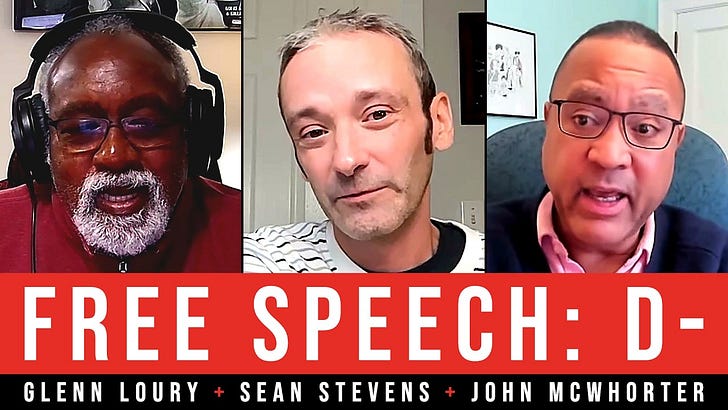
    TGS Live: Sean Stevens and John McWhorter on Campus Free Speech + Q&A [Free Version]

    Support The Glenn Show at https://glennloury.substack.com Glenn and John host Sean Stevens of FIRE to discuss the organization's College Free Speech Rankings and the methodology behind measuring campus speech climates, alongside concerns about administrations overreaching under the guise of safety—particularly around Israel-Palestine speech. The show then moves to audience Q&A, covering the earlier Nathan Cofnas conversation, race and IQ discourse, Ketanji Brown Jackson, and AI's impact on labor and education. The Glenn Show is almost entirely audience-supported, so to those of us who are already full subscribers, let me extend a heartfelt thank you. And if you’re not yet a full subscriber, please consider becoming one. The Glenn Show can only do what it does through the generosity of viewers and listeners. For a mere $6/month or $50/year, you’ll get access to weekly livestreams, monthly Q&A episodes with John McWhorter, commenting privileges, access to the full Substack archives, and other exclusive bonus content. This is a public episode. If you'd like to discuss this with other subscribers or get access to bonus episodes, visit glennloury.substack.com/subscribe

    • Transcript
  • September 28 · 2 min

    TGS Live: Sean Stevens and John McWhorter on Campus Free Speech + Q&A + Ian Rowe on Nikole Hannah-Jones

    This is a free preview of a paid episode. To hear more, visit glennloury.substack.com Support The Glenn Show at https://glennloury.substack.com Glenn and John host Sean Stevens of FIRE to discuss the organization's College Free Speech Rankings and the methodology behind measuring campus speech climates, alongside concerns about administrations overreaching under the guise of safety—particularly around Israel-Palestine speech. The show then moves to audience Q&A, covering the earlier Nathan Cofnas conversation, race and IQ discourse, Ketanji Brown Jackson, AI's impact on labor and education, and rising interest rates. In the final segment, Ian Rowe of AEI joins to discuss Nikole Hannah-Jones's essay on regretting her daughter's schooling, arguing her experience makes the case for universal school choice rather than an isolated lesson. The Glenn Show is almost entirely audience-supported, so to those of us who are already full subscribers, let me extend a heartfelt thank you. And if you’re not yet a full subscriber, please consider becoming one. The Glenn Show can only do what it does through the generosity of viewers and listeners. For a mere $6/month or $50/year, you’ll get access to weekly livestreams, monthly Q&A episodes with John McWhorter, commenting privileges, access to the full Substack archives, and other exclusive bonus content.

    • Transcript
  • September 25 · 1 hr

    TGS Live: Roland Fryer on Breaking Through Self-Censorship [Free Version]

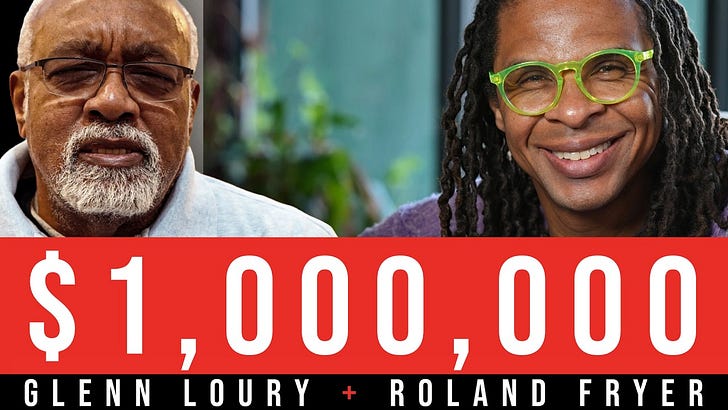
    Support The Glenn Show at https://glennloury.substack.com Glenn welcomes economist Roland Fryer—his former student and a John Bates Clark Medal and MacArthur "Genius" Grant recipient—for a wide-ranging conversation. Fryer discusses the Carob Trust Prize, a new $1 million award he co-founded with Bill Ackman (on whose selection committee Glenn sits) to reward independent, courageous social science research. The two also revisit Fryer's path into economics, Glenn's early mentorship of him, the conditions for effective DEI policy, the economics of addiction, and the controversy surrounding Fryer's use of cash incentives to boost student learning. Recorded Friday, September 18, 2026 The Glenn Show is almost entirely audience-supported, so to those of us who are already full subscribers, let me extend a heartfelt thank you. And if you’re not yet a full subscriber, please consider becoming one. The Glenn Show can only do what it does through the generosity of viewers and listeners. For a mere $6/month or $50/year, you’ll get access to weekly livestreams, monthly Q&A episodes with John McWhorter, commenting privileges, access to the full Substack archives, and other exclusive bonus content. This is a public episode. If you'd like to discuss this with other subscribers or get access to bonus episodes, visit glennloury.substack.com/subscribe

    • Transcript
  • September 21 · 1 min

    TGS Live: Roland Fryer on Breaking Through Self-Censorship

    This is a free preview of a paid episode. To hear more, visit glennloury.substack.com Support The Glenn Show at https://glennloury.substack.com Glenn welcomes economist Roland Fryer—his former student and a John Bates Clark Medal and MacArthur "Genius" Grant recipient—for a wide-ranging conversation. Fryer discusses the Carob Trust Prize, a new $1 million award he co-founded with Bill Ackman (on whose selection committee Glenn sits) to reward independent, courageous social science research. The two also revisit Fryer's path into economics, Glenn's early mentorship of him, the conditions for effective DEI policy, the economics of addiction, and the controversy surrounding Fryer's use of cash incentives to boost student learning. The Glenn Show is almost entirely audience-supported, so to those of us who are already full subscribers, let me extend a heartfelt thank you. And if you’re not yet a full subscriber, please consider becoming one. The Glenn Show can only do what it does through the generosity of viewers and listeners. For a mere $6/month or $50/year, you’ll get access to weekly livestreams, monthly Q&A episodes with John McWhorter, commenting privileges, access to the full Substack archives, and other exclusive bonus content.

    • Transcript
  • September 18 · 42 min

    TGS Live: John McWhorter and Nathan Cofnas on Race and Intelligence [Free Version]

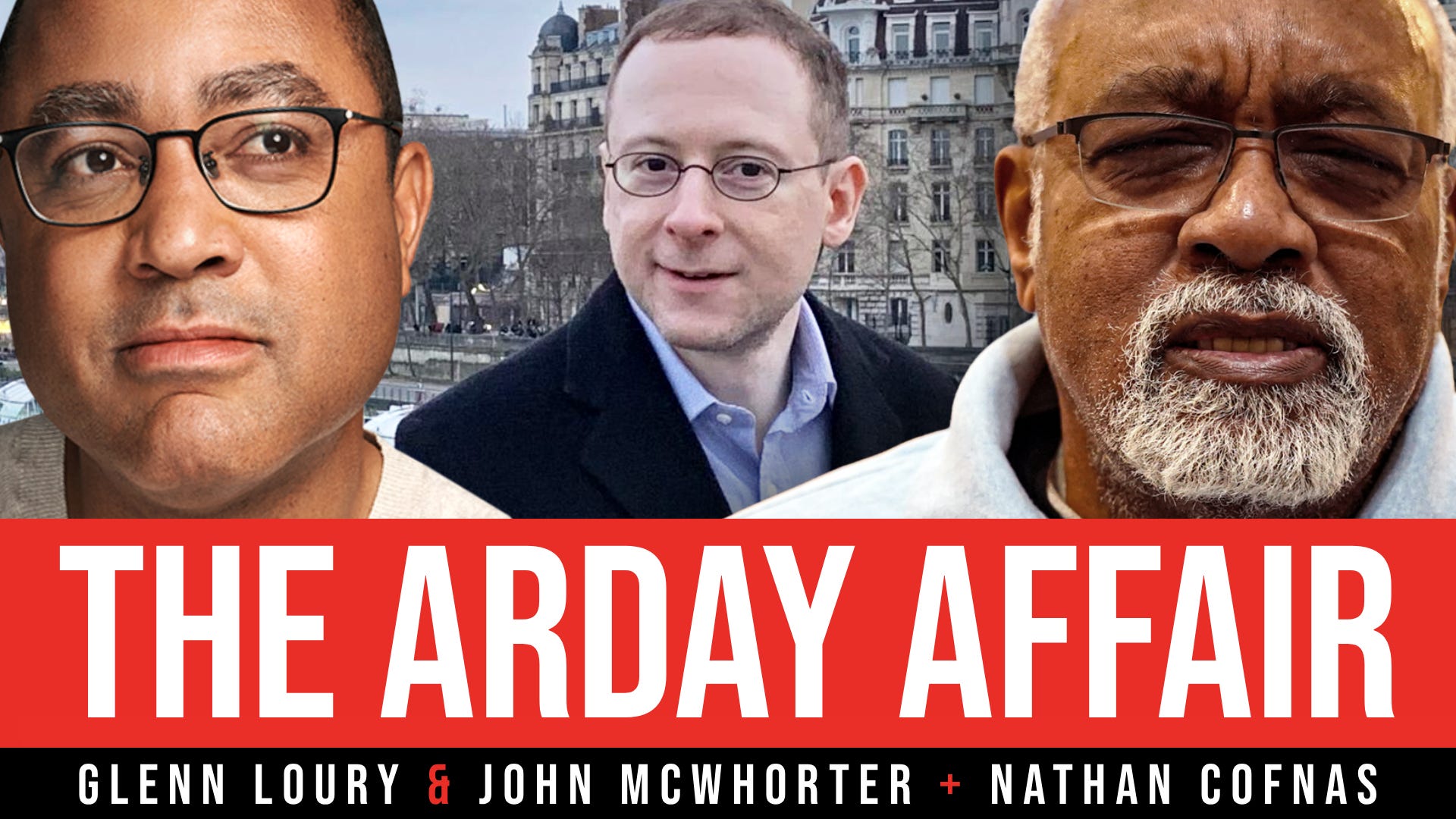
    Support The Glenn Show at https://glennloury.substack.com John McWhorter and Glenn talk with Nathan Cofnas, a philosopher of biology who exposed Jason Arday's plagiarism, for a discussion of that affair and Cofnas's own "race realist" views—that racial IQ differences are real and largely innate. McWhorter voices skepticism, questioning whether Cofnas has reckoned with the implications of his position. Glenn argues society lacks evidence to treat these differences as fixed, while maintaining the topic itself must remain open to discussion. Full version The Glenn Show is almost entirely audience-supported, so to those of us who are already full subscribers, let me extend a heartfelt thank you. And if you’re not yet a full subscriber, please consider becoming one. The Glenn Show can only do what it does through the generosity of viewers and listeners. For a mere $6/month or $50/year, you’ll get access to weekly livestreams, monthly Q&A episodes with John McWhorter, commenting privileges, access to the full Substack archives, and other exclusive bonus content. This is a public episode. If you'd like to discuss this with other subscribers or get access to bonus episodes, visit glennloury.substack.com/subscribe

    • Transcript
Showing 1–20 of 49 episodes