Skip to content
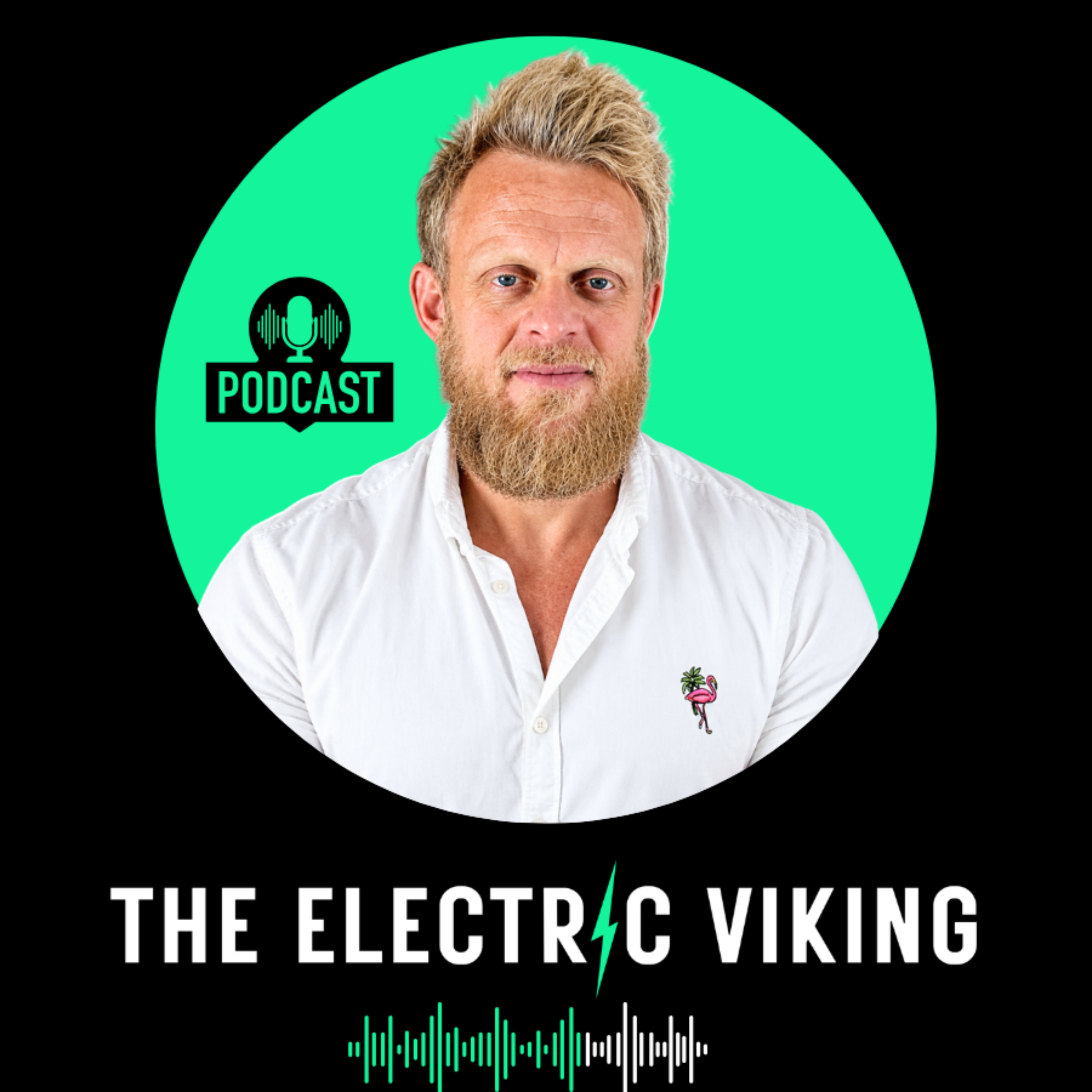
Artwork for The Electric Viking

The Electric Viking

Sam Evans

Welcome to The Electric Viking, your go-to podcast for everything electric! Join us as we explore the cutting-edge world of electric vehicles, renewable energy, and the technologies driving the shift to a cleaner, greener future. With expert insights, interviews, and the latest news, this channel is designed for anyone passionate about the EV revolution and sustainable innovation. Whether you're a seasoned enthusiast or just curious about the future of energy, you're in the right place.

Tune in to stay informed, inspired, and electrified!

Play
  • 184 episodes
  • daily
  • Avg 5 min
  • English
Counted on this page — what you have heard stays on this device, so it is not something the list can be paged by.
  • #9361
    Today · 3 min

    Why Military Gates Care About What Your Car Can Record

    China lifted the Tesla restrictions discussed here in 2024 after a government data-security review. I explain what military sites are concerned about: cameras, microphones, radar and an internet connection that could expose sensitive surroundings. For drivers, Germany's current restrictions mean certain models must stay outside secure areas; each site's security officer decides access.

  • #9366
    Today · 2 min

    Hyundai's Disputed Meeting and Australia's Battery Manufacturing Choices

    January 22 is when Hyundai executives reportedly visited Australia; I can't verify the disputed account of their meeting. I explain what the texts allege, the government's denial of a formal vehicle-plant proposal, and why the author's rival-party role warrants caution. My view for the industry: uncertainty about this meeting does not change the need to make time for carmakers considering battery factories.40

  • #9396
    Today · 3 min

    Why Mercedes-Benz Falls Foul of a More Than 15% Chinese Ownership Limit

    The proposed US bill would bar carmakers with more than 15% Chinese ownership, including Mercedes-Benz under its original wording. I explain the ownership: state-owned BAIC and Geely founder Li Shufu each hold nearly 10%, and negotiators want to distinguish ownership from control. For buyers, I think excluding Chinese rivals means higher prices and less choice; for American carmakers, it removes pressure to compete.

  • #9388
    Today · 3 min

    Inside the Longer Model Y: Cabin Space and Tesla's Production Choice

    The Model Y L is about 19 centimeters longer than the regular Model Y, with nearly all that extra space inside. Picture separate armchairs in the middle row rather than a bench: that is the cabin layout I describe. I explain why limited factory capacity favours the dearer car, but why I expect it to become the main Model Y rather than the only one.

  • #9413
    Yesterday · 3 min

    Mercedes' Profit Squeeze and the German-Built EV Comeback

    Just two to three cents of every dollar is what Mercedes expects to retain from its car business this year. I think that is a minuscule return for a luxury brand facing stronger Chinese EV competition. The electric CLA and electric GLC are its planned response both are built in Germany at factories whose new funding has been frozen.;

  • #9395
    Yesterday · 4 min

    China cuts its EV tax break in half: the pressure on buyers and factories

    China's purchase-tax break on most electric car models was cut in half this year. That makes new cars more expensive while property losses are already making buyers cautious. I explain why the resulting push overseas could bring sharper prices abroad—and tougher competition for Ford, General Motors and Stellantis outside North America.

  • #9394
    Yesterday · 3 min

    Cybercab Without a Steering Wheel: What Ownership Actually Means

    At 4.48 m long, the Cybercab is a compact car with no steering wheel. To move it yourself, you use its touchscreen, limited to 3 km an hour—not conventional driving controls. I see it primarily as an income-generating investment: with a $299 US monthly fee, renting it out matters to making the finances work.

  • #9390
    Yesterday · 5 min

    PowerCore’s almost 99 percent efficiency and the Megapack conversion path

    Tesla puts PowerCore’s efficiency at almost 99 percent. I follow electricity from a Megapack to the grid: today it undergoes conversion twice, losing energy at each step. Tesla says PowerCore cuts those losses in half, giving developers more usable energy from the same battery with less equipment to buy and install.

  • #9371
    Yesterday · 2 min

    BMW’s Battery Choice: Less Energy Density, More Affordable EVs?

    Typical LFP cells hold around 180 Wh per kilo, compared with 250 Wh per kilo for nickel cells. That means less stored energy for the same battery weight, in exchange for a cheaper, long-lasting chemistry without nickel or cobalt. I explain why I support BMW offering that choice rather than making every buyer pay for maximum range. The unresolved question is whether BMW passes the savings on.

  • #9401
    Yesterday · 3 min

    Battery Fears Versus Ownership: What the EV Evidence Says

    Battery longevity was named by 72% as a leading EV myth in the global owner survey. I explain the distinction: owners were identifying barriers in their countries, not necessarily describing their own battery worries I also talk through Ford’s capacity-retention figuresh—ow much battery capacity remains, not how many batteries faileda—nd what the fire studies mean for buyers..

  • #9363
    Yesterday · 3 min

    BYD Tang: Just Over 5 Metres Long, With a Useful Front Boot

    The All-New Tang is just over 5 metres long, close in size to a Hyundai Palisade. If you're listening rather than looking, picture a large SUV that now starts with 5 seats; the larger DaTang takes the old model's family-hauling role. I think its 205 litre front boot is genuinely useful, rather than the token storage compartment many EVs offer.

  • #9354
    Yesterday · 5 min

    Why I Leave DC Chargers at 80 Percent

    Charging from 10 to 80 percent averages 36 minutes across the cars in this comparison. I read out the results and explain why the Zeekr's battery voltage makes a common Tesla charger a slow option. I also explain my road-trip approach: leave home fully charged, then unplug at 80 percent rather than wait through the slow final stretch.

  • #9391
    Tuesday · 3 min

    BYD's 136,000 registrations and China's shrinking car market

    About 136,000 BYD cars were registered in China during the first half of November. I talk through the registration figures alongside falling overall sales: strong brand numbers do not describe the whole market. I also explain why, when buying a Chinese EV abroad, I would look at the company's position at home rather than judge the car alone.

  • #9385
    Tuesday · 9 min

    My EV Tyre Swap: What Changed Behind the Wheel

    I drove about 40 kilometers before reporting quieter driving on my new Hankooks. Off the car, I could collapse the original tyre by hand; the Hankook stayed stiff and had foam inside. Despite that stiffness, after about 200 kilometers I couldn’t detect a comfort penalty, and better cornering was the biggest change.

  • #9344
    Tuesday · 3 min

    Jetour TX Measures 4.6 meters, Including Its Tailgate Storage Box

    At 4.6 meters long including its tailgate storage box, the Jetour TX is a boxy adventure SUV. For listeners, picture a washable 150 liter front boot that can hold ice or muddy camping gear, alongside the ability to power a campsite. I explain why its moderate off-road capability could give buyers something less common than another road-focused electric SUV.

  • #9358
    Tuesday · 2 min

    Inside Volkswagen’s China-Built Family EV: Price, Hardware and the Catch

    A single front-wheel-drive motor delivers 155 kilowatts or 208 horsepower in Volkswagen’s ID. ERA 5X. For scale, I describe a proper family SUV about the size of a Geely EX5, not a small city car. I explain the Chinese platform, XPeng electronics and CATL batteries behind its pricing—nd why buyers elsewhere still have no confirmed access to this model.

  • #9352
    Tuesday · 2 min

    Why BYD's swapped rims matter beyond the supplier explanation

    November the 11th starts the replacement whole-car warranty for affected Great Tang owners; I explain what prompted it. On some rear wheel drive cars, the wider rims went at the front and the narrower rims at the back, squeezing the wide rear tires onto unsuitable rims. I question the supplier explanation because BYD missed the error and owners discovered it; this is not about the car being electric.

  • #9292
    Tuesday · 3 min

    My Ioniq 9 pickup exposed Hyundai's hydrogen problem

    I drove Hyundais Ioniq 9 from Sydney to Melbourne and back while its hydrogen plans still face a refuelling shortage. At the Sydney office, I found a huge hydrogen station beside much smaller EV chargersa— physical contrast worth describing if you're listening. I explain why the solar-to-hydrogen-to-electricity route wastes energy, and why I think Hyundai already has the cars it needs without hydrogen.'

  • #9378
    Tuesday · 2 min

    Zeekr’s 900 Volt Upgrade: What Australian Buyers Miss

    Australia gets 500 kW in the updated Zeekr performance variant, but China receives 585 kilowatt. I explain the split: Australia keeps its existing batteries, while China adds battery options and upgraded electrical architecture. I’ve owned a Zeekr 7X, and I think it deserves a global specification rather than a better-equipped version reserved for China.

  • #9365
    Tuesday · 4 min

    Chery Stockman: What Its 5.4 Meter Length Means for Buyers

    The Stockman measures 5.4 meters long, slightly longer than a Ford Ranger. For listeners who cannot see it, this is a big ute: two meters wide and 1.9 meters tall, not a compact alternative. I explain why its daily electric driving potential appeals to me, and why I still find its DC charging somewhat slow.

Showing 1–20 of 184 episodes