Skip to content
Artwork for The Digital Storm Weekly Podcast

The Digital Storm Weekly Podcast

Dr. Joerg Storm

Digital Storm Weekly is your front row seat to the technologies reshaping the world of business, leadership, and innovation.

Each episode explores the most important global trends in artificial intelligence and emerging technologies, not as abstract concepts, but as real strategies being applied inside today’s most forward thinking companies.

We sit down with company founders, CEOs, operators, and senior decision makers who are actively building the future. These are leaders who do not just talk about innovation, they institutionalize it. From AI adoption and automation to data driven decision making, platform thinking, and new operating models, we uncover how modern organizations turn technology into a competitive advantage.

Digital Storm Weekly goes beyond headlines. We decode why certain technologies matter, how companies are integrating them into daily operations, and what separates organizations that adapt early from those that fall behind. You will hear firsthand insights into how innovation becomes a habit, how culture evolves alongside technology, and how traditional industries are being quietly reinvented from the inside.

Whether you are an entrepreneur, executive, investor, technologist, or strategist, this podcast is designed to sharpen your perspective and expand how you think about the future of work, leadership, and scale.

The storm is already here. Digital Storm Weekly helps you understand it, and lead through it.

Play
  • 30 episodes
  • weekly
  • Avg 31 min
  • English
Counted on this page — what you have heard stays on this device, so it is not something the list can be paged by.
  • S1 · E30
    November 17 · 24 min

    Ep 30: Your AI Is Only as Smart as the Data You Feed It | Matt Kempson, IFS & Suzanne Kopcha, Siemens

    What happens when engineering knows how a machine was designed, but manufacturing and maintenance know how it actually performs? That disconnect can cost manufacturers millions. In this episode of Digital Storm Weekly, recorded at IFS Unleashed in Orlando, Joerg Storm sits down with Suzanne Kopcha from Siemens and Matt Kempson from IFS to discuss how industrial AI is connecting engineering, manufacturing, maintenance, and service across the entire asset lifecycle. Suzanne shares a striking example from her experience in consumer products: a manufacturing equipment change caused a product's consistency to differ from its original design, ultimately forcing the company to recall an entire product launch. Matt explains why technology alone isn't enough. Industrial AI must deliver practical outcomes, demonstrate measurable ROI, and give frontline workers the right information when they need it. Together, they discuss: Why disconnected engineering and factory operations can lead to costly production failures How Siemens and IFS are combining engineering knowledge with maintenance, asset, inventory, and operational data How AI can connect field failures back to engineering teams to improve product design and prevent future failures Why accurate asset configurations, engineering revisions, and service records are essential for trustworthy AI decisions How AI agents can support frontline workers while keeping humans involved in high-risk decisions Why manufacturers should build on existing systems rather than replace their entire technology infrastructure Why measurable business outcomes and cash flow should guide industrial AI investments Industrial AI isn't just about automating individual processes. It's about connecting engineering intent with operational reality, allowing organizations to learn from every failure, improve every decision, and build more reliable assets. For manufacturing leaders, the opportunity lies in breaking down silos and turning operational knowledge into better engineering and business decisions. 🎧 Listen to the full episode here 🔗 YouTube: https://www.youtube.com/watch?v=zFWtpwmaMjw&list=PLIUBbSI0VTk1JbL_8U7AciTe-6nCLKaKT 🔗 Amazon Music: https://music.amazon.com/podcasts/a8ccad06-05d4-45e9-9f69-a4b6eacd77c7/the-digital-storm-weekly-podcast 🔗 Apple Podcasts: https://podcasts.apple.com/us/podcast/the-digital-storm-weekly-podcast/id1867227116 🔗 Spotify: https://open.spotify.com/show/779CC9Nn8coXth0tNjlt2d 🔗 RSS: https://rss.com/podcasts/the-digital-storm-weekly-podcast/ ---- 👉 Found this helpful? Share it! ♻️ Don't miss out! For exclusive AI and tech insights trusted by 570,000+ professionals at Microsoft, Google, Amazon, and more, join my free newsletter for cutting-edge strategies to keep you ahead in AI. 🔗 Subscribe now: https://drstorm.substack.com/subscribe

  • S1 · E29
    November 10 · 21 min

    Ep 29: How agentic AI is helping Europe’s SMEs | Patrick Sostmann, CEO Alibaba.com

    Patrick Sostmann is General Manager of Alibaba.com in Europe, where he works closely with buyers and suppliers and is seeing firsthand how agentic AI is changing the future of B2B commerce. Through Alibaba.com's AI-powered platform Accio, Patrick is witnessing a shift from AI simply providing information to AI taking over entire business workflows, from market research and supplier comparisons to sourcing and customer follow-ups. But he believes the biggest challenge is not technology. It is management's ability to identify the right workflows, establish accountability, and determine where AI can create measurable value. In this episode of Digital Storm Weekly, Patrick explains how businesses can move beyond experimenting with AI and start integrating AI agents into their operations. He discusses: Why AI agents are transforming business operations from answering questions to executing entire workflows How agentic AI can reduce supplier sourcing timelines from five to seven days to overnight Why management, accountability, and trust remain the biggest barriers to adoption How AI agents are changing the way SMEs and solo entrepreneurs build and operate businesses Why human involvement remains essential in supplier negotiations, payments, and strategic decisions Why businesses should master one AI workflow before expanding automation across their organization Patrick's central message is clear: The future of AI adoption is not about automating everything at once. It is about choosing the right workflow, proving its value, establishing human oversight, and scaling step by step. For business leaders, the challenge is to rethink how work gets done and understand where AI agents can deliver real operational value. 🎧 Listen to the full episode here 🔗 YouTube: https://www.youtube.com/watch?v=z4pv5nNsWxI&list=PLIUBbSI0VTk1JbL_8U7AciTe-6nCLKaKT 🔗 Amazon Music: https://music.amazon.com/podcasts/a8ccad06-05d4-45e9-9f69-a4b6eacd77c7/the-digital-storm-weekly-podcast 🔗 Apple Podcasts: https://podcasts.apple.com/us/podcast/the-digital-storm-weekly-podcast/id1867227116 🔗 Spotify: https://open.spotify.com/show/779CC9Nn8coXth0tNjlt2d 🔗 RSS: https://rss.com/podcasts/the-digital-storm-weekly-podcast/

  • S1 · E28
    November 6 · 35 min

    Ep 28: Creative Industry Is Facing a Bloodbath. Here's Why | Dan Scharf

    Dan Scharf is Founder and CEO of muse case, one of Germany's early AI-driven UX and software agencies. With more than 15 years of experience working at the intersection of design, strategy, and technology, Dan has worked with leading brands including Porsche, BMW, Mercedes-Benz, and DHL. AI is changing how design works, but Dan believes the biggest shift is not about producing work faster. It is about changing where designers create value. As AI takes over repetitive production tasks, human judgment, critical thinking, and the ability to challenge assumptions become increasingly important. In this episode of Digital Storm Weekly, Dan explains why designers should stop viewing AI as a threat and start treating it as an opportunity to rethink their profession. He discusses: Why AI is eliminating repetitive production work rather than the entire design profession Why judgment is becoming more valuable than speed in AI-assisted design workflows How designers can use AI to challenge their thinking instead of simply generating outputs Why human empathy, disagreement, and critical thinking remain essential to creative work Why designers should never start their creative process with a prompt Dan's central message is clear: AI may change how design gets produced, but human judgment determines what is worth creating. For design leaders and creative professionals, the challenge is to move beyond asset production and focus on the thinking, decisions, and systems that create meaningful value. 🎧 Listen to the full episode here 🔗 YouTube: https://www.youtube.com/watch?v=EIQ0P66QFI0&list=PLIUBbSI0VTk1JbL_8U7AciTe-6nCLKaKT 🔗 Amazon Music: https://music.amazon.com/podcasts/a8ccad06-05d4-45e9-9f69-a4b6eacd77c7/the-digital-storm-weekly-podcast 🔗 Apple Podcasts: https://podcasts.apple.com/us/podcast/the-digital-storm-weekly-podcast/id1867227116 🔗 Spotify: https://open.spotify.com/show/779CC9Nn8coXth0tNjlt2d 🔗 RSS: https://rss.com/podcasts/the-digital-storm-weekly-podcast/ ---- 👉 Love my content? Dr Joerg Storm: https://www.linkedin.com/in/joergstorm/ Lucas Storm: https://www.linkedin.com/in/lucas-storm/ Paul Storm: https://www.linkedin.com/in/paul-storm/ Follow Dan Scharf: https://www.linkedin.com/in/muse-case-dan/

  • S1 · E27
    October 26 · 33 min

    Ep 27: AI Won’t Kill SaaS. It Will Expose Weak Software | Alice Taylor | Forterro

    Alice Taylor is Chief of Staff at Forterro, working at the intersection of AI, cloud transformation, strategy, and industrial software. AI is changing the software industry, but Alice believes the future is less about a “SaaSpocalypse” and more about natural selection. Software companies that understand their customers, own critical workflows, and deliver real value will continue to thrive. Those offering generic solutions that are easy to replace may struggle to survive. In this episode of Digital Storm Weekly, Alice explains why AI alone does not guarantee a competitive advantage, and why software businesses must focus on the value they deliver rather than the technology they adopt. She discusses: Why deeply embedded, industry-specific software has an advantage in the AI era How software companies can distinguish real business value from AI hype Why finance leaders must track measurable returns rather than impressive demonstrations How AI can improve industrial workflows using existing ERP data Why data quality, security, and human oversight remain essential for successful AI adoption Alice’s central message is clear: The future of SaaS belongs to companies that deliver real value, understand their customers, and keep improving the workflows their customers depend on. For software leaders, the challenge is not simply to adopt AI. It is to make their products more valuable, relevant, and difficult to replace. 🎧 Listen to the full episode here 🔗 YouTube: https://www.youtube.com/watch?v=qib7g4ApgIs&list=PLIUBbSI0VTk1JbL_8U7AciTe-6nCLKaKT 🔗 Amazon Music: https://music.amazon.com/podcasts/a8ccad06-05d4-45e9-9f69-a4b6eacd77c7/the-digital-storm-weekly-podcast 🔗 Apple Podcasts: https://podcasts.apple.com/us/podcast/the-digital-storm-weekly-podcast/id1867227116 🔗 Spotify: https://open.spotify.com/show/779CC9Nn8coXth0tNjlt2d 🔗 RSS: https://rss.com/podcasts/the-digital-storm-weekly-podcast/ ---- 👉 Love my content? Dr Joerg Storm: https://www.linkedin.com/in/joergstorm/ Lucas Storm: https://www.linkedin.com/in/lucas-storm/ Paul Storm: https://www.linkedin.com/in/paul-storm/ Follow Alice Taylor: https://www.linkedin.com/in/alicextaylor/?isSelfProfile=false

  • S1 · E26
    October 21 · 37 min

    Ep 26: Europe Is Running Out of Time to Catch Up With AI | Dr. Henrik Ahlers | EY

    Dr. Henrik Ahlers is the Country Managing Partner and Chairman of the Management Board of EY Germany, helping organizations navigate business transformation, industrial AI, and the future of work. AI can turn an hour of work into just four minutes. But for Henrik, the real question is not how many jobs we can eliminate. It is what people can accomplish with the 56 minutes AI gives back. In this episode of Digital Storm Weekly, Henrik explains why businesses need to look beyond efficiency gains and focus on using AI to improve products, serve customers better, and create new opportunities. He discusses: ● Why AI strategies should prioritize human potential over headcount reduction ● How automation can free employees to focus on more valuable work ● Why innovation requires environments where people feel safe to experiment ● How businesses can use AI to reinvent their products and business models ● Why leadership must communicate the opportunities of AI, not just the threat to jobs Henrik’s central message is clear: The real value of AI is not the four minutes saved. It is what we do with the 56 minutes that remain. For business leaders, AI transformation should be about improving what people can achieve, not simply reducing the cost of getting work done. 🎧 Listen to the full episode here 🔗 YouTube: https://www.youtube.com/watch?v=HYSe__mmrjo&list=PLIUBbSI0VTk1JbL_8U7AciTe-6nCLKaKT 🔗 Amazon Music: https://music.amazon.com/podcasts/a8ccad06-05d4-45e9-9f69-a4b6eacd77c7/the-digital-storm-weekly-podcast 🔗 Apple Podcasts: https://podcasts.apple.com/us/podcast/the-digital-storm-weekly-podcast/id1867227116 🔗 Spotify: https://open.spotify.com/show/779CC9Nn8coXth0tNjlt2d 🔗 RSS: https://rss.com/podcasts/the-digital-storm-weekly-podcast/ ---- 👉 Love my content? Dr Joerg Storm: https://www.linkedin.com/in/joergstorm/ Lucas Storm: https://www.linkedin.com/in/lucas-storm/ Paul Storm: https://www.linkedin.com/in/paul-storm/ Follow Dr. Henrik Ahlers: https://www.linkedin.com/in/henrik-ahlers/?isSelfProfile=false

  • S1 · E25
    October 13 · 35 min

    Ep 25: Europe’s AI Advantage Nobody Is Talking About | Elias Schneider |Codesphere

    Elias Schneider is the Co-founder and CEO of Codesphere, a company helping organizations run modern cloud infrastructure with greater control, flexibility, and independence. Europe wants to become an AI power, but much of its critical digital infrastructure still depends on US cloud providers. For Elias, the problem goes beyond technology. It comes down to who Europe chooses to buy from. In this episode of Digital Storm Weekly, Elias shares why Europe needs to rethink its approach to digital sovereignty and invest in its own technology ecosystem. He discusses: Why digital sovereignty is about control and dependency, not just where data is stored Why European governments and businesses need to buy more from European technology companies How procurement decisions can help build globally competitive AI and cloud companies Why relying on US hyperscalers creates long-term risks for critical infrastructure Why European founders should aim to build the next generation of cloud platforms and core infrastructure How Codesphere helps organizations reduce cloud costs and avoid vendor lock-in Elias's central message is clear: Europe cannot build strong technology companies if it refuses to buy from them. Strategic procurement, ambitious founders, and long-term investment are essential to building a competitive European AI ecosystem. For business leaders, digital sovereignty is not just a compliance decision. It is a strategic choice about control, resilience, and Europe's technological future. 🎧 Listen to the full episode here 🔗 YouTube: https://www.youtube.com/watch?v=cJXutSsDmBg&list=PLIUBbSI0VTk1JbL_8U7AciTe-6nCLKaKT 🔗 Amazon Music: https://music.amazon.com/podcasts/a8ccad06-05d4-45e9-9f69-a4b6eacd77c7/the-digital-storm-weekly-podcast 🔗 Apple Podcasts: https://podcasts.apple.com/us/podcast/the-digital-storm-weekly-podcast/id1867227116 🔗 Spotify: https://open.spotify.com/show/779CC9Nn8coXth0tNjlt2d 🔗 RSS: https://rss.com/podcasts/the-digital-storm-weekly-podcast/ ---- 👉 Love my content? Dr Joerg Storm: https://www.linkedin.com/in/joergstorm/ Lucas Storm: https://www.linkedin.com/in/lucas-storm/ Paul Storm: https://www.linkedin.com/in/paul-storm/ Follow Elias Schneider: https://www.linkedin.com/in/eliasschndr

  • S1 · E24
    October 9 · 12 min

    Ep 24: You’re still Responsible When AI Gets It Wrong | Kishan Chetan | Salesforce

    Kishan Chetan leads Agentforce Service at Salesforce, where he focuses on how AI agents are changing the way businesses serve their customers. Traditional chatbots could answer questions, but they often stopped short of actually completing tasks. AI agents are changing that by taking action, resolving issues, and supporting customers across channels, including voice. In this episode of Digital Storm Weekly, Kishan shares a practical perspective on what it takes to move from conversational AI to autonomous customer service. He discusses: ● Why AI agents go beyond traditional chatbots by completing tasks, not just answering questions ● How Salesforce's AI service agent, Casey, has fully resolved 5 million conversations ● How companies such as Engine and Williams Sonoma are using agents to handle real customer needs ● Where human judgment and empathy remain essential in customer interactions ● How AI agents are enabling 24/7 customer service across channels ● Why outcome-based pricing is becoming relevant as AI takes on more work ● How service teams can shift from routine requests to complex problem-solving and revenue growth ● Why businesses remain accountable when their AI agents make mistakes ● What it takes to make voice agents sound natural and respond without frustrating delays Kishan's central message is clear: AI transforms customer service when it stops answering questions and starts resolving problems autonomously. For business leaders, the opportunity is not simply to reduce service costs. It is to improve customer satisfaction, build loyalty, and deliver better experiences at scale. 🎧 Listen to the full episode here 🔗 YouTube: The Digital Storm Weekly Podcast 👉 Love my content? Follow Dr Joerg Storm for more AI and tech insights. 👉 Found this helpful? Share it! 🔗 Subscribe to the newsletter: https://drstorm.substack.com/subscribe —----------------------- 🎧 𝗟𝗶𝘀𝘁𝗲𝗻 𝘁𝗼 𝘁𝗵𝗲 𝗳𝘂𝗹𝗹 𝗲𝗽𝗶𝘀𝗼𝗱𝗲 𝗵𝗲𝗿𝗲 🔗 YouTube: https://www.youtube.com/watch?v=PHJaXGAo4qs&list=PLIUBbSI0VTk1JbL_8U7AciTe-6nCLKaKT 🔗 Amazon Music: https://music.amazon.com/podcasts/a8ccad06-05d4-45e9-9f69-a4b6eacd77c7/the-digital-storm-weekly-podcast 🔗 Apple Podcasts: https://podcasts.apple.com/us/podcast/the-digital-storm-weekly-podcast/id1867227116 🔗 Spotify: https://open.spotify.com/show/779CC9Nn8coXth0tNjlt2d 🔗 RSS: https://rss.com/podcasts/the-digital-storm-weekly-podcast/

  • S1 · E23
    September 29 · 35 min

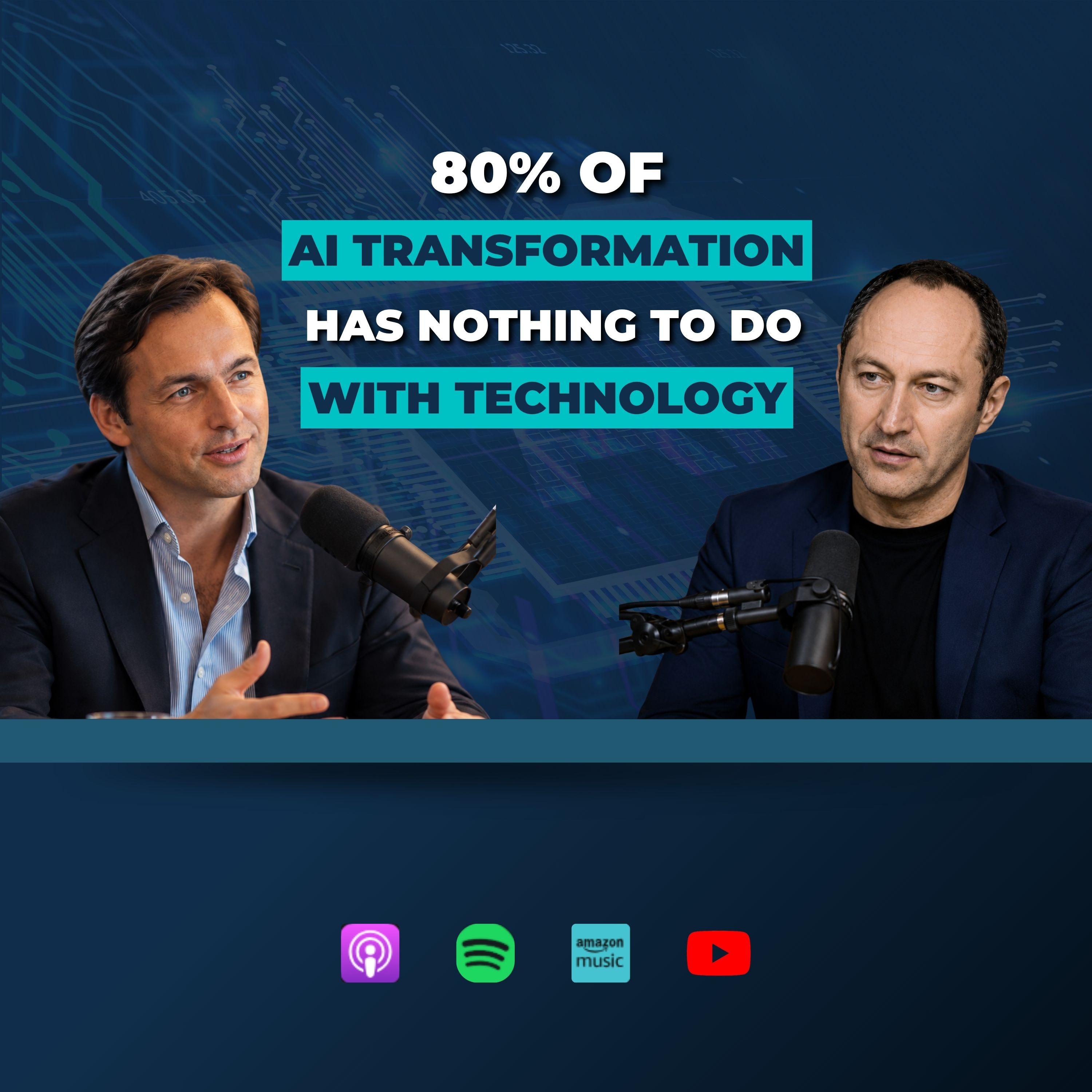
    Ep 23: 80% of AI Transformation Has Nothing to Do With Technology | Dr. Stefan Sambol | OMMAX

    Dr. Stefan Sambol has spent more than 15 years working at the intersection of digital strategy, data, technology, and business transformation. As a founding partner of OMMAX, he has worked with companies and investors on turning AI from an emerging technology into measurable business impact. In this episode, Dr. Stefan brings a practical perspective to a question many CEOs are facing: What does AI actually change inside a business? For Stefan, the answer goes far beyond productivity tools. AI is changing operating models, workflows, commercial economics, organizational structures, and the way companies create value. In this episode, Stefan Sambol discusses: ● Why AI has moved from a productivity tool to a structural economic shift ● How CEOs can rethink their entire value chain through an AI-first lens ● Why AI initiatives should be driven by the CEO and business, not treated as IT projects ● How companies can identify the AI initiatives that actually move EBITDA ● Why 20% of AI transformation is technology and 80% is organization, processes, ownership, and change management ● Why many AI pilots fail to move into real production and measurable value ● How AI can preserve critical organizational knowledge while improving efficiency ● How AI agents are already creating measurable value in sales, pricing, and customer operations ● Why SaaS companies need to rethink their role inside critical customer workflows ● Where AI creates real risks and why humans still need to remain in the loop ● Why companies often overestimate their AI readiness ● What leaders need to prioritize as AI transforms the workforce and operating model Stefan's message is clear: AI is not simply another tool businesses can add to their existing operations. It requires leaders to rethink how the business works, where value is created, how people work, and where resources should be allocated. And the companies that make this shift successfully will be the ones that move beyond experimentation and turn AI into measurable business impact. —----------------------- 🎧 𝗟𝗶𝘀𝘁𝗲𝗻 𝘁𝗼 𝘁𝗵𝗲 𝗳𝘂𝗹𝗹 𝗲𝗽𝗶𝘀𝗼𝗱𝗲 𝗵𝗲𝗿𝗲 🔗 YouTube: https://www.youtube.com/watch?v=fpjYkVdEaiI&list=PLIUBbSI0VTk1JbL_8U7AciTe-6nCLKaKT 🔗 Amazon Music: https://music.amazon.com/podcasts/a8ccad06-05d4-45e9-9f69-a4b6eacd77c7/the-digital-storm-weekly-podcast 🔗 Apple Podcasts: https://podcasts.apple.com/us/podcast/the-digital-storm-weekly-podcast/id1867227116 🔗 Spotify: https://open.spotify.com/show/779CC9Nn8coXth0tNjlt2d 🔗 RSS: https://rss.com/podcasts/the-digital-storm-weekly-podcast/

  • S1 · E22
    September 17 · 35 min

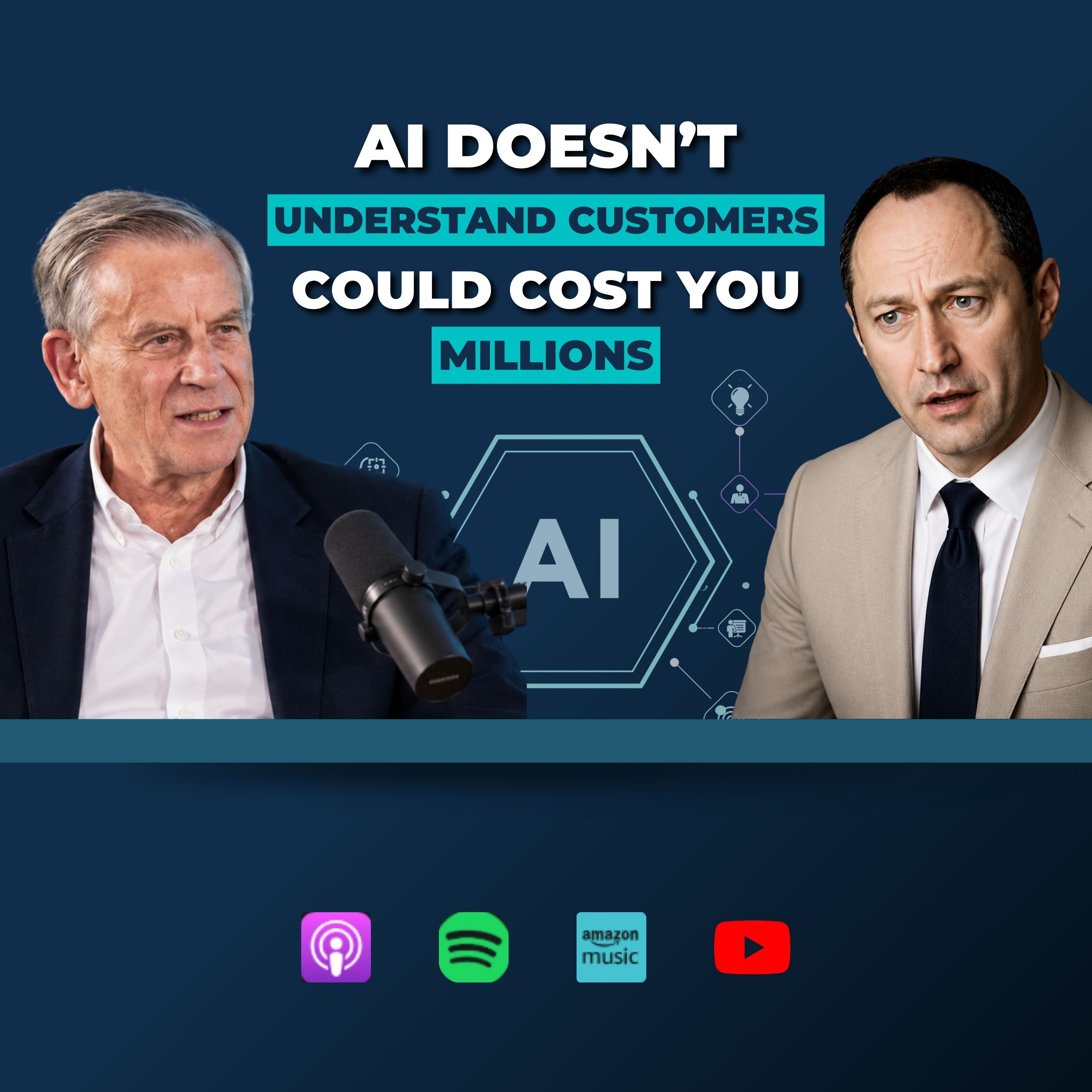
    Ep 22: AI Doesn’t Understand Customers. Could Cost You Millions. | Professor Dr. Dr. Hermann Simon

    Professor Dr. Dr. Hermann Simon has spent decades studying what makes companies successful, long before artificial intelligence became the center of every business conversation. As the founder of Simon-Kucher, one of the world’s leading strategy and pricing consultancies, the author of more than 40 books, and the mind behind the concept of Hidden Champions, Simon has shaped how executives think about pricing, customer value, strategy, and competitive advantage. His work has reached some of the world’s most influential business schools and companies. Now, as a heavy user of AI himself, he brings a perspective that cuts through much of the current excitement: AI can improve analysis, but it cannot replace judgment, leadership, or the ability to understand people. In this episode, Hermann Simon discusses: ● Why AI’s reliability and credibility are often overestimated ● How AI is changing business faster than previous technological waves ● Why better data does not automatically lead to better decisions ● What leaders must still decide themselves, even in an AI-driven organization ● Why leadership, trust, and understanding human behavior cannot be delegated to algorithms ● How AI can reveal patterns while still failing to explain causality ● Why customer-perceived value matters more than simply optimizing price and volume ● What Hidden Champions teach us about focus, specialization, and deep customer knowledge ● Why creativity beyond AI and speed of implementation may define future competitive advantage ● What management principles will remain relevant even after AI matures The conversation brings the discussion back to a fundamental business truth: AI can improve the information available to leaders. It cannot take responsibility for the decisions they make. —----------------------- 🎧 𝗟𝗶𝘀𝘁𝗲𝗻 𝘁𝗼 𝘁𝗵𝗲 𝗳𝘂𝗹𝗹 𝗲𝗽𝗶𝘀𝗼𝗱𝗲 𝗵𝗲𝗿𝗲 🔗 YouTube: https://www.youtube.com/watch?v=VfnAHf6MIls&list=PLIUBbSI0VTk1JbL_8U7AciTe-6nCLKaKT 🔗 Amazon Music: https://music.amazon.com/podcasts/a8ccad06-05d4-45e9-9f69-a4b6eacd77c7/the-digital-storm-weekly-podcast 🔗 Apple Podcasts: https://podcasts.apple.com/us/podcast/the-digital-storm-weekly-podcast/id1867227116 🔗 Spotify: https://open.spotify.com/show/779CC9Nn8coXth0tNjlt2d 🔗 RSS: https://rss.com/podcasts/the-digital-storm-weekly-podcast/

  • S1 · E21
    September 11 · 32 min

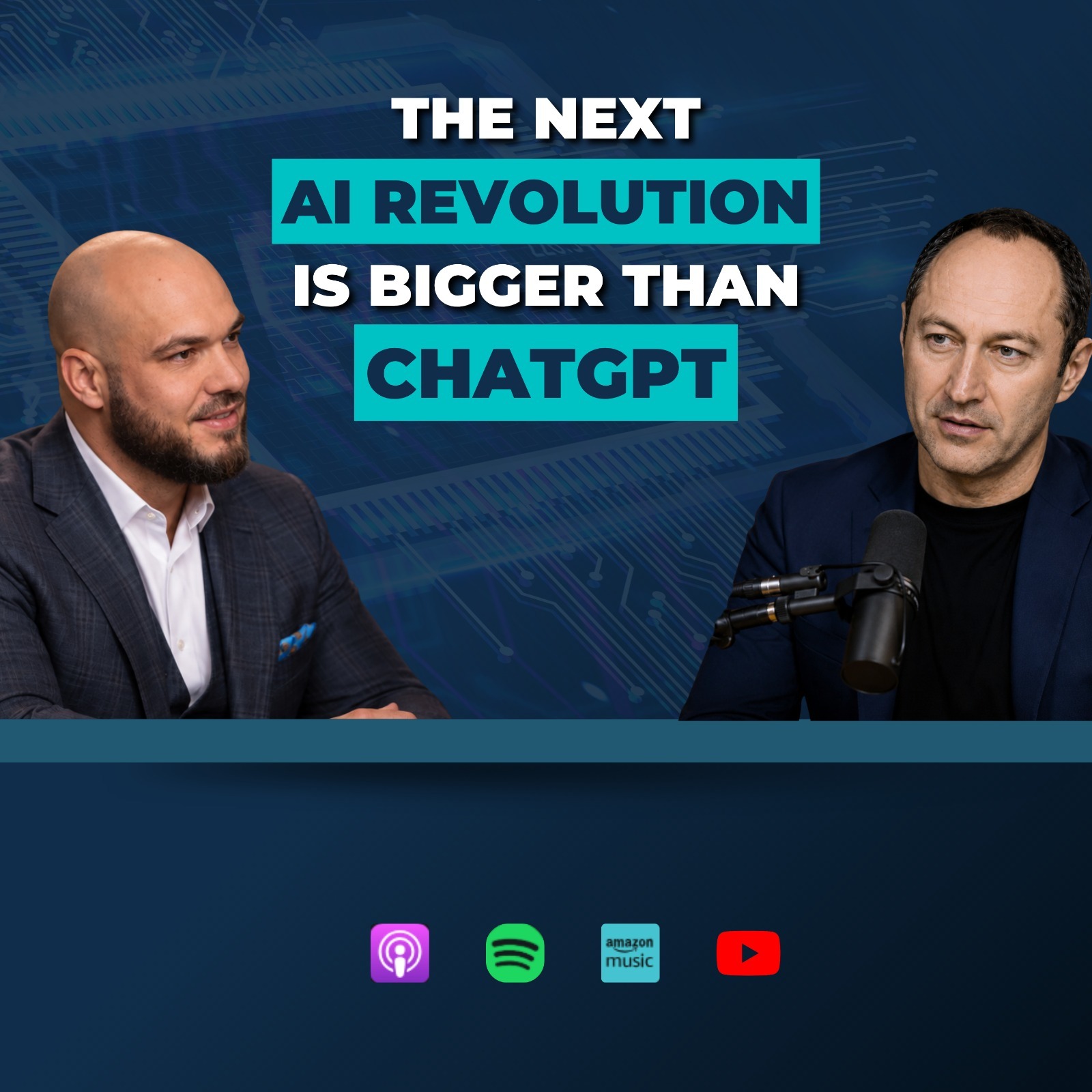
    Ep 21:The Next AI Revolution Is Bigger Than ChatGPT | Jonas Anker | Anker Capital

    Jonas Anker doesn't approach investing like someone who only studies companies from the outside. He approaches it like a builder who has spent the last decade creating them. From starting with very little to building three profitable companies, achieving successful exits, and now investing across AI, deep tech, and hard assets, Jonas has developed a perspective shaped by execution rather than theory. His experience in full-contact martial arts, including winning an amateur world championship, also shaped something central to how he operates: discipline, resilience, and the refusal to walk away when things get difficult. In this episode, Jonas discusses: ● How he went from studying law to becoming a self-made entrepreneur ● Why he considers himself a builder first and an investor second ● What martial arts taught him about fear, persistence, and pushing beyond limits ● Why Anker Capital takes a hands-on approach instead of simply deploying capital ● How he evaluates founders, their ambition, integrity, and ability to execute ● Why he spends more time understanding the downside than chasing a potential 100x return ● What separates genuinely defensible AI companies from businesses simply using AI as a label ● Why specialized AI solutions may have a stronger future than generalist products ● How his experience building companies influences the way he invests in them Jonas’ story offers a perspective that goes beyond venture capital: Capital can fund a company. Experience, judgment, and persistence help build one. —----------------------- 🎧 𝗟𝗶𝘀𝘁𝗲𝗻 𝘁𝗼 𝘁𝗵𝗲 𝗳𝘂𝗹𝗹 𝗲𝗽𝗶𝘀𝗼𝗱𝗲 𝗵𝗲𝗿𝗲 🔗 YouTube: https://www.youtube.com/watch?v=Smu8hV9AUuk&list=PLIUBbSI0VTk1JbL_8U7AciTe-6nCLKaKT 🔗 Amazon Music: https://music.amazon.com/podcasts/a8ccad06-05d4-45e9-9f69-a4b6eacd77c7/the-digital-storm-weekly-podcast 🔗 Apple Podcasts: https://podcasts.apple.com/us/podcast/the-digital-storm-weekly-podcast/id1867227116 🔗 Spotify: https://open.spotify.com/show/779CC9Nn8coXth0tNjlt2d 🔗 RSS: https://rss.com/podcasts/the-digital-storm-weekly-podcast/ ---- 👉 Love my content? Dr Joerg Storm: https://www.linkedin.com/in/joergstorm/ Lucas Storm: https://www.linkedin.com/in/lucas-storm/ Paul Storm: https://www.linkedin.com/in/paul-storm/ Follow Jonas Anker : https://www.linkedin.com/in/jonas-anker-37aa29213/

  • S1 · E20
    September 3 · 23 min

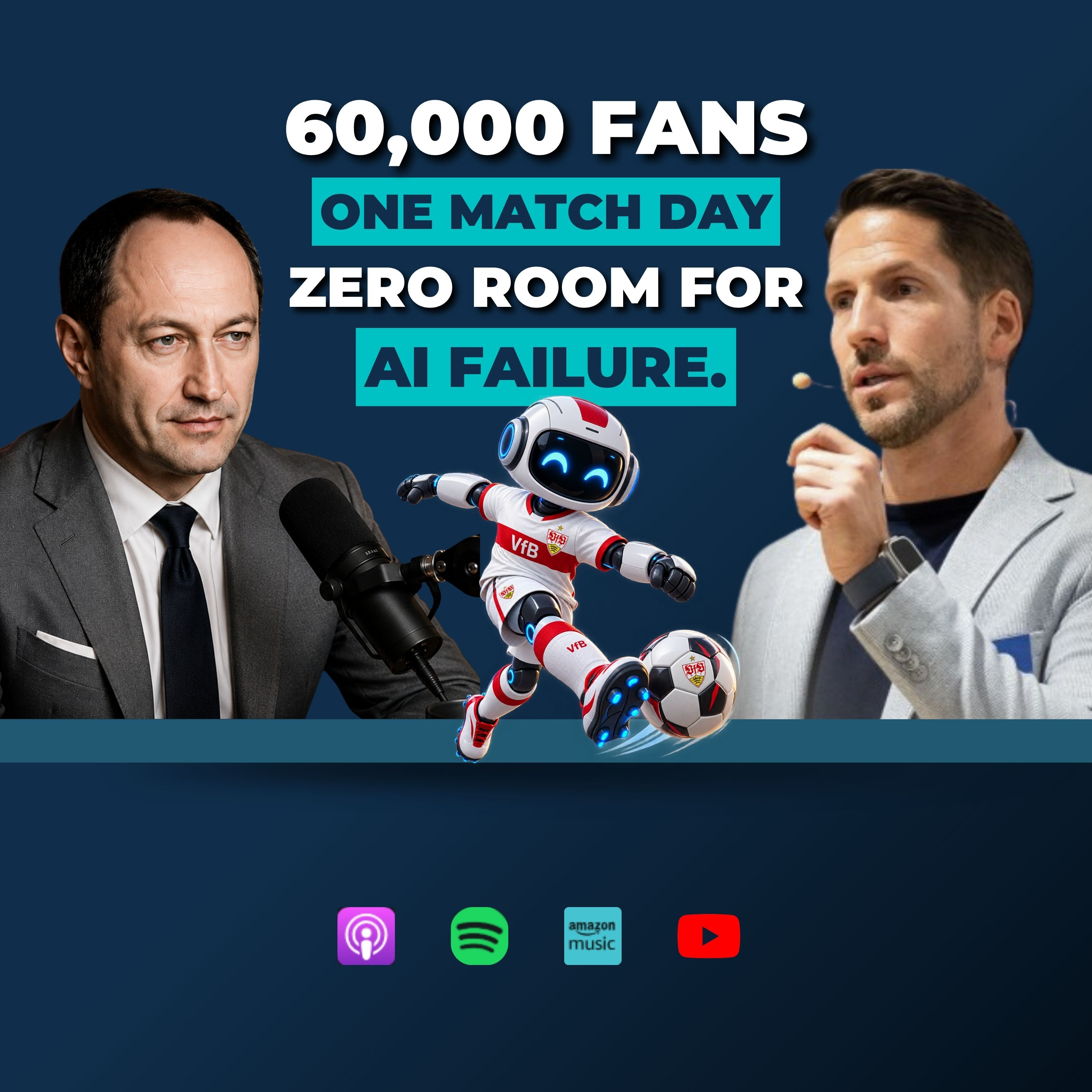
    Ep 20: 60K Fans. One Match Day. Zero Room for AI Failure | Christian Ruf | VfB Stuttgart

    AI in football is not about adding another layer of technology. It is about making a complex, high-pressure organization work better. VfB Stuttgart’s Chief Digital Officer, Christian Ruf, shares what it actually takes to turn data, AI, and innovation into operational impact inside a Bundesliga club. From his experience at VfB Stuttgart, Christian explains why innovation has to move beyond impressive demos and become part of the systems and workflows people rely on every day. His perspective is shaped by a unique environment: 60,000 people on match day, constant performance pressure, fragmented information, and virtually no tolerance for errors. In this episode, Christian discusses: Why AI is most valuable when there is high volume and repetition How AI helped VfB Stuttgart handle around 250,000 incoming requests around the cup final Why AI should improve the speed and quality of decisions, rather than replace human judgment Why broken workflows and fragmented data can undermine even the most promising AI projects How live testing with tens of thousands of fans reveals things simulations cannot Why cultural change takes longer than technological implementation How innovation at VfB Stuttgart is being connected to new revenue streams, partnerships, audience engagement, and sports operations Why football's emotional connection with fans creates a different kind of digital challenge What leaders can learn from football about operating with incomplete information and constant pressure Christian's experience leads to a simple principle: Don't build for technology. Build for impact. Because the real test of innovation isn't whether it looks impressive. It's whether it improves performance, changes decisions, or creates tangible value. —----------------------- 🎧 𝗟𝗶𝘀𝘁𝗲𝗻 𝘁𝗼 𝘁𝗵𝗲 𝗳𝘂𝗹𝗹 𝗲𝗽𝗶𝘀𝗼𝗱𝗲 𝗵𝗲𝗿𝗲 🔗 YouTube: https://www.youtube.com/watch?v=sEtmmDeY4IE&list=PLIUBbSI0VTk1JbL_8U7AciTe-6nCLKaKT 🔗 Amazon Music: https://music.amazon.com/podcasts/a8ccad06-05d4-45e9-9f69-a4b6eacd77c7/the-digital-storm-weekly-podcast 🔗 Apple Podcasts: https://podcasts.apple.com/us/podcast/the-digital-storm-weekly-podcast/id1867227116 🔗 Spotify: https://open.spotify.com/show/779CC9Nn8coXth0tNjlt2d 🔗 RSS: https://rss.com/podcasts/the-digital-storm-weekly-podcast/

  • S1 · E19
    August 31 · 36 min

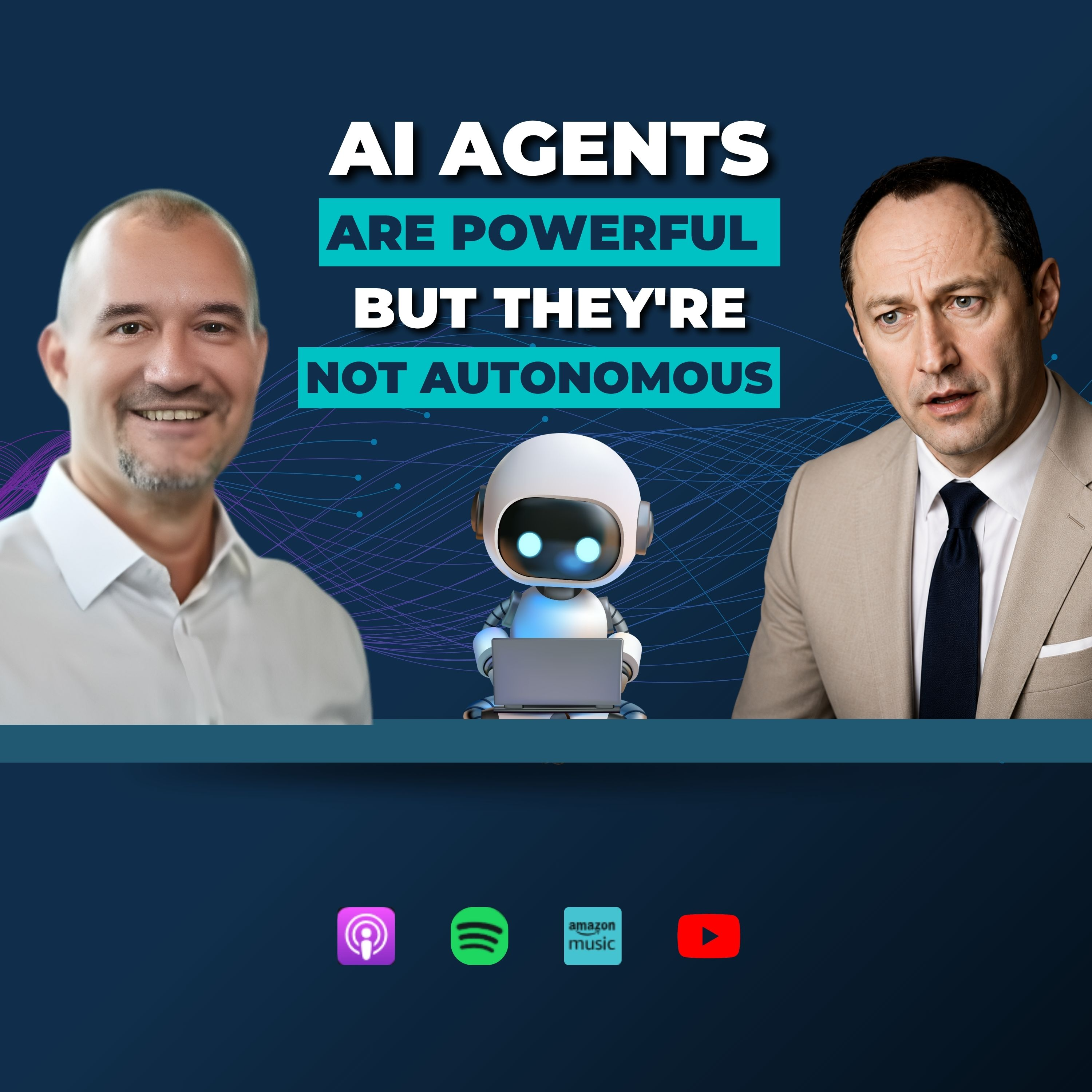
    Ep 19: AI Agents Are Powerful, But They're Not Autonomous | Sven Denecken | SAP

    AI is moving beyond chatbots and copilots. The bigger opportunity is embedding intelligence directly into the processes, systems, and physical operations that run an enterprise. Sven Denecken, Senior Vice President for SAP Industries, sees this shift from the perspective of someone working across enterprise architecture, industry value chains, and AI execution at global scale. In this episode of Digital Storm Weekly, Sven explains why the next phase of enterprise AI will depend less on chasing the newest model and more on connecting AI with trusted data, business processes, security, and real-world context. His central message is clear: Good architecture beats technology when AI reaches the real world. Sven shares practical perspectives on: • Why structured enterprise data can become a competitive advantage for AI • Why preserving data semantics and business context is critical for reliable automation • What changes when AI moves from screens into machines, networks, and industrial environments • Why security, governance, and cost need to be considered before scaling AI • How SAP approaches AI using customer data within its business context • Why small language models and local reasoning could become increasingly important in industrial environments • What separates AI experiments from systems that can actually operate at enterprise scale • Why combining different AI approaches may be more valuable than betting on a single methodology • How companies can use AI to transform entire workflows rather than simply accelerate individual tasks From manufacturing and supply chains to predictive maintenance, robotics, healthcare, and automotive, Sven highlights where AI is already beginning to change how industries operate. For executives thinking about the next stage of AI adoption, this conversation offers a practical perspective on moving from impressive demonstrations to AI that can safely operate inside the business. Don't just ask what AI can do. Ask where it can create measurable value, and whether your architecture is ready to support it. —----------------------- 🎧 𝗟𝗶𝘀𝘁𝗲𝗻 𝘁𝗼 𝘁𝗵𝗲 𝗳𝘂𝗹𝗹 𝗲𝗽𝗶𝘀𝗼𝗱𝗲 𝗵𝗲𝗿𝗲 🔗 YouTube: https://www.youtube.com/watch?v=L_vZcEupdb4&list=PLIUBbSI0VTk1JbL_8U7AciTe-6nCLKaKT 🔗 Amazon Music: https://music.amazon.com/podcasts/a8ccad06-05d4-45e9-9f69-a4b6eacd77c7/the-digital-storm-weekly-podcast 🔗 Apple Podcasts: https://podcasts.apple.com/us/podcast/the-digital-storm-weekly-podcast/id1867227116 🔗 Spotify: https://open.spotify.com/show/779CC9Nn8coXth0tNjlt2d 🔗 RSS: https://rss.com/podcasts/the-digital-storm-weekly-podcast/

  • S1 · E18
    August 11 · 26 min

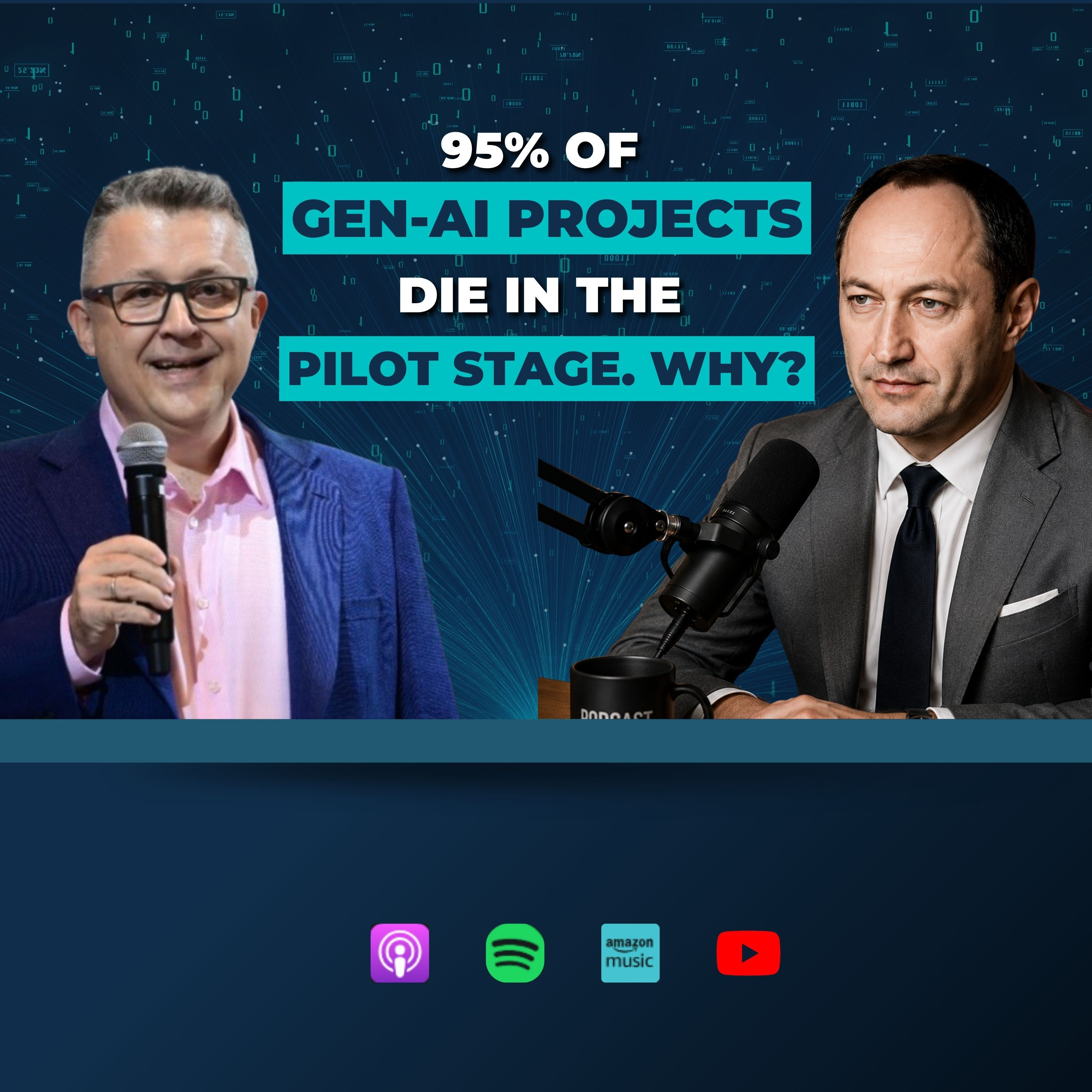
    Ep 18: 95% of GenAI projects die in the pilot stage. Why? | Dr. Ralph Ostertag | HEINEKEN

    AI adoption is moving fast. But turning AI experiments into real business impact is where most organizations struggle. Ralph Ostertag believes the biggest challenge isn't finding the right AI technology. It's creating the conditions that allow AI to scale. In this episode of Digital Storm Weekly, we spoke with Dr. Ralph Ostertag, CIO at HEINEKEN Asia Pacific and leader of HEINEKEN's global Gen AI Lab, about what it really takes to move AI from experimentation into business value. One of his strongest messages: Think big. Start small. Scale fast. Ralph shares practical lessons from deploying AI across a global organization, including why business ownership matters more than having the perfect technology, how HEINEKEN evaluates AI use cases, and what separates projects that scale from those that stall. From successful deployments to projects that stalled because of unclear ownership and insufficient business capacity, Ralph offers an honest look at what enterprise AI adoption actually looks like. If you're responsible for AI strategy, digital transformation, technology, or business operations, this conversation provides a grounded perspective on what it takes to turn AI from a promising experiment into measurable impact. —----------------------- 🎧 𝗟𝗶𝘀𝘁𝗲𝗻 𝘁𝗼 𝘁𝗵𝗲 𝗳𝘂𝗹𝗹 𝗲𝗽𝗶𝘀𝗼𝗱𝗲 𝗵𝗲𝗿𝗲 🔗 YouTube: https://www.youtube.com/watch?v=a8IaPM6pPdg&list=PLIUBbSI0VTk1JbL_8U7AciTe-6nCLKaKT 🔗 Amazon Music: https://music.amazon.com/podcasts/a8ccad06-05d4-45e9-9f69-a4b6eacd77c7/the-digital-storm-weekly-podcast 🔗 Apple Podcasts: https://podcasts.apple.com/us/podcast/the-digital-storm-weekly-podcast/id1867227116 🔗 Spotify: https://open.spotify.com/show/779CC9Nn8coXth0tNjlt2d 🔗 RSS: https://rss.com/podcasts/the-digital-storm-weekly-podcast/ ---- 👉 Love my content? Dr Joerg Storm: https://www.linkedin.com/in/joergstorm/ Lucas Storm: https://www.linkedin.com/in/lucas-storm/ Paul Storm: https://www.linkedin.com/in/paul-storm/ 👉 Found this helpful? Share it! ♻️ 🔗 Subscribe now: https://drstorm.substack.com/subscribe

  • S1 · E17
    July 30 · 35 min

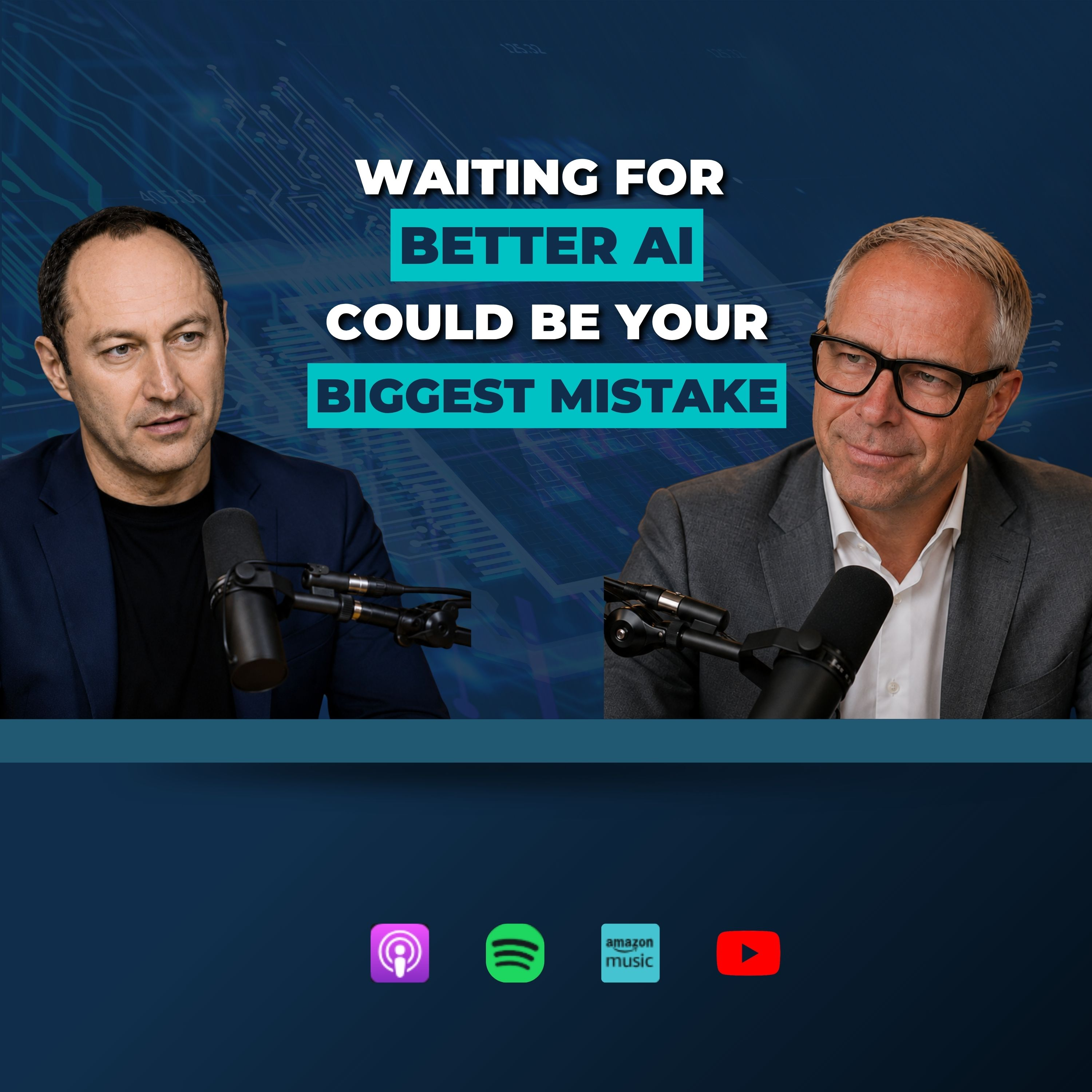
    Ep 17: Waiting for Better AI Could Be Your Biggest Mistake | Dirk Ramhorst | ServiceNow

    Many organizations believe deploying AI is the hard part. Dirk Ramhorst believes making AI work inside an organization is the real challenge. In this episode of Digital Storm Weekly, we sat down with Dirk Ramhorst, Chief Transformation Officer at ServiceNow, to discuss why enterprise AI success depends less on models and more on execution, governance, and organizational change. One of his strongest messages: Technology is ready. Most organizations aren't. Drawing on decades of transformation leadership across global industrial companies, Dirk explains why AI projects fail, how AI agents differ from copilots, and why companies need fewer experiments and more operational focus. Some key insights from Dirk: • AI agents execute work instead of simply assisting people • Data quality and governance determine AI success • Most AI pilots fail because they never create measurable business value • Organizations need platform strategies, not isolated AI experiments • Transformation is about preparing people, not just deploying technology • Companies that embed AI into real workflows will outperform those still experimenting If you're leading enterprise AI, digital transformation, or business operations, this conversation offers practical lessons on turning AI into measurable business outcomes. —----------------------- 🎧 𝗟𝗶𝘀𝘁𝗲𝗻 𝘁𝗼 𝘁𝗵𝗲 𝗳𝘂𝗹𝗹 𝗲𝗽𝗶𝘀𝗼𝗱𝗲 𝗵𝗲𝗿𝗲 🔗 YouTube: https://www.youtube.com/watch?v=0Erf0JR1eJQ&list=PLIUBbSI0VTk1JbL_8U7AciTe-6nCLKaKT 🔗 Amazon Music: https://music.amazon.com/podcasts/a8ccad06-05d4-45e9-9f69-a4b6eacd77c7/the-digital-storm-weekly-podcast 🔗 Apple Podcasts: https://podcasts.apple.com/us/podcast/the-digital-storm-weekly-podcast/id1867227116 🔗 Spotify: https://open.spotify.com/show/779CC9Nn8coXth0tNjlt2d 🔗 RSS: https://rss.com/podcasts/the-digital-storm-weekly-podcast/ ---- 👉 Love my content? Dr Joerg Storm: https://www.linkedin.com/in/joergstorm/ Lucas Storm: https://www.linkedin.com/in/lucas-storm/ Paul Storm: https://www.linkedin.com/in/paul-storm/ 🔗 Subscribe now: https://drstorm.substack.com/subscribe

  • S1 · E16
    July 20 · 36 min

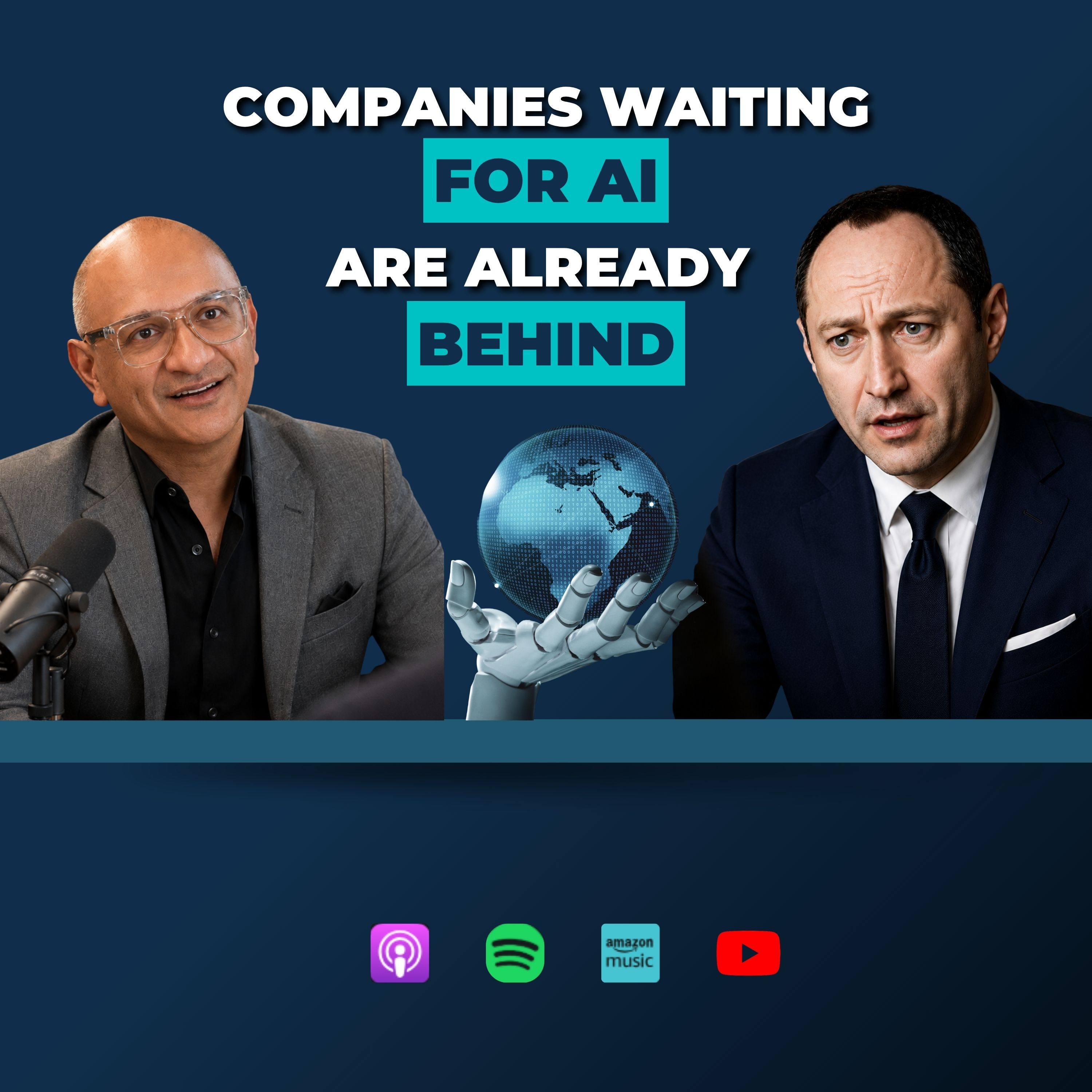
    Ep 16: Companies Waiting for AI Are Already Behind | Jeetu Patel | Cisco

    Many organizations are still treating AI as another productivity tool. Jeetu Patel believes we're entering an entirely different operating model for business. In this episode of Digital Storm Weekly, we sat down with Jeetu Patel, President and Chief Product Officer at Cisco, to discuss why AI is no longer about chatbots or automation, but about managing digital coworkers that fundamentally change how organizations operate. One of his strongest messages: You won't lose your job to AI. You'll lose it to someone who uses AI better than you. Drawing on Cisco's experience deploying AI across a 90,000-person organization, Jeetu explains why enterprises need to rethink workflows, leadership, infrastructure, and trust if they want to compete in the AI era. Some key insights from Jeetu: • AI agents should be treated as digital coworkers, not software tools • Every employee will increasingly become a manager of AI agents • Guardrails and trust matter more than intelligence alone • Organizations must redesign workflows instead of simply adding AI to existing processes • AI should expand ambition, not just improve efficiency • The companies moving fastest are the ones willing to experiment early If you're leading AI strategy, digital transformation, or enterprise technology, this conversation offers practical insights into what AI adoption actually looks like inside one of the world's largest technology companies. —----------------------- 🎧 𝗟𝗶𝘀𝘁𝗲𝗻 𝘁𝗼 𝘁𝗵𝗲 𝗳𝘂𝗹𝗹 𝗲𝗽𝗶𝘀𝗼𝗱𝗲 𝗵𝗲𝗿𝗲 🔗 YouTube: https://www.youtube.com/watch?v=Yy7xP5gu2WI&list=PLIUBbSI0VTk1JbL_8U7AciTe-6nCLKaKT 🔗 Amazon Music: https://music.amazon.com/podcasts/a8ccad06-05d4-45e9-9f69-a4b6eacd77c7/the-digital-storm-weekly-podcast 🔗 Apple Podcasts: https://podcasts.apple.com/us/podcast/the-digital-storm-weekly-podcast/id1867227116 🔗 Spotify: https://open.spotify.com/show/779CC9Nn8coXth0tNjlt2d 🔗 RSS: https://rss.com/podcasts/the-digital-storm-weekly-podcast/ ---- 👉 Love my content? Dr Joerg Storm: https://www.linkedin.com/in/joergstorm/ Lucas Storm: https://www.linkedin.com/in/lucas-storm/ Paul Storm: https://www.linkedin.com/in/paul-storm/ 👉 Found this helpful? Share it! ♻️ 🔗 Subscribe now: https://drstorm.substack.com/subscribe

  • S1 · E15
    July 14 · 24 min

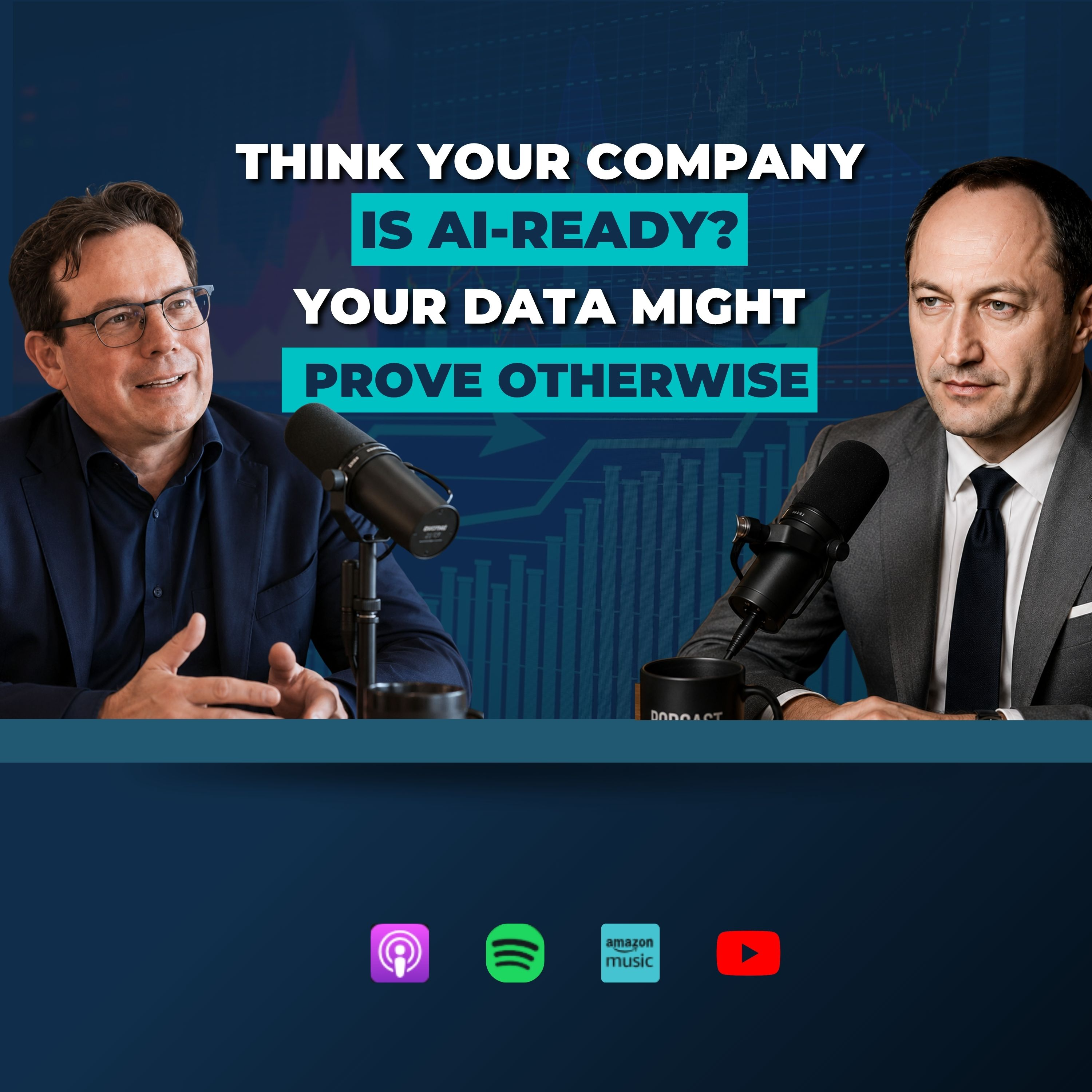
    Ep 15: Think your company is AI-ready? Your data might prove otherwise | Dr. Ulrich Faisst | All for One Group

    Many companies believe scaling AI is all about choosing the right technology. Dr. Ulrich Faisst believes the bigger challenge is changing how organizations operate. In this episode of Digital Storm Weekly, we sat down with Dr. Ulrich Faisst, CTO of All for One Group, to discuss why successful AI adoption depends on business strategy, operating models, and leadership rather than technology alone. One of his strongest messages: AI is a business transformation, not an IT project. Drawing on experience leading technology and AI initiatives across All for One Group, and previously at ZEISS, TRUMPF, Cognizant, and Bain, Ulrich shares practical lessons from helping thousands of SAP-centric and industrial businesses navigate AI transformation. Some key insights from Ulrich: • AI initiatives should focus on business impact, not endless proof of concepts • Organizations need a clear AI strategy before investing in technology • Data readiness and governance remain essential for long-term success • AI adoption requires leadership, change management, and employee buy-in • Companies should think in scalable operating models instead of isolated projects • The biggest AI opportunities come from transforming end-to-end business processes If you're leading AI initiatives in an enterprise or industrial organization, this conversation offers practical insights from someone helping businesses move AI from experimentation to real operational value. —---- 🎧 𝗟𝗶𝘀𝘁𝗲𝗻 𝘁𝗼 𝘁𝗵𝗲 𝗳𝘂𝗹𝗹 𝗲𝗽𝗶𝘀𝗼𝗱𝗲 𝗵𝗲𝗿𝗲 🔗 YouTube: https://www.youtube.com/watch?v=Jk-UkG7wmiA&list=PLIUBbSI0VTk1JbL_8U7AciTe-6nCLKaKT 🔗 Amazon Music: https://music.amazon.com/podcasts/a8ccad06-05d4-45e9-9f69-a4b6eacd77c7/the-digital-storm-weekly-podcast 🔗 Apple Podcasts: https://podcasts.apple.com/us/podcast/the-digital-storm-weekly-podcast/id1867227116 🔗 Spotify: https://open.spotify.com/show/779CC9Nn8coXth0tNjlt2d 🔗 RSS: https://rss.com/podcasts/the-digital-storm-weekly-podcast/ ---- 👉 Love my content? Dr Joerg Storm: https://www.linkedin.com/in/joergstorm/ Lucas Storm: https://www.linkedin.com/in/lucas-storm/ Paul Storm: https://www.linkedin.com/in/paul-storm/ 🔗 Subscribe now: https://drstorm.substack.com/subscribe
  • S1 · E14
    July 7 · 39 min

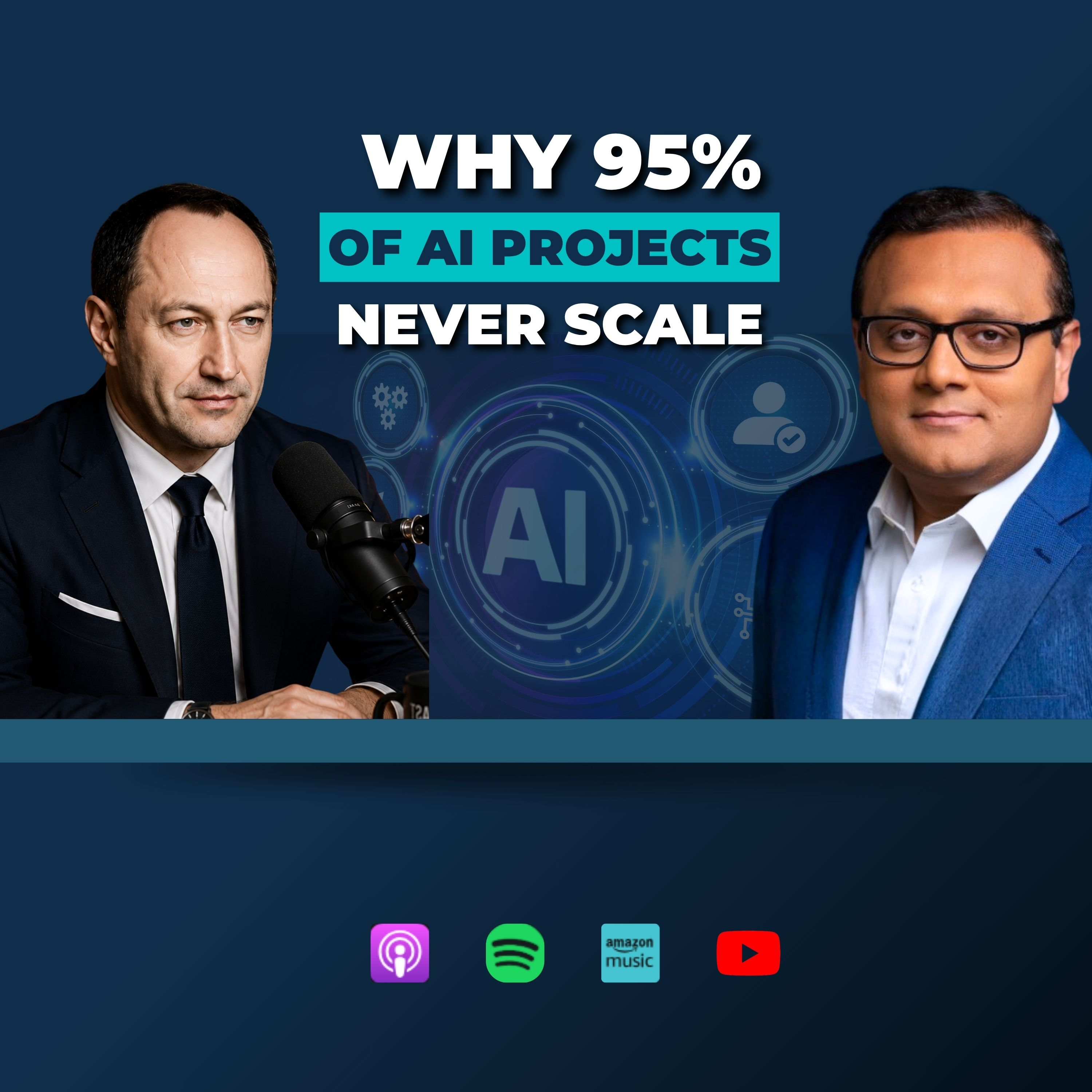
    Ep 14: Why 95% of AI Projects Never Scale | Ishit Vachhrajani | AWS

    Many organizations believe AI adoption is a technology challenge. Ishit Vachhrajani believes that's exactly why so many AI initiatives struggle. In this episode of Digital Storm Weekly, we sat down with Ishit Vachhrajani, Global Head of Technology, AI, Analytics and Executive in Residence| AWS, to discuss why enterprise AI succeeds or fails long before the technology becomes the problem. One of his strongest messages: AI adoption is a management challenge—not a technology challenge. According to Ishit, organizations often invest in AI platforms while leaving workflows, incentives, leadership behavior, and decision-making unchanged. Without changing how organizations operate, AI remains another pilot instead of becoming enterprise transformation. Some key insights from Ishit: • AI initiatives fail when ownership is shared instead of assigned • Leaders must redesign workflows—not simply automate existing ones • Organizations should build context and workflows while buying AI models and infrastructure • Decision speed matters more than perfect planning • AI success should be measured by business outcomes, not usage metrics • Agentic AI changes governance, culture, and organizational structure—not just productivity What makes Ishit's perspective valuable? Working with thousands of executives across industries while leading AI and analytics initiatives at AWS, Ishit brings both enterprise leadership experience and a front-row view into how organizations are successfully scaling AI. If you're a CEO, CIO, board member, or business leader trying to move AI beyond experimentation into measurable business impact, this conversation is worth your time. —---- 🎧 𝗟𝗶𝘀𝘁𝗲𝗻 𝘁𝗼 𝘁𝗵𝗲 𝗳𝘂𝗹𝗹 𝗲𝗽𝗶𝘀𝗼𝗱𝗲 𝗵𝗲𝗿𝗲 🔗 YouTube: https://www.youtube.com/watch?v=laBLMgi0DJU&list=PLIUBbSI0VTk1JbL_8U7AciTe-6nCLKaKT 🔗 Amazon Music: https://music.amazon.com/podcasts/a8ccad06-05d4-45e9-9f69-a4b6eacd77c7/the-digital-storm-weekly-podcast 🔗 Apple Podcasts: https://podcasts.apple.com/us/podcast/the-digital-storm-weekly-podcast/id1867227116 🔗 Spotify: https://open.spotify.com/show/779CC9Nn8coXth0tNjlt2d 🔗 RSS: https://rss.com/podcasts/the-digital-storm-weekly-podcast/ ---- 👉 Love my content? Dr Joerg Storm: https://www.linkedin.com/in/joergstorm/ Lucas Storm: https://www.linkedin.com/in/lucas-storm/ Paul Storm: https://www.linkedin.com/in/paul-storm/ 🔗 Subscribe now: https://drstorm.substack.com/subscribe
  • S1 · E13
    June 25 · 31 min

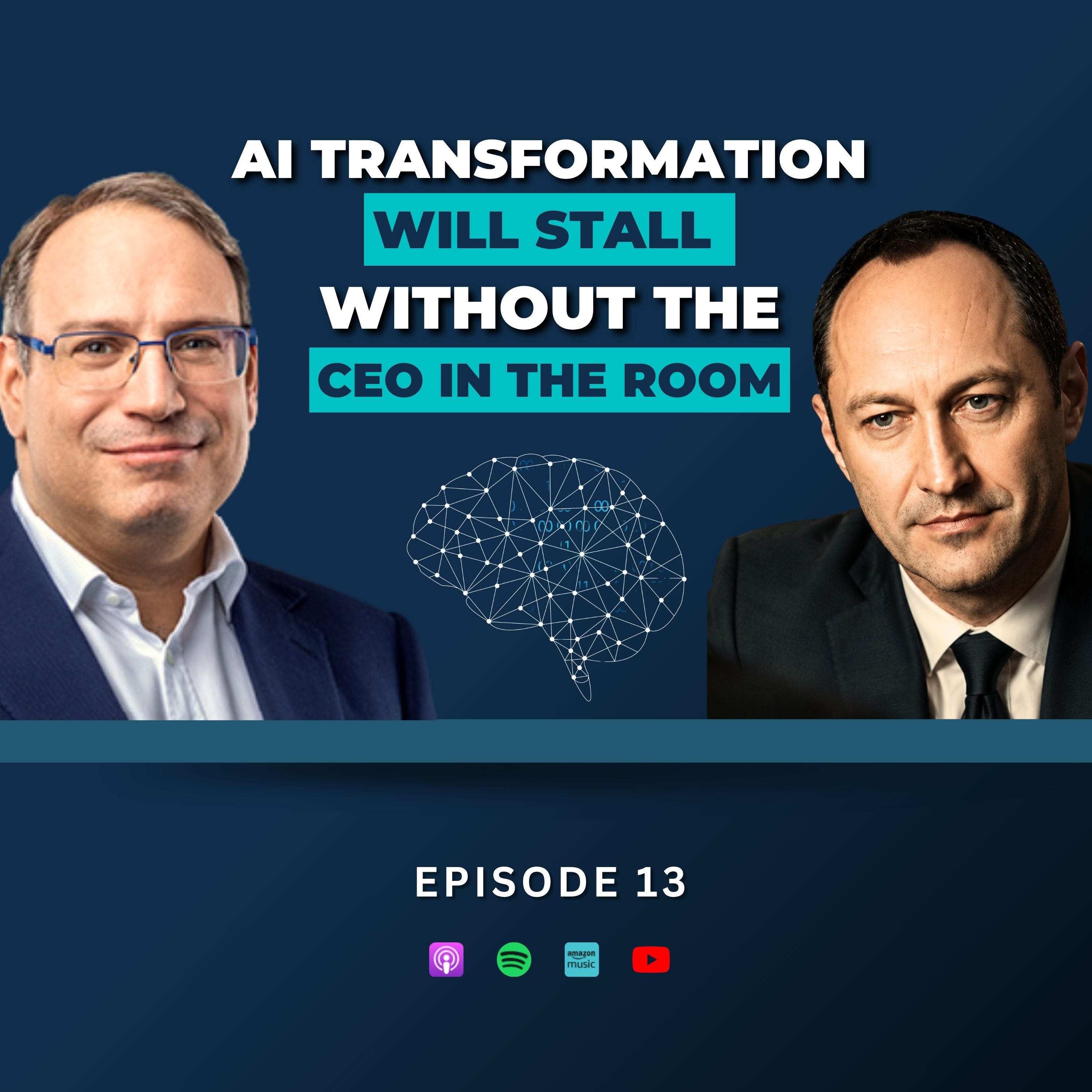
    Ep 13: AI Transformation Will Stall Without the CEO in the room | Balazs Fejes | EPAM

    Many organizations still treat AI as an IT initiative. Balazs Fejes believes that's exactly why so many AI programs fail. In this episode of Digital Storm Weekly, we sat down with Balazs Fejes, CEO & President of EPAM Systems, to discuss why AI is forcing organizations to rethink leadership, operations, workforce design, and enterprise transformation. One of his strongest messages: AI is not transforming IT. It is transforming the business itself. According to Balazs, AI initiatives stall when they remain isolated inside technology teams. Successful transformation requires active involvement from CEOs, CFOs, and business leaders because AI changes how organizations operate—not just the tools they use. Some key insights from Balazs: • AI transformation must be owned by the business, not just IT • Leadership engagement determines whether AI scales or stalls • Organizational culture remains the biggest barrier to adoption • AI requires redesigning business processes—not automating existing ones • Companies must move beyond pilots and begin enterprise-wide implementation • Talent development is the foundation of successful AI transformation • Change management matters just as much as technology What makes Balazs' perspective valuable? As CEO of EPAM Systems, he has led one of the world's largest engineering organizations through enterprise AI transformation while helping global companies redesign how they build, operate, and scale in the AI era. If you're a CEO, CIO, board member, or business leader trying to move AI beyond experimentation into measurable business impact, this conversation is worth your time. —---- 🎧 𝗟𝗶𝘀𝘁𝗲𝗻 𝘁𝗼 𝘁𝗵𝗲 𝗳𝘂𝗹𝗹 𝗲𝗽𝗶𝘀𝗼𝗱𝗲 𝗵𝗲𝗿𝗲 🔗 YouTube: https://www.youtube.com/watch?v=o5k0E3LlVGk&list=PLIUBbSI0VTk1JbL_8U7AciTe-6nCLKaKT 🔗 Amazon Music: https://music.amazon.com/podcasts/a8ccad06-05d4-45e9-9f69-a4b6eacd77c7/the-digital-storm-weekly-podcast 🔗 Apple Podcasts: https://podcasts.apple.com/us/podcast/the-digital-storm-weekly-podcast/id1867227116 🔗 Spotify: https://open.spotify.com/show/779CC9Nn8coXth0tNjlt2d 🔗 RSS: https://rss.com/podcasts/the-digital-storm-weekly-podcast/ ---- 👉 Love my content? Dr Joerg Storm: https://www.linkedin.com/in/joergstorm/ Lucas Storm: https://www.linkedin.com/in/lucas-storm/ Paul Storm: https://www.linkedin.com/in/paul-storm/ 🔗 Subscribe now: https://drstorm.substack.com/subscribe
  • S1 · E12
    June 24 · 19 min

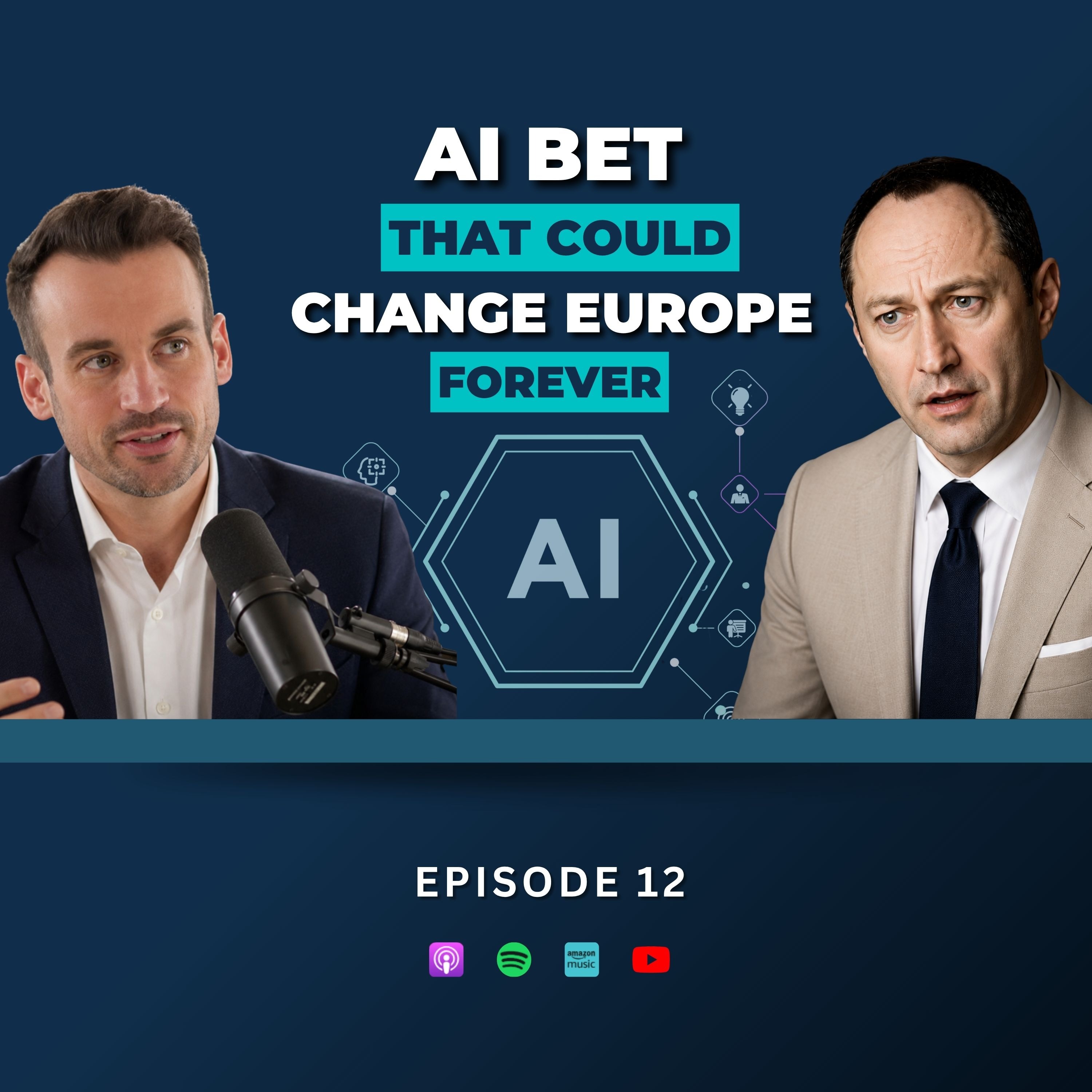
    Ep 12: The AI Bet That Could Change Europe Forever | Dr. Patrick Simon, former Senior Partner at McKinsey

    Most AI conversations focus on tools, models, and productivity. Dr. Patrick Simon focuses on something else entirely: Who captures the value. In this episode of Digital Storm Weekly, we sat down with Dr. Patrick Simon, former Senior Partner at McKinsey and now a technology investor, to discuss how AI is reshaping corporate strategy, competitive advantage, productivity, and global economic power. This conversation goes far beyond AI implementation. It explores how leadership, organizational culture, incentives, and strategic positioning will determine which companies thrive—and which fall behind—in the AI era. Some key insights from Patrick: • AI is changing value chains, not just business processes • Strategy increasingly starts with understanding what AI makes possible • Leadership courage matters more than perfect data • AI-driven productivity gains can create enormous enterprise value • Culture, incentives, and execution matter more than vision alone • Europe risks falling behind due to excessive regulation and technology dependence • Companies must play to win, not simply protect what they already have • The biggest AI opportunity is creating competitive advantage, not just efficiency What makes Patrick’s perspective valuable? He spent over two decades advising CEOs and boards at McKinsey on large-scale transformations before moving into venture investing, where he now evaluates emerging technology companies and AI-driven business models firsthand. If you are a CEO, board member, founder, investor, or business leader trying to understand how AI is changing competition and value creation, this episode is worth your time. —---- 🎧 𝗟𝗶𝘀𝘁𝗲𝗻 𝘁𝗼 𝘁𝗵𝗲 𝗳𝘂𝗹𝗹 𝗲𝗽𝗶𝘀𝗼𝗱𝗲 𝗵𝗲𝗿𝗲 🔗 YouTube: https://www.youtube.com/watch?v=o5k0E3LlVGk&list=PLIUBbSI0VTk1JbL_8U7AciTe-6nCLKaKT 🔗 Amazon Music: https://music.amazon.com/podcasts/a8ccad06-05d4-45e9-9f69-a4b6eacd77c7/the-digital-storm-weekly-podcast 🔗 Apple Podcasts: https://podcasts.apple.com/us/podcast/the-digital-storm-weekly-podcast/id1867227116 🔗 Spotify: https://open.spotify.com/show/779CC9Nn8coXth0tNjlt2d 🔗 RSS: https://rss.com/podcasts/the-digital-storm-weekly-podcast/ ---- 👉 Love my content? Dr Joerg Storm: https://www.linkedin.com/in/joergstorm/ Lucas Storm: https://www.linkedin.com/in/lucas-storm/ Paul Storm: https://www.linkedin.com/in/paul-storm/ 🔗 Subscribe now: https://drstorm.substack.com/subscribe
  • S1 · E11
    June 10 · 28 min

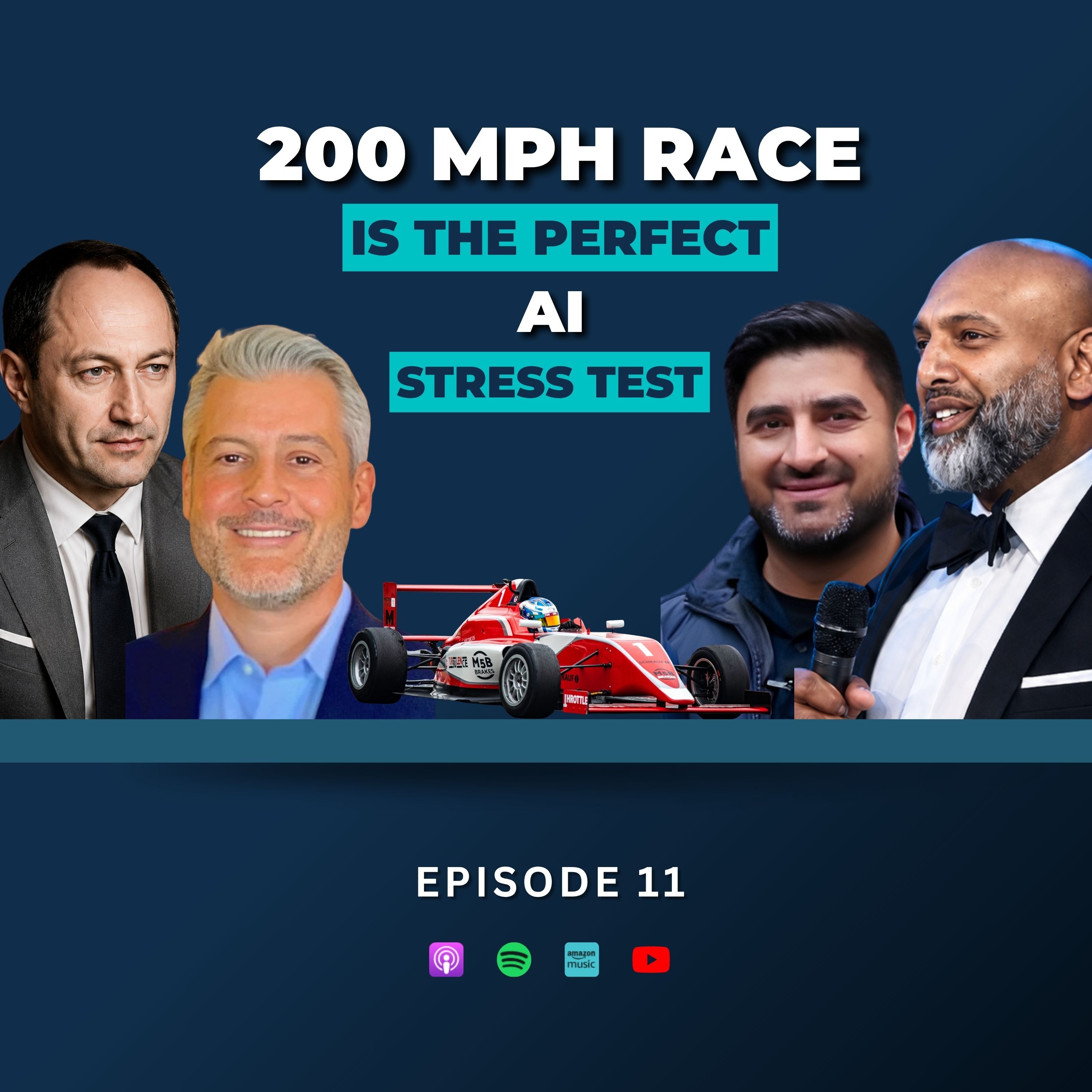
    Ep 11: 200 MPH Race Is The Perfect AI Stress Test | United Autosports | European Le Mans Series

    AI sounds impressive in boardrooms. But on a racetrack, bad AI decisions fail immediately. In this episode of Digital Storm Weekly, recorded directly from the European Le Mans Series in Barcelona with United Autosports, we brought together leaders; Jeff Austin — CEO, ID8 Global, Haider Al-Seaidy — CCO, Cyferd, and Kevin Auchoybur — Managing Director, IPA to explore what happens when AI enters high-pressure operational environments where speed, precision, and decision quality actually matter. This conversation goes far beyond AI hype. It explores how embedded AI, real-time workflows, governance, and defensible innovation frameworks are reshaping enterprise decision-making itself. Some key insights from the episode: • Most organizations still struggle to define clear AI ROI • Racing compresses decision-making into minutes instead of quarters • AI should augment critical decisions, not fully replace humans • Real enterprise value comes from workflow integration, not isolated tools • Innovation without evidence creates invisible value leakage • Explainability and governance are becoming non-negotiable • Legacy systems and sunk-cost thinking are slowing AI adoption • Companies over-focus on AI stories while under-building operational foundations • The future belongs to organizations that move fast without sacrificing trust One of the strongest points made during the episode: “If it works in racing, it’s going to work in the corporate world.” Why? Because racing exposes whether intelligence is actually usable under pressure. If you are a CEO, COO, CIO, operator, or enterprise leader trying to understand what real-world AI adoption actually looks like beyond pilots and dashboards, this episode is worth your time. —---- 🎧 𝗟𝗶𝘀𝘁𝗲𝗻 𝘁𝗼 𝘁𝗵𝗲 𝗳𝘂𝗹𝗹 𝗲𝗽𝗶𝘀𝗼𝗱𝗲 𝗵𝗲𝗿𝗲 🔗 YouTube: https://www.youtube.com/watch?v=0pLAr2wN-Tw&list=PLIUBbSI0VTk1JbL_8U7AciTe-6nCLKaKT 🔗 Amazon Music: https://music.amazon.com/podcasts/a8ccad06-05d4-45e9-9f69-a4b6eacd77c7/the-digital-storm-weekly-podcast 🔗 Apple Podcasts: https://podcasts.apple.com/us/podcast/the-digital-storm-weekly-podcast/id1867227116 🔗 Spotify: https://open.spotify.com/show/779CC9Nn8coXth0tNjlt2d 🔗 RSS: https://rss.com/podcasts/the-digital-storm-weekly-podcast/ ---- 👉 Love my content? Dr Joerg Storm: https://www.linkedin.com/in/joergstorm/ Lucas Storm: https://www.linkedin.com/in/lucas-storm/ Paul Storm: https://www.linkedin.com/in/paul-storm/ 🔗 Subscribe now: https://drstorm.substack.com/subscribe
Showing 1–20 of 30 episodes