Skip to content
Artwork for The Dairy Edge

The Dairy Edge

Teagasc

The Dairy Edge is Teagasc’s dairy podcast for farmers with the latest information, insights and opinion to improve your dairy farm performance.

Visit the show page at: https://www.teagasc.ie/animals/dairy/the-dairy-edge-podcast/

Play
  • 49 episodes
  • Avg 19 min
  • English
Counted on this page — what you have heard stays on this device, so it is not something the list can be paged by.
  • Monday · 12 min

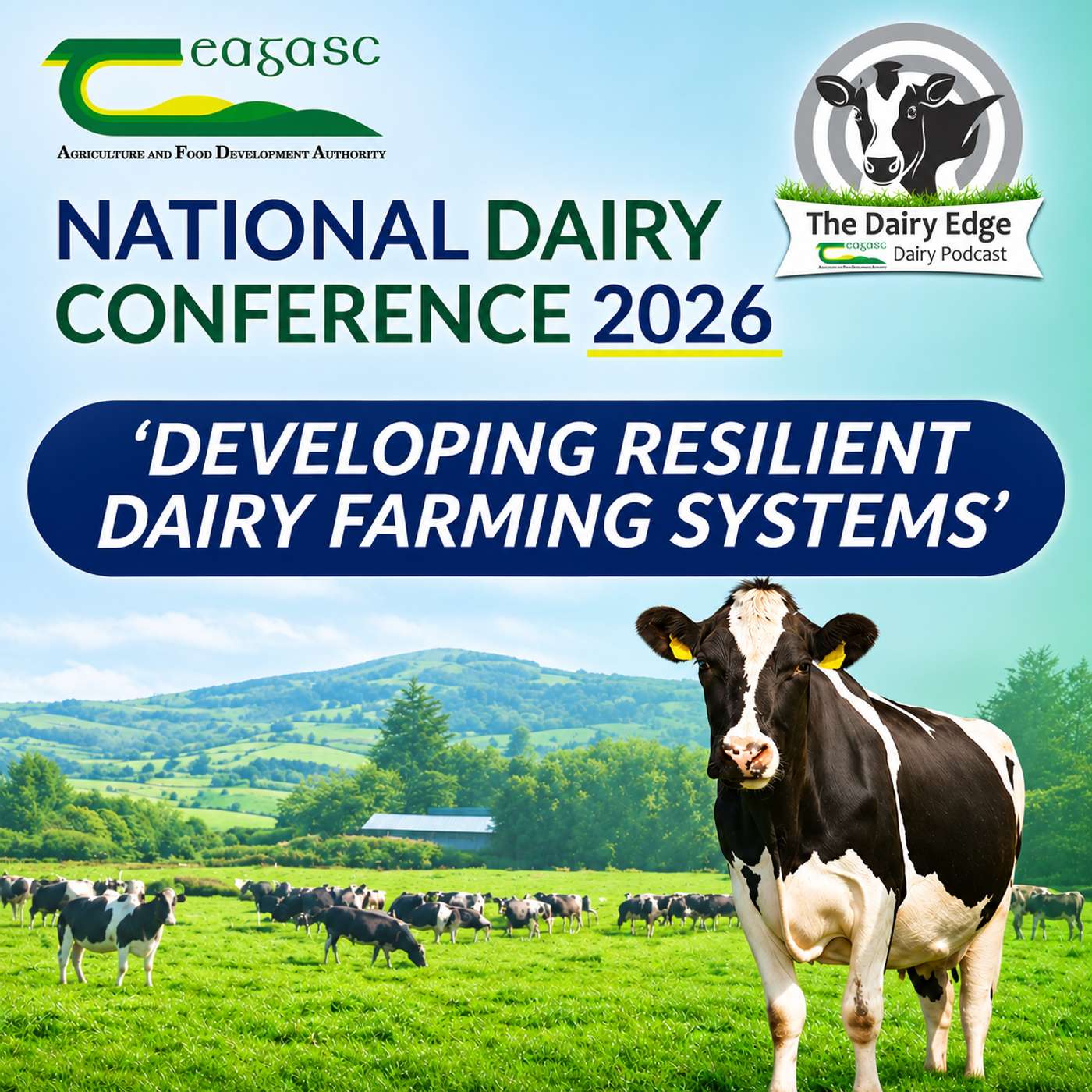
    Dairy Conference Preview with Joe Patton

    The theme of this year’s dairy conference is 'Developing Resilient Dairy Farming Systems' and Joe Patton, Teagasc’s Head of Dairy Knowledge Transfer, joins Stuart Childs to preview the event. Click here to register for the conference: https://teagasc.clr.events/event/141475:national-dairy-conference-2026 Join us at the National Dairy Conference 2026 on Wednesday, 25 November at 9:15am in the Radisson Blu Hotel, Little Island, Co. Cork, T45 WF53, for an informative day focused on the latest developments and research in the Irish dairy sector. Conference fees: Industry and Non Clients: €120 Teagasc Client/ ConnectEd Member: €60 Student: €30 For more episodes from the Dairy Edge podcast go to the show page at: https://www.teagasc.ie/animals/dairy/the-dairy-edge-podcast/ The Dairy Edge is a co-production with LastCastMedia.com

  • November 13 · 10 min

    Your Weekly Grass10 Update

    For this week’s Grass10 grazing management update, John Maher highlights the top actions that need to be done, including: Keep an eye on closing cover as AFC drops Assess % area grazed Read more from the latest Grass10 newsletter at: https://bit.ly/Grass10-10thNov For more episodes from the Dairy Edge podcast go to the show page at: https://www.teagasc.ie/animals/dairy/the-dairy-edge-podcast/ The Dairy Edge is a co-production with LastCastMedia.com

  • November 10 · 32 min

    Bluetongue and midge borne viruses update with Conor McAloon

    Conor McAloon, Professor of Veterinary Epidemiology and Director of the Centre for Veterinary Epidemiology and Risk Analysis (CVERA) at UCD joins Stuart Childs to give us an update on Bluetongue and other midge borne viruses in Ireland currently. Conor says he had not seen any convincing evidence that blue tongue overwintered in Ireland from 2025 and believes that the 2026 cases that are being picked up were more likely linked to infected midges arriving from the UK during the summer. While this was good from the point of view of it not hitting during the early stages of the breeding season, he expects infections that occurred during autumn to bring a risk of abortions and calves with congenital or neurological problems in spring 2027. Conor says that vaccination matters, but plans may need to change: vaccination was a sound decision for the herds that chose it albeit no vaccine is 100% effective, it did protect the herds that did go that route. An annual booster for now, pending more information, will be required in 2027 but vaccination advice will have to be adapted each year potentially as different disease risks emerge and recede. He finishes by saying be prepared and make decisions with good advice: midge-borne disease incursions are likely to become more common and farmers should take an adaptable approach to animal health. He stresses working with vets and advisers, weighing vaccine costs against potential losses and the labour of managing sick or affected animals as key in helping people make the decisions necessary for their own farm. For more episodes from the Dairy Edge podcast go to the show page at: https://www.teagasc.ie/animals/dairy/the-dairy-edge-podcast/ The Dairy Edge is a co-production with LastCastMedia.com
  • November 6 · 10 min

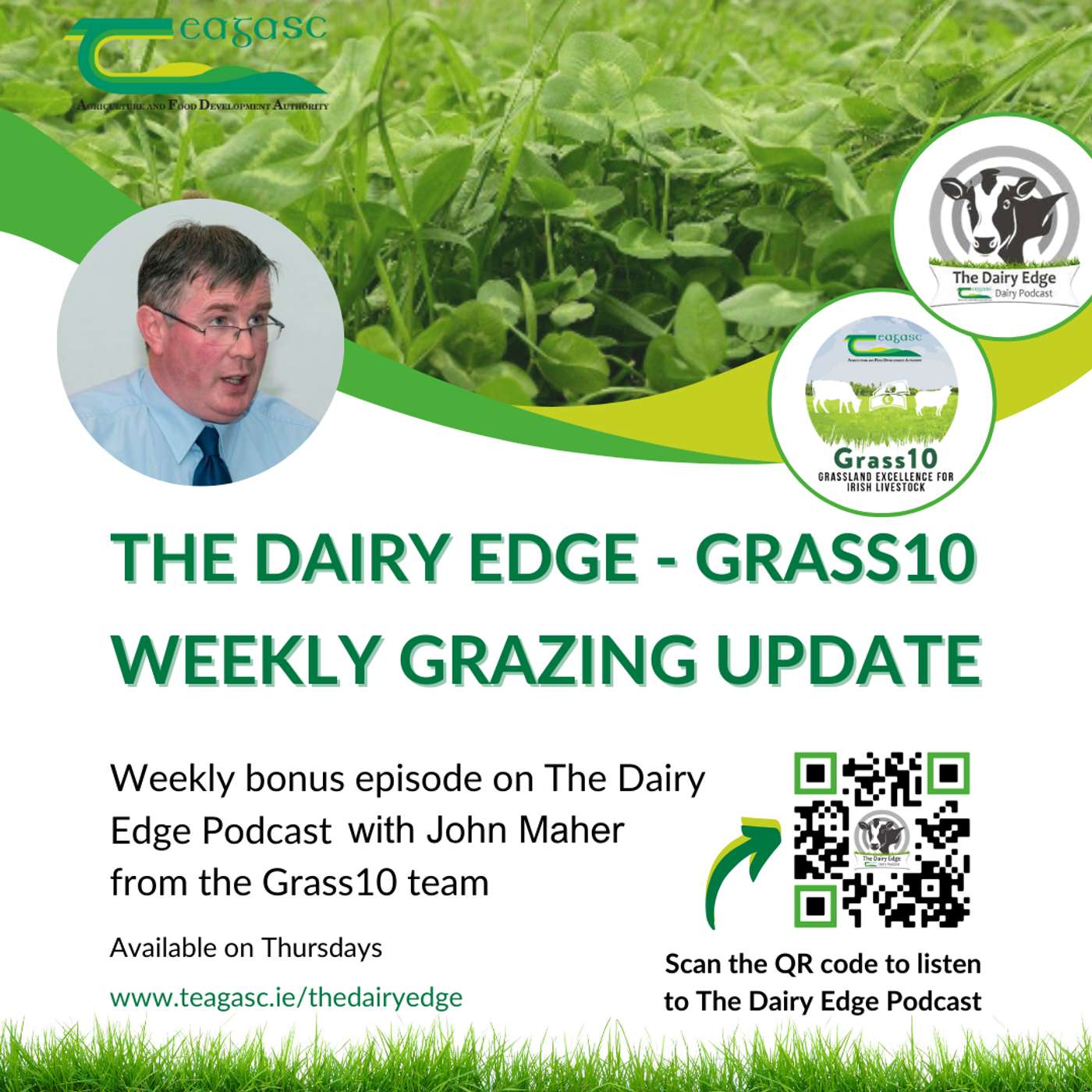
    Your Weekly Grass10 Update

    For this week’s Grass10 grazing management update, John Maher highlights the top actions that need to be done, including: Assess % area grazed Monitor average farm cover Graze priority ground Read more from the latest Grass10 newsletter at: https://bit.ly/Grass10-3rdNov For more episodes from the Dairy Edge podcast go to the show page at: https://www.teagasc.ie/animals/dairy/the-dairy-edge-podcast/ The Dairy Edge is a co-production with LastCastMedia.com
  • November 4 · 26 min

    Dry Cow Minerals: Avoiding the Common Mistakes

    Aisling Claffey, Teagasc ruminant nutrition specialist, joins Stuart Childs to discuss the importance of dry cow minerals to the success of your calving season. Aisling explains that magnesium is key. Pre-calving minerals need to supply enough magnesium to support the cow’s ability to mobilise calcium around calving. She also highlights the importance of vitamins—particularly vitamin D and the role it has for milk fever prevention also. Consistency is vital with minerals. Missing minerals for a day or two can matter, especially when many cows are close to calving. As people are getting better at their soil fertility, Aisling believes people should test silage for minerals annually as silage potassium can vary from year to year and as this may interfere with magnesium absorption, farmers need to be aware of the feed that they are feeding. Milk fever can have wider consequences. Low calcium can affect muscle function, calving and rumen contractions, and intake. It is known as a gateway disease with transition-cow problems as well as mastitis all likely to follow so prevention is important and key to this is a good mineral fed consistently. For more episodes from the Dairy Edge podcast go to the show page at: https://www.teagasc.ie/animals/dairy/the-dairy-edge-podcast/ The Dairy Edge is a co-production with LastCastMedia.com
  • October 30 · 9 min

    Your Weekly Grass10 Update

    For this week’s Grass10 grazing management update, John Maher highlights the top actions that need to be done, including: Average farm cover dropping Assess AFC on farm Assess % area grazed Implement on-off grazing Read more from the latest Grass10 newsletter at: https://bit.ly/Grass10-27thOct For more episodes from the Dairy Edge podcast go to the show page at: https://www.teagasc.ie/animals/dairy/the-dairy-edge-podcast/ The Dairy Edge is a co-production with LastCastMedia.com
  • October 28 · 28 min

    Best Practice when Drying Off - A Practical Guide

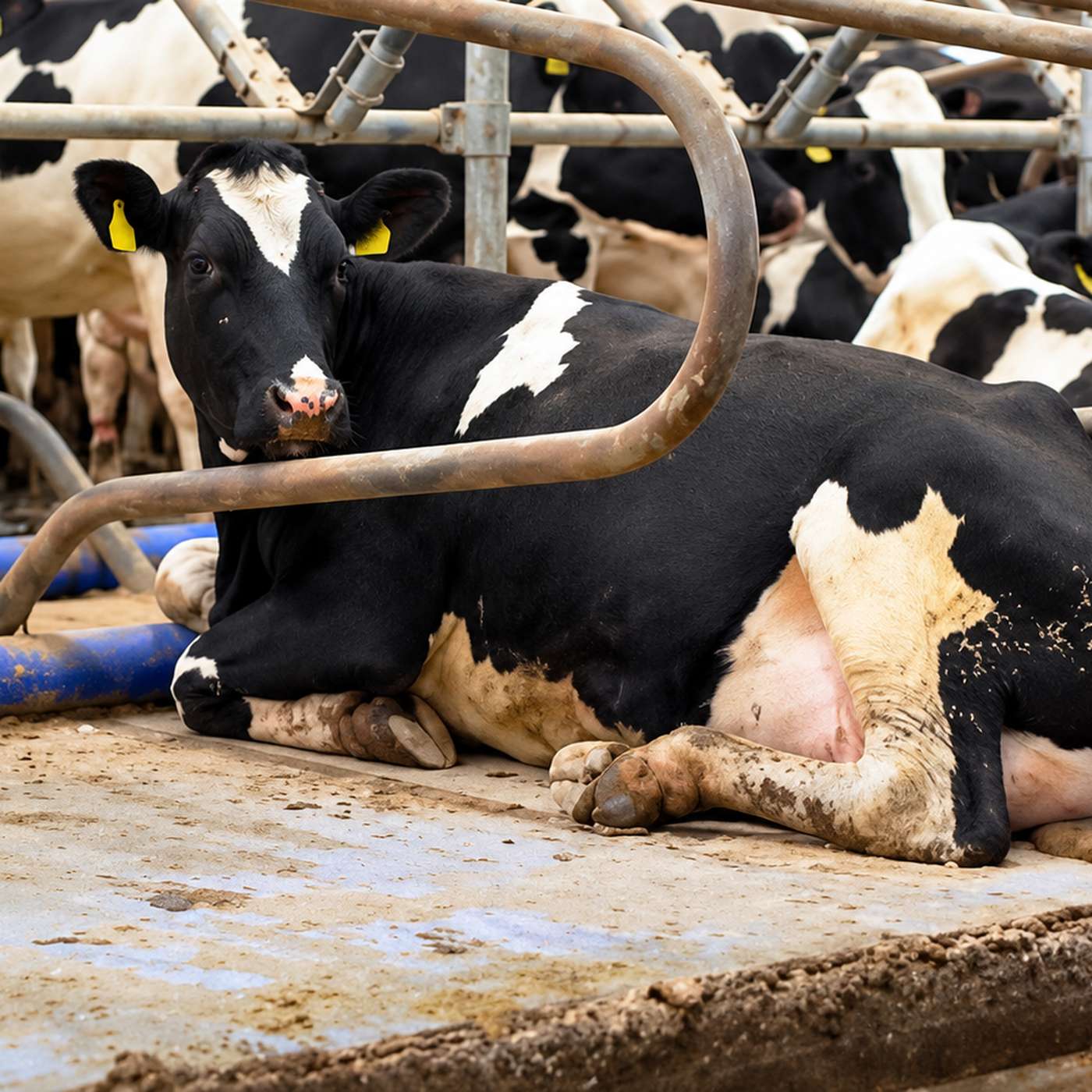
    As we come towards the end of the lactation, getting the drying-off process right is important to ensure good udder health and set cows up correctly for the next lactation. This week, James Dunne is joined by Padraig O’Connor from Teagasc to go through best practice when drying off, from planning and preparing cows to carrying out the process and managing cows in the days afterwards. For more episodes from the Dairy Edge podcast go to the show page at: https://www.teagasc.ie/animals/dairy/the-dairy-edge-podcast/ The Dairy Edge is a co-production with LastCastMedia.com
  • October 23 · 10 min

    Your Weekly Grass10 Update

    For this week’s Grass10 grazing management update, John Maher highlights the top actions that need to be done, including: Prioritise grazing residuals Update autumn grass budget Prepare for changing weather Read more from the latest Grass10 newsletter at: https://pasturebase.teagasc.ie/Grass10%20Weekly.pdf?=20261023 For more episodes from the Dairy Edge podcast go to the show page at: https://www.teagasc.ie/animals/dairy/the-dairy-edge-podcast/ The Dairy Edge is a co-production with LastCastMedia.com
  • October 22 · 23 min

    Winter Feeding Efficiency with Martina Gormley

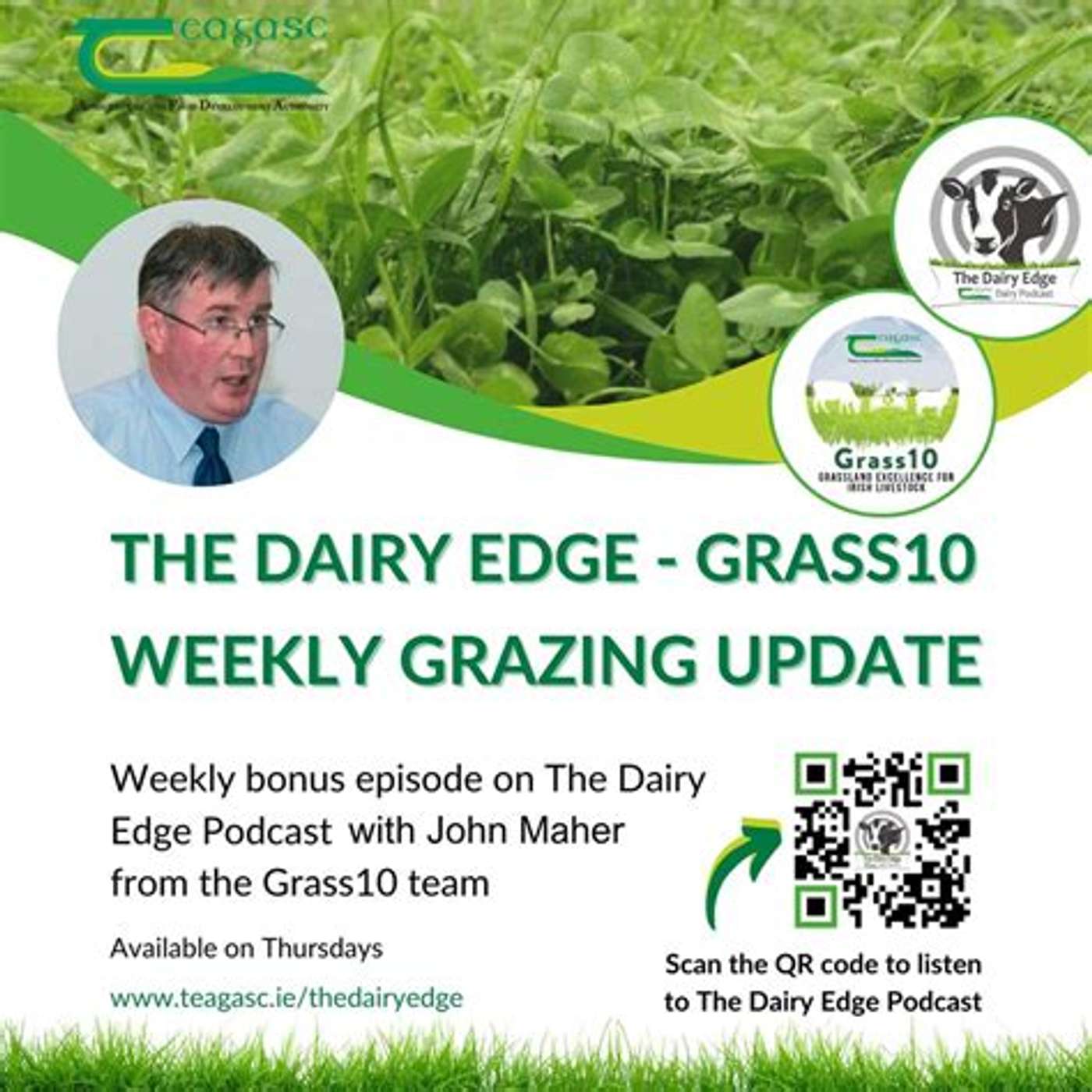
    Martina Gormley, dairy specialist in Athenry, Co. Galway, joins Stuart Childs to discuss a survey on winter feeding practices that she completed with a number of farmers across the country over the winter period 2025/26. The first thing Martina highlights is that winter feeding takes significant time. The survey of more than 70 dairy farmers found an average of 14 hours per week spent feeding silage, with wide differences between farms. Average time was six minutes per livestock unit per week. Some things can influence the speed of feeding out such as farm layout and equipment. Limited feed space, using several yards, transporting silage and handling bales with unsuitable equipment were common sources of creating extra work. Around half of farmers said they lacked enough feed space, and 40% of the people surveyed were still using a fork or similar tool at some stage during the feeding process. A starting point for farmers is to time their own feeding routine and target the main bottleneck. Some of the main options that will improve speed are improving feed space, using suitably sized grabs or bale-handling equipment be that a bale slice or bale unroller. Obviously, having silage closer to livestock will also lend to the speed of feeding and is something to factor in for any future developments. For more episodes from the Dairy Edge podcast go to the show page at: https://www.teagasc.ie/animals/dairy/the-dairy-edge-podcast/ The Dairy Edge is a co-production with LastCastMedia.com
  • October 16 · 33 min

    National Farm Survey 2025: The Irish Dairy Figures Explained

    Teagasc economist, Trevor Donnellan, joins James Dunne to discuss the latest National Farm Survey results for 2025, focusing on the Irish dairy enterprise. Trevor explains why Teagasc conducts the National Farm Survey, outlines the key figures for farm income and production costs, while also exploring the changing structure of Irish dairy farming. Plus he highlights the main differences in high vs low margin farms. Finally we discuss how 2026 will look significantly different to 2025. For more episodes from the Dairy Edge podcast go to the show page at: https://www.teagasc.ie/animals/dairy/the-dairy-edge-podcast/ The Dairy Edge is a co-production with LastCastMedia.com
  • October 16 · 13 min

    Your Weekly Grass10 Update

    For this week’s Grass10 grazing management update, John Maher highlights the top actions that need to be done, including: Prioritise grazing residuals Update autumn grass budget Apply lime while ground conditions are suitable Read more from the latest Grass10 newsletter at: https://bit.ly/Grass10-13thOct For more episodes from the Dairy Edge podcast go to the show page at: https://www.teagasc.ie/animals/dairy/the-dairy-edge-podcast/ The Dairy Edge is a co-production with LastCastMedia.com
  • October 9 · 11 min

    Your Weekly Grass10 Update

    For this week’s Grass10 grazing management update, John Maher highlights the top actions that need to be done, including: Prioritising grazing residuals as we head into the final rotation Farms should begin the final rotation early-mid October Updating autumn grass budget Grass growth will be between 40-50 kg DM/ha/day over the next weeks As closing begins on farm set the farm up to graze 60% by early November Read more from the latest Grass10 newsletter at: https://bit.ly/Grass10-6thOct For more episodes from the Dairy Edge podcast go to the show page at: https://www.teagasc.ie/animals/dairy/the-dairy-edge-podcast/ The Dairy Edge is a co-production with LastCastMedia.com
  • October 8 · 18 min

    Last Rotation: Setting Up for the Spring

    As we head into the final grazing rotation of the year, there’s plenty for farmers to be thinking about in terms of grazing the final round - the grass budget, closing paddocks and getting the farm set up correctly for next spring. So, to talk us through where things are at and what farmers should be focusing on over the coming weeks, James Dunne is joined by Teagasc grassland researcher Mike Egan. For more episodes from the Dairy Edge podcast go to the show page at: https://www.teagasc.ie/animals/dairy/the-dairy-edge-podcast/ The Dairy Edge is a co-production with LastCastMedia.com
  • October 5 · 33 min

    September Evaluation Update & the COW Index with Margaret Kelleher, ICBF

    Dr. Margaret Kelleher, Genetics Operation Manager at ICBF, joins Stuart Childs to discuss the most recent update in September and to learn more about the COW index that farmers should be using more in their herd to identify the cows that require career changes! Margaret explains that September evaluations were relatively stable, as they tend to be at this time of year in the seasonal system that we have here in Ireland, but ICBF continues to receive and update large volumes of data, including milk records, calving records, factory data, mart data and genotypes on a daily basis that they then gather together and add to the existing information to update the details of the animals on the database. This is a job that takes about 2 months to do and as soon as an update is published, ICBF start on the process for the next update almost immediately. We then moved to the main core of today’s conversation, the COW (Cow’s Own Worth) Index which Margaret outlined as a live herd-specific tool that ranks cows using current performance, predicted future performance and replacement cost. Where good data is entered, this index can be used by farmers to identify the bottom 10–15% to be considered for culling. It has the advantage of pulling milk performance, calving date and future potential together to help cut through the noise when trying to make culling decisions. For the tool to be most effective, accurate recording of information is essential. Milk recording, fertility and scanning data have a major impact, while recording mastitis, lameness and temperament would make the Cow Index more accurate and useful for the individual farmer. EBI is the tool to use to identify the most profitable cows to breed from, COW is for culling decisions. For more episodes from the Dairy Edge podcast go to the show page at: https://www.teagasc.ie/animals/dairy/the-dairy-edge-podcast/ The Dairy Edge is a co-production with LastCastMedia.com
  • October 2 · 10 min

    Your Weekly Grass10 Update

    For this week’s Grass10 grazing management update, John Maher highlights the top actions that need to be done, including: Prioritise grazing residuals Monitor growth rates and update grass budget Read more from the latest Grass10 newsletter at: https://bit.ly/Grass10-29thSeptember For more episodes from the Dairy Edge podcast go to the show page at: https://www.teagasc.ie/animals/dairy/the-dairy-edge-podcast/ The Dairy Edge is a co-production with LastCastMedia.com
  • September 24 · 12 min

    Your Weekly Grass10 Update

    For this week’s Grass10 grazing management update, John Maher highlights the top actions that need to be done, including: Assess farm cover and growth rates Do grass budget to plan supplementation Make the best use of organic nutrients Read more from the latest Grass10 newsletter at: https://pasturebase.teagasc.ie/Grass10%20Weekly.pdf?=20260924 For more episodes from the Dairy Edge podcast go to the show page at: https://www.teagasc.ie/animals/dairy/the-dairy-edge-podcast/ The Dairy Edge is a co-production with LastCastMedia.com
  • September 21 · 30 min

    Managing cashflow: what dairy farmers need to consider

    Cash flow is always an important part of running a dairy farm, but in a year like 2026, keeping a close eye on the money coming in and going out has become even more important. While milk price remains behind the levels experienced in recent years, farmers are also facing significant increases in costs due to both geopolitical issues in the Middle East and also the prolonged dry spell. So, how should farmers be looking at their cash flow, what are the warning signs that a cash deficit could be developing, and what practical steps can be taken before it becomes a bigger problem? Patrick Gowing, Teagasc dairy specialist who has a particular focus on farm financial management joins James Dunne to look at cash flow on dairy farms in 2026, how farmers can identify potential pressure points, and what options are available to manage them. For more episodes from the Dairy Edge podcast go to the show page at: https://www.teagasc.ie/animals/dairy/the-dairy-edge-podcast/ The Dairy Edge is a co-production with LastCastMedia.com
  • September 18 · 8 min

    Your Weekly Grass10 Update

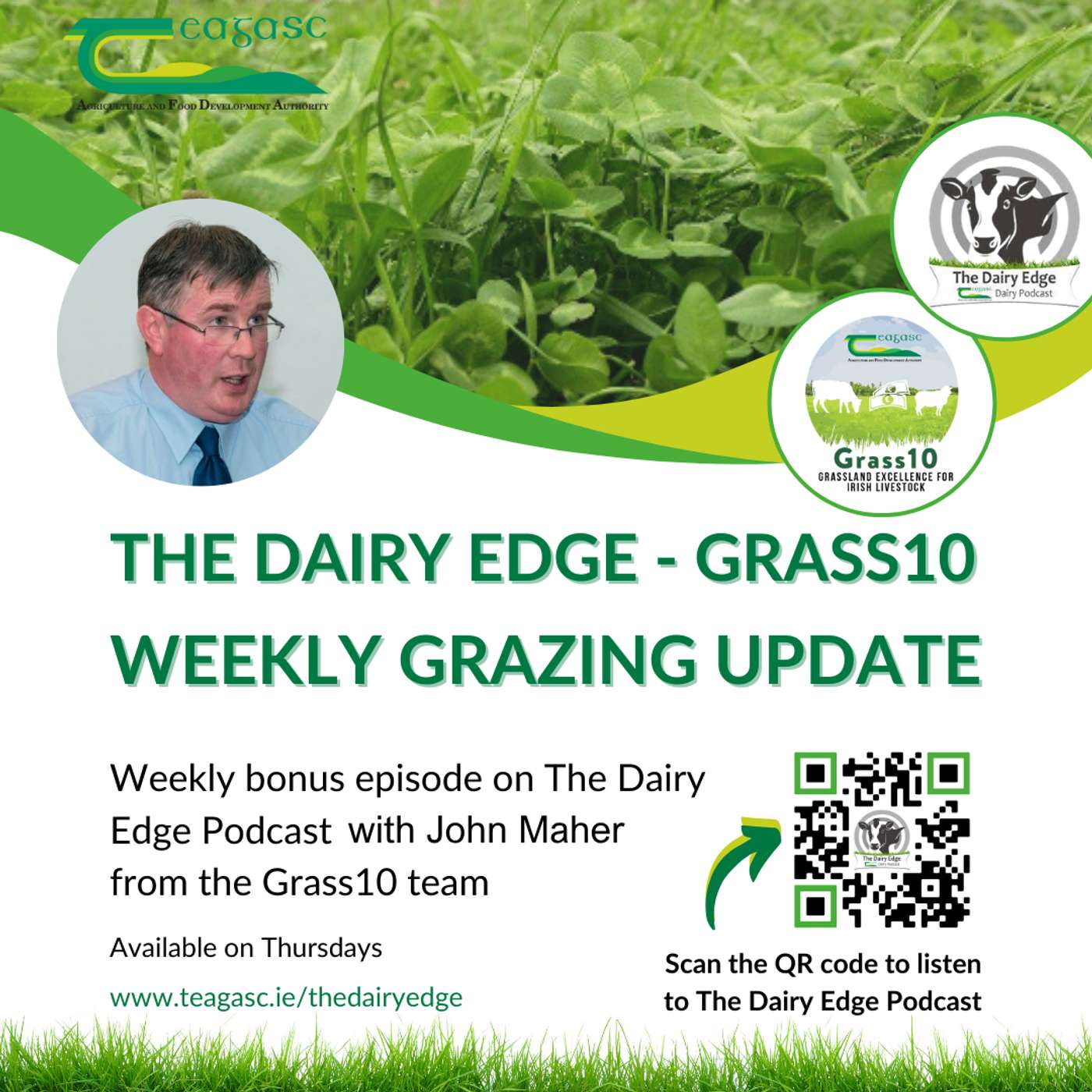
    For this week’s Grass10 grazing management update, John Maher highlights the top actions that need to be done: Set a 35 day rotation length Do grass budget - phase out silage supplementation Make the best use of watery slurry Read more from the latest Grass10 newsletter and subscribe for weekly updates at: https://bit.ly/Grass10-15thSept https://bit.ly/Grass10-18thSeptember For more episodes from the Dairy Edge podcast go to the show page at: https://www.teagasc.ie/animals/dairy/the-dairy-edge-podcast/ The Dairy Edge is a co-production with LastCastMedia.com
  • September 14 · 31 min

    Countrywide update with Joint Programme Advisors, John McCabe, Seamus Kearney & Sean Callan

    John McCabe, Seamus Kearney and Sean Callan, Advisors on the Teagasc Aurivo, Teagasc Tirlán and Teagasc Lakeland joint programmes, join Stuart Childs to give a more countrywide feel for the situation on farms around Ireland currently following the recovery in grass growth in the last few weeks. The impact of the drought varied significantly by region with the west generally less affected, while parts of the Lakelands, due to the geography of the catchment, and especially the south and east experienced major reductions in grass growth and farm cover which in turn led to substantial supplementary feeding. Seamus explains that the winter fodder shortages are the main concern and that although grass growth and farm covers have recovered, many farms in the Tirlán catchment have used large quantities of silage and meal during the summer. Fodder budgets have identified shortages of approximately two bales per cow on the lighthouse farms, making early feed purchasing and planning essential. Meanwhile, some of farms on the Lakeland programme have significant surplus but with wet starts and ends to the year more common, it may well be needed in the future. The key message is to quantify and act early. Farmers should complete fodder budgets, manage the final grazing rotation carefully, assess grazing infrastructure and improve if possible or plan to improve in the future to maximise opportunities to get cows to grass even in challenging conditions. Where deficits have been identified, consider options such as buying fodder, using meal to stretch existing supplies, and/or removing underperforming/empty cows earlier to protect winter feed stocks. For more episodes from the Dairy Edge podcast go to the show page at: https://www.teagasc.ie/animals/dairy/the-dairy-edge-podcast/ The Dairy Edge is a co-production with LastCastMedia.com
  • September 11 · 11 min

    Your Weekly Grass10 Update

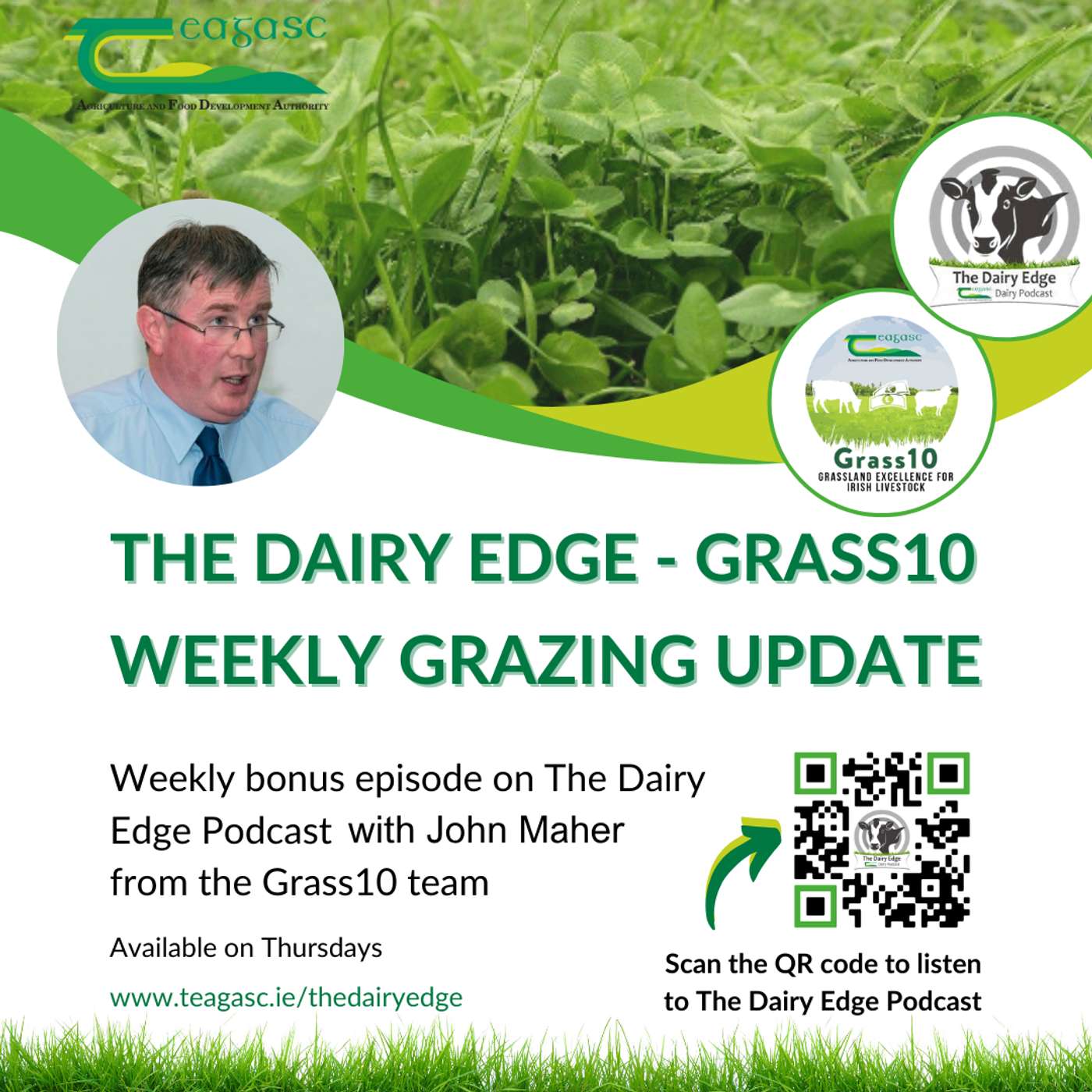
    For this week’s Grass10 grazing management update, John Maher highlights the top actions to be done: Set a 35 day rotation length Do a grass budget to reduce supplementation Consider liming Read more from this week’s Grass10 newsletter and subscribe for weekly updates at: https://bit.ly/Grass10-8thSeptember For more episodes from the Dairy Edge podcast go to the show page at: https://www.teagasc.ie/animals/dairy/the-dairy-edge-podcast/ The Dairy Edge is a co-production with LastCastMedia.com
Showing 1–20 of 49 episodes