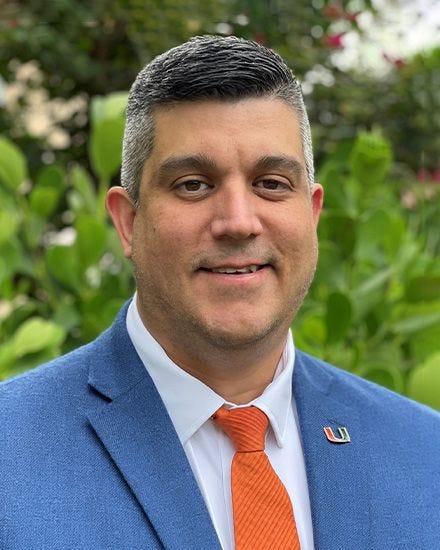

Rajiv Chowdhury, Florida International University - Saltwater Intrusion and the Health of Coastal Communities
On Florida International University Week: How much salt is in your drinking water? Rajiv Chowdhury, chair and professor of global health, explores this question. Faculty Bio: Dr. Rajiv Chowdhury is chair of the Department of Global Health at FIU’s Robert Stempel College of Public Health & Social Work. An internationally recognized global health researcher and educator, he previously held faculty roles at the University of Cambridge and the University of Exeter. His research focuses on the causes of chronic diseases, including cardiovascular disease, diabetes and dementia, and how social, biological and environmental factors shape health outcomes. He has authored more than 150 scientific publications, with work informing global health guidelines and appearing in outlets such as The New York Times, CNN and BBC. Transcript: Most people think about salt as something that comes from food.But for millions of people, salt may also be coming from another source: the water they drink.My research looks at drinking water salinity: the amount of dissolved salts, mainly sodium, in a water supply, and how it may affect cardiovascular health.This issue is becoming more important in coastal areas. As sea levels rise, saltwater can push into freshwater sources, including underground aquifers. This process is called saltwater intrusion.For communities that rely on groundwater, that can mean drinking and cooking with water that contains more sodium than expected.My team and I wanted to understand whether this matters for blood pressure.We conducted a systematic review and meta-analysis, bringing together data from 27 population-based studies involving more than 74,000 people across several countries.We found a consistent pattern. People exposed to higher-salinity drinking water had higher blood pressure than those exposed to lower-salinity water.On average, systolic blood pressure — the top number in a reading — was about 3.2 points higher. Diastolic blood pressure — the bottom number — was nearly 2.8 points higher.Higher drinking water salinity was also associated with a 26 percent increased risk of hypertension, especially in coastal populations.These numbers may seem modest for one person. But across large communities, even small increases in blood pressure can have major public health effects.Food remains the main source of sodium for most people. But our findings suggest that water quality should also be part of the conversation, especially as saltwater intrusion becomes a growing concern for coastal regions. Read More: [BMJ Journals] - Association of drinking water salinity with elevated blood pressure and risk of hypertension among coastal and other populations: a systematic review and meta-analysis of observational studies [FIU News] - Salty drinking water could be increasing your blood pressure – people living in coastal areas are most at risk [FIU News] - Could salty drinking water be a risk factor for high blood pressure? This is a public episode. If you would like to discuss this with other subscribers or get access to bonus episodes, visit www.academicminute.org