Skip to content
Artwork for TED-Ed
EducationScienceTechnology

TED-Ed

TED-Ed

TED-Ed’s mission is to create lessons worth sharing. Feed and expand your curiosity with our award-winning animated shorts - published on YouTube and available with supplemental learning materials on ed.ted.com.

Want to suggest an idea for a TED-Ed animation, nominate an educator or animator? Visit our website at: http://ed.ted.com/get_involved.

Consider backing us on Patreon. By doing so, you directly support our nonprofit mission to create free, high-quality educational content: https://www.patreon.com/teded

For more information on using TED-Ed content for commercial purposes (e.g. employee learning, in a film, or in an online course), please submit a Media Request using this link: https://media-requests.ted.com/

Play
  • 1,789 episodes
  • daily
  • Avg 9 min
  • English

Episodes 1,789

Counted on this page — what you have heard stays on this device, so it is not something the list can be paged by.
  • September 24 · 9 min

    Is capitalism actually malfunctioning?

    Explore the different types of capitalism, how they operate, and how they impact issues like climate change and rising inequality. -- People have become increasingly worried that the threats we face today, like climate change and rising inequality, can’t be solved by a capitalist economic system. So, is that true? And if it is, can we fix capitalism or do we need to tear the system down and build a new one from scratch? Explore the different types of capitalism and the role it plays in our society. Directed by Lorenzo Mercanti, AIM Creative Studios. This video made possible in collaboration with World Economic Forum Learn more about how TED-Ed partnerships work: https://bit.ly/TEDEdPartners Support Our Non-Profit Mission ---------------------------------------------- Support us on Patreon: http://bit.ly/TEDEdPatreon Check out our merch: http://bit.ly/TEDEDShop ---------------------------------------------- Connect With Us ---------------------------------------------- Sign up for our newsletter: http://bit.ly/TEDEdNewsletter Follow us on Facebook: http://bit.ly/TEDEdFacebook Find us on Twitter: http://bit.ly/TEDEdTwitter Peep us on Instagram: http://bit.ly/TEDEdInstagram ---------------------------------------------- Keep Learning ---------------------------------------------- View full lesson: https://ed.ted.com/lessons/is-capitalism-actually-broken Dig deeper with additional resources: https://ed.ted.com/lessons/is-capitalism-actually-broken#digdeeper Animator's website: http://aimcreativestudios.com Music: https://soundcloud.com/aim-music ---------------------------------------------- Thank you so much to our patrons for your support! Without you this video would not be possible! John Hellmann, Poompak Meephian, Chuck Wofford, Adam Pagan, Wes Winn, Conder Shou, ntiger, Noname, Hansan Hu, David D, Mac Hyney, Keith Ellison, robin valero walters, Lynne Truesdale, Gatsby Dkdc, Matthew Neal, Denis Chon, Julian Oberhofer, Monte Carroll, Eddy, Jay M, Constantino Victor Delgado, Andrea Galvagni, Andrew Tweddle, Laurel-Ann Rice, Fernando A. Endo, Helen Lee, pam morgan, sarim haq, Gerardo Castro, Michel-Ange Hortegat, Enes Kirimi, Amaury BISIAUX, ND, Samyogita Hardikar, Vanessa Graulich, Vandana Gunwani, Abdulmohsin Almadi, AJ Lyon, Geoffrey Bultitude, Mi Mi, Thomas Rothert, Brian Elieson, Oge O, Weronika Falkowska, Nevin Spoljaric, Sid Chanpuriya, Anoop Varghese, David Yastremski and Noah Webb. Learn more about your ad choices. Visit megaphone.fm/adchoices

  • September 24 · 12 min

    The arts festival movement - David Binder

    David Binder is a major Broadway producer, but last summer he found himself in a small Australian neighborhood, watching locals dance and perform on their lawns -- and loving it. He shows us the new face of arts festivals, which break the boundary between audience and performer and help cities express themselves. Talk by David Binder. Learn more about your ad choices. Visit megaphone.fm/adchoices

  • September 24 · 8 min

    How do we develop a better economy?

    Explore the model known as doughnut economics, which aims to meet the needs of people without overshooting Earth's ecological limits. -- Can we call any economy “healthy” in the face of dwindling resources and growing inequality? What if we cut off our addiction to endless growth, and used a new compass for modern prosperity? One such compass is known as “doughnut economics,” which aims to meet the needs of people without overshooting Earth's ecological limits. Explore how this model reframes our economic systems. This video is based on interview excerpts from the TED Interview podcast. The episode is called “Kate Raworth argues that rethinking economics can save our planet” Listen to the full episode or read the transcript here: https://www.ted.com/talks/the_ted_interview_kate_raworth_argues_that_rethinking_economics_can_save_our_planet Directed by Vicente Nirō, AIM Creative Studios. This video made possible in collaboration with World Economic Forum Learn more about how TED-Ed partnerships work: https://bit.ly/TEDEdPartners Support Our Non-Profit Mission ---------------------------------------------- Support us on Patreon: http://bit.ly/TEDEdPatreon Check out our merch: http://bit.ly/TEDEDShop ---------------------------------------------- Connect With Us ---------------------------------------------- Sign up for our newsletter: http://bit.ly/TEDEdNewsletter Follow us on Facebook: http://bit.ly/TEDEdFacebook Find us on Twitter: http://bit.ly/TEDEdTwitter Peep us on Instagram: http://bit.ly/TEDEdInstagram ---------------------------------------------- Keep Learning ---------------------------------------------- View full lesson: https://ed.ted.com/lessons/how-do-we-create-a-better-economy Dig deeper with additional resources: https://ed.ted.com/lessons/how-do-we-create-a-better-economy#digdeeper Animator's website: http://aimcreativestudios.com Music: https://soundcloud.com/aim-music ---------------------------------------------- Thank you so much to our patrons for your support! Without you this video would not be possible! Ovidiu Mrd, paul g mohney, Steven Razey, Nathan Giusti, Helen Lee, Anthony Benedict, Karthik Balsubramanian, Annastasshia Ames, Amy Lopez, Vinh-Thuy Nguyen, Liz Candee, Ugur Doga Sezgin, Karmi Nguyen, John C. Vesey, Yelena Baykova, Nick Johnson, Carlos H. Costa, Jennifer Kurkoski, Ryan B Harvey, Akinola Emmanuel, Jose Arcadio Valdes Franco, Sebastiaan Vleugels, Karl Laius, JY Kang, Abhishek Goel, Heidi Stolt, Nicole Sund, Karlee Finch, Mario Mejia, Denise A Pitts, Doug Henry, Keven Webb, Mihai Sandu, Deepak Iyer, Javid Gozalov, Kyanta Yap, Rebecca Reineke, William Biersdorf, Patricia Alves Panagides, Yvette Mocete, Cyrus Garay, Samuel Barbas, LadyGeek, Marin Kovachev, Penelope Misquitta, Hans Peng, Gaurav Mathur, Erik Biemans, Tony, Michelle, Katie and Josh Pedretti and Hoai Nam Tran. Learn more about your ad choices. Visit megaphone.fm/adchoices

  • September 24 · 6 min

    Not all scientific studies are created equal - David H. Schwartz

    View full lesson: Not all scientific studies are created equal - David H. Schwartz Every day, we are bombarded by attention grabbing headlines that promise miracle cures to all of our ailments -- often backed up by a "scientific study." But what are these studies, and how do we know if they are reliable? David H. Schwartz dissects two types of studies that scientists use, illuminating why you should always approach the claims with a critical eye. Lesson by David H. Schwartz, animation by Augenblick Studios. Learn more about your ad choices. Visit megaphone.fm/adchoices

  • September 24 · 3 min

    "Jabberwocky": One of literature's best bits of nonsense

    Dive into Lewis Carroll’s epic nonsense poem, “Jabberwocky” from his novel "Through the Looking-Glass, and What Alice Found There." -- As Alice wanders through the dreamscape of Looking-Glass Land in Lewis Carroll's "Through the Looking-Glass, and What Alice Found There," she happens across a book written in an unintelligible language. Inside, she discovers an epic poem filled with nonsense, fearsome creatures, and whimsical language. Dive into Carroll's legendary poem, "Jabberwocky" and see if you can make sense of the nonsense. Poem by Lewis Carroll, directed by Sjaak Rood. Sign up for our newsletter: http://bit.ly/TEDEdNewsletter Support us on Patreon: http://bit.ly/TEDEdPatreon Follow us on Facebook: http://bit.ly/TEDEdFacebook Find us on Twitter: http://bit.ly/TEDEdTwitter Peep us on Instagram: http://bit.ly/TEDEdInstagram View full lesson: https://ed.ted.com/lessons/jabberwocky-one-of-literature-s-best-bits-of-nonsense Thank you so much to our patrons for your support! Without you this video would not be possible! Della Palacios, Vik Nagjee, Hiroshi Uchiyama, Adi V, Andrew Bosco, Craig Sheldon, Rishi Pasham, Joanne Luce, Jason A Saslow, Mary Sawyer, Scott Gass, Ruth Fang, Mayank Kaul, Kathryn J Hammond, Max Shuai Tang, Terry Minion, Sami Khan, Rob Johnson, Abdullah Abdulaziz, Angelo Urzua-Milla, Tommy Lewis, leorene, Mahina Bachiller, Marcus Andre Nery, Bruce Vieira Lopes, Chef, Charmaine Hanson, Michael Goldberg, Lydia Pflieger, Paul Aldred-Bann, Manav parmar, Susan Wang, Utkarsh Dubey, Thawsitt, Xuebicoco, Jezabel, Maeve , Kim Humphrey, Kristen Damas, JackKeyton , Matthew D. Vigil, Amin Shahril, Adriano Fontes, Xiao Yu, Fatima Kried, Aravind Battaje, Melissa Suarez, Jason Duncan and Brian A. Dunn. Learn more about your ad choices. Visit megaphone.fm/adchoices

  • September 24 · 6 min

    What's the brightest age? - Shannon Odell

    At what age are you smartest? Dig into how your brain development affects your skills at different stages of your life. -- Tomorrow is the annual Brain Clash — a decathlon of mental challenges, trivia competitions, and puzzles. Amir needs a smart and capable teammate and must choose between three people; all of different ages and talents. So, who should Amir choose for the contest? Shannon Odell breaks down the idea of “smart” and explores how our brain development impacts our skills at various stages of our lives. Lesson by Shannon Odell, directed by Biljana Labović. This video made possible in collaboration with Bezos Family Foundation Learn more about how TED-Ed partnerships work: https://bit.ly/TEDEdPartners A special thanks to Ali Cohen who provided information and insights for the development of this video. Support Our Non-Profit Mission ---------------------------------------------- Support us on Patreon: http://bit.ly/TEDEdPatreon Check out our merch: http://bit.ly/TEDEDShop ---------------------------------------------- Connect With Us ---------------------------------------------- Sign up for our newsletter: http://bit.ly/TEDEdNewsletter Follow us on Facebook: http://bit.ly/TEDEdFacebook Find us on Twitter: http://bit.ly/TEDEdTwitter Peep us on Instagram: http://bit.ly/TEDEdInstagram ---------------------------------------------- Keep Learning ---------------------------------------------- View full lesson: https://ed.ted.com/lessons/what-s-the-smartest-age-shannon-odell Dig deeper with additional resources: https://ed.ted.com/lessons/what-s-the-smartest-age-shannon-odell#digdeeper ---------------------------------------------- Thank you so much to our patrons for your support! Without you this video would not be possible! Angel Alberici, Minh Quan Dinh, Sylvain, Terran Gimpel, Talia Sari, Katie McDowell, Allen, Mahina Knuckles, Charmaine Hanson, Thawsitt, Jezabel, Abdullah Abdulaziz, Xiao Yu, Melissa Suarez, Brian A. Dunn, Francisco Amaya, Daisuke Goto, Matt Switzler, Peng, Tzu-Hsiang, Bethany Connor, Jeremy Shimanek, Mark Byers, Avinash Amarnath, Xuebicoco, Rayo, Po Foon Kwong, Boffin, Jesse Jurman, Scott Markley, Elija Peterson, Ovidiu Mrd, paul g mohney, Steven Razey, Nathan Giusti, Helen Lee, Anthony Benedict, Karthik Balsubramanian, Annastasshia Ames, Amy Lopez, Vinh-Thuy Nguyen, Liz Candee, Ugur Doga Sezgin, Karmi Nguyen, John C. Vesey, Yelena Baykova, Nick Johnson, Carlos H. Costa, Jennifer Kurkoski, Ryan B Harvey and Akinola Emmanuel. Learn more about your ad choices. Visit megaphone.fm/adchoices
  • September 24 · 6 min

    Could a breathalyzer detect cancer? - Julian Burschka

    Discover how scientists are analyzing compounds in the breath to create a versatile breathalyzer capable of detecting disease. -- How is it that a breathalyzer can measure the alcohol content in someone’s blood, hours after they had their last drink, based on their breath alone? And could we use this same technology to detect disease by analyzing a person’s breath, without having to use more invasive diagnostic tools like biopsies, blood draws, and radiation? Julian Burschka details the complicated process. Lesson by Julian Burschka, directed by Cabong Studios. Animator's website: https://www.cabongstudios.com.br Sign up for our newsletter: http://bit.ly/TEDEdNewsletter Support us on Patreon: http://bit.ly/TEDEdPatreon Follow us on Facebook: http://bit.ly/TEDEdFacebook Find us on Twitter: http://bit.ly/TEDEdTwitter Peep us on Instagram: http://bit.ly/TEDEdInstagram View full lesson: https://ed.ted.com/lessons/could-a-breathalyzer-detect-cancer-julian-burschka Thank you so much to our patrons for your support! Without you this video would not be possible! Brighteagle, Beatriz Inácio, Mighterbump, Pamela Harrison, Maija Chapman, Liana Switzer, Curtis Light, The Brock, Dianne Palomar, Edgar Campos Barrachina, Maria Lerchbaumer, Ever Granada, Marin Kovachev, Ravi S. Rāmphal, Penelope Misquitta, Tekin Gültekin, Jhuval, Hans Peng, Gaurav Mathur, Erik Biemans, Tony, Michelle, Katie and Josh Pedretti, Vaibhav Mirjolkar, Thomas Bahrman, Allan Hayes, Aidan Forero, Uday Kishore, Mikhail Shkirev, Devesh Kumar, Sunny Patel, Anuj Tomar, Lowell Fleming, David Petrovič, Hoai Nam Tran, Stina Boberg, Alexandrina Danifeld, Kack-Kyun Kim, Travis Wehrman, haventfiguredout, Caitlin de Falco, Ken, zjweele13, Anna-Pitschna Kunz, Edla Paniguel, Elena Crescia, Thomas Mungavan, Alejandro Cachoua, Jaron Blackburn, Yoga Trapeze Wanderlust, Sandy Nasser and Venkat Venkatakrishnan. Learn more about your ad choices. Visit megaphone.fm/adchoices

  • September 24 · 9 min

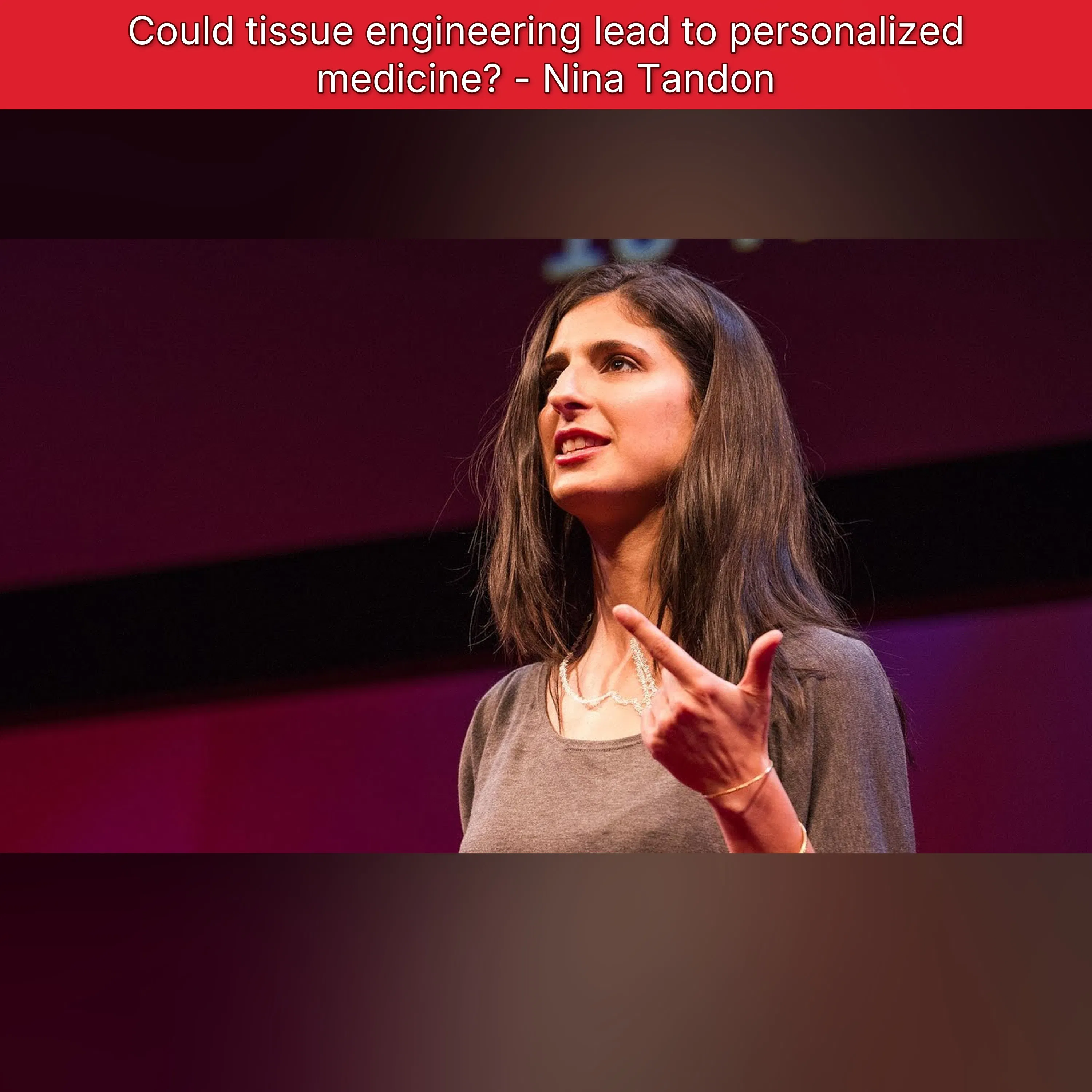
    Could tissue engineering lead to personalized medicine? - Nina Tandon

    Each of our bodies is utterly unique, which is a lovely thought until it comes to treating an illness -- when every body reacts differently, often unpredictably, to standard treatment. Tissue engineer Nina Tandon talks about a possible solution: Using pluripotent stem cells to make personalized models of organs on which to test new drugs and treatments, and storing them on computer chips. (Call it extremely personalized medicine.) Talk by Nina Tandon. Learn more about your ad choices. Visit megaphone.fm/adchoices

  • September 24 · 8 min

    Is life meaningless? And other absurd questions - Nina Medvinskaya

    Dive into Albert Camus’ philosophy of the absurd, and explore the question: if the world is meaningless, could our lives still hold value? -- Albert Camus grew up surrounded by violence. His homeland of Algeria was mired in conflict. He lost his father in World War I. Seeing World War II's devastation, Camus grew despondent. What was the meaning behind all this endless bloodshed and suffering? And if the world was meaningless, could our individual lives still hold value? Nina Medvinskaya explores Camus’ philosophy of the absurd. Lesson by Nina Medvinskaya, directed by Avi Ofer. Animator's website: https://aviofer.com/ Sign up for our newsletter: http://bit.ly/TEDEdNewsletter Support us on Patreon: http://bit.ly/TEDEdPatreon Follow us on Facebook: http://bit.ly/TEDEdFacebook Find us on Twitter: http://bit.ly/TEDEdTwitter Peep us on Instagram: http://bit.ly/TEDEdInstagram View full lesson: https://ed.ted.com/lessons/is-life-meaningless-and-other-absurd-questions-nina-medvinskaya Thank you so much to our patrons for your support! Without you this video would not be possible! Carlos H. Costa, Eimann P. Evarola, Aleksandr Lyozin, Mohamed Elsayed, Alan Wilder, Marcus Appelbaum, Francisco Leos, Kevin O'Leary, Les Howard, Ten Cha, Mehmet Yusuf Ertekin, Arlene Weston, phkphk123321, Jennifer Kurkoski, Ryan B Harvey, Austin Randall, Abhishek Bansal, Jayant Sahewal, Dian Atamyanov, igor romanenko, Jose Arcadio Valdes Franco, Brandy Sarver, Guy Hardy, Tu-Anh Nguyen, Karl Laius, Madee Lo, JY Kang, Marc Bou Zeid, Abhishek Goel, Charles A Hershberger, Coenraad Keuning, Robert Seik, Heidi Stolt, Alexis Hevia, Todd Gross, Brady Jones, Christina Salvatore, Zhong Ming Zenny Tan, Karisa Caudill, Bruno Pinho, Derek Drescher, Mihail Radu Pantilimon, Amin Shahril, Mohamed Elsayed, Barthélémy Michalon, Chumi Ogbonna, Karlee Finch, Mohammad Said, jj5252 and Kelvin Lam. Learn more about your ad choices. Visit megaphone.fm/adchoices

  • September 24 · 7 min

    The mysterious life and death of Rasputin - Eden Girma

    Get to know the story of Rasputin, known as the “Mad Monk,” who was assassinated for his involvement with the Russian monarchy. -- On a night in 1916, Russian aristocrats set a plot of assassination into motion. If all went as planned, a man would be dead by morning, though others had already tried and failed. The monarchy was on the brink of collapse, and they believed this man was the single cause of it all. Who was he, and why was he to blame for the fate of an empire? Eden Girma explores the life of the notorious Rasputin. Lesson by Eden Girma, directed by Hype Studio. Animator's website: https://www.luisacopetti.com Sign up for our newsletter: http://bit.ly/TEDEdNewsletter Support us on Patreon: http://bit.ly/TEDEdPatreon Follow us on Facebook: http://bit.ly/TEDEdFacebook Find us on Twitter: http://bit.ly/TEDEdTwitter Peep us on Instagram: http://bit.ly/TEDEdInstagram View full lesson: https://ed.ted.com/lessons/the-myster... Thank you so much to our patrons for your support! Without you this video would not be possible! Nicolle Fieldsend-Roxborough, John Saveland, Jason Garcia, Robson Martinho, Martin Lau, Senjo Limbu, Joe Huang, SungGyeong Bae, Christian Kurch, Begum Tutuncu, David Matthew Ezroj, Sweetmilkcoco, Raphaël LAURENT, Joe Meyers, Farah Abdelwahab, Brian Richards, Divina Grace Dar Santos, Jessie McGuire, Abdullah Altuwaijri, Sarah Burns, Clement , Hadi Salahshour, FAWWAZ GHUWAIDI, Dino Biancolini, Reagen O'Connor, Nicu Boanda, Cindy O., Karla Brilman, Jørgen Østerpart, Sergi Páez, rakesh Katragadda, Carolyn Corwin, Charlene You, Boris Langvand, Exal Enrique Cisneros Tuch, Carsten Tobehn, Kin Lon Ma, Katie Dean, Ezgi Yersu, Eunsun Kim, Katrina Harding, Gerald Onyango, alessandra tasso, Astia Rizki Safitri, Côme Vincent, Antony Lee, Melissa Sorrells, Rakshit Kothari, Doreen Reynolds-Consolati and Simon Holst Ravn. Learn more about your ad choices. Visit megaphone.fm/adchoices
  • September 24 · 7 min

    things all skilled listeners know

    Dig into different strategies that can improve your listening skills so you can become a high quality listener. -- It’s easy to tell when someone’s not paying attention, but it can be surprisingly tricky to know what good listening looks like. Good listening is one of the most important things we can do to improve our relationships, develop our worldview, and potentially change people’s minds. So what can we do to become better listeners? Dig into different strategies that can improve your listening skills. Directed by Maryna Buchynska, and action agency. This video made possible in collaboration with Character Lab Learn more about how TED-Ed partnerships work: https://bit.ly/TEDEdPartners A special thanks to Guy Itzchakov and Harry Reis who provided information and insights for the development of this video. Support Our Non-Profit Mission ---------------------------------------------- Support us on Patreon: http://bit.ly/TEDEdPatreon Check out our merch: http://bit.ly/TEDEDShop ---------------------------------------------- Connect With Us ---------------------------------------------- Sign up for our newsletter: http://bit.ly/TEDEdNewsletter Follow us on Facebook: http://bit.ly/TEDEdFacebook Find us on Twitter: http://bit.ly/TEDEdTwitter Peep us on Instagram: http://bit.ly/TEDEdInstagram ---------------------------------------------- Keep Learning ---------------------------------------------- View full lesson: https://ed.ted.com/lessons/4-things-all-great-listeners-know Dig deeper with additional resources: https://ed.ted.com/lessons/4-things-all-great-listeners-know#digdeeper Animator's website: https://www.and-action.net ---------------------------------------------- Thank you so much to our patrons for your support! Without you this video would not be possible! Matthew Neal, Denis Chon, Julian Oberhofer, Monte Carroll, Eddy, Jay M, Constantino Victor Delgado, Andrea Galvagni, Andrew Tweddle, Laurel-Ann Rice, Fernando A. Endo, Helen Lee, pam morgan, sarim haq, Gerardo Castro, Michel-Ange Hortegat, Enes Kirimi, Amaury BISIAUX, ND, Samyogita Hardikar, Vanessa Graulich, Vandana Gunwani, Abdulmohsin Almadi, AJ Lyon, Geoffrey Bultitude, Mi Mi, Thomas Rothert, Brian Elieson, Oge O, Weronika Falkowska, Nevin Spoljaric, Sid Chanpuriya, Anoop Varghese, David Yastremski, Noah Webb, Roberto Chena, Oliver Koo, Luke Pisano, Andrea Gordon, Aleksandar Donev, Nicole Klau Ibarra, Jesse Lira, Ezekiel Raui, Petr Vacek, Dennis, Olivia Fu, Kari Teffeau, Cindy Lai, Rajath Durgada Manjunath and Dan Nguyen. Learn more about your ad choices. Visit megaphone.fm/adchoices

  • September 24 · 8 min

    Crowdsource your health - Lucien Engelen

    You can use your smartphone to find a local ATM, but what if you need a defibrillator? Lucien Engelen shows us online innovations that are changing the way we save lives, including a crowdsourced map of local defibrillators. (Filmed at TEDxMaastricht.) Talk by Lucien Engelen. Learn more about your ad choices. Visit megaphone.fm/adchoices

  • September 24 · 8 min

    Why is this painting so shocking? - Iseult Gillespie

    Discover the history and symbolism of Pablo Picasso’s powerful anti-war mural, “Guernica,” rendered in his signature Cubist style. -- In 1937, in one of the worst civilian casualties of the Spanish Civil War, Fascist forces bombed the village of Guernica in Northern Spain. For Pablo Picasso, the tragedy sparked a frenzied period of work in which he produced a massive anti-war mural, titled “Guernica.” How can we make sense of this overwhelming image, and what makes it a masterpiece of anti-war art? Iseult Gillespie investigates. Lesson by Iseult Gillespie, directed by Avi Ofer. Sign up for our newsletter: http://bit.ly/TEDEdNewsletter Support us on Patreon: http://bit.ly/TEDEdPatreon Follow us on Facebook: http://bit.ly/TEDEdFacebook Find us on Twitter: http://bit.ly/TEDEdTwitter Peep us on Instagram: http://bit.ly/TEDEdInstagram View full lesson: https://ed.ted.com/lessons/why-is-this-painting-so-shocking-iseult-gillespie Thank you so much to our patrons for your support! Without you this video would not be possible! Eduardo Briceño, Bill Feaver, Ricardo Paredes, David Douglass, Paul Coupe, Jen , Megan Whiteleather, Mayank Kaul, Ryohky Araya, Tan YH, Ph.D., Brittiny Elman, Ruth Fang, Alex Schenkman, Ivan Todorović, Yanuar Ashari, Mrinalini , Anthony Kudolo, Scott Gass, Querida Owens, Hazel Lam, Manav parmar, Dwight Tevuk, Siamak H, Dominik Kugelmann, Mary Sawyer, David Rosario, Samuel Doerle, Susan Herder, Savannah Scheelings, Prasanth Mathialagan, Yanira Santamaria, Dawn Jordan, Kevin Wong, Goh Xiang Ting Diana, Cristóbal Moenne, MJ Tan Mingjie, Yansong Li, Jason A Saslow, Joanne Luce, Kyle Nguyen, Taylor Hunter, Noa Shore, Lex Azevedo, Merit Gamertsfelder, Bev Millar, Rishi Pasham, Jhuval, SookKwan Loong, Bruno Pinho and Javier Aldavaz. Learn more about your ad choices. Visit megaphone.fm/adchoices

  • September 24 · 6 min

    Merits and limitations of public opinion polls - Jason Robert Jaffe

    View full lesson: http://ed.ted.com/lessons/pros-and-cons-of-public-opinion-polls-jason-robert-jaffe How do public opinion polls work? And, more importantly, are they accurate? Jason Robert Jaffe reveals the complexities and biases of polls and provides tips on how to think about polls as we make everyday decisions. Lesson by Jason Robert Jaffe, animation by Flaming Medusa Studios. Learn more about your ad choices. Visit megaphone.fm/adchoices
  • September 24 · 15 min

    What you don't know about marriage - Jenna McCarthy

    In this funny, casual talk from TEDx, writer Jenna McCarthy shares surprising research on how marriages (especially happy marriages) really work. One tip: Do not try to win an Oscar for best actress. (Filmed at TEDxAmericanRiviera.) Talk by Jenna McCarthy. Learn more about your ad choices. Visit megaphone.fm/adchoices

  • September 24 · 8 min

    Will another pandemic strike during your lifetime?

    Explore the probability of a future pandemic and the steps we can take to reduce its destructiveness. -- We tend to think of pandemics as unlikely events, but disease outbreaks are surprisingly common. Over the past 400 years, the longest stretch of time without a documented outbreak was just four years. So, what’s the probability of experiencing another world-changing pandemic in your lifetime? Explore the likelihood of a future pandemic and the steps we can take to reduce its destructiveness. Directed by Igor Coric, Artrake Studio. This video made possible in collaboration with Gates Ventures Learn more about how TED-Ed partnerships work: https://bit.ly/TEDEdPartners Support Our Non-Profit Mission ---------------------------------------------- Support us on Patreon: http://bit.ly/TEDEdPatreon Check out our merch: http://bit.ly/TEDEDShop ---------------------------------------------- Connect With Us ---------------------------------------------- Sign up for our newsletter: http://bit.ly/TEDEdNewsletter Follow us on Facebook: http://bit.ly/TEDEdFacebook Find us on Twitter: http://bit.ly/TEDEdTwitter Peep us on Instagram: http://bit.ly/TEDEdInstagram ---------------------------------------------- Keep Learning ---------------------------------------------- View full lesson: https://ed.ted.com/lessons/will-there-be-another-pandemic-in-your-lifetime Dig deeper with additional resources: https://ed.ted.com/lessons/will-there-be-another-pandemic-in-your-lifetime#digdeeper Animator's website: https://www.artrake.com ---------------------------------------------- Thank you so much to our patrons for your support! Without you this video would not be possible! Kyanta Yap, Rebecca Reineke, William Biersdorf, Patricia Alves Panagides, Yvette Mocete, Cyrus Garay, Samuel Barbas, LadyGeek, Marin Kovachev, Penelope Misquitta, Hans Peng, Gaurav Mathur, Erik Biemans, Tony, Michelle, Katie and Josh Pedretti, Hoai Nam Tran, Kack-Kyun Kim, Michael Braun-Boghos, zjweele13, Anna-Pitschna Kunz, Edla Paniguel, Thomas Mungavan, Jaron Blackburn, Venkat Venkatakrishnan, ReuniteKorea, Aaron Henson, Rohan Gupta, Begum Tutuncu, Brian Richards, Jørgen Østerpart, Tyron Jung, Carsten Tobehn, Katie Dean, Ezgi Yersu, Gerald Onyango, alessandra tasso, Doreen Reynolds-Consolati, Manognya Chakrapani, Ayala Ron, Eunsun Kim, Phyllis Dubrow, Ophelia Gibson Best, Paul Schneider, Joichiro Yamada, Henrique Cassús, Karthik Cherala, Clarence E. Harper Jr., Vignan Velivela, Ana Maria, Exal Enrique Cisneros Tuch and Tejas Dc. Learn more about your ad choices. Visit megaphone.fm/adchoices

  • September 24 · 8 min

    Why plague doctors sported beaked masks

    Explore the history of the European plague doctor, and find out where their iconic outfit of a beaked mask and robe came from. -- The year is 1656. Your body is wracked by violent chills. Your head pounds and you're too weak to sit up. In your feverish state, you see a strange-looking man wearing a beak-like mask, his body covered from head to toe. Without seeing his face, you know: you have the plague. So, where did these iconic outfits come from? Stephanie Honchell Smith explores the history of plague doctors. Directed by Anton Bogaty. This video made possible in collaboration with Gates Ventures Learn more about how TED-Ed partnerships work: https://bit.ly/TEDEdPartners Support Our Non-Profit Mission ---------------------------------------------- Support us on Patreon: http://bit.ly/TEDEdPatreon Check out our merch: http://bit.ly/TEDEDShop ---------------------------------------------- Connect With Us ---------------------------------------------- Sign up for our newsletter: http://bit.ly/TEDEdNewsletter Follow us on Facebook: http://bit.ly/TEDEdFacebook Find us on Twitter: http://bit.ly/TEDEdTwitter Peep us on Instagram: http://bit.ly/TEDEdInstagram ---------------------------------------------- Keep Learning ---------------------------------------------- View full lesson: https://ed.ted.com/lessons/why-plague-doctors-wore-beaked-masks Dig deeper with additional resources: https://ed.ted.com/lessons/why-plague-doctors-wore-beaked-masks#digdeeper Animator's website: https://www.instagram.com/anton_bogaty Music: https://yessian.com ---------------------------------------------- Thank you so much to our patrons for your support! Without you this video would not be possible! Chin Beng Tan, Tom Boman, Karen Warner, Iryna Panasiuk, Aaron Torres, Eric Braun, Sonja Worzewski, Michael Clement, Adam Berry, Ghaith Tarawneh, Nathan Milford, Tomas Beckett, Alice Ice, Eric Berman, Kurt Paolo Sevillano, Jennifer Heald, Megulo Abebe, isolwi, Kate Sem, Ujjwal Dasu, Angel Alberici, Minh Quan Dinh, Sylvain, Terran Gimpel, Talia Sari, Katie McDowell, Allen, Mahina Knuckles, Charmaine Hanson, Thawsitt, Jezabel, Abdullah Abdulaziz, Xiao Yu, Melissa Suarez, Brian A. Dunn, Francisco Amaya, Daisuke Goto, Matt Switzler, Peng, Tzu-Hsiang, Bethany Connor, Jeremy Shimanek, Mark Byers, Avinash Amarnath, Xuebicoco, Rayo, Po Foon Kwong, Boffin, Jesse Jurman, Scott Markley and Elija Peterson. Learn more about your ad choices. Visit megaphone.fm/adchoices

  • September 24 · 15 min

    A universal translator for doctors - Steven Schwaitzberg

    View full lesson: http://ed.ted.com/lessons/a-universal-translator-for-surgeons-steven-schwaitzberg Laparoscopic surgery uses minimally invasive incisions -- which means less pain and shorter recovery times for patients. But Steven Schwaitzberg has run into two problems teaching these techniques to surgeons around the world -- language and distance. He shares how a new technology, which combines video conferencing and a real-time universal translator, could help. Talk by Steven Schwaitzberg. Learn more about your ad choices. Visit megaphone.fm/adchoices

  • September 24 · 8 min

    Why is it so challenging to treat the common cold?

    Dig into the two main ways we fight the viruses that cause the common cold, and find out if it’s possible to create a cure. -- On average, adults catch more than 150 colds throughout their lives. Even with similar symptoms, the cause could be different each time. Common colds are caused by at least 8 different families of virus, each of which can have its own subtypes. How can so many different viruses cause the same illness? And is a cure even possible? Explore the two main strategies we employ to fight viruses. Directed by Anton Bogaty. This video made possible in collaboration with Gates Ventures Learn more about how TED-Ed partnerships work: https://bit.ly/TEDEdPartners Support Our Non-Profit Mission ---------------------------------------------- Support us on Patreon: http://bit.ly/TEDEdPatreon Check out our merch: http://bit.ly/TEDEDShop ---------------------------------------------- Connect With Us ---------------------------------------------- Sign up for our newsletter: http://bit.ly/TEDEdNewsletter Follow us on Facebook: http://bit.ly/TEDEdFacebook Find us on Twitter: http://bit.ly/TEDEdTwitter Peep us on Instagram: http://bit.ly/TEDEdInstagram ---------------------------------------------- Keep Learning ---------------------------------------------- View full lesson: https://ed.ted.com/lessons/why-is-it-so-hard-to-cure-the-common-cold Dig deeper with additional resources: https://ed.ted.com/lessons/why-is-it-so-hard-to-cure-the-common-cold#digdeeper Animator's website: https://antonbogaty.com ---------------------------------------------- Thank you so much to our patrons for your support! Without you this video would not be possible! Jose Arcadio Valdes Franco, Sebastiaan Vleugels, Karl Laius, JY Kang, Abhishek Goel, Heidi Stolt, Nicole Sund, Karlee Finch, Mario Mejia, Denise A Pitts, Doug Henry, Keven Webb, Mihai Sandu, Deepak Iyer, Javid Gozalov, Kyanta Yap, Rebecca Reineke, William Biersdorf, Patricia Alves Panagides, Yvette Mocete, Cyrus Garay, Samuel Barbas, LadyGeek, Marin Kovachev, Penelope Misquitta, Hans Peng, Gaurav Mathur, Erik Biemans, Tony, Michelle, Katie and Josh Pedretti, Hoai Nam Tran, Kack-Kyun Kim, Michael Braun-Boghos, zjweele13, Anna-Pitschna Kunz, Edla Paniguel, Thomas Mungavan, Jaron Blackburn, Venkat Venkatakrishnan, ReuniteKorea, Aaron Henson, Rohan Gupta, Begum Tutuncu, Brian Richards, Jørgen Østerpart, Tyron Jung, Carsten Tobehn, Katie Dean, Ezgi Yersu, Gerald Onyango and alessandra tasso. Learn more about your ad choices. Visit megaphone.fm/adchoices

  • September 24 · 8 min

    Gibberish, urine, and sheer chaos: What happens when you sleepwalk - Emmanuel During

    Download a free audiobook version of “The Midnight Library“ and support TED-Ed's nonprofit mission: https://www.audible.com/ted-ed -- Mumbling fantastical gibberish; devouring blocks of cheese in the nude; peeing in places that aren’t toilets; and jumping out of windows. These are all things people have reportedly done while sleepwalking, a behavior that can be dangerous in some cases. It’s estimated that around 18% of people sleepwalk at least once in their lives. So, what exactly is sleepwalking? Emmanuel During investigates. Lesson by Emmanuel During, directed by Laura Jayne Hodkin. Learn more about how TED-Ed partnerships work: https://bit.ly/TEDEdPartners Support Our Non-Profit Mission ---------------------------------------------- Support us on Patreon: http://bit.ly/TEDEdPatreon Check out our merch: http://bit.ly/TEDEDShop ---------------------------------------------- Connect With Us ---------------------------------------------- Sign up for our newsletter: http://bit.ly/TEDEdNewsletter Follow us on Facebook: http://bit.ly/TEDEdFacebook Find us on Twitter: http://bit.ly/TEDEdTwitter Peep us on Instagram: http://bit.ly/TEDEdInstagram ---------------------------------------------- Keep Learning ---------------------------------------------- View full lesson: https://ed.ted.com/lessons/what-causes-sleepwalking-emmanuel-during Dig deeper with additional resources: https://ed.ted.com/lessons/what-causes-sleepwalking-emmanuel-during#digdeeper Check out our full book recommendation: https://shop.ed.ted.com/collections/ted-ed-book-recommendations/products/the-midnight-library Animator's website: https://www.laurajaynehodkin.com ---------------------------------------------- Thank you so much to our patrons for your support! Without you this video would not be possible! Doreen Reynolds-Consolati, Manognya Chakrapani, Ayala Ron, Eunsun Kim, Phyllis Dubrow, Ophelia Gibson Best, Paul Schneider, Joichiro Yamada, Henrique Cassús, Karthik Cherala, Clarence E. Harper Jr., Vignan Velivela, Ana Maria, Exal Enrique Cisneros Tuch, Tejas Dc, Khalifa Alhulail, Martin Stephen, Jose Henrique Leopoldo e Silva, Mandeep Singh, Abhijit Kiran Valluri, Morgan Williams, Devin Harris, Pavel Zalevskiy, Karen Goepen-Wee, Filip Dabrowski, Barbara Smalley, Megan Douglas, Tim Leistikow, Ka-Hei Law, Hiroshi Uchiyama, Mark Morris, Misaki Sato, EdoKun, SookKwan Loong, Bev Millar, Lex Azevedo, Michael Aquilina, Jason A Saslow, Yansong Li, Cristóbal Moenne, Dawn Jordan, Prasanth Mathialagan, Samuel Doerle, David Rosario, Dominik Kugelmann - they-them, Siamak Hajizadeh, Ryohky Araya, Mayank Kaul, Christophe Dessalles and Heather Slater. Learn more about your ad choices. Visit megaphone.fm/adchoices

Showing 1,641–1,660 of 1,789 episodes