Skip to content
Artwork for TED-Ed
EducationScienceTechnology

TED-Ed

TED-Ed

TED-Ed’s mission is to create lessons worth sharing. Feed and expand your curiosity with our award-winning animated shorts - published on YouTube and available with supplemental learning materials on ed.ted.com.

Want to suggest an idea for a TED-Ed animation, nominate an educator or animator? Visit our website at: http://ed.ted.com/get_involved.

Consider backing us on Patreon. By doing so, you directly support our nonprofit mission to create free, high-quality educational content: https://www.patreon.com/teded

For more information on using TED-Ed content for commercial purposes (e.g. employee learning, in a film, or in an online course), please submit a Media Request using this link: https://media-requests.ted.com/

Play
  • 1,816 episodes
  • daily
  • Avg 9 min
  • English

Episodes 1,816

Counted on this page — what you have heard stays on this device, so it is not something the list can be paged by.
  • October 4 · 8 min

    When is a pandemic over?

    Explore the three strategies governments and communities can use to contain and end a pandemic, and find out which method is best. -- Consider the following scenario: a highly infectious, sometimes deadly respiratory virus infects humans for the first time. It spreads rapidly worldwide, and the WHO declares a pandemic. The death toll starts to rise and everyone is asking the same question: when will the pandemic end? Alex Rosenthal details the three main strategies governments can use to contain and end a pandemic. Lesson by Alex Rosenthal, directed by Visorama. Animator's website: https://www.visorama.tv/ Sign up for our newsletter: http://bit.ly/TEDEdNewsletter Support us on Patreon: http://bit.ly/TEDEdPatreon Follow us on Facebook: http://bit.ly/TEDEdFacebook Find us on Twitter: http://bit.ly/TEDEdTwitter Peep us on Instagram: http://bit.ly/TEDEdInstagram View full lesson: https://ed.ted.com/lessons/when-is-a-pandemic-over Thank you so much to our patrons for your support! Without you this video would not be possible! Brandy Jones, Shawn Quichocho, Gi Nam Lee, Joy Love Om, Miloš Stevanović, Ghassan Alhazzaa, Yankai Liu, Pavel Zalevskiy, Claudia Mayfield, Stephanie Perozo, Joe Giamartino, Filip Dabrowski, Barbara Smalley, Megan Douglas, Tim Leistikow, Andrés Melo Gámez, Renhe Ji, Ka-Hei Law, Michal Salman, Peter Liu, Mark Morris, Catherine Sverko, Misaki Sato, Tan YH, Ph.D., Rodrigo Carballo, SookKwan Loong, Bev Millar, Merit Gamertsfelder, Lex Azevedo, Noa Shore, Taylor Hunter, Kyle Nguyen, MJ Tan Mingjie, Cristóbal Moenne, Goh Xiang Ting Diana, Kevin Wong, Dawn Jordan, Yanira Santamaria, Prasanth Mathialagan, Savannah Scheelings, Susan Herder, Samuel Doerle, David Rosario, Dominik Kugelmann, Siamak H, Tracey Tobkin, Dwight Tevuk, Anthony Kudolo, Mrinalini and Yanuar Ashari. Learn more about your ad choices. Visit megaphone.fm/adchoices

  • October 4 · 6 min

    How to see more and care less: The art of Georgia O'Keeffe - Iseult Gillespie

    Get to know the life and works of painter and sculptor Georgia O’Keeffe, whose art became a cornerstone of American Modernism. -- Feeling disconnected from creating art within classical conventions, artist Georgia O’Keeffe began experimenting with abstract drawings that defied easy classification. Using the shapes and rhythms of nature to capture her internal world, these experiments became the cornerstone of the movement known as American Modernism. Iseult Gillespie explores the works of the elusive painter and sculptor. Lesson by Iseult Gillespie, directed by Lisa LaBracio. Sign up for our newsletter: http://bit.ly/TEDEdNewsletter Support us on Patreon: http://bit.ly/TEDEdPatreon Follow us on Facebook: http://bit.ly/TEDEdFacebook Find us on Twitter: http://bit.ly/TEDEdTwitter Peep us on Instagram: http://bit.ly/TEDEdInstagram View full lesson: https://ed.ted.com/lessons/how-to-see-more-and-care-less-the-art-of-georgia-o-keeffe-iseult-gillespie Thank you so much to our patrons for your support! Without you this video would not be possible! Jan-Erik, Scott Markley, Kaitlyn holland, Elija Peterson, Michele Lynn Rose, Jai Prasanth, Vack91, David Lucsanyi, Xavier dupont, Marisa Miller, Boytsov Ilya, Steven Razey, Javier Aldavaz, Nathan Giusti, Mada Arslan, Joichiro Yamada, Ritul Raghavan, Aline de Paula Zillig, Yambu Ganesh Shaw, Abeer Rajbeen, John Hong, Minh Tran, Helen Lee, Anthony Benedict, Turine Tran, Mathew Samuel, Karthik Balsubramanian, Lee, Livia-Alexandra Sarban, Annastasshia Ames, João Henrique Rodrigues, Sebastiaan Hols, Aries SW, SANG HAN, Amy Lopez, ReuniteKorea, Vinh-Thuy Nguyen, Liz Candee, Clovis Norroy, Danielle Downs, Nik Maier, Angel Pantoja, Nishant Suneja, 张晓雨, Srinivasa C Pasumarthi, Kathryn Vacha, Anthony Arcis, Jeffrey Segrest, Sandra Fuller Bocko and Alex Pierce. Learn more about your ad choices. Visit megaphone.fm/adchoices
  • October 4 · 6 min

    From DNA to Silly Putty: The diverse world of polymers - Jan Mattingly

    View full lesson: http://ed.ted.com/lessons/from-dna-to-silly-putty-the-diverse-world-of-polymers-jan-mattingly You are made of polymers, and so are trees and telephones and toys. A polymer is a long chain of identical molecules (or monomers) with a range of useful properties, like toughness or stretchiness -- and it turns out, we just can't live without them. Polymers occur both naturally -- our DNA is a polymer -- and synthetically, like plastic, Silly Putty and styrofoam. Jan Mattingly explains how polymers have changed our world. Lesson by Jan Mattingly, animation by TED-Ed. Learn more about your ad choices. Visit megaphone.fm/adchoices

  • October 4 · 5 min

    A rogue of one's own - Tim Adams

    View full lesson: http://ed.ted.com/lessons/an-anti-hero-of-one-s-own-tim-adams How can an anti-hero teach us about the heroic--and sometimes,the unheroic--characteristics that shape a story's protagonist? From jealousy to self-doubt, Tim Adams challenges us to consider how anti-heroes reflect the very mortal weaknesses that can be found within all of us. Lesson by Tim Adams, animation by Wood Goblin Studios. Learn more about your ad choices. Visit megaphone.fm/adchoices
  • October 4 · 10 min

    ways to build relationships with people

    Episode 6: Find a way to build trust, interest, and a connection with your audience so that they will be open to what you have to say. -- This is episode 6 of the animated series, “Public Speaking 101.” Ideas change everything — and since language lets us share our ideas, learning how to use it well gives speakers the power to inspire people and even change how they think. This 11-episode course will teach you how to identify, develop, and share your best ideas, while mastering essential communication skills along the way. Directed by Tolga Yıldız, Kozmonot Animation Studio. The TED-Ed Student Talks program provides free, customizable activities for educators to support their students in identifying, developing and sharing their ideas with each other and the world. Learn more at https://ed.ted.com/student_talks Support Our Non-Profit Mission ---------------------------------------------- Support us on Patreon: http://bit.ly/TEDEdPatreon Check out our merch: http://bit.ly/TEDEDShop ---------------------------------------------- Connect With Us ---------------------------------------------- Sign up for our newsletter: http://bit.ly/TEDEdNewsletter Follow us on Facebook: http://bit.ly/TEDEdFacebook Find us on Twitter: http://bit.ly/TEDEdTwitter Peep us on Instagram: http://bit.ly/TEDEdInstagram ---------------------------------------------- Keep Learning ---------------------------------------------- View full lesson: https://ed.ted.com/lessons/5-ways-to-connect-with-your-audience Dig deeper with additional resources: https://ed.ted.com/lessons/5-ways-to-connect-with-your-audience/digdeeper Animator's website: https://www.kozmonot.tv ---------------------------------------------- Thank you so much to our patrons for your support! Without you this video would not be possible! Angel Alberici, Minh Quan Dinh, Sylvain, Terran Gimpel, Talia Sari, Katie McDowell, Allen, Mahina Knuckles, Charmaine Hanson, Thawsitt, Jezabel, Abdullah Abdulaziz, Xiao Yu, Melissa Suarez, Brian A. Dunn, Francisco Amaya, Daisuke Goto, Matt Switzler, Peng, Tzu-Hsiang, Bethany Connor, Jeremy Shimanek, Mark Byers, Avinash Amarnath, Xuebicoco, Rayo, Po Foon Kwong, Boffin, Jesse Jurman, Scott Markley, Elija Peterson, Ovidiu Mrd, paul g mohney, Steven Razey, Nathan Giusti, Helen Lee, Anthony Benedict, Karthik Balsubramanian, Annastasshia Ames, Amy Lopez, Vinh-Thuy Nguyen, Liz Candee, Ugur Doga Sezgin, Karmi Nguyen, John C. Vesey, Yelena Baykova, Nick Johnson, Carlos H. Costa, Jennifer Kurkoski, Ryan B Harvey, and Akinola Emmanuel. Learn more about your ad choices. Visit megaphone.fm/adchoices

  • October 4 · 6 min

    Equality, competitive sports, and Title IX - Erin Buzuvis and Kristine Newhall

    View full lesson: http://ed.ted.com/lessons/equality-sports-and-title-ix-erin-buzuvis-and-kristine-newhall In 1972, U.S. Congress passed Title IX, a law which prohibited discrimination against women in schools, colleges, and universities -- including school-sponsored sports. Before this law, female athletes were few and far between, and funding was even scarcer. Erin Buzuvis and Kristine Newhall explore the significance and complexity of Title IX. Lesson by Erin Buzuvis and Kristine Newhall, animation by Kat Llewellyn. Learn more about your ad choices. Visit megaphone.fm/adchoices

  • October 4 · 6 min

    Inside the ant colony - Deborah M. Gordon

    View full lesson: http://ed.ted.com/lessons/inside-the-ant-colony-deborah-m-gordon Ants have one of the most complex social organizations in the animal kingdom; they live in structured colonies that contain different types of members who perform specific roles. Sound familiar? Deborah M. Gordon explains the way these incredible creatures mate, communicate and source food, shedding light on how their actions can mimic and inform our own behavior. Lesson by Deborah M. Gordon, animation by Steve Belfer Creative Inc. Learn more about your ad choices. Visit megaphone.fm/adchoices
  • October 4 · 5 min

    How to reveal your best ideas

    Episode 2: Uncover your best ideas by exploring your unique experiences, interests, and perspective. -- This is episode 2 of the animated series, “Public Speaking 101.” Ideas change everything — and since language lets us share our ideas, learning how to use it well gives speakers the power to inspire people and even change how they think. This 11-episode course will teach you how to identify, develop, and share your best ideas, while mastering essential communication skills along the way. Directed by Tolga Yıldız, Kozmonot Animation Studio. The TED-Ed Student Talks program provides free, customizable activities for educators to support their students in identifying, developing and sharing their ideas with each other and the world. Learn more at https://ed.ted.com/student_talks Support Our Non-Profit Mission ---------------------------------------------- Support us on Patreon: http://bit.ly/TEDEdPatreon Check out our merch: http://bit.ly/TEDEDShop ---------------------------------------------- Connect With Us ---------------------------------------------- Sign up for our newsletter: http://bit.ly/TEDEdNewsletter Follow us on Facebook: http://bit.ly/TEDEdFacebook Find us on Twitter: http://bit.ly/TEDEdTwitter Peep us on Instagram: http://bit.ly/TEDEdInstagram ---------------------------------------------- Keep Learning ---------------------------------------------- View full lesson: https://ed.ted.com/lessons/how-to-uncover-your-best-ideas Dig deeper with additional resources: https://ed.ted.com/lessons/how-to-uncover-your-best-ideas/digdeeper Animator's website: https://www.kozmonot.tv ---------------------------------------------- Thank you so much to our patrons for your support! Without you this video would not be possible! Jesús Bíquez Talayero, Chels Raknrl, Sai Pranavi Jonnalagadda, Stuart Rice, Jing Chen, Vector-Dopamine math, Jasper Song, Giorgio Bugnatelli, Chardon, Eddy Trochez, OnlineBookClub.org, Eric Shear, Leith Salem, Omar Hicham, Adrian Rotaru, Brad Sullivan, Karen Ho, Niklas Frimberger, Hunter Manhart, Nathan Nguyen, Igor Stavchanskiy, James R DeVries, Grace Huo, Diana Huang, Chau Hong Diem, Orlellys Torre, Corheu, Thomas Mee, Maryann H McCrory, Blas Borde, John Hellmann, Poompak Meephian, Chuck Wofford, Adam Pagan, Wes Winn, Conder Shou, ntiger, Noname, Hansan Hu, David D, Mac Hyney, Keith Ellison, robin valero walters, Lynne Truesdale, Gatsby Dkdc, Matthew Neal, Denis Chon, Julian Oberhofer, Monte Carroll, and Eddy. Learn more about your ad choices. Visit megaphone.fm/adchoices

  • October 4 · 6 min

    One crucial reason that life on Earth exists - Elise Cutts

    Explore the Big Whack theory, and how the event could have created the Moon and given Earth its all-important axial tilt. -- 4.5 billion years ago, Earth was struck by a rock the size of Mars flying 9 kilometers a second. The force of this collision temporarily turned Earth’s surface into an ocean of molten magma. Today, some scientists call this cosmic crash the Big Whack, and we’re still dealing with the impacts of this impact. Elise Cutts explores the pivotal role Earth’s obliquity plays in our planet's processes. Lesson by Elise Cutts, directed by Igor Ćorić, Artrake Studio. Support Our Non-Profit Mission ---------------------------------------------- Support us on Patreon: http://bit.ly/TEDEdPatreon Check out our merch: http://bit.ly/TEDEDShop ---------------------------------------------- Connect With Us ---------------------------------------------- Sign up for our newsletter: http://bit.ly/TEDEdNewsletter Follow us on Facebook: http://bit.ly/TEDEdFacebook Find us on Twitter: http://bit.ly/TEDEdTwitter Peep us on Instagram: http://bit.ly/TEDEdInstagram ---------------------------------------------- Keep Learning ---------------------------------------------- View full lesson: https://ed.ted.com/lessons/why-is-earths-tilt-so-important-elise-cutts Dig deeper with additional resources: https://ed.ted.com/lessons/why-is-earths-tilt-so-important-elise-cutts/digdeeper Animator's website: https://www.artrake.com Music: https://www.workplaywork.com ---------------------------------------------- Thank you so much to our patrons for your support! Without you this video would not be possible! Doreen Reynolds-Consolati, Manognya Chakrapani, Ayala Ron, Eunsun Kim, Phyllis Dubrow, Ophelia Gibson Best, Paul Schneider, Joichiro Yamada, Henrique Cassús, Karthik Cherala, Clarence E. Harper Jr., Vignan Velivela, Ana Maria, Exal Enrique Cisneros Tuch, Tejas Dc, Khalifa Alhulail, Martin Stephen, Jose Henrique Leopoldo e Silva, Mandeep Singh, Abhijit Kiran Valluri, Morgan Williams, Devin Harris, Pavel Zalevskiy, Karen Goepen-Wee, Filip Dabrowski, Barbara Smalley, Megan Douglas, Tim Leistikow, Ka-Hei Law, Hiroshi Uchiyama, Mark Morris, Misaki Sato, EdoKun, SookKwan Loong, Bev Millar, Lex Azevedo, Michael Aquilina, Jason A Saslow, Yansong Li, Cristóbal Moenne, Dawn Jordan, Prasanth Mathialagan, Samuel Doerle, David Rosario, Dominik Kugelmann - they-them, Siamak Hajizadeh, Ryohky Araya, Mayank Kaul, Christophe Dessalles, and Heather Slater. Learn more about your ad choices. Visit megaphone.fm/adchoices
  • October 4 · 15 min

    The greatest contraption that never was - John Graham-Cumming

    Computer science began in the '30s ... the 1830s. John Graham-Cumming tells the story of Charles Babbage's mechanical, steam-powered "analytical engine" and how Ada Lovelace, mathematician and daughter of Lord Byron, saw beyond its simple computational abilities to imagine the future of computers. (Filmed at TEDxImperialCollege.) Talk by John Graham-Cumming. Learn more about your ad choices. Visit megaphone.fm/adchoices

  • October 4 · 5 min

    How the American Constitution was created - Judy Walton

    View full lesson: http://ed.ted.com/lessons/who-made-the-american-constitution-judy-walton How did a meeting intended to revise the Articles of Confederation lead to the new Constitution for the United States? Discover how a handful of men--sitting in sweltering heat and shrouded by secrecy--changed the course of history for America in 1787. Lesson by Judy Walton, animation by Ace & Son Moving Picture Co., LLC. Learn more about your ad choices. Visit megaphone.fm/adchoices
  • October 4 · 8 min

    Why are American cities still so segregated? - Kevin Ehrman-Solberg and Kirsten Delegard

    Discover the dark history of the American suburbs, and how practices like racial covenants restricted access to home ownership for people of color. -- Beginning in the 1800s, people began writing clauses into property deeds that were meant to prevent all future owners from selling or leasing to certain racial groups, especially Black people. These racial covenants spread like wildfire throughout the US, making cities more segregated and the suburbs more restricted. Kevin Ehrman-Solberg and Kirsten Delegard explore the legacy of these practices. Lesson by Kevin Ehrman-Solberg and Kirsten Delegard, directed by Sofia Pashaei. Support Our Non-Profit Mission ---------------------------------------------- Support us on Patreon: http://bit.ly/TEDEdPatreon Check out our merch: http://bit.ly/TEDEDShop ---------------------------------------------- Connect With Us ---------------------------------------------- Sign up for our newsletter: http://bit.ly/TEDEdNewsletter Follow us on Facebook: http://bit.ly/TEDEdFacebook Find us on Twitter: http://bit.ly/TEDEdTwitter Peep us on Instagram: http://bit.ly/TEDEdInstagram ---------------------------------------------- Keep Learning ---------------------------------------------- View full lesson: https://ed.ted.com/lessons/the-dark-history-of-the-suburbs-kevin-ehrman-solberg-and-kirsten-delegard Dig deeper with additional resources: https://ed.ted.com/lessons/the-dark-history-of-the-suburbs-kevin-ehrman-solberg-and-kirsten-delegard#digdeeper Animator's website: https://www.sofiapashaei.com ---------------------------------------------- Thank you so much to our patrons for your support! Without you this video would not be possible! Anders Sørheim, Wes Winn, Conder Shou, BrushReads, Matt Kennedy, Jonah Dobbs, ntiger, Noname, Hansan Hu, Cameron Burkle, Dhanwanth Varadhan, David D, Zuko Gameplays, Jonathan Bates JBZ, Aria Smith, Mac Hyney, Keith Ellison, robin valero walters, Camehira, Lynne Truesdale, Gatsby Dkdc, Matthew Neal, Jayson Gasper Ayson, Maxwell Ramsby, Dmitry Yuryev, Denis Chon, Julian Oberhofer, Monte Carroll, Eddy, Jay M, Constantino Victor Delgado, Andrea Galvagni, Andrew Tweddle, Laurel-Ann Rice, Fernando A. Endo, Helen Lee, pam morgan, sarim haq, Juan Pablo Rodriguez Morales, ANNE FINE, Gerardo Castro, Siddharth Toshniwal, Michel-Ange Hortegat, Enes Kirimi, Amaury BISIAUX, Aravind C V, ND, Samyogita Hardikar, Vanessa Graulich and Vandana Gunwani. Learn more about your ad choices. Visit megaphone.fm/adchoices

  • October 4 · 24 min

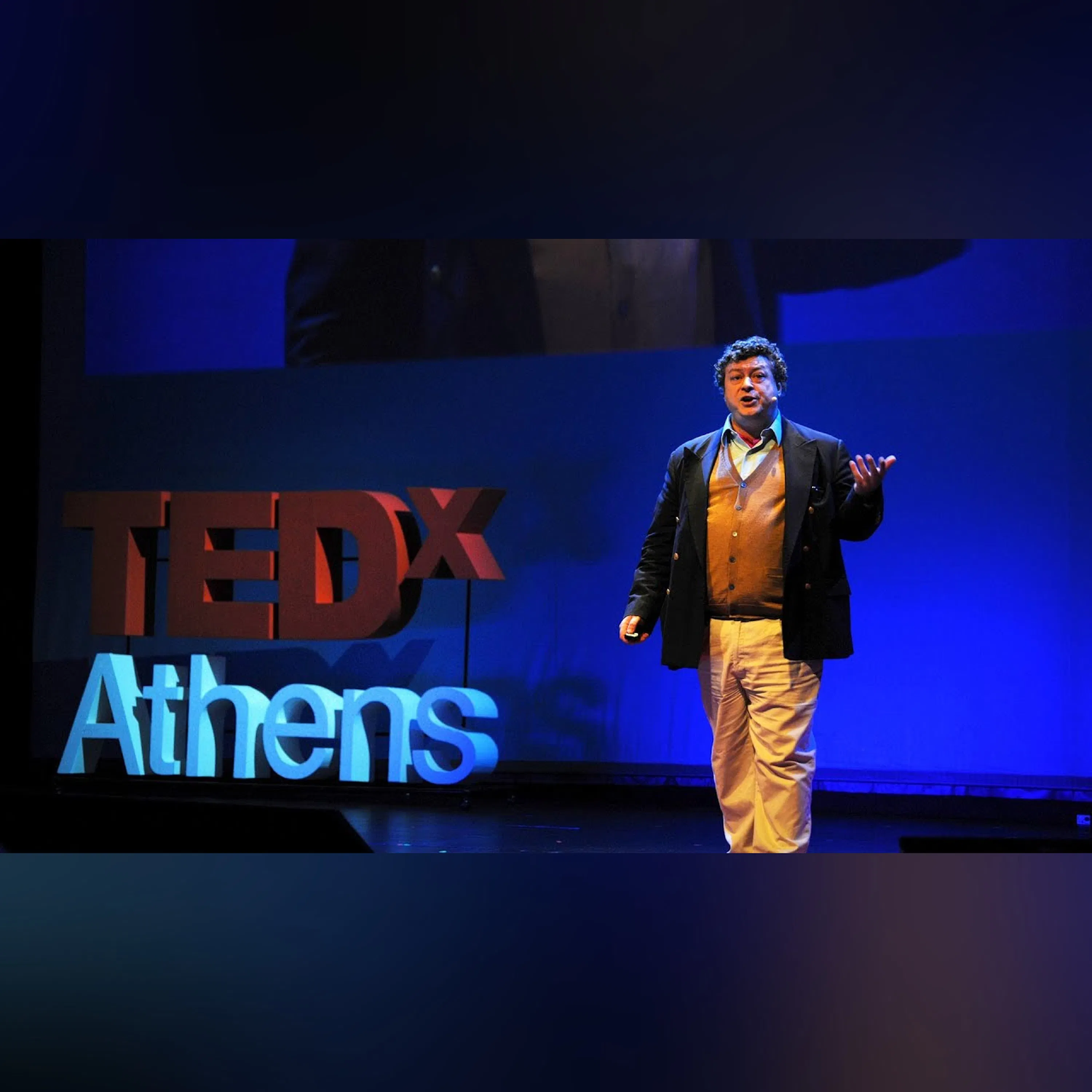
    Perspective is everything - Rory Sutherland

    The circumstances of our lives may matter less than how we see them, says Rory Sutherland. At TEDxAthens, he makes a compelling case for how reframing is the key to happiness. (Filmed at TEDxAthens.) Talk by Rory Sutherland. Learn more about your ad choices. Visit megaphone.fm/adchoices
  • October 4 · 7 min

    Why should you read Dante’s “Divine Comedy”? - Sheila Marie Orfano

    Explore Dante Alighieri’s epic poem, “Divine Comedy,” a 3-part narrative that follows Dante’s journey for salvation through Hell. -- “Abandon all hope, ye who enter here…” Inscribed above the Gate of Hell, this prophecy sets into motion an epic journey for salvation. Written over 10 years, Dante Alighieri’s three-part narrative poem “Divine Comedy” is both an allegorical imagining of the soul’s journey towards God and a scathing political commentary. Sheila Maria Orfano shares its timeless themes of love, sin and redemption. Lesson by Sheila Marie Orfano, directed by Tomás Pichardo-Espaillat. Animator's website: http://bit.ly/TomaticoNet Sign up for our newsletter: http://bit.ly/TEDEdNewsletter Support us on Patreon: http://bit.ly/TEDEdPatreon Follow us on Facebook: http://bit.ly/TEDEdFacebook Find us on Twitter: http://bit.ly/TEDEdTwitter Peep us on Instagram: http://bit.ly/TEDEdInstagram View full lesson: https://ed.ted.com/lessons/why-should-you-read-dante-s-divine-comedy-sheila-marie-orfano Thank you so much to our patrons for your support! Without you this video would not be possible! rakesh Katragadda, Carolyn Corwin, Charlene You, Boris Langvand, Exal Enrique Cisneros Tuch, Carsten Tobehn, Kin Lon Ma, Katie Dean, Ezgi Yersu, Eunsun Kim, Katrina Harding, Gerald Onyango, alessandra tasso, Astia Rizki Safitri, Côme Vincent, Antony Lee, Melissa Sorrells, Rakshit Kothari, Doreen Reynolds-Consolati, Simon Holst Ravn, Manognya Chakrapani, Ayala Ron, Samantha Chow, Philippe Spoden, Phyllis Dubrow, Michelle Stevens-Stanford, Cas Jamieson, Ophelia Gibson Best, Amber Wood, Paul Schneider, Jun Cai, Tim Robinson, Henrique 'Sorín' Cassús, cnorahs, Lyn-z Schulte, Elaine Fitzpatrick, Karthik Cherala, Clarence E. Harper Jr., Milad Mostafavi, Аркадий Скайуокер, Kiara Taylor, Louisa Lee, eden sher, Vignan Velivela, Sage Curie, Srikote Naewchampa, Tejas Dc, Khalifa Alhulail, Faiza Imtiaz and Martin Stephen. Learn more about your ad choices. Visit megaphone.fm/adchoices

  • October 4 · 8 min

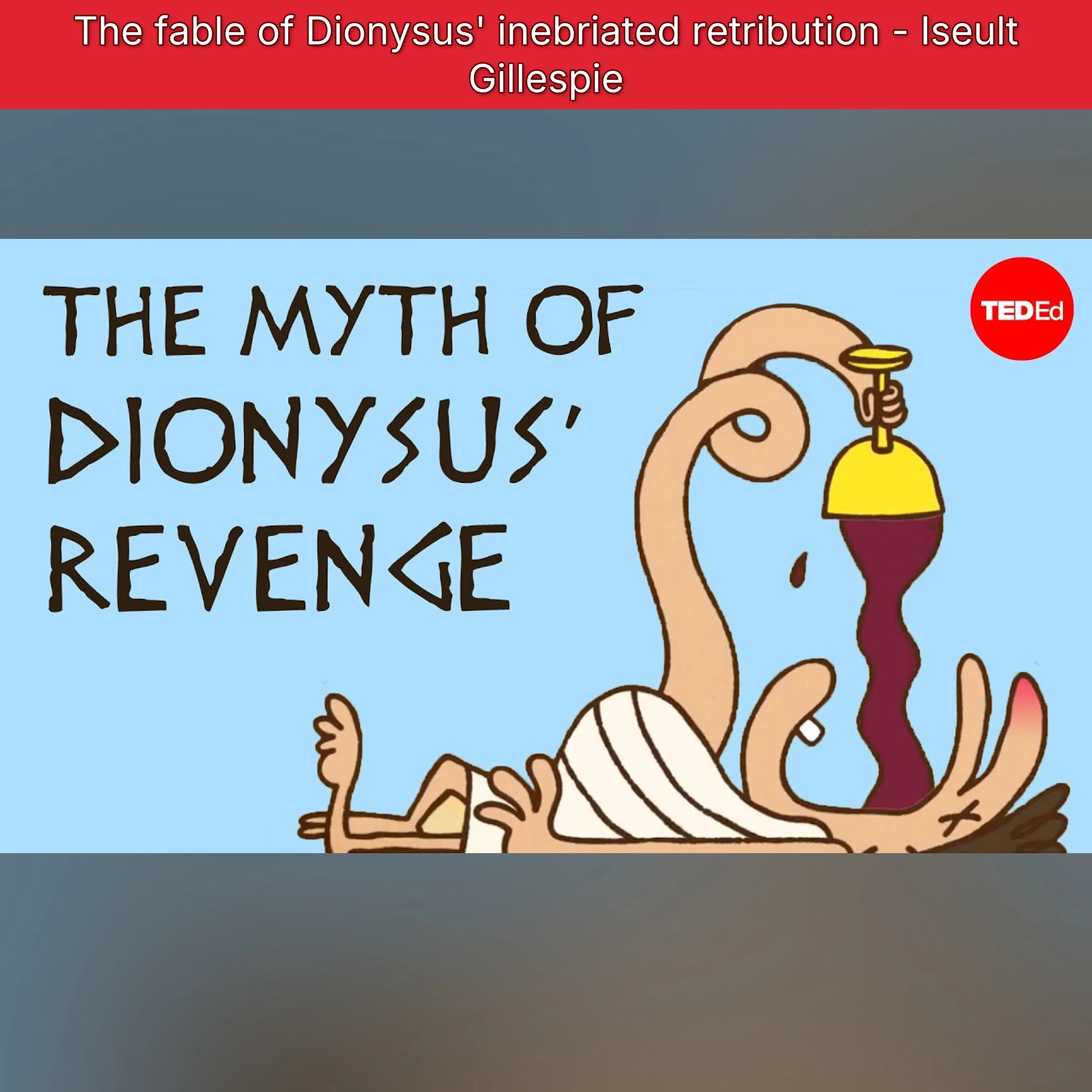
    The fable of Dionysus' inebriated retribution - Iseult Gillespie

    Dig into the Greek myth of Dionysus, the god of winemaking and excess, and his journey to his ancestral home in Thebes. -- Acoetes of Maeonia had been roped into serving as the navigator for a band of pirates. And now the pirates had kidnapped a sleeping youth. As they laid their victim’s body on the ship, Acoetes felt the pit in his stomach deepen. The pirates hadn’t noticed, but their new captive was a slumbering god. Iseult Gillespie digs into the Greek myth of Dionysus and his return to Thebes. Lesson by Iseult Gillespie, directed by Keegan Thornhill. Support Our Non-Profit Mission ---------------------------------------------- Support us on Patreon: http://bit.ly/TEDEdPatreon Check out our merch: http://bit.ly/TEDEDShop ---------------------------------------------- Connect With Us ---------------------------------------------- Sign up for our newsletter: http://bit.ly/TEDEdNewsletter Follow us on Facebook: http://bit.ly/TEDEdFacebook Find us on Twitter: http://bit.ly/TEDEdTwitter Peep us on Instagram: http://bit.ly/TEDEdInstagram ---------------------------------------------- Keep Learning ---------------------------------------------- View full lesson: https://ed.ted.com/lessons/the-myth-of-dionysus-drunken-revenge-iseult-gillespie Dig deeper with additional resources: https://ed.ted.com/lessons/the-myth-of-dionysus-drunken-revenge-iseult-gillespie/digdeeper Animator's website: https://www.instagram.com/cosmiconionring Music: https://www.campstudio.co ---------------------------------------------- Thank you so much to our patrons for your support! Without you this video would not be possible! OnlineBookClub.org, Eric Shear, Leith Salem, Omar Hicham, Adrian Rotaru, Brad Sullivan, Karen Ho, Niklas Frimberger, Hunter Manhart, Nathan Nguyen, Igor Stavchanskiy, James R DeVries, Grace Huo, Diana Huang, Chau Hong Diem, Orlellys Torre, Corheu, Thomas Mee, Maryann H McCrory, Blas Borde, John Hellmann, Poompak Meephian, Chuck Wofford, Adam Pagan, Wes Winn, Conder Shou, ntiger, Noname, Hansan Hu, David D, Mac Hyney, Keith Ellison, robin valero walters, Lynne Truesdale, Gatsby Dkdc, Matthew Neal, Denis Chon, Julian Oberhofer, Monte Carroll, Eddy, Jay M, Constantino Victor Delgado, Andrea Galvagni, Andrew Tweddle, Laurel-Ann Rice, Fernando A. Endo, Helen Lee, pam morgan, sarim haq, and Gerardo Castro. Learn more about your ad choices. Visit megaphone.fm/adchoices

  • October 4 · 6 min

    Three ways the universe could end - Venus Keus

    Our universe started with the Big Bang, but how will it end? Explore cosmologists’ three possible scenarios: the Big Crunch, the Big Freeze and the Big Rip. -- We know about our universe’s past: the Big Bang theory predicts that all matter, time and space began about 14 billion years ago. And we know about the present: scientists’ observations of galaxies tell us that the universe is expanding at an accelerated rate. But what about the future? Do we know how our universe is going to end? Venus Keus explores cosmologists’ three possible scenarios. Lesson by Venus Keus, directed by Antimatter Studio. Sign up for our newsletter: http://bit.ly/TEDEdNewsletter Support us on Patreon: http://bit.ly/TEDEdPatreon Follow us on Facebook: http://bit.ly/TEDEdFacebook Find us on Twitter: http://bit.ly/TEDEdTwitter Peep us on Instagram: http://bit.ly/TEDEdInstagram View full lesson: https://ed.ted.com/lessons/three-ways-the-universe-could-end-venus-keus Thank you so much to our patrons for your support! Without you this video would not be possible! Stina Boberg, Mariana Ortega, Anthony Wiggins, Hoai Nam Tran, David Petrovič, Lowell Fleming, Anuj Tomar, Sunny Patel, Vijayalakshmi, Devesh Kumar, Uday Kishore, Aidan Forero, Leen Mshasha, Allan Hayes, Thomas Bahrman, Vaibhav Mirjolkar, Tony, Michelle, Katie and Josh Pedretti, Erik Biemans, Gaurav Mathur, Sameer Halai, Hans Peng, Tekin Gültekin, Hector Quintanilla, Raheem , Penelope Misquitta, Ravi S. Rāmphal, Fahad Nasser Chowdhury, Marin Kovachev, Roman Pinchuk, Maria Lerchbaumer, Edgar Campos Barrachina, Dianne Palomar, The Brock, Curtis Light, Ernest Chow, Liana Switzer, Maija Chapman, Pamela Harrison, Mighterbump , Beatriz Inácio, Robert Hargis, Soma Ali, Mark wisdom, Ai Ejima, Irindany Sandoval, William Bravante, Elizabeth Parker, Sai Krishna Koyoda, Therapist Gus and Samuel Barbas; Learn more about your ad choices. Visit megaphone.fm/adchoices

  • October 4 · 13 min

    Gaming for understanding - Brenda Brathwaite

    It's never easy to get across the magnitude of complex tragedies -- so when Brenda Brathwite's daughter came home from school asking about slavery, she did what she does for a living -- she designed a game. At TEDxPhoenix she describes the surprising effectiveness of this game, and others, in helping the player really understand the story. (Filmed at TEDxPhoenix.) Talk by Brenda Braithwaite. Learn more about your ad choices. Visit megaphone.fm/adchoices

  • October 4 · 9 min

    How to convey your message clearly

    Episode 3: Discover how to put together the throughline, or main idea that acts as a connective thread or roadmap for your presentation. -- This is episode 3 of the animated series, “Public Speaking 101.” Ideas change everything — and since language lets us share our ideas, learning how to use it well gives speakers the power to inspire people and even change how they think. This 11-episode course will teach you how to identify, develop, and share your best ideas, while mastering essential communication skills along the way. Directed by Tolga Yıldız, Kozmonot Animation Studio. The TED-Ed Student Talks program provides free, customizable activities for educators to support their students in identifying, developing and sharing their ideas with each other and the world. Learn more at https://ed.ted.com/student_talks Support Our Non-Profit Mission ---------------------------------------------- Support us on Patreon: http://bit.ly/TEDEdPatreon Check out our merch: http://bit.ly/TEDEDShop ---------------------------------------------- Connect With Us ---------------------------------------------- Sign up for our newsletter: http://bit.ly/TEDEdNewsletter Follow us on Facebook: http://bit.ly/TEDEdFacebook Find us on Twitter: http://bit.ly/TEDEdTwitter Peep us on Instagram: http://bit.ly/TEDEdInstagram ---------------------------------------------- Keep Learning ---------------------------------------------- View full lesson: https://ed.ted.com/lessons/how-to-clearly-communicate-your-idea Dig deeper with additional resources: https://ed.ted.com/lessons/how-to-clearly-communicate-your-idea/digdeeper Animator's website: https://www.kozmonot.tv ---------------------------------------------- Thank you so much to our patrons for your support! Without you this video would not be possible! Eric Braun, Sonja Worzewski, Michael Clement, Adam Berry, Ghaith Tarawneh, Nathan Milford, Tomas Beckett, Alice Ice, Eric Berman, Kurt Paolo Sevillano, Jennifer Heald, Megulo Abebe, isolwi, Kate Sem, Ujjwal Dasu, Angel Alberici, Minh Quan Dinh, Sylvain, Terran Gimpel, Talia Sari, Katie McDowell, Allen, Mahina Knuckles, Charmaine Hanson, Thawsitt, Jezabel, Abdullah Abdulaziz, Xiao Yu, Melissa Suarez, Brian A. Dunn, Francisco Amaya, Daisuke Goto, Matt Switzler, Peng, Tzu-Hsiang, Bethany Connor, Jeremy Shimanek, Mark Byers, Avinash Amarnath, Xuebicoco, Rayo, Po Foon Kwong, Boffin, Jesse Jurman, Scott Markley, Elija Peterson, Ovidiu Mrd, paul g mohney, Steven Razey, Nathan Giusti, and Helen Lee. Learn more about your ad choices. Visit megaphone.fm/adchoices

  • October 4 · 5 min

    A 3-minute guide to the Bill of Rights - Belinda Stutzman

    View full lesson: http://ed.ted.com/lessons/a-3-minute-guide-to-the-bill-of-rights-belinda-stutzman Daily, Americans exercise their rights secured by the Constitution. The most widely discussed and debated part of the Constitution is known as the Bill of Rights. Belinda Stutzman provides a refresher course on exactly what the first ten amendments grant each and every American citizen. Lesson by Belinda Stutzman, animation by Jacques Khouri. Learn more about your ad choices. Visit megaphone.fm/adchoices

  • October 4 · 7 min

    Will saunas help you live longer? - Max G. Levy

    Explore how saunas can affect your body, and dig into the health benefits and limitations of this millennia-old tradition. -- Finnish sauna, Roman balneae, Japanese onsen, and Indigenous American sweat lodges are just a few examples of how cultures across the globe have long considered exposure to extreme temperatures therapeutic. But today scientists are only just beginning to unravel how and why this may be the case. So, what exactly is happening in your body when you feel the heat? Max G. Levy investigates. Lesson by Max G. Levy, directed by Noam Sussman, Ali Kellner, Homework Studio. Support Our Non-Profit Mission ---------------------------------------------- Support us on Patreon: http://bit.ly/TEDEdPatreon Check out our merch: http://bit.ly/TEDEDShop ---------------------------------------------- Connect With Us ---------------------------------------------- Sign up for our newsletter: http://bit.ly/TEDEdNewsletter Follow us on Facebook: http://bit.ly/TEDEdFacebook Find us on Twitter: http://bit.ly/TEDEdTwitter Peep us on Instagram: http://bit.ly/TEDEdInstagram ---------------------------------------------- Keep Learning ---------------------------------------------- View full lesson: https://ed.ted.com/lessons/can-saunas-make-you-live-longer-max-g-levy Dig deeper with additional resources: https://ed.ted.com/lessons/can-saunas-make-you-live-longer-max-g-levy/digdeeper Animator's website: https://www.homeworkstudio.ca ---------------------------------------------- Thank you so much to our patrons for your support! Without you this video would not be possible! John Hellmann, Poompak Meephian, Chuck Wofford, Adam Pagan, Wes Winn, Conder Shou, ntiger, Noname, Hansan Hu, David D, Mac Hyney, Keith Ellison, robin valero walters, Lynne Truesdale, Gatsby Dkdc, Matthew Neal, Denis Chon, Julian Oberhofer, Monte Carroll, Eddy, Jay M, Constantino Victor Delgado, Andrea Galvagni, Andrew Tweddle, Laurel-Ann Rice, Fernando A. Endo, Helen Lee, pam morgan, sarim haq, Gerardo Castro, Michel-Ange Hortegat, Enes Kirimi, Amaury BISIAUX, ND, Samyogita Hardikar, Vanessa Graulich, Vandana Gunwani, Abdulmohsin Almadi, AJ Lyon, Geoffrey Bultitude, Mi Mi, Thomas Rothert, Brian Elieson, Oge O, Weronika Falkowska, Nevin Spoljaric, Sid Chanpuriya, Anoop Varghese, David Yastremski, and Noah Webb. Learn more about your ad choices. Visit megaphone.fm/adchoices

Showing 1,241–1,260 of 1,816 episodes