Skip to content
Artwork for TED-Ed
EducationScienceTechnology

TED-Ed

TED-Ed

TED-Ed’s mission is to create lessons worth sharing. Feed and expand your curiosity with our award-winning animated shorts - published on YouTube and available with supplemental learning materials on ed.ted.com.

Want to suggest an idea for a TED-Ed animation, nominate an educator or animator? Visit our website at: http://ed.ted.com/get_involved.

Consider backing us on Patreon. By doing so, you directly support our nonprofit mission to create free, high-quality educational content: https://www.patreon.com/teded

For more information on using TED-Ed content for commercial purposes (e.g. employee learning, in a film, or in an online course), please submit a Media Request using this link: https://media-requests.ted.com/

Play
  • 1,909 episodes
  • daily
  • Avg 9 min
  • English

Episodes 1,909

Counted on this page — what you have heard stays on this device, so it is not something the list can be paged by.
  • October 27 · 7 min

    How spontaneous brain activity keeps you alive - Nathan S. Jacobs

    View full lesson: http://ed.ted.com/lessons/how-spontaneous-brain-activity-keeps-you-alive-nathan-s-jacobs Uploaded 13-01-15 The wheels in your brain are constantly turning, even when you're asleep or not paying attention. In fact, most of your brain’s activities are ones you’d never be aware of … unless they suddenly stopped. Nathan S. Jacobs takes us inside the always active, surprisingly spontaneous brain. Lesson by Nathan S. Jacobs, animation by TOGETHER. Learn more about your ad choices. Visit megaphone.fm/adchoices Learn more about your ad choices. Visit megaphone.fm/adchoices

  • October 27 · 9 min

    What's yet to explore? - Nathan Wolfe

    We've been to the moon, we've mapped the continents, we've even been to the deepest point in the ocean -- twice. What's left for the next generation to explore? Biologist and explorer Nathan Wolfe suggests this answer: Almost everything. And we can start, he says, with the world of the unseeably small. Talk by Nathan Wolfe. Learn more about your ad choices. Visit megaphone.fm/adchoices

  • October 27 · 7 min

    What happens if a manufactured virus escapes the lab?

    How do we keep labs that handle dangerous pathogens safe and leak-free? Dig into the ongoing debate over virology research. -- Since the 1970s, researchers have engineered superbugs. While this research could help us prepare for future outbreaks, the stakes of this work are extremely high: if even one dangerous virus escaped a lab, it could cause a global pandemic. So, what can we do to minimize risk? And is the knowledge gained even worth the risk in the first place? Dig into the ongoing debate over virology research. Directed by Kevin Herrmann, AIM Creative Studios. Learn more about the long-term thinking required for humanity to thrive: https://ed.ted.com/reducingrisk This video made possible in collaboration with the Forethought Foundation Learn more about how TED-Ed partnerships work: https://bit.ly/TEDEdPartners Support Our Non-Profit Mission ---------------------------------------------- Support us on Patreon: http://bit.ly/TEDEdPatreon Check out our merch: http://bit.ly/TEDEDShop ---------------------------------------------- Connect With Us ---------------------------------------------- Sign up for our newsletter: http://bit.ly/TEDEdNewsletter Follow us on Facebook: http://bit.ly/TEDEdFacebook Find us on Twitter: http://bit.ly/TEDEdTwitter Peep us on Instagram: http://bit.ly/TEDEdInstagram ---------------------------------------------- Keep Learning ---------------------------------------------- View full lesson: https://ed.ted.com/lessons/what-happens-if-an-engineered-virus-escapes-the-lab Dig deeper with additional resources: https://ed.ted.com/lessons/what-happens-if-an-engineered-virus-escapes-the-lab#digdeeper Animator's website: https://aimcreativestudios.com Music: https://soundcloud.com/aim-music ---------------------------------------------- Thank you so much to our patrons for your support! Without you this video would not be possible! Ophelia Gibson Best, Paul Schneider, Joichiro Yamada, Henrique Cassús, Karthik Cherala, Clarence E. Harper Jr., Vignan Velivela, Ana Maria, Exal Enrique Cisneros Tuch, Tejas Dc, Khalifa Alhulail, Martin Stephen, Jose Henrique Leopoldo e Silva, Mandeep Singh, Abhijit Kiran Valluri, Morgan Williams, Devin Harris, Pavel Zalevskiy, Karen Goepen-Wee, Filip Dabrowski, Barbara Smalley, Megan Douglas, Tim Leistikow, Ka-Hei Law, Hiroshi Uchiyama, Mark Morris, Misaki Sato, EdoKun, SookKwan Loong, Bev Millar, Lex Azevedo, Michael Aquilina, Jason A Saslow, Yansong Li, Cristóbal Moenne, Dawn Jordan, Prasanth Mathialagan, Samuel Doerle, David Rosario, Dominik Kugelmann - they-them, Siamak Hajizadeh, Ryohky Araya, Mayank Kaul, Christophe Dessalles, Heather Slater, Sandra Tersluisen, Zhexi Shan, Bárbara Nazaré, Andrea Feliz and Victor E Karhel. Learn more about your ad choices. Visit megaphone.fm/adchoices

  • October 27 · 6 min

    Why do we have hair in such random places? - Nina G. Jablonski

    Discover how humans lost their fur as they evolved from primates, and why we still have hair on our bodies. Uploaded 03-06-21 -- We have lots in common with our closest primate relatives. But comparatively, humans seem a bit… underdressed. Instead of thick fur covering our bodies, many of us mainly have hair on top of our heads— and a few other places. So, how did we get so naked? And why do we have hair where we do? Nina G. Jablonski explores the evolution of human hair. Lesson by Nina G. Jablonski, directed by Igor Coric, Artrake Studio. Support Our Non-Profit Mission ---------------------------------------------- Support us on Patreon: http://bit.ly/TEDEdPatreon Check out our merch: http://bit.ly/TEDEDShop ---------------------------------------------- Connect With Us ---------------------------------------------- Sign up for our newsletter: http://bit.ly/TEDEdNewsletter Follow us on Facebook: http://bit.ly/TEDEdFacebook Find us on Twitter: http://bit.ly/TEDEdTwitter Peep us on Instagram: http://bit.ly/TEDEdInstagram ---------------------------------------------- Keep Learning ---------------------------------------------- View full lesson: https://ed.ted.com/lessons/why-do-we-have-hair-in-such-random-places-nina-g-jablonski Dig deeper with additional resources: https://ed.ted.com/lessons/why-do-we-have-hair-in-such-random-places-nina-g-jablonski#digdeeper Animator's website: https://www.artrake.com/ ---------------------------------------------- Thank you so much to our patrons for your support! Without you this video would not be possible! Andrea Gordon, Aleksandar Donev, Nicole Klau Ibarra, Milo Vermeulen, Ryan Weiler, Jesse Lira, Ezekiel Raui, Itay Levi, Zongpu Kou, Cameron Chakraverty, Petr Vacek, Rhys Patterson, Dennis, Olivia Fu, Katrina Adams, Regina Post, Mary Collins, Kari Teffeau, clumsybunnie, Adam Leos, Jeremy Laurin, Cindy Lai, Liz, Bhargav Pandravada, Rajath Durgada Manjunath, Dan Nguyen, sarim haq, Chin Beng Tan, Alejandro Gomez, Tom Boman, Karen Warner, Isorn Sookwanish, Iryna Panasiuk, Diane Gallin, Aaron Torres, Vasundhar, Eric Braun, Denka Wee, Daru Bhargav, Sonja Worzewski, Amy, Michael Clement, Ghaith Tarawneh, Nathan Milford, Tomas Beckett, Alice Ice, Eric Berman, Kurt Paolo Sevillano, Xavi Ramos and Ron Kakar. Learn more about your ad choices. Visit megaphone.fm/adchoices Learn more about your ad choices. Visit megaphone.fm/adchoices

  • October 27 · 6 min

    How do airplanes actually remain in flight? - Raymond Adkins

    Explore the physics of flight, and discover how aerodynamic lift generates the force needed for planes to fly. -- By 1917, Albert Einstein had explained the relationship between space and time. But, that year, he designed a flawed airplane wing. His attempt was based on an incomplete theory of how flight works. Indeed, insufficient and inaccurate explanations still circulate today. So, where did Einstein go wrong? And how exactly do planes fly? Raymond Adkins explains the concept of aerodynamic lift. Lesson by Raymond Adkins, directed by Michael Kalopaidis, Zedem Media. This video made possible in collaboration with Marriott Hotels Learn more about how TED-Ed partnerships work: https://bit.ly/TEDEdPartners Support Our Non-Profit Mission ---------------------------------------------- Support us on Patreon: http://bit.ly/TEDEdPatreon Check out our merch: http://bit.ly/TEDEDShop ---------------------------------------------- Connect With Us ---------------------------------------------- Sign up for our newsletter: http://bit.ly/TEDEdNewsletter Follow us on Facebook: http://bit.ly/TEDEdFacebook Find us on Twitter: http://bit.ly/TEDEdTwitter Peep us on Instagram: http://bit.ly/TEDEdInstagram ---------------------------------------------- Keep Learning ---------------------------------------------- View full lesson: https://ed.ted.com/lessons/how-do-airplanes-stay-in-the-air-raymond-adkins Dig deeper with additional resources: https://ed.ted.com/lessons/how-do-airplanes-stay-in-the-air-raymond-adkins#digdeeper Animator's website: https://zedemanimations.com ---------------------------------------------- Thank you so much to our patrons for your support! Without you this video would not be possible! Fernando A. Endo, Helen Lee, pam morgan, sarim haq, Gerardo Castro, Michel-Ange Hortegat, Enes Kirimi, Amaury BISIAUX, ND, Samyogita Hardikar, Vanessa Graulich, Vandana Gunwani, Abdulmohsin Almadi, AJ Lyon, Geoffrey Bultitude, Mi Mi, Thomas Rothert, Brian Elieson, Oge O, Weronika Falkowska, Nevin Spoljaric, Sid Chanpuriya, Anoop Varghese, David Yastremski, Noah Webb, Roberto Chena, Oliver Koo, Luke Pisano, Andrea Gordon, Aleksandar Donev, Nicole Klau Ibarra, Jesse Lira, Ezekiel Raui, Petr Vacek, Dennis, Olivia Fu, Kari Teffeau, Cindy Lai, Rajath Durgada Manjunath, Dan Nguyen, Chin Beng Tan, Tom Boman, Karen Warner, Iryna Panasiuk, Aaron Torres, Eric Braun, Sonja Worzewski, Michael Clement, Adam Berry and Ghaith Tarawneh. Learn more about your ad choices. Visit megaphone.fm/adchoices

  • October 27 · 7 min

    How the Normans changed the history of Europe - Mark Robinson

    Check out our Patreon page: https://www.patreon.com/teded Uploaded 09-08-18 View full lesson: https://ed.ted.com/lessons/how-the-normans-changed-the-history-of-europe-mark-robinson In the year 1066, 7,000 Norman infantry and knights sailed in warships across the English Channel. Their target: England, home to more than a million people. Around the same period of time, other groups of Normans were setting forth all across Europe. Who were these warriors, and how did they leave their mark so far and wide? Mark Robinson shares a brief history of the Normans. Lesson by Mark Robinson, directed by Echo Bridge. Thank you so much to our patrons for your support! Without you this video would not be possible! Ryohky Araya, vivian james, Tan YH, Brittiny Elman, Mayra Urbano, Ruth Fang, Kostadin Mandulov, Alex Schenkman, Ivan Todorović, Antero Semi, Yanuar Ashari, Mrinalini, Anthony Kudolo, Scott Gass, Querida Owens, Hazel Lam, Manav parmar, Dwight Tevuk, Siamak H, Dominik Kugelmann, Mary Sawyer, David Rosario, Samuel Doerle, Susan Herder, Savannah Scheelings, Prasanth Mathialagan, Yanira Santamaria, Dawn Jordan, Constantin Salagor, Activated Classroom Teaching, Kevin Wong, Umar Farooq, Goh Xiang Ting Diana, Dmitry Neverov, Cristóbal Medina Moenne, MJ Tan Mingjie, Yansong Li, Jason A Saslow, Joanne Luce, Henry Li, Kyle Nguyen, Taylor Hunter, Noa Shore, Lex Azevedo, and Merit Gamertsfelder. Learn more about your ad choices. Visit megaphone.fm/adchoices Learn more about your ad choices. Visit megaphone.fm/adchoices
  • October 27 · 6 min

    This one unusual trick will get you infinite gold - Dan Finkel

    Practice more problem-solving at https://brilliant.org/TedEd -- A few years ago, the king decided your life would be forfeit unless you tripled the gold coins in his treasury. Fortunately, a strange little man appeared and magically performed the feat. Unfortunately, you promised him your first-born child in exchange for his help — and today he’s come to collect. Can you figure out how to outsmart the man and keep your baby? Dan Finkel shows how. Lesson by Dan Finkel, directed by Gavin Edwards, Movult. This video made possible in collaboration with Brilliant Learn more about how TED-Ed partnerships work: https://bit.ly/TEDEdPartners Support Our Non-Profit Mission ---------------------------------------------- Support us on Patreon: http://bit.ly/TEDEdPatreon Check out our merch: http://bit.ly/TEDEDShop ---------------------------------------------- Connect With Us ---------------------------------------------- Sign up for our newsletter: http://bit.ly/TEDEdNewsletter Follow us on Facebook: http://bit.ly/TEDEdFacebook Find us on Twitter: http://bit.ly/TEDEdTwitter Peep us on Instagram: http://bit.ly/TEDEdInstagram ---------------------------------------------- Keep Learning ---------------------------------------------- View full lesson: https://ed.ted.com/lessons/this-one-weird-trick-will-get-you-infinite-gold-dan-finkel Dig deeper with additional resources: https://ed.ted.com/lessons/this-one-weird-trick-will-get-you-infinite-gold-dan-finkel#digdeeper Animator's website: https://www.movult.com Music: https://www.workplaywork.com Educator's website: https://mathforlove.com ---------------------------------------------- Thank you so much to our patrons for your support! Without you this video would not be possible! Jeremy Shimanek, Mark Byers, Avinash Amarnath, Xuebicoco, Rayo, Po Foon Kwong, Boffin, Jesse Jurman, Scott Markley, Elija Peterson, Ovidiu Mrd, paul g mohney, Steven Razey, Nathan Giusti, Helen Lee, Anthony Benedict, Karthik Balsubramanian, Annastasshia Ames, Amy Lopez, Vinh-Thuy Nguyen, Liz Candee, Ugur Doga Sezgin, Karmi Nguyen, John C. Vesey, Yelena Baykova, Nick Johnson, Carlos H. Costa, Jennifer Kurkoski, Ryan B Harvey, Akinola Emmanuel, Jose Arcadio Valdes Franco, Sebastiaan Vleugels, Karl Laius, JY Kang, Abhishek Goel, Heidi Stolt, Nicole Sund, Karlee Finch, Mario Mejia, Denise A Pitts, Doug Henry, Keven Webb, Mihai Sandu, Deepak Iyer, Javid Gozalov, Kyanta Yap, Rebecca Reineke, William Biersdorf, Patricia Alves Panagides and Yvette Mocete. Learn more about your ad choices. Visit megaphone.fm/adchoices

  • October 27 · 22 min

    The passage across the high wire - Philippe Petit

    Even a death-defying magician has to start somewhere. High-wire artist Philippe Petit takes you on an intimate journey from his first card trick at age 6 to his tightrope walk between the Twin Towers. Talk by Philippe Petit. Learn more about your ad choices. Visit megaphone.fm/adchoices

  • October 27 · 6 min

    Can a black hole be destroyed? - Fabio Pacucci

    Are black holes indestructible? Explore the theory of Hawking radiation, a process that could lead a black hole to gradually lose mass and evaporate. Uploaded 16-05-19 -- Black holes are among the most destructive objects in the universe. Anything that gets too close to a black hole, be it an asteroid, planet, or star, risks being torn apart by its extreme gravitational field. By some accounts, the universe may eventually consist entirely of black holes. But is there any way to destroy a black hole? Fabio Pacucci digs into the possibility. Lesson by Fabio Pacucci, directed by Provincia Studio. Sign up for our newsletter: http://bit.ly/TEDEdNewsletter Support us on Patreon: http://bit.ly/TEDEdPatreon Follow us on Facebook: http://bit.ly/TEDEdFacebook Find us on Twitter: http://bit.ly/TEDEdTwitter Peep us on Instagram: http://bit.ly/TEDEdInstagram View full lesson: https://ed.ted.com/lessons/can-a-black-hole-be-destroyed-fabio-pacucci Thank you so much to our patrons for your support! Without you this video would not be possible! Amber Wood, Ophelia Gibson Best, Cas Jamieson, Michelle Stevens-Stanford, Phyllis Dubrow, Andreas Voltios, Eunsun Kim, Philippe Spoden, Samantha Chow, Ayala Ron, Manognya Chakrapani, Simon Holst Ravn, Doreen Reynolds-Consolati, Rakshit Kothari, Melissa Sorrells, Antony Lee, Husain Mohammad, Max Shuai Tang, Côme Vincent, Astia Rizki Safitri, Alan Froese, alessandra tasso, Gerald Onyango, Katrina Harding, Ezgi Yersu, Al the Scottish Wildcat, Katie Dean, Kin Lon Ma, Carsten Tobehn, Boris Langvand, Jeremy Fryd, Charlene You, Carolyn Corwin, rakesh Katragadda, Sergi Páez, Jørgen Østerpart, Karla Brilman, Cindy O., Nicu Boanda, Reagen O'Connor, Sabrina Gonzalez, Dino Biancolini, FAWWAZ GHUWAIDI, Hadi Salahshour, Clement, Sarah Burns, Abdullah Altuwaijri, Jessie McGuire, Divina Grace Dar Santos and Brian Richards. Learn more about your ad choices. Visit megaphone.fm/adchoices Learn more about your ad choices. Visit megaphone.fm/adchoices

  • October 27 · 6 min

    Could you survive the real Twilight Zone? - Philip Renaud and Kenneth Kostel

    Find out how a hatchetfish survives its daily journey from the depths of the ocean’s Twilight Zone to the resource-rich surface. Uploaded 25-05-21 -- You’re traveling deep beneath the ocean’s surface, where faint lights flicker and toothy grins flash. Your mission is to survive these depths and journey to the surface after sundown to feed. And as a hatchetfish, almost every other deep-sea creature is trying to eat you. Can you complete the quest? Philip Renaud and Kenneth Kostel share how to survive the ocean's Twilight Zone. Lesson by Philip Renaud and Kenneth Kostel, directed by Cris Wiegandt. Designed by Bárbara Fonseca Sound design by Claudia Ioana Vasiliu Narrated by Addison Anderson Script Editing by Alex Gendler Support Our Non-Profit Mission ---------------------------------------------- Support us on Patreon: http://bit.ly/TEDEdPatreon Check out our merch: http://bit.ly/TEDEDShop ---------------------------------------------- Connect With Us ---------------------------------------------- Sign up for our newsletter: http://bit.ly/TEDEdNewsletter Follow us on Facebook: http://bit.ly/TEDEdFacebook Find us on Twitter: http://bit.ly/TEDEdTwitter Peep us on Instagram: http://bit.ly/TEDEdInstagram ---------------------------------------------- Keep Learning ---------------------------------------------- View full lesson: https://ed.ted.com/lessons/could-you-survive-the-real-twilight-zone-philip-renaud-and-kenneth-kostel Dig deeper with additional resources: https://ed.ted.com/lessons/could-you-survive-the-real-twilight-zone-philip-renaud-and-kenneth-kostel#digdeeper Animator's website: https://criswiegandt.com Educator's website: https://twilightzone.whoi.edu Sound design: https://claudiavasiliu.cargo.site ---------------------------------------------- Thank you so much to our patrons for your support! Without you this video would not be possible! Katie Dean, Ezgi Yersu, Gerald Onyango, alessandra tasso, Côme Vincent, Doreen Reynolds-Consolati, Manognya Chakrapani, Ayala Ron, Samantha Chow, Eunsun Kim, Phyllis Dubrow, Ophelia Gibson Best, Paul Schneider, Joichiro Yamada, Henrique 'Sorín' Cassús, Lyn-z Schulte, Elaine Fitzpatrick, Karthik Cherala, Clarence E. Harper Jr., Clarissa Bartolini-Toro, Vignan Velivela, Ana Maria, Exal Enrique Cisneros Tuch, Srikote Naewchampa, Tejas Dc, Khalifa Alhulail, Martin Stephen, Dan Paterniti, Jose Henrique Leopoldo e Silva, Elnathan Joshua Bangayan, Jayant Sahewal, Mandeep Singh, Abhijit Kiran Valluri, Morgan Williams, Kris Siverhus, Devin Harris, Pavel Zalevskiy, Karen Goepen-Wee, Filip Dabrowski, Barbara Smalley, Megan Douglas, Tim Leistikow, Renhe Ji, Maya Toll, Ka-Hei Law, Hiroshi Uchiyama, Mark Morris, Misaki Sato, EdoKun and Boytsov Ilya. Learn more about your ad choices. Visit megaphone.fm/adchoices Learn more about your ad choices. Visit megaphone.fm/adchoices

  • October 27 · 6 min

    How do vaccines work? - Kelwalin Dhanasarnsombut

    Learn the science behind how vaccines trigger an immune response and teach our bodies to recognize dangerous pathogens. Uploaded 12-01-15 -- The first ever vaccine was created when Edward Jenner, an English physician and scientist, successfully injected small amounts of a cowpox virus into a young boy to protect him from the related (and deadly) smallpox virus. But how does this seemingly counterintuitive process work? Kelwalin Dhanasarnsombut details the science behind vaccines. Lesson by Kelwalin Dhanasarnsombut, animation by Cinematic. Sign up for our newsletter: http://bit.ly/TEDEdNewsletter Support us on Patreon: http://bit.ly/TEDEdPatreon Follow us on Facebook: http://bit.ly/TEDEdFacebook Find us on Twitter: http://bit.ly/TEDEdTwitter Peep us on Instagram: http://bit.ly/TEDEdInstagram View full lesson: http://ed.ted.com/lessons/how-do-vaccines-work-kelwalin-dhanasarnsombut Learn more about your ad choices. Visit megaphone.fm/adchoices Learn more about your ad choices. Visit megaphone.fm/adchoices

  • October 27 · 6 min

    What is dyslexia? - Kelli Sandman-Hurley

    View full lesson: http://ed.ted.com/lessons/what-is-dyslexia-kelli-sandman-hurley Uploaded 15-07-13 Dyslexia affects up to 1 in 5 people, but the experience of dyslexia isn't always the same. This difficulty in processing language exists along a spectrum -- one that doesn't necessarily fit with labels like "normal" and "defective." Kelli Sandman-Hurley urges us to think again about dyslexic brain function and to celebrate the neurodiversity of the human brain. Lesson by Kelli Sandman-Hurley, animation by Marc Christoforidis. Learn more about your ad choices. Visit megaphone.fm/adchoices Learn more about your ad choices. Visit megaphone.fm/adchoices
  • October 26 · 7 min

    What happens when Arctic permafrost thaws? - Jessica Howard and Brendan Rogers

    Discover what scientists have found buried in the Arctic permafrost, and find out the far-reaching effects of its melting. -- In June 2022, a gold miner in the Canadian Yukon made a remarkable discovery. While working on the traditional lands of the Tr’ondëk Hwëch’in First Nation, he uncovered the exceptionally well-preserved, frozen remains of a wooly mammoth calf that died 30,000 years ago. And this find isn’t the only of its kind. Brendan Rogers and Jessica Howard uncover secrets buried in the Arctic permafrost. Lesson by Brendan Rogers and Jessica Howard, directed by Denys Spolitak. Support Our Non-Profit Mission ---------------------------------------------- Support us on Patreon: http://bit.ly/TEDEdPatreon Check out our merch: http://bit.ly/TEDEDShop ---------------------------------------------- Connect With Us ---------------------------------------------- Sign up for our newsletter: http://bit.ly/TEDEdNewsletter Follow us on Facebook: http://bit.ly/TEDEdFacebook Find us on Twitter: http://bit.ly/TEDEdTwitter Peep us on Instagram: http://bit.ly/TEDEdInstagram ---------------------------------------------- Keep Learning ---------------------------------------------- View full lesson: https://ed.ted.com/lessons/what-s-hidden-in-arctic-ice-brendan-rogers-and-jessica-howard Dig deeper with additional resources: https://ed.ted.com/lessons/what-s-hidden-in-arctic-ice-brendan-rogers-and-jessica-howard#digdeeper Animator's website: https://bit.ly/IckySketch Music: https://www.workplaywork.com ---------------------------------------------- Thank you so much to our patrons for your support! Without you this video would not be possible! Rohan Gupta, Begum Tutuncu, Brian Richards, Jørgen Østerpart, Tyron Jung, Carsten Tobehn, Katie Dean, Ezgi Yersu, Gerald Onyango, alessandra tasso, Doreen Reynolds-Consolati, Manognya Chakrapani, Ayala Ron, Eunsun Kim, Phyllis Dubrow, Ophelia Gibson Best, Paul Schneider, Joichiro Yamada, Henrique Cassús, Karthik Cherala, Clarence E. Harper Jr., Vignan Velivela, Ana Maria, Exal Enrique Cisneros Tuch, Tejas Dc, Khalifa Alhulail, Martin Stephen, Jose Henrique Leopoldo e Silva, Mandeep Singh, Abhijit Kiran Valluri, Morgan Williams, Devin Harris, Pavel Zalevskiy, Karen Goepen-Wee, Filip Dabrowski, Barbara Smalley, Megan Douglas, Tim Leistikow, Ka-Hei Law, Hiroshi Uchiyama, Mark Morris, Misaki Sato, EdoKun, SookKwan Loong, Bev Millar, Lex Azevedo, Michael Aquilina, Jason A Saslow, Yansong Li and Cristóbal Moenne. Learn more about your ad choices. Visit megaphone.fm/adchoices
  • October 26 · 4 min

    Historical icons - Amy Bissetta

    View full lesson: http://ed.ted.com/lessons/historical-role-models-amy-bissetta Many notable American historical figures are considered role models -- but why? George Washington was devilishly smart, and Abraham Lincoln was a brave leader, but have you heard of Sybil Ludington or Beriah Green? Amy Bissetta expounds on the lessons of character we can learn from these historical giants, whether you've heard of them or not. Lesson by Amy Bissetta, animation by Mark Phillips. Learn more about your ad choices. Visit megaphone.fm/adchoices

  • October 26 · 6 min

    Why is cotton in everything? - Michael R. Stiff

    Dig into the science of how cotton transforms from seed to fiber, and how these cotton fibers are used to make everything from fabrics, to currency, and fishing nets. Uploaded 23-01-20 -- Centuries ago, the Inca developed ingenuous suits of armor that could protect warriors from even the fiercest physical attacks. These hardy structures were made not from iron or steel, but rather something unexpectedly soft: cotton. Today cotton is used to make everything from fabric, to currency, diapers and fishing nets. Michael R. Stiff explores the science of what makes cotton so versatile. Lesson by Michael R. Stiff, directed by WOW-HOW Studio. Animator's website: https://wow-how.com/ Sign up for our newsletter: http://bit.ly/TEDEdNewsletter Support us on Patreon: http://bit.ly/TEDEdPatreon Follow us on Facebook: http://bit.ly/TEDEdFacebook Find us on Twitter: http://bit.ly/TEDEdTwitter Peep us on Instagram: http://bit.ly/TEDEdInstagram View full lesson: https://ed.ted.com/lessons/why-is-cotton-in-everything-michael-r-stiff Thank you so much to our patrons for your support! Without you this video would not be possible! Leen Mshasha, Mariana Ortega, Danny Romard, James Bruening, Ricki Daniel Marbun, Malcolm Callis, Sabrina Gonzalez, Al the Scottish Wildcat, سلطان الخليفي, Alexander Walls, Della Palacios, Vik Nagjee, Hiroshi Uchiyama, Adi V, Andrew Bosco, Craig Sheldon, Rishi Pasham, Joanne Luce, Jason A Saslow, Mary Sawyer, Scott Gass, Ruth Fang, Mayank Kaul, Kathryn J Hammond, Max Shuai Tang, Terry Minion, Sami Khan, Rob Johnson, Abdullah Abdulaziz, Angelo Urzua-Milla, Tommy Lewis, leorene , Mahina Bachiller, Marcus Andre Nery, Bruce Vieira Lopes, Chef, Charmaine Hanson, Michael Goldberg, Lydia Pflieger, Paul Aldred-Bann, Manav parmar, Susan Wang, Utkarsh Dubey, Thawsitt, Xuebicoco, Jezabel, Maeve, Kim Humphrey and Kristen Damas. Learn more about your ad choices. Visit megaphone.fm/adchoices Learn more about your ad choices. Visit megaphone.fm/adchoices
  • October 26 · 6 min

    What really happened to the Library of Alexandria? - Elizabeth Cox

    Check out our Patreon page: https://www.patreon.com/teded Uploaded 14-08-18 View full lesson: https://ed.ted.com/lessons/what-really-happened-to-the-library-of-alexandria-elizabeth-cox 2,300 years ago, the rulers of Alexandria set out to fulfill a very audacious goal: to collect all the knowledge in the world under one roof. In its prime, the Library of Alexandria housed an unprecedented number of scrolls and attracted some of the Greek world’s greatest minds. But by the end of the 5th century CE, it had vanished. Elizabeth Cox details the rise and fall of this great building. Lesson by Elizabeth Cox, directed by Inna Phillimore. Thank you so much to our patrons for your support! Without you this video would not be possible! Bev Millar, Rishi Pasham, Jhuval, SookKwan Loong, Daniel Day, Nick Johnson, Bruno Pinho, Javier Aldavaz, Rodrigo Carballo, Marc Veale, Boytsov Ilya, maxi kobi einy, Misaki Sato, Craig Sheldon, Andrew Bosco, Catherine Sverko, Nik Maier, Mark Morris, Tamás Drávai, Adi V, Peter Liu, Leora Allen, Hiroshi Uchiyama, Michal Salman, Julie Cummings-Debrot, Gilly, Ka-Hei Law, Maya Toll, Aleksandar Srbinovski, Ricardo Rendon Cepeda, Renhe Ji, Andrés Melo Gámez, Tim Leistikow, Moonlight, Shawar Khan, Chris , Megan Douglas, Barbara Smalley, Filip Dabrowski, Joe Giamartino, Clair Chen, Vik Nagjee, Karen Goepen-Wee, Della Palacios, and Bah Becerra. Learn more about your ad choices. Visit megaphone.fm/adchoices Learn more about your ad choices. Visit megaphone.fm/adchoices
  • October 26 · 19 min

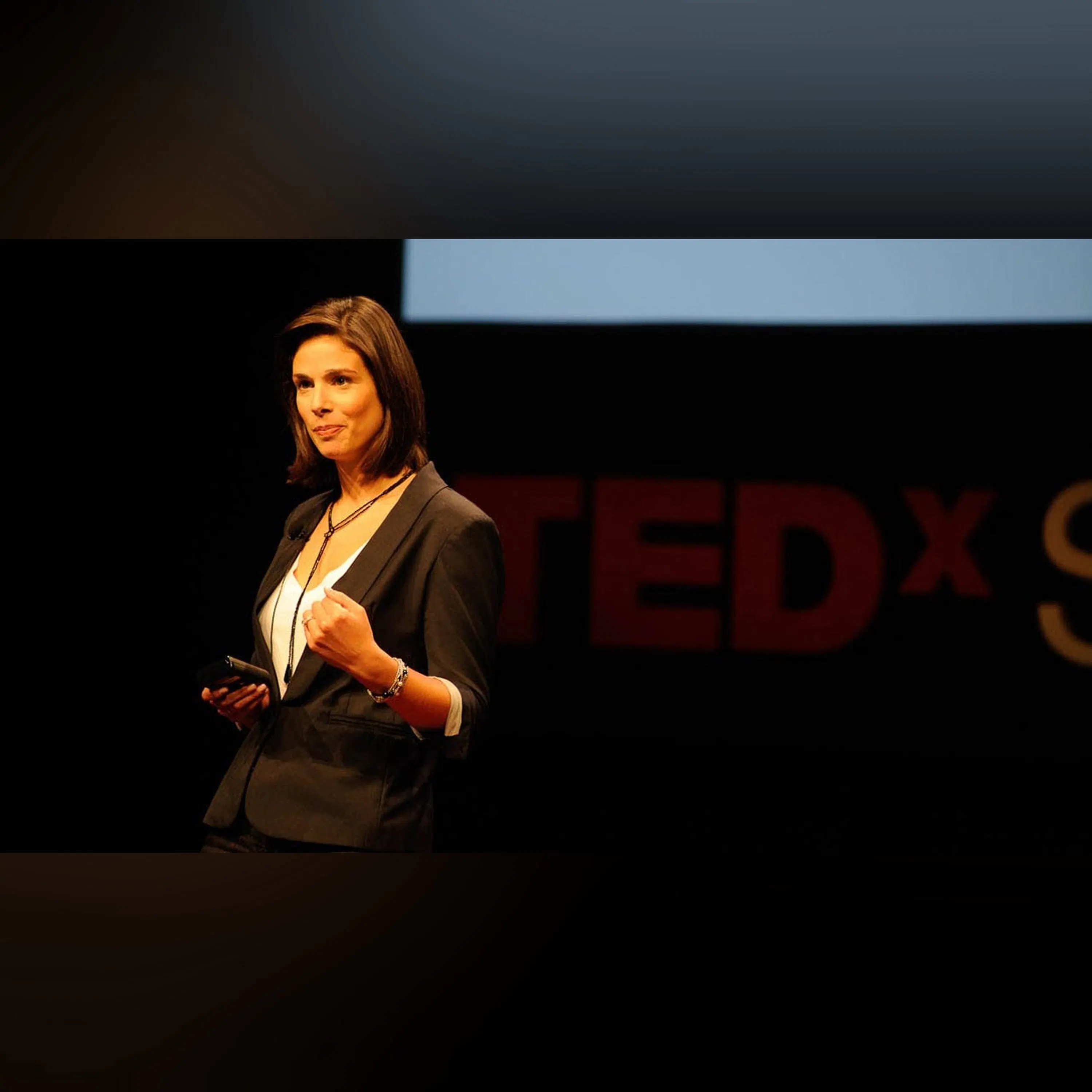
    The case for collaborative consumption - Rachel Botsman

    In her talk, Rachel Botsman says we're "wired to share" -- and shows how websites like Zipcar and Swaptree are changing the rules of human behavior. (Filmed at TEDxSydney.) Uploaded 17-07-13 Talk by Rachel Botsman. Learn more about your ad choices. Visit megaphone.fm/adchoices Learn more about your ad choices. Visit megaphone.fm/adchoices

  • October 26 · 22 min

    There are no scraps of men - Alberto Cairo

    Alberto Cairo's clinics in Afghanistan used to close down during active fighting. Now, they stay open. In this powerful talk, Cairo tells the moving story of why -- and how he found humanity and dignity in the midst of war. (Filmed at TEDxRC2.) Uploaded 15-08-13 Talk by Alberto Cairo. Learn more about your ad choices. Visit megaphone.fm/adchoices Learn more about your ad choices. Visit megaphone.fm/adchoices

  • October 26 · 6 min

    How stretching actually modifies your muscles - Malachy McHugh

    Dig into the science of stretching, and find out what it actually does to your muscles and how you can improve your flexibility. -- An athlete is preparing for a game. They’ve put on their gear and done their warmup, and now it’s time for one more routine — stretching. Typically, athletes stretch before physical activity to avoid injuries like strains and tears. But does stretching actually prevent these issues? And if so, how long do the benefits of stretching last? Malachy McHugh explores the finer points of flexibility. Lesson by Malachy McHugh, directed by Sofia Pashaei. Support Our Non-Profit Mission ---------------------------------------------- Support us on Patreon: http://bit.ly/TEDEdPatreon Check out our merch: http://bit.ly/TEDEDShop ---------------------------------------------- Connect With Us ---------------------------------------------- Sign up for our newsletter: http://bit.ly/TEDEdNewsletter Follow us on Facebook: http://bit.ly/TEDEdFacebook Find us on Twitter: http://bit.ly/TEDEdTwitter Peep us on Instagram: http://bit.ly/TEDEdInstagram ---------------------------------------------- Keep Learning ---------------------------------------------- View full lesson: https://ed.ted.com/lessons/how-stretching-actually-changes-your-muscles-malachy-mchugh Dig deeper with additional resources: https://ed.ted.com/lessons/how-stretching-actually-changes-your-muscles-malachy-mchugh#digdeeper Music: https://www.campstudio.co ---------------------------------------------- Thank you so much to our patrons for your support! Without you this video would not be possible! Cyrus Garay, Samuel Barbas, LadyGeek, Marin Kovachev, Penelope Misquitta, Hans Peng, Gaurav Mathur, Erik Biemans, Tony, Michelle, Katie and Josh Pedretti, Hoai Nam Tran, Kack-Kyun Kim, Michael Braun-Boghos, zjweele13, Anna-Pitschna Kunz, Edla Paniguel, Thomas Mungavan, Jaron Blackburn, Venkat Venkatakrishnan, ReuniteKorea, Aaron Henson, Rohan Gupta, Begum Tutuncu, Brian Richards, Jørgen Østerpart, Tyron Jung, Carsten Tobehn, Katie Dean, Ezgi Yersu, Gerald Onyango, alessandra tasso, Doreen Reynolds-Consolati, Manognya Chakrapani, Ayala Ron, Eunsun Kim, Phyllis Dubrow, Ophelia Gibson Best, Paul Schneider, Joichiro Yamada, Henrique Cassús, Karthik Cherala, Clarence E. Harper Jr., Vignan Velivela, Ana Maria, Exal Enrique Cisneros Tuch, Tejas Dc, Khalifa Alhulail, Martin Stephen, Jose Henrique Leopoldo e Silva, Mandeep Singh and Abhijit Kiran Valluri. Learn more about your ad choices. Visit megaphone.fm/adchoices

  • October 26 · 23 min

    Can we eat to starve cancer? - William Li

    View full lesson: http://ed.ted.com/lessons/can-we-eat-to-starve-cancer-william-li Uploaded 08-04-14 William Li presents a new way to think about treating cancer and other diseases: anti-angiogenesis, preventing the growth of blood vessels that feed a tumor. The crucial first (and best) step: Eating cancer-fighting foods that cut off the supply lines and beat cancer at its own game. Talk by WIlliam Li. Learn more about your ad choices. Visit megaphone.fm/adchoices Learn more about your ad choices. Visit megaphone.fm/adchoices

Showing 621–640 of 1,909 episodes