Skip to content
Artwork for TED-Ed
EducationScienceTechnology

TED-Ed

TED-Ed

TED-Ed’s mission is to create lessons worth sharing. Feed and expand your curiosity with our award-winning animated shorts - published on YouTube and available with supplemental learning materials on ed.ted.com.

Want to suggest an idea for a TED-Ed animation, nominate an educator or animator? Visit our website at: http://ed.ted.com/get_involved.

Consider backing us on Patreon. By doing so, you directly support our nonprofit mission to create free, high-quality educational content: https://www.patreon.com/teded

For more information on using TED-Ed content for commercial purposes (e.g. employee learning, in a film, or in an online course), please submit a Media Request using this link: https://media-requests.ted.com/

Play
  • 1,909 episodes
  • daily
  • Avg 9 min
  • English

Episodes 1,909

Counted on this page — what you have heard stays on this device, so it is not something the list can be paged by.
  • November 6 · 6 min

    The hidden cost of gold - Lyla Latif

    Dig into how foreign corporations exploit African nations like Mali for their gold mining, and often rob them of proper compensation. -- In 2020, Mali produced over 71 tons of gold— an amount worth billions of dollars. But Mali saw only $850 million dollars from that gold. And this situation isn’t unique: a number of other gold-rich countries in Africa aren’t seeing the income they should given the price of gold. So, what’s going on? Lyla Latif digs into how foreign corporations exploit African nations for their resources. Lesson by Lyla Latif, directed by Jeffig Le Bars, JetPropulsion.space Support Our Non-Profit Mission ---------------------------------------------- Support us on Patreon: http://bit.ly/TEDEdPatreon Check out our merch: http://bit.ly/TEDEDShop ---------------------------------------------- Connect With Us ---------------------------------------------- Sign up for our newsletter: http://bit.ly/TEDEdNewsletter Follow us on Facebook: http://bit.ly/TEDEdFacebook Find us on Twitter: http://bit.ly/TEDEdTwitter Peep us on Instagram: http://bit.ly/TEDEdInstagram ---------------------------------------------- Keep Learning ---------------------------------------------- View full lesson: https://ed.ted.com/lessons/the-true-cost-of-gold-lyla-latif Dig deeper with additional resources: https://ed.ted.com/lessons/the-true-cost-of-gold-lyla-latif#digdeeper Animator's website: https://jetpropulsion.space Composer website: https://soundcloud.com/aim-music ---------------------------------------------- Thank you so much to our patrons for your support! Without you this video would not be possible! Matthew Neal, Denis Chon, Julian Oberhofer, Monte Carroll, Eddy, Jay M, Constantino Victor Delgado, Andrea Galvagni, Andrew Tweddle, Laurel-Ann Rice, Fernando A. Endo, Helen Lee, pam morgan, sarim haq, Gerardo Castro, Michel-Ange Hortegat, Enes Kirimi, Amaury BISIAUX, ND, Samyogita Hardikar, Vanessa Graulich, Vandana Gunwani, Abdulmohsin Almadi, AJ Lyon, Geoffrey Bultitude, Mi Mi, Thomas Rothert, Brian Elieson, Oge O, Weronika Falkowska, Nevin Spoljaric, Sid Chanpuriya, Anoop Varghese, David Yastremski, Noah Webb, Roberto Chena, Oliver Koo, Luke Pisano, Andrea Gordon, Aleksandar Donev, Nicole Klau Ibarra, Jesse Lira, Ezekiel Raui, Petr Vacek, Dennis, Olivia Fu, Kari Teffeau, Cindy Lai, Rajath Durgada Manjunath and Dan Nguyen. Learn more about your ad choices. Visit megaphone.fm/adchoices
  • November 6 · 17 min

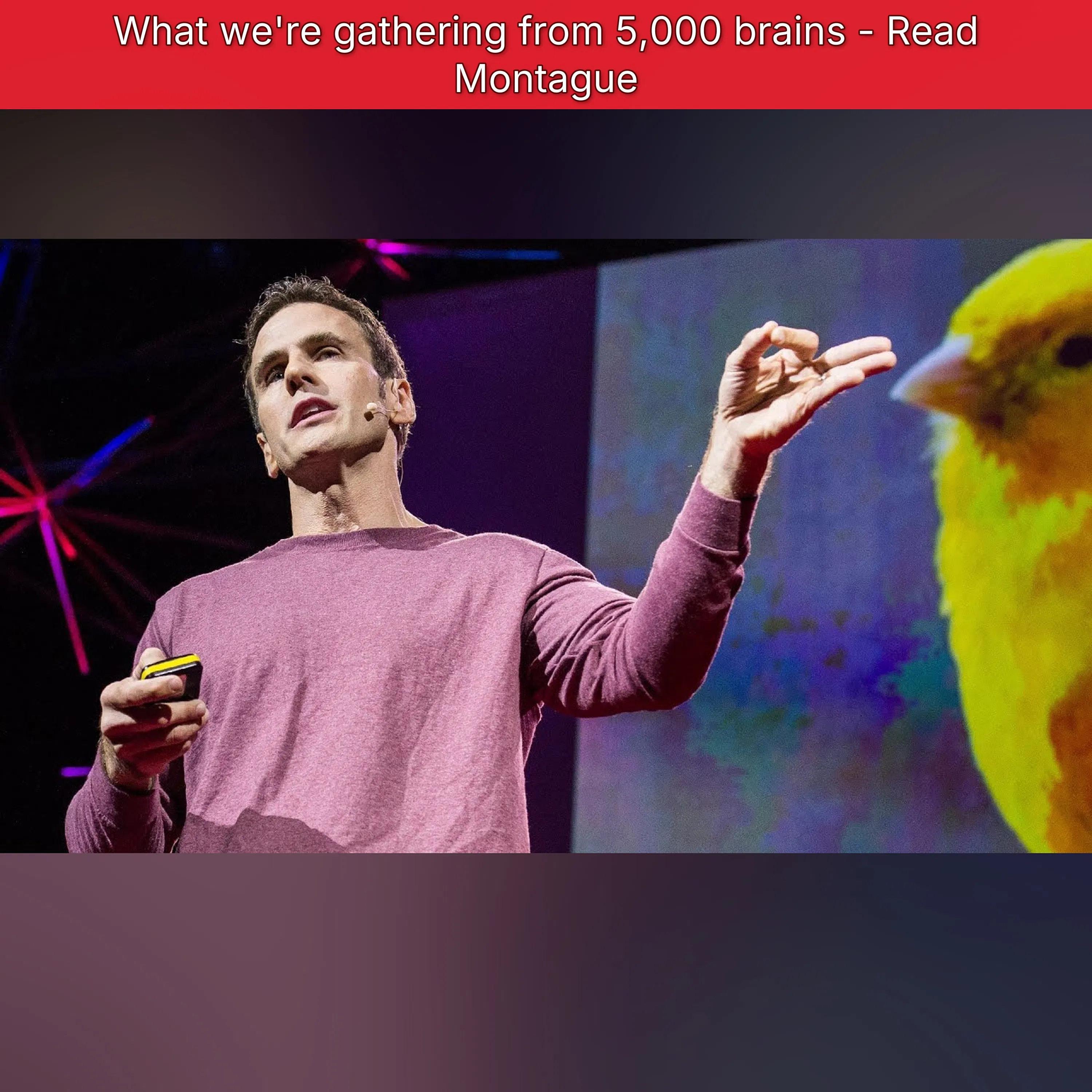
    What we're gathering from 5,000 brains - Read Montague

    Mice, bugs and hamsters are no longer the only way to study the brain. Functional MRI (fMRI) allows scientists to map brain activity in living, breathing, decision-making human beings. Read Montague gives an overview of how this technology is helping us understand the complicated ways in which we interact with each other. Talk by Read Montague. Learn more about your ad choices. Visit megaphone.fm/adchoices

  • November 6 · 7 min

    Why people fall for misinformation - Joseph Isaac

    How does a fact become a misconception? Dig into the world of misinformation to see how facts can become distorted and misleading. Uploaded 03-09-20 -- In 1901, David Hänig published research that led to what we know today as the taste map: an illustration that divides the tongue into four separate areas. It has since been published in textbooks and newspapers. There is just one problem: the map is wrong. So how do misconceptions like this spread, and what makes a fake fact so easy to believe? Joseph Isaac dives into the world of misinformation. Lesson by Joseph Isaac, directed by CUB Animation. Animator's website: http://cubanimation.com/en/intro-en/ Sign up for our newsletter: http://bit.ly/TEDEdNewsletter Support us on Patreon: http://bit.ly/TEDEdPatreon Follow us on Facebook: http://bit.ly/TEDEdFacebook Find us on Twitter: http://bit.ly/TEDEdTwitter Peep us on Instagram: http://bit.ly/TEDEdInstagram View full lesson: https://ed.ted.com/lessons/why-people-fall-for-misinformation-joseph-isaac Thank you so much to our patrons for your support! Without you this video would not be possible! Maria Lerchbaumer, Ever Granada, Marin Kovachev, Ravi S. Rāmphal, Penelope Misquitta, Tekin Gültekin, Jhuval, Hans Peng, Gaurav Mathur, Erik Biemans, Tony, Michelle, Katie and Josh Pedretti, Vaibhav Mirjolkar, Thomas Bahrman, Allan Hayes, Aidan Forero, Uday Kishore, Mikhail Shkirev, Devesh Kumar, Sunny Patel, Anuj Tomar, Lowell Fleming, David Petrovič, Hoai Nam Tran, Stina Boberg, Alexandrina Danifeld, Kack-Kyun Kim, Travis Wehrman, haventfiguredout, Caitlin de Falco, Ken, zjweele13, Anna-Pitschna Kunz, Edla Paniguel, Elena Crescia, Thomas Mungavan, Alejandro Cachoua, Jaron Blackburn, Yoga Trapeze Wanderlust, Sandy Nasser, Venkat Venkatakrishnan, Nicolle Fieldsend-Roxborough, John Saveland, Jason Garcia, Robson Martinho, Martin Lau, Senjo Limbu, Joe Huang, SungGyeong Bae, Christian Kurch, Begum Tutuncu. Learn more about your ad choices. Visit megaphone.fm/adchoices Learn more about your ad choices. Visit megaphone.fm/adchoices
  • November 6 · 12 min

    Protecting the brain against concussion - Kim Gorgens

    View full lesson: http://ed.ted.com/lessons/protecting-the-brain-against-concussion-kim-gorgens Uploaded 16-08-13 In a lively talk, neuropsychologist Kim Gorgens makes the case for better protecting our brains against the risk of concussion -- with a compelling pitch for putting helmets on kids. (Filmed at TEDxDU.) Talk by Kim Gorgens. Learn more about your ad choices. Visit megaphone.fm/adchoices Learn more about your ad choices. Visit megaphone.fm/adchoices
  • November 6 · 5 min

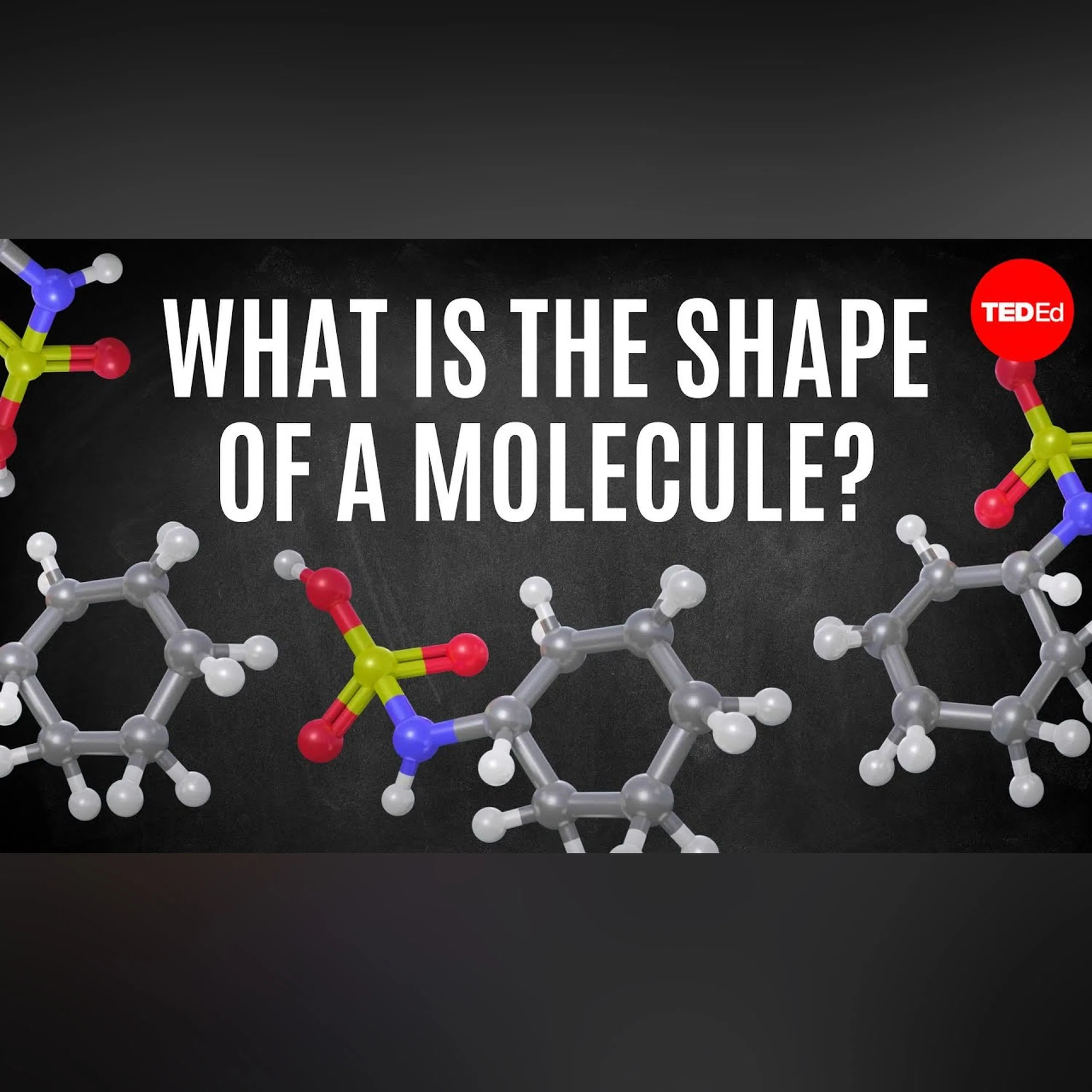
    What is the shape of a molecule? - George Zaidan and Charles Morton

    View full lesson: http://ed.ted.com/lessons/what-is-the-shape-of-a-molecule-george-zaidan-and-charles-morton Uploaded 17-10-13 A molecule is nearly all empty space, apart from the extremely dense nuclei of its atoms and the clouds of electrons that bond them together. When that molecule forms, it arranges itself to maximize attraction of opposite charges and minimize repulsion of unlike. George Zaidan and Charles Morton shape our image of molecules. Lesson by George Zaidan and Charles Morton, animation by Bevan Lynch. Learn more about your ad choices. Visit megaphone.fm/adchoices Learn more about your ad choices. Visit megaphone.fm/adchoices

  • November 6 · 14 min

    Ethical conundrums in HIV research - Boghuma Kabisen Titanji

    It's an all too common story: after participating in an HIV clinical trial, a woman in sub-Saharan Africa is left without the resources to buy a bus ticket to her health clinic, let alone to afford life-saving antiretrovirals. Boghuma Kabisen Titanji asks an important question: how can researchers looking for a cure make sure they're not taking advantage of those most affected by the pandemic? (Filmed at TEDxGoodenoughCollege.) Talk by Boghuma Kabisen Titanji. Learn more about your ad choices. Visit megaphone.fm/adchoices

  • November 6 · 15 min

    A whistleblower you haven't heard - Geert Chatrou

    In this engaging talk, world champion whistler Geert Chatrou performs the whimsical "Eleonora" by A. Honhoff, and his own "Fête de la Belle." In a fascinating interlude, he talks about what brought him to the craft. (Filmed at TEDxRotterdam .) Uploaded 15-08-13 Talk by Geert Chatrou. Learn more about your ad choices. Visit megaphone.fm/adchoices Learn more about your ad choices. Visit megaphone.fm/adchoices
  • November 6 · 6 min

    How squids outsmart their predators - Carly Anne York

    Check out our Patreon page: https://www.patreon.com/teded Uploaded 14-05-18 View full lesson: https://ed.ted.com/lessons/how-squids-outsmart-their-predators-carly-anne-york There are about 500 species of squid, and they live in all the world’s oceans, making them a reliable food source for whales, dolphins, sharks, seabirds, fish - and even other squid. As a result, the squid's most extraordinary adaptations are those that have evolved to help them thwart these predators. Carly Anne York explains how these stealthy cephalopods have mastered deep sea survival. Lesson by Carly Anne York, animation by Jérémie Balais and Reza Riahi. Thank you so much to our patrons for your support! Without you this video would not be possible! Claudia Mayfield, Justus Berberich, Pavel Zalevskiy, Yankai Liu, Duo Xu, Ghassan Alhazzaa, Miloš Stevanović, Joy Love Om, Gi Nam Lee, Shawn Quichocho, Simone Kidner, Anika Westburg, Barun Padhy, Brandy Jones, Devin Harris, Tony Trapuzzano, Stephen Michael Alvarez, Tom Lee, Juliana , Jason Weinstein, Kris Siverhus, Alexander Walls, Annamaria Szilagyi, Morgan Williams, Abhijit Kiran Valluri, Mandeep Singh, Sama aafghani, سلطان الخليفي, Marylise CHAUFFETON, Marvin Vizuett, Jayant Sahewal, Quinn Shen, Caleb ross, Elizabeth Cruz, Elnathan Joshua Bangayan, Gaurav Rana, Mullaiarasu Sundaramurthy, Jose Henrique Leopoldo e Silva, Dan Paterniti, Jerome Froelich, Tyler Yoshizumi, Martin Stephen, Justin Carpani, Faiza Imtiaz, Khalifa Alhulail, Tejas Dc, Benjamin and Shannon Pinder, Srikote Naewchampa, Ex Foedus, and Sage Curie. Learn more about your ad choices. Visit megaphone.fm/adchoices Learn more about your ad choices. Visit megaphone.fm/adchoices

  • November 6 · 7 min

    Can the economy expand forever?

    Is infinite economic growth possible on a planet with finite resources? Explore how countries can balance efficiency with sustainability. -- Many economists think that an eternally growing economy is necessary to keep improving people’s lives, and that if the global economy stops growing, people would fight more over the fixed amount of value that exists, rather than working to generate new value. Which raises the question: is infinite growth possible on a finite planet? Explore how economies can balance efficiency with sustainability. Directed by Kevin Herrmann, AIM Creative Studios. This video made possible in collaboration with World Economic Forum Learn more about how TED-Ed partnerships work: https://bit.ly/TEDEdPartners Support Our Non-Profit Mission ---------------------------------------------- Support us on Patreon: http://bit.ly/TEDEdPatreon Check out our merch: http://bit.ly/TEDEDShop ---------------------------------------------- Connect With Us ---------------------------------------------- Sign up for our newsletter: http://bit.ly/TEDEdNewsletter Follow us on Facebook: http://bit.ly/TEDEdFacebook Find us on Twitter: http://bit.ly/TEDEdTwitter Peep us on Instagram: http://bit.ly/TEDEdInstagram ---------------------------------------------- Keep Learning ---------------------------------------------- View full lesson: https://ed.ted.com/lessons/can-the-economy-grow-forever Dig deeper with additional resources: https://ed.ted.com/lessons/can-the-economy-grow-forever#digdeeper Animator's website: http://aimcreativestudios.com Music: https://soundcloud.com/aim-music ---------------------------------------------- Thank you so much to our patrons for your support! Without you this video would not be possible! OnlineBookClub.org, Eric Shear, Leith Salem, Omar Hicham, Adrian Rotaru, Brad Sullivan, Karen Ho, Niklas Frimberger, Hunter Manhart, Nathan Nguyen, Igor Stavchanskiy, James R DeVries, Grace Huo, Diana Huang, Chau Hong Diem, Orlellys Torre, Corheu, Thomas Mee, Maryann H McCrory, Blas Borde, John Hellmann, Poompak Meephian, Chuck Wofford, Adam Pagan, Wes Winn, Conder Shou, ntiger, Noname, Hansan Hu, David D, Mac Hyney, Keith Ellison, robin valero walters, Lynne Truesdale, Gatsby Dkdc, Matthew Neal, Denis Chon, Julian Oberhofer, Monte Carroll, Eddy, Jay M, Constantino Victor Delgado, Andrea Galvagni, Andrew Tweddle, Laurel-Ann Rice, Fernando A. Endo, Helen Lee, pam morgan, sarim haq and Gerardo Castro. Learn more about your ad choices. Visit megaphone.fm/adchoices

  • November 5 · 7 min

    Are all of your memories real? - Daniel L. Schacter

    Dig into the psychology of how memories are susceptible to false information and why we shouldn’t treat them as truth. Uploaded 08-09-20 -- In a 1990’s study, participants recalled getting lost in a shopping mall as children. Some shared these memories in vivid detail, but there was one problem: none of these people had actually gotten lost in a mall. They produced these false memories after psychologists told them they’d gotten lost and parents confirmed it. So what’s going on? Daniel L. Schacter explores the fallibility of our memory. Lesson by Daniel L. Schacter, directed by AIM Creative Studios. Animator's website: http://aimcreativestudios.com/ Sign up for our newsletter: http://bit.ly/TEDEdNewsletter Support us on Patreon: http://bit.ly/TEDEdPatreon Follow us on Facebook: http://bit.ly/TEDEdFacebook Find us on Twitter: http://bit.ly/TEDEdTwitter Peep us on Instagram: http://bit.ly/TEDEdInstagram View full lesson: https://ed.ted.com/lessons/are-all-of-your-memories-real-daniel-l-schacter Thank you so much to our patrons for your support! Without you this video would not be possible! David Matthew Ezroj, Sweetmilkcoco, Raphaël LAURENT, Joe Meyers, Farah Abdelwahab, Brian Richards, Divina Grace Dar Santos, Jessie McGuire, Abdullah Altuwaijri, Sarah Burns, Clement, Hadi Salahshour, FAWWAZ GHUWAIDI, Dino Biancolini, Reagen O'Connor, Nicu Boanda, Cindy O., Karla Brilman, Jørgen Østerpart, Sergi Páez, rakesh Katragadda, Carolyn Corwin, Charlene You, Boris Langvand, Exal Enrique Cisneros Tuch, Carsten Tobehn, Kin Lon Ma, Katie Dean, Ezgi Yersu, Eunsun Kim, Katrina Harding, Gerald Onyango, alessandra tasso, Astia Rizki Safitri, Côme Vincent, Antony Lee, Melissa Sorrells, Rakshit Kothari, Doreen Reynolds-Consolati, Simon Holst Ravn, Manognya Chakrapani, Ayala Ron, Samantha Chow, Philippe Spoden, Phyllis Dubrow, Michelle Stevens-Stanford, Cas Jamieson, Ophelia Gibson Best, Amber Wood and Paul Schneider. Learn more about your ad choices. Visit megaphone.fm/adchoices Learn more about your ad choices. Visit megaphone.fm/adchoices

  • November 5 · 18 min

    The secret mechanisms of the adolescent brain - Sarah-Jayne Blakemore

    View full lesson: http://ed.ted.com/lessons/the-mysterious-workings-of-the-adolescent-brain-sarah-jayne-blakemore Why do teenagers seem so much more impulsive, so much less self-aware than grown-ups? Cognitive neuroscientist Sarah-Jayne Blakemore compares the prefrontal cortex in adolescents to that of adults, to show us how typically "teenage" behavior is caused by the growing and developing brain. Talk by Sarah-Jayne Blakemore. Learn more about your ad choices. Visit megaphone.fm/adchoices

  • November 5 · 5 min

    The uncertain location of electrons - George Zaidan and Charles Morton

    View full lesson: http://ed.ted.com/lessons/the-uncertain-location-of-electrons-george-zaidan-and-charles-morton Uploaded 14-10-13 The tiny atoms that make up our world are made up of even tinier protons, neutrons and electrons. Though the number of protons determine an atom's identity, it's the electrons -- specifically, their exact location outside the nucleus -- that particularly perplex scientists. George Zaidan and Charles Morton show how to make an educated guess of where those itty-bitty freewheeling electrons might be. Lesson by George Zaidan and Charles Morton, animation by Karrot Animation. Learn more about your ad choices. Visit megaphone.fm/adchoices Learn more about your ad choices. Visit megaphone.fm/adchoices
  • November 5 · 6 min

    Earworms: Those songs that get stuck in your head - Elizabeth Hellmuth Margulis

    View full lesson: http://ed.ted.com/lessons/earworms-those-songs-that-get-stuck-in-your-head-elizabeth-hellmuth-margulis Uploaded 26-03-15 -- Have you ever been waiting in line at the grocery store, innocently perusing the magazine rack, when a song pops into your head? Not the whole song, but a fragment of it that plays and replays until you find yourself unloading the vegetables in time to the beat? Elizabeth Hellmuth Margulis explores earworms — a cognitive phenomenon that plagues over 90% of people at least once a week. Lesson by Elizabeth Margulis, animation by Artrake Studio. Learn more about your ad choices. Visit megaphone.fm/adchoices Learn more about your ad choices. Visit megaphone.fm/adchoices

  • November 5 · 6 min

    What is a butt tuba and why is it in medieval art? - Michelle Brown

    Uncover the rich history of illuminated manuscripts and the often bizarre images that filled the margins of medieval books. Uploaded 16-04-19 -- A rabbit attempts to play a church organ, while a knight fights a giant snail and a naked man blows a trumpet with his rear end. These bizarre images, painted with squirrel-hair brushes on vellum or parchment by monks, nuns and urban craftspeople, populate the margins of the most prized books from the Middle Ages. Michelle Brown explores the rich history and tradition of illuminated manuscripts. Lesson by Michelle Brown, directed by WOW-HOW Studio. Sign up for our newsletter: http://bit.ly/TEDEdNewsletter Support us on Patreon: http://bit.ly/TEDEdPatreon Follow us on Facebook: http://bit.ly/TEDEdFacebook Find us on Twitter: http://bit.ly/TEDEdTwitter Peep us on Instagram: http://bit.ly/TEDEdInstagram View full lesson: https://ed.ted.com/lessons/what-is-a-butt-tuba-and-why-is-it-in-medieval-art-michelle-brown Thank you so much to our patrons for your support! Without you this video would not be possible! Vaibhav Mirjolkar, Tony, Michelle, Katie and Josh Pedretti, Erik Biemans, Gaurav Mathur, Sameer Halai, Hans Peng, Tekin Gültekin, Hector Quintanilla, Raheem , Penelope Misquitta, Ravi S. Rāmphal, Fahad Nasser Chowdhury, Marin Kovachev, Roman Pinchuk, Maria Lerchbaumer, Edgar Campos Barrachina, Dianne Palomar, The Brock, Curtis Light, Ernest Chow, Liana Switzer, Maija Chapman, Pamela Harrison, Mighterbump, Beatriz Inácio, Robert Hargis, Soma Ali, Mark wisdom, Ai Ejima, Irindany Sandoval, William Bravante, Elizabeth Parker, Sai Krishna Koyoda, Therapist Gus, Samuel Barbas, Betsy Feathers, Victoria Soler-Roig, Pavel Maksimov, Barbara Younker, Cyrus Garay, Yvette Mocete, Mike Azarkman, Valeria Sloan Vasquez, Patricia Alves Panagides, William Biersdorf, Michael Aquilina, Kshitij Shah, Mohammad Said, Victoria Veretilo and Rebecca Reineke. Learn more about your ad choices. Visit megaphone.fm/adchoices Learn more about your ad choices. Visit megaphone.fm/adchoices

  • November 5 · 20 min

    Why you will fail to have a great career - Larry Smith

    In this funny and blunt talk, Larry Smith pulls no punches when he calls out the absurd excuses people invent when they fail to pursue their passions. (Filmed at TEDxUW.) Uploaded 15-08-13 Talk by Larry Smith. Learn more about your ad choices. Visit megaphone.fm/adchoices Learn more about your ad choices. Visit megaphone.fm/adchoices

  • November 5 · 6 min

    How long should your naps be? - Sara C. Mednick

    Download a free audiobook version of "Take a Nap: Change Your Life" by Sara Mednick or Matthew Walker's "Why We Sleep" and support TED-Ed's nonprofit mission: https://www.audible.com/ted-ed Uploaded 29-04-21 -- Your eyes get heavy and gradually close… But wait! It’s only lunch time and you still have so much to do. Would taking a nap help? Or would it derail your day? Well, that depends on a few things— especially what stages of sleep the nap includes. Sara C. Mednick details the cognitive benefits of napping, and explores the optimal length and time of day for a quick snooze. Lesson by Sara C. Mednick, directed by Qian Shi. Support Our Non-Profit Mission ---------------------------------------------- Support us on Patreon: http://bit.ly/TEDEdPatreon Check out our merch: http://bit.ly/TEDEDShop ---------------------------------------------- Connect With Us ---------------------------------------------- Sign up for our newsletter: http://bit.ly/TEDEdNewsletter Follow us on Facebook: http://bit.ly/TEDEdFacebook Find us on Twitter: http://bit.ly/TEDEdTwitter Peep us on Instagram: http://bit.ly/TEDEdInstagram ---------------------------------------------- Keep Learning ---------------------------------------------- View full lesson: https://ed.ted.com/lessons/how-long-should-your-naps-be-sara-c-mednick Dig deeper with additional resources: https://ed.ted.com/lessons/how-long-should-your-naps-be-sara-c-mednick#digdeeper Check out our full book recommendations: https://shop.ed.ted.com/collections/ted-ed-book-recommendations/products/copy-of-1985 and https://shop.ed.ted.com/products/why-we-sleep?_pos=1&_sid=c7f99e690&_ss=r Animator's website: https://www.qianshi.art ---------------------------------------------- Thank you so much to our patrons for your support! Without you this video would not be possible! Anoop Varghese, David Yastremski, Zoë Tulip, B, Jason Harrison, Erica Guerrero, Richard Manklow, Roberto Chena, Oliver Koo, Luke Pisano, Andrea Gordon, Aleksandar Donev, Nicole Klau Ibarra, Milo Vermeulen, Ryan Weiler, Jesse Lira, Ezekiel Raui, Itay Levi, Zongpu Kou, Cameron Chakraverty, Petr Vacek, Rhys Patterson, Dennis, Olivia Fu, Katrina Adams, Regina Post, Mary Collins, Kari Teffeau, clumsybunnie, Adam Leos, Jeremy Laurin, Cindy Lai, Liz, Bhargav Pandravada, Rajath Durgada Manjunath, Dan Nguyen, sarim haq, Chin Beng Tan, Alejandro Gomez, Tom Boman, Karen Warner, Isorn Sookwanish, Iryna Panasiuk, Diane Gallin, Aaron Torres, Vasundhar, Eric Braun, Denka Wee, Daru Bhargav an Sonja Worzewski. Learn more about your ad choices. Visit megaphone.fm/adchoices Learn more about your ad choices. Visit megaphone.fm/adchoices

  • November 5 · 16 min

    Gaming to re-engage boys in learning - Ali Carr-Chellman

    In her talk, Ali Carr-Chellman pinpoints three reasons boys are tuning out of school in droves, and lays out her bold plan to re-engage them: bringing their culture into the classroom, with new rules that let boys be boys, and video games that teach as well as entertain. (Filmed at TEDxPSU.) Uploaded 15-08-13 Talk by Ali Carr-Chellman. Learn more about your ad choices. Visit megaphone.fm/adchoices Learn more about your ad choices. Visit megaphone.fm/adchoices

  • November 5 · 6 min

    Why do we sweat? - John Murnan

    Check out our Patreon page: https://www.patreon.com/teded Uploaded 15-05-18 View full lesson: https://ed.ted.com/lessons/why-do-we-sweat-john-murnan There are a number of scenarios that can make us sweat–including exercise, eating spicy foods, and nervousness. But how does this substance suddenly materialize, and what exactly is its purpose? John Murnan explores the science behind sweat. Lesson by John Murnan, directed by Dogzilla Studio. Thank you so much to our patrons for your support! Without you this video would not be possible. Exal Enrique Cisneros Tuch, Ana Maria, Vignan Velivela, Ibel Wong, Ahmad Hyari, A Hundred Years, eden sher, Travis Wehrman, Minh Tran, Louisa Lee, Kiara Taylor, Hoang Viet, Nathan A. Wright, Jast3r, Аркадий Скайуокер, Milad Mostafavi, Rob Johnson, Ashley Maldonado, Clarence E. Harper Jr., Bojana Golubovic, Mihail Radu Pantilimon, Benedict Chuah, Karthik Cherala, haventfiguredout, Violeta Cervantes, Elaine Fitzpatrick, Lyn-z Schulte, cnorahs, Henrique 'Sorín' Cassús, Tim Robinson, Kiarash Asar, Jun Cai, Paul Schneider, Amber Wood, Ophelia Gibson Best, Cas Jamieson, Michelle Stevens-Stanford, Phyllis Dubrow, Andreas Voltios, Eunsun Kim, Philippe Spoden, Samantha Chow, Armando Ello, Ayala Ron, Manognya Chakrapani, Simon Holst Ravn, Doreen Reynolds-Consolati, Rakshit Kothari, Melissa Sorrells, and Antony Lee. Learn more about your ad choices. Visit megaphone.fm/adchoices Learn more about your ad choices. Visit megaphone.fm/adchoices

  • November 5 · 6 min

    Hacking bacteria to fight cancer - Tal Danino

    Explore how synthetic biologists are programming bacteria to fight cancer by manipulating their DNA. Uploaded 10-12-19 -- In 1884, an unlucky patient who had a rapidly growing cancer in his neck came down with an unrelated bacterial skin infection. As he recovered from the infection, the cancer surprisingly began to recede. The infection had stimulated the patient’s immune system. Today, synthetic biologists program bacteria to safely deliver drugs directly to tumors. How is this possible? Tal Danino investigates. Lesson by Tal Danino, directed by Chris Bishop. Animator's website: https://www.chrisbishopartist.com Sign up for our newsletter: http://bit.ly/TEDEdNewsletter Support us on Patreon: http://bit.ly/TEDEdPatreon Follow us on Facebook: http://bit.ly/TEDEdFacebook Find us on Twitter: http://bit.ly/TEDEdTwitter Peep us on Instagram: http://bit.ly/TEDEdInstagram View full lesson: https://ed.ted.com/lessons/hacking-bacteria-to-fight-cancer-tal-danino Thank you so much to our patrons for your support! Without you this video would not be possible! Kyanta Yap, Ricardo Rendon Cepeda, Ana Maria, Benjamin and Shannon Pinder, Ernest Chow, Bela Namyslik, Alan Froese, Anika Westburg, Nick Cozby, Shawar Khan, Michael Braun-Boghos, Rohan Gupta, Elizabeth Cruz, Yujing Jiang, Sarah Lundegaard, Vladimir Ivanchenko, Georg Gusewski, Rohit Lodha, Erica Zhuang, Aaron Henson, Julio Sabatés Rodríguez, Vivian and Gilbert Lee, Fahad Nasser Chowdhury, ரமணன், John simmons, June Reiling, Khalid AlAli, Mickey Mikeworth, Nathaniel Lupus, Yansong Li, Chung Wah Gnapp, Amber Alexander, Robert Patrick, Pi Guanghui, Barbara Younker, Ai Ejima, Soma Ali, Roman Pinchuk, Raheem, Hector Quintanilla, Leen Mshasha, Mariana Ortega, Danny Romard, James Bruening, Ricki Daniel Marbun, Malcolm Callis, Sabrina Gonzalez, Al the Scottish Wildcat, سلطان الخليفي and Alexander Walls. Learn more about your ad choices. Visit megaphone.fm/adchoices Learn more about your ad choices. Visit megaphone.fm/adchoices

  • November 5 · 5 min

    Quarrying literature for deeper meanings - Amy E. Harter

    View full lesson: http://ed.ted.com/lessons/mining-literature-for-deeper-meanings-amy-e-harter Writing a great English paper can be tough because literature doesn't always reveal its deeper meanings immediately. You might not know Mr. Darcy's true feelings for Elizabeth Bennett in Jane Austen's "Pride and Prejudice" or grasp the complex moral universe of Toni Morrison's "Beloved" at first reading. Amy E. Harter offers a few tips on how to read and write more critically and thoughtfully. Lesson by Amy E. Harter, animation by The Leading Sheep Studios. Learn more about your ad choices. Visit megaphone.fm/adchoices

Showing 321–340 of 1,909 episodes