Skip to content
Artwork for TED-Ed
EducationScienceTechnology

TED-Ed

TED-Ed

TED-Ed’s mission is to create lessons worth sharing. Feed and expand your curiosity with our award-winning animated shorts - published on YouTube and available with supplemental learning materials on ed.ted.com.

Want to suggest an idea for a TED-Ed animation, nominate an educator or animator? Visit our website at: http://ed.ted.com/get_involved.

Consider backing us on Patreon. By doing so, you directly support our nonprofit mission to create free, high-quality educational content: https://www.patreon.com/teded

For more information on using TED-Ed content for commercial purposes (e.g. employee learning, in a film, or in an online course), please submit a Media Request using this link: https://media-requests.ted.com/

Play
  • 1,909 episodes
  • daily
  • Avg 9 min
  • English

Episodes 1,909

Counted on this page — what you have heard stays on this device, so it is not something the list can be paged by.
  • November 8 · 6 min

    Why are airplanes slower than they used to be? - Alex Gendler

    Why aren’t commercial flights getting faster? Dig into the technological and environmental problems facing supersonic flight. Uploaded 15-04-21 -- In 1996, a British Airways plane flew from New York to London in a record-breaking two hours and fifty-three minutes. Today, however, passengers flying the same route can expect to spend no less than six hours in the air — twice as long. So why, in a world where everything seems to be getting faster, have commercial flights lagged behind? Alex Gendler details the problems facing supersonic flight. Lesson by Alex Gendler, directed by Zedem Media. Support Our Non-Profit Mission ---------------------------------------------- Support us on Patreon: http://bit.ly/TEDEdPatreon Check out our merch: http://bit.ly/TEDEDShop ---------------------------------------------- Connect With Us ---------------------------------------------- Sign up for our newsletter: http://bit.ly/TEDEdNewsletter Follow us on Facebook: http://bit.ly/TEDEdFacebook Find us on Twitter: http://bit.ly/TEDEdTwitter Peep us on Instagram: http://bit.ly/TEDEdInstagram ---------------------------------------------- Keep Learning ---------------------------------------------- View full lesson: https://ed.ted.com/lessons/why-are-airplanes-slower-than-they-used-to-be-alex-gendler Dig deeper with additional resources: https://ed.ted.com/lessons/why-are-airplanes-slower-than-they-used-to-be-alex-gendler#digdeeper Animator's website: https://www.zedemanimations.com/ ---------------------------------------------- Thank you so much to our patrons for your support! Without you this video would not be possible! Eric Braun, Denka Wee, Daru Bhargav, Sonja Worzewski, Amy, Michael Clement, Ghaith Tarawneh, Nathan Milford, Tomas Beckett, Alice Ice, Eric Berman, Kurt Paolo Sevillano, Xavi Ramos, Ron Kakar, Jennifer Heald, flóra lili donáti, Megulo Abebe, TAO7 HORUS, isolwi, Vedasheersh, Michael Chang, Waqar Sheikh, Alexander Gruber, Irene Y., Kate Sem, VPpurplebelt, Ujjwal Dasu, Theunis Groenewald, Minh Quan Dinh, Sylvain, Can Aydogmus, JasonD, Terran Gimpel, Gareth Thomas, Talia Sari, Phan Quang Lam, Katie McDowell, Allen, Sarat Chandra Vegunta, Mahina Bachiller, Bruce Vieira Lopes, Charmaine Hanson, Paul Aldred-Bann, Thawsitt, Jezabel, Abdullah Abdulaziz, Adriano Fontes, Xiao Yu and Melissa Suarez. Learn more about your ad choices. Visit megaphone.fm/adchoices Learn more about your ad choices. Visit megaphone.fm/adchoices

  • November 8 · 5 min

    Why are manhole covers round? - Marc Chamberland

    View full lesson: http://ed.ted.com/lessons/why-are-manhole-covers-round-marc-chamberland Uploaded 13-04-15 Why are most manhole covers round? Sure it makes them easy to roll, and slide into place in any alignment. But there’s another, more compelling reason, involving a peculiar geometric property of circles and other shapes. Marc Chamberland explains curves of constant width and Barbier’s theorem. Lesson by Marc Chamberland, animation by Pew36 Animation Studios. Learn more about your ad choices. Visit megaphone.fm/adchoices Learn more about your ad choices. Visit megaphone.fm/adchoices

  • November 8 · 6 min

    What's below the tip of the iceberg? - Camille Seaman

    View full lesson: http://ed.ted.com/lessons/what-s-below-the-tip-of-the-iceberg-camille-seaman Uploaded 24-07-13 It's a well-known fact that the majority of an iceberg lies below the surface -- but just as stealthily hidden are their fascinating qualities. Traveling the seas, teeming with life, and sometimes even making a noise called "bergie seltzer," there's so much more than meets the eye. Camille Seaman gives homage to these icy isles. Lesson by Camille Seaman, animation by Bottomless Well Films. Learn more about your ad choices. Visit megaphone.fm/adchoices Learn more about your ad choices. Visit megaphone.fm/adchoices
  • November 7 · 21 min

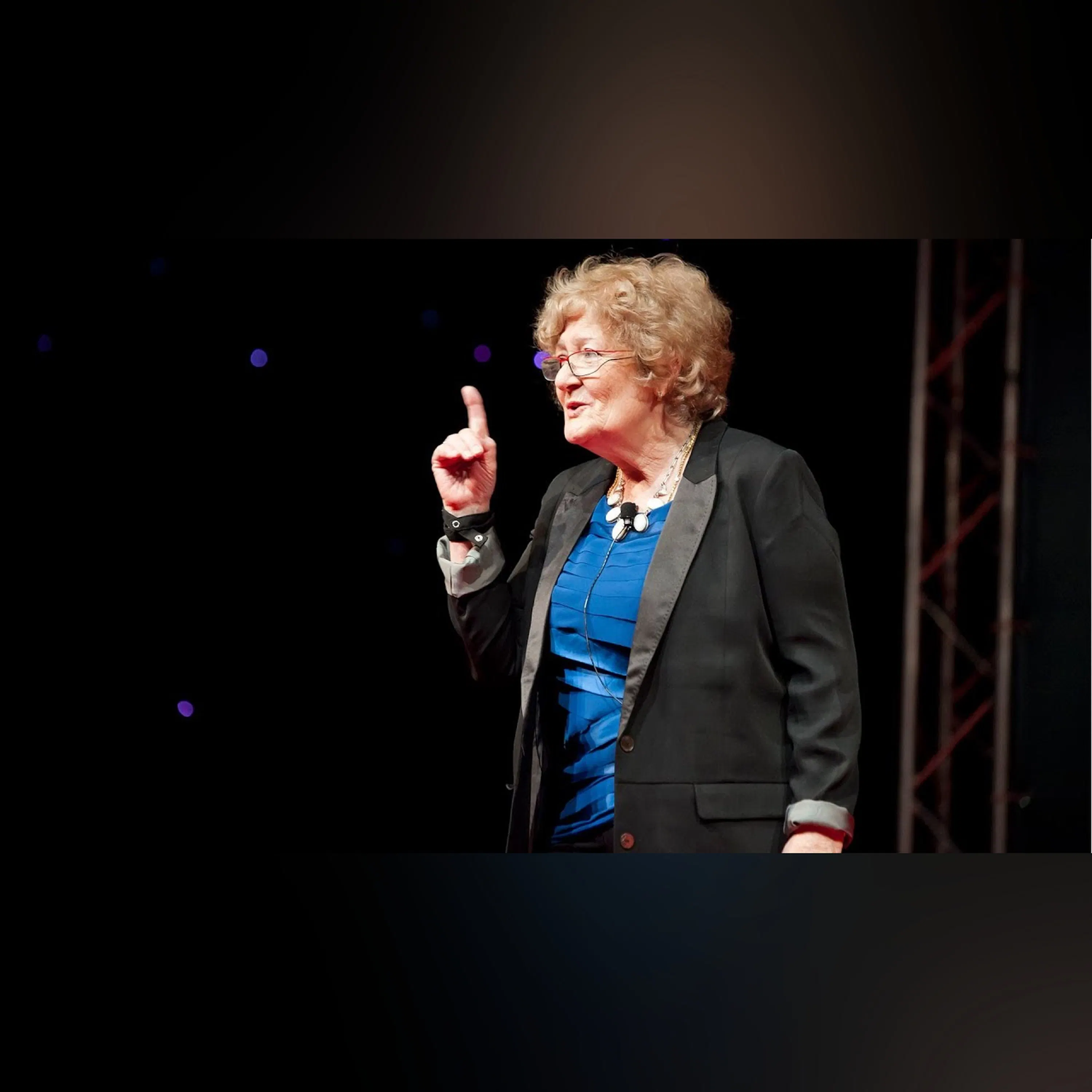
    The enigma of the bat genome - Emma Teeling

    In Western society, bats are often characterized as creepy, even evil. Zoologist Emma Teeling encourages us to rethink our attitude toward bats, whose unique and fascinating biology gives us insight into our own genetic makeup. (Filmed at TEDxDublin.) Talk by Emma Teeling. Learn more about your ad choices. Visit megaphone.fm/adchoices

  • November 7 · 14 min

    Don't insist on English! - Patricia Ryan

    In her talk, longtime English teacher Patricia Ryan asks a provocative question: Is the world's focus on English preventing the spread of great ideas in other languages? (For instance: what if Einstein had to pass the TOEFL?) It's a passionate defense of translating and sharing ideas. (Filmed at TEDxDubai.) Uploaded 25-07-13 Talk by Patricia Ryan. Learn more about your ad choices. Visit megaphone.fm/adchoices Learn more about your ad choices. Visit megaphone.fm/adchoices

  • November 7 · 6 min

    Why are earthquakes so hard to predict? - Jean-Baptiste P. Koehl

    Take a look at the theories behind why earthquakes occur, what makes them so hard to predict and the warning system technologies we rely on today. Uploaded 08-04-19 -- In 132 CE, Zhang Heng presented his latest invention: a large vase he claimed could tell them whenever an earthquake occurred for hundreds of miles. Today, we no longer rely on pots as warning systems, but earthquakes still offer challenges to those trying to track them. Why are earthquakes so hard to anticipate, and how could we get better at predicting them? Jean-Baptiste P. Koehl investigates. Lesson by Jean-Baptiste P. Koehl, directed by Cabong Studios. Sign up for our newsletter: http://bit.ly/TEDEdNewsletter Support us on Patreon: http://bit.ly/TEDEdPatreon Follow us on Facebook: http://bit.ly/TEDEdFacebook Find us on Twitter: http://bit.ly/TEDEdTwitter Peep us on Instagram: http://bit.ly/TEDEdInstagram View full lesson: https://ed.ted.com/lessons/why-are-earthquakes-so-hard-to-predict-jean-baptiste-p-koehl Thank you so much to our patrons for your support! Without you this video would not be possible! Jordan Tang, Juan, Sid, Tracey Tobkin, emily lam, Kathryn J Hammond, Elliot Poulin, Noel Situ, Oyuntsengel Tseyen-Oidov, Latora Slydell, Sydney Evans, Victor E Karhel, Bernardo Paulo, Eysteinn Guðnason, Andrea Feliz, Natalia Rico, Josh Engel, Bárbara Nazaré, Gustavo Mendoza, Zhexi Shan, Hugo Legorreta, PnDAA , Sandra Tersluisen, Ellen Spertus, Fabian Amels, sammie goh, Mattia Veltri, Quentin Le Menez, Yuh Saito, Heather Slater, Dr Luca Carpinelli, Janie Jackson, Christophe Dessalles, Arturo De Leon, Eduardo Briceño, Bill Feaver, Ricardo Paredes, David Douglass, Paul Coupe, Jen, Megan Whiteleather, Mayank Kaul, Ryohky Araya, Tan YH, Ph.D., Brittiny Elman, Ruth Fang, Alex Schenkman, Ivan Todorović and Yanuar Ashari. Learn more about your ad choices. Visit megaphone.fm/adchoices Learn more about your ad choices. Visit megaphone.fm/adchoices

  • November 7 · 6 min

    Which is stronger: Glue or tape? - Elizabeth Cox

    Check out our Patreon page: https://www.patreon.com/teded Uploaded 30-04-18 View full lesson: https://ed.ted.com/lessons/which-is-stronger-glue-or-tape-elizabeth-cox The oldest glue in the world is over 8,000 years old and comes from a cave near the Dead Sea. Today, we have enough types of tape and glue to build and repair almost anything. But what gives glue and tape their stickiness? And is one stronger than the other? Elizabeth Cox explores the world of adhesives. Lesson by Elizabeth Cox, animation by Sinbad Richardson. Thank you so much to our patrons for your support! Without you this video would not be possible! maxi kobi einy, Runarm, Misaki Sato, Levi Cook, Catherine Sverko, Robert Sukosd, Mark Morris, Tamás Drávai, Peter Liu, Leora Allen, Michal Salman, Julie Cummings-Debrot, Gilly, Ka-Hei Law, Aleksandar Srbinovski, Renhe Ji, Andrés Melo Gámez, Tim Leistikow, Moonlight , Megan Douglas, Barbara Smalley, Filip Dabrowski, Joe Giamartino, Clair Chen, Karen Goepen-Wee, Bryan Blankenburg, Bah Becerra, Stephanie Perozo, Marc Bilodeau, Ruby Solorzano, Ivan Tsenov, Claudia Mayfield, Justus Berberich, Pavel Zalevskiy, Yankai Liu, Duo Xu, Ghassan Alhazzaa, Miloš Stevanović, Narat Suchartsunthorn, Joy Love Om, Gi Nam Lee, Shawn Quichocho, Simone Kidner, Barun Padhy, Brandy Jones, Devin Harris, Tony Trapuzzano, Stephen Michael Alvarez, Juliana, Jason Weinstein, Kris Siverhus, Annamaria Szilagyi, and Morgan Williams. Learn more about your ad choices. Visit megaphone.fm/adchoices Learn more about your ad choices. Visit megaphone.fm/adchoices

  • November 7 · 4 min

    Mysteries of vernacular: Blast powder - Jessica Oreck and Rachael Teel

    View full lesson: http://ed.ted.com/lessons/mysteries-of-vernacular-dynamite-jessica-oreck-and-rachael-teel With an explosive meaning, the word dynamite's past is as historical as it is etymological. Jessica Oreck and Rachael Teel describe how Alfred Nobel invented dynamite. Lesson by Jessica Oreck and Rachael Teel, animation by Jessica Oreck. Learn more about your ad choices. Visit megaphone.fm/adchoices

  • November 7 · 8 min

    Can you outthink the college admissions fallacy? - Elizabeth Cox

    Explore the circular reasoning fallacy, which occurs when the end of an argument comes back to the start without having proven itself. -- It’s 1990. A prospective student has filed a complaint about Virginia Military institute’s admissions policy that excludes women. The state argues that VMI’s single sex education is an “important governmental objective” and that the exclusion of women from VMI is essential to that objective. Can you spot the problem with this argument? Elizabeth Cox explores the circular reasoning fallacy. Lesson by Elizabeth Cox, directed by TOGETHER. Support Our Non-Profit Mission ---------------------------------------------- Support us on Patreon: http://bit.ly/TEDEdPatreon Check out our merch: http://bit.ly/TEDEDShop ---------------------------------------------- Connect With Us ---------------------------------------------- Sign up for our newsletter: http://bit.ly/TEDEdNewsletter Follow us on Facebook: http://bit.ly/TEDEdFacebook Find us on Twitter: http://bit.ly/TEDEdTwitter Peep us on Instagram: http://bit.ly/TEDEdInstagram ---------------------------------------------- Keep Learning ---------------------------------------------- View full lesson: https://ed.ted.com/lessons/can-you-outsmart-the-college-admissions-fallacy-elizabeth-cox Dig deeper with additional resources: https://ed.ted.com/lessons/can-you-outsmart-the-college-admissions-fallacy-elizabeth-cox#digdeeper Animator's website: https://wearetogether.ca ---------------------------------------------- Thank you so much to our patrons for your support! Without you this video would not be possible! Hiroshi Uchiyama, Mark Morris, Misaki Sato, EdoKun, SookKwan Loong, Bev Millar, Lex Azevedo, Michael Aquilina, Jason A Saslow, Dawn Jordan, Prasanth Mathialagan, Samuel Doerle, David Rosario, Dominik Kugelmann - they-them, Siamak H, Ryohky Araya, Mayank Kaul, Christophe Dessalles, Heather Slater, Sandra Tersluisen, Zhexi Shan, Bárbara Nazaré, Andrea Feliz, Victor E Karhel, Sydney Evans, Latora Slydell, Noel Situ, emily lam, Sid, Kent Logan, Thomas Mee, Maryann H McCrory, Mona Vakil, Victoria Dewey, Alex Lorang, Declan O'Donoghue, Blas Borde, John Hellmann, Poompak Meephian, Chuck Wofford, Daniel Erickson, frank goto, Jayson Hauschild, J D Wallace, Marq Short, Chen Jun Xiang, Adam Pagan, Behzad Farhanieh, Anders Sørheim and Wes Winn. Learn more about your ad choices. Visit megaphone.fm/adchoices

  • November 7 · 5 min

    The origins of drama as a literary art - Mindy Ploeckelmann

    View full lesson: http://ed.ted.com/lessons/the-emergence-of-drama-as-a-literary-art-mindy-ploeckelmann When presented with the problem of hoards of illiterate commoners, English clergymen in the 11th century created plays to spread word about the Bible. Eventually, the plays moved out of the church and into the streets. Mindy Ploeckelmann tracks the development of drama from mystery plays to morality plays and, eventually, to Shakespeare. Lesson by Mindy Ploeckelmann, animation by Johnny Chew. Learn more about your ad choices. Visit megaphone.fm/adchoices

  • November 7 · 6 min

    The world’s most painful insect sting - Justin Schmidt

    Find out whether a honeybee, a tarantula hawk wasp, or a bullet ant has the most painful insect sting, and what each of their stings feel like. Uploaded 19-04-21 -- One of these three creatures is thought to possess the world’s most painful insect sting: there’s an ant that forages in rainforest canopies, a bee that protects a hive of delectable honey, and a wasp that paralyzes tarantulas. So which has the nastiest sting? Justin Schmidt describes and ranks the pain inflicted by each insect. Lesson by Justin Schmidt, directed by Nicholas Paim, Alopra Studio. Support Our Non-Profit Mission ---------------------------------------------- Support us on Patreon: http://bit.ly/TEDEdPatreon Check out our merch: http://bit.ly/TEDEDShop ---------------------------------------------- Connect With Us ---------------------------------------------- Sign up for our newsletter: http://bit.ly/TEDEdNewsletter Follow us on Facebook: http://bit.ly/TEDEdFacebook Find us on Twitter: http://bit.ly/TEDEdTwitter Peep us on Instagram: http://bit.ly/TEDEdInstagram ---------------------------------------------- Keep Learning ---------------------------------------------- View full lesson: https://ed.ted.com/lessons/the-world-s-most-painful-insect-sting-justin-schmidt Dig deeper with additional resources: https://ed.ted.com/lessons/the-world-s-most-painful-insect-sting-justin-schmidt#digdeeper Animator's website: https://alopra.com/ Music: https://soundcloud.com/aim-music ---------------------------------------------- Thank you so much to our patrons for your support! Without you this video would not be possible! SpartacusDMR, Brian A. Dunn, Francisco Amaya, Daisuke Goto, Matt Switzler, Leonardo Monrroy, Sumedh Ghaisas, Maryam, Bethany Connor, Jeremy Shimanek, Mark Byers, Avinash Amarnath, Xuebicoco, Rare Media, Rayo, Po Foon Kwong, NinjaBoffin, Jesse Jurman, Josue Perez Miranda, Scott Markley, Elija Peterson, Ovidiu Mrd, Xavier dupont, paul g mohney, Aravind Battaje, Nathan Giusti, Helen Lee, Anthony Benedict, Karthik Balsubramanian, John Hong, Annastasshia Ames, Amy Lopez, Vinh-Thuy Nguyen, Liz Candee, Kathryn Vacha, Ugur Doga Sezgin, Anthony Arcis, Chung Wah Gnapp, Karmi Nguyen, Yelena Baykova, Harshita Jagdish Sahijwani, Nick Johnson, Carlos H. Costa, Roberto Patrick, Les Howard, Jennifer Kurkoski, Ryan B Harvey, Abhishek Bansal, Akinola Emmanuel and Jose Arcadio Valdes Franco. Learn more about your ad choices. Visit megaphone.fm/adchoices Learn more about your ad choices. Visit megaphone.fm/adchoices

  • November 7 · 5 min

    The science of static electricity - Anuradha Bhagwat

    View full lesson: http://ed.ted.com/lessons/the-science-of-static-electricity-anuradha-bhagwat Uploaded 09-04-15 We’ve all had the experience: you’re walking across a soft carpet, you reach for the doorknob and … ZAP. But what causes this trademark jolt of static electricity? Anuradha Bhagwat sheds light on the phenomenon by examining the nature of matter. Lesson by Anuradha Bhagwat, animation by Artrake Studio. Learn more about your ad choices. Visit megaphone.fm/adchoices Learn more about your ad choices. Visit megaphone.fm/adchoices

  • November 7 · 6 min

    These animals are also plants … seriously, what? - Luka Seamus Wright

    Explore the incredible adaptations of Elysia chlorotica, a species of sea slug that can photosynthesize food. -- The species of slug known as Elysia chlorotica may not look like much— it resembles a bright green leaf— but it’s one of the most extraordinary creatures on our planet. Living in marshes along the coast of North America, it can go about a year without eating. During that time, it lives like a plant. How is this possible? Luka Seamus Wright digs into the incredible adaptations of these mixotrophs. Lesson by Luka Seamus Wright, directed by Denis Chapon. Support Our Non-Profit Mission ---------------------------------------------- Support us on Patreon: http://bit.ly/TEDEdPatreon Check out our merch: http://bit.ly/TEDEDShop ---------------------------------------------- Connect With Us ---------------------------------------------- Sign up for our newsletter: http://bit.ly/TEDEdNewsletter Follow us on Facebook: http://bit.ly/TEDEdFacebook Find us on Twitter: http://bit.ly/TEDEdTwitter Peep us on Instagram: http://bit.ly/TEDEdInstagram ---------------------------------------------- Keep Learning ---------------------------------------------- View full lesson: https://ed.ted.com/lessons/these-animals-are-also-plants-wait-what-luka-seamus-wright Dig deeper with additional resources: https://ed.ted.com/lessons/these-animals-are-also-plants-wait-what-luka-seamus-wright#digdeeper Animator's website: http://denischapon.com & https://animationworkshop.via.dk Music: https://www.campstudio.co ---------------------------------------------- Thank you so much to our patrons for your support! Without you this video would not be possible! Anandha Krishnan, Geoffrey Bultitude, Mi Mi, Thomas Rothert, Christopher McVay, Carlo Solaroli, Javier Aldavaz, Ivan Yeung, Brian Elieson, Oge O, Weronika Falkowska, Stefano Esposito, Nevin Spoljaric, Sid Chanpuriya, Arjay Arcinue Dineros, Anoom Yasmin, Anoop Varghese, David Yastremski, Noah Webb, B, Erica Guerrero, Roberto Chena, Oliver Koo, Luke Pisano, Andrea Gordon, Aleksandar Donev, Nicole Klau Ibarra, Milo Vermeulen, Ryan Weiler, Jesse Lira, Ezekiel Raui, Zongpu Kou, Cameron Chakraverty, Petr Vacek, Rhys Maddigan, Dennis, Olivia Fu, Katrina Adams, Regina Post, Mary Collins, Kari Teffeau, clumsybunnie, Adam Leos, Cindy Lai, Liz, Rajath Durgada Manjunath, Dan Nguyen, Chin Beng Tan, Tom Boman and Karen Warner. Learn more about your ad choices. Visit megaphone.fm/adchoices

  • November 7 · 7 min

    The last living members of an extinct species - Jan Stejskal

    Dig into how scientists are attempting to revive the functionally extinct northern white rhino through artificial reproduction. Uploaded 13-08-20 -- In the savannahs of Kenya, two female northern white rhinos, Nájin and Fatu, munch contentedly on grass. They are the last two known northern white rhinos left on Earth. Their species is functionally extinct— without a male, they can’t reproduce. And yet, there’s still hope to revive the northern white rhino. How can that be? Jan Stejskal dives into the science of reviving a dying species. Lesson by Jan Stejskal, directed by Denis Chapon. Animator's website: http://denischapon.com/ Producer's website: https://animationworkshop.via.dk/ Sign up for our newsletter: http://bit.ly/TEDEdNewsletter Support us on Patreon: http://bit.ly/TEDEdPatreon Follow us on Facebook: http://bit.ly/TEDEdFacebook Find us on Twitter: http://bit.ly/TEDEdTwitter Peep us on Instagram: http://bit.ly/TEDEdInstagram View full lesson: https://ed.ted.com/lessons/the-last-living-members-of-an-extinct-species-jan-stejskal Thank you so much to our patrons for your support! Without you this video would not be possible! Kiara Taylor, Louisa Lee, eden sher, Vignan Velivela, Sage Curie, Srikote Naewchampa, Tejas Dc, Khalifa Alhulail, Faiza Imtiaz, Martin Stephen, Jerome Froelich, Dan Paterniti, Jose Henrique Leopoldo e Silva, Mullaiarasu Sundaramurthy, Elnathan Joshua Bangayan, Caleb ross, Duo Xu, Quinn Shen, Marvin Vizuett, Sid, Marylise CHAUFFETON, Karen Goepen-Wee, Sama aafghani, Mandeep Singh, Abhijit Kiran Valluri, Morgan Williams, Kris Siverhus, Jason Weinstein, Tony Trapuzzano, Devin Harris, Brandy Jones, Shawn Quichocho, Gi Nam Lee, Joy Love Om, Miloš Stevanović, Ghassan Alhazzaa, Yankai Liu, Pavel Zalevskiy, Claudia Mayfield, Stephanie Perozo, Joe Giamartino, Filip Dabrowski, Barbara Smalley, Megan Douglas, Tim Leistikow, Andrés Melo Gámez, Renhe Ji, Ka-Hei Law, Michal Salman and Peter Liu. Learn more about your ad choices. Visit megaphone.fm/adchoices Learn more about your ad choices. Visit megaphone.fm/adchoices

  • November 7 · 6 min

    How alcohol brings on hangovers - Judy Grisel

    Discover how alcohol impacts your body’s processes and causes hangovers, and find out what causes the most common hangover symptoms. -- The molecule responsible for hangovers is ethanol, which we colloquially refer to as alcohol. Ethanol is present in all alcoholic beverages, and generally speaking, the more ethanol, the greater the potential for a hangover. So, how exactly does alcohol cause a hangover— and is there any way to prevent one? Judy Grisel explores the surprising ways that alcohol affects the body. Lesson by Judy Grisel, directed by Anton Bogaty. Support Our Non-Profit Mission ---------------------------------------------- Support us on Patreon: http://bit.ly/TEDEdPatreon Check out our merch: http://bit.ly/TEDEDShop ---------------------------------------------- Connect With Us ---------------------------------------------- Sign up for our newsletter: http://bit.ly/TEDEdNewsletter Follow us on Facebook: http://bit.ly/TEDEdFacebook Find us on Twitter: http://bit.ly/TEDEdTwitter Peep us on Instagram: http://bit.ly/TEDEdInstagram ---------------------------------------------- Keep Learning ---------------------------------------------- View full lesson: https://ed.ted.com/lessons/how-does-alcohol-cause-hangovers-judy-grisel Dig deeper with additional resources: https://ed.ted.com/lessons/how-does-alcohol-cause-hangovers-judy-grisel#digdeeper Animator's website: https://antonbogaty.com ---------------------------------------------- Thank you so much to our patrons for your support! Without you this video would not be possible! John Hellmann, Poompak Meephian, Chuck Wofford, Adam Pagan, Wes Winn, Conder Shou, ntiger, Noname, Hansan Hu, David D, Mac Hyney, Keith Ellison, robin valero walters, Lynne Truesdale, Gatsby Dkdc, Matthew Neal, Denis Chon, Julian Oberhofer, Monte Carroll, Eddy, Jay M, Constantino Victor Delgado, Andrea Galvagni, Andrew Tweddle, Laurel-Ann Rice, Fernando A. Endo, Helen Lee, pam morgan, sarim haq, Gerardo Castro, Michel-Ange Hortegat, Enes Kirimi, Amaury BISIAUX, ND, Samyogita Hardikar, Vanessa Graulich, Vandana Gunwani, Abdulmohsin Almadi, AJ Lyon, Geoffrey Bultitude, Mi Mi, Thomas Rothert, Brian Elieson, Oge O, Weronika Falkowska, Nevin Spoljaric, Sid Chanpuriya, Anoop Varghese, David Yastremski and Noah Webb. Learn more about your ad choices. Visit megaphone.fm/adchoices

  • November 7 · 5 min

    Why does ice float in water? - George Zaidan and Charles Morton

    View full lesson: http://ed.ted.com/lessons/why-does-ice-float-in-water-george-zaidan-and-charles-morton Uploaded 22-10-13 Water is a special substance for several reasons, and you may have noticed an important one right in your cold drink: ice. Solid ice floats in liquid water, which isn't true for most substances. But why? George Zaidan and Charles Morton explain the science behind how how hydrogen bonds keep the ice in your glass (and the polar ice caps) afloat. Lesson by George Zaidan and Charles Morton, animation by Powerhouse Animation Studios Inc. Learn more about your ad choices. Visit megaphone.fm/adchoices Learn more about your ad choices. Visit megaphone.fm/adchoices

  • November 7 · 6 min

    How to build a dark matter detector - Jenna Saffin

    Check out our Patreon page: https://www.patreon.com/teded Uploaded 01-05-18 View full lesson: https://ed.ted.com/lessons/how-to-build-a-dark-matter-detector-jenna-saffin More than 2 kilometers below the surface of northern Ontario, suspended in 345,000 liters of ultra-pure water, there’s a perfect sphere. Scientists continuously monitor this chamber, looking for a glimmer of light in the darkness. Why? Because that light would indicate the presence of one of the universe’s greatest mysteries: dark matter. Jenna Saffin describes how this dark matter detector works. Lesson by Jenna Saffin, animation by TED-Ed. Thank you so much to our patrons for your support! Without you this video would not be possible! Jordan Tang, Christopher Jimenez, Juan, Tracey Tobkin, Sid, emily lam, Elliot Poulin, Noel Situ, Oyuntsengel Tseyen-Oidov, Latora Slydell, Sydney Evans, Victor E Karhel, Bernardo Paulo, Eysteinn Guðnason, Andrea Feliz, Natalia Rico, Josh Engel, Bárbara Nazaré, Gustavo Mendoza, Zhexi Shan, Hugo Legorreta, PnDAA, Marcel Trompeter-Petrovic, Sandra Tersluisen, Ellen Spertus, Fabian Amels, Mattia Veltri, Quentin Le Menez, Yuh Saito, Joris Debonnet, Martin Lõhmus, Ded Rabit, Heather Slater, Dr Luca Carpinelli, Janie Jackson, Christophe Dessalles, Arturo De Leon, Eduardo Briceño, Bill Feaver, Ricardo Paredes, Jonathan Reshef, David Douglass, Grant Albert, Paul Coupe, Jen, Megan Whiteleather, Adil Abdulla, Steven LaVoy, Ryohky Araya, vivian james, Tan YH, and Brittiny Elman. Learn more about your ad choices. Visit megaphone.fm/adchoices Learn more about your ad choices. Visit megaphone.fm/adchoices

  • November 7 · 5 min

    The cancer gene we all have - Michael Windelspecht

    View full lesson: http://ed.ted.com/lessons/the-cancer-gene-we-all-have-michael-windelspecht Uploaded 19-05-14 Within every cell in our body, two copies of a tumor suppressor gene called BRCA1 are tasked with regulating the speed at which cells divide. Michael Windelspecht explains how these genes can sometimes mutate, making those cells less specialized and more likely to develop into cancer. Lesson by Michael Windelspecht, animation by Zedem Media. Learn more about your ad choices. Visit megaphone.fm/adchoices Learn more about your ad choices. Visit megaphone.fm/adchoices

  • November 7 · 6 min

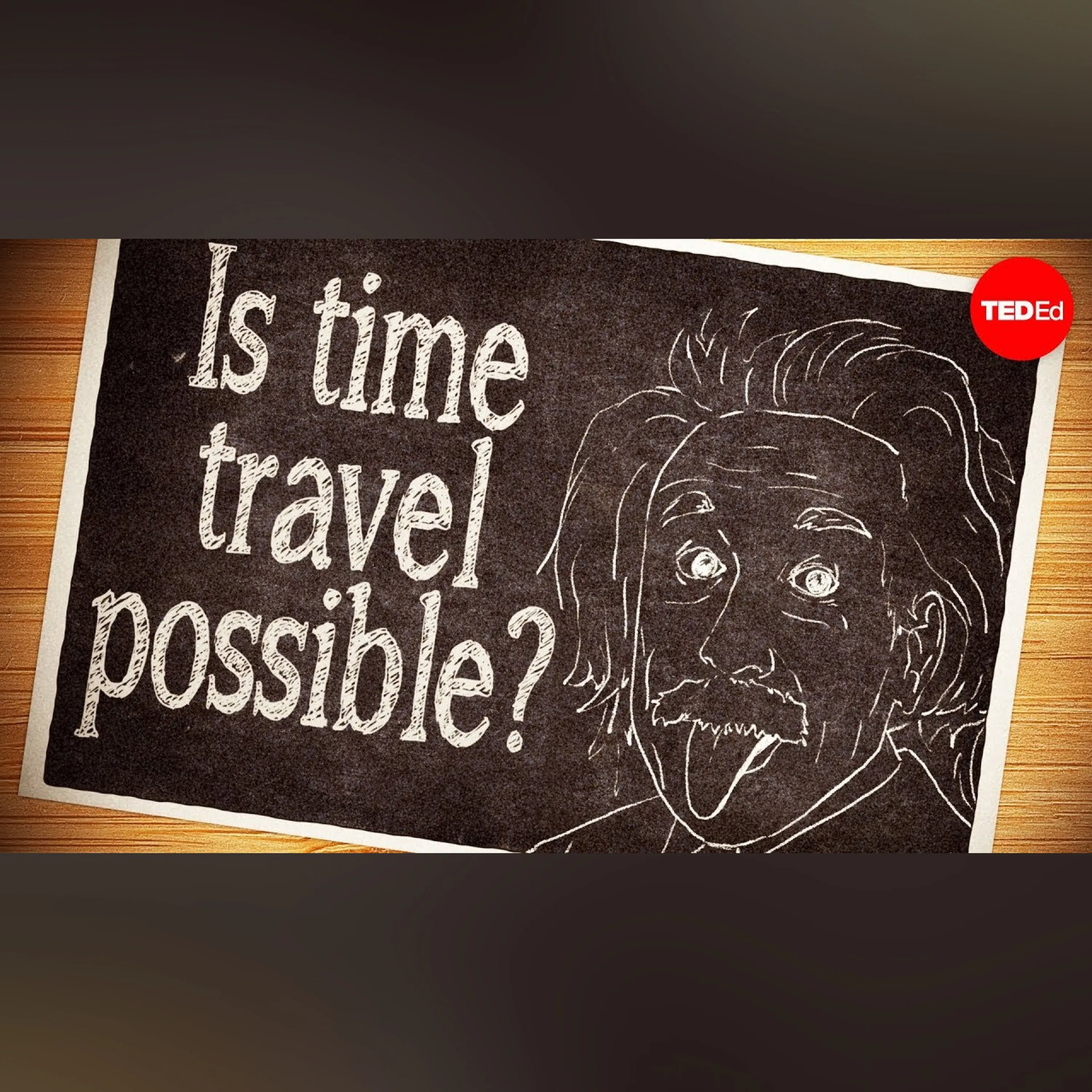
    Is time travel possible? - Colin Stuart

    View full lesson: http://ed.ted.com/lessons/time-travel-and-einstein-s-special-relativity-colin-stuart Uploaded 21-10-13 Time travel is a staple of science fiction stories, but is it actually possible? It turns out nature does allow a way of bending time, an exciting possibility suggested by Albert Einstein when he discovered special relativity over one hundred years ago. Colin Stuart imagines where (or, when) this fascinating phenomenon, time dilation, may one day take us. Lesson by Colin Stuart, animation by TED-Ed. Learn more about your ad choices. Visit megaphone.fm/adchoices Learn more about your ad choices. Visit megaphone.fm/adchoices

  • November 7 · 11 min

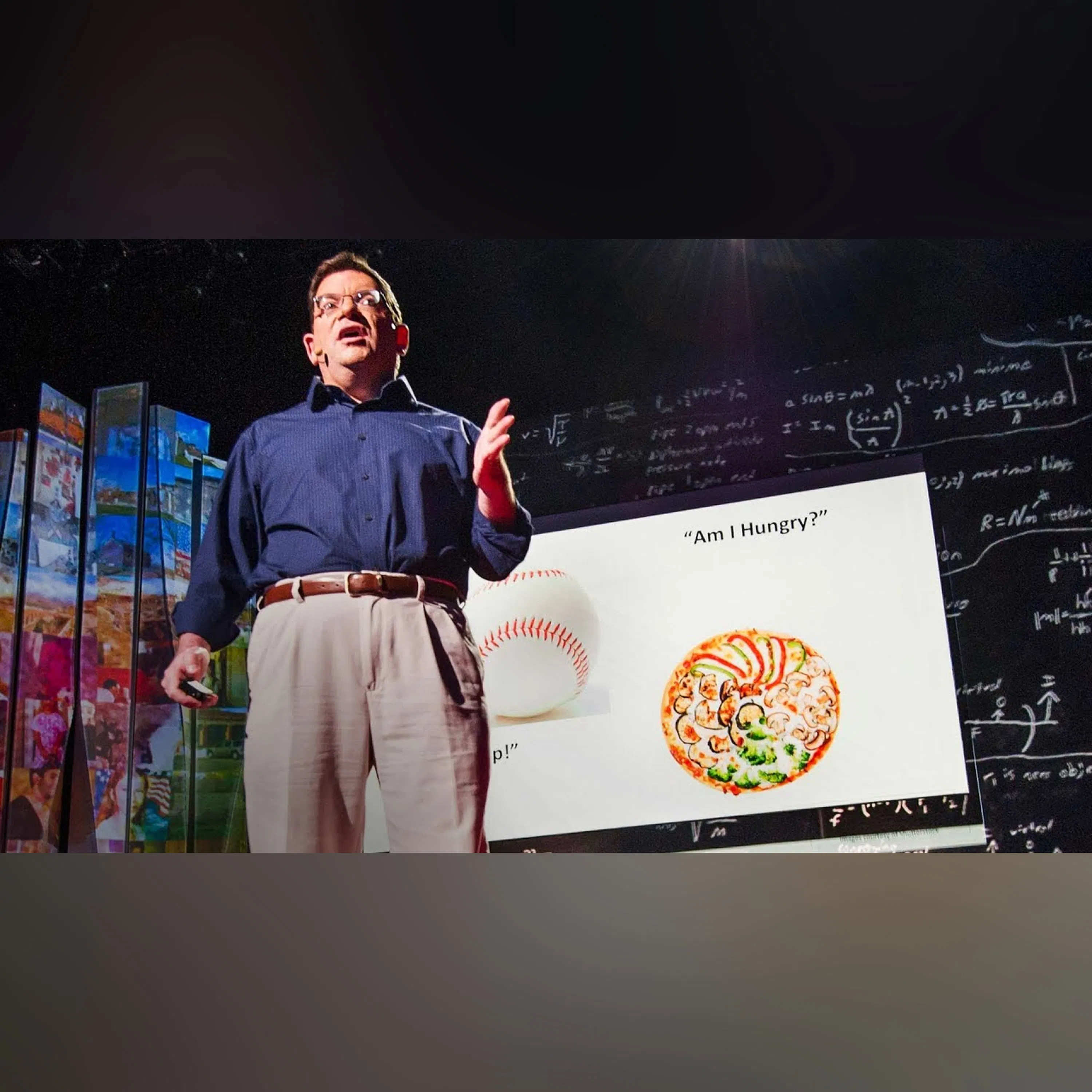
    Sex needs a new metaphor. Here's one ... - Al Vernacchio

    For some reason, says educator Al Vernacchio, the metaphors for talking about sex in the US all come from baseball -- scoring, getting to first base, etc. The problem is, this frames sex as a competition, with a winner and a loser. Instead, he suggests a new metaphor, one that's more about shared pleasure, discussion and agreement, fulfillment and enjoyment. Let's talk about ... pizza. Uploaded 16-08-13 Talk by Al Vernacchio. Learn more about your ad choices. Visit megaphone.fm/adchoices Learn more about your ad choices. Visit megaphone.fm/adchoices
Showing 241–260 of 1,909 episodes