Skip to content
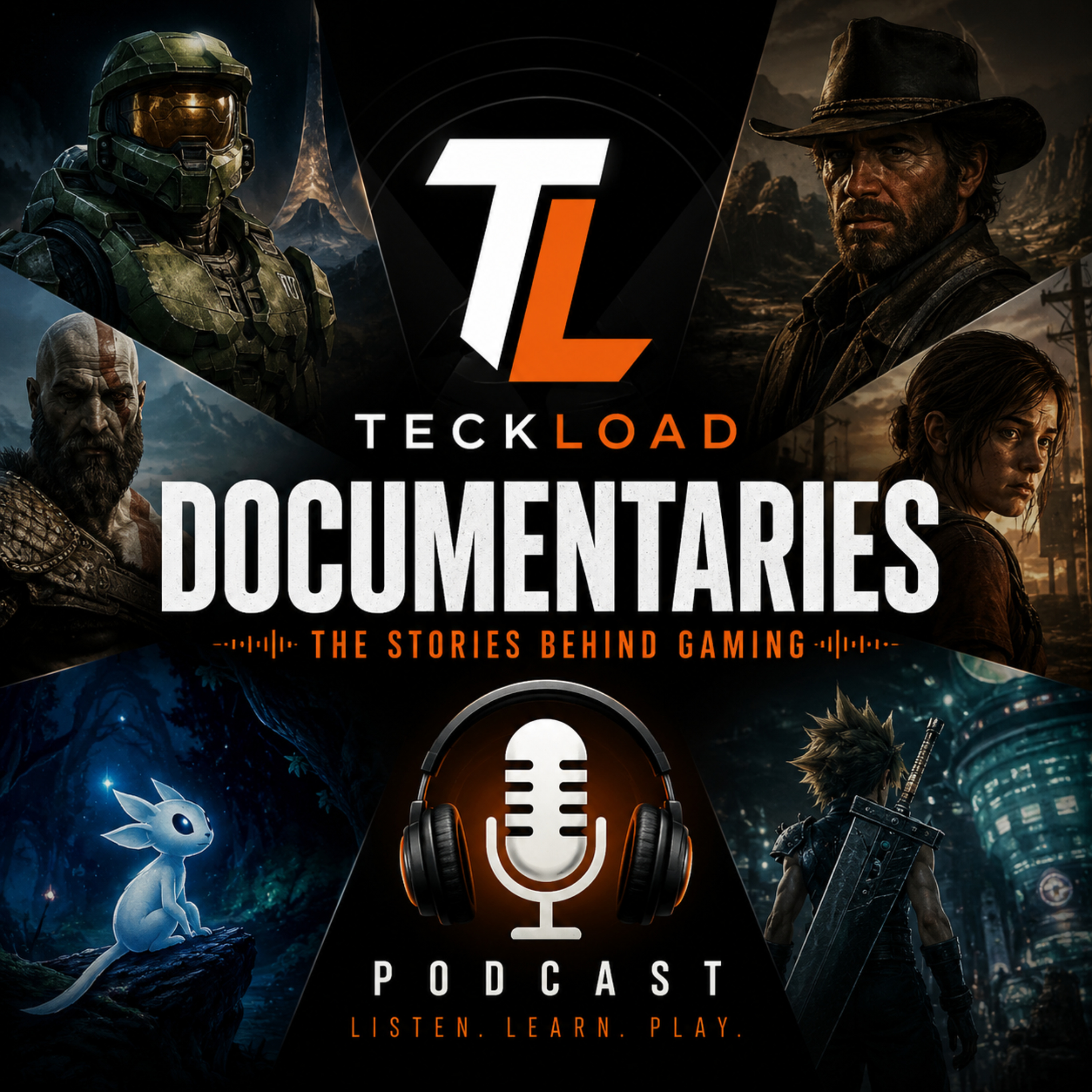
Artwork for TECKLOAD: The Stories Behind Gaming
LeisureGames

TECKLOAD: The Stories Behind Gaming

Teckload

This is a gaming documentary and video essay show exploring the games, studios, ideas, and moments that shaped the industry.

From the rise and fall of legendary franchises to the game design decisions that changed how we play, every episode looks beyond the screen to explore the stories behind gaming's biggest successes, failures, and unforgettable moments.

If you love gaming history, deep dives, and discovering why the games we remember truly mattered, you're in the right place.

Play
  • 11 episodes
  • Avg 8 min
  • English
  • S1 · E11
    October 27 · 6 min

    I Want the Splinter Cell Remake to Be Chaos Theory Again

    Looking for a stealth game where you play a spy who outsmarts everyone in the room? Splinter Cell: Chaos Theory (2005) is still the one to beat. This Splinter Cell retrospective explains why many fans call it one of the best stealth games ever made, and what the remake has to protect.Sam Fisher hasn't had a new game in 13 years, and Ubisoft's Splinter Cell remake still has no release date. If you're after games like Splinter Cell, with real stealth gameplay built on light, sound and smart level design, this is where it started.Timestamps:0:00 Why Chaos Theory is the stealth game to beat0:54 A Metal Gear Killer1:39 What Chaos Theory Changed3:04 The Fall of the Series4:04 The Remake5:39 What It Must Get RightWhich Splinter Cell is your favorite, and what should the remake keep? Tell me in the comments.New gaming documentary every week. Subscribe so you don't miss the next one.#SplinterCell #StealthGames #GamingDocumentary

  • S1 · E10
    October 13 · 4 min

    Phantom Blade Zero: How a Chinese Studio Built a AAA Action RPG

    Phantom Blade Zero launches October 29, 2026 on PS5 and PC. How did a Chinese studio that mostly made phone games build a AAA action RPG, with Donnie Yen on the team and its own dedicated State of Play? This Phantom Blade Zero documentary follows S-Game from its indie roots with Rainblood, through the Phantom Blade mobile games, to the 2023 reveal, the kungfupunk combat, and the 50-day delay. Timestamps: 0:00 Intro 0:25 From Rainblood to Phantom Blade 1:20 The Trailer Nobody Believed 2:05 Kungfupunk: Soul, Combat and Donnie Yen 3:25 The 50-Day Delay 4:20 What's at Stake Do you think Phantom Blade Zero lives up to the hype? Tell me in the comments. New gaming documentary every week. Subscribe so you don't miss the next one. Channel: https://www.youtube.com/channel/UCAWuesANGqKW3X3Ru6F5hHw #PhantomBladeZero #DonnieYen #ActionRPG

  • S1 · E9
    October 7 · 4 min

    Love Is a Long Road: Did Tom Petty Just Spoil GTA 6?

    Rockstar hid a message inside the first GTA 6 trailer — and it's not in the gameplay. It's in the song.When Grand Theft Auto VI's first trailer dropped, one needle-drop stood out immediately: Tom Petty's 1989 deep cut "Love Is a Long Road." It felt like the perfect Vice City mood-setter. But read what the song is actually about, then compare it to what Rockstar has confirmed about Jason and Lucia's relationship — and the choice stops looking random.In this video, we break down:→ What "Love Is a Long Road" is actually about (it's not a simple love song)→ What Rockstar has officially confirmed about Jason and Lucia→ The one detail connecting the song to GTA 6's reported relationship system→ Whether this is a real hidden clue, or just a great needle-dropTo be clear: none of this is confirmed by Rockstar. But once you notice the connections, it's hard to look at the trailer the same way — especially with GTA 6 launching November 19th.00:00 Intro00:45 Chapter I - WHAT WE ACTUALLY KNOW01:51 Chapter II - THE SONG NOBODY ACTUALLY LISTENED TO02:35 Chapter III - THE DETAIL03:38 Chapter IV - WHAT THIS ACTUALLY MEANS🎮 TECKLOAD — gaming documentaries and video essays on the stories, design choices, and ideas that shaped the industry. New video every week.Subscribe for more GTA 6 breakdowns before launch day.#GTA6 #GTAVI #TomPetty#RockstarGames #LoveIsALongRoad #GTA6Theory #JasonAndLucia #Gaming #GamingDocumentary

  • S1 · E8
    September 29 · 5 min

    The Psychology of Live Service Games (And Why You Don't Own Them)

    Live service games are built to bring you back, and the servers can disappear. This documentary looks at the psychology of live service games, digital ownership, game preservation, and the Stop Killing Games movement. Games used to be products. Now many of them are platforms. From battle passes to limited-time shops to games that vanish when the servers shut down, here's how the model changed and what it means for the games we play. What's the game that made you realize this isn't just about playing anymore? Tell me in the comments. New gaming documentary every week. Subscribe so you don't miss the next one. #gaming #liveservicegames #gamingdocumentary

  • S1 · E7
    September 22 · 11 min

    The Evolution of Fable — From Beautiful Lies to a New Beginning

    Welcome back to Albion.The Evolution of Fable — From Beautiful Lies to a New Beginning is the ultimate deep dive into one of Xbox’s most iconic and beloved RPG franchises. We’re tracking the entire history of the series, from the revolutionary (and famously over-promised) visions of Lionhead Studios to the highly anticipated modern reboot by Playground Games. Whether you’re a veteran Hero who remembers acorn trees growing in real-time, or a newcomer waiting to step through the Heroes' Guild for the first time, join us as we explore the lore, the humor, the morality systems, and the incredible legacy of Fable. For every choice, a consequence.

  • S1 · E6
    September 17 · 7 min

    When Games Were Actually Yours

    There was a time when buying a game meant it was yours. No battle passes. No constant updates. No digital storefronts deciding what you could access. You bought the game, put the disc in, and that was it. But gaming has changed. This episode looks at how we went from owning games to licensing them, and how digital distribution, live services, subscriptions, and online requirements quietly changed what it means to actually own a game. So… when did games stop being yours?

  • S1 · E5
    September 14 · 5 min

    The Trick That Made Uncharted Feel Like a Movie

    What made Uncharted feel so much more like a movie than most other games? It wasn’t just the explosions, huge set pieces, or Nathan Drake’s constant escapes. Naughty Dog used a clever combination of camera work, pacing, animation, level design, and player control to blur the line between playing a game and watching an action movie. In this documentary, we explore the trick that made Uncharted feel cinematic — and how Naughty Dog turned scripted moments into something that still felt like you were in control. From Uncharted 1 to Uncharted 4, this is the story of how one of gaming’s most cinematic franchises mastered the art of making you feel like the star of your own blockbuster. 🎧 Watch/listen to the full documentary on Teckload.

  • S1 · E4
    September 8 · 19 min

    Was Halo the Only Reason Xbox Survived?

    In the early days of console gaming, Microsoft’s Xbox was struggling to find its place in the market—until Halo: Combat Evolved changed everything. This iconic first-person shooter from Bungie introduced Master Chief and helped turn Xbox from a risky experiment into a major player in the gaming industry. In this episode, we explore whether Halo was truly the only reason Xbox survived. We trace Xbox’s history from its humble beginnings to its current status, looking at how Halo 2 and Halo 3 helped establish Xbox Live as a cornerstone of modern online gaming. We also examine Microsoft’s acquisition of Bungie, the creation of Halo Studios, and how Halo reshaped game design, console shooters, and Microsoft’s entire approach to gaming. From the early days of PC gaming to today’s console landscape—and even the role of engines like Unreal Engine 5 in modern development—this is the story of how one franchise helped change Microsoft and the wider gaming industry forever. In this episode: • The game Apple thought it had: Halo’s origins before Xbox • Microsoft’s biggest gamble: launching a console as a software company • How Halo reinvented console first-person shooters • Halo 2 and the birth of modern online console gaming • Halo 3 as a cultural event, not just a game • When Bungie walked away—and what it meant for Halo • How Halo changed Microsoft’s strategy and identity • The legacy Halo left on gaming as a whole Chapters: 00:00 Intro 00:34 Chapter 1 – The Game Apple Thought It Had 02:29 Chapter 2 – Microsoft’s Biggest Gamble 04:22 Chapter 3 – Halo Reinvented Console Shooters 08:08 Chapter 4 – Halo 2 and the Birth of Modern Online Gaming 10:51 Chapter 5 – Halo 3 Became More Than a Game 12:44 Chapter 6 – When Bungie Walked Away 14:42 Chapter 7 – Halo Changed Microsoft Forever 17:40 Chapter 8 – The Legacy That Changed Gaming Question for listeners: Do you think Xbox could have survived without Halo, or was the franchise truly the make-or-break moment for Microsoft’s console ambitions? Subscribe: @teckload — weekly gaming documentaries about the stories, ideas, and creative decisions behind the games we remember.

  • S1 · E3
    September 8 · 6 min

    How Rockstar Built the Most Trusted Name in Gaming

    Rockstar Games has spent decades turning each new release into a cultural event. From the chaotic streets of Grand Theft Auto to the emotional frontier of Red Dead Redemption, the studio behind GTA and RDR is often seen as the benchmark for open-world game design.[spotify +1] In this episode, we explore why Rockstar rarely fails: their obsessive attention to detail, unforgettable characters, living open worlds, fearless storytelling, and willingness to take years to build something truly ambitious. We also ask whether Rockstar’s success is only about quality—or if there’s a deeper formula behind the anticipation, secrecy, controversy, and long-term impact of every launch.[spotify +1] From GTA III and GTA V to Red Dead Redemption 2 and the future of GTA VI, this is the story of how Rockstar Games became one of the most trusted—and most debated—names in gaming.[spotify +1] In this episode: • Why Rockstar never followed the industry’s usual rules • The small details players didn’t even notice (but still felt) • How taking time became part of the brand’s power • Why Rockstar doesn’t chase trends—and why that works • How trust became Rockstar’s greatest asset Chapters: 00:00 Intro 00:48 Chapter I – Rockstar Never Followed The Rules 01:33 Chapter II – Details People Didn’t Even Notice 02:26 Chapter III – They Take Their Time 03:30 Chapter IV – They Don’t Follow Trends 04:07 Chapter V – Trust Is Their Greatest Success Question for listeners: What makes Rockstar games stand out to you—the world, the characters, the story, or the freedom?[spotify +1] Subscribe: @teckload — weekly gaming documentaries about the stories, ideas, and creative decisions behind the games we remember.

  • S1 · E2
    September 8 · 5 min

    Inside Zelda: Ocarina of Time — The 3D Game That Changed Everything

    he Legend of Zelda: Ocarina of Time didn’t just define 3D Zelda—it helped define modern 3D game design. In this episode, we break down how Nintendo’s N64 classic reshaped combat, exploration, camera systems, and world-building in ways still visible in today’s action-adventure games.[spotify +1] We explore why Ocarina of Time has remained a benchmark for nearly 30 years: from the lock-on “Z-targeting” system that solved 3D combat, to a world designed around curiosity, and a structure that literally grows with Link from child to adult. Whether you’re a lifelong Zelda fan or new to the series, this episode shows why Ocarina’s DNA is everywhere in modern gaming.[spotify +1] In this episode: • Why 3D gaming was still a mess before Ocarina • The lock-on mechanic that changed action games forever • How curiosity-driven level design set a new standard • The “child vs. adult” structure and its impact on pacing • Why Ocarina of Time still matters for game design today Chapters: 00:00 Introduction 00:30 3D Gaming Was Still a Mess 01:50 The Lock-On That Changed Everything 03:00 The World That Made You Curious 03:20 The Game Grows Up With You 04:10 Why It Never Left 04:30 Why It Still Matters Question for listeners: What do you think is the greatest Zelda game ever made? Is Ocarina of Time still the king, or has another title taken its place?

  • S1 · E1
    September 8 · 12 min

    Elden Ring vs Modern Game Design: How It Changed Open Worlds

    Elden Ring didn’t just become one of the biggest games of its generation — it changed the conversation around modern game design. At a time when many open-world games were filled with quest markers, checklists, tutorials, and constant guidance, FromSoftware took a completely different approach. Elden Ring trusted players to explore, experiment, fail, and discover its world for themselves. From its challenging combat and mysterious world design to its freedom, exploration, and refusal to constantly hold the player's hand, Elden Ring challenged many of the ideas that had come to define modern open-world gaming. So why did Elden Ring have such a huge impact on the gaming industry? And how did it change the way players and developers think about open worlds, difficulty, freedom, and discovery? In this episode, we explore why Elden Ring's design philosophy resonated with millions of players and why its success may have changed the future of open-world games. If you enjoyed this episode, consider following the show for more gaming documentaries and essays exploring the history, design, impact, and stories behind the games that shaped the industry. And let me know your thoughts: Do you think Elden Ring changed the future of open-world gaming? Thanks for listening. Chapters 00:00 – Introduction 01:11 – Difficulty Was No Longer Just Punishment 03:20 – Freedom Became Part of the Combat System 05:01 – It Challenged the Industry's Idea of Accessibility 07:17 – It Made "Figuring It Out" Feel Meaningful Again 09:11 – Its Success Gave the Philosophy Real Weight 10:56 – Ending

Showing 1–11 of 11 episodes