Skip to content
Artwork for Talk Cocktail

Talk Cocktail

Jeff Schechtman

Jeff Schechtman talks with authors, journalists, newsmakers and opinion shapers, and sheds light on the issues of the day, from local stories to national and international headlines and ideas.

jeffschechtman.substack.com
Play
  • 24 episodes
  • weekly
  • Avg 36 min
  • English
Counted on this page — what you have heard stays on this device, so it is not something the list can be paged by.
  • Wednesday · 32 min

    Our Cosmic Quest Ends at the Server Farm

    For seventy-five years the truth about UFOs has been just about to come out, and never quite arrives. Adam Kirsch, senior editor at The Atlantic, tells me that the real question was never whether aliens are real, but why we so badly need the answer to be yes. In his new book, We Want to Believe, he reads UFO belief as a kind of faith, disclosure as a Messiah forever late, absence of evidence folded in as proof of a cover-up. Underneath sits a harder possibility: that we may be the only minds in the universe, and meaning rests on us alone. Get full access to Talk Cocktail Podcast at jeffschechtman.substack.com/subscribe

  • September 17 · 57 min

    A Timeline of Western Decline

    Everyone wants to name the moment it all went wrong. Most people name 2016, and one man, and an election they’re sure the next election can undo. My guest on a recentWhoWhatWhy podcast, Bianka Banova, says they’re off by decades. The disorder people feel now — the cost of living that won’t fall, the wars that won’t stop, the ground shifting underfoot — isn’t the beginning of anything. It’s the moment the water got hot enough to feel. She argues the world came apart slowly, one comfortable choice at a time, beginning with decisions made decades ago. Get full access to Talk Cocktail Podcast at jeffschechtman.substack.com/subscribe

  • September 9 · 32 min

    The inversion of AI’s discontent: Looking at the Myth of the Bad Data Center

    Emily Hoeven expected the towns hosting America’s new data centers to be the angriest. She found the opposite. In our recent California Sun podcast, and in a recent column for the San Francisco Chronicle — titled “‘We were a dying little town’: How Silicon Valley data centers are reshaping rural America” — she maps a strange disconnect: the dread over data centers looms large in the Bay Area, cradle of the artificial intelligence boom, while places bearing the weight, like Ellendale, North Dakota, have made their peace. Get full access to Talk Cocktail Podcast at jeffschechtman.substack.com/subscribe
  • September 2 · 29 min

    How Silicon Valley Buys Its Future: The Stanford Within Stanford

    Theo Baker arrived at Stanford University at the age of 17 wanting in. What he found, as he recounts in our recent California Sun Podcast and in his new book “How to Rule the World: An Education in Power at Stanford University,” was a machine: venture capitalists scouting freshmen, “pre-idea funding,” yacht parties, and a secret elite — all riding on a culture of cutting corners that influenced everyone from his classmates to the university president. Get full access to Talk Cocktail Podcast at jeffschechtman.substack.com/subscribe

  • August 26 · 34 min

    The Cruelest Game

    Lose a pickup basketball game and you shrug it off. Lose a tennis match, Matthew Futterman learned, and it feels like you got beaten up. As the US Open gets under way this week, Futterman, veteran sports journalist for The Athletic and author of The Cruelest Game, goes inside the sport’s real battleground — the head — where even the greatest lose nearly half the points they play, and the hardest thing any champion does is learn when to leave. Then there’s the money. At the top, fifty to a hundred million a year rides on winning, and every sponsor becomes one more voice in your head. Get full access to Talk Cocktail Podcast at jeffschechtman.substack.com/subscribe
  • August 20 · 32 min

    An Inversion of AI’s Discontent

    San Francisco Chronicle reporter Emily Hoeven expected the towns hosting America’s new data centers to be the angry. She found the opposite. In a recent column — titled “‘We were a dying little town’: How Silicon Valley data centers are reshaping rural America” — she maps a strange disconnect: the dread over data centers looms large in the Bay Area, cradle of the artificial intelligence boom, while places bearing the weight, like Ellendale, North Dakota, have made their peace. Get full access to Talk Cocktail Podcast at jeffschechtman.substack.com/subscribe

  • August 13 · 33 min

    The Age of AI Will Require Intuitive Leadership, Not More Data

    We're told the leader with the most data wins. Ronald Kraft, PhD, argues in his new book “The 7 Laws of Intuitive Leadership,” the opposite. As AI makes information infinite and answers instant, he says the real edge is disciplined intuition — a trainable "third system" of judgment no machine can copy. Can today's leaders relearn to trust the instinct the data keeps drowning out? Get full access to Talk Cocktail Podcast at jeffschechtman.substack.com/subscribe
  • August 8 · 35 min

    Does Fascism Have American Roots?

    What if the roots of fascism weren’t European at all, but embedded in America’s founding struggles over democracy and race? For more than a decade, we’ve been flooded with books warning about fascism — how to recognize it, how it spreads, how democracies lose their way. Almost all begin with the same assumption: Fascism was a European creation that eventually washed up on American shores. Joseph Kelly says we’ve got it backwards. Kelly, a professor at the College of Charleston and author of The Biggest Lie: The Prehistory of American Fascism 1818-1915, joins me in this WhoWhatWhy Podcast to explains why fascism is less an ideology than a corruption of democracy itself. Get full access to Talk Cocktail Podcast at jeffschechtman.substack.com/subscribe

  • July 30 · 35 min

    Can Code Have a Conscience?

    The AI debate is endless. One writer decided to measure it by asking not how smart the machines are, but how humane they are. Talking about artificial intelligence has become its own industry. AI will save us or doom us. It will cure cancer or end work. Panels, manifestos, congressional hearings, op-eds without end — and through all of it, the machines keep getting better at talking back, and no one can tell you whether the thing you confided in last night was good for you or not. My guest on this recent WhoWhatWhy podcast, Erika Anderson, has stopped arguing and started measuring. Get full access to Talk Cocktail Podcast at jeffschechtman.substack.com/subscribe
  • July 25 · 37 min

    Design as an Act of Inclusion

    The digital world is being rebuilt around AI, and for the first time in a generation the concrete of that world is still wet. Lainey Feingold thinks that's the opportunity! Technology can now read any text aloud, describe any image, caption any voice in real time — the most powerful equalizer disabled people have ever had, if it's designed in rather than bolted on. Feingold, a disability rights lawyer who won talking ATMs and accessible banking without ever filing a lawsuit, has gathered thirty-nine authors from ten countries into Digital Accessibility Ethics. Their case: build for the person at the edge and everyone gets a better product. Who do we decide to build for? Get full access to Talk Cocktail Podcast at jeffschechtman.substack.com/subscribe
  • July 22 · 40 min

    The Real California That Gavin Newsom Will Have to Defend

    The author and journalist Mark Arax joins me on the California Sun podcast to discuss his recent sweeping essay in the Guardian, published under the headline “California: Land of Plunder and Hypocrisy.” From the Gold Rush to the artificial intelligence boom, Arax explores how California’s myths, ambitions, and repeated reinventions have often concealed a far more complicated history of extraction, contradiction, and self-deception. Get full access to Talk Cocktail Podcast at jeffschechtman.substack.com/subscribe

  • July 18 · 44 min

    As America Becomes a Gerontocracy, Its Future Keeps Getting Delayed

    We’re living through the greatest transfer of wealth in history. Trillions of dollars are slowly passing from one generation to the next. Yet for all the money that’s changing hands, something far more important isn’t: Power. Our guest on this WhoWhatWhy podcast, Yale historian Samuel Moyn, believes America has quietly become something few of us have recognized: an aging society where the balance between generations has fundamentally shifted. The cohort of people making the biggest political decisions, controlling the most valuable assets, dominating elections, and shaping the country’s future are getting older, not younger. We’ve spent years arguing over whether this politician or that president is too old. But what if those debates have distracted us from a much larger story? Get full access to Talk Cocktail Podcast at jeffschechtman.substack.com/subscribe
  • July 16 · 40 min

    Progress Should Be Our Most Important Product

    The future is arriving faster than ever. So why are we more anxious than excited? We are living through one of the most extraordinary periods of technological advancement in modern history. Artificial intelligence is reshaping knowledge work. Biotechnology is opening doors to better health and longevity once thought impossible. SpaceX has redefined spaceflight, and a new generation of innovators is tackling problems that seemed beyond our reach just a decade ago. So why does the future feel so frightening? In this WhoWhatWhy podcast, economic policy expert and futurist James Pethokoukis argues that America may be suffering from something more profound than political polarization or economic anxiety. We may be losing confidence in progress itself. This is ultimately a conversation about whether America still believes in tomorrow — and whether progress itself remains our most important product. Get full access to Talk Cocktail Podcast at jeffschechtman.substack.com/subscribe
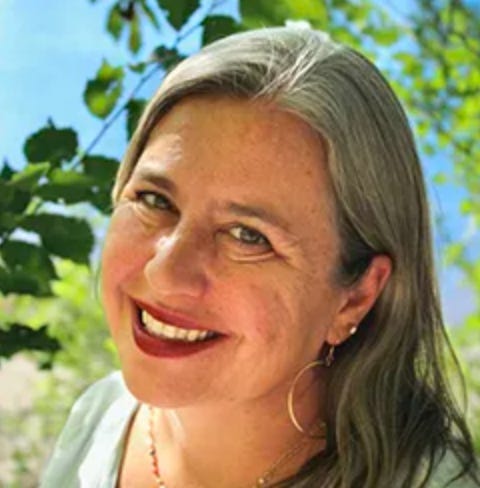
  • July 11 · 39 min

    Before the Trillions, There Was Once Joy in Silicon Valley

    A veteran of three tech eras on how the innocence was lost — and whether AI actually might win it back, through what he calls “enlightened AI.” Recently, on WhoWhatWhy podcast, Matthew Stepka — early internet-café founder, McKinsey alum, nine-year Google veteran who shepherded many of the company’s mission projects including the first self-driving cars, and now an investor in what he calls “enlightened AI” — walks us back through the Valley’s reinventions and asks what each one cost. Before the trillion-dollar IPOs, before the data centers and the doom, before “Silicon Valley” became shorthand for unaccountable power and unimaginable wealth, there was a teenager with an Atari — a gift from his NASA-engineer father — certain he could build any world he could imagine. Get full access to Talk Cocktail Podcast at jeffschechtman.substack.com/subscribe

  • July 8 · 16 min

    The Water Knows Something

    Water is the oldest promise we have. Baptism, ablution, the plunge that separates who you were from who you're about to be. Every summer we go back to it — lakes, rivers, the cold shock of an ocean in June — as if some part of us still believes the water knows something. Kate Washington, on a recent California Sun Podcast, talks to me about the fifty immersions she did before her fiftieth birthday, after caregiving and motherhood and a dissolving marriage had emptied her out. The author of "Midstream: A Life Remade in 50 Swims" on depletion, endurance, and what it means to surface changed. Get full access to Talk Cocktail Podcast at jeffschechtman.substack.com/subscribe
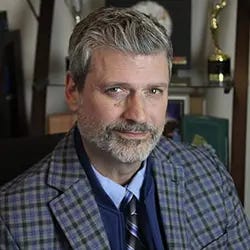
  • June 25 · 35 min

    AI May Be the Tool That Brings Government Back to Life?

    What if the real threat to democracy isn’t artificial intelligence, but a government that never learns to use it? In this WhoWhatWhy podcast, Beth Simone Noveck makes the unexpectedly optimistic case that AI is not just one more thing for government to regulate. It may be the tool that finally reinvents how government works, and more to the point, how it feels to deal with it. For 50 years we have been told government is the problem: slow, bloated, hopeless, a relic that could never keep pace with the modern world. Then came DOGE, swinging a chainsaw in the name of efficiency and cutting out much that worked along with much that didn’t, as if the whole apparatus were beyond saving. But what if we have been asking the wrong question all along? Noveck’s question is why institutions built for an age when information was scarce still cannot listen, learn, and respond in a world drowning in it. Get full access to Talk Cocktail Podcast at jeffschechtman.substack.com/subscribe

  • June 20 · 47 min

    Brian Wilson, the Beach Boys, And The Music That Called Us West

    One year after the death of the legendary Beach Boys leader Brian Wilson, author David Beard joins me on the California Sun podcast to talk about his new book, “All Summer Long: Conversations with The Beach Boys from Surfin’ to SMiLE.” Beard discusses how the Beach Boys didn’t just make iconic music but defined Southern California itself — surf, sun, cars, the postcard invitation west — while Wilson quietly pushed pop into uncharted territory for the whole country. Get full access to Talk Cocktail Podcast at jeffschechtman.substack.com/subscribe

  • June 13 · 39 min

    New York, the 1980s, and the World It Created

    New York in the 1980s was a city in convulsion — deindustrializing, gentrifying, financializing — and the young urban professionals who flooded its trading floors and law firms weren't just a cultural moment. They were the architects of the America we live in now. Historian Dylan Gottlieb explains how the yuppie takeover of New York wrote the blueprint for today's inequality — and why we're still living inside it. Get full access to Talk Cocktail Podcast at jeffschechtman.substack.com/subscribe
  • June 11 · 34 min

    Russia’s Descent Into Madness: Slowly, Then All at Once

    Putin didn’t seize a democracy — he hollowed one out. Twenty-five years inside Russia’s slow spiral, and what it tells us about our own moment. My guest on this recent WhoWhatWhy podcast, Marc Bennetts, arrived in Moscow in January1997, before most of the world had ever heard of Vladimir Putin. He stayed for 25 years. He watched Putin rise, the economy boom and bust, and freedoms quietly disappear. Russia has fallen off the front page. The global conversation has moved on — to China, to trade wars, to the Middle East, to whatever is consuming the news cycle this week. But Russia hasn’t gone anywhere. It’s still there, still fighting a war it started, still governed by a man who controls the world’s largest nuclear arsenal and who, a former Kremlin adviser says, appears to be reacting to pictures in his own head. Get full access to Talk Cocktail Podcast at jeffschechtman.substack.com/subscribe

  • June 6 · 35 min

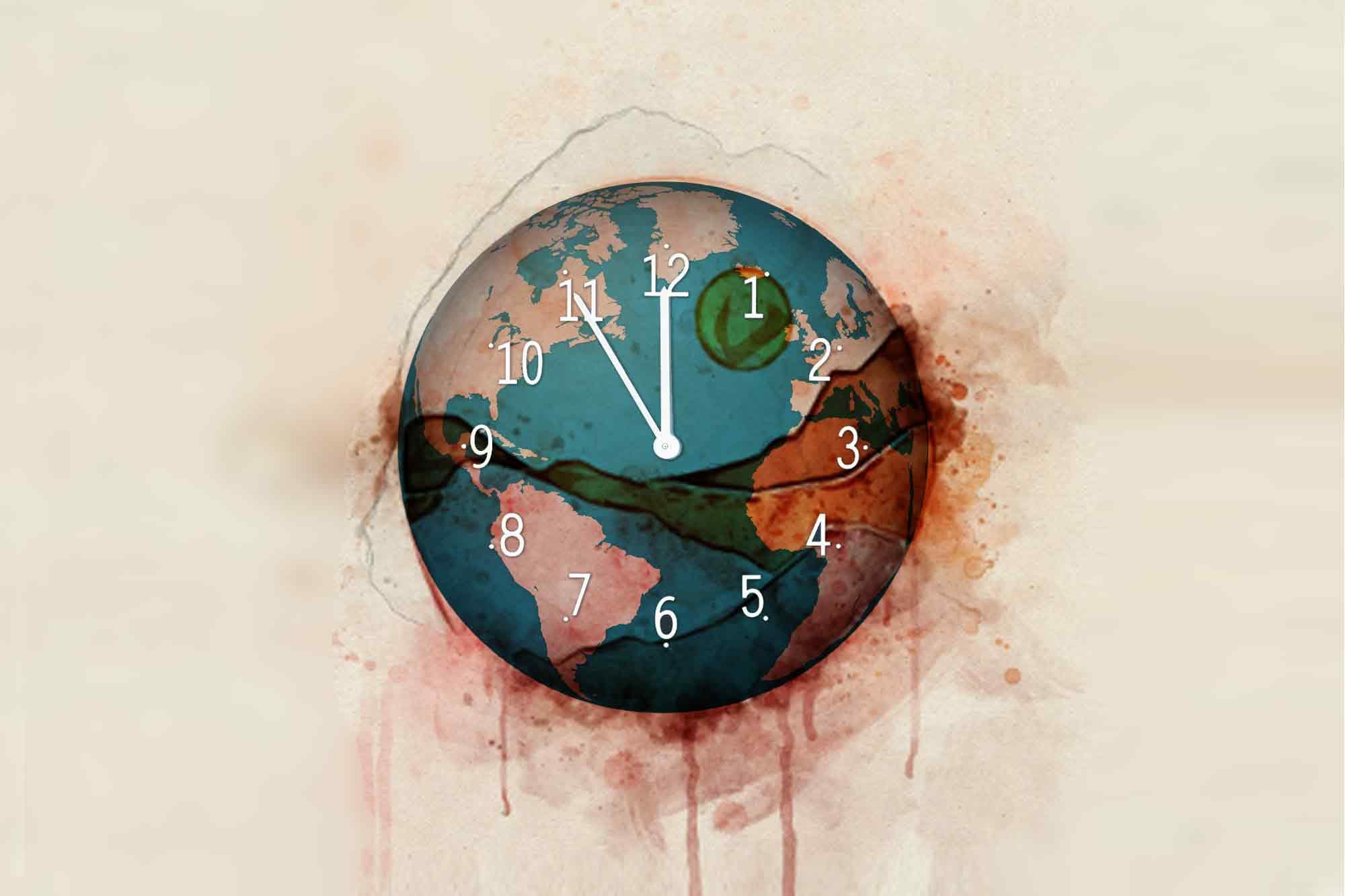
    No Rules, No Order: The World on a Knife’s Edge

    From Beijing to Washington to Cuba, the old world order has collapsed. Is this the most dangerous moment since 1945? One man says yes, and the clock is ticking. My guest on this recent WhoWhatWhy podcast is Peter Apps. As Reuters’s global defense commentator, he has spent two decades in the rooms and on the roads where history is actually made. His new book, The Next World War, puts the odds of major war within the next 10 years at 1 in 3. He argues that the world is more dangerous right now than at any point since the end of World War Two. More dangerous, in fact, than the Cold War — because at least then we knew the rules. Today there are no rules. The old order is gone, and what has replaced it is something most of us can barely bring ourselves to look at directly: a world of permanent polycrisis, where Ukraine grinds on against Russia, where Iran has absorbed an American and Israeli strike and survived, where China watches and waits, and where a new generation of weapons — drones, AI, hybrid attacks on the invisible infrastructure of modern life — has rewritten the rules of conflict faster than the great powers can absorb them. Get full access to Talk Cocktail Podcast at jeffschechtman.substack.com/subscribe

Showing 1–20 of 24 episodes