
S1 · E111
Monday · 46 min
Jonathan Clements on the fall of the Ming (pt 1 of 2) - death by a thousand haircuts
- Transcript
- Chapters

Russell Hogg
I talk to the world's best historians and let them tell the stories. And the stories are wonderful! (And occasionally I change the subject and talk about films, philosophy or whatever!).

Jonathan Clements is back to talk about Coxinga and the Fall of the Ming Dynasty, a tale so convoluted that its hero only gets born at the end of episode one! What happened in 17th century China for the Manchu invaders to just roll on in and take over? Includes thoughts on the benefits of spattering yourself in mud and risking tetanus, Manchu purges likened to "playing whack-a-mole with human beings", why Chinese people are scared of Slough, and the rebellious nature of haircuts.

Armand D'Angour (Professor of Classics at Oxford University and Fellow of Jesus College) gives his take on Chrisopher Nolan's Odyssey and (more to the point) talks about the poem and the poet. Along the way we talk about Emily Wilson's blistering review (which is where the title of this episode comes from). And Armand gives some readings from the poem including this gem of a translation by Alexander Pope (lightly reworked by Armand): Abandoned in neglect poor Argos lay, unhoused, uncared for, on the public way; and where the heaps of rank manure were spread a-swarm with fleas, he made his filthy bed. As they conversing to the city drew, the faithful dog his ancient master knew: and recognising well his voice and tread, pricked up his ears and raised his heavy head. Seeing Odysseus, him he strove to meet, and tried in vain to crawl and lick his feet; but strength alone he had to wag his tail to greet his master, though to no avail. Deep pity touched Odysseus to his soul, and down his cheek a tear unbidden stole; but unperceived he turned his head, and dried the falling drop, while silently he cried. "What sorry beast in this abandoned state,” he asks, “lies helpless at Odysseus’ gate? His bulk and beauty speak no vulgar praise. I warrant such a hound saw better days.” To him the older man his head inclined and said: “He served one of a noble kind – now long since perished on a distant shore – who will, alas, behold him nevermore. You should have seen dear Argos bold and young, swift as a stag, and as a lion strong! Now time has sapped him, with his master lost and many years on stormy oceans tossed." So said Eumaeus, and strode on ahead; and faithful Argos dropped his tired head. Though twenty long and dismal years had passed, he’d lived to see his lord again at last. Now night descends upon his weary eyes: he wags his feeble tail for joy, and dies.

At the start of WW2 the U-Boat threat gave the British sleepless nights. But even during the Happy Time (of which there were two) when ships were being sunk at a terrific rate the German effort was too little, too late. And then the war in the Atlantic turned against them and their casualties soared and successes became rarer. Roger Moorhouse has written a terrific book discussing all this (and much more), 'Wolfpack: Inside Hitler's U-Boat War' where he looks the campaign from the German point of view, using diaries, letters and other records from the time. We got through a lot in this episode. Amongst the horrible waste of it all there were some grimly amusing moments, not least the sinking of a U-Boat thanks to a malfunctioning toilet. Very interesting to me was how the U-Boat men generally tried to fight an 'honourable' war. That was very different to what I had understood to be the case and certainly very different to how the war was conducted on other fronts. And above all the stink. The terrible, terrible U-Boat stink.

This one is about Gabriele D'Annunzio. Italian poet, born in 1863 . . . I can already sense your attention drifting. But hang in there! A more lurid description would be that he is the poet who seduced over a thousand women. It is still puzzling exactly what women saw in him. As one bewildered woman said: "I have just met D'Annunzio. Can this be the man the great Duse loved? He is small, he is bald, and his teeth are in three different colours." (The great Duse here being Eleonora Duse, the most famous actress of the age.) When war broke out in 1914 Italy very sensibly stayed out of it. But D'Annunzio loved the thought of Italy at war and the blood sacrifice it would involve. So he wrote article after article and eventually returned to Italy, where he gave speech after speech demanding war and encouraging cheering crowds to lynch the peace-lovers in government. He got his way and Italy joined the war in 1915. The war, of course, was a catastrophe. In fairness to D'Annunzio, he didn't just preach war, he participated. Despite being in his fifties he forced his way in (much to the concern of the government, who thought him more useful as a propagandist than as a corpse). As part of this he flew numerous bombing missions. And ever the poet, when they finally developed a plane strong enough to get him to Vienna he took the opportunity to drop pamphlets he had composed urging them to throw off the Austro-Hungarian imperial yoke and ending: "Today I drop words; next time I will drop bombs." One reason for his love of the war was his belief that Italy was incomplete. Unification had left outside it cities on the Dalmatian coast that many thought were basically Italian (their many non-Italian residents disagreed, of course). So when the Allies treated their Italy with contempt at the peace talks, D'Annunzio decided to act. With a few followers, swelled to thousands by deserting Italian troops, he marched into Fiume, which he ruled as a sort of dictator. The occupation was both comedic and tragic. But the really important thing was the style of the dictatorship. Almost every night D'Annunzio would appear on the balcony giving speeches in a style we'd now instantly recognise as fascist. Meanwhile the real fascists, Mussolini in particular, were watching and thinking ‘This is great, I could use this!’. My guest was Lucy Hughes-Hallett, and her biography of D'Annunzio, The Pike, won the Samuel Johnson Prize. And this episode is terrific!

Professor Donald Rayfield picks up Crimea’s story in spring 1942, when Germany turns south for the Black Sea and oil. Some Tartars can't imagine anyone worse than Stalin. Some can't imagine anyone worse than Hitler. Tragically, they are both right though in different ways. Donald explains the realities of the German occupation, from the early “orderly” phase to the arrival of SS units whose mission is extermination of the Jews. Astonishingly some Jews are spared as the ever 'scientific' Nazis rule they are not Jews at all. Then comes one of the great crimes of world history. Stalin decides to deport the entire Crimean Tatar nation to Central Asia. Donald tells the story of the cattle trains, the scale of death and the uncertain welcome for survivors in Uzbekistan. Crimea itself is stripped of Tatar presence through renamed towns and seized homes. We bring things up to date with the 1990s return and the brief cultural revival under Ukraine . But the post-2014 Russian annexation brings renewed repression. As Donald says 'History can always get worse'. It is a fascinating episode.
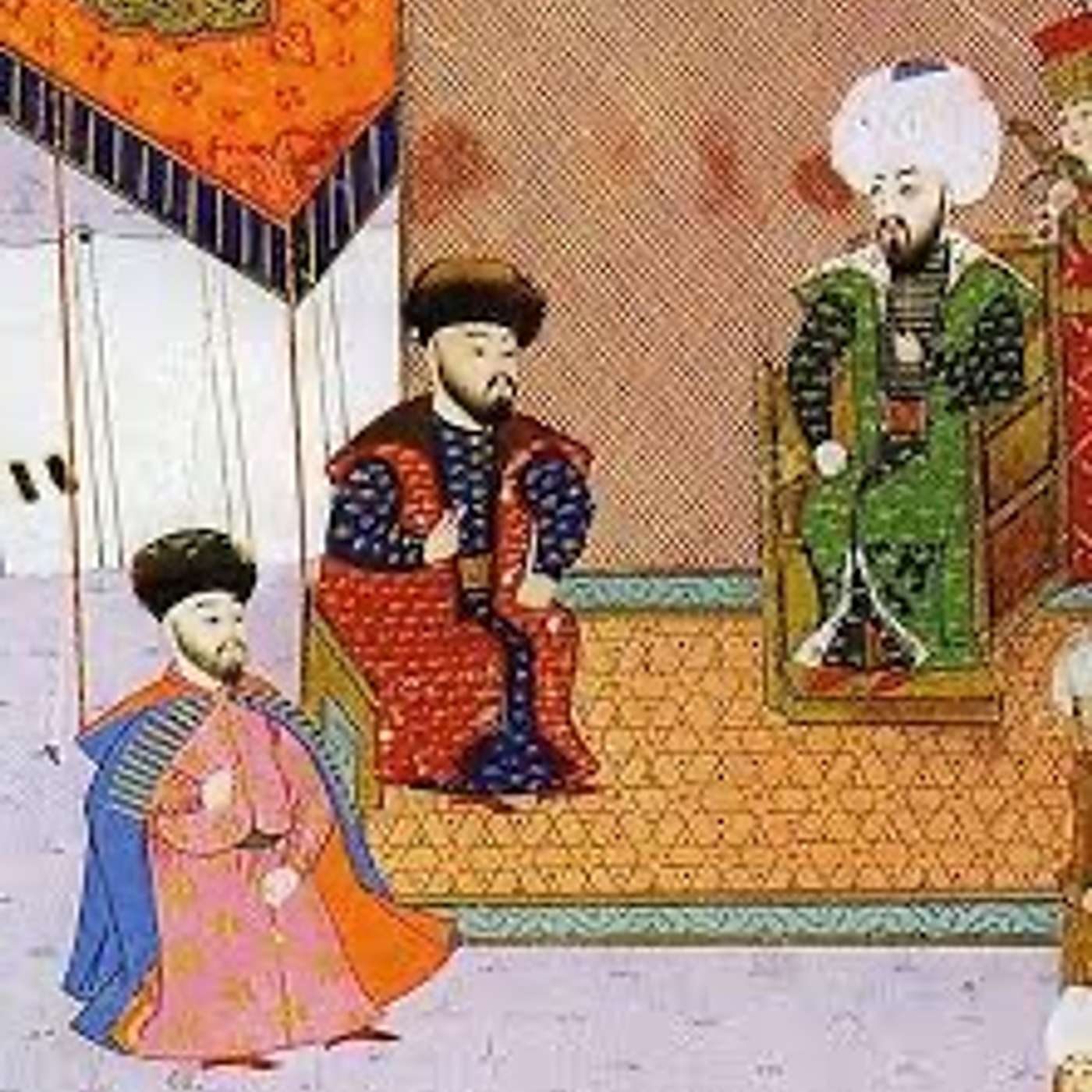
Donald Rayfield returns for the second of three episodes on Crimea — this time taking the long view, from the Mongol Golden Horde to Catherine the Great's annexation and the early Soviet period. At its height the Crimean Khanate was a sophisticated and surprisingly humane state. It was also, as Rayfield puts it, the self-appointed freeholder of the former Mongol empire — and it collected its rents in the form of money, livestock, and human captives. Eventually, the leaseholders rebelled. A story of revival after disaster, and disaster after revival, ending in the grim absorption of the peninsula into the Russian imperial project. Along the way we admire the fighting skills of the Tatars and learn about a mysterious shop in Venice which would sell you poisoned almonds!

The subject today comes out of the Crimean war (1853-1856). I talked to Professor Donald Rayfield, Emeritus Professor of Russian and Georgian history at Queen Mary University of London, about the war itself and in particular what happened to those taken prisoner. Surprisingly life could be pretty good!

Part 1 of the podcast told the sad story of how some shocking misjudgements on the part of Justinian saw him dragged to the Hippodrome where a man with a pair of pliers cut off his nose, cut out his tongue. But in a misjudgement every bit as big as Justinian’s instead of putting him in a sack and throwing him in the Bosphorus his successor exiles him to the Crimea. I mean everyone knows you can't be emperor unless you are bodily intact so there is no chance he is coming back is there? Is there? Well there is if Justinian has anything to do with it. Russell Crowe style he will have his revenge in this world or the next! Even if it does mean he has to marry a Turkic princess to get it. And if all that isn't enough the brilliant David Parnell explains Justinian's religious policies. All very sensible. Well apart from his plot to kidnap the pope perhaps. If you enjoy the episode don't forget to leave a review on iTunes!

Justinian II becomes emperor at sixteen. Even allowing for the hostility of our sources the reign is not all plain sailing. I'm joined by Professor David Parnell to work through the first half of one of Byzantium's most extraordinary reigns. Part one takes us from his accession to the moment the city loses patience and terminates the reign violently. David and I are left scratching our heads as to why this story has never had its own Netflix series. We started with the empire Justinian inherits, which is much smaller than the one his famous namesake Justinian I assembled. Two generations of Arab expansion and some energetic Slavic settlement have done their work. Constantinople and Anatolia are doing fine. Greece and the Balkans are a mess. The Arab caliphate is slightly distracted by civil wars but still very much a threat on the eastern frontier, having already put Constantinople itself under siege in the 670s. We talk about that siege, the role Greek fire played in saving the city, and why all this matters for understanding both what Justinian thinks he can achieve and his overconfidence. Then we get into the reign itself. Justinian is pious, bold and occasionally effective but capable of the most disastrous misjudgements. So it starts well and then starts to unravel!
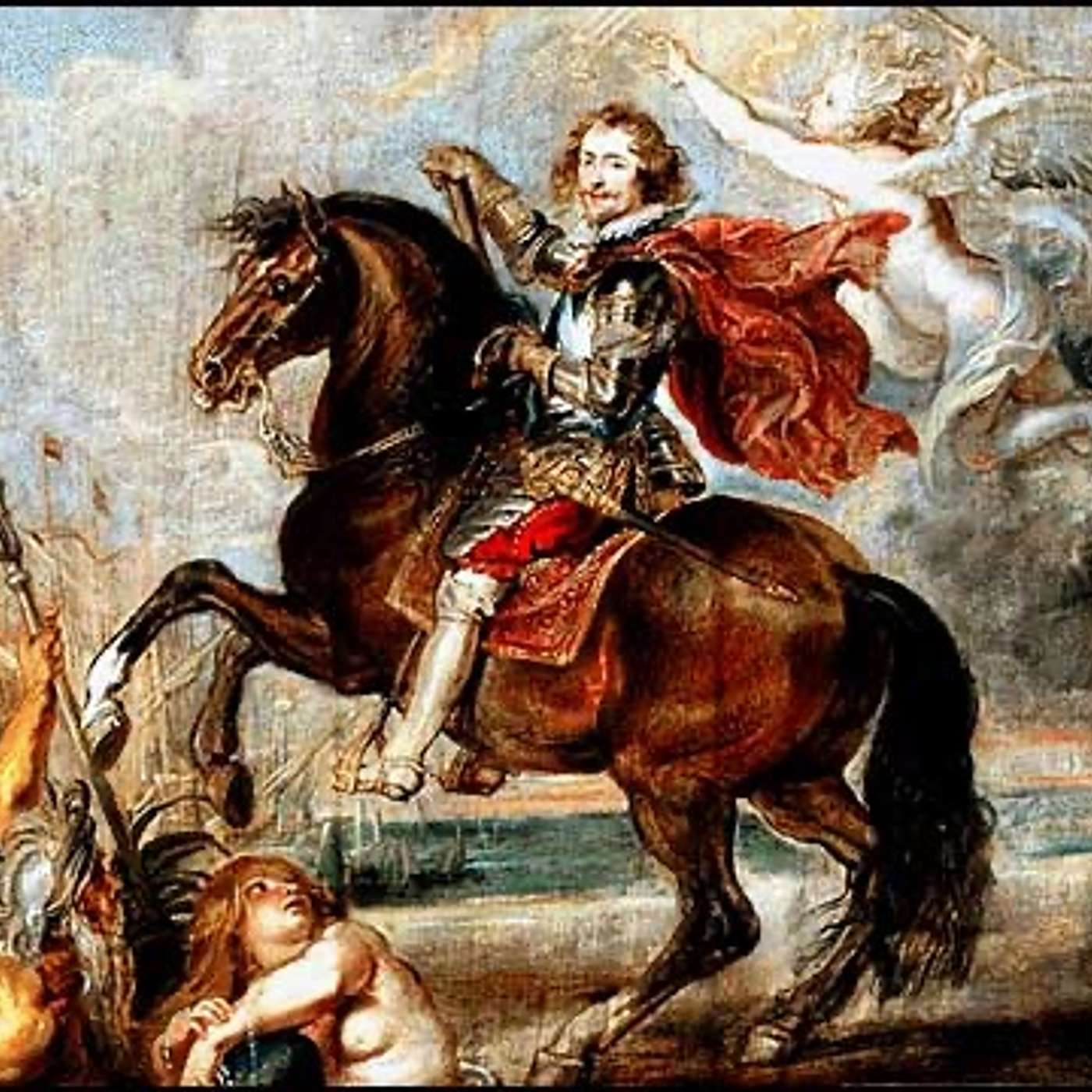
You don't have to be young and beautiful to get ahead in Stuart England but it really doesn't hurt. The is the story of 'gorgeous George' - that is to say George Villiers (later Duke of Buckingham) who in his early 20's became the favourite of James I of England (VI of Scotland). Despite his willingness to promote based on good looks, James I comes out of this rather well. He may have believed in witches (how else to explain what happened to his bride??) but he also believed in peace - greatly to the benefit of his subjects. Of course his subjects weren't remotely grateful and were delighted when Charles I took over and (with Buckingham) started wars with Spain and France. As with so many wars the enthusiasm faded fast when it turned out these things cost money. And the Duke of Buckingham was in the firing line as members of the House of Commons were overcome with rage and the mob turned against him. All sorts of extraordinary things in this episode - storm raising witches, wizards, false beards, mad, romantic journeys across Europe in search of a bride and (my personal favourite) the House of Commons grinding to a halt as one member after another bursts into tears. Lucy Hughes-Hallet is a brilliant guest. The story in her book The Scapegoat is (as she rightly says) much better than any fiction. Seriously - get the book. We didn't cover a tenth of it. By turns hilarious and tragic it is a window into a world hovering between the medieval and the modern.

Jonathan Clements returns to talk about his book on the First Emperor of China and the man who was sent to kill him: facts and fictions in Zhang Yimou’s movie Hero (2002), the evil mirror-universe version of Confucianism, an impossibly well-endowed “eunuch”, the construction of the Terracotta Army, the politics of archaeology, and how to spent a slave labour dividend. And what to do when you had the Mandate of Heaven a minute ago but can't remember where you put it.
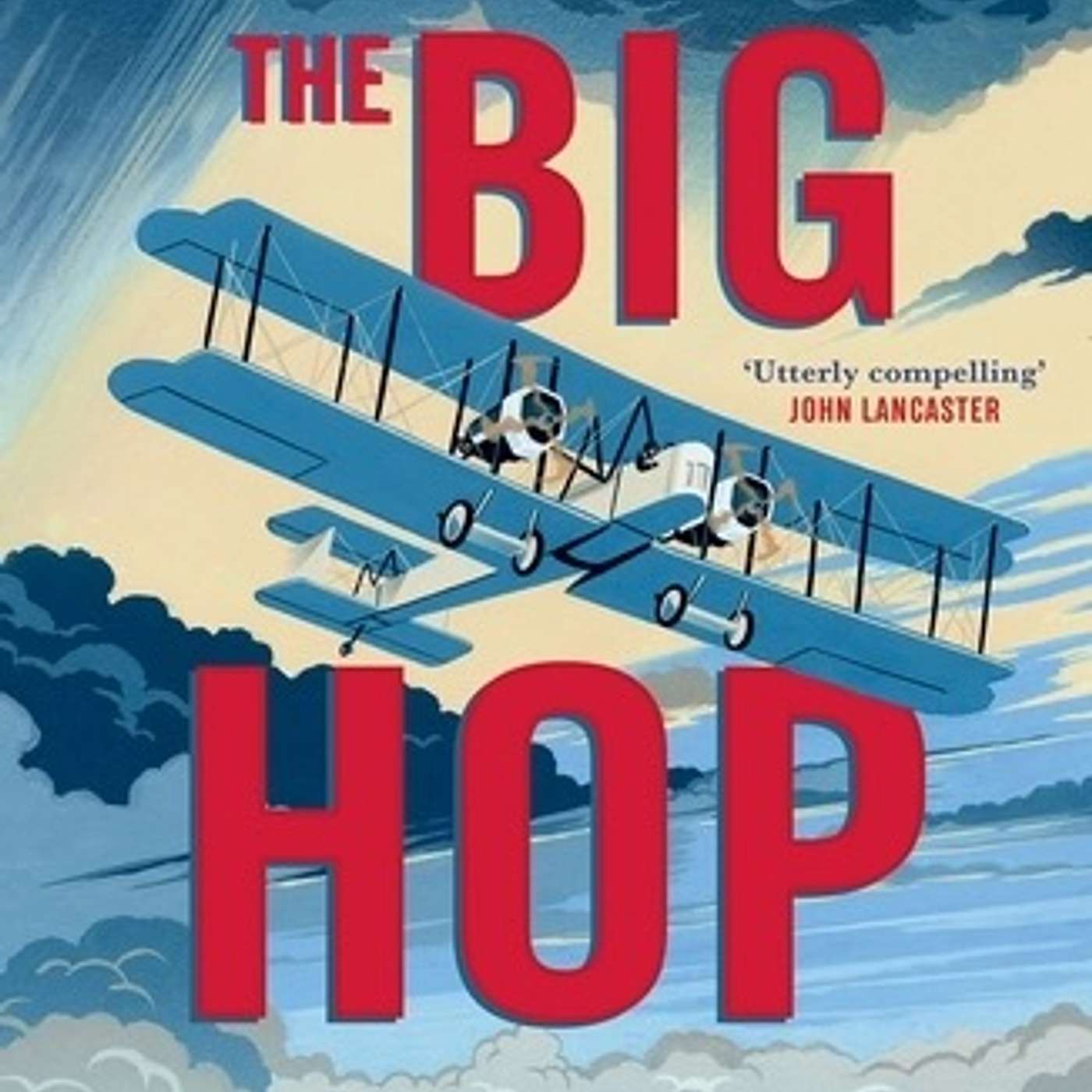
It is astonishing to me that we went from the first powered flight of a few hundred feet in 1903 to attempting to fly the Atlantic in 1919. The Daily Mail had offered a prize of £10,000 to cross the Atlantic. The pilots called it the Big Hop. Nowadays we think nothing of it but back then they had open cockpits, primitive navigation tools, unreliable weather forecasting and many other problems. This was right on the edge of what was possible at the time. And not always on the right edge! We talked about: - the wonderful Hilda Hewlett, a pioneer of British aviation - how WW1 affected the competition (and the competitors) - Alcock and Brown and the runners up - how to keep calm (in your lounge suit) and carry on, even as death is racing to meet you. It is a wonderful story and David is wonderful storyteller!
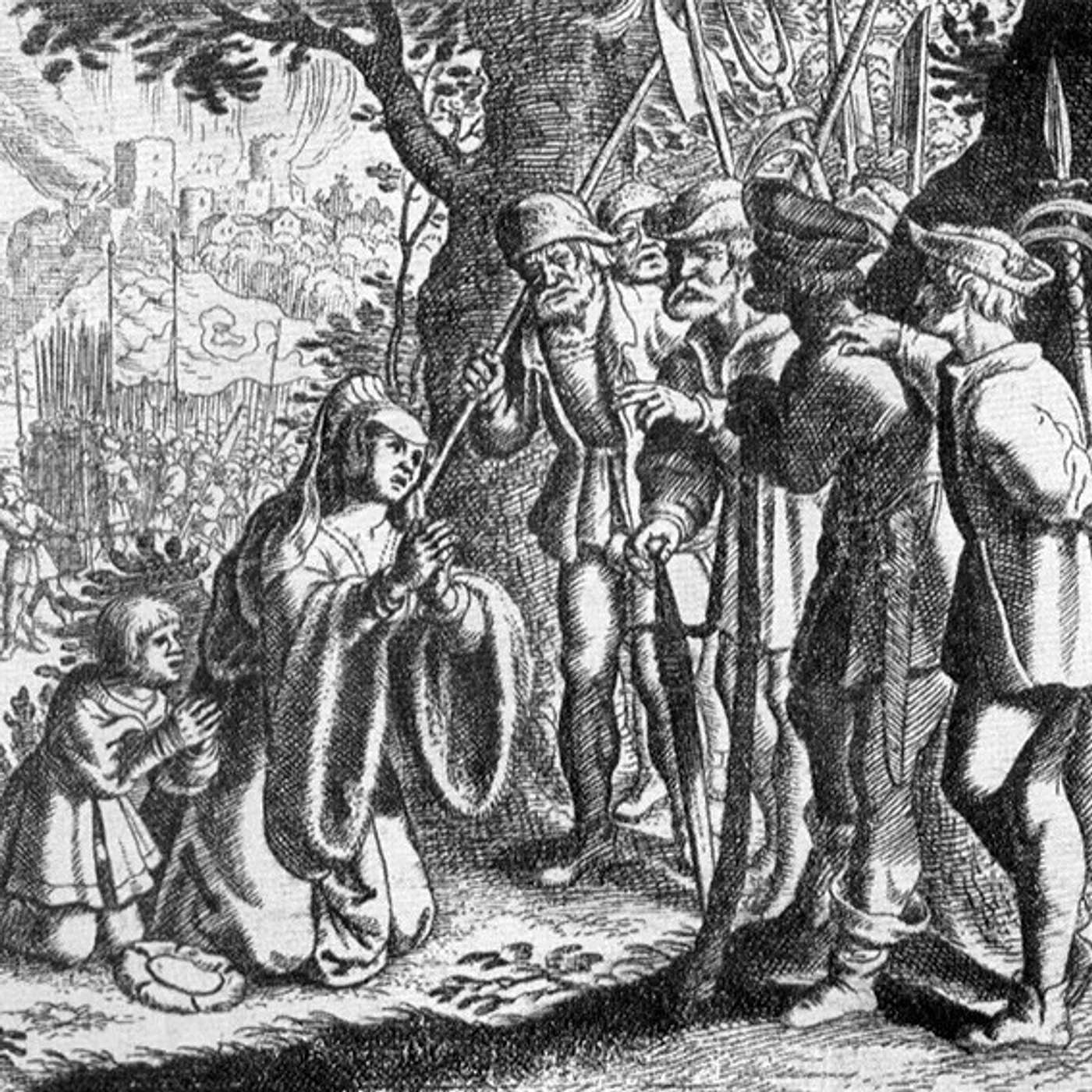
Lyndal Roper, Regius Professor of History at Oxford University is on excellent form to talk me through the German Peasant's War of 1524-25. Things I learned: - take Martin Luther seriously (but not literally) - monasteries feed the poor and needy (particularly when they are armed and extremely determined) - the scale of the revolt was off the charts, nothing like it until the French Revolution - the East German State celebrated its revolutionary past with a mural of the war which needs to be on everyone's 'must see' list (only to collapse a few months later! All in all this is a terrific and thought provoking episode. The role of Luther in all this surprised me greatly. Lyndal's book Summer of Fire and Blood is here. If you enjoy the conversation then please follow the show, share it with a friend and leave a review!

Today the thing we find mysterious is why WWI lasted as long as it did. Why continue a pointless slaughter. Comparisions with the war in Ukraine suggest an answer! My guess is is Professor David Stevenson and for him the mystery is not why it lasted so long but why it ended when it did. For the German public is was particularly mysterious. Just a few months before the Armistice Germany was all conquering. Russia had been driven out of the war on terms hugely favourable to Germany. And in the West her storm troopers seemed poised to deliver victory on this front too. And while the tide had clearly turned the German army was falling back in good order. So what compelled Germany to submit to allied terms? Was it a stab in the back as many Germany came to believe, or something else? David is brilliant at unpicking all of this. As for the answer to the riddle - well, one place to look is in Bulgaria . . If you enjoy this episode, follow the show, share with a friend, and leave a review to help others discover it.

Ed West is a journalist and massively popular substacker - do check out his substack The Wrong Side of History. But he has a sideline in history so I got him on the show to talk about 1066 and the battle of Hastings. Ed is on top form so please join us as he talks about: - why Harold should have listened to his Mum - Harald Hadrada's absolute last poem - what made the Norman's so very hard to beat - and why the Normans were the woke progressives of their day! If you enjoy the conversation then please follow, share with a history‑minded friend and leave a quick review to help others find the show!

A six-foot-two prince who loved tournaments, outfoxed a revolution, and nearly died on crusade returns to build castles that still dominate the Welsh coast and to bend Scotland to his will until Robert the Bruce strikes back. We follow Edward I’s path from a devoted crusader to the architect of a more centralised, harder-edged medieval state, where finance, logistics, and image mattered as much as swords. Along the way, we discuss the political craft behind his parliaments, the Italian bankers who kept his campaigns moving, and the trade-offs needed to fund his empire. We don’t shy away from the darkness. The 1290 expulsion of England’s Jews reveals the brutal alignment of prejudice and power. So does the battlefield assassination of Simon de Montfort at Evesham and the legal sleight that turned Scottish arbitration into overlordship. For all that Edward comes across as very human. His marriage with Eleanor of Castile was unusually close for the age, marked by shared journeys, many children, and the Eleanor Crosses erected on her death. If Wales became Edward’s lasting triumph in stone and statute, Scotland proved a different matter. It was larger, more resilient, and capable of rebirth under Bruce. And on the continent, a friendly France turns hostile, tricking the king into surrendering Gascony leading to a war England can barely support. Edward does indeed emerge a ruler both great and terrible: a master of war and administration who built a stronger English polity while leaving scars at home and abroad. If you care about medieval power - crusader ideology versus realpolitik, taxes versus consent this episode will sharpen your view of how states harden and why reputations endure. If this episode resonates, follow the show, leave a review, and share it with a history-loving friend.

“With the heart of a serpent and the nature of a wolf, she gathered sycophants to her cause and brought destruction to the just. She slew her sister, butchered her brothers, killed her prince, and poisoned her mother. She is hated by men and gods alike.” Jonathan Clements came back on to talk about his book on Wu Zetian (623–705), the only woman ever to rule China in her own name. Rising from lowly concubine/chambermaid to God-Emperor, she outmanoeuvred courtiers, generals, monks and poets alike - sometimes with charm, sometimes with a knife - and ruled over the empire at the height of the Silk Road. Jonathan describes Wu’s ascent through the Tang court: a place of whispered plots, divine omens, and women struggling to survive. Along the way we encounter girls on top, a boob-shaped tomb, a harem of 120 pretty boys, dogs on sticks, a honey-trap gone wrong, and an inadvisable attempt to train a cat not to eat a parrot. A story of power, paranoia, and the perilous art of surviving your own success. If you find this journey into Tang politics, gender, and myth entertaining and informative then follow the show, share with a friend, and leave a review telling people what bit you liked best.

As promised in part 1 we started the podcast by talking about some of Napoleon III’s many mistresses. Women like Harriet Howard, the Brighton bootmaker’s daughter, Virginia de Castiglione, sent by the Italians to seduce and spy on him (and welcomed with open arms!), Marguerite Bellanger and Louise de Mercy-Argenteau. His wife hated his infidelities but at least in the case of Louise she took comfort that she was a proper aristocrat! Moving on from the scandalous we talked about Napoleon III’s solid achievements. Not least his success in the Crimean War which led to an alliance with the British and bringing France in from the diplomatic cold. And domestically the economy thrived and Paris was rebuilt. The great tragedy of Napoleon III’s reign was that he was up against Bismark. Suffering from various illnesses (bladder stones in particular) his judgement was possibly affected. And Bismark tricks him into declaring war - with predictable results. His son survived him and oddly ended up fighting with the British Army in South Africa. If you don’t know the story this alone makes the podcast more than worth the time. If you enjoy this podcast on France’s second Empire - its scandals, triumphs, and collapses - then please follow Subject to Change, share it with a friend who loves history, and leave a review telling me what struck you most.

From exiled prince to emperor, Napoleon III's rise to power reads like a political thriller too wild to be true. Edward Shawcross tells the story of Napoleon Bonaparte's nephew, a man who attempted not one but two comically failed coups before finally succeeding in becoming Emperor of France. This episode explores Louis-Napoleon's bizarre childhood as the imperial nephew raised in Swiss exile, where his mother turned their home into a shrine to Napoleon while teaching him the arts of conspiracy and subterfuge. We cover his early revolutionary activities in Italy and his truly farcical coup attempts - including one featuring a live eagle purchased for a pound - that landed him in prison for life. Rather than breaking him, prison became Louis-Napoleon's "university," where he turned from a figure of fun into a serious political thinker with a programme of social reform. His escape disguised as a working man complete with platform shoes to change his height reads like fiction, yet it set the stage for his triumphant return during the 1848 Revolution. Ed explains how this seemingly delusional man understood mass politics better than any of his contemporaries, positioning himself as the people's champion against the political establishment. Through universal male suffrage, he won France's first direct presidential election before orchestrating a coup that established the Second Empire - proving that persistence, timing, and understanding the power of a name can overcome ridicule and failure. This is part 1 of a two part series. Part 2 will deal with his time as emperor and will not shy away from the more, er, sensational aspects of his life. In particular his extraordinarily large number of mistresses!

Fourteen centuries of enslavement, from the Prophet Muhammad's day to modern Mauritania. Justin Marozzi's fascinating book "Captives and Companions" has as its subject the complex history of slavery across the Islamic world, challenging simplistic narratives and revealing uncomfortable truths about power, race, and religion. Our conversation touched on how Islam didn't invent slavery but incorporated existing practices while encouraging manumission. We talked about the huge diversity of slavery - from the huge Zanj Rebellion when East African slaves revolted in Iraq, to the paradoxical power of Mamluk slave-soldiers who became sultans. I particularly liked how Justin managed to balance the brilliance and the cruelty of the life of the concubines at the court in Baghdad at the height of its power. We also spent a lot of time discussing eunuchs. What purpose they served, the way Islam got round the prohibition on the practice and how and why the use of eunuchs lasted so long. The racial side of things was a surprise to me. Primary sources from Islam's greatest medieval intellectuals expose deeply racist attitudes toward black Africans, while white Circassian slaves commanded premium prices. And the Barbary Corsairs provided another surprise, with a large number of Europeans who "turned Turk" to join Muslim pirates enslaving fellow Christians across the Mediterranean. When we reached abolition, Justin talked about how external Western pressure, not internal Islamic reform, primarily drove formal emancipation. And his interviews with people in Mali and Mauritania showed how hereditary slavery continues today, with miserable stories of people still fighting for freedom in the 21st century.