S5 · E6
Tuesday · 7 min

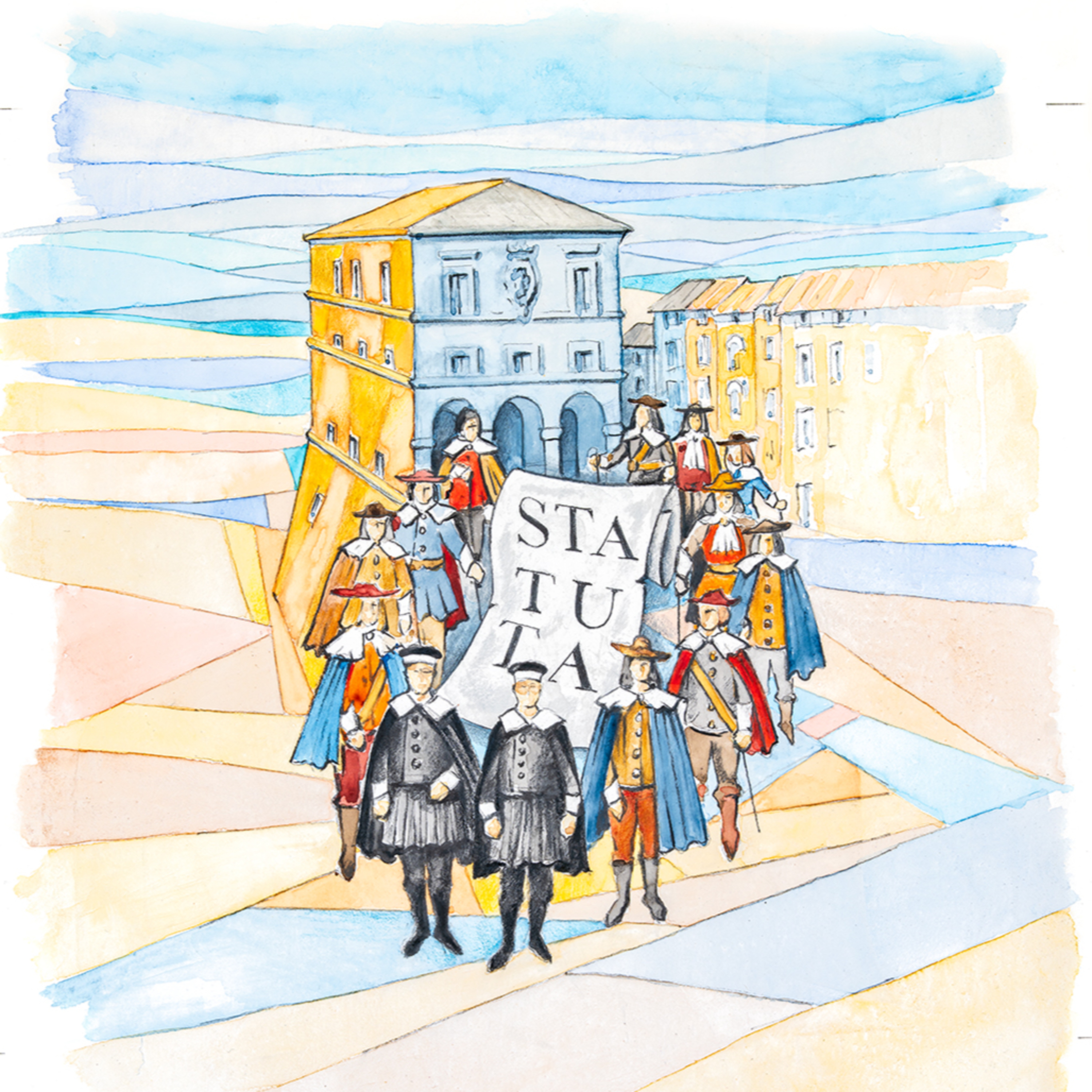
Ma chi è davvero sovrano sul Monte Titano? Nel 1600 San Marino adotta nuovi Statuti, mentre il potere politico si concentra progressivamente nelle mani di poche famiglie. Intanto, la scomparsa del Ducato di Urbino costringe la Repubblica a ripensare il proprio rapporto con lo Stato Pontificio. Un nuovo frammento del progetto in collaborazione con Poste San Marino che attraverso 12 francobolli originali racconta 12 momenti chiave della storia della Repubblica di San Marino. #storia #sanmarino #podcast
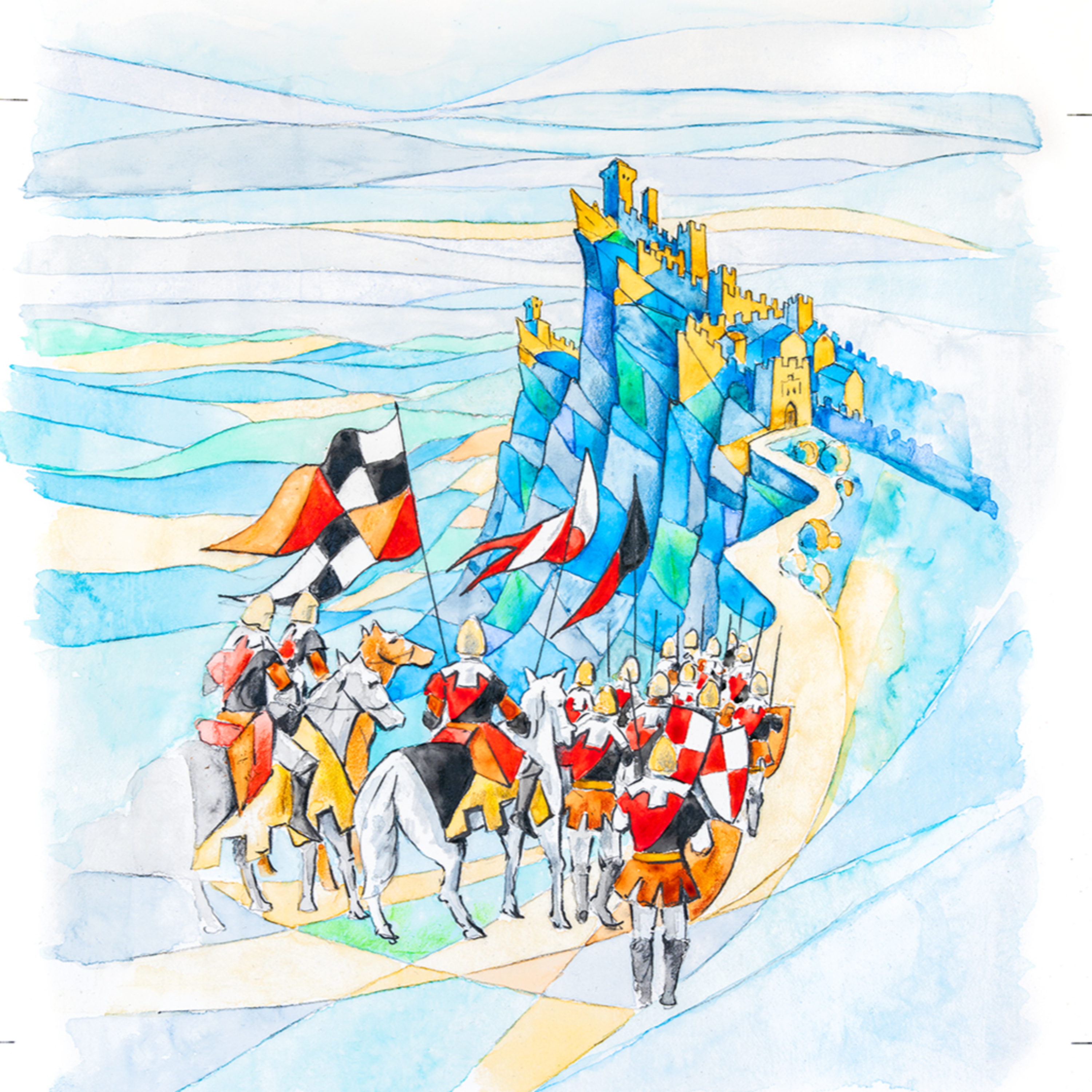
Nel Cinquecento, l’indipendenza di San Marino viene messa a dura prova. Tre minacce che costringono la piccola Repubblica a difendere la propria libertà, tra armi, alleanze e diplomazia. Come riuscirà la piccola San Marino a rimanere indipendente? Te lo raccontiamo nel #5 episodio di 12 Frammenti di Storia Sammarinese, il podcast di Storia in Flanella realizzato in collaborazione con Poste San Marino. Un nuovo frammento del progetto che attraverso 12 francobolli originali racconta 12 momenti chiave della storia della Repubblica di San Marino.

The Oldest Republic – Episode 14 For centuries, San Marino had laws, institutions and a strong political identity. But it had no newspapers. In this final episode of The Oldest Republic, we explore the history of information and journalism in the Republic, tracing the long path that led San Marino from a world without printing presses to the age of radio, television and digital media. For generations, printing was prohibited within the Republic. While newspapers and political journals flourished across Italy, San Marino remained largely excluded from this revolution in communication, constrained by diplomatic caution and limited resources. Yet the desire to inform, discuss and participate never disappeared. The story begins with the first printing presses and the birth of the Republic’s earliest newspapers in the late nineteenth century. Short-lived but ambitious publications experimented with satire, political debate and civic engagement, giving San Marino its first independent voice in print. The episode then follows the transformation of the press into a political and cultural space. Newspapers linked to different parties and movements became instruments of public debate, while libraries, reading rooms and local initiatives helped expand access to information. A second major turning point arrived with radio and television. After decades of restrictions, San Marino finally obtained the right to operate its own broadcasting services, leading to the creation of Radio San Marino and, eventually, San Marino RTV, the Republic’s national broadcaster. Finally, we explore the rise of local newspapers, digital journalism and online media, which brought San Marino fully into the contemporary information landscape. From prohibited printing presses to podcasts, from political pamphlets to digital news, this episode tells the story of how a small republic learned to speak with its own voice. A journey through newspapers, radio waves and screens… to discover the voice of the Republic. #SanMarino #History #TheOldestRepublic #Journalism #Media #Communication Subscribe to our channels to follow the full series: YouTube: https://www.youtube.com/@storiainflanella/featured Spotify: https://open.spotify.com/show/4zuAthwqVO4rRJffD6yzkr?si=3fff127dd1a3495f This podcast is sponsored by the Department of Foreign Affairs of San Marino, with the support of the San Marino Centre for Historical Studies (University of San Marino). The texts are based on L. Gorgolini, S. Pivato (eds.), History of San Marino, 2026. This episode is based on chapter 14: S. Barducci, Newspapers and Journalism: From the 19th Century to the Present. Author: Giuseppe Giardi Hosts: Carlotta Serra Ciotti and Federica Ghirotti Video: Luca Zucchi Chapters 00:00 When Printing was prohibited: Forced Delays 03:55 The First Newspapers 06:45 The Press as a Political and Civil Space 09:53 Radio and Television 12:05 Quick Information: local press and new technologies 14:34 Thank you!

The Oldest Republic – Episode 13 For centuries, culture in San Marino was built patiently: one archive, one book, one theatre, one museum at a time. In this episode of The Oldest Republic, we explore how the Republic gradually created the institutions responsible for preserving its memory, showcasing its heritage and fostering cultural life. What began as a scattered collection of documents, books and local initiatives eventually became a structured system capable of representing San Marino both at home and abroad. The journey begins with the State Archive and the State Library, institutions born from the need to preserve documents, organise knowledge and safeguard the continuity of the Republic. Through the work of scholars, historians and administrators, these collections evolved into essential pillars of San Marino’s cultural identity. We then turn to the museums. From the first collections assembled in the nineteenth century to the development of the State Museum and the expansion of specialised museums dedicated to archaeology, arms, philately, migration and contemporary art, we follow the growing awareness that cultural heritage needed not only to be collected, but also protected and shared. The episode also reflects on difficult moments, including the loss of the famous Domagnano Treasure, an event that helped shape modern policies for the protection of cultural heritage. Finally, we explore the world of theatre, cinema and music. From early theatrical performances and community bands to modern cultural institutions, festivals and artistic education, San Marino gradually developed a vibrant cultural life that extended well beyond archives and museum walls. At the heart of this story lies a simple idea: preserving the past is not enough. A republic must also create spaces where memory, creativity and community can meet. A small state building culture… one institution at a time. #SanMarino #History #TheOldestRepublic #Culture #Museums #Heritage Subscribe to our channels to follow the full series: YouTube: https://www.youtube.com/@storiainflanella/featured Spotify: https://open.spotify.com/show/4zuAthwqVO4rRJffD6yzkr?si=3fff127dd1a3495f This podcast is sponsored by the Department of Foreign Affairs of San Marino, with the support of the San Marino Centre for Historical Studies (University of San Marino). The texts are based on L. Gorgolini, S. Pivato (eds.), History of San Marino, 2026. This episode is based on chapter 13: V. Testaj, The Development of Cultural Institutions. Author: Giuseppe Giardi Hosts: Carlotta Serra Ciotti and Federica Ghirotti Video: Luca Zucchi Chapters 00:00 Preserve, organise, legitimise: State Archive and Library 05:11 Exhibit, protect, represent. Museums and figurative arts 10:03 Theatre, cinema, music

The Oldest Republic – Episode 12 Before chronicles, before documents, even before words, there were traces. In this episode of The Oldest Republic, we travel deep into the ancient past of San Marino, exploring what archaeology can reveal about the people who lived on Mount Titano long before the Republic emerged in written history. Through excavations, accidental discoveries and forgotten artefacts, a story of settlements, cults and cultural transformations gradually comes to light. We begin with the history of archaeological research itself, from the first discoveries made by nineteenth-century scholars to the more systematic excavations carried out during the twentieth century. What initially appeared to be an isolated mountain soon revealed itself as part of a much larger historical landscape. The episode then takes us to Tanaccia, a remarkable sanctuary carved into the rock near the summit of Mount Titano. Used for centuries as a sacred site, it preserves evidence of ancient rituals, healing cults and contacts between local communities and the wider Roman world. From there, we explore the Roman period, when the territory of San Marino became integrated into the economic and cultural networks centred on nearby Ariminum, modern Rimini. Villas, farms and productive settlements transformed the landscape, linking the mountain to the wider Mediterranean world. Finally, we move into Late Antiquity, an age of crisis, migration and transformation. Through discoveries such as the famous Domagnano Treasure, one of the most important archaeological finds in San Marino’s history, we encounter the Gothic elites, the spread of Christianity and the complex world from which the medieval community would eventually emerge. Archaeology does not tell us everything. But through fragments, ruins and forgotten objects, it allows us to glimpse a past that existed long before the oldest republic in the world took shape. A journey beneath the surface… to discover the deepest roots of San Marino. #SanMarino #History #TheOldestRepublic #Archaeology #AncientHistory Subscribe to our channels to follow the full series: YouTube: https://www.youtube.com/@storiainflanella/featured Spotify: https://open.spotify.com/show/4zuAthwqVO4rRJffD6yzkr?si=3fff127dd1a3495f This podcast is sponsored by the Department of Foreign Affairs of San Marino, with the support of the San Marino Centre for Historical Studies (University of San Marino). The texts are based on L. Gorgolini, S. Pivato (eds.), History of San Marino, 2026. This episode is based on chapter 12: V. Casali, B. Gruska, Archaeological Discoveries: Settlements in Antiquity. Author: Giuseppe Giardi Hosts: Carlotta Serra Ciotti and Federica Ghirotti Video: Luca Zucchi Chapters 00:00 Introduction 01:02 Research in San Marino Territory 04:51 A Sanctuary in the Rock 09:04 The Romans on Mount Titano 12:58 Late Antiquity 16:07 Conclusion

The Oldest Republic – Episode 11 How does a republic tell its own story through art? In this episode of The Oldest Republic, we explore the artistic heritage of San Marino through three symbolic places that reveal how the Republic has represented itself across the centuries. Rather than offering a complete history of art, we follow a journey through buildings, images and monuments that connect memory, identity and power. Our first stop is the Church and Convent of Saint Francis, one of the oldest and most significant religious complexes in the Republic. From medieval foundations and Renaissance frescoes to works linked to the great artistic centres of Italy, this site tells a story of faith, culture and artistic exchange. We then move to the Monastery of Saint Clare, whose history begins during the Catholic Reformation and unfolds through the lives of the women who inhabited it. More than a religious building, it became a place of education, memory and community, leaving behind a rich artistic and cultural legacy. Finally, we arrive at the Government Palace, perhaps the most symbolic building in San Marino. Rebuilt in the nineteenth century in a neo-medieval style, it was designed not only as a seat of government but also as a visual statement of the Republic’s identity, linking its institutions to the myth of perpetual freedom and its medieval origins. Throughout the episode, we encounter vanished buildings, rediscovered artworks, ambitious restorations and carefully crafted symbols. Together, they reveal how San Marino has continuously used art and architecture to shape the image it presents to itself and to the world. A small republic telling its story… through stone, images and memory. #SanMarino #History #TheOldestRepublic #Art #CulturalHeritage Subscribe to our channels to follow the full series: YouTube: https://www.youtube.com/@storiainflanella/featured Spotify: https://open.spotify.com/show/4zuAthwqVO4rRJffD6yzkr?si=3fff127dd1a3495f This podcast is sponsored by the Department of Foreign Affairs of San Marino, with the support of the San Marino Centre for Historical Studies (University of San Marino). The texts are based on L. Gorgolini, S. Pivato (eds.), History of San Marino, 2026. This episode is based on chapter 11: M. Bollini, Art Through the Centuries: Three Significant Monuments. Author: Giuseppe Giardi Hosts: Carlotta Serra Ciotti and Federica Ghirotti Video: Luca Zucchi Chapters 00:00 Introduction 01:28 Saint Francis’ Church 05:31 Monastery of Saint Clare 10:04 Government Building 14:22 Conclusion

The Oldest Republic – Episode 10 A small community built on stone, faith and steep cliffs. A city enclosed by walls, shaped by centuries of history. In this episode of The Oldest Republic, we explore the long urban transformation of San Marino, following the evolution of its landscape from the first medieval settlements on Mount Titano to the challenges of modern urban planning. The story begins with the earliest traces of settlement around monasteries, churches and defensive structures, before following the gradual development of the medieval city, its walls and towers. Over centuries, San Marino grew slowly, preserving an urban identity that remained largely unchanged until the modern age. The nineteenth century marked a turning point. New monuments such as the Basilica and the Government Palace reshaped the historic centre, expressing a renewed sense of national identity and projecting the image of an ancient republic entering the modern world. The episode also explores the extraordinary work of Gino Zani in the twentieth century. Through restorations, reconstructions and ambitious urban projects, Zani helped create the image of San Marino that visitors know today: a city that appears medieval, yet is also the result of modern reinterpretation. After the Second World War, rapid economic growth, tourism and industrial development transformed the territory once again. New roads, residential areas and commercial districts expanded beyond the historic centre, creating a landscape increasingly shaped by modern needs and opportunities. From medieval walls to highways, from fortified towers to urban sprawl, this episode traces the continuous dialogue between heritage and development that has defined San Marino for centuries. A small republic constantly rebuilding itself… in stone, concrete and memory. #SanMarino #History #TheOldestRepublic #Architecture #UrbanHistory Subscribe to our channels to follow the full series: YouTube: https://www.youtube.com/@storiainflanella/featured Spotify: https://open.spotify.com/show/4zuAthwqVO4rRJffD6yzkr?si=3fff127dd1a3495f This podcast is sponsored by the Department of Foreign Affairs of San Marino, with the support of the San Marino Centre for Historical Studies (University of San Marino). The texts are based on L. Gorgolini, S. Pivato (eds.), History of San Marino, 2026. This episode is based on chapter 10: L. Morganti, Urban and Territorial Transformations in the History of San Marino. Author: Giuseppe Giardi Hosts: Carlotta Serra Ciotti and Federica Ghirotti Video: Luca Zucchi Chapters 00:00 Introduction 01:07 From Its Origins to the Medieval City: The Urban Roots of San Marino 06:05 The Construction of Identity: From the Pellacchi Cadastre to the Nineteenth-Century Monuments 10:07 Gino Zani and the "Re-Creation" of San Marino 13:06 From the Post-War Period to the Highway: The Assault on the Territory 14:50 Rules, Town Planning Schemes and the Difficult Relationship with the Territory 17:02 Conclusions

The Oldest Republic – Episode 9 A small republic on a mountain. Poor soil, hard work, little hope for the future. In this episode of The Oldest Republic, we explore one of the most important and emotional chapters in San Marino’s modern history: emigration. Between the nineteenth century and the middle of the twentieth century, thousands of Sammarinese left their homeland in search of work, stability and dignity. At first, migration was seasonal. Workers travelled on foot from the mountain to the plains of Romagna, the Marche or Lazio, looking for temporary jobs as labourers and peasants. But as poverty persisted and new routes opened through railways and steamships, migration became global. From Argentina and Brazil to France, Belgium and the United States, entire communities of Sammarinese emigrants formed abroad. Some became miners, construction workers and factory labourers; others opened restaurants, workshops and small businesses, building new lives far from Mount Titano. The episode follows this long journey across borders and oceans, exploring not only the economic causes behind emigration, but also the emotional dimension of departure: the letters sent home, the families divided for years, the uncertainty of travel and the dream of returning one day. We also explore the impact of Fascism, restrictive immigration laws and post-war migration agreements, as well as the gradual reversal that transformed San Marino, from a land of departure into a country attracting workers from abroad. At the heart of this story lies a profound contradiction: in order to survive, many Sammarinese had to leave their Republic behind — while continuing to carry it with them everywhere they went. A small state whose history travelled far beyond its borders. #SanMarino #History #TheOldestRepublic #Emigration Welcome to the history of the oldest republic in the world. Subscribe to our channels to follow the full series: YouTube: https://www.youtube.com/@storiainflanella/featured Spotify: https://open.spotify.com/show/4zuAthwqVO4rRJffD6yzkr?si=3fff127dd1a3495f This podcast is sponsored by the Department of Foreign Affairs of San Marino, with the support of the San Marino Centre for Historical Studies (University of San Marino). The texts are based on L. Gorgolini, S. Pivato (eds.), History of San Marino, 2026. This episode is based on chapter 9: P. di Luca, Emigration Between the 19th and 20th Centuries. Author: Giuseppe Giardi Hosts: Carlotta Serra Ciotti and Federica Ghirotti Video: Luca Zucchi Chapters 00:00 Introduction 02:01 The Horizon of Departure 04:12 Emigration: from “mount to plain” 06:47 Across the Ocean and across the Border 09:55 Latest Journeys and Returns 11:23 The Legacy of an Exodus

The Oldest Republic – Episode 8 1950s. Around the world, women are gaining political rights. In nearby Italy, women have already voted for the first time. In San Marino, however, change arrives slowly. In this episode of The Oldest Republic, we explore the long and difficult struggle for women’s suffrage in the Republic of San Marino — a story shaped by political tensions, social conservatism and determined activism. The episode follows the gradual path that led Sammarinese women from exclusion to participation: from the first campaigns for the right to vote, to the creation of women’s committees and popular petitions, all the way to the historic reforms of the 1970s. But this story is also full of contradictions. During the years of the social-communist government, it was often the left-wing parties that resisted women’s suffrage, fearing the influence of the Church on female voters. At the same time, many Christian Democratic women became leading voices in the fight for political rights. From the debates surrounding legal equality and citizenship to the disappointment of delayed reforms, the Republic slowly opened its institutions to women. The right to vote arrived in 1959, but women had to wait until 1973 to gain the right to stand for election. The episode also traces the emergence of the first female political leaders, from Myriam Michelotti, Clara Boscaglia and Fausta Morganti to Maria Lea Pedini, the first woman Captain Regent in San Marino’s history. Behind these milestones lies a broader transformation: the gradual change of Sammarinese society itself, as education, work and public life increasingly reshaped the role of women within the Republic. A small state confronting one of the great civil rights struggles of the twentieth century. #SanMarino #History #TheOldestRepublic #Women #CivilRights Welcome to the history of the oldest republic in the world. Subscribe to our channels to follow the full series: YouTube: https://www.youtube.com/@storiainflanella/featured Spotify: https://open.spotify.com/show/4zuAthwqVO4rRJffD6yzkr?si=3fff127dd1a3495f This podcast is sponsored by the Department of Foreign Affairs of San Marino, with the support of the San Marino Centre for Historical Studies (University of San Marino). The texts are based on L. Gorgolini, S. Pivato (eds.), History of San Marino, 2026. This episode is based on chapter 8: V. Rossi, Sammarinese Women and The Attainment of Women's Suffrage. Author: Giuseppe Giardi Hosts: Carlotta Serra Ciotti and Federica Ghirotti Video: Luca Zucchi Chapters 00:00 Introduction 01:00 The Historical Context 03:10 The Struggle for the Right to Vote 09:18 A Greater Participation 13:56 The First Woman to become Captain Regent

Dopo la tempesta dei Gracchi, a Roma sembra tornare la calma. Le assemblee si riuniscono, i magistrati vengono eletti, la Repubblica ritrova una superficie di normalità. Ma sotto le ceneri, il fuoco continua a bruciare. In questo finale di stagione raccontiamo la figura di Quinto Cecilio Metello, protagonista di una fase di restaurazione politica in cui la nobiltà senatoria sembra riprendere il controllo della Repubblica. Tra la guerra in Numidia, la frattura con Gaio Mario e il tentativo di riaffermare il prestigio dell’élite tradizionale, la sua vicenda mostra una Roma solo apparentemente stabilizzata. È il trionfo della nobiltà, ma solo per un momento. Perché la crisi della Repubblica non è finita: sta solo cambiando forma. Grazie di cuore per aver seguito questa stagione. Torneremo presto con la terza, per continuare a raccontare la storia della Repubblica romana, passo dopo passo. I testi sono tratti dal libro "Roma Repubblicana: una storia in 40 vite" di Federico Santangelo, edito da Carocci editore nel 2019 👉 https://amzn.eu/d/244ueFU Autori del podcast: Federico Santangelo e Giuseppe Giardi. Video e grafiche: Luca Zucchi. Lascia un like, iscriviti al canale di Storia in Flanella e attiva la campanella per non perdere i prossimi episodi. Se il prodotto ti è piaciuto, condividilo con chi pensi possa apprezzarlo. Grazie di cuore e, fino alla prossima, saluti! 📌 I canali social di Storia in Flanella Spotify: https://open.spotify.com/show/4zuAthwqVO4rRJffD6yzkr?si=25d322c4ba784c35 Instagram: https://www.instagram.com/storiainflanella/ Facebook: https://www.facebook.com/giuseppe.giardi.7/ #storia #storiaromana #romaantica #podcast Capitoli 00:00 Una Restaurazione 02:54 I Metelli 05:30 Metello in Numidia 09:19 La Rottura 12:32 Numidico

The Oldest Republic – Episode 7 1960s. A sunny day, tourists arriving from the Riviera, the towers rising above Mount Titano. In this episode of The Oldest Republic, we explore how San Marino transformed itself in the second half of the 20th century, turning tourism into one of the driving forces of its economy and identity. After the difficult post-war years, marked by reconstruction, emigration and economic fragility, the Republic began to change. New infrastructures, new roads and new opportunities connected San Marino more closely to the outside world, opening the way to a new phase of growth. Tourism, together with handicraft and small industries, became central. Hotels multiplied, visitors increased rapidly, and the historic centre turned into a destination for millions. A small mountain state entered the age of mass tourism. But growth also brought new challenges. Short visits, dependence on the Romagna Riviera and the rise of a “souvenir economy” raised questions about sustainability and identity. San Marino had to decide how to present itself to the world: as a quick stop… or as a place with its own cultural and historical depth. From international events and sporting visibility to the crisis of the 1990s and the search for a new model, the Republic faced a long transition between tradition and innovation. In the new millennium, San Marino redefined its tourism strategy, combining commerce, culture and heritage. The recognition of Mount Titano as a UNESCO World Heritage Site marked a new beginning, bringing the Republic once again to the attention of the world. A small state reinventing itself… through tourism. #SanMarino #History #TheOldestRepublic #tourism Welcome to the history of the oldest republic in the world. Subscribe to our channels to follow the full series: YouTube: https://www.youtube.com/@storiainflanella/featured Spotify: https://open.spotify.com/show/4zuAthwqVO4rRJffD6yzkr?si=3fff127dd1a3495f This podcast is sponsored by the Department of Foreign Affairs of San Marino, with the support of the San Marino Centre for Historical Studies (University of San Marino). The texts are based on L. Gorgolini, S. Pivato (eds.), History of San Marino, 2026. This episode is based on chapter 7: M. Troilo, The Expansion of Tourism. Author: Giuseppe Giardi Hosts: Carlotta Serra Ciotti and Federica Ghirotti Video: Luca Zucchi Chapters 00:00 Introduction 00:50 Rebuilding, restarting and Golden Years 04:45 Tourism, ideas and identity 07:30 Crisis and relaunch 11:24 The New Millennium

Un corpo viene gettato nel Tevere. È Tiberio Gracco. Non ha onori, non ha sepoltura. È così che la Repubblica tratta un suo cittadino. Ma i Gracchi non sono uomini qualunque. Sono figli di una delle famiglie più prestigiose di Roma. E soprattutto, sono figli di Cornelia. Celebrata come madre esemplare, ammirata per la sua educazione e la sua cultura, ma anche sospettata, discussa, trascinata dentro uno dei conflitti più duri della storia repubblicana. In questo episodio raccontiamo la sua figura e il ruolo che ebbe nella costruzione della memoria dei Gracchi, tra politica, famiglia e identità romana. I testi sono tratti dal libro "Roma Repubblicana: una storia in 40 vite" di Federico Santangelo, edito da Carocci editore nel 2019 👉 https://amzn.eu/d/244ueFU Autori del podcast: Federico Santangelo e Giuseppe Giardi. Video e grafiche: Luca Zucchi. Lascia un like, iscriviti al canale di Storia in Flanella e attiva la campanella per non perdere i prossimi episodi. Se il prodotto ti è piaciuto, condividilo con chi pensi possa apprezzarlo. Grazie di cuore e, fino alla prossima, saluti! 📌 I canali social di Storia in Flanella Spotify: https://open.spotify.com/show/4zuAthwqVO4rRJffD6yzkr?si=25d322c4ba784c35 Instagram: https://www.instagram.com/storiainflanella/ Facebook: https://www.facebook.com/giuseppe.giardi.7/ #storia #storiaromana #romaantica #podcast #donne Capitoli 00:00 Una Minaccia per lo Stato 03:05 Educare alla Politica 06:26 Una Madre nella Contesa 10:35 Tale Padre, tale Figlio? 16:04 Memoria e Tradizione

The Oldest Republic – Episode 6 Summer 1944. Bombs fall on a neutral republic. In this episode of The Oldest Republic, we explore one of the most dramatic chapters in San Marino’s history: the months when the small Republic became a refuge for tens of thousands of civilians fleeing war, destruction and persecution during the Second World War. As fighting reaches the Gothic Line, waves of displaced people cross the border in search of safety. For a country of fewer than ten thousand inhabitants, the challenge is immense. Homes become shelters, railway tunnels turn into dormitories, and scarce food is shared among all. Yet even San Marino cannot escape the violence of war. Allied bombing strikes the Republic in June 1944, causing destruction and civilian casualties, while neutrality proves fragile in a world at war. Amid fear and hardship, San Marino continues to welcome those in need, including refugees escaping racial persecution. In one of Europe’s darkest moments, the Republic chooses solidarity. A small republic under the bombs… becoming a refuge for thousands. #SanMarino #History #TheOldestRepublic #war #wwii Welcome to the history of the oldest republic in the world. Subscribe to our channels to follow the full series: YouTube: https://www.youtube.com/@storiainflanella/featured Spotify: https://open.spotify.com/show/4zuAthwqVO4rRJffD6yzkr?si=3fff127dd1a3495f This podcast is sponsored by the Department of Foreign Affairs of San Marino, with the support of the San Marino Centre for Historical Studies (University of San Marino). The texts are based on L. Gorgolini, S. Pivato (eds.), History of San Marino, 2026. This episode is based on chapter 6: P. di Luca, Displacement During the Second World War. Author: Giuseppe Giardi Hosts: Carlotta Serra Ciotti and Federica Ghirotti Video: Luca Zucchi Chapters 00:00 Introduction 01:30 Bombs on the Mount Titano 05:13 A small state as a shelter 08:02 Shelters of fortune: railway tunnels 10:35 Well-known people, institutions and a return to normality

Quando pensiamo ai Gracchi, immaginiamo spesso due figure isolate. Ma intorno a loro si muovono alleati, collaboratori, uomini politici decisivi. Uno di questi è Marco Fulvio Flacco. Console, riformatore, protagonista della commissione agraria e stretto alleato di Gaio Gracco, Flacco porta al centro della politica romana una questione destinata a esplodere: chi combatte per Roma può davvero restarne escluso? Tra cittadinanza agli Italici, governo dell’Italia del Nord e nuove forme di redistribuzione del potere, la sua vicenda racconta una Repubblica che fatica sempre di più a tenere insieme impero, diritti e consenso. In questo episodio raccontiamo la figura di Flacco e il ruolo che ebbe in uno dei passaggi più drammatici e decisivi della storia repubblicana. I testi sono tratti dal libro "Roma Repubblicana: una storia in 40 vite" di Federico Santangelo, edito da Carocci editore nel 2019 👉 https://amzn.eu/d/244ueFU Autori del podcast: Federico Santangelo e Giuseppe Giardi. Video e grafiche: Luca Zucchi. Lascia un like, iscriviti al canale di Storia in Flanella e attiva la campanella per non perdere i prossimi episodi. Se il prodotto ti è piaciuto, condividilo con chi pensi possa apprezzarlo. Grazie di cuore e, fino alla prossima, saluti! 📌 I canali social di Storia in Flanella Spotify: https://open.spotify.com/show/4zuAthwqVO4rRJffD6yzkr?si=25d322c4ba784c35 Instagram: https://www.instagram.com/storiainflanella/ Facebook: https://www.facebook.com/giuseppe.giardi.7/ #storia #storiaromana #romaantica #podcast #teatro Capitoli 00:00 Oltre i Gracchi 05:46 Chi combatte per Roma è Romano? 09:57 Governare l'Italia del Nord 12:44 Una nuova Architettura del Potere 16:08 La Casa Vuota

The Oldest Republic – Episode 5 For centuries, a small republic has walked through history. No empire, no great army — and yet it has survived invasions, pressure and world wars. In this episode of The Oldest Republic, we explore one of the key reasons behind San Marino’s extraordinary longevity: diplomacy. Through prudence, negotiation and a constant search for balance, the Republic has secured its place in the international system. We begin with the foundations of sovereignty and legitimacy, showing how San Marino built recognition over time, not through force, but through continuity, institutions and a strong sense of libertas. From the Renaissance to the age of revolutions, the Republic navigates between powerful neighbours, facing threats such as Cesare Borgia, the ambitions of the Papal State and the crisis of Alberoni’s occupation, always relying on alliances and careful diplomacy. In the nineteenth century, San Marino strengthens its prestige through neutrality and hospitality, offering refuge to figures like Garibaldi and securing recognition from the Kingdom of Italy. The twentieth century brings new challenges: Fascism, war and the difficulty of maintaining neutrality in a world at conflict. Yet even in these moments, the Republic remains true to its values, offering shelter to thousands of refugees. In the post-war decades, San Marino expands its international presence, redefining its role through diplomacy and participation in global relations. A small state, engaging with the world to survive. #SanMarino #History #TheOldestRepublic Welcome to the history of the oldest republic in the world. Subscribe to our channels to follow the full series: YouTube: https://www.youtube.com/@storiainflanella/featured Spotify: https://open.spotify.com/show/4zuAthwqVO4rRJffD6yzkr?si=3fff127dd1a3495f This podcast is sponsored by the Department of Foreign Affairs of San Marino, with the support of the San Marino Centre for Historical Studies (University of San Marino). The texts are based on L. Gorgolini, S. Pivato (eds.), History of San Marino, 2026. This episode is based on chapter 5: M. Chiaruzzi, Foreign Relations of the Republic. Author: Giuseppe Giardi Hosts: Carlotta Serra Ciotti and Federica Ghirotti Video: Luca Zucchi Chapters 00:00 Introduction 00:41 Sovereignty and legitimacy 02:48 The strategy to survive: diplomacy and protection 05:07 Among giants 08:54 Neutrality and prestige 12:27 From the Mount to the World: 20th Century

Due uomini camminano tra le rovine di Cartagine. Uno è Scipione Emiliano. L’altro è Polibio. Parlano della caduta delle città e del destino delle potenze. È da qui che partiamo. Nel cuore della Roma del II secolo a.C., mentre l’impero prende forma, il teatro diventa uno spazio nuovo per pensare il potere, raccontare i conflitti e interrogare il presente. Marco Pacuvio è uno dei protagonisti di questa trasformazione: tragediografo, intellettuale, interprete di un mondo che sta cambiando rapidamente. In questo episodio raccontiamo la sua figura e il ruolo del teatro nella vita politica e culturale della Repubblica romana. I testi sono tratti dal libro "Roma Repubblicana: una storia in 40 vite" di Federico Santangelo, edito da Carocci editore nel 2019 👉 https://amzn.eu/d/244ueFU Autori del podcast: Federico Santangelo e Giuseppe Giardi. Video e grafiche: Luca Zucchi. Lascia un like, iscriviti al canale di Storia in Flanella e attiva la campanella per non perdere i prossimi episodi. Se il prodotto ti è piaciuto, condividilo con chi pensi possa apprezzarlo. Grazie di cuore e, fino alla prossima, saluti! 📌 I canali social di Storia in Flanella Spotify: https://open.spotify.com/show/4zuAthwqVO4rRJffD6yzkr?si=25d322c4ba784c35 Instagram: https://www.instagram.com/storiainflanella/ Facebook: https://www.facebook.com/giuseppe.giardi.7/ #storia #storiaromana #romaantica #podcast #teatro Capitoli 00:00 Una Città alle fiamme 01:52 Alle origini della Tragedia romana 05:02 Frammenti, prestigio e memoria perduta 09:40 Teatro e Politica 14:54 Dura et Acerba

Gaio Lelio è ricordato come Sapiens, il saggio. Amico fidato degli Scipioni, protagonista della vita politica romana e figura centrale nella tradizione filosofica successiva. Ma dietro questa immagine si nasconde una storia più complessa. Lelio vive in una fase di trasformazione profonda della Repubblica: tra riforme agrarie, tensioni sociali e il problema sempre più urgente di governare un impero in espansione. Quando prova a intervenire, si ferma. Quando esplode la crisi dei Gracchi, resta in una posizione difficile, fatta di prudenza, equilibrio e silenzi. In questo episodio raccontiamo la sua figura e il ruolo che ebbe in uno dei passaggi più delicati della storia romana. I testi sono tratti dal libro "Roma Repubblicana: una storia in 40 vite" di Federico Santangelo, edito da Carocci editore nel 2019 👉 https://amzn.eu/d/244ueFU Autori del podcast: Federico Santangelo e Giuseppe Giardi. Video e grafiche: Luca Zucchi. Lascia un like, iscriviti al canale di Storia in Flanella e attiva la campanella per non perdere i prossimi episodi. Se il prodotto ti è piaciuto, condividilo con chi pensi possa apprezzarlo. Grazie di cuore e, fino alla prossima, saluti! 📌 I canali social di Storia in Flanella Spotify: https://open.spotify.com/show/4zuAthwqVO4rRJffD6yzkr?si=25d322c4ba784c35 Instagram: https://www.instagram.com/storiainflanella/ Facebook: https://www.facebook.com/giuseppe.giardi.7/ #storia #storiaromana #romaantica #podcast #imperialismo Capitoli 00:00 Eredità e Legami 02:16 Un'amicizia simbolo 04:44 Tra Storia e Costruzione letteraria 09:44 La Prudenza del Sapiens 12:33 Giustizia, violenza e silenzi

The Oldest Republic – Episode 4 What holds a republic together across the centuries? In this episode, we explore one of the most enduring foundations of San Marino’s history: its statutes. More than just a legal code, they represent the thread that connects the medieval origins of the community to the institutions of today. We begin with the birth of statutes in the medieval communes, when cities started putting their laws into writing to govern themselves and claim autonomy. In this context, San Marino also developed its own legal system, shaped by custom, collective decision-making and a growing sense of independence. From the first scattered rules to the early collections of the 13th and 14th centuries, we follow the gradual construction of a political system based on councils, assemblies and shared authority. A system that, with important transformations, still echoes in today’s Republic. At the heart of the episode stands the great turning point of 1600, when San Marino adopted a comprehensive and organic legal code: the Statutes of 1600. A text divided into six books, regulating institutions, justice and everyday life, and establishing the framework of a state that would endure for centuries. Even as democracy evolved, from the revival of the Arengo in 1906 to the modern constitutional reforms of the 20th century, this statute never truly disappeared. It remains, to this day, a symbol of continuity, identity and institutional memory. A republic built not only on power… but on laws that stood the test of time. #SanMarino #History #TheOldestRepublic Welcome to the history of the oldest republic in the world. Subscribe to our channels to follow the full series: YouTube: https://www.youtube.com/@storiainflanella/featured Spotify: https://open.spotify.com/show/4zuAthwqVO4rRJffD6yzkr?si=3fff127dd1a3495f This podcast is sponsored by the Department of Foreign Affairs of San Marino, with the support of the San Marino Centre for Historical Studies (University of San Marino). The texts are based on L. Gorgolini, S. Pivato (eds.), History of San Marino, 2026. This episode is based on chapter 4: M. De Angelis, P. Pascucci, The Statutes and Institutions of San Marino. Author: Giuseppe Giardi Hosts: Carlotta Serra Ciotti and Federica Ghirotti Video: Luca Zucchi Chapters 00:00 Introduction 00:50 Where does a Statute originate? 03:52 The Statutes of San Marino 08:56 The Great Code of 1600 11:01 A Statute spanning 4 centuries

The Oldest Republic – Episode 3 What does it mean to survive in the modern world as the oldest republic on Earth? In this episode, we move into the Contemporary Age and follow San Marino through two centuries of profound transformation. From the recognition of its independence in the 19th century to the challenges of a unified Italy, the Republic is forced to constantly adapt while preserving its identity. We explore the end of the oligarchic system with the Arengo of 1906, the rise of social movements and the tensions that reshaped political life. We then move through the dramatic years of Fascism and the Second World War, when even neutrality was not enough to avoid conflict and destruction. From the post-war social-communist experience to the Cold War tensions with Italy, and finally to the economic boom that transformed San Marino into a modern state, this episode tells the story of a republic constantly balancing between tradition and change. A small state, navigating global transformations… without ever losing itself. #SanMarino #History #TheOldestRepublic Welcome to the history of the oldest republic in the world. Subscribe to our channels to follow the full series: YouTube: https://www.youtube.com/@storiainflanella/featured Spotify: https://open.spotify.com/show/4zuAthwqVO4rRJffD6yzkr?si=3fff127dd1a3495f This podcast is sponsored by the Department of Foreign Affairs of San Marino, with the support of the San Marino Centre for Historical Studies (University of San Marino). The texts are based on L. Gorgolini, S. Pivato (eds.), History of San Marino, 2026. This episode is based on chapter 3: L. Gorgolini, The 20th Century and The Present Time. Author: Giuseppe Giardi Hosts: Carlotta Serra Ciotti and Federica Ghirotti Video: Luca Zucchi Chapters 00:00 Introduction 01:55 The difficult art of “juggling” 04:05 The Arengo of 1906 07:00 First World War and Fascism 11:09 From the Second World War to the social-communist experience 14:54 The challenges of present times 18:57 A Republic of many transitions

The Oldest Republic – Episode 2 How did San Marino survive the Modern Age? In a world shaped by powerful dynasties, papal ambitions and constant wars, this small republic found itself surrounded by forces much bigger than itself. From the occupation of Cesare Borgia to the attempted annexations of the Papal State, its very existence was repeatedly at risk. And yet, San Marino endured. Through diplomacy, strong institutions and a deep-rooted idea of freedom, the Republic managed to navigate centuries of instability without losing its independence. From Borgia to Napoleon, this episode tells a story of resilience, strategy and identity. A tiny state, surrounded by giants… still standing. #SanMarino #History #TheOldestRepublic Welcome to the history of the oldest republic in the world. Subscribe to our channels to follow the full series: YouTube: https://www.youtube.com/@storiainflanella/featured This podcast is sponsored by the Department of Foreign Affairs of San Marino, with the support of the San Marino Centre for Historical Studies (University of San Marino). The texts are based on L. Gorgolini, S. Pivato (eds.), History of San Marino, 2026. This episode is based on chapter 2: I. Biagianti, Modern and Contemporary Ages. Author: Giuseppe Giardi Hosts: Carlotta Serra Ciotti and Federica Ghirotti Video: Luca Zucchi #SanMarino #History #TheOldestRepublic #ModernHistory Chapters 00:00 Introduction 01:35 A New geopolitical landscape 03:45 Attempts at conquest 06:29 Religion and politics 08:45 The Alberoni’s occupation 12:32 Napoleon, the Unification of Italy and the definitive recognition 16:14 Towards the future