Skip to content
Artwork for Stay Current in Pediatric Surgery
EducationExplicit

Stay Current in Pediatric Surgery

StayCurrent: Pediatric Surgery

Through GlobalCastMD’s world-class network of physicians and technology, any health system can provide their doctors access to ongoing mentoring and education. Companies can leverage this same network to more effectively train physicians on products and use it to help train their own sales force. Our educational materials aim to provide entertaining, interactive education for anyone, regardless of geography. We truly are: Dedicated to the rapid advancement of care. Everywhere.

Play
  • 37 episodes
  • Avg 4 min
  • English
Counted on this page — what you have heard stays on this device, so it is not something the list can be paged by.
  • Friday · 12 min

    Pediatric Intestinal Rehabilitation: Understanding Intestinal Failure, Causes, & Multidisciplinary Care with Drs. Paul Wales & Michael Helmrath

    This educational video with Drs. Paul Wales & Michael Helmrath from Cincinnati Children's explains pediatric intestinal failure and the vital role of intestinal rehabilitation. It covers the three main categories of intestinal failure: short bowel syndrome, motility disorders, and mucosal enteropathies, detailing their causes and impact on child development. The video emphasizes the time-dependent nature of intestinal adaptation and the comprehensive multidisciplinary team approach (dietitians, nurses, social workers, surgeons, gastroenterologists) required for effective long-term care, including managing parenteral nutrition and associated comorbidities. With survival rates now exceeding 90%, the field focuses on supporting adaptation and improving long-term outcomes for children. To learn more about Intestinal Rehabilitation, visit this link: https://gcmd.co/4yLSrQW For more information on the Intestinal Rehabilitation Center at Cincinnati Children's, visit this link: https://www.cincinnatichildrens.org/service/i/intestinal-rehabilitation

  • November 12 · 2 min

    Esophageal Webs: Diagnosis, Symptoms, and Treatment Strategies w/ Dr. Ashley Walther

    This video with Ashley Walther, MD, FACS provides a comprehensive overview of esophageal webs, detailing their congenital nature, common locations, and symptomatic presentation, particularly in infants transitioning to solid foods. It highlights the association with Plummer-Vinson Syndrome, including its symptoms and the increased risk of squamous cell carcinoma. Diagnostic methods such as UGI and upper endoscopy are discussed, along with various endoscopic and surgical intervention options for effective management.

  • November 12 · 3 min

    Esophageal Diverticula: Types, Causes, Symptoms, Diagnosis, and Treatment w/ Dr. Ashley Walther

    This video with Ashley Walther, MD, FACS provides a comprehensive overview of esophageal diverticula, covering their three main types: pharyngoesophageal (Zenker's), midesophageal, and epiphrenic diverticula. Dr. Ashley Walther, Surgical Lead at Cincinnati Children's, details the etiology, anatomical location, symptomatic presentation, diagnostic workup, and treatment options for each type. The discussion emphasizes the differences in causes and appropriate management strategies for these conditions.

  • November 12 · 6 min

    Management of Esophageal Stenosis and Strictures in Children | Congenital & Acquired w/ Dr. Walther

    This video with Ashley Walther, MD, FACS provides a comprehensive overview of esophageal stenosis and strictures, covering both congenital and acquired types. Dr. Ashley Walther from Cincinnati Children's discusses etiologies, diagnostic workup including esophagram and endoscopy, and various treatment approaches such as dilation, surgical resection, and esophageal replacement. The presentation also addresses specific conditions like eosinophilic esophagitis (EoE) and peptic strictures, emphasizing tailored management strategies.

  • November 10 · 10 min

    Medulloblastoma: Presentation, Classification, and Treatment in Pediatric Patients w/ Dr. Richard Graham

    Dr. Richard Graham, a Pediatric Neuro-Oncologist at Cincinnati Children's, discusses medulloblastoma, the most common malignant CNS tumor in children. This podcast covers the prevalence, common presentation symptoms (differing for infants and older children), and the critical role of tumor location in leading to hydrocephalus. Dr. Graham explains the evolution of medulloblastoma classification from histology to molecular subtyping (WNT, Sonic Hedgehog, Group 3, Group 4) and how this guides risk stratification and treatment strategies, including surgery, chemotherapy, and radiation. For more content on Pediatric Oncology, visit this link: https://gcmd.co/4zp9lGh To learn more about Dr. Richard Graham, visit this link: https://www.cincinnatichildrens.org/bio/g/richard-graham To learn more about the Cancer and Blood Diseases Institute at Cincinnati Children's, visit this link: https://www.cincinnatichildrens.org/institute/cancer-blood

  • October 16 · 2 min

    Update Course Rewind 2025: ECPR in Pediatric Cardiac Arrest with Drs. Juan Gurria & David Rothstein

    This video explores the outcomes of extracorporeal cardiopulmonary resuscitation (ECPR) in children, comparing it to conventional CPR. Featuring insights from pediatric surgeons Dr. Juan Gurria and Dr. David Rothstein, the discussion covers existing data, including registry studies, and highlights critical factors such as patient selection, timing, and institutional experience that determine success. It also addresses potential complications like neurologic injury. To learn more about Pediatric Surgery at Cincinnati Children's, click here: https://www.cincinnatichildrens.org/service/s/surgery

  • October 16 · 2 min

    Update Course Rewind 2025: ECMO Cannulation in ECPR: Neck vs. Femoral Approach in Pediatric Patients

    This GlobalCastMD video features Lizzy Lee, PA-C from Cincinnati Children's, along with Drs. Juan Gurria and David Rothstein, discussing the critical decision of neck versus femoral cannulation in pediatric ECPR. They explore the nuanced factors influencing the optimal cannulation site, including patient size, anatomy, clinical condition, and potential risks like stroke and limb ischemia. The debate also covers vessel management post-ECMO, highlighting the importance of long-term surveillance for vascular integrity. To learn more about Pediatric Surgery at Cincinnati Children's, click here: https://www.cincinnatichildrens.org/service/s/surgery

  • October 16 · 3 min

    Update Course Rewind 2025: ECPR - Who Should Receive Extracorporeal Cardiopulmonary Resuscitation? with Drs. Juan Gurria and David Rothstein

    Explore the critical question of pediatric ECPR candidacy with Dr. Juan Gurria from Cincinnati Children's and Dr. David Rothstein from Seattle Children's Hospital. This video defines ECPR as extra corporeal cardiopulmonary resuscitation, highlighting its role as a temporary heart and lung support (ECMO) to treat reversible causes of cardiac arrest. Learn about key considerations for patient selection, including likelihood of recovery, underlying disease treatability, resource allocation, and long-term follow-up. To learn more about Pediatric Surgery at Cincinnati Children's, click here: https://www.cincinnatichildrens.org/service/s/surgery

  • October 16 · 2 min

    Update Course Rewind 2025: Key Strategies - Successful Extracorporeal Cardiopulmonary Resuscitation with Drs. Juan Gurria & David Rothstein

    Discover essential strategies for successful ECPR (Extracorporeal Cardiopulmonary Resuscitation) in pediatric patients. This video, featuring Dr. Juan Gurria from Cincinnati Children's and Dr. David Rothstein from Seattle Children's, emphasizes pre-arrest preparation, simulation, early ECMO team activation, and real-time CPR quality measurement. Learn how multidisciplinary team coordination and avoiding compression pauses can improve patient outcomes during critical cardiac events. This content is part of the 13th Annual Pediatric Surgery Update Course. To learn more about Pediatric Surgery at Cincinnati Children's, click here: https://www.cincinnatichildrens.org/service/s/surgery

  • October 16 · 10 min

    Craniosynostosis Explained: Infant Skull Sutures, Growth, Diagnosis & Treatment with Dr. Jesse Skoch

    This educational video provides a comprehensive overview of craniosynostosis, detailing the anatomy of infant skull sutures and their role in brain growth. Dr. Jesse Skoch, a Pediatric Neurosurgeon at Cincinnati Children's, explains Virchow's Law, distinguishing between different types of premature suture fusion and their impact on head shape. The video also covers diagnostic methods, including the importance of physical examination and 3D CT scans, as well as considerations for surgical timing and risk of elevated intracranial pressure. To watch the full video, visit here; https://library.globalcastmd.com/watch/craniosynostosis-explained-infant-skull-sutures-growth-diagnosis-treatment-with-15871 For more information on the Plastic Surgery team at CCHMC, visit here: https://www.cincinnatichildrens.org/service/p/plastic For more information on the Cleft and Craniofacial Center at CCHMC, visit here: https://www.cincinnatichildrens.org/service/c/craniofacial

  • October 16 · 4 min

    Surgical Interventions for Pancreatitis in Children: Insights from Dr. Juan Gurria

    This video, featuring Dr. Juan Gurria from Cincinnati Children's, discusses surgical interventions for chronic pancreatitis in children. It covers indications for surgery, various treatment options like drainage and resection, and the complex considerations for genetic and hereditary forms of the disease. A key focus is on Total Pancreatectomy with Islet Auto-Transplant (TPIAT), including its procedure, benefits in pain and opioid reduction, and management of potential complications like gastroparesis and thrombosis. To learn more about the Pancreas Care Center at Cincinnati Children's, visit this website: https://www.cincinnatichildrens.org/service/p/pancreas-care To learn more about Dr. Juan Gurria, visit this website: https://www.cincinnatichildrens.org/bio/g/juan-pablo-gurria

  • October 16 · 2 min

    Pancreatitis: Understanding Complications & Management of Fluid Collections w/ Dr. Juan Gurria

    This video, featuring Dr. Juan Gurria from Cincinnati Children's, discusses the complications of pancreatitis in children, focusing on pancreatic fluid collections and the transition to chronic pancreatitis. It explains the Atlanta classification for acute fluid collections, pseudocysts, and walled-off necrosis, emphasizing a cautious approach to drainage. Additionally, Dr. Gurria outlines diagnostic criteria for chronic pancreatitis and its various long-term sequelae. To learn more about the Pancreas Care Center at Cincinnati Children's, visit this website: https://www.cincinnatichildrens.org/service/p/pancreas-care To learn more about Dr. Juan Gurria, visit this website: https://www.cincinnatichildrens.org/bio/g/juan-pablo-gurria

  • October 16 · 3 min

    Acute Pancreatitis in Children: Modern Management & Surgical Approaches w/ Dr. Juan Gurria

    This video, featuring Dr. Juan Gurria from Cincinnati Children's, discusses the acute management of pancreatitis in children. It covers critical aspects like early enteral nutrition to maintain gut integrity, the appropriate use of intravenous fluids, and the step-up approach for surgical intervention in necrotizing pancreatitis. Learn why 'rest the pancreas' is an outdated concept and how modern practices focus on protecting the gut and minimizing invasive procedures. To learn more about the Pancreas Care Center at Cincinnati Children's, visit this website: https://www.cincinnatichildrens.org/service/p/pancreas-care To learn more about Dr. Juan Gurria, visit this website: https://www.cincinnatichildrens.org/bio/g/juan-pablo-gurria

  • October 16 · 3 min

    Pediatric Pancreatitis: Diagnosis, Causes, and Genetic Insights with Dr. Juan Gurria

    Dr. Juan Gurria from Cincinnati Children's discusses pancreatitis in children, detailing diagnostic criteria including clinical symptoms, elevated serum lipase, and imaging like MRI with MRCP. He emphasizes that pediatric pancreatitis has different etiologies than in adults, focusing on anatomical abnormalities, trauma, medications, and crucially, genetic mutations. The video highlights the PRSS1 gene mutation and its aggressive impact on young patients, increasing their risk for pancreatic cancer. To learn more about the Pancreas Care Center at Cincinnati Children's, visit this website: https://www.cincinnatichildrens.org/service/p/pancreas-care To learn more about Dr. Juan Gurria, visit this website: https://www.cincinnatichildrens.org/bio/g/juan-pablo-gurria

  • September 17 · 4 min

    Fetoscopic Endoluminal Tracheal Occlusion (FETO) Procedure: Step-by-Step Guide

    Learn the procedural aspects of Fetoscopic Endoluminal Tracheal Occlusion (FETO) with Beth Rymeski, DO, a Pediatric Surgeon from Cincinnati Children's. This video details the steps of using a fetoscope to insert and inflate a balloon in the fetal trachea, a technique designed to prevent pulmonary hypoplasia in congenital diaphragmatic hernia (CDH) babies by promoting lung expansion. Witness real-life intraoperative footage demonstrating navigation challenges and balloon placement strategies during this complex fetal intervention.

  • September 17 · 3 min

    Severe Congenital Diaphragmatic Hernia (CDH) Case: FETO Management & Unexpected Findings with Dr. Beth Rymeski

    This video presents a complex case of severe Congenital Diaphragmatic Hernia (CDH) managed with Fetal Endoscopic Tracheal Occlusion (FETO). Dr. Beth Rymeski from Cincinnati Children's discusses the prenatal diagnosis, the FETO procedure, and the challenging postnatal course. The case highlights unexpected congenital anomalies found at birth despite extensive prenatal imaging and the limitations of current diagnostic and interventional approaches.

  • September 17 · 4 min

    FETO for Late-Diagnosed Severe Congenital Diaphragmatic Hernia (CDH) at Cincinnati Children's with Dr. Beth Rymeski

    This video presents a detailed case study of a 24-year-old mother with a late diagnosis of severe congenital diaphragmatic hernia (CDH) at 28 weeks of gestation. Pediatric Surgeon Dr. Beth Rymeski from Cincinnati Children's Hospital highlights the successful application of Fetal Endoluminal Tracheal Occlusion (FETO) to promote fetal lung development. The presentation covers the diagnostic findings, FETO procedure, maternal and neonatal course, and the significant increase in fetal lung volume achieved, demonstrating a positive outcome for a critically ill infant.

  • August 11 · 17 min

    Advancements in Pediatric Intestinal Failure: Innovative Therapies and Improved Outcomes

    Explore the latest advancements in pediatric intestinal failure, including innovative therapies and improved patient outcomes. Dr. Stephanie Bachi de Castro Oliveira and Dr. Paul W. Wales discuss intestinal rehabilitation, challenges like chronic inflammation and liver disease, and the crucial role of multidisciplinary teams. They also highlight groundbreaking nutritional strategies and novel peptide therapies that are transforming care. This podcast episode features Dr. Stephanie Bachi de Castro Oliveira and Dr. Paul W. Wales from Cincinnati Children's, discussing advancements in pediatric intestinal failure. They define intestinal failure as a reduction in functional intestinal mass requiring parenteral support for an extended period, primarily caused by short bowel syndrome. The conversation highlights a shift in focus from survival to managing long-term complications like neurocognitive outcomes and caregiver burnout. Intestinal rehabilitation programs are key to optimizing intestinal function and adaptation, with multidisciplinary teams improving survival and reducing transplant rates. They delve into the spectrum of liver disease associated with intestinal failure, risk factors like prematurity and infections, and the critical management of parenteral nutrition. The doctors provide a history of lipid emulsions, explaining how traditional soybean-based lipids can cause liver dysfunction and the benefits of newer omega-3 balanced options. They also discuss innovative central line lock solutions like KiteLock and the transformative impact of GLP-2 analogs such as Teduglutide and Apraglutide on reducing TPN dependence and promoting bowel lengthening. The ultimate goal is to avoid transplantation and lifelong immunosuppression through integrated, specialized care.

  • August 11 · 1 min

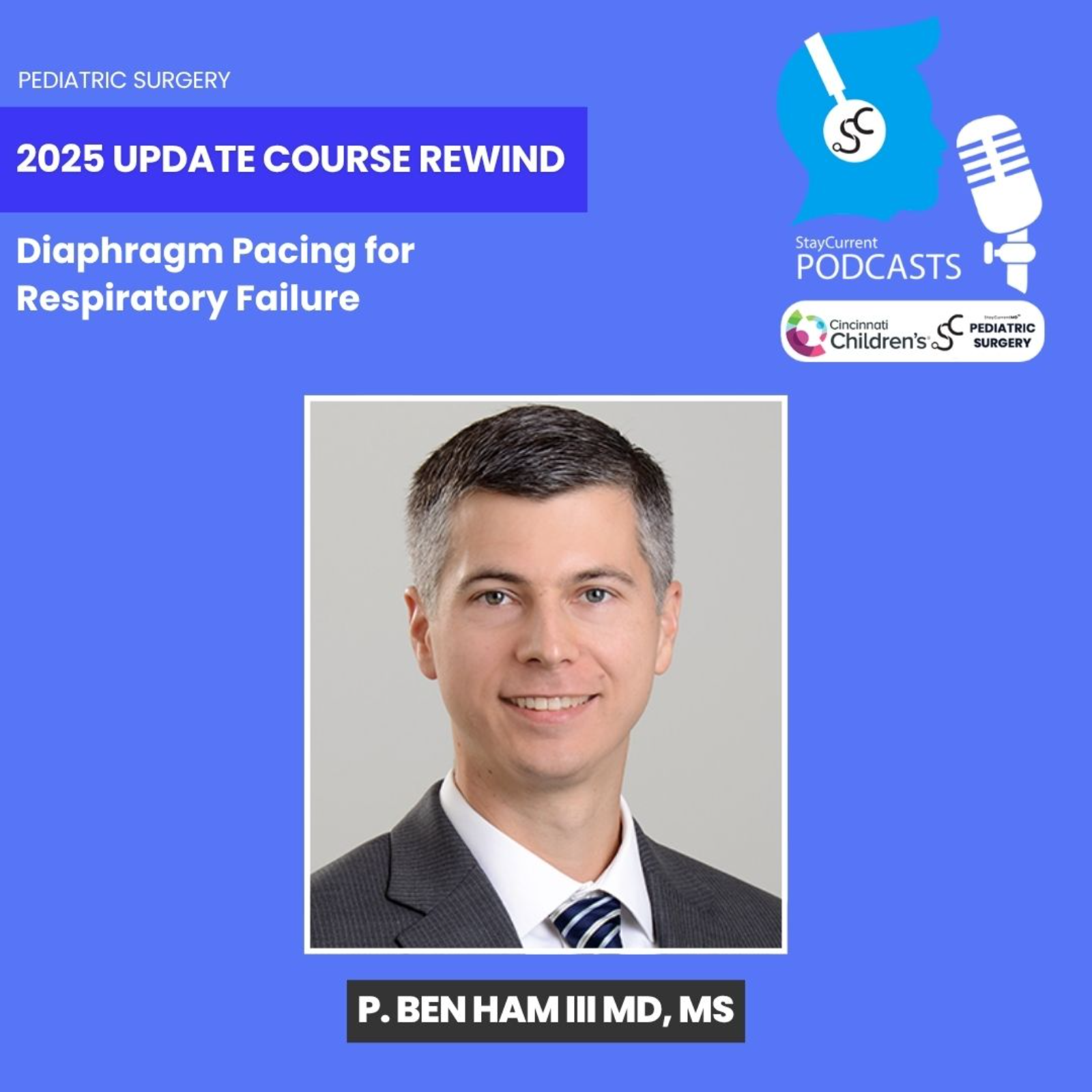
    Update Course Rewind 2025: Nerve Monitoring - Diaphragm Pacing for Respiratory Failure

    Dr. P. Ben Ham III discusses diaphragm pacing as an intervention for children with respiratory failure, aiming to help them wean off mechanical ventilation. The video covers indications such as central hypoventilation, spinal cord injury, ALS, and metabolic disorders like Pompe's disease. It explains the mechanism of phrenic nerve and diaphragm muscle stimulation, and differentiates between various device types.

  • July 31 · 3 min

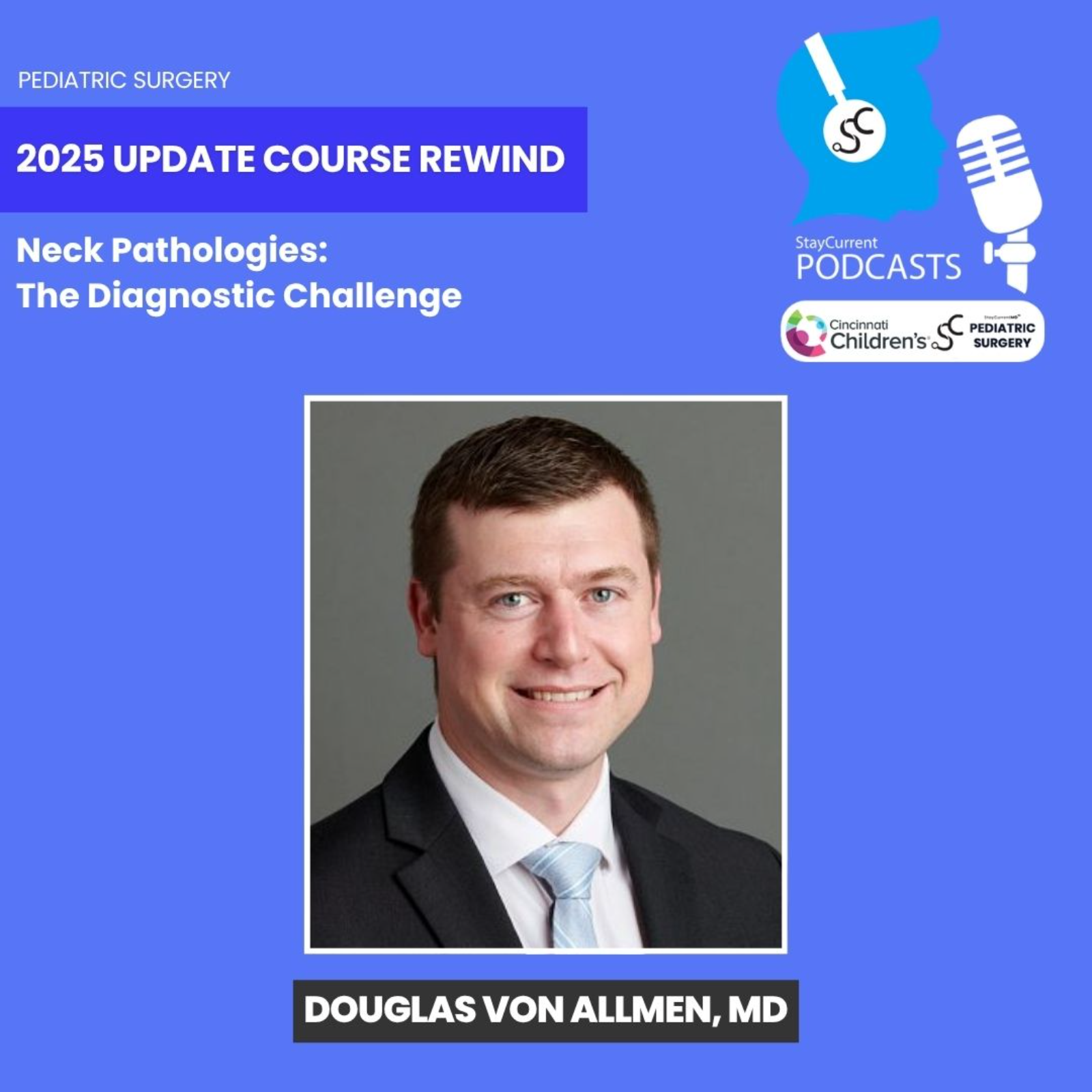
    Update Course Rewind 2025: Neck Pathologies - The Diagnostic Challenge

    This video, featuring Dr. Douglas von Allmen from Cincinnati Children's Hospital, explores the differential diagnosis and management of cystic neck masses in pediatric patients, specifically ranulas and lymphatic malformations. It presents a clinical case that highlights diagnostic challenges and discusses various treatment approaches, including surgical excision, sclerotherapy, and emerging medical therapies. The role of genetic testing in guiding treatment for lymphatic malformations is also covered.

Showing 1–20 of 37 episodes