Skip to content
Artwork for Slow Read: OUTLANDER
FictionScience FictionExplicit

Slow Read: OUTLANDER

Sarah Stewart Holland & Laura Tremaine

Sarah Stewart Holland & Laura Tremaine slow read the books you've always wanted to tackle, at a pace you can handle. 🔹 Fall 2026: OUTLANDER by Diana Gabaldon https://slowread.substack.com

slowread.substack.com
Play
  • 22 episodes
  • Avg 47 min
  • English
Counted on this page — what you have heard stays on this device, so it is not something the list can be paged by.
  • November 13 · 31 min

    What should we SLOW READ next?

    The vote for our next Slow Read is still open, and I have not been this surprised by a result all year. Laura and I went live yesterday to talk through where things stand. Right now My Brilliant Friend is out in front, with A Prayer for Owen Meany in second. Dune is beating Gone with the Wind, which neither of us saw coming. Nothing is decided. You have until Sunday morning to vote, so if your pick is behind, go rally your people. In the live, we get into why we handed this one over to you in the first place, how each of the four made the short list, and what a book about women, written by a woman, would bring to Slow Read. I read My Brilliant Friend years ago just to say I’d read it, and I struggled. That’s why I’d love to read it slowly, with all of you. We also argue about whether we’d read one Neapolitan novel or all four (Laura is not committing), whether Owen Meany might sneak onto the 2027 calendar too, and whether finishing the series would legally obligate us to take a Slow Read trip to Italy. I say yes. Laura says she needs to think about it. Plus a little Booker Prize gossip, because we can’t help ourselves. Join us Sunday at 4pm Central (5 Eastern, 2 Pacific) for our final Outlander book club, where we’ll announce the winner! Thank you Stephanie Pruett, Jessie Benkert, Chrissy, Laura R, Annie E. M. B., and many others for tuning into our live video! Join me for my next live video in the app. This is a public episode. If you'd like to discuss this with other subscribers or get access to bonus episodes, visit slowread.substack.com/subscribe

    • Transcript
  • October 14 · 53 min

    Fall Reading and Literary Drama

    We’re nearing the end of our Outlander Slow Read, but we also needed a minute to talk about everything else on our nightstands. Fall is Laura’s favorite reading season, partly because the big, weighty books land this time of year and the awards lists start rolling in. We started with what we’ve been reading. (Sarah is head over heels for Kingsolver’s Partita, which feels like a writer with nothing left to prove showing you exactly how good she is anyway. Laura is 12% in and not hooked, so I’m working on her.) We talked into the literary controversies of 2026. We covered AI in publishing, Rachel Cusk’s Life of M and the Natalie Portman of it all. We closed with Sarah’s son Griffin, who is 500 pages into It and ready to quit. Laura explained why it’s her all-time favorite, so I’ll be delivering a pep talk and reporting back. Book club is this week, and we’ll announce our next Slow Read before Thanksgiving. It starts in January and is open to everyone. Head to slowread.substack.com to nominate what we read next! Books We Mentioned What we’re reading * Partita by Barbara Kingsolver * Demon Copperhead by Barbara Kingsolver * So Big by Edna Ferber * Giant by Edna Ferber * Peck & Peck by Bonnie Garmus * Lessons in Chemistry by Bonnie Garmus * Exit Party by Emily St. John Mandel * Station Eleven by Emily St. John Mandel * The Glass Hotel by Emily St. John Mandel * Parable of the Sower by Octavia E. Butler * Under Story by Chloe Benjamin * Big Magic by Elizabeth Gilbert * John of John by Douglas Stuart * Mestra by Madeline Miller * Circe by Madeline Miller * An Elderly Lady Is Up to No Good by Helene Tursten * Hollywood Ending by John Green The controversies * Life of M by Rachel Cusk * Outline by Rachel Cusk * The Devil Wears Prada by Lauren Weisberger * The Nanny Diaries by Emma McLaughlin and Nicola Kraus * Bird by Bird by Anne Lamott * Famesick by Lena Dunham * The Odyssey, translated by Emily Wilson * The Tell by Amy Griffin * How to Change Your Mind by Michael Pollan * Children of Blood and Bone by Tomi Adeyemi Adaptations and Stephen King * Lincoln in the Bardo by George Saunders * East of Eden by John Steinbeck * Carrie by Stephen King * It by Stephen King * The Stand by Stephen King * Outlander by Diana Gabaldon Thank you Jessie Benkert, Heather Jones, Tracie Omit, Christie T, Erin Feeney, and many others for tuning into our live video! Join me for my next live video in the app. This is a public episode. If you'd like to discuss this with other subscribers or get access to bonus episodes, visit slowread.substack.com/subscribe
    • Transcript
  • August 31 · 6 min

    SLOW READ: Outlander (Part One: Chapters 1-5)

    This is a free preview of a paid episode. To hear more, visit slowread.substack.com The OUTLANDER adventure begins! In this first episode of our Slow Read of Diana Gabaldon’s OUTLANDER, Sarah & Laura discuss their first impressions of the novel, make guesses about where it’s going to go from here, and, of course, dissect the book chapter by chapter. FIND THE FULL READING SCHEDULE HERE Reminder that you can watch the video version of our conversation on Substack HERE We’d love for you to join us in the comments on Substack or in the Slow Read chat. (Remember no spoilers beyond the sections we’re discussing!!) Looking forward to spending the next few months with you through the stones!

    • Transcript
  • August 18 · 30 min

    Kickoff Conversation to Season 2 of Slow Read!

    We hopped on live in the middle of a Tuesday to officially kick off Season Two and hundreds of you showed ready to talk summer reading and get excited about Outlander. Laura and I had two very different reading summers. We talked about that and which books we both really loved or really didn’t. We talked about the books of the summer (looking at you Yesteryear!). We talked about the fall lineup of new releases which is insane. Also, we talked about what you need to know to tackle Outlander with us. Outlander is broken into seven parts, and we’re doing eight episodes because we split one of them. Our first episode, covering Part One, drops Monday, August 31st. Part One is about seventy pages. If you want to stay with us, have it read by the 31st. The Slow Read Outlander season is members only this time. Bookmark slowread.substack.com for the reading schedule, the meeting schedule, the Zoom links, and replays of anything you miss. The printable bookmark is here. If you’re a slow reader who’s sitting Outlander out, we’re not going anywhere — we’ve got other episodes and goodies sprinkled through the fall. But if you want in on these episodes, come join us. We don’t know yet whether we’re going to love this book. We do know we’re going to have fun. Every book we mentioned Overview * American Hagwon — Min Jin Lee * Partita — Barbara Kingsolver * Peck & Peck — Bonnie Garmus * The Art of Fighting: The Transformative Power of Conflict — Priya Parker * Exit Party — Emily St. John Mandel * Under Story — Chloe Benjamin * Big Little Truths — Liane Moriarty * The Pirate Queen — Ariel Lawhon The big three of the summer * Yesteryear — Caro Claire Burke * The Calamity Club — Kathryn Stockett * The Unselected Journals of Emma M. Lion — Beth Brower Literary fiction * Land — Maggie O’Farrell * Whistler — Ann Patchett * The Things We Never Say — Elizabeth Strout * North Woods — Daniel Mason * Country People — Daniel Mason Nonfiction * How to Rule the World: An Education in Power at Stanford University — Theo Baker * This Land Is Your Land: A Road Trip Through U.S. History — Beverly Gage * G-Man: J. Edgar Hoover and the Making of the American Century — Beverly Gage * Famesick: A Memoir — Lena Dunham Everything else * Mad Mabel — Sally Hepworth * Dear Monica Lewinsky — Julia Langbein * Kitten — Stacey Yu * June Baby — Shannon Garvey * Girl’s Girl — Sonia Feldman * The Shampoo Effect — Jenny Jackson * The Great Wherever — Shannon Sanders What we’re slow reading * Outlander — Diana Gabaldon * The Stand — Stephen King * War and Peace — Leo Tolstoy Next Up: Our first Outlander episode covering Part One drops Monday, August 31st. It’s about 70 pages — read it however slow reading works for you. The reading schedule and printable bookmark are both waiting for you at slowread.substack.com. Thank you Stacey Loscalzo Reads, Jessie Benkert, Juli Clarner, Denise, Readingroberts, and many others for tuning in! This is a public episode. If you'd like to discuss this with other subscribers or get access to bonus episodes, visit slowread.substack.com/subscribe
    • Transcript
  • June 22 · 31 min

    Your official invitation to the next Slow Read

    We finished The Stand. Six months in Boulder, and we made it out alive — well, most of us did. And now we get to tell you what we’ve been dying to announce: our next Slow Read is Diana Gabaldon’s Outlander. Here’s the part you need to hear first, because it changes things. Unlike The Stand, which we gave away free to everyone, the entire Outlander read this fall lives behind the paywall. Every main episode breaking down the chapters, every book club meeting, every unhinged side quest — members only. If you want to take this journey with us, now’s the time to join. The Stand episodes, we had to edit ourselves — pull whole sections, watch what we said, because the internet is the internet. Outlander has one of the most intense, passionate fandoms out there (they call Diana herself, like a deity — we’ll get into it). Behind the paywall, it’s just us and you. No torching on Twitter, no walking on eggshells. Our true feelings, full unhinged selves, the way a book club is supposed to be. A few reasons we are genuinely thrilled about this one: It’s Outlander. It’s been everywhere for a decade, the TV show just wrapped, and it sits right in the cultural water — but it’s also double-intimidating: a 50-million-copy series with nine books, novellas, graphic novels, a whole universe. Reading the first one together means you finally get to be conversant in this giant piece of pop culture, without committing to all 10,000 pages alone. Diana herself is a delight. Marine biology and zoology degrees, a PhD, a side hustle writing Scrooge McDuck comics, and she wrote Outlander on a lark as practice — never thinking anyone would read it. “Science and art are two sides of the same coin,” she says. “What they both rest on is the ability to draw patterns out of chaos.” We fell a little in love. And this time, both of us are going in blind. With The Stand, Laura knew the big picture and led the way. For Outlander, neither of us has read it — so we’re discovering it right alongside you. People say it’s intense. Possibly even slightly traumatizing. (Laura says that’s a selling point.) Here’s what to do: Join as a paid member now, and you get everything. Spend the rest of the summer catching up on our side quests from the first half of the year — the one we did on death is, no exaggeration, some of our best work. Plus, we’ll have a couple fun summer episodes for you. Then our whole Outlander adventure officially kicks off August 3rd, when we release the reading schedule. Book club meetings, watch-alongs, all the bonuses — it’s all included once you’re in. We’re all going to need a good, healthy, entertaining distraction this fall. Let this be it. Happy summer reading, y’all — see you in Scotland. This is a public episode. If you'd like to discuss this with other subscribers or get access to bonus episodes, visit slowread.substack.com/subscribe
    • Transcript
  • June 15 · 45 min

    SLOW READ: The Stand (The Circle Closes)

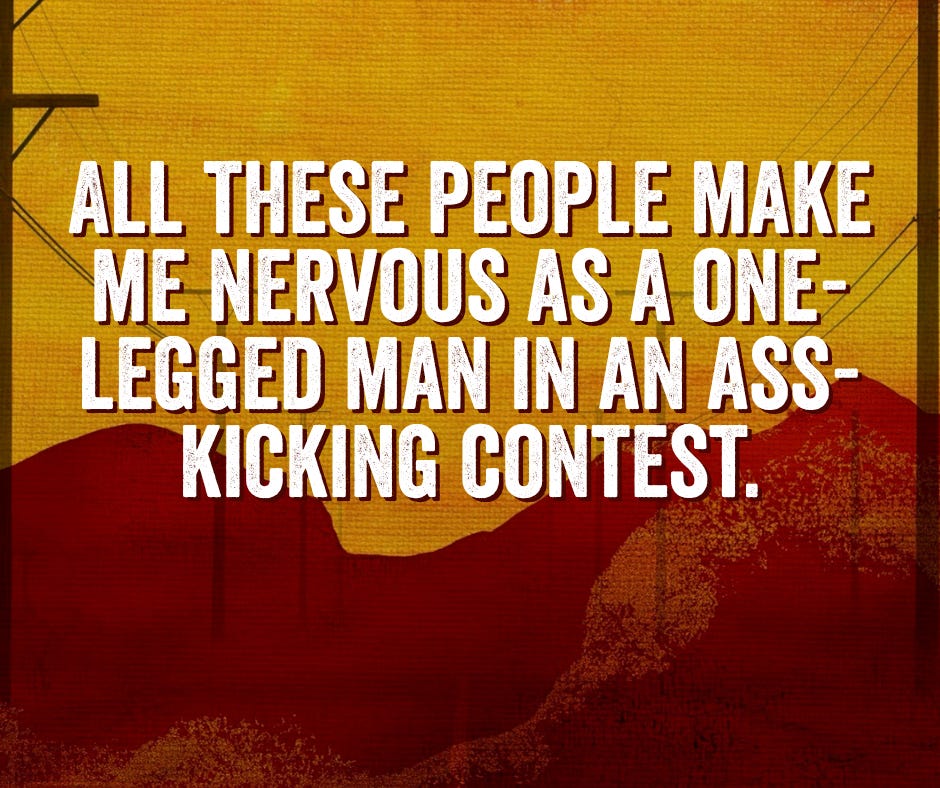
    Welcome to SLOW READ, where we tackle the books you’ve always wanted to read at a pace you can handle. Hosted by Sarah Stewart Holland and Laura Tremaine We are currently reading The Stand by Stephen King (unabridged version) You can find our full Reading Schedule here Join the SLOW READ community on Substack for bonus episodes, book club meetings, and Side Quests with Sarah & Laura We have come to the end of our journey with The Stand by Stephen King. In this episode, we dissect what it all meant and what we’ll remember about this experience. Make sure to subscribe on Substack for our next SLOW READ! Mentioned: Wolf Hall War and Peace Don Quixote Brothers Karamazov Blazing Eye Sees All Sister Helen Prejean / Dead Man Walking The Circle That Doesn’t Close Laura: We are here today at the end of The Stand by Stephen King to close the circle. Sarah: But I think it’s a lie. Why did he say the circle closes? That’s not what happens at the end of this book. Laura: That’s true. That’s totally true. But it starts with “the circle opens.” That’s the opening. So he has to close it. Sarah: Or is it just that the circle continues? That would have been a more accurate title for this epilogue. Just saying. Laura: I do have to say that I purposely, when I made our reading schedule for The Stand — we knew we wanted to do it for six months, like January to June, which we did — I planned it to close our circle here the same week the book opens, which is the second week of June. Just because I liked that symmetry. Sarah: I love it. I love a symmetry. Laura: We have a few little pages to get through, but before we do that — we will be continuing the slow read. We have picked our next book. Sarah: I picked it and I forced it on Laura. That’s the truth. Laura: We’re going to tell you all about that next week, where you’ll hear the reveal. If you cannot wait another second to find out the book, our paid members learned last week during our book club meeting. So you can go watch the replay of that if you just can’t stand it another second. But today we’re going to tackle “dusk of a summer evening” and the circle closing — which is a lie, because it doesn’t actually close. Sarah: It doesn’t actually close, but there are things to say about how King ended this whole thing. Because if you do any sort of Reddit search, any sort of Googling about The Stand, what people want to talk about is the end. Laura: Pretty much. Whether it was a true stand, or a letdown for some people, or if it’s what people expected. There’s a lot of that. The Split Epilogue: An Epilogue for the Good Guys Sarah: We get this kind of split epilogue, right? So we get “dusk of a summer evening.” The people we get to see from the Free Zone contingent — the good side — are Stu and Franny and Peter. Laura: I’m sorry, three people. Babies are people too. On their journey back to Maine, they stop at Mother Abigail’s house. Sarah: I don’t know if that path makes sense, for the record. Geographically I’m always like, where are you guys going? What are we doing? But whatever, it’s fine. Laura: Maybe there’s something about the way you’d have to travel by foot. I’ve always thought this is weird. I’m going through all this area of the country, including Nebraska, this summer on my RV road trip with my family. So maybe I can report back to us. But they do stop at Mother Abigail’s house. They’re on the porch, the baby’s playing, and they’re talking about what happened in the Free Zone and what they think is going to happen next. It’s a little epilogue for the good guys, really. Did it feel true to you? Sarah: Yeah. I think it’s true that the Free Zone would not stay together as this tight, cohesive unit. As people came together — I love this line — “all these people make me nervous as a one-legged man in an ass-kicking contest.” That’s something my grandpa would say. My grandpa always said, I want to live in the middle of 400 acres with a fence around it that says no trespassing. So to a certain contingent, living with other people is never going to be on the menu. From their perspective, the circle has closed, the threat is gone, so the need to stay close together for safety isn’t as intense. It makes sense that people would start to dissipate. Laura: I do think it’s an interesting choice that he follows the people leaving instead of staying in the Free Zone to say what happens next. Although you’re getting reporting from them on what the next phase looked like before they left. So he’s trying to get the best of both worlds. Sarah: I think he’s also addressing a natural question. If this really happened — but for the dreams about Mother Abigail drawing everyone to Boulder, or the contingent that went to Vegas — after a catastrophic pandemic like this, these little communities would be sprouting up all over. They wouldn’t all gather into one place. That’s the storytelling aspect, that it’s not very normal. So he’s addressing: okay, but in reality, people would dissipate. There’d be a lot of people like Franny who are homesick for their region, for their part of the country, who want to go back. Sarah: At their last Free Zone meeting they’re ready to have a sheriff, ready to get guns — and the progression of “when we don’t have one enemy, we have many enemies” seems pretty psychologically right to me. Do People Ever Learn Anything? Laura: He’s making the point over and over again in this ending — even in the darker parts — that the more things change, the more they stay the same. People are gonna people. Do you think people ever learn anything? That’s the question he’s posing. Sarah: I do. And look, there’s a way to look back over this book, and over the whole of human history, and say people are gonna people — they can be cruel, they can be violent. But the side of the coin I’m on is: yes, and the human species has made enormous, dramatic progress over the past 500 years. From the dark, peasant-and-serf-driven structure of society where how you’re born is how you die, the end — to an enormous ability to chart your own path and create peace and prosperity for the majority of people. The statistics on the children pulled out of poverty just in the last 30, 50 years are incredible. So I get what he’s saying, but I disagree to a certain extent that this is just an endless cycle, because we’ve made enormous progress. There’s no point in human history — unless you’re a crazy person who has this vision of the ‘50s that’s not accurate — where you’d want to go back in time. I don’t want to go back. First of all, I have a Type 1 diabetic child. The technology sucked just 10 years ago. I’m always going forward in time. Laura: There’s no doubt there’s an evolution, which means we are learning as a species. We’re learning and adapting and changing. I kind of think a better question — instead of “do you think we ever learn anything” — a bigger question that feels more complicated to me is: do we think people are inherently good? Are People Inherently Good? Sarah: Well, we know what Stephen King thinks. Laura: Do we? Sarah: Well, actually, I don’t, because I think I probably sit with him. I don’t think you can categorize all people. I think there’s a small percentage that are cruel and evil and violent and dark — and some, yes, it’s a product of their circumstances and trauma, and some I think maybe there’s something else going on, and it’s just kind of baked. He dances around this nicely with the dark man. I don’t think there’s a “dark man baby,” you know what I mean? That’s the philosophical debate — would you go back and kill Hitler as a baby? Do people spring forth fully formed? I’m not naive. I understand there are cruel, violent, terrible people out there. And on the other end of the spectrum, there are people who are just naturally nice and good — and a lot of them teach preschool, you know what I mean? They’re organized a little differently. And then there’s this messy middle, where you’re deciding day to day, moment to moment, in these sliding-door moments. You… This is a public episode. If you'd like to discuss this with other subscribers or get access to bonus episodes, visit slowread.substack.com/subscribe
    • Transcript
  • June 8 · 52 min

    SLOW READ: The Stand (Chapters 74 - 78)

    Welcome to SLOW READ, where we tackle the books you’ve always wanted to read at a pace you can handle. Hosted by Sarah Stewart Holland and Laura Tremaine We are currently reading The Stand by Stephen King (unabridged version) You can find our full Reading Schedule here Join the SLOW READ community on Substack for bonus episodes, book club meetings, and Side Quests with Sarah & Laura REMINDER: Our final book club meeting discussing The Stand will be THURSDAY, JUNE 11 at 6pm PT / 8pm CT / 9pm ET and we’ll be announcing our next SLOW READ! You don’t want to miss it. Mentioned in this episode: * The Shining by Stephen King * Station Eleven by Emily St. John Mandel * The Crocodile Hunter * “Have Yourself a Merry Little Christmas” (”…if the fates allow”) * Noah Kahan, “Maine” * Steel Magnolias The Stand, or The Walk? Laura: How are you feeling? Sarah: Well, it’s giving Sopranos. You know how in The Sopranos it was the penultimate episode that usually contained the most action? I feel like that show set up that structure — although apparently not, because The Stand has been around a lot longer. The main action, especially a majority of the violence, the falling out between Randall Flagg and members of the Free Zone, the nuclear bomb — all of that happened in our last section. So now we’re getting that real finale. We’re caring for the characters we really loved. We’re seeing where they ended up. We’re tying up some loose ends. Laura: I felt like these last chapters post-nuclear-bomb were so arduous. I felt like King is personally trying to remind us that this whole thing is about the journey and not the destination, which is such an annoying message. I was just like, we are still walking. It should have been called The Walk, not The Stand. Honestly, the whole book is just about journeying. Sarah: Well, I will say this. It’s not standing still, that’s for sure. But there’s a moment near the end where Stu says they’ll have to stand a watch for him. So it really felt like this conclusion of the book was more a philosophy: it’s not that you have to walk forever, but that you do have to stand watch. Maybe the stand wasn’t some sort of high-noon final battle between good and evil, which is what I expected when I started the book. It’s more like standing watch — standing watch for our worst instincts, standing watch for the ways in which humans can perpetuate great cruelty and harm on each other. We’re standing sentry, keeping an eye out. And even though I’m an Enneagram One and I love a black-and-white conclusion, I thought this was truer, wiser. I really liked it. Laura: It also seems to be saying that nothing is ever really over. It might be over for you individually, if you come to the end of your story, but life just keeps on keeping on. I have always quibbled a teeny tiny bit with how we spend these last chapters with just Stu and Tom — and even primarily Stu. We’re in Stu’s mind mostly. It’s no longer an ensemble cast. We started all the way back in Arnette, Texas, at the gas station — Stu is our first point man — and then we also end with so much Stu. I love Stu as a character. It’s just, oh, he wasn’t the one I was the most attached to. How did you feel about Stu being the final stand? Sarah: I loved it. I thought it wasn’t just Stu — it was the combination of Stu, Tom, and Kojak, who I believe is the real hero of this novel. I really liked the way King put the strengths and weaknesses of these three creatures together. It didn’t feel arduous to me. I was excited to see the ways in which they were stripped away and rebuilt. I liked that Nick kept appearing. I liked that we were worried about Franny. And I liked the changing threat — that we went from the heat of the desert and the nuclear fallout to this incredible winter hellscape. And Tom is such a great addition to every scene he’s in. The way they were facing very openly “we might not make it” felt like real learning, as opposed to how people were orienting themselves when Captain Trips first started wreaking havoc. Kojak, the Real Hero Laura: Let’s do a chapter breakdown, because if you’re a regular Stephen King reader, you recognize in this section in particular that he brings out his favorites — which is to say dogs, cars. He loves a car explanation. Sarah: I did feel like there was a little too much detail about what type of car you need to get started, the manual and the automatic. I was like, buddy. Laura: No, this is one of his things. Dogs, cars, ghosts in dreams, recurring themes, and of course abandoned hotels, even if they’re just the Holiday Inn. These pop up in so many of Stephen King’s stories. It’s such a King universe that we’re in. There’s no mistaking what we’re reading. Sarah: How do you feel about Kojak just being such a convenient hero? Kojak can do everything. He can hunt, he can bring the blankets up from the washout, he can go find Tom in the snow. Kojak is a dog of all trades. Laura: Here’s my question, because you’re the Stephen King expert. Does he often use dogs the same way he uses children or people of different abilities — to say, well, they have different skills because they are different? Sarah: Yes. And so that’s what that felt like to me. This is not a run-of-the-mill dog. It’s a special dog. Laura: In the same way that he uses children, there’s an innocence to animals, dogs in particular, that feels like they’re tapped into a god, a universe, a different plane. If you’re a dog lover, you don’t even necessarily deny that. That’s why it’s a convenient tool to use a dog. Sarah: I just want to say, though, that it’s a special dog — because if it was my dog, I would have to eat her by the fire. She would be of absolutely no use. She’s currently snoring underneath my chair. She would not be able to bring me a rabbit or firewood or much else. Laura: Same. Sarah: I’ve never owned that type of dog, but I’ve known dogs like that — super capable, very smart, communicative. I read recently that domesticated dogs have existed longer than agriculture. So I think it could happen. Laura: Definitely could happen. If you’ve ever watched a working dog — a herding dog, certain hunting dogs — they are very capable. I like Kojak. More Kojak. I’m here for it. It didn’t bother me, but also I’m a dog lover. I wonder, if you’re not an animal person, if you’re like, come on with the dog. We’ll have to hear from our community about that. Chapter 74: Tom Shows Up Laura: In Chapter 74, Stu is still broken-legged, starving, and starting to get sick. He heave-hoes himself up out of the washout when he hears the boom and needs to see with his own eyes what’s going on. To me, this is the arduous part — not the plot points. Do we need two pages of him crawling up? Sarah: I didn’t think we needed that part. I get it, he needed to get up there. I was just so happy that once he got up there, Tom showed up. Sarah: Okay, but here’s the immediate thing I thought. You have read this book before. You knew this was going to happen. And still you had all those complaints about them sending Tom. Laura: My complaints about why they sent Tom are separate from Tom ending up being the savior. They sent Tom because Stephen King needed him to save Stu. I still think they took advantage of someone. And here’s the plot weakness: why does he approach Stu when he was very clearly instructed during the hypnosis to stay away from people? Laura: I think King’s implication is that they have to go the same way because they have to take tunnels — unless they’re going to crawl up and down the Rockies. So everybody’s taking the same path because they have to cross through these tunnels. Laura: I don’t mind a plot point of convenience. I get it, they need to be all on the same road. It just needs to make sense. And I like this ending because I love Tom — he’s one of my favorite characters. I just don’t want Tom to be taken advantage of in the first place. Sarah: I feel like this is Stephen King saying he’s not taken advantage of. Look how incredibly capable he is. He is… This is a public episode. If you'd like to discuss this with other subscribers or get access to bonus episodes, visit slowread.substack.com/subscribe
    • Transcript
  • June 1 · 1 hr 1 min

    SLOW READ: The Stand (Chapters 72 - 73)

    Welcome to SLOW READ, where we tackle the books you’ve always wanted to read at a pace you can handle. Hosted by Sarah Stewart Holland and Laura Tremaine We are currently reading The Stand by Stephen King (unabridged version) You can find our full Reading Schedule here Join the SLOW READ community on Substack for bonus episodes, book club meetings, and Side Quests with Sarah & Laura Mentioned in this episode: * Tribe: On Homecoming and Belonging by Sebastian Junger * 1984 by George Orwell * Paradise Lost by John Milton * Carrie by Stephen King We Stood Sarah: We have been reading Stephen King’s epic The Stand, and I think we’ve come to the part where we stood. Did we stand? Laura: I think we’re still standing. Sarah: Are we standing? Laura: I think we stood. I think we did it. We are wobbling in our woo! Sarah: We would love for you to join us for our final book club meetings for The Stand. There’s obviously going to be a lot to say as we wrap up this epic novel. All of those are coming up in June. You need to check our Substack for details of our book club meetings, our final episodes, and maybe some announcements for what we’re doing next. All of that is going to be on Substack. You can join us there at slowreadbookclub.com and we’re going to have side quest conversations for you. Tomorrow our side quest will be on summer reading and summer plans. We can’t wait to talk about that with you. Laura: Yep. If you join us at the Slow Read Substack, you will get all of our side quests that we’ve been covering through this time. And they have been wide ranging, friends. Sarah: They really have. Sometimes they go along with the book. Sometimes they don’t. Laura: They don’t. But they are excellent conversations with Sarah and I, only for our Substack members. Over on Slow Read, go to slowreadbookclub.com for all of that and more. Sarah: And more. “Is That It?” — First Reactions to the Ending Sarah: We’re going to talk about chapter 72 and 73, and I deserve an award for not texting you the second I finished the section. It was hard. If I had finished this section before we saw each other in person for the first time in 12 years, I wouldn’t have been able to resist. I didn’t really plan to not read it until after, but I’m glad it worked out that way or I would not have been able to keep my mouth shut. Laura: Because you would have wanted to talk about it. Sarah: It’s so talkable. We stood. Of course I want to talk about it. I’m curious what you think reading it for the first time. Did you feel like dun dun dun? Did you feel the music swell in your head? Laura: Yeah, I definitely did. I wanted to just bare minimum text the wide-eyed emoji, but I didn’t — again, because I deserve an award. And my husband, who had been doing a good job kind of keeping pace with us, sped ahead and finished the book, so he’s been saying some cryptic stuff. It got me all keyed up. But yeah, it kind of snuck up on me, but not really. By the time you get to chapter 73, by the time you’re in Larry’s head, you’re like, okay, we’re here, we’re gonna stand. But then it’s over kind of quickly, and so you’re just like, what just happened? Sarah: I know. That’s what I kind of wanted to ask slow readers — if you’re like, “is that it?” Nicholas was definitely that reaction. Those were the cryptic comments he was making. It was very much, “Is that it, Vang?” Laura: Is that how you felt when you read it the first time? Sarah: Definitely. I was kind of just reading, bopping along, and didn’t realize that was it. I mean, there’s still a little bit more to go, but I feel like it’s a lesson in — it’s in the journey, not the destination. Laura: Yes, but I like the destination. Okay, now we’re getting too close to chapter 73. Let’s back up. Let’s do chapter 72. Chapter 72: The Walk and the Question of Fate Laura: So, chapter 72, we pick back up with our traveling party — Stu, Larry, Glenn, Ralph, and Kojak, the true star of the traveling party — as they continue their grueling walk across the United States. They’re averaging like… I really appreciated the mileage chart. I thought that was very helpful, as a person who travels a lot and plans itineraries. Sarah: I was with them in their analysis around the campfire of like, why are we doing it this way? They know why they’re doing it. Mother Abigail told them: walk with just the clothes on your back. You can’t take food. You can’t take packs. You have to survive this hundreds — 400-mile walk, or whatever it is, 500-mile walk. But I sort of was with them when they’re like, we know why we’re doing this, but why are we doing this? And like, can we cheat a little bit? Laura: I really liked this conversation they’re having about why are we doing this at the beginning of chapter 72, and we get to your theory that you’ve brought up over and over again. They’re having a conversation mainly about the wear and tear on their bodies at first, and then Glenn says: “And 50 years of confirmed agnosticism, it seems to be my fate to follow an old black woman’s God into the jaws of death. If that’s my fate, then that’s my fate. End of story. But I’d rather walk than ride, and when you get right down to it, walking takes longer — consequently I live longer by a few days anyway.” So I thought, here we are, here’s your theme. Is it just fate? Is this story just one long journey of fate? Sarah: Well, I have been talking about this for six months. But I don’t know that that is a direct correlation to them having to do it bare, you know? No food, nothing. Now, I mean, they really talk about how fasting clears the mind. I liked all that. And there’s been a walking theme as much as there’s been a fate theme through this book. Remember? Stu walked out — he walked off his fear of the hospital. Trashcan Man walked himself into delirium. Nadine’s walking. Everybody’s walking all the time. Walk, walk, walk, walk, walk. So it does feel like a sort of preparation for the mind, body, and spirit, if you will, for what’s to come. But it also feels like an unnecessary burden to have to figure out your survival. Like they’re eating chips out of people’s cars with dead people. Laura: I’m into it. Sarah: I’m into it. Laura: Because there is a grounding that happens when you are viscerally aware of your own body and its survival. These men would not have had the bravery necessary in chapter 73 if they’d just taken a car. Sarah: No doubt in my mind. Laura: Because they had to know what they’re made of. Sarah: You’ve got to know what you’re made of. You’ve got to know how far you can push your body, how far you can push your mind. And really, I think this physical experience strips away that dichotomy. You know, the closest analogy I can find in my own life is labor. I had three nine-pound babies with not a drop of drugs. I gave birth to two at home — and sort of knowing that I had to get myself through it, like me and my body and a midwife. I’m not a free birther, please don’t message me. But it’s exactly what they describe. It’s so clarifying in a way that’s not intellectual, that’s not, “I’m walking through these steps.” You do something like that, and that dichotomy of my mind, my body — it just goes away. It’s like people when they talk about running marathons, or extreme marathoners, like pushing your body but really yourself, all of you, to the brink. In this way, I think it prepares you to do some really hard shit. Laura: And these guys, they all know it. They’re on the way to do some really hard shit. Sarah: Yeah. And there’s lots of metaphors or references. I like your birth metaphor, but then there’s biblical stuff throughout, even more so in chapter 73. So there’s walking in the wilderness, there’s people taking pilgrimages. I mean, it feels like a human experience, kind of like what you’re describing — we put ourselves through this. Laura: At the end of the day, they had to put the steps in front of them. They had to make the miles. They had to get over aches and pains and hunger. They were instructed, but then they chose. Y… This is a public episode. If you'd like to discuss this with other subscribers or get access to bonus episodes, visit slowread.substack.com/subscribe
    • Transcript
  • May 28 · 7 min

    Join Laura for STEPHEN KING SUMMER 2026!

    The 6th annual Stephen King Summer Book Club kicks off next week and I want you to be a part of it! Stephen King Summer is part of Laura’s Secret Stuff Substack and when you sign up for it, you’ll get the Stephen King Summer Book Club + all her other Secret Stuff content AND the full Stephen King Summer archives. JOIN STEPHEN KING SUMMER For Stephen King Summer 2026, we’re reading: HOLLY The Life of Chuck CUJO and we’ll do watch alongs each month in addition to our zoom book club meetings. I would love to see some Slow Readers over on Secret Stuff this summer! This is a public episode. If you'd like to discuss this with other subscribers or get access to bonus episodes, visit slowread.substack.com/subscribe

    • Transcript
  • May 18 · 57 min

    SLOW READ: The Stand (Chapters 65 - 71)

    Welcome to SLOW READ, where we tackle the books you’ve always wanted to read at a pace you can handle. Hosted by Sarah Stewart Holland and Laura Tremaine We are currently reading The Stand by Stephen King (unabridged version) You can find our full Reading Schedule here Join the SLOW READ community on Substack for bonus episodes, book club meetings, and Side Quests with Sarah & Laura Mentioned in this episode: * Michael Pollan on the Ezra Klein Show * Rosemary’s Baby (1968 film) * The Sopranos The Announcement Before We Begin Laura: Hello, I’m Laura Tremaine. Sarah: And I’m Sarah Stewart Holland. Laura: This is Slow Read, where we tackle the books you’ve always wanted to read at a pace you can handle. And we are in the final chapters of The Stand by Stephen King. Sarah: If you have been reading along with us since January, lordy, things are finally happening. And if you are binging and catching up with us, well, welcome. Laura: There is a lot to discuss, including whether or not Randall Flagg is a bride’s dream come true. Sarah: He is not. Laura: Spoiler for the whole episode. He is not. Sarah: Now, we would love for you to join us for our last couple of book club meetings for The Stand. Our May meeting is next week. And then we’ll have a big final meeting in June to process the end of The Stand and our whole slow reading experience together. You will want to be there for these meetings because they’re going to be very satisfying to discuss this novel after being with these characters for six months — and each other for that matter. And we’ll be revealing what our next Slow Read is going to be. It’s a big one. It’s a big announcement. Laura: These book club meetings are for our Substack paying members only. And when you join us over there at the Slow Read Substack, you will get not only our book club Zooms with me and Sarah, but you’ll also get a host of other goodies, like all of our Side Quests where we share our personal stories about our dreams, death, parenthood, love triangles. Don’t you want to hear us talk about those things that are tangentially related to The Stand that we have been discussing for the last five, six months? Join us over on slowreadbookclub.com. That’s on Substack. The Balance of Good and Evil (Before We Even Get to Chapter 65) Laura: Okay, Sarah. Chapters 65 through 71. Wow. Sarah: It’s weird because Stephen King has spent the whole book setting up how powerful Randall Flagg is. And then the closer they get, he’s starting to poke holes in that power — which felt like a lot of what this section was. But it hasn’t really lessened my trepidation for our boys as they get closer to Vegas. You know what I mean? Laura: A lot of things I think are happening. He is poking holes in how all-powerful he is, but it feels like sort of the yin and yang to what he also did with Mother Abagail. Sarah: Yeah. Laura: So there’s a real balancing happening in this part of the book, which for me was a little jarring — to go from all of these hundreds of pages spending in the Free Zone with these characters that we love and how they’re setting up their community and all this, and then now to spend the last couple sections in Vegas. I’m like, this is a decidedly different vibe. And I agree with you. It doesn’t make him any less scary. Sarah: But that’s because we know from life experience — not to mention our own literary tastes — that just because he’s not all-powerful doesn’t make him any less terrifying. It’s almost he’s almost more terrifying now that he’s feeling a little desperate. Laura: Right, because he’s backed into a corner. People backed into a corner are dangerous, for sure. Sarah: There’s a lot that happened in this section that sort of brought up so many questions that we have been teetering on the edge of in terms of: what is good and evil? What is all-powerfulness? Who is Mother Abagail and Randall Flagg, like — are they, if they’re not exactly God and the devil, are they angels, demons? And there’s just a lot of questions about those characters, but then also about our community characters in terms of like, nobody is all bad or all good. Laura: He feels all bad to me, but the bad is complicated. Well, he does. He might be all bad — but I guess I meant the community people as they’re starting to have doubts. Sarah: Yeah, I mean, I think that’s what opens up the most interesting moments, especially with Lloyd and Nadine and everyone not operating out of a place of pure fear. Because the holes that King pokes in Randall Flagg’s power break the spell just enough that people in Vegas can start to assess their own decision-making. In the same way that Mother Abagail disappearing freed people up to take leadership roles and make some decisions in the Free Zone — it’s a very similar situation, I think. Laura: Yeah, that’s what I was feeling in the balance of it all. When Mother Abagail goes on her walk to the woods, it’s kind of disappointing, but you still have this human nature thing of like, all right, we’ll buck up, we got to come together and do it in her absence. But when we start to see the failings or the humanness of Randall Flagg — “disappointing” is not a word that covers it. It feels like terrifying. Like, oh no. Because we know men like this who start to lose their grip on power — if it slips even a little bit, they get very erratic and dangerous. Sarah: Well, and the reasoning of the people around him — they’re like, oh no. I did so many things, I made so many decisions, based on the premise that he is protecting us. These people have made some moral and ethical sacrifices on the premise that he was gonna keep them safe. And he couldn’t even keep them safe from Trashcan Man. But I’m skipping ahead — let’s start with chapter 65. Chapter 65: Randall Flagg in the Desert Laura: Chapter 65 opens with Randall Flagg out in the desert. He’s just cooking a rabbit and thinking. This is, I think, not the first time we’re in Randall Flagg’s head, but it’s the first time this whole section where we’re getting a bit more of a fuller picture of how he thinks. And it is substantially more human than we’ve experienced him. Sarah: He’s frustrated with himself and his powers. It’s almost like he has also taken his powers for granted. He cannot see who the third spy is. He cannot figure that out. He’s baffled that Harold Lauder attempted to betray him in the end by shooting at Nadine. He’s having trouble levitating, which is this — Laura: Oh, my God. Sarah: Well, considering what happens to poor Nadine, I don’t think so. Laura: He comes through in the end, as the case may be. Sarah: Oh, my God. I was so freaked out at the beginning of this chapter — how he would look at the wolves and they would fight. We’re going through a lot of the diminishment of his powers, but King is still like, don’t forget this dude is scary. He would just look at the wolves around him and they would start to bite each other and fight each other, and I thought, oh, that’s just such creepy dark imagery. That he is just like violence personified and a mere glance can bring it out in these creatures. I was very freaked out by that. Laura: Yeah, he’s so creepy in this part. But to me it was giving more demon than devil. Sarah: Yeah, and I thought it was so interesting how he talked about how he couldn’t remember his life or experiences before the super flu. He was no longer strictly a man if he had ever been one. He was like an onion slowly peeling away one layer at a time — only it was the trappings of humanity that seemed to be peeling away. Organized reflection, memory, possibly even free will, if there ever had been such a thing. He can only remember the events since the super flu. He was losing himself is how it’s described. So to me that’s so interesting. That feels like something that would happen as his power grew — but maybe there was something in his power and connection and ability to control other humans that was really linked to his own human experiences. Laura: Well, and he also says — this is skippi… This is a public episode. If you'd like to discuss this with other subscribers or get access to bonus episodes, visit slowread.substack.com/subscribe
    • Transcript
  • May 11 · 46 min

    SLOW READ: The Stand (Chapters 61 - 64)

    Welcome to SLOW READ, where we tackle the books you’ve always wanted to read at a pace you can handle. Hosted by Sarah Stewart Holland and Laura Tremaine We are currently reading The Stand by Stephen King (unabridged version) You can find our full Reading Schedule here Join the SLOW READ community on Substack for bonus episodes, book club meetings, and Side Quests with Sarah & Laura If you prefer to read instead of listen, below is a cleaned up transcript of the episode as well as links to all the books and Substacks we mentioned in this episode…and several fun bonus links and videos! Mentioned in this episode: * The Lord of the Rings by J.R.R. Tolkien * The Tune of Things: Is Consciousness God? (Christian Wilman in Harper’s, 2025) * Moby Dick by Herman Melville * The Scarlet Letter by Nathaniel Hawthorne * Paradise Lost by John Milton * “Top of the World” by The Chicks (Official Video) * Stand By Me (1986 film) — IMDb The Writing in This Section Sarah: Laura, after a very long time in the free zone, we are back with Randall Flagg and his crew, which have been varying levels of infiltrated by the committee spies. How did you feel about this section? Laura: I thought these particular chapters were some of the best written of the whole entire book. I have two standout sections that I consider the best in terms of incredible sentences and just the craft of it — this is one of them. Not a ton of wild imagination necessarily, but the sentences in this section, I was like, oh, that’s so well written. How he looped back several different things, and then the section many hundreds of pages ago with Glenn Bateman — that one felt really well written too, really poetic. But this section feels different. Like he was in a flow state, Mr. King, when he did this part. Sarah: I totally agree. I thought it was really engaging. And I also want to say — in this section as a whole, King makes a ton of literary references. He references Edgar Allan Poe, he references Lord of the Rings. I looked up the law book that Judge Ferris is reading, the one King mentions multiple times, and that’s a real book — it’s literally about racial social justice. I looked at it and was like, okay, he is doing some things. King is doing some things. This is pre-Black Lives Matter as a movement, but obviously these conversations were being had. We’re coming out of the 60s, back in the 70s when this was first written — it makes sense. Laura: And back to the writing style changing — I feel like that’s also part of the fact that we’re now in Vegas, and we haven’t been there for hundreds and hundreds of pages, and the writing is just different. It almost feels like these little sections — Judge Ferris, Dana, and then Harold — could almost be novellas with just a little more structure put in. They’re so well done. But it’s a really different tone from the time we’ve been spending in the free zone, which is a little folksy, a little quote-unquote normal novel stuff. This is really different, and that feels intentional. The Vegas parts have a different flavor. And I also like that he’s making the connection that not everyone in Vegas is evil. People are people. It’s not black and white. Chapter 61: Poor Judge Ferris Sarah: Well, let’s start with chapter 61, because poor Judge Ferris doesn’t actually make it to Vegas. Laura: God bless him. Bless his heart. Sarah: There’s a lot going on in this chapter — the plot happens, but also King is pulling together a lot of things. So we find Judge Ferris making his cross-country trip, and we know that Randall Flagg has sent patrols to stop him, to kill him — but please, please, please protect his head, because I’m going to send it back to the free zone and freak them all the way out. Some very specific instructions. At first I’m like, why are we taking this beloved character and sending him directly to his death? But there are two moments where I start to see the pieces coming together. The first is Judge Ferris is in a hotel room and a crow taps on his window. And Judge Ferris realizes this crow is Randall Flagg. He pulls a gun — and what I thought the most affecting part was, the crow slash Randall Flagg kind of panics. Oh no, if he shoots me, that’s it. Luckily for the crow slash Randall Flagg, the safety’s on. But Stephen King is giving us this insight to realize he is not immortal. He’s very powerful, but he can take on these other forms, and that means he’s vulnerable the way those forms are vulnerable. Which I thought was really interesting. Laura: Well, I also thought it was interesting because we haven’t encountered much supernaturalness for many hundreds of pages. It’s been kind of practical for a while. Sarah: What are you talking about? Are you forgetting the drive-in scene where he took over the speakers and was speaking to Nadine? Laura: Yes, but it’s all Randall Flagg–based. The percentage of supernaturalness in this story is on the lower side than I think most people might expect from Stephen King. This has been more of a practical, post-apocalyptic novel. Sarah: We’ve just spent a lot of time in committee meetings and town meetings. Even when Mother Abigail’s healing Franny, it is a moment among a lot of secretarial work. Laura: Yeah. I was like, bring it, Crow. I was ready for something like this to happen. Sarah: But there’s also — not just that the crow gives us insight into Flagg’s vulnerabilities — the whole time I was thinking, why are you so worried about him? Why are you so paranoid about Judge Ferris making it all the way to Vegas? You know he’s a spy, you hunt him out immediately. There is sort of a “thou dost protest too much” situation. Why are you sending parties all over the United States to stop this one guy? Laura: Don’t you think this is the first real glimpse we have that Randall Flagg is scared? Sarah: Yes. Exactly. I think that’s what this whole section is about — he is paranoid, he is not all-powerful. For one thing, he has to depend on animals to be in a lot of places at once, which is a vulnerability we’re learning. And then he has to depend on these dum-dums like Bobby Terry — what a name — to institute his orders, and they’re ding-dongs who can’t do it. The one instruction was: don’t shoot him in the head. And Bobby Terry kills Judge Ferris so dramatically and terribly that he’s unidentifiable. So even if they sent the head back to the free zone, they’d be like, who dis, we don’t know. Laura: I feel like there are parallels here — not just to our current moment of a wannabe all-powerful dictator, but to past moments too. There’s a lot of bravado in that type of person, but there’s an underlying fear. And also, the people surrounding them doing their bidding are statistically often dum-dums. Sarah: Well, that’s definitely Dana’s observation in the next chapter — that there are more ding-dongs in Vegas than there are in the Free Zone. Laura: Yeah, but they work harder. Sarah: They work harder. Then Bobby Terry screws up, and Randall Flagg transforms into some — I couldn’t quite put it together. Beast, man, crow? Laura: All I know is there are teeth involved. That part I picked up on. There were teeth, and he died in a very gruesome manner. I wasn’t sure — maybe weasel-y, animal-y? Sarah: Did you have to get a map out and be like, wait, the sentries are in Oregon? How do we get from the Rockies to Vegas? Laura: I was so confused. Sarah: He’s going up and around, obviously. Listen, I’m a big national parks person, so my baseline geography of the mountain ranges and the middle west to far west is probably a little better than most. Laura: It must be, because I literally was like, Oregon, where are we? What’s going on? I just think everybody — including Randall Flagg, because apparently he materializes like a ghost — is moving around awful quick in this story without airplanes or helicopters, and sometimes just on bicycles. Sarah: Okay, I didn’t want to nitpick this because I complained earlier in the book about why they were all using bikes. But now that we are into cars, li… This is a public episode. If you'd like to discuss this with other subscribers or get access to bonus episodes, visit slowread.substack.com/subscribe

    • Transcript
  • April 27 · 1 hr 12 min

    SLOW READ: The Stand (Chapters 56 - 60)

    Welcome to SLOW READ, where we tackle the books you’ve always wanted to read at a pace you can handle. Hosted by Sarah Stewart Holland and Laura Tremaine We are currently reading The Stand by Stephen King (unabridged version) You can find our full Reading Schedule here Join the SLOW READ community on Substack for bonus episodes, book club meetings, and Side Quests with Sarah & Laura ______ Mentioned in this episode: * Giants in the Earth by Ole Edvart Rølvaag * The Handmaid’s Tale by Margaret Atwood * How to Change Your Mind by Michael Pollan * Contagion (film, 2011) Living Inside the Book Laura: And after a few hundred pages of peaceful community building, some stuff really happens in this section finally. Sarah: I’d say so. I found myself traveling recently to Vegas of all places. And I was driving and I looked up at the moon and it was like fully half. And I’m like, oh, we’re not to the full moon for Tom Cullen. As if I have to wait for the full moon in my life for him to come back. I’m like real in it. I noticed every mention of Boulder. I noticed every mention when I was walking around Vegas. It feels like almost at the pace it’s happening. I’m a little stressed and I’m just in it. The anticipation of what’s going to happen next, especially after this section, is very, very high. Laura: I am having a similar experience by doing this so slowly. I’m reading it so differently than I would read any other novel, which changes your relationship to the character. Of course it’s a reread for me. Where if you’re mildly irritated by a character, you’re just reading so fast that you don’t really sit with those emotions. You’re like, well, that’s sort of annoying, and you just keep it moving because you’re propelled by the plot or by finishing or whatever. By doing it slowly, it really changes the way I think about the characters because, like you said, we’re kind of in it real time, like they’re friends. In the past, when I didn’t have much sympathy for Larry Underwood because he just seemed very narcissistic, on this read, doing it slowly, I’m sort of seeing the fullness of his character differently—and having a lot of sympathy for him until we get to this section and he wore me slick. Sarah: This is always my experience with slow reads. I read War and Peace last year and I just felt like I lived about 20 percent of my life in Russia all year long. When you do a slow read, you also live a little bit in the book. You’re not hopping in and out. You’re not speeding through. You’re just existing there and soaking up all the slow changes and the atmosphere and the annoying people and the people you like and everybody’s choices. That’s why I like it so much. Laura: Because when you read quickly, you get the high level of what an author is doing with a character. You understand if they’re meant to be manipulative or the hero. But when you go slowly, you just feel like you know them. You can sort of think about this book when you’re driving around town doing your errands, like you would think about people you know in real life. It’s just really a different experience, but I’m loving that part. Sarah: Yeah, it’s the best. I love hanging with characters like that. Even when they’re all dying. Even when they’re all dying. Laura: Which brings us to the bummer of this section. Chapter 56: Babies, Bombs, and Bad News Laura: Chapter 56, we start out — are the babies dying? This is rough. I feel like this theme is going to hit the mothers among us. The beginning of this chapter, Ralph stops Stu and tells him that a new group is coming in to join the Free Zone. There’s about 40 of them. Wonderful news. There’s a doctor among them. But not so great news is that one of them, Mrs. Wentworth, was pregnant with twins. She delivered on the road as they were walking. And both of her twins die under mysterious circumstances. Everyone’s mind immediately goes to: did the babies breathe air and immediately get the super flu? Sarah: That doesn’t make sense virology-wise, because I’m an amateur virologist now. It would not hang out that long with no host for months and months in the hot summer sun. Laura: But you don’t think the immune people might carry it, but they’re immune to it? Sarah: I mean, I guess, but it has to have something to live off of. There are real virologists listening right now being like, hey, this is why you’re an amateur. Laura: But I wonder if — was there something to what they were trying to say about because the babies were conceived before the flu hit? Is there something then, or if their biological dad had it, does that make a difference? Sarah: Yeah, that seems to be their theory. The smaller story of Mrs. Wentworth is so much like a story in a book I read for Well-Read Mom called Giants in the Earth, which is about Swedish pioneers in like Minnesota, 1800s. This woman along the way loses a child and she kind of loses her mind a little bit, doesn’t want anybody to have the bodies. It really, really reminded me of that story. The idea that if you were traveling to what you perceived as safety with your children or while pregnant and then to lose one of them — I think it’s just a really unique psychological trauma. And with this, the whole conversation got me thinking about with the “no more babies” — this is what I always say about Handmaid’s Tale. Like, people are like, it would never get that bad. I’m like, I don’t think you understand how quickly people would go crazy if there were no babies. I 100% believe people would lose their ever-loving minds and would be able to look past or accept any manner of horror and abuses if they thought it would get them babies. Laura: Well, and it makes King’s choice to have Franny be pregnant such a stroke of genius to this particular story. It really came together in this section because it raises the stakes. Not just Franny’s pregnancy, but like all of humanity’s pregnancy. And it just makes it all more emotional. I’m a little worried — she hasn’t felt the baby move but one time. I keep thinking that too, but she’s not due till January and it’s August. And you don’t feel them as early with your first baby. Sarah: I lost a pregnancy at 20 weeks and then got pregnant way too soon afterwards with Felix. And just that obsession — like all-consuming obsession with feeling the baby move and making sure everything is okay. I remember my doctor being like, come in anytime, anytime. And Felix — he was such a jerk. Anytime they would do an ultrasound, he’d be asleep. I’d be like, move, you jerk. Don’t you understand my stress level? And the doctor’s like, no, he doesn’t. And he doesn’t care. Laura: With your first one, you really don’t know. Eventually it becomes unmistakable that the baby is moving. But there are so many twinges and little flutters, and you want it so badly to feel it that you sometimes will it to happen. Franny being pregnant is really becoming an important part of this story. And story-wise, it also really matters that Stu is not the biological dad. There’s a lot happening here. Sarah: That feels... Mary and Joseph. Laura: Biblical, yes. This whole book has so many biblical things. Well, and we find out later in this section that Nadine’s going to get impregnated by the dark man, which sounds unpleasant to me, personally. Sarah: Cold. Ew. Nadine, Leo, and the Question of Loyalty Laura: So at the beginning of Chapter 56, Nadine is back in her original house, packing up. And she doesn’t even realize that in the corner, Leo — formerly known as Joe — her little savage companion, is sitting in the corner in his underpants. Are we supposed to love him or what? Because I’m creeped out by him. Sarah: I mean, Stephen King plays around a lot with powerful, psychic kids. And I don’t think they’re supposed to be deeply comforting. Because there is something about when it’s coming from someone who fundamentally doesn’t understand the world yet and isn’t mature enough to have a prefrontal cortex, it just hits different. It reminds me of Michael Pollan’s b… This is a public episode. If you'd like to discuss this with other subscribers or get access to bonus episodes, visit slowread.substack.com/subscribe
    • Transcript
  • April 20 · 56 min

    SLOW READ: The Stand (Chapters 52 - 55)

    Welcome to SLOW READ, where we tackle the books you’ve always wanted to read at a pace you can handle. Hosted by Sarah Stewart Holland and Laura Tremaine We are currently reading The Stand by Stephen King (unabridged version) You can find our full Reading Schedule here Join the SLOW READ community on Substack for bonus episodes, book club meetings, and Side Quests with Sarah & Laura If you prefer to read instead of listen, below is a cleaned up transcript of the episode as well as links to all the books and Substacks we mentioned in this episode…and several fun bonus links and videos! Mentioned in this episode: * The Stand by Stephen King * Cujo by Stephen King * Kojak (CBS, 1973–1978, starring Telly Savalas) * The Message (Bible in contemporary language) * Erin Hicks Moon’s Substack * Homeward Bound: The Incredible Journey (the 90s movie with the two dogs and the cat) Welcome to Slow Read: The Stand. We are your hosts Sarah Stewart Holland and Laura Tremaine. This is episode [N] of Slow Read: The Stand. If you prefer to read instead of listen, below is a cleaned up transcript of the episode as well as links to all the books and Substacks we mentioned in this episode…and several fun bonus links and videos! Mentioned in this episode: * The Stand by Stephen King * Cujo by Stephen King * Kojak (CBS, 1973–1978, starring Telly Savalas) * The Message (Bible in contemporary language) * Erin Hicks Moon’s Substack * Homeward Bound: The Incredible Journey (the 90s movie with the two dogs and the cat) Chapter 52 - Mother Abagail’s Crisis Sarah: We are now deep into Stephen King’s The Stand. Laura: Deep. Sarah: Deep. And this week we’re talking about chapters 52 through 55 and all the ridiculous things it contains. Do you like what I did there with “ridiculous things”? Laura: Oh yes. God. Killing it. Laura: All right — we are now in the heat of August and the chessboard is being set. We spent all our time in this section in the Free Zone, where society is forming, spies are aligning and alighting on their missions. We are burying bodies, having elections, thinking about law enforcement. But first, we start in Chapter 52, where our Free Zone fearless leader is actually a not-so-fearless leader. We start with Mother Abagail, who seems to be having a bit of a spiritual crisis. What did you think of this section as a whole? Because I was reading it thinking — is this a horror book? Is this a literary book? What are we doing? Sarah: I got a little bored when I was writing up the summary and kind of getting ready for this episode. A lot of things happened that I thought were interesting as I was reviewing it. But while reading it, I kept putting it off. I think I was just a little — I’m ready for something to happen. And I’m also terrified one of these people I like is going to get killed. So I’m both ready for something to happen and dreading it. Laura: Well, what was interesting is that we are deep into this book. This is the final third, maybe even the final quarter. And this felt like a lot of world-building. We are world-building 800 pages in, which is interesting as a writer and a craft storyteller, but as a reader it definitely changes the pace. Also, because I’m reading every word of this book aloud, I stop and underline or make little notes when I get to interesting things I want to talk about. And this section, more than any section we have read thus far, I made the least amount of notes. Almost no notes or underlines until Chapter 55 — the last chapter we’re going to talk about today. And then I had several, all kind of coming from the same source, which is Judge Ferris. But in general, this hundred-page section — it was not a nothing burger because there are a lot of important things that sort of happen here, but nothing super notable or memorable to me. Sarah: Yeah. I would be interested in how much this got changed between the 70s version and the 90s version. It was too much logistics for me. Though I mean — this first section in Chapter 52 with Mother Abagail, where she’s really battling it out, I thought was incredible. I’m always struck by Stephen King’s knowledge of the Bible. I underlined: Acts was the last book in the Bible where doctrine was backed up by miracle. And I was like, wow, that sounds true. Did I double-check it? I didn’t. But it sounded true. Laura: So much religion. There’s always a lot of religion in this book. And it’s really humming in the background in this section, because what we get from this first moment is that she is struggling Sarah: — she feels like she’s battling pride, and she also learns that it was not God who saved her from the weasels. It was Randall Flagg who called the weasels off. I thought that was really scary. She kind of feels like God has gone silent, so she pieces out. And that changes the dynamics of so much within the Free Zone, because she’s not there as their guidance. Laura: Did this change the way you think about her? Sarah: No, because I felt like this was very true to who we knew she was — someone very centrally focused on her relationship with God, consistently hesitant, even afraid, of what she’s been called to do. The way she was battling with this, and seeing the way they kept leaning on her and leaning on her, which was building her pride and changing the way they were thinking about themselves — it rang really true to me. What about you? Laura: Well, it’s very Jesus-y to take to the wilderness and pray about it. I thought it did change things for me a little, because it can read as abandonment — of your post. Maybe not the initial day she leaves, but as the week to ten days goes on and she’s still gone. I mean, I guess you can also see it as a fulfillment of her role. She got everyone here. That was her main part in this history, and now she’s going to peace out. But as she’s wrangling with her pride and who really called off the weasels and going into that mind swirl — I didn’t totally believe her. Whereas in the past, every inner monologue we got from Mother Abagail, you believed her. You had a lot of trust in her discernment and her connection to God or the universe. In this section we’re meant to follow her mind swirl as she tries to get right with God, but because that has wavered, it made me waver in her. And not to jump ahead, but as time goes on and she’s still not there and they come to the conclusion of like, we’re running this society without her — I also felt sort of the same way. Sarah: Well, and I think that’s the point. They were becoming too dependent on her and it was affecting her. It is one thing to be locked in through a process of discernment when you’re by yourself. You know, it’s super easy to discern when my kids aren’t here. But once you have hundreds of thousands of people all looking at you like, what should we do? Should we bury the body? Should we form a law enforcement agency? Should we be in charge? Do you want to be our president and veto everything? I can see how that would disrupt the signal, if you will. The idea that this is about her and God — this is not about her being the leader of this community. So she has to go and get back to that. And the fallout is big within the community, but largely positive, I felt like. Sarah: I mean, from the moment this happens, you have so many people who want to go searching for her and save her, and they have to debate — should we go search for her? She left of her own accord, but she’s an old woman. And I think it was very interesting that in the face of all this debate, it became an opening for Harold to assert some leadership and build some goodwill with Stu and Ralph, and go look for her. Laura: Except that, for the democracy of it all, you’ve removed your main check and balance. If you take away the person who has the veto power — she’s not in charge of everything, but she had that — someone has abdicated the throne here. Sarah: No, that’s exactly it. You live in America in 2026. The temptation, when you have one person, to continue to consolidate power within that one perso… This is a public episode. If you'd like to discuss this with other subscribers or get access to bonus episodes, visit slowread.substack.com/subscribe
    • Transcript
  • April 6 · 59 min

    SLOW READ: The Stand (Chapters 49 - 51)

    Welcome to SLOW READ, where we tackle the books you’ve always wanted to read at a pace you can handle. Hosted by Sarah Stewart Holland and Laura Tremaine We are currently reading The Stand by Stephen King (unabridged version) You can find our full Reading Schedule here Join the SLOW READ community on Substack for bonus episodes, book club meetings, and Side Quests with Sarah & Laura _____ Mentioned in this episode: Careless People by Sarah Wynn-Williams  Set This House on Fire by William Styron In His Steps  by Charles Monroe Sheldon This is a public episode. If you'd like to discuss this with other subscribers or get access to bonus episodes, visit slowread.substack.com/subscribe
    • Transcript
  • March 30 · 59 min

    SLOW READ: The Stand (Chapters 46 - 48)

    Welcome to SLOW READ, where we tackle the books you’ve always wanted to read at a pace you can handle. Hosted by Sarah Stewart Holland and Laura Tremaine We are currently reading The Stand by Stephen King (unabridged version) You can find our full Reading Schedule here Join our SLOW READ community on Substack for bonus episodes, book club meetings, and Side Quests with Sarah & Laura _____ This is a public episode. If you'd like to discuss this with other subscribers or get access to bonus episodes, visit slowread.substack.com/subscribe
    • Transcript
  • March 16 · 49 min

    SLOW READ: The Stand (Chapter 45 - Mother Abagail)

    Welcome to SLOW READ, where we tackle the books you’ve always wanted to read at a pace you can handle. Hosted by Sarah Stewart Holland and Laura Tremaine We are currently reading The Stand by Stephen King (unabridged version) You can find our full Reading Schedule here Join the SLOW READ community on Substack for bonus episodes, book club meetings, and Side Quests with Sarah & Laura ___ If you prefer to read instead of listen, below is a cleaned up transcript of the episodes as well as links to all the books and Substacks we mentioned in this episode…and several fun bonus links and videos! Mentioned in this episode: The Shack by William P. Young Two Old Women: An Alaska Legend of Betrayal, Courage and Survival by Velma Wallis The Correspondent by Virginia Evans ___ Sarah: I might cry recording this chapter. Laura: Why? Sarah: Because I loved it so much. I cried reading it. I just loved it. Laura: Well, this is why we dedicated a whole episode to just this chapter. Sarah: That was very wise of us. And by us, I mean you. Seminal Moments and 500 Pages of Lead-up Sarah: We separated this chapter out because it is such a seminal moment in The Stand. Oh, my gosh. I love her. Do you? Laura: Yes. She is like a literary icon. Sarah: I am obsessed. I loved every word of this chapter—okay, that’s not true, there were a couple words I didn’t love—but she feels so real. I struggle to say “character” because I just want to say “woman.” Laura: This is the first time in the book where we finally get to know more about her. She’s kind of only showed up in dreams so far. Finally, we’re seeing that the pandemic isn’t the villain, really. Campion isn’t the villain. We’re starting to get what people mean when they say The Stand is a story about the battle of good and evil. Sarah: Let’s start where the chapter starts: Mother Abagail at her house in Nebraska, playing her guitar on the porch. We’re starting to find out her theology. On the first page, she says, “God brought down a harsh judgment on the human race.” What’s so striking is that she has such acceptance and calm about what has happened. Laura: And you found it peaceful as opposed to detached? Sarah: English doesn’t even have the right words for this, because “detachment” has a negative connotation. But it is an acceptance of what you can control and what you cannot. I thought that was just emanating from her. 108 Years of Perspective Laura: In this round of reading, I did notice a complete lack of grief. She realizes everybody is dead—her grandkids were checking on her, but she hadn’t seen them since February. Sarah: Listen, in my mid-40s, sometimes I don’t have energy for big emotions. When I’m 108? My grandmother is about to turn 90, and I grew up with a bevy of great-grandparents. I have spent time with 100-year-olds, and this rang completely accurate to me. When you get to the point where death would be a relief, it changes everything. Laura: I did think there was a lot of attention paid to her bodily functions. We really talk about her going to the bathroom, her prunes... Sarah: Because you’re so grounded in your body! Think about how visceral labor is, or when you have a cold. It occupies so much of your capacity. By the time you’re 108, are you kidding me? It takes so much of your time just to move your body and manage it. Laura: It makes her very human, whereas Randall Flagg is jumping around in time. We’re not out here talking about Randall Flagg having to go to the bathroom. It makes them unequal. The “Magical Negro” and the Nebraska Grange Laura: Did you have thoughts about her portrayal of being an old Black woman? There’s the “magical Negro” idea that comes up in any deep dive into King’s work. Sarah: It felt like she’s magical because of her faith and her age, and not her race. Her race was a part of her, but not the “magical component” of her identity to me. Her dad was a pioneer—the first farmer allowed into the Nebraska Grange, which I had to look up. Laura: I looked it up too! It was like a social union that worked to get legislation in favor of farmers. Sarah: Right. So she came from hardy, pioneering leadership roots. My only quibbles: one, the “sexy” talk. I’ve kicked it with centenarians, and I’m not sure that’s language they would have used. Secondly, she would not have been a Republican. Hell no. Laura: That is an interesting choice. I don’t know if that was a way to bridge some divide he was making. Sarah: No Black person—okay, not zero, but the Black populace of America was widely devoted to FDR. The idea that she would have thought he was a communist? Dude, you did not do your history research here. Farmers loved FDR too. Her party identification was completely unnecessary. The Weasels and the Eye Sarah: I have to mention the scene where she walks to the neighbor’s and the pack of weasels show up. I don’t like that part. Did you think it was literal? Laura: King does this in several stories—your biggest fears come to you. She was bitten by a weasel as a child, so they showed up in a pack. What I liked was her inner dialogue. She thinks, “I’m gonna have to give them this chicken,” but then she just tries the power of her word. She cries, “Get out!” and they draw back. Sarah: But in that moment where she’s in communication with a higher power, she’s also opened up to Randall Flagg. She sees him as this big red eye watching her. Reluctant Leaders and the “Best Year” Sarah: Then the guests arrive. I thought it would be Nick, but it’s Ralph, and a little girl, and Olivia and June. I said, “Who are these ladies?” I’m a little gun-shy because of old Julie Lawry. Laura: I love that we meet Ralph Brentner. He’s the only one who has decided cars are the way to be! I’ve been waiting for this. He’s driving a tow truck with a good CB radio. Laura: And we see Nick wrestling with why he is the leader. Everyone else can speak; he requires an interpreter. Sarah: But you want a reluctant leader! Reluctance is like giving George Washington. You don’t want someone who’s itching to be in charge. Both Mother Abagail and Nick are reluctant because they know the cost. She says, “We’re not all going to make it.” Laura: She says the Dark Man is the purest evil, but he ain’t Satan. He too answers to God. Sarah: I just love her honesty. She says her only answer to “Why?” is “Where were you when I made the world?” I’m crying again. I love that she’s not Randall Flagg; she doesn’t have a concrete understanding. She just has faith. Foreshadowing and affirmations Laura: I also hitched on the conversation about sex. She looks at the young girls and their birth control pills and says they’ll never know the thrill of not knowing if you created life. Sarah: I think she’s sending out flares about what life is like on the other side of this as you’re rebuilding without modern conveniences. My favorite line—and I can’t believe a 27-year-old dude wrote this—is: “A warm night like this... it made her remember her girlhood again. With all its strange fits and starts, its heat, its gorgeous vulnerability as it stood on the edge of the mystery. Oh, she had been a girl.” Laura: My favorite is her affirmation: “I’m Abagail Fremantle Trotz. I play well and I sing well. I do not know these things because anyone told me.” I love her so much. Sarah: Next week, we are discussing Chapters 46 through 48. The second half is action-packed. Laura: We’re going to go talk about the “best years of our lives” in the side quest. We’ll see you on the other side. Sarah: See you on the other side. This is a public episode. If you'd like to discuss this with other subscribers or get access to bonus episodes, visit slowread.substack.com/subscribe
    • Transcript
  • March 9 · 49 min

    SLOW READ: The Stand (Chapters 43 - 44)

    Welcome to SLOW READ, where we tackle the books you’ve always wanted to read at a pace you can handle. Hosted by Sarah Stewart Holland and Laura Tremaine We are currently reading The Stand by Stephen King (unabridged version) You can find our full Reading Schedule here Join the SLOW READ community on Substack for bonus episodes, book club meetings, and Side Quests with Sarah & Laura If you prefer to read instead of listen, below is a cleaned up transcript of the episodes as well as links to all the books and Substacks we mentioned in this episode…and several fun bonus links and videos! ___ Sarah: We are currently reading Stephen King’s The Stand. Today, we’re diving into Chapters 43 and 44. Society has fully collapsed, new groups are forming, and it’s time to answer the age-old question: What is more dangerous—a tornado or a woman scorned? Laura: I really relished the tornado scene because it happened in Oklahoma—my home state! My tiny little hometown, Ardmore, actually gets a mention when King is rattling off empty towns. Though, to be fair, he says it burned to the ground. Sarah: Before we get to the weather, a quick reminder: our third book club meeting is next week, March 18th. We are at the halfway point! If you want the full experience—the Zooms, my Spotify playlist of every song mentioned in the book, and our rewatch of the 1994 film Outbreak. Chapter 43: Nick, Tom, and the Oklahoma Sky Sarah: We start with Nick Andros meeting Tom Cullen on the Oklahoma-Kansas border. We think we’re encountering a dead body, but it’s just a very, very drunk Tom passed out in the road. Laura: I wonder how King decides whose backstory you get. With Lucy Swan, he says her pandemic story is like everybody else’s—awful. But we meet Tom right when Nick does. King has said in On Writing that he’s often meeting the characters as we are. Sarah: There’s an urgency now. I underlined this: “Dreams were only dreams, but he did feel an inner urge to hurry... a subconscious command.” Everyone is feeling it. They’re dreaming of Mother Abagail in Nebraska or the Dark Man in the corn. Sarah: I’m struck by how quickly society regresses to a total fear of infection. You cannot have an accident. There’s no one to save you. It’s a vulnerability we don’t usually deal with. Laura: How did you feel about Tom Cullen? In 2026, the repeated use of the “R-word” is shocking and offensive. Nick uses it clinically, but when Julie Lawry says it, Nick slaps her across the face. So much slapping in the 70s! Sarah: Nick has a sixth sense about people; he understands he should look out for Tom. But then King puts them in the pitch black with corpses in a storm shelter! Laura: As an Oklahoman who has lived through tornadoes, they don’t just drop out of the sky like that. But I loved the line about the animal instinct of sensing a radical drop in air pressure. Sarah: They both feel the presence of the Dark Man in that shelter. I think he shows up where there is the most fear. It’s like the monsters in It or a Boggart in Harry Potter—he manifests as your dread. Laura: Then they meet Julie Lawry. She has a “hard, mirthless shine.” She asks Nick for sex almost immediately. I don’t know if it’s because I’m a 40-something mom, but I’m not just going to be on a CVS floor with a stranger! But I buy it more because she was the pursuer. She’s scary—I envision Sydney Sweeney in The White Lotus . Chapter 44: Larry, Nadine, and “The Before” Sarah: We start with Larry. He’s sun-poisoned and dehydrated. In the last section, Stu talked about walking as healing, but for Larry, walking is depleting. He’s having an identity crisis. He lost Rita, and his inner monologue is a constant refrain: “I ain’t no nice guy.” Sarah: He encounters Nadine Cross and Joe. I do not like Joe. I know he’s a child, but he’s creepy. King keeps calling him “Chinese-eyed” and talking about his skin—it hit me as a little weird. Laura: I was picturing him as Mowgli—skinny and in his underwear—but Mowgli is sweet. Joe is feral. He has a butcher knife as a comfort item. Sarah: Larry wakes up and sees their footprints in the dewy grass. King goes out of his way to say Larry isn’t a detective; anyone could see them! But Larry’s senses are heightened because there’s no TV or cell phones. He’s moving away from grief and toward survival. Sarah: I was worried Larry would be drawn to the dark side. When Mother Abagail shows up in his dream and he listens to her, I was so happy! Nadine, on the other hand, screams at Mother Abagail in the dream. Laura: I desperately need to know your thoughts on Nadine. She’s a 37-year-old virgin. I pictured her like a pretty black-haired princess, like Vanessa in The Little Mermaid. Sarah: I was picturing her way more hippie! What interested me was how they keep talking about “before.” It reminds me of when my child was diagnosed with Type 1 Diabetes. You have those hard breaks where you don’t even remember what life was like before. Laura: Larry doesn’t even tell them he was famous! He doesn’t even play “Can You Dig Your Man?” around the campfire. It’s very equalizing. Sarah: Mother Abagail tells them to come to Nebraska so they can get to Colorado. The Rockies are a natural barrier. But Larry gives in to Nadine and they go to Stovington first, where they see Franny and Stu’s message. Everyone is dead. We’re going to Nebraska, and Nadine faints. The Blue and Lonely Section of Hell Sarah: I have an addendum. I liked King’s use of the word pissant. I just read Kurt Vonnegut’s Cat’s Cradle, which defines a pissant as someone who thinks he’s so damn smart he can never keep his mouth shut. Laura: I like that definition. It’s a good word. Sarah: We have to end on this quote from Chapter 44. It’s part of Larry’s story: “No one can tell you what goes on in between the person you were and the person you become. No one can chart that blue and lonely section of hell. There are no maps of the change. You just come out the other side or you don’t.” Laura: It’s good. And it’s true. We’ll see you on the other side. This is a public episode. If you'd like to discuss this with other subscribers or get access to bonus episodes, visit slowread.substack.com/subscribe
    • Transcript
  • February 23 · 1 hr 5 min

    SLOW READ: The Stand (Chapters 35 - 42)

    Welcome to SLOW READ, where we tackle the books you’ve always wanted to read at a pace you can handle. Hosted by Sarah Stewart Holland and Laura Tremaine We are currently reading The Stand by Stephen King (unabridged version) You can find our full Reading Schedule here Join the SLOW READ community on Substack for bonus episodes, book club meetings, and Side Quests with Sarah & Laura ___ If you prefer to read instead of listen, below is a cleaned up transcript of the episodes as well as links to all the books and Substacks we mentioned in this episode…and several fun bonus links and videos! Mentioned in this episode: Lord of the Rings by Tolkein Carrie by Stephen King Knives Out Wake Up Dead Man (movie) Blazing Eye Sees All: Love Has Won, False Prophets, and the Fever Dream of the American New Age by Leah Sottile The Green Mile by Stephen King Shawshank Redemption by Stephen King ___ Laura: This is Slow Read, where we tackle the books you’ve always wanted to read at a pace you can handle. We are already about a third into The Stand by Stephen King. And today we’re going to be talking about chapters 35 through 42, which will bring us to the end of book one. And things are starting to come together or fall apart. I’m not sure which one. Initial Impressions: The Lincoln Tunnel and Mother Abagail Laura: Okay, Sarah, chapters 35 through 42, the end of book one. In this section, we get the infamous Lincoln Tunnel scene. We meet Mother Abagail for the first time, sort of. And to me, it feels like the threads of this story that we’ve been reading for 400 pages are finally starting to come together. What do you think? Sarah: Well, I understand why that scene is infamous, because it was bananas. Bananas. Bananas. Oh, my Lord. I just was like, dude, there are other ways to exit the city. What are you doing? So that was very intense, even as a person who doesn’t get scared usually with text on a page. Very intense. Sarah: And I was ready for Mother Abagail to show up. I know enough to know about her a little bit. I knew she was like the Randall Flagg—the hero to his villain, sort of. So I was like, okay, I’ve spent some time with Randall. When is the light going to show up in the face of all this darkness? So I was really excited for her to show up. Sarah: And there is a little more grotesqueness than I expected. I don’t know why. Because I think when you hear about Stephen King and you hear “scary,” you think maybe just violence primarily. And so the gore and strong aversion I feel reading some of it... it hasn’t caught me in total surprise, but I guess it was a little unexpected. But it’s not taking me out. I’m fine. I’m not having nightmares. Laura: That’s interesting though, that when you think of Stephen King, you think the scariness is going to be violent. I think most people think of monsters. Sarah: Yeah, like the monster, the violent dad in The Shining. Oh right, I see what you’re saying. As opposed to like Pennywise the clown. But Pennywise is still—I mean, I don’t know if I’ve read it or seen the movies—I’m assuming he actually kills people. Laura: Yes. Okay, so there you go. Violence. I hear what you’re saying. I think I’m less afraid of the actual violent act as I am the anticipation of it happening. Whether that’s a monster or a psychologically damaged person or both. That fear factor is what’s super scary to me. Sarah: I will say this: I continue to be so impressed. I think one of our commenters, Michelle, talked about how good Stephen King is at articulating the emotions, particularly articulating fear and fear responses and terror and the way you shut down and shock. Man, he’s just so good at it. And it’s probably because he sees the universe of threat so much bigger and wider than I do. His galaxy of fear is so wide. Chapter 35: Larry Underwood and the Smell of New York Laura: Is the story itself what you expected? Sarah: Well, we’re going to get into it. Because the timeline was never what I expected. From the beginning, I’ve said, like, I just never thought it was going to be such a short timeline. This happens in, like, a couple of weeks. That’s the part that’s been the most unexpected to me. Laura: Okay, well, then let’s get right into it. So, all right. Chapter 35. It opens with Rita and Larry playing house in her apartment like nothing’s going on. Larry’s inner monologue is like: everything seems to be fine except for the smell. The city is starting to smell. Sarah: Yeah. And again, because of this timeline, so many things are coming to my attention that I had not thought of even living through a pandemic. You’re like walking into the rooms and they’re like decomposed corpses and you’re just like looking at bones or whatever. And you just don’t think about, like, well, they had to get to that point. And this is the summer in New York City. And if everybody dies, oh, it’s just so bad. I can’t fathom. Because part of me was like, why wouldn’t you just stay in New York City? You’d get the hell out because it would smell. Of course you would. Laura: I want to circle back to this because obviously this section that we’re talking about today is kind of when they all start to be on the move. And I guess I have questions about that because I don’t know that that’s what I would do. Now, all these side sort of side character vignettes that we’re getting, not everybody is on the move. Some people are just staying put in their houses. And I feel like that would be me. Sarah: Maybe you want to find other people, I guess, if you’re alone. I think that’s what he does a good job of articulating over the section, like the quiet. You don’t realize like, oh, I really do. Even if it’s as annoying as someone like Rita, you just want somebody. You’ll stick with Harold? Fine. It’s somebody. We’re social creatures. It’d be like, you know, so many people just immediately in solitary confinement. Laura: What is interesting about how Stephen King is playing that out is he’s not hitting us over the head with that logic necessarily. He’s sort of just letting it be a human reaction for why they’re all on the move. Sarah: Well, here since I just complimented him, here is my critique: this is what’s wearing me out. I really struggle with how he describes time. So the beginning of this chapter, Larry’s like, he remembers meeting her in the park. Well, yeah, I hope you remember it. It was like two days ago. He says that a lot as if they’ve been together for months. He writes about some of these relationships as if they’ve been hanging out for months. And I’m like, what? They just met. Critiquing the Women: Rita and Franny Laura: I have a critique here in this section of—well, it’s kind of a big picture critique, actually. But first, let me start by saying in this section where they’re hanging out in Rita’s apartment in this chapter, I think we’re getting the first hints that maybe Rita was abused or something. She’s very afraid of him. Not afraid of him in, like, a stranger way. Afraid of him in, like, a man-woman dynamic way where she really doesn’t want to disappoint him. She eats the eggs like an abused woman. Now, we know from Larry’s kind of inner monologue that he ain’t a nice guy. But it’s not like he’s hit her or anything that we can see. Sarah: Maybe this is generational. She’s older. Yeah, I think it’s—listen, I have just decided to, in my mind, ignore any attempts he has made to move this timeline to the nineties and just keep it in the seventies where it was originally written. To me, this is all taking place in the seventies. And to me, that makes a lot of sense for a woman of her age in the seventies. And like Franny’s attitudes make a lot of sense for a woman of her age in the seventies. Laura: Yeah, that was my point. The women characters, and so far there are very few of them that we’re getting to know on a deep level. Really, Rita and Franny. That’s it. Well, I’m just not loving the way he’s writing women. Some of them feel a little bit more caricature-y to me than the men do. And I don’t love that. There’s just some like fantasy of a woman, like the short description of Rita being like very sexually in charge. Like I was like, really, is this necessary? Sarah: At the end of the day, a book that is as plot-heavy as this book is, it’s just going to lose something character-wise. It’s just hard. It’s really, really hard to do, I think, to have this many moving parts. Laura: Well, I was just infuriated about Rita starting on their walk to nowhere in silk pants and strappy sandals. And I’m like, she’s not dumb. This woman’s supposed to be older, she wouldn’t do that unless she literally has no data that you cannot walk in those. Sarah: A New Yorker, like even a New Yorker with a driver, is not planning to walk to New Jersey in her Valentinos or whatever. She’s just not. No. It made me mad because it diminished Rita. I know no New York woman—not the same woman who’s gonna walk into a dark Lincoln Tunnel, I can tell you that much. The Lincoln Tunnel Scene Laura: Okay, tell me your impressions of the Lincoln Tunnel sitch. Again, first of all, there are other ways to exit the city! The Brooklyn Bridge, for example. I did look it up. It is 1.5 miles long. And to walk that in the pitch black, oh, hell no. I kept this line: “The solid darkness provided the perfect theater screen on which the mind could play out its fantasies. Or nightmares.” I was like, no, no, no, no, no. I wouldn’t do it. Sarah: Well, also just like get a flashlight. Word. You went to stores. Everything’s available to you. That was such a gaping hole in the story because it’s not the medieval times. Like you need more than your Bic lighter. Laura: I guess now that I’m trying to be fair about it, maybe Larry Underwood with his Bic lighter is the equivalent of Rita in her sandals. Like this is just unbelievable. It makes for a good story, but it’s not real. And also think about this: Of all those cars, none of them’s lights were still on? Sarah: It was really scary. And just—well, I loved that he also used the term “terror locked mind,” which I thought was like such an incredible phrase. Because, yeah, you just, your mind locked, you locked down. Laura: It’s one of the more infamous scenes, I feel like, in the book is this Lincoln Tunnel. They’re in that tunnel for a while. He almost kills her. He comes across the family, the Jewish family who had clearly been shot by the stationed military there who were meant to shoot people trying to escape. There’s so much. Have you ever had to run in the dark? Sarah: Not in adulthood. When I was a teenager, we had an abandoned hospital in my town. And it was freaky. There were like autopsy tables and medical records on the ground. It was terrifying. And we were in there one time and a police officer shouted, “Get back here!” All my friends took off running and I was like, nope, if it’s a killer, I’ll just die. I’m not running. And I literally just stopped. I was the only one who didn’t get in trouble because I did not run. True story. Sarah: I thought it was so interesting how much of this section we talked about traffic jams. Humanity’s last traffic jam was quite a dilly. That was such a funny way to put it, but I’d never thought about it. I’d be like, oh yeah, of course. Laura: The car thing, including in the tunnel, but just all the cars, it’s very cinematic. Like that is one of the things that you can really picture that everyone has a reference point for is this kind of traffic jam. You know, and it’s what everybody sort of fears in a way. Chapter 36: Harold, Franny, and the Realities of Pregnancy Sarah: Chapter 36. Harold and Franny. I thought this was so, so sweet where he talks about like, “I didn’t think I cared that they died... I got fooled. I miss them more and more every day.” Poor sweet Harold. Also, I think this is a fairly accurate portrayal of grief. Pregnant Franny has decided she’s got to go find the only other living being in their town, which is Harold. Laura: The visual of Harold in his swim trunks run mowing is almost as cinematic as the Lincoln Tunnel. Laura: Well, Harold’s 17 and he doesn’t have much emotional EQ. He does not. But we’re getting a lot of his backstory here. We’ve had a lot of Franny’s backstory, and with Harold, this is where we’re sort of learning that he felt like he was the black sheep in his family. We’re getting sort of a little more understanding of where his obnoxious personality might have stemmed from. Sarah: But he’s really smart, actually. He has all this nerdy science knowledge. He’s also the one that comes up with the plan that is not a bad plan to try to walk to Stovington where he knows there’s a CDC situation. He has sort of like a logistical brain. Laura: Look, I’m not going to get into, like, a total male-female binary, but I’ll tell you right now, when it says in this section that this was the first time that Franny has thought about who was going to deliver her baby, I call bullshit. What are you talking about? No pregnant woman would have not thought of that for multiple weeks. Sarah: Well, she’s 19. The timeline is so short. And she wasn’t even sure she was going to keep it like a week ago. I can almost buy that your timeline just gets closer and closer to your life. Oh, right, nine months I’m going to have a baby. Wonder what that’s going to be like. Laura: The second I peed on that stick, I was like, how’s this thing going to get out? I thought about it constantly. Fear and Human Nature Laura: Did you notice in this whole section how many rape references there were? Apparently it only takes two weeks for every man to either become a wild, untamed rapist or for every man to be worried about a wild, untamed rapist. I mean, it just, it was everyone’s first thought. Sarah: I think his thesis is that what prevents the breakdown of civilization is this is gonna be one of the first things. If that structure breaks down, then you have these instincts. I mean, I think we can safely assume here that Stephen King is pretty pessimistic on human nature. He believes that humans are capable of terrible, terrible things. Chapter 37: Glenn Bateman Sarah: Let’s get to Glenn Bateman. I just loved him. I thought he was a trip. I understand why Stu meets up with Glenn Bateman, then leaves him and is like, boy, I’m lonely, and goes with Harold and Franny. I’m like, you should stick with Glenn. He’s a good hang. Sarah: I don’t know if I was in Los Angeles and I needed to walk somewhere, where would I go? I would probably start walking towards Fort Campbell. I would walk towards a military installation. Laura: Well, wait. So we’re still in Chapter 37 where Stu has met up with Glenn Bateman, who is a sociology professor. He also serves from a story point of view as a guide, like in The Hero’s Journey. He is explaining to Stu a little bit about society. Sarah: Well, and he’s like throwing up some red flags. Like, I think the future of babies in utero is very uncertain. I will be stealing the toast: “May we have happy days, satisfied minds, and little or no low back pain.” It’s so funny. Laura: Bateman talks a lot about religion. He says: “It’s during the last three decades of any given century that your religious maniacs arise with facts and figures showing that Armageddon is finally at hand.” This is an interesting thing to note because this is as close to Armageddon as human history has experienced. In every, every Stephen King story I’ve ever read, there is an aspect of religion. He is constantly examining how extreme religion has affected society. It’s going to come up over and over again. You can already see with Randall Flagg that there’s clearly like devil imagery. Chapter 38: The Second Epidemic (No Great Loss) Sarah: Chapter 38. The second epidemic. Poor Sam Tauber. That was the saddest thing. I hadn’t even thought about a little kid being abandoned like that. Laura: The second epidemic is survivors who were immune to Captain Trips, but they end up dying anyway of natural causes. I hadn’t really thought about like, oh, yeah, in the immediate aftermath, like people will just have accidents. And the theme was like: “no great loss.” I thought that was so, so interesting, that sort of narrative and the repetition of that particular phrase. Laura: This is my favorite type of King writing. My favorite, favorite, favorite. Just like the pop, pop, pops all over. Just the little vignettes. He gives them a full name, a tiny bit of backstory where you know enough about their backstory to kind of be invested. Sarah: Does he sit around and keep a running list of all the absolute worst ways to die? I think he does. I think this is why I love it so much. It feels fun. It feels creative. And that’s one of the reasons I like horror as a genre. His mind is deep and wide, yo. Chapter 39: Lloyd and the Man with Red Eyes Sarah: Chapter 39. Lloyd is starving and miserable in his stupid jail cell and he’s eating a rat. He’s trying to eat the guy in the neighboring cell. Laura: I don’t care about cannibalism! That is annoying to me. I really didn’t. The unnerving part to me is him singing “Camp Town Races” over and over again. Sarah: I made a note of that, too, because I think that this is fascinating as a writer that Stephen King gives us these refrains. In this one, it’s just “do-da, do-da.” That is artistic writing. He’s really, really good at putting you in the person’s head and making you understand quickly that they are coming unhinged. Laura: Anyway, Randall Flagg shows up. Even someone as depraved as Lloyd, when Randall Flagg shows up, he says, “If you’re real, you’re the devil.” Sarah: He goes to prisons. It’s kind of a brilliant move, honestly. Villains know where to find their team. What did you think about the fact that there were astrological signs on his belt buckle? Laura: To me it felt like a wink to the occult. Lloyd felt terror but also “the pleasure of being chosen.” It made me think of the history of cult leaders. Cult leaders are the people who will say: “No, you’re not crazy. You’re chosen. I hear you.” Chapter 40: Nick Andrus and Mother Abagail Laura: Chapter 40. Get out of Arkansas, Nick! Which he does. Nick now has an infection in his leg, which he sort of cures himself. And then we meet Mother Abagail, iconic literary figure. Through Nick’s dreams. This is the first time that we’ve seen a dream that wasn’t about Randall Flagg or that wasn’t like super scary. Sarah: Randall shows up first and says, “fall on your knees and worship me.” That’s like the devil to Jesus in the desert. But then there’s Mother Abagail. I heard my grandfather’s voice in my head when I was reading the hymn she was singing. Laura: Did it strike you in any kind of way that she was Black? Sarah: Yeah, I mean, I guess it’s giving a little bit the “magical Negro” thesis from Spike Lee and others who talked about that. Laura: King is one of the primary criticism receivers of the magical Negro concept—the idea that you can’t just have a powerful Black character, they have to have magical powers and they are going to save mostly white people. This is something that famously comes up in The Green Mile. Chapter 41: Larry and Rita’s Ending Sarah: Chapter 41. Bye-bye, Rita. We hardly knew you. God, I loved Larry Underwood just singing the national anthem naked. That was so funny. But then we get the horror of Rita drowning in her own vomit. She made it through the Lincoln Tunnel and then you had her die of a drug overdose. Do you think she OD’d on purpose or do you think she just choked on her vomit? Laura: I feel like it’s ambiguous, honestly. I was very upset with him for not burying her. He ain’t a nice guy. But he’s immediately affected by the silence. He shouts back: “Come back. Whoever you are. I don’t care. Come back.” It adds to the creepiness factor that now you’re sleeping alone in the park, but you’re not really alone. Chapter 42: A Jar of Cookies Sarah: Last chapter in book one. I really like Stu. I think I’m developing a crush on Stu. My absolute favorite line in the whole chapter: “Ain’t he going to be surprised when he finds out a girl is in a jar of cookies?” Love it. Laura: His self-awareness, the way he maneuvers Harold and calms him down—I just really liked Stu. Sarah: Stu clocks right away that Harold is feeling the responsibility of taking care of Franny. But also so ultra aware that he’s going to lose Franny at any point in this story. Because he never really had her, to be honest. You feel compassion for all three of them for different reasons. Laura: All right, next episode will be kicking off book two. We’re a third of the way through the book, y’all. Can you believe it already? Sarah: It’s going fast. See you on the other side. Next Up: We are reading Chapters 43 through 44 but first - next week we’ll finally be discussing Everything is Tuberculosis by John Green! Up Next: The Side Quest Head over to the paid subscriber section where we are discussing love triangles. See you on the other side. This is a public episode. If you'd like to discuss this with other subscribers or get access to bonus episodes, visit slowread.substack.com/subscribe
    • Transcript
  • February 16 · 41 min

    {PREVIEW} REPLAY: The Stand Book Club Meeting (Chapters 1 - 15)

    One of the best parts of slow reading a book together is talking about it! Each month our SLOW READ community is gathering on zoom for a book club meeting to discuss The Stand. This episode is a preview of our first SLOW READ Book Club meeting from a few weeks ago where we’re discussing The Stand Chapters 1 - 15. No spoilers here! Each discussion will only be covering the chapters we’ve read so far in the book. Sarah and Laura lead the discussion with your fellow Slow Readers and it’s so fun to hear YOUR takes on this epic novel. SLOW READ Book Club meetings are for our paid community! Members get all our Side Quests, bonus material, and our monthly meetings. Each book club meeting is recorded and you can watch or listen to the REPLAY if you aren’t able to attend live. JOIN SLOW READ Our next SLOW READ Book Club meeting will be this Thursday, February 19 at 6pm PT / 9pm ET. We’ll be discussing The Stand through Chapter 34. See our full SLOW READ Book Club meeting schedule HERE Hope to see you there! This is a public episode. If you'd like to discuss this with other subscribers or get access to bonus episodes, visit slowread.substack.com/subscribe
    • Transcript
  • February 9 · 1 hr 6 min

    SLOW READ: The Stand (Chapters 26 - 34)

    Welcome to SLOW READ, where we tackle the books you’ve always wanted to read at a pace you can handle. Hosted by Sarah Stewart Holland and Laura Tremaine We are currently reading The Stand by Stephen King (unabridged version) You can find our full Reading Schedule here Join the SLOW READ community on Substack for bonus episodes, book club meetings, and Side Quests with Sarah & Laura ____ If you prefer to read instead of listen, below is a cleaned up transcript of the episodes as well as links to all the books and Substacks we mentioned in this episode…and several fun bonus links and videos! Mentioned in this episode: The Road by Cormac McCarthy Station Eleven by Emily St. John Mandel Water World Watership Down by Richard Adams One Battle After Another  Creation Lake by Rachel Kushner Friday Black by Nana Kwame Adjei-Brenyah Chain Gang All Stars by Nana Kwame Adjei-Brenyah In Cold Blood by Truman Capote Monsters A Fan’s Dilemma by Claire Dederer ____ Sarah: Hello, I am Sarah Stewart-Holland. Laura: And I’m Laura Tremaine. Welcome to Slow Read, where we tackle the books you’ve always wanted to read at a pace you can handle. We are currently reading The Stand by Stephen King, and today we’re going to talk about Chapters 26 through 34. Sarah: Things are getting real gruesome as society fully collapses. We’re going to talk about that and the maggots and the swelling and the “bonbons” of bodies. And hopefully get to all that before we go “tharn.” Did I say that right? Laura: I think you did say that right. Can I just say, first of all, this section has probably one of the worst scenes in the whole book. It’s short, but it’s awful. And as I was reading this section, all I could think was: I’m really worried that I told all the readers that this book isn’t very scary. Sarah: Well, it’s not scary. It’s just gross. Laura: I really thought, damn, we should have given people a warning last week. I don’t want to say this section is inconsequential, but by the time we get to the end of the book, this won’t be what stands out. This is like a bridge section from all the setup. Chapter 26: The Media and the Military Sarah: Chapter 26 is quite a doozy. It really is like... let’s go around the country and show you the collapse of American society. First shout out to the great state of Kentucky, my home state. There is, in fact, no “University of Kentucky Louisville.” That’s just the University of Louisville. But I was excited either way. Laura: Can I just tell you that I am still reading every word aloud. I was reading this one aloud in bed and Jeff, my husband, came to bed and listened. And he was like, “This is scary.” Sarah: What I found so interesting is we start in Kentucky, we go to Boston, Los Angeles, Missouri, New York City, Des Moines. And there’s a real focus on colleges and media. It’s either protests at college campuses or media defying this military shutdown of information. Laura: He talks about how the Kent State protesters get mowed down. Stephen King being of the age and generation that he is, that is a callback to one of the biggest events of his young adulthood. He almost reenacts it in a way. I actually just got chills because I think that was very purposefully placed. Sarah: I just thought it was so interesting that he was almost hyper-focused on media. Like the Los Angeles Times distributing about 10,000 copies. But actually, as I say this, the flow of information makes sense because we’re on this compressed timeline. We’re not to the part where people are truly out of food. We’re not to the part where the electricity has shut down. The media would fall apart first. So now I’ve talked myself into that this is a brilliant move. Laura: We’re definitely not to people running out of food because almost everybody’s dying. They don’t even have a chance to run out of food. Sarah: I also really liked what Harold tells us later—that Mother Nature doesn’t work this way. The way that everyone’s dying and it’s happening so quickly means that something else is at play here. This isn’t just something that occurred in nature. Laura: Can I just share my naivete right here? I just don’t immediately default to “government conspiracy trying to kill us all.” I don’t. Sarah: Yeah, I don’t either. I absolutely think that people underestimate the power of the federal government to exert its will. But that power comes from size. And size means secret keeping is incredibly difficult. No one can keep a secret. Literally no one. Chapter 27: Larry and the “Rancid Bonbons” Sarah: Chapter 27, Larry Underwood in New York City. Everybody’s dead in New York City, which means there’s just a lot of bodies. This whole section was really... I mean, he’s walking around the city encountering rotten corpses. It’s really, really gross. Laura: Well, and it’s very cinematic. Setting that scene in New York City makes it so we can all picture what the streets would be like completely empty and with dead bodies everywhere. Sarah: This was the “rancid bonbon” chapter with Larry where I was like, I didn’t need that. I could have gone my whole life without hearing a dead body described as a rancid bonbon. Laura: What did you think about when Larry and Rita go to a steakhouse and cook a dinner? Sarah: I mean, we’re saying there’s plenty of food, but is there plenty of food people know how to prepare? I don’t know what else you do. In those initial shocks, it’s so surreal. You do kind of cling to whatever normal, pleasurable experience you can find. Laura: What did you think about Rita as a character? Sarah: I was fascinated. I couldn’t quite... was this Rita’s Yankee Stadium moment? Did she go to Cartier and just go to town? Laura: I picture Rita as a Real Housewife of New York City. Like she’s done a lot to her face. She’s dripping in diamonds. And like the opposite of Stu, she has no skills to survive. Sarah: I’m intrigued by their partnership and where they’re going to go. Franny and Harold Laura: Let me tell you what partnership I’m much less invested in. And that is Franny and Harold. Harold was weirding me all the way out. Sarah: I’m surprised you’re mentioning them as a partnership. Did you just get that vibe right away? Laura: I just mean like they’re the only ones left there. And Harold was weirding me out. I got some red flags. Sarah: Good instincts. Imagine, because we all have these people at every stage of our life where you’re like, If there’s only two of us left on this planet... For Franny, it’s her friend’s little brother. The worst. If it was these assholes who I’m stuck in Paducah with post-pandemic, I’m going to be mad. I’m just telling you, the survivors are skewing... not great. Not a great cross-section of humanity. Sarah: But do you really think that the survivors would be like the ultimate hero pinnacle of society people? Laura: It does feel like there should be like one or two more “normals.” Sarah: Stu is normal. Franny’s normal. That’s all I’ve got, Laura. Laura: I don’t think Larry is un-normal in the same way. He’s just so selfish. It feels like his weaknesses are going to be very easily exploitable, which is my concern as we get further into this chapter, because there seems to be one person in particular ready and willing to manipulate and exploit. Chapter 28/29: Stu Goes “Tharn” Sarah: Back to our normies. Stu is back in Stovington, Vermont. He’s still at the disease control center. Everybody’s dying. And he’s worried like, they’re either going to kill me or I’m going to get trapped in here and starve to death, which is a truly terrible way to die. Laura: This is where we get “going tharn.” He talks a lot about Watership Down and the rabbits and going tharn. I loved the sentence: “Going tharn, a good word for a bad state of mind.” It’s sort of frozen in the headlines. And he doesn’t freeze. John Phipps: Don’t Panic. Don’t Go Tharn, Either. Sarah: But then, oh my God, he gets stuck in this damn hospital. I felt like he ran around that hospital for 25 pages. I was like, Just get out of here. And then as he’s finally in the stairwell, someone grabs his ankle. Laura: This is an imagery tie-in to It. Even if you haven’t read it, you know the clown coming out of the sewer. My dog has an irrational fear of storm drains. She will pull your ass all the way across the other side of the street not to walk in front of a storm drain. So this is just cellular. Sarah: And he has to kill Dr. Elder to get him out of his way. Here’s what’s interesting to me: this idea that people’s dying pursuit would be violence. That in these final moments of a human life, someone would try to take some people out with them. That is not my experience of humanity. Laura: But I think Dr. Elder, for example, that wasn’t his primitive source coming out. He was under orders to kill Stu. But he’s dying. He’s literally delirious. Sarah: I think the closest equivalent is like a natural disaster. And people’s instinct in a natural disaster is to help people. I’ve seen it. Laura: Okay, but what if it’s not about violence? What if it’s about a denial of what’s actually happening? It’s a clinging to the status quo. If I can follow my role as a military member, then that will protect me in a way. I definitely buy that. Sarah: So Stu gets away. He gets out. He doesn’t go tharn. Chapter 30: Arnett Laura: We go back to Arnett, Texas. This is a very short chapter. But because there’s nothing there, it’s dead. The town is silent and dead. Chapter 31: Randall Flagg and the Network Sarah: Okay, buckle up. Now we’re to Chapter 31 with the dark man, the walking man, the faceless man, Randall Flagg. We start this chapter with a minor character named Christopher Bradenton. Laura: Bradenton appeared in Chapter 23. He was a conductor on one of the underground railway systems by which fugitives moved. Randall Flagg exploits this network. Sarah: This was giving One Battle After Another the new film. Laura: The premise is that there is this network out there that continues to exist where people are in this secret communication with each other. I thought that was really interesting to place Randall Flagg within that. It’s not ideologically driven. It’s just exploiting the secretness of these networks. Sarah: Bradenton is delirious. So Randall Flagg—or Richard Fry—shows up. He’s sitting on his chest trying to get the keys to a car. And I’m like, dude, I thought the last chapter we established you could fly. Why do you need a car? And why do you give a shit if you have the papers? Everybody’s dead. Laura: We are going to play with throughout the story of: Is Randall Flagg man or monster? Is Randall Flagg man or devil? When he is acting as a man, I don’t know that Randall Flagg totally knows. He’s going to do some things like need the car that are very human. And then he’s going to do other things where you’re like, That’s not human. Chapter 32: Lloyd in Prison Laura: Here’s what we do know. Poor Lloyd is about to starve to death in prison. Oh, poor Lloyd and his hamburger fingers. Sarah: I was like, did you have a plan? You thought, I’m going to hamburger my fingers to get this bedpost.And then he got the bedpost and he had no plan at all. Laura: No, he just uses it to bang on the bars. Well, he’s smart enough to sock away a dead rat to eat later. He did save some food. Sarah: I used to think the worst way to die would be to be crushed by a crowd. But this might be a close second. I’ve watched a single documentary about a crowd crush experience at a sporting event, and it haunts me. But being stuck in a prison with rotting bodies and no food... pretty close second. Chapter 33: Nick and the Bully Laura: Then we go back to Arkansas with Nick. Back to my concerns about would a dying bully stumble out of the woods, delirious and sick, and be like, You know what I’m going to do with my last dying 10% of energy? I’m going to beat the shit out of Nick Andros. I don’t know, man. Sarah: It felt very bookie. Like, of course the villain is going to stumble back. It was giving zombie. Laura: I also quibble with the idea that Nick Andros, who cannot hear, doesn’t feel when someone enters a room behind him. Every person with hearing problems that I’ve ever known, their senses are very differently abled. So the fact that Nick doesn’t hear him bust in... unrealistic. Sarah: I thought you were going to say you quibble with the fact that Nick Andros is sitting around reading Jane Eyre. Laura: My answer to the side quest of what would you do when everyone’s dead is not sit around and read the classics. Because guys, it’s going to get to a point where shit’s going to fall apart. You’re going to have nothing but books left. Save it for then, friends. Be watching your DVDs before the electricity plants go down. Chapter 34: Trash Can Man Laura: Final chapter, Trash Can Man. Donald Merwin Elbert. First of all, with a name like that, why wouldn’t you be burning shit down? Sarah: Baby Donald had a rough start. This is a sad story. His father kills his siblings. His mother escapes. The father is killed by the sheriff... who his mother then marries. I literally wrote “Oh my God” beside that part. Laura: And the poor sheriff, I had a lot of sympathy for him. He was like, This boy is not right. We need to get him some help. Sarah: He burned a church. He burned some lady’s pension check. And he gets electroshock therapy treatment. I really liked the way he articulated how tenuously he was gripping onto normality. He’s like, I had it. I had a grasp on it and I just couldn’t quite hold it. Laura: It’s obviously setting us up to see what’s going to happen with Trash Can Man next. He is also enacting our theme of the side quest: What would you do if you were alone and could do anything? He has been dying his whole life to go blow up those big gas silos. And so he’s like, I’m going to go do it. Here’s my chance. Chance of a lifetime. Sarah: I thought this was so powerful. He sees a bug stuck in gasoline and he says: “It was a world that deserved to burn.” And then a little bit later, he said: “There was a whole country ripe for burning under the summer sun.” The TV Station Laura: We didn’t talk about the scene that I find to be one of the scariest in the whole entire book. Sarah: The one in the local TV station where the men have lined up the other men and are shooting them on camera? Laura: Yes. It was so disturbing. The scene itself is awful. And then we get to see it through Franny’s eyes when she turns on the TV. There were so many things happening—race stuff, history stuff, tribal stuff. It was purposely being televised. Sarah: I think there’s something about the televised aspect and the complete detachment from any law and order. It was very much giving “inmates running the asylum.” It felt like a horror short story. It felt like Friday Black or Chain Gang All-Stars. I was really disturbed by that scene. Why Read Horror? Laura: I think now might be a good time for a little pep talk about why we read horror. Sarah: I need a pep talk. Laura: We read horror because it lets your mind and imagination play out some things that sort of already always linger back there. Some part of us, we’re all scared of the monster under our bed. And horror gives us a playground for that. Sarah: I think true crime is scarier than horror. In Cold Blood really shook me. Laura: I think true crime is playing around with the presence of violence, whereas I feel like horror is playing around with the presence of death. And to me, that’s different. Facing the reality that we will all turn to ashes and dust can be freeing in a way. Sarah: Well, and to just pep talk anyone on The Stand in particular... I do want to say without any spoilers that the book is about to get a lot more relational. No more rancid bonbons. Laura: Please tell me there’s no more rancid bonbons. Sarah: I’m not going to promise that to you! But we’re about to move to: Okay, everyone’s dead. Now what happens? And what happens is going to be pretty relational. Next Week: We are reading Chapters 35 through 42. It is 96 pages. We can do it! Up Next: The Side Quest Head over to the paid subscriber section where we are discussing what we would do if the city was suddenly empty. See you on the other side. This is a public episode. If you'd like to discuss this with other subscribers or get access to bonus episodes, visit slowread.substack.com/subscribe
    • Transcript
Showing 1–20 of 22 episodes