NIST's Victoria Yan Pillitteri: "Compliance Won't Save You" — Inside NIST 800-171
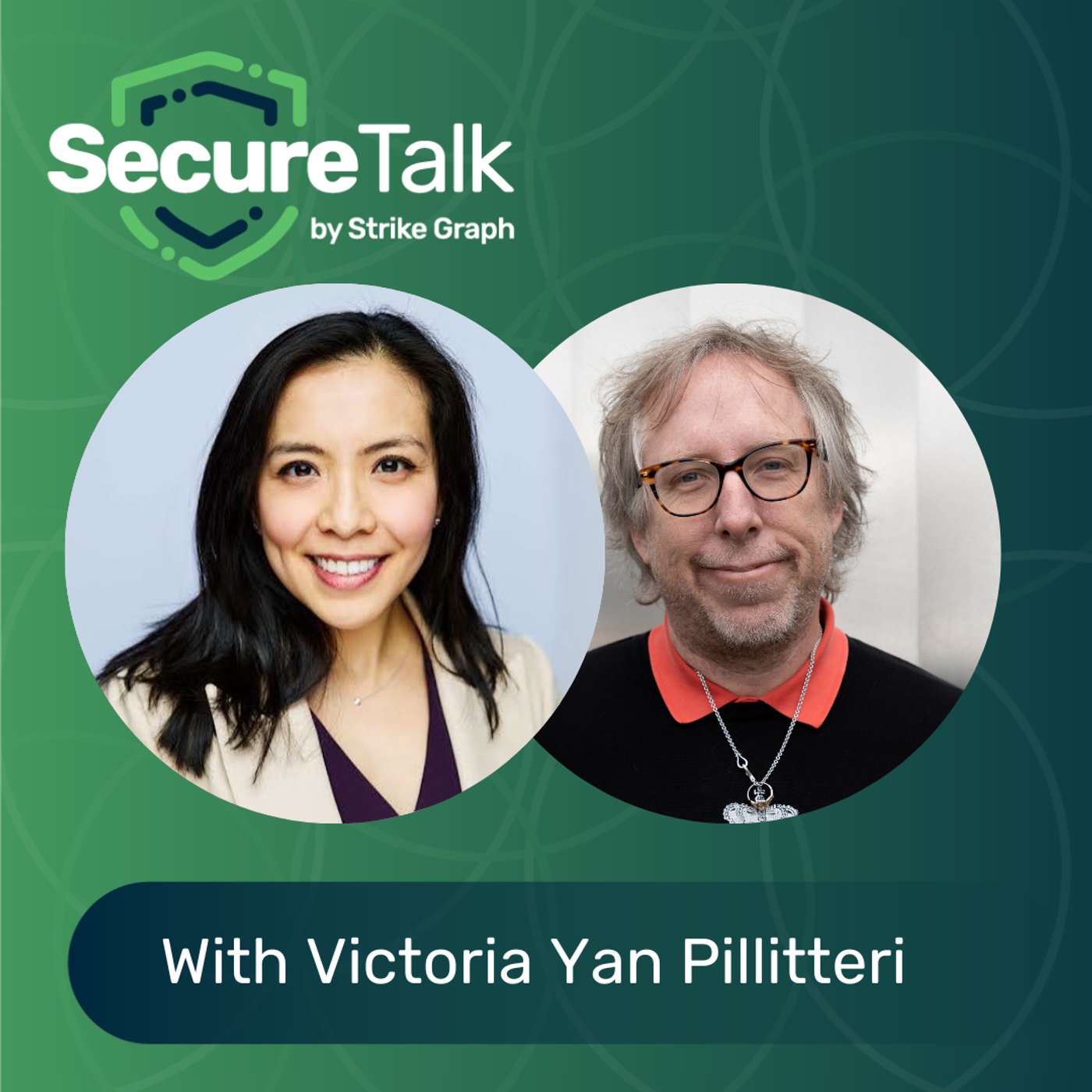
She helps write the rules the entire U.S. defense industrial base gets assessed against — and she's telling you compliance is the floor, not the finish line. Victoria Yan Pillitteri leads the Risk Management Framework/FISMA team at NIST and co-chairs the Joint Task Force uniting DoD, the Intelligence Community, and civilian agencies on one cybersecurity framework. In this episode, she and Justin Beals go inside how NIST actually builds SP 800-53 and 800-171 — what gets cut, what stays, and why "just copy the control language" is a losing strategy for anyone trying to pass an assessment. In this episode: Why 853 is "the Cheesecake Factory menu" of cybersecurity controls — and why that's a feature, not a bug The real difference between NIST 800-171 Rev 2 and Rev 3, and why "organization-defined parameters" changed everything Why writing your own control (not just quoting NIST's language) is the only way to actually pass an assessment How FedRAMP 20x, OSCAL, and continuous monitoring are quietly replacing the point-in-time ATO NIST's upcoming AI control overlays for predictive, generative, and agentic AI systems Chapters 00:00 Introduction 00:34 The purpose of NIST standards and measurement science 02:24 Cybersecurity outcomes as a Rosetta Stone 03:14 The challenge of measuring risk in cybersecurity 04:55 Frameworks as operating systems for risk management 06:58 The iterative process of developing cybersecurity standards 08:11 Interpreting control statements for organizations 09:36 The importance of tailoring controls to risk profiles 12:30 The relationship between compliance and good risk management 14:37 The development process of cybersecurity standards 17:27 Differences between Rev2 and Rev3 of NIST 800-171 20:01 Broad versus specific requirements in cybersecurity controls 22:36 Supporting small businesses with guidance and tools 27:23 The balance between prescriptive and flexible standards 30:24 Cybersecurity in public-private partnerships 34:53 Moving from point-in-time to continuous authorization 40:23 AI risks and the development of tailored controls 44:53 The future of cybersecurity standards and AI security Resources referenced: NIST SP 800-53 (Security and Privacy Controls) — [link] NIST SP 800-171 Rev 2 & Rev 3 (Protecting CUI) — [link] NIST Risk Management Framework — [link] NIST Cybersecurity Framework — [link] NIST AI Risk Management Framework — [link] FedRAMP 20x Program — [link] OSCAL (Open Security Controls Assessment Language) — [link] #NIST80053 #NIST800171 #CMMC #FedRAMP #CyberCompliance #RiskManagement #CUI #SecureTalk