Skip to content
Artwork for Scandinarnia
HistorySociety & CultureExplicit

Scandinarnia

Lena Heide-Brennand

Scandinarnia: Unlocking the Dark & Mystical North

What if the stories we were told as children were never meant for children at all?

Scandinarnia opens the door to the older, darker layers of Scandinavian mythology, folklore, and cultural history—before they were softened, simplified, and made safe. This is a podcast for those who want to understand not only the stories themselves, but the world that created them.

Each episode explores a creature, a place, or a tradition from the North: the Nøkken who inhabits rivers as both musician and predator; the Huldra, whose beauty conceals something deeply inhuman; the Myling, a voice of guilt and unresolved justice; and countless other figures drawn from oral tradition, archival sources, and historical accounts.

But these are not simply stories retold.

Through a blend of narrative, anthropology, and cultural analysis, Scandinarnia examines:

  • how folklore functioned as social control and moral instruction
  • how fear, landscape, and survival shaped belief
  • how Christianity reshaped older mythologies
  • and how these figures continue to live on in modern imagination

You will hear not only the tales themselves, but the meanings beneath them—the anxieties they reveal, the behaviours they enforced, and the realities they reflect. Rivers become thresholds. Forests become spaces of transformation. The supernatural becomes a language for very human fears.

Drawing on historical texts, folklore collections, and lived tradition, Scandinarnia invites you to step into a world where myth and reality were never clearly separated.

Play
  • 17 episodes
  • Avg 18 min
  • English

Support the show

Goes straight to the publisher. podnod takes nothing.

  • S1 · E18
    May 29 · 20 min

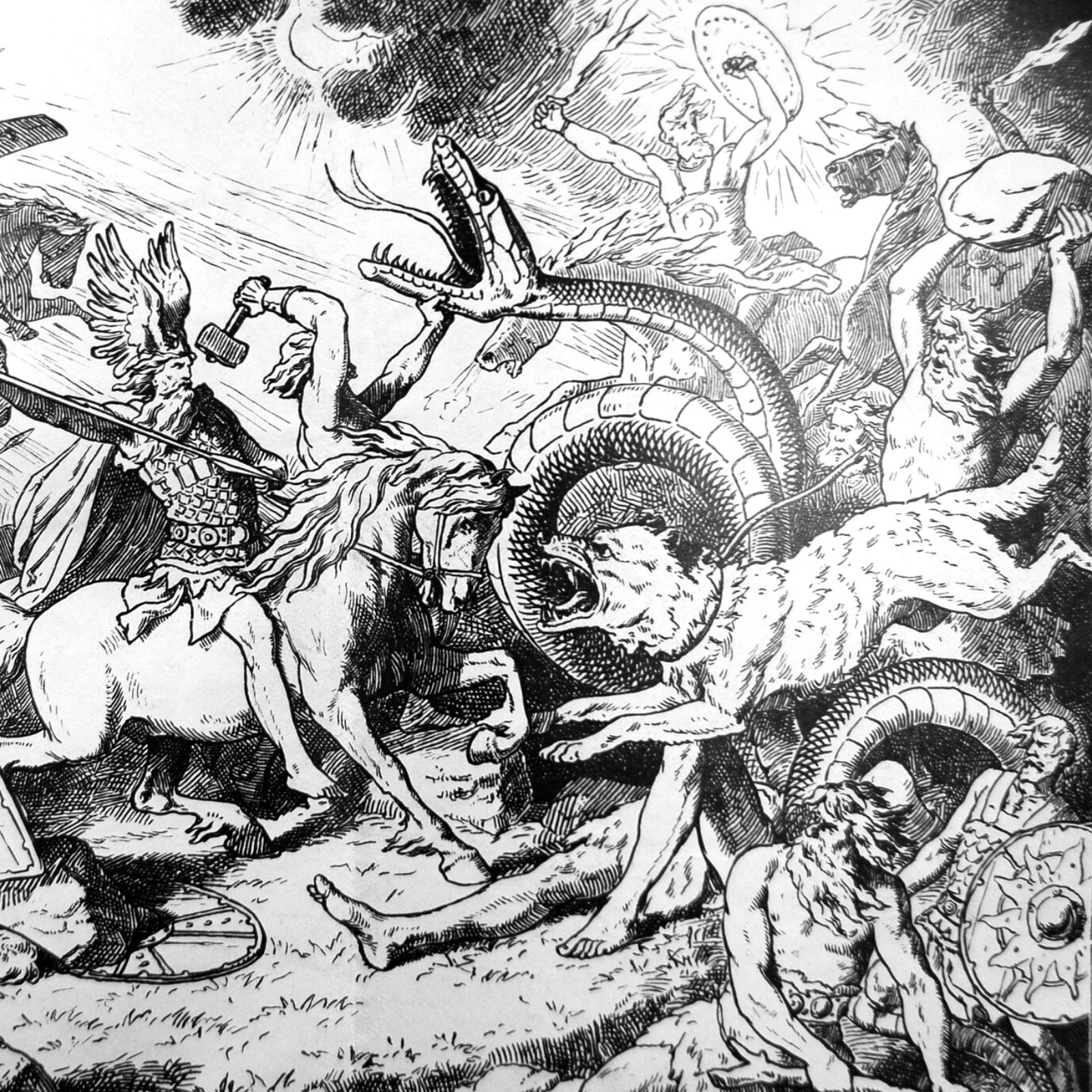
    Werewolves in Scandinavian mythology

    The wolf waits at the edge of the firelight. In this episode, we venture deep into the forests, mountains, and forgotten folklore of Scandinavia to uncover the chilling history of the werewolf. Long before Hollywood gave us silver bullets and full-moon transformations, the North was haunted by tales of men who donned enchanted wolfskins, berserk warriors who fought with the fury of beasts, and cursed souls condemned to roam the wilderness between human and animal. Drawing upon medieval sagas, folklore collections, witch trial records, and ancient beliefs, we explore the mysterious ulfheðnar, shape-shifting magic, outlaw legends, and the enduring fear of becoming something wild and uncontrollable. Were these stories warnings about violence and isolation? Echoes of forgotten shamanic practices? Or evidence of something far stranger lurking in the Scandinavian imagination? Join me as we follow the tracks of the werewolf through Norse mythology, Swedish and Norwegian folk traditions, and the dark borderlands where civilisation ends and the forest begins. Lock your door. Keep the fire burning. The wolf may already be closer than you think.
  • S1 · E17
    May 23 · 20 min

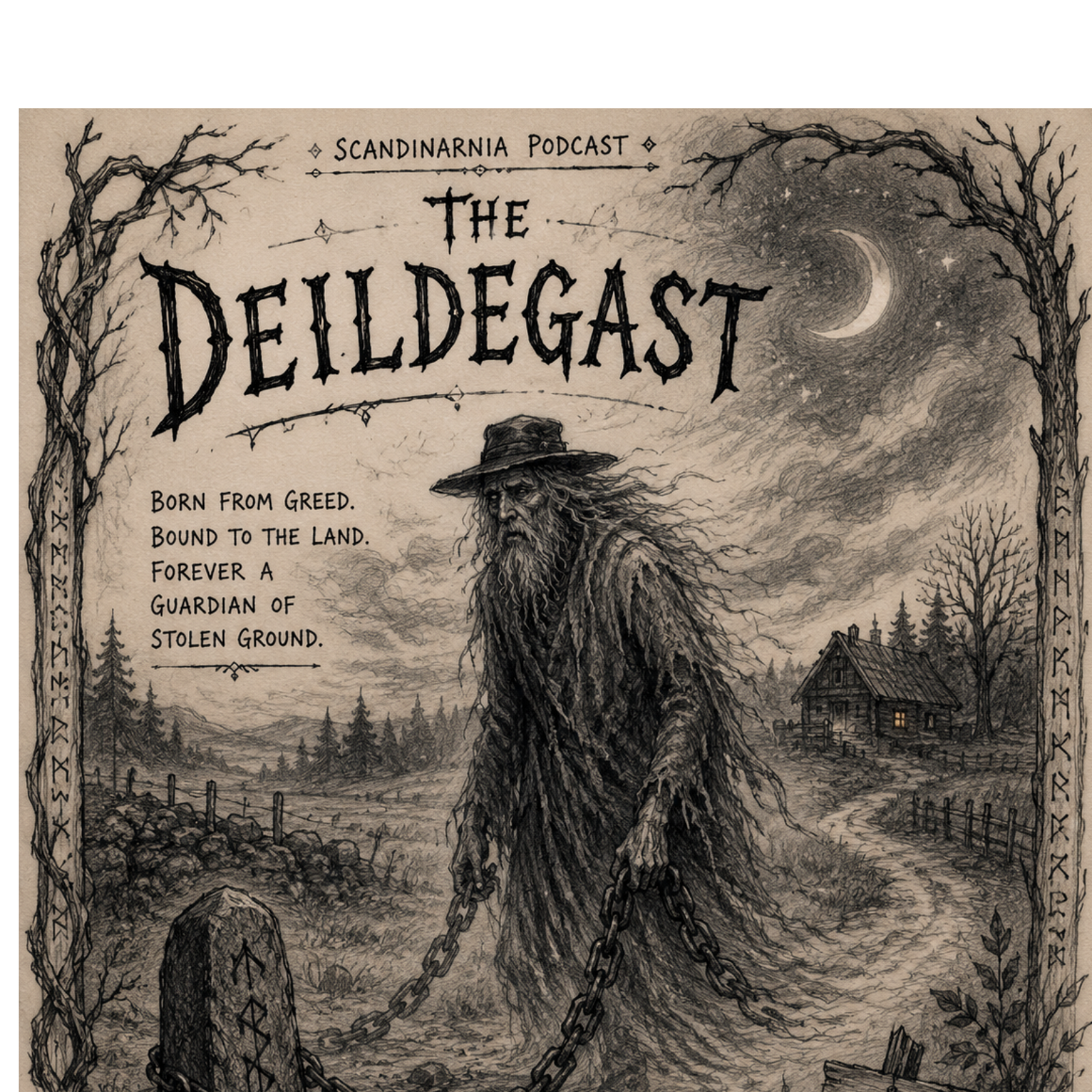
    The Deildegast Ghost

    Tonight on Scandinarnia, we wander into the shadows of old Scandinavian folklore to meet one of its strangest and most unsettling spirits: the Deildegast. Born from greed, betrayal, and cursed boundaries, this spectral figure was said to haunt the edges of fields, forests, and forgotten roads — forever condemned to guard the land it once stole in life. In this eerie episode, we explore the origins of the Deildegast in Nordic folk belief, the fear of land disputes in rural communities, and the chilling tales of ghostly figures dragging chains through the mist at night. Part ghost story, part history lesson, and part descent into the darker corners of the Scandinavian imagination, this is folklore at its most haunting. Light a candle, keep close to the fire, and listen carefully… because some boundaries were never meant to be crossed

  • S1 · E16
    May 12 · 22 min

    The «Wannabe Vikings» and my views on them as a Norwegian academic

    Why do so many Scandinavians hate on these «wannabe Vikings» that so proudly dress up as Norsemen and learn the Runic alphabet so they can tattoo their favourite Odin quote on their skin? I use this episode to reflect upon this … and also recommend my favourite cartoon

  • S1 · E14
    May 10 · 24 min

    The Black Books- Svartebøkene. Magic, Recipes, Prayers and Life Saving Rituals

    Deep in the forests of Scandinavia, hidden beneath church floors, tucked inside farmhouse walls, and whispered about in candlelit kitchens, there existed forbidden books known only as Svartebøkene — The Black Books. Grimoires of curses, healing charms, love magic, demon bargains, and strange prayers half-Christian, half-pagan. In this episode, we descend into the shadowy world of Scandinavian folk magic and the terrifying legends surrounding these mysterious books. Who wrote them? Why were they feared? And did ordinary people truly believe the Devil himself helped create them? From cunning folk and wandering priests to whispered rituals for invisibility, revenge, protection, and speaking with the dead — this is a journey into the darkest corners of Nordic folklore, where superstition, faith, and magic collided. A chilling, atmospheric episode filled with real history, strange archival accounts, and the unsettling feeling that some books were never meant to be opened.

  • S1 · E13
    May 8 · 15 min

    The Danish Lantern Man- Lygtemanden

    Deep within the fog-drenched marshes of old Denmark, travellers once whispered of a wandering light that appeared only after dark. A lantern drifting soundlessly across the wetlands. A glow that seemed warm, human, comforting — until it led the lost deeper into the bog, where roads vanished, the mist thickened, and the living were never seen again. In this haunting episode, we descend into the eerie folklore of Lygtemanden — the Lantern Man of the Danish marshes. Blending history, folklore, psychology, ghost lore, and the unsettling realities of pre-modern night travel, this episode explores one of Scandinavia’s most chilling supernatural legends. Were these lights the souls of the restless dead? Spirits of thieves and murderers doomed to wander forever? Or did terrified travellers unknowingly encounter strange natural phenomena flickering above ancient bogs filled with secrets and bodies preserved for centuries beneath the peat? From ghostly lanterns and drowned roads to the terrifying beauty of the Danish wetlands, this is a journey into the dark landscapes where folklore and fear become inseparable. Perfect for lovers of Scandinavian folklore, eerie history, dark academia, ghost stories, and atmospheric storytelling.

  • S1 · E12
    May 6 · 20 min

    Stallo- The Terrifying Giant Of Sàpmi

    In this deeply unsettling episode, we journey into the ancient folklore of the Sámi people of northern Scandinavia to uncover one of the most terrifying figures in Arctic mythology: the giant cannibal of the tundra. The devourer. The hunter who follows ski tracks through snowstorms and calls your name in the voice of someone you love. But this is not merely a scary story. This episode explores the historical roots of the Stállu legend, examining how folklore may preserve cultural memory of real dangers — hostile outsiders, famine, violence, colonisation, and the brutal realities of surviving in the Arctic north during the medieval period. We delve into Sámi oral traditions, noaidi shamanism, winter storytelling traditions, and the chilling symbolic role of monsters in landscapes where darkness could last for months. Expect eerie tales of girls vanishing into the mountains, footsteps circling lavvu camps at night, and giant figures carrying iron cauldrons through blizzards beneath the northern lights. But beneath the horror lies something even more haunting: The Stállu may not simply represent a monster. He may represent humanity’s oldest fear — the fear of being hunted in a world utterly indifferent to whether you survive. This episode blends folklore, anthropology, history, mythology, and genuinely spine-chilling storytelling into a dark journey through one of northern Europe’s most fascinating and terrifying legends. Perfect listening for: – lovers of Scandinavian folklore – dark history enthusiasts – mythology and horror fans – those fascinated by Arctic cultures and oral traditions – anyone who enjoys atmospheric, intelligent, deeply eerie storytelling So light a candle. Listen carefully to the wind. And if someone calls your name from outside after dark… Do not answer.

  • S1 · E11
    May 4 · 19 min

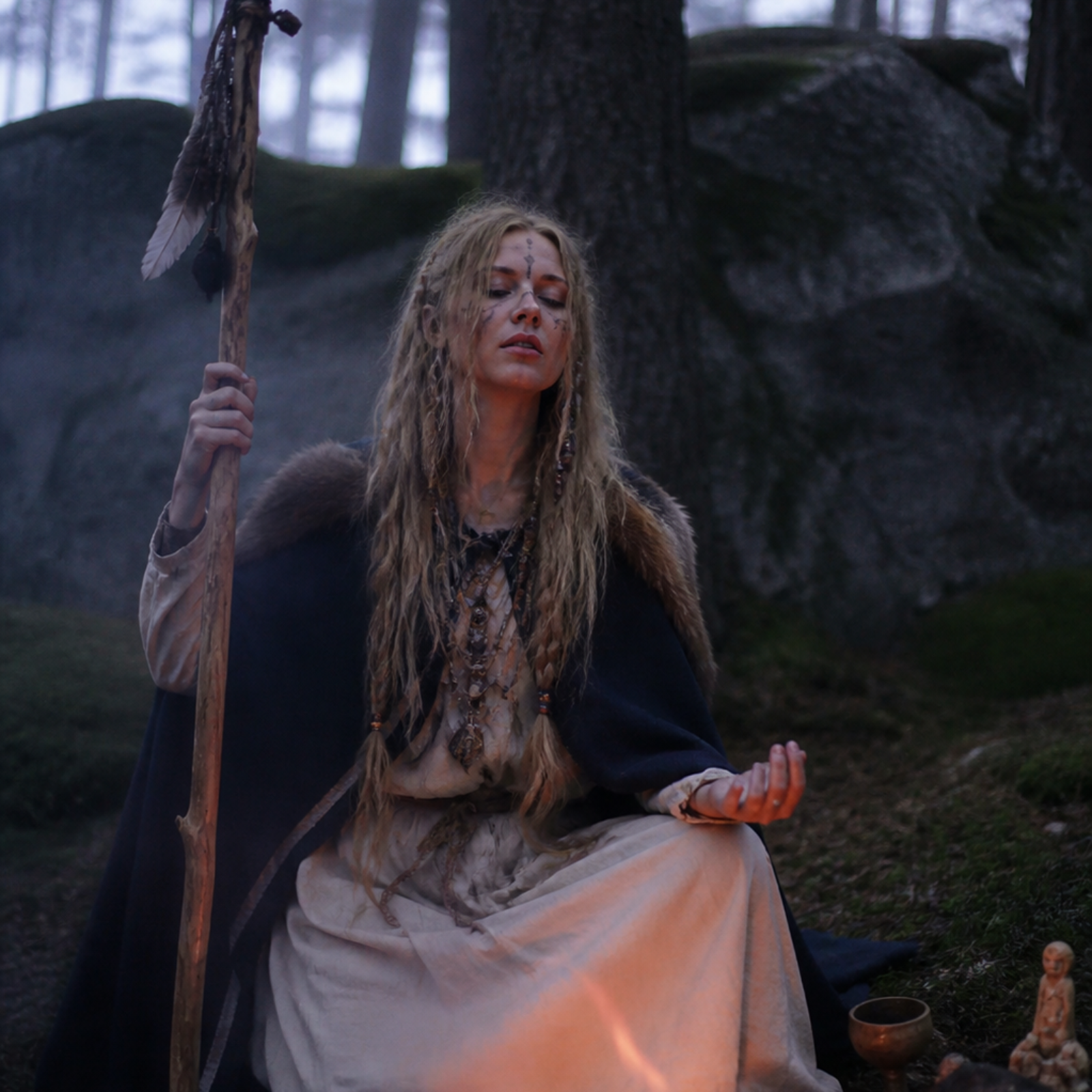
    Seiðr and the Power of the Natural Born Seeresses

    In this episode, we step into the world of Seiðr—the most feared, misunderstood, and powerful form of magic in the Norse world. Not the heroic magic of gods and warriors, but something far stranger. Far more intimate. This is the magic of women who sat at the edge of the village… and at the edge of reality. The ones they called Völva. They did not simply predict the future. They entered it. They spoke with the dead. They bent fate—not by force, but by slipping between the threads that hold it together. But Seiðr came at a cost. To practice it was to step outside society. To risk madness. To be feared… even by the gods themselves. Why did men who used it risk shame and exile? Why is Odin—the god of wisdom—also accused of practicing it in secret? And what really happened in those rituals, in the dim light of fire and smoke, when the voice changed… and something else began to speak? This episode is not just about history. It is about experience and bloodlines. Recorded where it should be—out in the forest, with the wind moving through trees and the world very much alive around us—this is Seiðr as it was always meant to be felt: raw, intimate, and just slightly too close.

  • S1 · E9
    May 1 · 17 min

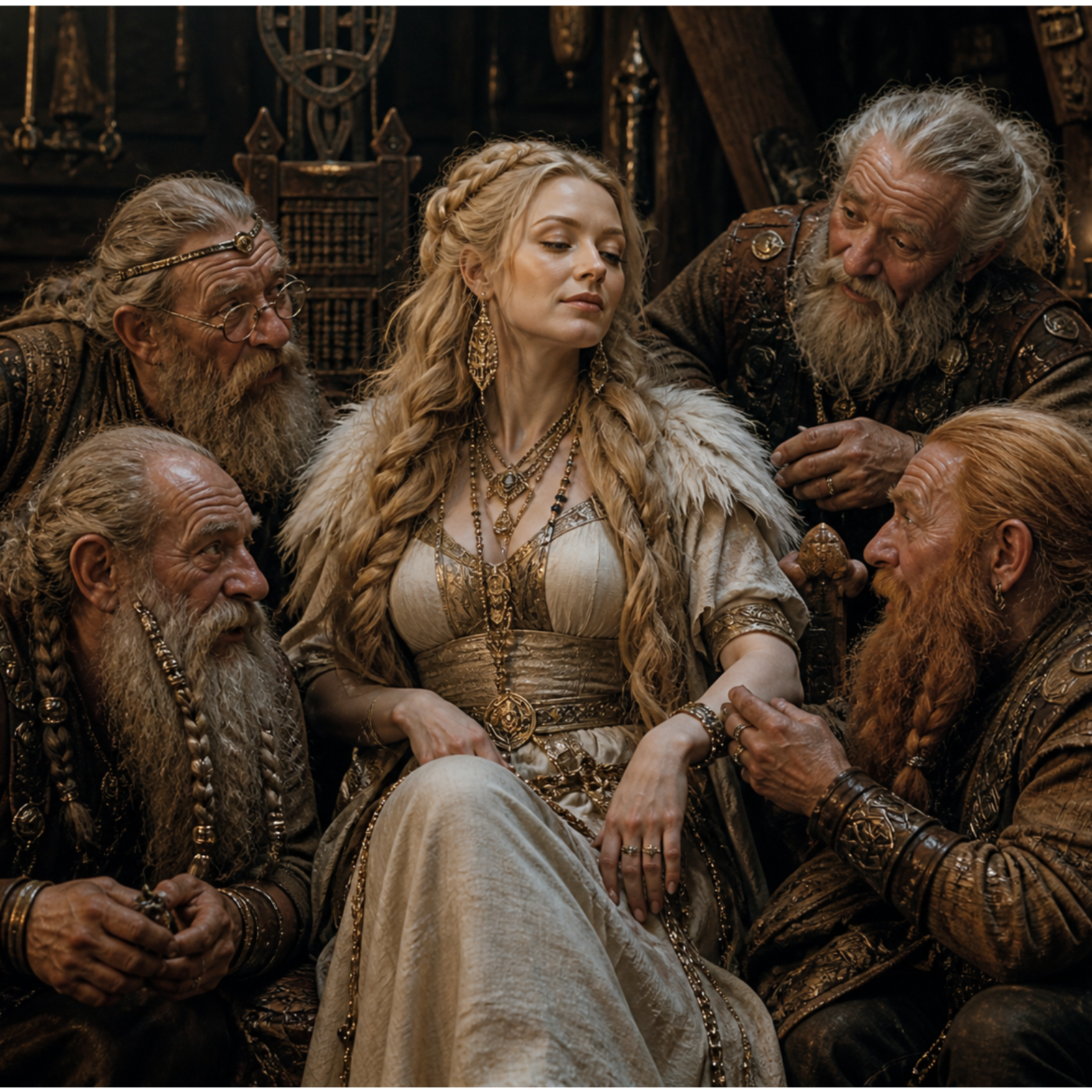
    When Freyja the goddess allowed 4 dwarves to have their way with her in bed in trade for a necklace

    The story of Freyja and the four dwarves is one of the more striking—and slightly unsettling—myths from Norse tradition. Freyja, the goddess of love, beauty, fertility, and magic, comes across an extraordinary piece of jewelry: the necklace Brísingamen, crafted by four dwarves—Brísings named Dvalinn, Alfrik, Berling, and Grerr. The necklace is impossibly beautiful, shimmering with a power that reflects Freyja’s own divine allure. She desires it immediately. However, the dwarves refuse to sell it for gold or treasure. Instead, they set a condition: Freyja must spend one night with each of them. Faced with this demand, Freyja agrees. After four nights—one with each dwarf—she receives Brísingamen and takes it back to the gods. The necklace becomes one of her most iconic possessions, symbolizing both her beauty and her connection to desire, magic, and the complex, morally ambiguous nature of the Norse gods. The story doesn’t end there, though. Loki later exposes this bargain to Odin, which leads to further complications, including the theft of the necklace and a series of divine conflicts.

  • S1 · E8
    April 30 · 21 min

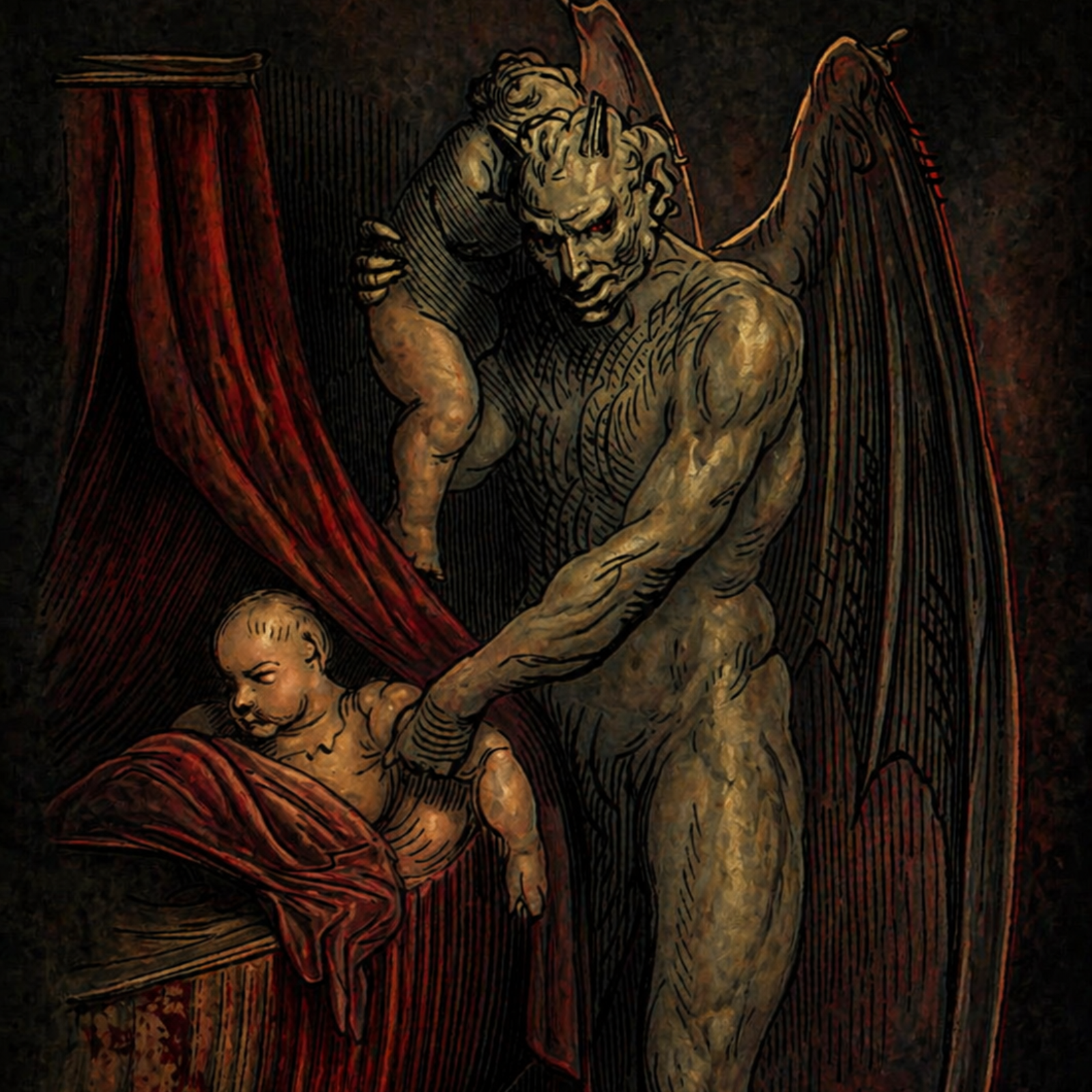
    The disturbing story of the changeling myths

    In Scandinavian folklore, a changeling—known in Norwegian as bytting, in Swedish as bortbyting, and in Danish as skifting—was believed to be a supernatural substitute left in place of a human child that had been secretly taken. The original child was thought to have been abducted by hidden beings, most commonly trolls, the hulderfolk (the “hidden people”), or other underground or nature-dwelling spirits. In some traditions, elves or similar entities were also blamed. These beings were believed to take healthy human infants for their own purposes—whether to strengthen their own kind, replace a weak offspring, or simply out of desire for human vitality—and leave one of their own in the cradle. The period of greatest danger was considered to be before a child was baptised, reflecting the strong influence of Christian belief layered over older folk traditions. Infants were thought to be particularly vulnerable when left unattended, especially at night, near doorways or windows, or in close proximity to forests, mountains, or burial mounds—places associated with supernatural presence. As a result, mothers were strongly warned never to leave their babies alone, even briefly. Descriptions of changelings are strikingly consistent across Norway, Sweden, and Denmark. They were often said to appear physically unusual: sometimes unnaturally ugly, with large heads, thin limbs, or an oddly aged expression. Behaviourally, they might exhibit an insatiable appetite while failing to grow or thrive. Some cried incessantly, while others were eerily quiet and withdrawn. Developmental delays were commonly noted—they might not speak, walk, or respond as expected. In certain accounts, the changeling was believed to possess an old consciousness within its infant body, observing the world with unsettling awareness.

  • S1 · E7
    April 29 · 19 min

    The Evil and Vengeful Myling -Utburdr-The Once Killed And Abandoned Babies That Come Back For Human Flesh

    The forest does not forget. Not the footprints pressed into wet earth by a woman who walked alone at dusk. Not the shallow grave beneath the roots, where the soil was too hastily turned. Not the small, silenced breath that never learned to cry out loud. In this episode, we follow something that should never have been left behind. The Myling is not merely a ghost. It is a hunger. A weight. A voice that was denied its first scream and now seeks it endlessly in the dark. In the old stories whispered across the North, the Myling is the spirit of an unwanted child—killed at birth, hidden away, buried without name, without rite, without mercy. But the earth does not keep secrets kindly.It waits.And when the night grows damp and the forest begins to breathe, something small begins to move beneath the moss. You may hear it first as a sound mistaken for an animal—soft, dragging, uneven. Then closer. Then far too close. “Carry me.” The voice is thin, childlike—but wrong. Too hollow. Too old with sorrow. “Carry me… to the graveyard.” And if you are foolish enough to turn—if you dare to look—you will see it. A child, yes. But not as it should be. Limbs twisted from the cold earth, skin dark with soil and time, eyes wide with a grief that has rotted into something far worse. It reaches for you—not in plea, but in claim. You must carry it. That is the rule. The curse. The cruel bargain of the Myling. It will climb onto your back, light at first—like nothing at all. You may even think you imagined it. But with each step, it grows heavier. And heavier. And heavier still. Its small hands tighten around your throat as its weight presses down, crushing breath, bending spine, dragging you toward the place it was denied in death. You will try to walk. You will try to run. But the forest stretches. The path vanishes. And the child becomes unbearable. “Faster,” it whispers. Your legs tremble. Your lungs burn. Your heart pounds against a weight that no living body should endure. And still—it grows. Some never reach the graveyard. Some collapse in the dark, their bodies found at dawn—twisted, broken, as though something vast had pressed them into the earth. And the child? Gone. Waiting again.For the next passerby. For the next set of footsteps foolish enough to wander alone. In this episode, we do not simply tell a story. We listen. To the voices beneath the ground. To the children who were never given names. And to the terrible truth that in the North, the dead do not always rest—especially not the ones who were never meant to live.

  • S1 · E6
    April 29 · 24 min

    The Dark Witches of Nordic Folklore- The Demon Volva

    Did you know that the wise old ladies, the Volve of pre-Christian times and the herbalists that saved lives in the Nordic communities had some dark and evil counterparts that are not so widely known and spoken about? The twisted and cannibalistic female demons that rarely left the woods? Well, here’s a story and some facts thst will send chills down your spine.

  • S1 · E5
    April 24 · 3 min

    Heiemo and Nøkken- Translated to English

    This is a freely translated and adapted English version of the folk ballad Heiemo and nøkken. Translated, sang, performed and adapted by Lena Heide-Brennand. Guitar/drum/production: Johnny Williamsen. All rights reserved and copyrighted 2022. Heiemo walked by the riverside The day was falling still When from the dark and silent stream There rose a creature by his will Stay, stay far Heiemo and listen to me For I can teach you songs so deep No living soul will ever see That you learned those hymns from me If you learn my hidden tunes And play and sing as none before you You must give me what I ask And I am asked to be loved by you He drew the bow across the strings The water froze as stone And all the world grew strange and still As if it were no longer its own Heiemo stood and could not move Nor turn herself away For once you hear the Nøkkens tune You don't leave unchanged Then she took a knife from her pocket And tried to stab this creature in his heart But down into the water the creature rocket And she was certain he was no more She thought the Nøkken had fallen still And that all of his songs were gone She turned her back upon the stream And stepped to find her way home But from the depth a claw rose cold And took her where she stood And no one saw more of fair Heiemo But at midnight there might be some ripples of blood

    • Chapters
  • S1 · E3
    April 24 · 5 min

    Folk song: Heiemo og Nykkjen ( Norwegian version)

    The ballad from Denmark/Norway about the young and beautiful girl Heiemo who sings so beautifully that Nøkken shapeshifts to go snd kidnap her from a party. Nb! Norwegian original text.

  • S1 · E2
    April 24 · 21 min

    The Nøkken – The Water Spirit That Lures You to Drown

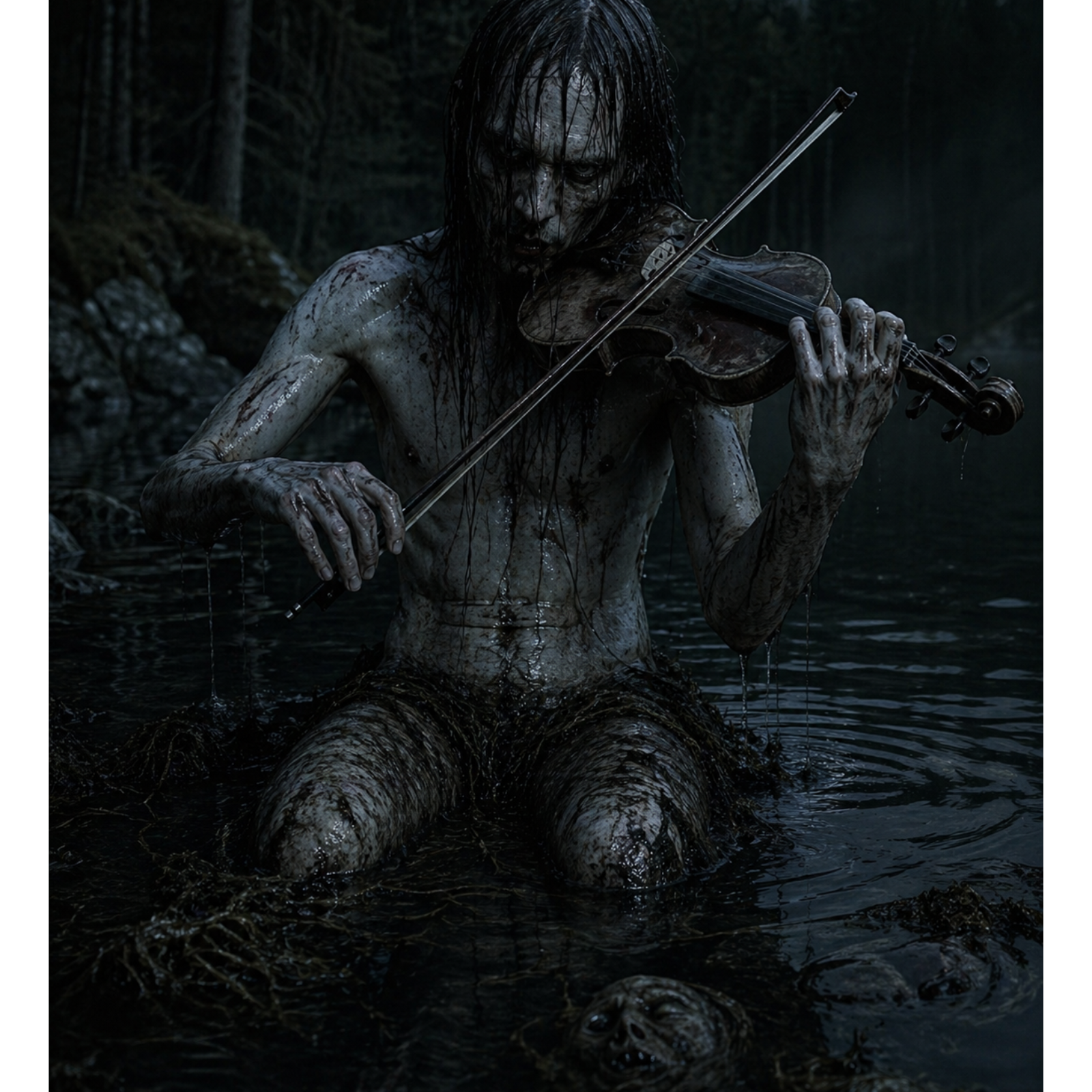
    Who is Nøkken? The Nix? The evil but spellbinding creature of the northern forest waters that lures people into his lair.The Nøkken – You Hear It Before You See It They never described the body first. They described the sound. A violin, drifting across still water where there should be no one—no wind, no movement—just a melody that feels wrong. Too perfect. Too patient. People said it didn’t call you. It waited. And something inside you leaned toward it before you even understood why. Children walked into lakes without a sound. Grown men followed the music like sleepwalkers. Women were found at the water’s edge, shoes still neatly placed behind them—as if they had chosen it. But the worst stories weren’t about the ones who drowned. They were about the ones who came back. Alive… but not right. Silent. Listening. As if the music had never stopped. Because the Nøkken does not drag you under. It teaches you to step forward—to kneel at the edge, to look into the black surface and wait for something to look back. And when it does… you won’t run. In this episode of Scandinarnia, we go beyond the folklore—into the quiet, persistent terror of something that does not hunt you… but lets you come to it.

Showing 1–17 of 17 episodes