Skip to content
Artwork for Professor Dave Explains
EducationScienceBusiness

Professor Dave Explains

Professor Dave Explains

Welcome! I have a knack for explaining stuff and I want to share some knowledge with you.

I received a BA in chemistry from Carleton College, and performed graduate studies in both synthetic organic chemistry and science education at Cal State Northridge, receiving an MA in the latter. Prior to this I taught for about a decade in various high school and undergraduate settings, specializing in organic chemistry but also teaching general chemistry, physics, and biology.

This channel is for students at the high school and undergraduate level, but it is also for members of the general public who just want to know more about the world and how things work. My goal is to increase science literacy in our society, so please share these tutorials with anyone that you think might enjoy them. Happy learning!

Support my channel: https://www.patreon.com/professordaveexplains

Check out my book "Is This Wi-Fi Organic?": https://amzn.to/2HtNpVH

OChem help here: https://chemmunity.info/dave

Links:
Support Dave: http://patreon.com/professordaveexplains
Facebook: http://facebook.com/professordaveexplains
Instagram: http://instagram.com/daveexplains
Amazon Author: https://www.amazon.com/~/e/B08W2749Y9

Play
  • 1,116 episodes
  • Avg 21 min
  • English

Episodes 1,116

Counted on this page — what you have heard stays on this device, so it is not something the list can be paged by.
  • November 6 · 6 min

    Use of the Words: Molto, Poco, and Troppo

    In English, we often want to convey the concepts of many, few, and too much. To achieve this in Italian, we have the words molto, poco, and troppo. Let's learn how to use them! Script by Patrizia Farina, Professor of Italian at Western Connecticut State University and Purchase College. Watch the whole Italian playlist: http://bit.ly/ProfDaveItalian American History Tutorials: http://bit.ly/ProfDaveAmericanHistory Classical Physics Tutorials: http://bit.ly/ProfDavePhysics1 Modern Physics Tutorials: http://bit.ly/ProfDavePhysics2 General Chemistry Tutorials: http://bit.ly/ProfDaveGenChem Organic Chemistry Tutorials: http://bit.ly/ProfDaveOrgChem Biochemistry Tutorials: http://bit.ly/ProfDaveBiochem Biology Tutorials: http://bit.ly/ProfDaveBio EMAIL► ProfessorDaveExplains@gmail.com PATREON► http://patreon.com/ProfessorDaveExplains Check out "Is This Wi-Fi Organic?", my book on disarming pseudoscience! Amazon: https://amzn.to/2HtNpVH Bookshop: https://bit.ly/39cKADM Barnes and Noble: https://bit.ly/3pUjmrn Book Depository: http://bit.ly/3aOVDlT Learn more about your ad choices. Visit megaphone.fm/adchoices

  • November 6 · 1 hr 25 min

    James Tour Just Keeps Getting Dumber (For Jesus!)

    If you've watched James Tour whine about origin of life research, you know he's dumber than rocks. But did you know that he's been getting dumber and dumber by the month? He's said so many dumb things in lectures and interviews over the past year that I just had to make a video mining all of his recent content for the funniest moments. Let's laugh at him harder than ever! Watch all of my content humiliating James: http://bit.ly/ProfDaveTour Watch all of my content exposing Discovery Institute: http://bit.ly/ProfDaveDI Watch my other debunks/debates/discussions: http://bit.ly/ProfDaveDebunk EMAIL► ProfessorDaveExplains@gmail.com PATREON► http://patreon.com/ProfessorDaveExplains Check out "Is This Wi-Fi Organic?", my book on disarming pseudoscience! Amazon: https://amzn.to/2HtNpVH Bookshop: https://bit.ly/39cKADM Barnes and Noble: https://bit.ly/3pUjmrn Learn more about your ad choices. Visit megaphone.fm/adchoices

  • November 6 · 8 min

    Invertebrate Chordates Part 1: Subphylum Cephalochordata (Lancelets)

    Many people presume that all members of Chordata have a backbone, but that actually is not true. Vertebrates have backbones, meaning members of subphylum Vertebrata. There are two other subphyla within Chordata, those being Cephalochordata and Tunicata, and these are considered invertebrate chordates. Let's take these one by one, starting with Cephalochordata, also known as the lancelets. Script by Ryan Helcoski Watch the whole Zoology playlist: http://bit.ly/ProfDaveZoo General Chemistry Tutorials: http://bit.ly/ProfDaveGenChem Organic Chemistry Tutorials: http://bit.ly/ProfDaveOrgChem Biochemistry Tutorials: http://bit.ly/ProfDaveBiochem Biology Tutorials: http://bit.ly/ProfDaveBio Anatomy & Physiology Tutorials: http://bit.ly/ProfDaveAnatPhys Microbiology Tutorials: http://bit.ly/ProfDaveMicrobio Botany Tutorials: http://bit.ly/ProfDaveBotany EMAIL► ProfessorDaveExplains@gmail.com PATREON► http://patreon.com/ProfessorDaveExplains Check out "Is This Wi-Fi Organic?", my book on disarming pseudoscience! Amazon: https://amzn.to/2HtNpVH Bookshop: https://bit.ly/39cKADM Barnes and Noble: https://bit.ly/3pUjmrn Book Depository: http://bit.ly/3aOVDlT Learn more about your ad choices. Visit megaphone.fm/adchoices

  • November 6 · 6 min

    I Need Your Help With a Video!

    Send your stories and questions to professordaveexplains at gmail.com If shooting on iphone please film horizontally! Learn more about your ad choices. Visit megaphone.fm/adchoices

  • November 6 · 9 min

    Set Theory: Types of Sets, Unions and Intersections

    We've already learned a little bit about set theory when we first started using interval notation. Let's expand on this a little bit to include sets that merely list some elements, so that we can understand how to find the union and intersection of two sets. This is good notation to know right here! Watch the whole Mathematics playlist: http://bit.ly/ProfDaveMath Classical Physics Tutorials: http://bit.ly/ProfDavePhysics1 Modern Physics Tutorials: http://bit.ly/ProfDavePhysics2 General Chemistry Tutorials: http://bit.ly/ProfDaveGenChem Organic Chemistry Tutorials: http://bit.ly/ProfDaveOrgChem Biochemistry Tutorials: http://bit.ly/ProfDaveBiochem Biology Tutorials: http://bit.ly/ProfDaveBio EMAIL► ProfessorDaveExplains@gmail.com PATREON► http://patreon.com/ProfessorDaveExplains Check out "Is This Wi-Fi Organic?", my book on disarming pseudoscience! Amazon: https://amzn.to/2HtNpVH Bookshop: https://bit.ly/39cKADM Barnes and Noble: https://bit.ly/3pUjmrn Book Depository: http://bit.ly/3aOVDlT Learn more about your ad choices. Visit megaphone.fm/adchoices

  • November 6 · 7 min

    Calculating Percent Error

    Sometimes we take measurements, and sometimes we're off by a little bit. How far off? Does it make sense to just use a number? Shouldn't we use something that tells us how far off we are relative to the true value? Yes we should, hence, percent error. Take a look and I'll show you what I mean. Watch the whole General Chemistry playlist: http://bit.ly/ProfDaveGenChem Study for the AP Chemistry exam with me: https://bit.ly/ProfDaveAPChem Organic Chemistry Tutorials: http://bit.ly/ProfDaveOrgChem Biochemistry Tutorials: http://bit.ly/ProfDaveBiochem Biology Tutorials: http://bit.ly/ProfDaveBio Classical Physics Tutorials: http://bit.ly/ProfDavePhysics1 Modern Physics Tutorials: http://bit.ly/ProfDavePhysics2 Mathematics Tutorials: http://bit.ly/ProfDaveMaths EMAIL► ProfessorDaveExplains@gmail.com PATREON► http://patreon.com/ProfessorDaveExplains Check out "Is This Wi-Fi Organic?", my book on disarming pseudoscience! Amazon: https://amzn.to/2HtNpVH Bookshop: https://bit.ly/39cKADM Barnes and Noble: https://bit.ly/3pUjmrn Book Depository: http://bit.ly/3aOVDlT Learn more about your ad choices. Visit megaphone.fm/adchoices

  • November 6 · 12 min

    Derivatives of Logarithmic and Exponential Functions

    Let's learn how to differentiate just a few more special functions, those being logarithmic functions and exponential functions. These are a little funky, but there are some simple rules we can memorize! Watch the whole Calculus playlist: http://bit.ly/ProfDaveCalculus Watch the whole Mathematics playlist: http://bit.ly/ProfDaveMath Classical Physics Tutorials: http://bit.ly/ProfDavePhysics1 Modern Physics Tutorials: http://bit.ly/ProfDavePhysics2 General Chemistry Tutorials: http://bit.ly/ProfDaveGenChem Organic Chemistry Tutorials: http://bit.ly/ProfDaveOrgChem Biochemistry Tutorials: http://bit.ly/ProfDaveBiochem Biology Tutorials: http://bit.ly/ProfDaveBio EMAIL► ProfessorDaveExplains@gmail.com PATREON► http://patreon.com/ProfessorDaveExplains Check out "Is This Wi-Fi Organic?", my book on disarming pseudoscience! Amazon: https://amzn.to/2HtNpVH Bookshop: https://bit.ly/39cKADM Barnes and Noble: https://bit.ly/3pUjmrn Book Depository: http://bit.ly/3aOVDlT Learn more about your ad choices. Visit megaphone.fm/adchoices

  • November 6 · 12 min

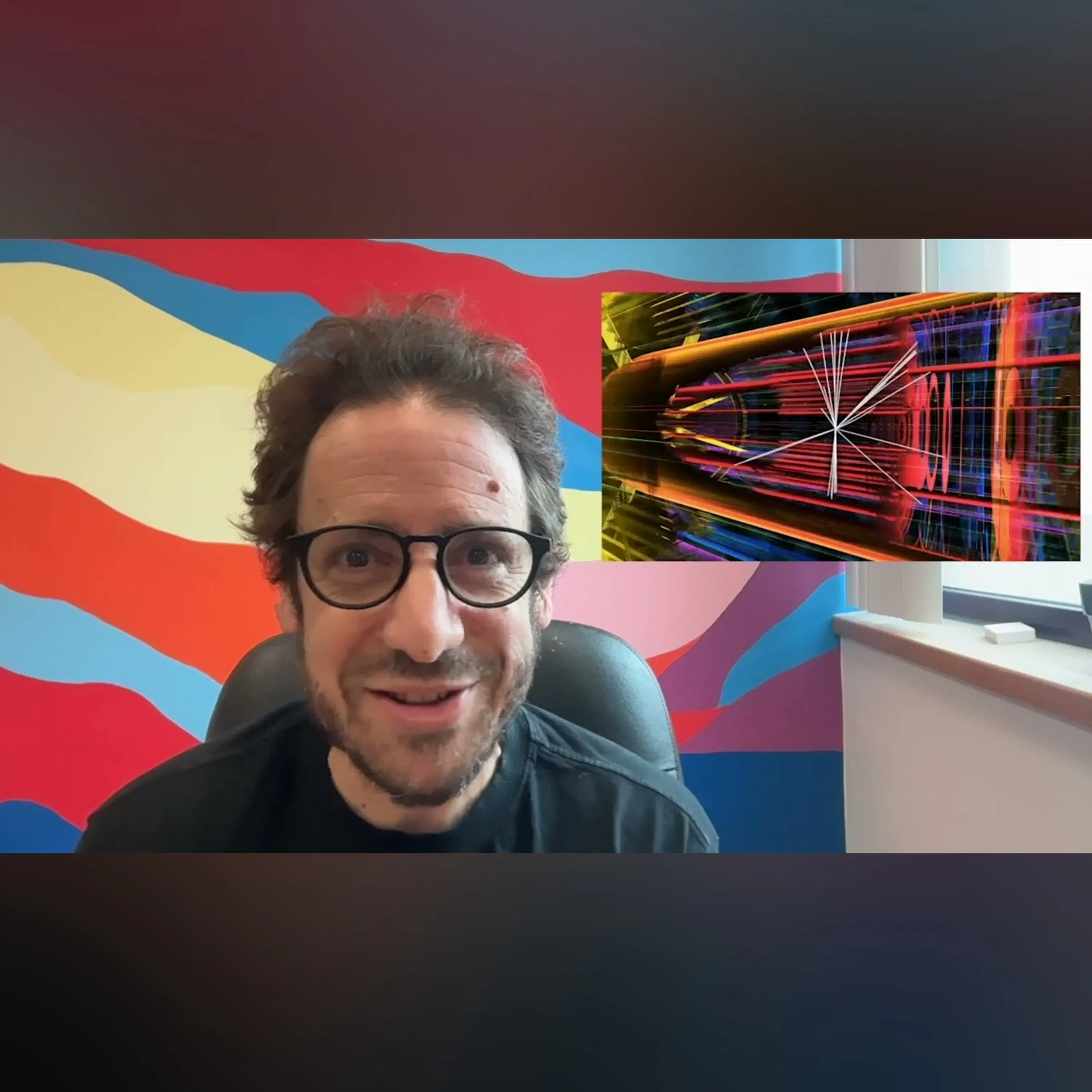
    Particle Physicist Daniel Whiteson (Get to Know a Scientist!)

    Daniel Whiteson is a particle physicist at UC Irvine. So what do particle physicists do? Experiments with particles? Yes they do! But that may not look the way you think it does in your head. Let Daniel take you through his typical routine and introduce you to the other people who work in his lab! Check out Daniel's podcast: https://www.danielandkelly.org/ Get to know more scientists: http://bit.ly/ProfDaveGTKAS EMAIL► ProfessorDaveExplains@gmail.com PATREON► http://patreon.com/ProfessorDaveExplains Check out "Is This Wi-Fi Organic?", my book on disarming pseudoscience! Amazon: https://amzn.to/2HtNpVH Bookshop: https://bit.ly/39cKADM Barnes and Noble: https://bit.ly/3pUjmrn Learn more about your ad choices. Visit megaphone.fm/adchoices

  • November 6 · 22 min

    Ancient Rome Part 2: The Roman Empire (50 BCE – 250 CE)

    In the late first century BCE, the Roman Republic became the Roman Empire. What does this mean? What were the changes that occurred socially and politically that led historians to make this distinction? Who were the people that shaped this important time period? Let's find out! Script by Peter Wyetzner Watch the whole World History playlist: http://bit.ly/ProfDaveWorldHistory American History Tutorials: http://bit.ly/ProfDaveAmericanHistory Italian Tutorials: http://bit.ly/ProfDaveItalian Classical Physics Tutorials: http://bit.ly/ProfDavePhysics1 Modern Physics Tutorials: http://bit.ly/ProfDavePhysics2 General Chemistry Tutorials: http://bit.ly/ProfDaveGenChem Organic Chemistry Tutorials: http://bit.ly/ProfDaveOrgChem Biochemistry Tutorials: http://bit.ly/ProfDaveBiochem Biology Tutorials: http://bit.ly/ProfDaveBio EMAIL► ProfessorDaveExplains@gmail.com PATREON► http://patreon.com/ProfessorDaveExplains Check out "Is This Wi-Fi Organic?", my book on disarming pseudoscience! Amazon: https://amzn.to/2HtNpVH Bookshop: https://bit.ly/39cKADM Barnes and Noble: https://bit.ly/3pUjmrn Book Depository: http://bit.ly/3aOVDlT Learn more about your ad choices. Visit megaphone.fm/adchoices
  • November 6 · 13 min

    Ancient Egypt Part 1: The Old Kingdom (3000 – 2000 BCE)

    One of the most famous civilizations in antiquity is that of Ancient Egypt. Everyone knows about pharaohs and pyramids, but there is so much to learn about the numerous dynasties that ruled this land, and how this society evolved over several millennia. The history of Ancient Egypt is broken down into the Old Kingdom, Middle Kingdom, and New Kingdom, so let's start off by examining the Old Kingdom. Script by Peter Wyetzner Watch the whole World History playlist: http://bit.ly/ProfDaveWorldHistory American History Tutorials: http://bit.ly/ProfDaveAmericanHistory Italian Tutorials: http://bit.ly/ProfDaveItalian Classical Physics Tutorials: http://bit.ly/ProfDavePhysics1 Modern Physics Tutorials: http://bit.ly/ProfDavePhysics2 General Chemistry Tutorials: http://bit.ly/ProfDaveGenChem Organic Chemistry Tutorials: http://bit.ly/ProfDaveOrgChem Biochemistry Tutorials: http://bit.ly/ProfDaveBiochem Biology Tutorials: http://bit.ly/ProfDaveBio EMAIL► ProfessorDaveExplains@gmail.com PATREON► http://patreon.com/ProfessorDaveExplains Check out "Is This Wi-Fi Organic?", my book on disarming pseudoscience! Amazon: https://amzn.to/2HtNpVH Bookshop: https://bit.ly/39cKADM Barnes and Noble: https://bit.ly/3pUjmrn Book Depository: http://bit.ly/3aOVDlT Learn more about your ad choices. Visit megaphone.fm/adchoices

  • November 6 · 18 min

    Ancient India Part 4: The Gupta Empire (300 – 500 CE)

    After the Mauryan empire, the other state that came to dominate almost all of the Indian subcontinent was the Gupta empire of the 3rd through 6th centuries CE. This is viewed as India's golden age, or the height of its political power and cultural achievement. Who were its rulers? What was its infrastructure? Let's check it out! Script by Peter Wyetzner Select images included with the permission of Joseph Feely of @HistoryDose check out his channel for more excellent history content. Watch the whole World History playlist: http://bit.ly/ProfDaveWorldHistory American History Tutorials: http://bit.ly/ProfDaveAmericanHistory Italian Tutorials: http://bit.ly/ProfDaveItalian Classical Physics Tutorials: http://bit.ly/ProfDavePhysics1 Modern Physics Tutorials: http://bit.ly/ProfDavePhysics2 General Chemistry Tutorials: http://bit.ly/ProfDaveGenChem Organic Chemistry Tutorials: http://bit.ly/ProfDaveOrgChem Biochemistry Tutorials: http://bit.ly/ProfDaveBiochem Biology Tutorials: http://bit.ly/ProfDaveBio EMAIL► ProfessorDaveExplains@gmail.com PATREON► http://patreon.com/ProfessorDaveExplains Check out "Is This Wi-Fi Organic?", my book on disarming pseudoscience! Amazon: https://amzn.to/2HtNpVH Bookshop: https://bit.ly/39cKADM Barnes and Noble: https://bit.ly/3pUjmrn Book Depository: http://bit.ly/3aOVDlT Learn more about your ad choices. Visit megaphone.fm/adchoices

  • November 6 · 9 min

    Converting Between Temperature Scales (Celsius, Fahrenheit, and Kelvin)

    If you're American, you're familiar with the Fahrenheit scale, so 30 degrees is cold and 100 degrees is hot. But in the rest of the world, nobody uses this scale! They use Celsius, and to them, 30 is pretty darn hot. Furthermore, scientists use Kelvin, and to them, 30 is so cold it would kill you dead! We'd better learn how to convert between this different temperature scales, don't you think? Watch the whole General Chemistry playlist: http://bit.ly/ProfDaveGenChem Study for the AP Chemistry exam with me: https://bit.ly/ProfDaveAPChem Organic Chemistry Tutorials: http://bit.ly/ProfDaveOrgChem Biochemistry Tutorials: http://bit.ly/ProfDaveBiochem Biology Tutorials: http://bit.ly/ProfDaveBio Classical Physics Tutorials: http://bit.ly/ProfDavePhysics1 Modern Physics Tutorials: http://bit.ly/ProfDavePhysics2 Mathematics Tutorials: http://bit.ly/ProfDaveMaths EMAIL► ProfessorDaveExplains@gmail.com PATREON► http://patreon.com/ProfessorDaveExplains Check out "Is This Wi-Fi Organic?", my book on disarming pseudoscience! Amazon: https://amzn.to/2HtNpVH Bookshop: https://bit.ly/39cKADM Barnes and Noble: https://bit.ly/3pUjmrn Book Depository: http://bit.ly/3aOVDlT Learn more about your ad choices. Visit megaphone.fm/adchoices

  • November 6 · 8 min

    Use of the Word Bello and Clothing Vocabulary

    Even if you've only heard a handful of Italian words, you've probably heard "bello". Italians exclaim this all the time, when they want to say something is beautiful. Bello! Bellissimo! But there is some grammar we need to go over regarding this word before we can use it, so let's go over that first, and then we can look at all kinds of lovely clothes too! Script by Patrizia Farina, Professor of Italian at Western Connecticut State University and Purchase College. Watch the whole Italian playlist: http://bit.ly/ProfDaveItalian American History Tutorials: http://bit.ly/ProfDaveAmericanHistory Classical Physics Tutorials: http://bit.ly/ProfDavePhysics1 Modern Physics Tutorials: http://bit.ly/ProfDavePhysics2 General Chemistry Tutorials: http://bit.ly/ProfDaveGenChem Organic Chemistry Tutorials: http://bit.ly/ProfDaveOrgChem Biochemistry Tutorials: http://bit.ly/ProfDaveBiochem Biology Tutorials: http://bit.ly/ProfDaveBio EMAIL► ProfessorDaveExplains@gmail.com PATREON► http://patreon.com/ProfessorDaveExplains Check out "Is This Wi-Fi Organic?", my book on disarming pseudoscience! Amazon: https://amzn.to/2HtNpVH Bookshop: https://bit.ly/39cKADM Barnes and Noble: https://bit.ly/3pUjmrn Book Depository: http://bit.ly/3aOVDlT Learn more about your ad choices. Visit megaphone.fm/adchoices

  • November 6 · 8 min

    Special Relativity Part 3: Length Contraction

    Time dilation was pretty weird, huh? Well we aren't done yet! Time is relative, and so is space! Different observers measure different lengths for objects and journeys. It's called length contraction, and it's another important part of special relativity. Weird stuff! Watch the whole Modern Physics playlist: http://bit.ly/ProfDavePhysics2 Classical Physics Tutorials: http://bit.ly/ProfDavePhysics1 Mathematics Tutorials: http://bit.ly/ProfDaveMaths General Chemistry Tutorials: http://bit.ly/ProfDaveGenChem Organic Chemistry Tutorials: http://bit.ly/ProfDaveOrgChem Biochemistry Tutorials: http://bit.ly/ProfDaveBiochem Biology Tutorials: http://bit.ly/ProfDaveBio EMAIL► ProfessorDaveExplains@gmail.com PATREON► http://patreon.com/ProfessorDaveExplains Check out "Is This Wi-Fi Organic?", my book on disarming pseudoscience! Amazon: https://amzn.to/2HtNpVH Bookshop: https://bit.ly/39cKADM Barnes and Noble: https://bit.ly/3pUjmrn Book Depository: http://bit.ly/3aOVDlT Learn more about your ad choices. Visit megaphone.fm/adchoices

  • November 6 · 56 min

    Discussion With Colette Delawalla (Stand Up For Science and Impeach RFK!)

    Dave has a discussion with Colette Delawalla, executive director of Stand up for Science, on the science denial of the Trump administration and what we can do about it. It's time to stand up and fight back against anti-intellectualism, everywhere from social media to the White House. Please use the links below to join Colette's campaigns and fight for science! Impeach the Quack: https://www.standupforscience.net/taking-down-rfk-big-push RFK Petition: https://www.standupforscience.net/rfk-impeachment-citizens-petition Science Fight Club: https://www.standupforscience.net/join-science-fight-club Watch my other debunks/debates/discussions: http://bit.ly/ProfDaveDebunk EMAIL► ProfessorDaveExplains@gmail.com PATREON► http://patreon.com/ProfessorDaveExplains Check out "Is This Wi-Fi Organic?", my book on disarming pseudoscience! Amazon: https://amzn.to/2HtNpVH Bookshop: https://bit.ly/39cKADM Barnes and Noble: https://bit.ly/3pUjmrn Learn more about your ad choices. Visit megaphone.fm/adchoices

  • November 6 · 7 min

    Simple Future Tense in Latin (First and Second Conjugation)

    We've already learned about the present tense in Latin, so now let's take a look at the simple future tense, for first and second conjugation verbs. This will use a specific infix, and help us say things like "I will", or "I shall". Let's see how this works! Script by Patrizia Farina, Professor of Italian at Western Connecticut State University and Purchase College. Watch the whole Latin playlist: http://bit.ly/ProfDaveLatin Italian Tutorials: http://bit.ly/ProfDaveItalian American History Tutorials: http://bit.ly/ProfDaveAmericanHistory Philosophy Tutorials: http://bit.ly/ProfDavePhilo Classical Physics Tutorials: http://bit.ly/ProfDavePhysics1 Modern Physics Tutorials: http://bit.ly/ProfDavePhysics2 General Chemistry Tutorials: http://bit.ly/ProfDaveGenChem Organic Chemistry Tutorials: http://bit.ly/ProfDaveOrgChem Biochemistry Tutorials: http://bit.ly/ProfDaveBiochem Biology Tutorials: http://bit.ly/ProfDaveBio EMAIL► ProfessorDaveExplains@gmail.com PATREON► http://patreon.com/ProfessorDaveExplains Check out "Is This Wi-Fi Organic?", my book on disarming pseudoscience! Amazon: https://amzn.to/2HtNpVH Bookshop: https://bit.ly/39cKADM Barnes and Noble: https://bit.ly/3pUjmrn Book Depository: http://bit.ly/3aOVDlT Learn more about your ad choices. Visit megaphone.fm/adchoices

Showing 1,101–1,116 of 1,116 episodes