Skip to content
Artwork for Originally Human
Kids & FamilyParentingHealth & Fitness

Originally Human

Nickilina Herrmann

Many parts of contemporary life ask us to live against older human needs: parenting without a village, eating industrial food, sitting still, sleeping poorly, and trying to belong in thin communities.

Originally Human brings anthropologists, researchers, writers, doctors, and cultural thinkers into conversation about the modern mismatch — without romanticizing the past or prescribing one “natural” way to live.

Play
  • 4 episodes
  • Avg 54 min
  • English
  • S1 · E4
    September 4 · 54 min

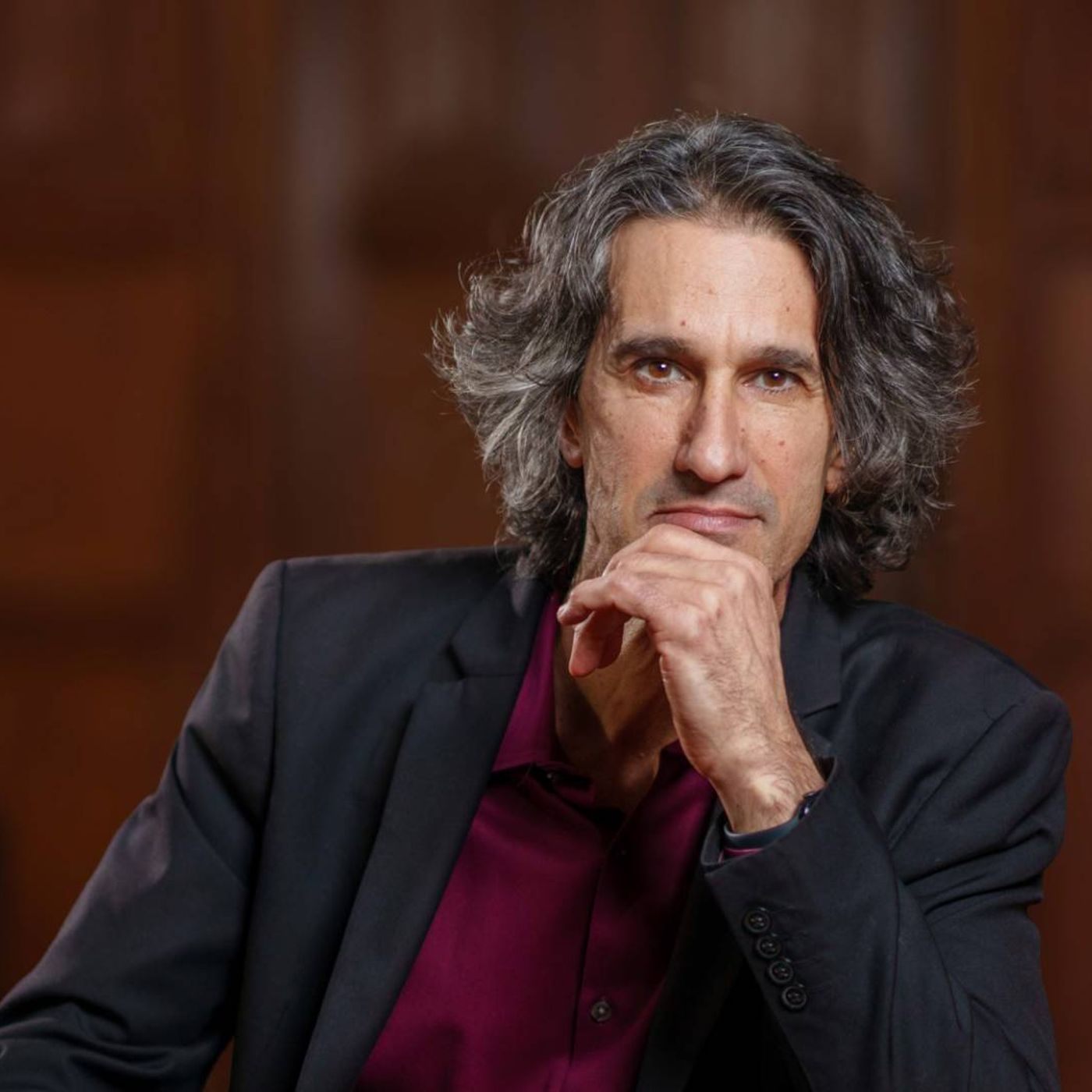
    How to Be Human: Agustín Fuentes on Imagination, Community & Our Evolutionary Past

    What does it actually mean to be human — and what can our evolutionary past teach us about how to live better today? In this episode of Originally Human, I’m joined by anthropologist and author Agustín Fuentes for a wide-ranging conversation about what makes our species unusual, and what we might be getting wrong about human nature. We talk about why studying other primates can teach us so much about ourselves, how biology and culture are constantly shaping one another, and why humans may be less remarkable for being “intelligent” than for our extraordinary capacity to imagine possibilities and come together to make them real. Agustín also challenges one of the assumptions at the heart of much ancestral-living thinking: that there is a single “natural” way for humans to live. Instead, he argues that our evolutionary history reveals something much more interesting — that there are many successful ways to be human. We explore what that means for parenting, creativity, play, community, food, and even the way we use technology. We talk about why human children need many caregivers, why free play matters, what we may be losing when we outsource our thinking to AI, and why knowing your neighbours might change the way you experience the world. We end with a question that feels particularly important right now: after studying humans and our ancestors for decades, what gives Agustín hope about our species? Professor Agustín Fuentes' work explores human evolution, primate behaviour, creativity, cooperation, culture, belief, and the complex relationship between biology and the worlds humans create. This conversation is ultimately a reminder that being human has never been about following one perfect blueprint. It has always been about imagining possibilities, adapting, and — perhaps most importantly — doing it together. Resources: Agustín's website The Creative Spark Why We Believe Some of Agustín's work on Big Think/The Well: I put a camera on a monkey. Here's how it shook my understanding of humanity Why belief is the most powerful disruptor Can you separate science from the scientist? We need a new measure of evolutionary success. Here's why. Other books mentioned in this conversation: Why Zebras Don't Get Ulcers by Robert Sapolsky I Love Learning; I Hate School by Susan D. Blum

    • Transcript
  • S1 · E3
    August 17 · 54 min

    What If We’re Making Parenting Harder Than It Needs to Be? | Michaeleen Doucleff

    Michaeleen Doucleff, PhD, is a science journalist and author of Hunt, Gather, Parent. After struggling with some of the challenges of modern parenting herself, she travelled with her young daughter to Mexico, the Arctic, and Tanzania to learn from Maya, Inuit, and Hadzabe families about how they raise cooperative, confident and emotionally resilient children. In our conversation, we explore what these different approaches reveal about children, parents and the environments humans may be better adapted to - and what, if anything, modern Western families can take from them. We talk about cooperation over control, why children seem to want to contribute, emotional regulation, autonomy, chores, boredom, community, and the surprising possibility that doing less as a parent might sometimes give you more of your life back. You can learn more about Michaeleen on her website: michaeleendoucleff.com

    • Transcript
  • S1 · E2
    July 19 · 48 min

    Pillow Fight With Your Kids: Darcia Narvaez on What Makes Humans Thrive

    Join me for a conversation with Professor Darcia Narvaez. Professor Narvaez is a psychologist and researcher whose work explores how human evolution shapes child development, wellbeing, and the kinds of environments humans evolved to grow up in. Much of her research focuses on what she calls the “evolved developmental niche” — the idea that humans evolved in deeply social, cooperative communities with responsive caregiving, lots of physical closeness, free play, and strong social connection. Her work raises fascinating questions about how modern childhood differs from the environments humans evolved in, and what that might mean for parents and families today.

    • Transcript
  • S1 · E1
    July 5 · 1 hr

    Why It Takes a Village: Ruth Mace on Evolution, Family, and Modern Parenting

    In this episode I’m speaking with Professor Ruth Mace, an evolutionary anthropologist whose work focuses on how human behaviour, family systems, and cooperation have been shaped by evolution. She has spent much of her career studying how people make decisions about family, reproduction, and social life in different environments — and what that can tell us about how humans have adapted to live. Her research sits right at the intersection of biology, culture, and everyday life, which makes her perspective especially interesting when we think about how modern lifestyles compare to the environments humans evolved in. In the episode we cover child rearing, cooperation, family systems and what learnings we can draw from our evolutionary past. You can learn more about Ruth and her work here: https://profiles.ucl.ac.uk/7995-ruth-mace/about

    • Transcript
Showing 1–4 of 4 episodes