Skip to content
Artwork for Nursing the Nation
NewsNews CommentaryPoliticsGovernmentExplicit

Nursing the Nation

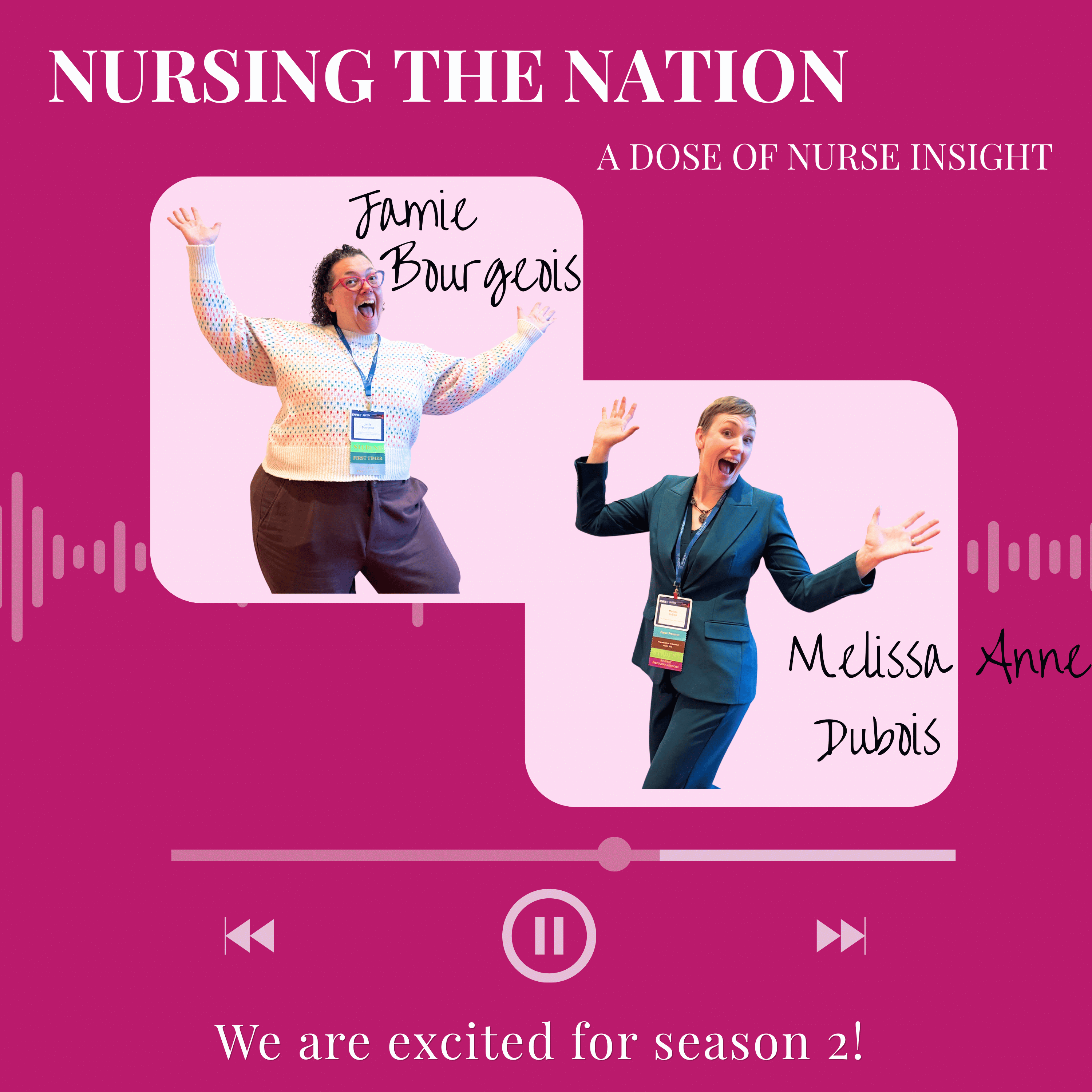
Jamie Bourgeois & Melissa Anne Dubois

Nursing the Nation is a podcast where we dissect today's headlines through the uniquely insightful lens of the nurse. Join hosts, Jamie & Melissa Anne, as they use their nursing expertise to navigate the complexities of national events, offering perspectives rooted in holism, advocacy, and nursing science. Beyond the medical jargon and political noise, they’ll explore the human element of current affairs, providing a grounded and compassionate understanding of the issues that impact us all. Because when it comes to understanding the pulse of our society, who better to ask than the most trusted profession?

Play
  • 27 episodes
  • weekly
  • Avg 43 min
  • English

Support the show

Goes straight to the publisher. podnod takes nothing.

Counted on this page — what you have heard stays on this device, so it is not something the list can be paged by.
  • S2 · E16
    Yesterday · 53 min

    S2.E16. The One Big Beautiful Healthcare Series, Part 1: Nurses Overview

    "It doesn't cut anyone's benefits." That's the talking point — and it's technically true. In the launch of our latest six-part series on the One Big Beautiful Bill Act (OBBBA, now Public Law 119-21), Jamie and Melissa explain how a law that cuts no covered service is still projected to leave ten million more people uninsured, and why the savings depend on people losing coverage they're still eligible for. We start with the basics then map the four changes that have already landed as of fall 2026: the ACA marketplace subsidy cliff and soaring premiums, sweeping SNAP changes, a health system cutting provider rates and closing rural units preemptively, and the states enforcing work requirements early. Nebraska and Montana are the canaries in the coal mine for how the Medicaid Expansion work requirement will pan out. We make it human — four everyday people already caught in the gears of this law. We close with our nurse take on "administrative burden," the quiet act of rationing care through paperwork. Head over to our Substack to join the conversation. The views and opinions expressed on Nursing the Nation are our own and do not represent those of our employers, academic institutions, or any organization we're affiliated with. Episode image made with Adobe Firefly.

  • S2 · E15
    Saturday · 10 min

    S2.E15. Shout Out Saturday: Dena Bushman

    It's the first Shout Out Saturday of Season Two, and Jamie and Melissa Anne spotlight nurse practitioner and epidemiologist Dena Bushman. A CDC-trained medical epidemiologist and lieutenant commander in the U.S. Public Health Service, Bushman built her career inside federal public health—until she was rostered to deploy to an ICE detention facility in Texas, with Guantánamo Bay to follow. In January 2026, she resigned publicly and spoke out, knowing it could end her federal career for good. Jamie and Melissa Anne unpack the moral distress at the heart of her decision: detained people genuinely need care, yet staffing these facilities helps sustain their operation and pulls scarce public health resources away from real outbreaks. With context on record-high detention numbers (roughly 71,000 people across ~225 facilities per early-2026 data), this episode is about ethics, advocacy, and the courage to name a trap out loud. Know a nurse going above and beyond who deserves a shout out? Reach out to us on our Substack. The views and opinions expressed on Nursing the Nation are our own and do not represent those of our employers, academic institutions, or any organization we're affiliated with.

  • S2 · E14
    September 22 · 38 min

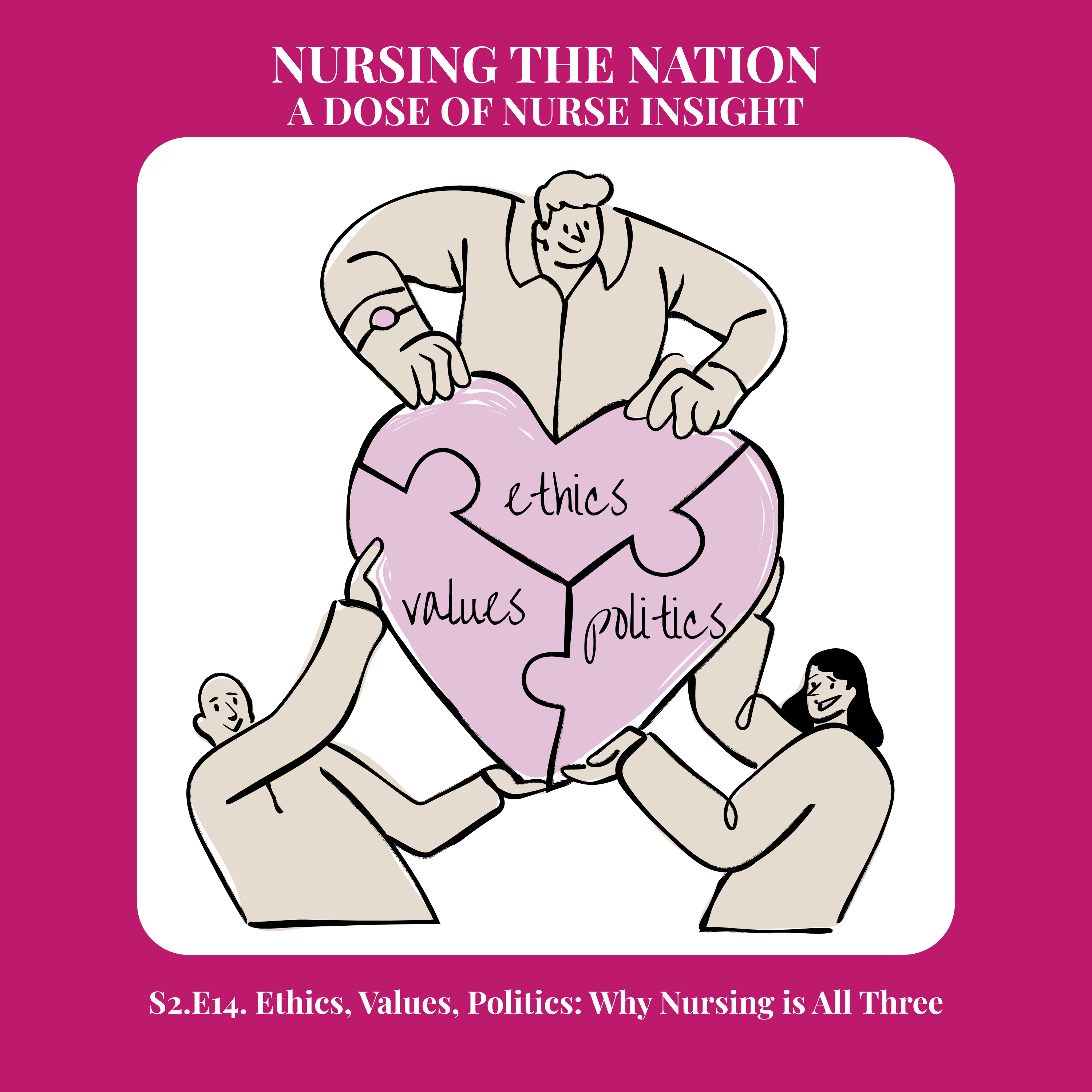
    S2.E14. Ethics, Values, Politics: Why Nursing is All Three

    A professional nursing organization recently drew a line between policy and politics, and said nurses belong on one side of it. We disagree, and this replay explains why. In this episode, Jamie and Melissa Anne provide an update to the conversation that started the show: what led each of us into nursing, and why nursing knowledge belongs in the public square. Jamie makes the case that politics is a reflection of values, values are a reflection of ethics, and nurses already practice from a code that obligates them to engage in the democratic process and to speak against policy that undermines health equity. Melissa Anne brings the view from nursing education, where she now teaches students in a direct-entry master's program. We get into the real drivers of the nursing shortage, which is not a shortage of applicants but of faculty, clinical placements, and newer nurses not making it past year three of practice. And we push back hard on resilience training as the profession's default answer to moral distress. You can prepare a nurse for grief. You cannot prepare a nurse to be prevented from practicing ethically. That requires systemic change, not a tougher workforce. Head over to our Substack for more, sponsor us, or drop us a message. The views and opinions expressed on Nursing the Nation are our own and do not represent those of our employers, academic institutions, or any organization we're affiliated with.

  • S2 · E13
    September 15 · 13 min

    S2.E13. A Little Breather + A Season Update

    We're taking a short hiatus — and using it to bring back the episode where we talk about how it all started. We've had a lot happen since we launched Nursing the Nation. Melissa Anne defended her dissertation in August and started a full-time assistant professor position a week later. Jamie has entered the dissertation phase — plus several academic writing projects, clinical presentation preparation, and a full house renovation currently in demolition. Something had to give, so the show is taking a brief pause. We also preview what's coming: a multi-episode series on the Medicare, Medicaid, and ACA marketplace changes under the One Big Beautiful Bill Act; an episode on midwifery and doula care; and the mental health policy fights they're tracking, including the ongoing litigation over roughly $1 billion in school-based mental health grants and the still-unrestored "Press 3" service on the 988 Suicide and Crisis Lifeline, which Congress funded at $33.1 million for fiscal year 2026. Plus: two stories from the bedside that neither Jamie nor Melissa Anne will ever forget. Make sure to follow us on our Substack. If you have a topic idea or a nurse who deserves a shout-out, email nursing.nation.voice@gmail.com.

  • S2 · E12
    September 8 · 46 min

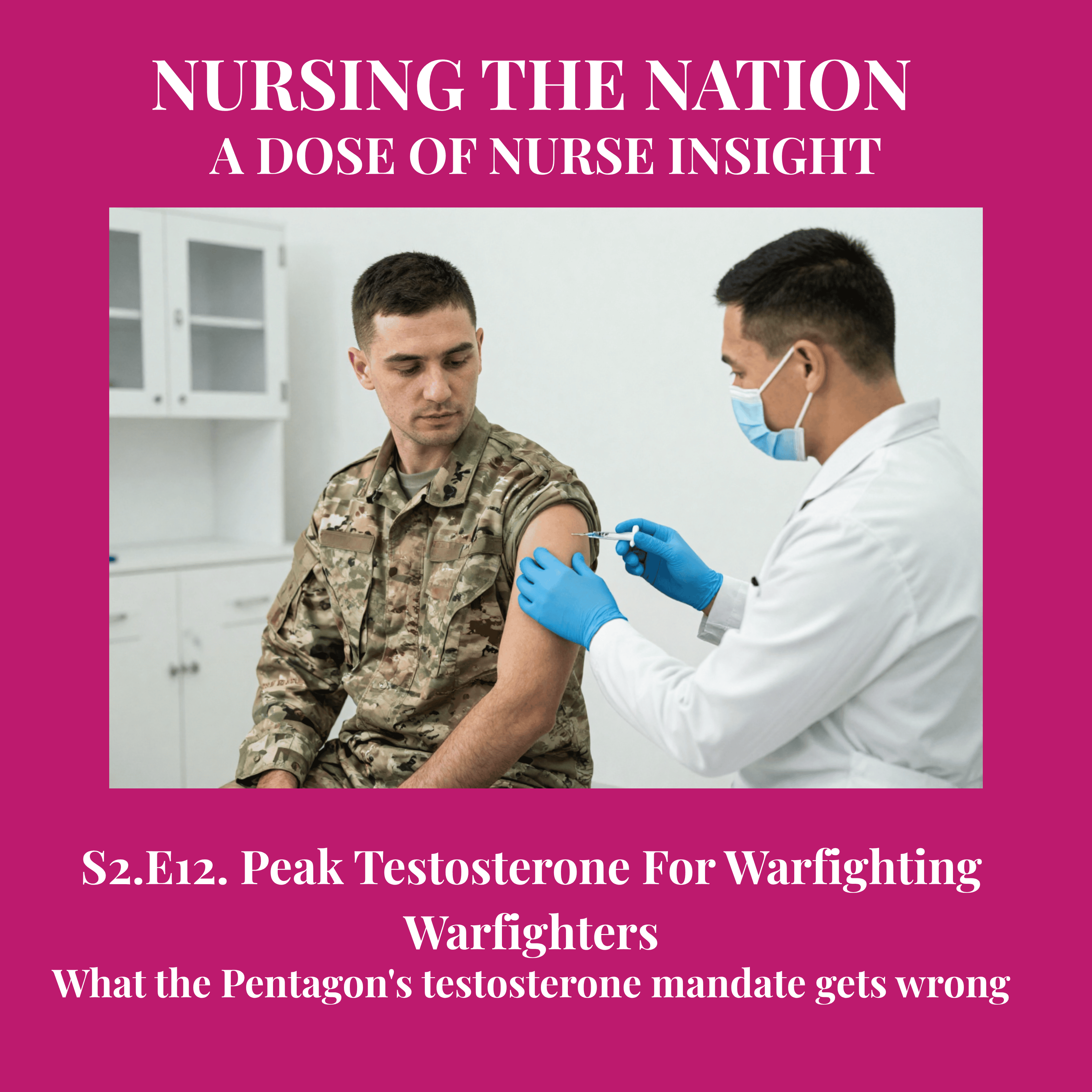
    S2.E12. Peak Testosterone For Warfighting Warfighters

    On July 15, 2026, Secretary of Defense Pete Hegseth announced — in a video captioned "The High-T Department of War" — that all active-duty service members thirty and older will be screened annually for testosterone deficiency, with testosterone replacement therapy offered to those who screen low. The stated goal: keeping troops at the "leading edge of lethality." This week, Melissa Anne and Jamie cover what Total Force Fitness actually is and why a genuinely good, whole-person, family-inclusive readiness framework is being reduced to a single serum draw. We dig into the Operator Syndrome research Hegseth incorrectly attributes as evidence: a six-year study of about fifty highly symptomatic special operations members that never examined treatment at all. We walk through the Endocrine Society's response, why a testosterone level is not a diagnosis, why the same blood sample can read low at one lab and normal at another, and what a real hypogonadism workup requires. Update: the Pentagon's new testosterone screening program for troops 30+ was published September 2nd and rescinded within a day. Stick around for the update at the end of the episode. Head over to our Substack to join the conversation. The views and opinions expressed on Nursing the Nation are our own and do not represent those of our employers, academic institutions, or any organization we're affiliated with. Episode image made with CanvaAI.

  • S2 · E11
    September 1 · 19 min

    S2.E11. The Science of Dolly Parton

    Dolly Parton has died at 80, and the tributes have poured in from every corner of American life — country music, film, business, Appalachia. We wanted to write a different kind of tribute. As nurse scientists, Jamie and Melissa Anne dig into not just what made Dolly's philanthropy extraordinary, but why it worked. From the 1988 Dollywood Foundation's Buddy Program (which cut participating-class dropout rates from 35% to 6%) to the Imagination Library's monthly books for children from birth to age five, to the Dolly Parton Birthing Unit that helped close a maternity care desert in rural Appalachia, to the $1 million that seeded the research behind the Moderna COVID-19 vaccine — we walk through the return on investment and the evidence base behind each one. Dolly said she had no strategy and just gave from the heart. The research suggests she was doing upstream public health the whole time. Head over to our Substack to join the conversation. The views and opinions expressed on Nursing the Nation are our own and do not represent those of our employers, academic institutions, or any organization we're affiliated with.

  • S2 · E10
    August 25 · 29 min

    S2.E10. Are We Really Experiencing More Foodborne Illness in the US?

    Cyclospora. Salmonella. Listeria. E. coli. It has felt like a relentless summer of foodborne illness headlines. So Jamie and Melissa Anne went looking for the actual data. In this episode, we trace how an outbreak is actually discovered. We break down which federal agency picks up which food (USDA for meat, FDA for produce and packaged goods), and we hit the fact that shocked us: nearly all food recalls in this country are voluntary. USDA cannot order contaminated meat off the shelf. It can only ask. We also examine what's happened to the response infrastructure. You won't be surprised by the reasons why. Head over to our Substack to join the conversation. The views and opinions expressed on Nursing the Nation are our own and do not represent those of our employers, academic institutions, or any organization we're affiliated with. Episode image made with CanvaAI.

  • S2 · E9
    August 18 · 47 min

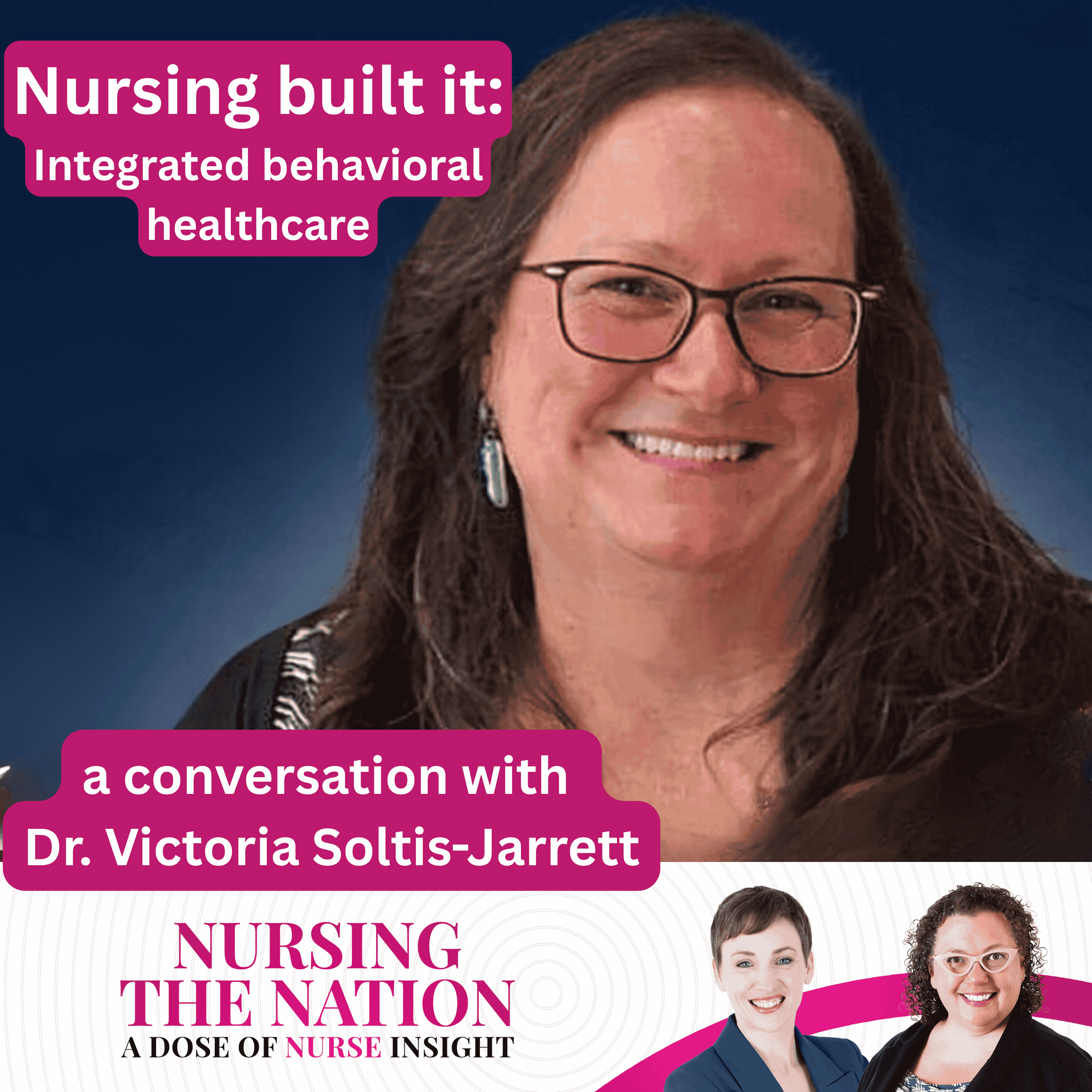
    S2.E9. Nursing Built This Model of Mental Health Care: Integrated Behavioral Health Care with Dr. Victoria Soltis-Jarrett

    This week, Dr. Victoria Soltis-Jarrett returns to Nursing the Nation to explain integrated behavioral health care — what it actually is, what it isn't, and why "we'll refer you two doors down" doesn't count. Dr. Soltis-Jarrett is the Carol Morde Ross Distinguished Professor of Psychiatric Mental Health Nursing at the University of North Carolina at Chapel Hill and a newly inducted inaugural Fellow of the International Society of Psychiatric-Mental Health Nurses, with thirty-five years of clinical practice, education, and scholarship behind her. Dr. Soltis-Jarrett walks us through TANDEM3-PC- the rural primary care integration model she built from the ground up after the off-the-shelf models didn't fit- and the Carolina Behavioral Health Integration Scholar traineeship, which has now educated more than two hundred nurse practitioners. Head over to our Substack to join the conversation. The views and opinions expressed on Nursing the Nation are our own and do not represent those of our employers, academic institutions, or any organization we're affiliated with.

  • S2 · E8
    August 11 · 26 min

    S2.E8. Introducing Dr. Melissa Anne DuBois!

    This week we're deviating from the norm, because as this episode airs, Melissa has defended her dissertation and is officially Dr. Melissa Anne DuBois. To mark the occasion, Jamie went and got nerdy about where the PhD actually comes from — and it turns out the history is contested, medieval, and extremely useful the next time someone tells you nurses shouldn't use the title "doctor." Nursing PhD enrollment has declined for the eleventh consecutive year, to 4,077 students in a workforce of 5.6 million. That's less than a tenth of a percent of all nurses in the US! We need more nurses with a PhD in nursing science, so contact us if you are a nurse considering this — we'd like to talk with you about it. Head over to our Substack for more, sponsor us, or drop us a message.

  • S2 · E7
    August 4 · 57 min

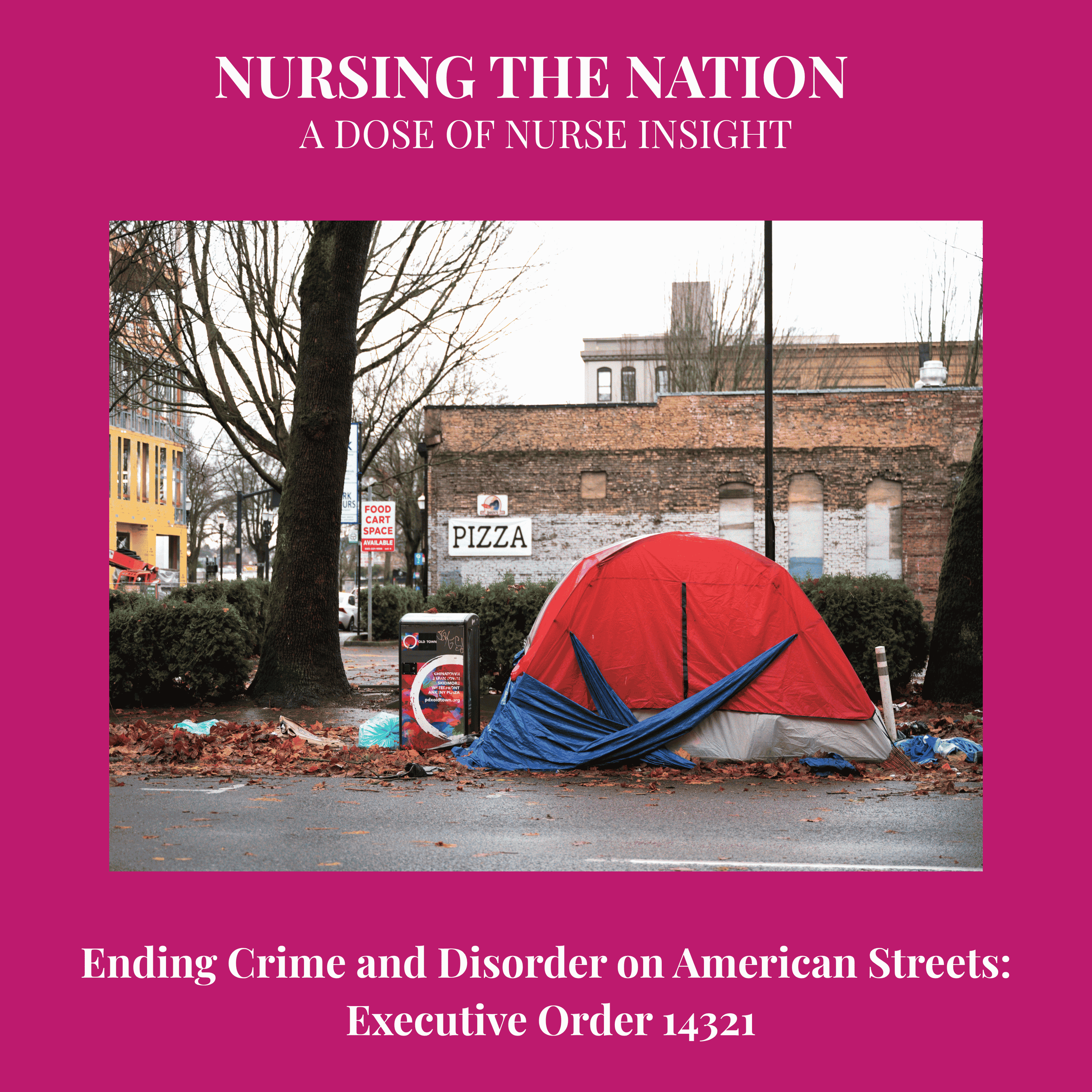
    S2.E7 Ending Crime and Disorder on American Streets: Executive Order 14321

    An executive order from July 2025 calls street homelessness a psychiatric problem and prescribes involuntary commitment. In this episode, Jamie and Melissa break down EO 14321 Ending Crime and Disorder on America's Streets. They discuss what the HUD data actually shows, how grant money becomes leverage, why defunding harm reduction and Housing First backfires, and what the June 2026 DOJ memo narrowing the interpretation of Olmstead v. L.C. means for community-based care. Head over to our Substack to join the conversation. The views and opinions expressed on Nursing the Nation are our own and do not represent those of our employers, academic institutions, or any organization we're affiliated with.

  • S2 · E6
    July 28 · 46 min

    S2.E6 TrumpRx: GoodRx with a Red Hat

    The President calls TrumpRx "the most transformative healthcare initiative of all time." So what does it actually do? In this episode, Jamie and Melissa pull apart the branded drug-discount rollout — and find a website that links you to manufacturer coupons, not a pharmacy. To understand why the same generic pill can cost $4 at one store and $19 at another, they follow the money through pharmacy benefit managers (PBMs) — the middlemen who now control roughly 80% of the market through rebate games, spread pricing, and the conflict of interest baked into companies that own the insurer, the PBM, and the pharmacy all at once. They break down the structural fights that could actually change things (the bipartisan Break Up Big Medicine Act; Tennessee's Fair Rx Act and the CVS lawsuit that followed), why TrumpRx explicitly locks out Medicaid patients and won't count toward your deductible, and the now-infamous claim that prices were cut "600%" — a number that's mathematically impossible and rated Pants on Fire. TLDR: A nurse's-eye view of what TrumpRx does for most Americans: basically nothing. Have a TrumpRx story of your own? Email us or leave a note on Substack. Follow us at nursingthenation.substack.com. The views and opinions expressed on Nursing the Nation are our own and do not represent those of our employers, academic institutions, or any organization we're affiliated with.

  • S2 · E5
    July 21 · 41 min

    S2.E5. MAHA Strategy Report, Part 4: Fostering Private Sector Collaboration

    We close our four-part nursing analysis of the Make Our Children Healthy Again MAHA Strategy Report with its thinnest pillar on paper — and its most consequential in practice. Pillar 4 rests on one word every nurse knows intimately: voluntary. Jamie and Melissa unpack the retreat from a promised food-dye ban to a toothless voluntary tracker, the "precision agriculture" drone promises that have not materialized, and the arithmetic that defines the pillar: ~$700M into a new MAHA program while $1B+ in conservation commitments get clawed back. Then we ask the nursing questions: why a strategy obsessed with what's in kids' food stays silent on whether they have enough, and why "faster chemical approvals" is the opposite of upstream thinking. Follow the labor. Follow the money. Sources and the FDA dye tracker are in our show notes: nursingthenation.substack.com Nursing the Nation is hosted by Jamie Bourgeois and Melissa Anne DuBois. The opinions expressed are our own and not representative of any employer, institution, or organization. Sponsor Nursing the Nation. Two working nurses, independently researching and producing every episode — no network, no ad agency, no corporate backing. If our take has informed you or made you think, keep the mic on: sponsor us at nursingthenation.substack.com.

  • S2 · E4
    July 14 · 45 min

    S2.E4. MAHA Strategy Part 3.2: Increasing Public Awareness and Knowledge

    In the second half of our deep dive into the MAHA Strategy Report's third pillar, Jamie and Melissa take on pediatric mental health, screen time, vaping, substance use, and the report's favorite move: naming a youth crisis and then handing the responsibility to individual kids and families while quietly cutting every structural support that might actually help. We unpack what the research really says about screens and mental health (spoiler: "screen time" as a single number is nearly meaningless), why the federal government's own data shows teen substance use at historic lows even as the report frames it as a worsening crisis, and what's actually worth watching — nicotine pouches, addiction hardening, and the push to bring back flavored vapes. Then we get to the part that makes us angry: a strategy that claims to care about youth anxiety and depression while defunding the 988 Lifeline's LGBTQ+ youth service, omitting gendered and LGBTQ+ disparities from CDC data, attacking social-emotional learning, and moving to restrict psychiatric medications and gender-affirming care. As nurses, we call it what it is — a lethal contradiction. You don't get to break the safety net and then prescribe a walk in the park as the cure. 🎙️ Subscribe to Nursing the Nation, leave us a 5-star review, and find us on Substack — where you can now sponsor our work. The opinions on this podcast are our own and not representative of any employer, institution, or organization we may be affiliated with.

  • S2 · E3
    July 7 · 56 min

    S2.E3. MAHA Strategy Part 3.1: Increasing Public Awareness and Knowledge

    HHS calls the third pillar of the MAHA strategy "Increasing Public Awareness and Knowledge"—a plan to empower parents and restore trust in public health. Jamie and Melissa Anne read the fine print and find the bootstraps myth woven throughout: sixteen-plus awareness campaigns built almost entirely on individual behavior change, with the upstream social determinants of health conspicuously missing. We cover the well-documented way awareness campaigns can widen health disparities rather than close them; the "Make American Schools Healthy Again" push landing on an unequal delivery system of overstretched school nurses and gutted PE programs; a dietary campaign promising healthy eating "regardless of budget or location" in a world of SNAP cuts and time-poverty; and the fight over community water fluoridation, from its 1901 origins to the state-level bans spreading in 2026. Plus: the still-empty Surgeon General's office and what to know about nominee Nicole Saphier. Subscribe to our Substack for more content from the nurses you trust.

  • S2 · E2
    June 30 · 55 min

    S2.E2. MAHA Strategy Part 2: Realigning Whose Incentives?

    The MAHA Commission's September 2025 Strategy Report laid out four pillars for tackling childhood chronic disease. Today Jamie and Melissa Anne are digging into Pillar 2: "Realigning Incentives" — a sprawling grab-bag of food labeling, sunscreen modernization, dietary guidelines, synthetic dye phase-outs, and the still-undefined "ultra-processed food." What's actually been accomplished? We unpack why U.S. sunscreen regulation lags behind Europe and Asia, why the new upside-down food pyramid is a confusing step backward, who really profits from the petroleum-based dye phase-out (hint: not the oil industry), and why a federal definition of "ultra-processed food" keeps slipping its deadline. Underneath it all: a movement skilled at capitalizing on parental fear while ignoring the structural drivers of children's health: hunger, poverty, healthcare access, pollution, and gun violence. You can take red dye out of Swedish Fish, but it won't help a kid who comes home to an empty fridge. 🎙️ Subscribe to Nursing the Nation, leave us a 5-star review, and find us on Substack — where you can now sponsor our work. SINCE TAPING: The FDA announced June 9, 2026 that they have approved an additional sunscreen ingredient.

  • S2 · E1
    June 23 · 32 min· Video

    S2.E1. MAHA Strategy Part 1: What "Advancing Research" Actually Means

    Season 2 is here, and we're opening with a topic that has been a frequent flyer: the MAHA Strategy Report. If you followed our MOCHA series in Season 1, you already know the diagnosis — poor diet, chemical exposures, physical inactivity, and overmedicalization. Now the MAHA Commission is back with their so-called playbook. Today we're putting Pillar One — Advancing Research — under the nursing microscope. Spoiler: "gold standard science" is doing a lot of heavy lifting for a document with little meat and zero citations. We break down the 14 research priorities the Commission laid out, explain why several of them function as dog whistles for the health freedom crowd, and track what has actually happened since the Strategy dropped. From the reinstatement of a long-disbanded vaccine safety task force to the quiet dismantling of the very agencies designed to protect us from chemical exposures, the gap between the promise and the reality is… wide. We also introduce you to Andrew Downing — and no, he is not from Hamlin, Hamlin & McGill. This is Part 1 of a multi-part series. Subscribe to our show so you don't miss what comes next. Subscribe to our Substack for more content from the nurses you trust.

  • S1 · E32
    May 3 · 1 hr 45 min

    Saturday (on a Sunday) Soapbox: The RISE Rule: How the Dept of Education Just Made It Harder to Become a Nurse

    The Department of Education just finalized the RISE Rule — and graduate nursing still isn't a "professional degree." What does that mean? It means nursing students starting after July 1, 2026 can borrow less than half of what med students, law students, and even chiropractic students can access in federal loans. The Department says it's just a classification issue. Jamie says it's misogyny in a bureaucratic hat. Jamie breaks down what the RISE Rule actually does, why the CIP code defense doesn't hold up, why "just get a private loan" is not the answer anyone thinks it is, and what this means for a nursing workforce that's already short 264,000 nurses — with 40% of current nurses planning to leave within five years. Plus: what you can do about it, and why your legislators need to hear from you yesterday. Stay tuned after the Soapbox for our conversation with Dr. Victoria Soltis-Jarrett of UNC on what "professional" status really means for the nurses doing this work every day. See more on our Substack.

    • Chapters
  • S1 · E32
    March 16 · 33 min

    BONUS Episode: Referred Pain, or When the 'Not-War' Hits Home

    The U.S. and Israel have launched massive strikes against Iran. Cable news is debating carrier groups and regime change. We're checking the vitals of the people right here at home. War doesn't just happen "over there." In this bonus episode, Jamie and Melissa Anne apply the nursing lens to the Third Gulf War's homefront realities — from a spike in oil prices and the financial toxicity hitting American households, to the cortisol-soaked "Headline Stress Disorder" disrupting sleep, relationships, and mental health across the country. We also offer a four-step Nursing Care Plan for surviving a nation on a war footing — because you can't put a bandage on collective anxiety, but you can titrate media intake, add fact based journalism, and [Jamie's go to] contact your Congressional representatives.

  • S1 · E31
    February 9 · 1 hr 4 min

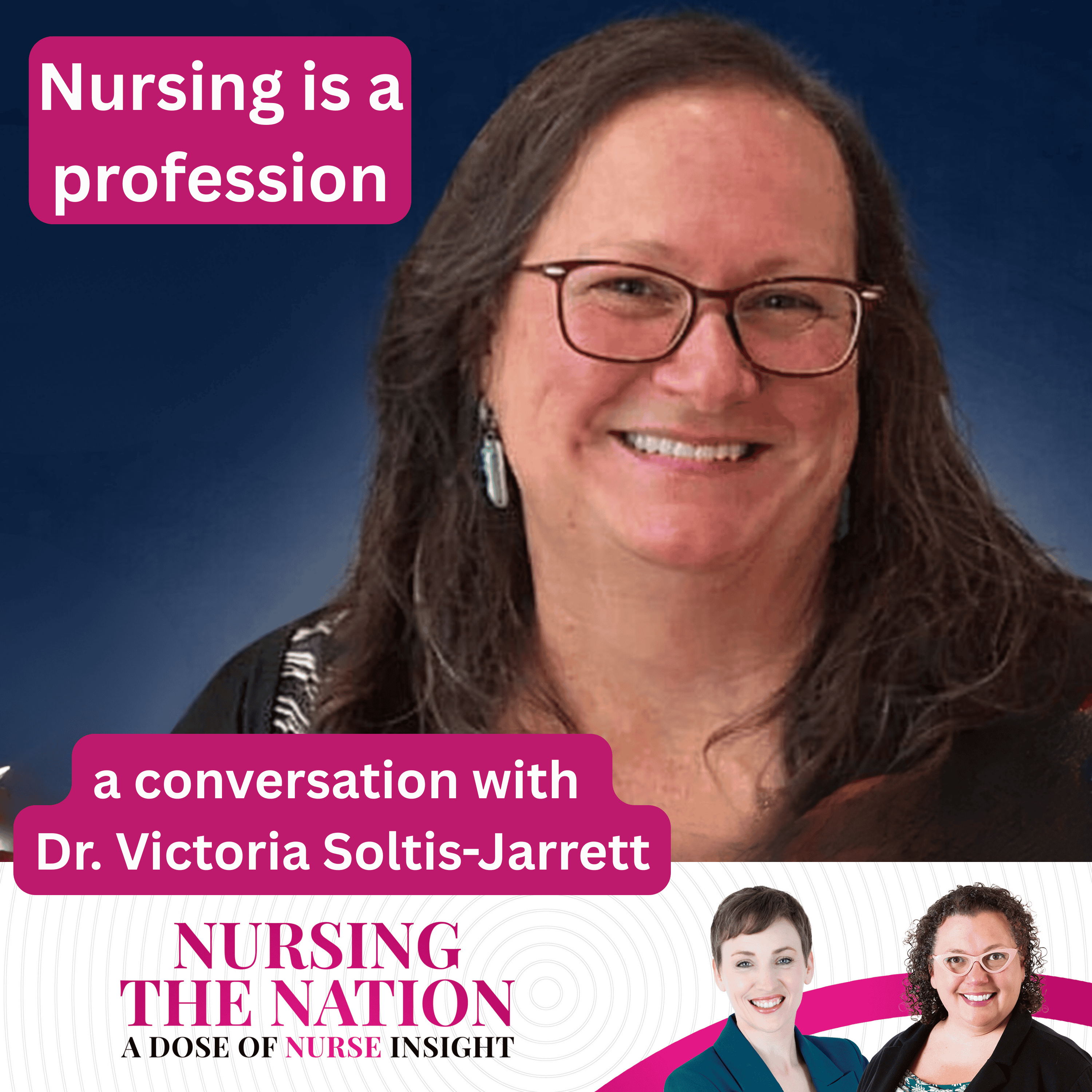
    BONUS Episode: Nursing is a Profession with Dr. Victoria Soltis-Jarrett

    Today's bonus episode features a discussion based on the Department of Education's final proposed rule that will EXCLUDE graduate level nursing education from the professional federal student loan limits. Jamie and Melissa Anne discuss how this impacts nurses, patients, and the healthcare system at large with Dr. Victoria Soltis-Jarrett, while providing context to what exactly graduate level nursing is. Get more info, show notes, and follow us on Substack: https://nursingthenation.substack.com/

  • S1 · E31
    January 26 · 30 min

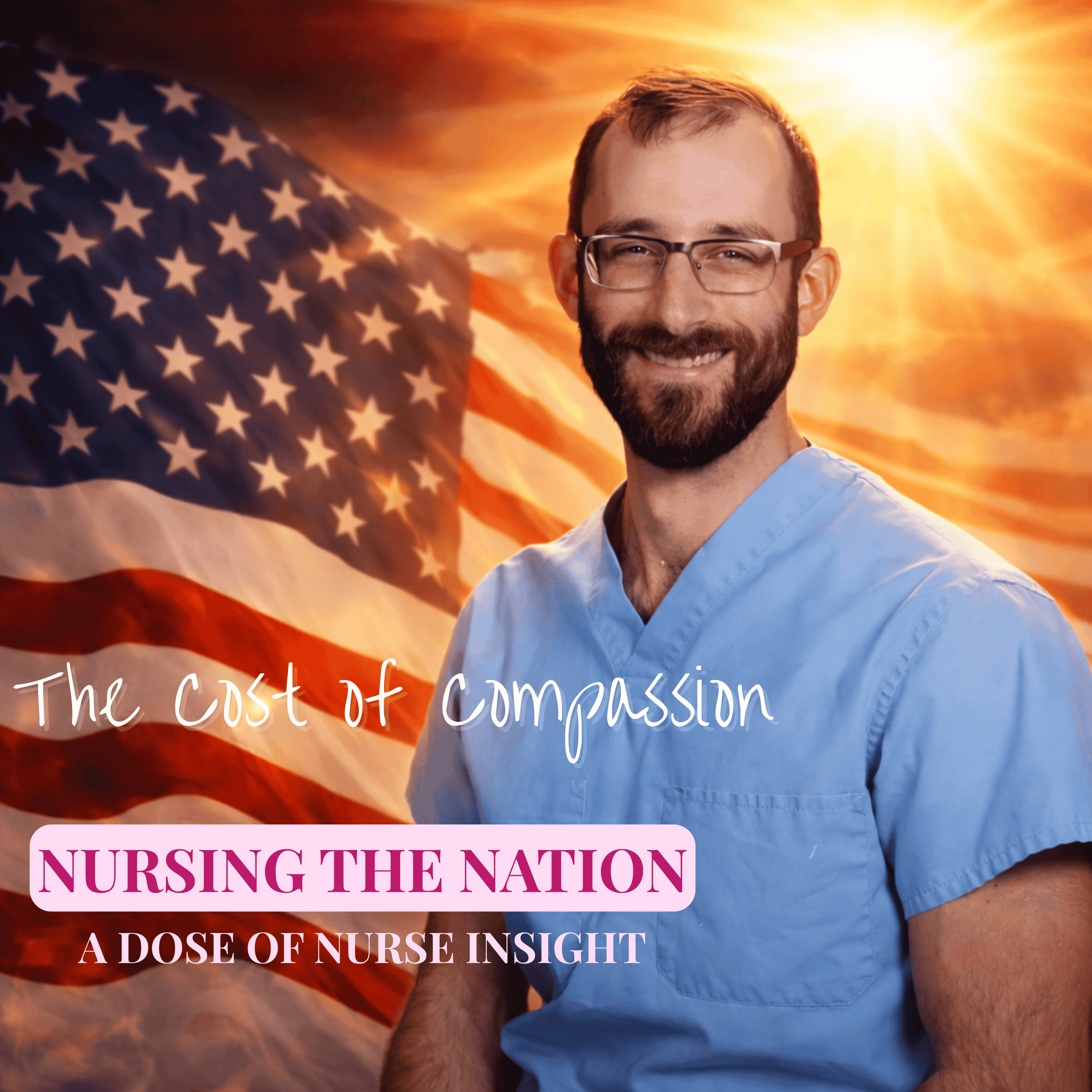
    BONUS Episode: The Cost of Compassion & Remembering Alex Petti, RN

    Jamie and Melissa Anne address the escalating violence and the tragic loss of Alex Jeffrey Pretti, a VA ICU nurse who was killed by ICE agents on Saturday, January 24, 2026, in Minnesota. Speaking not just as nurses, but as witnesses to the "best and worst of humanity," they deliver an urgent message to those who have previously remained silent or supported the current administration’s immigration policies. Get more info, show notes, and follow us on Substack: https://nursingthenation.substack.com/

Showing 1–20 of 27 episodes