Skip to content
Artwork for Nucleate Podcast
TechnologyBusinessEntrepreneurshipScienceLife Sciences

Nucleate Podcast

Nucleate

Nucleate is the new voice for next generation biotech leaders.

Play
  • 30 episodes
  • weekly
  • Avg 1 hr 9 min
  • English
Counted on this page — what you have heard stays on this device, so it is not something the list can be paged by.
  • #58
    Tuesday · 55 min

    Beyond the Lab, Into the Community | Sarah MacDonald

    This episode of the Nucleate Podcast features the Nucleate hosts in conversation with Sarah MacDonald, CEO of Life Science Cares, a collective impact organization that mobilizes the life sciences industry to fight poverty. Sarah traces her path from an English and political science degree and a master’s in journalism to work as a newspaper reporter, then to the state house on the staff of Bob Coughlin, who went on to lead MassBio. Bob’s work as a patient advocate after his son’s cystic fibrosis diagnosis shaped her view of leaders as advocates. She spent years building patient advocacy programs at MassBio, including its Rare Disease Day event, before moving to Life Science Cares. Despite nearly 20 years in and around the industry, she has never worked at a biotech company, and she credits her reporter’s habits of asking questions, listening closely, and translating between experts and broader audiences for her community-building approach. The conversation then turns to how Life Science Cares works and why it matters. Sarah describes an organization that pairs grantmaking, modeled on a VC portfolio approach, with volunteerism and skills-based support from industry professionals across five U.S. cities and a new chapter in Switzerland. Examples include the Equity Express, a mobile health clinic for farm workers co-invested in by Gilead and Genentech that helped inspire a California bill to fund expansion, and a Boston effort to build a care navigation model for families who drop off after referrals. She discusses the headwinds of 2025, from tighter industry budgets to pulled government grants, and how her team responded by funding earlier and simplifying renewals. She also covers the case that doing good is good for business, how to pair data with an authentic individual story, why private philanthropy cannot replace government funding, and how to stay nonpartisan while advocating. The episode closes with the best advice she got from Bob Coughlin and a quickfire round that reveals a love of washing dishes and a secret talent for bowling. Here is a segment breakdown of the episode: 0:00–4:32 — Intro and career path: From newspaper reporter to state house to MassBio, and a 20-year life sciences career without ever working at a biotech. 4:32–13:24 — Community building and core skills: Collaboration, long-term thinking, risk-taking, and why listening and translating matter most. 13:24–21:22 — What Life Science Cares does: Fighting poverty through funding, volunteers, and skills, now in five U.S. cities and Switzerland. 21:22–27:22 — Impact in practice: The Equity Express mobile clinic for farm workers, co-invested in by Gilead and Genentech, and Boston’s care navigation model. 27:22–30:15 — Responding to a tough year: Funding earlier and cutting red tape as budgets tightened and government grants disappeared. 30:15–35:04 — What companies gain: Retention, reputation, and resilience, plus one employee’s foster care story. 35:04–42:45 — Measuring impact and telling the story: “Big I” vs. “little i” impact, and why data needs a human story. 42:45–48:16 — A shifting landscape: New language, same commitment, and why philanthropy can’t replace government funding. 48:16–52:04 — Advocacy and leadership: Free school meals, staying nonpartisan, and Bob Coughlin’s best advice. 52:04–55:16 — Quickfire round and sign-off: Coffee over walks, dishes as meditation, and a secret bowling talent.
  • #57
    November 10 · 56 min

    Trial by Fire: Pivot from CSO to Biotech CEO | David De Graaf, Reverb Tx

    David de Graaf, CEO and President of Reverb Therapeutics, joins the Nucleate Podcast to share what it takes to lead a biotech. He explains how one mentor’s advice steered him from scientific research into the big pharma industry, where he worked at the forefront of drug development at AstraZeneca, Pfizer, and Boehringer Ingelheim. That was when an opportunity at Selventa (Genstruct) pushed him to step into a CFO role, a move that changed the trajectory of his career. David also discusses his work at Reverb Therapeutics and its Amplify•R™ platform, which pairs a cytokine like IL-15 with PD-1 to bring the body’s own signals to T cells. He explains why the team chose to be asset-driven and how to succeed in a tough funding market. Founders will find plenty to take away from this episode, including lessons on pitching, finance, strategy, and more. Time Stamps: 0:34 Introduction to David’s global roots and how it has influenced his approach to science and work 5:12 How a mentor’s guidance led him into industry 12:32 Key learnings from his early career at AstraZeneca and Pfizer 18:16 Navigating the pivot into leadership roles 26:02 How to set up a biotech for a successful exit 33:31 Introduction to Reverb Therapeutics 41:17 Advice on pitching to investors 48:33 Why it’s important to be an asset-driven in today’s challenging markets 54:48 Rapid fire questions

  • #56
    November 3 · 58 min

    Investing in the Radical: with Amino Collective VC | Nirmesh Patel

    Nirmesh Patel describes his path from biomedical research at King’s College and a PhD focused on triple-negative breast cancer to founding CCG AI. He founded the company while finishing his PhD and credits Y Combinator with helping him build a valuable network. After CCG AI was sold, Nirmesh moved from advising startups into venture investing, eventually helping establish Amino Collective. The firm invests early in companies at the intersection of AI, technology, health, and biology, backing ambitious founders across areas such as clinical infrastructure, agentic workflows, and drug discovery. Nirmesh says he looks for founders who are deeply driven by the problem, move with urgency, and can make a seemingly unconventional opportunity feel inevitable. He also shares practical guidance: prepare carefully for board meetings, use data to inform pivots, ask critical go/no-go questions early, and treat investor feedback as input rather than instruction. He emphasizes that failure is not inherently a black mark; delaying hard decisions or avoiding honesty about them can be more damaging. Time Stamps 00:00:16 — Upbringing and academic path into biomedical research 00:04:28 — Founding a company during his PhD and balancing it with thesis work 00:11:37 — Transition from founder to investor 00:16:13 — Amino Collective’s investment thesis and “free and radical” founders 00:28:10 — Biotech funding conditions and the outlook for early-stage investment 00:34:10 — Overlooked opportunities in drug discovery, capital allocation, and chemistry 00:37:44 — Founder qualities Patel looks for and advice on pitching 00:42:30 — Making pivots based on evidence and gathering the right data 00:47:37 — Startup setbacks and learning from failure 00:54:13 — Quickfire round and conclusions

  • #55
    October 27 · 50 min

    Trailblazing Tough Tech | Ann DeWitt

    In this episode we welcome Ann DeWitt, General Partner at Engine Ventures. She introduces Engine Ventures and how it grew out of MIT to back tough tech companies that work across disciplines, beyond the biology and computer science startups that usually draw investors. Ann also explains the programs and resources offered by Engine Ventures to help founders transform their ideas into successful businesses. With her VC perspective, Ann covers the importance of clear checkpoints and staged funding for companies with long timelines and heavy capital needs. She discusses why impact has to come first if a financial return is going to follow, offering plenty of advice for founders and early career scientists. Ann shares what it takes to catch an investor's eye when they are deciding which startups to back. Time Stamps 0:55 Introduction to Ann Dewitt and her transition from scientific research to venture capital 6:38 Introduction to Engine Ventures 10:00 What is tough tech and what makes it different from other startups 16:13 Why investor prioritize “impact” 24:06 Future growth opportunities within the neurology field 28:47 Common challenges founders face and how to overcome them 33:22 Advice for scientists on building a business perspective 38:46 Women in biotech 45:52 Quick fire questions

  • #54
    October 20 · 52 min

    From PlayStation to Psychedelics: A Brain Health VC's Pivot | Matias Serebrinsky

    The Nucleate Podcast welcomes Matias Serebrinsky, co-founder of Psymed Ventures. Raised in Argentina by a physician father and an economist mother, he shares how his early life influenced his comfort with risk and his drive to do work that helps others. Matias shares his path from Sony marketing to starting CookUnity, and eventually to building a venture fund focused on brain and mental health. The conversation provides a look into the latest trends in neurotech and brain health investing, from psychedelic therapeutics to precision psychiatry and RNA therapies. Matias offers plenty of advice for entrepreneurs on pitching their startup ideas and how to pair technical knowledge with business acumen. Be sure to also check out his podcast, Business Trip, to learn more about the intersection of neuroscience and technology. Time Stamps 0:38 Introduction to Matias and his early career 8:17 Why he pivoted into the neuroscience industry and medtech 10:06 The investment approach that led to a $1.2B psychedelics deal 18:21 Psymed's lens for evaluating new technologies 27:08 The latest trends across neurology and brain health 34:54 What qualities to look for in a strong scientific founder 37:58 The Psymed elevator pitch 42:40 Advice for entrepreneurs on how to pitch effectively 48:07 Introduction to the Business Trip podcast hosted by Matias Serebrinsky and Greg Kubin 50:14 Quick fire questions

  • #53
    October 13 · 1 hr 17 min

    The Founder’s Playbook: Pitching, Pivoting, and De-risking Early-Stage Science | Dr. Jo Viney

    In this episode of the Nucleate Podcast, Dr. Jo Viney, co-founder, president, and CEO of Seismic Therapeutic, shares her trajectory from academic immunology training in London to major biotech companies and startup leadership. She discusses how early clinical lab exposure to autoimmune patients sparked her passion for translational science and highlights why the Boston ecosystem is an ideal place to launch biotech startups due to its unparalleled funding, incubator space, and collaborative peer networks. She also reflects on the lessons learned from co-funding Pandion Therapeutics—including how following surprising data led to a major asset acquisition by Merck—and describes the bittersweet feeling of handing off a company she helped build. The conversation then explores Seismic Therapeutic's approach to tackling autoimmune diseases by integrating machine learning into protein drug discovery. Jo details how combining structural biology, machine learning, protein engineering, and immunology allows Seismic to accelerate drug design cycles, optimize enzyme therapeutics, and tackle complex agonist and cell-selective antibody design. She emphasizes that machine learning serves as a powerful tool guided by human hypothesis-driven research rather than a standalone cure-all. Jo closes with practical advice for emerging scientific founders, encouraging them to seek out diverse viewpoints, pressure-test their ideas with critics, and keep patient impact as their true North Star. Here's a segment breakdown with timestamps: 00:27 – Academic beginnings to Startups 02:05 – International experience shaping perspective 03:03 – Location and choosing Boston 03:53 – Influences, mentors, & successful mentorship 04:54 – Biotech CEO Sisterhood 05:08 – Leading other scientists now 05:78 – Larger pharma versus the smaller biotechs 07:28 – Co-founder at Pandion, drug development, & inspiration to start the company 08:62 – Acquisition of company: success and navigation 10:12 – Initial Conversations 10:86 – Emotionally Tied Science & Company 11:28 – Seismic Therapeutic focus on autoimmune disease 12:73 – Structural biology & prediction technologies emerging 12:58 – Data & Technology 15:47 – Experiences with AI 15:77 – AI drug discovery engines 16:04 – Founding a company out of a venture creation firm 17:11 – The Founding Process 17:88 – Fundraising conversations with investors for an academic labs 18:43 – When to move on from an idea or keep investing 19:24 – Biggest mistakes from lab to startup 19:52 – Rapid Fire Questions

  • #52
    October 6 · 56 min

    AI, Amino Acids, and Aging: Inside Retro Biosciences | Joe Betts-Lacroix

    In this episode of the Nucleate Podcast, Joe Betts-LaCroix, co-founder of Retro Biosciences, traces his path from Silicon Valley hardware startups to longevity biotech, explaining that a liquidity event from his first company prompted him to reflect on the limited real-world impact of most tech products compared to medicine, which almost always meaningfully helps people. He describes Retro's approach to navigating biotech regulation through a "daughter test" – asking whether a given regulatory r

  • #51
    September 29 · 1 hr 47 min

    Building, Breaking, and Rebuilding Biotech | Deborah Dunsire

    She started out as a small-town GP in South Africa with zero idea a "biotech industry" even existed. Three decades later, Deborah Dunsire had led the launch of Gleevec — the first targeted cancer therapy ever approved — steered Millennium Pharmaceuticals through an $8.8 billion acquisition, and run two more companies through drug failures, board showdowns, and billion-dollar bets. In this episode, she takes us inside the moments that don't make the press release: a phase one cancer patient still

  • #50
    September 24 · 1 hr 30 min

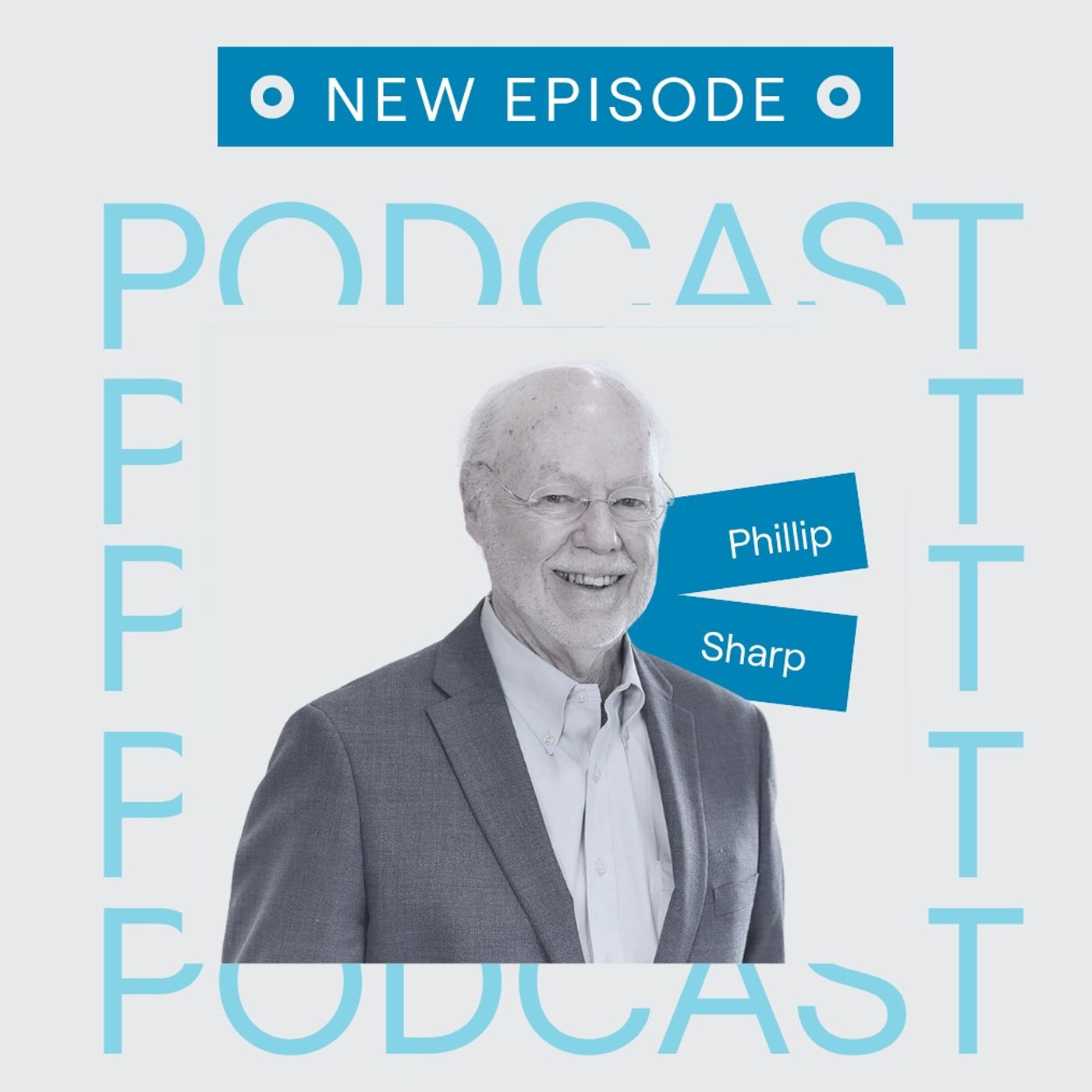
    From Nobel-Winning Discovery to Co-Founding Biogen | Phil Sharp

    In this episode of the podcast we are joined by Dr. Phillip Sharp, Nobel Prize Laureate and Institute Professor at MIT, who shares his story behind the groundbreaking discovery of RNA splicing. He explains how the work ethic and problem solving instinctions he built early on eventually led him to Caltech, and then MIT, where his 1977 discovery changed how we understand gene expression. Sharp discusses his journey from science into biotech entrepreneurship, co-founding both Biogen and Alnylam,

  • #49
    September 17 · 57 min

    Zero to One: The Precision Medicine Playbook for Cardiac Disease | Nolan Townsend Lexeo Therapeutics

    This episode of the Nucleate Podcast features host Sam Kessler in conversation with Nolan Townsend, CEO of Lexeo Therapeutics, a New York-based clinical-stage biotech developing gene therapies for genetically driven cardiovascular disease. Nolan traces his path from healthcare investment banking at Lehman Brothers into more than a decade at Pfizer, where international P&L roles in Korea, Ukraine, and Western Europe sharpened his ability to navigate ambiguity and different healthcare systems, and

  • #48
    September 10 · 1 hr 23 min

    Refusing to give up on an Oncology Breakthrough | Dana T. Aftab, Exelixis

    In this episode of the Nucleate Podcast, Dana Aftab, Executive Vice President, R&D at Exelixis, shares his journey to becoming a leader in drug discovery and what he’s learned along the way. It all began in the homeroom of eighth grade, when a video ignited a passion for biology that would lead him to pursue a Ph.D. in pharmacology at Yale and a defining career in cancer therapeutics. He delves into the different research and drug development projects he’s been a part of, including early breakth

  • #47
    July 23 · 1 hr 6 min

    Using Philanthropy to Drive Cures for Multiple Myeloma | Stephanie Oestreich, PhD MMRF

    In this episode, we welcome Stephanie Oestreich, Managing Director at the Multiple Myeloma Research Foundation. She holds a PhD in biochemistry from Harvard Medical School and an MPA from the Harvard Kennedy School, and has worked at the forefront of drug development at major pharma and biotech companies around the world. Stephanie introduces the Multiple Myeloma Research Foundation and delves into the latest advances in in vivo CAR-T and cell therapy that are driving meaningful progress towar

  • #46
    June 23 · 1 hr 3 min

    Translating Science into Patient Impact with Kendra Rose

    In this episode we are joined by Kendra Rose, Senior Vice President of BD&L at Bayer, who brings a blend of scientific depth and business acumen to the conversation. Her journey began with a passion for science which led her to pursue a Ph.D. in chemistry at Stanford University, before making a pivot to take her expertise into industry and joining Johnson & Johnson, then Novartis, and now Bayer. Kendra reflects on the lessons that have shaped her career and offers advice for early-stage founde

  • #45
    June 4 · 1 hr 6 min

    Leading Mission-Driven Biotechs | Jodie Morrison, CEO of Q32 Bio

    In this episode of the Nucleate podcast, Jodie Morrison, CEO of Q32 Bio, discusses her extensive career path from clinical research to executive leadership. She explains her strategic approach to leading companies, particularly in challenging "fixer-upper" scenarios where she prioritizes finding assets with "good bones" and building high-performing, mission-driven teams. She also details Q32 Bio's current focus on autoimmune disorders like alopecia areata, emphasizing the pursuit of safer biolog

  • #44
    March 24 · 1 hr 36 min

    From Genomics to Deal-Making: How Science Becomes a Company | Laurence Reid, Biotech Entrepreneur

    In this episode, we sit down with Laurence Reid, former CEO of Decibel Therapeutics and Warp Drive Bio, former Chief Business Officer at Alnylam, and one of biotech’s most seasoned company builders. He reflects on his path from growing up in the UK and discovering science early, to finding his way into biotech through family influence, academic training, and his first scientific lab exposure at Celltech. Laurence shares how he moved from bench science into a broader role in biotech, starting

  • #43
    March 10 · 1 hr 7 min

    Negotiating Intellectual Property, Staying Focused, and Making the Most of Mentors with Michal Preminger, Board Member at MassBio

    In this episode of the podcast we are joined by Michal Preminger, Board Member at MassBio, who shares her remarkable journey spanning across academia, biotech, and global healthcare innovation. It all began with a deep responsibility to make an impact in the world, which led her into the field of healthcare. But she soon discovered that what kept her motivated wasn’t the end goal, but the process of developing and translating scientific ideas into real products and companies. Michal explains ho

  • #42
    February 24 · 56 min

    How Turbine Accelerates Drug Discovery with AI Simulation | Szabi Nagy, CEO and Co-Founder of Turbine

    In this episode we are joined by Szabi Nagy, CEO and Co-Founder of Turbine. He shares his first startup experience, and how the lessons he learned there helped shape his work at Turbine. He then goes on to introduce the company’s virtual lab platform, which allows researchers to simulate experiments with AI and accelerate drug discovery. Throughout the discussion, Szabi provides honest insights into fundraising in today’s tight capital markets and offers valuable advice for biotech founders on h

  • #41
    February 10 · 50 min

    The Science of Stem Cells and Social Impact: Inside Ovelle with Merrick Smela and Travis Potter

    Merrick Smela, Chief Scientific Officer, and Travis Potter, Chief Executive Officer of Ovelle, joined the Nucleate Podcast to discuss their mission to revolutionize infertility treatment using in vitro gametogenesis (IVG). IVG is the process of creating eggs from normal cells that can be fertilized and implanted, a method first demonstrated in mice in 2016. Ovelle's goal is to provide an option for individuals who cannot use IVF, such as cancer survivors or those with low ovarian reserve, and ev

  • #40
    January 27 · 1 hr 3 min

    Inside TechBio Investing | Claire Smith, Partner at Springtide VC

    In this episode of the podcast we sit down with Claire Smith, Partner at SpringTide. She reflects on her journey from a biological engineering student at MIT to her current role in venture capital, and the key lessons she’s learned along the way. Claire explains SpringTide’s investment scope, introduces companies from her portfolio, and shares what drives her investment decisions. The conversation also explores the current landscape of TechBio and AI, including how to distinguish genuine innovation from hype, how pharma is realistically adopting AI, and differences in East Coast and West Coast perspectives on the technology. Claire provides guidance for early-stage founders navigating today’s ever-changing environment. She discusses the importance of planning realistic timelines, how and when to launch a company, and what qualities investors are looking for. She advises on what makes a great pitch, arguing that the goal of the initial meeting is not to secure funding, but to earn a second conversation. Trust is built through preparation, authenticity, and intellectual honesty, never by faking it in biotech. Books mentioned: The Pyramid Principle by Barbara Minto Why Genius Failed: The Rise and Fall of Long-Term Capital Management by Roger Lowenstein Time Stamps: 0:01:20 Introduction to Claire’s journey from MIT biological engineering to SpringTide 0:05:44 There’s “no overnight successes” in biotech 0:06:47 Claire’s experience as a start up operator at Crestovo and the key lessons she learned 0:09:35 Explanation of the investment scope of Springtide 0:12:31 How Claire assesses risk when building an investment portfolio 0:14:47 Things to consider when evaluating technical founders 0:15:55 Introduction to Paterna Biosciences and their impact within the fertility space 0:19:27 Platforms vs assets in tough capital markets and why Springtide has a countercyclical platform focus 0:22:50 Meaning of “look boring today, but will be infrastructure tomorrow” 0:24:24 Advancements in Palantir‑style business models for pharma 0:28:42 What does the term “TechBio” means to Claire 0:30:39 How the pharma industry is currently leveraging AI 0:33:55 Markers of AI success to keep an eye out for 0:35:29 How to identify companies that are driving genuine AI innovation 0:37:50 Example of Niche Bio and how they’re generating data for machine learning 0:39:22 Differences in opinions between East Coast and West Coast investors on AI 0:42:16 Advice for companies navigating the current capital market 0:44:16 Why proactive buffer planning is critical when setting a timeline 0:45:36 Advice for early stage founders on how and when to launch their company 0:50:59 What sets a great pitch apart 0:55:00 Explanation of the Pyramid Principle by Barbara Minto 0:55:44 3 main points about SpringTide as an investment firm 0:58:28 Importance of forming authentic connections but don’t “fake it ‘til you make it” 1:01:22 Quick-fire questions

  • #39
    Dec 20, 2025 · 1 hr 23 min

    Functional Precision Oncology, a new compass for cancer care | Apricot Bio

    In this special panel episode recorded in Zurich, the founders of Apricot Bio, Michael Zering (CEO), Lucas Pelkmans (Scientific Founder), and Independent Professor Andreas Wicki from the University of Zurich explore the new field of functional precision oncology—an approach that goes beyond genomics to test how living cancer cells actually respond to treatment. The conversation covers the limits of genetic diagnostics, the promise of ex vivo drug testing, AI-driven decision-making, and how smart

Showing 1–20 of 30 episodes