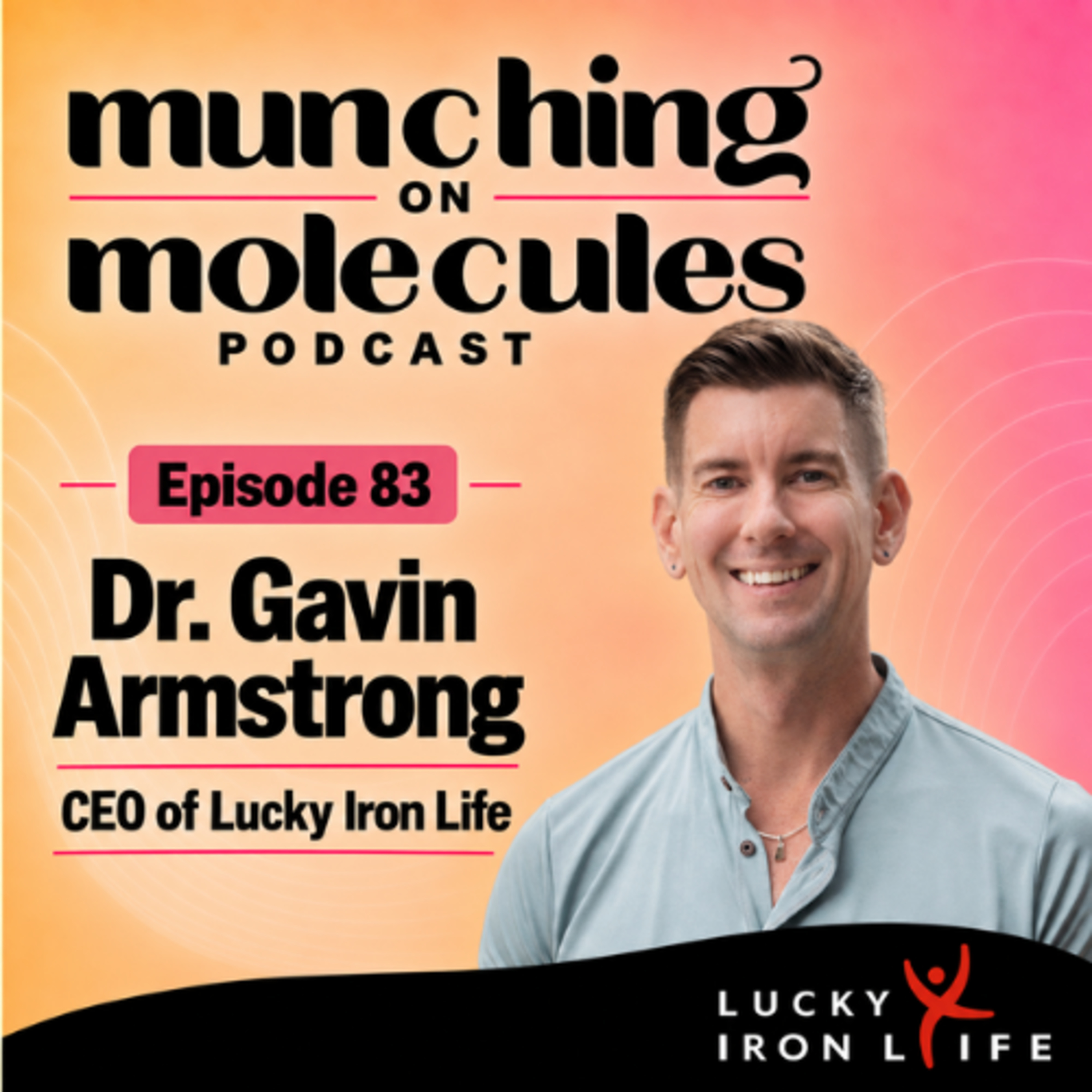
Episode 83: From Hidden Hunger to Global Impact with Dr. Gavin Armstrong of Lucky Iron Life
What if tackling one of the world’s biggest micronutrient challenges started with something as simple as what goes into the cooking pot? In this episode, we sit down with Dr. Gavin Armstrong, founder and CEO of Lucky Iron Life, to explore the science, social impact and the journey behind Lucky Iron Fish. Gavin entered university planning to pursue finance before an interdisciplinary course took him to Botswana and completely changed the direction of his career. That experience eventually led him into international development, refugee camps in Kenya, and a growing awareness of what is often called “hidden hunger”, where people may consume enough calories but still lack essential micronutrients. What was supposed to be a two-week visit in Cambodia became three years and a PhD focused on iron deficiency and the concept that would become the Lucky Iron Fish. The idea is deceptively simple. Place the reusable iron cooking tool into boiling liquid with a little acidity for approximately 10 minutes, and it releases iron into the food. Gavin explains that the product uses electrolytic iron commonly used in food fortification and was developed to provide an accessible alternative for households dealing with iron deficiency. The science was only one part of the challenge. The original product was an iron disc. Technically, it worked. Culturally, it did not. Women in Cambodia told the research team it looked like something picked up from the side of the road. Through community research, they learned that fish symbolize luck in Cambodian culture. The disc became a fish, and something people were reluctant to put in their cooking pot became something they actively wanted to use. Later, when the company expanded into India, the fish shape created another adoption barrier within vegetarian communities. The team adapted again, developing a tulsi leaf version. It is a great reminder that innovation is not only about whether something works. It also has to work for the people expected to use it. Throughout the conversation, we also explore: The importance of independent clinical validation when commercializing a health innovation Why product innovation sometimes starts by listening to how people are actually using your product The evolution from Lucky Iron Fish into the broader Lucky Iron Life portfolio The role social enterprises can play alongside governments and NGOs How businesses can pursue both profit and purpose Since beginning the project in 2012, Gavin has watched Lucky Iron Life grow into a global social health company while continuing to wrestle with a much bigger question: Can business be a meaningful force for solving global problems? For Gavin, social enterprise is not about choosing between doing good and building a sustainable business. It is about proving the two can coexist. You can learn more about Lucky Iron Life, the Lucky Iron Fish, Lucky Iron Leaf and their new product, Lucky Iron Daily at luckyironlife.com. Gavin also shares that a portion of website sales supports the donation of products to families and communities in need around the world. A fascinating conversation about food, fortification, behaviour change, evidence and what it really takes to turn research into impact.