Skip to content
Artwork for Money Making Conversations Master Class
Society & CultureBusinessEducationTechnology

Money Making Conversations Master Class

Rushion McDonald

Money Making Conversations Master Class is more than a podcast. It's a front-row seat to the ideas, experiences, and breakthrough moments that inspire success. Hosted by Rushion McDonald, each episode features influential entrepreneurs, business leaders, celebrities, influencers, and nonprofit changemakers sharing the lessons, strategies, and mindset shifts that helped them turn ambition into achievement. The show empowers dreamers, doers, and leaders to think bigger, move smarter, and take action on their goals. As Rushion McDonald often says, "Stop reading other people's success stories and start planning your own."

Tune in, get inspired, and start writing your own success story, one conversation at a time.

https://www.moneymakingconversations.com

https://www.keepwinning.com

https://www.youtube.com/MoneyMakingConversations

https://www.facebook.com/MoneyMakingConversations/

https://twitter.com/moneymakingconv

https://www.instagram.com/moneymakingconversations/


Play
  • 530 episodes
  • Avg 27 min
  • English
Counted on this page — what you have heard stays on this device, so it is not something the list can be paged by.
  • October 7 · 22 min

    Money Advice: Katrina helps women business owners secure funding in 100 days or less, with same-day approval.

    Listen and subscribe to Money Making Conversations on iHeartRadio, Apple Podcasts, Spotify, www.moneymakingconversations.com/subscribe/ or wherever you listen to podcasts. New Money Making Conversations episodes drop daily. I want to alert you, so you don’t miss out on expert analysis and insider perspectives from my guests who provide tips that can help you uplift the community, improve your financial planning, motivation, or advice on how to be a successful entrepreneur. Keep winning! Two-time Emmy and Three-time NAACP Image Award-winning, television Executive Producer Rushion McDonald interviewed Katrina Fitten. Purpose of the Interview The interview aims to educate entrepreneurs—especially women business owners—on how to secure funding responsibly, avoid scams, and develop a strategic financial plan. It also highlights Katrina Fitten’s expertise as CEO/CFO of New Day for You Financial and her mission to help startups and small businesses access capital. Key Takeaways Funding Opportunities & Qualifications Katrina helps women business owners secure up to $100,000 in 100 days or less, with same-day approval and next-day funding. Basic qualifications include: Credit score of 680+ Existing credit lines (at least $10,000) A clear business mission and low-risk profile. Avoiding Scams Beware of unsolicited emails/texts promising easy money. Do your homework: Check companies on Better Business Bureau (BBB). Look for testimonials and partnerships with reputable banks (e.g., Chase, American Express). Never share sensitive information without verifying legitimacy. Importance of a Business Plan Funding is not free money—you need a strategic plan. Katrina calls it a “money mission”: know exactly how funds will be deployed. Without a plan, money disappears quickly, leading to debt and bad credit. Family & Friends Lending Treat personal loans like business loans: Have written agreements with terms, repayment schedule, and penalties. Decide upfront if it’s a gift or a loan. Services Offered by New Day for You Financial SBA loans, equipment loans, purchase order financing. Lines of credit and 0% interest credit cards (18–21 months). Credit card stacking for higher funding amounts. Credit restoration referrals for those with poor credit. Success Story Example: A tax accountant secured $160,000 in less than a week due to strong credit, revenue history, and a solid business plan. Notable Quotes “If you don’t have a plan for your money, your money will have a plan—and you’ll look up and it’s gone.” “We don’t want to be out here racking up good debt and then you’re not going to be responsible.” “You have to vet companies. Go to BBB, Google them, and check their credibility.” “If I give you money, I decide—is it a gift or a loan? There are rules to borrowing money.” “We say if you don’t get anything, we don’t get paid.” #SHMS #STRAW #BEST See omnystudio.com/listener for privacy information.

    • Transcript
  • October 7 · 20 min

    Career Advice: Yasmine says every successful person has had to be selfish at some point.

    Listen and subscribe to Money Making Conversations on iHeartRadio, Apple Podcasts, Spotify, www.moneymakingconversations.com/subscribe/ or wherever you listen to podcasts. New Money Making Conversations episodes drop daily. I want to alert you, so you don’t miss out on expert analysis and insider perspectives from my guests who provide tips that can help you uplift the community, improve your financial planning, motivation, or advice on how to be a successful entrepreneur. Keep winning! Two-time Emmy and Three-time NAACP Image Award-winning, television Executive Producer Rushion McDonald interviewed Yasmine Cheyenne. 📝 Summary of the Interview Yasmine Cheyenne, an Air Force veteran, mental wellness advocate, and author, joined Rushion McDonald to discuss her journey from a disadvantaged upbringing to becoming a published author and wellness coach. She shared insights from her books—The Sugar Jar and her latest, Wisdom of the Path—which focus on boundaries, healing, and self-empowerment. The conversation explored her military experience, personal transformation, and how she helps others confront fear and reclaim their lives. 🔑 Key Takeaways 1. Overcoming Fear and Taking Risks Fear of failure and disappointment keeps many people stuck. Yasmine encourages people to confront fear and take action anyway. Her own decision to join the Air Force was a leap of faith that changed her life. 2. Military Discipline and Life Lessons The Air Force taught her discipline, consistency, and resilience. She applies these lessons to her personal and professional life. Quote: “Do you want to bet on yourself? Be willing to believe in yourself.” 3. Writing as Empowerment Her first book, The Sugar Jar, focuses on boundaries and self-care. Her second book, Wisdom of the Path, is about using past experiences as wisdom, not shame. Writing helped her transform her life and inspire others from similar backgrounds. 4. Boundaries and Self-Prioritization Without boundaries, people become overwhelmed and resentful. Saying “no” and advocating for yourself is essential to mental wellness. Quote: “We have to get comfortable letting people be disappointed with us.” 5. Redefining “Selfish” Being selfish is often misunderstood. Prioritizing yourself is necessary for success and well-being. Quote: “Every successful person has had to be selfish at some point.” 6. Wisdom of the Path The book encourages readers to trust their instincts and take the next step. It’s not a checklist—it’s a collection of relatable stories and reflections. Quote: “Use those experiences that you’re judging yourself for as wisdom to help you move forward.” 7. Mental Wellness Practice Yasmine helps people through coaching, writing, and speaking. She emphasizes healing through storytelling and shared experiences. 8. Accessibility Her books are available in print, digital, and audio formats. She personally narrates the audiobook version of Wisdom of the Path. 💬 Notable Quotes “Even if things fail, you have what it takes to get yourself to where you want to be.” “Take the meat and leave the bone.” “You already know what the next step is. What would happen if you just took it?” “We’ve been an enemy toward ourselves for years and don’t even realize it.” #SHMS #STRAW #BEST Money Making Conversations Master Class with Rushion McDonald is America's premier entrepreneurship, business leadership, financial literacy, and wealth-building podcast featuring successful entrepreneurs, executives, founders, celebrities, and industry experts sharing actionable insights for professional and financial success. Business Podcast Entrepreneurship Small Business Business Growth Financial Literacy Wealth Building Black Entrepreneurs Minority Business Leadership Executive Leadership Business Funding Marketing Strategies Personal Development Startup Advice Sales Training CEO Interviews Founder Stories Professional Development Economic Empowerment Business Success Networking Brand Building Innovation How to start a business Small business funding Entrepreneur success stories Business leadership podcast Wealth building strategies Black entrepreneur podcast Minority business development Marketing for small businesses Business growth strategies Startup funding opportunities Executive leadership training Financial literacy education Success mindset podcast See omnystudio.com/listener for privacy information.

    • Transcript
  • October 7 · 27 min

    Family First: Fitzpatrick’s story showcases how family heritage and values can shape a business vision across generations.

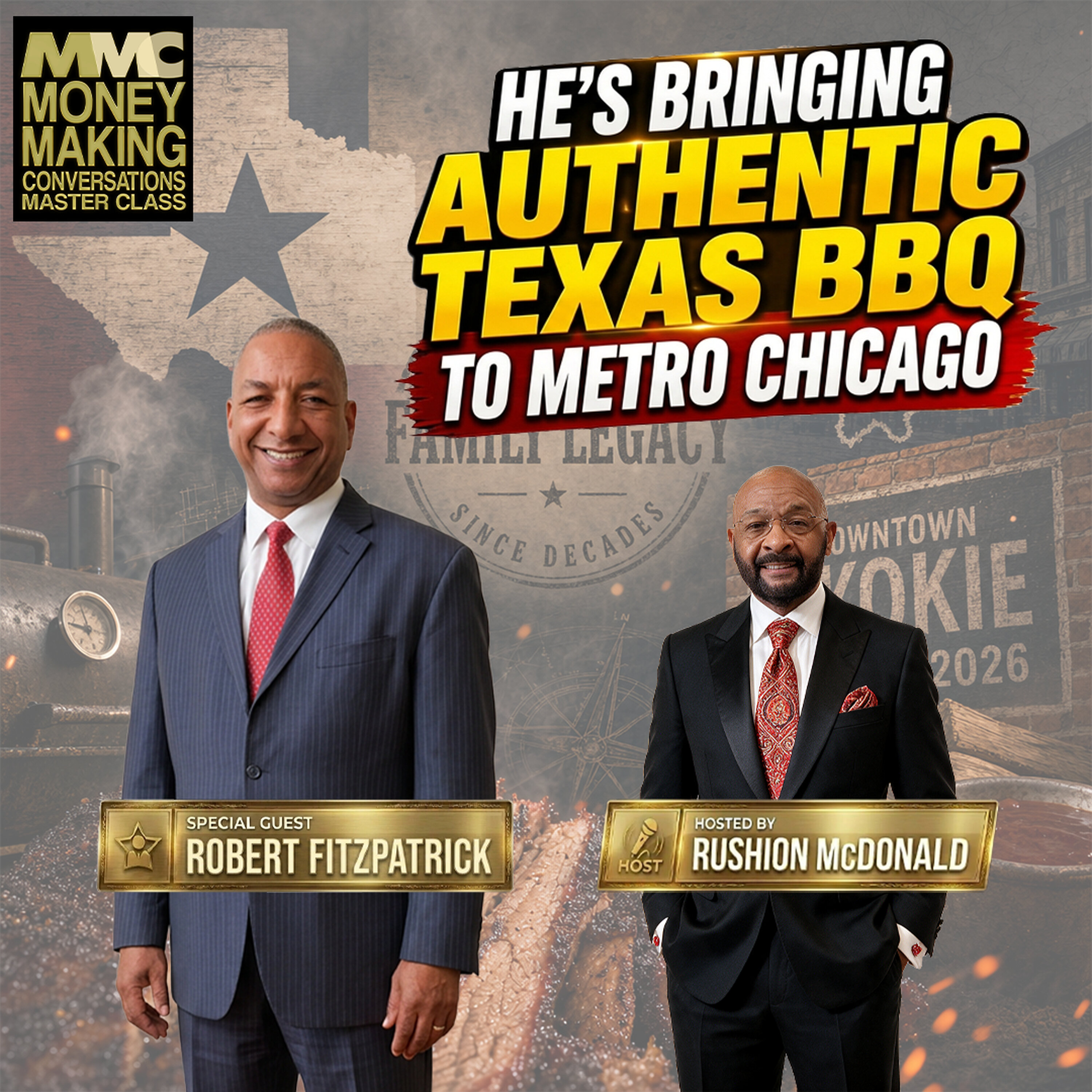
    Listen and subscribe to Money Making Conversations on iHeartRadio, Apple Podcasts, Spotify, www.moneymakingconversations.com/subscribe/ or wherever you listen to podcasts. New Money Making Conversations episodes drop daily. I want to alert you, so you don’t miss out on expert analysis and insider perspectives from my guests who provide tips that can help you uplift the community, improve your financial planning, motivation, or advice on how to be a successful entrepreneur. Keep winning! Two-time Emmy and Three-time NAACP Image Award-winning, television Executive Producer Rushion McDonald interviewed Robert Fitzpatrick A Navy veteran, business consultant, fraternity brother (ΩΨΦ), and now the owner reviving his family’s historic Texas barbecue legacy. The conversation dives deeply into Fitzpatrick’s upbringing, his father’s groundbreaking barbecue business in 1950s Texas, his educational and military journey, his corporate career, and his decision to launch Dewey’s Barbecue Market in Skokie, Illinois—honoring his father’s original recipes and values. The interview blends entrepreneurship, legacy, cultural history, and personal transformation, while highlighting the courage of Fitzpatrick’s father and the humility and faith-driven foundation of his family. Purpose of the Interview The interview aims to: 1. Inspire entrepreneurship and legacy-building Fitzpatrick’s story showcases how family heritage and values can shape a business vision across generations. 2. Highlight resilience, faith, and leadership His upbringing in a household rooted in Christian humility, strong expectations, and boundary-breaking courage provides a blueprint for character-driven success. 3. Educate listeners on transitioning careers Fitzpatrick exemplifies pivoting from engineering and corporate consulting to pursuing passion-driven entrepreneurship. 4. Promote Dewey’s Barbecue Market The interview introduces the Chicago-area community—especially the Skokie region—to his upcoming restaurant built on a 70-year-old Texas barbecue tradition. Key Takeaways 1. A powerful family legacy rooted in courage Fitzpatrick’s father, Dewey, opened a barbecue restaurant in 1951—before desegregation—and insisted that Blacks and whites could eat together. He enforced respect and safety in his establishment, even confronting racist patrons. 2. Education was non-negotiable in the Fitzpatrick household Robert is the youngest of seven siblings, all college graduates; five hold master’s degrees. He himself holds an MBA and an MS in Management Information Systems. 3. A bridge between technology and business Fitzpatrick spent decades in consulting with major firms (EDS, Dell, Arthur Andersen, KPMG) focusing on business process improvement. His dual MS/MBA made him a translator between tech and finance. 4. Military discipline shaped his personal and professional life Served in the U.S. Navy from 1986–1990, plus reserve duty (including deployment to Iraq). Balanced military service with graduate studies and advancing his corporate career. 5. A calling to revive his father’s barbecue His wife recognized his talent early, telling him for years he should be barbecuing. A shortage of good Texas barbecue in Virginia pushed him to recreate his father’s recipes. 6. Skokie, Illinois: the ideal launchpad After moving to the Great Lakes Naval Base area for a federal role, Fitzpatrick began scouting locations. Skokie offered: active support from city leadership grants an ideal building community enthusiasm 7. Dewey’s Barbecue Market offerings Meats: brisket, sausage, hot links, smoked boudin (monthly special) Sides: potato salad (egg/mayo base), pineapple vinegar coleslaw, fried okra, smoked pinto beans Desserts: apple cobbler, blueberry cobbler, sweet potato pie, possibly fried pies Bread: sliced “light bread” for dipping—traditional Texas style Experience: dine-in with 60s–80s “feel-good” music 8. A commitment to doing things the right way Fitzpatrick refuses to launch unless he can deliver “the best product on the planet.” Focuses on simplicity, authenticity, and quality. Notable Quotes About his father and legacy “He said anybody who wants to eat here can eat here.” (His father defying segregation laws in the 1950s.) “I can call an undertaker or an ambulance. Which one do you prefer?” (Dewey enforcing respect from a belligerent white customer.) “That was my barbecue.” (On being raised around his father’s legendary pit.) About family and humility “We are firmly rooted in Christ. If you try to get too big, He has a way of humbling you.” “Seven kids, all with degrees… that’s normal to you. But we know that’s not normal.” (McDonald highlighting the family’s extraordinary achievement.) About his calling “If I didn’t think I was bringing the best product on the planet, I wouldn’t even do it.” “My wife tasted the barbecue and said, ‘This is what you need to be doing.’” About launching in Skokie “They really want me to be there… the economic development team didn’t treat it like just another restaurant.” In his interview with Rushion McDonald, Robert Fitzpatrick shares his journey from Navy veteran and Fortune 500 consultant to entrepreneur reviving his family’s historic Texas barbecue. He describes growing up with a courageous father who defied segregation in 1951 by serving Black and white customers together, and a family culture steeped in education, discipline, and humility. Fitzpatrick’s passion for barbecue and encouragement from his wife led him to bring his father’s 70-year-old recipes to Skokie, Illinois through Dewey’s Barbecue Market. The interview emphasizes legacy, faith, courage, and the pursuit of purpose. #SHMS #STRAW #BEST Small Business Business Growth Financial Literacy Wealth Building Black Entrepreneurs Minority Business Leadership Executive Leadership Business Funding Marketing Strategies Personal Development Startup Advice Sales Training CEO Interviews Founder Stories Professional Development Economic Empowerment Business Success Networking Brand Building Innovation How to start a business Small business funding Entrepreneur success stories Business leadership podcast Wealth building strategies Black entrepreneur podcast Minority business development Marketing for small businesses Business growth strategies Startup funding opportunities Executive leadership training Financial literacy education Success mindset podcast See omnystudio.com/listener for privacy information.

    • Transcript
  • October 7 · 28 min

    Money Advice: Jocelyn educates families on how to avoid student loan debt through her proven system.

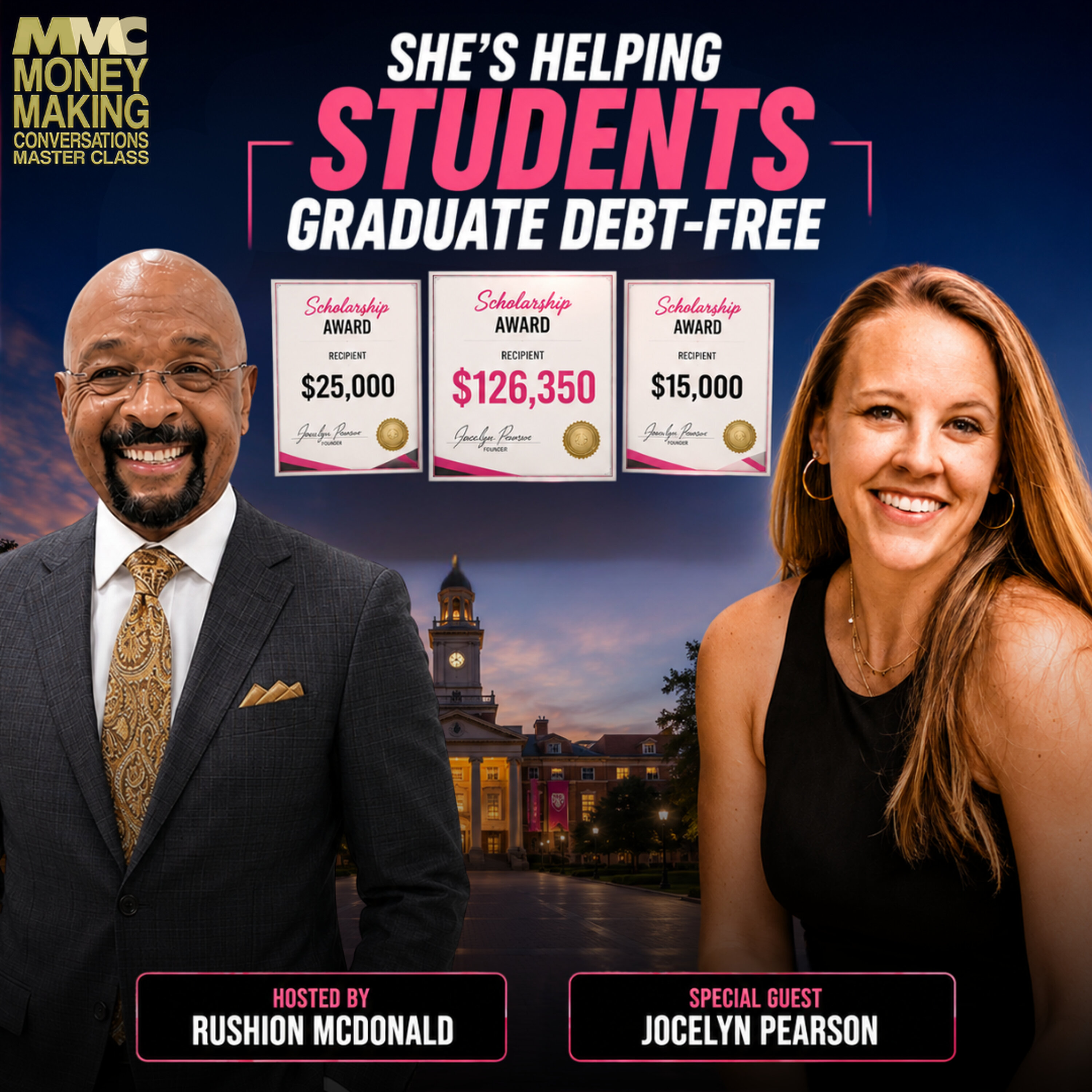
    Listen and subscribe to Money Making Conversations on iHeartRadio, Apple Podcasts, Spotify, www.moneymakingconversations.com/subscribe/ or wherever you listen to podcasts. New Money Making Conversations episodes drop daily. I want to alert you, so you don’t miss out on expert analysis and insider perspectives from my guests who provide tips that can help you uplift the community, improve your financial planning, motivation, or advice on how to be a successful entrepreneur. Keep winning! Two-time Emmy and Three-time NAACP Image Award-winning, television Executive Producer Rushion McDonald, interviewed Jocelyn Pearson. Purpose of the Interview The interview on Money Making Conversations Masterclass with Rushion McDonald and Jocelyn Pearson aimed to: Share Jocelyn’s journey of graduating debt-free by securing $126,350 in scholarships. Educate families on how to avoid student loan debt through her proven system, The Scholarship System. Dispel myths about scholarships and provide actionable steps for parents and students. Key Takeaways Scholarship System Approach Jocelyn developed a six-step process to simplify scholarship applications and avoid overwhelm. Focus on breaking the process into small, manageable steps rather than a vague “go get money” directive. Common Myths Debunked Too early or too late to apply: Start by junior year; it’s never too late—even college seniors can apply. Only perfect students or low-income families qualify: Many scholarships don’t require high GPA or athletic ability. All good scholarships are gone: Smaller, local scholarships ($500–$5,000) add up over time. It takes too much time: With a system and reusable materials, effort decreases each year. Avoiding Scholarship Scams Beware of “easy,” “enter to win,” or sweepstakes-style scholarships—they often sell personal data. Real scholarships require effort and personalization. Role of Parents Parents should help with planning and identifying legitimate scholarships but not complete applications for students. Committees can detect when parents write essays. AI in Scholarship Applications Jocelyn warns against copy-pasting AI-generated essays. Her platform introduced TESS, an AI assistant for ethical guidance and support. Financial Aid Basics Submit FAFSA even if you think you won’t qualify; some colleges and states require it. Combine all sources—government aid, institutional aid, and private scholarships. For Current College Students Check with financial aid offices, academic departments, and organizations for scholarships available after freshman year. Entrepreneurial Journey Jocelyn turned her passion into a business by starting with a book, building an email list, and launching webinars. She emphasizes persistence and ignoring naysayers. Notable Quotes “I had to accumulate my way to getting college paid for—the mere mortals’ way to going to college without tons of debt.” “Most families want scholarships, but they get stuck in the overwhelm.” “There’s no big red easy button—but with clear steps, it feels less daunting.” “We’re saying no to the broken system… It takes, on average, 21 years to pay off student loans.” “With great power comes great responsibility—AI can help, but only if used ethically.” #SHMS #STRAW #BEST Money Making Conversations Master Class with Rushion McDonald is America's premier entrepreneurship, business leadership, financial literacy, and wealth-building podcast featuring successful entrepreneurs, executives, founders, celebrities, and industry experts sharing actionable insights for professional and financial success. Business Podcast Entrepreneurship Small Business Business Growth Financial Literacy Wealth Building Black Entrepreneurs Minority Business Leadership Executive Leadership Business Funding Marketing Strategies Personal Development Startup Advice Sales Training CEO Interviews Founder Stories Professional Development Economic Empowerment Business Success Networking Brand Building Innovation How to start a business Small business funding Entrepreneur success stories Business leadership podcast Wealth building strategies Black entrepreneur podcast Minority business development Marketing for small businesses Business growth strategies Startup funding opportunities Executive leadership training Financial literacy education Success mindset podcast See omnystudio.com/listener for privacy information.

    • Transcript
  • October 6 · 23 min

    Business Advice: Felicia shares insights on entrepreneurship, access to resources, and strategies for scaling businesses.

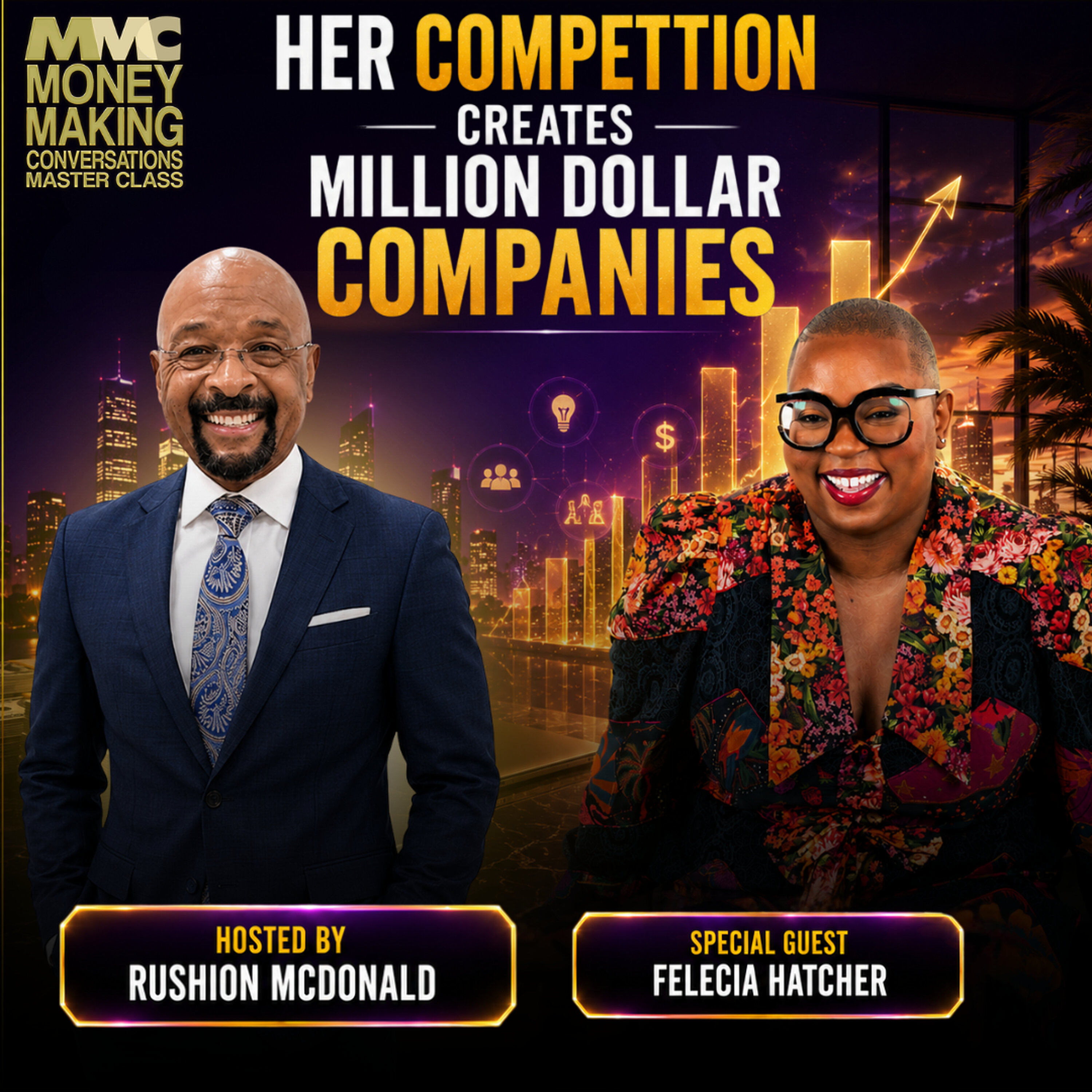
    Listen and subscribe to Money Making Conversations on iHeartRadio, Apple Podcasts, Spotify, www.moneymakingconversations.com/subscribe/ or wherever you listen to podcasts. New Money Making Conversations episodes drop daily. I want to alert you, so you don’t miss out on expert analysis and insider perspectives from my guests who provide tips that can help you uplift the community, improve your financial planning, motivation, or advice on how to be a successful entrepreneur. Keep winning! Two-time Emmy and Three-time NAACP Image Award-winning, television Executive Producer Rushion McDonald interviewed Felecia Hatcher. Purpose of the Interview To spotlight Black Ambition, a national initiative founded by Pharrell Williams that funds and mentors Black and Brown entrepreneurs. To share insights on entrepreneurship, access to resources, and strategies for scaling businesses. To inspire and educate small business owners and innovators on how to leverage opportunities for growth. Key Takeaways About Black Ambition Founded by Pharrell Williams to close the opportunity gap for Black and Hispanic entrepreneurs. Provides capital, mentorship, and masterclasses to help founders scale. Has invested in 131 companies and awarded millions in funding. Competition Structure Annual national competition with 2,500–3,000 applications. Categories include HBCU, National Finalists, Top Prize Winner, People’s Choice. Process: Applications → 250 semifinalists → 3-month cohort → Demo Day for top 20–25 companies. Unique Approach Focus on high-quality mentorship, not “low vibrational” guidance. Includes mental health and wellness support for entrepreneurs. Partnerships with brands like Louis Vuitton for luxury retail insights. Challenges for Entrepreneurs Many fail by rushing applications and skipping info sessions. Success requires clarity, traction, and persistence—sometimes multiple attempts. Black women are the fastest-growing entrepreneurs but often remain solopreneurs; Black Ambition prioritizes team-building. Pharrell’s Motivation Believes in democratizing opportunity: “Talent is not equally distributed by zip code, but opportunity can be.” Inspired by those who believed in him early in his career. Felecia Hatcher’s Journey Former founder of Center for Black Innovation and Black Tech Week. Emphasizes resilience: “I’m a C student and a college dropout, but I never let that define me.” Advocates for creative pathways to success and capital access. Notable Quotes “Success leaves clues.” – On learning from past winners. “Talent is not equally distributed by zip code, but opportunity can be.” – Pharrell’s guiding principle. “If it doesn’t work on you in that moment, it works for you in that moment. Either way, it works.” – On persistence. “We have to start enjoying the process… be stretched, be cut by the process.” – On entrepreneurial growth. “Wealth has a need for speed.” – On urgency in closing the wealth gap. #SHMS #STRAW #BEST inspire listeners with strategies for wealth-building through real estate, construction, and logistics. Money Making Conversations Master Class with Rushion McDonald is America's premier entrepreneurship, business leadership, financial literacy, and wealth-building podcast featuring successful entrepreneurs, executives, founders, celebrities, and industry experts sharing actionable insights for professional and financial success. Business Podcast Entrepreneurship Small Business Business Growth Financial Literacy Wealth Building Black Entrepreneurs Minority Business Leadership Executive Leadership Business Funding Marketing Strategies Personal Development Startup Advice Sales Training CEO Interviews Founder Stories Professional Development Economic Empowerment Business Success Networking Brand Building Innovation How to start a business Small business funding Entrepreneur success stories Business leadership podcast Wealth building strategies Black entrepreneur podcast Minority business development Marketing for small businesses Business growth strategies Startup funding opportunities Executive leadership training Financial literacy education Success mindset podcast See omnystudio.com/listener for privacy information.

    • Transcript
  • October 6 · 27 min

    Career Advice: Everett discusses how he is helping individuals—especially underserved communities—enter high-paying tech careers.

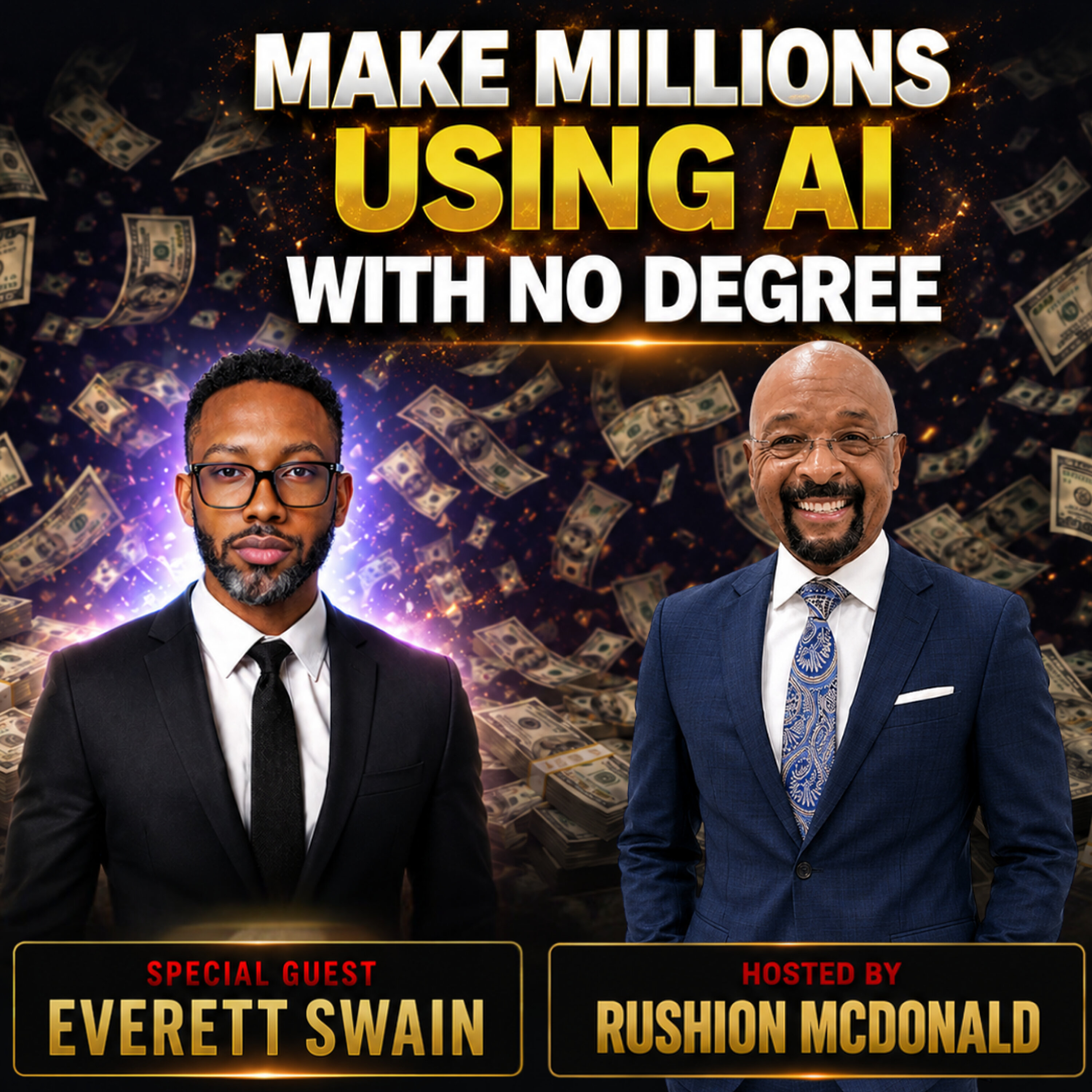
    Listen and subscribe to Money Making Conversations on iHeartRadio, Apple Podcasts, Spotify, www.moneymakingconversations.com/subscribe/ or wherever you listen to podcasts. New Money Making Conversations episodes drop daily. I want to alert you, so you don’t miss out on expert analysis and insider perspectives from my guests who provide tips that can help you uplift the community, improve your financial planning, motivation, or advice on how to be a successful entrepreneur. Keep winning! Two-time Emmy and Three-time NAACP Image Award-winning, television Executive Producer Rushion McDonald interviewed Everett Swain. 🔷 Interview Summary Everett Swain, founder of UXD Academy, discusses how he is helping individuals—especially underserved communities—enter high-paying tech careers (UX design and AI) without a traditional four-year degree. The conversation centers on: AI as both a threat and opportunity Alternative education pathways (certifications vs degrees) Breaking barriers in tech through accessible training Building practical, job-ready skills quickly Empowering individuals to change their financial trajectory Swain’s approach blends self-learning, portfolio-based skills, and real-world application to create career opportunities. 🎯 Purpose of the Interview 1. Expand awareness of non-traditional education paths Show that high-income careers are accessible without college degrees Promote certifications, portfolios, and practical skills 2. Reframe AI as an opportunity Help listeners understand how AI can create jobs, not just remove them 3. Inspire career transformation Target people: Struggling financially Stuck in low-wage jobs Looking for a career pivot 4. Bridge opportunity gaps Focus on helping: Underserved communities People without access to formal education 5. Provide actionable entry points Direct listeners to: Free resources Self-learning paths UXD Academy 🔑 Key Takeaways 1. AI is both a disruptor and an enabler Two approaches: Replace workers Amplify workers’ productivity [Everett Sw...II iHeart | Txt] 2. Degrees are becoming less important in tech Over 40% of tech companies prioritize skills over degrees [Everett Sw...II iHeart | Txt] Real hiring focus: Portfolio Demonstrated ability 3. Skills can be self-taught Swain learned through: YouTube Online resources Practice This model is replicable for others 4. Portfolio > credentials Employers want proof of skill: Projects Real-world work This levels the playing field 5. Fast income growth is possible Swain’s trajectory: $75K → $105K → $140K within a few years [Everett Sw...II iHeart | Txt] Demonstrates rapid upward mobility in tech 6. Accessibility is key to opportunity Training can be done: On a phone Without expensive tools Removes traditional barriers 7. Learn-by-doing model works best UXD Academy combines: Training Real client projects Apprenticeships 8. AI tools require minimal technical background No-code and low-code tools allow: Beginners to build apps, bots, workflows quickly 9. Small businesses are the biggest AI opportunity AI can help: Automate operations Improve efficiency Scale growth 10. Traditional education is slow to adapt Colleges struggle to keep up with: Rapid tech changes Agile programs like UXD Academy fill this gap 11. Mindset shift is essential Success requires: Initiative Discipline Self-learning 12. Exposure creates opportunity Many people don’t pursue tech careers because: They don’t know they exist Awareness is the first step 💬 Notable Quotes On AI’s dual impact “Companies are either using AI to replace people or to amplify their people.” [Everett Sw...II iHeart | Txt] On degrees vs skills “Over 40% of tech companies do not care about degrees anymore… they care about your portfolio.” [Everett Sw...II iHeart | Txt] On education alternatives “You can become an AI designer… without a degree.” [Everett Sw...II iHeart | Txt] On learning path “YouTube, Google, and books taught me everything I know.” [Everett Sw...II iHeart | Txt] On AI functionality “AI is like the smartest intern you know—you can train it to work for you.” [Everett Sw...II iHeart | Txt] On opportunity “You can change your life in under a year and a half.” [Everett Sw...II iHeart | Txt] On discipline “From five to 2 a.m., I was learning, building, and redoing my portfolio.” [Everett Sw...II iHeart | Txt] On mission “I want people to realize they can create their own reality with this.” [Everett Sw...II iHeart | Txt] On urgency “AI is our opportunity… we have to get on the ball.” [Everett Sw...II iHeart | Txt] 🧭 Bottom Line Everett Swain’s message is a blueprint for modern career access in the AI economy: Skills beat degrees Self-learning is powerful AI is a career lever, not just a threat Execution (portfolio) matters more than theory Opportunity is available—but requires action 👉 His core philosophy: With the right skills, discipline, and access to knowledge, anyone can break into high-income tech careers—without traditional barriers. #SHMS #BEST #STRAW Money Making Conversations Master Class with Rushion McDonald is America's premier entrepreneurship, business leadership, financial literacy, and wealth-building podcast featuring successful entrepreneurs, executives, founders, celebrities, and industry experts sharing actionable insights for professional and financial success. Business Podcast Entrepreneurship Small Business Business Growth Financial Literacy Wealth Building Black Entrepreneurs Minority Business Leadership Executive Leadership Business Funding Marketing Strategies Personal Development Startup Advice Sales Training CEO Interviews Founder Stories Professional Development Economic Empowerment Business Success Networking Brand Building Innovation How to start a business Small business funding Entrepreneur success stories Business leadership podcast Wealth building strategies Black entrepreneur podcast Minority business development Marketing for small businesses Business growth strategies Startup funding opportunities Executive leadership training Financial literacy education Success mindset podcast See omnystudio.com/listener for privacy information.

    • Transcript
  • October 5 · 27 min

    Tax Advice: Michael explains how entrepreneurs can achieve financial freedom in 5–7 years.

    Listen and subscribe to Money Making Conversations on iHeartRadio, Apple Podcasts, Spotify, www.moneymakingconversations.com/subscribe/ or wherever you listen to podcasts. New Money Making Conversations episodes drop daily. I want to alert you, so you don’t miss out on expert analysis and insider perspectives from my guests who provide tips that can help you uplift the community, improve your financial planning, motivation, or advice on how to be a successful entrepreneur. Keep winning! Two-time Emmy and Three-time NAACP Image Award-winning, television Executive Producer Rushion McDonald interviewed Michael Uadiale. 🔷 Interview Summary Michael Uadiale, a seasoned CPA and master tax advisor with 25+ years of experience, explains how entrepreneurs can achieve financial freedom in 5–7 years through strategic tax planning and wealth systems. The discussion centers on: Understanding the tax code as a wealth-building tool Why most people overpay taxes The difference between tax preparation and tax strategy His proprietary DECIDA (six-step) framework Practical tactics (e.g., hiring your kids, structuring income) Long-term wealth-building through planning and compounding The interview reframes taxes from a burden into a strategic advantage. 🎯 Purpose of the Interview 1. Demystify taxes Reduce fear and confusion around the tax system Make tax concepts more accessible to everyday entrepreneurs 2. Shift mindset from avoidance → strategy Encourage people to engage with taxes, not avoid them 3. Teach wealth-building through tax efficiency Show how taxes are a major lever for: Increasing income retention Accelerating wealth creation 4. Promote proactive financial planning Emphasize year-round tax planning vs. last-minute filing 5. Provide actionable strategies Offer real, legal methods to: Reduce tax liability Build generational wealth 🔑 Key Takeaways 1. Wealth cannot be delegated You can outsource operations—but not your financial destiny Individuals must understand and engage in their own wealth strategy [MICHAEL UA...ALE iheart | Txt] 2. The tax code is a system of incentives It’s designed to encourage certain behaviors: Investing Real estate ownership Business creation Those who understand it benefit most 3. The wealthy don’t break rules—they learn them Rich individuals use legal structures to: Minimize taxes Maximize retention The same opportunities exist for everyone who learns the system 4. Most people overpay taxes due to ignorance About 80% of small business owners overpay Causes: Fear of taxes Lack of education Reactive (not proactive) planning 5. Tax preparers vs. tax advisors Tax preparers = compliance (filing returns) Tax advisors = strategy (planning ahead) Real wealth comes from advisory relationships 6. Tax planning must be year-round Waiting until April is too late Planning should occur: Quarterly Before major financial decisions 7. Taxes directly impact your time and income Without planning, up to 3 out of every 8 working hours go to taxes [MICHAEL UA...ALE iheart | Txt] 8. Simple strategies can create big gains Example: Hiring your children in your business: Tax deduction for the parent Tax-free income for the child These are legal, ethical, and underused 9. Compounding + tax efficiency = wealth Wealth = compound growth – tax erosion Starting early dramatically increases results 10. Structure determines outcomes How you earn and structure income affects: Tax liability Long-term wealth retention 11. The DECIDA Framework (his system) A structured approach to wealth building: D – Discover your wealth DNA (how you make money) E – Engineer tax-efficient structures C – Capture and preserve growth I – Integrate advanced tax strategies D – Defend against tax erosion A – Activate generational wealth systems 12. Financial freedom is accelerated through taxes Proper planning can shorten the timeline to wealth by years 💬 Notable Quotes On personal responsibility “Wealth cannot be delegated.” [MICHAEL UA...ALE iheart | Txt] On the tax code “The tax code was not written for the little guys… but if you understand it, you can get the same benefits.” [MICHAEL UA...ALE iheart | Txt] On mindset “You’ve got to embrace tax… it’s an education.” [MICHAEL UA...ALE iheart | Txt] On opportunity “The tax code is one of your fastest ways of getting to financial freedom.” [MICHAEL UA...ALE iheart | Txt] On behavior incentives “The tax law is a set of incentives… to make us behave the way the government wants.” [MICHAEL UA...ALE iheart | Txt] On overpaying taxes “Close to 80% of small business owners overpay in taxes.” [MICHAEL UA...ALE iheart | Txt] On poor habits “People only think about taxes when April 15th is around the corner.” [MICHAEL UA...ALE iheart | Txt] On time lost to taxes “Three hours out of every eight hours you work goes to the tax man.” [MICHAEL UA...ALE iheart | Txt] On advisors vs preparers “Most people work with tax preparers, not tax advisors.” [MICHAEL UA...ALE iheart | Txt] On simple strategies “Hiring your kids… everybody should be doing that if you have a business.” [MICHAEL UA...ALE iheart | Txt] On wealth formula “Wealth really is compounding interest… less taxes.” [ 🧭 Bottom Line Michael Uadiale’s message reframes taxes as a power tool for wealth creation: Learn the system → don’t avoid it Plan proactively → not reactively Work with advisors → not just preparers Use legal strategies → to reduce tax burden Protect growth → from tax erosion Build generational wealth → intentionally 👉 His core philosophy: Understanding and leveraging the tax code is one of the fastest, most overlooked paths to financial freedom. #SHMS #BEST #STRAW Money Making Conversations Master Class with Rushion McDonald is America's premier entrepreneurship, business leadership, financial literacy, and wealth-building podcast featuring successful entrepreneurs, executives, founders, celebrities, and industry experts sharing actionable insights for professional and financial success. Business Podcast Entrepreneurship Small Business Business Growth Financial Literacy Wealth Building Black Entrepreneurs Minority Business Leadership Executive Leadership Business Funding Marketing Strategies Personal Development Startup Advice Sales Training CEO Interviews Founder Stories Professional Development Economic Empowerment Business Success Networking Brand Building Innovation How to start a business Small business funding Entrepreneur success stories Business leadership podcast Wealth building strategies Black entrepreneur podcast Minority business development Marketing for small businesses Business growth strategies Startup funding opportunities Executive leadership training Financial literacy education Success mindset podcast See omnystudio.com/listener for privacy information.

    • Transcript
  • October 5 · 21 min

    Health Advice: Yolanda's her mission to improve health outcomes through education and community engagement.

    Listen and subscribe to Money Making Conversations on iHeartRadio, Apple Podcasts, Spotify, www.moneymakingconversations.com/subscribe/ or wherever you listen to podcasts. New Money Making Conversations episodes drop daily. I want to alert you, so you don’t miss out on expert analysis and insider perspectives from my guests who provide tips that can help you uplift the community, improve your financial planning, motivation, or advice on how to be a successful entrepreneur. Keep winning! Two-time Emmy and three-time NAACP Image Award-winning television Executive Producer Rushion McDonald interviewed Dr. Yolanda D. McElroy (aka “Dr. Yo-Yo”). 🎯 Purpose of the Interview To spotlight Dr. McElroy’s work as a pharmacist, educator, and author of the children’s book It’s Not Candy, which promotes medication safety. The interview also highlights her consulting company, MediManage, and her mission to improve health outcomes through education and community engagement. 🧠 Key Takeaways 1. Professional Background Dr. McElroy is a registered pharmacist in Louisiana with over 30 years of experience in retail and hospital settings. She began her academic journey at Grambling State University (HBCU) studying chemistry before transferring to pharmacy school. 2. MediManage Consulting Founded to promote medication safety and improve health outcomes. Focuses on educating communities about proper medication use, adherence, and preventing medication-related problems. 3. Medication Safety Advocacy Medications are a leading cause of accidental poisoning deaths in children. Parents often leave medications and chemicals within reach of children. Emphasizes the importance of locking up medications and educating both adults and children. 4. Target Age Groups Focuses on children ages 3–10 to instill early awareness of medication safety. Also highlights teens as a vulnerable group due to increased drug experimentation and access to medications at home. Notes the importance of educating parents and senior citizens as well. 5. Book: It’s Not Candy Inspired by her ministry work with youth in mental health hospitals. Based on real-life experiences and includes a song to make learning fun and memorable. Demonstrates how medications can resemble candy, making it difficult for children (and adults) to distinguish. Aims to equip families with knowledge to prevent accidental overdoses and misuse. 6. Challenges in Pharmacy Profession Pharmacists face heavy workloads, including vaccinations, insurance calls, and patient counseling. Many are overworked and under-supported, leading to burnout and even strike considerations. 7. Book Creation Journey Took years to develop after encouragement from her pastor. Extensive research into publishing options and budgeting. Partnered with a publishing company and built a team including an editor and illustrator. Advises aspiring authors to be patient, budget generously, and seek support and education. 💬 Notable Quotes “Medications are a leading cause of accidental poisoning deaths in children.” “If you’re not sure, ask a professional. Ask your pharmacist.” “We want to get them early and instill that training so they can make good decisions.” “Many medication-related injuries are preventable.” “If there’s no room at the table, bring a folding chair.” “Our children are important and their lives are valuable.” #SHMS #STRAW #BEST Money Making Conversations Master Class with Rushion McDonald is America's premier entrepreneurship, business leadership, financial literacy, and wealth-building podcast featuring successful entrepreneurs, executives, founders, celebrities, and industry experts sharing actionable insights for professional and financial success. Business Podcast Entrepreneurship Small Business Business Growth Financial Literacy Wealth Building Black Entrepreneurs Minority Business Leadership Executive Leadership Business Funding Marketing Strategies Personal Development Startup Advice Sales Training CEO Interviews Founder Stories Professional Development Economic Empowerment Business Success Networking Brand Building Innovation How to start a business Small business funding Entrepreneur success stories Business leadership podcast Wealth building strategies Black entrepreneur podcast Minority business development Marketing for small businesses Business growth strategies Startup funding opportunities Executive leadership training Financial literacy education Success mindset podca See omnystudio.com/listener for privacy information.

    • Transcript
  • October 5 · 26 min

    Career Advice: Todd shares his journey of career transition, entrepreneurship, and success in real estate.

    Listen and subscribe to Money Making Conversations on iHeartRadio, Apple Podcasts, Spotify, www.moneymakingconversations.com/subscribe/ or wherever you listen to podcasts. New Money Making Conversations episodes drop daily. I want to alert you, so you don’t miss out on expert analysis and insider perspectives from my guests who provide tips that can help you uplift the community, improve your financial planning, motivation, or advice on how to be a successful entrepreneur. Keep winning! Two-time Emmy and Three-time NAACP Image Award-winning, television Executive Producer Rushion McDonald interviewed Todd Kroupa. 🔷 Interview Summary Todd Kroupa, a former firefighter turned top-performing real estate agent (No. 1 in Georgia, nearly $1B in lifetime sales), shares his journey of career transition, entrepreneurship, and success in real estate. The interview covers: Leaving a stable career for entrepreneurship Building a real estate business from scratch in a new market Customer-first sales philosophy Practical advice for buyers and sellers Real estate as a long-term wealth-building strategy It blends career reinvention, sales mindset, and real estate expertise. 🎯 Purpose of the Interview 1. Inspire career transition and risk-taking Show how to move from a secure job to a high-reward entrepreneurial path 2. Educate on real estate buying and selling Provide practical insights for: First-time buyers Families Sellers 3. Highlight relationship-driven sales success Emphasize service, trust, and referrals over commissions 4. Promote real estate as a wealth strategy Explain why real estate is a strong long-term investment 5. Share resilience and mindset lessons Demonstrate how persistence and belief overcome doubt and rejection 🔑 Key Takeaways 1. Career pivots require courage and clarity Kroupa left a stable firefighting career despite outside doubt He trusted his long-term vision over short-term safety 2. Block out “outside noise” He avoided negativity and advice that could derail his decision Focus and conviction were essential to success 3. Skills transfer across industries Firefighter experience taught: Problem-solving under pressure Customer care These skills translated directly into real estate 4. Relationships drive real estate success The business is built on: Trust Referrals Long-term client relationships Not just transactions 5. Service > commission mindset Top agents prioritize: Client outcomes Long-term value Income follows service 6. Emotion drives buying decisions Buyers decide within minutes based on: Feeling Personal connection Logic comes later in the process 7. Realtors must guide, not just sell A great agent: Identifies hidden issues Advises clients—even against a deal 8. Inspection is critical Key deal-breakers: Mold Foundation issues Roof problems Buyers must be willing to walk away 9. Real estate decisions require discipline Avoid overpaying or emotional overcommitment Think long-term resale and investment value 10. Neighborhood matters as much as the house Buyers should: Visit at different times Talk to neighbors Research schools and environment 11. Market strategy matters when selling Presentation is key: Neutral design Strong first impressions Buyers decide quickly 12. Real estate is a powerful wealth builder Benefits over stocks: Control (improvements, rental, usage) Tax advantages Tangible value 13. Multi-generational living is rising Driven by: Cost of living Family dynamics Post-COVID lifestyle shifts 14. Buying the most expensive home isn’t optimal Property value is influenced by surrounding homes Overpricing limits appreciation potential 💬 Notable Quotes On career transition “I walked away from a very stable career… to something that can be unstable.” On ignoring doubt “I avoided a lot of phone calls… I didn’t want anybody to persuade my decision.” On motivation “That put the fire in me.” On mindset and focus “I just cut the noise out.” On service approach “It should never be about the commission… it should be about helping that person.” On relationships “This business is about referrals… connections.” On buyer psychology “They’re looking emotionally first—logic comes second.” On inspections “If you’re not comfortable now, you won’t be comfortable after you close.” On real estate vs stocks “You can’t control a stock… you can improve and live in a home.” On pricing strategy “You don’t want to be the most expensive house in the neighborhood.” 🧭 Bottom Line Todd Kroupa’s message is a blueprint for success in both entrepreneurship and real estate: Take calculated risks → growth requires leaving comfort zones Focus on people, not profits → relationships build sustainable success Think long-term → especially in real estate decisions Balance emotion with logic → in major financial choices Stay disciplined and informed → avoid costly mistakes 👉 His core philosophy: Serve people first, make smart decisions second, and success will follow. #SHMS #BEST #STRAW Money Making Conversations Master Class with Rushion McDonald is America's premier entrepreneurship, business leadership, financial literacy, and wealth-building podcast featuring successful entrepreneurs, executives, founders, celebrities, and industry experts sharing actionable insights for professional and financial success. Business Podcast Entrepreneurship Small Business Business Growth Financial Literacy Wealth Building Black Entrepreneurs Minority Business Leadership Executive Leadership Business Funding Marketing Strategies Personal Development Startup Advice Sales Training CEO Interviews Founder Stories Professional Development Economic Empowerment Business Success Networking Brand Building Innovation How to start a business Small business funding Entrepreneur success stories Business leadership podcast Wealth building strategies Black entrepreneur podcast Minority business development Marketing for small businesses Business growth strategies Startup funding opportunities Executive leadership training Financial literacy education Success mindset podcast See omnystudio.com/listener for privacy information.

    • Transcript
  • October 5 · 23 min

    Disability: Interview educates listeners on Social Security disability benefits, including eligibility, filing, and appeals.

    Listen and subscribe to Money Making Conversations on iHeartRadio, Apple Podcasts, Spotify, www.moneymakingconversations.com/subscribe/ or wherever you listen to podcasts. New Money Making Conversations episodes drop daily. I want to alert you, so you don’t miss out on expert analysis and insider perspectives from my guests who provide tips that can help you uplift the community, improve your financial planning, motivation, or advice on how to be a successful entrepreneur. Keep winning! Two-time Emmy and Three-time NAACP Image Award-winning, television Executive Producer Rushion McDonald interviewed Leonard S. Graham. Social Security disability advocate, Leonard S. Graham joined Rushion McDonald on Money Making Conversations Master Class to explain how Social Security Disability Insurance (SSDI) and Supplemental Security Income (SSI) really work, who qualifies, and how misconceptions prevent people—especially within the Black community—from receiving benefits they are legally entitled to. Graham has over 35 years of experience assisting clients nationwide with disability claims, appeals, and hearings. The conversation sheds light on the disability process, eligibility, the appeals system, the role of advocates vs. attorneys, and the importance of education, honesty, and persistence in navigating Social Security. 🎯 Purpose of the Interview The interview aims to: Educate listeners on Social Security disability benefits, including eligibility, filing, and appeals. Debunk common myths, such as the belief disability is only for seniors. Explain SSDI vs. SSI, work credits, resource limits, and Medicare connections. Highlight the importance of advocacy, especially for underserved communities unfamiliar with the system. Encourage individuals not to fear or stigmatize applying for disability, and to avoid misinformation from non‑professionals. 🔑 Key Takeaways 1. Disability Isn’t Just for Seniors Many mistakenly think Social Security disability is only for people over 65, but anyone with the required work credits can qualify, regardless of age—even individuals in their 20s or 30s. 2. Working Does NOT Automatically Disqualify You Applicants can work while applying as long as they do not exceed the monthly substantial gainful activity (SGA) threshold of $1,690 per month. 3. Every Claim Is Unique—Don’t Compare Your Case to Others Graham warns clients not to take advice from neighbors or relatives because each disability case depends on medical evidence, work history, age, and individual conditions. 4. SSDI Requires Work Credits; SSI Is Needs-Based SSDI: Requires 20 credits minimum, 40 credits for maximum benefit, earned through past work. Assets do not affect eligibility. SSI: For people with low resources ($2,000 single / $3,000 married). Primary home/car do not count as resources. 5. Medicare Comes After Approval Medicare eligibility begins 24 months after being awarded SSDI benefits. 6. Appeals Are Normal—Most Initial Claims Are Denied 95% of initial applications are denied, and the real opportunity often comes during a hearing before an administrative law judge. Persistence is essential. 7. Honesty Prevents Fraud & Overpayments Applicants should always disclose their financial situation truthfully to avoid fraud investigations and repayment demands. 8. Disability Benefits Can Provide Back Pay Approved claimants often receive a Notice of Award detailing monthly benefits and any back pay owed. Representatives are only paid from back pay—not monthly benefits. 9. Stigma & Fear Prevent People from Applying Graham emphasizes that pride, fear, and misinformation often stop people—especially in the Black community—from seeking help, even when disability support could save them financially. 🗣️ Notable Quotes ✔ On Who Needs Disability “What if you get in a car accident… or have an illness and you can’t work? Those are reasons to file for disability.” ✔ On Misinformation “Don’t talk to your neighbor or relatives about your claim… Each claim is its own individual claim.” ✔ On Work Limits “You can still work and have an active claim as long as you don’t gross over $1,690 a month.” ✔ On Stigma “Some people feel applying for benefits makes them look a certain way. But the system is there to help you when you are unable to work.” ✔ On Honesty “Just tell the truth. If they catch you on the fraud side, you’ll have to pay the money back.” ✔ On Perseverance “Getting a denial is nothing out of the norm… The key is to continue with the claim.” #SHMS #STRAW #BEST See omnystudio.com/listener for privacy information.

    • Transcript
  • October 5 · 30 min

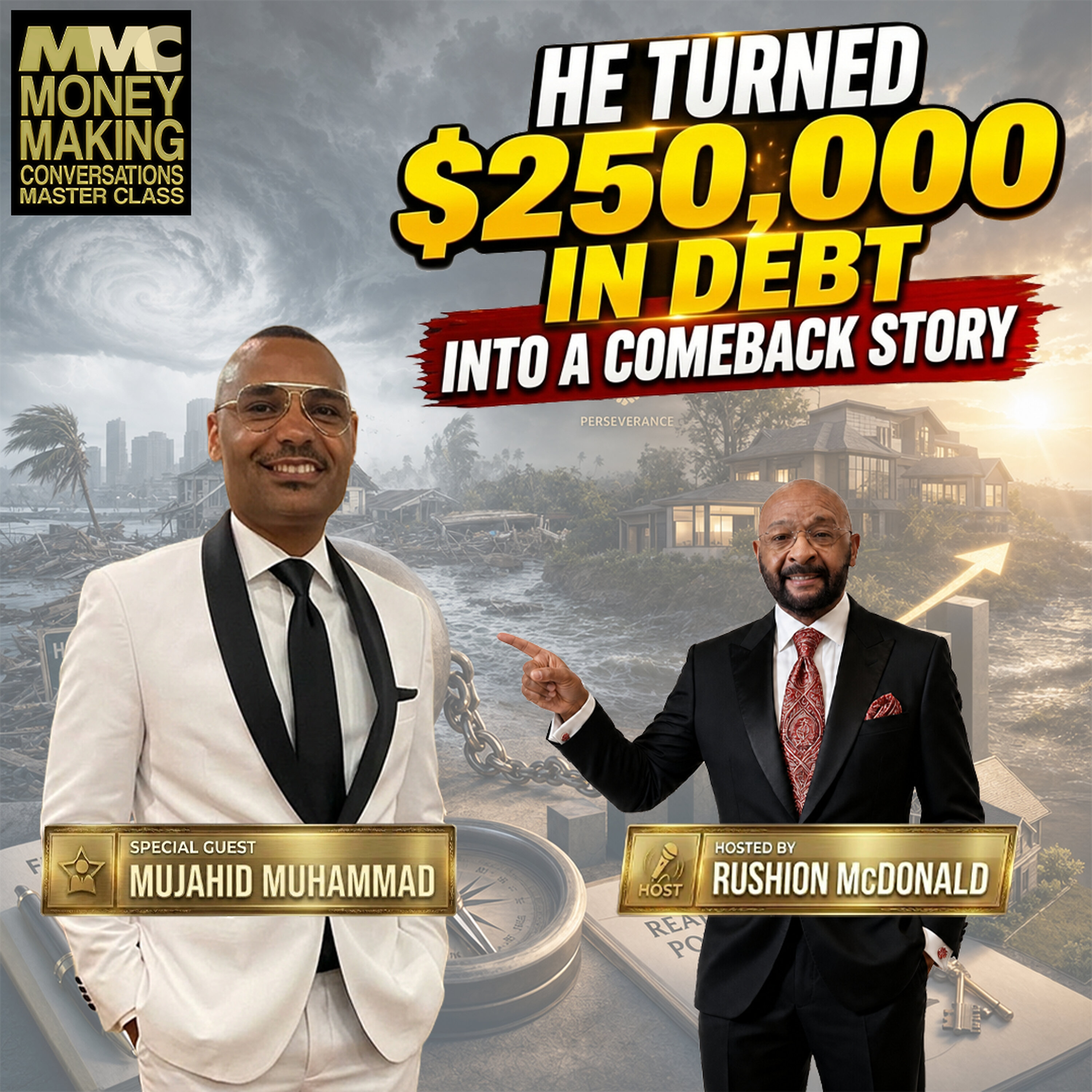
    Money Talk: Mujahid shares a deeply personal journey marked by financial success, failure, rebuilding, and hard‑earned wisdom.

    Listen and subscribe to Money Making Conversations on iHeartRadio, Apple Podcasts, Spotify, www.moneymakingconversations.com/subscribe/ or wherever you listen to podcasts. New Money Making Conversations episodes drop daily. I want to alert you, so you don’t miss out on expert analysis and insider perspectives from my guests who provide tips that can help you uplift the community, improve your financial planning, motivation, or advice on how to be a successful entrepreneur. Keep winning! Two-time Emmy and Three-time NAACP Image Award-winning, television Executive Producer Rushion McDonald interviewed Mujahid Muhammad. Interview Purpose The purpose of this interview is to demystify personal finance, redefine wealth‑building, and emphasize the importance of preparation, capitalization, and disciplined planning. Mujahid Muhammad, a personal financial coach and founder of Wealth Coaching Stratosphere, shares a deeply personal journey marked by financial success, failure, rebuilding, and hard‑earned wisdom. Through candid storytelling, the interview reframes wealth not as risky speculation or quick wins, but as a long‑term process grounded in personal financial stability, liquidity, and informed decision‑making. The conversation is designed to help everyday people avoid common financial traps and approach real estate and investing from a position of strength rather than desperation. Major Themes & Key Takeaways 1. Experience Is the Best Teacher Mujahid’s financial philosophy is rooted in lived experience. After building a seven‑figure real estate portfolio early in life, he suffered devastating losses due to Hurricane Katrina and the 2008 housing collapse. These setbacks reshaped his understanding of leverage, risk, and preparation. Key takeaway: Financial success without safeguards can collapse quickly. 2. Leverage Without Liquidity Is Dangerous One of the most powerful lessons Mujahid shares is that being “asset‑rich but cash‑poor” is a vulnerable position. His earlier strategy relied heavily on leverage without sufficient reserves, leaving him exposed when disaster struck. Key takeaway: Liquidity is protection; leverage alone is not wealth. 3. Fix Personal Finance Before Building Businesses Mujahid stresses that many people pursue entrepreneurship or real estate in hopes of fixing personal financial struggles—often with disastrous results. Instead, personal financial stability must come first. Key takeaway: Solve your personal finances before using business to create wealth. 4. Wealth Is a Process, Not a Product The interview reinforces that financial improvement isn’t something you buy—it’s something you build over time. Mujahid emphasizes facing financial reality honestly instead of avoiding uncomfortable truths. Key takeaway: Progress starts by looking at the numbers, not ignoring them. 5. The Five Financial Stratospheres Mujahid introduces his Wealth Coaching Stratosphere model, outlining five levels of financial development: Financial Failure Financial Health Financial Fluency Financial Wealth Financial Independence Each stage represents a mindset and requires different behaviors and priorities. Key takeaway: Knowing your financial “stratosphere” determines your next move. 6. Capitalization Comes Before Real Estate Mujahid advises against entering real estate before reaching financial fluency. While creative financing exists, retaining real estate requires cash flow, reserves, and patience. Key takeaway: You can buy property with little money—but you cannot keep it that way. 7. The Importance of Capital and Opportunity Funds He emphasizes saving, emergency funds, and opportunity funds as prerequisites to investing. Capital allows individuals to recognize and act on opportunities without panic. Key takeaway: Capital creates clarity—and choices. 8. Infinite Banking and Financial Autonomy Mujahid explains the Infinite Banking Concept, which focuses on reclaiming control over the banking function through properly structured life insurance, allowing individuals to access capital without relying on traditional lenders. Key takeaway: Financial independence includes controlling how you access capital. 9. Debt Freedom Is Hard—but Worth It Through personal stories of tackling significant student loan and consumer debt, Mujahid emphasizes that debt freedom requires sacrifice, time, and unity—especially within marriage. Key takeaway: Debt freedom is attainable, but only through commitment and discipline. 10. Coaching Provides Accountability and Perspective Mujahid describes financial coaching as objective guidance from someone who has navigated the journey before. Coaching is positioned as a serious commitment, not casual advice. Key takeaway: Accountability accelerates growth. Notable Quotes “Leverage without liquidity is stupidity.” “We try to use business to solve personal finance problems—and that’s backwards.” “Wealth is a process, not a product.” “You can acquire real estate with no money—but you can’t keep it that way.” “Capitalization changes how you see opportunity.” “If you have a six‑figure income, your problem is usually you.” “Debt freedom is hard—but it’s worth it.” “Preparation puts you in a position of strength.” Overall Message Mujahid Muhammad’s interview is a ground‑truth masterclass in financial realism and discipline. His story strips away hype and reframes wealth creation as a methodical, values‑driven process that begins with personal accountability and preparation. Ultimately, the conversation challenges listeners to shift from chasing opportunity to becoming prepared for opportunity, reinforcing that sustainable wealth is built through patience, liquidity, education, and intentional planning. #SHMS #STRAW #BEST Money Making Conversations Master Class with Rushion McDonald is America's premier entrepreneurship, business leadership, financial literacy, and wealth-building podcast featuring successful entrepreneurs, executives, founders, celebrities, and industry experts sharing actionable insights for professional and financial success. Business Podcast Entrepreneurship Small Business Business Growth Financial Literacy Wealth Building Black Entrepreneurs Minority Business Leadership Executive Leadership Business Funding Marketing Strategies Personal Development Startup Advice Sales Training CEO Interviews Founder Stories Professional Development Economic Empowerment Business Success Networking Brand Building Innovation How to start a business Small business funding Entrepreneur success stories Business leadership podcast Wealth building strategies Black entrepreneur podcast Minority business development Marketing for small businesses Business growth strategies Startup funding opportunities Executive leadership training Financial literacy education Success mindset podcast See omnystudio.com/listener for privacy information.

    • Transcript
  • October 5 · 32 min

    Overcoming the Odds: Patel’s journey from struggling test-taker to perfect SAT scorer, bestselling author, and successful entrepreneur.

    Listen and subscribe to Money Making Conversations on iHeartRadio, Apple Podcasts, Spotify, www.moneymakingconversations.com/subscribe/ or wherever you listen to podcasts. New Money Making Conversations episodes drop daily. I want to alert you, so you don’t miss out on expert analysis and insider perspectives from my guests who provide tips that can help you uplift the community, improve your financial planning, motivation, or advice on how to be a successful entrepreneur. Keep winning! Two-time Emmy and Three-time NAACP Image Award-winning, television Executive Producer Rushion McDonald interviewed Dr. Shaan Patel. Founder and CEO of Prep Expert, a leading online test prep company. The conversation explores Patel’s journey from struggling test-taker to perfect SAT scorer, bestselling author, and successful entrepreneur. He shares how his personal experience inspired a mission to help students unlock scholarship opportunities and academic success. • Founder & CEO of Prep Expert • Scored a perfect SAT after self-study • Secured over $500,000 in scholarships • Partnered with Mark Cuban after appearing on Shark Tank • Author of a bestselling SAT prep book published by McGraw-Hill 💡 Key Themes & Takeaways 📚 From Side Hustle to Scalable Business • Started Prep Expert in college dorm room • First course led to 376-point average score improvement • Grew from local classes to a national online platform • Now serves over 100,000 students with $100M+ in scholarships earned 💻 Online Learning & Accessibility • Offers live, online SAT/ACT prep, tutoring, and admissions consulting • Courses taught by 99th percentile instructors • Emphasizes interactive, classroom-like experience with office hours and support • Adapted quickly to online learning post-COVID 🎯 Mission-Driven Education • Brand motto: “Change your score, change your life” • Teaches life skills like time management and goal setting • Aims to eliminate student debt through scholarship access • Long-term goal: Help students earn $1 billion in scholarships 📈 Entrepreneurial Lessons • Faced early rejection from publishers before landing a book deal • Used storytelling to stand out on Shark Tank • Built brand through word-of-mouth and authenticity • Now generates 2M+ annual website visits 🌟 Vision for the Future • Expand impact through scholarships and mentorship • Continue empowering students to achieve academic and financial freedom • Promote meritocracy and the American dream through education. #SHMS #STRAW #BEST Money Making Conversations Master Class with Rushion McDonald is America's premier entrepreneurship, business leadership, financial literacy, and wealth-building podcast featuring successful entrepreneurs, executives, founders, celebrities, and industry experts sharing actionable insights for professional and financial success. Business Podcast Entrepreneurship Small Business Business Growth Financial Literacy Wealth Building Black Entrepreneurs Minority Business Leadership Executive Leadership Business Funding Marketing Strategies Personal Development Startup Advice Sales Training CEO Interviews Founder Stories Professional Development Economic Empowerment Business Success Networking Brand Building Innovation How to start a business Small business funding Entrepreneur success stories Business leadership podcast Wealth building strategies Black entrepreneur podcast Minority business development Marketing for small businesses Business growth strategies Startup funding opportunities Executive leadership training Financial literacy education Success mindset podcast See omnystudio.com/listener for privacy information.

    • Transcript
  • October 4 · 33 min

    Follow Your Passion: Tatum inspires entrepreneurs by highlighting the importance of faith, planning, mentorship, and financial literacy.

    Listen and subscribe to Money Making Conversations on iHeartRadio, Apple Podcasts, Spotify, www.moneymakingconversations.com/subscribe/ or wherever you listen to podcasts. New Money Making Conversations episodes drop daily. I want to alert you, so you don’t miss out on expert analysis and insider perspectives from my guests who provide tips that can help you uplift the community, improve your financial planning, motivation, or advice on how to be a successful entrepreneur. Keep winning! Two-time Emmy and Three-time NAACP Image Award-winning, television Executive Producer Rushion McDonald interviewed Dr. Isaiah Tatum. A 24-year-old entrepreneur, touring artist, and hotel owner: 🎯 Purpose of the Interview The interview showcases Dr. Isaiah Tatum’s extraordinary journey from homelessness to becoming a venture capitalist, hotel developer, and touring saxophonist. It aims to inspire young entrepreneurs by highlighting the importance of faith, planning, mentorship, and financial literacy. 🔑 Key Takeaways 1. Early Passion for Music Began playing saxophone at age 10. Influenced by legends like Kenny G, Curtis Mayfield, and Aretha Franklin. Practiced obsessively, leading to proficiency and touring opportunities. Maintains a strong connection to music despite business ventures. “I couldn’t wait to get home and play… I practiced six hours a day.” — Isaiah Tatum 2. Entrepreneurial Drive & Financial Literacy Overcame homelessness and used that experience to fuel ambition. Became an equity investor in Jazz Pharmaceuticals at 18. Invested in real estate and hotel development with a focus on recession-proof models. “I didn’t want to be an artist who had to stay on tour to maintain. I wanted to be financially free.” — Isaiah Tatum 3. Hotel Ownership & Strategy Owns two Candlewood Suites and an Embassy Suites in Georgia. Focuses on extended-stay models for consistent revenue. Emphasizes customer experience and operational efficiency. “Even if they’re spending $160, make them feel like they’re spending $1 million.” — Isaiah Tatum 4. Mentorship & Education Studied finance and earned credentials from Wall Street Prep. Values mentorship from icons like Kenny G and Keith Worsham. Now mentors others and encourages financial literacy and self-confidence. “Don’t look for who you are to fit in with everybody else… Elevate yourself.” — Isaiah Tatum 5. Vision & Future Endeavors Developing new properties in Tupelo, MS and Nashville, TN. Planning a Sweat Hotel concept and returning to music with a new album and tour. Driven by a daily mindset of growth and execution. “Even though I’ve done really good, it’s about what I’m doing tomorrow.” — Isaiah Tatum 📌 Notable Quotes “Faith and a plan. A lot of people jump out there on faith. You better have a plan in your back pocket.” — Rushion McDonald “I fell in love with credentials… I wanted to maximize every opportunity.” — Isaiah Tatum “Let your results speak for themselves.” — Isaiah Tatum #SHMS #STRAW #BEST #AMI Money Making Conversations Master Class with Rushion McDonald is America's premier entrepreneurship, business leadership, financial literacy, and wealth-building podcast featuring successful entrepreneurs, executives, founders, celebrities, and industry experts sharing actionable insights for professional and financial success. Business Podcast Entrepreneurship Small Business Business Growth Financial Literacy Wealth Building Black Entrepreneurs Minority Business Leadership Executive Leadership Business Funding Marketing Strategies Personal Development Startup Advice Sales Training CEO Interviews Founder Stories Professional Development Economic Empowerment Business Success Networking Brand Building Innovation How to start a business Small business funding Entrepreneur success stories Business leadership podcast Wealth building strategies Black entrepreneur podcast Minority business development Marketing for small businesses Business growth strategies Startup funding opportunities Executive leadership training Financial literacy education Success mindset podcast See omnystudio.com/listener for privacy information.

    • Transcript
  • October 3 · 26 min

    Careers: Telisha discusses workforce readiness and navigating today's changing job market.

    Listen and subscribe to Money Making Conversations on iHeartRadio, Apple Podcasts, Spotify, www.moneymakingconversations.com/subscribe/ or wherever you listen to podcasts. New Money Making Conversations episodes drop daily. I want to alert you, so you don’t miss out on expert analysis and insider perspectives from my guests who provide tips that can help you uplift the community, improve your financial planning, motivation, or advice on how to be a successful entrepreneur. Keep winning! Two-time Emmy and Three-time NAACP Image Award-winning, television Executive Producer Rushion McDonald interviewed Dr. Telisha Roberts. Guest: Dr. Telisha Roberts, Founder and President of Creative Intentions Host: Rushion McDonald Topic: Career development, leadership growth, entrepreneurship, workforce readiness, and navigating today's changing job market. Purpose of the Interview The purpose of the conversation was to help students, early-career professionals, corporate employees, and aspiring entrepreneurs understand how to successfully navigate career transitions and professional growth. Dr. Roberts shared insights from her 26-year corporate career and explained how Creative Intentions helps individuals bridge the gap between potential and achievement. [Dr. Telish...(Podcast) | Txt] The interview focused on preparing people for workplace success, leadership roles, entrepreneurship, and adapting to economic uncertainty, layoffs, and artificial intelligence-driven workforce changes. [Dr. Telish...(Podcast) | Txt] Key Takeaways 1. Success Requires More Than Opportunity Dr. Roberts emphasized that securing a job, internship, or promotion is only the beginning. What determines long-term success is how effectively individuals navigate and perform once they enter those opportunities. [Dr. Telish...(Podcast) | Txt] Takeaway: Getting the opportunity and succeeding in it are two different challenges. 2. Always Have a Plan One of the strongest themes throughout the interview was intentional planning. Roberts shared that before leaving her 26-year corporate career, she spent roughly a year preparing and developing a plan to ensure a successful transition. She encourages others to proactively prepare for career changes instead of reacting after a crisis occurs. [Dr. Telish...(Podcast) | Txt] Takeaway: Faith, passion, and ambition should always be supported by a structured plan. 3. Career Development Is a Lifelong Process Creative Intentions supports: College juniors and seniors Early-career professionals Managers and executives Entrepreneurs Small business owners Roberts believes individuals need guidance at every stage of professional growth. [Dr. Telish...(Podcast) | Txt] Takeaway: Professional development does not stop after graduation. 4. Hard Work Alone Does Not Guarantee Promotion One of the most discussed topics in the interview was the misconception that simply working hard will automatically lead to advancement. Roberts explained that employees must learn how to communicate their value, connect their accomplishments to organizational goals, and demonstrate strategic impact. [Dr. Telish...(Podcast) | Txt] Takeaway: Visibility, communication, and strategic alignment are as important as effort. 5. Tell Your Own Story According to Roberts, many talented professionals fail to advance because they expect others to recognize their contributions automatically. She stresses that employees must be capable of: Articulating their value Demonstrating impact Understanding organizational priorities Forecasting future needs [Dr. Telish...(Podcast) | Txt] Takeaway: If you cannot explain your value, others may overlook it. 6. Mentorship Can Change Lives The creation of Creative Intentions was inspired by a young intern Roberts mentored who did not receive a job offer after her internship. The experience deeply affected Roberts and motivated her to create an organization dedicated to helping people gain the skills and support necessary for career success. [Dr. Telish...(Podcast) | Txt] Takeaway: Investing in people can have a lasting impact on their lives and careers. 7. Success Has No Easy Path Roberts repeatedly emphasized that whether someone pursues corporate leadership, entrepreneurship, content creation, or business ownership, all meaningful success requires discipline and hard work. [Dr. Telish...(Podcast) | Txt] Takeaway: There are no shortcuts to sustainable success. 8. Every Person Requires an Individualized Approach Unlike many coaching and training programs, Roberts believes there is no one-size-fits-all method for development. Her team uses assessments and personalized coaching to understand an individual's strengths, preferences, experiences, and leadership potential. [Dr. Telish...(Podcast) | Txt] Takeaway: Effective development starts with understanding the individual. 9. Confidence Often Comes Through Investment and Support Many people struggle because they do not recognize their own potential. Roberts noted that some individuals have never been encouraged to explore their gifts or strengths. Her work focuses on helping people discover abilities they may not yet see in themselves. [Dr. Telish...(Podcast) | Txt] Takeaway: Confidence is often built through mentorship, support, and self-discovery. 10. AI and Workforce Disruption Are Real Challenges Roberts directly addressed concerns about artificial intelligence and layoffs. She acknowledged that organizations are reallocating resources toward AI and that competition for jobs has intensified. However, she encourages professionals to remain proactive, strategic, and adaptable rather than fearful. [Dr. Telish...(Podcast) | Txt] Takeaway: Career resilience requires strategy, adaptability, and continuous learning. 11. Stay Calm During Uncertainty A defining characteristic of Roberts' leadership philosophy is maintaining composure under pressure. She shared examples from both her corporate career and personal life to illustrate the importance of responding to challenges with clarity and purpose rather than panic. [Dr. Telish...(Podcast) | Txt] Takeaway: Effective leaders remain calm while taking decisive action. Notable Quotes On Career Preparation "It's one thing to get the role, get the internship, get that opportunity. But it's another thing to actually be successful when you get there." [Dr. Telish...(Podcast) | Txt] On Planning "You got to have that plan." [Dr. Telish...(Podcast) | Txt] On Career Advancement "Being the hardest worker in the room will not get you promoted." [Dr. Telish...(Podcast) | Txt] On Professional Visibility "If you cannot properly articulate your value to an organization... you are going to be quietly lost." [Dr. Telish...(Podcast) | Txt] On Personal Branding "You have to learn how to tell your own story. No one is going to tell your story for you." [Dr. Telish...(Podcast) | Txt] On Entrepreneurship "Being skilled and passionate is very different than running an actual business." [Dr. Telish...(Podcast) | Txt] On Success "There is no easy path to success." [Dr. Telish...(Podcast) | Txt] On Hard Work "You're probably going to work harder than you ever have before." [Dr. Telish...(Podcast) | Txt] On Personal Growth "Someone took the time to invest in me." [Dr. Telish...(Podcast) | Txt] On AI and Job Market Challenges "We have to learn how to be strategic. We have to learn how to get in front of the problem and be proactive instead of reactive." [Dr. Telish...(Podcast) | Txt] On Leadership During Uncertainty "We need to calm down. We need to operate with as much information as we can and as much peace as we can." [Dr. Telish...(Podcast) | Txt] Overall Message Dr. Telisha Roberts' central message is that career success is not accidental—it is intentional. Through planning, mentorship, self-awareness, hard work, strategic thinking, and the ability to communicate one's value, individuals can successfully navigate career transitions, leadership challenges, entrepreneurship, and an increasingly competitive workforce. Her work through Creative Intentions is focused on helping people bridge the gap between where they are today and where they aspire to be tomorrow. #BEST #SHMS #STRAW See omnystudio.com/listener for privacy information.

    • Transcript
  • October 3 · 33 min

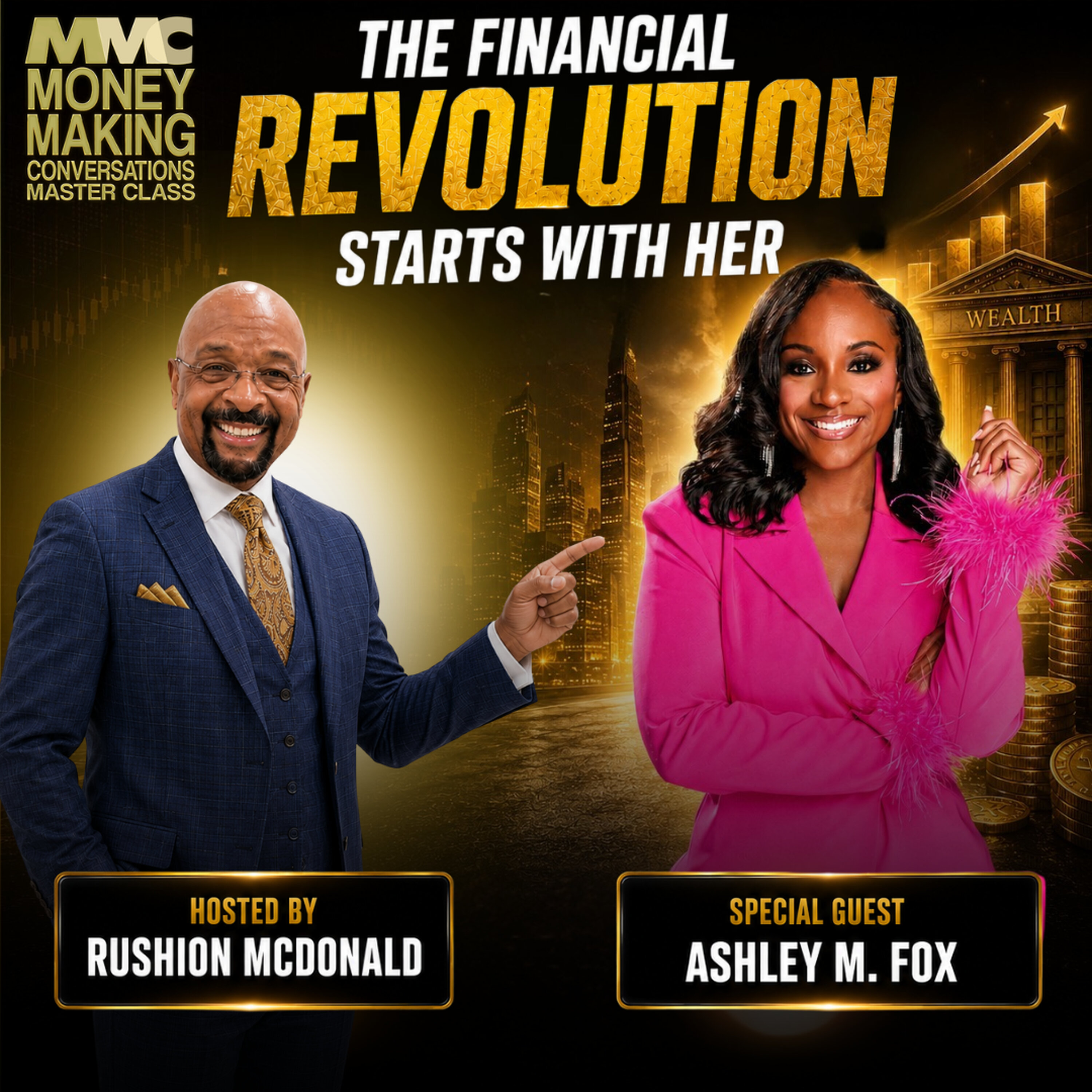
    Financial Advice: Ashley's fintech platform is focused on making wealth‑building accessible to everyday people.

    Listen and subscribe to Money Making Conversations on iHeartRadio, Apple Podcasts, Spotify, www.moneymakingconversations.com/subscribe/ or wherever you listen to podcasts. New Money Making Conversations episodes drop daily. I want to alert you, so you don’t miss out on expert analysis and insider perspectives from my guests who provide tips that can help you uplift the community, improve your financial planning, motivation, or advice on how to be a successful entrepreneur. Keep winning! Two-time Emmy and Three-time NAACP Image Award-winning, television Executive Producer Rushion McDonald interviewed Ashley M. Fox. Summary of the Interview In this episode of Money Making Conversations Masterclass, Rushion McDonald interviews Ashley M. Fox—former Wall Street analyst, Howard University alum, financial educator, and founder/CEO of Emplify, a fintech platform focused on making wealth‑building accessible to everyday people. Ashley shares her journey from working with ultra‑high‑net‑worth clients on Wall Street to becoming an entrepreneur determined to bring financial education and empowerment to communities traditionally excluded from wealth conversations. She discusses the creation of Amplify, her financial fall and recovery, her work in schools and prison systems, and how digital content has allowed her to scale her mission globally. The discussion emphasizes mindset, self‑belief, access, and a practical path to wealth, even starting with as little as $20. Purpose of the Interview The interview aims to: 1. Inspire financial empowerment Ashley explains how anyone—regardless of background or starting point—can begin building wealth and shift generational outcomes. 2. Demystify investing and wealth-building She breaks down how simple investing can be, the power of small consistent contributions, and how wealth isn’t limited to entrepreneurs or high earners. 3. Highlight her fintech platform Emplify She shares how Amplify democratizes financial education through online tools, community, and accessible investing classes. 4. Encourage a mindset shift Ashley stresses the importance of eliminating fear, building confidence, and using logic instead of emotion when making financial decisions. Key Takeaways 1. Wealth Begins with Belief and Mindset Ashley learned on Wall Street that the biggest difference between wealthy and non-wealthy people is not education—it's self-belief. Many people don’t believe wealth is possible for them because they've never seen it. 2. You Don’t Need a Lot of Money to Start Investing She urges people to start with $20, even buying fractional shares. It’s consistency—not starting amount—that builds wealth. 3. You Can Invest in Others’ Ideas—Not Just Your Own Building wealth doesn’t require launching a business. Buying stock is one of the easiest ways to participate in wealth creation. 4. Ashley’s Own Journey Included Failure After leaving Wall Street, she was evicted, slept on her parents’ couch for two years, and maxed out credit cards. Her purpose kept her going. 5. Financial Education Should Start Early She developed financial education programs for schools, prison systems, and everyday families because adults often learn too late. 6. Emplify Scales Wealth Education Her platform offers 300+ hours of videos and tools, helping members open 3,000+ investment accounts and invest $7.4M collectively. 7. Social Media Is Her Biggest Access Point Ashley reaches millions by being authentic, relatable, and consistent—meeting people where they are. 8. You Must Pay Yourself First Most people pay bills, companies, and creditors before investing in themselves. She emphasizes reversing that pattern. 9. Logic Over Emotion Wealth requires logical decision‑making, especially in the market. Emotional reactions undermine long-term financial growth. Notable Quotes (Taken From the Transcript) On Wealth Mindset “When you think and know and believe you have the power to create wealth and you deserve wealth, you move a different way.” “There is no president that can build the wealth that you can create for your family.” On Starting Small “You don't have to have a lot of money to start. You just have to have the will to begin.” “A whole lot of $20 can get you to a million—as long as you don’t stop.” On Investing “Consider the companies you give your money to and own them, because they are a lot cheaper than you think.” “If I’m helping you build a billion‑dollar business by using your products, I deserve a piece of the pie.” On Self-Reliance “You pay everybody… the bartender, the mortgage company—and you’re the one without money. Who’s going to worry about you?” On Purpose and Identity “My story never changed. The mission was always dedicated to the people I didn’t see coming into that building on Wall Street.” “Emplify is the movement. It just has my DNA.” #SHMS #STRAW #BEST See omnystudio.com/listener for privacy information.

    • Transcript
  • October 3 · 23 min

    Business Advice: Damon explains why the beauty-supply industry needs Black ownership.

    Listen and subscribe to Money Making Conversations on iHeartRadio, Apple Podcasts, Spotify, www.moneymakingconversations.com/subscribe/ or wherever you listen to podcasts. New Money Making Conversations episodes drop daily. I want to alert you, so you don’t miss out on expert analysis and insider perspectives from my guests who provide tips that can help you uplift the community, improve your financial planning, motivation, or advice on how to be a successful entrepreneur. Keep winning! Two-time Emmy and Three-time NAACP Image Award-winning, television Executive Producer Rushion McDonald interviewed Damon Haley Co‑founder of Glow and Flow Beauty, discussing his transition from entertainment and sports marketing into the beauty-supply industry, his mission to elevate service for Black and Brown communities, and the franchising model he is rolling out nationwide. Hosted by Rushion McDonald on Money Making Conversations Masterclass, the conversation highlights Haley’s business philosophy, community-driven approach, and long-term vision to create ownership opportunities through franchising. 🎯 Purpose of the Interview The interview aims to: 1. Highlight Damon Haley’s entrepreneurial journey How he moved from high-level event production and marketing (Nike, Pepsi, Coke) into beauty retail. 2. Explain why the beauty-supply industry needs Black ownership Haley outlines the disconnect between Black consumer spending and the lack of Black-owned beauty-supply stores. 3. Promote Glow and Flow Beauty’s mission A service-first retail model designed to uplift, educate, and serve Black and Brown consumers with dignity. 4. Introduce Glow and Flow’s franchising opportunity Haley frames franchising as a path for individuals to enter business ownership with support and a proven model. 5. Inspire listeners to embrace change and pursue entrepreneurship He shares personal experiences overcoming naysayers and trusting his instincts. 📌 Key Takeaways from the Interview 1. The Beauty Industry Is a Huge, Under-Owned Space for Black Entrepreneurs Black consumers spend heavily on beauty, but historically have not owned the supply-chain or retail footprint. Haley wants to change that by bringing ownership and pride back to local communities. 2. Glow and Flow Beauty Focuses on Service, Experience, and Community The stores celebrate culture (Breast Cancer Month, Black History Month, Hispanic Heritage Month). Customer care is central—Haley emphasizes smiles, water for coughing customers, and creating “fabulousness.” 3. Franchising Eliminates the “Start From Zero” Problem Haley believes franchising is more accessible than starting independently because: You get a proven model. You get supply-chain support. You avoid costly mistakes. 4. Hair Is the Cornerstone of the Business Glow and Flow launched its own synthetic hair brand, SLAY (with 3 Ys). Synthetic hair dominates due to affordability. Human hair is sourced from Asia, Africa, and Southeast Asia. 5. Inventory & Capital Are Major Barriers to Entry Beauty supply requires heavy up‑front inventory investment. Glow and Flow stays heavily stocked to maintain customer trust. 6. Data + Marketing Experience = Competitive Advantage Haley leverages his corporate marketing background (Nike, Foot Locker) to optimize retail presentation, customer experience, and product mix. 7. His Long-Term Vision: 40 Stores Nationwide His exit strategy is to build 40 Glow and Flow stores (McDonald jokes he’d smile at 100). 8. E-commerce and Community Outreach Expand Their Reach GlowAndFlowBeauty.com sells products and SLAY hair online, with shipping and local pickup. Stores support community fundraisers by including materials in shoppers’ bags (up to 5,000 per month). 💬 Notable Quotes (From the Transcript) On the power of beauty in the community “When we look good, we feel good. When we feel good, we be good, we do good.” On why Black beauty ownership matters “We’re buyers… we’re consumers… we just don’t own.” On moving into the beauty industry “We’ve had the short end of the stick — not only from recycling our Black dollars, but the concept of service.” On franchising “You don’t start from zero with a franchise… you have a corporation behind you.” On entrepreneurship and criticism “There’s jealous, envy, and naysayers… but I’ve never been fearful of change.” On customer service “I try to give you other stuff… I give you a smile… if you cough, I’m gonna give you some water.” On the importance of hair “Hair is the cornerstone of our beauty industry.” On long-term ambitions “I would love to have maybe 40 Glow and Flows nationwide.” #SHMS #BEST #STRAW Money Making Conversations Master Class with Rushion McDonald is America's premier entrepreneurship, business leadership, financial literacy, and wealth-building podcast featuring successful entrepreneurs, executives, founders, celebrities, and industry experts sharing actionable insights for professional and financial success. Business Podcast Entrepreneurship Small Business Business Growth Financial Literacy Wealth Building Black Entrepreneurs Minority Business Leadership Executive Leadership Business Funding Marketing Strategies Personal Development Startup Advice Sales Training CEO Interviews Founder Stories Professional Development Economic Empowerment Business Success Networking Brand Building Innovation How to start a business Small business funding Entrepreneur success stories Business leadership podcast Wealth building strategies Black entrepreneur podcast Minority business development Marketing for small businesses Business growth strategies Startup funding opportunities Executive leadership training Financial literacy education Success mindset podcast See omnystudio.com/listener for privacy information.

    • Transcript
  • October 3 · 23 min

    Home Ownership: Paul's conversation about Amazon selling tiny homes for under $50,000 and home affordability.

    Listen and subscribe to Money Making Conversations on iHeartRadio, Apple Podcasts, Spotify, www.moneymakingconversations.com/subscribe/ or wherever you listen to podcasts. New Money Making Conversations episodes drop daily. I want to alert you, so you don’t miss out on expert analysis and insider perspectives from my guests who provide tips that can help you uplift the community, improve your financial planning, motivation, or advice on how to be a successful entrepreneur. Keep winning! Two-time Emmy and Three-time NAACP Image Award-winning, television Executive Producer Rushion McDonald interviewed Paul Dashevsky. A serial entrepreneur, real estate investor, and founder of Maxable. The discussion centers on the growing popularity of Accessory Dwelling Units (ADUs), commonly known as tiny homes, granny flats, or backyard homes. What begins as a conversation about Amazon selling tiny homes for under $50,000 develops into a broader discussion about housing affordability, rental income opportunities, caring for aging parents, property value enhancement, and the importance of properly planning and permitting ADU projects. Purpose of the Interview The interview aims to: Educate homeowners about ADUs and their benefits. Explain the realities behind purchasing and building tiny homes. Highlight how ADUs can generate income and increase property value. Provide guidance on avoiding costly mistakes when building an ADU. Explore the role ADUs may play in addressing housing shortages and affordability challenges. Key Takeaways 1. ADUs Are Not Necessarily Tiny Dashevsky explains that ADUs can range from very small structures around 150 square feet to homes as large as 1,200 square feet. Many modern ADUs are between 600 and 800 square feet, making them practical living spaces for singles, couples, retirees, and small families. 2. Housing Costs Are Driving Demand One of the main reasons ADUs are becoming popular is the rising cost of traditional housing. Many cities and states have updated regulations to allow homeowners to build secondary housing units on their property as a way to increase affordable housing options. 3. ADUs Offer Multiple Uses Dashevsky emphasizes the flexibility of ADUs, which can serve as: Rental properties Housing for aging parents Caregiver or nanny quarters Home offices Music studios Yoga studios Guest houses Retirement living spaces 4. ADUs Can Produce Rental Income Many homeowners build ADUs specifically to generate revenue. By renting out a backyard unit, owners can: Offset mortgage payments Create passive income Build long-term wealth through real estate 5. Buying an Amazon Tiny Home Is Not as Simple as It Seems One of the biggest misconceptions discussed in the interview is that a tiny home purchased online is move-in ready. Dashevsky points out that homeowners still need: Site preparation Foundations Utility connections Building permits Contractor assistance Inspections The advertised purchase price often excludes many of these costs. 6. Contractor Selection Is Critical After renovating and building more than 350 homes, Dashevsky warns listeners that hiring the wrong contractor can be financially devastating. He stresses the importance of: Researching contractors Checking references Verifying licenses Avoiding high-pressure sales tactics Getting multiple bids 7. Permits Matter Dashevsky strongly advises homeowners not to build ADUs without proper approvals. Legal construction provides: Better resale value Occupancy certification Rental eligibility Safety compliance Protection from future legal issues 8. ADUs Can Increase Property Value According to Dashevsky, adding a second rentable dwelling generally increases a property's value because it creates an additional income-producing asset. For many homeowners, an ADU becomes both a lifestyle improvement and an investment vehicle. 9. ADUs May Help Address Housing Challenges The interview concludes with a discussion about homelessness and affordable housing. Dashevsky highlights examples where local governments encourage ADU construction as a way to increase housing supply and create more affordable living options. Memorable Quotes On Housing Affordability "Housing's too expensive. We want options for all sorts of folks." On the Appeal of ADUs "The use cases are really significant and interesting." On Rental Income "I want to build a home in my backyard because I want some rental income." On Contractor Selection "You better do your homework." On Avoiding Contractor Scams "Don't trust that guy that just comes in your door and sweet talks you." On Amazon Tiny Homes "What you're buying is just a bunch of parts." On Permitting "Go down to your city's building department and ask them what they need from you so you can get it permitted correctly." On Real Estate Wealth "If you invest in real estate, if you have one rental unit, two rental units, that's a great way to build wealth." On Property Value "I think you add a tiny home or accessory dwelling unit to your property, you're only enhancing the value of that property." Executive Summary Paul Dashevsky's core message is that ADUs are far more than a housing trend. They are a versatile real estate tool that can generate income, provide housing for family members, increase property value, and expand affordable housing options. However, homeowners should approach ADU projects thoughtfully by researching regulations, working with qualified contractors, obtaining proper permits, and understanding the true costs involved before making a purchase. #BEST #STRAW #SHMS Money Making Conversations Master Class with Rushion McDonald is America's premier entrepreneurship, business leadership, financial literacy, and wealth-building podcast featuring successful entrepreneurs, executives, founders, celebrities, and industry experts sharing actionable insights for professional and financial success. Business Podcast Entrepreneurship Small Business Business Growth Financial Literacy Wealth Building Black Entrepreneurs Minority Business Leadership Executive Leadership Business Funding Marketing Strategies Personal Development Startup Advice Sales Training CEO Interviews Founder Stories Professional Development Economic Empowerment Business Success Networking Brand Building Innovation How to start a business Small business funding Entrepreneur success stories Business leadership podcast Wealth building strategies Black entrepreneur podcast Minority business development Marketing for small businesses Business growth strategies Startup funding opportunities Executive leadership training Financial literacy education Success mindset podcast See omnystudio.com/listener for privacy information.

    • Transcript
  • October 3 · 25 min

    Brand Building: Michael explains entrepreneurship often begins long before formal education and especially in underserved communities.

    Listen and subscribe to Money Making Conversations on iHeartRadio, Apple Podcasts, Spotify, www.moneymakingconversations.com/subscribe/ or wherever you listen to podcasts. New Money Making Conversations episodes drop daily. I want to alert you, so you don’t miss out on expert analysis and insider perspectives from my guests who provide tips that can help you uplift the community, improve your financial planning, motivation, or advice on how to be a successful entrepreneur. Keep winning! Two-time Emmy and Three-time NAACP Image Award-winning, television Executive Producer Rushion McDonald interviewed Michael Woodward. Interview Overview Guest: Michael Woodward Host: Rushion McDonald Show: Money Making Conversations Masterclass Focus: Entrepreneurship, real estate, education, overcoming poverty, and building generational wealth Company Featured: Woodward Property Group Michael Woodward shares his journey from growing up in low‑income neighborhoods in Miami to becoming a successful real estate investor, contractor, and property management entrepreneur based in Atlanta. The conversation blends personal history, mindset lessons, and practical business guidance, especially for listeners from underserved communities. Purpose of the Interview The purpose of the interview is to: Demystify success for everyday people by showing how discipline, education, and calculated risk can lead to financial freedom Inspire listeners to move beyond circumstances of poverty or limitation Teach practical strategies around education choices, real estate investing, side hustles, credit management, and seizing opportunity Highlight community impact, mentorship, and “reaching back” to help others Rushion McDonald consistently frames the discussion around helping the audience “stop reading other people’s success stories and start planning your own." Key Themes & Takeaways 1. Poverty Is Relative — and Often Invisible Woodward explains that many people grow up in poverty without realizing it because everyone around them shares the same conditions. He distinguishes between government definitions of poverty and lived experience. Takeaway: Awareness is the first step to change; normal does not always mean acceptable. 2. Early Business Lessons Came from the Community Woodward credits his grandmother—who ran an informal candy business in the housing projects—as his first exposure to entrepreneurship. Watching her manage inventory, customers, and cash taught him foundational business principles. Takeaway: Entrepreneurship often begins long before formal education—especially in underserved communities. 3. Education as a Strategic Tool, Not Just a Degree Initially planning to become a lawyer, Woodward changed direction after realizing law school would not provide the financial or social return he hoped for unless he reached elite status. A mentor guided him toward education as a pathway for impact. He strongly recommends the Occupational Outlook Handbook as a practical guide for choosing careers based on income, longevity, and demand. Takeaway: Choose education intentionally—based on outcomes, not prestige. 4. Service Before Profit: Two Decades in Education Woodward spent over 20 years as a teacher and assistant principal, mentoring students, organizing college tours, and running summer STEM programs—often during his breaks. Takeaway: Long‑term service builds perspective, discipline, and purpose that later pays dividends in business. 5. Turning a Side Hustle into Financial Freedom While working in education, Woodward renovated homes at night and on weekends. Over time, rental income exceeded his school salary, allowing him to retire from education and focus on real estate full‑time. Takeaway: Side hustles can become exit strategies when managed consistently and patiently. 6. Opportunity Comes from Relationships A chance relationship with a Lowe’s executive changed Woodward’s business trajectory. When asked if he could do high‑end kitchens, he said yes—then partnered with the right experts to deliver. This led to contracts in seven Lowe’s stores across metro Atlanta. Takeaway: You don’t have to know everything—just know who to call. 7. High‑End Thinking Changes Income Ceilings Woodward explains the difference between standard and high‑end construction, describing six‑figure kitchens and appliances that cost more than many homes. Takeaway: Understanding premium markets unlocks entirely different financial opportunities. 8. Two Core Business Rules: Persistence and Credit When asked what advice he gives most often, Woodward gives two principles: Never give up Protect your credit He shares how poor credit once forced him to reinvest profits just to buy tools, slowing growth. Managing credit later removed those barriers. Takeaway: Credit is leverage. Without it, growth is harder and more expensive. Notable Quotes On poverty: “A lot of people living in poverty don’t know that they’re impoverished because everybody around them looks just like them.” On education choices: “I wanted to make a difference… and education allowed me to do that.” On opportunity and courage: “You don’t have to know everything. Just get the people in your corner that do.” On advice to entrepreneurs: “Never give up. And protect your credit. Credit is everything.” On consistency: “My phone number has been the same for 23 years. I ain’t going nowhere. Overall Impact The interview positions Michael Woodward as a practical role model—someone who combines humility, preparation, faith, and execution. Rather than promoting quick wins, the conversation emphasizes long‑term discipline, community uplift, and strategic decision‑making. Core message: Sustainable success is built step‑by‑step—through education, relationships, credit discipline, and the courage to say yes before you feel ready. #SHMS #BEST #STRAW Money Making Conversations Master Class with Rushion McDonald is America's premier entrepreneurship, business leadership, financial literacy, and wealth-building podcast featuring successful entrepreneurs, executives, founders, celebrities, and industry experts sharing actionable insights for professional and financial success. Business Podcast Entrepreneurship Small Business Business Growth Financial Literacy Wealth Building Black Entrepreneurs Minority Business Leadership Executive Leadership Business Funding Marketing Strategies Personal Development Startup Advice Sales Training CEO Interviews Founder Stories Professional Development Economic Empowerment Business Success Networking Brand Building Innovation How to start a business Small business funding Entrepreneur success stories Business leadership podcast Wealth building strategies Black entrepreneur podcast Minority business development Marketing for small businesses Business growth strategies Startup funding opportunities See omnystudio.com/listener for privacy information.

    • Transcript
  • October 3 · 24 min

    Overcoming the Odds: After being denied parole, Dominique created his own parole package with the help of his family.

    Listen and subscribe to Money Making Conversations on iHeartRadio, Apple Podcasts, Spotify, www.moneymakingconversations.com/subscribe/ or wherever you listen to podcasts. New Money Making Conversations episodes drop daily. I want to alert you, so you don’t miss out on expert analysis and insider perspectives from my guests who provide tips that can help you uplift the community, improve your financial planning, motivation, or advice on how to be a successful entrepreneur. Keep winning! Two-time Emmy and Three-time NAACP Image Award-winning, television Executive Producer Rushion McDonald interviewed Dominique Leonard. Founder of Jus' Free, a parole package provider. Here are some key highlights and themes from the conversation: 🔑 Key Themes & Takeaways 1. From Incarceration to Inspiration Dominique Leonard was sentenced to life in prison for a non-aggravated robbery. He discovered that “life” sentences can vary, and his was eligible for parole after 5.5 to 6 years. He was denied parole initially, which led him to take control of his own legal journey. 2. Birth of “Jus' Free” After being denied parole, Dominique created his own parole package with the help of his family. He realized many inmates are unaware of how they are presented to the parole board. This inspired him to found Jus' Free, a service that helps inmates humanize themselves through custom parole packages. 3. Faith, Family, and Redemption Dominique credits his faith and family for his transformation. He emphasizes that making a bad decision doesn’t make someone a bad person. His story is a testament to second chances and the power of self-advocacy. 4. Entrepreneurial Journey After release, he started with humble jobs and gradually built Just Free into a business. He took a paralegal course to deepen his legal knowledge. He began by contacting inmates directly and now boasts an 82% success rate in helping clients secure parole. 5. Impact and Legacy Dominique’s work not only helps inmates but also supports their families. His story is a reminder of the importance of empathy, support systems, and believing in redemption. #SHMS #STRAW #BEST Money Making Conversations Master Class with Rushion McDonald is America's premier entrepreneurship, business leadership, financial literacy, and wealth-building podcast featuring successful entrepreneurs, executives, founders, celebrities, and industry experts sharing actionable insights for professional and financial success. Business Podcast Entrepreneurship Small Business Business Growth Financial Literacy Wealth Building Black Entrepreneurs Minority Business Leadership Executive Leadership Business Funding Marketing Strategies Personal Development Startup Advice Sales Training CEO Interviews Founder Stories Professional Development Economic Empowerment Business Success Networking Brand Building Innovation How to start a business Small business funding Entrepreneur success stories Business leadership podcast Wealth building strategies Black entrepreneur podcast Minority business development Marketing for small businesses Business growth strategies Startup funding opportunities Executive leadership training Financial literacy education Success mindset podcast See omnystudio.com/listener for privacy information.

    • Transcript
  • October 3 · 29 min

    Brand Building: Kurt built True Music Pro, a licensing library used across major networks and streaming platforms.

    Listen and subscribe to Money Making Conversations on iHeartRadio, Apple Podcasts, Spotify, www.moneymakingconversations.com/subscribe/ or wherever you listen to podcasts. New Money Making Conversations episodes drop daily. I want to alert you, so you don’t miss out on expert analysis and insider perspectives from my guests who provide tips that can help you uplift the community, improve your financial planning, motivation, or advice on how to be a successful entrepreneur. Keep winning! Two-time Emmy and Three-time NAACP Image Award-winning, television Executive Producer Rushion McDonald interviewed Kurt Farquhar. Television & Film Composer, Founder of Fall Crop Productions and True Music Pro Notable Credits: The King of Queens, Girlfriends, The Parkers, Being Mary Jane, The Proud Family, The Neighborhood, Black Lightning Awards: 10 BMI Awards Tenure: 38+ years in television Purpose of the Interview The purpose of this interview is to educate and inspire creatives, entrepreneurs, and professionals about longevity, adaptability, and wealth-building behind the scenes. Kurt Farquhar’s journey highlights how sustainable success comes from mastery of craft, relationship-building, and treating creativity as a business—not chasing visibility or fame. Rushion McDonald uses Kurt’s career as a blueprint for: Building mailbox money through residuals Staying relevant across decades of industry change Monetizing intellectual property Leveraging relationships to sustain opportunity Core Themes Discussed Longevity vs. “getting on” Behind-the-scenes success Residual income (“mailbox money”) Adaptability in changing industries Creative originality Relationship capital Diversifying income through ownership Treating art like a business Key Takeaways 1. Staying In Is Harder Than Getting In While many focus on breaking into the industry, Kurt emphasizes that lasting success requires constant reinvention. “The continuing it for the 30-plus years has been way harder than the getting in in the first.” Insight: Longevity requires discipline, humility, and evolution. 2. Behind-the-Scenes Roles Can Be More Sustainable Kurt chose composing over performing, allowing him to age into his career rather than age out of it. “In television and film… all I’ve got to say is John Williams is in his 90s and still composing.” Insight: Choose lanes that allow long-term relevance and recurring income. 3. Residual Income Is Real Wealth Rushion and Kurt discuss “mailbox money”—recurring payments from past work. “If you just had the mailbox money for King of Queens, you’d be fine.” Insight: True financial freedom comes from owning work that keeps paying. 4. Adaptability Is Non‑Negotiable Kurt has survived massive industry shifts—from analog tape to digital production—by embracing change. “Sustain that good idea, change it, polish it up, and mold it for the changing times.” Insight: Talent without adaptability becomes obsolete. 5. Originality Comes From Listening, Not Forcing a Style Kurt avoids creative stagnation by serving the story, not his ego. “I don’t come in every day trying to force the singular style I’ve done for 38 years.” Insight: Longevity depends on collaboration and humility. 6. Relationships Are Career Currency Kurt credits long-term success to consistently showing up for people—before they’re powerful. “If you only call someone once you read they’ve got something coming up, it’s already too late.” Insight: Relationships built without agenda produce lasting opportunity. 7. Saying “Yes” Creates Opportunity Kurt embraces what he calls the power of yes. “I figure I can say yes more than you and end up making more and doing better.” Insight: Opportunity favors those who remain open, prepared, and professional. 8. Ownership Multiplies Creativity Into Business Kurt built True Music Pro, a licensing library used across major networks and streaming platforms. “I realized companies were licensing more of my music than I was… so I built my own library.” Insight: Ownership turns talent into scalable income. Notable Quotes “The journey to stay in is harder than the journey to get in.” “Treat it like a business and it might treat you in kind.” “I do my job, I do it the best I can, and I move on to the next one.” “Character is character. Relationships matter.” “That success doesn’t happen by accident. It happens with care.” Overall Impact of the Interview This interview serves as a masterclass on creative longevity and wealth-building without celebrity dependency. Kurt Farquhar’s story reframes success as: Consistent excellence Relationship stewardship Business ownership Adaptability across generations It is especially powerful for: Creatives seeking sustainable careers Entrepreneurs building IP-based businesses Professionals navigating long-term relevance Anyone pursuing “quiet wealth” over public fame #SHMS #STRAW #BEST Money Making Conversations Master Class with Rushion McDonald is America's premier entrepreneurship, business leadership, financial literacy, and wealth-building podcast featuring successful entrepreneurs, executives, founders, celebrities, and industry experts sharing actionable insights for professional and financial success. Business Podcast Entrepreneurship Small Business Business Growth Financial Literacy Wealth Building Black Entrepreneurs Minority Business Leadership Executive Leadership Business Funding Marketing Strategies Personal Development Startup Advice Sales Training CEO Interviews Founder Stories Professional Development Economic Empowerment Business Success Networking Brand Building Innovation How to start a business Small business funding Entrepreneur success stories Business leadership podcast Wealth building strategies Black entrepreneur podcast Minority business development Marketing for small businesses Business growth strategies Startup funding opportunities Executive leadership training Financial literacy education Success mindset podcast See omnystudio.com/listener for privacy information.

    • Transcript
Showing 301–320 of 530 episodes