Skip to content
Artwork for Modern Mind, Ancient Book
EducationCoursesReligion & SpiritualityChristianity

Modern Mind, Ancient Book

Roger Ferguson, Host and Biblical Scholar

Modern Mind, Ancient Book helps curious people understand Scripture in its ancient Jewish and historical world so they can know Jesus and walk His Way.

Interesting ideas. Ancient stories. Better questions.

Start with short discoveries. Explore real human questions through Scripture, covenant wisdom, and Jewish context. Study whole biblical books through careful, book-by-book teaching. Along the way, we distinguish what the text says from historical background, interpretation, and application.

For seekers, new believers, longtime students, and anyone who senses there is more depth and coherence in the Bible than they were taught.

Topics include Bible study, the Jewish context of Jesus, biblical history, Torah, Prophets and Writings, Christian discipleship, topical teaching, and book studies.

Find the Way—Meet Rabbi Jesus.

Walk the Way — Modern Mind, Ancient Book.

New teaching weekly.

https://modernmindancientbook.org

Play
  • 43 episodes
  • a few times a week
  • Avg 34 min
  • English
Counted on this page — what you have heard stays on this device, so it is not something the list can be paged by.
  • Yesterday · 34 min

    How Do We Live When Death Comes to Everyone? | Ecclesiastes 9–12

    If we cannot control death or outcomes, what kind of life is still worth living? In the final study of Ecclesiastes, Roger Ferguson follows chapters 9–12 through received joy, wholehearted work, quiet wisdom, uncertain results, aging, and the call to remember our Creator. We explore why mortality does not cancel moral responsibility, why wisdom matters without guaranteeing success, and how the book ends with fear of God, obedience, and judgment. After hearing Ecclesiastes in its own context, we turn to Jesus and resurrection hope. Our next book is Joel, with God's call to return, judgment, restoration, and the promise of His Spirit. Scripture: Ecclesiastes 9:1–12:14. Scripture quotations are from the Holy Bible, Berean Standard Bible, third printing. The BSB text is dedicated to the public domain. https://berean.bible Study sources: Duane A. Garrett, Proverbs, Ecclesiastes, Song of Songs, New American Commentary 14 (Broadman & Holman, 1993), Ecclesiastes 9–12; Graham S. Ogden and Lynell Zogbo, A Handbook on Ecclesiastes (United Bible Societies, 1998), Ecclesiastes 9:1–12:14. This study does not treat the dead know nothing as a complete doctrine of the afterlife, time and chance as denial of God's sovereignty, the aging poem as a rigid anatomical code, or wise action as a guarantee of wealth. The poor wise man and one Shepherd are not presented as direct predictions of Jesus. Narration uses Roger Ferguson's authorized AI voice likeness, reviewed and approved by Roger. Illustrations are artistic teaching aids, not historical photographs. Continue exploring Scripture with Modern Mind, Ancient Book. Join our email newsletter for thoughtful new Bible teachings, studies, and resources when there is something worth sharing. https://modernmindancientbook.org/newsletter/?utm_source=podcast&utm_medium=audio&utm_campaign=newsletter_always_on&utm_content=T3-ECC-S04 https://modernmindancientbook.org/ Contact: roger@modernmindancientbook.org Find the Way—Meet Rabbi Jesus. Walk the Way — Modern Mind, Ancient Book. #Ecclesiastes #BibleStudy #RememberYourCreator

    • Transcript
  • Friday · 37 min

    The Jewish World Before Jesus

    Turn one page from Malachi to Matthew and the furniture seems to have moved. Rome rules. Herod is king. Pharisees and Sadducees debate. Synagogues gather communities. Greek names and language appear everywhere. Yet the covenant story has not gone silent. This episode walks through the Jewish world that took shape under Alexander and his successors, the Maccabean crisis, the temple rededication remembered at Hanukkah, the Hasmonean dynasty, Roman rule, and Herod. It then follows Jewish Scripture into Greek, distinguishes biblical manuscripts from other Second Temple writings, visits Qumran, and explores the temple, synagogues, households, workshops, pilgrimage roads, and diaspora communities. Pharisees, Sadducees, Essenes, scribes, resistance movements, and Samaritans are placed in their own settings rather than flattened into caricatures. Their debates matter because Rabbi Jesus enters a living Jewish world filled with Scripture, covenant memory, resurrection hope, expectation, and longing for the Creator's reign. ## Scripture in this episode Malachi 3:1–4; Daniel 7:13–14; Luke 2:25–32; Mark 1:14–15; Luke 4:16–21; Matthew 5:17–20; and John 4:21–24. Scripture quotations are from the Berean Standard Bible, third printing. ## Historical world explored - Alexander, the Ptolemies, the Seleucids, the Maccabean revolt, and Rome - Temple rededication and the Jewish memory of Hanukkah - Hebrew, Aramaic, Greek, and limited Latin use - The Septuagint and the Jewish work of translation - Sirach, 1 Enoch, Jubilees, 1–2 Maccabees, Philo, Josephus, and other ancient witnesses - The Dead Sea Scrolls, Qumran, and careful source classification - Temple, synagogue, household, work, festival, pilgrimage, and diaspora life - Jewish groups, contested institutions, and the varied hope field before Jesus - Rabbi Jesus inside Israel's Law, Prophets, Writings, and covenant story Generated historical scenes in the video are visibly disclosed as artistic reconstructions. They illustrate the teaching and are not presented as photographs of particular people or events. Find the Way—Meet Rabbi Jesus. Walk the Way — Modern Mind, Ancient Book.

    • Transcript
  • Wednesday · 18 min

    Numbers Explained: Wilderness, Rebellion, and the Promise That Endures

    Numbers is more than censuses. It is the story of a people ordered around the Creator's presence who must learn whether they will trust Him in the wilderness. Roger Ferguson surveys Israel's camp, the two generations, the scouts' failure, rebellion and judgment, priesthood and worship, Balaam's unwilling blessing, mercy in the serpent episode, and the covenant promise carried forward to the plains of Moab. This restored teaching preserves Roger's original human voice at a natural 1.20x pace, with dedicated echo reduction, improved audio mastering, complete captions, and new Numbers-specific illustrations. Eleven narrow legacy passages were removed without replacement narration, including a removal-only tightening that makes the survey identity clear. On-screen source cards distinguish Scripture from traditional chronology, keep Moses' death and the Jordan crossing in their later canonical settings, and describe modern Jewish belief and practice without treating one claim as universal. Primary new on-screen Scripture witness: Berean Standard Bible, third printing. Roger's legacy audible reading is preserved and captioned as spoken. The episode artwork is illustrative and is not presented as an archaeological reconstruction. Scripture path: Numbers 1–4; Numbers 10:11–12; Numbers 13–14; Numbers 16–21; Numbers 22–25; Numbers 26–36; Deuteronomy 1:2; Deuteronomy 34; Joshua 3–4; John 3:14–15. Original first-party teaching: https://www.youtube.com/watch?v=zY18jjcLOf4 Next in the book-by-book journey: Survey of Deuteronomy (planned, subject to source verification). Find the Way—Meet Rabbi Jesus. Walk the Way — Modern Mind, Ancient Book.

    • Transcript
  • Wednesday · 12 min

    Sukkot: Joy Under a Temporary Roof

    What is Sukkot, and how can its ancient invitation to joy shape our homes today? Also called the Feast of Booths or the Feast of Tabernacles, Sukkot invites us to remember God's provision, make room for others, and listen to Jesus at the feast. Roger Ferguson explores Scripture, living Jewish traditions, and practical ways to begin with a shared meal, prayer, and hospitality. Biblical instruction, later customs, and our present-day suggestions are distinguished. The eighth-day connection to Jesus' resurrection is offered as Roger's theological reflection, not a claim that the resurrection occurred during Sukkot. FREE PRACTICAL GUIDE — celebrating at home and with friends, with recipes and prayers: https://modernmindancientbook.org/fall-appointed-times-2026-guide/ In 2026, Sukkot begins at sunset on Friday, September 25. Gregorian dates change each year because the Hebrew calendar is lunisolar. Check your congregation's calendar for its observance and arrangements. Near Columbia, South Carolina? Our local congregation is Gates to Zion. Visit its website for current service, holiday, and registration information: https://gatestozion.net/ Continue exploring Scripture with Modern Mind, Ancient Book. Join our email newsletter for future teachings and free resources: https://modernmindancientbook.org/newsletter/?utm_source=podcast&utm_medium=audio&utm_campaign=newsletter_always_on&utm_content=T2-BHF-SUK-2026-FVN-01 CHAPTERS 00:00 Welcome 00:22 Sukkot: the Feast of Booths or Tabernacles 01:22 The feast in Leviticus 23 02:25 Remembering shelter and dependence 03:28 Joy that makes room for others 04:46 Nehemiah and living Jewish traditions 06:34 Jesus at the feast 07:11 Living water and God's Spirit 08:01 God dwelling with us 08:37 An eighth-day reflection on resurrection 09:21 Begin at home, with friends 10:48 A prayer of gratitude and welcome 11:25 Local invitation and next steps 12:09 Closing song SCRIPTURE Leviticus 23:33–44; Deuteronomy 16:13–17; Nehemiah 8:13–18; John 7 (especially 7:37–39); John 1:14; Revelation 21:3. Quotations: Berean Standard Bible, third printing. JEWISH-PRACTICE REFERENCES Chabad; Israel Movement for Reform and Progressive Judaism; later Temple-water memories in Mishnah Sukkah 4:9 and 5:1. These sources describe particular traditions, not a single practice shared by all Jews. PRODUCTION NOTE Written and approved by Roger Ferguson. Narration uses his authorized AI-generated voice. Illustrations are interpretive artwork, not photographs of biblical events. Documentary sukkah photograph: Patrick Dionne / U.S. Navy, 2014, public domain. Original MMAB artwork, animation, and approved musical bookends. Find the Way—Meet Rabbi Jesus. Walk the Way — Modern Mind, Ancient Book. #Sukkot #FeastOfTabernacles #BibleStudy

    • Transcript
  • September 21 · 37 min

    Wisdom at the Edge of What We Can Know | Ecclesiastes 6–8

    What does wisdom actually give us when life remains unfair, authority becomes dangerous, judgment seems delayed, and even the wisest person cannot explain everything God is doing? Ecclesiastes chapters six through eight move through prosperity without enjoyment, the house of mourning, wise correction, the warning against becoming overly righteous, universal human sin, difficult authority, delayed justice, and the limits of human investigation. Wisdom teaches us how to live before God without pretending to be God. Scripture quotations use the Berean Standard Bible, third printing. Continue the study at https://modernmindancientbook.org/. Find the Way—Meet Rabbi Jesus. Walk the Way — Modern Mind, Ancient Book.

    • Transcript
  • September 20 · 9 min

    The Fast Is Not the Point: Yom Kippur and Jesus — with an Original Song

    The fast is not the point by itself. What does Scripture actually ask on Yom Kippur, and how did Jewish tradition give that humbling a communal form? Roger Ferguson opens Leviticus 16 and Leviticus 23:26–32, follows Isaiah 58 and Mishnah Yoma into truth and responsible repair, and then lets Hebrews 9–10 make its own priestly argument toward Jesus the Messiah. Along the way, he distinguishes Torah from later practice, protects health and wise boundaries, and offers a simple way to enter the Day of Atonement as a learner. Then stay for The Jesus We Want Them to Know, an original country-gospel duet from Modern Mind, Ancient Book. Its visual story moves from creation through covenant, Torah and the Prophets, the cross, Jesus walking from the grave, and a family praying together before bedtime. It invites families to open the Book, meet Rabbi Jesus inside Israel's story, practice forgiveness, and walk the Way together. Yom Kippur 5787 begins Sunday, September 20 at sundown and ends Monday, September 21 at nightfall under the commonly used Diaspora calendar. Chapters: 00:00 The Fast Is Not the Point 05:53 The Jesus We Want Them to Know — Original Song Our people celebrate this way. Come join us to remember and receive mercy. Continue exploring the Bible's ancient holidays with Modern Mind, Ancient Book. Join our email newsletter for thoughtful Bible teachings and practical holiday resources when there is something worth sharing: https://modernmindancientbook.org/newsletter/?utm_source=podcast&utm_medium=audio&utm_campaign=newsletter_always_on&utm_content=T2-BHF-YKP-2026-ANTHOLOGY-01 #YomKippur #DayOfAtonement #BiblicalHolidays

    • Transcript
  • #2
    September 19 · 1 hr 5 min

    Before the Sun: Spirit, Speech, and Light | Genesis 1:1–5

    What do the first five verses of Genesis say about God's Spirit, speech and light? Roger Ferguson and Yu Song begin reading the Torah together, comparing Jewish and Christian interpretations and following the language of creation into John 1. In Parashat, Yu joins Roger as a fellow learner, with room for questions and disagreement. Roger's connections involving early creator belief, Egypt, Moses and Jethro are interpretive opinions—not settled historical conclusions or views Yu must share. We present different readings so you can examine the sources and decide. Modern Mind, Ancient Book is for Jesus. SOURCE NOTES Genesis 1:1–5: https://www.sefaria.org/Genesis.1.1-5?lang=bi Also discussed: Isaiah 11:1–2; John 1:1–5; 2 Corinthians 4:6. Genesis Rabbah 2:4 connects the Spirit with the messianic king, without identifying him as Jesus: https://www.sefaria.org/Bereshit_Rabbah.2.4?lang=bi Compiled around the fifth century AD; this alone does not prove what Jesus or Paul knew: https://www.mohrsiebeck.com/en/book/genesis-rabbah-in-text-and-context-9783161547034/ The proposed Ubaid creator-belief sequence is Roger's hypothesis, not established by this archaeological overview: https://www.metmuseum.org/essays/the-ubaid-period-5500-4000-b-c The bull comparison concerns Apis, associated with Ptah at Memphis; Ptah's usual image is mummiform. A link to the golden calf remains an interpretation: https://www.metmuseum.org/art/collection/search/570663 https://www.metmuseum.org/art/collection/search/570745 Theophilus argued for creation from nothing in the second century AD (To Autolycus II.4, II.10), distinct from what Hebrew grammar alone establishes: https://www.newadvent.org/fathers/02042.htm Sonoluminescence illustrates wonder, not a proven Genesis mechanism. Laboratory ultrasound is not ordinary speech; salt water is one medium and temperatures depend on conditions: https://suslick.scs.illinois.edu/documents/marinechem.1992.pdf https://suslick.scs.illinois.edu/documents/nature.030205.pdf Continue exploring Scripture with thoughtful teachings and resources in our email newsletter: https://modernmindancientbook.org/newsletter/?utm_source=podcast&utm_medium=audio&utm_campaign=newsletter_always_on&utm_content=parashat-e02-genesis-1-1-5 Find the Way—Meet Rabbi Jesus. Walk the Way — Modern Mind, Ancient Book. #Genesis #TorahStudy #BibleStudy

    • Transcript
  • September 18 · 38 min

    Babylon, Exile, Persia, and Return

    What happens to faith when Jerusalem falls, the temple burns, and God's people must build their lives under another empire's sky? This episode follows Judah from Babylon's rise and Jerusalem's captures in 597 and 586 BC through exile, Persia's conquest of Babylon, return, temple rebuilding, and the later work of Ezra and Nehemiah. Biblical history appears beside the Babylonian Chronicle, Jehoiachin's ration records, Babylonian civic and religious culture, and the Cyrus Cylinder—with each source identified by its own genre and limits. Jeremiah teaches displaced families to build, plant, pray, seek the city's good, and hope patiently. Ezekiel sees the LORD's glory in Babylon and promises a new heart and the Spirit. Daniel models faithful presence without surrender to idolatry. Ezra records a real return where joy and grief sound together. Haggai and Zechariah reveal why temple and wall could not complete every promise. The historical return was real, but the prophetic hope was larger: forgiven sin, transformed hearts, God's indwelling Spirit, the humble King, and peace to the nations. Matthew, Mark, and Luke carry that exile-and-return hope to Rabbi Jesus and the new covenant in His blood. ## Scripture in this episode 2 Kings 24:10–16; 2 Kings 25:8–12; Psalm 137:1–4; Jeremiah 29:4–7, 10–14; Jeremiah 31:31–34; Ezekiel 11:16–20; Ezekiel 36:24–28; Ezra 1:1–5; Ezra 3:10–13; Haggai 2:3–9; Zechariah 9:9–10; Isaiah 40:1–5; Matthew 1:17; Mark 1:1–3; Luke 4:18–21; Luke 22:20. Scripture quotations are from the Berean Standard Bible, third printing. ## Historical world explored - Babylon's rise, Jerusalem's fall, deportation, and continued Judean life - Jeremiah, Lamentations, Ezekiel, Daniel, Isaiah, and exilic Psalms - The Babylonian Chronicle and Jehoiachin ration tablets - Cyrus, Persian restoration policy, and the Cyrus Cylinder's proper limits - Ezra, Nehemiah, Esther, Haggai, Zechariah, and Malachi in the Persian world - The difference between return to the land and completed restoration - The road from exile-shaped hope to Rabbi Jesus Generated historical scenes in the video and artwork will be visibly disclosed as artistic reconstructions. They illustrate the teaching and are not presented as photographs of particular people, events, or artifacts. Public references include the [British Museum Cyrus Cylinder record](https://www.britishmuseum.org/collection/object/W_1880-0617-1941), the [Metropolitan Museum of Art's Cyrus Cylinder overview](https://www.metmuseum.org/exhibitions/listings/2013/cyrus-cylinder), the [Met's discussion of Cyrus and the Judean diaspora](https://www.metmuseum.org/de/perspectives/cyrus-and-the-judean-diaspora), and the [ABC 5 Jerusalem Chronicle dossier](https://www.livius.org/sources/content/mesopotamian-chronicles-content/abc-5-jerusalem-chronicle/). Find the Way—Meet Rabbi Jesus. Walk the Way — Modern Mind, Ancient Book.

    • Transcript
  • September 16 · 19 min

    Leviticus Explained: Holiness, Sacrifice, and Life with God

    Leviticus begins where Exodus leaves Israel: the tabernacle stands, the Creator's glory fills it, and a redeemed people must learn how to approach the holy God who now dwells among them. Roger Ferguson surveys the book's offerings, priesthood, atonement, appointed times, neighbor-love, justice, and whole-life holiness. This restored teaching preserves Roger's original human voice at a natural 1.20x pace, with improved audio, complete captions, and new Leviticus-specific illustrations. Three narrow legacy errors were removed without replacement narration. Leviticus 1–7 presents five major offering forms—burnt, grain, peace, sin, and guilt—and the grain offering is bloodless. Leviticus 23 names Sabbath, Passover and Unleavened Bread, Firstfruits, Weeks, Trumpets, the Day of Atonement, and Booths; it does not list Tisha B'Av, Hanukkah, or Purim. Primary new on-screen Scripture witness: Berean Standard Bible, third printing. Roger's legacy audible reading is preserved and captioned as spoken. The episode artwork is illustrative and is not presented as an archaeological reconstruction. Scripture path: Exodus 40:34–38; Leviticus 1–7; Leviticus 11:44–45; Leviticus 16; Leviticus 19; Leviticus 23; Leviticus 25–26; Matthew 22:34–40; Mark 12:28–34. Original first-party teaching: https://www.youtube.com/watch?v=Zc9y1SFUqes Next in the book-by-book journey: Survey of Numbers (planned). Find the Way—Meet Rabbi Jesus. Walk the Way — Modern Mind, Ancient Book.

    • Transcript
  • #2
    September 14 · 1 hr 11 min

    A Time for Everything—But Not Control | Ecclesiastes 3–5

    How do we live faithfully when we cannot control the season, guarantee the outcome, stop injustice, secure another person's loyalty, or make wealth satisfy the soul? Ecclesiastes chapters three through five begin with the famous poem about a time for every purpose under heaven. The Teacher then follows that poem into God's enduring work, human limitation, corrupt judgment, oppression, friendship, worship, vows, wealth, sleeplessness, and the gift of enjoying our lot and labor. This study explains why the time poem describes the range of human life rather than commanding every action; what the difficult Hebrew word olam contributes to Ecclesiastes chapter three, verse eleven; why two are better than one; how to approach God truthfully; and why possession is not the same as the God-given capacity to enjoy. The canonical landing follows these themes toward Jesus, fulfilled time, divine judgment, compassion for the oppressed, and resurrection hope. The governing truth is simple: we can act faithfully within time without pretending we own time. Scripture • Ecclesiastes 3:1–5:20 • Mark 1:15 • Matthew 5:33–37; 6:19–21 • Luke 12:13–21 • Acts 17:30–31 • Romans 12:15 • Galatians 6:2 Scripture quotations use the Berean Standard Bible, third printing. Chapters • 00:00 — Modern Mind, Ancient Book opening • 00:22 — A time for everything—but not control • 13:18 — Eternity in our hearts and limited sight • 23:34 — Injustice, oppression, and tears • 30:41 — Rivalry, isolation, and companionship • 37:33 — Let your words be few • 44:35 — What money cannot give • 52:07 — Receiving enjoyment from God • 55:20 — Jesus, fulfilled time, and resurrection hope • 64:00 — Living faithfully without owning time • 70:33 — Next study and final invitation • 71:20 — Modern Mind, Ancient Book ending Sources for further study • Ludwig Koehler, Walter Baumgartner, Johann Jakob Stamm, and M. E. J. Richardson, The Hebrew and Aramaic Lexicon of the Old Testament, electronic edition (Brill, 1994–2000), entry עוֹלָם, including Ecclesiastes 3:11. • Duane A. Garrett, Proverbs, Ecclesiastes, Song of Songs, New American Commentary 14 (Broadman & Holman, 1993), comments on Ecclesiastes 3:1–5:20. • Graham S. Ogden and Lynell Zogbo, A Handbook on Ecclesiastes, UBS Handbook Series (United Bible Societies, 1998), comments on Ecclesiastes 3:1–5:20, especially the time poem, the thematic question, and Ecclesiastes 3:11. These sources support specific lexical, literary, historical, and theological observations. Their inclusion does not mean Modern Mind, Ancient Book adopts every conclusion they contain. Continue the study at https://modernmindancientbook.org/ Find the Way—Meet Rabbi Jesus. Walk the Way — Modern Mind, Ancient Book.

    • Transcript
  • #5
    September 11 · 43 min

    Two Kingdoms in the Shadow of Empires

    What does a nation do when the map is shrinking, tribute is rising, and the empire at the border says resistance is useless? This episode follows Israel and Judah from the division after Solomon through the fall of Samaria and Sennacherib's campaign in Judah. Kings, prophets, Assyrian inscriptions, tribute monuments, siege rhetoric, loyalty oaths, and the books written within this collective historical world appear on one timeline. Assyria tells us how empire wanted to be seen. Scripture tells us what these events mean. Amos exposes prosperity without justice. Hosea names the covenant wound no empire can heal. Isaiah shows that the rod is not the hand. Hezekiah spreads the threatening letter before the living God. And the prophetic hope leads to Rabbi Jesus: Israel's faithful Son, Bethlehem's shepherd, Galilee's light, and the righteous King. Scripture in this episode 1 Kings 12:25–33; 2 Kings 14:23–27; Amos 3:1–2; Amos 5:21–24; Hosea 5:13; Hosea 6:4–6; Hosea 11:1–11; 2 Kings 15:29–30; 2 Kings 16:7–9; 2 Kings 17:5–18; 2 Kings 18:13; 2 Kings 19:14–19, 32–36; Isaiah 9:1–7; Isaiah 10:5–21; Isaiah 11:1–5; Micah 5:2–5; Proverbs 25:1; Matthew 2:5–6, 15; Matthew 4:12–17; Matthew 9:13. Scripture quotations are from the Berean Standard Bible, third printing. Historical world explored • The divided kingdoms of Israel and Judah • Ahab and the 853 BC campaign at Qarqar • The Black Obelisk and Jehu's 841 BC tribute • Jeroboam II, Amos, Hosea, and northern prosperity • Tiglath-pileser III, deportation, and the fall of Samaria • Sennacherib, Lachish, Hezekiah, and Jerusalem in 701 BC • Neo-Assyrian royal inscriptions, prophetic reports, and loyalty oaths • Kings, Chronicles, Jonah, Amos, Hosea, Isaiah, Micah, Proverbs, Nahum, Zephaniah, and early Jeremiah within their collective historical setting Generated historical scenes in the video and artwork are visibly disclosed as artistic reconstructions. They illustrate the teaching and are not presented as photographs of particular people, events, or artifacts. Public historical references include the British Museum Black Obelisk record: https://www.britishmuseum.org/collection/object/W_1848-1104-1, ORACC's Black Obelisk study: https://oracc.museum.upenn.edu/nimrud/livesofobjects/blackobelisk/index.html, ORACC's overview of Israel as the House of Omri: https://build-oracc.museum.upenn.edu/saao/aebp/essentials/countries/israel/, and the RINAP corpus of Neo-Assyrian royal inscriptions: https://build.oracc.org/rinap/rinap1/corpus/. Find the Way—Meet Rabbi Jesus. Walk the Way — Modern Mind, Ancient Book.

    • Transcript
  • September 9 · 18 min

    Exodus Explained: Redemption, Covenant, and the Presence of God

    Exodus is the story of the Creator acting in history: He hears an oppressed people, remembers His covenant with Abraham, judges Egypt's false order, redeems Israel through Passover and the sea, and forms them at Sinai as a covenant people among whom He chooses to dwell. Roger Ferguson surveys the book from Moses' birth through the tabernacle, tracing redemption, covenant, vocation, holiness, and the divine name. This restored teaching preserves Roger's original human voice and conservative early-Exodus framework. It also removes a small set of objective legacy errors without replacement narration. The restoration does not claim that Exodus names Hatshepsut or Amenhotep II, does not say Moses worshiped Egyptian gods or ceased to be Hebrew, does not present YHWH as a new deity, and does not define the divine name through quantum physics or string theory. The Abrahamic and Mosaic covenants remain connected in the Creator's purpose without being collapsed into one undifferentiated covenant. Roger's audible reading of Exodus 6:6–7 uses legacy NASB-family wording. New on-screen Scripture cards use the Berean Standard Bible, third printing, and the translation boundary is disclosed rather than silently rewriting Roger's human performance. Scripture path: Genesis 15:13–16; Exodus 1–3; Exodus 6:2–8; Exodus 12–15; Exodus 19–25; Exodus 29; Exodus 40; Acts 7:20–29; 1 Kings 6:1; Judges 11:26. Original first-party teaching: https://www.youtube.com/watch?v=JBbyu2KHvTU Find the Way—Meet Rabbi Jesus. Walk the Way — Modern Mind, Ancient Book.

    • Transcript
  • September 7 · 4 min

    A Sound That Interrupts Us: Yom Teruah and Rosh Hashanah

    Send us Fan Mail Why does Scripture interrupt the seventh month with sound? Roger Ferguson opens Leviticus 23:23–25 and Numbers 29:1–6, distinguishes the Torah's trumpet day from later Rosh Hashanah traditions, and offers a simple way to stop, remember, make repair, and receive the day. Then he follows the New Testament's trumpet horizon toward gathering, resurrection hope, and Israel's Messiah—without turning Yom Teruah into a secret code or erasing Israel. Columbia-area listeners are invited to celebrate with Gates to Zion Ministries; check gatestozion.net before traveling. Our people celebrate this way. Come join us to remember and enjoy.

  • #1
    September 7 · 38 min

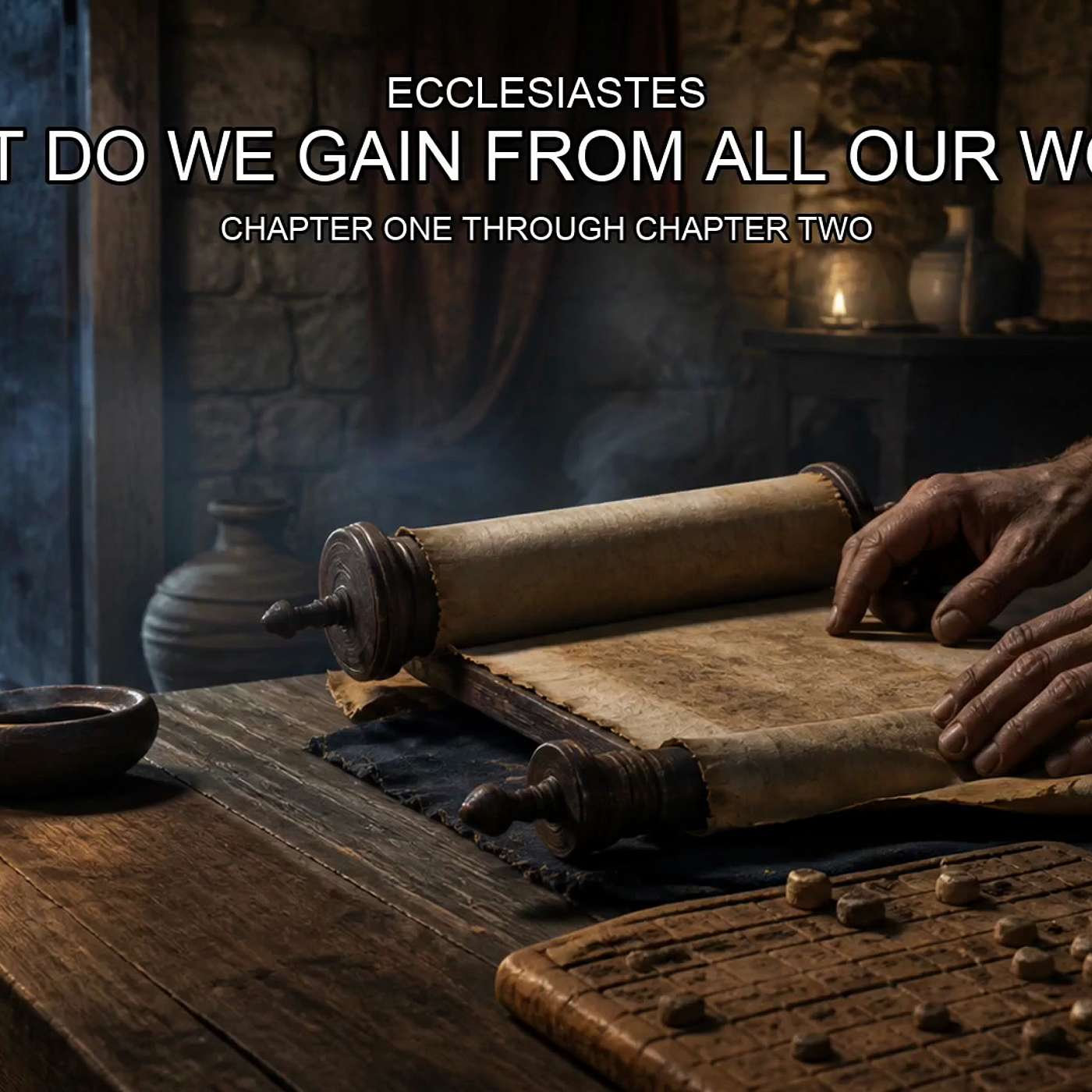
    What Do We Gain From All Our Work? | Ecclesiastes 1–2

    Send us Fan Mail What happens when wisdom, pleasure, success, possessions, and hard work are real gifts—but still cannot make us permanent? In Ecclesiastes chapters one and two, the Teacher conducts a royal experiment. He tests knowledge, laughter, wine, houses, vineyards, gardens, wealth, reputation, achievement, and legacy. The experiment succeeds at acquisition and fails at lasting gain. Then the book makes a surprising turn: food, drink, work, wisdom, knowledge, and joy may be received from the hand of God. This opening study explains the Hebrew images behind Qoheleth, hevel, and yitron; the meaning of “under the sun”; the limits of wisdom and inheritance; and the responsible canonical connection between Ecclesiastes' death boundary, Jesus' resurrection, and labor “in the Lord.” Scripture - Ecclesiastes 1:1–2:26 - Genesis 2:15; 3:17–19 - 1 Corinthians 15:20–28, 50–58 Scripture quotations use the Berean Standard Bible, third printing. Chapters - 00:00 — Modern Mind, Ancient Book opening - 00:22 — What do we gain from all our work? - 03:15 — The Teacher, Solomon, and the book - 08:30 — Generations, cycles, and life under the sun - 12:25 — Wisdom reveals what is crooked - 16:11 — The royal experiment — Ecclesiastes 2:1–11 - 21:26 — Wisdom is light, but it is not resurrection - 24:41 — Work, inheritance, grief, and sleeplessness - 28:21 — Receiving enjoyment from the hand of God - 32:17 — Jesus, resurrection, and labor in the Lord - 37:08 — Next study and the final invitation - 38:00 — Modern Mind, Ancient Book ending Sources for further study - Ludwig Koehler, Walter Baumgartner, Johann Jakob Stamm, and M. E. J. Richardson, The Hebrew and Aramaic Lexicon of the Old Testament, electronic edition (Brill, 1994–2000), entry I הֶבֶל. - Duane A. Garrett, Proverbs, Ecclesiastes, Song of Songs, New American Commentary 14 (Broadman & Holman, 1993), comments on Ecclesiastes 1:1–2:26. - Graham S. Ogden and Lynell Zogbo, A Handbook on Ecclesiastes, UBS Handbook Series (United Bible Societies, 1998), introduction and comments on Ecclesiastes 1:1–3; 2:1; 2:24–25. - Barry G. Webb, Five Festal Garments (InterVarsity Press, 2000), chapter 4. - Mishnah Yadayim 3:5: https://www.sefaria.org/Mishnah_Yadayim.3.5?lang=en and Babylonian Talmud, Shabbat 30b: https://www.sefaria.org/Shabbat.30b?lang=en preserve identifiable later Jewish reception discussions of Ecclesiastes. These sources support specific lexical, literary, historical, and canonical observations. Their inclusion does not mean Modern Mind, Ancient Book adopts every conclusion they contain. Continue the study at https://modernmindancientbook.org/ Find the Way—Meet Rabbi Jesus. Walk the Way — Modern Mind, Ancient Book. Buzzsprout tags Ecclesiastes Bible study, Ecclesiastes 1, Ecclesiastes 2, meaning of hevel, life under the sun, wisdom literature, work and purpose, biblical view of success, Solomon Ecclesiastes, royal experiment, Jesus and resurrection, Modern Mind Ancient Book

  • #1
    September 5 · 1 hr 10 min

    What Is Torah? Meeting the Jewish Jesus | Parashat

    Send us Fan Mail What is Torah, and why does it matter if you want to understand Jesus? Roger Ferguson and guest Yu Song open Parashat, a continuing journey through the five books of Moses that reads Jesus inside Israel's Scriptures, covenant story, and first-century Jewish world. In this introduction, Roger and Yu explain what a parashah—a Torah portion—is, why the series will move from Genesis through Deuteronomy at its own careful pace, and how Jewish and rabbinic interpretations can illuminate a text without being treated as timeless or equal to Scripture. They also ask what becomes visible when Jesus' teaching is heard alongside the Torah He quoted, including the Shema and the command to love one's neighbor. MMAB is for Jesus. We present Scripture, history, our conclusions, and serious alternative views as fairly as we can, then invite you to inspect the evidence and decide responsibly. Next: Genesis 1:1, where the Torah journey begins. Find the Way—Meet Rabbi Jesus. Walk the Way — Modern Mind, Ancient Book.

    • Transcript
  • #4
    September 4 · 32 min

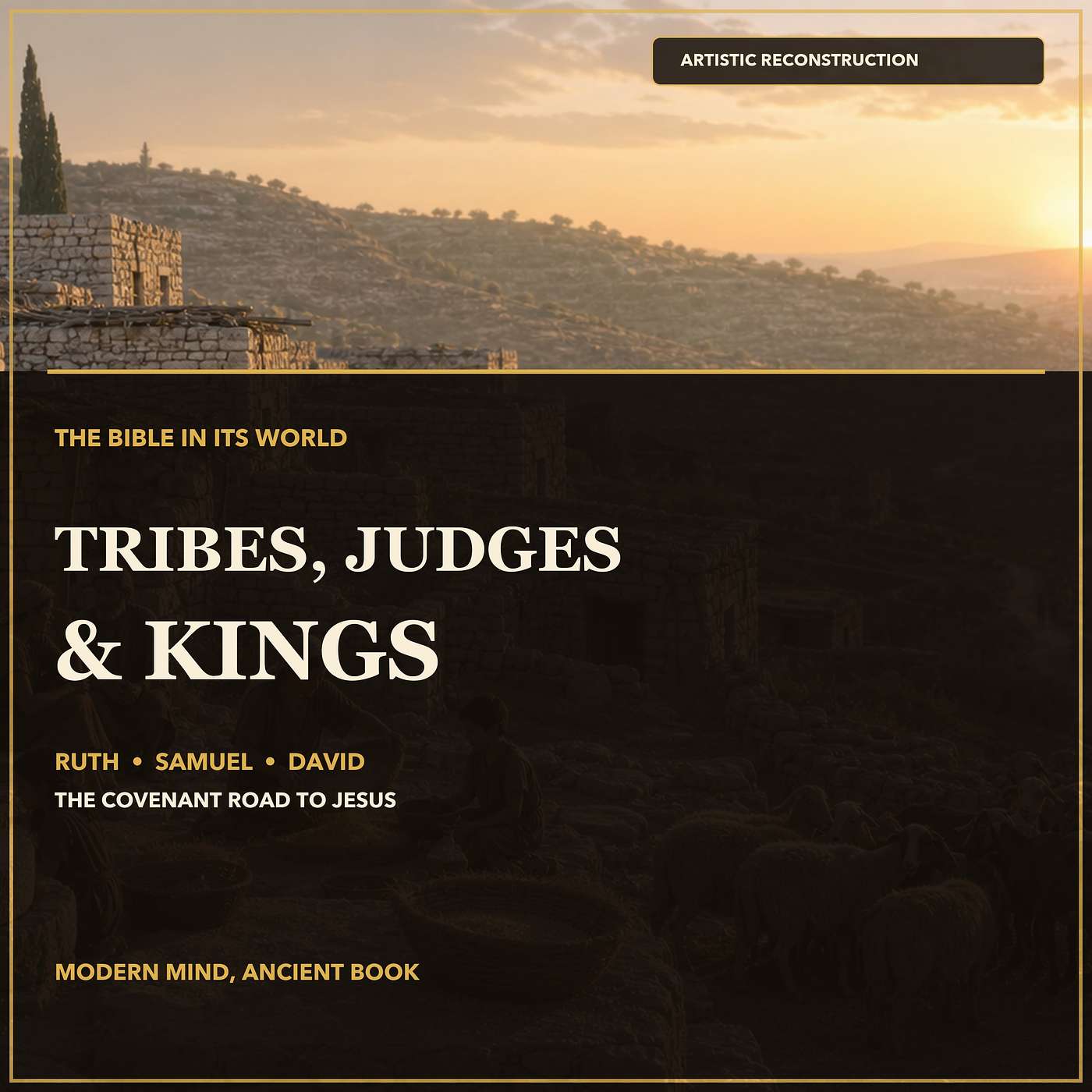
    Tribes, Judges, and the Rise of Kings

    Send us Fan Mail What happens when a people remember the gift but forget the Giver? This episode enters Israel's world after Joshua: tribes, clans, households, elders, fields, sanctuaries, regional deliverers, neighboring gods, Philistine pressure, and the demand for a king. We follow the downward covenant movement of Judges, Ruth's costly loyalty, Samuel's warning about the king who takes, Saul's disobedience, and God's promise to build David a house. The road does not end with David. Matthew names Jesus as Son of David and Son of Abraham. Luke announces His everlasting throne. Mark reveals the character of His kingship: the Son of Man serves and gives His life as a ransom for many. The king Israel needed is the King we still need. Scripture in this episode Joshua 24:29–31; Judges 2:10–19; Judges 21:25; Ruth 1:1, 16–17; Ruth 4:17; Deuteronomy 17:14–20; 1 Samuel 8:4–20; 1 Samuel 15:22–23; 2 Samuel 7:8–16; Genesis 12:2; Matthew 1:1; Luke 1:32–33; Mark 10:42–45. Scripture quotations are from the Berean Standard Bible, third printing. Historical world explored - Israel's tribal and judges-period life - The Merneptah stele and Israel in Canaan by the late thirteenth century BC - Ugaritic religious texts and the world of Baal worship - Late Bronze and Iron Age orientation - Philistine coastal power and the five-city coalition - Ancient kingship, royal extraction, and the Torah's limits on the king - Joshua, Judges, Ruth, Samuel, and selected Psalms within their collective timeframe Generated historical scenes in the video and artwork are visibly disclosed as artistic reconstructions. They illustrate the teaching; they are not presented as photographs of particular artifacts, people, or events. Find the Way—Meet Rabbi Jesus. Walk the Way — Modern Mind, Ancient Book.

  • September 2 · 18 min

    Genesis Explained: Creation, Covenant, and the Family of Promise

    Send us Fan Mail Genesis Explained: Creation, Covenant, and the Family of Promise Genesis begins the covenant story of Scripture: the Creator orders the world, humanity receives image-bearing vocation, rebellion brings sin and death, the nations scatter, and God calls Abraham so blessing may reach the families of the earth. Roger Ferguson surveys that movement through Abraham, Isaac, Jacob, and Joseph, ending with providence in Egypt and the promise of return. This restored teaching preserves Roger's original human voice and confessional framework. It also corrects a small set of objective legacy errors without replacement narration. New source cards distinguish the ancient Mesopotamian setting from an unsupported claim that Abram was ethnically Sumerian, identify Bereshit, Genesis, and toledot accurately, preserve a substantial Mosaic-provenance framework without presenting an exact 1445 BCE date or Joshua completion as explicit Scripture, retain Israel's distinct identity in Egypt, state that Pharaoh recounted his dream before Joseph interpreted it, and avoid falsely naming sin and death as a covenant established by God. Roger's sons-of-God interpretation is intentionally preserved: the phrase can describe a heavenly kingship status that is borne or claimed through a human ruler. Ancient rulers could live inside rival divine-kingship claims without thereby becoming rightful or necessarily metaphysically divine. Jesus is the rightful Son—the One fit to rule the earth. This is a disclosed canonical interpretation, not a claim that Genesis 6 states the whole formulation in those words. Scripture path • Genesis 1–3 — creation, image, vocation, disobedience, exile, sin, and death • Genesis 6:1–13 — sons of God, mighty men, corruption, violence, and flood • Genesis 10–12 — nations, Babel, Abram's call, land, and worldwide blessing • Genesis 37; 39–41 — Joseph's betrayal, suffering, dream interpretation, and elevation • Genesis 46–50 — Israel in Egypt, providential preservation, and the promise of return • Exodus 1; 12:40–41 and Galatians 3:17 — the 430-year textual and chronological boundary • Psalm 2; Psalm 82; Daniel 7:13–14; Luke 1:32–35 — the wider kingship and Son-of-God frame Source notes • Hebrew title and structure: HALOT entries for reshit, toledot, and torah; Greek title: BDAG entry for genesis. • Ur and its historical setting: Metropolitan Museum of Art, “The Isin-Larsa and Old Babylonian Periods (2004–1595 B.C.)” and “Ur: The Ziggurat.” • Egypt and kingship: Metropolitan Museum of Art, The Art of Ancient Egypt: A Resource for Educators, especially “Order over Chaos: The Role of the King.” • The Samaritan Pentateuch and Exodus 12:40: Robert T. Anderson and Terry Giles, The Samaritan Pentateuch: An Introduction to Its Origin, History, and Significance (Society of Biblical Literature). • Covenant-form comparison: Moshe Weinfeld, “The Covenant of Grant in the Old Testament and in the Ancient Near East.” Royal-grant and suzerain-vassal categories illuminate particular features but do not exhaust either the Abrahamic or Mosaic covenant. Primary new on-screen Scripture witness: Berean Standard Bible, third printing. Roger's legacy audible readings are preserved as spoken and are identified in the transcript rather than silently rewritten. Original first-party MMAB upload: https://www.youtube.com/watch?v=1xZjTdywsw0 Find the Way—Meet Rabbi Jesus. Walk the Way — Modern Mind, Ancient Book.

    • Transcript
  • #4
    August 31 · 42 min

    Love No Flood Can Drown | Song of Songs 7–8

    Send us Fan Mail What makes love powerful without making it possessive? In the final session of our Song of Songs study, Roger follows the poem from embodied praise and a woman's countryside invitation to its climactic declaration: love is as strong as death, mighty waters cannot quench it, and no amount of wealth can buy it. We explore the seal over the heart and arm, the debated Hebrew behind “the fiercest blaze of all,” the final warning against forcing love before its proper time, the little-sister and vineyard scenes, and the woman's closing voice. Then we distinguish the poem's first human-love horizon from later Jewish God–Israel reception and trace the Bible's marriage and wedding imagery responsibly toward Jesus and His people. Scripture - Song of Songs 7:1–8:14 - Genesis 2:18–25 - Isaiah 54:4–10; 62:1–5 - Hosea 1–3 - Ephesians 5:21–33 - Revelation 19:6–9; 21:1–4 Scripture quotations are from the Berean Standard Bible, third printing. Sources and further study - NET Bible notes on the Song of Songs: https://bible.org/sites/bible.org/resources/download/netbible/ondemand/bybook/sos.pdf - Danilo Verde, “YHWH’s Flame: A Love Metaphor in the Song of Songs”: https://www.thetorah.com/article/yhwhs-flame-a-love-metaphor-in-the-song-of-songs - United Bible Societies / SIL, translation commentary on Song of Songs 8:8: https://tips.translation.bible/story/translation-commentary-on-song-of-songs-88/ - *Shir HaShirim Rabbah* 8:6: https://www.sefaria.org/Shir_HaShirim_Rabbah.8.6 Find the Way—Meet Rabbi Jesus. Walk the Way — Modern Mind, Ancient Book.

  • #3
    August 28 · 29 min

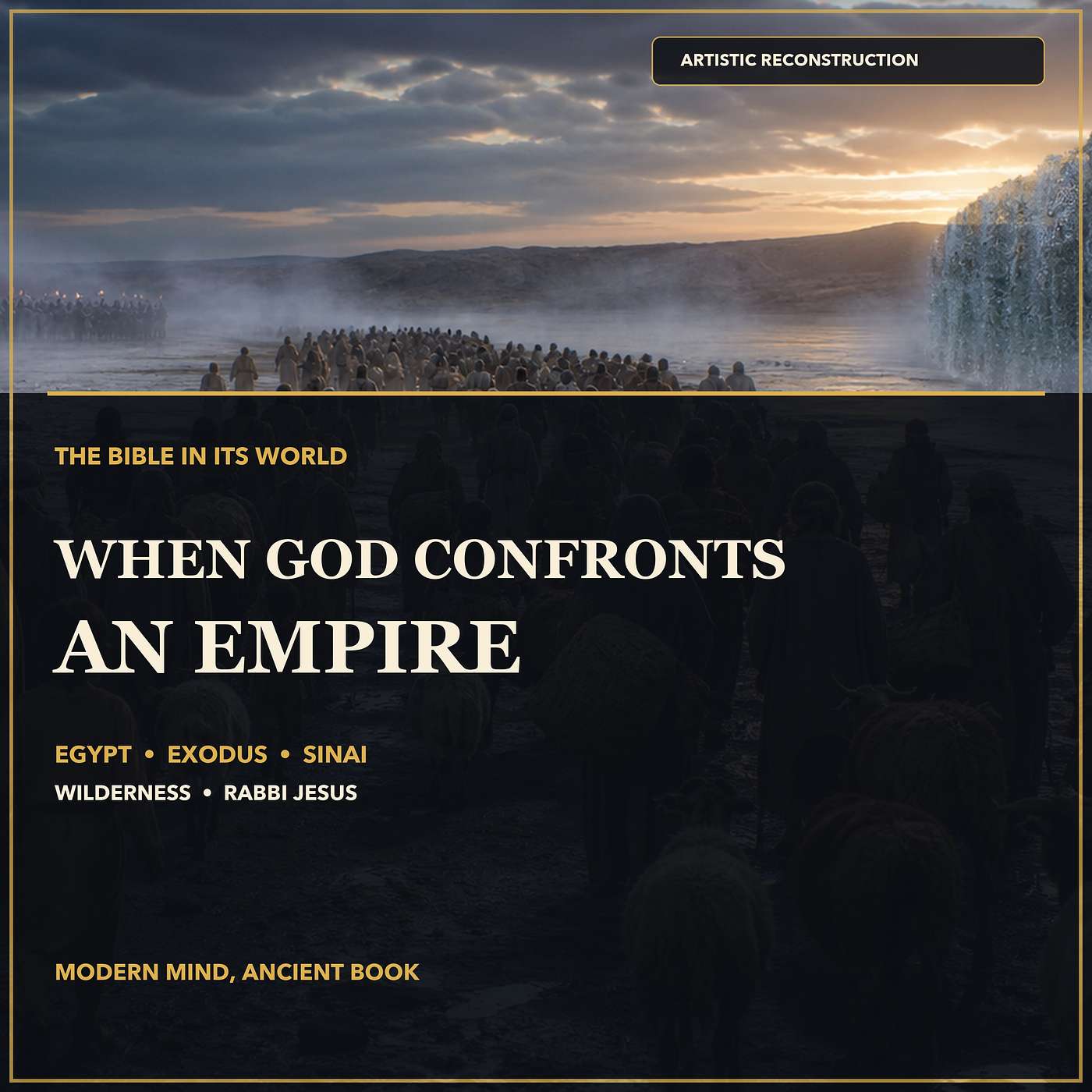
    When God Confronts an Empire: Egypt, Exodus, and the Wilderness

    Send us Fan Mail Why does God bring His people out—and what happens when an empire acts as if it owns their bodies, children, and future? Enter the world of Egypt's Eighteenth Dynasty and follow one covenant movement: a cry rises, God remembers Abraham, Isaac, and Jacob, Pharaoh's power is confronted, Israel passes through the sea, Torah is given, God's presence comes near, and the wilderness reveals the heart. Modern Mind, Ancient Book follows the responsible conservative high-date model and places the Exodus around 1446 BC. We set Exodus beside Egyptian royal claims, New Kingdom ideals of justice, a fifteenth-century brickmaking scene, and the wider ancient legal world. Egypt's sources illuminate the setting, but Scripture tells us what the Exodus means: God brings Israel out of slavery, brings Israel to Himself, forms a covenant people by His word, and dwells among them. Passover joins judgment and mercy at the household door. The Song of the Sea makes remembered theology musical. Sinai teaches that redemption comes before command. The tabernacle shows that divine presence is a purpose of rescue, and the wilderness teaches dependence, perseverance, and whole-life holiness. The road then leads to Rabbi Jesus: the Son called out of Egypt, faithful in the wilderness, our Passover sacrifice, and the Messiah whose departure at Jerusalem confronts the deeper slavery of sin and death. Jesus fulfills Israel's vocation; He does not erase Israel. Scripture Genesis 15:7; Exodus 2:23–25; Exodus 5:1–6:8; Exodus 12:1–15:21; Exodus 19–20; Exodus 29:45–46; Deuteronomy 8:1–5; Matthew 2:15; Matthew 3:13–4:11; Luke 9:28–31; 1 Corinthians 5:7; 1 Corinthians 10:1–14. Scripture quotations are from the Berean Standard Bible (BSB). The Berean Bible and Majority Bible texts are dedicated to the public domain. Explore the evidence - The Metropolitan Museum of Art: Brickmakers, Tomb of Rekhmire: https://www.metmuseum.org/art/collection/search/544649 - Miriam Lichtheim, Ancient Egyptian Literature, Volume II: the installation of the vizier Rekhmire and the Poetical Stela of Thutmose III. - T. Desmond Alexander and David W. Baker, eds., Dictionary of the Old Testament: Pentateuch: “Exodus, Date Of” and “Law.” - Douglas K. Stuart, Exodus, New American Commentary. - Kenneth A. Kitchen, “Exodus, The,” Anchor Yale Bible Dictionary. - BDAG, ἔξοδος; HALOT, גאל and פסח, consulted in context with grammar, Scripture, and the wider literary argument. The Rekhmire facsimile belongs to the correct fifteenth-century Egyptian world and depicts brickmaking, but it does not identify the workers as Israelites. That boundary protects the difference between evidence and illustration. Find the Way—Meet Rabbi Jesus. Walk the Way — Modern Mind, Ancient Book.

  • August 26 · 20 min

    Why Do the Righteous Suffer? | Survey of Job

    Send us Fan Mail Why Do the Righteous Suffer? | Survey of Job Why can a person who loves God still suffer—and what happens when friends turn that suffering into an accusation? In this restored Survey of Job, Roger Ferguson places Job within the Law, the Prophets, and the Writings; explores the ancient setting associated with Uz; compares Job with other ancient Near Eastern suffering texts; and follows the book's challenge to easy answers about guilt, righteousness, worship, and adversity. The teaching does not treat suffering as automatic proof of personal sin. Job is introduced as blameless and upright before the debate begins, and his friends' attempt to explain him becomes part of the book's warning. Scripture in this teaching - Job 1–2 - Job 19:25–26 - Genesis 10:23; 22:20–21; 25:1–2; 36:20–21, 28 - Exodus 3:1; 18:1, 17–24 - Jeremiah 25:20–21 - Lamentations 4:21 Roger's audible readings of Job 2:10 and Job 19:25–26 are from the New American Standard Bible, 1995 edition. The audiovisual review card for Job 2:10 uses the Berean Standard Bible and labels the translation difference. Source and interpretation notes - Scripture identifies Job with the land of Uz and describes him as the greatest of the people of the East. Lamentations 4:21 associates Uz with Edom, while Genesis preserves several eastern family lines bearing the name. Scripture does not give a precise map coordinate. - Roger presents the possible Jethro-to-Moses transmission of the Job tradition as his own reconstruction. Exodus identifies Jethro as priest of Midian and Moses' father-in-law, but it does not say that Jethro transmitted Job. - The story evokes a patriarchal world, but that setting does not establish the date of the book's final written form. - Comparative sources include Sumerian A Man and His God, Akkadian Ludlul bēl nēmeqi (the Poem of the Righteous Sufferer), and the Babylonian Theodicy. Their shared attention to suffering does not establish direct literary dependence on Job. - The ancient name Job (Iyyov) has a disputed etymology. The human author is unknown. Public research links: - Oxford, A Man and His God (https://etcsl.orinst.ox.ac.uk/cgi-bin/etcsl.cgi?text=t.5.2.4) - SOAS, The Poem of the Righteous Sufferer (https://www.soas.ac.uk/baplar/recordings/poem-righteous-sufferer-ludlul-bel-nemeqi-tablet-ii-lines-1-26-read-antoine-cavigneaux) - ETANA, Babylonian Theodicy (https://etana.org/node/582) - The Lockman Foundation, New American Standard Bible (https://www.lockman.org/new-american-standard-bible-nasb/) This Archive restoration preserves Roger's original human teaching voice. The legacy body is presented at the approved 1.10× pitch-preserving pace, with four bounded factual removals, current MMAB bookends, two approved listener refreshes, and updated accessibility and source controls. No cloned, synthesized, or replacement narration was used. Find the Way—Meet Rabbi Jesus. Walk the Way — Modern Mind, Ancient Book.

    • Transcript
Showing 1–20 of 43 episodes