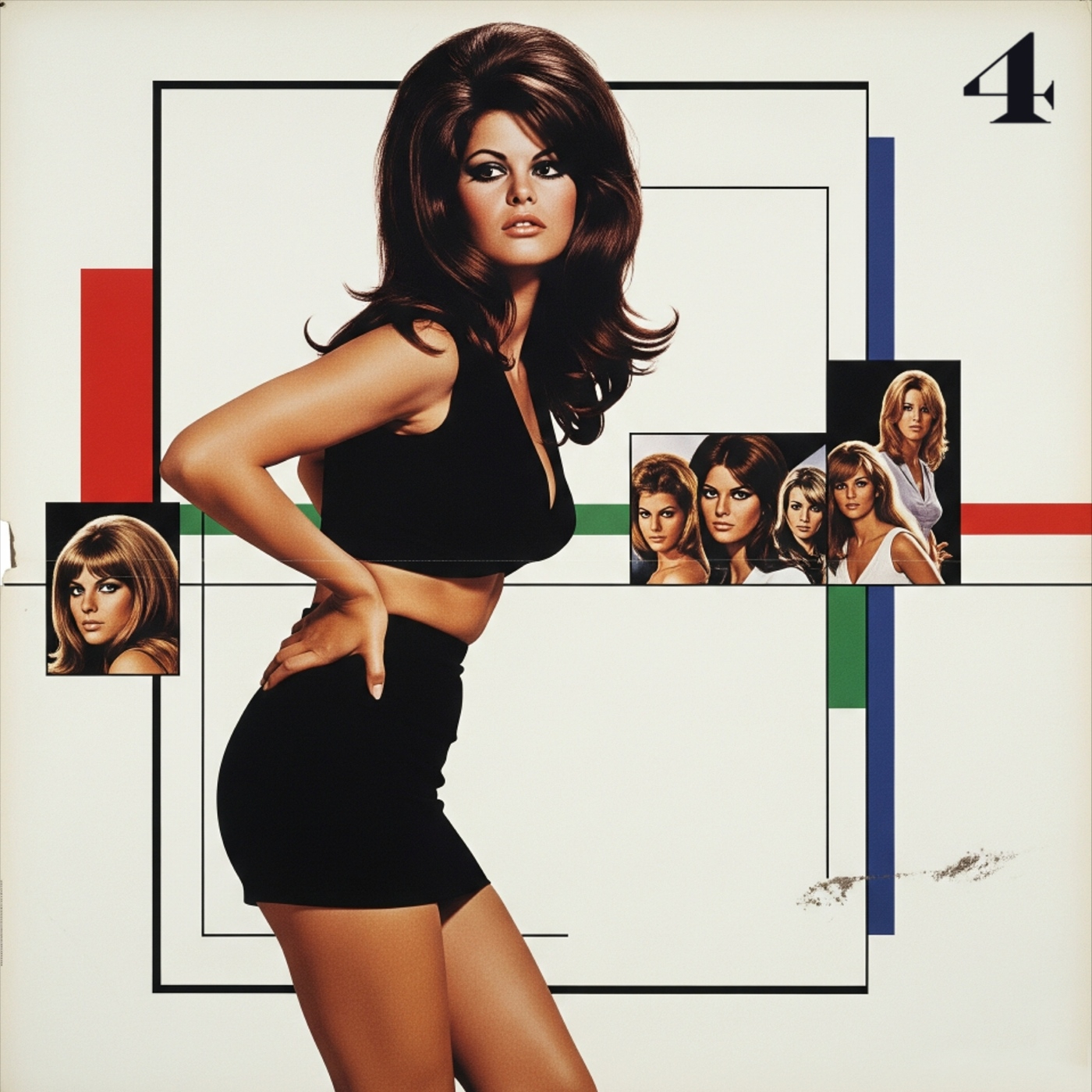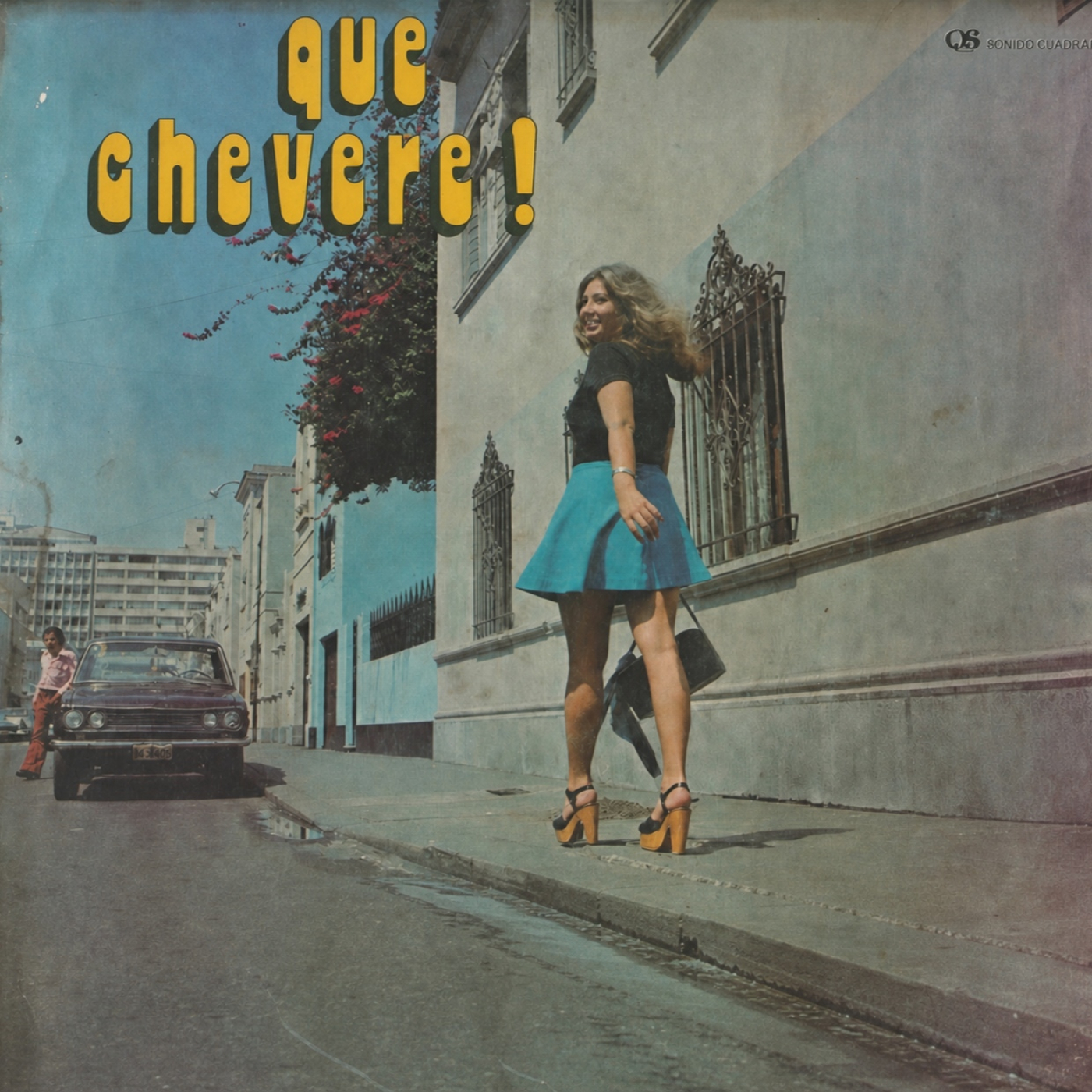
Que Chevere! – A Journey into Peruvian Disco, Soul and Latin Funk mixed by Javier Di Granti
Que Chevere! – A Journey into Peruvian Disco, Soul and Latin Funk Selected, edited and mixed by Javier Di Granti Throughout the 1970s and 1980s, while disco music dominated dancefloors in New York, Paris and London, a parallel and distinctly local scene was emerging in Lima: Peruvian producers, record labels and musicians reinterpreted Disco, Soul and Latin Funk through lush string arrangements, analog synthesizers, latin percussion and an unmistakably tropical sensibility. This mixtape brings together twelve ultra-rare gems sourced from 7" singles and LPs issued by legendary labels such as KDT, Infopesa, Sono Radio, OHM, RCA Victor, Disa Records, IEMPSA and Polydor. Several of these recordings have only recently been rediscovered by rare-groove collectors and DJs, thanks in part to compilations like Buh Records' Viva el sábado: Hits de disco pop peruano (1978–1989), which placed this sonic universe on the international map. The selection spans from the pioneering latin funk of Black Sugar (1971) to the more electronic, dance-oriented experiments of the early-to-mid 1980s, encompassing cumbia and rock orchestras that turned to disco, vocalists influenced by romantic ballads, and groups that released one-off singles now prized as collector's items. 01. Chibolos – Que Chevere (K.D.T. ELD-02.35.1005 LP, 1982) A Lima-based group formed by Jorge Luis Medina, Adela Legua and siblings Emmaly and Richard Iparraguirre, winners of a televised talent contest prior to recording this sole album for KDT, manufactured by IEMPSA. "Que Chevere" opens the mix with the festive, danceable energy characteristic of early-1980s Peruvian disco-funk, featuring bright horn arrangements and an infectious rhythm section. 02. Grupo Cremolada – Amazonas (K.D.T. 01.35.1896 7", 1982) One of the most celebrated tracks of the Peruvian disco scene, included on Buh Records' Viva el sábado compilation. "Amazonas" is largely instrumental, blending a Euro-Disco groove with Latin percussion and synthesizers that evoke jungle landscapes. Recorded in 1982 for KDT, it represents the most sophisticated and exotic strand of Peruvian Disco. 03. Sugar Black – Muevete, Muevete (Corona 3040 7", 1978) The legendary Black Sugar band, pioneered Peruvian Latin Funk from 1970 onward. This 1978 single, released on Corona Records, showcases their evolution toward late-1970s disco-funk, with a danceable rhythm, catchy backing vocals, and that distinctive fusion of African American soul and Latin percussion that made them unique. 04. Grupo America – Ojala Bailes Conmigo (Infopesa 171153 7", 1980) Infopesa was one of Peru's most important labels, renowned for its cumbia and chicha catalogues, yet it also recorded disco and danceable pop. Grupo América belonged to that wave of eclectic ensembles that adopted the disco sound with string and synthesizer arrangements while retaining a romantic sensibility in their lyrics. 05. Grupo Fuego – Tu No Me Quisiste (OHM F-OHM 0016052.3 7", 1986) OHM Records was an active Peruvian label in the 1980s that documented the transition from disco toward more electronic and pop-oriented sounds. "Tu No Me Quisiste" combines the heartbreak themes typical of Latin ballads with drum-machine patterns, shimmering synthesizers, and a danceable groove characteristic of the mid-to-late 1980s. 06. Otto de Rojas y Los Ultra '76 – Choca Las Caderas (RCA Victor XRPBO 798 7", 1976) Otto de Rojas was a musician and arranger who, in 1976, recorded this disco version of Young-Holt Unlimited's "Soulful Strut" (issued elsewhere as "Al Ritmo del Bump-Bump"), though "Choca Las Caderas" became a television hit in Peru. This track exemplifies how Peruvian orchestras adapted U.S. instrumental funk to the local disco idiom, with powerful horn sections and danceable rhythms. 07. Lichy y Los Angeles – Disco Hindu (Disa Records 145101 7", 1981) Released by Disa Records in 1981, this track is a curiosity within Peruvian disco: a fusion of disco rhythms with exotic references and synthesizer arrangements evoking Eastern sonorities. It represents the most experimental, "space disco" strand of the early-1980s Lima scene. Has a proto-house rhythm far ahead of its time! 08. Grupo San Francisco – Dame Tu Mano (Iempsa 01.15.100167 7", 1984) IEMPSA (Industrias Eléctricas y Musicales Peruanas S.A.) was founded in 1949 and became one of the pillars of the Peruvian recording industry. Grupo San Francisco belonged to the wave of ensembles that recorded disco-pop infused with cumbia and romantic ballad influences. "Dame Tu Mano" is a danceable track with string arrangements and a catchy melody typical of the mid-1980s IEMPSA sound. 09. Prais And The Sambasound – Michella (Polydor 16304 LP, 1979) Polydor was an international label with a presence in Peru that also invested in local disco and soul productions. "Michella" is a sophisticated track with an incredibly infectious rhythm and an absolutely monster bassline—a danceable groove that connects with late-1970s New York sounds while retaining a distinctly Latin sensibility. 10. Chalo Reyes – La Cotorra Peruana (Music Shop 022-80 7", 1980) Chalo Reyes was a vocalist, composer and comedian active on the Peruvian musical scene. "La Cotorra Peruana" is a parody track, one of the earliest examples of a rap-like style in Latin America, recorded for Music Shop in 1980. It is based on Perucho Conde's "La Cotorra Criolla," but, in our view, with a groove that is considerably stronger! 11. Los Pakines – Que Sera Mi China (Sono Radio S.E. 9465 LP, 1974) Sono Radio was one of Peru's most important labels, home to Tamla Motown for the Peruvian market and to pioneering bands such as Black Sugar. Los Pakines were a Peruvian rock and soul group active in the 1970s. "Que Sera Mi China" is a Latin Soul-influenced track recorded in 1974, illustrating the label's versatility in documenting diverse danceable genres. 12. Sugar Black – Too Late (Sono Radio 13280 7", 1971) A perfect closing track with the song that consolidated Black Sugar as pioneers of Peruvian Latin Funk. "Too Late" appeared on their self-titled debut LP of 1971, recorded at Sono Radio studios with arrangements by Jaime Delgado Aparicio, who also gave the group its name. The track reached No. 7 on the Miami charts and is considered one of the most sought-after pieces of Latin American Latin Soul. Its sound combines jazz-funk, Latin percussion and a fiery horn section, setting the standard for the genre. About the labels and the scene This selection documents the diversity of labels that made this scene possible: KDT and IEMPSA as key manufacturers and distributors; Infopesa and Sono Radio as giants of the local industry; OHM, Disa, Corona and Music Shop as labels specializing in danceable sounds; and RCA Victor and Polydor as representatives of international majors with local productions. Disco in Peru was not a literal copy of the New York or European sound, but a reformulation with local instruments, distinctive string and horn arrangements, Latin percussion, and a melodic sensibility close to romantic ballads and cumbia. Groups coming from rock, cumbia or soul turned to disco, creating a hybrid and unique sound that is now the object of cult interest among rare-groove collectors and specialist DJs. Credits Que Chevere! Selected, edited and mixed by Javier Di Granti All tracks sourced from original Peruvian 7" and LP vinyl (1971–1986). Original recordings published by KDT, Infopesa, Sono Radio, OHM, RCA Victor, Disa Records, IEMPSA, Polydor, Corona and Music Shop.