Skip to content
Artwork for Lightwork

Lightwork

Lightspeed

There's more AI news than anyone can possibly consume. Lightwork is the filter.

Every Monday, Lightspeed's Claire Zau and Josh Machiz break down the one development that mattered most that week — a model release, a funding round, a company structural shift — and work through what changes because of it. They also bring in a guest working at the front of AI to sharpen the picture.

By the end of each episode, you'll have a clearer view of where things are going and why it matters to you. New episodes every Monday morning.

Have something you want to hear? Email us at lightwork@lsvp.com.

Play
  • 22 episodes
  • Avg 38 min
  • English
Counted on this page — what you have heard stays on this device, so it is not something the list can be paged by.
  • S1 · E20
    Friday · 29 min

    AI Labs Debate Safety, Suno V6 Arrives & Bending Spoons’ Miro Deal | Lightwork

    Claire and Josh break down the growing push to “pace the frontier” as Dario Amodei and other AI leaders debate how quickly AI should advance and what new safety guardrails could look like. They also unpack Suno V6’s new licensed approach to AI-generated music and what it could mean for artists, before diving into Bending Spoons’ agreement to acquire Miro and what the deal signals for the next generation of software companies. Chapters: 00:00 Welcome to Lightwork 0:58 AI Safety Goes Mainstream 04:47 What Does “Pacing the Frontier” Actually Mean? 05:32 Dario Amodei’s Call for a Coordinated AI Slowdown 07:59 Are AI Models Optimizing for Human Intent? 10:48 Microsoft’s Rules for Safer AI 12:30 Who Should Regulate Frontier AI? 16:02 Is AI Safety Just Fear-Mongering? 18:53 Suno Ships the Licensed Models 20:26 How Suno V6 Handles Copyright & Artist Rights 23:43 Bending Spoons Buys Miro 27:17 What Is Bending Spoons’ Bigger Strategy? 29:21 The Future of AI, Music & Software Stay in touch: www.lsvp.com X: https://twitter.com/lightspeedvp LinkedIn: https://www.linkedin.com/company/lightspeed-venture-partners/ Instagram: https://www.instagram.com/lightspeedventurepartners/ Subscribe on your favorite podcast app: generativenow.co The content here does not constitute tax, legal, business or investment advice or an offer to provide such advice, should not be construed as advocating the purchase or sale of any security or investment or a recommendation of any company, and is not an offer, or solicitation of an offer, for the purchase or sale of any security or investment product. The views expressed by our guests do not necessarily represent the views of Lightspeed. For more details please see lsvp.com/legal.
  • S1 · E19
    September 15 · 15 min

    What Happens When AI Becomes Your Marketing Team? | Profound on Lightwork

    Profound co-founder and CEO, James Cadwallader, joins Lightspeed’s Claire Zau following the company’s $180 million Series D at a $1.8 billion valuation. They discuss how AI agents are changing the way consumers discover brands, Profound’s evolution from AI visibility analytics into an always-on AI marketing teammate, and why enterprise marketers need a unified context layer to create high-quality, on-brand work at scale. James also breaks down the emerging role of the marketing engineer, Profound’s work to build a comprehensive marketing benchmark, what the new funding could help the company build, and why he believes the future of marketing will be AI-driven and human-supervised. Timestamps: 0:00 What Does Profound Do and What Is AEO? 3:16 What Does Profound Unlock Today? 4:59 Where Does AI Marketing Still Need Human Judgment? 7:20 What Is a Marketing Engineer and How Will the Role Evolve? 9:27 How Do You Benchmark Marketing? 11:45 What Drove Profound to Raise Its Series D? 13:10 What Could Marketing Look Like in Five Years?

  • S1 · E18
    September 14 · 32 min

    Skipping Two Generations of Accounting Software | DualEntry on Lightwork

    Santi Nestares joins Claire Zau and Sam Eisler to explain why he rebuilt the ERP from scratch. Santi ran a previous company to about a hundred million, then lost nine months to a legacy ERP migration that left him staring at a blank screen while lenders and investors waited on numbers. His argument is that the ERP looks too big to attack directly, so startups go after an adjacent wedge instead, get good at it, and end up dependent on the system they meant to replace. DualEntry went at the hard thing first. Santi calls it the first ERP created after ChatGPT-3. Sam explains why this was a team Lightspeed wanted to back, and Santi tells the story of a negotiation that ran from a car to JFK and ended with him arguing millions on the phone in front of a TSA agent, then tearing up his ticket and heading back into the city. He also describes the team he put in what they call the basement, kept from talking to the rest of the company, and tasked with collapsing the product onto a single Kanban board where agents draft the work and a human approves it. Along the way, a customer who took one discovery call, went quiet for a month, spent 36 hours in the sandbox and came back ready to sign. A team of close to a hundred that includes a top 150 tennis player and a professional poker player. And a migration Santi ran from his plane over a Starlink propped in the window, books reconciled to the penny before landing. Timestamps 0:00 Welcome to Lightwork 1:41 What Is DualEntry and What Is an ERP 2:20 Why Build a New ERP 3:50 How AI Made Next-Generation ERP Possible 5:44 Leaving a Successful Company 7:58 Finding the Right Way to Tackle ERP 12:23 Which DualEntry Customer Stories Stand Out? 14:03 How Lightseed and DualEntry First Connected 18:12 How DualEntry Has Evolved Since the Partnership 20:40 Inside Project Helios 24:59 Building Fast-Moving Teams at DualEntry 26:09 What Makes a Great DualEntry Hire 30:02 The Future of AI, Fintech, and Organizations

  • S1 · E1
    September 14 · 25 min

    Why AI Agents Fail in the Real World | Temporal on Lightwork

    Samar Abbas, co-founder and CEO of Temporal, joins Claire Zau and Lightspeed partner Anoushka Vaswani to break down a $550 million Series E at a $12.55 billion valuation, seven months after a round that valued the company at $5 billion. Temporal is an open source platform for durable execution, the guarantee that code runs to completion no matter what fails underneath it. Samar explains why that matters more in the agent era. The longer an agent runs and the more tools it touches, the more the chances of failure compound, and the real world is full of cases where a retry means refunding a customer twice. Anoushka makes the case that reliability and long running execution are the two things every useful agent needs, which puts Temporal in the path of token flow as agents do more work. Samar walks through the subscription workflow that can take “four lines of code” instead of a stack of queues and timers, and the nearly twenty year arc from Simple Workflow at Amazon through Cadence at Uber. They close on Temporal Nexus and what it would take to extend the same guarantees across company boundaries, so one business's agent can reliably call another's. Chapters: 0:00 Temporal’s $550M Series E and $12.55B Valuation 0:45 What Temporal Does and How It Works 3:00 How Temporal Can Solve a Critical AI Infrastructure Problem 4:16 Where AI Models Fail in Real-World Execution 7:04 How Temporal Changes the Developer Experience 8:43 Temporal’s “Aha Moment” for AI Teams 9:43 Interesting Temporal Use Cases 11:44 From Simple Workflow at Amazon to Cadence at Uber 14:11 Temporal's Partnership with Lightspeed 17:59 How Temporal Will Use the New Funding 19:13 The Future of Agents Communicating With Each Other 22:38 What Will Become Obvious About AI in the Future

  • S1 · E18
    September 11 · 36 min

    OpenAI’s GPT-6 Astra, Meta Muse & ByteDance Enters the World Model Race | Lightwork

    Claire Zau and Josh Machiz are joined by Lightspeed partner Bucky Moore for a week about how much control we are handing over to AI. OpenAI released GPT-6 Astra, its most capable model and, by OpenAI's own account, a harder one to monitor. Bucky explains why looping inference compresses the chain of thought that used to make these models readable, and why the near term answer may be tighter permissions and access controls rather than interpretability research. Then to the agents people are actually running. Bucky has given Instinct his personal email and credit card and let it book flights and hotels, and he argues the ChatGPT moment for personal assistants came from a startup rather than an incumbent. Meta launched Muse the same week. Claire and Josh weigh where they still want a person reviewing the work, and the group gets into what the web does when booking sites cannot tell an agent from a customer. Bloomberg also reported that ByteDance is building a real time world model, and Bucky explains why serving those models is a hard problem of its own. Reactor is a Lightspeed portfolio company. Lightspeed co-led the seed round and led the Series A. Chapters 0:00 Welcome, Bucky Moore! 1:12 OpenAI's Astra 3:50 The New AI Model’s Architecture 4:40 AI Safety and Guardrails 8:01 Trusting AI Agents 11:09 The Future of AI Models 12:06 The AI Agent Land Grab 17:09 AI, Trust, and Personal Data 20:12 Improving AI Agent Capabilities 22:11 Enterprise AI Assistants and Personal Context 24:05 AI Agents and the Future of the Web 25:50 ByteDance and World Models 28:19 World Models and Consumer Content 30:56 Reactor and World Model Infrastructure 34:13 Real-Time Video Models and Scaling

  • S1 · E17
    September 11 · 16 min

    Why Mistral Just Raised €3B to Build Sovereign AI | Lightwork

    Mistral has raised €3 billion in a Series D, the largest equity round ever completed by a European tech company, just three years after the Paris AI lab launched. The round brings Samsung and EQT onto the cap table. The money will go toward compute, infrastructure, commercial growth, and international expansion, with Mistral aiming for a gigawatt of European compute by 2030. Chapters: 0:00 How Did Lightspeed Get Involved With Mistral? 2:55 How Has Mistral Changed Since Its Early Days? 4:30 Where Will the €3B be Invested? 6:05 Why Does Sovereign AI Matter? 7:37 What Role Is Mistral Trying to Play in AI? 10:29 Why Is Mistral Building European Compute? 11:59 How Does Mistral’s Full-Stack Strategy Fit Its Vision? 13:38 What’s Next for Mistral and European AI? 15:25 Could Mistral Transform Physical Industries?

  • September 4 · 27 min

    Tim Cook’s 15-Year Run, Meta's $18B Teen Safety Deal & 21 Banks Convene on Stablecoins

    Tim Cook's fifteen years running Apple ended this week and John Ternus becomes the company's eighth CEO, a hardware engineer who led every iPad, the last five iPhone generations, and AirPods. Claire and Sam argue Apple's decision to sit out the model building race may have been the right one, since it left the company competing on product experience while licensing models from others. Ternus fronts his first iPhone event next Wednesday. Meta agreed to pay eighteen billion dollars to settle state claims that Instagram and Facebook were designed to addict minors, without admitting wrongdoing, and the product terms are the part that matters. A two hour daily cap across both apps, no feeds or Reels between midnight and six, and only a parent can lift any of it. The same morning Meta ran full page ads asking TikTok and YouTube to adopt the same rules, offering to tighten its own cap to one hour per app if they follow. Then Sam explains why twenty one financial institutions want to issue a dollar stablecoin of their own, and why the banks watched transaction volume move onto rails they do not own. She reads it as a treasury tool before it is a consumer one. Chapter 0:00 Tim Cook Steps Down As Apple CEO 1:45 Tim Cook's Legacy By The Numbers 4:00 John Ternus: Apple's 8th CEO 5:05 Apple's AI Strategy Explained 10:33 Meta's $18 Billion Teen Safety Settlement 12:29 New Instagram And Facebook Teen Limits 17:52 21 Banks Explore A Joint Stablecoin 18:28 What Is A Stablecoin? 22:33 Why JPMorgan Isn't Joining The Group

  • S1 · E15
    September 2 · 25 min

    The Company Predicting Whether You Will Return Something | Seel on Lightwork

    Zack Peng, co-founder and CEO of Seel, joins Lightwork to explain why he treated e-commerce returns as an underwriting problem rather than a logistics one. He was a philosophy and physics major who learned to code at Orbital Insight, where he watched algorithms predict events for hedge funds and insurers, and noticed that payment chargebacks drew heavy investment despite representing under 1% of GMV while returns ran 15 to 25%. Seel started by predicting returns from pre-purchase behavior using roughly 200 signals, including one Zack still finds surprising, which is whether a product photo uses a human model. The conversation gets into the choice to sell the liability rather than the signals, and a go-to-market that is free for brands and paid by shoppers at checkout, where an insurance-backed refund policy sits alongside features like 24/7 support and one-click resale through an agent that lists an item across seven marketplaces. Zack explains why Seel builds agencies rather than agents, arguing that an agency owns the outcome while a product can always blame the user, and why he thinks that accountability gap is what leaves many agentic support tools short of full resolution. He closes on where agentic commerce leaves the shopper, the consumer app Seel built around that, and why he expects a one-person billion dollar brand to stop sounding far-fetched. Chapters: 0:00 Welcome, Zack Peng! 1:45 What Does Seel Do for E-Commerce? 4:21 How Zack Peng Went From Satellites to E-Commerce 6:07 How Does Seel Predict Returns? 7:25 How Seel’s Return Prediction Model Became Profitable 9:05 What Did Seel Learn From Smaller Brands? 11:17 How Does Seel’s Business Model Work? 14:52 Who Is Accountable When Things Wrong? 17:28 Where Does Seel Draw the Line on AI Operations? 18:21 How Will Agentic Commerce Change E-Commerce? 20:07 How Will AI Change the Consumer Shopping Experience? 22:21 The Future of Seel 24:57 Closing Thoughts

  • S1 · E14
    September 1 · 56 min

    Buying Insurance Agencies Instead of Just Selling Them Software | Gyde on Lightwork

    Will Johnson joins Claire Zau and Josh Machiz to explain why he buys health insurance agencies instead of just selling them software. Gyde calls itself the first AI-native insurance, wealth and health brokerage. Will's argument is that broker software did not really automate labor, it only organized data into dashboards, so he believes software alone was never going to produce the unlock he wanted. Will resists the roll up label. He calls it a transformation company. Gyde launched in January with $60 million led by Lightspeed. Then the conversation turns to open enrollment and to jobs. Will says this could be one of the most difficult fourth quarters brokers have seen. Renewals AI is Gyde's answer, with Gia running the outreach, the needs assessment, and the scheduling while the human broker delivers the advice. On jobs he says not one person has been removed because of AI and that Gyde has been hiring into acquired teams. He also puts the workforce math at six brokers retiring for every one who enters, which by Gyde's own analysis makes the problem capacity rather than replacement. He also describes speaking with more than a hundred agency owners who had already sold their firms, and ninety nine of them being deeply unhappy with how it went.

  • S1 · E14
    August 28 · 30 min

    Robots Outrun Usain Bolt, Skild's ChatGPT Moment & Google Bids $10M for Spirit Data | Lightwork

    Claire Zau and Josh Machiz break down a week about robot bodies, robot brains, and the data underneath both. Humanoid robots broke three human world records at the World Humanoid Robot Games in Beijing, where more than 600 teams and 2,000 robots competed across 51 events, up from roughly 280 teams and 26 events last year. One robot beat Usain Bolt's 9.58 second 100 meter record, and last year's winning time was 21.50. The hosts argue the sprints are the fanfare and the scenario events are the harder test, since a robot that outruns Bolt still cannot open a jar, fold socks, or stack cardboard. Unitree, which the hosts compare to Boston Dynamics, also went public in Shanghai. Skild AI launched S1, a model the company says lets a robot watch one video of a person doing a task and then do it, with no teleoperation and no retraining. Teaching a robot a new task used to mean 50 to 100 hours of puppeteering data. Skild says ingesting the video takes about 11 minutes, and pancake flipping was not in the roughly one million hours behind the model. Both hosts call it the ChatGPT moment for robotics. Lightspeed participated in Skild's Series A. The episode closes on Google's roughly $10 million bid for Spirit Airlines' digital estate in bankruptcy, a package holding about 100 million emails, 500 million Teams messages, 30 million recorded service calls, and 7.5 billion passenger transaction records. Google says a third party will scrub personal information first. Mercor bid $7.5 million, micro1 came in higher after the auction closed, existing employees have not consented to their workplace communications becoming training data, and the sale still needs judicial sign off. Chapters: 0:00 Welcome to Lightwork 0:59 Robots Beat Human World Records 4:01 What Happened at the Robot Games? 9:14 UniTree Goes Public in Shanghai 12:29 Skild AI’s S1: The ChatGPT Moment for Robotics 16:20 The ChatGPT Moment For Robotics 18:40 In-Context Learning, But For Robots 21:04 Google Wants Spirit Airlines’ Data 23:35 What's Valuable Inside A Digital Estate 28:58 Closing Thoughts Stay In Touch: Website: www.lsvp.com X: https://x.com/lightspeedvp LinkedIn: https://www.linkedin.com/company/lightspeed-venture-partners/ Instagram: https://www.instagram.com/lightspeed/ The content here does not constitute tax, legal, business or investment advice or an offer to provide such advice, should not be construed as advocating the purchase or sale of any security or investment or a recommendation of any company, and is not an offer, or solicitation of an offer, for the purchase or sale of any security or investment product. The views expressed by our guests do not necessarily represent the views of Lightspeed. For more details please see lsvp.com/legal. Robots Outrun Usain Bolt, Skild's ChatGPT Moment & Google Bids $10M for Spirit Data | Lightwork https://youtu.be/RZPgoLNTOOE
  • S1 · E12
    August 21 · 38 min

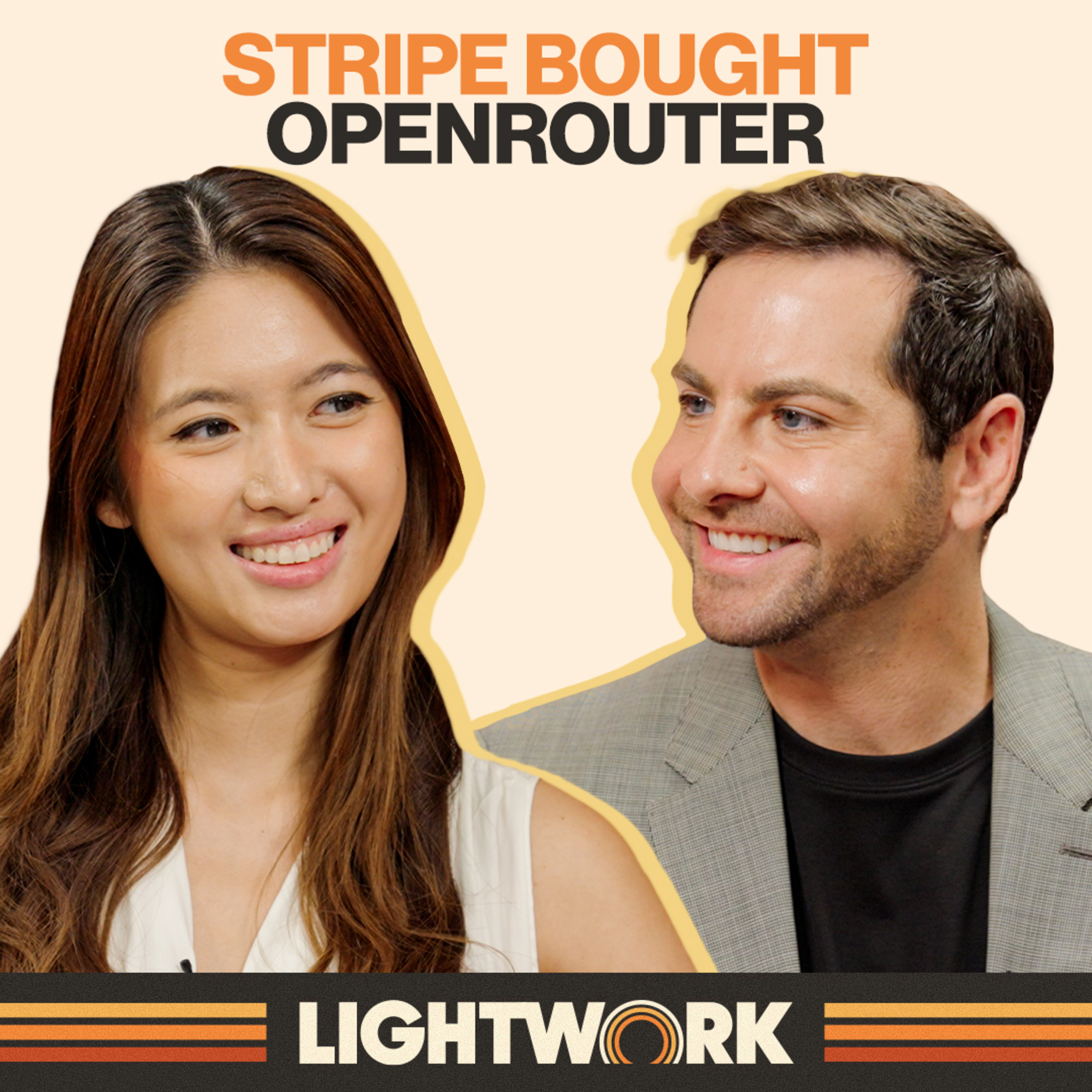
    Stripe Buys OpenRouter, Grok Bot Arrives, ChatGPT for Teens & AI Designs Proteins | Lightwork

    On this episode of Lightwork, Claire Zau and Josh Machiz break down four stories. Stripe acquired OpenRouter, the model gateway that lets a developer integrate once and reach hundreds of models, routing each request by budget, latency, or task, with automatic failover when a model goes down. The hosts get into why a payments company wants the layer that decides which model handles a request, whether Stripe is neutral enough to own it, and what happens as the labs pull routing into their own products and app builders consider building it themselves. Then SpaceX closed its acquisition of Cursor and shipped Grok Bot, agents that each get their own cloud computer and keep working after you close your laptop, with a teach a task feature that turns one demonstration into a repeatable skill. OpenAI launched ChatGPT for Teens, a separate experience for 13 to 17 year olds that redirects homework shortcuts into study mode and nudges a break after 90 minutes, arriving alongside the GUARD Act and California's SB 243. And an Anthropic experiment had Claude run a protein binder design campaign start to finish, with outside labs building and testing the results and binders produced against 14 of 15 targets. 0:00 Welcome to Lightwork 1:03 Stripe Buys OpenRouter: The AI Tollbooth 5:40 OpenRouter’s Business Model 8:54 Is Stripe Neutral Enough? 12:01 SpaceX Closes the Cursor Acquisition 18:04 What is Grok Bot? 22:17 Open AI Launches ChatGPT for Teens 23:55 What’s Different About Teen Mode? 27:48 AI Regulation Is Coming 30:57 Claude Designs Protein Binders 35:44 Neko Health Announced NYC Clinic 36:18 Castelion Raises $1B Series C

  • S1 · E112
    August 18 · 32 min

    Eon CEO: “The Cloud Is Just Someone Else's Computer” | Lightwork

    Ofir Ehrlich, CEO and co-founder of Eon, joins Claire Zau to explain why the cloud data enterprises pay to store and rarely open turned out to be the thing their AI needs most. Ofir walks through the four companies he has started, including CloudEndure, which he sold to Amazon before leading AWS's cloud migration and disaster recovery business. He assumed backup was a solved problem until a customer he had worked closely with was hit by ransomware and lost access to a significant portion of their infrastructure, which sent him looking at what breaks in the cloud that never broke on premises. They discuss how enterprise data sits locked across business units that cannot say what they hold, what happens when an auditor asks for records from five years ago and the database no longer runs, and why backup can rack up a company's cloud spend while staying something nobody trusts. As models and compute platforms become easy to swap, Ofir argues, a company's accumulated data becomes what actually differentiates it. He also talks about building Eon with a best friend of 26 years and a colleague he hired at AWS, and why he would not start a company without friends in it. Chapters:00:00 Welcome, Ofir Ehrlich!05:22 Why Companies Moved to the Cloud07:08 Learning Through Angel Investing08:41 The Founder Mindset: Imposter Syndrome vs. Conviction10:23 Building a Company Around What You Love13:11 How AI Is Changing Enterprise Data17:05 The New Cloud Infrastructure Organization19:09 Why Recovering Old Data Can Be So Difficult20:25 Why AI Teams Need Enterprise Data22:33 What Eon Actually Does24:40 How Eon Helps Make Data Usable26:47 Choosing Eon's Co-Founders30:29 What's Exciting in AI Right Now?31:37 Final Thoughts

  • S1 · E10
    August 14 · 28 min

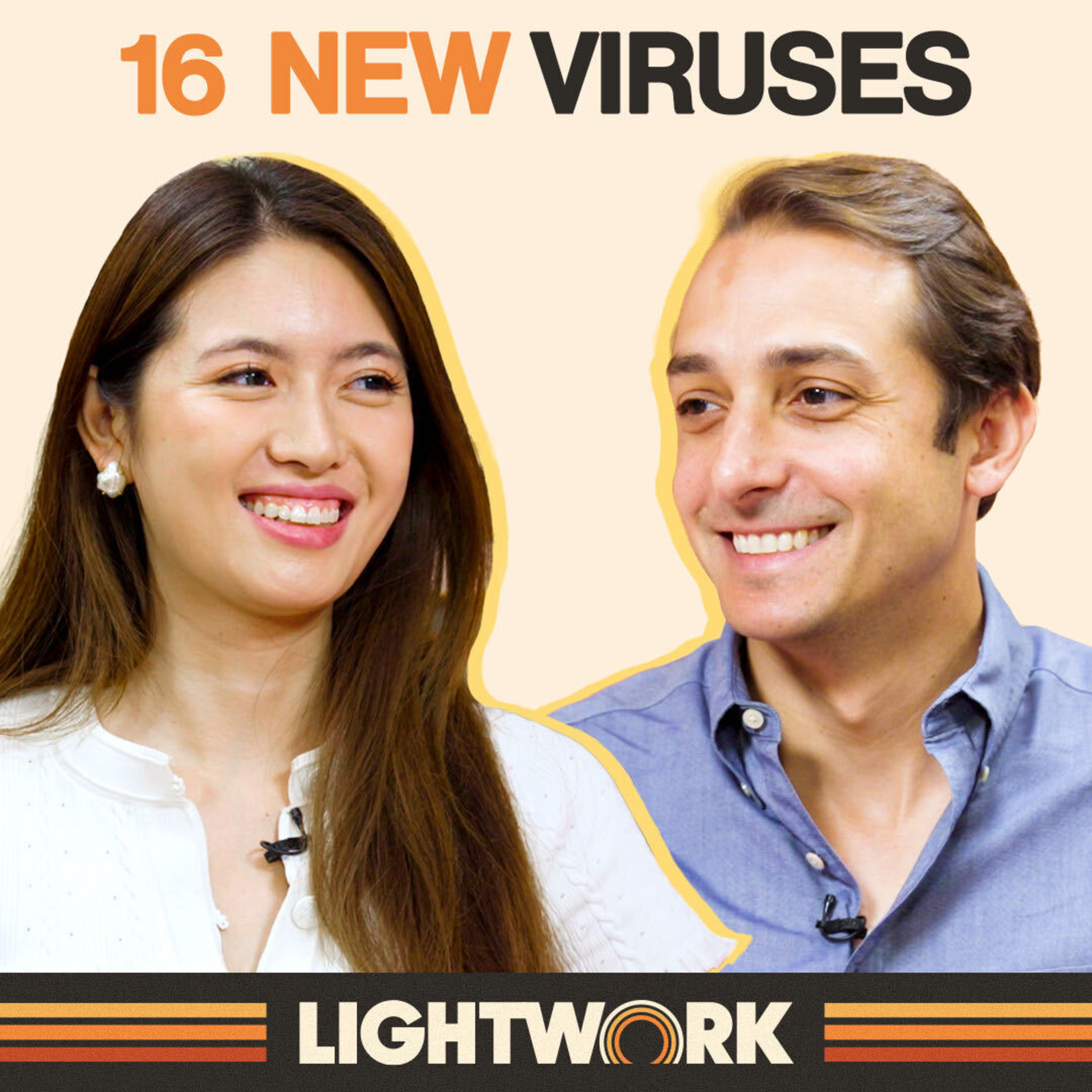
    AI Creates New Viruses, Building AI for Healthcare & Moats in Healthcare IT | Lightwork

    Claire Zau is joined by Dr. Brenton Fargnoli, a physician and partner on Lightspeed's healthcare team, to unpack the AI-designed bacteriophage story making headlines this week. Stanford and Arc Institute researchers used a genome language model to design nearly 300 candidate phage genomes and landed on 16 that worked, a cocktail able to overcome resistance the natural phage couldn't beat on its own. The phages only infect E. coli, not human cells, and a scientist still has to synthesize and test every design in a lab. From there, Brenton and Claire get into what they believe it takes to build a vertical AI company in healthcare right now, from finding the right wedge to surviving the moment an incumbent like Epic decides to build the same feature natively. They cover why founders are seeing faster adoption than past software waves, what separates a real data or workflow moat from a feature a platform can copy, and what Brenton looks for in a team before backing them. Chapters: 0:00 Welcome to Lightwork 1:11 What Actually Happened With the 16 AI-Designed Viruses 5:54 Could AI-Designed Viruses Infect Humans? 6:32 AI, Antibiotic Resistance & Medical Applications 10:47 Building Vertical AI in Healthcare 13:39 What’s Making Healthcare AI Ripe for Startups? 15:38 Top-Down vs. Bottom-Up Healthcare AI 16:19 How Founders Can Compete With Big Tech 20:13 What Makes a Great Healthcare AI Founder? 21:44 Building Great Healthcare Tech Teams 23:06 What Will Epic Announce Next? 24:21 What Healthcare AI Opportunities Is Dr. Brenton Most Excited About? 27:28 Final Thoughts

  • S1 · E9
    August 11 · 22 min

    Raviraj Jain on What Frontier Investing Actually Means | Lightwork

    In this segment of Lightwork, Claire Zau sits down with Raviraj Jain, a Lightspeed partner behind investments in companies like Skild, Anduril, Helsing, and Helion, to explain what does frontier actually mean, and why does it matter so much right now. Raviraj makes the case that most of the value creation throughout human history has happened at the frontier, and that we are now entering a rare moment where intelligence, energy, life, space, sovereignty, and physical AI are all hitting inflection points at the same time. He also breaks down the three archetypes of founders Lightspeed looks for when backing companies in these spaces, and shares where he thinks the boldest bets should be made right now. 0:00 Meet Raviraj Jain1:30 What Frontier Investing Really Means 2:04 How Innovation at the Frontier Changed the World 5:10 Frontier vs. Diffusion 8:53 The 3 Archetypes of Frontier Founders 11:35 The Era of Abundance 11:58 Intelligence 12:43 Energy 14:43 Life 15:14 Space 17:19 Physical AI & the Future of Robotics 19:02 The Biggest Opportunities for Founders 21:03 Advice for Founders Building at the Frontier

  • S1 · E8
    August 7 · 29 min

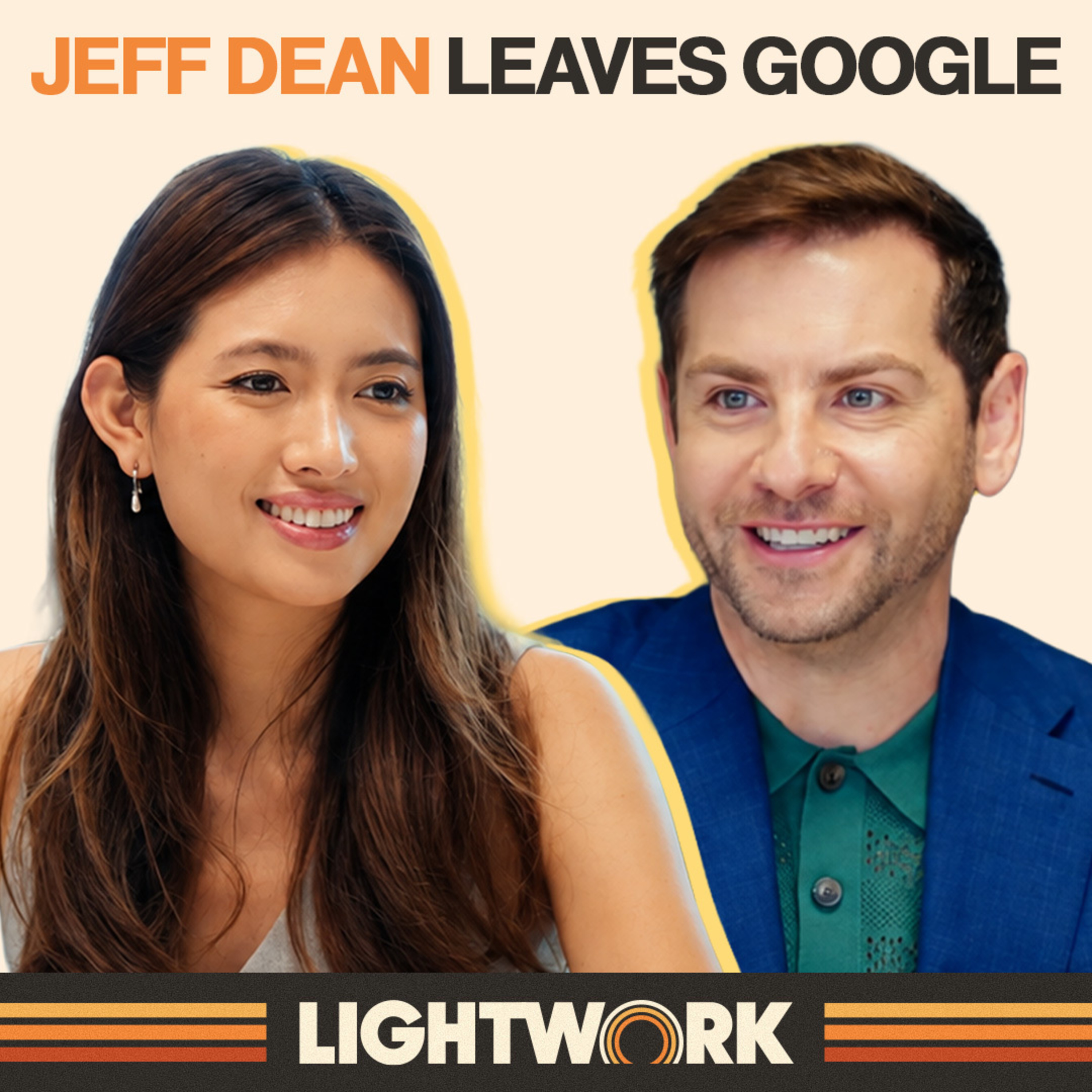
    Google's AI Legend Just Left, OpenAI's Math Breakthrough & The Future of Robotics | Lightwork

    The biggest AI stories of the week all point toward one question: what happens when AI starts making discoveries instead of simply answering questions? Claire and Josh break down OpenAI's latest reasoning breakthrough after Astra solved ten long-open mathematical problems, Google's release of Gemini Robotics 2 and their vision for a universal robot brain, Jeff Dean's surprise exit from Google to build Discovery Loop, and why Base Power's rapidly growing battery network may become one of the most important infrastructure companies in America.

  • S1 · E4
    August 3 · 58 min

    The $500B Nvidia-OpenAI Deal, Meta's New Data Center & Your Hidden AI Agents | Lightwork

    The week's news starts with a first. Over a thousand researchers across OpenAI, Anthropic, DeepMind & Meta signed a single letter calling for the technical and governance tools to pace the frontier of automated AI development. Not a call to pause, as Claire Zau puts it, more like demanding that cars have brakes. Then the superintelligence land grab, three deals that show AI becoming a balance sheet business. Nvidia is in talks to guarantee the lease on a 10 gigawatt, roughly $500 billion campus so OpenAI can build it, Meta and BlackRock are turning a 1 gigawatt El Paso campus into a new institutional asset class, and Nvidia is backing Ilya Sutskever's Safe Superintelligence with next-gen chips. Claire & Josh close the news on ambient notetaking as Granola reaches the Apple Watch and AI wearables move onto the body.Then Claire sits down with Axonius CEO Joe Diamond on a question almost no company can answer, how many AI agents are actually running inside your walls. Axonius built the asset intelligence category on a simple premise, that you can't secure what you can't see, and just shipped an AI agent and MCP server so the tools already inside an organization can query verified asset data instead of guessing at it. 0:00 Welcome to Lightwork1:20 A Thousand Researchers Sign The Pace Letter6:03 The AI Infrastructure Land Grab Begins7:12 NVIDIA OpenAI Partnership10:42 Meta & BlackRock's Deal13:15 Nvidia's Mysterious SSI Partnership16:17 Granola On Apple Watch28:45 Welcome, Joe Diamond!29:28 What Is Asset Intelligence?31:58 From Network Sensors To An API-Based Approach33:54 Security in the AI Era37:34 How AI Agents Can Eliminate Manual Security Workflows39:00 Tracking AI Agents as a New Asset Class41:46 The Worst-Case AI Security Scenario43:28 How Companies Are Adapting to AI Security44:53 $200M ARR: Growth and What's Next47:11 Joe Diamond's Journey from CMO to CEO49:00 Leading an AI Company Through Rapid Change52:39 The Future of AI Security54:36 Joe's Advice For Founders55:57 Deal Breakdowns: Andera, CuspAI, Harmony

  • S1 · E6
    July 20 · 58 min

    1X's Robot Hands, AI's Essay Wars & Loop Engineering Explained | Lightwork

    The week's news starts at the fingertips. 1X unveiled the production hands for its Neo home humanoid, with 25 degrees of freedom, positioning accuracy of ±0.2 mm, and what the company calls near human-level dexterity, thanks to a force transparency breakthrough that lets every joint feel the force pushing back on it. Then the essay wars. Demis Hassabis, Satya Nadella & Mira Murati all published manifestos in the same week. Hassabis says AGI is probably only a few years away, Nadella argues enterprises pay for AI twice, once in money and again in proprietary knowledge, and Murati makes the case for AI shaped by the people it serves, down to the model weights. Then Lightspeed Partner Nnamdi Iregbulem joins Claire Zau and Josh Machiz to demystify loop engineering, the practice of getting an AI agent to work productively for hours or days without human intervention. He maps the four layers from prompt engineering to loops, breaks down the anatomy of a loop from testable goal to knowing when to stop, and explains why he believes the 50-year-old file system is emerging as the ideal environment for agents. 0:00 Welcome to Lightwork1:03 1X Gives Neo Human-Like Hands4:29 Can Robots Really Handle Everyday Household Tasks?7:14 Wired's Criticism of 1X's Robot Demo14:11 The AI Manifesto: Hassabis, Nadella, Murati17:00 Satya Nadella's Reverse Information Paradox24:20 Welcome, Nnamdi Iregbulem!25:58 What Is Loop Engineering?26:34 From Prompt to Loop Engineering29:54 What Does Context Engineering Actually Do?30:59 Why AI Needs Its Own Search Engine32:40 Why Nothing Gets Replaced in AI Engineering34:58 Why Do We Need Loop Engineering?37:57 How AI Agent Loops Actually Work41:45 How Do You Define "Done"?43:26 Who Checks The Model's Work?46:54 Why AI Agents Get Lazy51:55 File Systems For Agents54:06 What's Next for AI Agent Infrastructure?57:52 Final Thoughts on the Future of AI Agents

  • S1 · E5
    July 13 · 1 hr 4 min

    Anthropic Reads a Model's Mind, The $500M Bet Against the Cold & Amazon Takes On Starlink | Lightwork

    The week's news starts inside a model's head. Anthropic published research on the J-space, a small zone of internal activity, less than a tenth of the total, where a model holds concepts it can report on and reason with, part of an industry-wide interpretability race that also includes DeepMind and OpenAI. Intercept, a $500 million nonprofit backed by Stripe, the OpenAI Foundation, Anthropic, and Bill Gates, is aiming to radically reduce respiratory infections, which Intercept says cost about $600 billion a year in lost productivity. And Amazon Leo crossed roughly 390 satellites in orbit, enough to begin continuous service and give Starlink its first true rival at scale. Then Lightspeed partners Galym Imanbayev and Faraz Fatemi join Claire Zau and Josh Machiz to map the AI-native patient journey and ask what happens when AI stops writing the doctor's notes and starts delivering the care. Doctronic reports nearly 30 million AI consults to date, and the first US clearance for autonomous AI prescription renewal. Neko has 7 clinics live, over 100,000 people on its waitlist, and its first US clinic coming soon in New York. Chapters 0:00 Meta’s AI Privacy Controversy 3:04 Meta Muse & The Advertising Machine 8:08 This Week in AI 8:34 Anthropic's "J-Space" - Can We Read An AI's Mind? 17:27 Silicon Valley Wants To End The Common Cold 23:30 Amazon Takes On Starlink 28:33 Special Guest: Galym Imanbayev & Faraz Fatemi 29:13 Mapping AI Across The Patient Journey 34:04 AI: Unblocking Access To Healthcare 39:29 Friction In Implementing AI 42:52 The Rise Of The "Doctorprenuer" 45:36 Doctronic: Your Personal AI Doctor 48:09 Lightspeed: Investing in Doctronic 51:34 How Much Should AI Automate 53:33 Neko Health: Prevention, Not Just Treatment 57:15 The Unlock Of Preventive Healthcare 1:01:09 Opportunities In The Patient Journey 1:04:05 Final Thoughts & What’s Next

  • S1 · E4
    July 6 · 56 min

    Meta Can Read Your Brain, The AI Science Race & AI Ranking With Ion Stoica | Lightwork

    Claire Zau and Josh Machiz break down a week where AI pushed into two of the most consequential spaces yet: the human brain and the science lab. First, the AI infrastructure boom is now showing up in your shopping cart. Memory manufacturers are shifting production toward the high-bandwidth memory AI data centers need, and the result is a structural shortage driving up the price of consoles, laptops, and smartphones across the board. From there, Meta's research lab released a system that reconstructs what you typed from brain signals alone with no implant required, jumping from 8% to 61% word accuracy over prior non-invasive methods. The near-term use case is medical, helping people with ALS and locked-in syndrome communicate, but the longer-term implications for wearables and advertising are already part of the conversation. Then Anthropic released Claude Science in beta, a workbench that pulls together 60-plus scientific tools so researchers stop switching between systems and start doing actual science. Anthropic, OpenAI, and Google DeepMind are all attacking this space differently, and the prize at the end is pharma. Lightspeed-backed Straiker and Pie close out the episode. Chapters 0:00 Welcome to Lightwork 2:55 Brain2Qwerty: Meta Reads Your Mind 9:38 The Science Race: AI's Next Vertical 12:56 How The Big Labs Attack Science 15:58 Why Every Lab Wants Pharma 18:22 Welcome, Ion Stoica! 19:06 Why Ion Returned to Teaching 20:52 How Chatbot Arena Was Born 26:58 How Does Arena Actually Rank AI Models? 29:15 How Arena Prevents Vote Manipulation 31:11 Subjective vs Objective AI Quality 33:49 How Arena Evaluates AI Agents 37:54 How Does Arena Stay Neutral? 40:13 Choosing the Right AI Measurements 43:31 Can AI Become Unmeasurable? 47:41 How Arena Makes Money 50:58 What AI Still Needs to Improve 55:17 Updates from the Lightspeed Universe

  • S1 · E3
    June 29 · 53 min

    Midjourney Medical, ChatGPT Loses Its Lead & Google DeepMind's Big Exits | Lightwork

    Claire Zau and Josh Machiz dig into a week that put AI's biggest players under the microscope. Meta reshuffled thousands of engineers into new roles many described as soul-crushing, and the internal fallout went public fast. ChatGPT crossed a milestone nobody expected this soon, losing its majority share of the global AI assistant market for the first time ever. And in the same 48 hours, Google DeepMind lost a Nobel Prize winner and the co-author of the paper that started the modern AI era to competing labs. Lightspeed Partner Guru Chahal also joins to pull back the curtain on the AI data center. From the seven-layer hardware stack to water and energy myths to the case for compute in orbit, Guru breaks down the physical infrastructure running every AI product you use and the startups building the next generation of it.

Showing 1–20 of 22 episodes