Skip to content
Artwork for Historical True Crime

Historical True Crime

Lizzie

Step into the shadows of the past with "Historical True Crime," the podcast that takes you on a gripping journey through some of history's most captivating and chilling criminal stories. Each episode is a meticulously researched exploration into the depths of history, where true crime meets the intriguing backdrop of different eras. From legendary criminals and unsolved mysteries to the groundbreaking investigations that shaped the course of justice, our narratives paint a vivid picture of the darker side of humanity throughout time.

Play
  • 25 episodes
  • weekly
  • Avg 23 min
  • English
Counted on this page — what you have heard stays on this device, so it is not something the list can be paged by.
  • #199
    Monday · 28 min

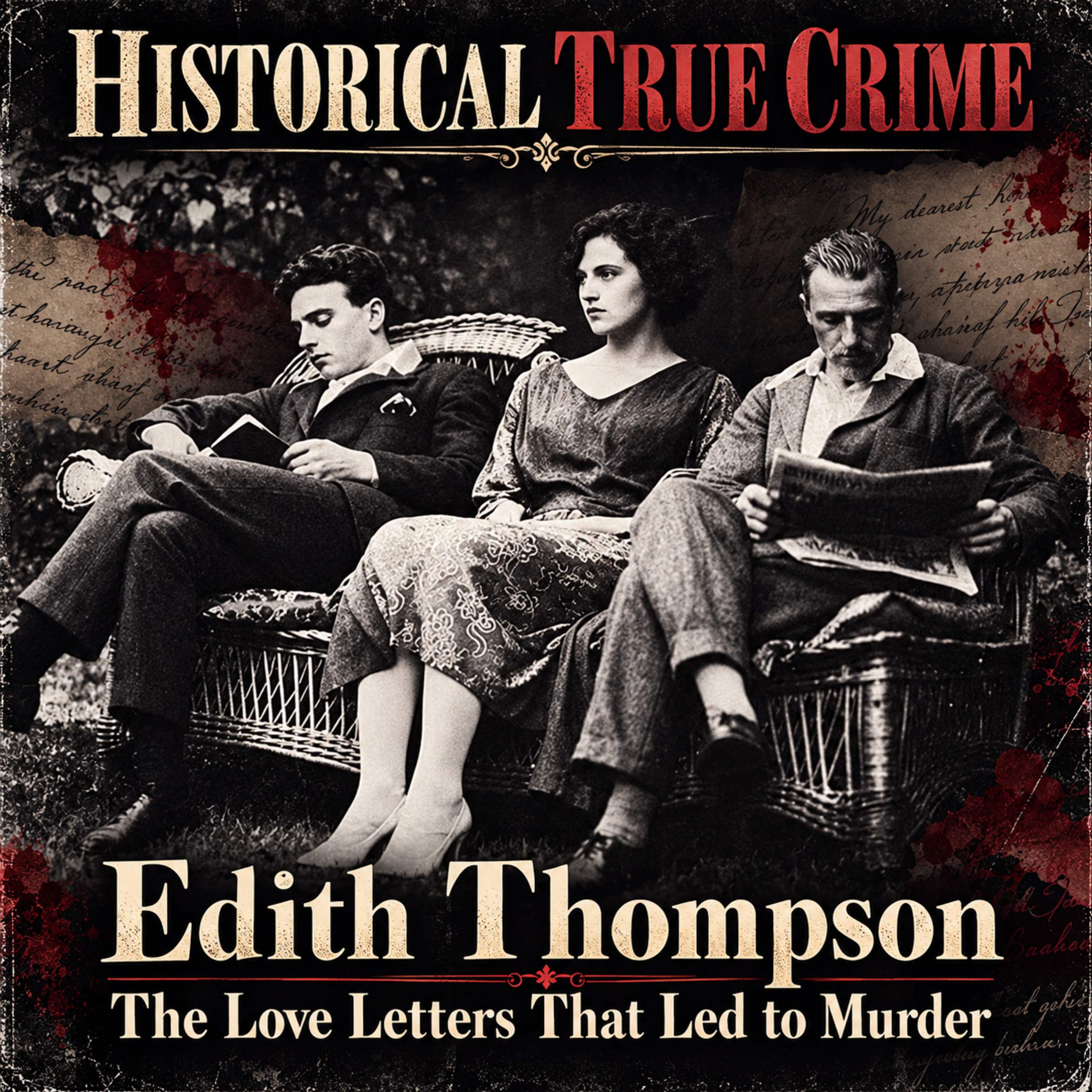
    Edith Thompson: The Love Letters That Led to Murder

    In 1922, Edith Thompson's husband was stabbed to death while the couple walked home from the theatre in London. Her young lover, Frederick Bywaters, admitted to the killing but Edith was also charged with murder. At the centre of the sensational trial were Edith's passionate letters, which prosecutors claimed revealed a deadly conspiracy. Was Edith involved in her husband's murder, or were her private words used to condemn her? This week on Historical True Crime, we explore the Edith Thompson and Frederick Bywaters case, one of Britain's most controversial murder trials. Support Historical True Crime! Vote for me in the iHeartRadio Top Host contest! I'd love your support as I work to grow the podcast. Every vote means so much! Vote here: https://tophost.org/2026/elizabeth-scott Join me on Patreon! For exclusive bonus episodes and more historical true crime stories, you can support the show for just $2/month. Join here: https://www.patreon.com/historicaltruecrime Thank you for listening and supporting Historical True Crime! Source Materials Filson Young (ed.), Trial of Frederick Bywaters and Edith Thompson (Notable British Trials, William Hodge & Co., 1923). René Weis, Criminal Justice: The True Story of Edith Thompson (1988). Lewis Broad, The Innocence of Edith Thompson: A Study in Old Bailey Justice (1952). The Trial of Frederick Bywaters and Edith Thompson — Original trial proceedings, Old Bailey, December 6–11, 1922. Edith Thompson and Frederick Bywaters — Surviving correspondence and letters presented as evidence at trial. René Weis, Edith Jessie Thompson — Historical research, archival documents, original correspondence, and supplementary materials. https://edithjessiethompson.com https://edithjessiethompson.com/notable-british-trials-1923/ https://edithjessiethompson.com/verbatim-trial-transcript-december-1922/ https://edithjessiethompson.com/letters-of-edith-thompson-and-frederick-bywaters-4/
  • #198
    October 5 · 23 min

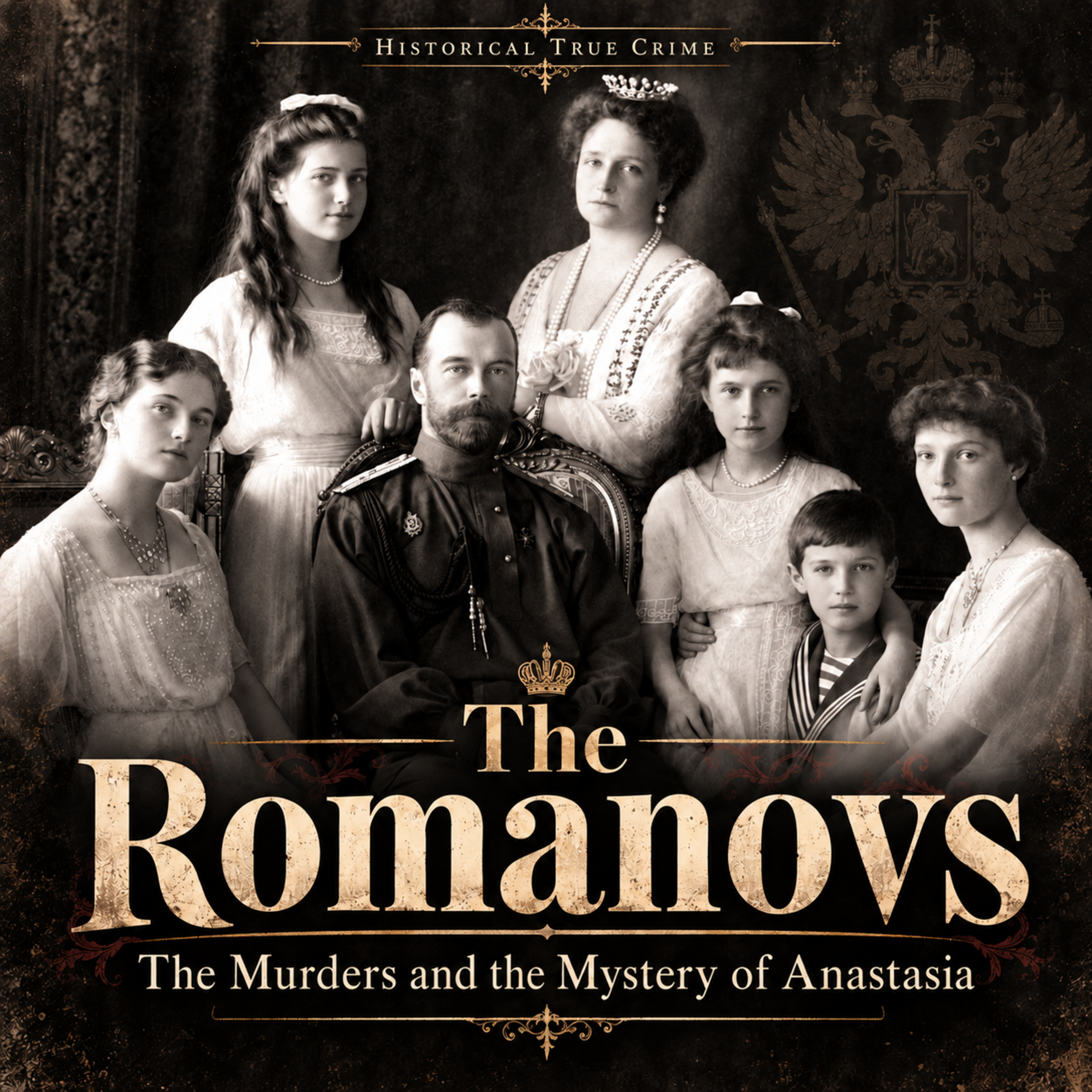
    The Romanovs: The Murders and the Mystery of Anastasia

    In July 1918, Russia's last emperor, Nicholas II, his wife Alexandra, their five children and four loyal attendants were murdered in the Ipatiev House in Yekaterinburg. For decades, the disappearance of their remains fuelled rumours that Anastasia Romanov had survived. From the family's final months in captivity to the investigation, disputed survival claims and eventual DNA discoveries, this episode explores the murders of the Romanov family and the mystery that endured for nearly a century. Support Historical True Crime on Patreon Love Historical True Crime? Support the podcast on Patreon for access to exclusive bonus episodes, including historical murders, mysterious disappearances and fascinating cases you won't hear on the main feed. Your support helps keep the podcast going and allows me to continue bringing these stories to life. Join us on Patreon: https://www.patreon.com/historicaltruecrime Source Materials Helen Rappaport, The Last Days of the Romanovs: Tragedy at Ekaterinburg (2008) Helen Rappaport, The Romanov Sisters: The Lost Lives of the Daughters of Nicholas and Alexandra (2014) Pierre Gilliard, Thirteen Years at the Russian Court Robert Wilton, The Last Days of the Romanovs (1920) Joshua Hammer, “Resurrecting the Czar,” Smithsonian Magazine (2010) Michael D. Coble et al., “Mystery Solved: The Identification of the Two Missing Romanov Children Using DNA Analysis,” PLOS ONE (2009) Michael D. Coble, “The Identification of the Romanovs: Can We (Finally) Put the Controversies to Rest?” Investigative Genetics (2011)

  • #197
    September 28 · 24 min

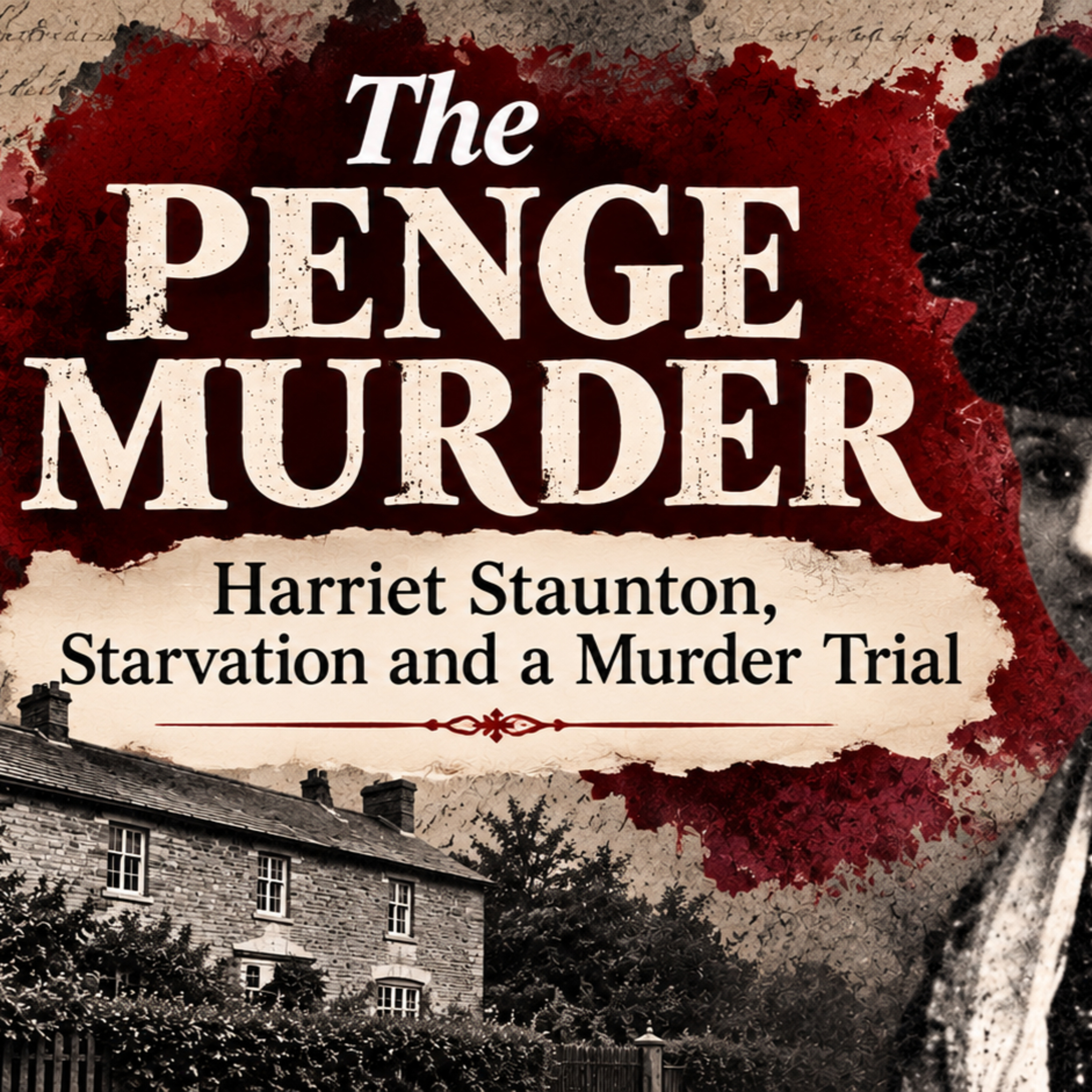
    The Penge Murder: Harriet Staunton, Starvation and a Murder Trial

    In 1877, Harriet Staunton died after months of isolation at a cottage in Kent. Her husband, his brother, sister-in-law and mistress were charged with her murder in a case that became known as the Penge Murder. But when doctors disagreed over whether Harriet had died from starvation or disease, the verdict sparked a controversy that would change the fate of all four defendants. Love Historical True Crime? Join us on Patreon for bonus episodes, extra historical mysteries and more stories that don’t make it onto the main feed. Your support helps keep the podcast going and means so much to me. You can find us at patreon.com/historicaltruecrime.Source Materials J. B. Atlay, Trial of the Stauntons (1911) Old Bailey Proceedings, Trial of Louis Staunton, Patrick Staunton, Elizabeth Staunton and Alice Rhodes (September 1877) J. E. Wilkinson et al., “Report of Post Mortem Examination, and on the Cause of Death, of Harriet Staunton, Aged Thirty-Five,” The British Medical Journal (October 27, 1877) Dr. J. F. Payne, commentary on the Staunton case, The British Medical Journal (October 27, 1877) Dr. W. S. Greenfield, “Some Remarks on the Medical Evidence in the Staunton Case,” The Lancet (October 6, 1877) The Lancet, contemporary commentary on the Staunton verdict and medical evidence (1877) The Daily Telegraph, contemporary reporting and correspondence on the Penge Murder (1877) Lilly Library, Indiana University, Off the Pedestal: Images of Women in Victorian Broadsides, Ephemera, and Books

  • #195
    September 21 · 22 min

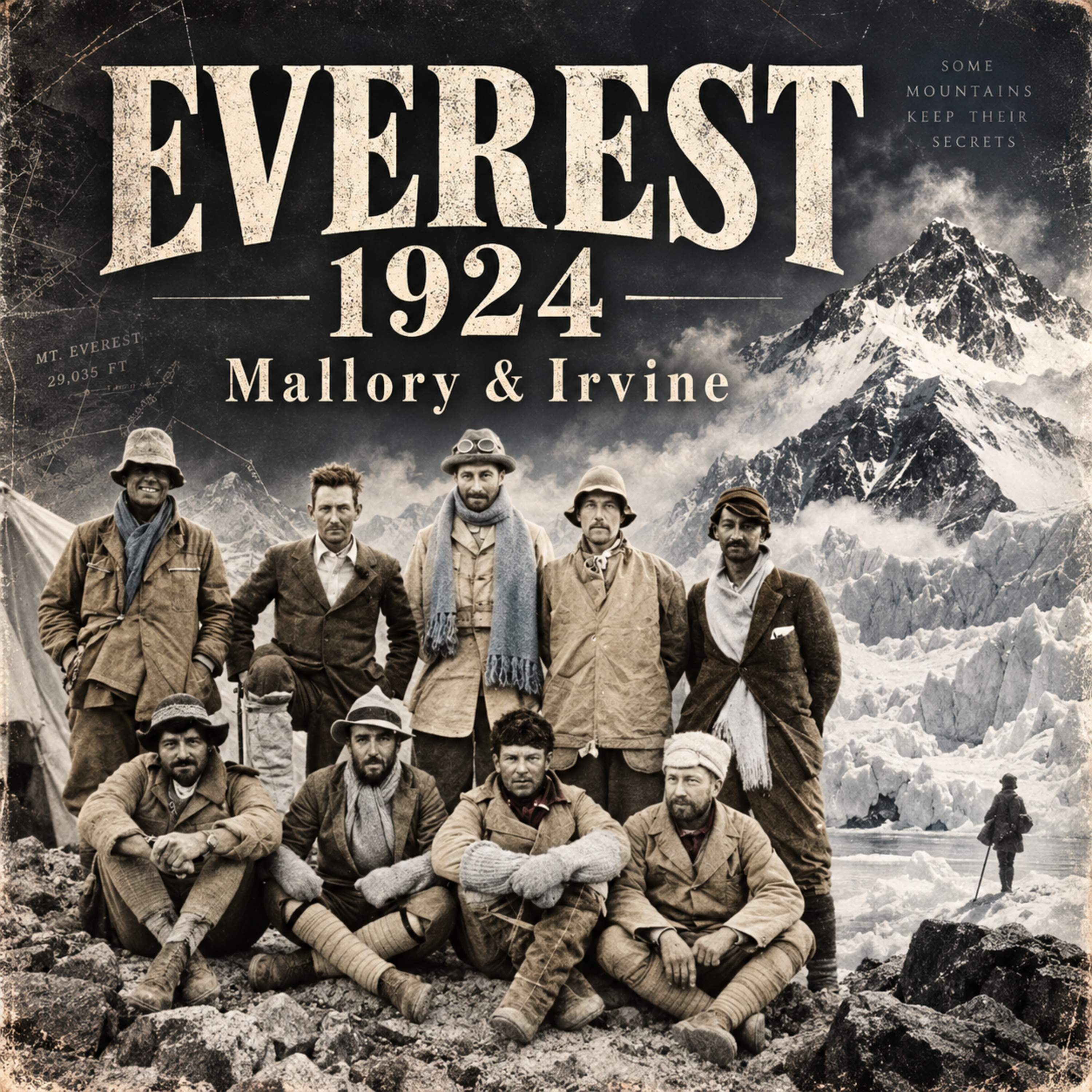
    George Mallory & Sandy Irvine: The 1924 Everest Mystery

    In 1924, George Mallory and Sandy Irvine disappeared high on Mount Everest, leaving behind one of mountaineering’s most enduring mysteries. A century later, new discoveries have added clues but still no definitive answer. Did they reachthe summit nearly 30 years before Edmund Hillary and Tenzing Norgay? In this episode, we trace the 1924 Everest expedition, Mallory and Irvine’s final climb, the evidence found in the decades since, and the 2024 discovery believed to be linked to Irvine. Love Historical True Crime and want more? Join me on Patreon for bonus episodes and extra historical deep dives that don’t make it onto the main feed. Your support also helps keep the show independent and makes it possible for me to keep researching and producing new episodes. Patreon.com/historicaltruecrime Source Materials Wade Davis, Into the Silence: The Great War, Mallory, and the Conquest of Everest E. F. Norton et al., The Fight for Everest: 1924 Noel E. Odell, “The Last Climb of Mallory and Irvine,” The Geographical Journal (1924) Royal Geographical Society, “The Mount Everest Expedition of 1924,” The Geographical Journal (1924) Grayson Schaffer, “Exclusive: Remains of Andrew ‘Sandy’ Irvine Believed to Have Been Found on Everest,” National Geographic (2024) Tessa Wong and Flora Drury, “Family Tells of ‘Relief’ After 1924 Climber’s Foot Found on Everest,” BBC News (2024) Mark Synnott, “The Mystery of Mallory and Irvine,” Artful Living (2024) Aberdeen Press and Journal, “More Light on Everest Disaster: Mr Odell’s Last View of Lost Climbers” (1924)

  • #194
    September 14 · 23 min

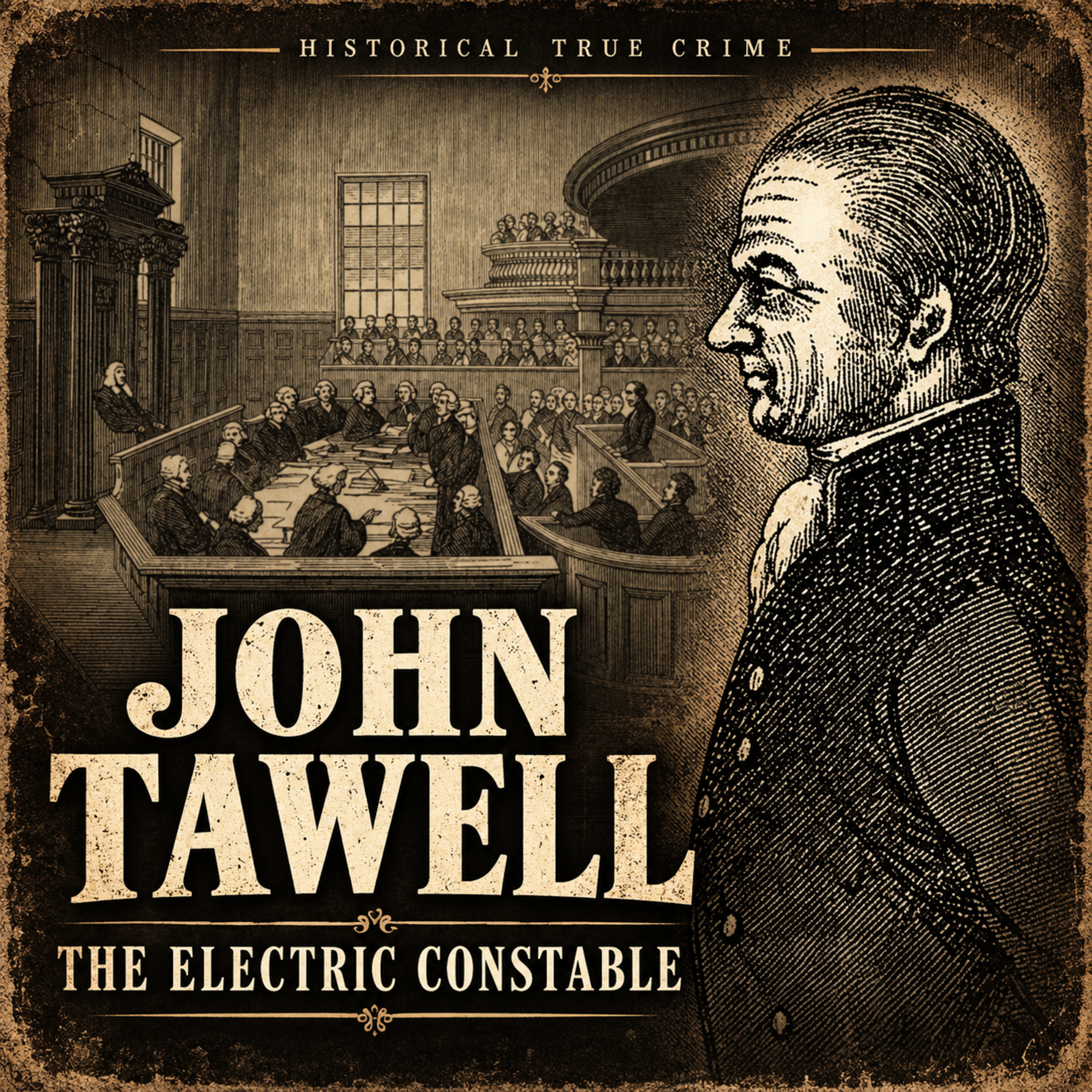
    John Tawell: Murder, Poison and the Electric Telegraph

    When Sarah Hart died suddenly in 1845, suspicion quickly fell on John Tawell. His attempt to leave by train became one of the earliest famous examples of the electric telegraph being used to track a murder suspect. But behind the technological milestone was a complicated case involving poison, disputedforensic evidence, and a woman whose story was often overshadowed by the method used to catch her killer. For more exclusive content, check out our Patreon at patreon.com/historicaltruecrime Source Materials Carol Baxter, The Peculiar Case of the Electric Constable: A True Tale of Passion, Poison & Pursuit (Oneworld, 2013) David Skae, Trial of John Tawell for the Murder of Sarah Hart by Prussic Acid: With Remarks (1845) G. L. Strauss, Remarks and Comments on the Medical and Chemical Evidence Adduced at the Trial of John Tawell (1845) G. Lathom Browne and C. G. Stewart, Reports of Trials for Murder by Poisoning (1883) Iwan Rhys Morus, “‘The Nervous System of Britain’: Space, Time and the Electric Telegraph in the Victorian Age,” British Journal for the History of Science, Vol. 33 (2000) The Sydney Morning Herald, “English News / Trial of John Tawell,” July 11, 1845 The Commercial Journal and Advertiser (Sydney), report on the trial of John Tawell, July 12, 1845 The Melbourne Courier, “Trial of John Tawell,” July 21, 1845 The Australian, “The Convict John Tawell,” July 1845 The Australian, “John Tawell,” July 22, 1845, reprinted from the Hampshire Advertiser The Launceston Advertiser, “Execution of John Tawell,” July 10, 1845 Contemporary 1845 biographical accounts of John Tawell reprinted in the Australian press Andrew Wynter, “The Electric Telegraph,” The Quarterly Review (1854)

  • #193
    August 31 · 22 min

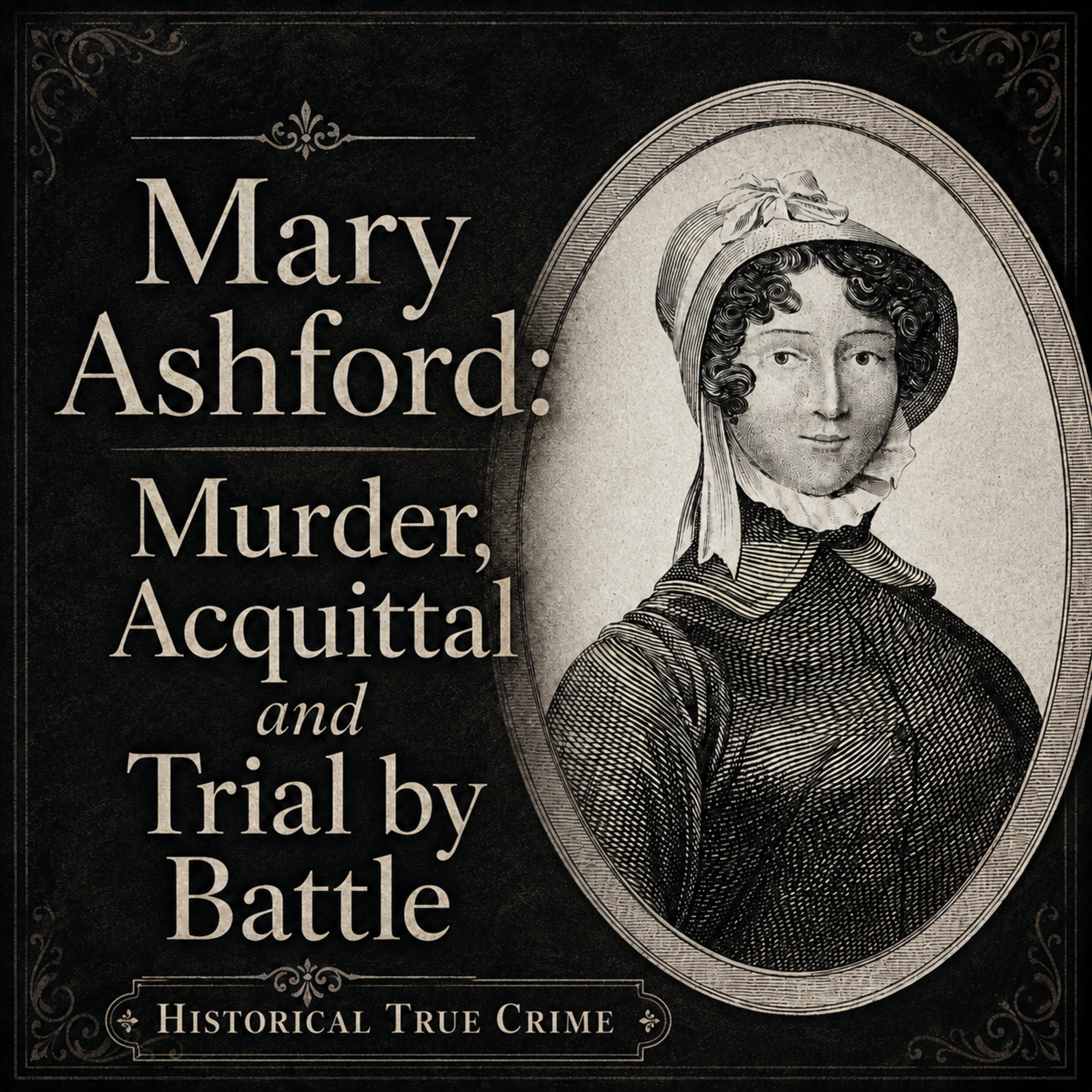
    Mary Ashford: Murder, Acquittal and Trial by Battle

    In 1817, twenty-year-old Mary Ashford was found dead after attending a dance near Birmingham. Abraham Thornton was tried and acquitted of her murder, but the case was far from over. What followed was an extraordinary legal battle involving an ancient appeal of murder, a demand for trial by combat, and a law England had somehow never abolished. Check out our Patreon at patreon.com/historicaltruecrime Source Materials Naomi Clifford, The Murder of Mary Ashford: The Crime That Changed English Legal History (2018) John Cooper, A Report of the Proceedings Against Abraham Thornton at Warwick Summer Assizes, 1817, for the Murder of Mary Ashford; and Subsequently in the Court of King’s Bench (1818) John Fairburn, The Affecting Case of Mary Ashford (1817) John Fairburn, Thornton’s Second Trial: The Whole Proceedings of the Extraordinary Trial of Abraham Thornton, for the Murder of Mary Ashford (c. 1818) Edward Holroyd, Observations upon the Case of Abraham Thornton, Who Was Tried at Warwick, for the Murder of Mary Ashford: Shewing the Danger of Pressing Presumptive Evidence Too Far (1819) Ashford v. Thornton (1818), 1 Barnewall & Alderson 405; 106 English Reports 149 Robert Megarry, A New Miscellany-at-Law: Yet Another Diversion for Lawyers (2005) Michael Lobban, “The Glorious Uncertainty of the Law: Life at the Bar, 1810–1830” 59 Geo. III c. 46 (1819)

  • #192
    August 24 · 27 min

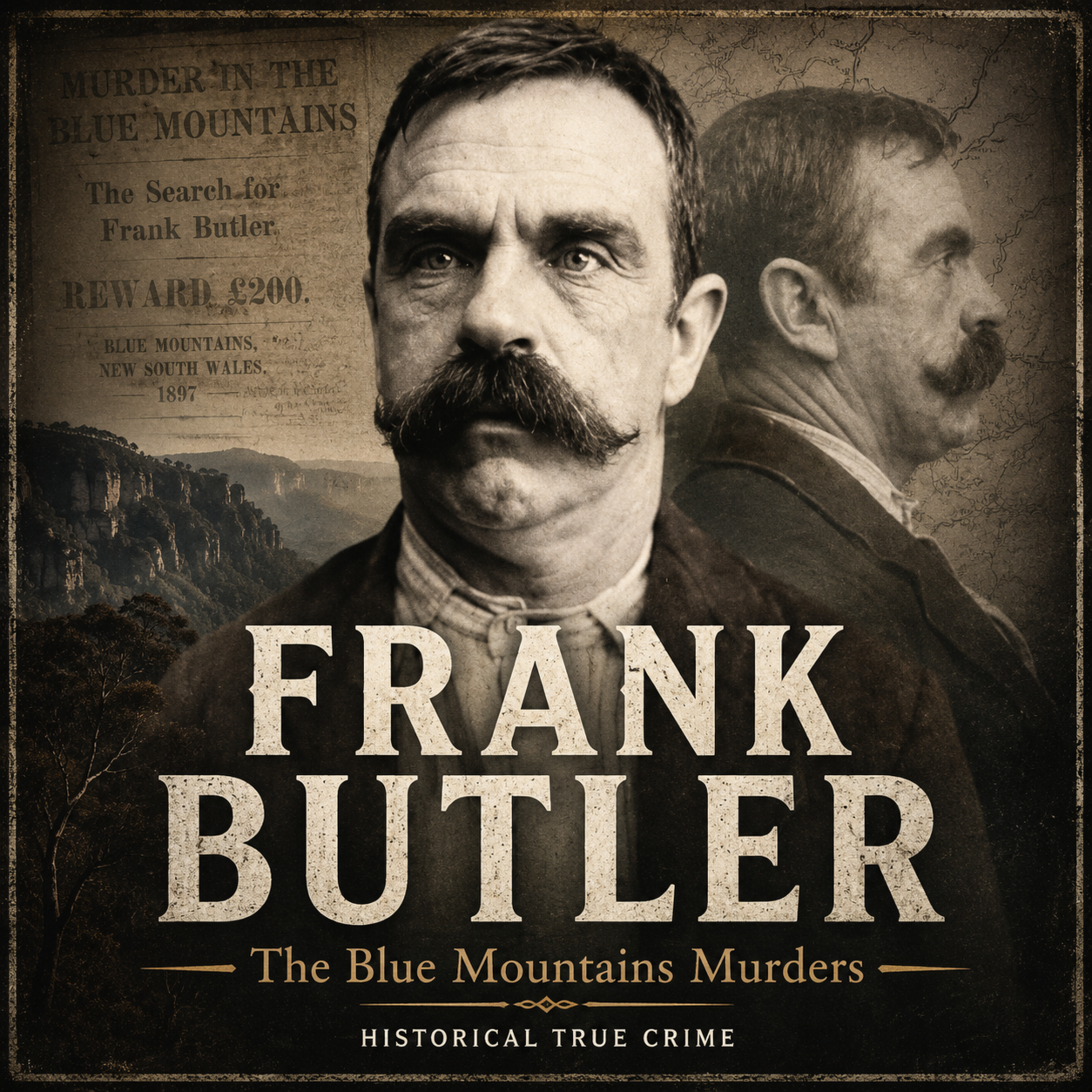
    Frank Butler and the Blue Mountains Murder

    In 1896, three men left Sydney on prospecting trips with a man using the name Frank Butler. None returned. When their bodies were discovered, police launched an international manhunt that ended aboard the Swanhilda in San Francisco. This episode follows the Blue Mountains murders, Butler’s many aliases, the investigation, trial, and the questions that still remain about his true identity and possible victims. For more exclusive content check out our Patreon at patreon.com/historicaltruecrime Source Materials Jason K. Foster, The Devil’s Butterfly: Hunting Australia’s First Serial Killer (2024) The Sydney Morning Herald, 1896–1897 The Argus, 1896 The Queenslander, 1897 The West Australian, 1897 The Sydney Mail and New South Wales Advertiser, 1897 The Western Mail, 1897 Russell O. Atkinson, “Amazing Story of Blue Mountain Murders,” Townsville Daily Bulletin, 1952

  • #191
    August 16 · 28 min

    Clara Ford and the Murder of Frank Westwood

    In 1894, eighteen-year-old Frank Westwood was shot at the door of his Toronto home. Weeks later, Clara Ford confessed, then recanted. Her sensational trial raised questions about police interrogation, race, gender and the reliability of theevidence. The murder remains unsolved. Check out our Patreon at patreon.com/historicaltruecrime Source Materials Patrick Brode, Death in the Queen City: Clara Ford on Trial, 1895 Carolyn Whitzman, Clara at the Door with a Revolver Carolyn Strange, “Wounded Womanhood and Dead Men: Chivalry and the Trials of Clara Ford and Carrie Davies” Barrington Walker, Race on Trial: Black Defendants in Ontario’s Criminal Courts, 1858–1958 Barrington Walker’s review of Death in the Queen City Contemporary coverage from Toronto newspapers including the Globe, Toronto Mail, Toronto World, Toronto Telegram, Evening Star and News Archival court and police material cited in the above works, including Chancellor John Alexander Boyd’s benchbooks, Toronto Police records and the 1871 Canadian census Interviews and published commentary by Carolyn Whitzman discussing her research into Clara Ford’s life and the later mythology surrounding the case

  • #190
    August 10 · 21 min

    Buck Ruxton: The Jigsaw Murders of 1935

    In 1935, two mutilated bodies were discovered beneath a bridge near Moffat, Scotland. The victims had been deliberately made difficult to identify, but an extraordinary forensic investigation using anatomy, dental records, photographic superimposition, fingerprints and blood evidence slowly led police back to Dr. Buck Ruxton and his home in Lancaster. Check out our Patreon for bonus episodes, exclusive content and more ways to support Historical True Crime: Patreon.com/HistoricalTrueCrime Source Materials Jeremy Craddock, The Jigsaw Murders R. H. Blundell and G. Haswell Wilson, eds., Trial of Buck Ruxton (Notable British Trials, 1937) John Glaister and James Couper Brash, Medico-Legal Aspects of the Ruxton Case (1937) Bertie James Hammond, “Finger Prints and the Ruxton Murders,” Journal of Criminal Law and Criminology, Vol. 43, No. 6 (1953) “Medico-Legal Aspects of the Ruxton Case,” contemporary medical journal review (1938) Capital Punishment UK, “Dr. Buck Ruxton – The ‘Jigsaw Murders’ of 1935” Glasgow Police Museum, “The Ruxton Murders – 1935” Vickie Scullard, “The chilling story of Jigsaw Killer Dr Buck Ruxton – and the Manchester trial that made history,” Manchester Evening News, July 19, 2020 U.S. National Library of Medicine, Visible Proofs: Forensic Views of the Body — Buck Ruxton / Jigsaw Murders case materials

  • #186
    August 3 · 27 min

    Ruth Snyder and Judd Gray: The Double Indemnity Murder

    In 1927, Ruth Snyder and Judd Gray were accused of murdering Ruth’s husband, Albert, after months of planning, an affair and a life insurance scheme. Their trial became a tabloid spectacle, but it was the forbidden photograph taken during Ruth’s execution that would define how the case was remembered. A huge thank you to everyone supporting Historical True Crime on Patreon. Your support helps me continue researching and producing the show. You can find bonus episodes and support the podcast at patreon.com/historicaltruecrime.Source Materials Landis MacKellar, The “Double Indemnity” Murder: Ruth Snyder, Judd Gray, and New York’s Crime of the Century Stevie Simkin, Cultural Constructions of the Femme Fatale: From Pandora’s Box to Basic Instinct People v. Snyder, New York Court of Appeals decision, November 22, 1927 The New York Times, “Mrs. Snyder and Gray Die in Chair,” January 13, 1928 The Washington Times, contemporary coverage of the investigation, trial, appeals, clemency requests and executions Smithsonian Magazine, “The First and Last Time a Photographer Was Allowed in the Electric Chair” TIME magazine archive coverage of the Snyder–Gray case History.com, coverage of Ruth Snyder’s execution and the hidden-camera photograph JSTOR Daily, historical analysis of Ruth Snyder, the tabloid press and the execution photograph Contemporary reporting from the New York Daily News, including the January 13, 1928 front page featuring Tom Howard’s photograph James M. Cain, Double Indemnity, for the case’s later influence on crime fiction and popular culture

  • #189
    July 27 · 24 min

    The Shark Arm Case: Two Unsolved Murders in Sydney

    In 1935, a tiger shark on display at Sydney’s Coogee Aquarium regurgitated a human arm. The victim was identified as missing man Jim Smith, but the discovery only opened a far more complicated investigation involving insurance fraud, harbour smuggling, conflicting statements, a second murder and several suspects who were ultimately acquitted. Nearly a century later, both deaths remain unsolved. Support Historical True Crime on Patreon at patreon.com/historicaltruecrime. Members get access to bonus episodes and additional historical cases not released on the main feed.Source Materials Phillip Roope and Kevin Meagher, Shark Arm: A Shark, a Tattooed Arm and Two Unsolved Murders Alan J. Whiticker, Twelve Crimes That Shocked the Nation Alex Castles, The Shark Arm Murders Dictionary of Sydney, “Shark Arm Murder 1935” ABC Radio National, “The Shark Arm Case,” featuring Alex Castles Contemporary Australian newspaper coverage of the discovery of the arm, the investigation, the inquest, Patrick Brady’s trial and the murder of Reginald Holmes New South Wales police records, witness statements and court material as reproduced and discussed in the works above

  • #188
    July 20 · 23 min

    The Harem Conspiracy: The Murder of Ramesses III

    A conspiracy inside the royal household ended with the murder of Pharaoh Ramesses III. This episode follows the struggle over Egypt’s throne, the trials that followed, and the modern forensic evidence that revealed how the king died more than three thousand years later. Love Historical True Crime? Support the podcast on Patreon for as little as $2 a month. Your support helps cover the time and costs involved in researching, writing, and producing the show—and you’ll also get access to exclusive Patreon episodes. Join at patreon.com/historicaltruecrime Source Materials A. de Buck, “The Judicial Papyrus of Turin,” The Journal of Egyptian Archaeology, Vol. 23, No. 2, 1937, pp. 152–164. Susan Redford, The Harem Conspiracy: The Murder of Ramesses III, Northern Illinois University Press, 2002. Eric H. Cline and David O’Connor, editors, Ramesses III: The Life and Times of Egypt’s Last Hero, University of Michigan Press, 2012. Zahi Hawass, Somaia Ismail, Ashraf Selim, Sahar N. Saleem, Dina Fathalla, Sally Wasef, Ahmed Z. Gad, Rama Saad, Suzan Fares, Hany Amer, Paul Gostner, Yehia Z. Gad, Carsten M. Pusch and Albert R. Zink, “Revisiting the Harem Conspiracy and Death of Ramesses III: Anthropological, Forensic, Radiological, and Genetic Study,” British Medical Journal, Vol. 345, 2012. Alexandre Loktionov, “Convicting ‘Great Criminals’: A New Look at Punishment in the Turin Judicial Papyrus.” Hans Goedicke, “Was Magic Used in the Harem Conspiracy Against Ramesses III? (P. Rollin and P. Lee),” The Journal of Egyptian Archaeology, Vol. 49, 1963, pp. 71–92. Mark Collier, Aidan Dodson and Gottfried Hamernik, “P. BM EA 10052, Anthony Harris, and Queen Tyti,” The Journal of Egyptian Archaeology, Vol. 96, 2010, pp. 242–247. Erin Blakemore, “Who Killed Ramesses III? How Science Solved an Ancient Egyptian Murder Mystery,” National Geographic, August 2, 2024.

  • #187
    July 13 · 19 min

    The Affair of the Poisons, Part 2: Scandal at Versailles

    As accusations from La Voisin’s circle reached Versailles, Madame de Montespan, Louis XIV’s former favourite was drawn into claims of love powders, forbidden rituals, and poison plots. But the evidence was shaped by rumour, torture,fear, and politics, leaving one question at the centre of the scandal: what was real, and what was too dangerous for the monarchy to expose?Support the show on Patreon: If you enjoy Historical True Crime and want to help support the research, writing, hosting, and production that goes into each episode, you can join my Patreon for as little as $2 a month. Patrons get access to extra episodes and bonus content, including cases that are not in the regular feed. Patreon.com/historicaltruecrime Source Materials Anne Somerset, The Affair of the Poisons: Murder, Infanticide, and Satanism at the Court of Louis XIV Holly Tucker, City of Light, City of Poison: Murder, Magic, and the First Police Chief of Paris Antonia Fraser, Love and Louis XIV: The Women in the Life of the Sun King Nancy Mitford, The Sun King: Louis XIV at Versailles Benedetta Faedi Duramy, “Women and Poisons in 17th Century France,” Chicago-Kent Law Review, Vol. 87, No. 2, 2012 Erika Carroll, “Potions, Poisons and ‘Inheritance Powders’: How Chemical Discourses Entangled 17th Century France in the Brinvilliers Trial and the Poison Affair,” Voces Novae, 2012

  • #186
    July 6 · 24 min

    The Affair of the Poisons - Part 1

    In 1670s Paris, the deaths of a noblewoman’s father and brothers sparked fears of a hidden poison network. As police investigated, they were drawn into a world of fortune-tellers, love powders, secret remedies, and La Voisin , setting the stage for a scandal that would reach Louis XIV’s court. Source Materials Anne Somerset, The Affair of the Poisons: Murder, Infanticide, and Satanism at the Court of Louis XIV Holly Tucker, City of Light, City of Poison: Murder, Magic, and the First Police Chief of Paris Antonia Fraser, Love and Louis XIV: The Women in the Life of the Sun King Nancy Mitford, The Sun King: Louis XIV at Versailles Benedetta Faedi Duramy, “Women and Poisons in 17th Century France,” Chicago-Kent Law Review, Vol. 87, No. 2, 2012 Erika Carroll, “Potions, Poisons and ‘Inheritance Powders’: How Chemical Discourses Entangled 17th Century France in the Brinvilliers Trial and the Poison Affair,” Voces Novae, 2012

  • #180
    June 29 · 18 min

    A Shot Through the Window: Who Killed Louise Bailey?

    When Louise Bailey was shot through the window of a Long Island doctor's office in 1914, suspicion quickly fell on the physician's wife, Florence Carman. But with no eyewitness, no confession, and a case built largely on circumstantial evidence, two juries were left to decide whether suspicion was enough. More than a century later, Louise Bailey's murder remains unsolved. Source Materials The New York Times (1914–1915 coverage of the Florence Carman trials) Chicago Day Book (1914 coverage) Brooklyn Daily Eagle (1914–1915 coverage) The Evening World (1914–1915 coverage) New York Tribune (1914–1915 coverage) The Sun (New York) (1914–1915 coverage) The Buffalo Times (1914–1915 coverage) The Washington Times (1914–1915 coverage) The Tacoma Times (1914–1915 coverage) The Freeport Memorial Library Local History Collection Murderpedia: Florence Carman Historic newspaper archives accessed through Newspapers.com and Library of Congress Chronicling America

  • #184
    June 22 · 29 min

    The Lover in the Attic: The Dolly Oesterreich Case

    In 1922, Fred Oesterreich was found shot to death in his Los Angeles home. His wife claimed burglars were responsible, but investigators had doubts. Nearly eight years later, a shocking discovery reopened the case: another man had beenliving in secret inside the house for years. This is the extraordinary story of Dolly Oesterreich, Otto Sanhuber, and one of the strangest murder cases of the twentieth century. Historical True Crime was selected as one of FeedSpot's Top 60 Historical Mysteries Podcasts. FeedSpot helps you find the best podcasts on the web: https://podcast.feedspot.com/ Source Materials Wolf, Marvin J. & Mader, Katherine M. Fallen Angels: The True Story of California's Most Bizarre and Spectacular Murder Cases Parrish, Michael. For the People: A Social History of the American Criminal Justice System Rasmussen, Cecilia. “Dolly Oesterreich's Secret Lover Lived in Her Attic” (Los Angeles Times) Los Angeles Times archive coverage of the Oesterreich murder investigation and trials The Los Angeles Evening Express archive coverage The Los Angeles Record archive coverage The Los Angeles Examiner archive coverage The San Francisco Examiner archive coverage The San Bernardino County Sun archive coverage The Oakland Tribune archive coverage The Sacramento Bee archive coverage The Tacoma Daily Ledger archive coverage The Pittsburgh Press archive coverage The Brooklyn Daily Eagle archive coverage The Milwaukee Journal archive coverage Newspapers.com historical newspaper archive California Digital Newspaper Collection Library of Congress, Chronicling America newspaper archive

  • #177
    June 15 · 29 min

    Patricia Douglas: The Woman Who Took on MGM

    In 1937, twenty-year-old dancer Patricia Douglas accused an MGM salesman of raping her at a company convention attended by hundreds of studio employees and guests. When a grand jury declined to indict, she refused to back down, taking on one of Hollywood's most powerful studios in a legal battle that would last for years. In this episode, we examine the assault, the investigation, the court cases, and the woman who spent decades fighting to have her story heard. Source Materials Stenn, David. Girl 27 (Documentary Film). Red Letter Films, 2007. Stenn, David. “It Happened One Night... at MGM.” Vanity Fair, April 2003. Stenn, David. “The Systematic Crushing of a #MeToo Pioneer.” The New York Times, January 5, 2018. Abcarian, Robin. “A Hollywood Role She Never Asked For.” Los Angeles Times, January 19, 2007. Galloway, Stephen. “How a Hollywood Studio Got Away With Rape in 1937.” The Hollywood Reporter, November 13, 2017. Schatz, Thomas. The Genius of the System: Hollywood Filmmaking in the Studio Era. Henry Holt & Company, 1988. Contemporary newspaper coverage from June 1937, including The Independent (California) and other contemporary Los Angeles-area newspapers reporting on the investigation and grand jury proceedings.

  • #176
    June 8 · 26 min

    Pat Crowe and the Cudahy Kidnapping

    In 1900, fifteen-year-old Eddie Cudahy Jr., the son of one of Omaha's wealthiest businessmen, was kidnapped and held for a record-breaking ransom. The crime sparked a nationwide manhunt, a five-year search for suspect Pat Crowe, and one of the most controversial trials of the era. In this episode, we examine the kidnapping, the evidence against Crowe, and why a jury ultimately found him notguilty despite widespread belief in his involvement. Source Materials Garneth Oldenkamp Peterson, The Kidnapping of Ed Cudahy: How Pat Crowe Got Away with the Crime Albert S. Ritchie, Address to the Jury by Albert S. Ritchie of Omaha, Nebraska, in the Pat Crowe Kidnapping Case (1906) The Omaha Daily Bee (1900–1906coverage of the Cudahy kidnapping and Pat Crowe trial) The Omaha World-Herald(1900–1906 coverage of the kidnapping, investigation, and trial) The New York Times, “'Pat'Crowe Acquitted; Was Accused of Kidnapping Son of Edward A. Cudahy” (February 17, 1906) The New York Times, “Says He Is Pat Crowe; Man, Apparently Demented, in Custody of Washington Police” (August 16, 1913) The New York Times, “PatCrowe, Once Noted Outlaw, Beggar Now; Sentence Suspended, Purse Made Up in Court” (December 30, 1925) The Herald-Democrat (December 25, 1900) Library of Congress, “The Eye That Never Sleeps: Pinkerton's National Detective Agency Records” (2023) Pinkerton National Detective Agency Records, Library of Congress Manuscript Division Jeff Vasishta, “Andrew Hilleman's World Chase Me Down,” Interview Magazine

  • #181
    May 29 · 30 min

    Tom Horn: Murder on the Wyoming Frontier

    In 1901, fourteen-year-old Willie Nickell was shot and killed near his family’s ranch in southeastern Wyoming. Suspicion eventually settled on Tom Horn, former Apache War scout, Pinkerton detective, and one of the most feared men connected to the Wyoming range wars. But more than a century later, historians still debate whether the state truly proved he committed the murder. Source Materials Ball, Larry D. The United States Marshals of New Mexico and Arizona Territories, 1846–1912. University of New Mexico Press, 1978. Carlson, Chip. Blood on the Moon: The Life and Legend of Tom Horn. High Plains Press, 2001. Davis, John W. The Trial of Tom Horn. University of Wyoming Press, 1960. Horn, Tom. Life of Tom Horn: Government Scout and Interpreter. 1904. Krakel, Dean. The Saga of Tom Horn: The Story of a Cattleman’s War. University of Nebraska Press, 1954. Siringo, Charles A. A Cowboy Detective. 1912. “The Killing of Willie Nickell.” The Lamar Register, August 12, 1903. Additional contemporary newspaper coverage from Wyoming and Colorado newspapers, 1901–1903.

  • #180
    May 22 · 23 min

    The Birdman of Alcatraz: Myth vs Reality

    Robert Stroud became one of the most famous prisoners in American history as the “Birdman of Alcatraz” but the real story was far more complicated. This week, we look at the life of Robert Stroud, the violence that shaped his prison years, the mythology built around him, and the reality behind one of the most enduring legends in true crime history. Source Materials Babyak, Jolene. Bird Man: The Many Faces of Robert Stroud. Bruce, J. Campbell. Escape from Alcatraz. Gaddis, Thomas E. Birdman of Alcatraz. Gregory, George H. Alcatraz Screw: My Years as a Guard in America’s Most Notorious Prison. Quillen, Jim. Alcatraz from Inside: The Hard Years 1942–1952. Stroud, Robert. Looking Outward: A Voice from the Grave. Alaska Historical Society — “Robert Stroud: The Birdman of Alcatraz” Encyclopaedia Britannica — “Robert Stroud”

Showing 1–20 of 25 episodes