Skip to content
Artwork for Global Development Interrupted Podcast
GovernmentSociety & CultureDocumentary

Global Development Interrupted Podcast

The People, the Work, and What Was Lost When America Stepped Back

Global Development Interrupted creates space for voices, perspectives, and critical reflection on global development. By amplifying the experiences of people who have built their careers in public service and global work, it invites learning, dialogue, and reimagining of what global development is, was, and could be.

globaldevinterrupted.substack.com
Play
  • 26 episodes
  • fortnightly
  • Avg 32 min
  • English
Counted on this page — what you have heard stays on this device, so it is not something the list can be paged by.
  • S3 · E3
    Thursday · 40 min

    The World Isn’t Waiting for America.

    When the United States stepped back from foreign assistance and diplomacy in 2025, it raised questions about America’s role in the world. A new global survey captures a striking finding: people still want countries to work together, but many aren’t sure they want America leading the way. In this episode, I talk with Eric Pelofsky, vice president of international policy at the Rockefeller Foundation, about Seeking Security and Opportunity in a Stormy World, the foundation’s survey of more than 35,000 people across 34 countries. The findings are hard to ignore. Only 39% of people surveyed are comfortable with the U.S. playing a leading role in world affairs, nearly even with China at 37%. In 22 of 32 countries, more people see the U.S. as a major threat than China, including 14 of 16 developing economies. And 61% would support a coalition of countries tackling global problems without either one. This Substack is reader-supported. To receive new posts and support my work, consider becoming a free or paid subscriber. What would it take for the United States to reestablish itself as a reliable global partner? The work starts at home. The new bipartisan Commission on the Future of Foreign Assistance, convened by the Rockefeller Foundation, the Packard Foundation and other partners, is aiming its recommendations at the broader American political conversation, not just lawmakers. Its goal is not simply to restore what existed before, but to help shape an effective, accountable and widely supported system for delivering U.S. assistance around the world, one that strengthens national security. Eric also argues that American moral leadership goes well beyond humanitarian aid. It’s about being a reliable ally in the face of autocracy, showing up for the people we defend and helping governments strengthen their capacity to serve their citizens. People around the world still believe in international cooperation. But they are prepared to move forward without the United States. If America wants to help shape what comes next, it will have to reengage, show up consistently and work with other countries as partners. Guest: Eric Pelofsky, vice president of international policy, the Rockefeller Foundation Topics: Global public opinion, U.S. global leadership, international partnerships, foreign assistance cuts, diplomacy, American moral leadership, the Commission on the Future of Foreign Assistance, bipartisanship Learn more: * Read the survey: Seeking Security and Opportunity in a Stormy World: A 34-Country Survey (conducted by Focaldata for the Rockefeller Foundation) * About the commission: Commission on the Future of Foreign Assistance * Share your ideas with the commission: smartideas@coffa.org * Rockefeller Foundation and Echelon Insights survey on U.S. views of foreign assistance: An American Perspective on Foreign Aid Listen, Watch, Follow Listen & Watch on: Apple Podcasts | Spotify | Youtube Follow on: Instagram: @globaldevinterrupted | Facebook: Global Development Interrupted This Substack is reader-supported. To receive new posts and support my work, consider becoming a free or paid subscriber. This is a public episode. If you'd like to discuss this with other subscribers or get access to bonus episodes, visit globaldevinterrupted.substack.com/subscribe

    • Transcript
  • S3 · E2
    November 5 · 34 min

    Say USAID More

    Americans think about a quarter of the federal budget goes to foreign aid. The real number is less than 1%. Asher Moss sees an opening in that gap. Polling shows Americans would like foreign aid to be about 10% of the budget, which makes his ask, the Two Penny Pledge of 2% for diplomacy and development, sound modest. After USAID’s dismantling, he founded the Alliance for American Leadership (A4AL) on the belief that public support for global assistance already exists; it just hasn’t been mobilized. His organization has delivered USAID flags to members of Congress, each one purchased by constituents back home, and sent young volunteers to knock doors and phone bank for candidates. We get into the politics and strategy behind that work, including why a talk on USAID won over a room of Christian conservatives, why the simple case that aid saves lives persuades the public more than economic arguments, and why Asher keeps saying “USAID” even as others in the field want to move past the name. We also discuss how persistent calls and electoral pressure move an issue up the agenda, the tension between congressional earmarks and the flexibility development programs need, and what young Americans want from U.S. foreign policy. The support is there. The work now is making it impossible to ignore. Guest: Asher Moss, founder, Alliance for American Leadership Topics: foreign aid advocacy, USAID, political mobilization, public messaging, Two Penny Pledge, congressional earmarks, young voters, U.S. foreign policy Listen, Watch, Follow Listen & Watch on: Apple Podcasts | Spotify | Youtube Follow on: Instagram: @globaldevinterrupted | Facebook: Global Development Interrupted This is a public episode. If you'd like to discuss this with other subscribers or get access to bonus episodes, visit globaldevinterrupted.substack.com/subscribe
    • Transcript
  • October 23 · 7 min

    Bonus: Samantha Power on AI, the U.N. and Who Writes the Rules

    Tech leaders recently went to the U.N. Security Council to talk about oversight of AI. The U.S. government rejected global governance of AI outright. In this bonus conversation, Ambassador Samantha Power, former U.S. ambassador to the United Nations and the last administrator of USAID, draws on her time on the Security Council to unpack what’s happening in the debate over global AI governance. Why would tech leaders invite oversight, and why take that case to the U.N.? Power explains what she thinks is really driving them, where China fits in, and why the U.S. position at the Security Council alarmed her. Her answer challenges the administration’s view of what the U.N. is for. If the goal is guardrails for everyone, the U.S. is far stronger with the world behind it. Listen, Watch, Follow Listen & Watch on: Apple Podcasts | Spotify | Youtube Follow on: Instagram: @globaldevinterrupted | Facebook: Global Development Interrupted This is a public episode. If you'd like to discuss this with other subscribers or get access to bonus episodes, visit globaldevinterrupted.substack.com/subscribe
    • Transcript
  • S3 · E1
    October 22 · 33 min

    Samantha Power: “They Moved Fast and They Broke Everything”

    Ambassador Samantha Power, former war correspondent, U.S. ambassador to the United Nations, and the last administrator of USAID, joins Global Development Interrupted to discuss what she witnessed inside government, what the dismantling of USAID means for American power, and what comes next. She shares stories of USAID teams at work, from helping young people in the Dominican Republic plan for their futures to responding to the earthquake in Haiti and supporting Armenians fleeing Nagorno-Karabakh. By her last year as administrator, 70% of the places USAID operated were in some form of crisis, whether political upheaval, natural disaster, or conflict. She describes a workforce driven by a sense of vocation, one that was not only dismantled but disparaged. She explains why she sees USAID’s dismantling as a canary in the coal mine for American checks and balances, and what happens when the tech ethos of “move fast and break things” is applied to an agency that people’s lives depended on. She sees the same lack of guardrails in technology today as a warning. She describes what the abrupt cuts meant in practice: textbooks promised for the next school year, contraceptives incinerated in a warehouse instead of distributed, and antiretroviral treatment cut off. She also reflects on the trust that has been broken, what it will take to begin rebuilding it, and what gives her hope: nearly 30 USAID veterans now at Harvard, sharpening their tools and preparing to get back out there. The agency was dismantled. The workforce wasn’t. Guest: Ambassador Samantha Power, former U.S. ambassador to the United Nations and former USAID administrator Topics: USAID dismantling, the USAID workforce, American foreign policy, checks and balances, rebuilding trust, foreign assistance Listen, Watch, Follow Listen & Watch on: Apple Podcasts | Spotify | Youtube Follow on: Instagram: @globaldevinterrupted | Facebook: Global Development Interrupted This is a public episode. If you'd like to discuss this with other subscribers or get access to bonus episodes, visit globaldevinterrupted.substack.com/subscribe
    • Transcript
  • September 10 · 38 min

    What Do Markets Have to Do with It?

    Life stops when the electricity goes out, and that’s not just how it feels. The International Energy Agency says electricity consumption and GDP growth have historically gone hand in hand, particularly in emerging and developing economies. India and Southeast Asia are a clear example. Electricity use per person has risen rapidly over the past few decades, alongside a boom in economic development. In sub-Saharan Africa, electricity use per person has been essentially stagnant for more than 30 years. In 2023, electricity consumption per person in Africa was half that of India and 70% lower than Southeast Asia. The World Bank calls electricity “the bedrock of jobs, opportunity, and economic growth.” And yet, more than 560 million people across sub-Saharan Africa still live without electricity. So what does it take to build economies when the power isn’t there? That was the challenge behind Power Africa, a U.S. government initiative established in 2013 and terminated in 2025 following the Trump administration’s dismantling of USAID. Leah speaks with Mark Carrato, one of the former coordinators of Power Africa, who spent more than 25 years working across climate, energy, and economic development. During his time as coordinator of Power Africa, he helped lead a partnership of governments, development banks, international donors, and hundreds of private-sector companies working to expand electricity access across the continent. Mark saw his work as more than megawatts or power plants. It was about understanding the ecosystem around them, figuring out where development dollars could have the greatest impact, and asking what it takes to make development last. Later, as USAID’s mission director in Brazil, Mark brought the same systems-oriented thinking to protecting the Amazon. Today, he leads emerging markets work at SecondMuse, an innovation firm that builds economies to benefit people and the planet. In this episode, Mark takes us inside Power Africa, talks about what markets have to do with development, and makes the case for thinking differently about where and how we invest in progress. We also talk about what he hopes that approach can look like in the future, and why predictability matters in markets. Guest: Mark Carrato leads SecondMuse's work in emerging markets and brings more than 25 years of experience in climate, energy, and economic development. Before joining SecondMuse, he held senior roles at USAID, serving as USAID director for Brazil and among the former coordinators of Power Africa, the U.S. government partnership created to expand energy access across sub-Saharan Africa. Topics: Power Africa, market-based development, USAID’s dismantling, the Amazon, systems change. Listen, Watch, Follow Listen & Watch on: Apple Podcasts | Spotify | Youtube Follow on: Instagram: @globaldevinterrupted | Facebook: Global Development Interrupted This is a public episode. If you'd like to discuss this with other subscribers or get access to bonus episodes, visit globaldevinterrupted.substack.com/subscribe
    • Transcript
  • S2 · E16
    August 27 · 54 min

    We've Set Fire to a Bunch of Our Ships

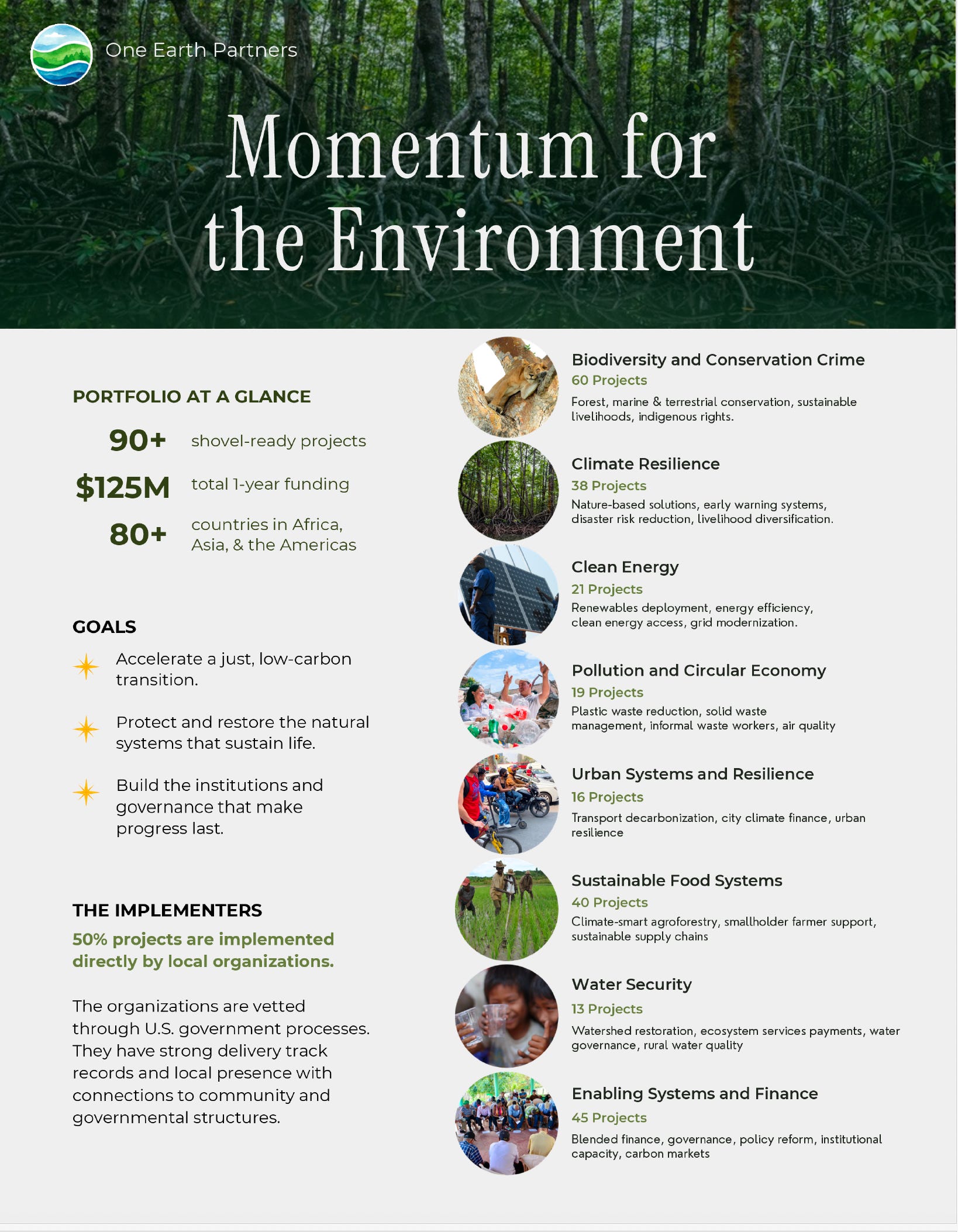
    What happens when environmental work that has taken decades to build suddenly disappears? For years, USAID supported efforts around the world to protect forests and wildlife, reduce pollution, strengthen local communities, and address the interconnected challenges of biodiversity loss, climate change, and environmental degradation. But when the agency’s programs were abruptly shut down, the loss went far beyond funding. In this episode, Leah speaks with former USAID environmental leaders Hadas Kushnir and Monica Bansal, who are now examining the impacts of the withdrawal of USAID’s environmental programs. They share what they heard from people around the world—and what those conversations revealed about the relationships, expertise, and long-term work that were lost. Their full findings will be published in a forthcoming report, Beyond the Funding Gap, out after Labor Day through their initiative, Momentum for the Environment. From man-eating lions and piranhas to landfill fires, plastic waste, and community conservation, this conversation explores what USAID’s environmental work actually looked like on the ground. It’s also a story of why environmental challenges in one part of the world can affect all of us. What did we lose when that work stopped? And what might it take to rebuild? If you want to support environmental work that’s still active on the ground, Hadas and Monica’s team has curated a pipeline of vetted, shovel-ready projects at www.oneearthpartners.com. You can also reach them directly at info@oneearthpartners.com to talk through what fits your interests. Guest: Hadas Kushnir and Monica Bansal, co-founders of Momentum for the Environment Initiative and former USAID environmental leaders Topics: USAID’s environmental and climate work, biodiversity loss, community-based conservation, the agency’s dismantling, localization, and the forthcoming Beyond the Funding Gap report Listen, Watch, Follow Listen & Watch on: Apple Podcasts | Spotify | Youtube Follow on: Instagram: @globaldevinterrupted | Facebook: Global Development Interrupted This is a public episode. If you'd like to discuss this with other subscribers or get access to bonus episodes, visit globaldevinterrupted.substack.com/subscribe
    • Transcript
  • August 13 · 35 min

    Demography Is Destiny. But Whose?

    Can demography — the study of how populations grow, move, and change — offer a window into a country’s future? That’s what Leah talks about with Dr. Apoorva Jadhav, former USAID senior demographer and statistician, in this episode of Global Development Interrupted. Apoorva explains how USAID was rethinking the way it invested in development through the lens of demography — looking at population data and trends to understand where countries were headed and how to invest more strategically. That work came to an abrupt end when the agency was dismantled. The conversation gets into what’s at stake when the data infrastructure behind development begins to erode. USAID invested in the long-term systems, standards, and expertise that allowed the U.S. and other countries and organizations to make smarter investments and address real problems. Without that foundation, what happens to the quality of the data and the decisions built on it? Because behind every data point is a person — and, as Apoorva puts it, “there is a pulse.” Guest: Dr. Apoorva Jadhav, former Senior Demographer and Statistician, USAID Office of Population and Reproductive Health; author of Demography Matters on Substack Topics: Demographic and Health Surveys (DHS), family planning and reproductive health, maternal and child health, HIV and disability data, child marriage, global migration policy, the dismantling of USAID, the future of development data Listen, Watch, Follow Listen & Watch on: Apple Podcasts | Spotify | Youtube Follow on: Instagram: @globaldevinterrupted | Facebook: Global Development Interrupted This is a public episode. If you'd like to discuss this with other subscribers or get access to bonus episodes, visit globaldevinterrupted.substack.com/subscribe
    • Transcript
  • July 30 · 30 min

    Democracy Is Never Finished

    Democracy is never finished. No country has gotten it perfect—not even here at home. In this episode of Global Development Interrupted, Leah talks with Amy Hamelin, a former USAID Democracy Officer who spent her career working across South Asia and sub-Saharan Africa. Drawing on her experiences in countries where democracy has been hard won and often tested, Amy shares what she learned about the people, communities, and institutions that keep it alive. Their conversation explores what democratic resilience looks like in practice: the importance of strong institutions, the role ordinary citizens play in sustaining democracy, and what we can learn from countries navigating democratic challenges—including lessons that matter here at home. Because democracy isn’t something we build once and then move on from. It is a work in progress, sustained by people who show up and institutions worth showing up for. This Substack is reader-supported. To receive new posts and support my work, consider becoming a free or paid subscriber. Guest: Amy Hamelin, former USAID Foreign Service OfficerTopics: Democracy, democratic resilience, institutions, civic participation, USAID, international development, South Asia, Kenya, South Sudan Listen, Watch, Follow Listen & Watch on: Apple Podcasts | Spotify | Youtube Follow on: Instagram: @globaldevinterrupted | Facebook: Global Development Interrupted This is a public episode. If you'd like to discuss this with other subscribers or get access to bonus episodes, visit globaldevinterrupted.substack.com/subscribe
    • Transcript
  • July 16 · 31 min

    She Spent 16 Years Communicating for USAID. Then She Started Talking to Americans.

    For 16 years, Sara Sullivan helped USAID tell its story around the world. She never imagined she’d have to explain it to Americans. When the agency was dismantled in early 2025, she watched misinformation spread through the Republican and evangelical communities she grew up in. Rather than argue with strangers online, she started recording videos for the people she knew—sharing what she had seen firsthand across three continents and 16 years in global development. That’s how Average American was born. In this episode, Sara reflects on why USAID never built public understanding at home, the human cost of the stop-work order, and why she believes foreign assistance must tell its story differently if it ever returns. She also explains why she compares USAID to a government mission trip—and yes, she once starred in a Pakistani sitcom. Listen, Watch, Follow Listen & Watch on: Apple Podcasts | Spotify | Youtube Follow on: Instagram: @globaldevinterrupted | Facebook: Global Development Interrupted This is a public episode. If you'd like to discuss this with other subscribers or get access to bonus episodes, visit globaldevinterrupted.substack.com/subscribe
    • Transcript
  • S2 · E13
    July 2 · 31 min

    A Kid from Queens

    When Jen Erie published her memoir, she expected her global development colleagues to connect with it. She didn’t expect older white men to message her saying they saw their own lives in hers. Jen Erie grew up the daughter of Haitian immigrants in Queens, New York. She went on to spend more than a decade as a USAID Foreign Service Officer — leading health programs across the Philippines, South Africa, Tanzania, South Sudan, and Thailand. In this episode, Jen reflects on what that work actually looked like on the ground, the identity crisis that came with losing it, and what she discovered about herself — and others — when she finally told her story. The result was a book, and a realization: this conversation reaches far beyond global development. At its core, it’s about shared humanity — how much more we have in common than we think, and what it looks like to turn grief into something others can learn from. Want to learn more from Jen and pick up her book, The World Is My Bones? Visit her at www.jennifererie.com Listen, Watch, Follow Listen & Watch on: Apple Podcasts | Spotify | Youtube Follow on: Instagram: @globaldevinterrupted | Facebook: Global Development Interrupted This Substack is reader-supported. To receive new posts and support my work, consider becoming a free or paid subscriber. This is a public episode. If you'd like to discuss this with other subscribers or get access to bonus episodes, visit globaldevinterrupted.substack.com/subscribe

    • Transcript
  • S2 · E12
    June 18 · 33 min

    The Name That Got It Killed

    A scholarship program training the next generation of democratic leaders was named “Diversity and Inclusion” specifically to hide it from a military dictatorship. On day nine of the Trump presidency, that name got it canceled. Matt Pietz spent a decade in Myanmar for USAID working on democracy and education projects. His last project gave 450 of the country’s most promising young people four-year scholarships — because a dictatorship that had spent decades keeping its population uneducated knew exactly what an educated citizen could do. One semester in, the White House called and said cancel it. No questions, no review, no interest in where the money actually went. In this episode, Matt breaks down what the work really was, who it served, and why Myanmar’s instability is America’s problem too — where the absence of rule of law has produced the world’s top supplier of heroin and meth, a haven for online scam centers, and a power vacuum that China is filling fast. This is what democracy promotion looks like from the inside. And what it looks like when it’s dismantled from the outside. Listen, Watch, Follow Listen & Watch on: Apple Podcasts | Spotify | Youtube Follow on: Instagram: @globaldevinterrupted | Facebook: Global Development Interrupted This Substack is reader-supported. To receive new posts and support my work, consider becoming a free or paid subscriber. This is a public episode. If you'd like to discuss this with other subscribers or get access to bonus episodes, visit globaldevinterrupted.substack.com/subscribe

    • Transcript
  • June 4 · 30 min

    We Are the Work

    Keisha Effiom sat at her dining room table in Rwanda, read the email about USAID’s final mission, and started writing. The result is a memoir — and this conversation. Keisha, former USAID Mission Director for Rwanda and Burundi, joins Global Development Interrupted to trace her journey from Howard University graduate to one of USAID’s top leaders and what she chose to do when it all came crashing down. She talks candidly about the human cost of USAID’s closure, why dismissing public servants with “just get over it” is not only wrong but cruel, and how she led her team through crisis without letting her heart go hard. She also shares the story behind her memoir, I Said My Peace With Peace: Inside USAID’s Final Days — a firsthand account of servant leadership when everything is falling apart. Whether you work in global development, care about U.S. foreign policy, or are leading people through uncertainty, this episode is for you. Want to learn more from Keisha and pick up her book, I Said My Piece with Peace? Visit her at keishaeffiom.com Listen, Watch, Follow Listen & Watch on: Apple Podcasts | Spotify | Youtube Follow on: Instagram: @globaldevinterrupted | Facebook: Global Development Interrupted This Substack is reader-supported. To receive new posts and support my work, consider becoming a free or paid subscriber. This is a public episode. If you'd like to discuss this with other subscribers or get access to bonus episodes, visit globaldevinterrupted.substack.com/subscribe

    • Transcript
  • S2 · E9
    May 21 · 40 min

    From USAID to the Ballot Box

    Three former USAID officers. Three Maryland races. One mission: keep serving. In this episode of Global Development Interrupted, host Leah Petit sits down with Alicia Contreras-Donello, running for Maryland House of Delegates District 14; Allison Eriksen, running for Montgomery County Council District 3; and Tracy Starr, running for US House of Representatives District 5. Together they share their stories of humble beginnings, careers defined by public service, and the moment they decided that the best way to keep serving was to change the system from the inside. From economic development and renewable energy to food security and human rights, these women are bringing the skills that USAID built — and the communities that shaped them — directly to the ballot box. If you believe that government should be representative of the people it serves, this episode is for you. Maryland early voting runs June 11th through 18th. Primary Election Day is June 23rd. This Substack is reader-supported. To receive new posts and support my work, consider becoming a free or paid subscriber. Interested in learning more about these candidates? Check them out below! Alicia Contreras-Donello - Maryland House of Delegates District 14 📸 Instagram/TikTok: @aliciaformaryland 👍 Facebook/LinkedIn: Alicia for Maryland 🌐 Website: aliciacontrerasdonello.com Allison Eriksen - Montgomery County Council District 3 📸 Instagram: @allisonformoco 🌐 Website: allisonformoco.com Tracy Starr - Maryland’s 5th District 📸 Instagram: @tracyforcongress26 🌐 Website: friendsoftracy.com Stay connected with Global Development Interrupted Apple Podcasts | Spotify | Youtube Instagram: @globaldevinterrupted | Facebook: Global Development Interrupted This is a public episode. If you'd like to discuss this with other subscribers or get access to bonus episodes, visit globaldevinterrupted.substack.com/subscribe

    • Transcript
  • S2 · E9
    May 7 · 29 min

    From Learning to Leadership: What USAID Made Possible

    A career spent investing in global education didn’t just build schools. It built futures. In this episode, former USAID Foreign Service Officer and Education Specialist Siena Fleischer shares what it takes to create opportunity through education: from teaching children to read, preparing youth for the workforce, and building global research partnerships. But this isn’t just about what worked. It’s about what’s now at risk. Siena was days away from boarding a plane to lead a flagship youth leadership program when everything stopped. With the dismantling of USAID, entire education systems are losing support. Siena explains what “learning loss” really means: not just missed school days, but lost generations, stalled economies, and fewer leaders equipped to shape the future. Education isn’t optional. It never was. And right now, it’s disappearing. Interested in learning more? Resources Siena Recommends * The Science of Reading * Balanced vs. Structured Literacy * Phonics vs. Whole Language * Dyslexia and The Reading Wars * Brookings Global Task Force on AI in Education * Educating Kids in the Age of AI Making People Visible This space exists to make room for more voices and perspectives from people who worked in global development, and to show why that work mattered in the United States and around the world. Help us keep telling these stories. Your support makes Global Development Interrupted possible. Stay connected with Global Development Interrupted Instagram: @globaldevinterrupted | Facebook: Global Development Interrupted This is a public episode. If you'd like to discuss this with other subscribers or get access to bonus episodes, visit globaldevinterrupted.substack.com/subscribe

    • Transcript
  • S2 · E8
    April 23 · 33 min

    Unleashed: Reimagining Global Conservation After the USAID Shutdown

    What do malaria rates, indigenous forests in Peru, and elephant tusk trafficking have in common? They’re all part of what USAID’s conservation work actually looked like. And what we’ve lost. Cynthia Gill spent 32 years building USAID’s conservation programming. Weeks watching it dismantled. And then the question: now what? The former Director for USAID's Center for Natural Environment joins Leah to talk about the shutdown, what was lost, and why she's just getting started through the Reimagining Global Conservation Initiative, a bipartisan playbook that reimagines how the US government contributes to global conservation, strengthening international stability and security while honoring nature as an American core value. To learn more about the Reimagining Global Conservation Initiative and join the coalition, visit their website and add your name to the mailing list. If you’d like to support the work, you can contribute here. To see a summary of the conservation and development legacy of USAID, see the Guardian’s coverage or read more deeply on Biographic. To reach Cynthia directly, email her at cynthia@focuscoaching.net. Making People Visible This space exists to make room for more voices and perspectives from people who worked in global development, and to show why that work mattered in the United States and around the world. Help us keep telling these stories. Your support makes Global Development Interrupted possible. Stay connected with Global Development Interrupted Instagram: @globaldevinterrupted | Facebook: Global Development Interrupted This is a public episode. If you'd like to discuss this with other subscribers or get access to bonus episodes, visit globaldevinterrupted.substack.com/subscribe

    • Transcript
  • S2 · E7
    April 9 · 32 min

    Bearing Witness

    What does it feel like to edit the word "equality" out of a US government document? To watch global development programs you believed in disappear overnight? Kelli Rogers knows. A global development journalist who moved from the newsroom to the State Department and back again, she's now leading the Aid Report at DevEx — documenting the real human cost of the foreign assistance cuts and the dismantling of USAID, one story at a time. We talk about what journalism looks like right now, the people behind the numbers, what gives her hope, and yes, even Bad Bunny. Listen to the Episode & Read the Aid Report: www.theaidreport.us Making People Visible This space exists to make room for more voices and perspectives from people who worked in global development, and to show why that work mattered in the United States and around the world. Help us keep telling these stories. Your support makes Global Development Interrupted possible. This is a public episode. If you'd like to discuss this with other subscribers or get access to bonus episodes, visit globaldevinterrupted.substack.com/subscribe

    • Transcript
  • S2 · E6
    March 26 · 34 min

    Forced Into Hope

    She was a new mom, weeks postpartum, when she got fired. No warning. No plan. Just a career she’d spent 18 years building — gone. Kathleen Borgueta wasn’t supposed to become a founder. She was supposed to go back to work at USAID, where she’d overseen global health programs across 15 countries in East and Central Africa, managed COVID vaccine rollouts, and built cold chain infrastructure in Somalia. She had a plan for what kind of working mother she was going to be. Then the dismantling started. In this episode, Kathleen joins host Leah Petit to talk about what it really feels like to be fired, publicly called a villain, and left to rebuild your identity — while keeping a newborn alive. She also talks about what she built from the rubble: Pivoting Parents, a 1,200-member global community for laid-off parents refusing to disappear quietly. This is a conversation about agency — in foreign aid, in motherhood, and in deciding what you do when the thing you built your life around is taken from you. “There are a lot of days that hope feels false. But having a child and being invested in my community and invested in the global community forces me to have hope for the future.” Follow Kathleen: LinkedIn, Instagram, and www.pivotingparents.com Making People Visible This space exists to make room for more voices and perspectives from people who worked in global development, and to show why that work mattered in the United States and around the world. Help us keep telling these stories. Your support makes Global Development Interrupted possible. This is a public episode. If you'd like to discuss this with other subscribers or get access to bonus episodes, visit globaldevinterrupted.substack.com/subscribe
    • Transcript
  • S2 · E5
    March 12 · 20 min

    Once More Into the Breach

    He was in the room when it happened. Alex Natsios sat next to his father, Andrew Natsios — former USAID Administrator, war veteran, conservative Republican — for four and a half hours as members of Congress stood up one by one and repeated the same false claims about USAID. He watched them do it knowing they were false. He watched Fox News run graphics contradicting his father’s own words while he was still speaking. That’s when Alex stopped holding back. In this episode, Alex joins host Leah Petit to talk about what it felt like to witness the dismantling of USAID from the inside — sitting beside the man who helped build it. He shares how watching his father go “once more into the breach” at 75 years old pushed him to find his own way to fight back, and how the flood of misinformation led him to start Unsung Americans — a podcast dedicated to telling the real stories of aid workers on the ground. This is a conversation about truth-telling, legacy, and what it costs when a country decides to stop believing in its own work. “Our level of influence in the world was far more significant than even those of us who were very plugged in understood. And we’re all going to lose. America’s not gaining — we’re losing.” Find Unsung Americans on YouTube or Linktr.ee Making People Visible This space exists to make room for more voices and perspectives from people who worked in global development, and to show why that work mattered in the United States and around the world. Help us keep telling these stories. Your support makes Global Development Interrupted possible. This is a public episode. If you'd like to discuss this with other subscribers or get access to bonus episodes, visit globaldevinterrupted.substack.com/subscribe
    • Transcript
  • S2 · E4
    February 26 · 36 min

    Food Security Is Global Security

    What does food security really have to do with global stability and everyday life? In this episode, I’m joined by Marian Ostertag, a former USAID Foreign Service Officer who spent her career working on agriculture and food security. Marian explains why effective development work focuses on long-term systems — food, markets, and institutions — so countries can withstand shocks without constant emergency aid. We talk about how food systems connect far beyond borders, why global supply chains are more fragile than we like to admit, and how agriculture quietly underpins everything from economic resilience to security. Along the way, Marian breaks down why pigs can be a matter of national security, why Paraguay keeps coming up, and what’s lost when long-term development work disappears. This is a grounded, thoughtful conversation about prevention over reaction, systems over short-term fixes, and why food stability matters far more than most of us realize. Making People Visible This space exists to center voices from global development and public service. Your support keeps Global Development Interrupted going and helps ensure these stories are told. This is a public episode. If you'd like to discuss this with other subscribers or get access to bonus episodes, visit globaldevinterrupted.substack.com/subscribe
    • Transcript
  • S2 · E3
    February 12 · 31 min

    Inside USAID’s Dismantling: A Deputy Director’s Account of the Lifesaving Memo That Changed Everything

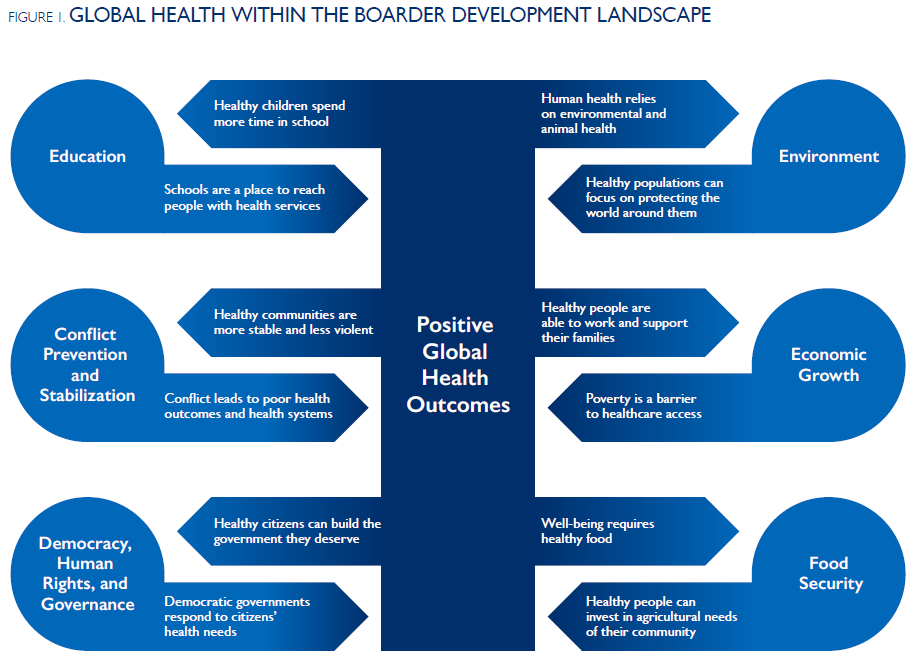
    In this powerful conversation, Ramona Godbole, former Deputy Director of Policy Planning and Programs at USAID’s Global Health Bureau, takes us inside the chaotic dismantling of America’s global health infrastructure—and the critical memo that became her final act of public service. Ramona led the development of USAID’s first-ever comprehensive global health policy, a document designed to sunset the need for foreign aid by building sustainable, equitable health systems worldwide. Just months after its release in January 2025, she watched as a new administration took a different approach: sunsetting the aid itself, prioritizing rapid withdrawal over long-term impact. What does it mean when the goal shifts from ending disease to ending assistance? When payment systems freeze even for programs labeled “lifesaving”? When the data that tracks millions of lives suddenly goes dark? Ramona shares what she witnessed during those first chaotic weeks, why she wrote the most important memo of her career, and what happened next. She explains the difference between development and humanitarian assistance—and why conflating them has consequences that ripple far beyond foreign policy. And she reveals where critical health data has gone, what the lack of transparency means for accountability, and why this moment sets a precedent that extends well beyond USAID. This isn’t just a story about foreign aid. It’s about what happens when expertise is sidelined, when transparency vanishes, and when documenting the truth becomes an act of moral courage. Below, you can read the USAID Global Health Policy that Ramona and her team developed—the strategic vision that was released in January 2025, just weeks before the agency’s dismantling began. Policy for Global Health Development: Advancing Life Expectancy and Well-Being TABLE OF CONTENT EXECUTIVE SUMMARY INTRODUCTION BACKGROUND VISION PRINCIPLES * Equitable, Inclusive, and Person-Centered * Evidence-Based and Adaptable * Locally Led Development and Country Ownership * Collaboration and Diverse Partnerships POLICY INTO PRACTICE * The Primary Health Care Approach * Strengthen Systems to Deliver Health Services * Enable Resilient and Sustainable Health Ecosystems * Advance Research and Innovation for Health LEARNING CONCLUSION GLOSSARY (OF TERMS USED THROUGHOUT) ANNEX: GLOBAL HEALTH SUB-SECTOR POLICIES, STRATEGIES, AND GUIDING DOCUMENTS EXECUTIVE SUMMARY In today’s world, the demand for a robust policy to guide USAID’s global health development work has never been more urgent. We are confronted by a landscape where emerging infectious diseases, persistent health disparities, and the sweeping consequences of climate change intersect. The COVID-19 pandemic starkly revealed these vulnerabilities, exposing significant gaps in health systems and access to services worldwide and emphasizing the necessity for a coordinated and strategic response. It underscored how intricately linked our health is to economic, environmental, and social factors, reinforcing the importance of strengthening resilience capacity—not just for the crises we anticipate, but for those we cannot predict. Through decades of USAID work, it has become increasingly clear that global health outcomes are best achieved when we work across technical areas focusing on strategic, coordinated programming and strengthening cross-cutting systems. This policy provides a new and uniting vision to guide all USAID global health development programming and defines new pathways that connect every aspect of our work. This policy institutionalizes a commitment to intentionally work across all of our health programming toward equitably and sustainably advancing life expectancy and well-being. For the first time, this policy lays out the crucial role of primary health care (PHC) in the Agency’s global health development work and how it is essential to achieving this cross-sectoral vision. This comprehensive, community-based approach helps make services supported through USAID global health programs accessible to all, including individuals from marginalized groups. With a PHC approach, health service delivery is based on a model of integrated and coordinated people-centered care, both within health facilities and in the community. Strengthening PHC is key to building health system resiliency for the future and is foundational to pandemic preparedness. This new framing of USAID’s global health development work and operations are guided by four core principles: * Equitable, Inclusive, and Person-Centered: We believe that all individuals deserve access to health services that respect and respond to their unique needs. This means addressing the barriers that prevent equitable, high-quality care; supporting health services that are both accessible and comprehensive; and putting people at the heart of everything that we do. * Evidence-Based and Adaptable: We are committed to using data and evidence both to design our programming and to foster continuous learning and monitoring and evaluation. This approach allows for effective programming and nimble responses to overcome new challenges and seize emerging opportunities. * Locally Led Development and Country Ownership: We recognize that sustainable health outcomes are best achieved when local governments and communities take the lead. By prioritizing local partnerships and emphasizing local ownership, local actors are able to strengthen health systems and services from within. * Collaboration and Diverse Partnerships: We know that no single entity can tackle global health challenges alone. Our commitment to building partnerships across sectors and with a diverse range of stakeholders allows us to harness collective action, share knowledge, and increase our impact. These principles underpin every aspect of USAID’s health development programming across three pathways through which we work to achieve our health goals, all of which are supported by the scaffolding of PHC: * Strengthen Systems to Deliver Health Services: Strengthening health systems and improving service delivery are mutually reinforcing; effective health systems support better service delivery, and high-quality services enhance the performance and sustainability of health systems. * Enable Resilient and Sustainable Health Ecosystems: Health is influenced by myriad factors as part of a broader health ecosystem, encompassing the social, economic, environmental, political, and legal elements affecting health. Building and strengthening health systems, including service delivery, that are resilient and adaptable to shocks and stresses—such as those from economic downturns, natural disasters, or pandemics—requires consideration of this health ecosystem and cross-sectoral work so that they remain sustainable over the long term. * Advance Research and Innovation for Health: Innovation drives progress. We support the development of and incorporation of new technologies, data systems, diagnostic tools, approaches, treatments, and vaccines into our programs. By fostering research partnerships and promoting local innovations, we help scientific advancements benefit all communities, including people in the most vulnerable situations. At USAID, we aim to continue to foster enduring improvements in global health. As we navigate an increasingly complex and evolving global health landscape, we must sustain the gains made while moving forward with an approach that is both adaptive and strategic and incorporates the most recent advances in innovation and research. This policy is not only a response to immediate needs but also an opportunity to build and strengthen systems that are sustainable and resilient to future shocks and stresses, while enabling the delivery of high-quality and equitable health services. Further, global health development does not exist in a vacuum. Our work in health is part of a larger, multisectoral approach that spans education, food security, economic growth, environment, climate, humanitarian response, and democracy and governance. Prog… This is a public episode. If you'd like to discuss this with other subscribers or get access to bonus episodes, visit globaldevinterrupted.substack.com/subscribe
    • Transcript
Showing 1–20 of 26 episodes