
Skip to content
Artwork for Fun Facts Daily
EducationHistorySociety & Culture

Fun Facts Daily

Kyle Wood

Start your day smarter with Fun Facts Daily. Every episode explores a different topic giving you a quick and easy way to enjoy learning something new every weekday! Fun Facts Daily cuts through the noise of the world to deliver positive, uplifting, and fascinating trivia about art, biographies, geography, history, pop culture, science and anything else that might pique your curiosity. Get your daily dose of knowledge with a word of the day, five fun facts to blow your mind as well as practical tips and tricks that you can actually use. Every episode is safe for work (SFW) and appropriate for curious listeners of all ages.

Play
  • 56 episodes
  • daily
  • Avg 14 min
  • English
Counted on this page — what you have heard stays on this device, so it is not something the list can be paged by.
  • Yesterday · 14 min

    Fun Facts About Corgis

    Welsh Corgis are intelligent, energetic herding dogs historically bred in Wales as heelers, using their low-to-the-ground stature to nip at the ankles of livestock while avoiding reactionary kicks. The two distinct breeds—the Cardigan Welsh Corgi and the Pembroke Welsh Corgi—possess separate lineages and physical features, ranging from tail structure to ear shape. Both varieties feature dense, weather-resistant double coats that undergo substantial seasonal shedding. Known for high working intelligence, these dogs excel at independent problem-solving and rapid command retention, requiring regular mental stimulation alongside physical activity to prevent destructive habits. Their unique anatomy also influences their daily behaviors and health needs. Corgis frequently adopt resting positions such as the "sploot" or sleeping flat on their backs, utilizing flexible hip joints and exposed, lightly furred bellies to stretch and regulate body temperature. However, their elongated spines and short limbs place significant stress on spinal discs, leaving them vulnerable to conditions like intervertebral disc disease (IVDD). Incorporating pet ramps for high furniture and maintaining strict portion control help preserve joint longevity. Corgis also hold a prominent place in royal history, notably through Queen Elizabeth II’s lifelong companion breeding program and the accidental creation of the "Dorgi" crossbreed with dachshunds. Want to learn about other amazing animals? Check out my Spotify playlist, Fun Facts About Animals ⁠Listen Ad-Free on Patreon. ⁠ For just $3 per month, you can get ad-free versions of Fun Facts Daily, Who ARTed and Art Smart. Head over to ⁠https://www.patreon.com/cw/FunFactsDailyPod⁠ if you are interested. Want to learn more? Head over to my website www.funfactsdailypod.com and be sure to listen to my other podcasts Who ARTed: Weekly Art History for All Ages or Art Smart. For family fun, check out my son's podcast Rainbow Puppy Science Lab The image used in the episode cover art came from Adobe's stock assets. Fun Facts Daily is an Airwave Media Podcast. If you are interested in advertising on this or any other Airwave Media show, email: advertising@airwavemedia.com Learn more about your ad choices. Visit megaphone.fm/adchoices
  • Thursday · 11 min

    Fun Facts About the Rosetta Stone

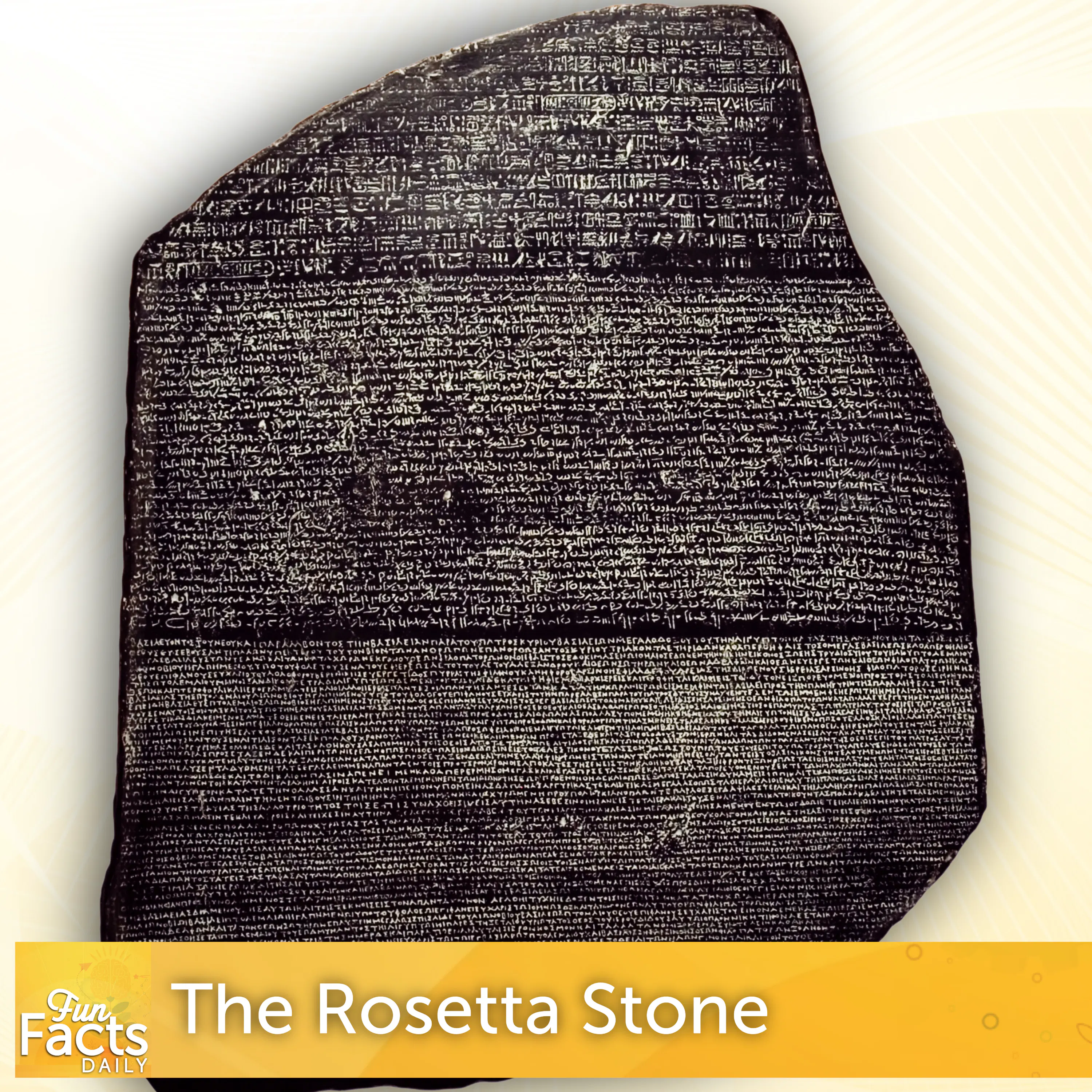
    The Rosetta Stone is one of history’s most renowned archaeological artifacts, serving as the foundational key that unlocked ancient Egyptian hieroglyphic writing. Discovered in July 1799 by French soldiers under Napoleon Bonaparte near the town of Rashid (Rosetta), the granodiorite slab features a decree issued at Memphis in 196 BCE on behalf of King Ptolemy V. To ensure wide administrative, religious, and public comprehension, the royal decree was inscribed across three scripts: ancient Greek, Egyptian Demotic, and formal hieroglyphs. Because scholars could already read the ancient Greek text, the stone provided an unprecedented comparative baseline to begin decoding the forgotten written language of ancient Egypt. Although often envisioned as an instantaneous translation breakthrough, deciphering the inscriptions required more than two decades of meticulous linguistic research. Building on critical progress made by English polymath Thomas Young, who identified royal names such as Ptolemy within circled cartouches, French scholar Jean-François Champollion finally cracked the code in 1822. By integrating his expertise in Coptic and cross-referencing inscriptions from the Philae obelisk, Champollion proved that hieroglyphs functioned both as phonetic signs and ideograms rather than purely symbolic pictures. Measuring roughly 3 feet 9 inches tall, the stone housed today in the British Museum is actually a broken fragment of a larger stela, yet it remains an enduring symbol of decipherment and linguistic discovery. Want to learn about other amazing animals? Check out my Spotify playlist, Fun Facts About Animals ⁠Listen Ad-Free on Patreon. ⁠ For just $3 per month, you can get ad-free versions of Fun Facts Daily, Who ARTed and Art Smart. Head over to ⁠https://www.patreon.com/cw/FunFactsDailyPod⁠ if you are interested. Want to learn more? Head over to my website www.funfactsdailypod.com and be sure to listen to my other podcasts Who ARTed: Weekly Art History for All Ages or Art Smart. For family fun, check out my son's podcast Rainbow Puppy Science Lab The image used in the episode cover art came from Adobe's stock assets. Fun Facts Daily is an Airwave Media Podcast. If you are interested in advertising on this or any other Airwave Media show, email: advertising@airwavemedia.com Learn more about your ad choices. Visit megaphone.fm/adchoices
  • Wednesday · 16 min

    Fun Facts About the James Webb Space Telescope

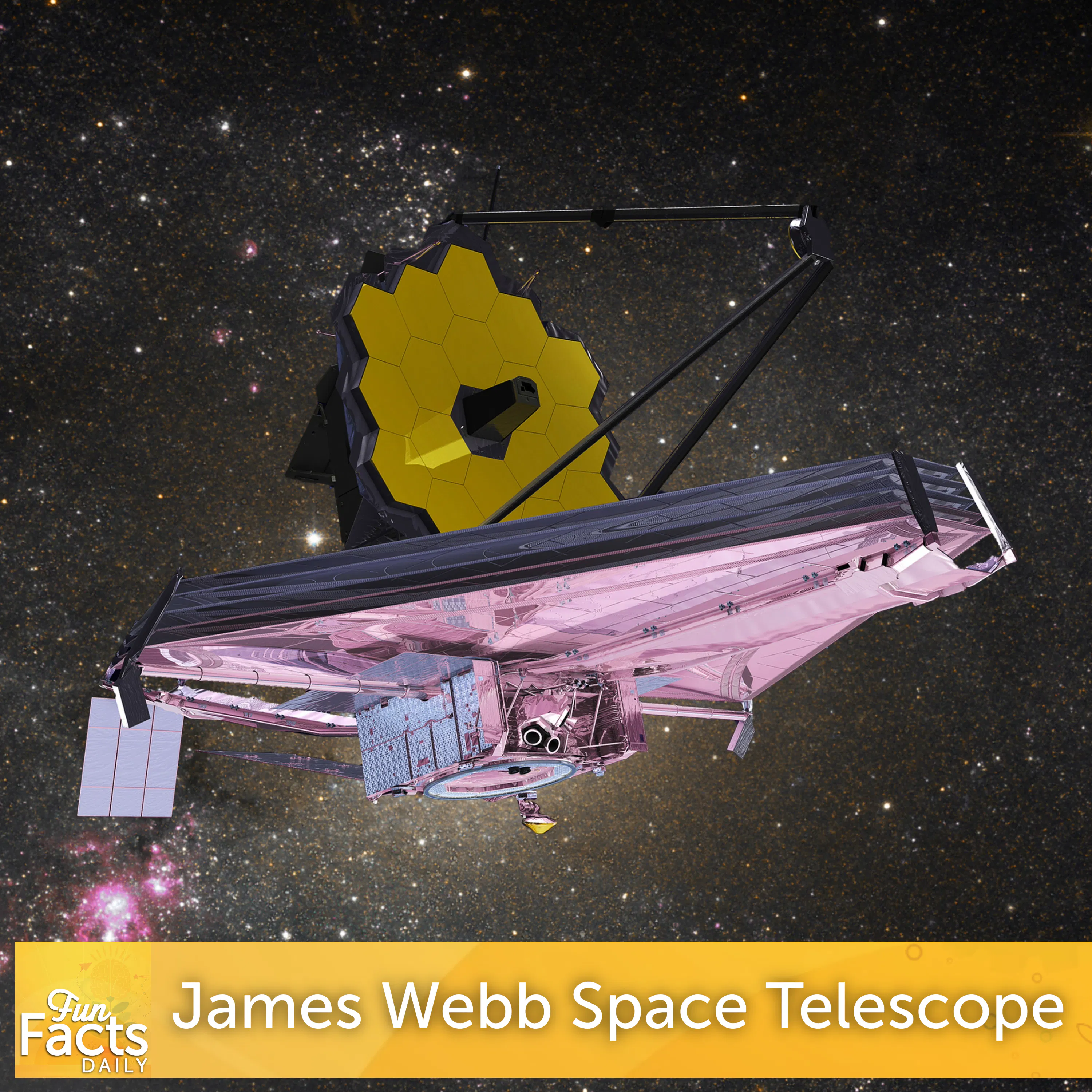
    The James Webb Space Telescope (JWST) is an advanced orbital infrared observatory positioned roughly one million miles from Earth at the second Sun-Earth Lagrange point (L2). Named after former NASA administrator James Webb, the observatory operates far beyond the service range of astronauts, utilizing a looping halo orbit around L2 to ensure an unobstructed view of deep space while keeping the Earth, Sun, and Moon consistently behind its massive protective sunshield. The five-layer Kapton sunshield spans nearly 70 feet long and allows the craft's shaded side to reach cryogenic temperatures of -388°F (40 K), with an onboard cryocooler chilling sensitive instruments like the Mid-Infrared Instrument (MIRI) down to 7 Kelvin to accurately detect faint astronomical signals. Constructed with an origami-like design to fit aboard an Ariane 5 rocket for its launch, the telescope features an 18-segment hexagonal primary mirror built from lightweight beryllium ore and coated with a microscopically thin layer of vapor-deposited gold. Gold maximizes reflectivity in the infrared spectrum, enabling the observatory to capture ancient light shifted toward longer wavelengths through cosmological redshift. By observing light that began traveling more than 13.5 billion years ago, the telescope functions as a cosmic time machine studying the earliest stars and galaxies. Raw data and monochromatic image files captured by the observatory are openly accessible to astronomers and the public alike via the Barbara A. Mikulski Archive for Space Telescopes (MAST). Want to learn about other amazing animals? Check out my Spotify playlist, Fun Facts About Animals ⁠Listen Ad-Free on Patreon. ⁠ For just $3 per month, you can get ad-free versions of Fun Facts Daily, Who ARTed and Art Smart. Head over to ⁠https://www.patreon.com/cw/FunFactsDailyPod⁠ if you are interested. Want to learn more? Head over to my website www.funfactsdailypod.com and be sure to listen to my other podcasts Who ARTed: Weekly Art History for All Ages or Art Smart. For family fun, check out my son's podcast Rainbow Puppy Science Lab The image used in the episode cover art came from Adobe's stock assets. Fun Facts Daily is an Airwave Media Podcast. If you are interested in advertising on this or any other Airwave Media show, email: advertising@airwavemedia.com Learn more about your ad choices. Visit megaphone.fm/adchoices
  • Tuesday · 13 min

    Fun Facts About Komodo Dragons

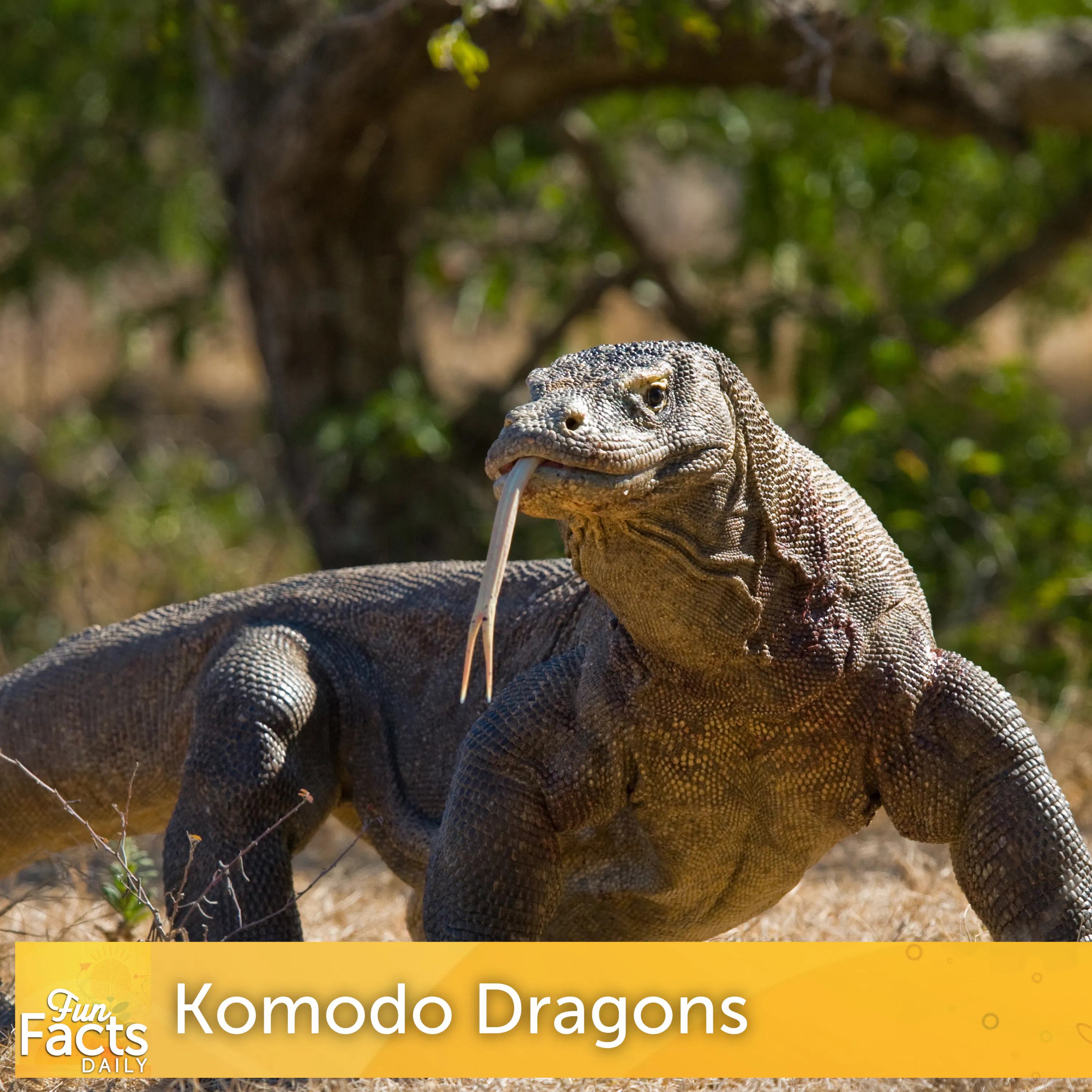
    The Komodo dragon (Varanus komodoensis) is the world’s largest living lizard, native to a small group of Indonesian islands. Renowned as apex predators, adult Komodo dragons can consume up to 80% of their body weight in under 30 minutes, aided by flexible, decouplable lower jaws, an expandable stomach, and an airway opening beneath the tongue that permits breathing while swallowing large prey whole. These reptiles track prey and carrion up to six miles away using a sensitive, forked yellow tongue that delivers scent particles directly to the Jacobson’s organ in the roof of the mouth. Beneath their outer scales lies a protective layer of interlocking bony deposits called osteoderms, forming a natural chain-mail armor that hardens and matures as the lizards transition from youthful arboreal living to competitive ground combat. Despite their lumbering appearance, Komodo dragons can reach sprint speeds of 12 miles per hour in explosive charges, navigate rugged terrains, climb trees as juveniles, and swim between islands. Historically believed to bring down large prey via septic shock caused by mouth bacteria, modern research confirms that Komodo dragons actually kill using specialized venom glands in their lower jaws. This venom secretes anti-coagulating, shock-inducing proteins that rapidly drop a victim's blood pressure. First documented scientifically by Western researchers in the 1910s, these protected monitor lizards inspired the legendary monster film King Kong and continue to thrive in the wild under the care of local park rangers using traditional safety measures. Want to learn about other amazing animals? Check out my Spotify playlist, Fun Facts About Animals ⁠Listen Ad-Free on Patreon. ⁠ For just $3 per month, you can get ad-free versions of Fun Facts Daily, Who ARTed and Art Smart. Head over to ⁠https://www.patreon.com/cw/FunFactsDailyPod⁠ if you are interested. Want to learn more? Head over to my website www.funfactsdailypod.com and be sure to listen to my other podcasts Who ARTed: Weekly Art History for All Ages or Art Smart. For family fun, check out my son's podcast Rainbow Puppy Science Lab The image used in the episode cover art came from Adobe's stock assets. Fun Facts Daily is an Airwave Media Podcast. If you are interested in advertising on this or any other Airwave Media show, email: advertising@airwavemedia.com Learn more about your ad choices. Visit megaphone.fm/adchoices

  • Monday · 14 min

    Fun Facts About the Black Sox Scandal

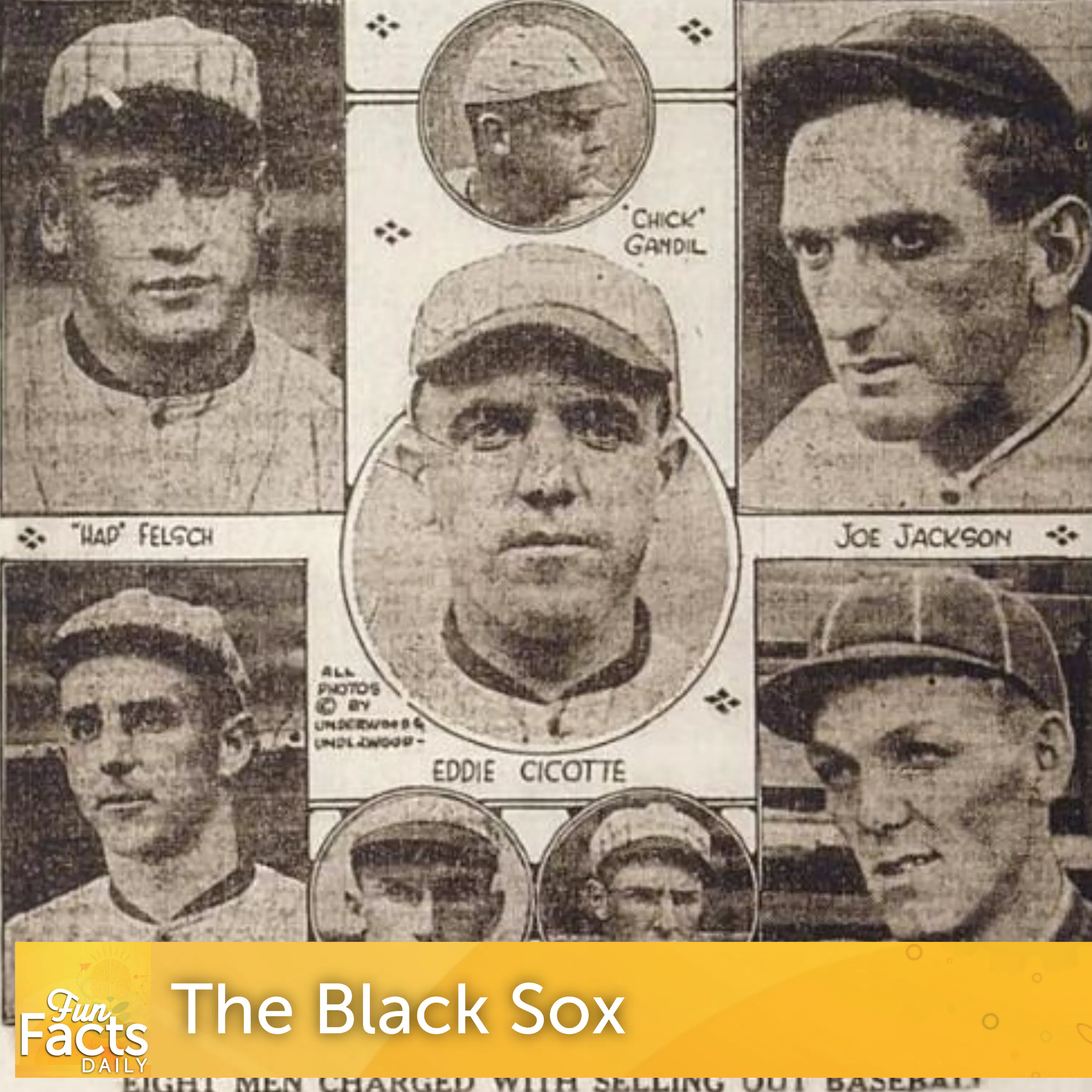
    The 1919 World Series remains one of the most infamous events in baseball history due to the Chicago Black Sox scandal, in which eight players from the Chicago White Sox conspired with professional gamblers to intentionally lose the championship. Long before the scandal earned the team widespread notoriety, the moniker "Black Sox" was reportedly coined because team owner Charles Comiskey refused to pay for uniform laundering, prompting players to play in unwashed, soiled gear. Despite the illicit arrangement, individual performances told a complex story. Star outfielder "Shoeless" Joe Jackson batted .375 and set a World Series record with 12 hits, while clean rookie pitcher Dickey Kerr played to win, throwing two complete-game victories across the expanded best-of-nine series. Although a Cook County jury acquitted all eight accused players of criminal conspiracy charges in 1921, the fallout permanently altered the landscape of Major League Baseball. Newly appointed Commissioner Kenesaw Mountain Landis took an uncompromising stance against corruption, issuing lifetime bans to every involved athlete, including Buck Weaver, who did not participate in the fix or take money, but failed to report his teammates' actions. The enduring legend surrounding the scandal also birthed enduring cultural folklore, such as the famous plea, "Say it ain't so, Joe". Though popularized as an authentic moment on courthouse steps, the interaction was actually a creative dramatization by Chicago reporter Charles Owens, illustrating how mythology often overshadows reality in the wake of scandal. ⁠Listen Ad-Free on Patreon. ⁠ For just $3 per month, you can get ad-free versions of Fun Facts Daily, Who ARTed and Art Smart. Head over to ⁠https://www.patreon.com/cw/FunFactsDailyPod⁠ if you are interested. Want to learn more? Head over to my website www.funfactsdailypod.com and be sure to listen to my other podcasts Who ARTed: Weekly Art History for All Ages or Art Smart. For family fun, check out my son's podcast Rainbow Puppy Science Lab Fun Facts Daily is an Airwave Media Podcast. If you are interested in advertising on this or any other Airwave Media show, email: advertising@airwavemedia.com Learn more about your ad choices. Visit megaphone.fm/adchoices

  • September 25 · 14 min

    Fun Facts About Agatha Christie

    Agatha Christie stands as the best-selling fiction author in history, with over two billion copies sold worldwide across 66 detective novels and 14 short story collections. Officially recognized by Guinness World Records and translated into more than 100 languages, her work helped codify the Golden Age "whodunit" structure, in which authors provide readers with the necessary clues to deduce the culprit alongside the investigator. Beyond her print dominance, which includes record-setting titles like And Then There Were None, Christie also conquered the stage. Her murder mystery play The Mousetrap holds the world record for the longest continuous theatrical run, having logged over 29,000 performances in London's West End since its debut in 1952. Christie’s prolific storytelling drew directly from a rich and adventurous life. During both World Wars, she served as a volunteer nurse and hospital apothecary assistant, gaining an advanced knowledge of chemistry, lethal dosages, and toxicology that made poison her weapon of choice in over half of her murder mysteries. In addition to her mystery canon, she authored six non-crime romance novels under the pen name Mary Westmacott to explore emotional and introspective themes, and was notably among the first Western women to document learning to surf standing up while visiting Hawaii in 1922. Despite persistent rumors that her infamous 11-day disappearance in 1926 was a calculated publicity stunt, historical and medical records confirm it was a genuine personal crisis and fugue state triggered by trauma and stress. ⁠Listen Ad-Free on Patreon. ⁠ For just $3 per month, you can get ad-free versions of Fun Facts Daily, Who ARTed and Art Smart. Head over to ⁠https://www.patreon.com/cw/FunFactsDailyPod⁠ if you are interested. Want to learn more? Head over to my website www.funfactsdailypod.com and be sure to listen to my other podcasts Who ARTed: Weekly Art History for All Ages or Art Smart. For family fun, check out my son's podcast Rainbow Puppy Science Lab Fun Facts Daily is an Airwave Media Podcast. If you are interested in advertising on this or any other Airwave Media show, email: advertising@airwavemedia.com Learn more about your ad choices. Visit megaphone.fm/adchoices

  • September 24 · 15 min

    Fun Facts About Apollo 13

    Launched in April 1970 as NASA’s third intended lunar landing mission, Apollo 13 transformed into one of the most remarkable rescue operations in human spaceflight history after an oxygen tank ruptured roughly 56 hours after liftoff. The explosion, caused by an electrical short circuit during a routine cryogenic stirring procedure, crippled the service module and severely compromised electrical power, water generation, and breathable air supplies. Faced with life-threatening system failures, astronauts Jim Lovell, Jack Swigert, and Fred Haise utilized the lunar module as a makeshift life raft, completing a slingshot maneuver around the far side of the Moon on a free-return trajectory that set an unbroken crewed distance record of 248,655 statute miles from Earth. Surviving the journey back required extraordinary real-time engineering and precise manual navigation under high-stress conditions. Flight controllers and crew improvised a functional carbon dioxide scrubbing adapter nicknamed "the mailbox" using flight manuals, plastic bags, suit hoses, and duct tape, while ground-calculated manual burns aligned the spacecraft without guidance computers. Meanwhile, grounded command module pilot Ken Mattingly worked in simulators in Houston to pioneer an ultra-low-power startup procedure that allowed the chilled command module to successfully reactivate for atmospheric reentry and a safe splashdown in the South Pacific Ocean. ⁠Listen Ad-Free on Patreon. ⁠ For just $3 per month, you can get ad-free versions of Fun Facts Daily, Who ARTed and Art Smart. Head over to ⁠https://www.patreon.com/cw/FunFactsDailyPod⁠ if you are interested. Want to learn more? Head over to my website www.funfactsdailypod.com and be sure to listen to my other podcasts Who ARTed: Weekly Art History for All Ages or Art Smart. For family fun, check out my son's podcast Rainbow Puppy Science Lab The image used in the episode cover art came from NASA's website. A group of six astronauts and two flight controllers monitor the console activity in the Mission Operations Control Room (MOCR) of the Mission Control Center (MCC) during the problem-plagued Apollo 13 lunar landing mission. Seated, left to right, are MOCR Guidance Officer Raymond F. Teague; astronaut Edgar D. Mitchell, Apollo 14 prime crew lunar module pilot; and astronaut Alan B. Shepard Jr., Apollo 14 prime crew commander. Standing, left to right, are scientist-astronaut Anthony W. England; astronaut Joe H. Engle, Apollo 14 backup crew lunar module pilot; astronaut Eugene A. Cernan, Apollo 14 backup crew commander; astronaut Ronald E. Evans, Apollo 14 backup crew command module pilot; and M.P. Frank, a flight controller. When this picture was made, the Apollo 13 moon landing had already been canceled, and the Apollo 13 crew men were in trans-Earth trajectory attempting to bring their damaged spacecraft back home. Fun Facts Daily is an Airwave Media Podcast. If you are interested in advertising on this or any other Airwave Media show, email: advertising@airwavemedia.com Learn more about your ad choices. Visit megaphone.fm/adchoices
  • September 23 · 16 min

    Fun Facts About Oranges

    The orange (Citrus sinensis) is a hesperidium, a modified botanical berry defined by a leathery peel and segmented, juice-filled pulp vesicles. The fruit first developed in Southeast Asia before traversing global trade routes, lending its name to Middle English well before writers began using "orange" as a formal color word in the sixteenth century. Today, Brazil stands as the planet's dominant producer, yielding roughly one out of every three oranges and supplying over 70% of the world's processed juice concentrate. Beyond commerce, the orange holds a storied botanical lineage: the widely grown Washington navel orange traces back to a single spontaneous mutation in nineteenth-century Brazil, requiring all subsequent trees to be propagated via cloning and bud grafting. Historically prized as symbols of prestige, citrus trees prompted European monarchs to build elaborate, heated stone conservatories known as orangeries to shelter the frost-sensitive plants through freezing winters. In addition to culinary appeal, oranges possess notable biochemical utility, largely concentrated within the flavedo. The peel contains d-limonene, an organic hydrocarbon that makes up roughly 95% of citrus peel essential oil. Serving naturally as pest defense by breaking down insect cuticles, this flammable solvent is widely used across modern industries as an eco-friendly degreaser and termiticide. When selecting fresh oranges, fruit that feels heavy for its size indicates juicy, moisture-rich pulp, and a greenish tint simply reflects warm growing conditions rather than underripeness. Because citrus fruits are non-climacteric, they do not produce additional sugars after harvest. While eighteenth-century naval trials established citrus as the quintessential remedy against scurvy, the orange is not the most concentrated whole-food source of ascorbic acid; common produce such as red bell peppers, kiwifruits, and broccoli provide higher densities of vitamin C per gram. ⁠Listen Ad-Free on Patreon. ⁠ For just $3 per month, you can get ad-free versions of Fun Facts Daily, Who ARTed and Art Smart. Head over to ⁠https://www.patreon.com/cw/FunFactsDailyPod⁠ if you are interested. Want to learn more? Head over to my website www.funfactsdailypod.com and be sure to listen to my other podcasts Who ARTed: Weekly Art History for All Ages or Art Smart. For family fun, check out my son's podcast Rainbow Puppy Science Lab The image used in the episode cover art came from Adobe's stock assets. Fun Facts Daily is an Airwave Media Podcast. If you are interested in advertising on this or any other Airwave Media show, email: advertising@airwavemedia.com Learn more about your ad choices. Visit megaphone.fm/adchoices

  • September 22 · 14 min

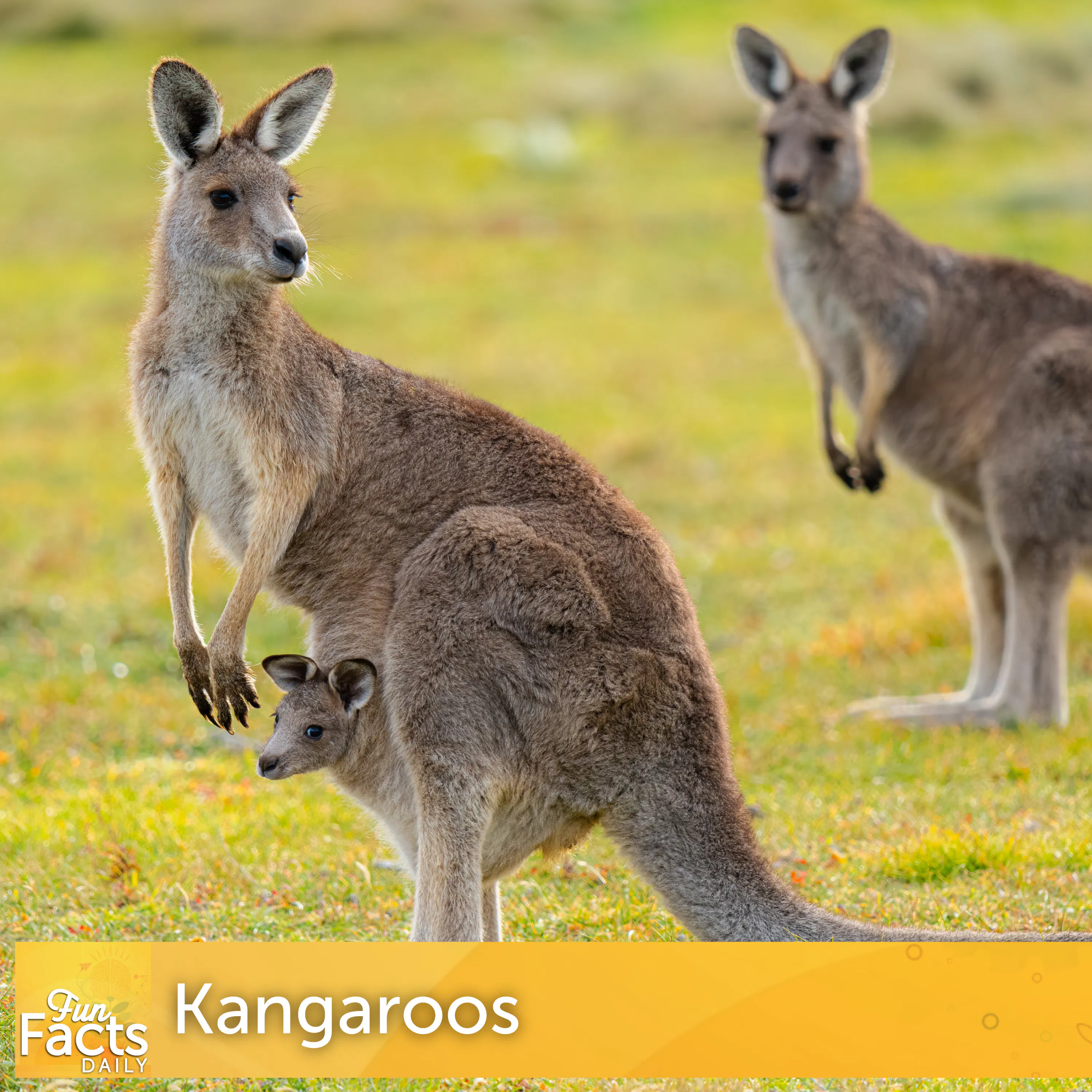
    Fun Facts About Kangaroos

    Kangaroos are iconic Australian macropods uniquely evolved for energy-efficient locomotion and survival in arid environments. Classified under the family Macropodidae, meaning "large foot," these herbivorous marsupials feature specialized elastic tendons in their hind limbs, particularly an oversized plantaris tendon, that store and release kinetic energy with every bound. This biomechanical design allows kangaroos to maintain high hopping speeds without a corresponding increase in oxygen consumption, an adaptation complemented by an internal movement mechanism where shifting organs naturally assist lung expansion and deflation. At lower speeds while grazing, kangaroos adopt a pentapedal crawl, utilizing a heavy, muscular tail as a functional fifth limb that propels their body weight while keeping their balance steady. Beyond their movement mechanics, kangaroos exhibit remarkable reproductive adaptations to endure fluctuating climates and droughts. After a gestation period of just 30 to 36 days, an undeveloped joey weighing under a single gram climbs unaided into the mother’s pouch, where it nurses for several months. Through embryonic diapause, female kangaroos can pause development of an embryo, allowing a single mother to concurrently support an older joey outside the pouch, an unweaned joey attached to a teat inside, and a dormant embryo in the womb. Adjacent mammary glands simultaneously produce chemically distinct milk formulas customized to the distinct nutritional stages of each offspring. Contrary to the enduring myth that the word "kangaroo" translated to "I don't understand," the name stems directly from gangurru, the Guugu Yimithirr term for the eastern grey kangaroo recorded by European naturalists in 1770. Want to learn about other amazing animals? Check out my Spotify playlist, Fun Facts About Animals ⁠Listen Ad-Free on Patreon. ⁠ For just $3 per month, you can get ad-free versions of Fun Facts Daily, Who ARTed and Art Smart. Head over to ⁠https://www.patreon.com/cw/FunFactsDailyPod⁠ if you are interested. Want to learn more? Head over to my website www.funfactsdailypod.com and be sure to listen to my other podcasts Who ARTed: Weekly Art History for All Ages or Art Smart. For family fun, check out my son's podcast Rainbow Puppy Science Lab The image used in the episode cover art came from Adobe's stock assets. Fun Facts Daily is an Airwave Media Podcast. If you are interested in advertising on this or any other Airwave Media show, email: advertising@airwavemedia.com Learn more about your ad choices. Visit megaphone.fm/adchoices

  • September 21 · 16 min

    Fun Facts About Alcatraz

    Alcatraz Island, situated in San Francisco Bay, holds a storied place in American history as a coastal military fortification, the home of the West Coast’s first operational lighthouse, and the nation’s most notorious maximum-security federal penitentiary. Established as a federal prison in 1934 to hold chronic disruptors from across the penal system, the facility enforced strict regulations to prevent escape, including requiring inmates to take exclusively warm showers so their bodies could not acclimate to the frigid 50-to-55-degree bay waters. Beyond its reputation for harsh isolation and high-profile inmates like Al Capone, who played banjo in the prison band, the island also functioned as a self-contained community. Around 300 family members and civilian staff lived on-site, complete with a grocery store, bowling alley, and ornamental gardens cultivated on the rocky sandstone cliffs. Despite Alcatraz's reputation as an inescapable fortress, the facility witnessed daring prison breaks, most notably the June 1962 escape orchestrated by Frank Morris and brothers John and Clarence Anglin. Using improvised drills made from vacuum motors, dummy heads crafted from soap and barbershop hair, and a raft fashioned from vulcanized rubber raincoats, the trio slipped into the bay, leaving behind a cold case that remains open with the U.S. Marshals Service. While popular folklore long attributed the island's security to waters swarming with man-eating great white sharks, the true barrier was the lethal combination of rapid bay currents and swift hypothermia. Today, managed as a protected national park site, the island serves as a sanctuary for historic heirloom gardens and major seabird rookeries, drawing visitors worldwide to experience its cultural and natural history. In this episode, I talked about the myth that great white sharks patrolled the waters around Alcatraz, ready to eat any inmate who tried to escape. If you want to learn more about great white sharks or other animals, check out my Spotify playlist, Fun Facts About Animals ⁠Listen Ad-Free on Patreon. ⁠ For just $3 per month, you can get ad-free versions of Fun Facts Daily, Who ARTed and Art Smart. Head over to ⁠https://www.patreon.com/cw/FunFactsDailyPod⁠ if you are interested. Want to learn more? Head over to my website www.funfactsdailypod.com and be sure to listen to my other podcasts Who ARTed: Weekly Art History for All Ages or Art Smart. For family fun, check out my son's podcast Rainbow Puppy Science Lab The image used in the episode cover art came from Adobe's stock assets. Fun Facts Daily is an Airwave Media Podcast. If you are interested in advertising on this or any other Airwave Media show, email: advertising@airwavemedia.com Learn more about your ad choices. Visit megaphone.fm/adchoices

  • September 18 · 16 min

    Fun Facts About Timothy Dexter

    Timothy Dexter was an eccentric 18th-century American merchant from Massachusetts who achieved legendary wealth through a sequence of seemingly foolish, highly improbable commercial ventures. Dexter first built a fortune in the wake of the Revolutionary War by purchasing massive amounts of depreciated Continental currency for pennies on the dollar, which yielded vast returns when Alexander Hamilton’s Funding Act of 1790 allowed debt to be funded with new federal bonds. Dexter expanded his wealth when competitors repeatedly tried to ruin him with bad advice: he shipped stray cats to the Caribbean just as local warehouses suffered severe rodent infestations, exported coal to the mining hub of Newcastle right in the middle of a massive miners' strike, and sent New England bed-warming pans to the West Indies, where sugar plantations bought them at a premium to skim molasses. Beyond commerce, Dexter gained lasting notoriety for his extreme personal eccentricities and idiosyncratic writing. In 1802, he published an autobiographical work titled A Pickle for the Knowing Ones, printed entirely without punctuation marks and filled with bizarre phonetic spelling. When readers criticized the chaotic manuscript, Dexter printed a second edition featuring a full page of punctuation marks at the back, famously inviting readers to "peper and solt it as they plese." Craving validation from his community, he even orchestrated his own mock funeral to see who would mourn him, drawing thousands of attendees before bursting from hiding to scold his wife for not crying convincingly enough during the procession. ⁠Listen Ad-Free on Patreon. ⁠ For just $3 per month, you can get ad-free versions of Fun Facts Daily, Who ARTed and Art Smart. Head over to ⁠https://www.patreon.com/cw/FunFactsDailyPod⁠ if you are interested. Want to learn more? Head over to my website www.funfactsdailypod.com and be sure to listen to my other podcasts Who ARTed: Weekly Art History for All Ages or Art Smart. For family fun, check out my son's podcast Rainbow Puppy Science Lab The image used in the episode cover art came from an engraving of Dexter by James Akin in 1805 and an image of the appendix from A Pickle for the Knowing Ones. Fun Facts Daily is an Airwave Media Podcast. If you are interested in advertising on this or any other Airwave Media show, email: advertising@airwavemedia.com Learn more about your ad choices. Visit megaphone.fm/adchoices

  • September 17 · 15 min

    Fun Facts About Washing Machines

    The evolution of the washing machine represents a major milestone in domestic engineering and textile science. Laundry cleaning relies on surfactants, chemical agents that reduce water’s surface tension and use dual-ended molecular structures to bind water molecules to dirt, body grease, and oils. Historically, laundering demanded intense physical labor, from manual river scrubbing to hand-cranked wooden wash drums, before the 1908 introduction of the electric Thor washer. Today, front-loading washing machines utilize rotational speed, centripetal force, and inertia during high-speed spin cycles of up to 1,600 RPM to mechanically separate water through drum perforations, significantly cutting the energy required for heat drying. On an industrial scale, continuous-batch tunnel washers recycle up to 70 percent of their water to process over 100 tons of linens daily, while space missions sidestep water constraints entirely through disposable clothing and antimicrobial, silver-threaded textiles. Achieving clean laundry while preserving machine longevity depends heavily on proper maintenance and accurate detergent dosage. A widespread laundry misconception assumes that using extra detergent produces cleaner clothes; in reality, excess detergent creates trapped soap residue that coats fabric fibers, attracts dirt and dead skin cells, fades fabric colors, and forms foul-smelling bacterial biofilms inside the drum. Modern high-efficiency washers require only about two tablespoons of detergent per load to avoid over-sudsing and false drainage cycles. Routine appliance care, such as cleaning rubber door gaskets, running monthly hot-water cycles with vinegar or machine-cleaning tablets, and leaving the washer door slightly open to air-dry between cycles, prevents mildew growth and keeps clothes smelling fresh. ⁠Listen Ad-Free on Patreon. ⁠ For just $3 per month, you can get ad-free versions of Fun Facts Daily, Who ARTed and Art Smart. Head over to ⁠https://www.patreon.com/cw/FunFactsDailyPod⁠ if you are interested. Want to learn more? Head over to my website www.funfactsdailypod.com and be sure to listen to my other podcasts Who ARTed: Weekly Art History for All Ages or Art Smart. For family fun, check out my son's podcast Rainbow Puppy Science Lab The image used in the episode cover art came from Adobe's stock assets. Fun Facts Daily is an Airwave Media Podcast. If you are interested in advertising on this or any other Airwave Media show, email: advertising@airwavemedia.com Learn more about your ad choices. Visit megaphone.fm/adchoices

  • September 16 · 15 min

    Fun Facts About Your Sense of Vision

    The human visual system is a remarkably complex network that converts incoming light waves into clear, spatial mental representations, dedicating nearly a third of the brain’s cerebral cortex to processing vision. When light passes through the cornea and lens, it projects an inverted image onto the retina, which the brain's visual cortex systematically deciphers alongside sensory cues from the inner ear and touch. This intricate machinery includes rapid, coordinated eye jumps called saccades, during which the brain temporarily suspends visual processing to prevent motion blur. The ocular system also actively conceals the retina's natural physiological blind spot through binocular vision and cortex-driven pattern completion, relying on dense networks of hyperactive, fatigue-resistant extraocular muscles that execute over 100,000 movements each day. While the majority of humans possess trichromatic vision that differentiates roughly one million hues, rare genetic expressions like tetrachromacy introduce a fourth functional cone type that allows certain individuals to distinguish an estimated 100 million colors. Maintaining lifelong optical health requires vigilance against high-energy solar radiation, which can burn retinal tissue and cause permanent solar retinopathy, as well as ambient UV exposure that reflects aggressively off snow and penetrates cloud cover. In contrast, popular eye myths concerning reading in dim light, sitting close to screens, or trying on another person's prescription lenses cause only temporary eye strain or headaches; they create zero structural damage or permanent changes to ocular anatomy. ⁠Listen Ad-Free on Patreon. ⁠ For just $3 per month, you can get ad-free versions of Fun Facts Daily, Who ARTed and Art Smart. Head over to ⁠https://www.patreon.com/cw/FunFactsDailyPod⁠ if you are interested. Want to learn more? Head over to my website www.funfactsdailypod.com and be sure to listen to my other podcasts Who ARTed: Weekly Art History for All Ages or Art Smart. For family fun, check out my son's podcast Rainbow Puppy Science Lab The image used in the episode cover art came from Adobe's stock assets. Fun Facts Daily is an Airwave Media Podcast. If you are interested in advertising on this or any other Airwave Media show, email: advertising@airwavemedia.com Learn more about your ad choices. Visit megaphone.fm/adchoices

  • September 15 · 14 min

    Fun Facts About Skunks

    Skunks (Mephitidae) are small mammals celebrated for their distinctive black-and-white coats, a classic evolutionary defense mechanism known as aposematism that visually warns predators of their potent chemical spray. Classified as their own distinct biological family through genetic sequencing rather than belonging to the weasel family (Mustelidae), these nocturnal omnivores provide essential pest control by feeding on lawn grubs, crop pests, and stinging insects. Their unique physiological resilience also makes them notable predators, possessing natural immunity to the hemotoxic venom of pit vipers like copperheads and rattlesnakes. A skunk's signature defense relies on volatile sulfur-containing compounds called thiols and thioacetates, which can be detected by the human olfactory system in tiny concentrations. Skunks conserve this finite spray through a variety of escalating warning behaviors, including foot stamping, bluff charges, and acrobatic handstands because replenishing depleted anal glands requires significant metabolic energy over several days. While common folklore suggests soaking sprayed items in acidic tomato juice to neutralize the odor, the perceived success is merely a result of olfactory fatigue; scientifically breaking down the foul-smelling thiols into odorless sulfonates requires an alkaline oxidizer mixture of hydrogen peroxide, baking soda, and liquid dish soap. Want to learn about other amazing animals? Check out my Spotify playlist, Fun Facts About Animals ⁠Listen Ad-Free on Patreon. ⁠ For just $3 per month, you can get ad-free versions of Fun Facts Daily, Who ARTed and Art Smart. Head over to ⁠https://www.patreon.com/cw/FunFactsDailyPod⁠ if you are interested. Want to learn more? Head over to my website www.funfactsdailypod.com and be sure to listen to my other podcasts Who ARTed: Weekly Art History for All Ages or Art Smart. For family fun, check out my son's podcast Rainbow Puppy Science Lab The image used in the episode cover art came from Adobe's stock assets. Fun Facts Daily is an Airwave Media Podcast. If you are interested in advertising on this or any other Airwave Media show, email: advertising@airwavemedia.com Learn more about your ad choices. Visit megaphone.fm/adchoices

  • September 14 · 14 min

    Fun Facts About Ha Long Bay

    Ha Long Bay, located in northeastern Vietnam’s Gulf of Tonkin, is a UNESCO World Heritage site renowned for its striking seascape of nearly 2,000 limestone islands and islets. Formed from thick layers of ancient marine sediment deposited during the Paleozoic era between 500 and 250 million years ago, these colossal pillars evolved through tectonic uplift and millions of years of tropical karst weathering. The resulting landscape features steep-walled towers rising hundreds of feet above emerald waters, cavernous underground networks rich in speleothems ,such as stalactites and flowstones, and enclosed marine lakes known as drowned dolines, which harbor fragile, specialized ecosystems isolated from open-ocean currents. Human adaptation has defined the region for millennia, beginning with prehistoric hunter-gatherers of the Soi Nhu and Ha Long cultures who occupied the bay’s limestone caves from as early as 25,000 years ago. As post-glacial sea levels rose and submerged the inland valleys into a marine archipelago, later communities mastered coastal survival, utilizing specialized polished stone tools and net sinkers. In more modern history, this aquatic lifestyle continued through vibrant floating fishing villages constructed on bamboo rafts and buoyant drums, such as Cua Van and Vung Vieng. While many residents have relocated to the mainland in recent years to preserve water quality, Ha Long Bay remains a globally celebrated marvel of cultural resilience, natural history, and maritime wonder. ⁠Listen Ad-Free on Patreon. ⁠ For just $3 per month, you can get ad-free versions of Fun Facts Daily, Who ARTed and Art Smart. Head over to ⁠https://www.patreon.com/cw/FunFactsDailyPod⁠ if you are interested. Want to learn more? Head over to my website www.funfactsdailypod.com and be sure to listen to my other podcasts Who ARTed: Weekly Art History for All Ages or Art Smart. For family fun, check out my son's podcast Rainbow Puppy Science Lab The image used in the episode cover art came from Adobe's stock assets. Fun Facts Daily is an Airwave Media Podcast. If you are interested in advertising on this or any other Airwave Media show, email: advertising@airwavemedia.com Learn more about your ad choices. Visit megaphone.fm/adchoices

  • September 11 · 16 min

    Fun Facts About DayGlo Colors

    Day-Glo colors owe their existence to an accidental discovery made by brothers Bob and Joe Switzer in the 1930s while Bob was recovering from an injury in a dark basement. Unlike standard pigments, which merely reflect a fraction of the visible spectrum, fluorescent pigments absorb invisible ultraviolet light and instantly re-emit that energy as longer, visible wavelengths. By suspending these fluorescent chemicals in clear resins, the Switzers stabilized paints that can appear up to four times brighter than traditional hues, reflecting up to 300 percent of the visible colored light that strikes them. The resulting high-visibility pigments quickly transitioned from basement experiments to lifesaving technology. During World War II, the United States military used vibrant fabric panels and signaling paints in North Africa and on aircraft carriers to prevent friendly fire and guide pilots. Decades later, daylight fluorescent pigments became a cultural hallmark through 1960s psychedelic concert posters and fashion before being standardized for modern occupational safety. Today, the rapid visual detection of safety orange protects roadside workers and hunters alike, capitalizing on human trichromatic vision while remaining subtle to dichromatic game animals like deer. In this episode, I mentioned Alfonse Mucha. If you want to learn more about him and his work, check out my episode of Who ARTed about Alfonse Mucha ⁠Listen Ad-Free on Patreon. ⁠ For just $3 per month, you can get ad-free versions of Fun Facts Daily, Who ARTed and Art Smart. Head over to ⁠https://www.patreon.com/cw/FunFactsDailyPod⁠ if you are interested. Want to learn more? Head over to my website www.funfactsdailypod.com and be sure to listen to my other podcasts Who ARTed: Weekly Art History for All Ages or Art Smart. For family fun, check out my son's podcast Rainbow Puppy Science Lab The image used in the episode cover art came from Adobe's stock assets. Fun Facts Daily is an Airwave Media Podcast. If you are interested in advertising on this or any other Airwave Media show, email: advertising@airwavemedia.com Learn more about your ad choices. Visit megaphone.fm/adchoices

  • September 10 · 13 min

    Fun Facts About Carrots

    Carrots are nutrient-dense root vegetables rich in carotenoids, natural pigments synthesized by plants, most notably beta-carotene. Once digested, beta-carotene converts to vitamin A, supporting cellular growth, immune function, and vision health. Though modern supermarkets are dominated by sweet, bright-orange variants cultivated by Dutch growers in the 17th century, early cultivated varieties from Central Asia were predominantly purple and yellow. Today, processed options like baby carrots, invented in 1986 to drastically cut agricultural food waste, account for roughly 70% of North American retail carrot sales. Beyond their agricultural history, carrots possess distinct biological and culinary properties. Because carotenoids are fat-soluble and locked within tough cellulose cell walls, cooking carrots and pairing them with healthy fats increases beta-carotene bioavailability by up to 40% compared to eating them raw. Carrots also contain roughly 4.7% natural sugar by weight, making them one of the sweetest vegetables available. While excessive consumption can lead to carotenemia, a harmless and reversible condition that tints the skin orange, it will not grant night vision. The popular belief that carrots improve low-light sight originated as a British World War II propaganda campaign designed to conceal radar technology from enemy forces. ⁠Listen Ad-Free on Patreon. ⁠ For just $3 per month, you can get ad-free versions of Fun Facts Daily, Who ARTed and Art Smart. Head over to ⁠https://www.patreon.com/cw/FunFactsDailyPod⁠ if you are interested. Want to learn more? Head over to my website www.funfactsdailypod.com and be sure to listen to my other podcasts Who ARTed: Weekly Art History for All Ages or Art Smart. For family fun, check out my son's podcast Rainbow Puppy Science Lab The image used in the episode cover art came from Adobe's stock assets. Fun Facts Daily is an Airwave Media Podcast. If you are interested in advertising on this or any other Airwave Media show, email: advertising@airwavemedia.com Learn more about your ad choices. Visit megaphone.fm/adchoices

  • September 9 · 15 min

    Fun Facts About the Solar System

    The solar system operates on immense scales governed by extreme physical environments, orbital mechanics, and surprising planetary characteristics. At its center, the Sun contains approximately 99.86% of the solar system's total mass, exerting the gravitational dominance that keeps planets, asteroids, and comets in orbit. Surrounding the Sun are worlds with radically divergent atmospheres and compositions. Venus, despite orbiting farther out than Mercury, ranks as the hottest planet due to a runaway greenhouse effect driven by a crushing carbon dioxide atmosphere and reflective sulfuric acid clouds. Venus also exhibits a retrograde spin so slow that its rotation takes longer than its orbital year. In contrast, the gas giant Saturn possesses an enormous volume over 750 times that of Earth yet maintains an average density lower than liquid water, making it buoyant enough theoretically to float. Beyond the familiar orbits of the planets lie cosmic structures that defy popular science fiction tropes. The main asteroid belt between Mars and Jupiter spans trillions of trillions of cubic miles, leaving its millions of rocky bodies dispersed across vast distances that average roughly 600,000 miles (one million kilometers) apart, allowing robotic spacecraft to transit the region without evasive maneuvers. Farther outward, the gravitational frontier reaches the Oort Cloud, a giant shell of billions or trillions of icy objects stretching nearly a light-year into deep space. Back in the night sky, stargazers can easily differentiate between celestial bodies using atmospheric optics: distant stars appear to flicker and twinkle due to atmospheric refraction bending a single pinpoint of light, while nearby planets shine with an unwavering beam across their broader visible disks. What to learn more about outer space? Check out my ⁠Spotify Playlist: Fun Facts About Space Exploration⁠ ⁠Listen Ad-Free on Patreon. ⁠ For just $3 per month, you can get ad-free versions of Fun Facts Daily, Who ARTed and Art Smart. Head over to ⁠https://www.patreon.com/cw/FunFactsDailyPod⁠ if you are interested. Want to learn more? Head over to my website www.funfactsdailypod.com and be sure to listen to my other podcasts Who ARTed: Weekly Art History for All Ages or Art Smart. For family fun, check out my son's podcast Rainbow Puppy Science Lab The image used in the episode cover art came from Adobe's stock assets. Fun Facts Daily is an Airwave Media Podcast. If you are interested in advertising on this or any other Airwave Media show, email: advertising@airwavemedia.com Learn more about your ad choices. Visit megaphone.fm/adchoices

  • September 8 · 14 min

    Fun Facts About the Sistine Chapel

    The Sistine Chapel, commissioned in 1473 by Pope Sixtus IV and built to echo the biblical proportions of Solomon’s Temple, is one of the pinnacle achievements of Renaissance architecture and art. Spanning 40.9 meters long, 13.4 meters wide, and 20.7 meters high, the chapel was constructed both as a fortified papal sanctuary and as the consecrated venue for the papal conclave. Between 1508 and 1512, Michelangelo Buonarroti, who initially hesitated to take the papal commission because he thought of himself as a sculptor rather than a painter, transformed the vaulted ceiling into an enduring masterpiece. Utilizing the challenging buon fresco technique on fresh plaster, Michelangelo executed over 300 figures illustrating central narratives from the Book of Genesis alongside prophetic figures. Contrary to popular cultural myth, the artist did not complete the ceiling lying flat on his back. Instead, he stood upright for hours on a specialized wooden scaffolding system, leaning backwards with his arms extended overhead. Centuries of candle soot, altar smoke, and old animal glue varnishes darkened the frescoes, leading generations of art historians to conclude Michelangelo worked in somber, muted tones. A landmark restoration project completed in 1994 dissolved the accumulated grime with specialized chemical solvents, revealing vibrant, saturated tones of vivid yellow, turquoise, and pink applied through the traditional Italian cangiante technique. Today, welcoming up to 25,000 visitors daily presents serious microclimate challenges, as humidity, heat, and carbon dioxide threaten the fragile plaster with salt efflorescence. Advanced climate control and continuous monitoring systems regulate the chapel’s atmosphere, cycling the air and balancing relative humidity to protect Michelangelo's frescoes for future generations. ⁠Listen Ad-Free on Patreon. ⁠ For just $3 per month, you can get ad-free versions of Fun Facts Daily, Who ARTed and Art Smart. Head over to ⁠https://www.patreon.com/cw/FunFactsDailyPod⁠ if you are interested. Want to learn more? Head over to my website www.funfactsdailypod.com and be sure to listen to my other podcasts Who ARTed: Weekly Art History for All Ages or Art Smart. For family fun, check out my son's podcast Rainbow Puppy Science Lab The image used in the episode cover art came from Adobe's stock assets. Fun Facts Daily is an Airwave Media Podcast. If you are interested in advertising on this or any other Airwave Media show, email: advertising@airwavemedia.com Learn more about your ad choices. Visit megaphone.fm/adchoices

  • September 7 · 16 min

    Fun Facts About Unusual Jobs

    While many careers follow traditional paths, several vital professions operate far outside conventional office environments. From certified water slide inspectors using multi-axis accelerometers and fluid dynamic monitoring to ensure rider safety, to commercial golf ball divers salvaging millions of sunken spheres to prevent environmental contamination, specialized technical skills serve essential niches. Similar dedication appears in historical and aviation institutions, such as the Tower of London Yeoman Warder Ravenmaster who maintains resident corvids, the International Ice Patrol's radar-equipped aerial crews tracking North Atlantic icebergs post-Titanic, and aircraft repossession specialists executing complex international extractions of commercial airliners. Beyond standard employment, these careers highlight the broader evolution of a "vocation"—a term that originated in spiritual callings before expanding into specialized crafts, trades, and practical problem-solving. This high level of focused expertise extends even to culinary finance, where Italian commercial banks employ certified cheese appraisers (battitori) who tap aging wheels of Parmigiano Reggiano with specialized percussion hammers, using variations in acoustic pitch to detect structural fissures and improper fermentation before accepting the cheese as business collateral. ⁠Listen Ad-Free on Patreon. ⁠ For just $3 per month, you can get ad-free versions of Fun Facts Daily, Who ARTed and Art Smart. Head over to ⁠https://www.patreon.com/cw/FunFactsDailyPod⁠ if you are interested. Want to learn more? Head over to my website www.funfactsdailypod.com and be sure to listen to my other podcasts Who ARTed: Weekly Art History for All Ages or Art Smart. For family fun, check out my son's podcast Rainbow Puppy Science Lab The image used in the episode cover art came from Adobe's stock assets. Fun Facts Daily is an Airwave Media Podcast. If you are interested in advertising on this or any other Airwave Media show, email: advertising@airwavemedia.com Learn more about your ad choices. Visit megaphone.fm/adchoices

Showing 1–20 of 56 episodes