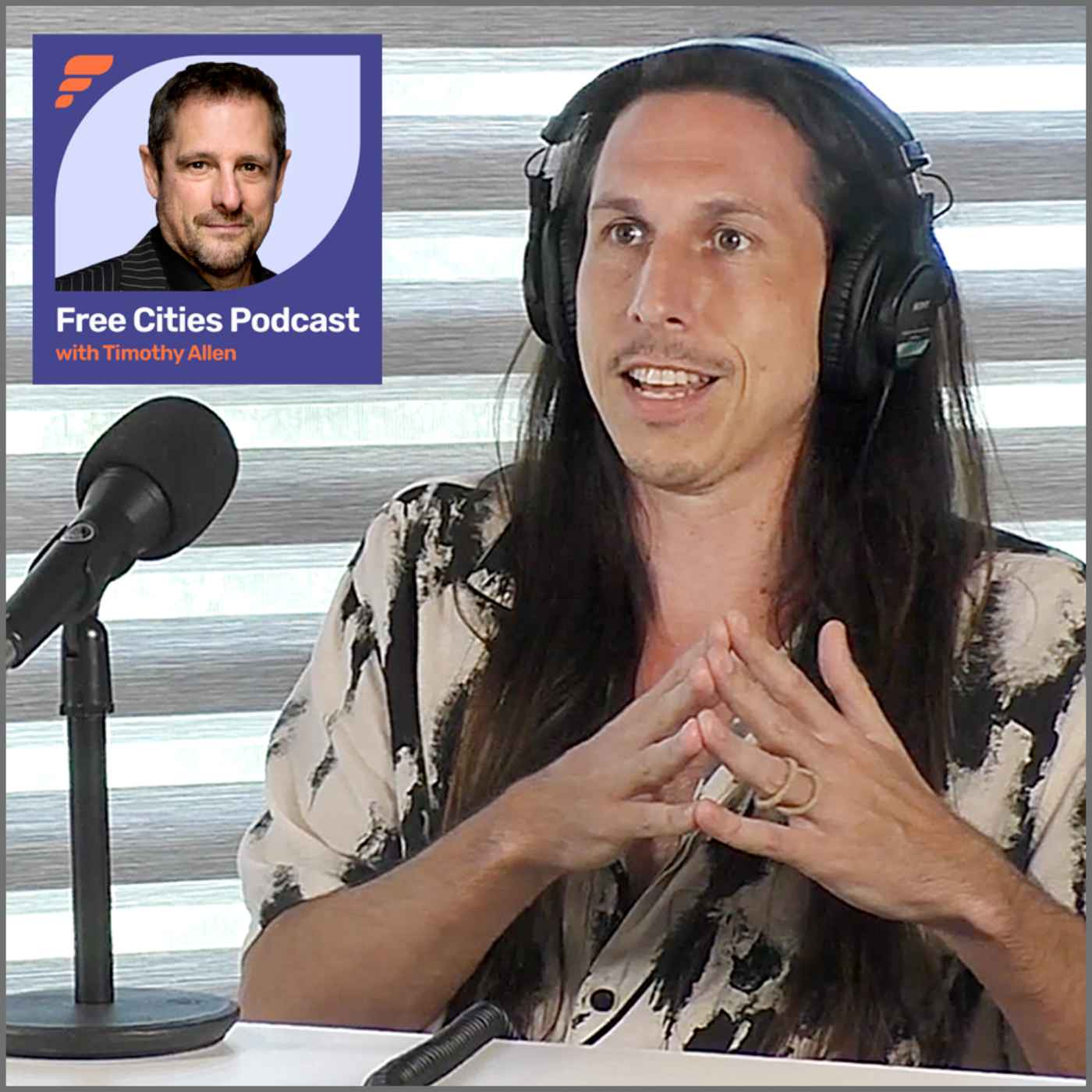
205 - Why Are People Moving to Pop-Up Villages? | Telamon Ardavanis
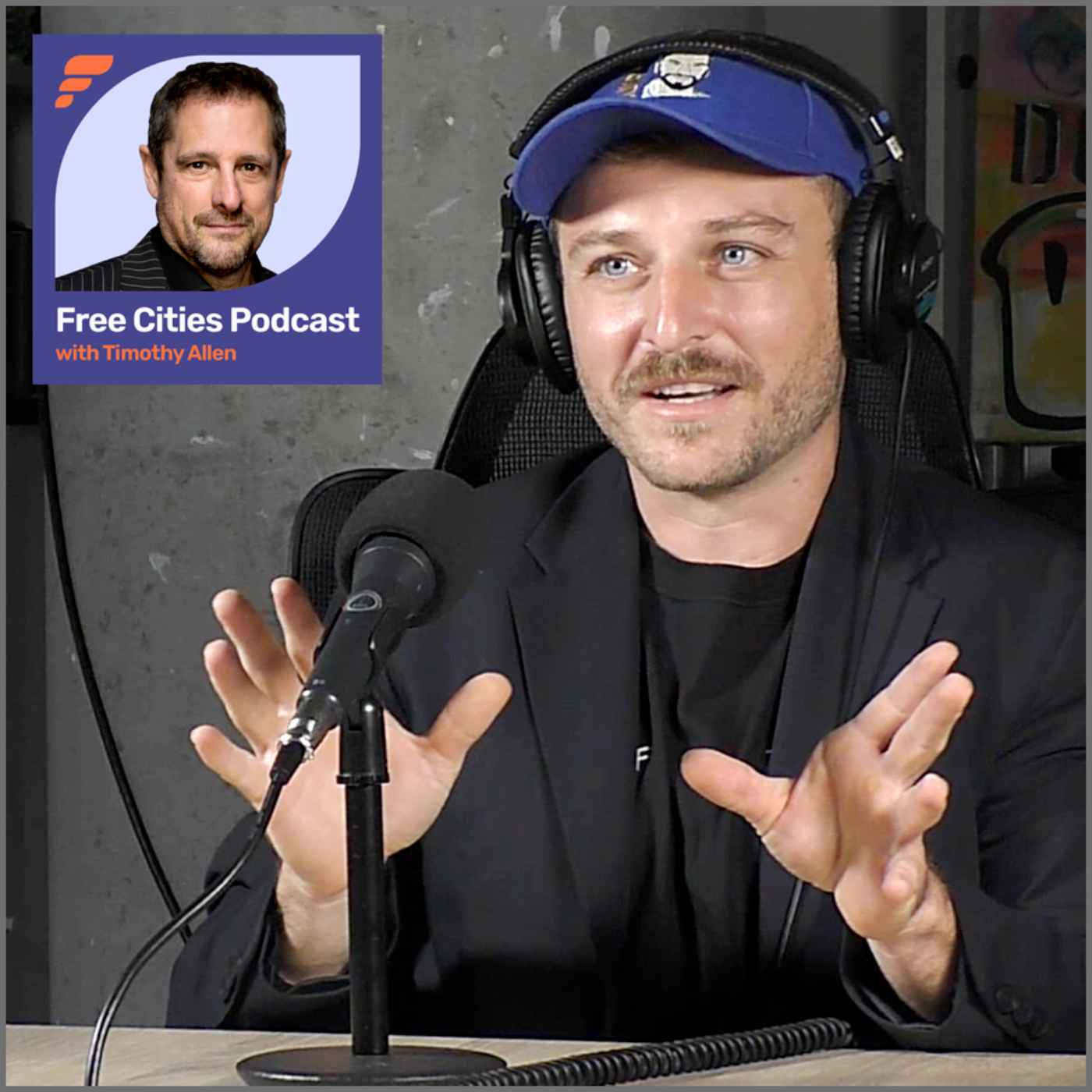
Can you build the community for a new city before the city itself exists? Timothy Allen sits down with Telamon Ardavanis of Edge City to explore what happens when people gather for a month to live, work and experiment together. What makes those gatherings valuable, who pays for them, and what remains after everyone goes home? Timothy hasn’t always been convinced by pop-up cities. His first experience of Zuzalu left him sceptical, while a month working in Próspera helped him appreciate the possibilities. Telamon explains how Edge City organises its villages, brings together people from different disciplines and works alongside projects that could become permanent homes. Behind the gatherings is an evolving business model involving grants, fellowships, venture investing and property partnerships. They discuss Esmeralda in California, projects in Argentina, India and South Africa, and a vision for connected communities where people could move between places without starting again each time. But attracting visitors is only the beginning. Getting people to put down roots means understanding family ties, culture and the things that make somewhere feel like home. That takes the conversation into Bhutan’s Gelephu Mindfulness City, Timothy’s years leading expeditions in Mongolia, and why a good regulatory environment alone won’t fill a new city. In the introduction, Timothy also covers Network School’s planned takeover of Farcaster, Liberland’s draft Citizenship Act, three recommended conversations about AI and Bitcoin, and a village taking an unusually woolly approach to speeding drivers. In this conversation: What a pop-up village can achieve that a short conference cannot How walkability, shared routines and participant-led activities shape a community Why families and children belong in experiments about the future Who funds the gatherings, and what participants get from them Building relationships with local residents and businesses Using a month together to test ideas and get to know potential collaborators How events, venture investing and property partnerships could support one another A network of places offering different opportunities for living and working Why attracting talent is easier than persuading people to stay Bhutan, cultural continuity and special economic zones as places to experiment What Timothy learnt from a decade of expeditions with the same Mongolian families Enjoy the conversation. Timestamps (audio version, includes Timothy’s episode introduction): 0:00:30 - Introduction 0:03:35 - Network School, Farcaster and portable online identity 0:05:27 - Liberland’s draft Citizenship Act 0:06:24 - AI and Bitcoin: three podcast recommendations 0:11:06 - Listener messages and value-for-value thanks 0:14:47 - AmityAge: owning the energy behind Bitcoin 0:16:40 - Veritas Villages: communities in Latin America 0:17:36 - And finally: knitted speed cameras in Fillongley 0:19:02 - Start of conversation: Timothy’s scepticism about pop-up cities 0:25:01 - Mongolia, winter migrations and curating a group 0:30:57 - How an Edge City pop-up village works 0:37:34 - Families, children and multigenerational communities 0:39:09 - The nonprofit model and testing ideas in real life 0:44:04 - What do local residents and businesses get out of it? 0:50:18 - The network city vision and how the events are funded 0:51:29 - Fellowships, grants and consciousness research 0:53:49 - Venture investing and getting to know founders 0:55:10 - Property partnerships: Argentina, Bhutan, California and beyond 0:58:17 - Could connected communities share homes, talent and opportunities? 1:02:30 - Can you create another San Francisco? 1:07:10 - Why a good regulatory environment isn’t enough 1:12:46 - New communities and their relationships with governments 1:16:24 - Why Timothy still lives in Britain 1:19:18 - Would an Edge City gathering work in the UK? 1:27:04 - Bhutan’s Gelephu Mindfulness City 1:31:15 - Zones of Progress and special economic zones as sandboxes 1:35:09 - Timothy’s travels in Bhutan, tradition and national identity 1:42:58 - A travelling community from Europe to Singapore? 1:45:47 - Trust, shared benefits and why people kept returning to Mongolia 1:49:44 - Closing thoughts and supporting the show Guest: Telamon Ardavanis on X | Edge City | Edge City on X Links mentioned: Edge City India: programme and information, Goa, 11 October to 1 November 2026 | Events calendar Network School’s acquisition of Farcaster: Neynar co-founder Rish’s announcement Liberland’s draft Citizenship Act: official announcement and access to the draft What Bitcoin Did: Why AI Needs Bitcoin to Survive, with Dhruv Bansal What Bitcoin Did: AI, Bitcoin, & The Collapse Of The Fiat Economy, with Jeff Booth What Bitcoin Did: AI Came for Bitcoin First, with Jameson Lopp Gelephu Mindfulness City Watch Zones of Progress And finally: Fillongley’s knitted traffic officers and speed cameras The Free Cities Podcast is the official podcast of the Free Cities Foundation, hosted by Timothy Allen. New episodes every Friday. Long-form, in-person conversations with the builders, investors, residents, and thinkers shaping the future of Free Cities, charter cities, special economic zones, network states, private cities, and governance innovation worldwide. Listen & subscribe: freecities.fm | All platforms | Fountain (bonus episodes & early access) Community: Telegram | Free Cities Foundation newsletter | Free Cities Conference Support the show: Donate via Stripe | BTC: bc1q5jun0nzxzqepch84rqk0jnv0rd8uvns28df7mg | V4V podcast apps Lead show sponsor: Veritas Villages - Freedom-oriented communities in Panama, Costa Rica and Nicaragua, with opportunities to generate power, grow food and rely less on outside systems. Bitcoin accepted for property purchases. Sponsor: AmityAge - Turning stranded gas into power for Bitcoin mining in Alberta. Accredited investors can follow the link to request details about the project. Follow: Free Cities Podcast on X | Timothy Allen on X | Timothy Allen on Nostr | Free Cities Foundation on X
- Transcript
- Chapters