Skip to content
Artwork for Foundational Impact

Foundational Impact

Good Future Foundation

Welcome to Foundational Impact, a podcast series that focuses on education and artificial intelligence from a nonprofit perspective. Hosted by Daniel Emmerson, the Executive Director of Good Future Foundation, a non profit whose mission is to equip educators to confidently prepare all students, regardless of their background, to benefit from and succeed in an AI infused world.

This podcast series sets out to explore the trials and tribulations of building a non profit from the ground up, while also investigating the changing world of technology in life, learning, and work.

Play
  • 29 episodes
  • Avg 29 min
  • English
Counted on this page — what you have heard stays on this device, so it is not something the list can be paged by.
  • S1 · E46
    Tuesday · 28 min

    If Teachers Use AI, Do Students Deserve to Know

    In this episode, Emily Baker from the Good Future Foundation Student Council interviews Jon Chippindall, CEO and co-founder of Teachermate, which offers AI tools for planning, resources and everyday tasks to more than 400,000 teachers. Emily brings a student’s questions to the conversation. Should teachers tell students when they use AI? Where does acknowledgement matter, and where does it become unnecessary? Should students be able to opt out? Their discussion also covers how Teachmate adapts resources for individual pupils to give teachers more time to focus on each class. It is a rare conversation about AI in education from both sides of the classroom. Key Topics & Timestamps 01:02 Meet Jon Chippindall And TeachMate 04:00 Navigating DfE Gen AI Safety Standards 08:58 The InstaAI Project With The University Of Manchester 11:42 Should Teachers Acknowledge AI Use 16:16 Grammarly Parity And Normalising AI 19:24 Personalising Resources Without Data Risks 23:41 The Debate Over Opting Out Of AI 26:04 Establishing Robust Evidence For EdTech Key Takeaways & Highlights Workload To Personalisation: Tools designed to save time ultimately allow teachers to create highly adapted, scaffolded resources for individual student needs, amplifying their classroom impact. The Transparency Spectrum: There is an ongoing debate about when AI usage should be formally acknowledged by teachers, ranging from automated reports to simply generating lesson slide content. Parity In Expectations: If students are required to flag their use of AI tools like Grammarly, there is a strong argument for teachers to model the same transparency. Data Minimisation By Design: Platforms can adapt learning materials effectively without requiring highly sensitive or specific personal data about the students. Evidence-Based EdTech: Educational technology companies must provide clear logic models and robust, independent evidence to demonstrate a net positive impact on teaching and learning. Resources Mentioned TeachMate: An online platform with over 160 AI tools designed to help teachers with daily tasks and planning. Department for Education Gen AI Safety Standards: Guidelines drafted with input from EdTech providers to ensure responsible AI integration in schools. InstaAI: A collaborative project with The University of Manchester aiming to build tools supporting non-specialist STEM teachers. Guest: Jon Chippindall (CEO and co-founder of TeachMate) Jon Chippindall, known as 'Dr Chips' by his pupils, has been a primary school teacher in Manchester for over 10 years. Jon is cofounder and CEO of TeachMate. Jon supports the primary computing PGCE at The University of Manchester and works with schools nationally to improve computing education. Jon is passionate about supporting schools to deliver high-quality educational experiences for learning whilst ensuring teacher well-being remains a priority.

  • S1 · E45
    November 10 · 32 min

    Can AI Check AI? How Oak Evaluates Its Own Lesson Planner

    In this episode of Foundational Impact, host Daniel Emmerson speaks with Hannah-Beth Clark, Director of Product and former AI Quality and Safety Principal at Oak National Academy. Hannah-Beth shares insights into building AI tools designed specifically for teachers, including Aila, Oak's AI lesson planning assistant. She explores the mechanics of Retrieval-Augmented Generation (RAG) using curriculum-aligned content, the necessity of intentional friction in tool design, and how robust safety and auto-evaluation systems maintain high pedagogical standards while keeping human expertise at the centre. Key Topics & Timestamps 00:00 Open Curriculum Access 00:24 Show Introduction 01:25 Oak Origins and Mission 04:21 How Teachers Use Oak 07:00 Designing Productive Friction 08:48 How Aila Plans Lessons 11:30 RAG and Safety Guardrails 14:26 Hannah Beth Role 17:53 Evaluating AI Quality 22:19 When Experiments Fail 24:05 Trust and Human Oversight 26:00 Content Store and Open API 28:40 Advice for AI Skeptics 31:55 Closing Thanks Key Takeaways & Highlights Productive Friction in Design: Tools should intentionally require input and critical thought from teachers rather than offering a one-click output, ensuring lessons remain tailored to individual classroom contexts. Retrieval-Augmented Generation (RAG): Grounding AI generation in a curated, high-quality corpus of national curriculum-aligned content ensures outputs meet strict pedagogical standards compared to general models. Nuanced Safety Guardrails: Automated content moderation must distinguish between genuinely toxic content and sensitive, age-appropriate educational topics (such as classic literature) that require specific guidance rather than outright blocking. Human Ground Truth in Evaluation: Automated evaluation tools can effectively flag technical issues like regionalisms or poor multiple-choice distractors, but expert human review remains essential to maintain output quality. Purpose-Led Integration: Schools should approach technology by identifying clear classroom challenges first, avoiding adoption merely for the sake of using AI. Resources Mentioned Oak National Academy: Free curriculum resources and lesson materials aligned with the English national curriculum. https://www.thenational.academy/ Aila: AI-powered lesson planning assistant developed by Oak National Academy. https://labs.thenational.academy/ DfE Content Store: Department for Education repository providing structured educational data and open curriculum APIs for developers. https://aicontentstore.education.gov.uk/ Guest: Hannah-Beth Clark (Director of Product, Oak National Academy) Hannah-Beth Clark is the Director of Product at Oak National Academy, having previously served as its AI Quality and Safety Principal. Prior to joining Oak, she was part of the founding team at Oasis Academy South Bank, where she served as a senior leader for ten years before becoming Headteacher in Enfield. She also serves as a governor for two primary schools in Cambridge.

  • S1 · E44
    November 3 · 18 min

    Learn Fast, Act Slowly on AI with Dina Foster

    In this episode of Foundational Impact recorded live at the Festival of Education 2026, host Daniel Emmerson speaks with Dina Foster, Head of Educator AI Training at Educate Ventures Research. Dina discusses how schools can transition from experimenting with AI to developing a coherent strategy. She emphasises the importance of AI literacy as a firm foundation for schools, the value of addressing existing priorities rather than treating AI as an extra burden, and the necessity of engaging all stakeholders in policy development. Dina also shares insights from her work guiding the Shape of the Future Coalition and supporting state schools through targeted AI leadership programmes. Key Topics & Timestamps 00:00 Incorporating AI Into Existing Priorities 00:42 Welcome To Foundational Impact And Festival Of Education 01:38 Assessment In The Classroom Of 2036 02:40 Crowded Horizons For School Leaders 05:14 Building Foundations With AI Literacy 06:16 The Shape Of The Future Coalition 08:35 AI Leadership Support Programme For State Schools 09:27 Compliance And Safeguarding Concerns 12:12 Collective Intelligence And Values 14:21 Managing AI With Parents And Stakeholders 17:21 Key Advice For School Leaders Takeaways & Highlights AI As A Foundation: Building AI literacy is essential to weather future technological shifts, acting as a keystone rather than building on sand. Integrate, Do Not Add: AI should not be an isolated, extra silo; it must be incorporated into existing school priorities and used to solve current challenges. Community Support: The Shape of the Future Coalition offers a free, research-backed network for school leaders to share practices and stay updated on AI regulations and frameworks. Stakeholder Inclusion: Creating effective AI policy requires a holistic approach that includes teachers, leaders, governors, parents, and learners rather than focusing on just one group sequentially. Evidence-Based Decisions: Leveraging research expertise, such as the three decades of experience from Professor Rose Luckin, helps lend rigour to AI use cases and action research in schools. Resources Mentioned Educate Ventures Research (EVR): Research consultancy led by Professor Rose Luckin. https://www.educateventures.com/ Shape the Future Coalition: Free network for school leaders to share AI practice and research. https://www.shapethefuturecoalition.org/ Human Intelligence First - The Tool is the Smallest Part: nine practitioner-led action research projects conducted over the 2025/26 school year by school and trust leaders from across England. https://www.educateventures.com/research-human-intelligence-first-the-tool-is-the-smallest-part AI Quality Mark: A thorough and rigorous framework for schools to work through their AI implementation. https://www.goodfuture.foundation/ai-mark Collective Intelligence: A collaboration between Educate Ventures Research, Good Future Foundation, Cambridge OCR, and Big Education. https://www.collectiveintelligence.org.uk/ Guest: Dina Foster (Head of Educator AI Training, Educate Ventures Research) Dina is an experienced former secondary school Deputy Head teacher and is currently was doctoral candidate at UCL with a research focus on how schools develop AI strategy to harness the benefits of AI, and augment teaching and learning. She gained her MA in Education and Technology and also holds a Master’s in Teaching, both from the Institute of Education. Dina is particularly interested in supporting school leaders with the development and implementation of successful EdTech strategies to address school priorities. In her current role at Educate Ventures Research, she heads the Shape of the Future Coalition, providing CPD training around AI and strategy work with school leaders.

  • S1 · E43
    October 27 · 24 min

    How Teacher Training Change When AI Enters the Picture with Prof Miles Berry

    In this episode from the Festival of Education 2026, host Daniel Emmerson speaks with Professor Miles Berry, Professor of Computing Education at the University of Roehampton. Miles discusses what AI changes for teaching and learning, the importance of universal AI literacy in national curriculum reforms, and how initial teacher training is evolving to address generative AI. He shares insights on balancing teacher efficiency with preparation quality, the ethical nuances of machine-generated feedback and academic integrity, and how tools like "vibe coding" are changing software development for educators. Key Topics & Timestamps 00:00 Vibe Coding and Software Creation 00:28 Host Introduction 01:00 Live at the Festival of Education 01:19 Modeling Ethical AI and Transparency 02:54 AI Literacy and the Head, Hands, Heart Approach 04:07 Curriculum Reform and Universal AI Literacy 05:23 Teacher Training and Lesson Planning 07:41 Quality vs. Efficiency in Planning 10:16 AI Marking and Student Motivation 12:28 Teacher Education Frameworks and SEND 13:49 Multimodal Tools and Language Acquisition 15:22 Roehampton’s AI Strategy for Graduates 17:56 Handling AI Integrity in School Interviews 20:02 Defining Cheating and Transparency Acknowledgements 22:09 The Joy of Vibe Coding Key Takeaways & Highlights Head, Hands, and Heart: Teaching AI requires a balanced framework—understanding how models work (head), practical prompt engineering and bias mitigation (hands), and analyzing societal and ethical implications (heart). Universal AI Literacy: AI education cannot be reserved solely for computer science students; upcoming curriculum reforms aim to ensure every young person develops core AI literacy. Preparation Over Output: While AI can generate lesson plans quickly, the true value of planning lies in teacher preparation and thinking through the lesson, which automated tools might inadvertently bypass. The Human Element in Feedback: Students often value feedback because it signals that a human teacher cared enough to review their effort; automated AI marking risks demotivating learners, especially in creative subjects. Embracing Vibe Coding: Natural language programming tools allow non-traditional developers to build tailored, useful educational software through simple, iterative conversations. Resources Mentioned University of Roehampton Secondary PGCE: Initial teacher training programmes for secondary education. https://www.roehampton.ac.uk/study/postgraduate-taught-courses/pgce-secondary/ AI4K12 Project: Initiative providing resources and guidelines for AI education in K-12 schooling. https://ai4k12.org/ BCS, The Chartered Institute for IT: England computing curriculum committee promoting digital skills and computing education. https://www.computingatschool.org.uk/digital-themes/cas-ai-zone/ Guest Contact Information Guest: Professor Miles Berry (Professor of Computing Education, University of Roehampton) Miles is Professor of Computing Education at the University of Roehampton, where he is head of curriculum and recruitment for the secondary PGCE as well as leading the PGCE in computing course. He supervises doctoral students and is a member of the University's AI development and innovation group. Prior to joining Roehampton, he spent 18 years in four schools, much of the time as an ICT coordinator and most recently as a head teacher. He has worked with Cambridge University Press and Assessment on a number of curriculum and training development projects. He helped write England's national curriculum computing programmes of study. He gave evidence to the House of Lords AI select committee, was an expert advisor to the US-based AI4K12 project, and supported Georgian universities in developing academic integrity policies. He chairs the BCS England computing curriculum committee, and until recently was chair of the National Centre for Computing Education's academic board.

  • S1 · E42
    October 20 · 26 min

    AI Trends in Schools Revealed by Teacher Tapp Data with Grainne Hallahan

    In this episode live from the Festival of Education at Wellington College 2026, host Daniel Emmerson speaks with Grainne Hallahan, Head of Community at Teacher Tapp. Grainne shares unique data-driven insights into how UK teachers feel about artificial intelligence, the shifting patterns in subject-specific AI adoption, and why asking precise, time-bound questions is essential for capturing classroom realities. She also offers practical guidance for school leaders on policy formulation, teacher anonymity, and effective survey design. Key Topics & Timestamps 00:00 Friday Behaviour Questions 00:20 Introducing Grainne Hallahan 01:49 What Is Teacher Tapp 03:10 Designing Daily Questions and Finding Insights 06:38 Panel Randomisation and Response Experiments 10:22 Longitudinal Data and Behaviour Tracking 11:13 Tracking Teacher AI Adoption Trends Over Time 12:51 The 10 Percent Non-User Group and Environmental Concerns 13:50 Subject Trends and Primary vs Secondary Usage 16:42 Sharing Findings with Policymakers and the Media 18:36 Teacher Motivation and Anonymity 23:21 School AI Policies and Future Research Areas 24:54 Tips for School Leaders Writing Effective Surveys Takeaways & Highlights Data-Driven Teacher Voice: Daily three-question surveys sent to a re-weighted panel of 10,000 teachers allow Teacher Tapp to capture real-time classroom sentiment and represent the profession accurately across government consultations and media broadcasts. Shifting AI Adoption Patterns: The proportion of teachers who have never used AI for schoolwork has fallen to under 10%. Primary teachers initially led adoption for generating exemplars and short-form questions, while maths teachers have seen a major turnaround since tools gained image and diagram generation capabilities. Environmental and Ethical Concerns: Environmental impact has emerged as a primary reason why the remaining minority of teachers choose to abstain from using AI tools in their professional duties. Anonymity Drives Honest Reporting: True data separation and absolute respondent anonymity are vital for understanding shadow AI usage and unearthing candid feedback that school policies might otherwise mask. Designing Actionable School Surveys: When surveying staff, school leaders should restrict questions to recent, specific timeframes (such as "this week"), keep options below ten, and eliminate unnecessary verbiage to obtain clear, reliable responses. Resources Mentioned Teacher Tapp: Daily survey app for educators in England. https://teachertapp.com/ Guest: Grainne Hallahan (Head of Community, Teacher Tapp) Grainne Hallahan is a teacher-turned-journalist who now sets the questions at Teacher Tapp. She is interested in all things education, but gets particularly excited about what keeps teachers teaching, and how changes to education policy can make a difference to those doing the hard work in the classroom and school leadership.

  • S1 · E41
    October 13 · 18 min

    Navigating AI Friction and Future Work Anxiety in Schools with Dr. Iro Konstantinou

    In this episode from the Festival of Education at Wellington College 2026, host Daniel Emmerson speaks with Dr Iro Konstantinou, Head of Research and Impact at Eton College. Dr Konstantinou discusses the role of artificial intelligence in education, highlighting findings from primary data gathered across diverse UK schools. She explores the concept of cognitive offloading, how students' perceptions of AI are influenced by their background and social media, and how schools can prepare students for an AI-impacted workplace by fostering critical thinking and transferable skills. Key Topics & Timestamps 00:00 Cognitive Struggle and Early AI Perceptions 00:28 Introducing Dr Iro Konstantinou 01:23 Highlights from the Festival of Education 02:00 Overview of Research at Eton College 03:25 Gathering Primary Evidence on Student AI Use 05:24 Regional Disparities and Student Attitudes Towards AI 06:57 Personal AI Usage and Data Privacy Awareness 08:24 The Role of Social Media in Shaping AI Perceptions 09:19 Teachers' Concerns and the Cognitive Offloading Trap 11:04 Classroom Strategies: Prohibition vs Socratic Prompting 12:11 Workplace Anxiety and Changing University Choices 14:27 Supporting Schools with Industry Skills and Best Practice 15:25 Community Outreach and Collaboration at CIRL 17:11 How to Connect and Get Involved with Eton’s Research Key Takeaways & Highlights Academic Skepticism vs. Overconfidence: Students at highly selective academic schools often express a desire to maintain "cognitive struggle" and avoid AI, whereas students in other settings use AI for personal tasks without fully grasping data privacy risks. The Influence of Social Media: Many young people rely on social media platforms rather than formal guidance to form their understanding of AI ethics, safety, and application. Diverse Classroom Approaches: Teacher responses range from strict prohibition to incorporating Socratic prompting, highlighting the need for explicit metacognitive training to support critical thinking. Shift in Workplace Expectations: Students are altering higher education paths due to career automation concerns, pointing to a need for schools to emphasize transferable human skills and philosophy-driven thinking. Democratising Educational Research: Outreach initiatives focus on sharing best practices and supporting schools in underserved areas to ensure AI evidence-based guidance is accessible across the sector. Resources Mentioned The Tony Little Centre for Innovation and Research in Learning (CIRL) at Eton College: Research hub focusing on pedagogy, evidence-informed practice, and AI impact. https://cirl.etoncollege.com/ Department for Education (DfE) Gen AI Product Safety Standards: Standards addressing friction in learning and cognitive offloading risks. https://www.gov.uk/government/publications/generative-ai-product-safety-standards Guest Contact Information Guest: Dr Iro Konstantinou (Head of Research and Impact, Eton College) Dr Iro Konstantinou is an education researcher and adviser specialising in evidence-informed practice across schools, universities, and the wider education sector. She currently serves as Head of Research and Impact at Eton College, where she leads research on curriculum development, professional learning, equity, and the impact of AI on education. Previously, she held academic and leadership roles at Pearson, UCL, and the University of Warwick. She is also a trained coach, having completed an undergraduate course in coaching at the University of Cambridge. LinkedIn: https://www.linkedin.com/in/dr-iro-konstantinou/

  • S1 · E40
    October 6 · 27 min

    Equity versus Productivity in the Age of AI Education

    Episode Overview In this episode from the Festival of Education at Wellington College 2026, host Daniel Emmerson speaks with Victoria Hedlund, founder of GenEd Labs. Victoria discusses bias in generative artificial intelligence, the importance of inclusion, and what meaningful human oversight should look like in education. She also explores how educators can challenge AI outputs, balance productivity with equity, and preserve the essential human element in teaching. Key Topics & Timestamps 00:00 Putting Output on Trial 00:33 Introduction to Victoria Hedlund 01:37 Researching Bias and Human Oversight 03:11 Why Schools Must Focus on Bias 05:56 Sparks, Lightbulbs, and Gender Stereotypes 08:12 Frequency of Exposure: Teachers vs AI 09:09 Visual Representation and Image Bias 13:06 Questioning Assumptions and Model Iteration 17:09 Equity Versus Productivity 20:49 The Human in the Loop 24:30 Embracing Messy Humanness in Education Key Takeaways & Highlights Putting AI on Trial: Teachers and students should treat AI outputs critically, challenging assumptions and testing validity rather than accepting generated content at face value. Deficit vs Strengths-Based Framing: Standard AI prompts often apply deficit-based language to neurodivergent or marginalised learners, requiring specific contextual framing from educators to deliver equitable outputs. Frequency of Exposure: While human teachers hold natural biases, students interact with AI models through hundreds of continuous iterations, amplifying potential harm if outputs remain unmitigated. Average vs Instantaneous Productivity: Relying on AI for quick administrative wins can sacrifice long-term accuracy, making upfront contextual alignment crucial for meaningful workload reduction. Preserving the Human Element: Complex emotional needs, non-verbal communication, and relational learning cannot be replicated by software, keeping human teachers central to classroom learning. Resources Mentioned GenEd Labs: Innovation lab focused on artificial intelligence research, inclusion, and educational tools. https://www.genedlabs.com/ Guest Contact Information Guest: Victoria Hedlund (Founder, GenEd Labs) Victoria is a thought leader, researcher and consultant focused on fair AI use in education. Known as the ‘AI Bias Girl,’ she creates practical awareness and mitigation strategies for educators and leaders, using her research of emergent AI bias in educational contexts. She is a major voice in AI pedagogical alignment and has contributed to the updated DfE and Chartered College Safe and Effective Use of Generative AI in Education Guidance, and to the British Computing Society's AI course ‘AI Confidence’. She is editor of AI Bias in Education and author of 100 Quick GenAI Prompts for Teachers and Educators. She sits on the advisory board for the Institute of AI Education, is a member of the Centre for Digital Information Literacy in Schools Expert Working Group, and is part of Oxford University's AIEOU network. She convenes the Teacher Education AI Network (TEANs).

  • September 29 · 42 sec

    Foundational Impact | Official Trailer

    Foundational Impact is a Good Future Foundation podcast exploring how artificial intelligence is changing education. Through conversations with people whose work is shaping the direction education takes next, we examine the evidence, the challenges facing schools and the decisions being made across the sector. Hosted by Daniel Emmerson. Follow Foundational Impact on Spotify, Apple Podcasts or wherever you listen. Website: www.goodfuture.foundation

  • S1 · E39
    September 29 · 23 min

    The Role of AI in Student Feedback with Daisy Christodoulou

    Episode Overview In this episode from the Festival of Education at Wellington College 2026, host Daniel Emmerson speaks with Daisy Christodoulou, Director of Education at No More Marking. Daisy discusses the role of artificial intelligence in educational assessment, emphasising the importance of actionable feedback over lengthy written notes, the mechanics of comparative judgment, and why handwritten work remains vital for learning. She also addresses the potential pitfalls of AI in schools and offers key guidance for school leaders navigating integration. Key Topics & Timestamps 00:00 Speed As Quality 00:36 Meet Daisy Christodoulou 01:57 Is Written Feedback Useful 02:29 Thermostat Feedback Model 03:32 Comparative Judgment Explained 04:53 AI Judges And Benefits 06:09 Avoiding The Doom Loop 10:48 Student Trust And Emotions 12:48 Fast Feedback Tradeoffs 14:59 Handwriting Versus Typing 17:14 Digitizing Handwritten Work 17:57 Assessment Tradeoffs And Standards 20:21 Advice For School Leaders 21:56 Hopes For AI In Schools Key Takeaways & Highlights Thermostat vs. Thermometer: Assessment feedback shouldn't just measure performance; it needs to change performance by providing actionable steps such as personalised quizzes. Speed as Quality: A scrappy, immediate response can be significantly more effective for student improvement than a polished response delivered weeks late. The 90/10 Rule: Integrating AI into comparative judgment (90% AI, 10% human judging) ensures every paper is reviewed multiple times while maintaining human oversight. Cognitive Differences in Mediums: Research shows moving tests to screens can lower student outcomes compared to paper-based assessments, making handwriting recognition a vital bridge for digital reporting. Action on Shadow AI: Leaders who delay setting AI policies risk teachers resorting to unvetted, consumer-facing tools during high-workload periods. Resources Mentioned No More Marking: Comparative judgment platform for student assessment. https://www.nomoremarking.com/ John Jerrim / PISA Research: Natural experiment study comparing student performance on paper vs. digital test formats. https://johnjerrim.com/papers/ Guest Contact Information Guest: Daisy Christodoulou (Director of Education, No More Marking) Daisy Christodoulou is the Director of Education at No More Marking, a provider of comparative judgement assessments. She works closely with schools in the UK, Australia and USA on developing new approaches to assessment, and on applications of artificial intelligence in the classroom.Before that, she was Head of Assessment at Ark Schools, a network of academy schools. She has taught English in two London comprehensives and has been part of UK government commissions on the future of teacher training and assessment. Daisy is the author of three books about education: Seven Myths about Education (2013), Making Good Progress? The future of Assessment for Learning (2017), and Teachers vs Tech (2020).

  • S1 · E38
    July 21 · 36 min

    Stop buying tools before you’ve answered this

    Our guest in this episode is Dr Fiona Aubrey-Smith, an independent researcher who studies the relationship between pedagogy and digital tools, and the lived experience of students in the classroom. Fiona opens by explaining why identical classroom practices can produce completely different outcomes depending on the belief system behind them. Her example of two teachers greeting students at the classroom door in seemingly the same way, but for very different underlying reasons, shows how policies alone don't determine impact; the intent behind them does. The conversation moves into belonging and dignity, including research showing that struggling students typically ask for help only 1-3 times in a lesson regardless of how much support they need, while confident students almost never ask to be pushed further. Daniel and Fiona discuss the tension between protecting a student's dignity and the value of productive vulnerability. From there, Fiona lays out her framework for introducing technology into schools: start with the purpose of school, define the role of the learner, describe what the learning experience should feel like, define the role of the teacher, and only then decide which tools will help deliver it. Starting with the tool itself, before asking why, is a costly and common mistake. Two school case studies illustrate this in practice. At Haileybury, an embedded one-to-one, on-demand digital provision (available at the point of need rather than simply issued to every student) has freed teachers to rethink classroom layout entirely. At Connect Education Trust, a similar model has extended digital skills and connectivity into the home, empowering families to support learning without needing their own digital capability, coinciding with outstanding inspection outcomes. On generative AI, Fiona shares some thoughtful use cases she sees, such as chaining AI tools to help secondary students revise, and using AI image generation to help primary students with their descriptive writing. She wraps up with a challenge for school leaders. Rather than starting with policies or tools, ask what your school would leave behind if it closed tomorrow, since that gap is where the real human value lies. From there, let AI and digital tools take on the automation and acceleration, so teachers are freed up for the parts of the job only a human can do.

  • S1 · E37
    June 30 · 31 min

    Are Young People Forming Relationships with AI?

    What does AI mean for the way young people relate to each other and to technology itself? That's the focus of the conversation in this episode when Daniel speaks with Jonathan Baggaley, CEO of the PSHE Association and former head of the Child Exploitation and Online Protection Centre. It begins, perhaps unexpectedly, with a Sun Ra poster. Jono uses it to make a point that runs through everything that follows. That is, many of the narratives about AI are being presented as inevitable, and educators have both the right and the responsibility to push back on that. PSHE has been on a long road to statutory recognition in England. Jono maps that journey from the near-miss of the 2010 election wash-up to the introduction of compulsory Relationships, Sex and Health Education in 2019. The results are becoming visible. Between 2022 and last year, the share of young people rating their RSE as good or very good roughly doubled. Yet the subject now faces a technology landscape that changes faster than any curriculum can follow, and it was never designed for that. Much of the conversation focuses on something schools have been slow to address, which is the emotional attachment to AI chatbots. Evidence from a Reddit study found that 60–70% of people who had developed an AI relationship hadn't gone looking for one. They'd simply been chatting. Jono explains this isn't surprising as humans are neurologically primed to anthropomorphise from infancy, attributing intention and agency to moving shapes before they can speak. Even Jono, who understands exactly what large language models are, has caught himself feeling the presence of something in a chatbot conversation. The question is how schools can build resilience to that instinct by giving young people the understanding they need to use them critically. Language, Jono argues, is part of the problem. The word "chatbot" suggests conversation, when what's actually happening is an engagement with a probabilistic automation system. Shifting that framing is one starting point. Another is cross-curricular. Computing can explain the move from rule-based to data-driven AI, citizenship can explore the environmental and geopolitical implications, and PSHE can build on its existing relationships curriculum to examine what young people are and aren't getting from these interactions. The episode sits with a harder question too. Consumer AI is designed for frictionless ease, age verification is often a checkbox, and young people will encounter these tools whether schools introduce them or not. But Jono is clear-eyed about what the evidence shows. When young people genuinely understand what they're dealing with and what they're trading away, they are willing to increase their own friction. None of this requires a new policy or a perfect tool. The conversation is the intervention, and any curriculum that starts with the human already has what it needs.

  • S1 · E36
    June 9 · 31 min

    Education on the Front Line

    What does great education look like when the classroom is a refugee camp? When the teacher is under-resourced, under-supported, and still showing up? We are delighted to welcome Jane Mann, Managing Director of the Partnership for Education and Education Director for International Education at Cambridge University Press and Assessment. Jane leads work spanning 30 countries, including some of the world's most fragile and complex contexts, from refugee camps to conflict zones. And while no two contexts are ever quite the same, she is clear that the fundamentals of great education do not change. Wherever you are in the world, the foundations look the same: a coherent curriculum, meaningful assessment, well-supported teachers, strong leadership, and quality materials. In conversation with Daniel, Jane reflects on the role of technology and the importance of letting context lead. Where it is available and appropriate, technology can be transformative. But it carries real risks too: widening equity gaps and creating new vulnerabilities in settings where a device is a valuable and coveted object. On AI specifically, rather than rushing it into students’ hands, Cambridge's focus is on the adults in the room to empower teachers, streamline curriculum mapping, support lesson planning in under-resourced regions like sub-Saharan Africa, and help governments build policy frameworks. The HP Cambridge EdTech Policy Fellowship extends this work further to facilitate structured cross-national learning and conversations and drive systemic change. Tune in for a conversation that is as expansive in its thinking as it is grounded in the realities of education on the front line.

  • S1 · E35
    May 19 · 30 min

    Philanthropy Filling the AI Education Gap

    The conversation between Elizabeth Moore and Daniel in this episode provides a window into how the Gates Foundation is navigating the evolving landscape of AI in K-12 education. As Deputy Director with the U.S. K-12 team, Elizabeth explains that the Gates Foundation operates at multiple levels to improve classroom instruction through research, quality standards, and strategic investments. This includes influencing frontier AI labs like OpenAI and Google, developing evaluation frameworks, and creating networks to disseminate evidence-based practices. They choose this approach hoping to help bridge gaps that neither government nor markets adequately address, particularly important as AI development outpaces traditional curriculum cycles. One concerning trend that Elizabeth observes when discussing AI adoption in schools is the well-meaning but counterproductive “no AI” policies that prevent students from developing critical skills for their futures. She, instead, advocates for thoughtful implementation guided by clear educational purposes and robust evaluation of outcomes. The conversation also highlights mathematics as an area with AI potential. Elizabeth describes how AI can support personalised learning by instantly diagnosing specific prerequisite skill gaps and delivering targeted instruction which is a process that traditionally required extensive teacher time and effort. Other suggestions for school leaders that are mentioned by Elizabeth in the episode include: Involve teachers in evaluating AI tools by encouraging them to test the systems' boundaries Align on the specific educational problems AI should solve before implementation Look beyond data security to broader considerations of pedagogical quality Create transparent communication channels with parents about AI's purpose and impact Throughout the discussion, Elizabeth emphasises the need for healthy skepticism about AI-generated data, balanced with recognition of its potential to enhance parent engagement and address learning gaps when implemented with clear purpose and ongoing assessment. Tune in to discover how one of education's most powerful philanthropies is working behind the scenes to ensure AI serves teachers and students, not the other way around.

  • S1 · E34
    May 5 · 27 min

    When Your Students Trusts AI Over You

    Our guest for this episode is Calvin Eden, the founder of LoudSpeaker who works with students across the UK through high-energy and interactive workshops on topics like resilience, emotional intelligence, and healthy relationships. Calvin meets young people in his everyday work, and seeing AI tools become a growing part of students' social and emotional lives reinforces his belief in the urgent need for schools to strengthen young people's confidence, communication skills, and sense of belonging. One major theme in his conversation with Daniel is the importance of human connection. While AI can be a useful tool in different ways, young people need to practice communication, build relationships with others, and learn to speak about their own vulnerability and ask teachers and parents for help when needed. He warns that if AI becomes a substitute for human interaction, students may become less resilient and more isolated. Their conversation also explores the student voice. Daniel shares Good Future Foundation's belief that students should help shape responsible AI policies in schools. Calvin agrees and describes how his work supports schools to build student voice strategies, run student conferences, and create opportunities for young people to be heard. Calvin also encourages school leaders to create a culture where staff and students connect as people, not just through formal roles. He wraps up the conversation by inviting educators to share stories, talk honestly about challenges and failures, and celebrate what they are proud of with their students to build a school environment where young people feel seen, safe, and valued.

  • S1 · E33
    April 21 · 41 min

    The AI Research to Classroom Gap No One is Talking About

    In this episode, Daniel sits down with Erin Mote of InnovateEDU about how education systems are responding to AI and where current approaches are falling short. Erin challenges the assumption that progress in education operates within fixed limits. She argues that system-level change depends on collaboration, shared practice, and open infrastructure rather than competition between schools, organisations, or regions. This approach underpins the work of the EDSAFE AI Alliance, which brings together policymakers, educators, and industry to define practical standards for AI use. Its SAFE framework focuses on safety, accountability, fairness, transparency and efficacy, with direct implications for procurement, policy and classroom practice. The conversation addresses the tension between the pace of AI adoption and the slower development of traditional evidence. Schools are already using these tools at scale, while formal research remains limited. Erin outlines the need for informed, iterative decision making supported by shared insight across systems. There is also a detailed discussion of risk. AI-driven personalisation has potential, but current implementations can narrow opportunity through rigid progression models, limited student agency and the use of sensitive data in ways that affect outcomes. These issues require closer scrutiny of how tools are designed and deployed. For school leaders, the priority is to act with intent. Building AI literacy across students, staff and parents is identified as the most immediate and practical step. Current usage levels among educators are high, while formal guidance remains inconsistent, creating a gap that needs to be addressed quickly. Erin also shares resources from InnovateEDU, including policy frameworks, planning tools and AI literacy materials designed to support schools in making informed decisions. The discussion returns throughout to the role of shared standards and coordinated action. Where systems align on safety and implementation, progress becomes more consistent and risks are easier to manage. Resources shared by Erin in this episode: InnovateEDU Manifesto New York City Public Schools policy and guideline EdSafe policy paper on chatbots and companions 2026 evidence report (released in March with Instructure and the list of 150 tools classification) AI literacy blueprint paper

    • Transcript
  • S1 · E32
    March 3 · 52 min

    Dr. Biljana Scott: Language as Our Defining Asset

    What makes human communication unique in an age of increasingly sophisticated AI? Daniel Emmerson invites Dr. Biljana Scott, a linguist with expertise in diplomatic communication and language analysis, to explore this question in depth. With her multilingual background and extensive experience in teaching the nuances of communication, Biljana probes the complex interplay between human language and AI interaction. Their conversation illuminates whether our increasing reliance on AI might reshape how we think and express ourselves, unpacks linguistic concepts like “presuppositions” in everyday speech, and reveals how the terminology we use to describe AI carries powerful connotations that fundamentally shape our relationship with technology.

  • S1 · E31
    February 6 · 39 min

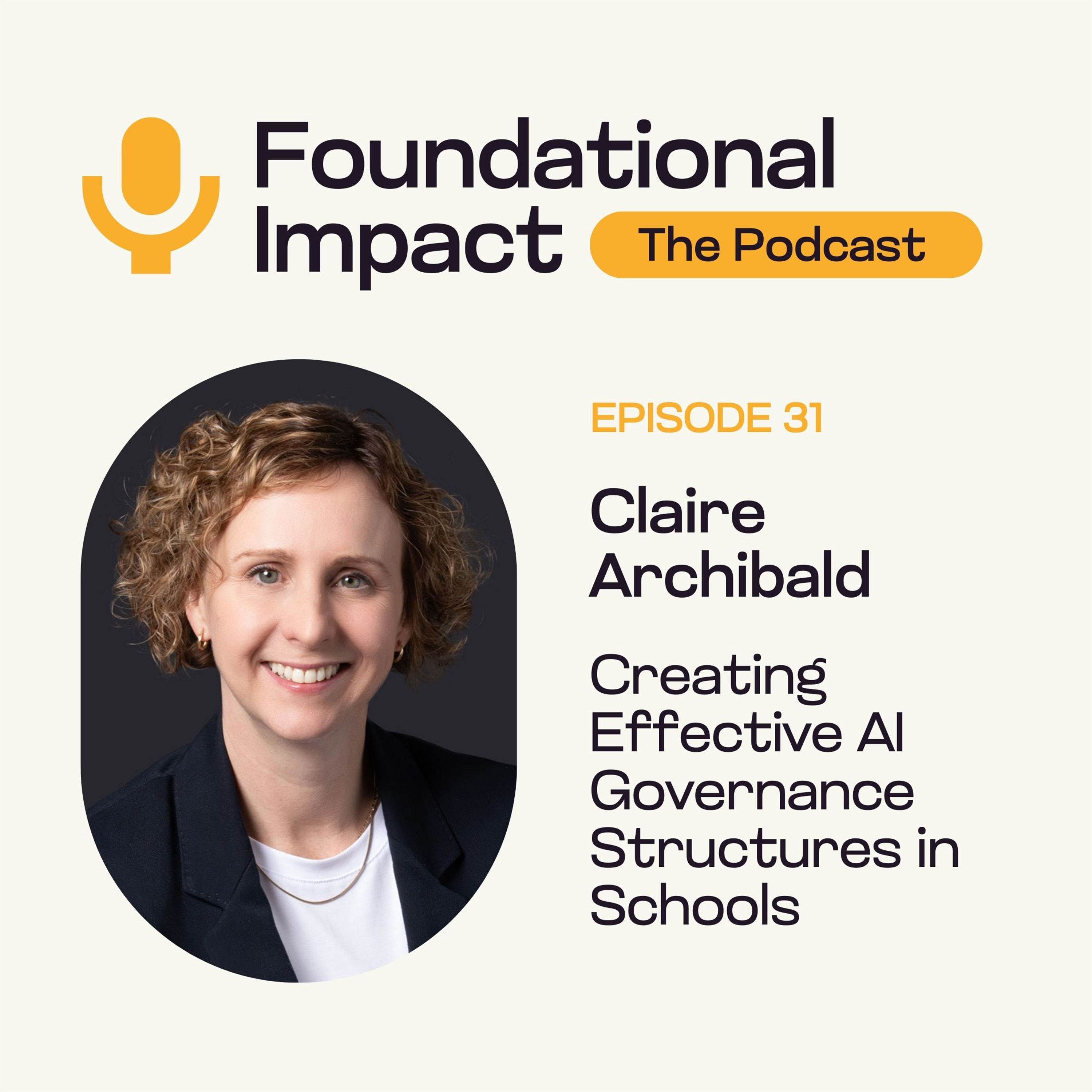
    Claire Archibald: Creating Effective AI Governance Structures in Schools

    Is having an AI policy enough to protect your school? In this episode, Daniel Emmerson speaks with Claire Archibald, Legal Director at Brown Jacobson and former Data Protection Officer, about what effective AI governance in schools looks like. Their conversation covers essential topics including what makes a good Data Protection Impact Assessment (DPIA), the importance of vendor due diligence, and why schools need robust governance structures beyond just having an AI policy. Claire emphasises the critical role of incident reporting, creating transparent cultures around AI use, and the need for collaborative approaches involving all stakeholders. She also shares a six-step governance framework and practical advice for schools starting their AI journey.

  • S1 · E30
    January 14 · 40 min

    Setting Visible Boundaries to Safeguard our Students in an AI-infused World

    Daniel's conversation with Gemma Gwilliam, Portsmouth's Head of Digital Learning, Education and Innovation, explores transparency, privacy and safeguarding in AI education. The discussion takes a dramatic turn when Gemma puts on a pair of AI-enabled glasses which she purchased easily for under £10 right in the middle of the recording, bringing theoretical concerns into stark reality. This jaw-dropping demonstration underscores the urgent challenges teachers face as sophisticated AI wearables become increasingly accessible to students. While we may debate whether AI belongs in classrooms, we cannot ignore the significant risks these technologies present to young people. This episode reveals how Portsmouth supports its schools and teachers in approaching AI responsibly to strike a balance between innovation and essential safeguarding measures.

  • S1 · E29
    Dec 9, 2025 · 34 min

    Hult Prize Accelerator Startups: How the Next Generation is Solving Global Problems with AI

    What skills will our students genuinely need to thrive in a future driven by AI? To find the answer, Daniel Emmerson goes straight to the source and sits down with brilliant young minds behind seven teams from the Hult Prize Global Accelerator, one of the final stages of the world’s largest student startup competition. This episode takes you on a global tour of innovation. You'll hear how these young entrepreneurs are using AI to tackle large problems, like enhancing public safety by turning CCTV cameras into proactive witnesses, helping firefighters respond faster, pioneering sustainability by transforming agricultural waste into valuable resources, and creating a "calorie counter" for your carbon footprint. The conversations also cover how AI is being used to deliver personalised education in Ethiopia and provide gentle, effective speech therapy for children. Although these startups focus on very different issues, they all agree that the future isn’t about AI replacing people, but being empowered by it. Tune in to find out the essential skills our future generation will need.

  • S1 · E28
    Nov 25, 2025 · 35 min

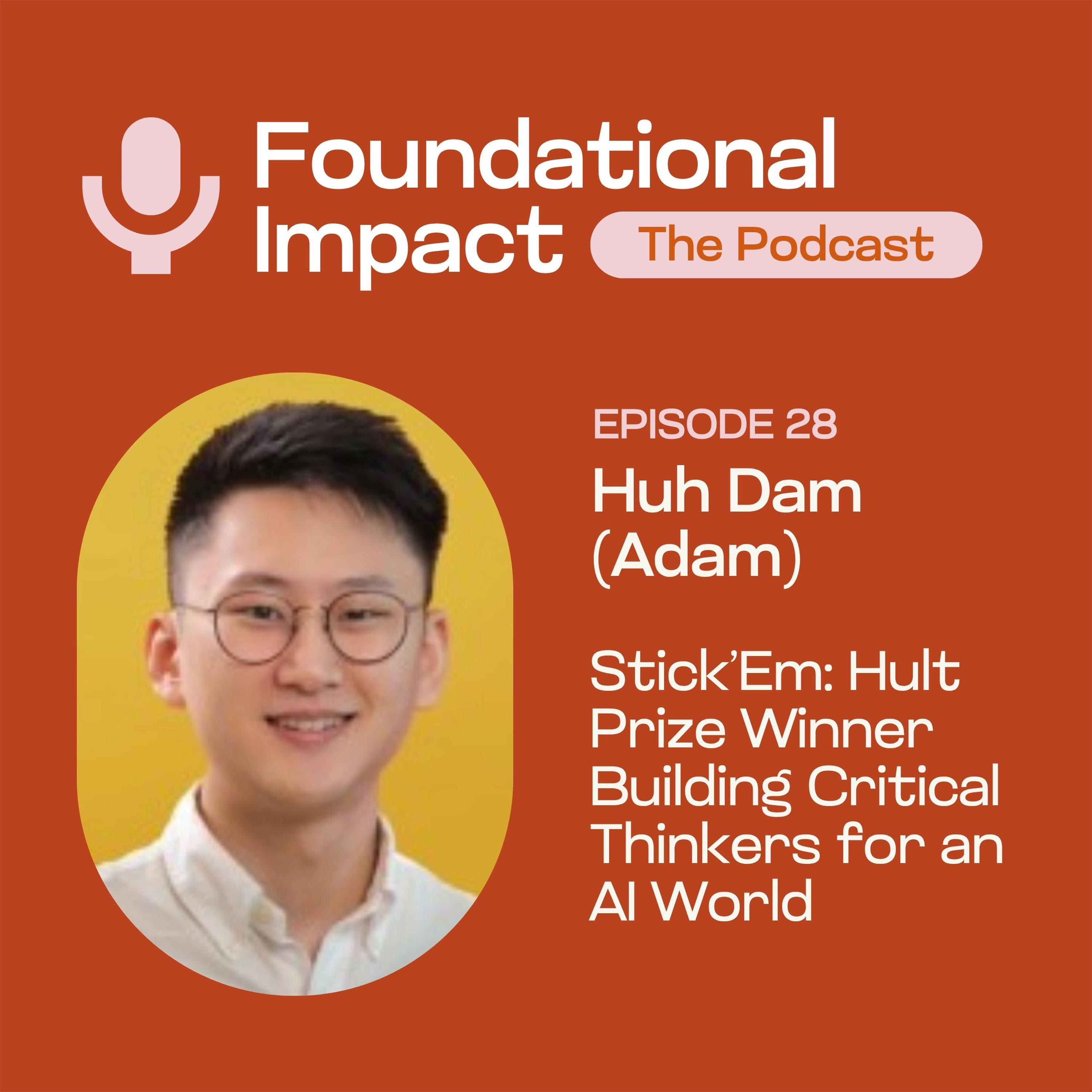
    Stick’Em: Hult Prize Winner Building Critical Thinkers for an AI World

    In this episode, we spotlight Adam, the co-founder of Stick’Em, the innovative startup that just won the prestigious $1 million Hult Prize. He explains how his team develops a robotics kit that costs a mere fraction of traditional models to make quality STEAM education more accessible to children everywhere. This conversation, in two parts, offers a rare before-and-after glimpse of a startup on the cusp of greatness. First, hear from Adam during the Hult Prize Accelerator where he emphasises the importance of STEAM education in fostering skills like creative and analytical thinking to prepare students for an AI-infused world. Then, Daniel reconnects with Adam following his win and discusses how Stick’Em is already leveraging AI to streamline startup operations and plan their global expansion. Tune in for an interesting look at the intersection of affordable education, social impact, and cutting-edge artificial intelligence.

Showing 1–20 of 29 episodes