Skip to content
Artwork for Five Rules for the Good Life Podcast
ArtsFoodSociety & Culture

Five Rules for the Good Life Podcast

Darin Bresnitz

The best advice usually comes from someone who learned it by living it. On Five Rules for the Good Life, I sit down with my favorite people from the culinary community and ask them to share five rules on something they know inside and out. Each episode gets straight to the good stuff: the habits, opinions, and little revelations that come from years of doing the work. Short conversations with plenty to chew on, and something you can bring into your own life at the dinner table and beyond. 

The Guests

Chefs, restaurateurs, writers, bakers, artists, and the people who make food culture worth caring about. Some you already love; others you’ll be very happy to meet. All have a perspective worth learning from.


fiverules.substack.com

Play
  • 32 episodes
  • weekly
  • Avg 10 min
  • English
Counted on this page — what you have heard stays on this device, so it is not something the list can be paged by.
  • Monday · 9 min

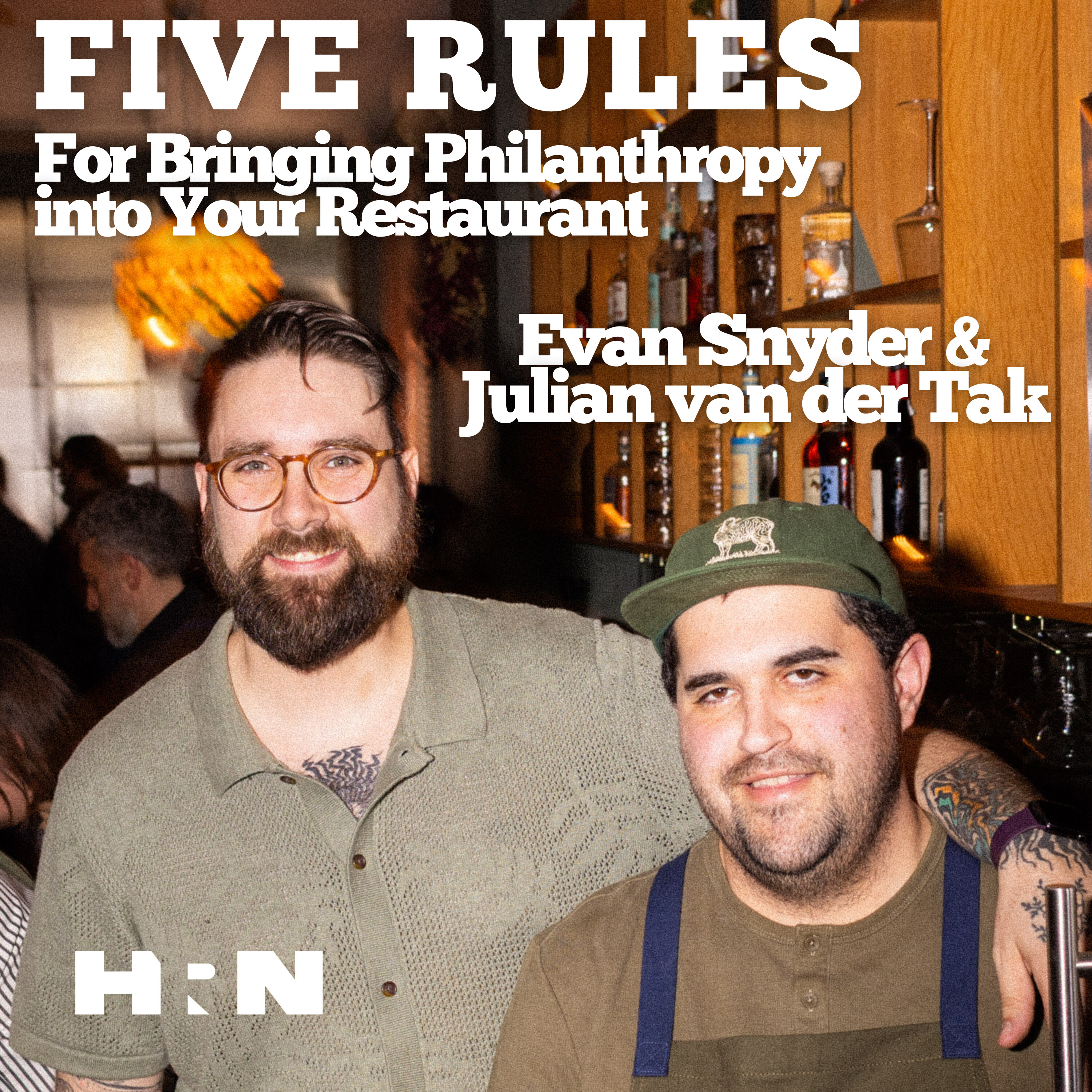
    Evan Snyder & Julian van der Tak's Five Rules for Bringing Philanthropy Into Your Restaurant

    “If we have to sacrifice our time and money and labor, that’s a sacrifice we’re more than willing to make because having a more well-rounded, more understanding, more educated community brings benefit to the whole community, not just your restaurant.” ~ Evan Snyder & Julian van der Tak This week on Five Rules for the Good Life, I head home to Philadelphia to sit down with Evan Snyder and Julian van der Tak, the chef-partner and managing partner of Emmett, to share their Five Rules for Bringing Philanthropy Into Your Restaurant. We talk about choosing a cause that means something to you, recognizing how much you can give through your time, and finding partners who share your values. From supporting food access for children to working with local farmers and artisans, they share how caring for their community informs their decisions every day. It is an inspirational conversation for anyone looking to bring giving into their business or find more ways to show up for the people around them. What I love about this episode is how naturally Evan and Julian put community at the dead center of everything they do. Hearing them talk about celebrating other restaurants, buying from local makers, and making time to teach people makes me so proud to be from Philly. There is something deeply familiar in that willingness to show up for your neighbors and take pride in what someone else is building down the street. They understand that the people who grow their food, make their plates, work in their kitchen, and sit at their tables all contribute to what makes Emmett special. I have always loved how food brings people together, and hearing them talk about the responsibility and joy that come with that makes me even more excited to bring my family in the next time I’m home. Photo by Gab Bonghi Introduction Hello and welcome to Five Rules for the Good Life. I’m your host, Darin Bresnitz. In honor of the holiday season and heading home to Philadelphia, I sit down with Evan Snyder and Julian van der Tak, who are the chef partner and managing partner, respectively, of Emmett. They are here to share their five rules for bringing philanthropy into your restaurant. They talk about the importance of picking a cause that means something to you, making giving a part of the business and not an afterthought, and never underestimating the power of bringing people and community together. It is an inspirational conversation for anyone who wants to add philanthropy to their restaurant and for those looking for a guide on how to make giving part of their daily life. Please take a moment to subscribe and rate wherever you listen to this podcast. So let’s get into the rules here on HRN. Evan and Julian, always a pleasure to be in my hometown of Philadelphia. I had such a nice time during the chef conference at Emmett. Thanks for sitting down. I’m happy to be here. Hospitality, Philadelphia, and the Stories Behind the Food When people decide to open a restaurant, of course there’s the business side to it, but it seems that the hospitality is a much bigger driver. Why do you think that that is the more important part in the longevity of a spot? When I first got into this, it was always about the food. I want to cook at the best restaurants. Of course. Make the best food. Yeah. As I get older, the best part about this is making someone’s day, month, or year, and their anniversary, their birthday. To me, that’s a little more special than just making a really good plate of food, which is important, but I think the experience is more important. Being where we are in the industry, we obviously get the opportunity to go eat at a lot of wonderful restaurants as well. And 90% of the time, I frankly can’t remember what I eat. But what I can remember is how someone across from me felt while we were eating that food. How the table next to us was laughing or enjoying or celebrating. It’s really the human element of coming to eat at one of these restaurants that is just so important to us. It frankly is why we do what we do. Not to make an incredible plate of food, but to make sure that someone has a wonderful time eating that incredible plate of food. One of the best times I’ve had going out to eat recently was when I was back home in Philadelphia, which has become one of the greatest culinary cities in the country. How much of that is driven by the different communities in the city and your relationship with them? Philadelphia is so unique in its sense of community between the restaurants. We have so many great friends at some of the best restaurants in Philadelphia. Whenever I talk about them or to them or dine at one of their restaurants, I always view these people as peers of ours, not competitors. It’s beautiful. We all want success for each other. Obviously, the brass tacks is if someone’s eating at our restaurant, they’re not eating at someone else’s. That makes us happy from a business standpoint. Of course. But I love hearing that friends of ours, guests of ours went to this other restaurant, had a wonderful experience. I will always celebrate that for our friends in these other restaurants. That’s really, really unique because when you go to so many other places, most of the time it’s, I hope you come here and not there. I hope people get a chance to dine everywhere in Philadelphia because it has so much to offer. Frankly, the sense of community is what makes it so special. Evan, a lot of the food that you serve pulls from this macro Mediterranean Jewish family style culture of cooking. Yeah. How has that inspired the menu and what you serve at Emmett? I never cooked my grandparents’ food. I never cooked that professionally until this opened. Sure. I find myself cooking more and more dishes that my grandparents made. It didn’t seem interesting to cook food that I was so used to. I get it. But this restaurant is exactly that. It is like grandma’s house. It’s grandma’s cooking. Some of the best food you’ll ever eat is the most comforting food you’ll ever eat. I ended up going back to these memories as a kid, things I grew up eating, trying to make it not necessarily the thing my grandmother made, but maybe a little bit more elevated, maybe not as well done or burnt sometimes. If I might add, what most of the people look for when choosing a dining experience is they just want authenticity. Of course. They want to feel like they’re experiencing something genuine that either the restaurant or the chef has to say. And frankly, cooking anything but what our personal stories have to share would just be disingenuous. And we would not be doing great by our guests if we were choosing to make something or present something that wasn’t necessarily true to us and our stories. The fact that you’re driven by these stories, community and taking care of people, those aspects really make up the center and the drive of what you’re doing at Emmett. Makes me so excited for you to share five rules for bringing philanthropy into your restaurant. Rule One: Choose a Cause That’s Close to You The fact that the bottom line is consideration, but not the main driver of what you’re doing is really inspiring. Finding this that helps drive you daily makes up your rule number one. Choose a cause that’s something close to you. If you look at a lot of the work we do outside the restaurant from a community engagement perspective or a philanthropy standpoint, it’s our kids, right? I love it. In Philadelphia, obviously we know it’s a pretty underserved community in terms of civil infrastructure and public funding for support for children and food accessibility. We try to find ways to engage with those issues. Those are things that really, really matter to us. So when we look for ways to expend our energy and our time and what little money we have left to give, the kids and food accessibility for underserved children are really huge for us. Rule Two: Give Your Time What do you think about the money that you have left to give, which isn’t always a possibility? Knowing that you want that to be a part of how you design everything from what you serve to what you charge to what the guests can expect makes up your rule number two. Other than money, time is a factor into this thing. Being able to give our physical time away to do an event, teach somebody something in a class I think is important. Money aside, time is a big part of it, giving our time. Rule Three: Build Relationships with People Who Share Your Values Being able to do this is real easy if you’re a singular pop-up, one person, it’s just you all in. As you have more people involved from those who are working with you to those who are on the same level as you, it makes these decisions to run your business in a different way a little bit tougher, but by having this it allows you to make philanthropy a center of what you’re doing. What’s your rule number three? Our rule number three is that the relationships really matter. Finding partners that not only support us but also share our values, share our ideas, share our goals for our restaurant and our community is really really important. We have wives with two children at home. They can’t do that alone. I wish we could give more time to them and to our families. Oftentimes we can and sometimes we can’t. The adage of it takes a village is so real, not just at home but in business. Of course. We try to find people that share those same goals and those same values with us. When it comes to our ceramicware and our glassware that we use in the restaurants, all of that is local Philadelphia. That’s incredible. When it comes to the farms that we work with, all of those are within a hundred-mile radius. Having people that really ride for Philadelphia, that ride for the local industry, that ride for handmade artisanship are just added layers of the storytelling that we can do here in the restaurant. Rule Four: Serve the Community Beyond Your Restaurant By engaging the community outside of what’s in the four walls that you’re in every day really is so much more commonplace now when you own a restaurant. It’s not just about what you do under your own roof in your own house but how you show up in the community and this makes up your rule number four. We wouldn’t be able to do what we do without the community, not just for our guests but for ourselves, for those other members of the community that we serve. Being able to go outside those walls and work with those people, frankly, it comes back to us both in good faith and the pay forward style. We go and we help an organization do something. They bring us interns that help us with our labor here. These relationships honestly are arguably more important to have outside the restaurant. Whether it’s our actual staff, the interns we bring in going to these teaching classes, teaching people how to cook food, I think the important thing is teaching them the right thing. So important. A lot of people teach the wrong thing and then that message keeps getting spread. Doing things right, teaching people the right way to do things and then spreading a positive message among that I think is another layer to that. We take the approach that the service to the community comes first. If we have to sacrifice our time and money and labor to do that, that’s a sacrifice we’re more than willing to make because having a more well-rounded, more understanding, more educated community brings benefit to the whole community, not just your restaurant. Rule Five Bring People Together Sharing so much of yourself to serve the community in such a bigger way than the literal opening of doors and serving them food is really great, especially given that you have families and your own life and your own thoughts. Your fifth and final rule talks about at the end of the day, this really beautiful thing happens. What’s your rule number five? One of the most important things about what we do is that it brings people together. Food has such a unique power to generate and support human interconnectivity. In this digital age where it’s so easy to be disconnected because your cell phone does everything in your hand. Sure. The face-to-face human interconnectivity, the real genuine human connection is honestly a waning part of life. A hundred percent. There’s three things that everyone needs to do. Eat, sleep, and breathe. If you can do one of those things while remaining connected to the people around you, you’re gonna live a better life inherently. If food gets seen not as sustenance but as a way to bring people together, we’ll all be better for it. We are a business at the end of the day. How do we make our experience with our guests not transactional? And it’s something that we ultimately attempt to not make you feel like, hey, thanks for coming in, thanks for your money. Right. How do we connect with them? How do we make ourselves human? That’s the fine line that we play. Making our guests and our staff feel seen and heard is one of the most important things that we can do as business owners. Visit Emmett It’s so great to see how you’re serving the community and the city of Brotherly Love. If people want to swing by Emmett, where can they go? Obviously come visit us in person. We’d love to have you. We’re open Tuesday through Saturday for dinner service at 161 West Girard Avenue. You can find us on Instagram at Emmett Philly. We would love any opportunity to tell our story to anyone who will listen. I can’t wait to swing by for dinner with my family the next time I’m back home in Philly. Congrats, guys. Thank you for making the time. I’ll see you soon. Thank you again. See Privacy Policy at https://art19.com/privacy and California Privacy Notice at https://art19.com/privacy#do-not-sell-my-info.
  • November 16 · 8 min

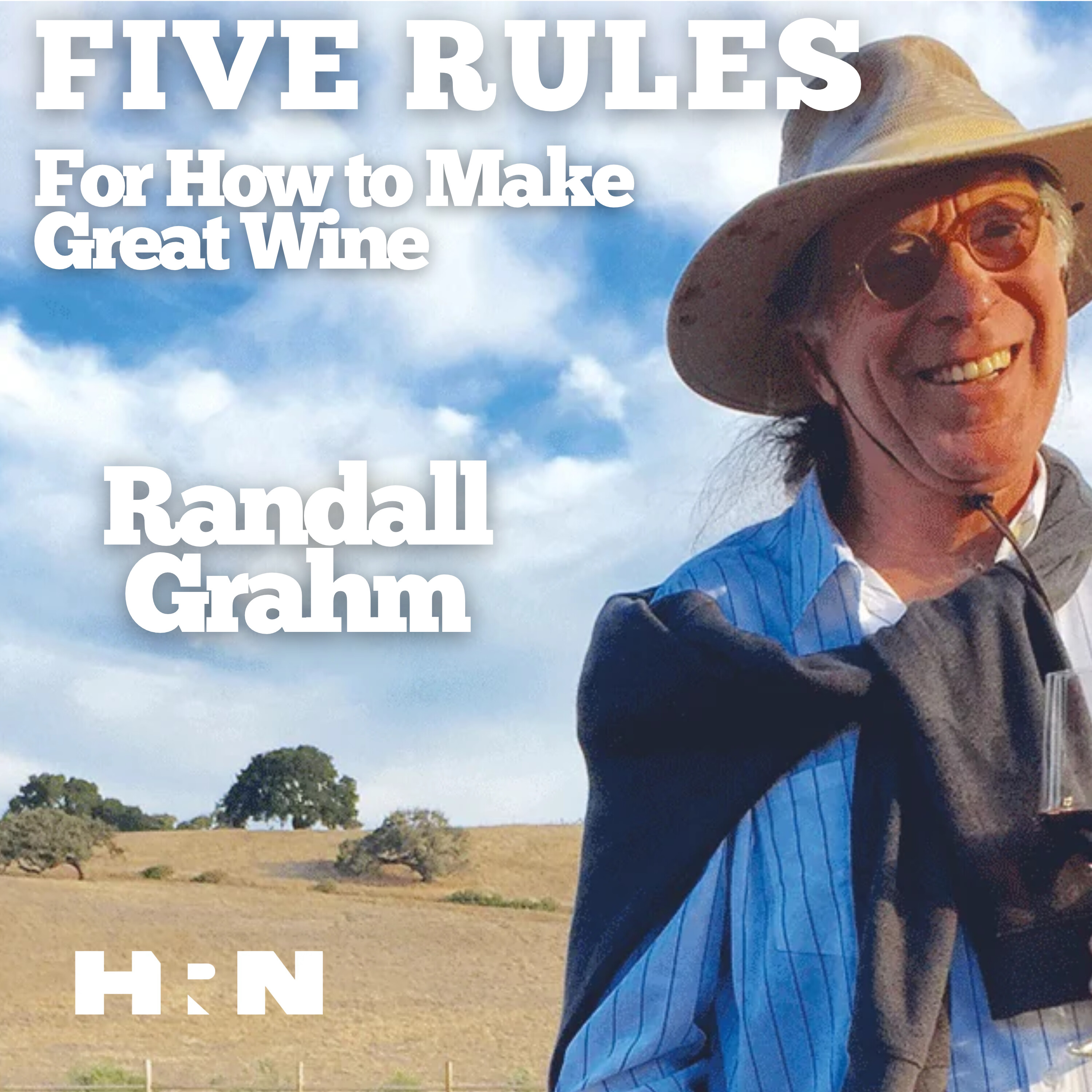
    Randall Grahm's Five Rules for Making Great Wine

    “Great wine is wine that changes your life.” ~ Randall Grahm This week on Five Rules for the Good Life, it’s my absolute honor to sit down with legendary winemaker, poet, and cultural visionary Randall Grahm of Popelouchum. Randall is the subject of The Terroirist, a documentary I produced alongside director Jeffrey Reiner, which is available now on Apple, YouTube, Amazon, and Google Play! He’s here to share his Five Rules for Making Great Wine. We talk about finding grapes that belong where they’re grown, knowing when to step in, and having the restraint to let the place come through in the glass. It’s a great conversation for anyone who’s ever wanted to make their own wine or wondered why a bottle can transport you to the place it came from. Getting to work with Randall and Jeffrey on The Terroirist has been one of the highlights of my career. I’ve heard Randall talk about his dream of making a wine that could only come from Popelouchum, and there’s something pretty extraordinary about walking that land with him and then getting to taste what he’s cultivated. Listening to him describe the peace of the place, as he pours you a glass of his own creation, you get a little closer to understanding what drives him every day. Getting to see him realize that dream in the wines he’s put into bottles, and getting to share that story with Jeffrey, has been something that will stay with me for the rest of my life. Photo by Jonathan Ramirez Introduction Hello and welcome to Five Rules for the Good Life. I’m your host, Darin Bresnitz. It is my absolute honor to sit down with legendary winemaker, poet, and cultural visionary Randall Grahm, whose vineyard, Popelouchum, is making some of the best vintages in America right now. He is also the subject of The Terroirist, a documentary I produced alongside director Jeffrey Reiner, which is available now wherever you purchase or rent movies. He is here to share his five rules for how to make great wine. He shares the importance of starting with great grapes, intervening only when necessary, and doing everything you can to let the uniqueness of the terroir shine through. It is an inspirational conversation for anyone who’s ever wanted to make their own wine or to understand how a wine of place can be so great. Please take a moment to rate and subscribe to this podcast wherever you’re listening. So let’s get into the rules here on HRN. Randall, so great to see you. It was such a lovely weekend up in Santa Cruz and San Francisco. Thank you for making time for a chat. My pleasure. What Makes a Great Wine? Great wine can be so subjective. After all your years of working in the field and fields, how do you define it? Great wine is wine that slightly changes your life. It enriches your life. It’s an emotional experience. It moves you in some fashion. I love that. At your winery, Popelouchum, you’ve already made some great wine. What keeps pushing you and inspiring you to make more? Repetition compulsion, I think. Otherwise, I’d have to go out and get a job, which would really be a shonda. A real shonda. It’s what I love doing. You do what you’re competent at doing. You do what you do well, and you want to stay productive and busy. I do. I certainly want to continue to contribute if I can. It was an absolute pleasure to work on the documentary, The Terroirist, with you. What do you hope the viewer takes away about wine after watching the film? Oh my gosh. Where do you even start? The film tries to show that wine is not simply a package. It’s not simply a brand. It actually can come from a place. And the most interesting wines in the world are ones that come from distinctive places and have their own distinctive personality. Wines that exhibit soil characteristics or minerality or any goofy parlance that goes on have more meaning and more depth. I think ultimately they’re more satisfying to the consumer than simply wine brands, if you will. Of course. You have worked on great branding. You’ve worked on great wines. Forgive me, for I have Zinned. You lived through the ’80s and ’90s, and there are trends that we just don’t talk about anymore. But given your history, given your legacy, I’m so excited for you to share your five rules for how to make great wine. Rule One: Start with Great Grapes Part of what has driven your pursuits over all these years has been starting with really incredible, if not novel, fruit that comes from the earth, and that makes up your rule number one. Rule number one is start with great grapes. If you want to make great wine, start with great grapes. It seems so simple. It seems so simple, yes. But that’s the tricky bit. Where do you find great grapes? If you have the great fortune to discover a great vineyard that consistently produces great grapes, that’s great. Otherwise, you need to grow the grapes yourself. And that’s tricky because you don’t really know a priori if the vineyard is going to produce great grapes until you’ve actually tried. So that’s always a little dicey, but ultimately the most satisfying if you can pull it off. Rule Two: Don’t Screw Up the Grapes After You Harvest Them Once you’ve been able to find or even grow your own great grapes, it is easy to start getting in there and manipulating them. Your second rule talks about staying away from this type of practice. What’s your rule number two? Don’t screw up the grapes after you harvest them. Yes. One of the indications that you’re on your way to getting great grapes is that you don’t have to make a lot of giant interventions in the vineyard to produce the quality. In other words, there’s a good congruity of fit between the grape that you’re growing and the place that you’re growing it. It ripens at the right time, has the right balance of acidity. You don’t have to manipulate the wine after it’s harvested. The quality of the place gives you unique flavors, perhaps intensity, persistence. The grapes arrive in condition. They’re ready to make great wine. Then your job is not to mess it up at the winery. Messing it up means you can overthink it, overmanipulate it, whether it’s adding a lot of acid or enzymes or oak chips, God knows any number of additives. If you don’t have to do a lot of that kind of manipulation, you’re generally on the right track. Rule Three: Intervene with a Light Touch Just because you aren’t screwing with the grapes too much doesn’t mean you’re just taking them off the vine, putting them into the press, and pressing the juice out. There are some tips and tricks that you have learned over the years. A lot of it has to do with restraint, and this makes up your rule number three. Rule number three is make sure your interventions are a light touch. It’s sort of like film directors. Film directors can either be very interventionist or they can give their actors freer rein and more latitude. To that extent, I try to give my grapes a fair degree of latitude, keep them coloring within the lines. The idea is I’m not trying to impose my style so much as discover what the site itself wants to say. Rule Four: Keep the Makeup to a Minimum It’s easy to hear you talk about restraint, not intervening with the grapes, and think that your wines don’t have multiple layers of flavor, which couldn’t be further from the truth. Right. But finding that right balance and not overwhelming the drinker makes up your rule number four. The French term is maquillage, makeup. You want to keep the amount of makeup down. For example, you don’t use new oak. New oak is a very flashy element that tends to overpower the unique qualities of the grape itself. It tends to make it more generic. Many people associate oak flavor with quality and high price. More often than not, you end up trashing your wine. We try to grow grapes that have lovely natural chemistry. So as a result, we don’t have to add acid to the wine. Without being too geeky, our wines tend to be lower in pH. Low-pH wines are microbially more stable. We don’t have to use as much SO₂ in the wine as other people might have to use. So we’re able to make wines in a less interventionist way. We can get by with using minimal additions to the wine. Rule Five: Find a Place with Its Own Character In all of your work, in all of your journeys to find a land that speaks to you, you have found this incredible piece of land at Popelouchum. Yeah. Your fifth and final rule talks about how all the approaches that you want to put into the product that you make start with finding a real slice of heaven. Correct. What’s your rule number five? I am so incredibly fortunate to have found Popelouchum. You know, without being too New Agey or mystical about it, there is just a special quality to the place, a peace. There’s an energetic quality, if you will. I’m not sure exactly what the mechanism is of how that is captured and conveyed in the wine. There is a certain vitality in the wines themselves. Ideally, people might visit the vineyard. You get the ultimate gestalt to really capture the quality. You should see the place itself. It’s the same idea when you go to the farmers market and you know the grower. That gives you a much better sense of what it is that you’re consuming. When you understand the aesthetic, you understand the values. All those things contribute to the experience of the product itself. Find the Wines and Watch the Film Having visited, I can say it is one of one, an absolutely unique place. If people want to order your wines or join the wine club or see the documentary about your life’s work, where can they go? If you want to order wine, which is always a great idea, we do have a website, especially for the holiday season. It’s popelouchum.com. Then, of course, they can see the movie at theterroiristdoc.com. That’s going to be available after November 13th On all streaming platforms. Cool. Randall, I am so excited to bring a bunch of the wines around for the holiday season and to celebrate what you’ve put in these bottles. Lovely to catch up. Sounds great. See Privacy Policy at https://art19.com/privacy and California Privacy Notice at https://art19.com/privacy#do-not-sell-my-info.
  • November 9 · 11 min

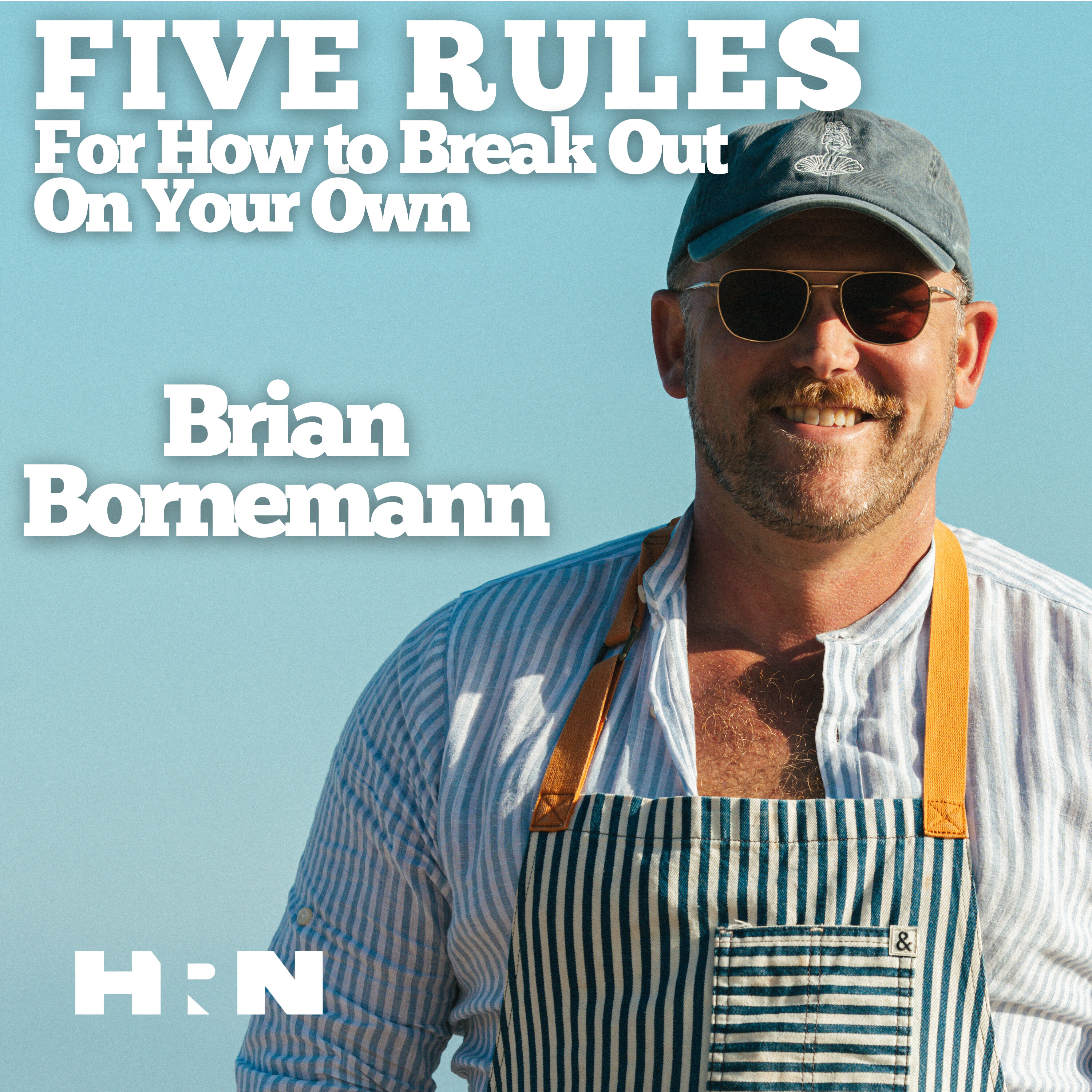
    Brian Bornemann's Five Rules for How to Break Out On Your Own

    “Success is just a series of failures. If you didn’t experience failure, you would actually know nothing." ~ Brian Bornemann This week on Five Rules for the Good Life, I head to Santa Monica to sit down with Brian Bornemann, chef and owner of Crudo e Nudo and Bar Fortuna. A third-generation Angeleno, Brian shares his Five Rules for How to Break Out On Your Own. He talks about how growing up around his grandfather’s garden and the Pacific Ocean shaped his cooking, and how years of putting his head down and learning prepared him to recognize an opportunity when it arrived. It is a great conversation for anyone thinking about taking that first leap or finding the confidence to take another. One of the things I appreciate most about these conversations is when someone puts words to a feeling I have spent years trying to work through. Brian’s perspective on imposter syndrome- that everyone is living for the first time and bringing their own experiences to the table- was great to hear. Working across television, podcasts, writing, and now documentary film, there is always another room to walk into where I can convince myself that everyone else knows something I don’t. I love his willingness to put that feeling aside and get on with the work, along with his belief that every failure gives you something you can bring into your next attempt. There is a lot of freedom in allowing yourself to learn as you go, and a lot to admire in someone who keeps showing up with enthusiasm for whatever comes next. Photo by Catherine Dzilenski. Introduction Hello and welcome to Five Rules for the Good Life. I’m your host, Darin Bresnitz. Today, I’m on the west side in Santa Monica, hanging out with Brian Bornemann, who is the owner and chef of Crudo e Nudo and Bar Fortuna. He’s here to share his five rules for how to break out on your own. He talks about the importance of staying ready so you don’t have to get ready, ignoring imposter syndrome, and how success is moving from one failure to another without losing enthusiasm. It’s a great conversation about Brian’s journey from growing up in Santa Monica to owning his own restaurant and bar, and fantastic inspiration for anyone who’s ever wanted to strike out on their own. Please take a moment to rate and subscribe wherever you listen to podcasts. So let’s get into the rules here on HRN. Growing Up and Finding His Own Path Brian, so good to see you again. Thank you for the incredible hospitality when we were in last time at Crudo e Nudo. Welcome to the show. Thanks for having me, man. Such a pleasure to feature you and chat. You are born and bred in Santa Monica. How much of the ethos of local cooking and ingredients inform your upbringing? I started cooking at a young age. I didn’t consider cooking to be a career until much later in life. Third-generation Angeleno here. So I had grandparents who grew up in the city. We were lucky to grow up on lots of land with abundant fruit trees and chickens, plenty of room to garden. Beautiful. My grandfather was an avid gardener and horticulturalist. He’s really the one who imbued in me from a very young age how to just enjoy things at their absolute peak and prime. I didn’t think much of it at the time. I mean, it was just normal to me eating figs or peaches or blackberries or sapotes or passion fruit or guavas the best day when they’re just shining. In learning how to tend to vines, how to grow the best tomatoes, tend the soil, etc. was something that was just part of how I spent my weekends and how I grew up. What I love doing with Crudo and my style of cooking in general is focusing on what is good here and what we are already good at doing. Bringing the food culture back to what we have around us. That really is what drives me and informs me. We grew up with this abundant huge ocean right in front of us and yet no seafood restaurants that would focus on local fish. We have such good ingredients. It’s insane that there isn’t more readily available resources for buying local fish or buying proper ingredients outside of a farmer’s market. That’s really what keeps me going. You cooked in some incredible local restaurants as well. The Tasting Kitchen and Michael’s. Did you always have it in the back of your mind that you wanted to open up your own space? When I started cooking, I really put my head down and intentionally didn’t set any goals. I just want to cook pasta. I just want to learn how to butcher. I did not go into it being, I want to own a restaurant. Sure. When you put your head down and just focus and just try to improve a little bit every day, every week, new opportunities get presented. If you say yes, keep applying yourself well. Eventually it gets to the point where it became obvious to me that there is a gap. If you don’t feel that way, you certainly shouldn’t open a restaurant. I see a different way to do things and I know that I can do them. Opening a restaurant was not a question of like, oh, do I want to do this or not? It was more like, oh, I have to do this. What eventually gave you that confidence, that catalyst to launch the Crudo e Nudo pop-up and eventually the brick-and-mortar? I have always described it as I played a lot of football and rugby growing up and as a running back, sometimes you’ll get the handoff and you’ll be met with a wall of bodies and you can just see this one step here, this hole opens up and then I can just run straight through it. That moment was the pandemic. If you had a lease, you were so focused on just trying to stay alive that nobody was thinking about, oh, let me open another location. I was lucky to not have a lease at that point and have the ability to see a hole of, oh, well, everybody’s doing this takeout food stuff in to-go containers. I was like, man, if I just sliced some fish and put it on the plate and made it beautiful, gave people something totally different from what they were having at the moment, they’ll be rejoiced. I was lucky enough to have a good amount of food media in my corner already from the crudo program that I’ve built at Viale dei Romani. Being aligned with my goals and being from here, if I took that technique that I was now associated with and known for and applied that to a sustainable local product and be like, hey, I’m from here, this is from our ocean, here’s something you already know, look at what we’re able to do in this way that doesn’t exist yet. Everybody was so focused on Japanese fish or the best stuff from New Zealand or bluefin from Spain. There was always this exoticism to fish culture. There was this feeling that fish was better if it came from somewhere else. It’s all kind of happened at the same time that the local Ikejime movement was really taking off. We got timing, we got everybody else tied up, we got this quality of local fish improving to a world-class level. All these things just line up, I get to run through this hole. Being able to identify that opportunity, also being a native son of Santa Monica, along with understanding what it takes to honor the local ingredients, is why I’m so excited for you to share your five rules for how to break out on your own. Rule One: When You See a Window, Sprint Through It A lot of the times, people are presented with an opportunity but are afraid or not confident enough to take it. Your first rule talks about what to do when that moment presents itself. What’s your rule number one? Rule number one is when you see a window, sprint through it. Windows don’t open up every day, sometimes it takes a major pandemic or something crazy to create that opportunity. What is unfortunate is when folks want to break out on their own or take the risk but aren’t actually willing to grab the ball and run full speed ahead, you’ve got to be able to sprint to the gap because otherwise you’re not going to make it. If you have hesitation, if you keep a foot in the door, if you’re like, well, I’m going to try this over here but I’m really going to keep a couple days a week over here as a backup plan, you’ve got to let go of the backup plan, let go of the safety net. Otherwise, energetically and emotionally, you’re not going to make it happen. Rule Two: Stay Ready So You Don’t Have to Get Ready Being in the restaurant industry for so long, you can probably count on one hand the amount of times that a real opportunity has come your way. Being in this mindset allows you to act when the right moment presents itself. What’s your rule number two? Rule number two is stay ready so you don’t have to get ready. Exactly. I just applied myself daily and weekly to being like, all right, what can I do to get better this week? What can I do better than last week? Not worrying about the people around me or the other cooks or chefs. I want to improve this because this is important to me, whether it was my butchery or my business acumen and understanding of P&Ls and food costing, etc. If you’re coasting, if you’re just, I’m comfortable here, I’m showing up, clocking in, clocking out, you’re not staying ready. No opportunity is going to come if you’re not pushing yourself and trying to improve. And that’s fine. It’s totally okay. It’s not how opportunity is going to strike you. Opportunity is going to strike if you are constantly working to be ready for the opportunity. Luck is 99% perspiration and 1% inspiration. I think that was Thomas Edison. You create your own luck by working to be ready. Rule Three: Don’t Give a Single Thought to Feelings of Imposter Syndrome Even though the opportunity might come your way, even though the moment is right, you might still feel like you’re not ready to take on that moment because you’re afraid of what other people think. Getting rid of this feeling makes up your rule number three. Rule number three is don’t give a single thought to feelings of imposter syndrome. Toss it. One beautiful takeaway from the pandemic is that it proved that we’re all trying to figure it out. Literally nobody knows what to do or what the plan is. In that way, it’s refreshing. It’s like, the people that I thought had it figured out, we thought they knew what to do. Everybody is living for their first time. Nobody’s set of experiences match up with yours. Somebody who you respect or admire probably had a wildly different set of experiences. They have no real experience that is the same as yours. This can be this lightness to that realization of, oh my God, we all equally have no idea what we’re doing. Therefore, I’m not an imposter. I’m just the real version of me alive and in this moment. Whatever decision I make is going to be the right one. It’s either going to yield something that you’re very happy with or it could yield something that you learn from. Either way, it’s the right decision because you’re the one doing it. The only way you’re really an imposter is if you’re trying to make decisions in the mindset of someone else. Never feel like you’re not enough or you don’t have enough experience or you don’t know what’s going on. That imposter syndrome feeling is something that is an external competitive structure that’s placed on you by society and it is the opposite of helpful. Rule Four: Success Is Moving from One Failure to Another Without Losing Enthusiasm By shifting your perception on this concept of being an imposter, there’s another perception that’s equally important, which is this idea of failure. For anyone who’s had any career for any amount of time, failure is a much bigger part of it than they teach you at the beginning. What’s your rule four? Being able to do this when failure occurs makes it be rule number four. Honestly, I get emotional as we talk about this. I can relate. Rule number four is a quote that’s often attributed to Winston Churchill. Success is moving from one failure to another without losing enthusiasm. That really hits home for me because if you look at the words in order, success literally is not defined by this went right or we did this well. Success is just a series of failures. The reason that’s true is because if you didn’t experience failure, you would actually know nothing. Success is learning from these things that we quote unquote call failures. Every time that you sign the wrong lease or choose the wrong business partner or bring on the wrong employee or structure the menu in a way that doesn’t resonate with your neighborhood, whatever the version of that for you is, every time you do that, you walk away with real embodied knowledge that will inform the next thing you do that’s great. Success is not not failing. In fact, the success is how you show up to whatever it is. If you’re able to show up enthusiastically and be like, wow, that is so cool what we took away from this pitfall is what to me defines being successful. It’s not about getting it right. It’s just about being present with your learning. Rule Five: Practice Not Being Attached to the Outcome Being able to find that success over and over again in your career from the pop-up to the restaurant to your new spot can give the impression that you’ve known what the outcome is going to be from the very jump. Your fifth and final rule talks about how even with the best intentions and the best foot forward, you don’t always know how things are going to turn out. What’s your rule number five? Rule number five is just practice not being attached to the outcome. You have no control. This is really, really tough for people who are passionate and people who work hard. You don’t set out to close a restaurant. You don’t set out to fire somebody. You don’t set out to dissolve partnerships. You don’t set out to get sued. You don’t set out with these things in mind. You set out with the goal of, oh, this is what will happen if it all works. I have found over time, the more that you’re attached, this is how this has to go. The more you energetically grip on to that needing to happen, the narrower your vision becomes, your decision making, your emotional distance from your decision making becomes weaker. Even with this new project, I finally felt like I hit a place where I was like, oh, okay, I would really enjoy this going through. I would really like this to happen. If it doesn’t happen, I have less work to do. That sounds good too. If you’re not able to be okay with all of them, you’re only okay if this goes one way, I would highly advise you don’t do it at all. I can almost guarantee you it’s not going to happen that way. If you can be like, okay, I’m going to be okay with every version of failure here, every version of success here. I’m not going to try to make this happen. I’m going to just live in the moment and try my hardest every day while being okay with whatever happens. That feels good. Visit the Restaurants Brian, I’m glad that the outcomes of your success have allowed many of us to experience some incredible fish and restaurants in the LA area. If people want to check them out, see what you’re up to. I know that you do quite a few events. Where can they go? How can they follow along? Crudo e Nudo has @crudo_e_nudo and a website where you can learn a lot about what we’re doing there. We’re announcing the launch of Bar Fortuna. So look out for Bar Fortuna. Check on Crudo. Next time I’m on the west side, you know, I’ll be swinging into your spots. Great to see you. And thanks again. Thanks for your time. You’re the best. See Privacy Policy at https://art19.com/privacy and California Privacy Notice at https://art19.com/privacy#do-not-sell-my-info.
  • November 2 · 13 min

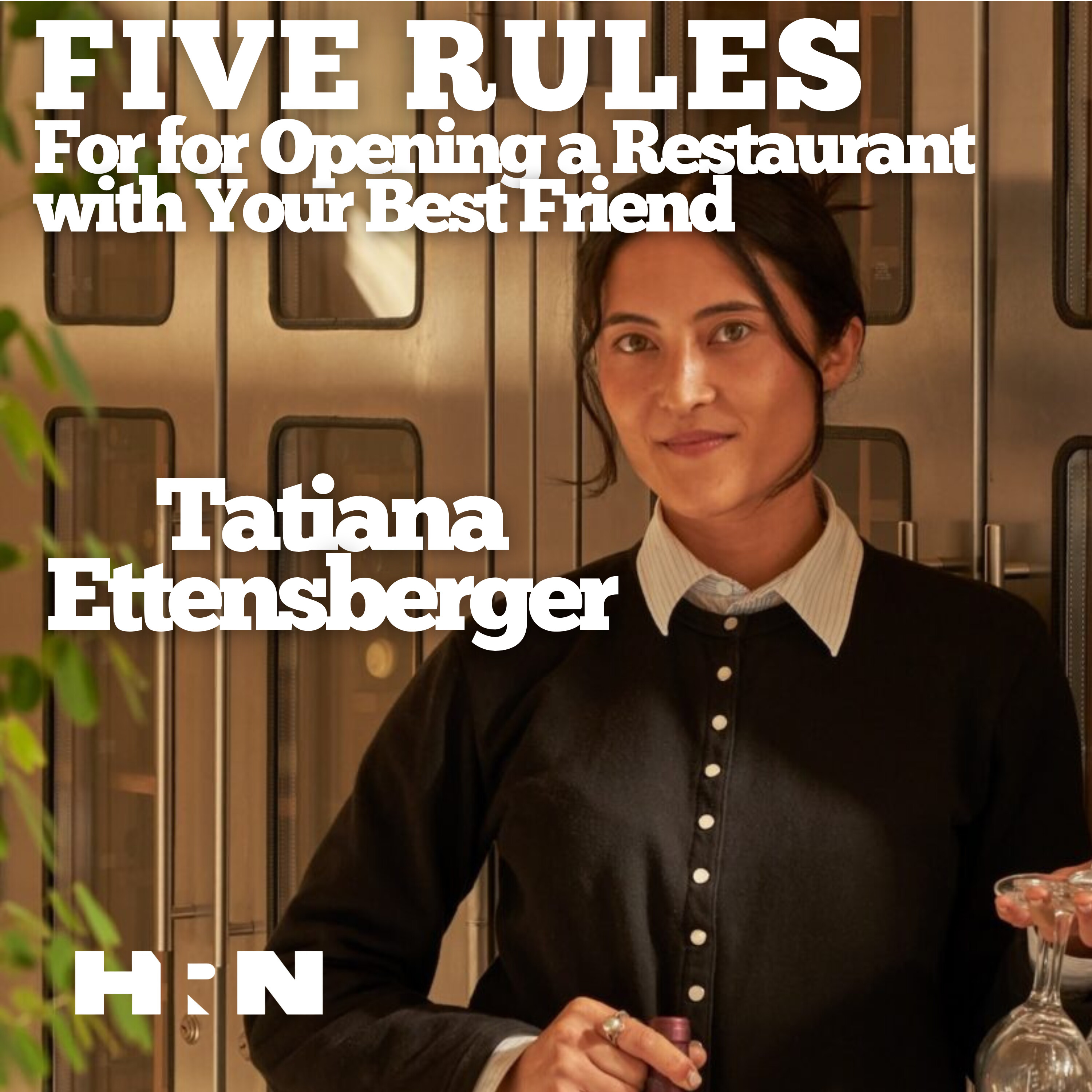
    Tatiana Ettensberger's Five Rules for Opening a Restaurant with Your Best Friend

    “A partnership is also so much about having your own little parts of the restaurant that are actually just yours. Then we bring them together in a way that complements each other.” ~ Tatiana Ettensberger This week I sit down with Tatiana Ettensberger, co-founder of Wilde’s in Los Feliz, who shares her Five Rules for Opening a Restaurant with Your Best Friend. As Wilde’s celebrates its first anniversary, Tatiana shares what she and her lifelong BFF and business partner, Natasha Price, have learned about building a business while protecting the relationship that started it. From making time for each other outside of service to encouraging time off and knowing when a secret code word is necessary, her five rules offer a thoughtful, funny, and honest look at working with someone you love. I have always loved the idea of building something with your best friend. Taking all those conversations, shared meals, and late-night plans, then turning them into a place where other people can make their own memories is a pretty incredible thing. What I admire about Tatiana and Natasha is how much thought they have put into making that work, giving their friendship the same care and attention they give Wilde’s. Being able to tell each other where they need help, cheer each other on when they take a night off, and recognize that an equal partnership can look different on either side of the kitchen door takes real trust. Hearing Tatiana talk about how their first year has brought them closer makes me even more excited to see what they build together next. Photo by Kort Havens Introduction Hello and welcome to Five Rules for the Good Life. I’m your host, Darin Bresnitz. Today, I sit down with Tatiana Ettensberger, who is one of the co-founders of Wilde’s, a Los Feliz restaurant that is celebrating its one-year anniversary. She’s here to share her five rules for opening a restaurant with your best friend. She talks about the importance of making time for each other outside of the restaurant to be each other’s biggest advocates and the outright necessity for having secret code words. It is a great conversation for anyone who is thinking about starting a business with a dear friend in their life or for anyone who’s already done so and is looking for a way to navigate their relationship. When you have a moment, please make sure to rate and subscribe to this podcast wherever you listen. So let’s get into the rules here on HRN. Tatiana, so good to see you. Congratulations. One year of Wilde’s. Thanks for making time for the show. Thank you so much for having me. I’m so excited. Friendship, Hospitality, and Building Wilde’s For anyone who’s never worked in a restaurant, how would you describe those relationships that you form with the people you work with? There’s a couple ways that I could think about it. Anytime someone asks me how work is and how owning a restaurant is, the one thing that I’ll always say after a slew of negative things, I’ll try to turn it back around and be like, the best part of it and the reason why I entered it is you’re constantly having fun. That is so much to do with the camaraderie that happens when you work in restaurants together and it bonds everybody together. I think that’s what happens when you’re in any form of service industry. There is a bit of us versus them mentality that comes where you just have to be on the same team. Of course. Through that, you just end up truly becoming family. There’s a reason it’s called, as cheesy as it might be, family meal. Then you also end up spending pretty much all of your time with the same people every day. When you’re working dinner service, you’re spending time with people at the time when people are normally socializing with other friends. It just becomes your entire social life. I’m a huge Survivor fan. I feel like everyone who goes on Survivor, they all become obsessed with each other and are lifelong friends, even though they spend 28 days together. It’s because you’re going through intense adrenaline-filled nights, night after night. When you met your longtime friend first, business partner second, Natasha Price, did you immediately think we’re going to open up a restaurant together or did that come later? That is such a funny question because I was one and she was two. I don’t know if my brain even had real thoughts at that point. As we grew up, we spent every single day together. We came up with a lot of different things we were going to do with the rest of our lives. I love that. We were playing with Polly Pockets and every day they had a different story. I’m sure in there, they were owning restaurants for sure. Natasha was the one who knew from the jump that she was going to be a chef. We both found ourselves in New York a little bit later when we were in our early 20s. She was the CDC at Mina’s. I just started serving at these pop-ups that they were doing at MoMA PS1. That was our first time doing something together in service. It was just really fun. So cool. I was doing all sorts of other stuff and doing marketing. It wasn’t until I had this quarter-life crisis when we were both back in LA and she was also having a quarter-life crisis. She was private chefing and she missed the really wonderful creative elements that happen when you’re working in restaurants, also the camaraderie of working in restaurants. Of course. Mine was a bit of a bigger crisis because I was like, I don’t have a passion in this life and what am I going to do for the rest of my life? She was the one who was like, you are obsessed with natural wine and you host dinner parties every weekend. Maybe that’s your passion is hosting, eating good food and drinking good wine. I was like, oh, I guess I could do something with this. We started a supper club with two of our other friends, which was just out of her house in Highland Park. Even then it was still like, Natasha is going to open a restaurant one day. And I’m going to sit at the bar. I would ask questions. Am I going to get free stuff when I come to your restaurant? And then my career in wine and hospitality just started moving further and further along. Once I started managing at Cafe Triste, it became really clear that this was my life purpose too. Incredible. So then I was just lucky that there was a built-in best friend who was also this incredible chef. I love that. You’re celebrating one year of Wilde’s. Yes. Congratulations. Thank you so much. How has your working relationship with Natasha evolved? It’s not even like an evolution. It was a birth of it, which I think is something that we didn’t really think about going into this. So many people say, don’t enter a business with your partner. We’re like, oh, we’re not partners. We’re best friends. It’s fine. The reality is we had never really worked with one another. Interesting. It was a crash course in a lot of ways. Now I would say our relationship has never been closer. It’s incredible. And it feels more like a marriage than anything else. I was actually looking over my five rules earlier this morning and I was like, I feel like I just wrote how to be in a marriage. Not that I know what that’s like. She does, and it feels we’re closer to that than anything else. But that’s not to say there weren’t road bumps along the way, which I think is why I chose this to be the five rules. Because I think it is probably the growth of Wilde’s that I feel proudest of in a lot of ways. The fact that you’ve been able to have this lifelong friendship and then not just make both of your dreams come true, but to have them come true together is why I’m so excited for you to share your five rules for opening a restaurant with your best friend. Rule One: Schedule Monthly Dates That Have Nothing to Do with the Restaurant For anyone who’s ever worked with a close friend, seeing each other every day is not always the same as spending time with each other and makes up your rule number one. Rule number one is to schedule monthly dates that have absolutely nothing to do with the restaurant. That’s so cool. Disclaimer. I don’t know if we follow this rule perfectly every month. It’s an idealistic rule. It’s the goal. Maybe it’s not even a monthly date. Maybe it’s one cigarette break where we’re like, okay, this time we’re not talking about anything having to do with the restaurant. It’s about carving out that time we spend every second together. We spend more time with each other than we do with our families, with our partners. There was a time where we would look at each other and be like, I have no idea what’s going on in your life. Part of that was that there was nothing else going on in our lives. At the beginning when heads were so underwater and all we were doing was this restaurant, when we would try to carve out time, there was honestly nothing else to talk about because all we did was breathe and sleep Wilde’s. Which you have to do. Yeah, totally. It was a rule that we had from before we opened the restaurant. Obviously, you don’t want to lose yourself in your business, but we also really didn’t want to lose each other in our business. Rule Two: Be Each Other’s Biggest Advocate for Time Off and Time Away Making that space for each other, respecting each other is so important to your relationship. Protecting that relationship with other people outside of it is equally important and makes up your rule number two. Number two is to be the other’s biggest advocate for time off and time away. This one I really learned from Natasha and learned by her example. It took months before either of us were out of service. The stakes of what we can do that for were really high at the beginning. Now we’re starting to get a little calmer about it. I took a night off to go see Robin. That’s something I never would have thought about doing in a million years a year ago. Fantastic show. I was so nervous to tell her, I’m going to have to take this day off for a wedding. She immediately was so jazzed for me and she was like, you have to do this. There’s no way that you are not doing this. Obviously, we love being at the restaurants. There’s guilt about any time that you’re not there. This is our project and we can’t expect anyone else to care about it as much as we do. There’s a guilt to your staff that you’re not there. There’s a guilt to the community that’s coming of, oh, well, the owner doesn’t even care, which is obviously not a sustainable way of being. We can’t be at every single thing. No. It’s so easy to feel this resentment of, well, I’m here, you should be here. And then easy to say that to someone else. Yeah. Then that feeling goes away. Exactly. It is the opposite where we are pretty much begging each other to take time off all the time. I started playing tennis recently. Love it. She is my number one fan on the tennis court. She started swimming recently and I’m convinced she’s going to become an Olympian swimmer. Rule Three: Identify and Support Each Other’s Shortcomings In the same way that you are supporting each other to take time for yourself, to take care of yourself, there’s the other side of the coin where they also know where you might not have all of the characteristics that you desire or want to be as a person and is a big part of your rule number three. Rule number three, identify and support each other’s shortcomings. This was the biggest road bump that we’ve now gotten over. Interesting. When you love someone so much and you know them so well, you know what they’re maybe not best at. Sure. You don’t want to poke it. You know they know. Of course. So you don’t want to be like, hey, you did that thing again. Protecting each other’s respective shortcomings from one another. It all came to a head in an effort to try to protect each other. There was resentment that would start growing because it would feel like, oh, why can’t we just put it out all on the table? This is what I’m not good at. This is what you’re not good at. Hey, great news. We’re good at the opposite. And so this is actually perfect for the business. Once we finally did that and put all our cards out on the table, it just became so much easier and sweeter. Being able to be more honest with each other in that way, which again, really makes it feel like a marriage. We’re not all going to have the same skills and shortcomings. So let’s utilize them and be okay with them. Rule Four: Have a Code Word Knowing each other so well, sometimes it only takes a look to understand, share the same thought of a situation, especially across a crowded dining room or a busy kitchen. But sometimes you need to get a little verbal. And this is a core component of your rule number four. Rule number four is to have a code word. So cool. And I also added in parentheses and all caps, very important with 10 exclamation points. We have multiple. I would say the ones that are the most important, and I’m not going to say the words. They’re secrets. Exactly. But one is to signal, I’m not mad at you. I’m in the weeds. We’re good. I just am speaking a bit more shortly because I’m freaking out and don’t have time for anything else. Another one is a code word that basically means there is someone in this restaurant that I am going to have to kill if I don’t go take five right now. And we don’t use that one that often. It’s funny. It’s just one word. And it just means I need to blow off some steam. You are a public restaurant and reservations are open. When that happens, it’s like drop everything, get her out of the restaurant. Obviously it’s the code words, but it’s also just a reminder that we’ve got each other’s backs. Let’s remember why we’re doing this. And it’s a good form of camaraderie. Rule Five: Don’t Confuse Equal Ownership with Identical Jobs Being in it together, understanding each other to each other’s core is something so rare and something really important. Your fifth and final rule, however, talks about how while some things might be equal, it doesn’t mean all things are. What’s your rule number five? Rule number five is don’t confuse equal ownership with identical jobs. Important. I love this rule. It’s one that I still grapple with every day. You want everything to feel fair all the time. There’s so many metrics of things that feel fair. And I feel like one in restaurants is how many hours are you spending at the restaurant? For me, every Wednesday or every Tuesday night when I know Natasha is going to the market at the crack of dawn the next morning, I should probably go with her. I’m such a bad friend and business partner that I’m not going to the market with her. Set that alarm. We’ve had that conversation and it’s like, okay, but the switch off is she goes to the market. So I close on Tuesday night. Then I spend my Wednesday morning with a little bit more rest responding to emails. We have different jobs. They require different things. Cooking is absolutely not my bag. We also joke that it takes her, I love her so much. She will not respond to an email for a really long time she doesn’t even know how she could possibly respond to it in the way she wants to. And I will sometimes just grab her phone, write the email and send it without telling her. I need those things out of my path. Check them off. A partnership is also so much about having your own little parts of the restaurant that are actually just yours. Then we bring them together in a way that complements each other. If she has last say and full domain on her parts and I have last say and full domain on my parts, that’s important too, as much as collaborating is important. Visit Wilde’s Tatiana, congratulations on a whole year to you, Natasha, the whole team and the community that supports you day in, day out. If people want to come by the restaurant, where can they go? How can they stop by? We take all of our reservations on Resy, but we save anywhere between 25 to 40% of the dining room every night for walk-ins. So we really encourage you to walk in as well, Tuesday through Saturday for dinner. And we have just started our Saturday and Sunday lunch, which we’re really excited about. You’ve all been begging for a full English and now we have it. So please come by. I cannot wait to come by for a full English and have some natural wine alongside that. So happy you’ve made it a year. Can’t wait to see what comes next for you and the whole staff. Thank you so much, Darin. I’m beyond honored to be on this. See Privacy Policy at https://art19.com/privacy and California Privacy Notice at https://art19.com/privacy#do-not-sell-my-info.
  • October 26 · 8 min

    Eric Bach's Five Rules for How to Build a World, Not Just a Product

    “Young people are drinking, but they’re being very particular about what they’re drinking.” ~ Eric Bach A Note About The Terroirist Before we get into this week’s episode, a big thank you to everyone who showed up for the Santa Cruz Film Festival and the Green Film Festival of San Francisco for the world premiere of our documentary, The Terroirist. We were absolutely honored to take home the Morton Marcus Award for Best Documentary Feature at the Santa Cruz Film Festival and are looking forward to taking the movie on the road to Austin, New York, LA, Minneapolis, and Fairhope, Alabama over the next few weeks. And if you can’t make it to any of the screenings, it will be available on streaming platforms on November 13th. What makes someone buy into a world instead of just buying a product? This week, I sit down with Eric Bach, co-founder of Good Boy Wine, to talk about his Five Rules for How to Build a World, Not Just a Product. Through their wines and annual Good Boy and Friends festival, Eric and his partners bring together food, music, art, and a community that shares their curiosity. We get into trusting your taste before everyone else agrees, knowing what to leave out, and creating experiences that give people a reason to show up. It’s a great conversation for anyone trying to turn their interests into something bigger—and figure out how to keep the magic intact as it grows. I’ve always been drawn to world-building. From making television to throwing events to putting together this show, I love finding ways to bring the people, food, music, and ideas I care about into the same space. That’s what I love about what Eric and his partners have built at Good Boy. You can feel their taste running through everything, and spending a day at Good Boy and Friends, I got to experience how all those pieces come together. There’s great wine in your glass, something you want to eat, music you want to hear, and people you’re happy to spend the afternoon with. It’s a world they clearly want to live in, and they’ve made it easy for the rest of us to want to join them. Introduction Now on to this week’s episode. Hello, and welcome to Five Rules for the Good Life. I’m your host, Darin Bresnitz. Today, I sit down with Eric Bach, the co-founder of Good Boy Wine, whose annual festival, Good Boy and Friends, is LA’s preeminent wine, music, and food gathering. He’s here to share his five rules for how to build a world, not just a product. He talks about the importance of trusting your taste for mainstream consensus, how to make curation a part of your daily routine, and that by creating participation, not just consumption, will lead to a larger world. It is a great conversation for anyone who’s ever wanted to build anything and for those who want people to buy in to what they’ve built. Please take a moment to subscribe and rate this podcast wherever you listen. So let’s get into the rules here on HRN. Young People, Wine, and Finding Community Eric, so good to see you. Thanks again for sorting me at the festival. I had an absolute blast. Five years, congratulations. Welcome to the show. Thank you. It’s good to be here. I hope you had a good time at the fest. There are endless articles about how young people are not drinking, but anyone who attended the latest iteration of your festival, Good Boy and Friends, saw that this is not the full story. What do you think the media is missing about young people in wine? That’s our whole mission, get young people drinking again. Someone needed to do it. Yeah. Young people are drinking, but they’re being very particular about what they’re drinking. They are wanting to do it in social settings. COVID really amplified, obviously, everyone working from home. People are looking for ways to participate and feel connected, feel part of the community. At the same time, they care about what they’re putting in their body. We take that into account as we’re putting this little festival together. Wine as a Vehicle for Culture That social aspect really came through. What I enjoyed about the event was how it blended all these different aspects of art, music, and food. Where do you see wine sitting within culture at large? I can’t really separate my passions from my work. They’re seamlessly integrated. I view wine, especially naturally produced wine, as part of everything you’re doing. Whether you’re going to an art show, you’re going to a concert, you have a glass in your hand. Wine is a vehicle for the things that we like to experience. For me, it’s an excuse to create more of this world around it. I love the fact that Good Boy is driven by great wine design and also community that seems to be at the center of everything you do. Why is that focus such an important North Star for you? It’s honestly building this world that I want to exist in. Take this in Los Angeles in little pockets. There’s these micro communities. I wanted to be able to create it at a larger scale and bring all of these things together. I’m an art collector, wine, food, music, dogs, all these things. I look at it as a direct expression of my interests. I feel like if it’s something that I’m interested in, there are other people out there that would also like to experience that. Rule Number One: Build a World That You Want to Exist In Having that vision, being able to stick to what you like as a guiding principle, while keeping in mind that you are creating something for a group of people at large is why I’m so excited for you to share your five rules for how to build a world, not just a product. Today, it’s so easy just to say, I’m selling you something. I just need you to buy it. But very little time do you get people to buy in to the larger idea of what you’re trying to create, which ties directly into your rule number one. The number one rule is build a world that you want to exist in. The things that I’m really obsessed with, wine, food, art, music, etc. It’s the things that make my work interesting. I can’t help but integrate them into what I do. I think a lot of people separate their work from their passion. It happens a lot. I can’t do that. It all is one thing. We only have one life to live. So why wouldn’t you express what you’re passionate about through what you’re working on? Rule Number Two: Trust Your Taste Before Consensus Being passionate about not just what you’re working on, but what you like, I think has gotten harder over the years. There’s so many different inputs of what people are into and what trends are going in which direction. It’s easy to get distracted from what you feel in your core is something that you really believe in. Your rule number two talks about following your own path before many others. What’s your second rule? The second rule is trust your taste for consensus. I love that. Everyone knows the general consensus out there. But I think if you’ve spent years really developing your taste and paying attention, you have to learn how to trust your own read before there’s proof that everyone else agrees. That comes with time. It comes with age. It comes with making mistakes. A lot of mistakes. Doing all of these things that eventually, hopefully you’ve had enough successes, even if they’re small, to where you’re like, okay, I can trust myself a little bit. Rule Number Three: Curate Relentlessly Being able to trust yourself really does mean not resting on your laurels. That can apply to business and growth. But I also think it applies to inspiration, getting out in the world and finding more stuff that you like, especially as what you like evolves with age. Your third rule talks about the idea of taking those inspirations and making them work for your world. What’s your rule number three? Rule number three is to curate relentlessly. I think it’s important to not only know what you like, but what you don’t like and what to say no to. I’ve had to do that my whole career through my agency at Space and Time. We know our values and if it doesn’t feel core to our values, then we say no to it. The same goes when we’re curating a festival, whether it’s a musician, a food vendor, wine vendor, et cetera. Your taste isn’t just what you like, but it’s also what you’re willing to leave out. Rule Number Four: Create Participation, Not Just Consumption Being able to say no to things is such a lost art. And in a world where people want you to always agree with them, where you feel the pressure to, it can be isolating at times. If you are pushing this idea that you want people to be a part of what you built, it creates a flow both ways, which makes up your rule number four. Create participation, not just consumption. I build a much stronger relationships when I am experiencing things and participating in things rather than simply buying. Thinking about, Good Boy, what you’re doing as far as an experience goes, when you have a glass of wine. What’s in the glass is important, but what you’re doing is equally as important. And I wanted to build a brand and a world around that, not just the wine. Rule Number Five: Protect the Magic With Structure Building the framework for this world is extremely important. That doesn’t mean that you’re being conservative or everything’s this binary choice. Once you know the boundaries of what you want to make, what you put inside of it becomes really freeing. Your fifth and final rule talks about protecting what’s inside this box. What’s your rule number five? Rule number five, and this can often be the hardest one for creatives, is protect the magic with structure. A lot of chaos, creative chaos can work when it’s really tiny, it’s small, it’s just getting going. Once it grows, if you still have a lack of systems, it can really start destroying the creativity. That’s something we’ve had to learn the hard way on many occasions. Always. Whether it’s making wine or whether it’s building a festival, there’s definitely a lot of growing pains and you’re constantly learning and evolving. You have to build a team, you have to create structure that allows you to support your creativity. Finding Eric and Good Boy Wine I love it, and I love the wine, and I love the festival. Congratulations on everything, Eric. If people want to buy Good Boy Wine, or if they want to come to next year’s festival, where can they go? How can they see what you’re up to? Check out goodboywine.com, or follow us on Instagram at goodboywine. Thank you so much. Awesome. Thank you, and can’t wait to see you out in the city with a glass of wine and at next year’s festival. All right, cheers. See Privacy Policy at https://art19.com/privacy and California Privacy Notice at https://art19.com/privacy#do-not-sell-my-info.
  • October 19 · 9 min

    Jason Hall’s Five Rules for Opening a Restaurant Anywhere in the World

    “Experience the local hospitality scene. You’ve earned it. It’s one of the biggest privileges of international travel. It’s that thing that will get your light bulb to go off.” ~ Jason Hall Opening a restaurant is hard enough when you live around the corner. So what happens when it’s halfway around the world? This week, Jason Hall, Vice President of Culinary at Tao Group and Executive Chef of Cathédrale, joins me to share his Five Rules for Opening a Restaurant Anywhere in the World. We talk about building a team you can trust, doing the work before you board the plane, and understanding the neighborhood before you move into it. There’s also tennis, late-night marketing calls, and a dessert in Rome that found its way onto a menu in New York. A great conversation about what it takes to bring hospitality across borders without losing your footing along the way. Having spent plenty of time traveling for work in the culinary world, I know how quickly the excitement of a new city can turn into another airport, another meeting, and a very confused sleep schedule. What I love about Jason’s approach is that he makes room for the things that keep him feeling like himself, even when everything around him changes. Pack the tennis racket, find a yoga studio, and make time to sit down at someone else’s restaurant and let them take care of you. We’re lucky to work in a world that gives us so many opportunities to eat, explore, and meet people. Finding that balance helps you actually enjoy the life you’re working so hard to build. Photo by Justin Levy Introduction Hello, and welcome to Five Rules for the Good Life. I’m your host, Darin Bresnitz. This week, we grab our passports and travel the globe with Jason Hall, the Vice President of Culinary at the Tao Group and Executive Chef of Cathedral. He’s here to share his five rules for opening a restaurant anywhere in the world. He talks about the importance of making sure that your house is in order and that no matter where you are or what you’re doing, you need to maintain your routine. It is a great conversation for anyone who’s ever wanted to open a business or a restaurant not in their backyard and to understand what it takes to work with an international team of professionals. Please take a moment to rate and subscribe to this podcast wherever you listen. So let’s get into the rules here on HRN. Bringing Food and Entertainment Together Jason, so nice to meet you. Thank you for making the time, especially with your cross-globe travels. Welcome to the show. Thank you. Great to be here. So many people have tried to pair entertainment with food and usually fall short on elevating the cuisine. How are you within the Tao Group able to keep these two disciplines on the same level? One of the things at Tao Group, we have a very deep team in each department when it comes to design, when it comes to service, when it comes to culinary, when it comes to marketing. The secret sauce for us is making sure those elements are consistent across the board. When you have alignment through the vertical and you’re developing a concept, that’s how you can bring that energy to life. Being able to bring this to life has really been prevalent in America’s approach to using restaurants as a night out, not just as a stop on a way to a club, but really mixing the two together. Have you found this to be similar all over the world or is America just catching up? It depends on the place. I think in the major markets, you really have that connection of restaurant and nightlife. Of course, in New York, all roads are paved through Tao with that, right? They painted the picture of having a really high energy dinner, then leaving your table and walking through the door into the nightclub. That’s a very New York thing to do. In the smaller cities, they’re catching up. The Nashvilles, the Houstons, the Scottsdales, they haven’t quite got there. In the major cities, yes, that culture exists. Creating a Feeling Across Cultures Being able to visit and work across so many different cultures and cities, how many different parts of the globe are influencing each other or is they isolated and only swapping a few ideas? I’m pretty privileged with my position with the Tao Group, so I’ve been able to hit a lot of those markets. It really depends on the place and the people. If you’re entering that market or you’re going there to do a takeover and you’re very authentic and you deliver to those people to that place, then those things come together. Hospitality is all about for us is that we’re creating a feeling and the guests really remember that feeling. Sometimes, it’s not so much about who the DJ was, what was on the plate or what was in the glass. It’s the energy and the feeling and the emotion created in the night. Rule Number One: Make Sure Your House Is in Order Being able to tap into that energy, that emotion, really that feeling and keeping it consistent across all of the restaurants you work in across the globe makes me very excited for you to share your five rules for opening a restaurant anywhere in the world. I can only imagine what your calendar looks like with your travel and the details and the meetings and being on the line and being in the restaurant. Just the idea of trying to stay organized has got to be a full-time job and this makes up your rule number one. Rule number one, make sure your house is in order. There is no worse feeling than traveling across the globe and not having the businesses that you have open functioning at a really high level. That’s more important than the travel, just making sure my teams are very strong, making sure the guests have a great experience in the restaurants that we have open. That allows you to leave with confidence and focus on what you have to do. Having the team to carry the business forward while you’re away is the first rule. If it’s a mess, you can’t go. Rule Number Two: Do the Work Before You Travel Being able to have that trust, being able to know that you’re being supported in the different aspects of what it takes to oversee all these different properties before you hit the road and this makes up your rule number two. Number two is do the work before you travel. It’s kind of like a bop training for a big fight. The fight is won in the gym and that’s kind of our mentality. There is a tremendous amount of nitty-gritty stuff that people don’t see leading up to a big international opening. 100%. There’s organizing talent, there’s procurement, there’s recipes. One thing that we pride ourselves on is that we have the same systems in each of the restaurants anywhere in the globe. You could walk into Lavo Singapore and they’re expediting the same way as Tao Down Town, as Sakinohana, as Cathedral. Oh, that’s amazing. You can just jump in, you can see the timing on the tickets and you can know if they’re in the shits or things are good and I can just observe. It’s really systems and organization heading into it. Rule Number Three: Do Your Research Being organized so that you can run the line is one thing. Being organized so that you can understand the local culture is quite another. People drop into different cities and parts of the globe and just say, I’m going to bring in what I know, I don’t need to learn anything about the city, which usually leads to their detriment and is a big part of your rule number three. Rule number three is do your research. 100%. It’s crazy to me that people travel without doing research. The goal isn’t for us to export a brand. It’s to create an experience that respects and celebrates the community we’re entering. Although we have strong points of view in a lot of our brands, we still take the approach that we’re moving in to their neighborhood. We spend a lot of time before an opening, there’s a lot of research of going there, exploring the neighborhoods, exploring the specialty shops and suppliers, finding little ways to incorporate authentic local ingredients and flavor and culture into the concept. And I think that’s really appreciated. Rule Number Four: Maintain Your Routine at All Costs Going to all these different local cities, going across the globe, changing time zones, being on planes, having done that type of work myself, I know how it can affect your health mentally, physically. You just feel like you’re never grounded. Your fourth rule talks about the importance of keeping this to keep you moving forward in the best way possible. What’s your rule number four? Maintain your routine at all costs. All costs. You have to do it. 100%. At all costs. Wear yourself first. Yeah. I always pack my tennis racket. Very easy to get into the suitcase. Let’s get on the court soon, bud. I start to make some calls to some local tennis clubs, and if I can’t make inroads, then the concierge starts to call for me. I love that. But I can usually find a tennis court with somebody to hit with far less money than you’d pay a coach in New York City, so it’s usually at a discount. I’ve been practicing Bikram yoga for over a decade. If I can get into a studio and sweat it out after a long haul trip, it sets the tone and resets your club. I would say as I’ve gotten older, it’s more of a necessity, less of a luxury. Getting your mind right through exercise, even having a coffee in the morning, just making sure that you know that you can put your mind and your body right before you’ve got to go out and face the team. Work doesn’t stop just because you’re away. No. We have a lot of calls and obligations that I’ll be 12 hours away in Singapore on the Ritz Carlton yacht in the Canary Islands, and I’m taking calls. As one does. I’m taking marketing phone calls at 12.30 in the morning to make sure I’m on it. You got to maintain your routine. Rule Number Five: Experience the Local Hospitality Scene Having this routine, having this constant flow of work, knowing all the responsibility that comes with this type of job can be pretty heavy. Sometimes you just need someone else to take care of you. Your fifth and final rule talks about the importance of just putting down the knives, closing the laptops, and hitting another restaurant. What’s rule number five? Experience the local hospitality scene. You’ve earned it. It’s one of the biggest privileges of international travel. It’s that thing that will get your light bulb to go off, and it may not happen right away. Maybe you’re home in a couple of months, you’re like, oh yeah, I had that thing. Really quickly, I remember being in Rome at this restaurant, Dal Bolognese, and having this dessert called the Frutini. That was in February. We were thinking about what to do with sorbet and ice cream and fruit in July at Cathedral, and I’m like, bingo, Frutini. Here’s the picture I had. Let’s get it on. It was the best dessert we’ve ever had, and it’s been on the menu since that day. Just absorbing the culture and embracing it, it’s a real benefit of doing this. It broadens your perspective. Finding Jason and Tao Group If you’re going to be out in the world, you might as well enjoy it. Jason, congratulations on everything. If people want to visit Cathedral or any of the other Tao Group properties, where can they go? How can they see what you’re up to as well? TaoGroup.com. We actually have a great app that we launched last year that’s really easy to make reservations. Bonus Rule: Fly Business When You Can Can I give you one more bonus rule? Oh, yes. Absolutely. We have a secret weapon, and his name is Steve Lagerner in Legal, and when he writes the contracts, he makes sure that we fly business. So if you’re traveling over three hours, and you got to step off a plane and into a kitchen, try to fly business. That’s my only perk I ask for. That’s it. I don’t know how that’s not rule number one, but Steve, you are a legend. Jason, next time you’re out in LA, I’ll take you out on the courts. We’ll hit some tennis balls. Awesome. Look forward to it. Thank you so much. See Privacy Policy at https://art19.com/privacy and California Privacy Notice at https://art19.com/privacy#do-not-sell-my-info.
  • October 12 · 11 min

    Josh Loeb's Five Rules for Longevity in Restaurants

    “Every day, doesn’t matter how great we were yesterday. Every day we have to come in and go, what can we do differently today? What can we do better today?” ~ Josh Loeb Twenty years in the restaurant business gives you plenty of stories, but I wanted to hear what keeps Josh Loeb excited about showing up tomorrow. The co-founder of Rustic Canyon Family Restaurants joins Five Rules for the Good Life to share his Five Rules for Longevity in Restaurants as Rustic Canyon celebrates its twentieth anniversary. We talk about quality, keeping it fun, having each other’s backs, and the work behind a seemingly simple dish that makes you wonder why yours never tastes quite that good at home. From knowing when to retire a beloved burger to giving each chef room to find their voice, Josh shares what it takes to keep a neighborhood restaurant growing alongside the people who love it. What I love about Josh and his colleagues is that twenty years in, they’re still pushing, still refining, and still asking what they can make better. That might mean spending more time on a stock, rethinking a sauce, or letting go of a dish that everyone once thought would stay on the menu forever. Having spent so much of my own life in the food world, I have a lot of respect for people who can keep that curiosity alive while doing the daily work of taking care of their team and their guests. Rustic Canyon remains one of my favorite places to eat in LA, and hearing Josh talk about the care behind it makes the trip across town feel even more worthwhile. A Personal Note Before we get into this week’s episode, a quick personal note. The documentary that I produced alongside director and producer Jeffrey Reiner on legendary winemaker Randall Grahm, The Terroirist, will have its global premiere this Saturday, October 17th at the Santa Cruz Film Festival and then a follow-up screening at the Green Film Festival of San Francisco on October 18th. We will also be a part of the Austin Film Festival and have its New York East Coast debut on November 9th at City Winery. The documentary has been three years in the making and we are so excited to share it with the world. Now on to this week’s episode. Introduction Hello and welcome to Five Rules for the Good Life. I’m your host, Darin Bresnitz. Today I sit down with Josh Loeb, the co-founder of Rustic Canyon Family Restaurants, whose flagship restaurant, Rustic Canyon, is celebrating their 20th anniversary with a series of guest chef dinners throughout October. He’s here to share his five rules for longevity in restaurants. He talks about the importance of focusing on quality, how to keep it fun while keeping up your craft, and that by having everyone’s back, you build trust with everyone you work with. It is a great conversation for anyone who’s looking to stay in the long game or for anyone looking to pick up insights for someone who’s been in the business for over 20 years. Please take a moment to rate and subscribe to this podcast wherever you listen. So let’s get into the rules here on HRN. Josh, always good to see you. Thanks again for having us in the other week. Always one of my favorite places to eat in LA. Welcome to the show. Thanks so much for having me. Twenty Years of Rustic Canyon It was a great meal and you served quite a few great meals over your 20 years in business, which is truly an incredible and unique milestone. Is there anything from those early days that still guides you today? The restaurant was always built around change, but also being really familiar and staying the same. The core principles are the exact same that they’ve been since day one, and that’s really boiled down to three things, which is great ingredients across the board, all the way through the kitchen, craft, making everything from scratch, and then making sure that we’re taking our work very seriously, but not taking ourselves very seriously. We want it to feel really warm, cozy, and hospitable. I always wanted Rustic to be the best neighborhood restaurant in America. For some people, a neighborhood restaurant is a restaurant where it’s the same menu and you go in 20 years later and it’s exactly the same. And it’s so comforting and I get that. That’s a great thing also. For me, I like change. I like to know that I’m going to have certain core things. I know it’s always going to be approachable, and I know it’s always going to be delicious, and that’s always going to be seasonal. Our menu has changed a lot. It’s funny, our first chef, we lost all our files because it was pre-cloud. Our computer crashed. I’ve been texting with him because he’s coming to the first dinner and we’re doing it all together. Samir just sent me a video. He had kept every menu printed. And so I was like, oh my god, this is amazing. So I’m so excited to dig into those. Having all those great menus, having all that change, you’ve been in and out of different moments in food trends and cooking. What have you followed and what have you avoided to keep your mission at Rustic Canyon the way you want it to be? I don’t believe in trends as much as I like to create a timeless experience. There are certain trends that come back and back all over again, and that’s a good thing. It’s like the same reason we’ve always had a chicken dish, a steak, and a fish. Certain things to ground yourself in a restaurant. Of course. We’ve had different chefs. Jeremy obviously is a genius when it comes to the way he works with things. And he took Jeremy’s inventive, imaginative cooking to another level because that’s really at the core of his passion for cooking. We’ve gone through times where we’ve introduced different aspects in it, but it’s always been let’s still ground in these timeless qualities of what a neighborhood restaurant is and should be. The ability to be both timeless, but then also embrace the new types of dishes is such a tricky balance. You’ve had customers that have been regulars from day one, but you always need to be open to getting new people in as neighborhoods, as tastes change. How do you strike that balance? Making sure there’s always room for the people who have supported you versus bringing in new people to experience what you’re doing. It’s about me trusting my intuition and me making sure our chefs trust their intuitions. Not feeling married to too much of a format. I remember reading this great book about truth, and it was there is truth, but it’s not always the same. Yes. There’s truth in every moment that changes and evolves depending on how things evolve naturally. That’s a good barometer. If we were successful under Evan cooking this beautiful Italian food, then all of a sudden Jeremy comes in and we create a restaurant where it’s supposed to evolve and change with the chefs. We’re saying, hey, you need to cook his food. It just dies. We’ve had that with dishes from the very beginning. Zoe started six months in. We had this one dessert. People loved it. Roxana Jullapat had created it because she was our opening consulting pastry chef. It was a rocky road bread pudding. It was decadent and had melted marshmallow and all these things on there. My mom loved it too. She still laments for it. We weren’t even supposed to have a pastry chef, and all of a sudden Zoe cooked for us, and it was incredible. I was like, oh my God, your stuff is so beautiful. Initially, I was like, we’ll keep the bread pudding for a little while. Then as soon as she started, I was like, it’s so weird for you to cook someone else’s bread pudding. Same thing happened with Jeremy and with the burger. We kept it for a little while. That was really Evan’s burger, and it fit a different time at Rustic, and it wasn’t the same. There were just so many different dishes that at the time, you’re like, we’re never taking this off the menu. Then all of a sudden, the menu changes, and you’re like, oh, it really feels weird to leave it on there. It’s walking that balance, trusting intuition along the way. Trusting that intuition, being open, and keeping the doors open are some of the reasons why when people look at examples of restaurants that have stood the test of time in the restaurant business, they look to Rustic Canyon, which is why I’m so excited for you to share your five rules for longevity in restaurants. Yeah, cool. Rule One: Focus on Quality For everything to change, for everything to evolve, for you to feel flexible in going in different directions as tastes evolve, having this fundamental allows you to feel that you can take those risks and makes up your rule number one. A hundred percent. Rule number one is about quality. That’s always been a non-negotiable for us. Everything has to be the best possible quality, the most thoughtfully curated version of that. It’s really easy when you’re working with farmers. There’s zero steps of separation between you and the process. Quality is the building block for everything. It is ingredients, but if you hire a good person, and that person might not be as well trained, but you can train them. Yeah. That’s a better hire than somebody who’s got a ton of experience, but is unreliable, untrustworthy. Quality will show. A good piece of fish ideally is perfectly executed, but if it’s not, you still taste it. Yeah. And a bad piece, you have to go do a lot of stuff to obscure what is wrong with it. Rule Two: Keep It Fun Knowing that you’re always going to get a good meal at Rustic is why people keep coming back, but also the atmosphere and the vibe that just welcomes you each time you show up and is the fundamental part of your rule number two. Rule number two is keep it fun. And we all know that feeling. When you walk into a restaurant and the staff is happy to be there, even if it’s a closed kitchen, you can tell by the way the plates come out that people are enjoying and taking pride in cooking. It’s just a place that you want to be. Yes. It’s a fine line. You want it to be fun, but you don’t want it to be exclusive. Sometimes you’ll walk into a place and they’re having fun, but they’re kind of annoyed to see you, or it’s an inside joke. You want it to be genuine. We are here for these five hours. We’re all about this experience, the ecosystem of the guests and each other. We’re enjoying working with each other. And we’re also enjoying sharing that joy with you. Keeping it fun is a really important part of it. Rule Three: Craft Is Really Important Getting people to go out these days when they think about, is it worth it, is a big part of what it means to be running a restaurant and to keeping the doors open. Your third rule talks about what you’re offering the guests, even though they might be able to cook a chicken at home, they can’t do it at this level. What’s your rule number three? My rule number three is craft is really important. A lot of our places, you want people to come in and be like, I can do this at home, but why is it so good? What are you doing to this burger? That comes through craft. Yeah. One of the most amazing things that Jeremy did early in his tenure at Rustic for a couple of weeks, they’re like, let’s not change the menu. Yeah. Let’s go to all of our core components. Our aioli, our stocks, the basis for everything. Let’s make sure everything is the best version of itself. Then that’s going to go build on itself. You can taste it. Yes. The reason you can’t do it at home often is because you’re using a mayo and we made an aioli. It’s the best aioli ever. The stock that we’re simmering this in was cooked over 20 hours. Yeah. So it still feels like a simple dish. I have respect for people who cook complicated food. I’m not interested in eating it on a regular basis. Same. I want a great roast chicken. I want a beautiful steak. I want awesome braised greens or amazing seafood stew where each component is thought about and craft is the difference between a restaurant that’s just phoning it in or doesn’t have the layer of training skill in it. And one that has a kitchen full of cooks who are really learning and are led by somebody who’s a master in their own craft. Rule Four: Have Each Others Backs Having that trust, having that ability to say, I want to make this stock 1% better, being able to communicate each other and know that everyone’s working toward the same goal is what allows you to keep pushing. To have that trust makes it be rule number four. My rule number four is to have each other’s backs. One of the core components of restaurants is that it’s hard. It’s a daily thing. Yeah. In my own career chain, I still have my hands in the restaurants, but I made my first film. Oh, congratulations. Thank you. Thank you. Making a film, there’s so much parallel. The way that crews work together, a lot of the skill sets and the type of people that work in film and the type of people that work in restaurants, there’s a lot of parallel. The difference is once you make your film, it’s done. Yes. Then it can live on and doesn’t have to be redone on a daily basis. In a restaurant, you redo everything on a daily basis. Yeah. So it doesn’t really matter if for 20 years you’ve been doing it well. If we start cutting corners tomorrow at Rustic, within two weeks, we’re going to have upset enough diners that they’re going to start talking about it to everyone else. We are going to have lost all the credibility and the goodwill that we’ve had. You’ve got to have each other’s backs as a combination of be there for each other because it’s an emotionally draining and challenging environment to work in. But also the best kind of restaurants and the best kind of kitchens are where people also hold each other accountable. Because we all have our days, right? Where you’re like, I’m just going to do this. Nobody’s going to notice. I can’t do this. But if everybody is looking after each other and be like, no, that’s not actually how we do this here. You know that. I know it sucks, but let’s do it again. Yes. Zoe was really great with that in the beginning of Huckleberry. Her bakers were awesome and they knew she had their backs. But when a tray of scones came out and they weren’t right, she would literally just take them and throw them in the trash can. Yeah. Sometimes people would get mad, but then they knew, hey, we just don’t serve that. Rule Five: Change Is Essential Having those standards, being able to respect each other, the quality of the fun, these are all constants. And being locked into doing things a certain way can be both reassuring, but it could also stunt your growth. Your fifth and final rule talks about the importance of evolution. What’s your rule number five? My rule number five is that change is essential. A restaurant that’s doing the same menu for 20 or 30 years, I got to imagine that there’s a new life that goes into it because otherwise you would feel like getting stale. Yeah, I get it. I love this Bob Dylan quote from a song. You’re either busy being born or you’re busy dying. Yeah. I’ve used that a lot when we’ve talked about planning, talking with managers. Every day, doesn’t matter how great we were yesterday. Every day we have to come in and go, what can we do different today? What can we do better today? Yeah. It might be the way you fold a napkin. It might be the way you change a sauce. The music. There’s something you can do to grow every single day. There’s something you can do to get better every day, to change every day. Yeah. It’s hard for us as human beings, myself at the top of that list. I want to have everything set and then just be like, it’s going to stay the same, right? But the truth is we have to get better. We have to work on that every day. That’s a real big, important part of how we do things. Visit the Restaurants Josh, congratulations to you, Zoe, the whole team, everyone who’s passed through the front of the house, the back of the house. If people want to visit Rustic or any of the other restaurants, where can they go? How can they see what you’re up to? As far as our physical restaurants, we have Rustic Canyon. We have Huckleberry. We have Milo and Olive and Sweet Rose. Those are all in Santa Monica. And then we have the Dutchess that’s up in Ojai. I can’t wait to come back in. It’s always a special time when I go east side to west side and get to stop in Rustic Canyon. That’s a big journey. It’s almost easier to get up to Ojai sometimes than it is to get here. It is 100% actually easier to go to Ojai, but you make it worth going across town. Thank you again and can’t wait to dine with you one more time. Thanks so much for your time, Darin. I appreciate it. See Privacy Policy at https://art19.com/privacy and California Privacy Notice at https://art19.com/privacy#do-not-sell-my-info.
  • October 5 · 10 min

    Liz Alpern's Five Rules for Nourishing a Crowd with Soup

    “I started Queer Soup Night because the things I knew how to do were make a lot of food and throw a party.” - Liz Alpern Liz Alpern knows how to feed people and give them a reason to come together. The creator of Queer Soup Night joins me to share her Five Rules for Nourishing a Crowd with Soup, from thinking through where people will eat to keeping things simple with a little flair. We get into the resourcefulness behind a great pot of soup, the power of showing up for your community, and why making a shopping list can be its own act of self-preservation. With her forthcoming Queer Soup Night cookbook arriving in January 2027 and now available for pre-order, Liz shares an approach to hospitality and activism that starts with the skills you already have. Liz and I say “soup” 51 times in this episode, which feels like an appropriate level of enthusiasm. I love how deeply she cares about soup and how that passion carries into her activism and the community she’s built around feeding people. She thinks about everything from what’s in the pot to whether someone walking through the door will feel comfortable, welcome, and cared for. Her rule about starting with what you know really stays with me: Liz knew how to cook and throw a party, and she put those skills to work bringing people together when they needed it. Introduction Hello, and welcome to Five Rules for the Good Life. I’m your host, Darin Bresnitz. Today, I’m joined by the creator of Queer Soup Night, Liz Alpern, whose new book, Queer Soup Night, the cookbook, Over 50 Ways to Activate Community, will be available everywhere January 2027. She’s here to share her five rules for nourishing a crowd with soup. She talks about the importance of understanding where the crowd will be eating, how despite best efforts, you can’t make everyone happy, and that it’s always great to keep it simple, but add a little flair. It’s a great conversation for anyone interested in upping their soup game, but also understanding how to feed people and create community around activism. When you have a moment, please subscribe and rate this podcast. So let’s get into the rules here on HRN. Liz, so nice to meet you. Thank you for taking the time. I’m so excited to talk to you about Queer Soup Night and the new book. Welcome to the show. Thank you. I’m so glad to be here. Soup Community and Activism There are so many dishes that exist in almost every culture. Bread, noodles, but almost none as prevalent as soup. Yes. What is it about this dish that connects people all over the world? Oh, I could talk about this all day. A few things come to mind for me. At the heart of soup is resourcefulness. Whatever you got, you can turn it into soup. My ancestors in Eastern Europe were able to pull together a few scraps of chicken, a half an onion, and a crusty carrot and turn it into something. When you’re talking about the way that ancestral cuisine developed, we’re talking about cultures that were resourceful, that didn’t have grocery stores, that didn’t have refrigerators. Every culture around the world developed in this way. So every culture around the world developed a resourcefulness and soup is it. You can get so much out of so little. I love soup. I love how democratized it can be. I have always believed that food is and should be political and stand for something. What drove you to bring together community, activism, and soup? I have always been a passionate soup lover, if you can’t already tell from the way I speak lovingly about soup. Always dreamed of feeding everybody soup. So much of what I love about soup is the abundance. You can just picture that giant pot of soup. I always envisioned serving my friends and community that soup and certainly did in my own home. I always wanted to make it bigger. It wasn’t until the first election of Trump that I felt propelled to take some initiative and do something different. A lot of people were looking for ways to get more involved in some of the resistance work that was happening. I felt like this was an amazing opportunity for me to feed people that I’d always wanted to. It turned out that people wanted the soup. I love how you’ve brought people together all over the country and that these voices are represented in your new book, Queer Soup Night, which is part cookbook, part manifesto, part activism guide. You got it. Why did you want to bring all these elements together in this book? We have been throwing this party, Queer Soup Night, since 2017. Our 10-year anniversary was coming up. Congratulations. Thank you. It felt important to me at that time to mark this moment of having really committed to this model and seeing it grow for all this time. Simultaneously feeling like the world does not feel safer. The world does not feel more comfortable for queer people. If anything, we are in way more dire straits or in a space of alarm. We throw events all over the country. We have chapters all over the country, but that doesn’t mean we have chapters everywhere. At any given time, we maybe have around a dozen chapters that are actively throwing events, anywhere from New Mexico to Brooklyn to Oakland to Chicago. But there are so many places where Queer Soup Night hasn’t happened yet. People hear about us. They follow us. They reach out to us. We wanted to find a way to give a little of that magic, a little bit of that fire that Queer Soup Night gives you, and that nourishment that Queer Soup Night gives you to places that we hadn’t been yet. A book just felt like such a natural place to go with that impulse. We had hundreds and hundreds of chefs cook for us. There were so many good recipes. We have 51 soup recipes plus much more content. But the 51 recipes, each recipe is from a chef who has cooked for us before, and it tells often the story of what’s meaningful and important to them. Often it was a recipe that they cooked for a Queer Soup Night event. It’s just a snippet, but we really wanted to find a way to bring Queer Soup Night to a lot more people and a lot more homes and a lot more places. I love how you’ve brought together this messaging, showing people how to bring together people over soup, community, and support, which is why I’m so excited for you to share your five rules for nourishing a crowd in soup. That’s right. Rule One: Consider Where Your Crowd Will Be Eating For anyone who’s been politically active or activated in the last decade, they know that the fight is everywhere. Your first rule talks about what it means to go to where you need to take care of people. What’s your rule number one? Rule number one is consider where your crowd will be eating. We’re talking about soup, so it has some logistical challenges. We really love feeding people in public spaces that are easily accessible. Queer Soup Night has our own rule internally, where we say we like to be in bars, restaurants, parks, outside, anywhere that somebody could spontaneously show up. Actually, when you’re feeding a crowd, the where matters because you need to figure out, are people going to need seats? Are they going to be comfortable? We want to bring hospitality to our nourishment. When we nourish people, it’s not just about food. It’s about the environment. The where of it all is also about saying, hey, are people going to be able to find it? Are they comfortable when they get their soup? How are we going to serve the soup? Where are we going? Where are we getting the soup? Do they have a spoon, napkin, garbage? As a hospitality person, I’m just all about it. Rule Two: Keep It Simple but Add a Little Bit of Flair When people make soup, especially for the first time, they think it’s a kitchen sink, empty the fridge type of endeavor. Your second rule talks about keeping focus and keeping this in mind when making soup. What’s your rule number two? Rule number two is keep it simple, but add a little bit of flair. Love it. I am a big proponent of don’t go overboard when you’re making soup. This is soup, folks. You know what people want when they want soup? They want comfort. So you don’t need to make a soup with 16 garnishes and a foam on top. No. You need it to be simple, nourishing, and taste really good. However, a little bit of flair goes a long way. If you’re making a simple lentil coconut curry soup, the soup of vegan homes everywhere, that one of the first things I certainly learned to make when I was cooking on my own, add a garnish. Add some toasted seeds with some spice. Add a crostini that you’ve made, that drizzle of olive oil. Add some fresh herbs. Give it something to make it feel special while staying nourishing. Rule Three: You Cant Make Everyone Happy but You Can Aim for 90 Percent When you’re serving a lot of people, as soup is one of the great meals that you can stretch. That’s right. There’s a lot of spoons going in. Yep. But that doesn’t mean that everyone’s going to enjoy it, and it ties directly into your rule number three. My rule number three is you can’t make everyone happy, but you can aim for 90%. And I think you should aim for 90% happiness. When you serve food to people, when you’re in the hospitality industry, when you’re a chef, you are constantly going to get feedback. You’re going to get critiques, and you’re also going to get questions. Yeah. Does this have onions? Does this have garlic? Does this have peanuts? Does this have dairy? Does this have soy? You should be keeping in mind who your crowd is and how you can make them happy, but know that probably about 10% of the people will have some allergy you can’t please. 10% of the people just might not like cumin, and that’s okay. Look, aim for 100. Yeah. When I’m serving people, I know that it might happen that there’s still somebody who doesn’t like what I made, even if I made something really good. It’s just about peace of mind. It’s about saying it’s okay if one customer walked away unhappy, as long as you did what you could. Rule Four: Channel Your Inner Virgo and Make Your Lists When you’re cooking for others, you have to also take care of yourself. Part of that is being okay with someone not liking your soup, but also it’s taking care of yourself when you’re making the soup, which makes up your rule number four. Rule number four, channel your inner Virgo. That’s me. I’m a Virgo. And make your lists. Love it. If you’re a person who cooks professionally, if you’re a person who produces events professionally, you are already making lists. You know this. 100%. In my world, there’s a lot of people who really want to gather people, and it’s not necessarily as natural to them as they wish it was. I know. These rules build. They don’t live in isolation. If you’re keeping it pretty simple, you know you’re going to have a couple of people that aren’t that happy. You can do this. Yes. As much as we talk about soup in theory and say, a little bit of this, a little bit of that, not everybody can cook that way. When you’re cooking for 300 people, you got to make a list. I’m doing an event on Monday. I just made my prep list, my shopping list. I’m ready to go. That comes pretty naturally to me. Anybody who wants to host and bring people together, it’s good to get practice in that list making planning mindset because it really can prevent you from being overwhelmed later. Rule Five: Stick With What You Know Being overwhelmed can happen when you’re cooking for people, especially if you’re out in the world feeding them because they’re protesting. It can really mean a lot to people when you nourish them. Yeah. Your fifth and final rule talks about when you’re bringing people soup on the front lines, it’s okay not to try something new. What’s your rule number five? Rule number five is stick with what you know. I started Queer Soup Night because the things I knew how to do were make a lot of food and throw a party. Hell yeah. Those are the things I knew how to do. Let’s go. They’re kind of still the things that I know how to do. You know how to write a book now. I do. I know how to write a book. It’s my second book, actually. I got a few other skills. That’s how I found myself in the world of Queer Soup Night. The reason it’s been successful is because it was something that I knew how to do. So it was easy for me to ask for help. It was easy for me to grow it, to change it. And I’m not saying it was easy every minute. When you’re starting something new, sticking with something you know allows you to grow that thing that you’re doing further than you thought. Yes. A lot of people love it when they’re having people over for the first time. They’re like, let’s try a new recipe. And I say, if you’re a confident cook, that’s fine. But if you’re not a confident cook, maybe stick with what you know. Same thing with activism. Yeah. If you’re going to make a move, if you’re going to get involved, if you’re going to try and make change, start with what you know. The Book and What’s Next Liz, I love all of this. The book is beautiful. The soup is delicious. Thank you. If people want to pre-order the book and check out your next event, where can they go? You can pre-order our book. It’s very easy to find the link at our Instagram, Queer Soup Night, or on our website, queersoupnight.com. We are also being published by Combo’s Press, an amazing independent press in upstate New York. So Combo’s Press has a website, and that’s where you actually will go and pre-order the book. It comes out in January of 2027, which is our exact 10-year anniversary. Amazing. So our next event is going to be in Brooklyn on Tuesday, October 13th. That’s the day after Indigenous Peoples Day. So come back. You don’t have anything in your house from your long weekend. We will feed you that night at Eddie’s Grocer in Greenpoint, and you can pick up some amazing stuff at Eddie’s while you’re there. Congratulations on everything. I’m hoping to share a bowl of soup with you next time you make it out to LA. Definitely. We’re definitely going to be promoting the book in LA in January, so we’ll definitely be in touch. Amazing. Thank you so much. Thanks. It’s such a pleasure. Bye. See Privacy Policy at https://art19.com/privacy and California Privacy Notice at https://art19.com/privacy#do-not-sell-my-info.
  • September 28 · 11 min

    Julia Sherman's Five Rules for Making a Better Salad

    “Touch everything when you’re at the market. It’s OK if you look weird sticking your nose in bunches of this or that. You’ll look like a pro to anybody who knows what they’re doing.” - Julia Sherman Julia Sherman, artist, author, and creative force behind Salad for President, joins me to share her Five Rules for Making a Better Salad. We talk about finding joy in the process, cooking with all your senses, checking your ego, and finding fresh inspiration at the market. Julia also makes the case for giving dressing its due—and for making a salad you’re genuinely excited to eat. I love salad, and I love that Julia is on a mission to help everyone make better ones. She sees a bowl of vegetables as a chance to play with color, crunch, flavor, and whatever looks good at the market. By the end of our conversation, I wanted to get into the kitchen and make my one reliable salad twelve different ways. Introduction Hello and welcome to Five Rules for the Good Life. I’m your host, Darin Bresnitz. Today, I sit down with chef, artist and author Julia Sherman, whose new dressing mixes salad for president is available everywhere. She’s here to share her five rules to make a better salad. She talks about the importance of cooking with all of your senses, how to nurture your inner shopaholic, and that by using the freshest produce leads to the best results. It’s a fantastic conversation for anyone looking to up their salad game with tips from the master who makes every bowl beautiful. Please take a moment to subscribe and rate this podcast. So let’s get into the rules here on HRN. Julia, always a pleasure when I get to see you, and I get to chat. Loving Salad I know you have a lot on your plate right now. Thank you for making the time. Of course. My favorite thing to do is to talk, so... You literally wrote one of the books on salad. What do you love and what have you always loved about this type of dish? I’ve loved salad since I was a little kid, which was strange then. My love of salad is layered. I’m a passionate gardener. I’m fascinated by plants, produce. Salad to me is such a direct way to work with that material. It’s really about honoring the ingredients. It’s about not doing too much to them, really building a dish around produce. One side of it is aesthetics. It’s really about composition. It’s about color, what plate you use. The last thing was really that I used it as a foil to start conversations with artists. I wanted to be setting myself up for a life where I was cooking with artists and facilitating conversation and how could I do that in a way that didn’t feel intimidating? Everybody has a salad that they make. Even the simplest salads are exceptional. I found that salad was a thing that I could use to get my foot in the door with artists by saying, would you make me a salad? When they would say that that was an unusual request and they were a little befuddled, I would be able to explain to them salad can be conceptual, a salad can be putting things together in a way that’s about contrast and juxtaposition. Maybe it’s not even edible. It was this really open ended prompt that did loop back to the way that I prefer to eat, but was also a framework for a conversation. I feel like salads have been in the conversation so much these days. Salad Trends I rarely go out to eat or even have a meal or salad isn’t a big part of it. Why do you think salads are trending right now? If I’m going to be idealistic, it’s because people are awakening themselves to the greater world of fruits and vegetables and that the monocultures that we’ve all been living in are depressing and uninspiring as more and more people shop the farmer’s market and even what you see the farmers are offering has changed so much. It’s sort of a status symbol to know your fruits and veggies to start to have more of a specific grasp on what the full spectrum is that’s out there. Salad for President, Dressing For You You’ve been such a good guide and teacher, both in your cookbooks, through your social video content. And now you’ve gone as far as creating your own line of instant dressings, also titled Salad for President. What inspired you to bring the flavors you love directly into people’s kitchens? Over time, I’ve been making salads under the moniker Salad for President for over 10 years now. The amount of times that I’ve heard people complain about making dressing, it’s a pain point. Sure. One of the things I love about cooking is that you don’t need a lot of pre-made stuff. But I do think that if the grand ambition is to get people to eat more salad, eat healthier and cook at home, if there are parts of that process that are daunting that somebody just hates doing and I can help with that, then that felt really exciting. I love it. Dressing needs to be fun and dressing can give your entire meal a personality. Most people, when they’re making dinner, throw together the salad at the end, everything’s hot and it’s on the table and they’re like, shit, I don’t have a dressing. It’s an afterthought. The dressings, just to explain the format, is they’re powdered. It’s a play or an update on an old fashioned form factor. The idea is that you make your dressing fresh every time you make it with fresh lemon juice and some olive oil, the powder, and you shake it up. It emulsifies. I just really want people to cook. I don’t understand why people eat every day. When people tell me they don’t cook, I want a diary of what do you eat every day? It blows my mind. If people could find a little bit of joy in the process of cooking and felt good about their vegetables, it would make a huge difference. If you have something that you can follow to a T and it’s foolproof and you make that 10 times and then maybe you start to get the confidence to play with it, add a little bit of this, a little bit of that. Suddenly you got a little bit of salad pride. I love how passionate you are about salad and it can be very, very infectious. The fact that you’ve really mastered not just one, but many salads makes me so excited for you to share your five rules to make a better salad. And I think before I felt comfortable with making what I consider my one and only salad, which I feel very dialed in about just one, just one, but part of it is that I look forward to making it and the steps that go into it, which makes it be rule number one. Rule 1: Love the Process All right. Rule number one is love the process. Yes. As I get older, I’m more and more confident in my identity as a process oriented person. It’s great. I love making things. If you don’t enjoy the process, it’s really, really hard to end up with a good result when you’re cooking. And I feel like I just had the best education in this, in opening a restaurant and watching people in the kitchen making my recipes, which were written down to the gram for every single ingredient, and then watching somebody make it who doesn’t really care, doesn’t have a connection to it, is crazy. It’s such a cheesy trope. Love is an important ingredient, but you have to feel it. When I was drawn to salad originally as a platform, it’s one of the things that a lot of people have one recipe that they’re like, I got this nailed. Yeah. And if that’s the thing you love, lean into it, iterate on it, make it 12 different ways. Figure out what you actually enjoy making and then explore that. You don’t have to reinvent the wheel. Classic salads are classic for a reason. They’re fucking awesome. One of the things that I’ve come to realize about salad, even the most simplest ones are complicated, which can be intimidating, but if you cook with all of these, it’ll help you make a better salad. Rule 2: Cook With All Your Senses What’s your rule number two? Rule number two is to cook with all your senses. When I’m home by myself, I will do what every normal person does. I eat my dinner out of a mixing bowl and it does not taste good. You put that same thing on a plate and you treat it nice. It’s going to taste a lot better. The thing that I love about salad is that it is all about all your senses. You’ve got color, which is huge. You’re making a potato salad. Why do just white potatoes if it’s going to be all white with the dressing? Add some purple potatoes, add some pink potatoes. Think about color. Texture is really a much overlooked component. I worked at Chopped for five years, a creative director, and did a lot of work on their culinary team. I learned so much about the importance of crunch. We think about this with our snack food. The crunch is addictive. In a salad, it really drives the next bite. Smell. Don’t just think about what you think might taste good together, but think about two things that smell good together. Touch everything when you’re at the market. It’s OK if you look weird sticking your nose in bunches of this or that. You’ll look like a pro to anybody who knows what they’re doing. A good salad never fails to impress. I can understand that when people get in the kitchen and they want to serve something, especially if they’re going really big with a protein, they want the salad to match that level. That being said, there is nothing wrong with making a well-known, well-loved salad if you check this. Rule 3: Check Your Ego What’s your rule number three? Check your ego. This is something I really tried to keep in the forefront of my mind when I was working on the restaurant menu. Cookbooks, too. Yes. When writing cookbooks, there’s a point, if you’ve worked on it for too long, where you start to just get weird. Yes. To get back to the things that actually taste good. No one wants to eat your ego. And you feel that when you go to restaurants. You can feel when the person’s just up in their head, not connected to what people actually want to eat. For me, with a background as an artist, I can always make that one-to-one connection to the art that I love is always seemingly stupidly simple. So when a salad’s just too try-hard or too eager to impress, it doesn’t land. I could eat a Greek salad for the rest of my life and I could make 100 versions of a Greek salad. And I can think about how I treat each of those ingredients. Yes. It’s OK to just make something that’s good. You don’t have to have authored every inch of it. If you want to counter just going for the simplistic approach, you can embrace going crazy at the market and raiding your pantry, which makes up your rule number four. Rule 4: Tap Into Your Inner Shopaholic Tap into your inner shopaholic. Salad fatigue is real. Yeah. When people eat the same salad every day, they lose their joy. In L.A., I spend a lot of time going to all the different markets. The farmer’s market for my produce, that’s just one piece of the puzzle. The Thai market, the Indian markets are just a library of crunchy things. It’s so great. All the things that go into chaat, the crispy fried mung beans. All of those things are just salad gold. Don’t feel bad about spending money on really good produce. That’s one thing that I have absolved myself of. Still cheaper than eating out. It’s still really good for you. Think about the produce. It is the most important piece. But then you can have an arsenal of texture, crunch and flavor that’s coming from so many other directions. It pays to go fresh every time with the produce and what’s making up the main elements of your salad. The other element that people really get stuck on is the dressing. Your fifth and final rule talks about a way that you can help people get around a dressing debacle. Rule 5: There’s No Shade in Lemon and Olive Oil What’s your rule number five? There’s no shade in lemon and olive oil, especially if you’re using good olive oil. No. There’s no shade in vinegar and olive oil. And there’s so many fun vinegars out there to play with. If you’ve been using balsamic all your life, which I love, you should take a walk down your specialty food market. The vinegar and oil section. Really look at the Banuel’s vinegar, sherry vinegars. They all have different acidities and it’s really fun to taste and figure that out. Yes. With the salad dressing mixes that we just launched. This is a push for those of you who are two ingredient dressing people, but aspire to be more. Our little powdered packets, they’re made of powdered miso, powdered Worcestershire sauce, powdered soy sauce, powdered mushroom. All you have to do is add lemon and olive oil. But also you can mix it up. Try rice wine vinegar instead. Try sesame oil. It’s not cheating. It’s OK to get a boost. We’re busy. We’re busy. I make salad all day so that you don’t have to worry about it. I love that. Julia, congratulations on everything. If people want to get the salad dressing packets, if people want to get the books, if people just want to see what you’re making, where can they go? Always go to my two Instagram accounts now for dressing content. It’s at Salad for President. And my personal account, which is a lot of cooking videos, is at Julia Sherman for President. And then if you want to buy the dressings, you can buy them on SaladforPresident.com. I’m looking forward to trying them. I’m finally home. I can get back into the kitchen during the summer salad season here in L.A. And I hope to see you around a salad bowl very soon. Thank you, Darin. See Privacy Policy at https://art19.com/privacy and California Privacy Notice at https://art19.com/privacy#do-not-sell-my-info.
  • September 21 · 10 min

    Dale Talde's Five Rules for Staying in the Game

    “It starts with finding the best and then figuring out how to do it consistently.” - Dale Talde Dale Talde, co-founder and executive chef of Food Crush Hospitality, stops by to share his Five Rules for Staying in the Game. We talk about knowing what you do best, hiring talented people without giving away your equity, and why your next great opportunity may already be sitting in your inbox. Dale explains why the best product has to come before the business model, and how accepting eighty-five percent can make room for a family, a community, and the next project. It is a conversation about failure, longevity, and continuing to stand back up, with a little walk through our shared years in Brooklyn along the way. Dale is one of the people from the food world I have known the longest, and over the years we have been through a good amount together. We have watched restaurants open and close, projects come together and fall apart, and both of us keep finding the next reason to get back in the game. There is a particular kind of friendship that comes from knowing someone across that much time, through the wins as well as the moments nobody posts about. Staying in the game for a long time is something we both take pride in, and I am grateful that after all these years, we are still here, still creating, and still cheering each other on. Introduction Hello and welcome to Five Rules for the Good Life. I’m your host, Darin Bresnitz. I’m always excited when I get to sit down with today’s guest, Dale Talde, who is the co-founder and executive chef of Food Crush Hospitality. He’s here to share his five rules for staying in the game. He talks about the importance of delegating and not giving up equity, how your next project can already be sitting in your inbox, and how 85% is the key number to long-term success. It’s a great conversation and a little bit of a walk down memory lane as we talk about our time in Brooklyn and how Dale has stayed in the game for so long. Please take a moment to subscribe and rate this podcast on Spotify, Apple, or wherever you listen. So let’s get into the rules here on HRN. Dale, my brother, so good to see you. Dale’s Salad Days You’re looking stylish as ever. Thanks for making the time to stop by the show. Of course, brother. You know, we go so far back. Anything for you. I owe so much to our friendship, always a legacy. Speaking about going far back, you’ve been cooking for decades now. What do you remember from your salad days on the line that still rings true today? Coming to work stoned is a terrible idea, especially when you’re not very good. Absolutely. When you are starting off in this game, especially if you’re not the best cook and you’re still learning, come with a clear mind. Don’t party the night before. Take all that stuff very seriously. In our industry, we work hard and want to live hard too and party hard. But when I was a really young kid, I was really immature and I was just showing up to work. All the young culinarians out there come clear minded and even business owners. They see a lot of guys are just like, I’m going to live my life. And if I’m going to smoke a joint at noon and show up to work at two, how good of a boss are you going to be? Taking Risks Taking those risks, not taking it as seriously as you could in the early parts and even the middle parts of your career, did you ever feel like you were in jeopardy of getting bounced out of cooking professionally? A hundred percent. I worried about my job every single day that I showed up for work. There is an edge to a lot of great business owners and restaurateurs where they keep that edge. It could fall apart at any moment now, and I could be left with nothing. The ones that keep that edge oftentimes are really successful. With that edge comes a lot of neuroses. There’s a neuroticness about them at work that could be good or bad, how they channel that energy. When you have in your head that this can all go away at any moment now, you push. Pushing in a really positive thing in our world. Longevity Daily With your hospitality group, Food Crush Hospitality, and your restaurant Goosefeather, and everything else that you’re working on, how do you implement the idea of longevity in what you do on a day-to-day basis? I have this approach that I took from a mentor of mine, Stephen Starr. If it’s not broke, do not fix it. It pertains to a lot of the staff, how you manage staffing, how you manage your executive chef, your director of operations. With that, you have to constantly communicate with them about what is working, what’s not working. With them, you put them in a position to succeed, and it is succeeding. Don’t fiddle with it too much. It gives them this lack of consistency that a team really needs. Finding your footing and being consistent has been a trademark of your career. Rule One: Don’t Give Up Equity Being able to be in the culinary world for so long is so inspiring, which is why I’m so excited for you to share your five rules for staying in the game. When working with others, being part of a team, you need to really understand your position and the position and skills of the other people that you’re working with, which makes up your rule number one. Rule number one is don’t give up equity for jobs that you’re not the best at. There’s always someone who can do that job that you’re not great at. And you don’t have to give up any piece of your pie. You just pay them a really nice salary. When I left my last restaurant group, I went off on my own and I was just limbo. I had took a meeting with John Meadow, who is LDV Hospitality. I was like, John, this is kind of where I’m at. Thinking about actually going back to school. And yeah, I know you went to Cornell. The other side of this business, I’m not great at. The business side, the front of the house, wine, all that other stuff. He paused me and we’re having coffee. He goes, Gil, are you crazy? I go, why? He goes, you have the sauce that we are all looking for. Hire every other position. If you’re not a good business development person for looking at the project, you hire somebody for that. Do not dilute your ownership in any of this. When you start diluting all that, that’s when there’s too many cooks in the kitchen and that sauce just gets muddled. That ragu that you have starts to fade away. Sometimes the sauce breaks. Rule Two: Stand Up Strong Sometimes the sauce burns. A lot of times today, especially when you’re looking at social media, it looks like no one ever fails, but failure, bankruptcy, bottom of the barrel, which I’ve been at a couple of times is a big part of rule number two. When you get knocked down, but that’s not it. It is when you get knocked down in hospitality, you standing up for your next project is the most important. You’ll see a lot of people who will wallow in their sorrows. I’ll always be, or be embarrassed about closing a restaurant. It kind of mirrors a lot of entertainment industry. Not every show you make is a hit. Matter of fact, most of the shows you make are not going to hit. Most of the restaurants you make are not going to be hit. 1% of the restaurateurs who are those hit makers. That’s why they are who they are. Stephen Starr, Danny Meyer, the major food group guys. They’ve all closed restaurants too. How they deal with that closure. For me, it’s so hard to call them failure. You’ve still created something. 95% of the world will never know what it’s like to create like that. Never. Never. Being able to create something and having the opportunity are really unique and special things. Rule Three: Your Next Project is in Your Inbox Sometimes the hardest part about that is finding the next idea, finding the new project, finding a starting point on what is relatively a blank piece of paper. Looking through this is a good place to find that next big thing. What’s your rule number three? Rule number three is, you know, when you’re looking for your next opportunity, start digging through email. Yeah. That’s how I found Goosefeather. You look at opportunities that maybe at that point in time of your life, it was not a fit, but now it is a fit. I found my partners at Goosefeather because I had looked at that property probably a year and a half prior with my former partner and said, Hey, this isn’t the right fit for us right now. Yeah. I took a look back at that project solo. I was like, this is my jump off. I live in the Burbs now. I’m not commuting to the city. This is a community that needs something different. I get to keep all of it. I jumped on the project and said, it’s now seven years later. James Beard recognition, Esquire magazine’s best new restaurant, multiple local restaurant, best restaurant award, Michelin recognition. When you are looking for, Oh my God, we need servers. We need cooks. We need a manager. Look internally first, because the answer is oftentimes within the four walls of where you are. If you just act around the community that you’re in, people are gonna be like, I have a friend that needs a job. I worked at this restaurant. He just hit me up. The chef is leaving. He hit me up and he’s a great chef and interview. That’s what I mean by looking at your inbox. It’s a literal, but also figuratively look within your inbox or your close connections. Don’t be afraid to be asked your network. Okay. I’m looking for our next opportunity. If anyone knows anybody who needs F&B it might be not the right project for that person, but they might pass it off to you and it might be the perfect project for you at the time. That balance of finding the right project for you at the right time. What is speaking to creatively is always in juxtaposition with the money and the budget and the cost and the revenue of everything. Rule Four: Start with The Best Your fourth rule talks about finding the right type of balance between these two competing aspects. What’s your rule number four? Rule number four, especially within restaurants. You got to start with the best. It’s one thing I learned when I had other restaurants and other people chiming in my ear, it was like, it’s just going to make us money. Why don’t we start with getting the best product, the best service, the best wine, the best beer, the best food, the best place we can afford, then figure out how to monetize that. Yeah. That’s what we started with at Goosefeathers. How do we get the best possible product in-house? The clientele that’s going to eat your food, especially at Goosefeathers and Tarrytown, they’re not the same person that Brooklyn was. That’s not downplaying what Brooklyn was. That was a time you and I lived there when Brooklyn was undefeated, brother. Strongest brand. Top of the heap. Everyone was doing something in Brooklyn, but that was a certain breed of person that was coming out to my restaurant. Now that has grown up, they live in the surrounding areas. I’m not worried about, is it okay to charge $95 for a whole dog? I’m not worried about that anymore. That’s what it takes for me to be financially viable in this market. Hopefully they like it. The market will let you know. That $95 dog, it’s taken 21 days for us to put that on a plate. It’s eight to 20 days. It’s taken up real estate in our space. Sometimes we have five prep cooks working on it at the same time to break them all down. Yeah. Hang them. Yep. A lot of people just see the price tag on things. It’s the best thing we can get on the plate. It starts with finding the best and then figuring out how to do it consistently. Figuring out what works for you, the level of success that you’re trying to go after, especially over such a long period of being in the kitchens is a moving target. Your fifth and final rule does affix a number to it, which coincidentally is my number for what I consider to be success in anything that I do. Rule Five: Strive for 85% What’s rule number five? Rule number five I have is that 85% rule. The number. I have to be okay with things being 85% the way I want it to be. I have a family now. I have other projects that need my attention. I’m a husband. I’m a father. I still am a son to aging parents. I’m a brother. I’m a person in my community. I have to be okay with 85% because otherwise, if I’m trying to go for that hundred or that 99, you’re tethered to the restaurant all the time. You can’t open other projects. Now we dip below that. That’s when I started to have issues with this, but it lagged on some water. This cocktail isn’t exactly the way I love it. So I’m going to review it with my beverage director. This salad that I had was slightly under seasoned. Those are the things I have to be okay with. Closing You can’t raise hell. If overall 85% of your vision is being executed by a team that you have there that you would trust, you gotta be okay with that. Dale, congratulations on everything. If people want to visit the restaurant, see what your hospitality group is up to, get the cookbook, see where you’re on TV, where can they go? How can they follow along with what you’re up to? I’m on Instagram a lot. At Dale’s Holiday, you can see most of what I do there. I have a restaurant, Goosefeather NY in Tarrytown at the Tarrytown House Estate. If you’re flying in and out of LaGuardia, go to the new head house, Terminal B. Got a Talde Noodle Bar there. If you’re in Naples, Florida, I have a restaurant there called Tigress and the bar’s called Easy Tiger. That’s what I’m up to. And if you want to hit me up, I’m pretty active on social, so hit me up. I love having weird, funny conversations on Instagram. Dale, well, I can’t wait to see you. I know that you and I are going to be on each other’s coasts in the next few months, so looking forward to grabbing a drink and a bite together. For sure. Thank you so much for everything. And listen, if the viewers don’t know, I owe Darin so much. This dude took a check on me on a show that he was working on. It’s on Netflix now. How many years after we started that show? I know. He rode that till the wheels fell off. Well, I appreciate it. I appreciate you being in my life. Yeah, I appreciate you, brother. Thank you so much. See Privacy Policy at https://art19.com/privacy and California Privacy Notice at https://art19.com/privacy#do-not-sell-my-info.
  • September 14 · 11 min

    Dave Beran's Five Rules for Finding Your Culinary Voice

    "Great risk, great reward, great failure, but great reward." - Dave Beran James Beard Award–winning chef Dave Beran, the chef and owner of pasjoli and Seline in Santa Monica, joins me to share his Five Rules for Finding Your Culinary Voice. We talk about the importance of self-awareness, learning how to accept the hard truth, and surrounding yourself with people who believe in you enough to tell you what you need to hear. Dave also explains why defining your identity gives you the foundation to take bigger risks—and why confidence sometimes has to arrive before certainty. Together, his rules offer an honest look at the long, complicated, and deeply personal process of discovering who you are through the work you make. What I love about Dave is his continued effort to refine his voice, even after the awards, the acclaimed restaurants, and all the proof that he could simply keep doing what already works. He remains willing to question himself, listen to hard truths, and keep editing until the food feels completely his own. Finding your voice is not a single revelation; it is a lifelong process of paying attention, taking risks, and having the confidence to change when something no longer feels true. Watching Dave continue to do that work reminds me that mastery is not about reaching a final destination—it is about caring enough to keep searching. Introduction Hello and welcome to Five Rules for the Good Life. I'm your host, Darin Bresnitz. Today, I sit down with Dave Beran, the chef and owner of pasjoli and Seline here in Santa Monica. He is the recent recipient of Best Chef: California from the James Beard Awards and is here to share his five rules for finding your culinary voice. He talks about the importance of self-awareness, being able to define your identity, and having the confidence to take risks. It is a great conversation for those starting their culinary journey and those looking to refine their cuisine as they move through their career. If you have a moment, please subscribe and rate this podcast wherever you listen. So, let’s get into the rules here on HRN. Finding a Culinary Voice Dave, always a pleasure to see you. Congratulations on everything. Welcome to the show. Thanks for having me. Great to be here. Going back to that first restaurant job you had in Bay Harbor, Michigan, at Latitude, did you have an idea of the chef you wanted to be, and has anything stuck from that time? No, I had no idea. Latitude was cool. That was a fun summer job. I’d just eaten at a couple Chicago restaurants with my dad. Went there and I saw this, like, cool, fancy restaurant that seemed fun. Sure. Started cooking there. I was 19. I just thought it was neat. It was artistic. The food tasted good and everyone who worked there was cool. Yeah. This is a fun place to be. I didn’t know. I had no idea. Chicago is where you made your bones, and you worked at some of the most legendary restaurants, like Tru and Alinea. Now you have your own spots like pasjoli and Seline. What was the moment when your culinary voice started to coalesce? There’s been several points. For me, it’s been a moving target. There’s been a lot of times where I’m like, “Oh, this is me. Oh, now this is me.” Sure. As of recently, it’s the most confident I’ve been in what I’m trying to do. It’s very much ebbed and flowed. At Alinea, there was a point where I would say a quarter to a third of the dishes on the menu were things I’d created. It’s incredible. I thought they were mine. The bubblegum dish at Alinea was a very famous dish. In hindsight, yes, that was my dish, but that dish doesn’t exist without Grant Achatz and Alinea, for that matter. I was very good at doing what I could do through his lens and accentuating his own thought process and, frankly, helping to evolve the thing that he’d created. I get to Next and it’s all new. I hit a window of three menus—Hunt, Vegan, and Kaiseki—where I felt like this was my food. This was my style of menu. Now I look at some of those dishes in hindsight and I think it’s not so much that I had an identity as much as that’s when I felt most confident. They’d created a foundation for me to be creative. That was a framework. I was creating within that framework. I was very quickly reminded that it was not mine when we switched to Steakhouse. Suddenly, I was making a steakhouse menu, and the internal fights around that menu and the personal struggles that I had of, “I’m not going to do a four-course with à la carte,” and ego gets in the way. I realized that my creative evolution was ultimately going to do a disservice to that restaurant because the more in tune with what I was doing, the more in tune with myself and my desires, the more I was moving away from the philosophy of a restaurant that always changed. Then I get to Dialogue, and my food is the self-discovery of, well, what’s really mine and what’s not Alinea and what’s not Next. At the time, I thought it was awesome, but now I look back at it and I’m like, sometimes I look at dishes and I’m like, I just served five dishes that are identical. Here’s a purée with a sauce, with a dollop of something, with this. It was still just an unedited mess. Recognition and Self-Discovery You’ve edited with your new restaurants. You were recently awarded one of the top accolades with the James Beard Awards for Best Chef: California, and not that they’re the end-all, be-all, but feeling that you are the most confident that you have been in your career right now, what does it mean to be recognized? In 2014, I won the same award for Great Lakes. I got Food & Wine Best New Chef, Jean Banchet Awards for Chicago. I won all those that year, too. It was like Avengers, right? Collecting all the rings. At the time, I was king of the world. You couldn’t feed the ego more. It hit a point where it was just expected, like, “Oh, there’s another award and we’re not nominated? Come on, they messed up.” I just took it all for granted. Twelve years later, you get that long-list nomination. LA has not been an easy city. No. Since my time here, we’ve had multiple fires, strikes, protests. COVID. Pretty much every year, a quarter of the year is destroyed. You start to feel like a beaten dog after a while. When we saw that there was a Beard nomination for the long list, I was like, “No way.” You feel forgotten. Then we made the short list. Seline opening was very, very difficult. The restaurant was super confused when it opened. I was confused. I knew what it didn’t want to be, but I didn’t know what it was supposed to be. We were limping along. I hit this really dark point about six to eight months into being open. We’d talked about, “Is this restaurant going to stay open?” Grant Achatz’s wife, Sam, became this major focal point for me as far as helping me understand my own identity. She was just like, “I’d love to help you and tell people about your restaurant, help you get people in, but what’s your restaurant?” It was one of those conversations where I was like, “Well, you’ve been. It’s like this, and I’m like that, and you know my history.” And she’s like, “You can’t say it in a sentence. You don’t know what your restaurant is.” One hundred percent. “No one can talk about it. If they can’t talk about it, they can’t tell their friends to go. No one will ever go because no one will ever understand it, because they can’t digest this concept in a single sentence.” That was like getting hit with lightning. It’s a great lesson. Coming out of that, getting these accolades, it wasn’t about me anymore. It was about the team and the business and knowing that everyone who stuck with us when there were nights when we had four covers—to look around at all of them and say, “Hey, we’ve found our way.” This last year has changed my entire perspective on my self-awareness. It’s no longer the ego. I’d love to say I don’t care about them, but I care about them for very, very different reasons than I used to. The fact that you’ve had such a long journey, both in the kitchen and through personal discovery, makes me so excited for you to share your five rules for finding your culinary voice. You don’t get to where you are without cooking for other people, but then also looking inward, which ties directly into your rule number one. Rule One: Self-Awareness Self-awareness. You’ve got to know who you are. You’ve got to know who you want to be. You’ve got to know what your values are. We talk about that so much in the restaurant. We have our goals, our values, our priorities, straight from talking about how hospitality starts from within, who we want to be, who I want to be. Is the goal to do it for me, or is the goal to do it for the industry, for the team? What is your goal? And that was probably the hardest journey over the last year. For all these years, I’d talked about who I was as a chef and as a person and as a creative. And when it came down to it, when one of my closest friends looked me in the eye and said, “Who are you?” I couldn’t answer the question. Being forced to be inside the kitchen and being forced to be out in the public means that people are going to say what they think about you and your food and your life in a way that people who have a less outward-facing existence sometimes find hard to understand. Your second rule talks about what to do when other people weigh in on your life. What’s your rule number two? Rule Two: Be Willing to Look Outside Yourself It’s the willingness to accept, look outside of yourself, and just say everything you do isn’t just for you. You hit a point of being a creative and you feel alone. “No one understands me. No one understands what I’m doing. I have to do this all by myself.” Finally, someone does offer an opinion and you don’t like it. And you’re like, “Well, they don’t understand me.” I go back to that conversation I had with Sam. She’s like, “Do you want me to tell you the hard truth?” I said, “Yeah,” because that’s what I needed. Did I want that? No. I wanted you to tell me how great I was. “You just have to keep fighting and you’re doing such a good job.” And she’s like, “I’m going to send you an email.” The email that she wrote was the hard truth that someone needed to tell me. If you’re going to open yourself up to that, you have to be willing to accept it. As long as no one’s saying no or stop what you’re doing, I have learned as I’ve gotten older, they want you to succeed. The only way they can really help you succeed is if you’re able to decide who you are and what you want to be and how you want to be out in the world, which makes up your rule number three. Rule Three: Define Your Identity Rule number three: defining your identity. There’s a handful of people in my life that, no matter what they say to me, I value it as improvement. Even when you feel most alone, if you look around, there are the people that are there for you. And if you’ve done the right thing, you’re not surrounding yourself with a bunch of yes-men. You’re surrounding yourself with people who believe in you. As you’re building your identity, part of that identity is who’s around you. Who are you with? Who do you align yourself with? You have to have these core values. You have to understand and be able to quantify what it is that you’re trying to do. That’s the hardest thing. If you can’t articulate it, no one else can articulate it. Once you’re able to articulate what you’re doing and once you figure out who you are, it doesn’t mean you have to play it safe. It means you have a great foundation of who you are, what you want to be, and telling people what that is. And this allows for your rule number four. Rule Four: Take a Risk Take a risk. Big time. Great risk, great reward, great failure. I look at things often in spectrums. It’s always like a one to ten. We’re talking about flavor. Vanilla’s fine. Dead center. I love vanilla, so maybe vanilla is a bad example. I was talking to a friend about their restaurant, and their restaurant touches on two cuisines. And so I said, “Okay, put one cuisine at one and one cuisine at ten. You’re living in the world of six and four.” Underwhelming. Go to eight and two. Build the drama, build the tension. So, when I look at things like taking a risk, if your risk world is between six and four, your reward’s between six and four. I think we’re all running for ten. I’m at 85 percent. Great. That’s a one-five on the failure side. Eight-and-a-half, if we get that, that’s good. If you’re already willing to open a restaurant, having investors with no group and no real parachute, you’re probably living in the eight-to-nine world anyway. One hundred percent. At some point, you just have to be willing to accept the fact that whatever you’re doing, you need to commit. What you get into something is what you put out. And as far as I’m concerned, the way you do something is the way you do everything. So you may as well go all in on it. Going all in, committing to the bit, getting people to follow you, especially as you get older—and as the people around you get older—it means it’s not just them, but their families and their livelihood. And there’s just so much life on the line. Your fifth and final rule talks about having this to get to where you want to be in finding your culinary voice. What’s your rule number five? Rule Five: Confidence Confidence. No one’s going to believe in you. If you’re already taking the risk, you better be devoted to it. Oh, yeah. If we open something, I’m like, “I hope this works. I don’t know. We’re going to see.” Then you think you’re going to have 20 people around you who are looking at you saying, “I’m going to leave whatever I’m going to do to do this because maybe this guy might have a cool idea.” No. Sometimes it’s false confidence. Sometimes you just have to deliver that. There’s so many times that people are like, “Is this going to work?” And I look at them like, “Fuck, I don’t know, but let’s see. Let’s try.” I realized that the first time I did a duck press at the table. Before we opened Next, we did some press dinners at Alinea on days we were closed, and I did the duck press with a table from The New York Times. Francis Lam was there, Chicago Tribune was there. It was 20 media people. And I’d never done a duck press anywhere except the three practice ones in the kitchen. The flavor delivered. It tasted awesome. It took me 45 minutes. I was sweating. I couldn’t talk during it. I was so nervous. Nick Kokonas was making fun of me during it in front of the press. And I was like, “What are we doing right now? Why are you not supporting this? Nick, cool it.” Zero confidence. Ultimately, thank God no one wrote about that. But it did build some excitement about what was going to happen. Because I went through that absolute train wreck of an experience, I figured out to practice enough. So the first time I actually had to press a duck in the dining room of Next, I could deliver it. That confidence—it didn’t matter that I screwed up my first few at Next. Almost cut my finger off, over-reduced one of the sauces, and broke another sauce. The delivery was strong. The confidence was there. The explanation was there. Man, that restaurant opened and you couldn’t get a ticket. People were scalping tickets. That place was crazy. What a time. Closing Dave, congratulations on everything. Congrats on the award. If people want to come visit either spot or see what you’re up to, what you’re cooking, where can they go? pasjoli, neighborhood bistro. You get a duck press or you can sit at the bar and get a burger. I’m always back and forth. They’re three blocks apart. Seline’s the more experiential thing, tasting menu. A little something for everyone. Next time I’m on the Westside, I’m coming into both. Thanks again for making the time, and great to see you. Of course. Great to see you too. See Privacy Policy at https://art19.com/privacy and California Privacy Notice at https://art19.com/privacy#do-not-sell-my-info.
  • September 7 · 10 min

    Vanya, Marc-Olivier & Jessica's Five Rules for Hosting Like a Montrealer

    "If your vibe is you got there at five, but at midnight you’re still there because you just can’t get enough, we’re definitely not gonna kick you out. We’re gonna find a way to make it all work, and that’s where the sidewalk tables get created. Always leave room for excess is something we swear by." - Vanya Filipovic Vanya Filipovic, Marc-Olivier Frappier, and Jessica Noël, the co-owners of Montreal’s beloved Mon Lapin, join me from Montreal to share their Five Rules for Hosting Like a Montrealer. We talk about making room when there is none, finding the magic in a winter storm, never underestimating the wine, loving people more than perfection, and always leaving room for excess. Their rules capture the particular generosity of Montreal hospitality: the table is crowded, the bottles keep opening, and nobody is looking at the clock. I love these people, and I love Montreal—the food, the wine, the cold, the warmth, and the way a night there can become something larger than you planned. Few places have shaped the way I think about restaurants and hospitality more deeply, and talking with Vanya, Marco, and Jessica brings all of it rushing back. This episode takes me home, to a city where there is always another chair to pull up, another glass to pour, and every good meal feels like it could last forever. Five Rules for Hosting Like a Montrealer Introduction Hello, and welcome to Five Rules for the Good Life. I’m your host, Darin Bresnitz. Today, I’m back in the motherland of Montreal, chatting with the co-owners of Mon Lapin, Marc-Olivier, Vanya, and Jessica, whose new cookbook, The Mon Lapin Cookbook, will be out on Phaidon this fall and is available for pre-order anywhere you can get your books. They are here to share their five rules for hosting like a Montrealer. They talk about the importance of always pulling up a chair for one more person at the table, to see the excessive cold during the winter as a positive, and to leave your watch at home when decadence is on the menu. It is a conversation that means so much to my heart and reminds me of why I love the city and the people of Montreal so much. So let’s get into the rules here on HRN. Montreal, Mon Lapin, and the People Behind It Vanya, Jessica, Marco, so good to see you. I miss all of you, and I miss one of my hometowns in Montreal. Thanks for making the time, and congratulations on the book. Thank you for having us. Yeah, thank you for having us. Montreal, as you know, is one of the all-time greatest culinary cities in the world. For anyone who’s never been, what makes it so special? Montreal has a vibe. Anyone who’s come to Montreal knows it’s a mix of bitter cold winters, French-English mashup, and beautiful people who just love to go a little overboard in eating, drinking, and being out, just consumption of culture in general. There’s the classic eponymous joie de vivre that really resonates, especially if you haven’t been before. I think it’s something that jumps out at you. We love Montreal. First & Foremost, Friends You’ve all worked in the city for years together and at separate restaurants, and have now been at Mon Lapin pretty much since the very first day. How have you inspired each other? What have you learned from each other? And how has the city inspired what you do? We all became really close friends. I mean, Vanya and I are married, but before we opened, we knew Jess for a long time, but not to a level that we do now. And same thing for Marc-Antoine and Alex. It’s been very important for us before everything, before the restaurant, before the food, the wine, to really focus on the people. It’s something that people don’t talk about enough. A happy partnership and a happy co-chefing that we have, Vanya, with Alex and the wine and Marc-Antoine. I find that everything stems from that. If we’re happy, we’re getting along. That trickles down on the whole restaurant, everybody working in it through the customers. That’s the thing that we try to maintain the most. It’s like being with somebody for a long time. Some weeks we have to do nothing and everything’s good. And some weeks we have to do better. It’s normal. We’re five people. The fact that we have this solid partnership, I really find that what makes Mon Lapin the most. The Mon Lapin Cookbook I love that. I love that these are the relationships that drive you, connect you with the customers and you with each other. In The Mon Lapin Cookbook: De Toute Beauté: From Montreal, with Love, this through line of all of you being connected with each other, the farmers, the customers, is this beautiful through line for the book. Why was this the driving narrative that you want to center everything around? I think we wanted people to really feel the energy of what we do here, whether that’s through partnerships or what small things that we do every day, even within the restaurants. Showing all those things just makes that energy shine through the pages. Sure. We didn’t want to make a cookbook cookbook, just like here are the recipes of the restaurant. Of course. Everything’s online. If you want the pétoncle recipe, it’s in the book. I’m sure if you really look online, you’ll find it somewhere. Yeah. We wanted to portray the restaurant as a whole, every little aspect from the art to the wine, to the food, to the service, to the people, to the customers. I feel like there’s a lot of restaurant cookbooks. There’s a lot of influencer cookbooks. There’s a lot of 110 recipes for sandwiches. I think we did a good job at portraying the restaurant, painting a good picture of what Mon Lapin is. I think all of you are aware of my deep love of Montreal, both as a city and then as a place going out to eat. I love the hospitality that the city represents and that I always feel when I dine with you at your restaurants, which is why I’m so excited for you to share your five rules for hosting like a Montrealer. Rule One: The More the Merrier Whenever I’ve gone to eat there, what I love is how packed every place is and how there’s always an open seat for anyone who wants to join, which makes up your rule number one. Rule number one is the more the merrier. And I’m so happy you feel it personally when you come because it really is the vibe. We have a partner, Alex. He is my wingman sommelier. He is a master of making the milk crate that’s hanging in the back store into a table of six. I love it. To walk down the street and see people eating on upside down boxes with a little tablecloth over top is a very Montreal thing. We love being able to say yes even when the answer should be no. When there isn’t room, we love making room. The energy that’s going to come from it is going to be greater than anything else. Rule Two: Embrace the Winter One of the best things about the restaurants in Montreal being so warm and so welcoming is that during the cold months, of which there are many, there’s always a place to come in, feel that love, get a good bite to eat, have something great to drink. The thing that I’ve always appreciated about those who run restaurants is they never run away from the frigid temperatures, which is a big part of your rule number two. Embrace the winter. This is half of what we are and what the city is. We’re always asked, it’s going to snow today, are you open? Yes, we are. We cook a bit differently in the winter. We love to embrace it as much as possible. In the front of the house aspect, packing people in, making it warm, having the music a bit up, serving different kinds of wines. And in the kitchen side, we serve a bit heartier dishes, some preserves, some pickles from the summer, maybe a bit more meat. We’re not going to shy from it. This is what Quebec is. The embracing of the winter makes the summer and the spring so much more enjoyable when it comes. And it makes the winter this very special moment at the restaurant. Those nights where there is an actual storm outside is the most magical nights that can happen in the restaurant. It’s the best. Everybody has rosy cheeks. Everybody’s just happy to be warm. And it’s just the magic. No one’s leaving. Nobody’s leaving, yeah. No one’s like, let me go walk into the storm again. You know, all the desserts and cheese and just see if it happens three times a year. Next time you hear snowstorm in Montreal, book a table. Rule Three: Never Underestimate the Wine I was there for my bachelor party for a blizzard of Montreal. We landed and went straight to Joe Beef. Vanya welcomed us with open arms and a couple of delicious bottles, which makes up your rule number three. Never underestimate the wine is rule number three. There’s a non-pretension, amazing appreciation and just sharing of the wine. We all have our little geeky, nerdy things that we love and we love to share and talk about, but it really is just about uncorking wine and getting everybody into it. We love to exaggerate. So we’ve completely exaggerated at Mon Lapin. We have like an extremely deep cellar. The wine list is like a Bible. Yeah, it makes us so happy to be able to show up to a table carrying a bunch of bottles and letting the magic happen. Rule Four: Love People More Than Perfection Being able to let the magic happen, trusting both yourselves and everyone working at the restaurant takes a lot of years of hard work to seem so effortless. But also understanding that sometimes not everything is gonna be exactly the way that you want it, which makes up your rule number four. Our fourth rule is love people more than perfection. If we look at it in more of a food way, produce can be perfect, imperfect, and we go with it however we feel in that moment. We’re never the type of place either that’s planning out what we’re going to be doing. There’s no lab testing of whatever dish we’re gonna be putting on the menu. Oh yeah, the lab. Yeah, the famous lab. That never happens. Always the kind of spur of the moment that translates through everything in the restaurant where nothing is so calculated. There’s wiggle room. And that makes it perfect in its own way. That’s what we were going for. It didn’t happen like that because we didn’t find a lab. That’s what we always wanted. Rule Five: Always Leave Room for Excess Given your love and your dedication to cuisine, wine, hospitality, and making room for anyone who wants to be a part of it is one of the reasons why I love dining in Montreal. Your fifth and final rule talks about embracing what could happen over any given night in any restaurant in the city in the most decadent way possible. What’s your rule number five? Always leave room for excess. What’s excess in French? Excess. Marco did this interview the other day. I laughed so hard. He said, you come to Mon Lapin and the table is not ready. And the reason is because of this rule. The next people that are coming have to wait a couple of minutes with a glass of champagne or with a cocktail or even their first appetizer standing in a corner because we are literally the opposite of those restaurants that tell you your reservation is at this time, you have to be out at this time. We literally are allergic to that process. I mean, no offense to anyone who operates that way, but we really just like to go with the flow. And if your vibe is you got there at five, but at midnight you’re still there because you just can’t get enough, we’re definitely not gonna kick you out. We’re gonna find a way to make it all work and that’s where the sidewalk tables get created. Always leave room for excess is something we swear by. Closing Congratulations on everything. The book is beautiful. I cannot wait to hold it. Thank you. I cannot wait to come back and dine with you guys. Hopefully you guys are going on tour and swinging through LA. If people want to come to the restaurants, order the book or to see what you’re up to, where can they go? VinMonLapin.com is our website. It has links to reservations. It has links to sample menus, cute photos where you can see what we do. Then it has a link to our web shop where you can buy the book in both French and English. And that’s it. Amazing. I can’t wait to see you again. I can’t wait to drink and eat with you again. You gotta come back soon. We’re gonna make it down to LA. I’ll help get the city ready to host you so you can feel like you’re in Montreal. Thank you guys again and can’t wait to see you soon. Thank you. See Privacy Policy at https://art19.com/privacy and California Privacy Notice at https://art19.com/privacy#do-not-sell-my-info.
  • August 31 · 6 min

    Evan Marks' Five Rules for an Abundant Life

    "All of it is inviting participation. Participation in the magic around us.” - Evan Marks If you haven’t already, please make sure to subscribe and give Five Rules for the Good Life on Spotify & Apple Podcasts. Evan Marks Evan Marks, founder and executive director of The Ecology Center, joins me to share his Five Rules for an Abundant Life. We talk about finding gratitude in the miraculous, growing your own food, taking nourishment seriously, making things with your hands, and sharing whatever you have in surplus. Together, his rules offer a thoughtful invitation to reconnect with nature, contribute to your community, and build a richer life by becoming an active participant in it. What Evan and his community have built in San Juan Capistrano is more than a regenerative organic farm. It is a living example of what becomes possible when people come together around food, nature, and a shared sense of purpose. The Ecology Center reminds us that life is not something we are meant to simply observe or consume. We have to participate—to plant something, make something, share something, and give a little of ourselves to the world around us. The more we take part in life, the more abundant it becomes. Introduction Hello and welcome to Five Rules for the Good Life. I’m your host, Darin Bresnitz. Today, I sit down with Evan Marks, the founder and executive director of The Ecology Center, a truly awe-inspiring, regenerative, organic farm, cafe, and education center located in Southern California. He’s here to share his five rules for an abundant life. He talks about the importance of participating, that making something yourself leads to a much richer life, and that the more you share with others, the more the world shares with you. This conversation offers incredible insights on a different approach to living and how, by redefining your relationship with nature, you will be able to live a much richer life. So let’s get into the rules here on HRN. The Ecology Center Evan, so nice to meet you. I’m so excited to be talking to you today about The Ecology Center. You’ve built such a beautiful space. Welcome to the show. Thank you, brother. Honored to be here. For those who might be unfamiliar with The Ecology Center, truly a unique place, can you explain its mission and its approach to food? Its mission is to shift culture. How we’ve done that so far is we’ve built an environment, an ecotopia. It’s a 28-acre ecosystem that inspires us to think and be in a different state, and that connects back to food, reminding people of the basic tenets of knowing where your food comes from and being deeply nourished, mind-body-spirit, in those endeavors of food or otherwise. As the founder, how did you take your life studies and adventures and turn it into something tangible? The Sum of a Life I like to say that we’re just all individually a sum of the parts that we’ve been paying attention to. I guess I was lucky to have good mentors, and I attuned my awareness to mostly traditional people, Indigenous cultures, and tropical environments. I just became fascinated with how humans have lived on this planet for centuries in harmony. That’s really been the design challenge: How do we take those pieces of civilization and culture and integrate them into the present and future tenets in a place unlikely like Orange County? The Principle of Participation There are a lot of tenets that make up what you’ve put together. One of the ones that really stuck out to me was this fundamental principle of participation. How do you weave this through the Center’s farm, garden, cafe, and all of its endeavors? We’re a village, so we’ve got a lot of different expressions. All of it is inviting participation. Participation in the magic around us. Participation in our food system. Participation in the joy of being on this beautiful planet. We do that through a whole myriad of programs, from farm dinners to music festivals, to yoga classes, to field trips, to cooking classes, to shopping at the cafe and eating in the farm stand. It’s a real wide aperture of offerings here, but all of it is an invitation to jump on board. I love that you’ve opened up your life in this space, showing people who are looking for a different type of living and being so generous with that, which is why I’m so excited for you to share your five rules of an abundant life. Rule One: Find Gratitude in the Miraculous In setting the foundation for this approach to living, it really comes with finding this right mindset and searching for this one thing. What’s your rule number one? So much of the magic that we’re trying to inspire is the state of being. My first rule is in the context of peace and finding gratitude in the miraculous. I love that. There’s magic everywhere, and life is precious and planet Earth is sacred. The path that I’ve found is finding deep relationship and reverence to nature. When we can do that, we learn how to fill our tanks and inspire purpose, and that motivates us to be the best version of ourselves. Rule Two: Grow Your Own and Start Small As people have experienced life and lived in our current society, there has been a real separation from understanding where food or things that come from the Earth really come from. Your second rule talks about getting back to this practice and figuring out how to make something of your own. What’s your rule number two? Yeah, my rule number two is grow your own and start small. Small-scale solutions are the path forward. That means getting good at planting a container garden of herbs and tomatoes, having potted plants in your apartment, or a lemon tree out the back door of your kitchen. These are all just simple invitations to participate in adding that magic element to every meal. Moving out to California from New York, I remember the first time I picked a lime from the tree in my backyard and the absolute beauty and magic that came from putting it in my drink. Living here now for the last 10 years, I’ve really adjusted the way that I think about the food that I cook and what I put into my body, which makes up your rule number three. Rule Three: Health Is Wealth Health is wealth. Take nourishment seriously. The path to that is knowing your farmers and getting excited about making those meaningful investments in your health and the health of your ecosystem. Go to the source: the butcher, the baker, the candlestick maker. The farmer’s market is your number one stop. Rule Four: Do It Yourself Beyond just buying locally or growing your own food, there is a way that a lot of people consume now that is one and done. If it’s broke, just buy something new, or really be intimidated to practice this DIY lifestyle. Your rule number four talks about the importance of understanding how to make something for yourself. What’s your rule number four? Rule number four is do it yourself. Use your hands. Make something. That, in my context, could be making a worm bin, building raised beds in your backyard, or building a picnic table to celebrate the harvest with your children. The core of it is put your hands to work, get them away from any of the digital toxins, and move them back into planet Earth. Rule Five: Share the Surplus I know, as people look at the life in front of them, think about what they can make, what they can cook, what they can grow, and what money they have to spend, there is this concern about either not having enough or wasting things. Your fifth and final rule talks about planning for a life of abundance while considering what you can give to other people. What’s your rule number five? Rule number five is to share the surplus. That is really in the consciousness more than anything, which is the more you give, the more you get. We all want to line up to those age-old principles of leaving it better than we found it and giving more than we take. That can be volunteering a little bit of time to a meaningful cause. That could be sharing an extra lemon from your tree or donating some extra resources to an organization that you care about in your community. All of these are participatory ways of getting on board with the shift in the culture that is necessary for an abundant future for all of us. Closing Evan, congratulations on everything that you built. If people want to visit the farm, stop by the cafe, or check out the dinners you’re throwing, where can they go? How can they sign up to keep informed? Check us out online at theecologycenter.org. Most importantly, come on down. We’re in San Juan Capistrano. That’s between Los Angeles and San Diego. It’s a worthy field trip, and it’s a full day of fun here on the farm. That’s the best way to do it, is just to dive in. I can’t wait to swing down with my family someday soon. Evan, appreciate the time, and can’t wait to dine with you around your shared table. Thanks, brother. Appreciate the opportunity to share. See Privacy Policy at https://art19.com/privacy and California Privacy Notice at https://art19.com/privacy#do-not-sell-my-info.
  • August 24 · 11 min

    Justin Pichetrungsi's Five (Easy) Rules for Taking Over Your Parents’ Restaurant

    Justin Pichetrungsi, chef and owner of Anajak Thai Cuisine, joins me to share his Five (Easy) Rules for Taking Over Your Parents’ Restaurant. We talk about burning yourself out—and knowing when not to—along with the importance of arguing with your parents, listening to them, and recognizing that old things are often cooler than new ones. Justin reflects on taking over his family’s restaurant, preserving its history, and finding a way to move the business forward without losing what made it special. Together, his rules offer an honest and thoughtful guide to inheriting not only a restaurant, but all the memories, relationships, and responsibilities that come with it. The beauty of this episode is Justin’s openness about how complicated it can be to carry on a family tradition. He does not romanticize the work or pretend the transition happened without disagreements, exhaustion, or doubt. Instead, he shows how listening, arguing, preserving, and changing can all be expressions of the same love. There is something deeply moving about watching a new generation build upon what came before while making sure the people, stories, and traditions that created it are never forgotten. Introduction Hello, and welcome to Five Rules for the Good Life. I’m your host, Darin Bresnitz. I’m always excited when I get to spend time with today’s guest, Justin Pichetrungsi who is the chef and owner of Anajak Thai Cuisine. He’s here to share his five easy rules to taking over your parents’ restaurant. He talks about the duality of both burning yourself out and taking care of yourself, the importance of arguing with your parents, and how everything old is cooler than everything new. It is an extremely insightful conversation from someone who has successfully transitioned his family’s restaurant from one generation to another. For anyone who has found themselves in the same situation or for anyone who wants to hear the story of how it is done well, this is the episode for you. So let’s get into the rules here on HRN. Justin, always a pleasure to see you. Thank you again for splashing us out the last time we were in. Welcome to Five Rules. Thank you, I like this. Taking Over the Family Restaurant In many ways, the tradition of taking over a parent’s restaurant used to be common. Why do you think that went away and why do you think it’s back? Is it back? You tell me. Oh, why do I think it went away? I actually have thought about this quite a bit. You see this a lot in Europe. You see it a lot in Asia. You see a lot of the passing down of the torch to the next generation, whether or not it’s a restaurant. Why don’t we see it here in Los Angeles so much or in America rather? And I think it’s because we have this belief that we can become independently wealthy within one generation. So it’s not necessary to build upon the intergenerational wealth and knowledge that our parents passed down. I can charge ahead in my own career and live the fullest of my life in the way that I wanna do it. The second thing is that there’s a lot of parents of immigrants, a lot of parents of non-immigrants that are gonna say, no, I want you to live life better than I live. Don’t take over my shop. Pursue your dreams, pursue your life. I was always really afraid that I was gonna lose something if my parents closed the restaurant down. I was gonna lose a part of the family. I was gonna lose my living room where I’m sitting in right now. That fear of what was gonna happen to the recipes and to the memories was really what guided me into it. A Beautiful Renovation You’re celebrating your 45th restaurant birthday and you recently did a beautiful renovation of Anna Jack. What did you wanna preserve? What did you wanna overhaul? I love the atmosphere that the old place became. It was hard to be able to explain that to my general contractor. In fact, I moved on to different contractors until I found someone who understood this idea that it wasn’t gonna be a change. We’re gonna take the little needle and poke it into the thing, extract the DNA, and then the T-Rex, right? Dave Chang said to me, it was days right before we closed for the demolition, he said. There’s only three things you need to keep. One, the wine in the middle of the room, which makes no sense. One of one. Two, the Kobe jersey, and three, your grandfather’s art. And those were the things that stayed. Sometimes having those items that represent the lineage of the restaurant are so important to have and really help tell the story. Sharing with Your Parents It’s amazing because you’ve been able to do all this and share it with your parents. What’s been the most special part about that to you? They were leaving the restaurant at the end of their career in a state that was very challenged. If you remember the feelings that you were going through in 2007, 2008, 2009, the difficulties of what restaurants were going through during the recessionary time. Tough. It hit my parents so hard. They were working seven days a week. For the most part, just the two of them, plus a few other helpers. So for me, to be able to see them at a certain sense of peace, at least peace within the business. Life is as hectic as it always is. I’m the most proud of that, knowing that they can go into their retirement without worrying about that. This was my gift to him, truly. It’s such a beautiful gift. And as more people in America start to look to continue on traditions, especially in the hospitality space, being able to see what you’ve done and using it as a map is nothing short of amazing, which is why I’m so excited for you to share your five easy steps to taking over your parents’ restaurant. Easy redacted, by the way. Easy redacted. Rule One: Burn Yourself Out You can look at social media, you can look at this a few years in and feel like everything’s gelled completely. There was a plan from the beginning that the success came effortlessly, which couldn’t be farther from the truth and ties directly into your rule number one. Rule number one is burn yourself out. It’s an interesting rule to give because we’re such in a mode of career wokeness that we have to protect ourselves, right? Which I respect, I really do. But also, in the food business, in the restaurant business, it’s a 24 hour business, more or less. By the time the cleaners leave, the AM teams come in. To dive so deep into every aspect of it, of course, it’s kind of hyperbole, burn yourself out. Of course. We’re all in this kind of cycle of burning ourselves out, finding inspiration. Rule Two: Do Not Burn Yourself Out It’s this constant molting of our outer shell and getting stronger as we do it that it really motivates you and it can motivate the team and motivate the diners as well to put everything into it. Putting everything into it does inspire the people who are following you and the diners at large, especially when you’re taking something that’s beloved and making a lot of big changes. The other side of the coin from your rule number one is this, what’s your rule number two? Conversely, my rule number two is to not burn yourself out, to be quite careful of it because the dichotomy of that delirium and the creativity that comes from the delirium of being up all night. Contrast that with the creativity that you get from being relaxed, being bored. Daniel Son from Sonagi said, I’m never as creative as I am as when I’m bored. Boredom is the birthplace of great creativity. The mind is able to wander and honestly, the pandemic or the pandy, as I’m trying to call it. The pandy taught us that we could use this downtime to interact with other people, interact with other industries, interact with other chefs. Interact with yourself. Interact with ourselves and the world and nature and all of these countries that have all these longstanding multi-generational family businesses. We have to learn from that. You touch on a good point. Rule Three: Argue With Your Parents These are multi-generational businesses, which means you’re not just taking the name, you’re taking everything that comes with a restaurant. That means you’re also taking your parents, which can sometimes lead to creative tension and ties directly into your rule number three. Rule number three is that you have to argue with your parents. On the record. On the record, I’m saying it’s absolutely crucial. You need to let them know with the full honesty and the full emotion, how you feel about things moving forward in the business. Ed Catmull from Pixar said that Steve Jobs fired a guy on the board of Pixar because he never argued with him. I respect that. He was trying to say, I wanna learn from someone else’s perspective. Why do I need someone who also has my perspective? I got that covered. Yeah, yeah, yeah. My folks and I learned how to argue with one another. We learned how to understand each other through this process. We were able to get our perspectives to co-exist in the same space. At Old Anajac, you felt the tension of those things. Rule Four: Listen to Your Parents It’s just like these magnets that almost could never touch. Just like your rule number one and number two, there is a dichotomy with your rule number three in working with your parents. What’s your rule number four? If rule number three is to argue with your parents, rule number four is to listen to your parents. On the record. On the record, kids. A lot of people will say this as they get older. Your parents were right much of the time. Fair. My parents are a little bit old school in the way that they think about business. I mean, the kind of small business, immigrant control formula is very different. I understand control to be, it’s not a zero sum game. I understand the role of creativity and the role of managing creatives as a part of the business. There may be some kind of loss when you go from one style to the other. My dad was a real yeller in the kitchen and my parents are always like, you need to have control. And actually the truth is sometimes you do need to have control. There’s no business that’s authoritarian fully and also fully democratic. You have to have a push and pull. You have to have systems of checks and balances at the same time. For me, where my folks have been right most of the time, it takes me a while before I accept it. My dad was not cooking at such a scale. He cooked like a home cook and there’s such a purity in that. I try as best as I can to listen to his advice about these things. And then eventually I’m like, oh yeah, okay, well let’s try it that way. And then it works. Rule Five: Old Things Are Cooler Than New Things There is something to be said about the old school ways working, especially today when there’s so many new spots, so many new trends that it can get overwhelming and exhausting. Your fifth and final rule talks about looking backwards to go forwards. What’s your rule number five? Rule number five is that old things are cooler than new things. Yeah. I love the kind of physiognomy of space and of objects. My good friend Johnny Lee says, I don’t look forward to invent new dishes. I look backwards. Dishes that you look back 100, 200, 300 years may be just as alien and innovative as looking forward and creating new technique. When I look at the design of the kitchen, we redid every single square footage of it and we replaced every single bit of equipment except for one thing, which is the wok. And my dad’s wok station, it’s probably been there for about 35 years. And I was like, we have to keep that thing. We had someone refurbish this station. So I called up the guys in Chinatown that came over here. The guy takes a look at the serial number. He goes, I built this wok. Wow. He’s like, how is your dad doing? I remember coming here, it was a small little place and I can’t believe you guys still have this. And he said, we’ve never seen a wok this old before. And I was like, oh, I’m so glad that I kept it. And then he refurbished it. It’s pretty much brand new. It’s incredible. There’s feeling that we can connect to when something is furnished at the edges a little bit. I love it. Closing Justin, congratulations to you and your family on 45 years. Here’s to 45 more. Thank you. If people want to come by the restaurant or see the special events that you’re doing, where can they go? Come to the Instagram, at Anajak Thai Food. Open table is where you can get the reservations. Reservations do exist, but we’d love to see you for some of the events. You’re always welcome, Darin. Well, I will take you up on that offer and I cannot wait to pop back in. Thanks, buddy. See Privacy Policy at https://art19.com/privacy and California Privacy Notice at https://art19.com/privacy#do-not-sell-my-info.
  • August 17 · 7 min

    Carter Hiyama's Five Rules for Restaurant Food Photography

    Restaurant photographer Carter Hiyama, whose book On Service, Volume One is out now, joins me to share his Five Rules for Restaurant Food Photography. We talk about why light is everything, the importance of removing distractions from the table, and why making sure your lens is clean is a must. He also explains how his background shooting skateboarding influenced the way he captures the kinetic energy of restaurant kitchens and the feeling of being in the dining room. Everyone wants to take better food photos, whether it is to show their love of food, support their local restaurant scene, or share something they are genuinely excited about. A great photograph can introduce people to a restaurant, celebrate the work happening in its kitchen, and help us feel more connected to the community around it. I love how Carter’s rules make that feel possible for everyone, regardless of the camera they use or how much experience they have. His inisghts give us the tools to take better pictures while reminding us that the real goal is to appreciate the food, the people who made it, and the experience of being there. Introduction Hello and welcome to Five Rules for the Good Life. I’m your host, Darin Bresnitz. Today, I’m joined by my good bud, Carter Hiyama, who is a restaurant photographer based out of Portland, Oregon, whose new book, On Service, Volume 1, is out now. He’s here to share his five rules for restaurant photography. He talks about the importance of lighting, why you should remove any distractions when setting up your shot, and, most importantly, why you shouldn’t let taking photos interrupt your meal. It is a great conversation for anyone who is shooting professionally and wants to up their game, or anyone who is just snapping photos for their own social feed. So, let’s get into the rules here on HRN. Getting Started in Restaurant Photography Carter, always great to see you. It was such a pleasure to have dinner with you and Veronica Ahum up in Portland the other week. Welcome to the show. Thank you for having me. Photography, especially food photography, has become so ubiquitous today. When did you realize that you wanted to move into doing it more professionally? I think it was probably right around 2019. I had just started to work with some restaurants, most notably Bell’s, but I was actually just doing video at the time. Shout out. That was when I got my first taste of doing restaurant work, and at the same time, I started to get really into food. So, I fell in love with the thought of being able to do it professionally. Luckily, since then, that’s what I’ve been doing. Finding a Personal Style Every photographer has their own unique style and approach. What are the stories and themes that influence your work? What are you trying to show through your work? I came from shooting skateboarding. I feel like I always tie things back to that. One of my favorite things to shoot is in the kitchen with a wide lens and just getting right up in there. It feels like I’m filming skating with a fisheye lens. Most of the time, when I’m shooting food photography or just restaurant photography in general, it’s more about trying to convey what it’s like to actually be at this restaurant. Not just showing what the food looks like, but what the surroundings look like, what the vibe of the restaurant is, and what it feels like to actually sit there and eat. Creating On Service, Volume 1 If you follow your work on Instagram or just know you personally, you’ve been to so many restaurants and have thousands of photos. How did you select the ones for your first book, On Service, Volume 1? First, I started with really wanting to feature Bell’s and Anajak. From there, I was trying to pick the photos that were the most influential or sentimental to me. Aside from that, it’s a combination of a lot of my favorite shots that I’ve taken over the last five years or so. What I love about your work is that it’s so personal, so accessible, and seems like anyone who wants to start taking their photos to another level can learn a lot from what you do. That is why I’m so excited for you to share your five rules for restaurant food photography. Rule One: Light Is Everything Many of us have run into this situation: A gorgeous plate hits the table, phones come out, and there are shadows, it’s dark, and there’s just no way you’re going to get a good shot of the food. This applies a lot of times even when you’re shooting during the day, before the restaurant opens for service, and is a big consideration for your rule number one. Rule number one is: Light is everything. It doesn’t matter what kind of camera you’re taking with. If your light is really bad, the photo is going to be bad. If your light is really good, you could be shooting on a professional camera or an iPhone, and it’ll look great. That’s really the determining factor in how well the dish looks and whether the textures and colors come out. The thing that I was thinking about with the light is that I always want it to come from one direction and kind of rake across the dish. That’s how you get a lot of texture to come out. If you think of something like bread that has a lot of little crevices, if you have light that’s coming across it, all those little crevices create tiny little shadows, which really makes the dish pop. The way you position the light is so important for pulling out all those minute details that really make your food pop. But where you’re taking the photo from also plays a big role and makes up your rule number two. Rule Two: Think About Your Angle Rule number two is: Think about your angle. A lot of it will depend on the dish that you’re shooting. For instance, a burger. Usually, you wouldn’t really want to shoot that from the top because it’ll just look like a brown circle of the bun. When you think about the dish that you’re shooting, what is the most important thing that you want to feature about it? With a burger, you really want to see the layers and the melty cheese coming off the side. Then you know you want to shoot it from a lower angle and show off that side profile, versus something like a pizza, which you would shoot from overhead. Shooting from overhead has become a pretty well-seen style because people want these natural, lived-in environments. But just because you’re shooting the entire table doesn’t mean that everything needs to stay on the table. Rule Three: Remove Distractions What’s your rule number three? Rule number three is: Remove distractions. Things like dirty napkins, empty glasses, and phones. That’s a common one—people’s phones on the tables. Maybe it’s just a pet peeve of mine, but I feel like I always try to move those out of the way. This is just for casually taking photos, not during a professional shoot. If you’re just out having dinner with friends and I’m trying to take a quick photo, usually less is more. If I’m just trying to feature one dish, I’ll try to make sure that’s the main focus. You can include other plates, cocktails, wine, or a menu—something creeping into the frame. I feel like that is always nice. Rule Four: Clean Your Lens Summertime is here, and there’s so much great food at restaurants and in the market. That also means people who are outside are usually lathered up in sunscreen. Your fourth rule talks about the importance of keeping this clean. What’s your rule number four? Rule number four is: Clean your lens. Yeah, I know it sounds basic, but it’s kind of surprising how often I’ll open up my camera and I can tell the lens is blurry or smeared. Or, if there’s some light hitting the lens, you can tell everything’s super washed out and you get a ton of glare. Basic camera tips: Wipe your lens, tap on the dish or whatever you’re trying to focus on, and make sure that’s in focus. If you’re shooting in sunlight, lower the exposure. A lot of the time, bright hot spots on the plate will be super blown out. For some reason, the phone is just okay with that. So, I always try to darken it, and that makes for a nicer picture. Rule Five: Don’t Let Taking Photos Interrupt Your Meal There are so many things to consider when you’re taking a nice photograph at a restaurant. Whether that’s a candid portrait of a chef while you’re in the kitchen or a dish that’s on your table, it can take a lot of time to get everything adjusted just the way you want. Your fifth and final rule talks about balancing the time it takes to take a photo with this consideration. What’s your rule number five? Rule number five is: Don’t let taking photos interrupt your meal. I’m guilty of it, but yes. When we had dinner, it was totally fine. We just took our phones out really quickly and snapped a couple of pictures. Yeah. I feel like that’s the perfect balance. Sometimes I’ll see people taking their phones out every time a dish hits the table, or they start recording videos and everyone has to stop what they’re doing to pause for this content moment. If that’s what you’re there to do and you’re being paid to be there and do that, that’s totally fine. I feel like, in a regular, casual dinner setting, it can be kind of disruptive. Yeah. So, I usually just try to get my couple of pictures, and that’s it. Closing Carter, congratulations on the book. If anyone wants to order one of the few remaining copies, because it’s almost sold out, or follow along with the work that you’re shooting on a day-to-day basis, where can they go? I have them for sale on my website at carterhiyama.com, and they’re also being sold at select stores across the U.S. Support your local independent bookshop. Shout out to Now Serving. I know that they have a few copies left here in L.A. I can’t wait to see you again, share another meal, and take some photos together when we’re in the same city. Definitely. Thanks for having me. See Privacy Policy at https://art19.com/privacy and California Privacy Notice at https://art19.com/privacy#do-not-sell-my-info.
  • August 10 · 8 min

    Adam Weisblatt's Five Rules for Opening a Neighborhood Restaurant

    Adam Weissblatt, co-founder of Last Word Hospitality and author of For the Love of Restaurants, joins me to share his Five Rules for Opening a Neighborhood Restaurant. We talk about trusting your gut, treating your landlord like a true business partner, and making sure you can deliver on what you promise. After opening seven restaurants of his own, Adam offers an honest and practical look at what it takes to turn the dream of a restaurant into a place that can become part of its community. What I find most inspiring about Adam is his willingness to openly share knowledge that took him years—and plenty of hard lessons—to earn. For more people to succeed in this industry, we need more people willing to follow his example and let go of the gatekeeping that has kept so much valuable information out of reach. Sharing what you know does not diminish your own accomplishments; it gives someone else a better chance to build something meaningful of their own Introduction Hello and welcome to Five Rules for the Good Life. I’m your host, Darin Bresnitz. Today, I’m chatting with Adam Weissblatt, the co-founder of Last Word Hospitality and the author of For the Love of Restaurants, An Insider’s Guide from Daydreams to Opening Night, which comes out tomorrow on August 11th. He’s here to share his five rules for opening a neighborhood restaurant. He talks about the importance of trusting your gut, how by building the right team sets you up for the right success, and that by being honest with yourself and those you’re working with allows for a long existence in any community. It’s a great conversation for anyone who’s ever dreamed of opening up their own space from someone who has walked the walk and opened up seven of his own spaces. The Neighborhood Restaurant So let’s get into the rules here on HRN. Adam, always great to see your smiling face. Thank you for taking a break from your restaurants and hospitality group and congrats on the book, The Love of Restaurants, which comes out tomorrow. Yes, sir. Tomorrow. It used to be that a neighborhood restaurant was a bit of a backhanded compliment. Rise of the Neighborhood Restaurant How has that perception and term shifted over the last few years? As the economy struggles, people are looking for familiarity and they’re looking for comfort. A restaurant is the ultimate form of being able to go out, have a big night out, but then maybe not spend as much, including just on the simple realities of getting to and from. What it costs to get in an Uber or gas or everything like that. It all factors into how people make decisions about where they’re going to eat. Now, maybe more than ever, people are looking for that neighborhood comforting place and want a place they can call their own. That’s really good. The Search Your group, Last Word Hospitality, has specialized in neighborhood restaurants and has seven different spots in your portfolio. What is the through line that ties them all together and makes them a part of their individual communities? We’re always just looking for beautiful spaces that represent a cool aesthetic of that neighborhood. When you take an old building that’s been there since the 20s or 30s and it’s been uncared for and you put love into it, that already starts to show people that you really genuinely have pride in what you’re doing and that matters. For us, we partner with people on each one of these projects. I love that. Every time you walk into the restaurant and you ask, who is the owner, the chef and the GM are going to be part of that team of owners. You’re going to have that constant connection through the people in the space to ownership. I think that really matters and draws a connection between community. Being able to be a authentic and literal part of the community from the space to the people in it has been something that’s defined your career and approach to building these different spaces. For the Love of Restaurants The book, The Love of Restaurants, I remember you telling me about it four or five years ago at a one-on-one event. Why was now the right moment to share it with the world? Three years ago, when I really started to take it seriously, I lost two of my best friends in the same year. One to cancer, one to unnatural causes, unfortunately. So sorry. Thank you. It motivated me to do something really difficult and to do it in their honor. I did always feel like there was a gap in the book market of just a book that you could pick up if you were waiting tables or cooking or managing or being a chef and find a path that shows you what it means to become an owner of a restaurant. You’re going to touch in real estate and you’re going to touch in permitting and you’re going to touch the city and all these things that you won’t necessarily learn in your day-to-day managing a restaurant even as a general manager. That’s the information I wanted to really share and I wanted to do it in a way that restaurant people could read and find enjoyable. Rule One: Trust Your Gut I’m so happy that the era of gatekeeping is done and I’m seeing it more and more across different creative industries, which is why I’m so excited for you to share your five rules for opening a neighborhood restaurant. Anyone’s ever walked into a hot restaurant on a Friday night, you immediately feel the energy the second you walk through the door. What’s harder than that is walking into that same space months, if not years, before a big night can happen, but it ties directly into your rule number one. Rule number one is you do have to have this feeling in your gut. There has to be a natural attraction to what it is you’re going to do. Considering you’re committing years of your life to this, and I always think work in years and live in the present, try to enjoy every moment, but know that if you’re going to do big things, it’s going to take amounts of time and so be patient with yourself. The first feeling is do you truly love it? When you look at that space, do you envision a restaurant there and can you play in your mind how people are going to interact with it? You need to be able to fully visualize whatever restaurant in your head is there in that physical space and how people will truly react to it and be as honest with yourself as one can be when talking about your own emotions. That honesty and having that trust with your own emotions is key because at some point you are the one who knows what you’re really going to like, but to build any business in anything, especially a restaurant, you do need to have good partnerships and having a good relationship with this person is your rule number two. Landlord is your first business partner in these deals a lot of the time. Rule Two: Your Landlord Is Your First Business Partner Big time. In order to raise money, Holly, my partner since 2014, we had to put in money at least to get the lease assigned. Then we could prove to people that we were serious and that we could then go out and raise capital against it. First person to convince that you’re serious is a landlord. In our experience, you really want to like that person as much as you can. That is a real relationship that will be ongoing. It will be a very serious relationship. If you’re going through things like the fires or COVID or all the stuff we’ve done for years, that’s the person you’re going to be turning to and working with, but no guests can show up. The only person you can really try to figure shit out with is your landlord. Rule Three: Choose the Right Partners You being on the front lines with your landlord and being able to take on the outwardly problems for your team is really important, but to run the restaurant day to day, you got to look inside the four walls and put together these types of people, which are rule number three. Partners, I don’t think I would ever do a restaurant without knowing that there was going to be a number of extra people there to partner with me and to help carry that person. People say it’s like a marathon, but marathons have a start and finish and restaurants don’t end, especially if you’re doing well. I won’t even consider a project unless we can really visualize who those people are going to be. It’s at least a chef and at least a general manager and not only them running that place and being part of that community, but also working with each other. A lot of our partners who’ve now developed into great friends didn’t necessarily know each other before. Some of the magic of what I think we’ve been able to do over the years is find like-minded people who often have really different backgrounds, but you just think will be great together. And if it turns out to be true, Mike and Melissa from Barra Santos didn’t know each other. That’s crazy. Their friendship is so real and genuine. It’s the reason why that restaurant feels the way it does. You make friends fast when you’re working in the trenches to say. When you’re cramming in 10, 12, 14 hour days, those friendships and those relationships really develop. Even when you have great relationships, even if you have a good landlord, even if you have a space you love, you still need runway. And without this resource, that’s not going to happen. Rule Four: You Need Enough Money What’s your rule number four? You need enough money. The M word. Restaurants are very expensive. Every locale is different. And so I was very careful in the book to never name dollar amounts. Doing a restaurant in all different municipalities across the country is going to cost very different amounts. But that doesn’t mean that that amount isn’t a lot of money in each one of those municipalities. I don’t think they’re ever really affordable. It’s going to be expensive to whomever’s doing it in whatever community they’re doing it from. There is a reality to this where some restaurants don’t open. They dig in and they’re not able to get to the opening day. And that is maybe the greatest tragedy I’ve witnessed in my many years doing this. A hundred percent. They’ve got a big dream and they put in real money, especially their own money, and they don’t get a chance to show anything. You need enough capital to do what it is that you want to do. And you want to have a plan of how you’re going to get that money back out. A lot of the times people can have a dream. People want to be something that maybe they’re not. I would always give advice to chefs who wanted to get in TV. You wouldn’t open up a restaurant that isn’t an extension of who you are. So why would you do that for a TV show? Your fifth and final rule follows this advice when you’re looking at opening up a restaurant and creating the space that you want. Rule Five: Deliver What You Promise What’s your rule number five? You have to be able to deliver what you promise. Yeah. You need to be able to execute what it is you’re going to tell people you’re going to execute. If you put up a sign on your front door that says shitty pizza, cheap beer in the game, you’ll do great. 99 cent slices crushes in New York. Yeah. Slices are honest and honesty sells. Deliver value and deliver what you were saying you will is I think very refreshing for people. And restaurants are expensive. So there’s no getting around that either, which means being honest with yourself about who you are, what your team is, what the physical capacity is of your actual kitchen and your bar, and how many people you’re going to be serving realistically. And once you can tell that many people with real certainty, I know I can do this, you’ll do well. Because I think that same place with the sign that says shitty pizza and cheap beer, if it says great pizza and craft beer, and then you go in and it’s shitty beer and shitty pizza, that will fail. Closing You can just tell people what it is you’re about and then really nail it. I do think that’s one of the absolute keys. Thank you for sharing the keys. It’s great for anyone who’s always wanted to just understand the machinations of opening a restaurant. And for people who actually want to do it themselves, if those types of people want to get the book, or people are just interested in peeking behind the curtain, where can they see what you’re up to with your restaurants? Books should be available everywhere. Come by any of the last restaurants, we’ll have books there too. Go independent, shop at Now Serving, shop at your local bookstore, shop for books, read books. That’s my best message. Learn stuff that doesn’t have an intermediary and that’s not on the internet. If there’s one thing I’ve been doing more of this summer, it’s been reading books. Adam, congratulations. I can’t wait to swing in and have a bite with you. Thanks, Darin. Appreciate you, man. See Privacy Policy at https://art19.com/privacy and California Privacy Notice at https://art19.com/privacy#do-not-sell-my-info.
  • August 3 · 10 min

    Mackenzie Hoffman's Five Rules for Creating a Restaurant that Feels Timeless

    Mackenzie Hoffman, co-owner and operator of Stir Crazy, joins me to share her Five Rules for Creating a Restaurant that Feels Timeless. We talk about welcoming solo diners, staying earnest, and maintaining your principles without compromise. She explains why restaurants should avoid chasing trends, remain grounded in their values, and become genuine friends to the people and businesses around them. It is a conversation about creating a sense of place—one that feels deeply connected to its neighborhood while offering guests an escape from the world outside. Together, her rules offer a thoughtful blueprint for building a restaurant that does more than serve great food—it creates a feeling people want to return to again and again. After nearly twenty-five years of covering and working with restaurants, I have seen that the places that last—both by keeping their doors open and finding a permanent place in people’s hearts—are the ones that embrace their communities. They know their neighbors, welcome regulars and first-timers with the same generosity, and become part of the rhythm of local life. A truly timeless restaurant does not impose itself on a neighborhood or chase whatever is popular in the moment. It listens, contributes, and slowly becomes a place people cannot imagine the neighborhood without. Photo by Shelby Moore INTRODUCTION Hello and welcome to Five Rules for the Good Life. I’m your host, Darin Bresnitz. Today, I sit down with Mackenzie Hoffman, co-owner and operator of Stir Crazy and a fixture in the LA food scene. She is here to share her five rules for creating a restaurant that feels timeless. She talks about the importance of tailoring each guest’s experience, especially when it comes to solo diners, the tips and tricks of staying earnest, and how to maintain your principles without compromise. It’s a great conversation for anyone who’s looking to open a place that can embed itself into the community or for anyone who’s been open for a few years and is looking to become an even bigger part of the neighborhood. So let’s get into the rules here on HRN. BACKGROUND Mackenzie, always a pleasure to see you. Thank you for taking the time out of your busy day at Stir Crazy to sit down for the show. Incredibly honored to be here, Darin. Thank you so much for having me. My absolute pleasure. You literally went to school for food studies and nutrition, something that is rare in the restaurant world. What unique perspective do you feel it gave you in regards to hospitality? BY THE BOOKS The best way to describe the program was comprehensive. There was a culinary portion to it, there was a microbiology portion to it, food in the arts, food writing, a little business piece, accounting and whatnot. So it really gave me a comprehensive view of food, food systems, restaurants. And then being in New York City was incredible because just the access to being able to study something during the day and then go to my job or go out to eat, grab lunch somewhere. It was awesome. You were in New York at an incredible inflection point in the restaurant scene and you got to work with some of the great names of that time, Four Horsemen, Union Square Hospitality, Major Food Group. What did you learn from working in New York and Brooklyn restaurants that you still practice today? IN NEW YORK I get goosebumps thinking about it because 10, 15 years ago, we were trying to get this craft to catch on. Now, it’s just porn. People can’t get enough of it. Within the past 15 years of seeing restaurants grow and evolve, not just in our industry, but how they affect the world at large. It’s a global industry. The diaspora of all these other ideas and flavors, I feel like we won despite all the adversity, not just happening in localized from city to city and city, but also in the industry at large. I do think that this is a long game and I think that we’re going to win. You’ve been in the industry through incredible adversity like COVID, which affected the restaurant that you moved out to LA for, Onda, but you managed to stay in the game and eventually open up Stir Crazy. How did you take everything that you’d learned and put it into your own place? MAKING IT MY OWN I was fortunate enough to be part of restaurants in multiple different cities and seeing some really, really incredible people, professionals with their own long histories. It was almost like an anthropological view of a lot of different ways to do stuff, not just the how to do it and the what to do, but also why it was being done. I really got to see all the options in front of me and then take a look at my internal world and what my values were to shape that into a very personal perspective. RULE ONE: WELCOME SOLO GUESTS I love how you’ve taken your experiences, your studies, what you’ve learned from other people and put it into this unique restaurant, especially for LA, which is why I’m so excited for you to be sharing your five rules for creating a restaurant that feels timeless. For all the restaurants that I love, you can easily feel that hospitality is at the center of what they do. It’s not just about the big groups that come there for the special moments like birthdays and anniversaries. It’s for the people who just want to be out in the world, have a dinner, enjoy themselves, and this makes up your rule number one. My rule number one is welcome solo guests. Yes. To me, it’s a no-brainer and it also speaks about how creating a restaurant that feels timeless honors your neighborhood too. I always try to find ways to welcome and treasure guest experiences that are varied. Looking for those solo guests, such a great flag when they bring a book and feel comfortable to just linger and read. Number one. Yeah. The varied turn times also include bookending other experiences, dropping in for a pre-dinner bottle of wine before you have omakase or even finishing your night with us with a nightcap or even dessert after you went somewhere else. Not every experience that we offer is replicatable. Everyone is unique. The fact that guests can feel comfortable walking in is incredible. We have a 33% return guest rate. That’s amazing. Which in LA is mind-boggling. Month after month after month, I’m like, did I refresh the page? The number is the same. RULE TWO: STAY EARNEST When you are that welcoming to guests, when people keep returning, a lot of it radiates from staying sincere, having this open arms policy, and really catering to what people want, which now that you’ve been over three years is not the easiest thing to do. But your rule number two talks about the importance of this in creating a restaurant that feels timeless. Number two, stay earnest. So hard. There’s a couple of different tongs in my fork of earnesty. Sure. It’s a good reminder that to both your guests and yourself and your staff that food, wine, service, hospitality, they’re crafts. You’re allowed to be a nerd. You’re allowed to make this your career. You’re allowed to invest in yourself. That pride and that joy and that confidence is going to be contagious. And then ultimately, if you continue that with the way that you teach and the way that you serve and the way that you host and have gratitude while doing it, it’s a really, really great feedback loop. That is the importance of earnesty. RULE THREE: AVOID TRENDS. KEEP THINGS ANALOG. Being earnest from the start and knowing who you are allows you to put your best foot forward when And when Stir Crazy opened, I can say it. It was one of the most talked about and hottest restaurants for all of the right reasons. By not chasing this, it has allowed you to stay consistently well-respected and busy as your doors have been opened. What’s your rule number three? Rule number three is avoid trends. Keep things analog. This is my rule for the non-capitalist capitalist in me. You have to have a North Star. The big word here is intention. Yes, we were hot and cool and vibey when we opened, but I would say that the way that I approach growth, it’s a slow burn. It’s like embers in the fire. It’s really making sure that you’re stoking your heat and making sure that you’re giving yourself grace to fail sometimes and make wrong decisions and then always learn from them. Restaurants should always be a feeling. They should not be any bigger than one person inside them. You’re always going to harness something timeless if you’re reaching towards a feeling. Then the keeping things analog, this is just to not so much think forward in time, but also backwards in time. At Stir Crazy, we don’t have a lot of screens. We don’t have a phone. We don’t have a website. It’s almost as if time collapses on itself. Yes, we’ve been around for three years, but I hope that someone can enter our doors like a threshold to a portal and be transported. The transportative nature of Stir Crazy is what I find to feel timeless as well. RULE FOUR: BEFRIEND YOUR NEIGHBORS This ability to feel timeless, welcoming the community really is a key to keeping your doors open. By ingratiating yourself to these people, it’ll allow you to do so for years to come. What’s your rule number four? Rule number four, befriend your neighbors. So important. Restaurants need to understand that they have a sense of place. We have terroir. We don’t have to impose ourselves on the neighborhood and scream louder. We can just be more intentional in the things that we say and the things that we do. Don’t operate on an island. Get to know the people on either sides of you, your businesses. They probably have something to teach you, whether it be something about that crack in the sidewalk, something about that crosswalk. A timeless restaurant is not an imposition on the neighborhood. It is a seamless character that befriends a whole cast of people. RULE FIVE: MAINTAIN YOUR PRINCIPLES WITHOUT COMPROMISE Being able to truly become a part of the neighborhood means that you have to be there for a good length of time and the business is going to go up and down. Opportunities are going to be presented to you that might seem good in the moment, but you know in the long run won’t make the most sense. Your fifth and final rule talks about sticking to this to allow you to keep running the type of restaurant that you want to have out in the world. What’s your rule number five? My rule number five is maintain your principles without compromise. The other big I word that goes along with intention is integrity. You don’t always just have to have integrity to others. You should also have integrity to yourself. Knowing to not bite off more than you can chew. Knowing that no is probably the hardest thing to say, but it’s such an important lesson to learn how and why and when to say no. Your moral compass or your north star in your business. Learning when, how, and most importantly why you do things and why you execute the way that you do, why you host the way that you do. That allows you to execute seamlessly with confidence. CLOSING Well, you can feel that confidence every time you walk through the doors at Stir Crazy. Mackenzie, congratulations on everything. If people want to swing by because they cannot make a reservation through a phone call, some people chagrin, where can they go? How can they see what you guys are up to? Come visit us at 6903 Melrose Avenue on the corner of Orange, smack dab in the middle of Los Angeles. We also take reservations by email and currently by resi. I’m so excited for everything that you’ve built and I can’t wait to swing back in for a glass of wine and some small fishes. Thank you. I’m honored to keep doing it. I hope to see you soon. See Privacy Policy at https://art19.com/privacy and California Privacy Notice at https://art19.com/privacy#do-not-sell-my-info.
  • July 27 · 12 min

    Greg Baxtrom's Five Rules for Getting Your Life Back on Track

    Greg Baxtrom is the chef and owner of 5 Acres in Rockefeller Center and the author of Nothing Matters but Delicious: A Radically Honest Cookbook about food, alcoholism, recovery, and rebuilding a life. In this deeply personal conversation, Greg shares his Five Rules for Getting Your Life Back on Track. Together, we talk about the long road to sobriety, the daily work of becoming reliable again, and how cooking helped him begin accumulating the days that eventually became a new life. These conversations are important because no one should have to struggle alone. Hearing Greg speak so openly about his lowest moments, the people who helped him, and the work he continues to do offers more than hope—it reveals a path forward. Recovery does not happen all at once, and it does not always move in a straight line. Sometimes it begins with telling the truth, asking for help, or simply doing the one thing you said you would do that day. Wherever you are in that process, be patient and kind to yourself. You are not alone, and change is possible. Introduction Hello and welcome to Five Rules for the Good Life. I’m your host, Darin Bresnitz. Today, I’m chatting with Greg Baxtrom, the chef and owner at Five Acres in Rockefeller Center, and the author of Nothing Matters but Delicious, a radically honest cookbook, out now on 10 Speed Press. He’s here to share his five rules for getting your life back on track. He talks about the importance of telling the truth, the necessity of building a routine you can actually keep, and that by being patient and kind to yourself is the key to real change. This conversation, along with his cookbook, are deep explorations of Greg’s struggle with alcoholism, his journey through recovery, and how he’s put his life back together. It is a great conversation for anyone who is going through similar struggles or for anyone looking for a insight to understand those who are. So let’s get into the rules here on HRN. Greg, so good to see you. Opening Congratulations on the book and Five Acres. Thanks for making time for the show. Yeah, thanks for having me. I appreciate it. I love the book and it starts off with a very powerful introduction where you talk about living your life in two unequal parts. How much has the concept of balance played a part in your life? I mean, there was none until recently. Sure. Even now, I’m not that great at it. I mean, I’m pretty great at being sober. I don’t have near misses and stuff, but I’m probably on day 55 straight of no days off. Right. Still a work in progress. I take things like going to bed at a specific time. I try to be in bed by 10 o’clock every day. It’s pretty good. I try to wake up and have a coffee. I still have some non-negotiables, but there are ones that get tossed out the window still. I’ll go through a phase of like, now I’m vegan and I’m starting off with a five-day fast and I’m signing up for my trainer. Yeah. So that lasts like four days. And right now I haven’t really been going to the gym because I’ve been coming here every day to just kind of make this new thing land well and represent what we try to do. Yeah. You know, I prioritize my family more. I also just go to Chicago more. I wouldn’t even consider going for a holiday in the past. And now I try to go home for birthdays. I prioritize that a little bit more. A cookbook like yours, nothing matters but delicious, usually comes out as a celebratory, usually four or five-year mark of a restaurant, which was Olmstead. You closed the restaurant last year. The book just came out and a lot of what delayed the book was life happening around it. How do you feel about its release now? It was hard for me to even write the book in the first place. I eventually became acquainted and friendly with Joshua David Stein. And I had other avenues to go down. There were big publishers that wanted a great big Olmstead book. They would make it as beautiful as I wanted and as cheffy as I wanted. Yeah. I was basically told it wouldn’t sell but it would look pretty. Sure. As vain and egotistical as I am to have a nice pretty book, I really didn’t want to do something that from the get-go wouldn’t be even attempt to be successful. I’m dyslexic and I have ADHD. It took Josh to literally lay on my couch while I just talked and cooked and would just type as I was doing stuff. Yeah. I wanted it to be accessible. Yes, there’s some Olmstead stuff in there. A lot of the recipes are when I went to rehab the second time because the first time it didn’t really take. There was no getting another shot. I woke up at eight. I walked my dog, got my juice. Right. I made my coffee and I went to the farmer’s market as often as I could to make just enough food for myself that night. I was just accumulating days. So a lot of the recipes in the book are just what I cooked to get to 90 days. Many people would not open a cookbook so honestly with tales of their own addictions and their lows battling alcoholism, let alone shape the recipes and stories within these pages. Why did you want this to be a fundamental of the book which you call a radically honest cookbook? I don’t want bipolar sober chef on my tombstone. I don’t want to be remembered for that. I dedicated 20-25 years to doing this thing. I still love it, but I unraveled. I wanted to be on solid ground again through instructions from my doctors, psychiatrists and psychologists. I had been documenting my time in rehab the first time and then the second time. I have a first-hand 20-30 page document of basically what it was like getting sober that I’ve never really done anything with and I just took a chunk of it out and I decided to put that into the book. I wanted to move on. I’m not afraid of doing the work of getting sober, becoming reliable again. I’m all for that. I just want to set the tone again. Hopefully, I can get back to, okay, Greg’s back to being reliable and talented. The fact that you are willing to put in the work, the fact that you have the opportunity to do so, the fact that you’ve been so honest about it makes me so excited for you to share your five rules for getting your life back on track. Rule One: Tell the Truth In the introduction, you lean into what it was like to go home into Chicago, to having to start lying about what you were doing with your life and how you’re spending your time. Yeah. Your first rule talks about the importance of moving in the other direction. What’s your rule number one? You gotta just tell the truth. At that point, I knew I was a mess and I knew I was a drunk and I was miserable and lonely and sad and suicidal, but no one really knew that. People just saw that I was drinking more. Yeah. I would hide in the employee bathroom and drink. I felt like I was still involved in there and around the people that I liked and admired and so when I went to Chicago, I think my parents just sort of and my family assumed I was stressed and drinking. Eventually, I got a DUI and my father came and picked me up. I jumped out of the moving car. Wow. I’m named after my dad’s brother who got hit by a drunk driver. Yeah. I was so uncomfortable and miserable. Sure. The next day, my sister finds me and she’s like, look, I don’t think this is just run-of-the-mill hereditary alcoholism. I think there’s something else there. I think you should go to the hospital, not just straight to rehab again. That was the first time that I felt hope. I was miserable. I didn’t want to be this way. I knew there was a problem from the get-go and I didn’t want it. That doctor and a team of people were like, you’re on all the wrong medication. Basically, we believe you’re bipolar and we need to put you on all new medication. Yeah. From there, once I was on all the new medication, then I was transferred to a different type of rehab. The property was so big, they didn’t even care if you left to go camping for a couple of days because you weren’t going to go anywhere. There was just thousands of acres. I got to be out in nature while accumulating those first couple of days being sober. With that opening up, there was a woman in my life who really took care of me, who happened to be a nurse. Then, there was also my sister who’s a doctor. Without them, for sure, I would not be here right now. Rule Two: Accept That You Don’t Have All the Answers Going through all of that, having to look inwards sometimes can be a very hard awakening, but it does lead you to accept that you don’t have this, which is your rule number two. My rule number two is to accept that you don’t have all the answers. I am a reliable person when I’m not a drunk. My intentions are good. In the very beginning, you’re like, you just need to be 30 days sober, and then you’ll be able to recalibrate and go back to a beer a day. Eventually, you break down. You go, okay, it’s three months, and then it’s six months, and then it’s a year. It’s a long time before you go, okay, fine. I get it. I won’t be able to drink again. I went to Smart Recovery, Wellbriety, NA, AA. I just wanted to be fixed, and I was willing to do it. Rule Three: Get Professional Help The more you can be honest and open up, some people, how they’re communicating to you is going to click. Once you’ve accepted that you don’t have all the answers and you start listening to other people in your life and build a support system, that’s really important on a personal level. At the end of the day, your rule number three talks about looking to these other types of people for guidance. What’s your third rule? Getting professional help. The people in my life tried their best. Everybody was for me going to AA meetings, for me getting a psychiatrist, but the sadness in me was not going away, though. I didn’t want to exist anymore. It required consistent medical observation. Even when you’re opening up about having a drinking problem or being a little depressed, I don’t want my parents to know that. Sure. But once there was a medical team, many doctors and psychiatrists and therapy, those feelings go away. What sucks is that even after being sober for three years and medicated, I don’t really keep track of that. I think it’s going on six years now. Not that long ago, I had to go back to the hospital for having some pretty dark thoughts, and I was in the hospital for two weeks. I’m sorry. Rule Four: Build a Routine There’s a little bit of rolling with the punches even when you get the professional help. A lot of the times when you’re staring down big life changes, knowing that everything is going to be different, it can be overwhelming, but your rule number four talks about how gradual steps make the biggest changes. What’s your fourth rule? Building a routine. One is just waking up around the same time, having good hygiene, brushing your teeth, taking a shower, making a coffee. For me, I would go to the farmer’s market or go to the grocery store, and I would buy enough just for the day so that way I had something to do the next day. I signed back up for guitar lessons. I could still only play like two songs. Really tried to invest in myself. After I had accumulated 90 days of sobriety, then it was about building a routine so that way the people in my life saw that I wasn’t fragile because everybody is thinking you’re very fragile. Sure. Half the people in my life are like, you’re going to need to change careers. How will you go into a restaurant that you own or that you work at that has liquor on a shelf? New approaches, new routines. You’re just talking to the wrong person if you’re saying just change professions. It is a non-negotiable. I remember I did a commercial with Gordon Ramsay, and it was nine o’clock in the morning, and I was drinking cooking brandy in the basement to take the edge off. The routine part of it at the restaurant was that if I was in the basement, in that area where the brandy was, that people didn’t need to start looking at the cameras or send somebody over there. Of course. I just needed to be present. Maybe I didn’t need to do 14-hour days right away, just being reliable for four hours or five hours. I do have the benefit of I own the restaurant. Plus, we were in COVID, so we were selling barbecue in the backyard while running a soup kitchen on one side, while running a high-end bakery on the other side, while doing a pop-up for black chefs across the street. When I was a drunk, I liked duck, and I would butcher the duck. I started to become the guy where I would tell the team, I got the duck today, and I would take it out. Then I would just vanish, or I’d be in the bathroom, and then they would have to butcher it, or they would go put it away or something. The routine was just if I said I was going to do something, I did it. Even if it was one thing, if it was mop the floor or clean up the garden or something, if I said I was going to do something, I had to do it. You’ve been so honest about your journey, the time it’s taken, 30 days, 90 days, years. Rule Five: Be Patient With Yourself Your fifth and final rule really does talk about being kind to yourself and allowing for this. What’s your rule number five? You got to be patient with yourself, with how people act around you. Fortunately, people gave me a lot of grace. Beautiful. My staff didn’t really leave. I had one guy that worked for me for six years. He had to help carry me out of the office and sneak me out the back door. He didn’t move on until everything was set, and I was good. Wow. I owe that guy everything, and he just helped consult with some drinks we were doing here. There are definitely some bridges burned, and I’ve tried to make attempts at rectifying the ones that I’m aware about, or the ones I have access to. Some people are there for it, and some people could care less. Yeah. I remember I was over a year sober, and I was on Channel 9 News for the Super Bowl. I posted that I was on it. You know, the first comment is like, oh, this guy’s still slurring his words. He must still be a drunk. Huh. That sucked. I can only imagine. Maybe that guy moved to New York to work for me, and when I got there, I was a drunk. He didn’t like his experience. I was a disappointment. Right. What’s important to me is that I’m dependable and reliable. I try to be a nice guy. I’m not always. In my position, I would rather be dependable for everybody that they can rely on me, and that’s what I work on. Greg, deeply appreciate you sharing so much about your life. The book, Nothing Matters But Delicious, is out now. Closing If people want to get it, if people want to check out Five Acres, if people want to see what you have going on, where can they go? If you come to Five Acres, and you buy the book, it comes with a little spice jar, so that’s fancy. You can order it through Kitchen Arts and Letters or Amazon or a bunch of publishers. I know Barnes and Nobles is carrying it. It’s on our website. There’s links there if that helps. Thanks so much for taking the time. Thanks so much for sharing so much. I can’t wait to swing back into New York and pop up to Rockefeller Center. Let me know. Give me a heads up. See Privacy Policy at https://art19.com/privacy and California Privacy Notice at https://art19.com/privacy#do-not-sell-my-info.
  • July 20 · 10 min

    Ji Hye Kim's Five Rules How to Make a Delicious Korean Meal at Home

    For many home cooks, Korean food is something they love to eat but feel intimidated to make. In this episode, Ji Hye Kim, the chef, owner, and managing partner of Miss Kim and Little Kim in Ann Arbor, shares her Five Rules How to Make a Delicious Korean Meal at Home. She talks about making the cooking feel approachable without stripping away what makes it special. From building a thoughtful pantry to understanding the role of banchan, the stories behind iconic dishes, and ultimately finding the confidence to make them your own, Ji Hye offers a roadmap that is as practical as it is inspiring. Whether you’re making your first batch of tteokbokki or simply looking to bring new flavors into your kitchen, these are lessons that will stay with you long after dinner is over. I love this episode because it reminds me that learning something new almost always begins with a little uncertainty. Picking up an unfamiliar cuisine asks you to invest your time, your curiosity, and yes, a little money as you stock a new pantry or hunt down ingredients you’ve never used before. But the return on that investment lasts a lifetime. Once you understand the flavors, the techniques, and the stories behind a cuisine, they become part of the way you cook, the way you think, and the way you see the world. Every new dish becomes another connection to another culture, and every meal you make afterward is a little richer because you were willing to take that first step. Five Rules for the Good Life with Ji Hye Kim How to Make a Delicious Korean Meal at Home Hello and welcome to Five Rules for the Good Life. I’m your host, Darin Bresnitz. Today, I’m in Ann Arbor, Michigan, chatting with Ji Hye Kim, who is the chef, owner, and managing partner of Miss Kim and Little Kim. She’s here to share her five rules for how to make a delicious Korean meal at home. She talks about the importance of putting together an essential Korean ingredient pantry, that understanding the essence of a dish elevates what you want to make, and with enough practice, you can make any Korean dish your own. It is a great conversation for anyone who’s wanted to cook more Korean food at home or has been enticed to introduce new flavors to their cooking at large. So let’s get into the rules here on HRN. Growing Up in Seoul Ji Hye, so nice to meet you all the way from Ann Arbor. I appreciate you taking the time to chat with me for the show. I am so excited to be here. Thanks for having me. You were born and raised in Seoul. What are some of the dishes from your childhood that still ground you today? Oh my god, so many because my mom was the best cook in the family and that reputation has not changed even now. Even with your own restaurant? No, absolutely not. I cannot take the title from her. She is still the absolutely the best and she cooked everything from scratch. But what I remember is tteokbokki. It’s the quintessential Korean street food. My mom forbade me from eating it because she called it a delinquent food which made me want it more. Of course. I remember sneaking out milk boxes and trading it with the street vendor and eating it behind my mom’s back and then coming home for a full Korean meal. That really stayed with me because it was the first independent decision I made about the food. I now have three or four different kinds of tteokbokki on rotation at my restaurant at Miss Kim at any given moment. Those original food memories and adventures always stick with you. Yeah. You wound up leaving Seoul and eventually landing in Ann Arbor, getting into the food world through Zingerman’s. Correct. What surprised you the most about the culinary offerings of the Midwest? The amazing array of vegetables. It’s not necessarily the same vegetables that I would have used if I lived in There are enough similarities and it actually pushes you to be more creative. Taking what my mother and my ancestors gave me and adapt that with my neighbor farmer’s beets or Jerusalem artichoke or lots of corn. And that’s actually been really fun marrying that together. You opened up your first restaurant Miss Kim in 2016 in partnership with Zingerman’s. How did you want to bring your two worlds together from what you grew up eating with in Seoul and what you discovered in the farms of the Midwest? I had an office job after graduating. I just found it incredibly not inspiring. Sure. I took a huge pay cut on nothing but a gut feeling. I started working for Zingerman’s and it’s known for Jewish Reuben sandwiches. Yes. What I loved was the cheese I told everybody I got cheese for a living. It really stayed with me because I would meet a Basque cheese maker who had me taste their one cheese that’s made in different season or age different month. Really learn about traditional food making and it started having me really wonder what it would be like if I dug in the same way with Korean food. Really connected with artisans or gave that much thought to the dishes origin story. That’s how I started looking at Korean food more professionally than just a casual eater. From what my parents gave me. From there it slowly morphed into a desire to bring my Korean upbringing and putting roots in Midwestern soil and bring my Korean food to Ann Arbor. There were Korean food in Ann Arbor before. I love that you wanted to bring your approach to Korean food to Ann Arbor both in the restaurant and educating people about their favorite dishes and what goes into it which is why I’m so excited for you to share your five rules on how to make a delicious Korean meal at home. Yeah. Rule #1: Build a Great Korean Pantry A lot of the times when you get into a new cultures culinary practices you start by trying to substitute what you already have at home with the ingredients that are listed in the recipe. Absolutely. And while you might not want to go out and replace everything it is important that you do get a good foundation which ties directly into your rule number one. You have to rely on a great basic pantry items for Korean food. Those are soy sauces, doenjang which is soy paste, gochujang which is chili paste. Those three sauces are often known as Korean mother sauces. Gochugaru which is chili flakes, sesame seed, and sesame oil. Those are the must-haves that’s difficult to substitute. Once you get kind of used to you can level up and bring in Korean fish sauces or fermented shrimp or fermented plum syrup, perilla oil, perilla seeds. But you need to at least have the basic pantries that will get you through majority of dishes that you want to try if you’re a first-time Korean food maker. Rule #2: Find the Korean Equivalent If you are making Korean food for the first time you could get very intimidated by looking at all these dishes and thinking that you have no reference point. But when you dig down you start to see that many dishes from Korea have similar counterparts in America. Understanding that relationship makes up your rule number two. It’s the details that makes us different but we eat really similarly if you look at the bigger picture. Korean food have kalguksu which means knife cut noodles. Italians have tali-tali which is cut noodles. If you’re really comfortable grilling start with Korean barbecue. If you are comfortable with braising there is galbijjim or whole array of Korean stews that you can go with. Don’t start with 50 heads of napa cabbage and into a gigantic batch of napa kimchi because even if you succeed you still cannot make a whole meal out of just kimchi anyway. Rule #3: Understand the Korean Table When cooking Korean food there are some fundamentals to each of the dish when it comes to flavor and how you approach them. Every culture has this. Korean food has its own unique approach as well which is your rule number three. You have to understand how Korean table works. A typical Korean table would include rice. Some main dishes like galbi which would be a meat-based dish or soups and stews. The most important thing that rounds everything out is an array of banchan. Banchan is often translated as side dish but it’s so much more. So much more. It’s the best. I can just make a meal out of banchan and rice even. Same. Those are oftentimes many different kind of kimchi, many kind of pickle, fried egg or a little fried fish or many different kinds. You cannot just have rice and beef because that’s off balance for a Korean table. You need to have some sort of acidity. Because Korean table is almost set up like choose your own adventure with banchan and has so much faith in the eater. The eater decides I’m going to eat a little rice with the lettuce wrap and the sauce then I’m definitely going to have kimchi because kimchi is a must-have. If you don’t want to make 12 different kind of banchan and a gigantic Korean You just need to remember not to skip acidity and not to skip some fresh crunch. Rule #4: Understand the Dish Knowing the rules of the flavor is one thing but all these dishes take on a deeper meaning when you understand their origins which makes up your rule number four. You have to understand the dish. You have to understand the story behind the dish and how it has evolved. Yeah. That will actually make things more tasty. Yeah. It would make it more tasty for you to understand that K-pop demon hunters didn’t create tteokbokki. Tteokbokki was an existing dish that has a long history but it became a quintessential street food only in the 60s. If you know that there’s more intrigue to the dish and you will understand the soul of the dish better. More practical advice. You have the recipe. It’s not something you cooked before. Read it from top to bottom at least once. You follow the recipe just as it’s written at least once before you start going off of fusioning and I think that would be a good starting point. Rule #5: Put Your Own Stamp on It Once you follow the recipe a couple of times, really following it to a T, you can really start to see how you can add variations and how to make it your own. Your fifth and final rule talks about how getting to know a dish really well allows you to adjust for your personal preferences. What’s your rule number five? My rule number five is that once you understood the essence of the dish and you know what the current state of the dish is or how it’s traditionally done, put your own stamp on it. That’s how it has been in Korea by my ancestors too. I use the example of tteokbokki over and over. It used to be a soy sauce based dish with lots of different ingredients. It was a fancy dish from 18th century and then it evolves to become the cheapest and most quintessential street food with gochujang and sweet and spicy flavor only after 1960s. Food in Korea doesn’t stay static so you don’t have to feel obligated to keep it static. What’s more important is that you embrace the recipes, really love it, and then put it in your daily rotation and actually cook and enjoy it. It’s not supposed to be dissertation on history. Food should be enjoyed. There’s over 200 types of documented kimchi in Korea. Incredible. We don’t know what aunties are doing in the countryside. There have been said there are as many types of kimchi as there are mothers in Korea, right? It’s because those mothers are using what’s available in season, what’s available locally, and making that into kimchi. The bibimbap that you get in a seaside town will be different than the bibimbap you get in a mountainside town. So whether you’re in Michigan or Minnesota or California, you are doing what my ancestors have done. If you go to a local farmer’s market, use vegetables in season, then put in your own refund. You have earned it because you’ve understood the essence of dish from point number four. Closing Ji Hye, congratulations on everything. If people want to visit Miss Kim or follow along with what you’re cooking, where can they go? You can find us on Instagram, MissKimAnnArbor, or on the website, MissKimAnnArbor.com. Come on by in Kerrytown area in Ann Arbor if you’re here for U of M football or just to visit Ann Arbor. I would love to feed you. I can’t think of a better fall than some football and some snacks from you. Swing by, say hello, we’ll eat some Korean fried chicken and drink some soju. See Privacy Policy at https://art19.com/privacy and California Privacy Notice at https://art19.com/privacy#do-not-sell-my-info.

  • July 13 · 7 min

    Breanne's Five Rules for Making Sandwiches

    This week I’m joined by Breanne Kostyk, the co-owner and head baker of Flour Moon Bagels in New Orleans, to talk about her Five Rules for Making Sandwiches. From choosing great bread and never settling for a dry sandwich to building texture, height, and balance into every bite, Breanne breaks down what separates a forgettable lunch from one you’ll think about for the rest of the day. Whether you’re packing a picnic, heading to the beach, or just making lunch at home, this conversation is a reminder that even the simplest foods deserve care and attention. I’ve always believed there’s an art to making a great sandwich. It isn’t just about stacking ingredients between two slices of bread—it’s about creating something that feels complete. Every choice matters: the bread, the crunch, the sauce, the balance of salt, acid, fat, and freshness. A great sandwich can be comforting, nostalgic, and deeply satisfying all at once. Breanne approaches sandwiches with the same level of craft that a chef brings to a composed plate, and I love that philosophy. It reminds us that everyday cooking is full of opportunities to make something thoughtful, generous, and memorable. Introduction Hello, and welcome to Five Rules for the Good Life. I’m your host, Darin Bresnitz. Today, I’m down in the Big Easy talking shop with Breanne Kostyk, the co-owner and head baker of Flour Moon Bagels. She shares her five rules for making sandwiches. She talks about the importance of choosing good quality bread, how there is nothing worse than a dry sandwich, and that by building for height and balancing flavors, you’ll be able to craft the perfect sandwich anytime you step into the kitchen. It’s a great conversation for the summertime. If you’re packing a picnic or out on the road and you want to bring your own food, there is nothing better than a homemade sandwich. So let’s get into the rules here on HRN. Breanne, it is so nice to meet you. Thank you for taking some time out of your busy baking schedule. Welcome to Five Rules. Yeah, thank you so much for having me, Darin. I’m really excited to be here with you. There is something so personal about a sandwich. Why does almost everyone have such a deep relationship with them? Sandwiches are so nostalgic. They’re the first thing your mom packs in your lunchbox going to school, your summer vacations on the beach, and just having a sandwich packed in the cooler for you after a day of swimming. What I love about sandwiches is it’s everything within the bread. It’s the whole meal in one handheld bite. New York is arguably America’s launching point for bagels and the bagel sandwich. What makes this form of bread such a perfect delivery system for a sando? A bagel has that crunchy exterior and the chewiness is really something you can sink your teeth into, which is really satisfying. You can fill it with anything. Any possibilities—not just cream cheese and salmon—but we really take it to that lunch sandwich that you would like. When you started Flour Moon Bagels in New Orleans, why did you want to bring the New York-inspired style to the city? I grew up in Connecticut, I went to school in New York, and I ended up moving south after the recession. I’ve been there. I ended up in the South, so I really missed that bagel that I used to get right down the street from my campus. I had been a fine dining pastry chef for ten years prior to starting Flour Moon Bagels. I worked for the Ace Hotel in New Orleans. There, I started experimenting with bagel recipes. Over the years, that recipe evolved. I just wanted to keep on improving it. We had so many visitors from out of town, specifically New York, and they were just surprised that this hotel bagel was actually really good. The fact that you have been able to develop a New York-style bagel that impresses New Yorkers is nothing short of incredible, which makes me so excited for you. That dedication to perfecting that bagel style really shows your dedication to the craft and ties directly into your first rule. Rule #1: Choose Good Quality Bread What’s your rule number one? Rule number one: choose good quality bread. Pick something up from your local bakery. You want something super, super fresh. If you get something just at the grocery store, you don’t know how long ago that was made or how long it’s been sitting on the shelves. I really love nice focaccia, something really hearty, rustic sourdough, bagels, or baguettes. Something that, when you bite into it, bounces back in your mouth. Something also with a nice crumb to it because then it’ll soak up everything—all that flavor in your sandwich. Having great bread is the foundation of a great sandwich, but I can sometimes forgive bad bread and sometimes I can ignore less-than-quality turkey. What I can’t excuse is a dry sandwich, which is a big part of your rule number two. Rule #2: A Sauce Is Mandatory Rule number two: a sauce is mandatory. Full stop. Nobody likes a dry sandwich. Mayonnaise, aioli, mustards, olive oil—there are just so many possibilities that you can add to your sandwich to give it flavor and make it not dry. You can get creative. You can do salsa verdes. I really like jams or mostardas, especially with really salty Italian meat. I think that’s one of my favorite go-to combos. Love it. That’s one of my formulas if I’m running specials: salty meat and something sweet and acidic. I just love that. I would say one to two sauces are great, but once you hit three, your sandwich might get a little too wet. Dry is a shonda. Soggy is a crime because that could have been prevented. You talk about flavors that play off each other—salty and sweet—and this idea of mixing different types of elements in a sandwich is a great way to make a successful one. That brings us to your third rule. Rule #3: Add Texture Rule number three: add textures to your sandwich. You want crunchy, hearty greens. If you’re putting veggies on that sandwich, I recommend slicing them thick so they have a little bit of crunch. I love anything pickled. Just your standard pickle. Pickled hot peppers are really delicious. Then you can also get crunch with bacon. We all are familiar with adding potato chips to a sandwich, which is pretty classic, but you can even think beyond the chips. Maybe it’s crispy shallots. We recently ran a special that was a pork roulade, and we put crunchy chicharrones all crushed up on there. It just adds a little bit extra. Once you’ve landed on the elements you want for your sandwich, understanding how to physically lay everything out is quite the art, which ties directly into your rule number four. Rule #4: Add Height Rule number four: add height to your sandwich. Make it visually appealing. I have this theory that if I’ve eaten too much and I need to digest my food, I scroll Instagram and I look at pictures of food. It makes me think that I’m hungry. You want to fold your meat and stack it so that visually it’s layered higher. Then stack it with some colorful items too. You don’t want just beige on beige. You don’t want just turkey and white cheese. Add vegetables that have color to them. Color and height—you look at that, and that’s really appetizing to me. Once you understand all the fundamentals—the bread, the sauces, the contrasting textures, the layering of the sandwich—you’ve really started to master everything that goes into making the perfect sandwich. Your fifth and final rule deals with something that people actually forget, but this core fundamental is something you should never ignore when making the perfect sandwich. Rule #5: Create a Balance of Flavors What’s your rule number five? Rule number five: create a balance of your flavors. Yes—salt, fat, acid, umami, sometimes heat or sweet, maybe combining the heat and the sweet. A sandwich should really be a vessel to hit all of those notes that you crave and leave you wanting nothing more after you’ve eaten that sandwich. Closing Breanne, thank you so much for sharing your five rules for making sandwiches. If people want to visit Flour Moon Bagels, learn more about what you’re making, or check out what I assume are daily sandwich specials posted to Instagram, where can they go? How can they see what you’re up to? Yeah, you can visit us at @fllourmoonbagels on Instagram. If you’re in New Orleans—I know it’s not a po’boy, it’s not a beignet—but we’ve got some great bagels in New Orleans. If you’re down here, please stop and visit us. Amazing. Well, I can’t wait to swing through New Orleans and grab a bagel the next time I’m in town. All right, thank you. See Privacy Policy at https://art19.com/privacy and California Privacy Notice at https://art19.com/privacy#do-not-sell-my-info.

Showing 1–20 of 32 episodes