Skip to content
Artwork for Finding Mastery with Dr. Michael Gervais
EducationSelf-ImprovementHealth & FitnessMental Health

Finding Mastery with Dr. Michael Gervais

Dr. Michael Gervais

Dive into the minds of the world’s greatest athletes, leaders, thinkers, and doers with Dr. Michael Gervais—a high performance psychologist and world-renowned expert on the relationship between high performance and the mind. Dr. Gervais’s client roster includes Super Bowl winning NFL teams, Fortune 50 CEOs, Olympic medalists, internationally acclaimed artists, and more.

On Finding Mastery, Dr. Gervais sits down with the best at what they do, like David Goggins, Brene Brown, Toto Wolff, soccer legend Abby Wambach, neuroscientist Dr. Andrew Huberman, and Microsoft CEO Satya Nadella — translating their life stories, mental skills, and personal practices into applicable tools you can use to unlock your potential.

Walk with us to the edge of human possibility and learn what you are capable of. New episodes every Wednesday.

Play
  • 27 episodes
  • weekly
  • Avg 1 hr 11 min
  • English
Counted on this page — what you have heard stays on this device, so it is not something the list can be paged by.
  • Wednesday · 1 hr 44 min

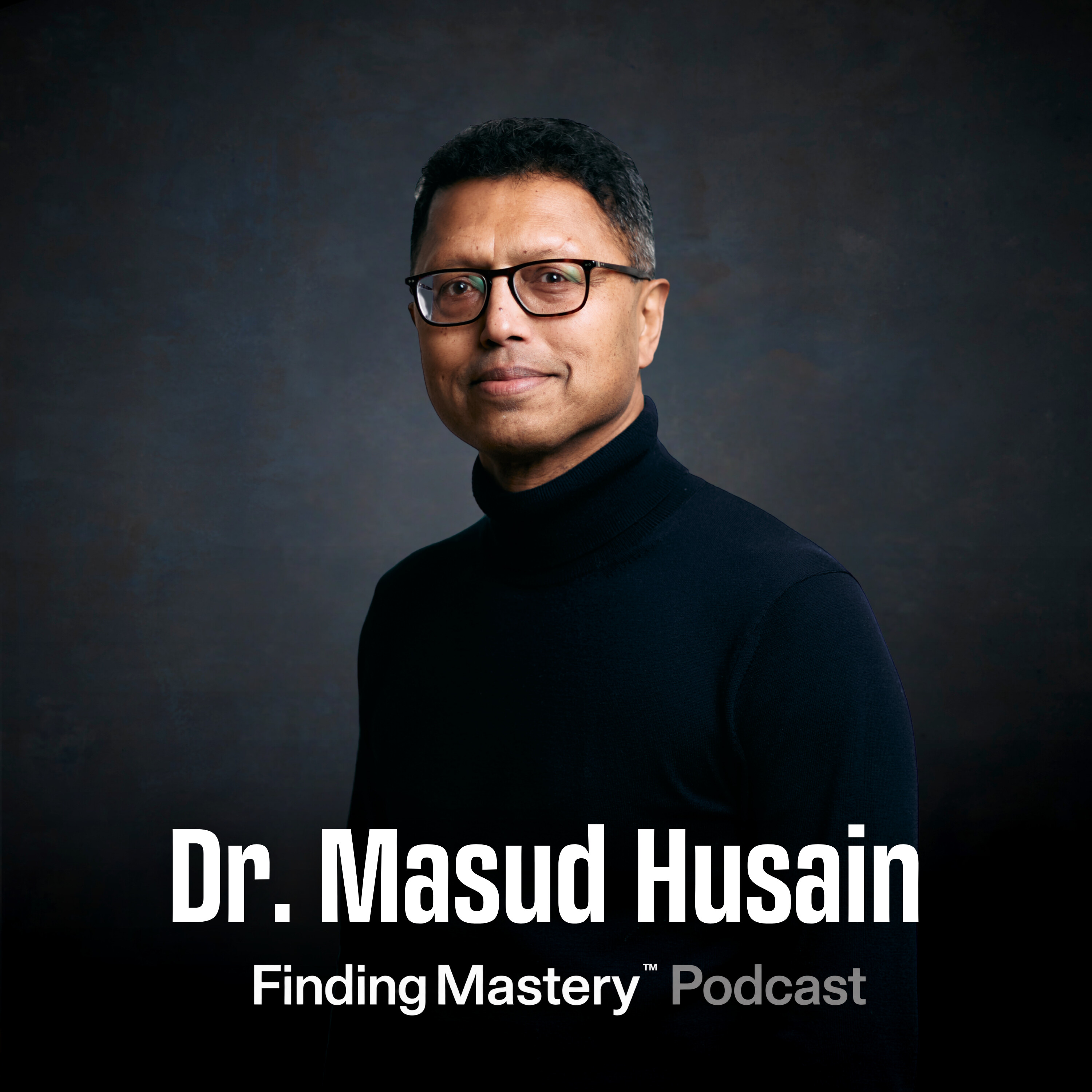
    The Psychology of Motivation | Dr. Masud Husain

    A letter landed on Masud Husain’s desk about a man in his thirties who had stopped doing anything at all. Dr. Masud Husain is a clinical neurologist, neuroscientist, and Professor of Neurology and Cognitive Neuroscience at the University of Oxford. He is Editor-in-Chief of the journal Brain and author of Our Brains, Our Selves, winner of the 2025 Royal Society Trivedi Science Book Prize. The letter was about a man named David who had been highly productive, worked in finance, and was charming company. Then he lost his job, stopped showering, and could not be bothered to claim the benefits that would have covered his rent. Asked why he no longer listened to music, he said it would take five minutes to connect the cables. David was not depressed. He had suffered two tiny strokes in the basal ganglia, structures deep in the brain that help link motivational cues to action. Nothing was worth the effort to him anymore. After an initial treatment failed, Masud’s team tried another drug that acts on the dopamine system. Three months later David came back with a haircut, a suit, a new job, and a new girlfriend. Addiction researchers had arrived at that same circuit from the other direction: Masud says it is the circuit hijacked by almost every drug of addiction. He and Mike get into what that overlap means about the science of motivation, why apathy and depression are different conditions, why there are more than 200 causes of dementia and what that means for prevention, and whether there is a self to be found in the brain at all. This is a conversation for anyone who has decided to do something and then not done it. Masud frames motivation as a calculation of whether the reward is worth the effort, and the lever most of us have is the size of the effort. After thirty years of seeing patients, the thing Masud says he has learned is that the self is not set in stone. You can change. Enjoy the conversation. ______________________________________________________ Links & Resources: Dr. Masud Husain’s Website: masudhusain.org Dr. Masud Husain’s Books: Our Brains, Our Selves: What a Neurologist’s Patients Taught Him About the Brain, Oxford Textbook of Cognitive Neurology and Dementia (co-editor) Dr. Masud Husain’s Journal: Brain, where he is Editor-in-Chief Subscribe to our Youtube Channel for more conversations at the intersection of high performance, leadership, and wellbeing: https://www.youtube.com/c/FindingMastery Get exclusive discounts and support our amazing sponsors! Go to: https://findingmastery.com/sponsors/ Subscribe to the Finding Mastery newsletter for weekly high performance insights: https://www.findingmastery.com/newsletter Download Dr. Mike’s Morning Mindset Routine: findingmastery.com/morningmindset Follow on YouTube, Instagram, LinkedIn, and X #FindingMastery #MasudHusain #DrMichaelGervais #OurBrainsOurSelves #Neuroscience #Neurology #Motivation #Apathy #Dopamine #Attention #Dementia #BrainHealth #Consciousness #Identity #HighPerformance #Psychology See Privacy Policy at https://art19.com/privacy and California Privacy Notice at https://art19.com/privacy#do-not-sell-my-info.
  • September 9 · 1 hr 16 min

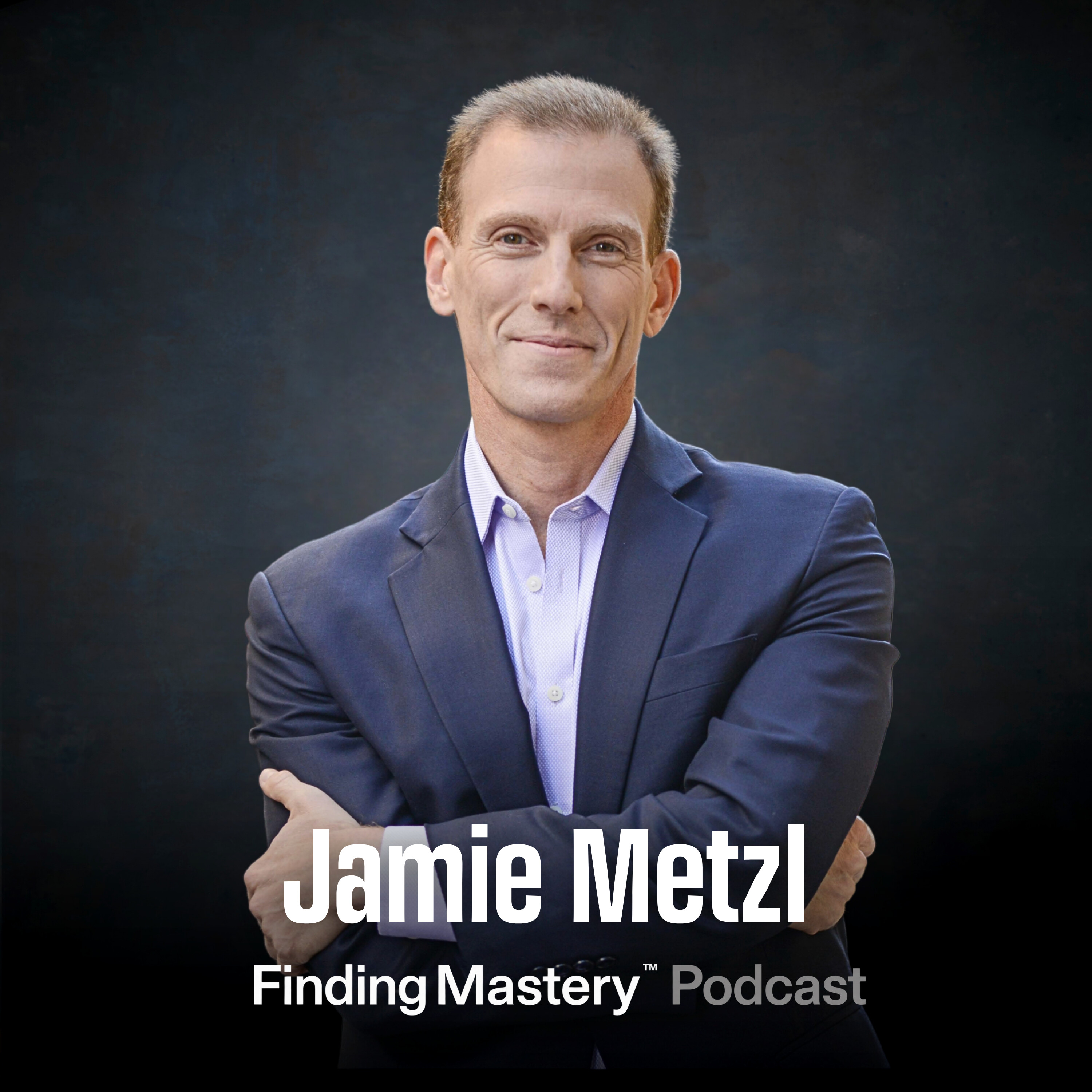
    The Psychology of The 10 Commandments| Jamie Metzl

    What moral code do we need when our tools can reshape intelligence and biology itself? Jamie Metzl is a technology and healthcare futurist and geopolitical expert, founder and chair of OneShared.World, and a Senior Fellow at the Atlantic Council. He has served on the U.S. National Security Council and with the United Nations in Cambodia, and he is the author of Hacking Darwin, Superconvergence, and his newest book, The AI Ten Commandments. The book began as a question Jamie put to a popular AI model, asking what ten principles, drawn from all of recorded human history, would produce the most peace and human flourishing. What came back pulled from traditions he already knew and others he had never encountered. Jamie and Mike get into what it takes to be a participant in this rather than a bystander, why Jamie thinks the moment belongs to all of us rather than to a handful of technologists and billionaires, and what he would keep from the original Ten Commandments. Mike’s push is that principles on their own do not necessarily hold. Most of us sign off on them easily. What happens to them in a high stress, consequential environment is the harder question. Jamie says technology is what gets us to this conversation, and the conversation is about values. The unsexy word for the rest of it, he says, is governance, and it starts with governance of the self. Enjoy the conversation. Links & Resources Jamie Metzl’s Website: jamiemetzl.com Jamie Metzl’s Books: The AI Ten Commandments: A New Moral Code for Humanity, Superconvergence, Hacking Darwin, Eternal Sonata OneShared.World, where Jamie is founder and chair Atlantic Council, where Jamie is a Senior Fellow: atlanticcouncil.org/expert/jamie-metzl Subscribe to our Youtube Channel for more conversations at the intersection of high performance, leadership, and wellbeing: https://www.youtube.com/c/FindingMastery Get exclusive discounts and support our amazing sponsors! Go to: https://findingmastery.com/sponsors/ Subscribe to the Finding Mastery newsletter for weekly high performance insights: https://www.findingmastery.com/newsletter Download Dr. Mike’s Morning Mindset Routine: findingmastery.com/morningmindset Follow on YouTube, Instagram, LinkedIn, and X See Privacy Policy at https://art19.com/privacy and California Privacy Notice at https://art19.com/privacy#do-not-sell-my-info.
  • September 2 · 58 min

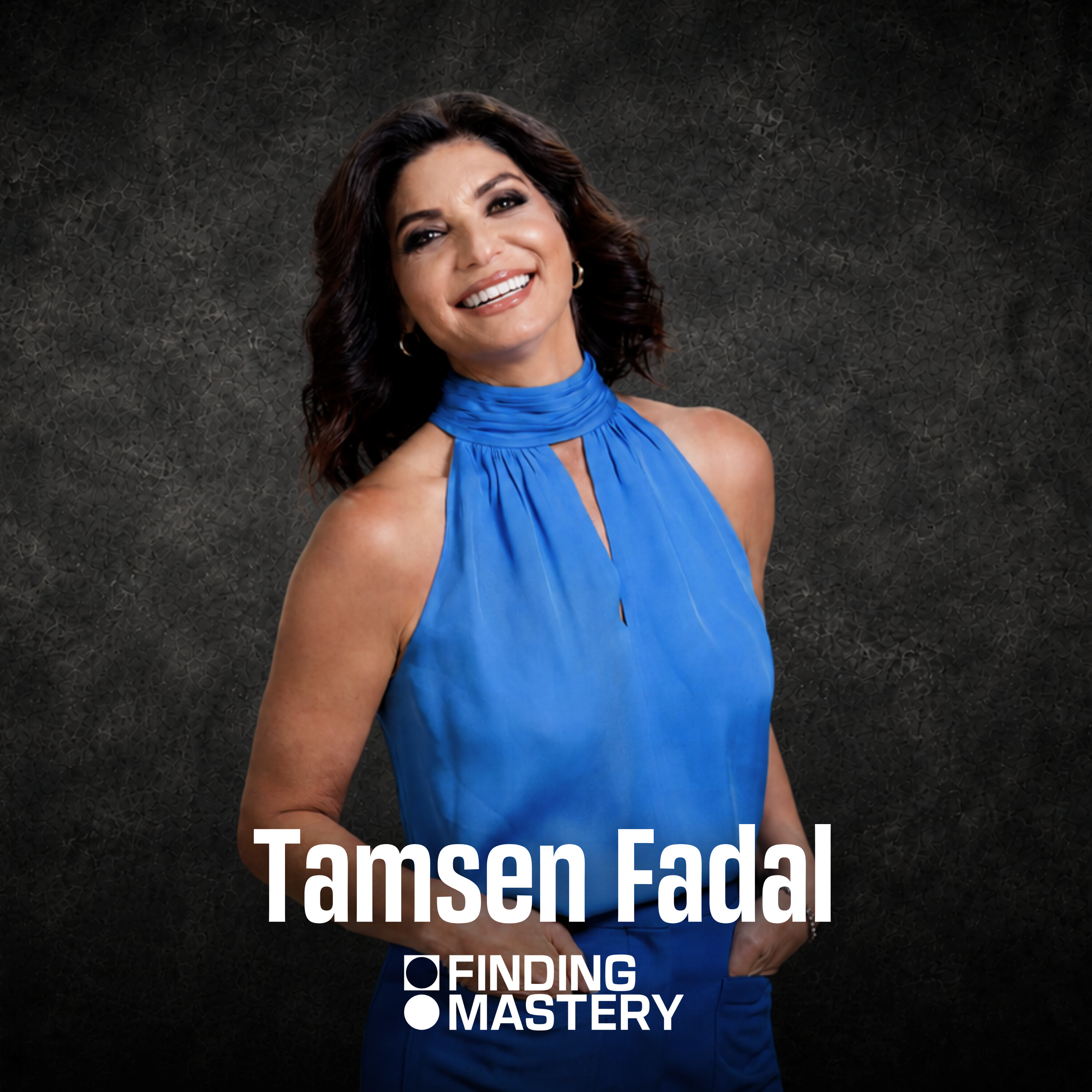
    The Psychology of Menopause | Tamsen Fadal

    Tamsen Fadal was 47 and anchoring the evening news when the first hot flash hit. She got off the set and lay down on the bathroom floor. No one had prepared her well for any of this. The answer, when it finally came, was a short note from her doctor in her patient portal with four words: "In menopause, any questions?" Tamsen Fadal is an Emmy Award-winning journalist, executive producer of the PBS documentary The M Factor and The M Factor 2, and New York Times bestselling author of How to Menopause. She spent thirty years in television news before turning to the thing nobody had explained to her. Tamsen and Mike get into what menopause actually is, how its symptoms can resemble anxiety or depression, and what changed after the 2002 hormone study. This is a conversation for men as much as for women. Every man is a partner, colleague, son, or father to someone moving through this. Tamsen’s line is that men don’t have to go through it, but they do have to understand it. Tamsen calls what comes after menopause “the next 30.” Her point is to decide what you want those years to look like, and start building toward them now. Enjoy the conversation. ___________________________________________________ Links & Resources: Tamsen Fadal’s Website: tamsenfadal.com Tamsen Fadal’s Books: How to Menopause: Take Charge of Your Health, Reclaim Your Life, and Feel Even Better than Before, The New Single, Why Hasn’t He Proposed?, Why Hasn’t He Called? Tamsen Fadal’s Documentaries: The M Factor: Shredding the Silence on Menopause and The (M) Factor 2: Before the Pause, both on PBS Tamsen Fadal’s Podcast: The Tamsen Show Subscribe to our Youtube Channel for more conversations at the intersection of high performance, leadership, and wellbeing: https://www.youtube.com/c/FindingMastery Get exclusive discounts and support our amazing sponsors! Go to: https://findingmastery.com/sponsors/ Subscribe to the Finding Mastery newsletter for weekly high performance insights: https://www.findingmastery.com/newsletter Download Dr. Mike’s Morning Mindset Routine: findingmastery.com/morningmindset Follow on YouTube, Instagram, LinkedIn, and X See Privacy Policy at https://art19.com/privacy and California Privacy Notice at https://art19.com/privacy#do-not-sell-my-info.
  • August 26 · 1 hr 18 min

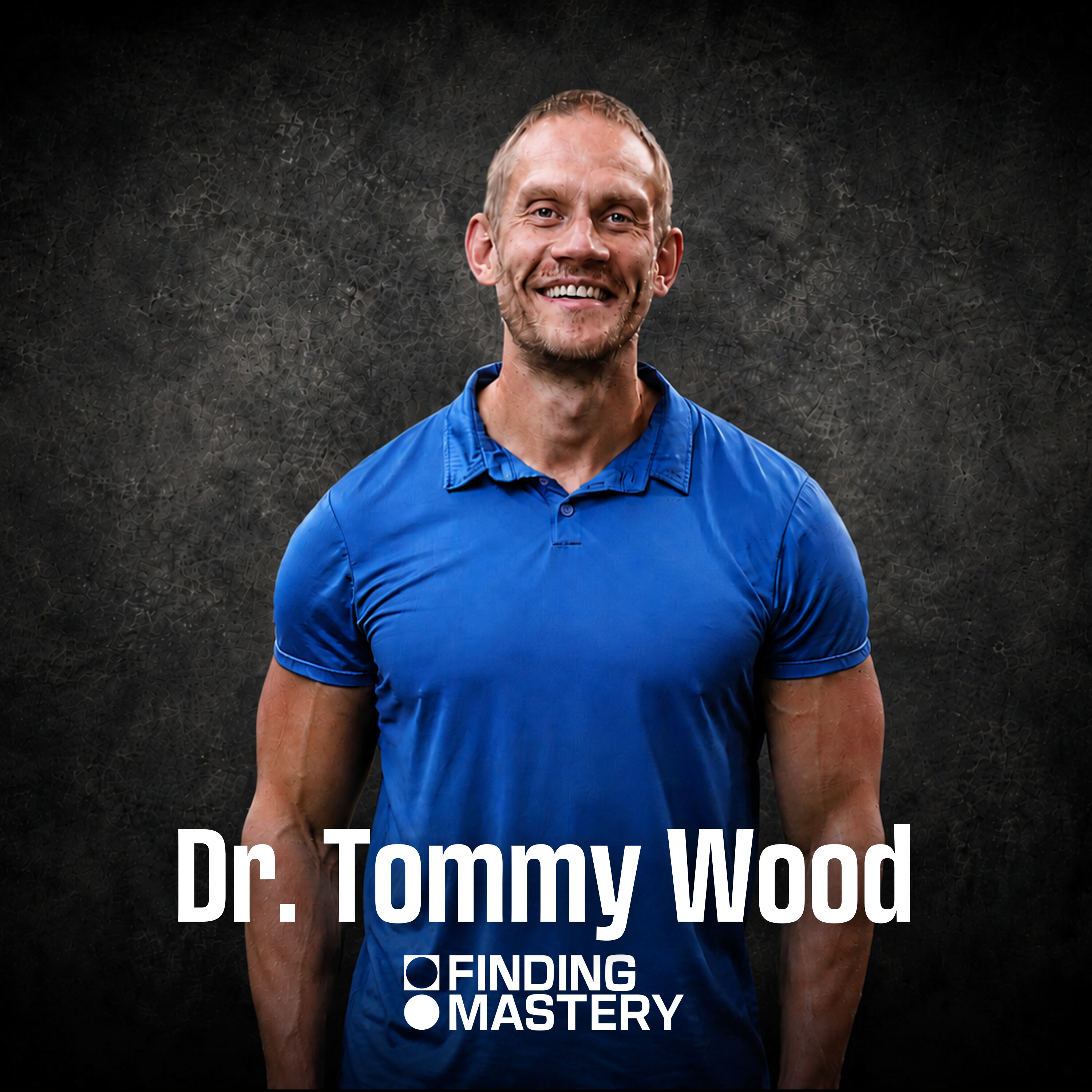
    The Psychology of Fighting Dementia | Dr Tommy Wood

    What are the things we can do today to help minimize our chances of developing dementia as we age? Dr. Tommy Wood is a physician and neuroscientist, Associate Professor of Pediatrics and Neuroscience at the University of Washington, and author of The Stimulated Mind. The book takes on a belief many of us still hold, that the adult brain becomes fixed at an early age and then declines from there. Tommy traces that idea back to 1906 and to the words of a Nobel laureate. Then he unpacks what the latest research and data say, and it’s not what you might think. This is a conversation about a tough subject, mental decline and dementia. Many of us have been touched by this in our own families, and what Tommy has to say gives all of us hope that we have more agency than we think when it comes to this part of our health. Tommy and Mike get into the 14 modifiable risk factors named by the Lancet Commission, why midlife is when risk starts to diverge, and the three buckets Tommy sorts everything into: stimulus, supply, and support. Mike talks about his grandfather, who had vascular dementia and covered for it so well that the family did not see it for years. Tommy tells us that “At 70 years old now, you are less likely to be diagnosed with dementia than any other time in history.” The trajectory is not fixed, but there’s a lot more work to be done. Enjoy the conversation. ____________________________________________ Links & Resources Dr. Tommy Wood’s Website: drtommywood.com Dr. Tommy Wood’s Book: The Stimulated Mind: Future-Proof Your Brain from Dementia and Stay Sharp at Any Age BetterBrain, where Tommy is Chief Science Officer: betterbrain.com Subscribe to our Youtube Channel for more conversations at the intersection of high performance, leadership, and wellbeing: https://www.youtube.com/c/FindingMastery Get exclusive discounts and support our amazing sponsors! Go to: https://findingmastery.com/sponsors/ Subscribe to the Finding Mastery newsletter for weekly high performance insights: https://www.findingmastery.com/newsletter Download Dr. Mike’s Morning Mindset Routine: findingmastery.com/morningmindset Follow on YouTube, Instagram, LinkedIn, and X See Privacy Policy at https://art19.com/privacy and California Privacy Notice at https://art19.com/privacy#do-not-sell-my-info.
  • August 19 · 39 min

    The Psychology of Positive Habits | Jon Gordon

    This is a conversation about habits, the ones you want to build and the ones you want to get rid of. Jon Gordon has written more than 30 books on leadership, habits and mindset, including numerous bestsellers. Jon's most recent book is titled The Power of Positive Habits, and it tackles a critical issue so many of us face: how do I break the habits that no longer serve me, and how do I build ones that will help me flourish? Jon and Mike discuss the inward reflections that have helped them break the patterns that have held them back. Jon talks about how he needed to heal wounds from his childhood before he could really break his most challenging habits. The path he describes is not easy, but one well worth considering. This is a conversation about self-awareness, self-challenge, and how to build practical habits, like gratitude, visualization, and something Jon calls the habit before the habit. "You are your habits," Jon says, and the best part is you can choose new ones. Enjoy the conversation. Links & Resources Learn more about Jon here: https://jongordon.com/ Subscribe to our Youtube Channel for more conversations at the intersection of high performance, leadership, and wellbeing: https://www.youtube.com/c/FindingMastery Get exclusive discounts and support our amazing sponsors! Go to: https://findingmastery.com/sponsors/ Subscribe to the Finding Mastery newsletter for weekly high performance insights: https://www.findingmastery.com/newsletter Download Dr. Mike’s Morning Mindset Routine: findingmastery.com/morningmindset Follow on YouTube, Instagram, LinkedIn, and X Jon Gordon’s Books: The Power of Positive Habits, The Energy Bus, The Power of Positive Leadership, The Power of a Positive Team, The One Truth, The Coffee Bean, and The Hard Hat See Privacy Policy at https://art19.com/privacy and California Privacy Notice at https://art19.com/privacy#do-not-sell-my-info.
  • August 12 · 1 hr 19 min

    The Psychology of Authenticity | Seth Godin - From The Vault

    What is the change you seek to make? On today's episode we go back to the Finding Mastery Vault for a conversation with Seth Godin, author, entrepreneur, teacher, and one of the most influential thinkers of our time on leadership, creativity, and making meaningful change. Seth has written more than twenty international bestsellers, including The Dip, Purple Cow, and The Song of Significance, alongside one of the longest-running daily blogs in the world. His claim is that naming the change you're actually trying to make is more than a branding exercise. It's what helps make every downstream decision clearer… what to commit to, what to quit, whose opinion to take seriously, and who you will have to become to pull it off. We first released this one a few years ago, and since then the world has only gotten noisier, faster and more demanding of change, which is exactly why we felt it was worth bringing back. In this episode, you'll learn: What Seth means by the change you seek to make, and why it clarifies everything downstream Leadership as a voluntary act, and why enrollment and inspiration come before authority Why consistency is what makes you trustworthy enough to lead change at all How to tell a dead end from the dip when you're deciding whether to quit Whose judgment has actually earned the right to shape your work Who to go to for reassurance, and who to go to for insight If you have ever felt your choices quietly bending toward the approval of people who have not earned it, this conversation offers you a perspective you need to hear. Links & Resources Seth Godin Photo Credit: Brian Bloom For More on Seth, go to https://www.sethgodin.com/ Seth Godin’s Books: The Dip, Purple Cow, Linchpin, Tribes, This Is Marketing, The Practice, and The Song of Significance. His newest book, The Knot: Problems Can Be Solved, is set to be released in September 2026. Subscribe to our Youtube Channel for more conversations at the intersection of high performance, leadership, and wellbeing: https://www.youtube.com/c/FindingMastery Get exclusive discounts and support our amazing sponsors! Go to: https://findingmastery.com/sponsors/ Subscribe to the Finding Mastery newsletter for weekly high performance insights: https://www.findingmastery.com/newsletter Download Dr. Mike’s Morning Mindset Routine: findingmastery.com/morningmindset Follow on YouTube, Instagram, LinkedIn, and X See Privacy Policy at https://art19.com/privacy and California Privacy Notice at https://art19.com/privacy#do-not-sell-my-info.
  • August 5 · 1 hr 5 min

    The Psychology of Youth Sports | AMA Victoria Garrick Browne and Dr Michael Gervais

    What questions are tugging at you right now, and how might exploring the answers to those questions help unlock your potential? For this 30th installment of our popular Ask Me Anything series, Dr. Michael Gervais is joined by co-host Victoria Garrick Browne, a Forbes 30 Under 30 recipient, former Division I volleyball player at USC, mental health advocate, creator, and speaker. Victoria turned her own private struggle with performance anxiety and depression into a gift for millions, and she founded The Hidden Opponent, a nonprofit that brings mental health education and support to student-athletes on campuses around the country. She's the ideal person to sit alongside Mike for this AMA and help answer these questions with care. The questions our community submitted are honest and vulnerable, and they keep circling the same root: identity. What happens when who you are gets fused to what you do? Mike and Victoria explore why the culture around us so easily hands young people a performance-based identity, what it looks like to move toward a purpose-based one instead, and why the way a parent talks about their child at the dinner table quietly shapes how that child sees themselves. This is a practical and useful conversation for anyone who competes, coaches, parents, or is simply trying to figure out who they are. In this conversation, we explore: How to help young people build an identity rooted in who they are, not only in how they perform Why the way you talk about your child, even at Thanksgiving, is shaping their identity How to tell the difference between healthy competitiveness and unhealthy pressure The warning signs of burnout in a young athlete, and why competing too early can backfire How to share a mental health story in recruiting without it becoming a liability Whether real confidence can exist without external validation The difference between formal instruction and guided discovery in coaching and parenting A simple, honest way to work with imposter syndrome If your sense of who you are has ever felt a little too tied to what you do, this one is well-worth your time. Links & Resources To learn more about Victoria, please visit: https://victoriagarrickbrowne.com/ To learn more about The Hidden Opponent, the non-profit Victoria started, please visit: https://www.thehiddenopponent.org/ Subscribe to our Youtube Channel for more conversations at the intersection of high performance, leadership, and wellbeing: https://www.youtube.com/c/FindingMastery Get exclusive discounts and support our amazing sponsors! Go to: https://findingmastery.com/sponsors/ Subscribe to the Finding Mastery newsletter for weekly high performance insights: https://www.findingmastery.com/newsletter Download Dr. Mike's Morning Mindset Routine: findingmastery.com/morningmindset Follow on YouTube, Instagram, LinkedIn, and X Learn more about The Hidden Opponent: thehiddenopponent.org See Privacy Policy at https://art19.com/privacy and California Privacy Notice at https://art19.com/privacy#do-not-sell-my-info.
  • July 29 · 48 min

    The Psychology Of Speaking Under Pressure | Matt Abrahams

    When the moment arrives and you don’t have a script, are you trying to impress, or working to connect? Matt Abrahams is a lecturer in organizational behavior at the Stanford Graduate School of Business, host of the Think Fast, Talk Smart podcast, and author of Think Faster, Talk Smarter: How to Speak Successfully When You’re Put on the Spot. His path into this work starts very young and is almost comically literal. His last name starts with AB, so all through school he was the one teachers called on first. He felt what it is to be put on the spot before he had any tools for it. Later, in the corporate world and then at Stanford, he watched how much rides on those unscripted and authentic moments, and he set out to study what actually helps. The central idea of this conversation is freeing: speaking in the moment is a skill, not a gift you’re either born with or not. Like any athlete, you can learn it and train it, and, as Matt puts it, you can prepare to be spontaneous. That reframe changes everything downstream. When the spotlight hits and the heart starts pounding, the body reads the moment as a threat. The work is learning to meet it as an opportunity instead, to buy yourself a little space, and to put your attention where it belongs: on the person in front of you rather than on your own performance. Matt and Mike spend time in this conversation getting quite practica. Matt shares the two tools to reach for when your mind goes blank, the simple What, So What, Now What structure for organizing a thought under pressure, and a listening practice he calls pace, space, grace. Mike opens up too, telling the story of a first international conference where he tried to breathe his way to calm on stage and realized, mid-panic, that he had never trained the skill he needed most. In the end, they land on this simple concept: being present, grounded, and in service of the other person is the big rock that makes the rest work. In this conversation, we explore: How speaking in the moment is a trainable skill What actually happens in the body when you’re put on the spot How to shift from seeing a moment as a threat to seeing it as an opportunity The two tools to use when your mind goes blank The What, So What, Now What structure for organizing a thought quickly Why great listening is pace, space, and grace How to turn the spotlight off yourself and onto connection Why the goal is never to sound perfect, only to connect Matt’s work is a reminder to all of us that the goal was never to sound perfect. It was always to connect. Links & Resources Subscribe to our Youtube Channel for more conversations at the intersection of high performance, leadership, and wellbeing: https://www.youtube.com/c/FindingMastery Get exclusive discounts and support our amazing sponsors! Go to: https://findingmastery.com/sponsors/ Subscribe to the Finding Mastery newsletter for weekly high performance insights: https://www.findingmastery.com/newsletter Download Dr. Mike’s Morning Mindset Routine: findingmastery.com/morningmindset Follow on YouTube, Instagram, LinkedIn, and X Matt Abrahams’ Book: Think Faster, Talk Smarter: How to Speak Successfully When You’re Put on the Spot See Privacy Policy at https://art19.com/privacy and California Privacy Notice at https://art19.com/privacy#do-not-sell-my-info.
  • July 22 · 1 hr 6 min

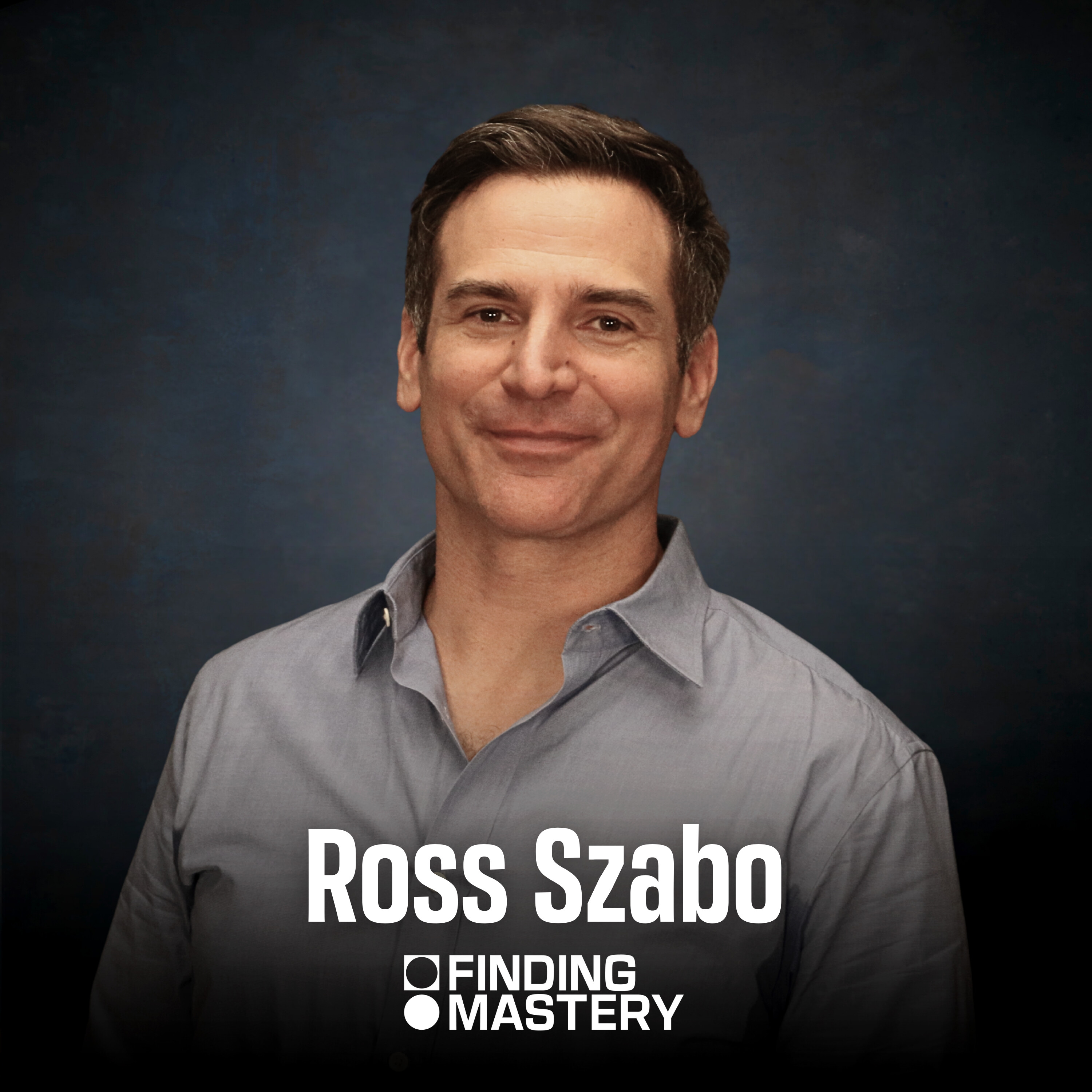
    The Psychology of Youth Mental Health | Ross Szabo

    What if the kids who look like they’re doing just fine on the outside are quietly struggling to make sense of what’s happening on the inside? Ross Szabo is one of the leading voices in youth mental health education: founding Wellness Director at Geffen Academy at UCLA, founder of the Human Power Project, co-author of Behind Happy Faces, and author of A Kids Book About Anxiety. His story starts long before the titles. Born into a family with severe mental health disorders and addiction, Ross was 11 when he visited his older brother in a psychiatric ward, was diagnosed with bipolar disorder himself at 16, and coped with drinking that began at age 12. In his senior year of high school, after months of crippling depression, he attempted to take his own life… and this occurred while serving as class president, playing varsity basketball, and carrying a high GPA. On the outside, everything looked fine. The inside was a different story. That distance between the outside and the inside became the through line of his life’s work. The idea Ross has organized his career around sounds simple: treat mental health the same way we treat physical health. That means a clear definition, a shared language, and trainable skills. His definition is a helpful place to start… mental health is not about having a problem, it’s how you address the different challenges in your life. At Geffen Academy, he built what he describes as the only program in the country where students learn about mental health and healthy relationships once a week, every week, from grade six through grade 12, timed to the second largest period of brain growth, which happens between the ages of 12 to 25. His graduates report feeling far more prepared for college than their peers, especially in the interpersonal sense: living with new roommates, managing relationships, and knowing how to ask for support. Ross and Mike walk through how mapping the self-defining memories that shaped you helps build coping mechanisms the way athletes build skills (the more consistently you do something, the better you get at it). And they discuss how expanding your emotional vocabulary improves your mental health. Ross and Mike dive into the difference between vulnerability and trauma dumping, how the crisis shows up differently in young men and young women, why modeling beats lecturing at home, and what a shared language for mental health could unlock in families, schools, and businesses. In this conversation, we explore: Why so many young people look fine on the outside while struggling on the inside A clear, working definition of mental health, and why most of us don’t have one The difference between feeling nervous and having anxiety Why the more words you have for your feelings, the better your mental health The neuroscience of coping, and how to actually rewire a habit How the youth mental health crisis shows up differently in young men and young women What parents overlook when preparing kids for college Why every family, team, and business needs a shared language for mental health Ross's work is an invitation to care for the mind with the same clarity we bring to the body. And if you're raising, teaching, or leading young people, this conversation offers the language and the skills to close the gap between the outside and the inside. Links & Resources Subscribe to our Youtube Channel for more conversations at the intersection of high performance, leadership, and wellbeing: https://www.youtube.com/c/FindingMastery Get exclusive discounts and support our amazing sponsors! Go to: https://findingmastery.com/sponsors/ Subscribe to the Finding Mastery newsletter for weekly high performance insights: https://www.findingmastery.com/newsletter Download Dr. Mike’s Morning Mindset Routine: findingmastery.com/morningmindset Follow on YouTube, Instagram, LinkedIn, and X Ross Szabo’s Books: Behind Happy Faces (co-authored) and A Kids Book About Anxiety See Privacy Policy at https://art19.com/privacy and California Privacy Notice at https://art19.com/privacy#do-not-sell-my-info.
  • July 15 · 1 hr 47 min

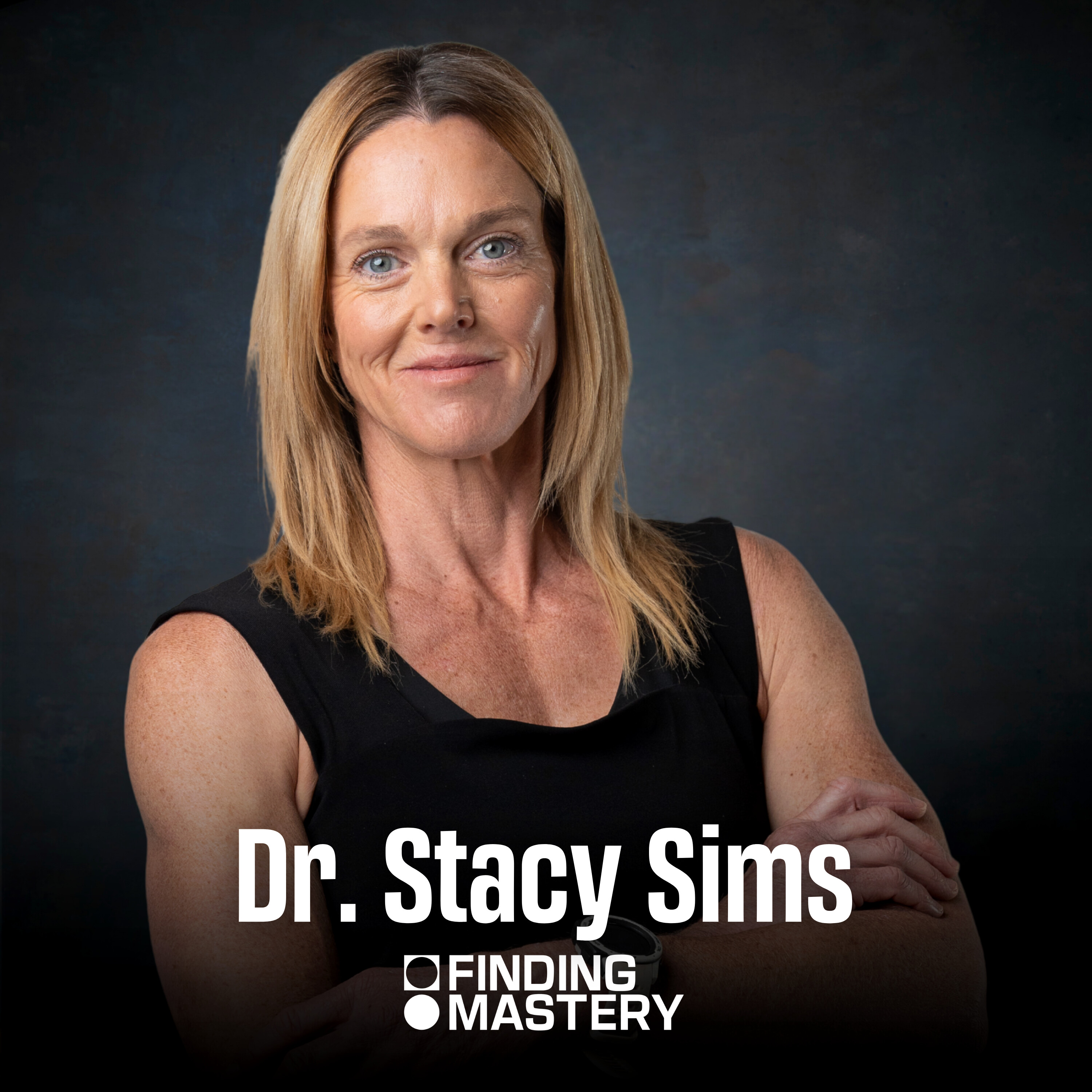
    Women Are Not Small Men | Dr Stacy Sims

    What has been the cost to women of relying on research that was never designed around female physiology? Dr. Stacy Sims is an exercise physiologist, nutrition scientist, and bestselling author of ROAR, which challenged the idea that women should train and fuel like men, and Next Level, which focuses on health, performance, and physiology through perimenopause and menopause. Over two decades of research, she has become one of the leading voices reshaping how we understand women's health, with a message that has become synonymous with her work: women are not small men. That line started as a throwaway teaching point during her postdoc at Stanford, and it has since become a paradigm shift. At the center of this conversation is a quiet, costly problem. For decades, much of the science on training, nutrition, and medicine was built on male bodies and then applied to women as if they were simply smaller versions of men. Stacy walks through what that gap has cost, why the literature thins out for women between the ages of thirty and fifty, and how a hormone fluctuation can get mistaken for a panic attack, leading to solutions that were never going to fully work. Stacy and Mike then move into what to actually do about it. They get into why "eat less, train more" often backfires and drives the body into a low energy state, why fasting through the morning for women can dysregulate appetite and stress hormones, and why lifting heavier loads may protect not just muscle and bone but the aging brain. They also draw the line that runs through the whole conversation, the symptoms of perimenopause are the physiology, not the person, and explore why this episode isn't just for the women in the community. Stacy explains why having men in the conversation helps drive action, what partners can actually do... listen first rather than rush to fix... and why the rising noise around menopause online, along with AI tools built on outdated male data, makes clear thinking here more valuable than ever. In this conversation, we explore: Why so much health and performance research was never actually done on women What "women are not small men" really means in training and nutrition Why "eat less, train more" often backfires for women through midlife Why fasting through the morning can dysregulate appetite and stress hormones How lifting heavier loads may help protect the aging brain Why men belong in this conversation, and how to show up for the women in their lives Why most AI health tools still run on outdated male data Whether this conversation is about your body or the body of someone you love, it offers a science-backed way to understand what's happening and what to do next. Guest Links & Resources Website: Learn more about Dr. Sims here: https://www.drstacysims.com/ Dr. Sims' Books: ROAR, Revised Edition (2024) and Next Level (2022) Finding Mastery Links & Resources Subscribe to our YouTube Channel for more conversations at the intersection of high performance, leadership, and wellbeing: https://www.youtube.com/c/FindingMastery Get exclusive discounts and support our amazing sponsors! Go to: https://findingmastery.com/sponsors/ Subscribe to the Finding Mastery newsletter for weekly high performance insights: https://www.findingmastery.com/newsletter Download Dr. Mike’s Morning Mindset Routine: findingmastery.com/morningmindset Follow on YouTube, Instagram, LinkedIn, and X Dr. Stacy Sims’ Books: ROAR and Next Level See Privacy Policy at https://art19.com/privacy and California Privacy Notice at https://art19.com/privacy#do-not-sell-my-info.
  • July 8 · 1 hr 18 min

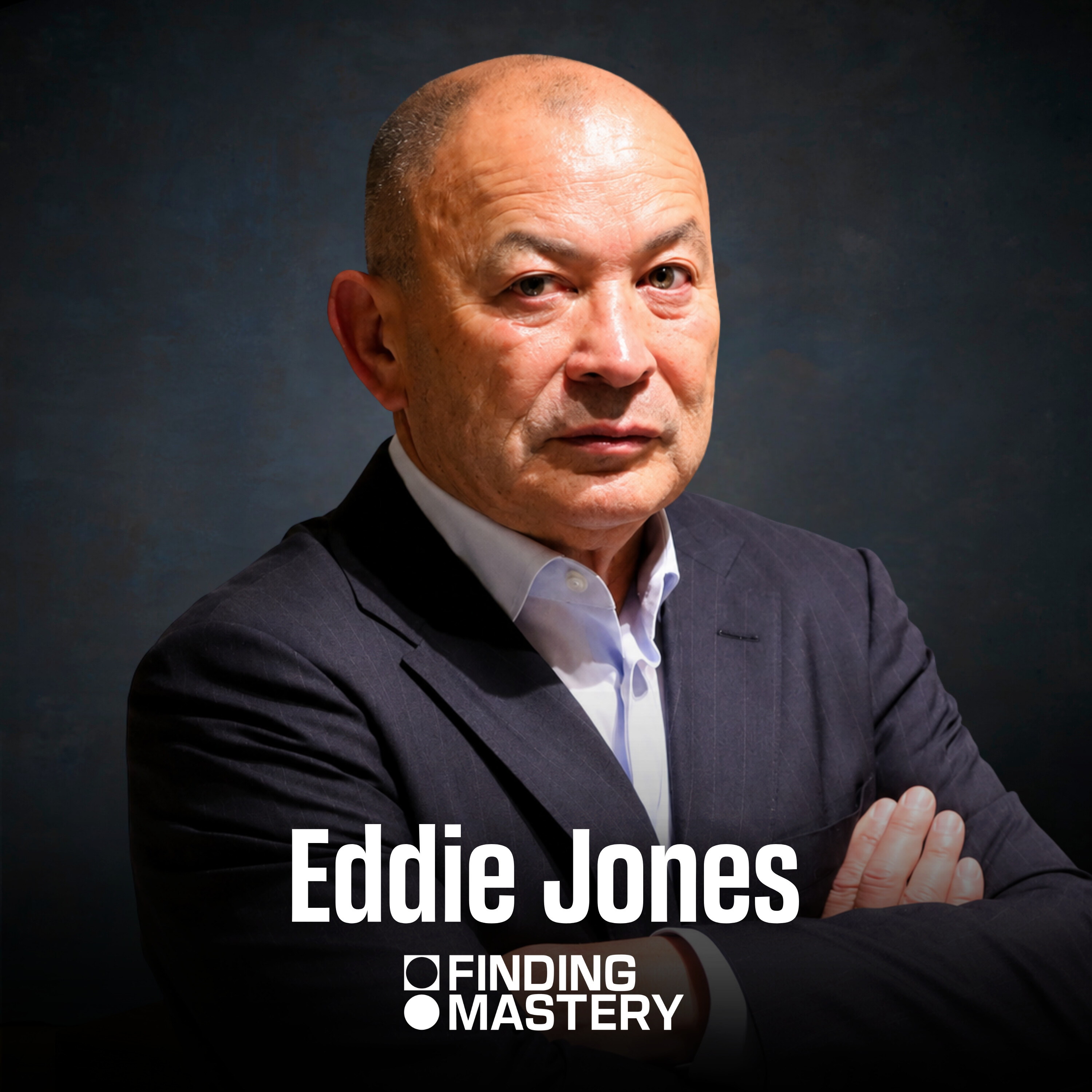
    The Psychology Of Building Team Culture | Eddie Jones

    How do great leaders build teams to become who they're capable of becoming, and prepare them to handle their emotions when the pressure is highest? Eddie Jones is one of the most accomplished coaches in world rugby. He has led Australia, England, and Japan on the international stage, and guided Japan to one of the greatest upsets in rugby history at the 2015 World Cup. He has built a career on turning teams around, creating pressure, and challenging more from the people he leads. There is a fine line in that work. Too little challenge and we never understand who we can become. Too much and we create the wrong conditions to explore. That line has not always been easy to walk. Eddie’s demanding methods have drawn criticism over the years, and his exits from England in 2022 and Australia in 2023 came under intense public scrutiny... a chapter he alludes to here when he describes the mistake of letting the noise come down on top of him. In this conversation with Dr. Michael Gervais, Eddie walks through how he builds team identity, starting with a picture in his head of how a team could play and then closing the gap between that vision and the group in front of him. He explains why he keeps training about 70% successful, so the 30% of failure becomes the learning, and why training should always be harder than the game. He makes the case that immediate, private feedback beats public humiliation every time, and that the best coaches ask far more questions than they answer. Eddie also talks about understanding the individual, why coaching has shifted from team-based to one-on-one, and how a single moment of feeling important from a coach 30 years ago still moves him today. He opens up struggles he has faced with his own emotions, the mistakes he has made, the generation that taught him to never show vulnerability, and why he is still learning to make room for joy. In this conversation, we explore: How great coaches build a team identity and close the gap between vision and reality Why training should be about 70% successful, so the failures become the learning The value in training harder than the game Why the best coaches ask more questions than they answer How understanding the individual has become central to modern leadership Why you should never assume, and always confirm by knowing the person The thinking time every leader needs By the end of the conversation the two land on a question every leader should ask: would you want to be coached by yourself? Links & Resources Subscribe to our Youtube Channel for more conversations at the intersection of high performance, leadership, and wellbeing: https://www.youtube.com/c/FindingMastery Get exclusive discounts and support our amazing sponsors! Go to: https://findingmastery.com/sponsors/ Subscribe to the Finding Mastery newsletter for weekly high performance insights: https://www.findingmastery.com/newsletter Download Dr. Mike's Morning Mindset Routine: findingmastery.com/morningmindset Follow on YouTube, Instagram, LinkedIn, and X Eddie Jones' Books: My Life and Rugby: The Autobiography and Leadership: Lessons from My Life in Rugby See Privacy Policy at https://art19.com/privacy and California Privacy Notice at https://art19.com/privacy#do-not-sell-my-info.
  • July 1 · 1 hr 33 min

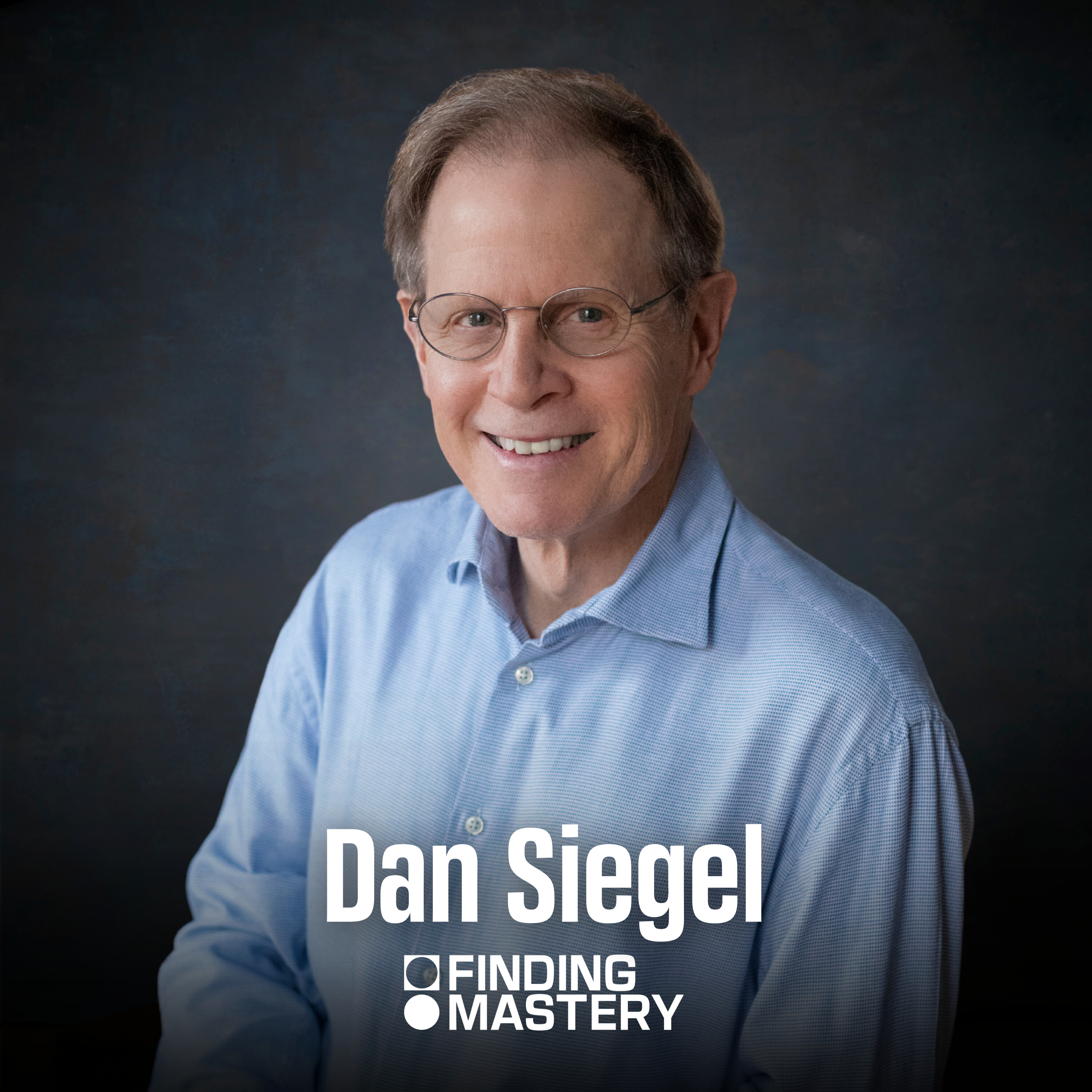
    The Psychology Of Parenting | Dr. Dan Siegel

    What if the most important work of parenting isn’t about your child at all... but about understanding yourself? Dr. Dan Siegel is a Harvard-trained clinical professor of psychiatry at UCLA, a neuroscientist, and one of the leading voices helping us understand how relationships shape the developing mind. He has authored over 20 books, five of them New York Times bestsellers, including co-authoring The Whole-Brain Child and No-Drama Discipline. Trained as a developmental attachment researcher through the National Institute of Mental Health, Dan has spent more than 40 years studying how the adults who care for children influence who those children become. And his interest isn’t only academic. Dan describes his own childhood as decidedly non-optimal... a father who was intrusive and at times terrifying, a mother who was emotionally distant. He carried every non-secure attachment stance into adulthood, and earned security later in life, with the help of a therapist who finally saw him. What he found over those four decades reframes how we think about raising kids. The research is remarkably clear: how a parent has made sense of their own childhood, assessed before their baby is even born, predicts how that child will attach. Children don’t need perfect parents. They need three things... to be seen, to be soothed, and to be safe. When those are reliably present, a fourth emerges: security. And when we inevitably blow it, because every parent does, what matters most is the repair. As Dan puts it, there’s no such thing as perfect parenting. There’s just being present. In this conversation with Dr. Michael Gervais, Dan walks through the science of attachment and why the pop-culture version on social media is quoting a different field entirely, the myth that a mother should be able to do it all alone when children are wired for a village, and the daily Wheel of Awareness practice he uses to start every morning. The two also explore loneliness as the experience of a “partial mind,” the shift from a threat mindset to a challenge mindset that protects against burnout, and what it means to keep the “me” while belonging to a “we.” And Mike opens up about the moment his son was born, when he and his wife wrote down their first principles as parents and landed on two words: kindness and strength. In this conversation, we explore: Why there’s no such thing as perfect parenting, only being present The four S’s every child needs: seen, soothed, safe, and secure How your own childhood story quietly shapes the way you parent Why repair after a rupture matters more than never rupturing at all The myth of the lone parent, and why children are wired for a village Why loneliness may be the experience of a partial mind The daily Wheel of Awareness practice Dan has done with 77,000 people How shifting from a threat mindset to a challenge mindset protects against burnout If you’ve ever lost your cool with your kids and worried you’ve done lasting damage, this conversation offers a hopeful, science-backed way to repair... and grow. _____________________ Links & Resources Subscribe to our Youtube Channel for more conversations at the intersection of high performance, leadership, and wellbeing: https://www.youtube.com/c/FindingMastery Get exclusive discounts and support our amazing sponsors! Go to: https://findingmastery.com/sponsors/ Subscribe to the Finding Mastery newsletter for weekly high performance insights: https://www.findingmastery.com/newsletter Download Dr. Mike’s Morning Mindset Routine: findingmastery.com/morningmindset Follow on YouTube, Instagram, LinkedIn, and X Dr. Dan Siegel’s Books: The Whole-Brain Child, No-Drama Discipline, Parenting from the Inside Out, The Power of Showing Up, Aware, and Becoming Aware See Privacy Policy at https://art19.com/privacy and California Privacy Notice at https://art19.com/privacy#do-not-sell-my-info.
  • June 24 · 58 min

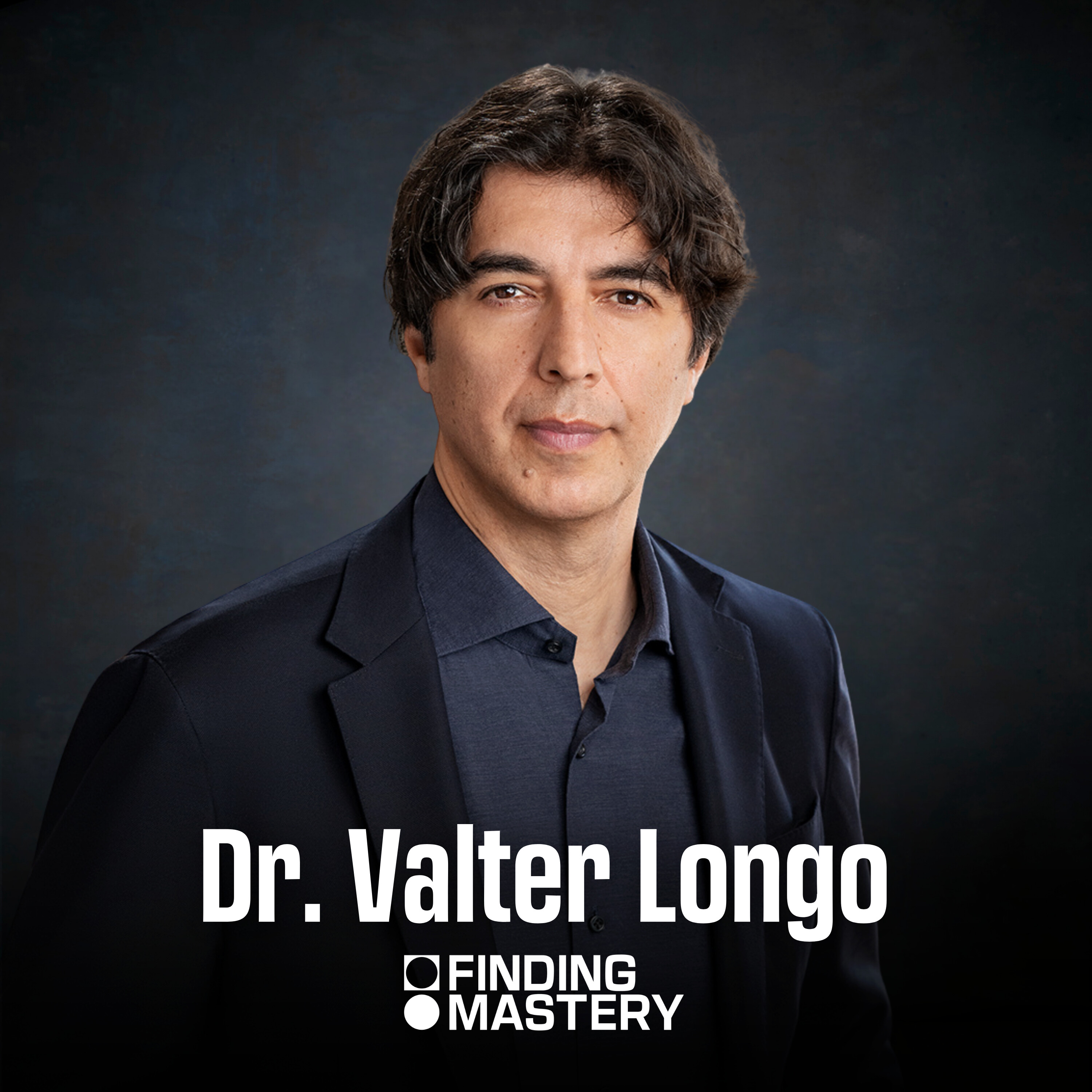
    The Psychology of Fighting Cancer | Dr Valter Longo

    If your body already has powerful systems designed to repair and protect you, are your daily habits helping switch them on... or working against them? Dr. Valter Longo is a professor and director of the Longevity Institute at USC, one of the world’s leading researchers on aging, nutrition, and lifespan, and the author of The Longevity Diet and his latest book, Fasting Cancer. His path into this work is an unusual one. He started as a jazz performance major, chasing rock guitar, and walked away the moment they told him he had to direct a marching band. What pulled him toward aging traces back to being five years old, in the room when his grandfather died, and a question that lodged in him and never left: what if little things can make such a big difference? That question became a career. Longo walks Dr. Michael Gervais through the science of living to 110, a number drawn from two real people he followed personally, and the trade-off at the heart of aging: the body can pour its energy into growth and reproduction, or into protection and repair, but not both at once. From there he challenges one of the loudest narratives in health and performance today, the push for high protein, laying out why he believes most people are eating far more than the research supports, and what a safer balance actually looks like. The conversation moves into the work Longo is best known for: fasting-mimicking diets, why he says fasting on its own doesn’t mean anything, and how cycles of eating less may activate the body’s own repair and regeneration. He and Mike explore what this could mean for cancer, where Longo is careful and precise about what the science does and doesn’t yet show, and they close on what it takes to unlearn a foundational belief when the evidence stops holding up. Mike opens up about how this conversation pushed against a narrative he’d carried his whole life, and why he wanted to have it anyway. In this conversation, we explore: Why aging and cancer are deeply connected, and what that means for prevention The trade-off between growth and protection that shapes how we age Why Longo believes most people eat far too much protein What a safer, mostly plant-based protein balance looks like Why fasting on its own is a meaningless word, and what to do instead How fasting-mimicking cycles may trigger the body’s repair and regeneration What the science does and doesn’t yet show about food and cancer What it takes to unlearn a belief when the evidence stops holding up If you’ve ever wondered whether your daily choices are quietly helping or hurting the systems meant to keep you well, this conversation offers a science-backed place to start thinking about your health and lifestyle. A note from the team: This episode doesn’t exist in a vacuum. Over the last several months, Mike has had numerous conversations on health, nutrition with world-renowned experts like Dr. Gabrielle Lyon, Dr. Jason Fung, and Dr. Tim Spector, among others. These are all rich conversations that at times hold conflicting advice and guidance. We encourage you to listen to all of them, and as always, consult your doctor on what practices are best for you. Health, nutrition, and longevity are all deeply intertwined with living a life of full potential, and we’re committed to having these great conversations with world experts on these subjects. Keep commenting with what’s working in your life, keep passing these onto your friends, and as always keep pushing the frontiers of your own performance! Links & Resources Subscribe to our Youtube Channel for more conversations at the intersection of high performance, leadership, and wellbeing: https://www.youtube.com/c/FindingMastery Get exclusive discounts and support our amazing sponsors! Go to: https://findingmastery.com/sponsors/ Subscribe to the Finding Mastery newsletter for weekly high performance insights: https://www.findingmastery.com/newsletter Download Dr. Mike’s Morning Mindset Routine: findingmastery.com/morningmindset Follow on YouTube, Instagram, LinkedIn, and X Dr. Valter Longo’s Books: The Longevity Diet and Fasting Cancer See Privacy Policy at https://art19.com/privacy and California Privacy Notice at https://art19.com/privacy#do-not-sell-my-info.
  • June 17 · 1 hr 15 min

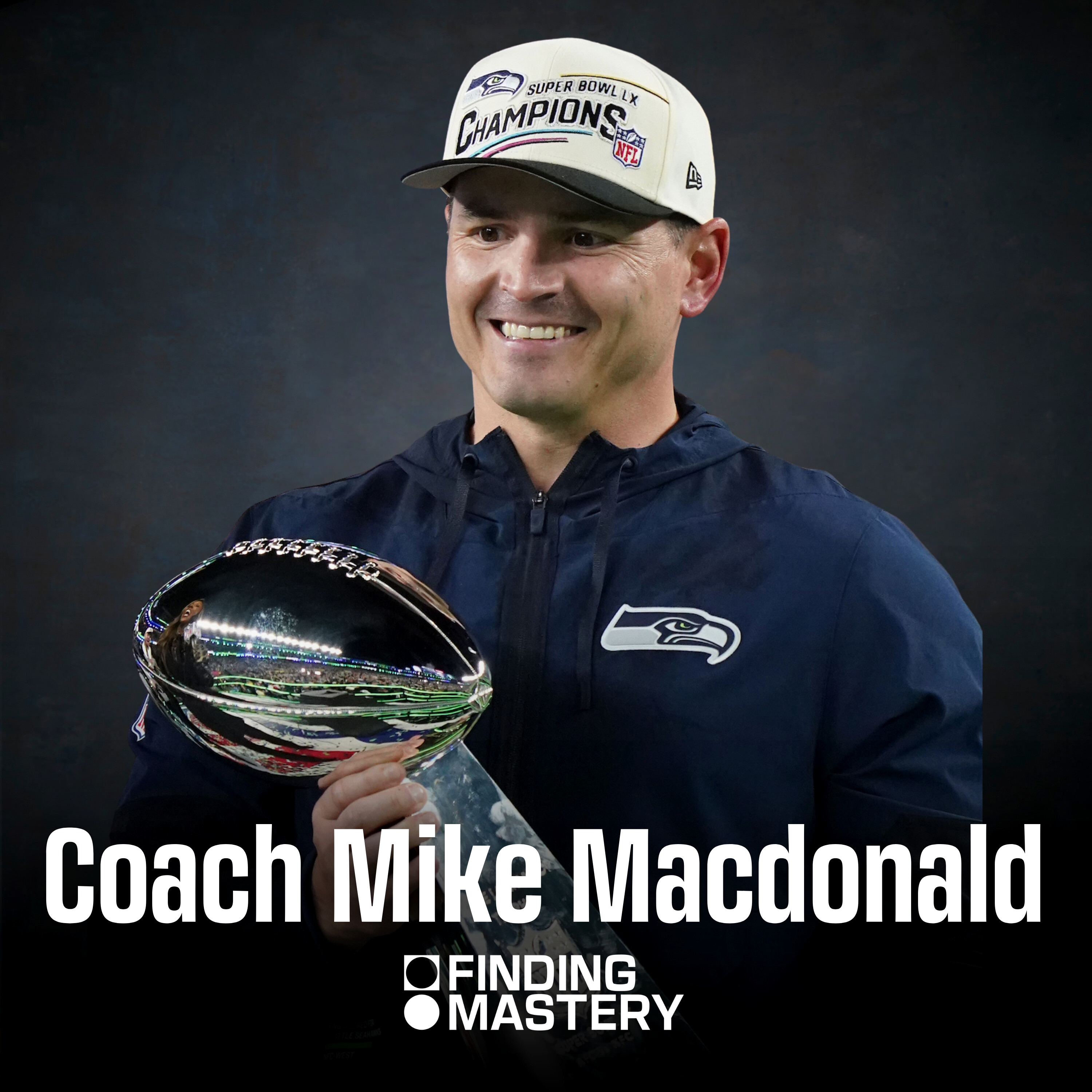
    The Psychology Of Winning The Super Bowl | Seattle Seahawks Coach Mike Macdonald

    What does it take to build a team that trusts each other enough to go through hard things together... not around them? Mike Macdonald is the head coach of the Seattle Seahawks and one of the youngest head coaches in modern NFL history to win a Super Bowl. His path is an unusual one. He grew up with almost no family pipeline into football, a baseball kid in Georgia who fell in love with the strategy of the game watching his dad’s home video of his eighth-grade football games. When an injury ended his playing days in high school, he didn’t walk away. He filmed practice, coached the linebackers his senior year, and discovered the itch that would carry him from the pressure cooker of big-time college football at Georgia to the Baltimore Ravens, and eventually to Seattle. At the center of how he leads is a principle his team lives by: through, not around. Earn what you achieve. No excuses. Work the problem together, and in a way that’s matter of fact rather than personal. Mike tells the story of the biggest adversity of his NFL career, a blown multiple-score lead as Baltimore’s new defensive coordinator, and the decision that followed: no blame game, name himself the common denominator, and square up with the problem alongside his players. When the players felt the coaches were in the fight with them, the buy-in came, and the defense turned. This conversation is also a rare one for Finding Mastery: Dr. Michael Gervais has spent the past year working alongside Coach Mike and the Seahawks, and that shared history opens avenues for discussion most interviews never reach. They dig into why confidence and self-efficacy are trainable skills, even for a Super Bowl winning head coach, why clarity is one of the deepest forms of respect a leader can offer, and the Harvard baseball dream a young Coach Mike let slip because, in his words, he played it too safe. Mike Gervais opens up about recognizing that same story in his own life... the fear of looking like you don’t have what it takes. They close with imposter syndrome on the way to a Super Bowl, a graduation photo full of badges, and what it means to hand the trophy back to the team. In this conversation, we explore: Why “through, not around” is the foundation of the Seahawks’ culture How confidence and self-efficacy become trainable skills Why clarity from leadership is one of the deepest forms of trust How taking responsibility in front of the room earns buy-in Why players always know which leaders are authentic How fear of failure quietly keeps us playing it safe What imposter syndrome looks like on the way to a Super Bowl If you’ve ever been tempted to go around a hard conversation, a hard problem, or a hard moment, this conversation offers a way to go through it... together. Links & Resources Subscribe to our Youtube Channel for more conversations at the intersection of high performance, leadership, and wellbeing: https://www.youtube.com/c/FindingMastery Get exclusive discounts and support our amazing sponsors! Go to: https://findingmastery.com/sponsors/ Subscribe to the Finding Mastery newsletter for weekly high performance insights: https://www.findingmastery.com/newsletter Download Dr. Mike’s Morning Mindset Routine: findingmastery.com/morningmindset Follow on YouTube, Instagram, LinkedIn, and X See Privacy Policy at https://art19.com/privacy and California Privacy Notice at https://art19.com/privacy#do-not-sell-my-info.
  • June 10 · 1 hr 1 min

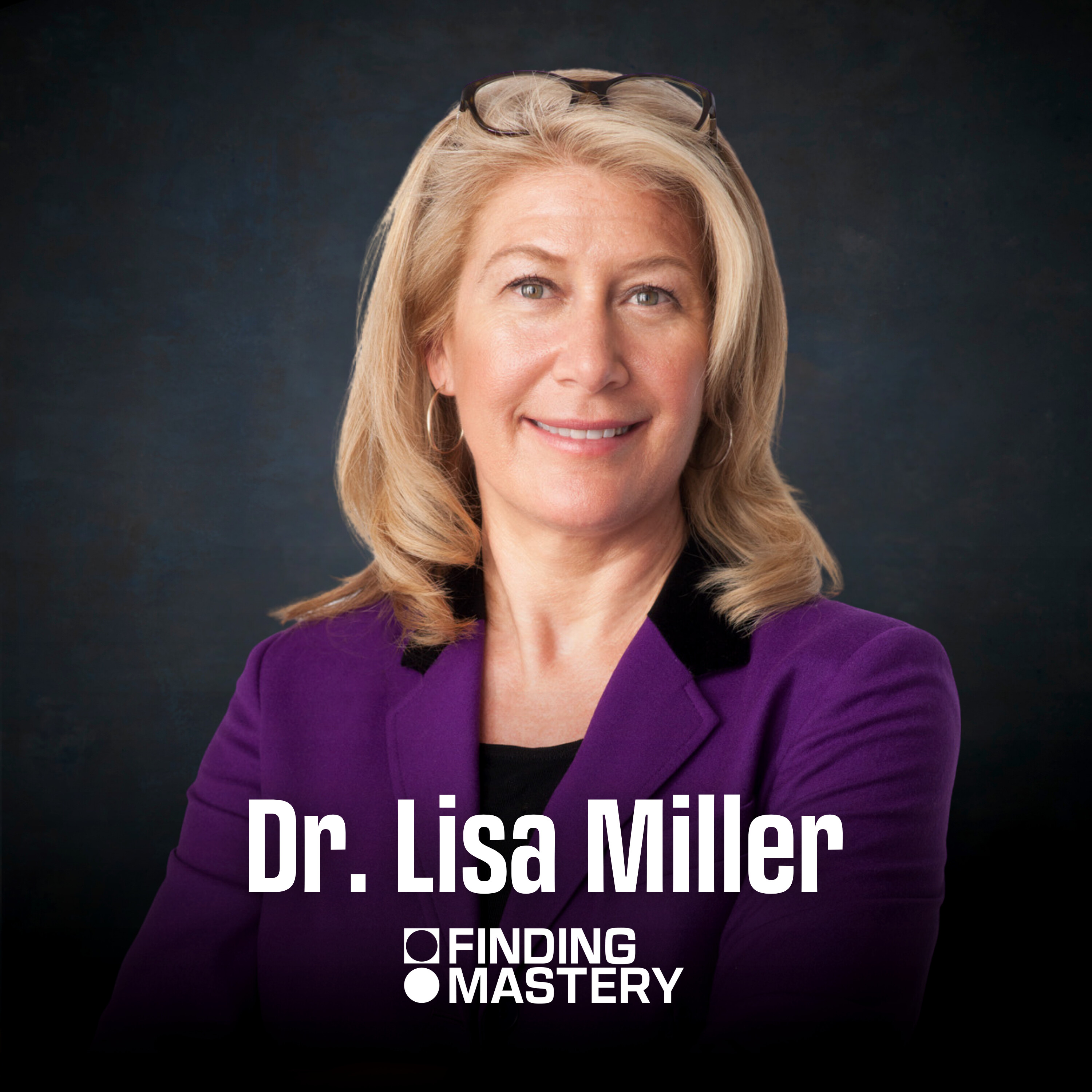
    The Psychology Of Spirituality | Dr. Lisa Miller

    What if the reason so many of us are struggling right now isn’t a lack of success… but a lack of connection to something deeper? Dr. Lisa Miller is a clinical psychologist, professor at Columbia University, and author of The Awakened Brain, and her research challenges something many of us have been taught to overlook: that spirituality isn’t optional, and it isn’t just religion… it’s a core part of how we’re wired. Her journey began at 26, on an inpatient psychiatric unit, where she watched the best available treatments fall short for people in their darkest moments. When the unit had no clergy for Yom Kippur, she showed up with her grandmother’s prayer book and led a service in the back hall… and watched patients who had been despairing for months sit up, brighten, and begin to heal. That day set her on a 30-year scientific quest. What she found reframes how we think about mental health. Buried in the back of large national data sets was a single question: how personally important is spirituality or religion to you? When Dr. Miller ran the numbers, a strong personal spirituality, with or without religion, turned out to be 80% protective against addiction and 82% protective against completed suicide — more protective against the diseases of despair than anything else known to the clinical sciences. Twin studies show this capacity is one-third innate and two-thirds environmentally formed, which means every one of us is born with it, and every one of us can strengthen it. Her MRI research, published in JAMA Psychiatry, found that a sustained spiritual life builds cortical thickness across the regions of the awakened brain, protecting against the recurrence of depression. In this conversation with Dr. Michael Gervais, Lisa walks through the difference between achieving awareness and awakened awareness, the three neural circuits behind feeling loved, guided, and never alone, and how parents and leaders can put this science to work. Mike opens up about his own path… the early pull he felt toward a spiritual life, the pendulum swing toward achievement, and the hypocrisy he witnessed as a teenager that nearly cost him his connection to what Lisa calls the flame. In this conversation, we explore: Why spirituality is an inborn capacity, not a belief The single research finding that reframes how we think about mental health The difference between the achieving brain and the awakened brain The three neural circuits behind feeling loved, guided, and never alone Why a sustained spiritual life physically strengthens the brain How parents can support a child’s natural spiritual awareness Why 90% of leaders made the most important decision of their lives through an awakened form of knowing How to heal from spiritual injury when a bad messenger breaks your trust If you’ve ever felt successful on paper but disconnected in your life, this conversation offers a science-backed way back to something deeper. Links & Resources This episode is brought to you in part by our partner, Sunlighten, the company that has pioneered infrared sauna technology. Go to https://findingmastery.com/sunlighten to see how you can save up to $2,100 on their mPulse Intelligent Sauna. Subscribe to our Youtube Channel for more conversations at the intersection of high performance, leadership, and wellbeing: https://www.youtube.com/c/FindingMastery Get exclusive discounts and support our amazing sponsors! Go to: https://findingmastery.com/sponsors/ Subscribe to the Finding Mastery newsletter for weekly high performance insights: https://www.findingmastery.com/newsletter Download Dr. Mike’s Morning Mindset Routine: findingmastery.com/morningmindset Follow on YouTube, Instagram, LinkedIn, and X Dr. Lisa Miller’s Books: The Awakened Brain and The Spiritual Child See Privacy Policy at https://art19.com/privacy and California Privacy Notice at https://art19.com/privacy#do-not-sell-my-info.
  • June 3 · 1 hr 1 min

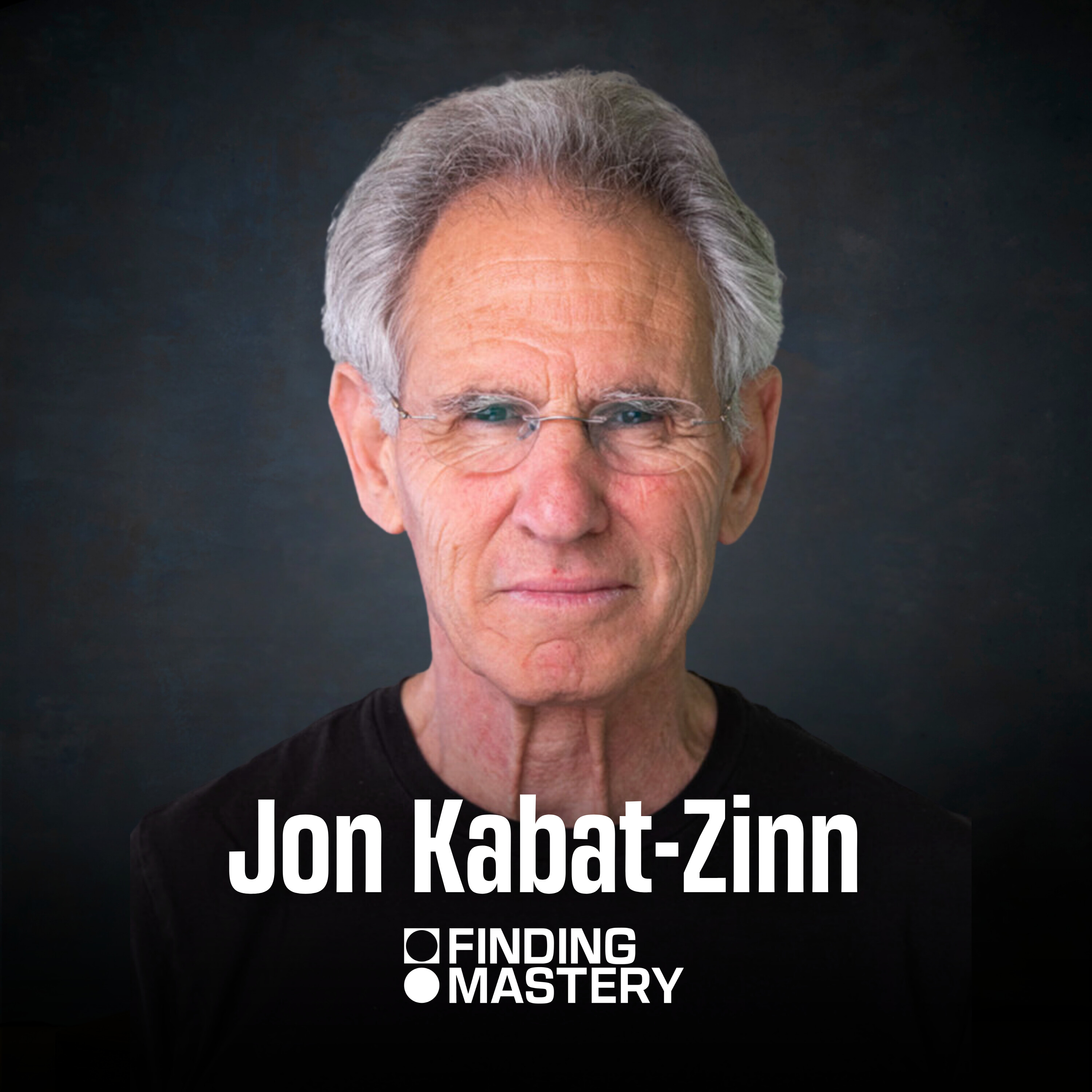
    The Psychology of Awareness | Jon Kabat-Zinn

    What if the real crisis we're facing right now isn't political or technological… but a crisis of attention? Jon Kabat-Zinn is a molecular biologist, professor emeritus of medicine, and the founder of Mindfulness-Based Stress Reduction (MBSR), the program that helped move mindfulness from contemplative tradition into modern medicine, psychology, and high performance. The last time Jon joined Finding Mastery was four years ago, as the war in Ukraine was beginning. Four years on, the world hasn't gotten quieter. The crises have multiplied, AI has accelerated, and the same noise we worried about then has become the air we all breathe. In this conversation with Dr. Michael Gervais, Jon argues that mindfulness is not a calming technique or a productivity tool. He calls it a radical act of sanity. A willingness to stop, drop into the body, and meet life as it actually is rather than the story running on top of it. The shift sounds small. Yet the implications are enormous. Health, relationships, performance, decision-making, and even how we treat each other as a society all live downstream of where our attention is. Jon and Mike also dig into the surprising overlap between elite performance and contemplative practice. Why athletes call it the zone, musicians call it the pocket, and scientists call it flow, and why all of it lives downstream of the same thing: presence. Jon introduces the idea of the "body politic," his framing of nations as organ systems inside a single planetary body, and what it would mean to actually live, lead, and parent from that recognition. He reflects on his grandchildren, on the digital and analog tension shaping the next generation, and on what he wants young people to know in a world that is moving faster than ever. And in his ninth decade, he is still, by his own description, perpetually optimistic. By the end, Jon and Mike land somewhere quietly powerful: presence is not something you achieve. It is something you remember. And remembering, even for one breath, changes the trajectory of the moment you are in. In this conversation, we explore: Why mindfulness is a radical act of sanity, not a relaxation technique The difference between being aware and being with awareness How presence quietly shapes relationships, decisions, and health Why outcome attachment is one of the great hidden drains on performance What Jon means by the "body politic," and why it changes how we think about leadership Why mind wandering is the practice, not a failure The one instruction Jon hopes people remember: don't take personally what is not personal If you've ever felt scattered, overwhelmed, or quietly disconnected from your own life, this conversation offers a science-backed, deeply human way back in. Links & Resources; This episode is brought to you in part by our partner, Sunlighten, the company that has pioneered infrared sauna technology. Go to https://findingmastery.com/sunlighten to see how you can save up to $2,100 on their mPulse Intelligent Sauna. Subscribe to our Youtube Channel for more conversations at the intersection of high performance, leadership, and wellbeing: https://www.youtube.com/c/FindingMastery Get exclusive discounts and support our amazing sponsors! Go to: https://findingmastery.com/sponsors/ Subscribe to the Finding Mastery newsletter for weekly high performance insights: https://www.findingmastery.com/newsletter Download Dr. Mike's Morning Mindset Routine: findingmastery.com/morningmindset Follow on YouTube, Instagram, LinkedIn, and X Jon Kabat-Zinn's Books: Full Catastrophe Living, Wherever You Go, There You Are, Coming to Our Senses, and many more: https://jonkabat-zinn.com See Privacy Policy at https://art19.com/privacy and California Privacy Notice at https://art19.com/privacy#do-not-sell-my-info.
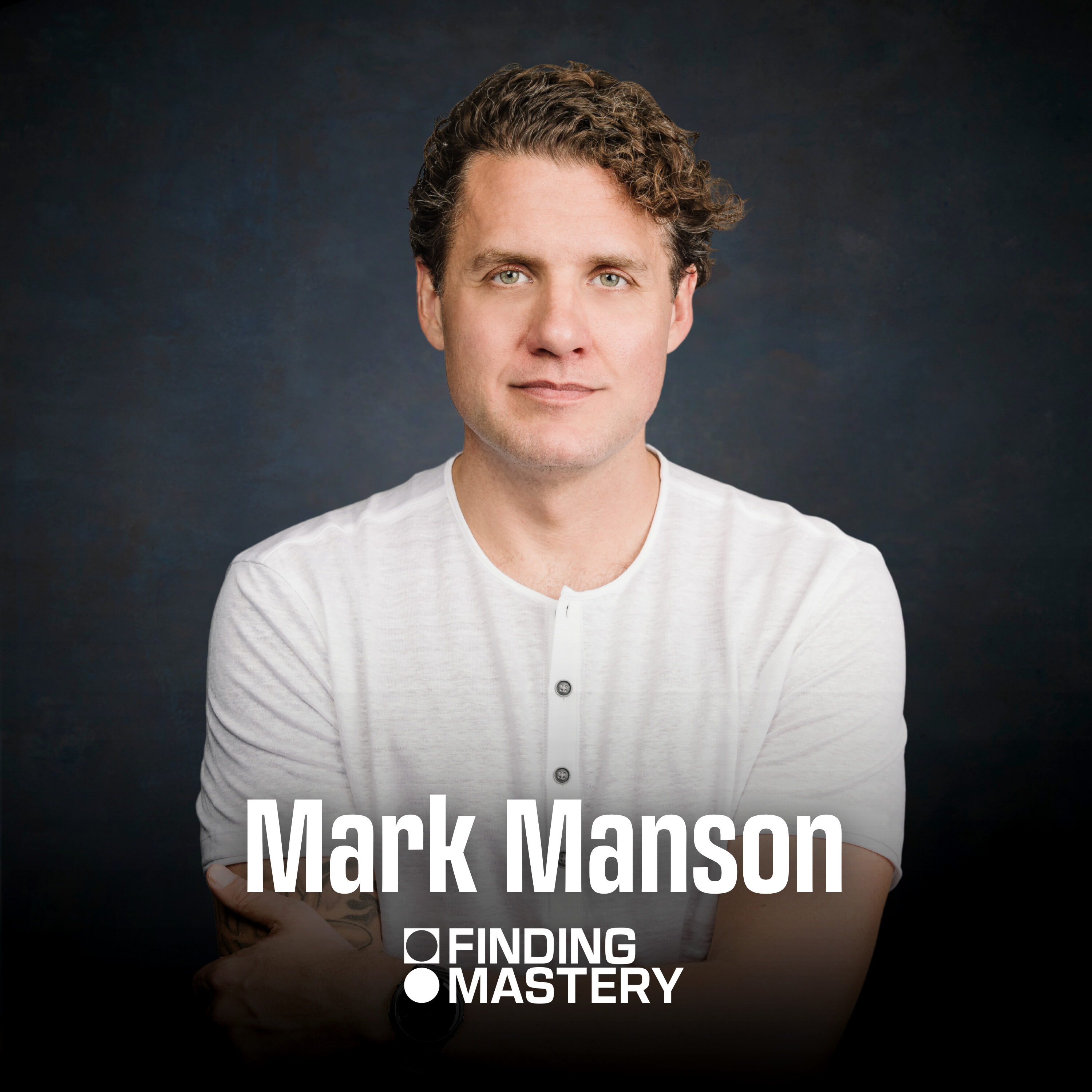
  • May 27 · 48 min

    The Psychology Of Not Giving A F*ck | Mark Manson

    What if the most important skill of our moment isn't knowing more, but knowing what's actually worth caring about? Mark Manson is the bestselling author of The Subtle Art of Not Giving a F*ck and Everything Is F*cked, with three #1 New York Times bestsellers and tens of millions of readers around the world. The last time Mark joined Finding Mastery was in 2020, mid-COVID, when uncertainty was loud and the world felt strange. Five years on, the world is no less strange... it's just strange differently. The information ecosystem has fractured. Trust is harder to find. And the same noise we worried about five years ago has become the air we all breathe. In this conversation with Dr. Michael Gervais, Mark walks through the three principles he's organized his life and work around: radical ownership, radical honesty, and radical acceptance. He explains why ownership is the foundation under everything, because nothing else really works until you take it. He explains why his bar for honesty is anything "relevant or pertinent to somebody's wellbeing." And he talks about why radical acceptance, the Buddhist part of him, is what allows agency without collapse. The conversation moves into territory both timely and timeless. Mark and Mike dig into why the decline of religion has helped the self-help industry explode, why a spiritual framework remains one of the strongest known protective factors for mental health, and how the comparison machinery in our brains, designed for a tribe of thirty, now buckles under the weight of three hundred million people on Instagram. Mark also opens up about Purpose, the AI app he's built, and what he learned designing it to be intentionally disagreeable. He explains why a yes-man entourage, whether it's people around a star athlete or an AI that agrees with everything you say, quietly untethers people from reality. And he shares the stoic-style practice he uses to stay honest with himself: imagining what would be true if he were the problem, then holding that thought lightly enough to set it back down. By the end, Mark and Mike land on what feels like the heart of the episode... You can be perfect as you are, and you can always be better. Both can be true. In this conversation, we explore: Why sincerity has become the most valuable signal in a fractured information landscape The three principles Mark uses to navigate uncertainty: radical ownership, radical honesty, and radical acceptance How our ancient comparison brain breaks under the weight of social media at scale Why a spiritual framework remains one of the strongest known protective factors for mental health The premortem practice that helps Mark stay honest with himself, and why most of us avoid it Why an AI (or a person) that agrees with everything you say is a slow-motion mental health risk How to use AI as a thought partner without letting it do your thinking for you The question that keeps Mark up at night, and might be worth asking yourself If you've ever felt like the noise is winning, or like you've lost the thread on what's worth caring about, this conversation offers a sturdier place to stand. Links & Resources This episode is brought to you in part by our partner, Sunlighten, the company that has pioneered infrared sauna technology. Go to https://findingmastery.com/sunlighten to see how you can save up to $2,100 on their mPulse Intelligent Sauna. Subscribe to our Youtube Channel for more conversations at the intersection of high performance, leadership, and wellbeing: https://www.youtube.com/c/FindingMastery Get exclusive discounts and support our amazing sponsors! Go to: https://findingmastery.com/sponsors/ Subscribe to the Finding Mastery newsletter for weekly high performance insights: https://www.findingmastery.com/newsletter Download Dr. Mike's Morning Mindset Routine: findingmastery.com/morningmindset Follow on YouTube, Instagram, LinkedIn, and X Mark Manson's Books: The Subtle Art of Not Giving a F*ck, Everything Is F*cked: A Book About Hope, and Will (co-written with Will Smith) Mark's AI app, Purpose: https://markmanson.net (see Mark's site for the latest) See Privacy Policy at https://art19.com/privacy and California Privacy Notice at https://art19.com/privacy#do-not-sell-my-info.
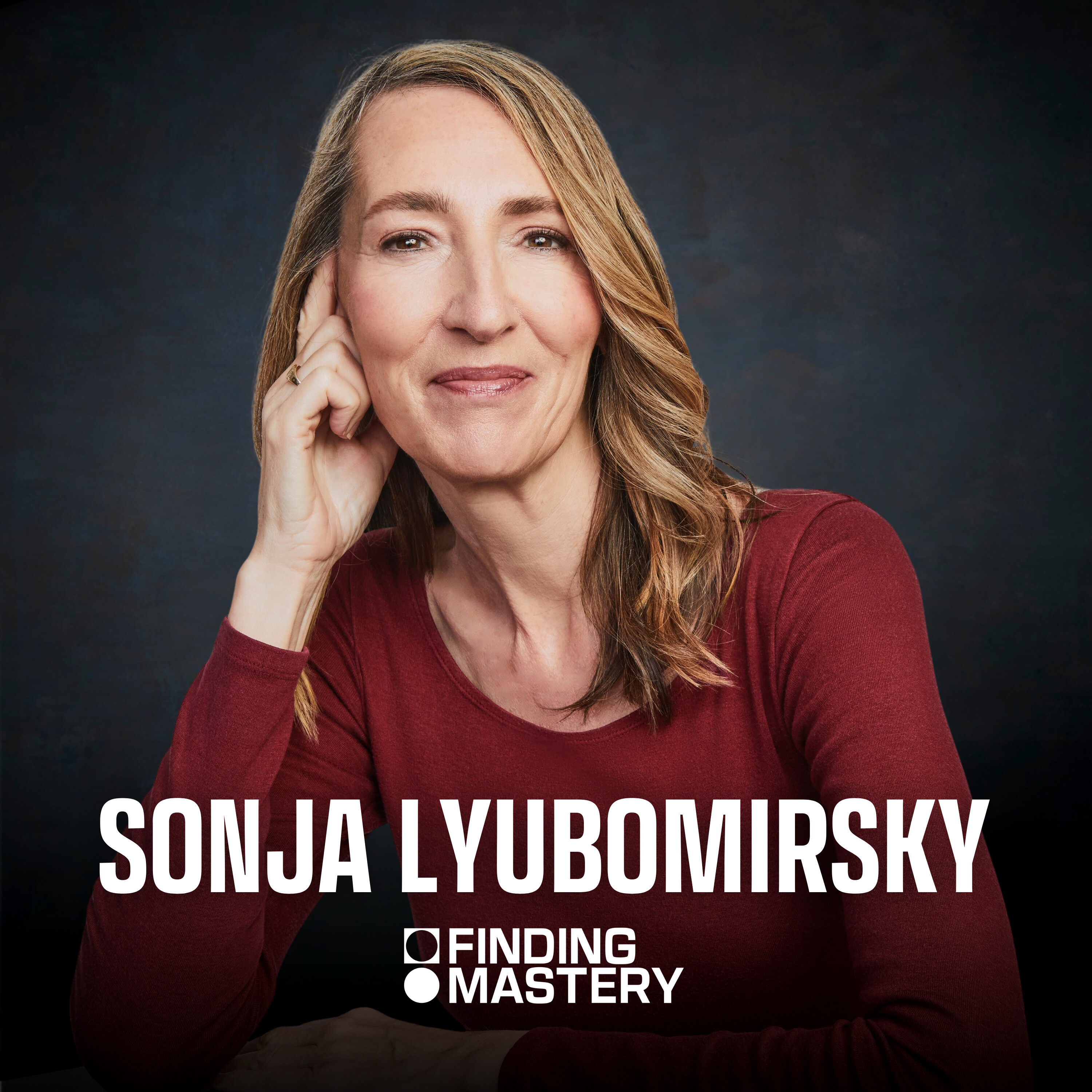
  • May 20 · 1 hr 3 min

    The Psychology Of Feeling Loved | Dr Sonja Lyubomirsky

    Why is it that so many of us are loved... and yet don’t actually feel loved? Dr. Sonja Lyubomirsky is a Professor of Psychology at UC Riverside and one of the world’s leading researchers on happiness. Her newest book, How to Feel Loved, co-authored with relationship scientist Harry Reis, lands at a strange moment: a time when more people than ever say they are connected, and more people than ever say they don’t actually feel it. In this conversation with Dr. Michael Gervais, Sonja offers a quietly radical reframe. After 36 years of studying what makes a life happy, she has come to believe the answer lies in this: Feeling loved. And here is where it gets interesting. Sonja’s research is showing that feeling loved is not something we have to wait for. It’s something we can help create. Most of us, when we sense the absence, default to one of two strategies. We try to be more lovable. Or we try to change the person on the other side. Sonja argues that neither one actually works. What changes a relationship is changing the conversation. She walks Mike through the five mindsets at the heart of the book: the sharing mindset, listening to learn, radical curiosity, open heart, and multiplicity. Along the way, they explore why most of us are listening to respond instead of listening to learn, the three words people actually want to hear (hint: it’s not I love you), and why ‘tell me more’ might be one of the most loving phrases in the English language. Sonja shares her foggy glass metaphor for why being known is the prerequisite to being loved, the Michelangelo effect, and a striking line the Dalai Lama once said to her about how we hold each other. The conversation also gets honest about the harder edges. Bridging political divides at the dinner table. Staying curious about a partner of 30 years. Navigating the modern questions around AI companions, monogamy, and what it means to really go deep with another human. And the research on what tiny acts of kindness, including the impact a 10-second compliment can have. If you’ve ever been surrounded by people who love you and still felt unseen, this conversation is a gentle invitation back in. The good news is that feeling loved is under your control, more than you think. Sonja’s research will show you exactly where to start. Most of us are waiting to feel loved. Sonja shows us how to create the conditions for it... starting today. _____________________________________________________ Links & Resources This episode is brought to you in part by our partner Sunlighten, the company that has pioneered infrared sauna technology. Go to https://findingmastery.com/sunlighten to see how you can save up to $2,200 on their mPulse Intelligent Sauna. Subscribe to our YouTube Channel for more conversations at the intersection of high performance, leadership, and wellbeing: https://www.youtube.com/c/FindingMastery Get exclusive discounts and support our amazing sponsors! Go to: https://findingmastery.com/sponsors/ Subscribe to the Finding Mastery newsletter for weekly high performance insights: https://www.findingmastery.com/newsletter Download Dr. Mike’s Morning Mindset Routine: findingmastery.com/morningmindset Follow on YouTube, Instagram, LinkedIn, and X Book: How to Feel Loved by Dr. Sonja Lyubomirsky and Harry Reis. Learn more and take the mindset quiz at howtofeellove.com See Privacy Policy at https://art19.com/privacy and California Privacy Notice at https://art19.com/privacy#do-not-sell-my-info.
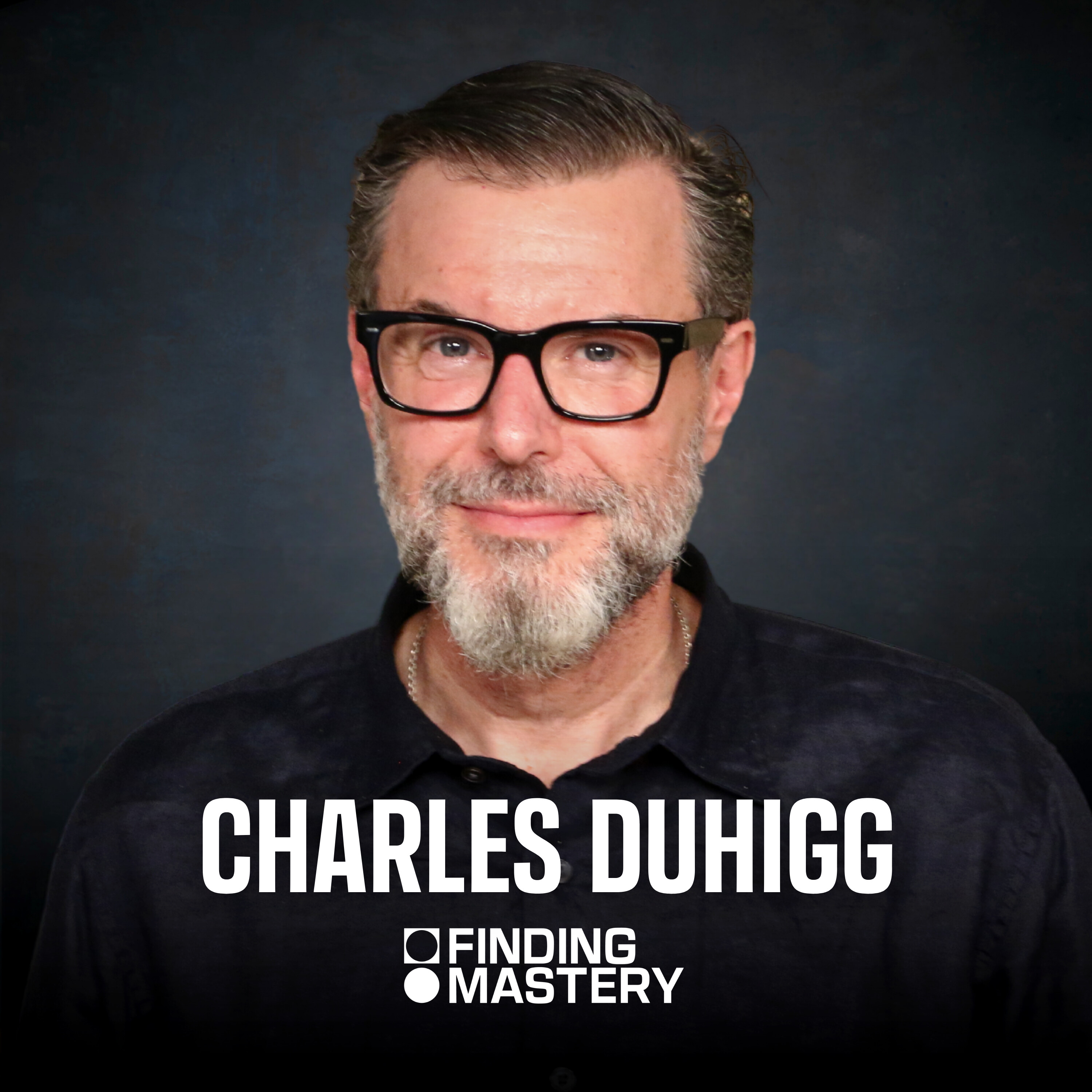
  • May 13 · 51 min

    The Psychology of Being a Super Communicator | Charles Duhigg

    Why do so many conversations break down, even when both people are trying to connect? Charles Duhigg is a Pulitzer Prize-winning journalist and the bestselling author of The Power of Habit and Supercommunicators. This is his third conversation on Finding Mastery, and the timing matters. The world has shifted since the last time he and Dr. Michael Gervais spoke. Families, friendships, even whole countries are talking past each other. AI has quietly eroded the signals we used to read each other by. And the ability to genuinely connect with another human has gone from useful to essential. The first thing Charles makes clear is that being a great communicator is not a gift reserved for a lucky few. It's a habit. And it starts with noticing something most of us miss in real time: we are all moving through three kinds of conversations every day. The practical, the emotional, and the social. Most of our misunderstandings happen for one simple reason. The person across from us is in one kind of conversation while we're in another. Charles unpacks what he calls the matching principle and one of the most useful questions a teacher ever taught him: do you want to be helped, hugged, or heard? He explains why looping for understanding tends to work when arguing does not, why deep questions invite people to reveal worldviews they didn't even know they had, and why polish and fluency no longer mean what they used to in a world where AI can make any email sound thoughtful. The conversation also gets personal. Mike shares the story of a professor who once interrupted him mid-trauma with a single odd question and walked away, an act of communication so strange it took him years to understand. Charles talks about how he tries to stay genuinely connected to his two teenage sons, how to navigate Thanksgiving with someone you voted against, and the quiet research finding that strangers can become friends in under an hour if the questions are deep enough and the back-and-forth is real. If you've ever walked away from a conversation feeling unseen, struggled to get through to someone you love, or wondered why connection feels harder than it used to, this conversation offers a practical, science-backed way back in. Anyone can be a super communicator. Charles will show you how it actually works. _____________________________________________________ Links & Resources Subscribe to our Youtube Channel for more conversations at the intersection of high performance, leadership, and wellbeing: https://www.youtube.com/c/FindingMastery Get exclusive discounts and support our amazing sponsors! Go to: https://findingmastery.com/sponsors/ Subscribe to the Finding Mastery newsletter for weekly high performance insights: https://www.findingmastery.com/newsletter Download Dr. Mike's Morning Mindset Routine: findingmastery.com/morningmindset Follow on YouTube, Instagram, LinkedIn, and X Link: Charles and Mike reference “36 Questions” or the Fast Friends Procedure: https://www.stafforini.com/docs/Aron%20et%20al%20-%20The%20experimental%20generation%20of%20interpersonal%20closeness.pdf Citation: Aron, A., Melinat, E., Aron, E. N., Vallone, R. D., & Bator, R. J. (1997). The Experimental Generation of Interpersonal Closeness: A Procedure and Some Preliminary Findings. Personality and Social Psychology Bulletin, 23(4), 363–377. Link: New York Times Article: “36 Questions That Lead to Love.” https://www.nytimes.com/2015/01/09/style/no-37-big-wedding-or-small.html See Privacy Policy at https://art19.com/privacy and California Privacy Notice at https://art19.com/privacy#do-not-sell-my-info.

  • May 6 · 59 min

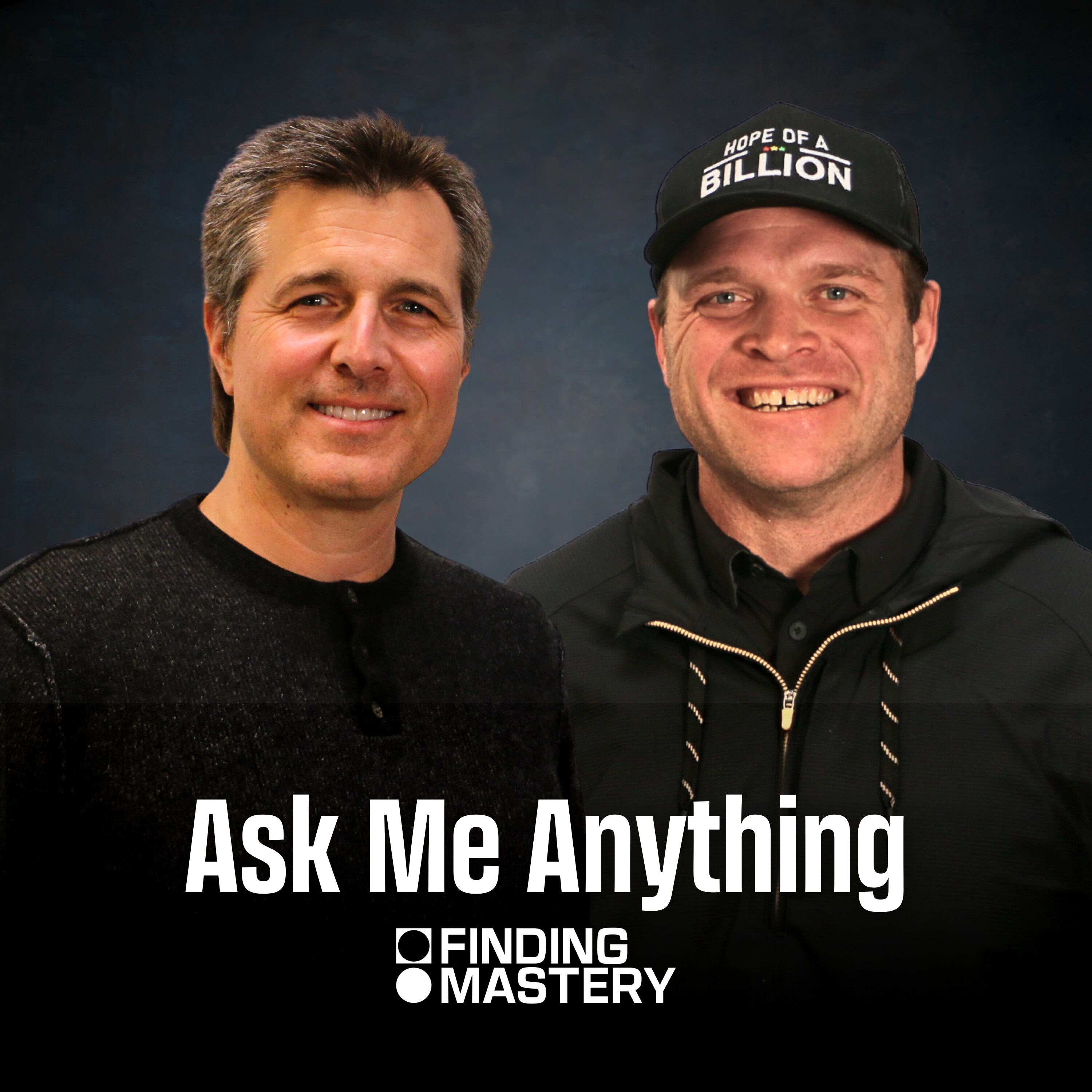
    5 Questions to Unlock Your Inner Potential | Dr. Mike Gervais - AMA Vol.29

    What questions are tugging at you right now, and how might exploring the answers help you live and perform with more clarity? We're back with another special edition of the Finding Mastery podcast: an Ask Me Anything episode, built from the deep and sometimes vulnerable questions submitted by our community. Joining Dr. Michael Gervais again is Jeff Byers, former NFL player, Co-Founder and CEO of Momentous, and a longtime friend of Finding Mastery. Jeff built Momentous on a foundation of transparency and scientific integrity in an industry that can be full of noise, and he brings that same standard of honest engagement to the questions we explore here. His experience navigating the identity shift from elite athlete to entrepreneur makes him a uniquely grounded co-host for conversations about who we are, what drives us, and how we keep growing when the road ahead isn't clear. The questions we explored: Navigating a major life transition... how to work through the grief of leaving a sport, the psychology of identity foreclosure, and why transitions are actually an invitation to examine who you are and who you're becoming. When your life is good but something feels missing... the difference between being stuck and being in the fog, what the biology might be telling you, and how self-efficacy, agency, and your own life history factor into the picture. Finding your purpose when it hasn't revealed itself yet... the research on purpose as a cornerstone of a thriving life, the three components of a clear purpose, and a practical framework to start building one right now. What community actually means... why belonging goes deeper than shared interests, what we lose when we slide toward digital connection only, and why community is built on responsibility as much as relationship. AI and human potential... whether the race toward AI is pulling our attention away from mindfulness and human development, and how to think about this new tool without losing sight of what makes us human. Who and what shaped us... a personal look at the heroes, idols, and influences that shaped both Mike and Jeff, and what those figures reveal about the values and first principles we carry forward. The questions in this episode came from real people wrestling with real things. If any of them resonate with something you're carrying right now, that's the point. __________________________________ Links & Resources Subscribe to our Youtube Channel for more conversations at the intersection of high performance, leadership, and wellbeing: https://www.youtube.com/c/FindingMastery Get exclusive discounts and support our amazing sponsors! Go to: https://findingmastery.com/sponsors/ Subscribe to the Finding Mastery newsletter for weekly high performance insights: https://www.findingmastery.com/newsletter Download Dr. Mike's Morning Mindset Routine: findingmastery.com/morningmindset Follow on YouTube, Instagram, LinkedIn, and X See Privacy Policy at https://art19.com/privacy and California Privacy Notice at https://art19.com/privacy#do-not-sell-my-info.

Showing 1–20 of 27 episodes