
Skip to content
Artwork for Evolutionary Insights by Anthropology.net
HistoryScience

Evolutionary Insights by Anthropology.net

Anthropology.net

A podcast about anthropology.

www.anthropology.net
Play
  • 28 episodes
  • Avg 34 min
  • English
Counted on this page — what you have heard stays on this device, so it is not something the list can be paged by.
  • Tuesday · 45 min

    Stone Age Souvenirs and Memory: A 500,000-Year Hypothesis

    In the Sakhnin Valley in Israel’s Lower Galilee, a survey recorded more than 200 handaxes from the Lower Paleolithic, the earliest part of the Old Stone Age. About ten of them were shaped from flint nodules with a fossil imprint or an odd geological feature inside, and in each the maker left the feature in the middle of the tool’s face, where it could be seen and touched. Such nodules are harder to work, and the valley’s other handaxe makers avoided them. These handaxes are part of a new case for Stone Age souvenirs, one that runs against a view most readers probably hold. Keeping an object for the memory it carries is usually treated as a late habit of modern humans, from the end of the Old Stone Age onward, and archaeologists have mostly read such objects socially, as carriers of shared meaning or markers of rank. The paper, a review in Evolutionary Anthropology: Issues, News, and Reviews, is by Ran Barkai, a professor of archaeology at Tel Aviv University; Yoav Ram of the university’s School of Zoology; and four colleagues. Its data statement says no new datasets were generated or analyzed. Its core examples come from the team’s earlier work in Israel, which they read as consistent with people keeping objects beyond practical need from about 500 kya (thousand years ago). They propose that these were personal keepsakes, or souvenirs, working as “portable external memory devices.” Once keeping them became routine, the habit may have changed the selection pressures on autobiographical memory, which they define as memory of one’s own experiences plus the family stories folded into one’s identity. What is the evidence for Stone Age souvenirs? The archaeological case rests on three groups of objects, all described in earlier papers by members of this team. At Qesem Cave, people deliberately carried in small, round pebbles of colorful flint from about 400 kya onward, through the roughly 200,000 years they used the cave. Ella Assaf, one of the authors, reported in 2018 that the pebbles show no sign of use; the review gives no count. The Sakhnin handaxes, published this year by Barkai and Shalata, carry fossils and formations that match outcrops in the valley, tying each tool to a particular spot. The authors grant these were probably working tools and ask why someone kept a feature that did nothing for the tool and made it harder to produce. In my reading the third group is the strongest, because the comparison that matters is built into the sites. At Revadim and Jaljulia, two Late Acheulean sites (the Acheulean is the Lower Paleolithic handaxe tradition), and at Qesem, which comes after it, people picked up flint tools made and thrown away long before. The giveaway is patina, a weathered skin that forms on discarded flint and takes its color from the conditions where it lay. On a Qesem scraper shown in the review, the old surfaces are whitish and the resharpened edges are brown, fresh flint. Reworking on such pieces was minimal, and magnified wear traces show their second use was generally light. Because fresh tools dominate the assemblage (the full set of recovered artifacts), Bar Efrati of the University of Oxford, a co-author, argues that the old faces were kept by choice rather than for lack of good stone. The memory half of the argument rests on what the team calls authentication. Psychologists use the term source monitoring for telling whether a memory came from something that happened or from one’s own thoughts. A keepsake adds sensory detail to that judgment; it can’t prove a memory true, the authors stress, only narrow down where it came from. Where alliances and claims to places depend on credible personal memory, people who are better at checking memories against objects should do better. That skill varies between people and is partly heritable, the paper notes, so selection would have had something to act on. Routine curation beyond practical need is what the authors call a “souvenir niche,” after niche construction theory, in which organisms alter their surroundings in ways that feed back on their own evolution. People had lived in the Levant (the eastern Mediterranean) for at least 1.5 million years before this behavior appears, so the review looks for a trigger and finds it in big game. Prey size there fell through the Pleistocene, the epoch of the ice ages, and the elephant disappeared around 400 kya, along with Homo erectus and the Acheulean. As hunting smaller, more evasive prey pushed people into new territory, the authors propose, portable pieces of places became worth keeping. Barkai said in the press release that objects taken from the new hunting grounds “may have helped them maintain a personal connection with the places that would henceforth provide their livelihood.” The review predicts that the practice should track the decline of large herbivores rather than come before it. Can archaeology tell a keepsake from a tool? The patina deserves a slower look, because the time it records works against part of the argument. The whitish skin on that Qesem scraper formed while the flake lay abandoned, and the authors acknowledge that the patinas imply the pieces were found again rather than handed down. So the long interval written on these objects is time when nobody had them. The abstract speaks of the “prolonged retention” of patinated tools, but nothing the review presents measures how long the second owner kept one. Light wear on a resharpened edge fits an object handled now and then for years, and it fits a tool used briefly and dropped; the team itself calls wear its weakest criterion. That gap matters because of the review’s own test for a souvenir: an individual keeps one object safe over a long period, neither discarding it nor trading it for food, and comes back to it from time to time. The authors use this standard to set aside animal cases, including captive chimpanzees that kept a large crystal in their sleeping quarters for two days before trading it back for food. They concede that such behavior could go unseen, because detecting it means following a known individual and a known object for months. No Paleolithic deposit offers that. A site preserves where objects ended up, and how long anyone kept them, or why, has to be inferred. I also think Barkai and Ram chose the hardest level of meaning to detect. They focus on personal rather than social meaning because it assumes the least, needing no shared convention and no audience. That is sound as theory, and it is also why a personal keepsake is nearly invisible to archaeology, since by the paper’s own account its meaning need not be legible to anyone but its keeper. The definition of the souvenir niche sidesteps the problem. It covers routine curation “regardless of motive,” while the memory argument depends entirely on the motive. How strong is the case that keepsakes shaped memory? I find the evolutionary step the weakest link, because its evidence comes from studies of living people and laboratory animals, such as experiments in which learning to make and use tools changed brain networks in macaques and humans. Such studies can make a mechanism plausible, but they can’t show selection at work in the Middle Pleistocene, when these stones were collected. The 500 kya figure is a round number for a period, not the age of any object in the review. It gives no dating method for any of the Israeli material and no stratigraphic context (the layer and setting that would date them) for the surveyed Sakhnin handaxes. Its only number for that evidence is the 400 kya start of the Qesem pebbles, and the authors allow that routine souvenir-keeping may have arrived “later than the earliest examples in the archaeological record.” Their test of failure is also forgiving. The hypothesis fails only when curated items are optimized for use, local and uniform… This is a public episode. If you'd like to discuss this with other subscribers or get access to bonus episodes, visit www.anthropology.net/subscribe

    • Transcript
  • Tuesday · 51 min

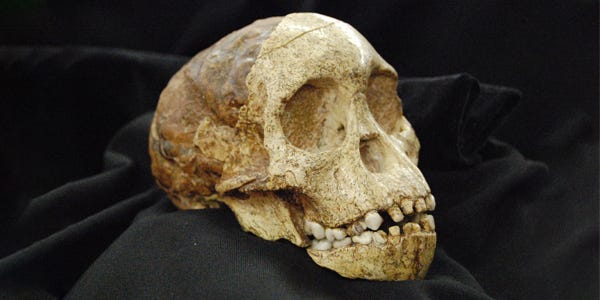
    The Taung Child Is at Least 2.96 Million Years Old

    In a new plot of brain shape, the Taung child, a roughly 3-million-year-old skull found in 1924 at the Buxton Limeworks quarry in South Africa’s Northwest Province, sits almost on top of MLD 37/38, an adult from Makapansgat, 670 km to the northeast. The plot compares endocasts, casts of the inside of the braincase that record the brain’s outer shape, and Taung’s comes from a child whose first permanent molar had erupted while the second was still forming. In growth series of 101 chimpanzees (Pan troglodytes) and 84 gorillas (Gorilla gorilla), apes at that dental stage do not overlap their own adults in brain shape, yet Taung plots in the middle of the adult fossils from Sterkfontein. The authors call this peculiar, and I think it is the most important result in the paper, because it is where their case about species is both strongest and most exposed. That matters because Taung is the holotype of Australopithecus africanus, the specimen that anchors the species name. Most readers picture a well-stocked species behind it, with Sts 5, the Sterkfontein skull nicknamed “Mrs. Ples,” as its typical adult. The paper argues that Taung is, strictly speaking, the only fossil that belongs to A. africanus without dispute, and that several adults long filed under the name, MLD 37/38 among them, probably belong to other species. Gabriele Macho (Vrije Universiteit Brussel and University College London) and seven coauthors, including Simon Neubauer and Clement Zanolli, report the work in npj Palaeoecosystems. A flowstone lying above the fossil-bearing deposit gives a minimum age of 2.962 ± 0.059 million years (Ma) for the skull, and an earlier paleomagnetic estimate caps it at 3.03 Ma. Using tooth development, brain growth and molar shape, the team asks whether Taung could have grown into the adults assigned to its species, and concludes that the brain-growth results leave little doubt that the Sterkfontein fossils include more than one species. To explain that diversity, the authors propose that climate swings kept moving populations around, with interbreeding probably following where they met. How old is the Taung child? Southern African sites lack the volcanic ash layers that give eastern African fossils reliable dates, and Taung’s exact find spot was lost during mining. Published estimates have ranged from 942 thousand years (ka), by uranium-series dating, to 3.03 Ma, the start of the last normal-polarity interval of the Gauss magnetochron, a period identified from the magnetic direction recorded in rock. The flowstone, a sheet of calcite laid down by flowing water, was dated by the decay of its uranium to lead. The route previously advocated for South African flowstones, uranium-238 to lead-206, needs a correction for uranium isotopes that were out of balance when the calcite formed, and beyond 1.5 Ma the uncertainty in that correction can exceed the correction itself. The uranium-235 to lead-207 route is largely immune, and it gave 2.962 ± 0.059 Ma with little scatter (an MSWD, the standard measure of that scatter, of 0.7). I find the measurement convincing, because the method was chosen for a stated reason and the result is precise, but what it means for the fossil is less certain than the paper or the press release suggests. The two routes give ages for the same flowstone that do not overlap, a mismatch the authors tentatively blame on uranium moving after the rock formed, and they read both ages as minimums by assuming the rock only gained uranium; loss would make them too old, and the main text does not say why gain is likelier. No radiometric ceiling has been found despite further drilling, so the 3.03 Ma cap rests on paleomagnetic data from a 2013 chapter by A. I. R. Herries and colleagues. Does the Taung child share a species with the adult fossils? The adults in question are Sts 5, Sts 60, Sts 71 and StW 505 from Sterkfontein, in the Cradle of Humankind about 390 km northeast of Taung, plus MLD 37/38, all attributed to A. africanus. The weakest of the three comparisons is tooth development: scored for 11 Australopithecus and 16 Paranthropus fossils, it gives the A. africanus fossils a markedly different slope from every other taxon when first-molar development is set against first-incisor development, a possible sign that more than one species has been lumped together. One Makapansgat specimen, MLD 2, may be skewing that line, and the authors warn against over-interpreting such small samples, so I take the slopes as a hint. Brain size narrows the field only a little. The adults’ endocranial volumes range from 391 to 568 ml, a spread the authors find compatible with one species by chimpanzee and gorilla standards. Apes at Taung’s stage have reached about 92 percent (chimpanzees) and 87 percent (gorillas) of average adult volume, whereas Taung, at 402 to 410 ml, would have reached only 71 percent if it were going to grow into the large-brained StW 505. The argument gets its force from brain shape, measured with 935 landmarks and semilandmarks (matching anatomical points, plus points spread along curves and surfaces) on every endocast, fossil and ape, after the fragmentary fossils were rebuilt from CT scans. Projecting the direction and amount of change seen in growing apes forward from Taung, the team finds the child could have grown into a brain shaped like Sts 5 or Sts 60 but not like Sts 71, StW 505 or MLD 37/38, even allowing for differences in the timing and amount of growth. As I read the plot, MLD 37/38 drops out precisely because it sits where Taung sits: a child with a lot of shape change still ahead of it should end up somewhere else. I find this the strongest evidence in the paper for more than one species, because it uses dense shape data and large ape growth samples rather than a few scored teeth. Its weak point is the assumption underneath, which the authors state openly: that these brains kept changing shape after the first molar erupted, in the direction and roughly the amount seen in living apes. Chimpanzee, gorilla and human growth models all predict large changes from Taung’s stage onward, so the assumption is reasonable, but the paper has no australopith growth series to test it, and the plot covers only two shape axes, which carry 49.5 percent of the variation. The same kind of reasoning has already given a different answer. A 2006 simulation of Taung’s facial growth by K. P. McNulty, S. R. Frost and D. S. Strait found Taung closer to Sts 71 than to Sts 5, judging the gap from Sts 5 extreme by the standards of living African apes and humans. Two projections along growth paths borrowed from living species disagree about the same pair of adults, and until they are reconciled I treat the Sts 71 question as open. The molars pull Taung somewhere else again: on the dentino-enamel junction, the buried boundary between enamel and dentine that forms early and barely changes with wear, Taung’s lower first molars sit at the edge of the A. africanus cluster and inside the range of Paranthropus robustus on the main axis, though the first two axes explain less than 38 percent of the shape variation. What the Taung study can’t tell us The authors are frank that no clear picture emerges, with no consistent clustering of specimens, which they put down to small samples and fossils scattered widely in time and space. The climate and hybridization proposal is the part the data support least, since the paper never tests hominin hybridization directly. Marine cores off the Limpopo record more variable climate between 4 and 2.5 Ma than from 2.5 to 1.6 Ma, and the authors suggest that hominins tracked shifting habitats and could have interbred where populations met along the Zambezian and Natal/Kalahari biogeographic boundary, which today runs through the Limpopo valley at Makapansgat. They raise the obvious problem themselves, that the Cradle of Humankind lies about 400 km south of the Limpopo and Taung farther still, and answer that hybrids c… This is a public episode. If you'd like to discuss this with other subscribers or get access to bonus episodes, visit www.anthropology.net/subscribe

    • Transcript
  • Monday · 43 min

    Ancient Peru’s Lambayeque: Everyday Violence Was Just 1.6%

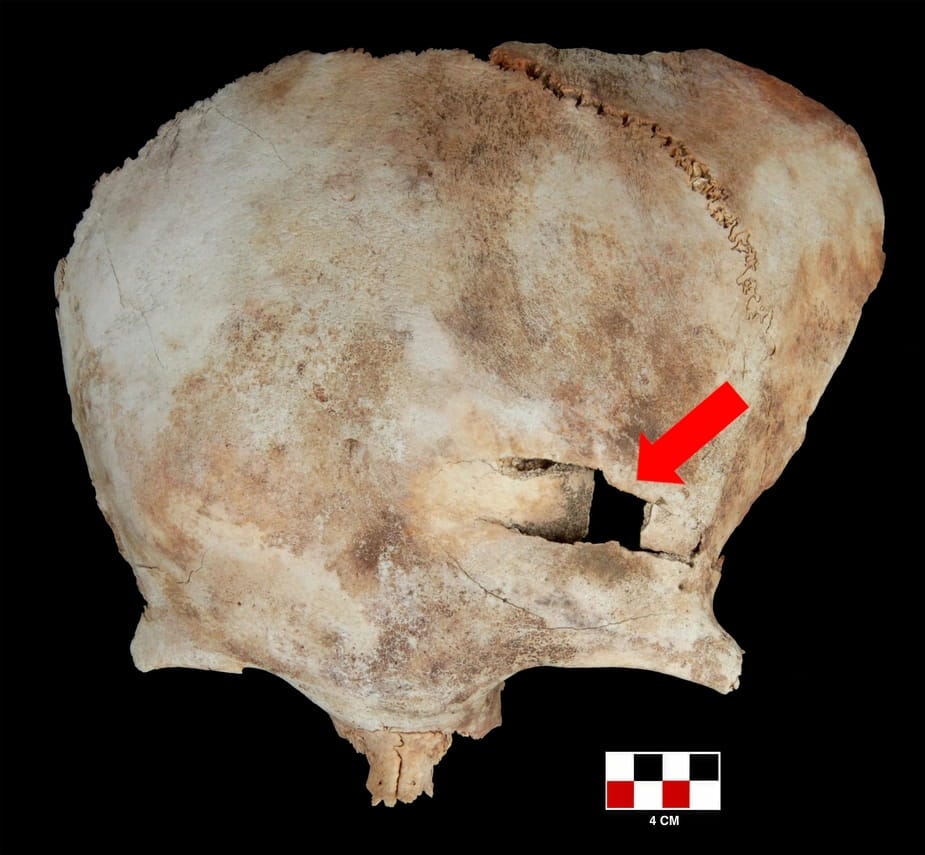
    Chornancap Burial 48 comes from the lower Lambayeque Valley on Peru’s north coast and dates to the Chimú period, around 1375 to 1490 CE. The left side of the forehead carries a fracture from a blunt blow, and its edges show no healing, which bioarchaeologists (specialists in human remains from archaeological sites) call perimortem: the injury happened at or near the time of death. A new study of violence in ancient Peru uses this skull to illustrate what its authors counted as interpersonal violence. Among 1,519 skeletons from the valley preserved well enough to examine, spanning more than 3,000 years, they found 25 with skull injuries of that kind. That is a low count for a coast best known in the press for ritual killing. At Huaca de la Luna, a Moche ceremonial center, up to 107 adult men were sacrificed in six closely timed events around 550 to 600 CE, amid evidence of mud and heavy rain from an exceptionally strong El Niño, the periodic warming of Pacific waters that drenches this desert coast. At Huanchaquito-Las Llamas in the Moche Valley, more than 140 children and over 200 young camelids (llamas and their relatives) were sacrificed around 1450 CE, associated with a mud layer that may record El Niño flooding. Neither site is in the new dataset. Finds like these invite a reasonable inference: when the floods came, these societies turned violent, and mass sacrifice was the visible peak of a wider rise in killing over scarce food. Dr. Thomas J. Snyder of New York University and Dr. Haagen D. Klaus of George Mason University test that inference in a paper published November 9, 2026, in Frontiers in Environmental Archaeology, using skeletal records from the Lambayeque Valley Biohistory Project, which Klaus founded in 2002. The Lambayeque Valley Complex (the Lambayeque Valley, for short) consists of five river drainages more than 700 kilometers north of Lima, joined into one water network by the late first millennium CE. The team compiled records for 1,659 people buried at 30 sites, from the Cupisnique period to the Spanish colonial era. Twenty-six were dropped because they couldn’t be placed securely in time, and 1,519 had bones preserved well enough to score. Of those, 25 (1.6 percent) had skull injuries consistent with interpersonal violence, and 77 (5.1 percent) had fractures below the skull of the kind usually attributed to accidents. Neither kind of injury showed a detectable relationship with the two climate measures tested, highland rainfall and El Niño frequency. The authors also propose, without testing it, that the coast’s mass sacrifices were political and religious acts rather than a product of food shortage. For scale, they note that average rates of skull injury in some regions and periods elsewhere in the Andes reach 30 to 45 percent (Snyder and Arkush 2024). How do archaeologists measure violence from skeletons? The method rests on a convention in bioarchaeology: skull injuries count as probable violence, and fractures below the skull as probable accidents. Snyder and Klaus say plainly that this proxy, or stand-in, errs both ways, since a beating that bruises without breaking bone leaves nothing behind and some skull fractures come from falls. Their defense is specific to their question: an undercount doesn’t distort the comparison unless it changes with climate, as it would if fights in drought years tended to stop short of breaking bone. Climate is harder to measure, because the north coast is a desert that gets a few millimeters of rain a year; the water in its rivers and canals falls in the highlands above about 1,500 meters. So the authors measured drought at the source, using CHELSA-TraCE21k, a global climate simulation that estimates past rainfall in 100-year steps, sampled at random points across the valley’s highland headwaters. Simulations can’t reconstruct how often El Niño struck, so the authors used a per-century frequency record from sediment cores at Laguna Pallcacocha, a lake the paper describes only as near the valley. The hypothesis is what the authors call a Malthusian pathway, where scarcity breeds violent competition: drought or frequent floods should shrink harvests and push people toward fighting over food, and toward longer hours of risky work that breaks more bones by accident. Each person was assigned to one of 12 cultural periods, and each period got one average for rainfall and one for El Niño frequency. A Bayesian model then estimated how the odds of each kind of injury shifted with those values, alongside age, sex, colonial rule, and burial site, reporting each effect as a credible interval, a range of plausible values. For both kinds of injury, the 89 percent intervals for both climate measures straddle zero: the data can’t tell whether either one raised the odds or lowered them. I find the skull count convincing and the climate test much weaker, and the weakness comes from that design. Everyone who died in the Late Sicán period, from 1100 to 1375 CE, carries the same rainfall value, so although the model holds 1,633 people, the climate effect rests on at most a dozen period averages. The paper’s own history section describes an event this can’t resolve: a powerful El Niño between 1050 and 1100 CE, followed by a 30-year drought. Folded into averages for the Middle Sicán period (900 to 1050/1100 CE) and the Late Sicán period, each 150 years or longer, that drought shrinks to a modest shift in one or two numbers, set against only 25 injured people. Snyder and Klaus concede that rarity limits their power, which is why the abstract reports no strong evidence for an association rather than evidence against one. What counts as everyday violence in ancient Peru? The choice that shapes the headline number most is one the methods section barely describes: which deaths count. The authors study what they call quotidian, or everyday, violence, so like the regional surveys they build on, they remove sacrifice and massacre victims. It matters here: the paper cites evidence that perhaps more than 1,200 people were buried as offerings atop six monumental huacas, or sacred mounds, at the Sicán capital within as little as 50 years at the start of the Middle Sicán period (Klaus and Shimada 2016). Later Muchik communities, the Indigenous people of this coast, carried out smaller sacrifices at the Chotuna-Chornancap complex and at Túcume, both on the study’s site list. I don’t object to the split itself. Elite-staged mass sacrifice and a fight between neighbors are different social acts, and pooling them would make Lambayeque incomparable with other regions. My objection is that the paper never says how many individuals were removed on these grounds, or how a burial was judged ritual. Burial 48 is a person struck on the head around the time of death at a site with documented sacrifices, and the authors present it as interpersonal violence; I’d want to know what settled that call. And with massacre victims removed too, the measure captures violence between individuals, which may not be where competition over food shows up. Colonial burials are where I think the measure’s limits show most clearly. After the Spanish conquest, Muchik people were forced into colonial towns and exploited for their labor, and the region lost about 40 percent of its population before a slow Indigenous recovery began around 1600 CE. Yet the authors describe skull injuries in their two large colonial samples, from Mórrope and Eten, as nearly absent. The… This is a public episode. If you'd like to discuss this with other subscribers or get access to bonus episodes, visit www.anthropology.net/subscribe

    • Transcript
  • Friday · 35 min

    Ancient Cannabis Use: Traces Found in 2,800-Year-Old Hair

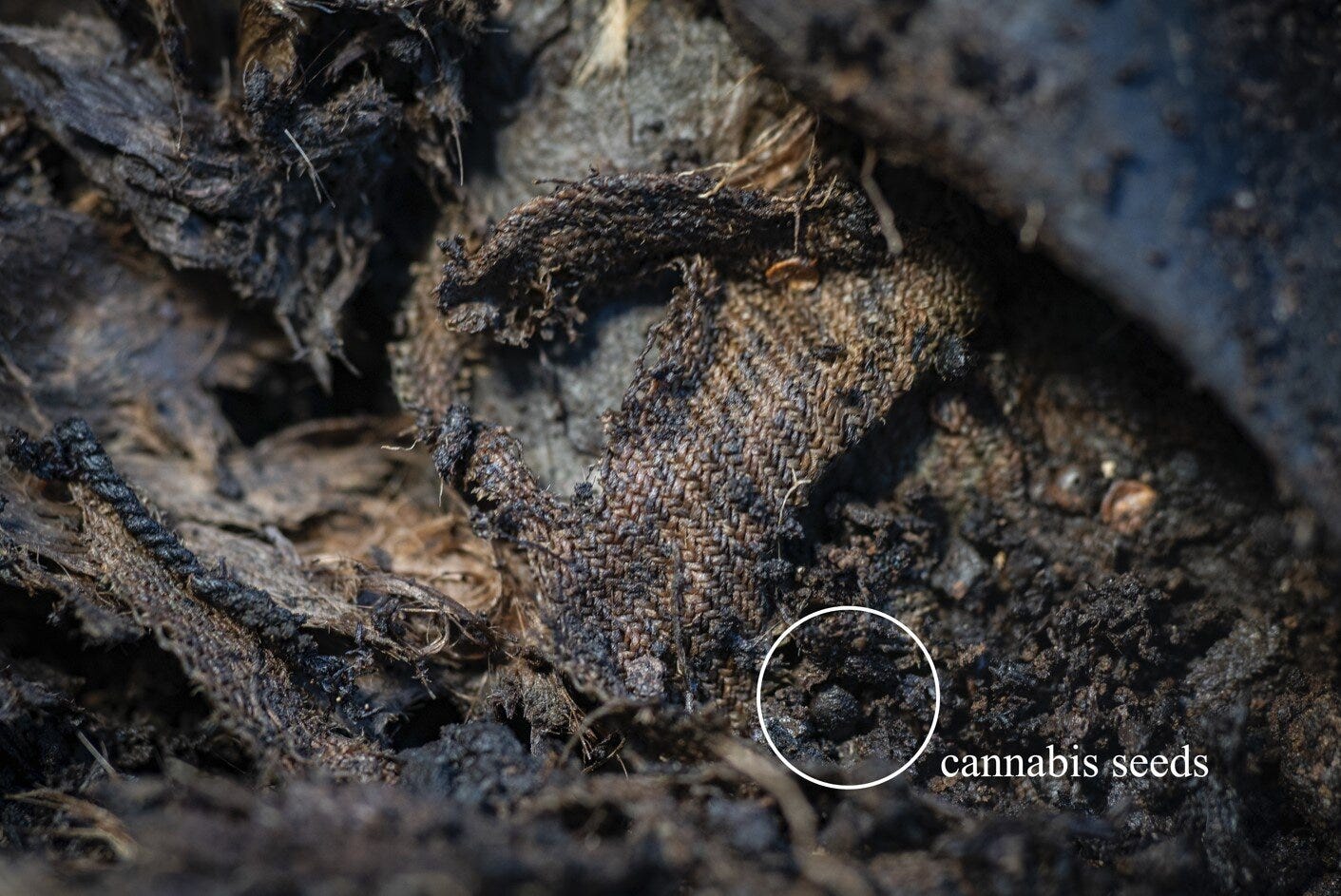
    In the central burial chamber of a princely tomb in Tyva, in southern Siberia, human hair survived for roughly 2,800 years, and several samples give clear chemical signals consistent with cannabinol, a compound that can form when the main intoxicant in cannabis oxidizes. The tomb belonged to high-ranking members of Scythian society, the horse-riding culture of the Eurasian steppe, and it also held about 1,000 cannabis seeds. A new paper in Science presents these finds as the earliest direct evidence of ancient cannabis use. The belief this tests is one many of us hold without much scrutiny, that cannabis in an ancient grave means someone was getting high. People have often suggested as much, but the evidence is awkward. Cannabis also supplied oil and fiber, so seeds in a burial don’t prove intoxication, and residues on vessels and heated stones from later Central Asian sites point to inhalation while recording an object rather than a person. Hair could close that gap because it comes from a body. The study’s lead author is Dr. Gino Caspari, an archaeologist at the Institute of Archaeological Sciences of the University of Bern and the Max Planck Institute of Geoanthropology. He and eight coauthors, including Timur Sadykov and Daria Fomicheva, conclude that cannabis consumption dates back at least 2,800 years. In the press release issued with the paper, Caspari takes the next step: “The molecular traces in the hair and the cannabis seeds come from the same grave and suggest that cannabis was used for its intoxicating properties.” I should say exactly what I read. The full text is behind Science‘s paywall, and for this post I worked from the abstract, the editor’s summary, and the release, without the methods or the supplement and its eight figures and seven tables. When I call a detail missing below, I mean missing from those documents. On that evidence, I think the case that people in this tomb used cannabis in some form is good, and the case that they used it to get high is weaker. How do you find cannabis in 2,800-year-old hair? The date comes from the seeds. Radiocarbon dating measures the decay of carbon-14 in once-living material, and six seeds were dated directly. I consider this the firmest part of the study because the date belongs to the cannabis itself and not to something found near it. Together with other dating results, those measurements put the seeds in the grave in the early eighth century B.C., which matches the 2,800 years in the paper’s title. The error ranges, and what the other dates were taken on, are missing from what I read. The chemistry comes from the hair, and it is easier to follow once you know the two compounds involved. Tetrahydrocannabinol, or THC, is the main intoxicating compound in cannabis. Cannabinol, or CBN, is one of the things THC becomes when it oxidizes, which makes it a sensible target in very old material. The team used high-resolution mass spectrometry, among other methods; the technique sorts molecules by mass precisely enough to match a signal to a candidate compound. Several samples gave clear signals consistent with CBN, and the team also saw weak signals whose mass is consistent with THC. I can’t tell you how many samples were tested, how many people they came from, or those people’s ages and sex. Does cannabis in ancient hair prove people got high? The step I’d slow down on runs from the hair to the word “psychoactive,” because “direct evidence” fits the presence of a compound better than it fits anyone’s state of mind. I also trust the CBN more than the THC. The CBN signal is described as clear, although the release says THC oxidation is only one way CBN forms. The THC signal is described as weak and rests on mass, and a mass match says a molecule of the right weight was present without settling which molecule of that weight it was. The editor’s summary, which says the team identified psychoactive compounds in the hair, is firmer than the release’s own language. Quantity is the larger problem, because intoxication depends on how much a person took in, and the release says the hair can’t give a reliable amount. These seeds likely came from wild plants, and people had other uses for cannabis, so I can’t rule out from what I read that a person with no interest in an altered state could carry a similar trace. Caspari’s word, “suggest,” seems right to me, and it is more careful than the paper’s title. The ritual reading has a similar gap. An earlier paper by the team described 18 horses arranged on the burial mound, and several dozen more horse sacrifices have turned up since, along with scattered human bones. Caspari says the burials were accompanied by “most likely, human sacrifices as well.” I accept that the seeds belong to that funerary setting. Hair records a person’s body, though, and nothing I read says whether the cannabis signal reflects a funeral or the years before death, so the editor’s summary’s “ritualistic psychoactive use” joins two findings that may describe different moments. What the Scythian tomb study can’t tell us The gap I’d most like closed is contamination, which the materials I read don’t address. The release says the team can’t determine how the compounds entered the body, which assumes they did enter it. This hair lay for about 2,800 years in a tomb containing cannabis offerings, and if anything was burned at the funeral, smoke could have settled on it too. A test separating compounds taken up by the body from compounds sitting on the hair is the first thing I’d look for in the supplement, along with control samples from the surrounding sediment. The date and the chemistry also attach to different objects. The release calls this the oldest directly dated evidence of intoxicating use, but the direct dates it describes are on seeds, and it gives no separate date for the hair. The two are linked by coming from one grave, and in a tomb with more than one burial and scattered human bones, I’d want that association spelled out. On potency and reach, the abstract says more than the release does. It floats the idea that specific wild populations might have had naturally higher levels of active compounds, while the release says the findings allow no conclusions about the plants’ THC content. The abstract also says the findings suggest use across Eurasia and that they anchor current debates over cannabis in law, public health, and other fields. On the evidence I could see, one tomb in Tyva can’t carry those last two claims, and I would have cut them. The release’s headline has its own problems. It says flatly that cannabis “was used as an intoxicant,” where the abstract says the findings “suggest” psychoactive use. It also says “as early as 2,800 years ago” where the abstract says “at least 2800 years”; the first reads like a starting point, and the second leaves room for an older practice. What would settle the question of ancient cannabis use? My verdict is that the study is partly convincing. It adds a human body to evidence that, in the documents I read, otherwise comes from plants and objects, and the direct dates tie the seeds themselves to the early eighth century B.C. If the supplement deals properly with contamination, I’d accept that people in this tomb had taken in cannabis by about the early eighth century B.C. Intoxication seems to me the likeliest explanation, given the funerary setting and the later evidence of inhalation, but it remains an inference from context, so my con… This is a public episode. If you'd like to discuss this with other subscribers or get access to bonus episodes, visit www.anthropology.net/subscribe

    • Transcript
  • November 5 · 44 min

    Danish Viking Ancestry Traced to a Migration Before 1250 BP

    On the Danish islands, the local ancestry that had been widespread between about 2200 and 1600 BP had essentially disappeared by 1250 BP, roughly a century before the Viking Age. (BP means calibrated years before present, with the present fixed at 1950 CE.) In its place, the Scandinavian-related ancestry of most individuals is best modelled by an Iron Age source from northern Germany or southern Jutland. That is the central finding on Viking ancestry in a new ancient DNA study of how the Germanic languages spread. It was published with a companion paper that applies the same data to the origin of the Celtic languages. The usual picture has Viking Age Danes and Swedes descending from people settled in southern Scandinavia since the Bronze Age, speaking a language that developed in place. Earlier genetic studies detected southern ancestry arriving but, the authors note, generally assumed local continuity. The new work says that continuity broke in Denmark and southern Sweden during the Migration Period (1575 to 1375 BP), when Old Norse, the language of the Vikings, took shape. Both papers appear in Nature. Hugh McColl is first author on both, sharing that position with the linguist Guus Kroonen on the Celtic paper, and Eske Willerslev is last author. The team sequenced 712 new ancient genomes and combined them with published data into a working set of 4,587 individuals spanning roughly 5,000 years. The Germanic paper proposes that a population it calls Eastern Scandinavian, linked to the northeastern Baltic, reached Sweden by about 4000 BP and carried the earliest form of Germanic. That is some 800 years after the Corded Ware groups traditionally credited with bringing it. The paper also traces most of the Scandinavian-related ancestry of the Anglo-Saxons, Frisians and Langobards to Jutland and northern Germany. The companion paper tests four competing models for how Celtic reached an Iron Age range that ran from Iberia to the Balkans. It detects three large movements of people between 4400 and 2800 BP. It judges the last of them to be the most parsimonious vector for Celtic, meaning the one that needs the fewest extra assumptions: a westward spread from eastern central Europe between 3200 and 2800 BP, associated with the cremation-dominated Urnfield Culture. That puts the paper behind the longstanding Celtic-from-the-East model. In both papers the most important conclusion sits beside the largest gap in the sampling, and that shapes how far I would trust each one. How does ancient DNA trace the spread of a language? DNA cannot show what anyone spoke, as both papers acknowledge, but it does show who descended from whom. The method uses identity-by-descent (IBD) segments, which are stretches of chromosome that two people share because they inherited them from a common ancestor. Recombination shortens these stretches every generation, so long segments mark recent relatives and short ones deeper links. Many genomes here are thin, down to 0.1× coverage, meaning only about one position in ten was read even once. The team filled in the missing genotypes by imputation from a reference panel of present-day genomes. In IBD mixture modelling, each individual gets a palette recording how much DNA they share with each of 386 genetic clusters. A target’s palette is then fitted as a blend of the palettes of chosen source groups. Because every palette draws on the whole dataset, a Viking Age Dane can be linked to an Iron Age source population even when the two share few segments directly. Applied to Scandinavians older than 2800 BP, the method finds three clusters. The Eastern Scandinavian one carries extra hunter-gatherer ancestry best matched by hunter-gatherers from Latvia and Lithuania. The authors attribute it to an unsampled population between Finland and northeastern Sweden; no genomes yet exist from that region and period. Between about 3200 and 2450 BP, early Germanic took loanwords from Celtic to the south and lent words to Finno-Saamic languages to the east. Neither of the other clusters reached both contact zones, so the authors call Eastern Scandinavian ancestry the most parsimonious vector. Tracking later movements is harder, because everyone who postdates the arrival of Steppe ancestry in Europe is so closely related. The Celtic paper’s solution, which I think is the smartest move in either study, is to follow which regional variety of older Neolithic farmer ancestry people carried. Bell Beaker groups absorbed different local farmers in different places, so a source of confusion becomes a regional tag. In England, ancestry tied to Neolithic farmers of Iberia and France overtakes local farmer ancestry between 3800 and 3200 BP. That matches an earlier report of large-scale migration into Britain (Patterson and colleagues, 2022). Between 3200 and 2800 BP, ancestry tied to Bronze Age Hungary and Serbia rises in England, becoming widespread by at least 2600 BP. Iberian individuals from Urnfield contexts carry that eastern ancestry by 3150 BP. The authors use ancestry related to the Knovíz Culture of the Czech Republic as a stand-in for Urnfield populations generally. By 2800 BP it is common across former Urnfield regions, though its effect weakens westward and the older Bell Beaker-related ancestry still dominates in Iron Age England. The authors then checked each movement against published linguistic dates. These covered the formation of Proto-Celtic, the undocumented ancestor of all Celtic languages, and the later split between its Brittonic branch (including Welsh) and Goidelic branch (including Irish). Only the third movement fit most estimates on every count. Why does cremation leave gaps in the ancient DNA record? What I most want readers to notice is where the missing genomes fall. Both papers place their most consequential change in centuries when most people were cremated, and cremation destroys DNA. For the Celtic paper this is the Urnfield period of 3200 to 2800 BP. The authors say the timing of the transition in France cannot be measured directly for lack of Late Bronze Age samples, so they infer it from Britain and Iberia. For the Germanic paper, the gap runs from 1575 to 1200 BP, when Old Norse formed. I counted the individuals in the paper’s ancestry plot for Denmark and Sweden (Extended Data Fig. 13). The panel for 1575 to 1230 BP holds 15 people, against roughly 200 on each side, and only four are Danish genomes older than 1250 BP. Because hundreds of genomes anchor each end, I accept that the population of the Danish islands changed, but the genomes cannot say when within the window. The paper’s date, probably 1550 to 1450 BP, comes from non-genetic evidence, including tree rings from 654 Danish oak samples. Norway is the result I think historical linguists should weigh most. Old Norse took shape there too, yet the paper finds genetic continuity in Norway from the Iron Age to the Viking Age. The authors conclude that demographic and cultural mechanisms combined to drive the language. They also observe that the later boundary between East Norse and West Norse dialects roughly follows the boundary between the newcomers’ ancestry and Norwegian Iron Age ancestry, even in Viking areas of Britain. That is a firmer link between genes and language, because it concerns a split inside a language rather than its birth. The authors also suggest the expansion through Denmark may partly explain why Old Norse speakers called their language dǫnsk tunga, the Danish tongue. This is a public episode. If you'd like to discuss this with other subscribers or get access to bonus episodes, visit www.anthropology.net/subscribe

    • Transcript
  • November 3 · 39 min

    Inca mummies tested for drugs: coca in all six hair samples

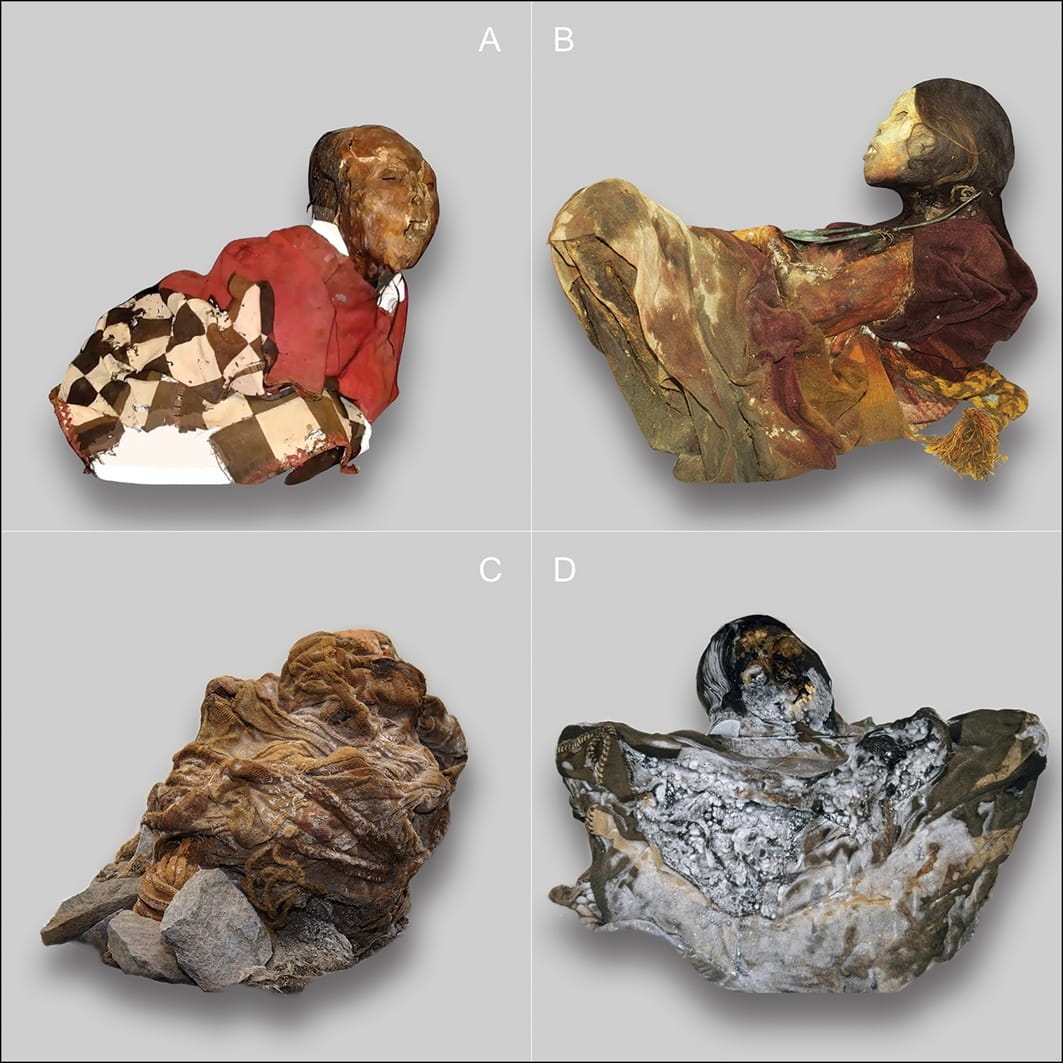
    The last centimeter of hair from a girl of about eight, buried on the volcano Chuscha in Argentina during the Inca Empire, holds a chemical missing from the five centimeters grown before it. That chemical is cocaethylene, which the liver makes when cocaine and alcohol are in the blood together. Its arrival suggests that in roughly the final month of her life this child was drinking heavily while taking coca. Earlier tests on the same mummy found no cocaine at all. The result comes from new drug testing on Inca mummies, and it complicates a picture many readers carry of the capacocha, the rite in which the Incas sacrificed children and young women to serve as messengers to the gods. The colonial chronicles read almost like a recipe, with chicha (maize beer) to calm the child and crushed coca placed in the mouth before the killing. From there it is easy to assume one state ritual with one drug routine. This paper supports part of that picture and raises doubts about the rest, though less firmly than its press release suggests. What drugs were found in the Inca mummies? Dagmara Socha of the University of Warsaw, Marzena Sykutera of Nicolaus Copernicus University in Toruń and six colleagues report in Antiquity that coca markers turned up in all six hair samples they tested and the alcohol marker in four of those six. Harmine, an alkaloid linked to ayahuasca, appeared in one nail from one person. They searched for ten compounds in eight individuals from five volcanoes in Peru and Argentina. None of the eight showed harmaline, mescaline (from San Pedro cactus), N,N-DMT or bufotenine (from Anadenanthera and Virola), or scopolamine or atropine (from Brugmansia and Datura). Two of the eight came from Ampato in Peru: Ampato #1, a girl of 14 known as the Ampato Maiden (the press release calls her the Lady of Ampato, or Juanita), and Ampato #4, a girl of about 10. Sara Sara, also in Peru, gave a girl of about 14. In Argentina, Chuscha gave the girl of about eight, Quehuar a girl of about 10, and Llullaillaco three children: the Doncella, about 14; the Younger Girl, about six; and the Boy, seven. The main text gives no date for any of them, only the span of the Inca Empire, from the late thirteenth century to 1572 CE. The method depends on keratin, the protein in hair and nails, which traps compounds circulating in the body. Hair grows outward from the scalp, with each centimeter standing for about a month, so a strand can be read as a rough timeline. Nails can’t, because compounds enter them by more than one route. The team washed each sample, then ran an extract through liquid chromatography-tandem mass spectrometry, which separates the compounds in a sample and identifies each by its mass and the fragments it breaks into. Results come in picograms per milligram (pg/mg), or trillionths of a gram in each thousandth of a gram of sample. The results span about four orders of magnitude. Cocaine measured 16,740 pg/mg in the Doncella, who was also found with a coca quid (a ball of dried leaves) in her mouth, 1,410 in the Boy and 960 in the Younger Girl. It measured 31 in the last centimeter of the Chuscha hair, 2.5 in Ampato #4 and 1.5 in Sara Sara. Benzoylecgonine, the main product of the body’s breakdown of cocaine, accompanied it each time. Cocaethylene appeared only in the Llullaillaco children and Chuscha. The two nails gave harmine at 0.6 pg/mg in Ampato #1 and no target compound in Quehuar. I find the coca result the strongest in this paper, because the drug and its breakdown product appear together in every hair sample, and quids and cheek-bulged figurines agree. It also reverses earlier negative tests on Chuscha and Sara Sara. The authors credit improved sensitivity, which seems likeliest, although Sara Sara’s 1.5 pg/mg is a small number to carry a reversal. Chuscha is the only sample read segment by segment, across six 10 mm sections covering about six months. Cocaine ranged from 135 to 342 pg/mg in the five older segments, then fell to 31 nearest the scalp, where cocaethylene appeared at 57. The authors estimate cocaethylene at about 166 percent of cocaine in the blood and suggest the shift marks entry into the final stage of the ritual. They concede that the variation could be an artifact of preservation and metabolism. I trust the appearance of cocaethylene more than the fall in cocaine, because the cocaine series already jumps from 135 to 342 between neighboring months, while cocaethylene is absent from five segments and then present. This is still one strand from one child, and grave robbers took her body in the 1920s and sold it into private collections before it reached the museum in Salta. The paper doesn’t discuss what that history may have done to the hair. Did Inca children take ayahuasca before sacrifice? The ayahuasca claim is the one most likely to travel, and it rests on the smallest number in the paper. Ayahuasca refers to the Banisteriopsis caapi vine and to drinks made from it, often combined with a second plant that supplies N,N-DMT. Harmine blocks the breakdown of psychedelic compounds, so it can prolong the effects of that second plant. The authors argue that Banisteriopsis or a related Amazonian plant is the most probable source of the Ampato #1 harmine, which would imply long-distance trade. They dismiss Passiflora as a source but don’t separately rule out tobacco. I don’t think this measurement can yet carry an argument about one mountain’s ceremonies, because the comparison between mountains is confounded by tissue. Harmine appeared in no hair sample from anyone, only two nails were tested, and Chuscha, Sara Sara and Llullaillaco contributed none. The authors report contamination in the nails, probably environmental, that made results hard to interpret, and they raise the possibility that nails and hair take up these compounds differently. Then they read the absence of harmine in the hair of Ampato #4 as a possible sign of different treatment or a separate ceremony. CT scans do suggest she was a secondary burial (Socha et al. 2026), but her hair can’t say much about harmine when no hair tested positive. What keeps me from dismissing the finding is earlier work by the same group, which reported harmine and harmaline in two other children from the mountain, Ampato #2 and #3 (Socha et al. 2022b). That makes three individuals from one mountain across two studies, though this paper doesn’t say which tissue the earlier results came from. Dr Dagmara Socha, lead author of the research, from the University of Warsaw, said in a statement from Antiquity that the harmine, “may indicate that a harmine-containing beverage had a specific role in ceremonies connected with this particular sacred mountain.” The authors’ next step is where I part with them. They suggest the vine may have been taken alone for its medicinal value, possibly to calm the children, and say the absence of other hallucinogens supports this. The same discussion warns that tryptamines such as N,N-DMT enter keratin poorly, so a negative test for them is weak evidence that they were absent. A modern study of ayahuasca (Osório et al. 2015) also can’t show what Inca ritual specialists intended for a 14-year-old, and a 0.6 pg/mg trace with no timeline says nothing about dose. Was the capacocha one standardized ritual? The paper’s largest claim is that the differences may reflect distinct mountain deities and local variation, and the design can’t separate that from simpler explanations. The mountains differ in tissue tested, length of hair analyzed and burial history. The Llullaillaco and Chuscha figures cover only the 10 mm nearest the scalp, while Ampato #4 and Sara Sara were analyzed whole, and Chu… This is a public episode. If you'd like to discuss this with other subscribers or get access to bonus episodes, visit www.anthropology.net/subscribe

    • Transcript
  • October 22 · 1 hr

    Xujiayao Denisovan Fossils: Two Bones, 18 Proteins

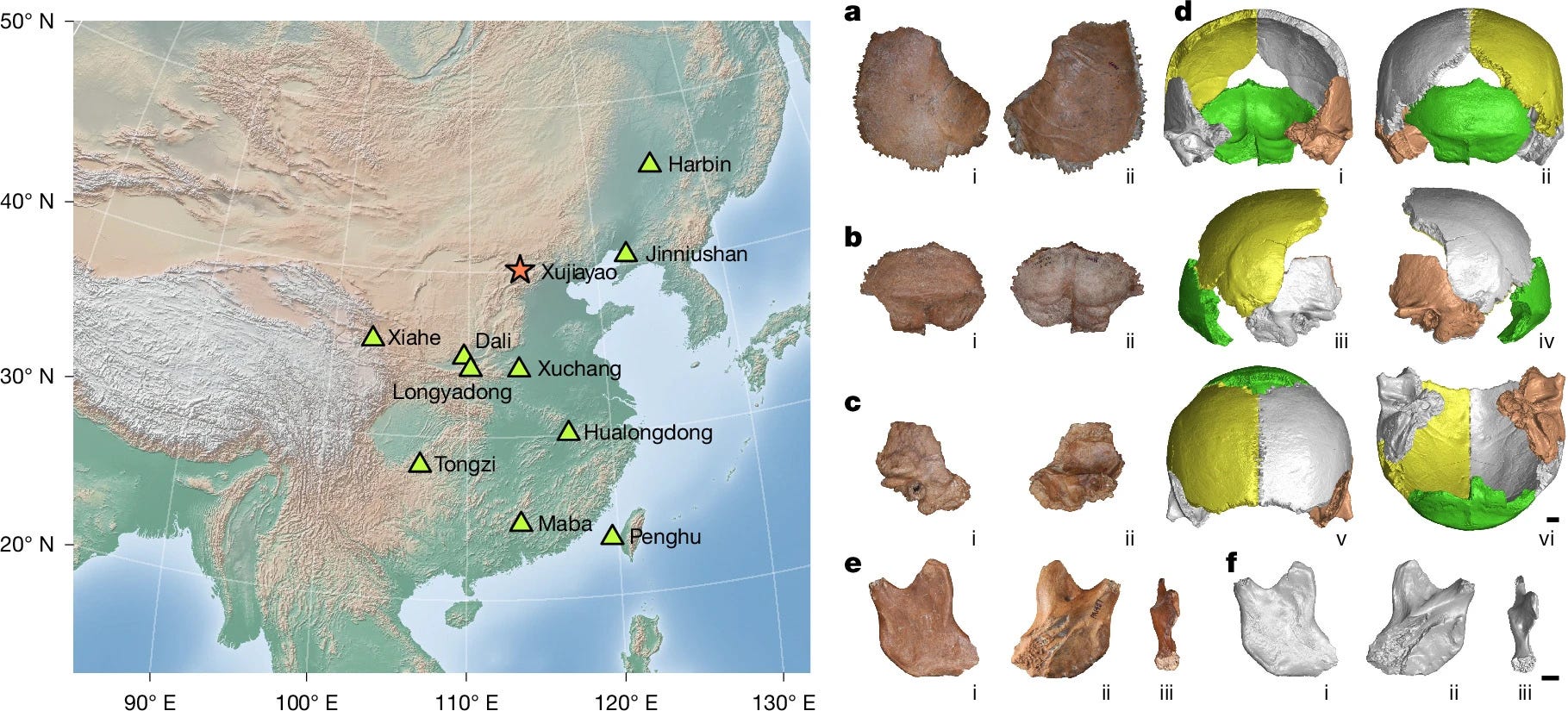
    At position 996 of a collagen chain called COL1A2, the protein extracted from a right parietal bone from Xujiayao, a Middle Pleistocene site in the Nihewan Basin of northern China, carries lysine in 57 distinct peptides and arginine in one. The second Xujiayao specimen sampled, a mandibular ramus, gives 61 lysine-bearing peptides against a single arginine one. Every Denisovan with protein or genome data carries lysine at that position, while Neanderthals and modern humans carry arginine, and those two bones are the main reason the Xujiayao hominins are now being called Denisovan. Since the fossils came out of the ground between 1976 and 1979, Xujiayao has been filed as Homo sapiens neanderthalensis, as early H. sapiens, as archaic H. sapiens, and, to avoid the argument, as archaic Homo. Most recently it became the holotype of Homo juluensis, a species proposed partly on the 1,700 ml endocranial capacity of the Xujiayao 6 cranium (Wu et al., Journal of Human Evolution, 2022). If you follow East Asian Middle Pleistocene hominins, you probably carry a picture of Dali, Jinniushan and Hualongdong as archaic humans with unsettled names, and of Denisovans as a lineage known from a genome plus a few molecularly confirmed jaws and one cranium. The paper appeared in Nature on 21 October 2026. Song Xing, Zhongyou Wu, Qingfeng Shao and Junyi Ge are the equal-contribution first authors, and Qiaomei Fu of the Institute of Vertebrate Paleontology and Paleoanthropology in Beijing is the corresponding author. The team sampled two of the 20 Xujiayao cranial, mandibular and dental fossils, recovered 18 endogenous ancient proteins, and concluded that the assemblage belongs to a late Middle Pleistocene East Asian Denisovan population. They then compared skull and jaw anatomy across East Asian archaic Homo and argued that most of those fossils, Dali, Jinniushan and Hualongdong included, are Denisovan as well, and that the size gap behind H. juluensis is variation within one population. This post is about how much of that sweeping reclassification two bones and one amino acid can carry. How do researchers know the proteins are ancient? The sampling was minimal. The team CT-scanned both specimens first (37.56 μm resolution), then drilled a small hole in each in a dedicated clean room, shielding the surrounding bone with aluminium foil. They dissolved the powder, split the proteins into fractions, and digested them with trypsin, an enzyme that cuts proteins into short peptides. A mass spectrometer then reads the mass of each peptide fragment, which allows the amino acid sequence to be inferred. The runs were done in two independent laboratories, one at Capital Medical University and one at Fudan University, and the data were searched with two software packages, PEAKS Online and MaxQuant. Extraction blanks were processed alongside the samples, and a modern camel bone served as a positive control. The hard part with any ancient protein is separating the real thing from modern contamination, and the authors lean on deamidation. Over long burial, the amino acids asparagine and glutamine slowly lose an amine group, so ancient proteins show high deamidation and fresh contaminants show little. In specimen PA1490 (the parietal), the main bone collagens had asparagine deamidation of 61.4 to 94.7% and glutamine deamidation of 44.9 to 92.6%, while keratins and trypsin, the usual contaminants, sat at 0.0 to 5.3% and 0.0 to 7.7%. PA1497 (the mandible) looks similar. After that filter, plus removal of peptides that could not be tied to a single gene, anything seen in the blanks, and anything MaxQuant could not confirm, 18 endogenous proteins remained: 13 for PA1490 and 15 for PA1497. Figure 2b gives the endogenous share of peptides as 91.4% for PA1490 and 94.1% for PA1497, and the extraction blank scores 0.0. The taxonomic call comes in two steps. Searches against a mammalian type I collagen database placed both samples in the genus Homo, and the team then looked at single amino acid polymorphisms (SAPs), positions where sequences differ between lineages. The informative one is COL1A2-996. The paper’s Figure 3 shows the supporting peptides, 207 peptide-spectrum matches (individual spectra assigned to a peptide) for PA1490 and 244 for PA1497. The lysine peptides also show elevated deamidation at nearby residues (Asn977 at 69.2% and 69.4%, Gln1002 at 100% in both), which argues that they are genuinely ancient. The authors also built a Bayesian tree from 2,074 amino acid positions in eight proteins, with Denisova3, the Altai and Vindija 33.19 Neanderthals, 50 present-day humans from the Human Genome Diversity Project, and a chimpanzee (Pan troglodytes) as outgroup. Xujiayao and the Denisovans form a clade with posterior probability above 99%. Within that clade the tree gives nothing: individuals fall into unstable arrangements with posterior probabilities below 50%, because no variant other than COL1A2-996K is shared. That is why the authors say only that Xujiayao is Denisovan in a general sense, without placing it relative to Xiahe, Penghu, Harbin or Denisova Cave. The dating, for what it is worth, is 199 to 138 ka from combined uranium-series and electron-spin-resonance methods (Shao et al., Quaternary Science Reviews, 2026), which makes Xujiayao about contemporary with the earliest confirmed Denisovans from northeastern China and southern Siberia. Does skull shape make Dali and Jinniushan Denisovan too? This is where I slow down, because the molecular result covers two bones and the morphological claim covers most of East Asia. With Xujiayao and Harbin both classed as Denisovan, the authors characterize a Denisovan skull. It has erectus-like traits (a low, wide neurocranium; a vault 7.7 mm thick at bregma and 12.0 mm at the parietal tubercle on Xujiayao 6), derived traits shared with later Homo (a strongly arched temporal squama), and a combination found in neither H. erectus nor modern humans: a low profile with near-parallel lateral walls, a nearly vertical but non-rounded occipital, and a mandible with a depression in the planum triangulare. They then check whether Dali, Jinniushan, Hualongdong and Xuchang show the same suite, and conclude that they do. I find the Xujiayao assignment far stronger than that extension, for a reason the paper concedes itself: the suite “does not appear simultaneously in individual specimens but manifests in different forms or combinations across various specimens.” A definition that tolerates different combinations in different fossils is hard to falsify, and the definition was built from Xujiayao an… This is a public episode. If you'd like to discuss this with other subscribers or get access to bonus episodes, visit www.anthropology.net/subscribe

    • Transcript
  • October 15 · 51 min

    75,000-Year-Old Neanderthal Wound Points to a Wooden Spear

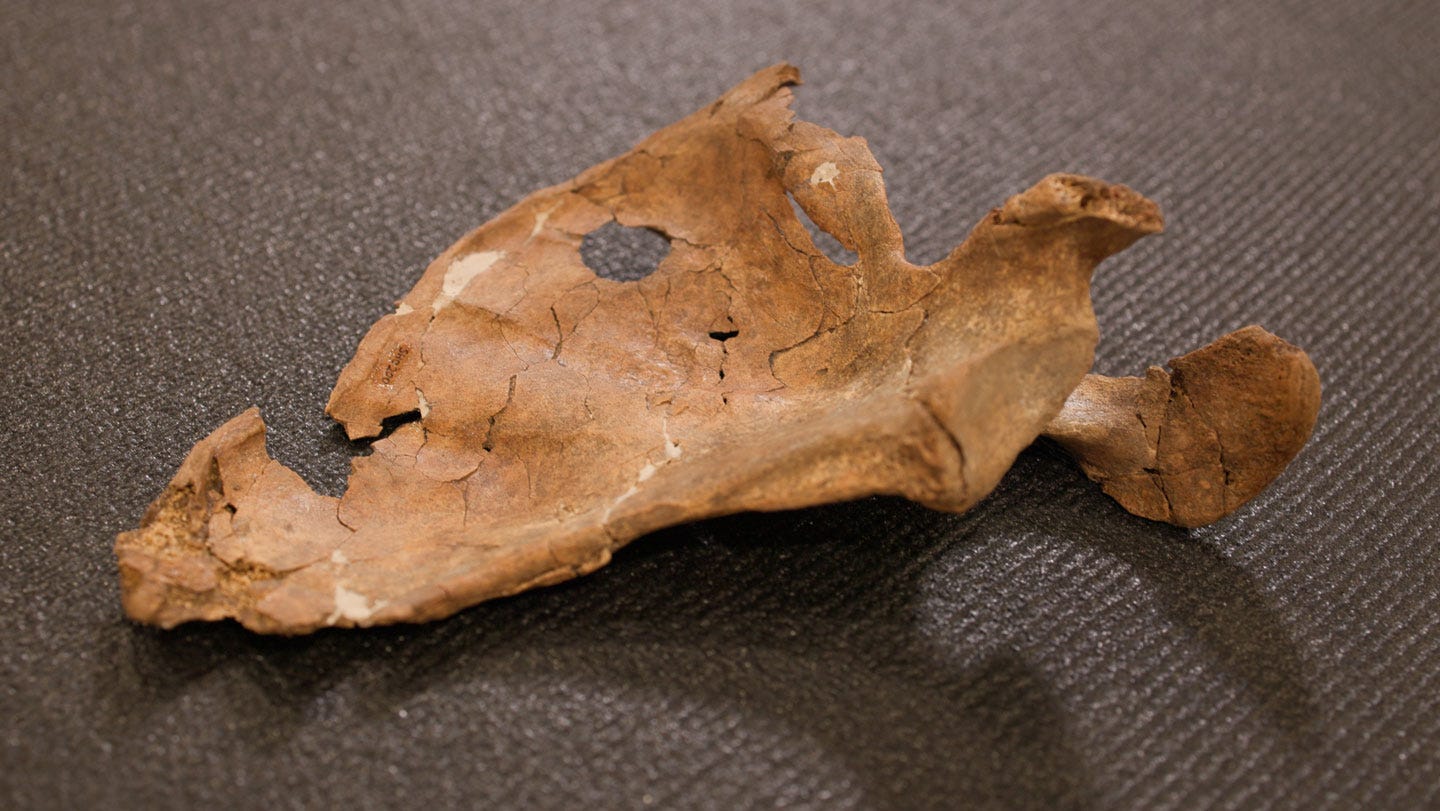
    Seven and a half meters down in Shanidar Cave, in the Zagros Mountains of Iraqi Kurdistan, the left shoulder blade, or scapula, of a Neanderthal had lain for some 75,000 years with a hole through it. The bone was too soft to pick up. The excavators soaked it where it lay with an acrylic consolidant, Paraloid B72 dissolved in acetone, backed it with cotton gauze, and cut it out of the ground inside a block of its own sediment; it had come through nearly whole, which is rare for a bone so thin in places that it is almost translucent. The hole sits low on the back of the blade, in the broad hollow anatomists call the infraspinous fossa. It is about 15 millimeters across and very nearly a perfect circle, and at least three hairline cracks run out from its rim. “It’s so round, it’s like, what is it?” That was Emma Pomeroy’s first thought, she told Science News. Pomeroy, a biological anthropologist at the University of Cambridge, is lead author of a study published October 15 in Scientific Reports that describes these bones, dug up in 2019 and 2022, and the person they belonged to, a Neanderthal the team calls Shanidar A. Anyone raised on the phrase Stone Age pictures a killing in this period done with stone, a flake of flint knapped to a point and bound to a shaft. Neanderthals did use weapons like that, but a hafted stone point leaves a different mark. When archaeologists drive replica stone points into carcasses, the wounds come out oval or lozenge-shaped, sometimes a narrow slot, following the flattened section of the blade, whereas a sharpened wooden shaft, round in section, leaves a circle. Shanidar has encouraged the stone picture before. A man excavated there in the 1950s, known as Shanidar 3, has a narrow puncture in his left ninth rib, and in 2009 Steven Churchill, an evolutionary anthropologist at Duke University, and his colleagues tried to reproduce it by driving replica Mousterian and Levallois points into the chests of pig carcasses, using a calibrated crossbow to control the energy of each strike. They judged the wound most consistent with a light, stone-tipped projectile and, because early modern humans were in western Asia at around that time and may already have had throwing weapons, raised the possibility that one of them threw it. The rib had started to heal, so Shanidar 3, who died roughly 50,000 years ago, some 25,000 years after Shanidar A, seems to have lived for weeks after he was hit. The older bone points to a different weapon. The University of Cambridge’s announcement presents the new hole as possibly the first evidence that sharpened wooden spears were used anywhere in the prehistoric Middle East, and possibly the earliest example in the hominin fossil record of lethal violence between individuals with a wooden spear, a second claim the paper itself stops short of. On October 7, in Science Advances, Palmira Saladié and colleagues at the Catalan Institute of Human Paleoecology and Social Evolution described 597 pieces of wood from Abric Romaní, a rock shelter near Barcelona that Neanderthals used between about 62,000 and 40,000 years ago. Much of that wood survives only as the shape of where it was: water heavy with calcium carbonate wrapped the pieces in travertine as they rotted, and the excavators recorded the molds. Thirteen had been worked or used, among them two spears, the better preserved 2.45 meters long. Josep Vallverdú, an archaeologist at the institute, told Gizmodo that the simplest lesson of the site was that the Paleolithic was “not a world made only of stone,” a strange thing to need to say about a period whose name means Old Stone Age. It needs saying because stone is what lasts, so stone is what archaeologists mostly have; wooden shafts, handles and spears turn up only where some accident of chemistry has kept them. Shanidar has no travertine and no waterlogged mud. Apart from pollen and charred wood, the paper notes, the cave has kept almost nothing organic, so the spear that went through Shanidar A is gone, and the only record of it is the space it took up on its way out of the body. That is why the hole has been worth the trouble the Cambridge team has taken over it. Read closely enough, it is a cast of a weapon nobody will ever hold, and perhaps a little more than that, a record of the direction the weapon came from, which is as close as the evidence gets to whoever was at the other end of it. A root can bore through buried bone, and so can a burrowing insect or a careless trowel. Because the scapula came out with the sand beneath it still in place, the team could scan the whole block by micro-computed tomography (micro-CT) and look down through the hole into the sediment, where there was no root channel and no burrow of the right width. The rim carries the same crust of manganese oxide as the rest of the bone, so the hole is old, and its edges show no remodeling and none of the disorganized woven bone a living body lays down when it starts to repair a wound. The cracks running from it, the kind that form when fresh bone gives way under a sudden load, put it at the time of death; perimortem, in the paper’s term. A video of a 3D rendering of the hole in the scapula and fragments embedded in the sediment underneath the scapula in situ prior to conservation. Credit: Dr. Emma Pomeroy Then the scans showed something better than an absence. In the sand directly under the hole lay at least four slivers of bone, each at least 4 millimeters long. One of them can be fitted back into the edge of the hole with confidence, because a faint ridge on the inner face of the scapula, a linea muscularis, where muscle once anchored, runs from the blade across the break and onto the fragment, the way a road lines up again across the two halves of a torn map. The others probably came from the hole as well, but they are small and brittle, and some broke further during recovery and conservation, so where each belongs in the rim can no longer be worked out. Whatever went through the bone punched them out and carried them a short way into the soft tissue on the back of the shoulder blade, and there they stopped. As the body decayed, the fine sand it lay in probably trickled into the spaces the flesh left behind and held them in place, and when floodwater later tore through and carried off most of the skeleton, the slivers stayed where they were, sheltered by the ridge of the scapular spine, which lay upstream of them. On the back of the blade the rim of the hole flares outward in a shallow bevel. Bone fails rather like glass struck by a pellet, chipping away in a cone on the side the force leaves by, so a bevel marks an exit, and this one says the weapon came through the chest from the front and left through the shoulder blade. The slivers add the angle. They were pushed slightly outward, toward the arm, and slightly down, toward the feet, and they lie tilted away from the center of the hole, from which the authors infer that the weapon entered from above and from nearer the midline of the body, heading down and outward to the left shoulder blade; if it was then pulled back out through the front, tha… This is a public episode. If you'd like to discuss this with other subscribers or get access to bonus episodes, visit www.anthropology.net/subscribe

    • Transcript
  • July 22 · 42 min

    In Kyushu’s Painted Tombs, the Horses Get Faces and the People Don’t

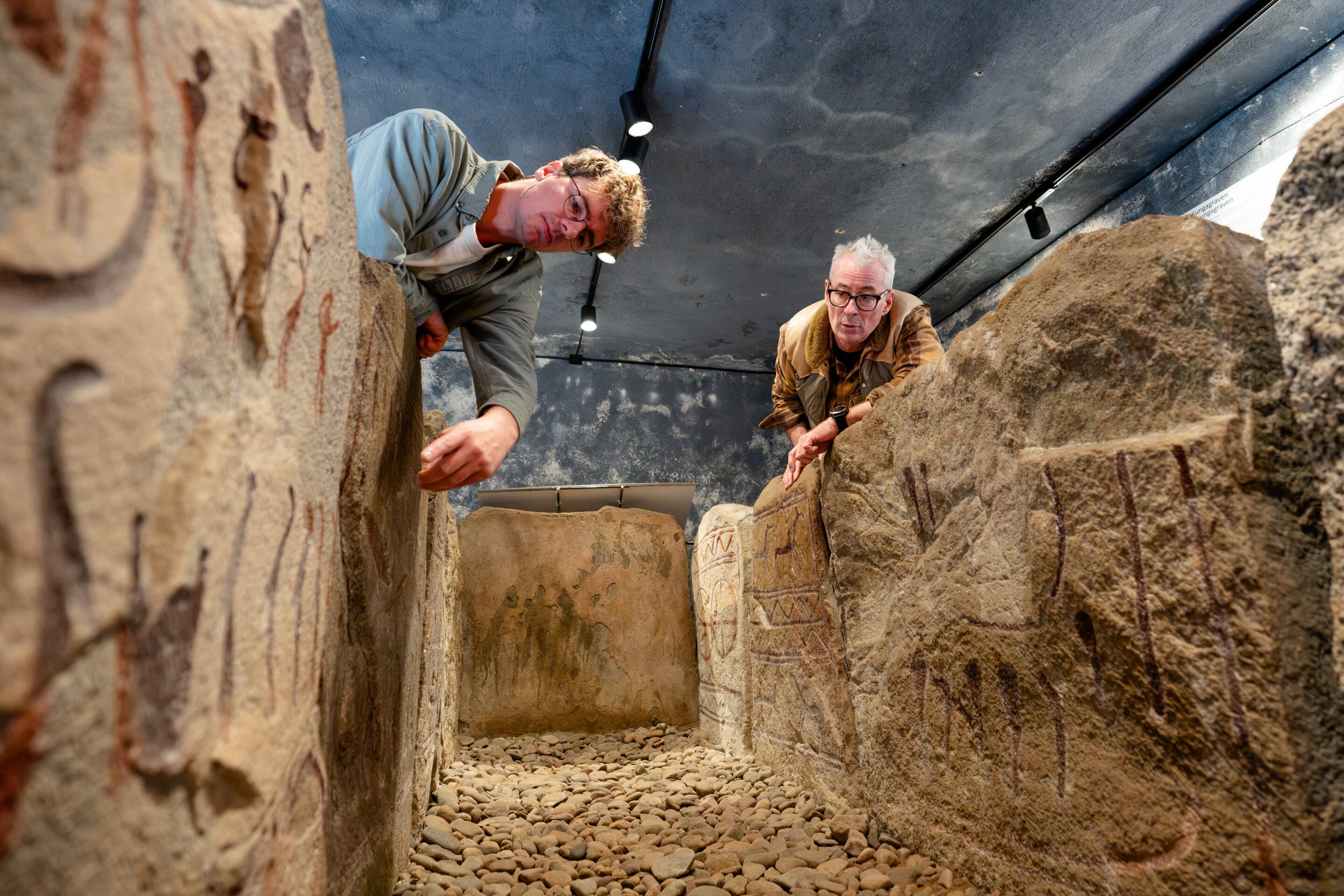
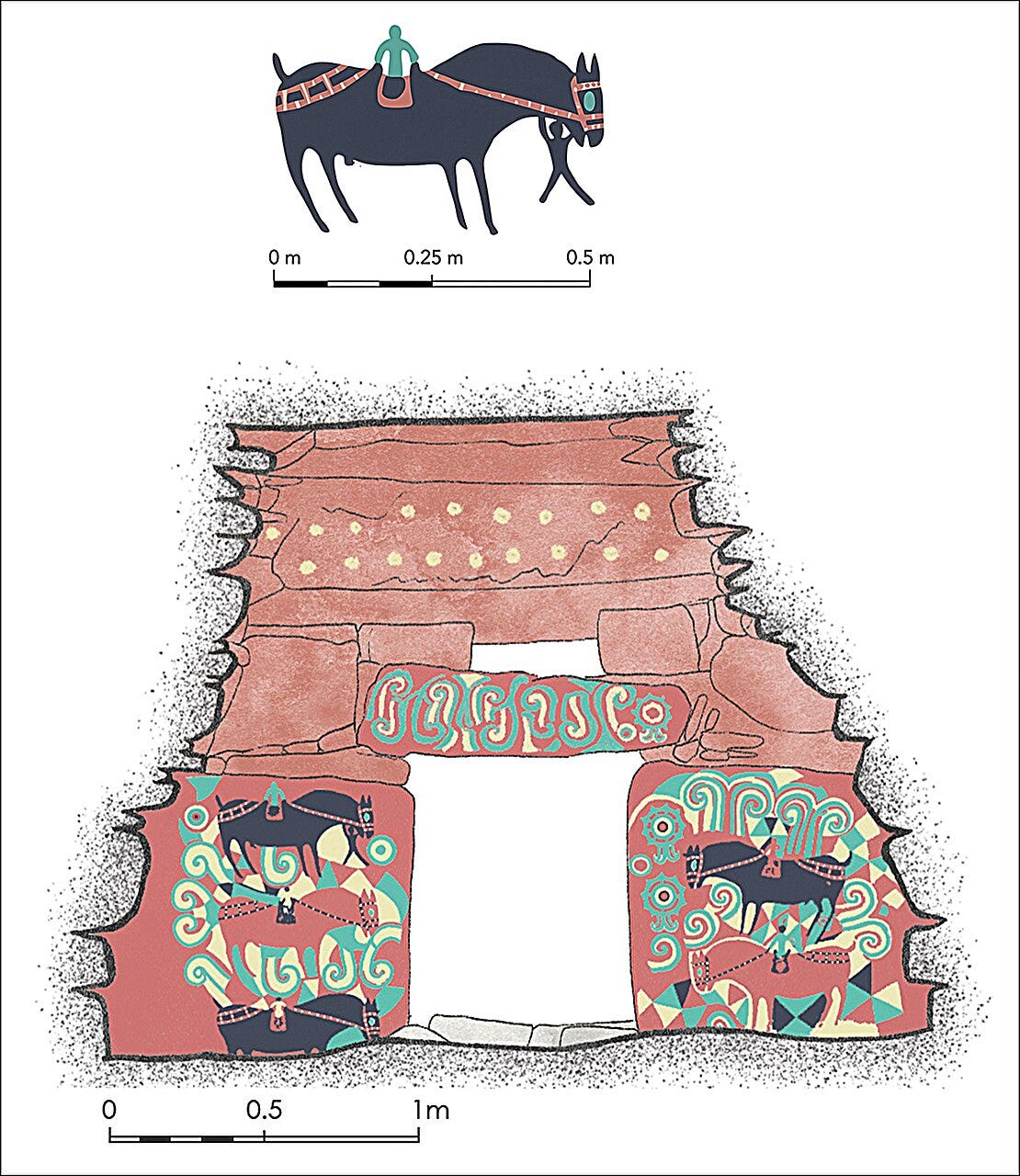
    At the Ōzuka tomb, five horses parade across the stone gateway leading into the burial chamber. Their eyes are large and deliberate. Their harnesses are picked out in careful color. You can tell, from the way the artist rendered their bodies, which animals are male and which are female. Riding them are six human figures, and every one of them is a stick. No faces. No sex. One rider is drawn at roughly a quarter the size of his own horse. This wasn’t a failure of skill. The same hands that gave the horses anatomical precision chose, apparently on purpose, to leave the people blank. A new study by Claudia Zancan, published in Antiquity, argues that this wasn’t an isolated quirk of one tomb but a consistent regional pattern across the decorated tombs of Kyushu, Japan’s southernmost island, and that the pattern tells us something specific about how these communities thought about death. A Regional Style That Refused to Individualize Kyushu sits closest to the Korean Peninsula of any part of Japan, and during the sixth and seventh centuries it absorbed plenty of continental influence. Across the water, Koguryŏ tombs painted the dead as dominant, detailed figures towering over their servants and animals, exactly the kind of imagery you’d expect from an elite burial tradition that wanted to broadcast the status of the person inside. Kyushu had access to that visual vocabulary. It didn’t use it. Zancan’s study systematically catalogued anthropomorphic figures across 38 decorated tombs, 20 painted and 18 rock-cut, and found the same thing again and again: human figures rendered smaller than the objects around them, stripped of individualizing detail, and, in every single case in the sample, impossible to sex. Not one figure across the entire corpus shows primary or secondary sexual characteristics, even in tombs where the artists were clearly capable of that level of detail. Compare that to contemporary Kyushu funerary sculpture like sekijin stone figures or the haniwa of the Kanto region, both of which do occasionally mark sex and social role. The anonymity in the tomb paintings looks like a choice, not a limitation. This matters because the period itself was a moment of real transformation in Japanese mortuary practice. Older Kofun-period burials were sealed pits, built once and closed for good. The horizontal stone chambers that appear in the Late Kofun period could be reopened, over and over, for successive interments. A tomb stopped being a monument to one death and became a space for ongoing ritual. Zancan’s argument is that the imagery inside these chambers reflects that shift. If a tomb is going to be reopened for generations, its decoration doesn’t need to commemorate the specific person laid to rest last. It needs to do something else. Borrowing a classification system originally built for Iberian rock art, Zancan mapped where the human figures actually sit within the architecture of each tomb, and three locations kept recurring. On the exterior façades of rock-cut tombs, figures appear holding weapons, facing outward, and these are the only figures in the entire corpus with anything resembling faces. They read as guardians, warding off whatever might approach from outside. Inside, at the entrance to the burial chamber, a second set of figures marks the threshold itself, the physical and symbolic boundary between the world of the living and the world of the dead. This is architecturally and mythologically loaded ground in Japanese tradition. It’s the same threshold where the god Izanagi, in the origin myth, searches for his dead wife Izanami and finds her transformed by the underworld. And at the very back of the chamber, on the rear wall closest to where the body would be laid, the human figures shrink to their smallest scale of all. None of these three positions functions as a portrait spot. Read together, they sketch a route: guarded threshold, liminal crossing, final resting place. The figures aren’t depicting who died. They’re depicting the passage every dead person takes to become an ancestor. What the Human Figure Was Actually For There’s a reflex, when looking at a burial, to go looking for the individual. Sex, rank, personal effects, some marker of who this specific person was in life. Zancan’s study is essentially an argument against applying that reflex here. The tombs of Kyushu weren’t organized around commemorating a particular Homo sapiens life. They were organized around a process, a transition from person to ancestor, and the human figures in the paintings were symbolic participants in that process rather than likenesses of anyone in particular. That reframes what the small size and blank faces are actually doing. They aren’t evidence of an underdeveloped visual tradition sitting in the shadow of more sophisticated continental art. They’re evidence of a community using abstraction on purpose, choosing anonymity as a way of expressing something collective rather than personal. Scale, in these tombs, seems to track ritual importance rather than realism. The horses at Ōzuka are large because horses carried real symbolic weight in the funerary procession being depicted. The riders are small because whoever they represent doesn’t matter as an individual. What matters is that someone is making the journey. Zancan notes that this pattern has never been systematically tested outside Kyushu, and much of the physical evidence needed to test it is disappearing. Pigment degrades. Stone erodes. Some of these tombs have already lost the imagery that would let anyone verify whether the same rules of anonymity and placement hold elsewhere in Japan. Whatever answer that question eventually gets, it’s going to depend on how much of this material survives long enough to be looked at again. This is a public episode. If you'd like to discuss this with other subscribers or get access to bonus episodes, visit www.anthropology.net/subscribe

    • Transcript
  • July 20 · 35 min

    The Fish That Shouldn’t Have Been There

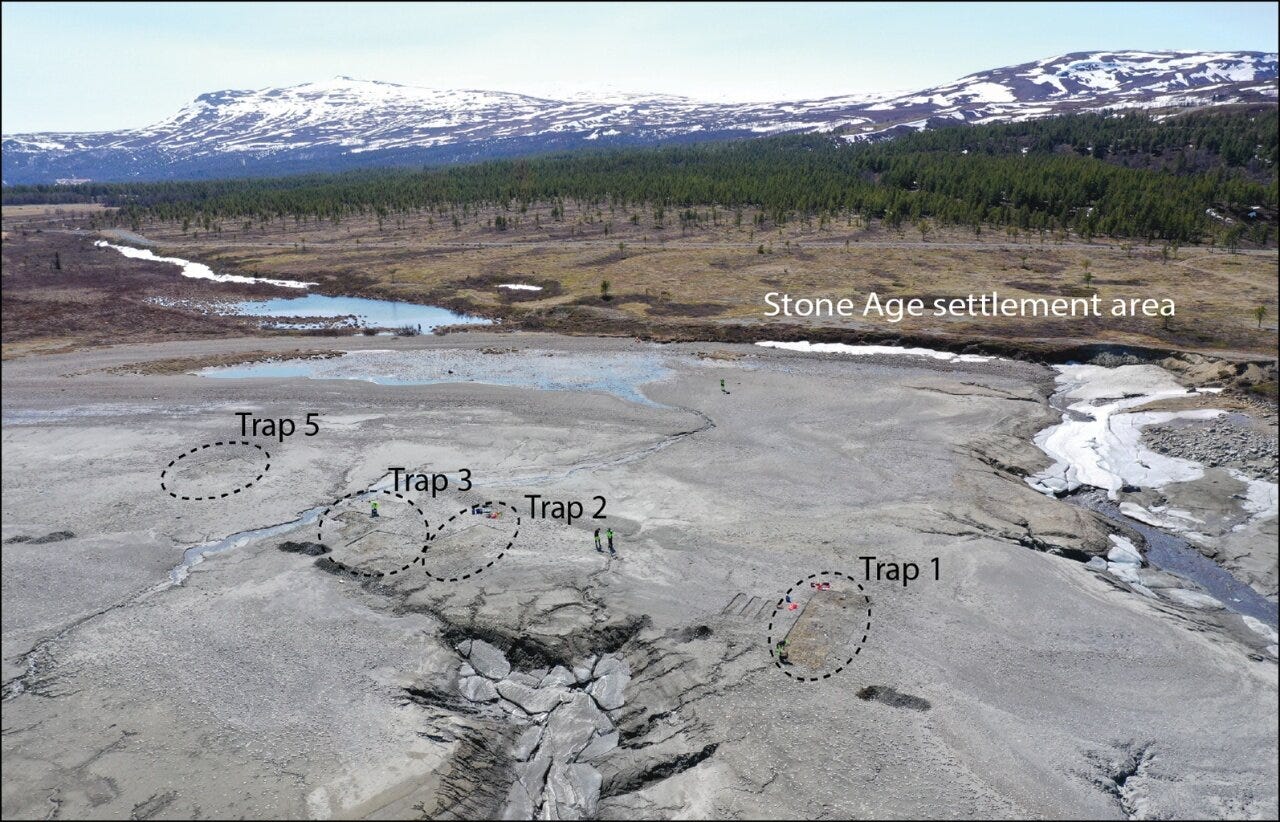
    A drained lakebed in the mountains of Jotunheimen doesn’t look like much: gray silt, exposed stone, the odd meltwater channel cutting through it. But in 2022, when the water level at Lake Tesse dropped for its usual spring maintenance, someone walking the exposed mud spotted wood poking out of the ground. Not driftwood. Poles. Dozens of them, still standing upright where they’d been driven into the lakebed, arranged in a tight circular chamber with a fence of angled supports leading into it. A fish trap. That alone wouldn’t be remarkable. People have been building lattice-wall fish traps in Scandinavia for millennia, and the type is well documented from wetland sites across northwestern Europe going back to around 4000 BC. What made this one strange was the radiocarbon date. The trap was closer to 4950 BC. And it sat in a lake that, by every reconstruction of the region’s glacial and hydrological history, should not have had fish in it at all. A landscape with a locked door Lake Tesse sits at 854 meters above sea level in the central Norwegian mountains, fed and drained by a river system that eventually reaches the Oslofjord. The ice sheet that covered this terrain for most of the last glacial period didn’t finish retreating from the area until around 8400 BC. Once it did, the landscape opened up fast, both to colonizing plants and animals and to the hunter-fisher-gatherer groups moving in from the coasts. Fish followed too, but only where they could. In the lowlands, trout, pike, and a couple dozen other species swam upstream from the sea and from the shrinking freshwater and brackish remnants of the Baltic as relative sea levels dropped through the Early Holocene. Above a certain elevation, that migration hit a wall. Literally: waterfalls and steep gradients along the Tessa River made it physically impossible for fish to swim up into Lake Tesse from the watercourses below. Historically, the lower stretches of that same river system supported around twenty-five species. The upper stretches, cut off by the falls, supported exactly one: brown trout. Not because brown trout were better adapted to alpine conditions than everything else. Because brown trout were the only species that ever got up there, and they didn’t get up there on their own. That’s the setup the new paper, published in Antiquity by Axel Mjærum and colleagues at the University of Oslo, is working with. If fish couldn’t climb the falls, and Lake Tesse had fish anyway, something else put them there. The obvious candidate, in a lake that’s been renowned since the twentieth century as one of Norway’s most productive trout fisheries (it once yielded close to nine tonnes of fish a year before it was dammed for hydro-power in the 1940s), is people. The trap dating just pushes back how far that “something else” goes. Considerably. What the poles actually show The excavation recovered four traps in total, with 73 individual poles subjected to dendrological and radiocarbon analysis. The construction itself is unglamorous and entirely functional: small stems of Scots pine, with some birch and willow mixed in, averaging about 37 millimeters in diameter, driven vertically into the lakebed to form a circular chamber roughly 3.5 meters across, braced by poles set at 30 to 45 degree angles. Cut marks and traces of lashing show the wood was deliberately worked, not just accumulated debris. It’s the kind of trap ethnographically documented across the Nordic countries well into the twentieth century, built in spring, fished through summer, sometimes maintained and rebuilt over years. The dating is where it gets interesting. Trap 5 comes back at roughly 4950 BC via radiocarbon on its outer tree rings, placing it squarely in the Late Mesolithic. Trap 2 dates to around 5000 BC as well. Trap 1, dated both by radiocarbon and by cross-matching against a regional pine tree-ring chronology from Jämtland, Sweden, comes out at 3850 BC, with two of its posts felled about twelve years apart, suggesting the structure was periodically rebuilt rather than used once and abandoned. Trap 3 is later still, around 2700 BC. Altogether, the traps at Tesse span more than two thousand years of use, starting in the Mesolithic and continuing well into the Neolithic, long after farming had arrived in southern Scandinavia but before it had displaced hunting, fishing, and gathering as the dominant subsistence base in this particular region. The Tesse traps aren’t isolated evidence, either. Burned fish bone from nine other sites across the Jotunheimen and Hardangervidda mountains has produced radiocarbon dates that predate 1700 BC, five of them clustering in the fifth millennium BC, roughly contemporary with the earliest Tesse traps. Where the bones have been identified to species, they’re brown trout, and only brown trout. Given that lowland fishing assemblages from the same period are far more taxonomically diverse, that pattern is hard to explain as fish being caught elsewhere and hauled up into the mountains as preserved food. It looks instead like the same species being deliberately introduced, over and over, at multiple lakes. Ruling out the alternative explanation matters here, because there is one on the table: birds. Waterfowl are known to carry fish eggs on their feet or feathers over short distances, and it’s been proposed as a mechanism for colonizing isolated water bodies. But the case against it in the Norwegian mountains is fairly clean. If birds were doing the work, you’d expect a scatter of species turning up unpredictably across different lakes, not the same single species appearing again and again with what looks like reasonable synchrony across a two-thousand-year window. Genetic work on modern mountain trout populations backs this up too: their population structure points to repeated, stepwise upstream translocations within river systems rather than one-off natural colonization events. None of this is unprecedented for later periods. Fishing rights over mountain lakes show up in European texts from the fourteenth century onward, already assuming fish had been introduced. A twelfth-century Norwegian runestone references the practice explicitly. Sedimentary ancient DNA from a Spanish Pyrenean lake recently pushed the confirmed record of human fish introduction back to the seventh century AD. What the Tesse dates do is detonate that timeline. Not centuries. Millennia. And crucially, they place the origin of the practice not with farmers, but with people who had no farming at all. Why bother moving fish into the mountains There’s an economic logic buried in this that’s worth sitting with, because it isn’t really about fishing for its own sake. Norwegian Mesolithic hunter-fisher-gatherers, judging from rock art, faunal assemblages dominated by ungulates, and sites clustered along known elk and reindeer migration corridors, put serious cultural weight on big-game hunting. The Langfonne ice patch, just eleven kilometers from Lake Tesse, has produced evidence of reindeer hunting going back to at least the fifth millennium BC. But big-game hunting in mountain terrain is unpredictable and risky. Success rates are low, and a bad trip into the high country can mean a long stretch with nothing to show for it. Introducing a stable population of brown trout into a mountain lake changes that calculation. Trout are calorically dense, comparatively easy to catch relative to elk or reindeer, and once established, they don’t run away or migrate elsewhere. A fish population effectively domesticates the risk profile of the mountains, turning them into something closer to the resource-rich lowland environments these groups already knew how to exploit. That, in turn, makes it feas… This is a public episode. If you'd like to discuss this with other subscribers or get access to bonus episodes, visit www.anthropology.net/subscribe

    • Transcript
  • July 18 · 23 min

    A Teenager’s Teeth Reveal Lithuania’s Hidden Christian Community

    Grave 311 held an eighteen-year-old whose teeth didn’t match their bones. That mismatch is the whole story, so it’s worth sitting with it before anything else. A second molar forms in early childhood, between roughly three and eight years old, and once it’s mineralized it stays chemically frozen at that age forever. Bone collagen is different. It keeps remodeling throughout life, so it mostly records the years just before death. In this one skeleton, the two tissues told opposite stories. The dentine carried a strong signal of C4 plants, almost certainly millet, the kind of signature you’d expect from a diet common across parts of southeastern Europe. The bone collagen showed nothing of the sort, just the C3-dominated cereal diet, rye and buckwheat, typical of everyone else buried in medieval Vilnius. Strontium and oxygen values from the enamel pointed the same direction as the childhood carbon signal, away from the Vilnius region entirely, toward baselines more consistent with present-day Ukraine or southern Poland. Put plainly: this person grew up somewhere far to the south, moved to Vilnius sometime in adolescence, and adjusted their diet to match. They died there, buried according to strict Christian custom, with no grave goods at all. That’s a striking amount of individual biography to pull out of a skeleton. But the reason it matters goes beyond one traveler’s life story. Lithuania was, famously, the last pagan state in Europe. Grand Duke Jogaila didn’t formally adopt Catholicism until 1387. Before that, the standard picture is of a country still cremating its dead, still worshipping outside the Christian framework that had already swallowed the rest of the continent. Grave 311 belonged to a cemetery that shouldn’t, by that picture, have existed yet. The cemetery is on Bokšto Street in Vilnius’s old town, part of a district medieval chroniclers called the Civitas Ruthenica, the Ruthenian city. Archaeologists excavated more than 500 intact graves there over eight years, and the burial customs are unambiguously Christian: bodies laid supine, oriented east to west, cross pendants and enkolpions turning up in some graves, cremation entirely absent. Radiocarbon dating places the cemetery’s use across roughly 150 years, spanning the second half of the thirteenth century through the fourteenth, meaning this Orthodox Christian community was burying its dead in a formally pagan city for a century and a half before Catholicism ever arrived. That much was already known from the archaeology. Byzantine-style jewelry, the chaplets, the decorative headpieces made from ornaments stitched to leather and cloth, closely resembled fashions from Halych-Volhynia, a region of the former Kievan Rus’ now split between western Ukraine and southern Poland. The material culture argued for a connection. What it couldn’t do was prove that any given skeleton had actually made that journey rather than simply adopted the style secondhand. That’s the gap isotope analysis is built to close, and it’s why a research team led by Giedrė Motuzaitė Matuzevičiūtė sampled bone, dentine, and enamel from 15 individuals, layering carbon and nitrogen data against strontium and oxygen ratios and comparing everything to a local baseline built from modern plants collected around Vilnius. A city sorted by sex Once the isotope data came back, a pattern emerged that the grave goods alone hadn’t shown: mobility in this population was heavily gendered. Every sampled female returned isotope values consistent with growing up locally. Not one showed the kind of childhood signature that would suggest an origin outside the Vilnius region. Several of these women were buried with grave goods, cowrie shells, glass pendants, the kinds of items that don’t fit neatly with strict Christian burial custom and read more as holdovers from older, non-Christian traditions. The team’s interpretation is that these were local women who converted, plausibly through marriage into Orthodox households, carrying older material habits into new religious ones without fully shedding them. The men look different. Two individuals, from graves 139 and 226, had strontium ratios that fell outside the Vilnius plant baseline but matched values from Kernave, roughly 34 kilometers northwest and Lithuania’s earlier capital, hinting at movement between the two settlements rather than international migration. A third individual, from grave 214, sat close to grave 311’s outlier values, potentially another migrant from the south, though with a weaker signal. And grave 311 itself is the clearest case in the dataset: distinct in carbon, nitrogen, oxygen, and strontium all at once, an eighteen-year-old who almost certainly wasn’t born anywhere near the Baltic. There’s a curious postscript. A woman buried in grave 312, sharing the same burial pit as grave 311, turned out to be a dietary outlier herself, not as extreme, but her carbon values also pointed toward some C4 plant consumption, unusual for someone otherwise reading as local. Shared burial pits in Christian cemeteries often indicate family relationships, one interment placed above another. The authors flag this as a possible kin connection, something only ancient DNA work could confirm, but if true it would mean an immigrant household, not just an immigrant individual, took root in Vilnius and stayed. None of this settles why people were moving. The paper lays out several plausible drivers without picking one: dynastic ties between Lithuanian dukes and Halych-Volhynia rulers that would have opened trade and diplomatic channels, Orthodox Ruthenians becoming vassals as the Grand Duchy expanded southeast and absorbed their home territories, merchants drawn by the same open invitations Grand Duke Gediminas sent across Europe in 1323, or displacement from the Black Death, which swept through the region between 1346 and 1353 and, notably, hit Eastern and Northern Europe less severely than the rest of the continent. Vilnius may simply have been a place people fled toward. What the isotopes can’t do, and the authors are careful about this, is pin an origin more precisely than “somewhere south, plausibly Ukraine or southern Poland.” Strontium baselines overlap heavily across Eastern Europe, and with only 15 individuals sampled out of more than 500 graves, grave 311 reads less like an anomaly and more like a fluke of discovery. If one immigrant surfaced by chance in a sample this small, the real number moving through the Civitas Ruthenica over a century and a half was almost certainly larger. Vilnius spent the thirteenth and fourteenth centuries as Europe’s last openly pagan capital. It was also, this data suggests, already running an Orthodox Christian neighborhood populated in part by people who’d walked there from hundreds of kilometers away, and by local women who married into that world and adjusted their faith without entirely letting go of their own. Two things can be true about a city at once. This one just took eight centuries and a mass spectrometer to prove it. This is a public episode. If you'd like to discuss this with other subscribers or get access to bonus episodes, visit www.anthropology.net/subscribe

    • Transcript
  • July 14 · 32 min

    The Signature at the Back of the Room

    The glyphs sit at the bottom of an inverted L, tucked into the corner of a room that nobody was ever meant to admire. Nine hieroglyphs of mathematics, then two more that don’t belong to any calendar system at all. So says, the text reads, followed by a name: Sak Tahn Waax. White-chested Fox. That’s it. That’s the whole announcement. No royal titles, no cosmic parentage, no k’atun-ending fanfare. Just a scribe, somewhere around 781 CE, writing down a formula and then putting his name on it, the way anyone might sign a worksheet. Franco D. Rossi, David Stuart, and Heather Hurst, the team that deciphered the text, are calling it the first known instance of a Classic Maya mathematician-astronomer claiming credit for intellectual work. Not an artist. Not a sculptor. Someone who did the math. That distinction matters more than it might sound like it should. A room full of scratch paper Structure 10K-2 at Xultun, Guatemala, is a small masonry building that archaeologists opened in 2010 after it had spent roughly a millennium buried under fill. Its interior walls were painted with portraits of seated men bearing the title taaj, “obsidian,” a designation for ranked specialists. One wall shows the Xultun ruler Yax We’n Chan K’inich dressed as a maize deity with a scorpion’s tail. It’s a formal room, in other words, or it started as one. What happened next is the interesting part. Someone kept coming back and writing on it. Painting numbers over the portraits. Reusing patched plaster surfaces for fresh calculations. By the time the room went out of use, it held more than 50 discrete texts crowded into the northeast corner and along the east wall: a lunar table, columns of “super numbers” divisible by both the Mars and Venus cycles, a ring number, and dense little clusters of calendrical arithmetic that have almost nothing to do with the room’s original decorative program. Rossi, Stuart, and Hurst read this as a workspace, not a monument. The kind of place where someone was training in calendrical calculation, possibly while making bark-paper codex books, of which only four pre-Columbian examples survive anywhere, all centuries younger than this room and none of them archaeologically excavated. If that reading holds, 10K-2 is the closest thing we have to a Classic-period scriptorium caught mid-use, walls covered in the equivalent of scratch paper. Scratch paper, notably, tends not to get signed. Most of it doesn’t say who did the arithmetic. Text 19 does. Reading a formula that was never meant to be permanent Reconstructing it took more than a decade. The east wall’s plaster had suffered from root growth and water infiltration, and much of Text 19 survives only as faint pigment traces. The team layered flatbed scans, infrared photography, and dStretch-processed imaging to pull 11 glyph blocks out of a surface that, to the naked eye, mostly looks like eroded stone. What emerged is a sequence of five dates connected by four intervals, expressed in the conventional Maya vocabulary of Distance Numbers, followed by that two-glyph attribution. The whole formula spans exactly 2,920 days, which is not an arbitrary span. It’s the lowest common multiple of the 584-day Venus synodic cycle and the 365-day solar year, meaning Venus’s position relative to the sun repeats almost exactly every 2,920 days, or eight solar years, or five Venus cycles. This interval shows up constantly in Maya inscriptions, most famously in the Dresden Codex Venus tables. What’s unusual about Text 19 isn’t the total. It’s what the scribe did inside it. Rather than dividing the 2,920 days into the five Venus periods that generated the number, he parceled it into a completely different sequence of nested intervals: 20 days, then 260, then 1,560 (two Mars cycles), then 1,080 (three 360-day Tun cycles), each interval larger than the last. Read in order, those intervals happen to follow a Fibonacci-like progression, though whether the Maya mathematician who built this recognized that pattern as such, or simply arrived at it through some other logic entirely, is not something the epigraphic record can tell us. The team is careful not to claim more than the text supports. Nine glyphs to state the math. Then two more. The name at the end Cheheen, the first of those closing glyphs reads, a quotative particle that shows up elsewhere in Maya script meaning roughly “so says” or “thus spoken.” It’s the kind of marker used to attribute a statement to someone. What follows is unambiguous: SAK-TAHN-wa-xi, Sak Tahn Waax, White-chested Fox. The authors are appropriately cautious about what this attribution actually means. It’s possible White-chested Fox calculated and painted the formula himself. It’s also possible the phrase cites him as an authority, the way a modern text might say “according to so-and-so,” crediting someone else’s method rather than one’s own hand. Either reading still makes this the only known case of a Classic Maya mathematical text naming an individual responsible for the intellectual content, as opposed to naming a king whose reign the calculations happen to serve. That’s a strange gap in the record, when you sit with it. Maya scribes and sculptors signed things. Painted ceramics carry artists’ signatures. Carved monuments sometimes name the sculptor. Rossi, Stuart, and Hurst note that individual scribes and artists were increasingly visible in the eighth century, claiming credit for craft and style in a way that represented a real cultural shift. But the people doing the underlying astronomical and calendrical calculations, the ones whose work actually determined when kings were inaugurated or monuments erected, stayed invisible. Their results got carved in stone. Their names didn’t. Part of the explanation may simply be genre. Formal inscriptions were built to display outcomes: coordinated dates, celestial alignments, the appearance of destiny aligning with political timing. They weren’t built to show the mechanics behind those outcomes, and mechanics are exactly what tend to carry an individual’s fingerprints. Text 19, sitting in a back room where nobody but other specialists would ever read it, had no audience to perform for. Maybe that’s precisely why a name could attach to it. There was no larger narrative for the name to compete with. Why this text and not one of the other 50-plus in the room remains an open question the authors don’t try to resolve. Several other inscriptions in 10K-2 look, by their handwriting, like they could be the work of the same scribe. If so, White-chested Fox may have produced much of what’s on that wall, and chose to sign only the one formula that reads as a complete, self-contained composition rather than a fragment of some larger calculational tool. A finished piece, maybe, rather than a working note. It’s a guess grounded in the text’s structure, not a certainty. Contemporaries in India, Mesopotamia, China, and Greece who worked out solar and planetary cycles have long had names attached to their achievements. Astronomy in the Classic Maya world produced calculations of comparable sophistication and, until now, no comparable names. Somewhere in northeastern Guatemala, in the final years before Xultun’s central precinct empt… This is a public episode. If you'd like to discuss this with other subscribers or get access to bonus episodes, visit www.anthropology.net/subscribe

    • Transcript
  • June 24 · 39 min

    The Bones at Goyet

    A tibia fragment from a Belgian cave had been sitting in a museum collection, confidently refitted to a particular leg bone, for years. Then researchers sequenced its DNA. It didn’t match. The fragment belonged to a different individual entirely — and only by redoing the refitting and pulling a new sample from the correct bone did the picture come clear. This is the kind of thing ancient DNA analysis does now: not just fill in population histories, but correct the physical reconstruction of bodies that died forty thousand years ago. That correction is one small moment in a much larger study, published today in Nature, that represents the most genetically detailed look yet at the final Homo neanderthalensis populations of northwestern Europe. Researchers from the Max Planck Institute for Evolutionary Anthropology and collaborating institutions recovered genetic data from 27 individuals who lived less than approximately 52,500 years ago, drawn from ten archaeological sites in Belgium and France. The findings speak directly to some of the most contested questions in Neanderthal research: how connected were these populations, how much did they interbreed with close relatives, and did genetic deterioration contribute to their extinction? The short answers, as far as this dataset allows: more connected than previously suspected, less inbred than their eastern counterparts, and probably not dying from a genomic death spiral. A region, not a scattered handful Most of the sampled sites cluster in the Meuse Basin of Belgium — Goyet, Spy, Couvin, Trou Magrite, Fonds-de-Forêt, Engis, Walou — with two French sites, Saint-Césaire and Arcy-sur-Cure. The density of Middle Palaeolithic sites in this region is unusual, and that density is precisely what makes it possible to study something approaching a regional population rather than isolated individuals from distant locations. The team generated a high-coverage genome (22.4-fold) from a Goyet individual designated GN1 — only the fifth high-coverage H. neanderthalensis genome sequenced to date. For specimens with poorer DNA preservation, they used a new hybridization capture panel called ArchaicPlus, designed to target around 2.3 million SNPs informative for Neanderthal and Denisovan variation. Combined, this approach yielded nuclear data from 19 skeletal remains across six sites. The genetic picture that emerged is of a loosely knit regional population. Most of the Belgian and French individuals are more closely related to each other than to other contemporaneous late Neanderthals, including Vindija 33.19 from Croatia and the Mezmaiskaya individuals from the Caucasus. Their estimated population split from the Vindija lineage falls around 54,000 years ago — roughly 10,000 years before these individuals actually lived. A relatively shallow separation. Distinct, but not isolated. What is perhaps more telling is what the genomes do not show. The H. neanderthalensis individuals from Chagyrskaya Cave in Siberia, studied a few years ago, displayed unmistakable signatures of close-relative mating: long homozygous-by-descent tracts in the genome, indicative of repeated inbreeding within a small and probably bounded group. The GN1 individual from Goyet shows nothing of the sort. Her proportion of genome contained in homozygous tracts is comparable to Vindija 33.19, not to the Chagyrskaya or Denisova 5 individuals. No excess of long tracts. No evidence of recent inbreeding. Whatever social dynamics shaped the Altai groups, they were not universal to the species. The Goyet assemblage is worth pausing on. The remains recovered there — eventually assigned to at least six individuals — are highly fragmented, and many bear cut marks and percussion damage. An analysis published in 2016 interpreted these as evidence of cannibalism: defleshing, marrow extraction, bone use as tools. The individuals were processed like prey. The new genetic data adds a strange dimension to this. Among the nine Goyet specimens sequenced, the researchers identified two clusters of genetically identical fragments, three bones each, representing two individuals (GN1 and GN2). One cluster had been wrongly refitted across two different tibias in the original skeletal analysis; only DNA comparison revealed the error. Beyond those within-individual matches, however, none of the Goyet Neanderthals appear to be close relatives of each other. No parent-offspring pairs. No siblings. A neonate is present among them, but his mother is not represented among the sampled females. Whether the Goyet assemblage represents a single community or accumulated over time is genuinely unclear, and the researchers are appropriately cautious about inferring group structure from it. But the absence of close kin is notable. Isotopic evidence adds another layer: sulfur isotope values suggest local foraging at Spy but non-local origins at Goyet. Whoever those individuals were to each other, they were not a family, and at least some of them came from somewhere else. Contrast that with Spy Cave, roughly thirty kilometers away, where the anatomical articulation of some skeletal elements has been interpreted as evidence of deliberate burial — though that reading remains contested. Genetically, the Spy individual, whose upper molar and femur turned out to belong to the same adult male (confirmed through nuclear DNA comparison), belongs to the same broad regional population as the Goyet individuals. Two sites, similar genetics, radically different treatment of the dead. A ghost in the mitochondrial tree The simplest story about late H. neanderthalensis in western Europe is that they formed a single, broadly connected population in their final millennia. The new data largely support that story, but with notable exceptions. A molar recovered from Couvin, Belgium carries a mitochondrial genome that falls not within the main late Neanderthal clade but in a deeply divergent lineage shared with a Neanderthal called “Thorin” from Grotte Mandrin in the Rhône Valley of France. The divergence between this lineage and the mainstream late Neanderthal mtDNA is estimated tens of thousands of years deeper than the splits within the main clade. This is a lineage that predates the main radiation of late Neanderthals and apparently persisted alongside them in western Europe — possibly including other individuals known from Gibraltar and Poland. The radiocarbon dating for Couvin places the individual at roughly 49,000 to 44,000 years ago, and the molecular dating shifts accordingly when anchored to those dates. But when the molecular clock runs unconstrained, it pushes the estimate past 100,000 years — a discrepancy similar to what has been reported for Thorin. The archaeological context argues against the Couvin tooth being an intrusion from an older deposit, and the researchers consider this unlikely. What seems more plausible is that a divergent maternal lineage, ancient in origin, was more widespread in western Europe than previously recognized and coexisted with other late Neanderthal lineages until close to the end. The Arcy-sur-Cure individual (AR-30) from northeastern France adds a separate complication. Her nuclear genome suggests a population split from Vindija 33.19 around 131,000 years ago — much earlier than the other Belgian and French individuals, whose splits cluster around 54,000 years. The team explored possible explanations: faunal contamination (ruled out by metagenomic screening), modern human contamination (too low to account for the signal), or gene flow from a deeper Neanderthal lineage into AR-30’s ancestry. No firm conclusion is possible from the current data. More sequence coverage would help. No accumulation of genetic damage One influential hypothesis for H. neanderthalensis extinction holds that small, isolated populations were gradually worn down by the accumulation of mildly deleterious mutations — genetic load accumulation, a process documented in … This is a public episode. If you'd like to discuss this with other subscribers or get access to bonus episodes, visit www.anthropology.net/subscribe

    • Transcript
  • June 15 · 38 min

    Japan Sleeps Six Hours and Eighteen Minutes a Night. France Sleeps Nearly Eight. Both Are Fine.

    In a 2025 study published in PNAS, researchers led by Christine Ou and Steven Heine asked roughly 250 people in each of 20 countries, spanning six continents, how long they’d slept the night before. France came out on top at 7 hours and 52 minutes. Japan came in last at 6 hours and 18 minutes. The gap between them, an hour and thirty-four minutes, is roughly the difference between a full sleep cycle. If sleep science worked the way most public health messaging implies it does, that gap should show up in the data as a gap in wellbeing. Japan should look, on paper, like a nation quietly grinding itself down. It doesn’t. Diabetes rates, heart disease, obesity, life expectancy: none of it tracks with how long a country sleeps. In a separate analysis of 353 national sleep averages pulled from 14 different datasets covering 71 countries, the team found no relationship between a country’s average sleep duration and its rates of heart disease, diabetes, or life expectancy. Stranger still, countries where people slept longer had higher obesity rates, the opposite of the pattern researchers have repeatedly found when they study individuals within a single country. This is the kind of result that should make you sit up. Not because it’s surprising in isolation. Findings about sleep and individuals are everywhere, and so are claims that whichever number a press release happens to favor is the one that will fix your life. What’s surprising is what happens when you zoom out from individuals to populations. The relationship between sleep and health doesn’t vanish at the national level. It gets reorganized. What the Curve Actually Looks Like Inside any given country, the study replicates the familiar shape: a curve, not a line. Sleep too little, your health composite score (built from depression, chronic conditions, subjective health, and overall wellbeing) drops. Sleep too much, it drops again. There’s a sweet spot in the middle, and it’s a real, statistically robust feature of the data within every single country in the sample. But the position of that sweet spot moves. The researchers found a turning point, the amount of sleep associated with peak health, for each of the 20 countries individually, and those turning points differed significantly from one another. The optimal number isn’t one number. It’s twenty numbers, one per culture, and they don’t converge. What did converge, across every country studied, was something else entirely: the gap between how much people actually slept and where their personal curve peaked. In every country, average sleep duration fell short of the turning point. Everyone, everywhere, is sleeping somewhat less than their own culture’s apparent optimum. The shortfall is universal. The optimum is not. There’s a second result buried in here that’s arguably more interesting than the headline finding, and it has nothing to do with hours. The researchers asked each participant not just how long they’d slept, but what they believed their cultureconsidered an ideal amount of sleep. Then they measured the gap between a person’s actual sleep and their own estimate of that cultural ideal. People whose sleep was closer to what they believed their culture expected, regardless of whether that was six hours or eight, reported better health. The effect held up even after controlling for the raw number of hours slept. In other words: it’s not just that six hours works for some places and eight works for others. It’s that matching the local norm, whatever that norm happens to be, carries its own independent health signal. The researchers floated a few explanations. Maybe people feel subjectively healthier when their habits feel normal. Maybe there’s friction, low-grade and cumulative, in being out of step with everyone around you (worrying about missing the early train, structuring your evening around a schedule nobody else keeps). Maybe it’s something more biological: people whose sleep architecture doesn’t fit their environment may be, for reasons unrelated to the hours themselves, less healthy to begin with, and the correlation runs the other direction. The data can’t distinguish between these, and the authors are upfront that it’s correlational throughout. But the fact that “fit” predicts health independently of “amount” is the kind of finding that quietly reframes the whole question. The View From Three Million Years Back None of this happens in a vacuum, obviously, and one of the more useful frames for thinking about why a six-hour average and an eight-hour average can both sit at the top of their respective curves comes from outside the PNAS paper entirely. David Samson, an evolutionary anthropologist at the University of Toronto, has spent years studying sleep across the primate order, lemurs, orangutans, chimpanzees, and eventually humans themselves, including extended fieldwork living alongside the Hadza in Tanzania and the BaYaka in the Republic of the Congo. His phylogenetic models, built from sleep data across more than 30 primate species and controlling for body size, brain size, social structure, and terrestriality, generate a prediction for how much Homo sapiens “should” sleep given our biology: about 11.5 hours per 24-hour period. We sleep, on average, about seven. That’s not a small discrepancy. Owl monkeys sleep up to 17 hours. Tarsiers manage 15. Lemurs sit around 13 to 14. Great apes, our closest relatives, average somewhere between 9.5 and 10. Humans are the outlier of the entire order, the primates who sleep the least, by a wide margin, relative to what their biology would predict. Samson’s argument, laid out in his book The Sleepless Ape, is that this isn’t a deficit. It’s the result of a real evolutionary shift, one he dates to roughly 1.8 million years ago, when Homo erectus began building shelters. Once you have a controlled sleeping environment, natural selection has room to start trimming non-REM sleep, gradually, over hundreds of thousands of years. At the same time, the advent of cooking with fire collapsed the daily chewing budget. Chimpanzees spend five to six hours a day chewing raw food. Gorillas spend up to eleven. Cooked food cut that down to roughly an hour for humans. Between the sleep reduction and the chewing reduction, Samson estimates our ancestors freed up something on the order of four extra hours a day, time that could go toward toolmaking, social bonding, teaching, and the kind of cumulative culture that no other primate manages at scale. The “human sleep paradox” is that we’re the short-sleeping primate who also lives the longest and thinks the hardest. Samson’s framing is that the short sleep isn’t despite our cognitive advantages. It’s bound up with how we got them. Where the Stories Meet, and Where They Don’t Here’s where it gets genuinely interesting, because the two pictures, the PNAS cross-cultural data and Samson’s evolutionary one, line up in one place and pull apart in another. They agree on the headline: humans sleep less than the textbooks have generally assumed they should, and it’s not a crisis. The widespread narrative of a modern “sleep deprivation epidemic,” driven by phones and stress and artificial light, gets undercut from two completely independent directions. The PNAS data shows no health penalty for nations that sleep less. And Samson’s fieldwork found something that should be more alarming to that narrative than it usually gets credit for: small-scale societies like the Hadza and the BaYaka sleep less than industrialized populations, not more, averaging around 6.4 hours, with sleep efficiency around 70%, well below the 85% the National Sleep Foundation considers high quality. If anyone should be sleeping “naturally,” free of screens and shift work and 11pm emails, it’s hunter-gatherers. And they’re sleeping worse, by the conventional metrics, than people in Tokyo or Toronto. So why aren… This is a public episode. If you'd like to discuss this with other subscribers or get access to bonus episodes, visit www.anthropology.net/subscribe

    • Transcript
  • June 10 · 55 min

    Bone Tools and Borrowed Bodies: The Strange Burial at Loch Borralie

    Sometime in the decades bracketing the turn of the millennium — after Julius Caesar’s expeditions to Britain but before the Roman legions reached Scotland — a woman’s body was taken apart. Her brain was removed. The base of her skull shows a fracture pattern inconsistent with any known accident: not a fall, not a collapse, not a drop from a height. The break radiates across the right occipital bone in a way the researchers who reanalyzed her remains describe as most consistent with an intentional targeted impact. Whether that blow came at or just before death is unclear. What happened next is somewhat easier to read. The interior surface of her frontal bone carries straight, parallel striations — fine incisions running across the inside of her skull, made with a sharp implement while the bone was fresh. Brain removal, probably shortly after death. Then her long bones were worked. Both humeri, the left ulna, the left femur: all present in the grave as fragments, roughly half their original length. They weren’t gnawed. The cut surfaces don’t match rodent activity. Instead, the cortical bone has been stripped back and the exposed inner material whittled to a sharp, pointed end. One femoral fragment shows something more: a flat, smoothed margin at the tip, as if the point had been pressed and worn against another surface. Use-wear, on a human thighbone. After all of this, every modified bone was laid back into anatomically correct position within a low stone cairn on the Durness Peninsula, at the far north-western edge of the Scottish mainland. Reassembled. Deliberate. The site is called Loch Borralie. The woman — Individual 1 in the published analysis by Laura Castells Navarro and colleagues at the University of York, published in Antiquity — was probably over thirty years old at death, most likely female based on ancient DNA. Beside her, slightly later in the stratigraphy, lay a juvenile of about fifteen. These are the only two bodies found in the cairn. A body between worlds One of the persistent puzzles of Iron Age Britain is that most people, archaeologically speaking, simply disappear. Formal cemeteries with tidy inhumations are rare; the period runs roughly from 800 BC to the Roman conquest in AD 43, and across most of that span and most of that geography, archaeologists struggle to find the dead at all. The favoured interpretation is that excarnation or exposure was common — bodies left to decompose, scatter, return to the landscape — leaving little trace. What survives tends to be stranger. Human remains turn up under house floors, in grain storage pits, at settlement boundaries. Not buried so much as incorporated. The dead, in this reading, remained active within the world of the living: their bones kept, circulated, modified, deployed. North-west Scotland and the Northern and Western Isles preserve the clearest evidence for this, partly because the environmental conditions are good for bone survival. Mummification has been identified at Cladh Hallan on South Uist. Modified bones — perforated skull fragments, bones worked into objects — appear across Atlantic Scotland with enough regularity that they constitute a pattern. Individual 1 at Loch Borralie fits somewhere in this tradition, though her treatment goes beyond most parallels. The closest single analog for her modified long bones comes from Wag of Forse in Caithness, where a human femur worked to a point — showing extensive wear, polish, and red staining — had been placed under the entrance of an Iron Age roundhouse. Another worked femoral fragment, polished through use, came from a ditch at Fairfield Park in Bedfordshire. The Loch Borralie bones predate the Caithness example by several centuries, but the practice appears consistent enough to suggest a tradition rather than an anomaly. What the bones were used for is genuinely unknown. The team is careful not to overclaim. Brain removal could reflect cannibalism, but there’s no evidence of the long-bone processing for marrow extraction that typically accompanies it. It could reflect a practice of cleaning and preserving the skull for curation or display — something attested elsewhere in Iron Age contexts. The worked long bones may have functioned as implements of some kind; the femoral wear suggests actual use, but the other three modified bones show no comparable signs. And then, after whatever period of use or curation, the whole assemblage was laid out correctly, bones in their right places, and covered by stone. The team’s interpretation, offered cautiously, is that this woman’s remains were held and processed for an interval before final deposition. The care of the reassembly, the anatomical precision of the arrangement, suggests reverence rather than disposal. The degree of handling implies sustained engagement, not a single perimortem event. The juvenile beside her — Individual 2, male, around fifteen — shows none of this complexity. His skeleton is poorly preserved, only about a quarter surviving, and his skull had eroded out of the cairn entirely by the time excavators arrived in 2000. His bones carry signs of developmental disruption: enamel hypoplasia indicating periods of malnutrition in childhood, possible vitamin C deficiency, two fused cervical vertebrae likely congenital. He was not treated after death the way the woman was. His burial is, by comparison, ordinary. Where they came from, and who they were The two individuals are related. Their mitochondrial haplogroup — T2b30 — is otherwise unattested in any published ancient individual from Britain. Sharing it almost certainly means shared maternal ancestry. The team’s identity-by-descent analysis, which detects shared DNA fragments too small for standard relatedness algorithms to reliably identify, found four shared segments totaling over 43 centimorgans. The longest runs to about 12 cM, consistent with a fifth-degree or more distant relationship. Given their approximate ages at death, their matching radiocarbon dates placing both deaths between roughly 50 BC and AD 70, and that rare mitochondrial signature, the most probable relationship is second cousins through a shared pair of great-grandparents. That’s a meaningful connection, but it’s not a parent-child pair, not siblings. They were kin in the way that members of a dispersed extended family are kin — connected, probably known to each other, but not necessarily cohabiting. Neither of them grew up at Loch Borralie. The isotope signatures preserved in their tooth enamel — strontium, oxygen, sulphur — point consistently toward a coastal upbringing: high strontium concentrations comparable to Iron Age communities on Orkney and the Western Isles, sulphur values typical of coastal populations. The oxygen values narrow this further, excluding western Britain and northern Scotland, pointing instead to a stretch of the east Sutherland coast between roughly modern Helmsdale and Golspie, around 80 kilometers southeast of where they were buried. Individual 1’s enamel reflects her diet and environment between roughly 7.5 and 17.5 years of age; Individual 2’s goes back to toddlerhood. Both signals point the same direction. The journey from that east coast to Loch Borralie is not trivial. Overland, across the Highlands, it takes several days on foot. By sea, it means navigating the Pentland Firth, one of the most challenging stretches of water in Britain. They likely traveled together, possibly as part of a larger group. They died within decades of each other. And they were buried in the same cairn, though probably not at the same time — the juvenile’s grave cut sits stratigraphically above the woman’s initial deposit. The genetic picture extends considerably further than the two of t… This is a public episode. If you'd like to discuss this with other subscribers or get access to bonus episodes, visit www.anthropology.net/subscribe

    • Transcript
  • June 4 · 46 min

    When the Guardians Become the Threat: Tanzania’s Heritage Crisis

    Kilwa Kisiwani is an island off Tanzania’s southern coast where a medieval port civilization once traded gold, cloth, and Chinese porcelain across the Indian Ocean. Between the twelfth and thirteenth centuries, it was one of the most significant commercial nodes in the world. The tenth-century Arab geographer Al-Masudi documented it. The sixteenth-century Kilwa Chronicle preserved the genealogies of its sultans. Today, visitors arriving at the UNESCO World Heritage Site encounter something else: a large corrugated-iron-roofed building, 25 by 20 meters, standing at the entrance with six oversized glass windows starkly out of scale with the surrounding medieval ruins. Behind the small domed mosque, a toilet block sits where one should never be placed, violating basic norms of Islamic spatial separation between sacred and polluting structures. The stone used to build it, according to a laborer who worked on the project, came from an underground archaeological foundation unearthed during excavation. No cultural heritage impact assessment was conducted before any of it was built. Ceramics, beads, and coins disturbed during construction were scooped into buckets and piled in a corner. According to one resident who worked on the project, a site manager who was himself an antiquities official directed workers to collect the materials and pile them for “further analysis.” The piles were eventually moved to an antiquities office. Whether they were ever analyzed is not recorded. This is the picture that emerges from a new study published in Antiquity by archaeologists Elgidius B. Ichumbaki of the University of Dar es Salaam and Peter R. Schmidt of the University of Florida. Working across four sites — Kilwa Kisiwani, the Laetoli footprint site, the Kondoa rock art complex, and the Kaiija Early Iron Age shrine in Katuruka — they document a pattern of institutional failure so consistent and so severe that it amounts to a systemic crisis. The threat to Tanzania’s heritage, they argue, is not primarily climate change or looting or war. It is the government itself. A Reorganization Without Expertise The story of how this happened begins in 2018. Tanzania’s Department of Antiquities (DoA) had spent years failing to turn cultural heritage sites into the tourism engines the government imagined they could be. Natural parks were generating substantial income; why not ancient ruins and hominin trackways? The DoA could not build the infrastructure or demonstrate economic potential, so the Ministry of Natural Resources and Tourism reassigned management of dozens of sites to agencies that had no relevant expertise whatsoever. The Tanzania Wildlife Authority (TAWA) took over Kilwa Kisiwani. The Tanzania Forest Services Agency (TFS) was handed the Kondoa rock art sites. The Ngorongoro Conservation Area Authority (NCAA) received Laetoli. The changes were formalized in Government Notice Number 632 of August 2020. The criteria used to decide which agency got which site were never disclosed. TAWA manages wildlife. TFS manages forests. NCAA manages a conservation area. None of them employ cultural heritage specialists, none have budget lines to hire any, and none can be expected to understand the difference between developing a safari lodge and developing infrastructure within a stratified archaeological deposit. The DoA’s own mandate was preservation and management of antiquities; it had trained personnel, institutional memory, and legal authority. What it apparently lacked was the will to act. The reorganization was, as Ichumbaki and Schmidt read it, not genuine decentralization in any meaningful sense. It was a lateral transfer within the same ministry, a bureaucratic escape from accountability dressed up as reform. TAWA’s performance at Kilwa Kisiwani illustrates the consequences precisely. The paved footpath running 600 meters through the site required excavating into undisturbed middens to lay concrete borders. An interpretation center was built 100 meters north of the fourteenth-century palace of Husuni Kubwa without any assessment of what lay underground. Every structure was constructed without the heritage impact studies that Tanzanian law and UNESCO protocols both require. Footprints in Concrete Laetoli complicates the picture slightly, because the incompetence there predates the 2018 reorganization and traces back to a presidential visit. In 2008, President Jakaya Kikwete traveled more than 200 kilometers to see the Laetoli hominin footprints — tracks pressed into volcanic sediment by Australopithecus afarensis individuals 3.66 million years ago, the oldest evidence of hominin bipedality on record. He was shown only a two-meter section of the trackway, with protective stones piled on top of the rest. Reportedly displeased, he directed that the tracks be uncovered and a proper museum built over them. That directive set a project in motion. Unusually, a cultural heritage impact assessment was conducted before construction began, and it led to a remarkable discovery: in 2014 and 2015, a University of Dar es Salaam team working at Site S found a second trackway representing two individuals, later designated S1 and S2, moving in the same direction as the known tracks at Site G. Analysis of the new footprints added significantly to what we know about body size variation within Australopithecus afarensis. The project was paused. Then, in 2023, it resumed. Without expert consultation. The NCAA constructed a 47-by-12-meter rectangular building over Site G, with an interior foundation of 40 by 8 meters supporting a viewing platform roughly two meters high. A smaller structure at Site S was built directly over part of the trackway, including four footprints identified by local Maasai communities as belonging to Lakalanga, a figure of cultural importance to them. Between the two sites, a walkway of large pavers mimicking hominin footprints was laid after land leveling — an operation involving heavy earth-moving equipment crossing terrain that still contains documented animal tracks and hominin footprints. Ichumbaki and Schmidt’s site observations recorded a heavy excavator moving through that landscape during construction. The NCAA’s characterization of these permanent structures as “semi-permanent” does not change what they are or what was destroyed to build them. Cages, Concrete, and Communities Left Out The Kondoa rock art sites in central Tanzania offer a different set of problems, though the underlying institutional failure is the same. Between 150 and 450 paintings decorate rock shelters, caves, and overhanging cliffs across the landscape. They are not merely ancient marks on stone; local communities continue to use these sites for rainmaking, healing, initiation, and divination. The living relationship between the paintings and the people who made them is, in heritage terms, part of the significance. In 2016, the DoA and TFS responded to concerns about dust and water damage at the Kolo B1-B3 sites by pouring concrete floors across the shelter interiors. Ichumbaki and Schmidt consider this a straightforward act of site destruction. TFS also replaced a footpath to one hilltop painting site with a 900-meter gravel road, wide enough for vehicles, constructed without any heritage impact assessment and without monitoring. On-site observations from January 2020 documented disturbed lithic artefacts along its edges. Earlier, the government had tried to protect the paintings from ritual activity by erecting cages around the art-bearing rock faces. Local communities dismantled them and repurposed the materials. Ichumbaki and Schmidt cite this as a lesson worth taking seriously: protective enclosures imposed without community b… This is a public episode. If you'd like to discuss this with other subscribers or get access to bonus episodes, visit www.anthropology.net/subscribe

    • Transcript
  • May 26 · 20 min

    A Poison on the Blade: Aconitine Traces and the Evidence for Surgical Anesthesia in Ming China

    The scissors are 123mm long. So are the tweezers. Both are iron, nearly pure iron, the kind that only a mature smelting industry can reliably produce. They were buried sometime around the early fifteenth century with a man named Xia Quan, who died in 1411, in Jiangyin County in what is now Jiangsu Province, China. When archaeologists excavated the tomb in 1974, the instruments went to the Jiangyin Museum. Decades passed. Then someone looked more carefully at the rust. It wasn’t ordinary rust — or rather, it wasn’t only ordinary rust. In the places hardest to clean, the overlapping joints of the scissor blades, the recessed body of the tweezers near the handle, there were small deposits of bright red micro-residue. A team led by researchers from Northwest University in Xi’an collected just two milligrams from each instrument, a barely visible trace of red in a collection tube, and subjected them to a suite of analytical techniques. Their findings, published in Antiquity in 2026, suggest those red specks are the physical remnants of an anaesthetic applied during surgery more than six centuries ago. The substance in question is aconitine. It comes from plants of the Aconitum genus, a group that includes Aconitum carmichaelii and Aconitum kusnezoffii, both widely cultivated and collected across China. The alkaloid is extremely toxic. It is also, at controlled doses and in prepared form, a potent analgesic. Reading the residue Identifying organic compounds on corroded medieval iron is not straightforward. Conventional residue analysis techniques, including gas chromatography mass spectrometry, typically require larger samples and frequently fail when material is poorly preserved or quantities are minute. Early excavations in China compounded the problem by paying little attention to residue analysis at all, meaning that potential chemical evidence was often lost. The team addressed this by applying stimulated Raman scattering microscopy, an advanced optical technique that integrates spectroscopy and chemical imaging, and crucially, avoids the fluorescence interference that disrupts conventional Raman analysis. SRS works by detecting molecular vibrations at specific wavenumber ranges without needing to destroy the sample or extract more material than a microscope can accommodate. What they found in the residue particles was a characteristic cyano group (-CN) peak at around 2101–2105 cm⁻¹, alongside methylene (-CH₂-) stretching vibrations near 2848 cm⁻¹. The cyano absorption band is the telling signal: blood lacks cyano-compounds, so an organic residue containing a -CN group points away from biological contamination and toward a medicinal source. To confirm the identification, the team ran SRS analysis on a commercially prepared thin-tissue section of Aconitum carmichaelii as a reference. The reference spectrum showed a clear peak at 2103 cm⁻¹ in the cyano-stretching region, matching the residue exactly, and characteristic peaks at 2834, 2864, and 2882 cm⁻¹ in the C-H stretching region, closely mirroring the residue signals from both instruments. The ester group characteristic of intact aconitine (which would show up around 1700–1740 cm⁻¹) is absent from the spectra, which the team attributes to partial hydrolysis over six centuries. But the core chemical fingerprint, the cyano group and the methylene pattern, remained intact and detectable. The residues were also concentrated in the functional parts of the instruments, consistent with deposition during use rather than later contamination. The plant, the poison, and how to work around it Aconitum has a long history in Chinese medicine. The character for aconite appears in oracle bone script from around 1250–1046 BCE, making it one of the earliest documented plant drugs in the archaeological record. Shen Nong’s Materia Medica, compiled during the Han dynasty, records it formally. By the Song Dynasty, practitioners had begun distinguishing between the cultivated form (A. carmichaelii) and the wild form (A. kusnezoffii), noting that the latter was the more toxic of the two. Toxicity was understood explicitly, not as a side effect in the modern pharmacological sense, but as an inherent property of the plant that had to be actively managed. By the Ming period, a body of processing knowledge had developed around making Aconitum preparations safe enough to administer. Methods included boiling in vinegar, soaking in black soybean decoctions, treating with boys’ urine, detoxifying with mung beans, and removing the outer skin of the tuber. These preparations produced what texts refer to as Caowu San (草乌散), anaesthetic powder, documented in at least four Ming medical compilations including Shiyi’s Formulary of Tested Efficacy and the Compendium of Medicine. The primary function was to render patients insensitive to pain during surgery. Nineteen historical Chinese anaesthetic formulae survive in textual records. Most include A. carmichaelii or A. kusnezoffii or both, often in combination with other plants including Datura, Ligusticum chuanxiong, and Pinellia ternata. Wang Kentang’s Standards for Diagnosis and Treatment: Ulcer Treatment (1602) describes direct clinical procedure: before using scissors in surgery, one would first apply a numbing agent to the area, then cut. In dental procedures recorded in Miscellaneous Sayings from the Upper Pool, tweezers were used after applying a small amount of glutinous rice paste. The instruments, in other words, routinely came into direct or indirect contact with medicinal preparations. The concentration of residue on the Xia Quan tweezers, near the handle, covering an area of about 1.5mm, is consistent with a medicinal liquid having splashed onto this concealed area during topical application and escaped cleaning. This is exactly what Ming surgical texts prescribe: applying the numbing compound to the patient’s skin before cutting. The residue is not on the working tips of the instruments but in the recessed areas near the handles, where a liquid applied from a container during use would naturally accumulate and persist. What makes this find distinctive is precisely that gap between textual and physical evidence. Ming medical texts have long described anaesthetic preparations and their use in surgery. But describing a practice and demonstrating it materially are different things. The Xia Quan instruments now provide the latter: direct chemical evidence, on actual surgical tools from a datable tomb, for the presence of Aconitum alkaloids. Whether this constitutes incontrovertible proof is worth being clear about. The SRS identification rests on spectral pattern-matching rather than full molecular characterisation, and the constraints imposed by the Jiangyin Museum on destructive sampling meant the analytical scope was limited. The authors are appropriately measured in framing the result as “probable” traces of aconitine. But the convergence of chemical signature, instrument type, residue location, and textual record makes the interpretation coherent and well-supported. The instruments themselves are telling too. At around 97% iron each, both tools reflect what was achievable through Ming smelting technology at its height. Jiangsu Province was a thriving centre for medical practice during the Ming and Qing dynasties, and the iron industry of the period, transitioning from state-run to private operations through the early 1400s, was producing tools of sufficient purity and precision for surgical use. The scissors closely resemble what modern practitioners would recognise as straight operating scissors. The tweezers, with their inward-curved tips, bear a functional resemblance to Allis tissue forceps. These are not rough approximations. They are purpose-built instruments. That a physician practising surgery in fourteenth-century Jiangyin would apply a processed Aconitum … This is a public episode. If you'd like to discuss this with other subscribers or get access to bonus episodes, visit www.anthropology.net/subscribe

    • Transcript
  • May 21 · 49 min

    Pigeon Domestication Is Nearly a Thousand Years Older Than We Thought

    Somewhere beneath the floors of a Bronze Age harbor city on Cyprus, excavators found the bones of pigeons. Not one or two. Dozens. Many were burned, consistent with cooking or deliberate disposal after a meal. Some belonged to juveniles that had never left the nest. And when researchers analyzed the chemical signatures locked in 37 of those bones, they found something that required some explaining: the pigeons had been eating almost exactly the same food as the people. That is the central finding of a study published in Antiquity by Anderson L. Carter, Canan Çakırlar, and colleagues at the University of Groningen and collaborating institutions. The site is Hala Sultan Tekke, on the southeastern coast of Cyprus, occupied during the Late Bronze Age from roughly 1650 to 1150 BCE. The birds are Columba livia — the rock dove, ancestor of every pigeon currently working a city sidewalk. The isotope signature matters because it is hard to explain away. Stable carbon and nitrogen values in bone collagen reflect what an animal ate over its lifetime. Wild birds forage opportunistically; their isotope values scatter widely. The pigeons at Hala Sultan Tekke did not scatter. Their dietary range was tighter than that of any other species in the regional comparison dataset — tighter even than cattle, which were actively herded and managed. Using a statistical measure of dietary breadth called the corrected standard ellipse area, the team found that pigeons had the most constrained niche of all taxa sampled: a value of 1.26, compared with 1.75 for humans and 1.80 for cattle. In ecological terms, these were animals occupying a narrow, managed dietary slot. The nitrogen values told a more specific story. The mean nitrogen isotope value for the main pigeon grouping sat at around 8.82 per mille, placing these birds above known scavenging populations like dogs (8 per mille) and foxes (8.26 per mille) and overlapping almost exactly with the human samples drawn from comparable Cypriot Bronze Age sites (9.92 per mille). Whatever these birds were consuming, it was consistent, protein-enriched relative to a purely wild diet, and closely tied to what humans were eating. The team’s interpretation is that the pigeons were living inside the city and eating its waste — grain spillage, scraps, and possibly deliberate supplemental feed from people who were managing them. “Either way,” writes senior author Çakırlar, “this very likely means that they were domesticated or on their way to being domesticated.” The presence of juvenile bones at multiple contexts across the site reinforces this picture. Fledgling Columba liviabones in an urban deposit are not what you get from wild birds passing through. They confirm that the pigeons were breeding within the settlement itself. What Domestication Actually Means Here The word “domesticated” is doing real work in this study, and the authors handle it with appropriate caution. Bone morphology cannot resolve the question for Columba livia. The species is exceptionally plastic: size varies enormously depending on climate, diet, and management practices. A population raised primarily for fertilizer production in a desert environment, like the Byzantine-period pigeons documented at Shivta and Saadon in the Negev by Marom and colleagues, stayed small even when clearly domesticated and housed in towers. Apply body-size criteria there and you would miss them entirely. The same metric that works reasonably well for cattle or pigs breaks down almost completely for pigeons. The Hala Sultan Tekke team measured 154 long bones and found all fell within the size range for C. livia, but the assemblage is not clearly distinguishable from a wild population on those grounds alone. What the isotopic and contextual data offer instead is evidence for a commensal relationship that had already tipped toward management. The authors describe this as consistent with the “commensal pathway” to domestication — a process by which animals gradually move into the human niche over many generations, initially attracted by food waste or shelter, and eventually subject to deliberate management. Rock doves naturally nest in rocky outcrops and cliff faces. The ashlar masonry attested at Hala Sultan Tekke suggests the city had multi-story buildings with sheer facades that could have functioned as adequate substitutes. The relevant comparison for dating purposes is Nea Helos, a Hellenistic site in Greece where the earliest previously identified assemblage of morphologically domesticated pigeon bones was recovered, dated to roughly the fourth through first centuries BCE. The Hala Sultan Tekke material predates that by somewhere between nine hundred and a thousand years. A 2023 genomic study identified modern domestic pigeons as most closely related to wild populations from the Middle East, pointing toward at least one domestication event in that region — consistent with the Cypriot evidence but not specifically pinpointed to it. Carter and colleagues are explicit that Hala Sultan Tekke does not represent the origin of pigeon domestication. It represents the earliest direct biomolecular evidence for a commensal human-pigeon relationship that we currently have. The Feast Most of the pigeon bones — 82 percent by minimum number of individuals — came from a single area of the site, City Quarter 1. Within it, a significant concentration was recovered from two interconnected rooms, numbered 70 and 83. These had been flagged during excavation as a cultic space. They contained a large stone structure functioning as a table or altar, burnt deposits of animal remains from multiple species, ceramic vessels representing at least three different production traditions (local Cypriot, Mycenaean, and Canaanite), Egyptian faience beads, gold leaf, a Mycenaean figurine, and carbonized botanical remains including olive, grape, and cereals. The excavators classified these as feasting deposits. Feasting in Bronze Age Cyprus was not incidental. It was structurally embedded — politically, socially, and in mortuary practice. The finds from rooms 70 and 83 have the material profile of repeated formal events: multiple episodes of burning, tableware from across the Mediterranean, architecturally demarcated space. Pigeon bones appear not only in that cultic core but also in wells that served as refuse pits near tomb areas, and in at least one tomb deposit directly. The birds were showing up across the entire social register of the site’s ritual life. Just over half of all the C. livia specimens showed contact with fire. The most parsimonious explanation is that the birds were cooked and eaten, then their bones discarded in the ritual space or burned as part of the offering itself. In birds of this body size, butchery marks are not necessary for consumption and are not expected to be preserved even when the animal was processed — so the absence of cut marks does not complicate the picture. Whether any of this had a direct connection to the cult of Aphrodite, with whom pigeons are closely associated in classical Cypriot tradition, remains an open question. Pigeon and dove figurines appear on Cyprus from the Middle Bronze Age onward, and the island was identified in antiquity as Aphrodite’s birthplace. Her affinity for the birds is well-documented in artistic representations from across the Mediterranean. The paper acknowledges this interpretive framework while noting that no temple or sanctuary has been identified at Hala Sultan Tekke specifically. The cultic deposits are real. Their precise theological affiliation is not resolved. Three individuals in the isotope dataset sat apart … This is a public episode. If you'd like to discuss this with other subscribers or get access to bonus episodes, visit www.anthropology.net/subscribe

    • Transcript
  • May 19 · 19 min

    Inequality Fell as Mohenjo-daro Grew

    In the oldest levels of a neighborhood called DK-G South, the houses are large. The largest date to around 2500 BC and cover more than 160 square meters of floor plan. This isn’t surprising for a Bronze Age city. What’s surprising is what happens next. Over the following four centuries, as Mohenjo-daro continued to grow and fill in, housing inequality fell. Not marginally. By around 2100 BC, the Gini coefficient of residential disparity in DK-G South had dropped to 0.23, a figure typical of Neolithic farming villages, not major urban centers. The gap between the largest and smallest homes had narrowed to something archaeologists usually associate with societies that don’t yet have cities. Mohenjo-daro had tens of thousands of residents. It had standardized brick construction, a citywide drainage network, a grid of streets, a sophisticated system of weights and measures, and a vigorous long-distance trade network that extended to Mesopotamia. It was, by any reasonable measure, one of the most functionally complex urban environments on earth in the third millennium BC. And it appears to have been getting more equal as it matured. That finding is the core of a new study by Adam Green, Iqtedar Alam, and Cameron Petrie, published in Antiquity in 2026. Their analysis draws on excavation data from the earliest twentieth-century digs at the site, converting house footprints into Gini coefficients through a GIS-based approach. The Gini coefficient is a standard economic measure of distributional inequality: zero means total equality, one means total concentration. Their results put the city’s overall residential Gini at 0.44, well below contemporaneous Mesopotamian cities like Ur and Ugarit, which both score above 0.6. The ancient Greek site of Knossos sits at 0.86. The Classic Maya city of Palenque at 0.75. Mohenjo-daro was already an outlier by those comparisons. But the diachronic data from DK-G South is what makes the study genuinely provocative. What the houses say The standard archaeological assumption is that cities generate inequality. The logic is intuitive: larger populations mean more specialization, more specialization means more occupational hierarchy, and hierarchy means wealth concentrates at the top. V. Gordon Childe codified this in his 1950 “urban revolution” framework, which treated social stratification as a defining feature of cities. Neoevolutionary theory went further, treating the state as essentially defined by stratification. If you had a city, you had elites; if you couldn’t find the elites, you weren’t looking hard enough. Indus archaeologists spent much of the later twentieth century fighting this prior. Mohenjo-daro and the other major Indus sites lack the usual material signatures of hierarchical power: no palaces, no royal tombs, no temples accessible only to a priestly class, no statues of rulers. The arguments went back and forth. Some scholars concluded the Indus must have been a complex chiefdom or non-state. Others countered that a civilization that built cities at this scale must have had elites, even if the evidence was missing. Absence of evidence wasn’t evidence of absence, or so the argument ran. What Green and colleagues have added is a quantitative dimension to a debate that had stayed largely qualitative. And the quantitative data doesn’t just confirm the impression that Mohenjo-daro was relatively equal. It shows the city moving in a direction opposite to what the theory predicts. The method has known limitations, which the authors are explicit about. Gini coefficients of house size are not a comprehensive picture of social inequality. They don’t capture differences in movable wealth, in gender or kinship status, or in access to political power that doesn’t manifest architecturally. A wealthy person might not invest in a larger house. A small structure might house a powerful family. The measure also struggles with people who have no residence at all, the poorest members of any ancient city. These caveats matter. But the measure does capture one real economic dimension: access to labor and resources at the household level. And it allows direct comparison across sites and time periods, which is why the Global Dynamics of Inequality (GINI) project has assembled this kind of data from hundreds of ancient settlements worldwide. Mohenjo-daro now sits in that database, and what it shows is distinctive. The governance question The DK-G South sequence tracks five periods from roughly 2500 to 2100 BC. The earliest period shows a Gini of 0.39 and a median house size of 161 square meters. By the latest period, the Gini is 0.23 and the median has dropped to 141 square meters, but with much less variance. The log standard deviation of house areas falls from 0.73 to 0.44 over the same span. Houses weren’t just smaller on average; they were converging toward a common size. This convergence happened alongside something else: the city’s residences became more uniformly aligned with Mohenjo-daro’s street grid. In the earlier levels, structures are arranged more loosely. In the later levels, they lock into the urban plan. Green and colleagues read this correlation as suggestive of governance, that the same collective decisions that built and maintained public infrastructure also shaped residential space in ways that narrowed the gap between households. What that governance looked like in practice is uncertain, and the study doesn’t overclaim. There are no deciphered texts from the Indus Civilization, no royal inscriptions, no administrative archives of the kind that survive from Mesopotamia. But the material record offers indirect evidence for distributed authority. Indus seals, small stone stamps that likely facilitated exchange and credit, were found primarily in private residences at Mohenjo-daro rather than in temples or central administrative buildings. In Mesopotamia, equivalent objects concentrated in institutional contexts, where a palace or temple controlled trade. At Mohenjo-daro, the tools of economic governance were spread across the city’s households. Green has previously characterized this contrast in terms of where the power to govern exchange sat: distributed rather than monopolized, and for that reason probably harder to weaponize against ordinary residents. The same logic extends to the standardized weights and measures used across the entire Indus region. This wasn’t a system enforced from a single administrative center. It was a shared protocol adopted by communities across a vast area, a form of coordination without centralized control. Green and colleagues point to the decline in residential disparity coinciding with more structured urban development, and suggest that the same governance producing civic amenities may also have constrained how unevenly residential space was distributed. Green has described Mohenjo-daro as having had “deliberative spaces” where collective decisions about the city were made. The new Gini data, tentatively, supports something like that interpretation. The declining inequality wasn’t random drift. It tracked with urban development in a way consistent with intentional decisions about how the city was organized. One further pattern in the data is worth noting carefully. As inequality declined, productivity appears to have risen. The GINI project uses mean residence area as a rough proxy for household wealth and productivity. In DK-G South, median residence area bottomed out at about 98 square meters in the Late III Period, around 2200 BC, as the Gini was still falling. Then, in the latest period, when the Gini reaches its low of 0.23, median residence area… This is a public episode. If you'd like to discuss this with other subscribers or get access to bonus episodes, visit www.anthropology.net/subscribe

    • Transcript
  • May 19 · 21 min

    Thirty-Seven People in One Stone Jar

    Jar 1 at Site 75 sat in forest roughly 70 kilometers northeast of Phonsavan, on the Xieng Khouang Plateau in northern Laos. It was already in poor condition when researchers found it: the sides partially collapsed, the interior open to the elements. But the base was intact, and within the remaining walls, the original sediment deposits had been preserved. Over three field seasons between 2022 and 2024, a team led by Nicholas Skopal of James Cook University excavated it completely. What they found was dense. Bones packed without obvious vertical structure, skulls clustered toward the jar’s edges, long bones bundled together. When the osteologists worked through the assemblage, counting from the most commonly repeated skeletal elements, they arrived at a minimum of 37 individuals. The highest count came from dentition: 469 observed teeth, producing an MNI of 37. The youngest was approximately 18 months old. Adults of varying ages were present throughout. “The big jar we’ve found is unique,” Skopal told reporters, “and I’ve seen a lot of jars.” That uniqueness matters. Hundreds of large stone vessels are scattered across more than 120 known sites on the Xieng Khouang Plateau. The most studied concentration is near Phonsavan, the so-called Plain of Jars, where some jars reach three meters in height and weigh several tons. The first systematic survey was done by French archaeologist Madeleine Colani in the 1930s. She rejected the idea that the vessels were storage containers and proposed a funerary role. A local legend holds that giants used them to brew rice wine. Scholarship since Colani has leaned toward mortuary use, but the physical evidence has been thin. A few jars contained ash and burned bone fragments. Some had burial pits dug nearby. Most were empty, which made the funerary hypothesis difficult to confirm with any confidence. If each jar was a tomb, why did so few of them hold human remains? Jar 1 makes that question answerable, and the answer involves movement. A Multistep Death The critical detail about the bones inside Jar 1 is their disarticulation. Most joints had already separated before the remains were placed inside. The bones had not come from bodies laid directly into the jar. They came from bodies that had decomposed somewhere else first. This is secondary burial: the deliberate reinterment of already-processed skeletal material after an initial phase of decomposition away from the final deposit. The paper’s most consequential observation follows from this. About 500 meters west of Jar 1, the team found a second cluster of seven smaller stone jars. None of them contained human remains. The ceramics found near these smaller vessels are consistent with the assemblage from Jar 1’s surrounding context, suggesting the two locations were used at the same time by the same community. The working hypothesis is that the smaller jars served as the initial stage: a newly dead person would have been placed in one, the flesh allowed to separate from the bone, and then the cleaned skeletal remains transferred to the large jar. Skopal described the logic to Science News: “Maybe they used those [smaller] stone jars to ‘distill’ the bodies, so when someone died, they might have put the body in there so all the flesh came off. Then they took the bones and they put them in this big jar, so it’s almost like a crypt.” But the process may not have ended there. The team noted a discrepancy between the minimum individual count from dental remains and the lower count derived from cranial and postcranial elements alone. Bones appear to be missing. Some may have been selectively removed from Jar 1 after deposition, possibly for reinterment at a habitation site or place of worship. Stone slabs found inside the jar are comparable to those used as markers for secondary bundle burials at other Plain of Jars sites. Comparable practices of secondary processing and relocation of skeletal remains are documented across northeast India, Myanmar, Thailand, and Vietnam during the Iron Age and Historical periods. The large jar, on this reading, was not the end of the journey. It was a stage in an ongoing process. The radiocarbon dates establish how long that process ran. Eight bone and tooth samples returned results spanning approximately cal AD 890 to 1160, a range of roughly 270 years. Charcoal from pottery deposited in an adjacent trench dated to cal AD 890 to 1020, consistent with the early end of the skeletal dates. The jar was not filled in a single event. Generations of a family, or an extended kin group, returned to it repeatedly. “The number of individuals also suggests the jars were owned by family or extended family groups,” Skopal noted in the press release accompanying publication. “They likely served as places where ancestral rites were performed over generations.” Four skulls were found with their mandibles still in close association, a small departure from the general pattern of disarticulation. The jaw is typically among the first elements to separate during decomposition. Their preservation together raises the possibility that in some cases, a recently dead or only partially processed individual was placed inside the jar directly, perhaps with greater ceremony. The osteological analysis is ongoing. One other detail is worth holding onto. At least two individuals show deliberate tooth ablation: the intentional removal of specific teeth during life. One person lost both upper lateral incisors; another lost both lower central incisors. Tooth ablation is documented widely across prehistoric and historical mainland Southeast Asia and southern China, where it appears associated with social identity and life transitions. Its presence at Site 75 places this community within a broad pattern of shared bodily practice across the region. What the Beads Know Twenty glass beads came out of the jar during wet-sieving of the sediments. Orange, turquoise-blue, dark blue, black, red-over-orange. Twelve were selected for chemical analysis by laser ablation mass spectrometry at the Field Museum in Chicago, and the results upend any assumption that the Xieng Khouang Plateau was a remote backwater. Nine of the beads matched a mineral soda-high alumina composition produced in eastern South India, a glass type that circulated across South and Southeast Asia from roughly the end of the first millennium BC through the eleventh century AD. Two beads had a soda plant-ash composition whose chemistry aligns most closely with Mesopotamian glass, the type that appears at Southeast Asian sites dating from the eighth or ninth century through the eleventh century AD, before later sites begin yielding Egyptian glass instead. The team notes that the temporal overlap between the Mesopotamian glass signature and the radiocarbon dates from the jar is consistent. One dark-blue bead had a potash-rich composition more commonly dated to 300 BC through AD 300, most likely from southeastern China or northern Vietnam. The team treats it as a curated antique, a much older object that had been kept, traded, or passed down. No glassmaking tradition is known from the Lao highlands. These beads arrived from elsewhere, through exchange networks that extended from the Laotian interior to the Indian subcontinent and the Near East. They are not rare luxury goods in the way that term som… This is a public episode. If you'd like to discuss this with other subscribers or get access to bonus episodes, visit www.anthropology.net/subscribe

    • Transcript
Showing 1–20 of 28 episodes