Skip to content
Artwork for Epicenter
GovernmentHistorySociety & Culture

Epicenter

Weatherhead Center for International Affairs at Harvard University

Epicenter is produced by the Weatherhead Center for International Affairs at Harvard University.

Wrapping our minds around profound global issues can be daunting. Where does one begin to unpack responsibility for climate change or human rights? How does one account for social inequalities or the endurance of repressive regimes?

In our Epicenter podcast, we bring together scholars and experienced practitioners from different disciplines to guide us through pressing global topics, to boil down the issues, to explain the research and give valuable context. The goal is to give listeners a deeper understanding of a topic to expand their everyday thinking about the world inside and outside their own borders.

Play
  • 20 episodes
  • Avg 41 min
  • English
  • #19
    May 6 · 45 min

    One Thousand Years of Capitalism (with Sven Beckert)
    Sven Beckert, a history professor at Harvard, has written an epic book about the history of capitalism over roughly a millennium: it’s called Capitalism: A Global History. Beckert believes the only way to understand one’s place in the world is through understanding how we arrived at the system we currently live in: global capitalism.

  • #17
    Jan 14, 2025 · 54 min

    Exploring Commodity Frontiers (with Sven Beckert, Myles Lennon, Angélica Márquez-Osuna, and Rachel Steely)

    We don’t think about commodities very much. They’re all around us: cotton, sugar, oil, gas, chickens, cattle, and so many other things we take for granted. But a closer look at the history of commodities tells a revealing story about the expansion of capitalism and its profound impacts on land, labor, economics, and human rights. In this episode, we talk to four scholars who study commodity frontiers—with case studies in soybeans, honey bees, renewable energy, and more—to learn how commodities h

  • #16
    Oct 22, 2024 · 38 min

    Rare Films from Socialist Yugoslavia (with Damir Kapidžić, Denisa Sarajlic, and Nace Zavrl)
    One room. One locked-down camera. One roll of film. A group of famous directors from the 1960s took the challenge: they would make a short film with these parameters plus one more—their dialogue must include the sentence “I Miss Sonia Henie.” The result was a bawdy, ludicrous compilation that became an international classic. It’s featured in a new film retrospective called The Yugoslav Junction: Internationalism in the SFRY: 1958–1988. The Weatherhead Center is cosponsoring this program of short

  • #14
    Dec 14, 2023 · 44 min

    Social Technology for Aging Societies (with Arthur Kleinman, Hong-Tu Chen, Ann Forsyth, and Fawwaz Habbal)

    People aged sixty-five and older make up the fastest growing population around the world, posing unique challenges to societies. A Harvard initiative called Social Technology for Global Aging Research is founded on the belief that there’s a great potential for technologies and interventions to benefit the elderly, but only if they are developed with a deep understanding of day-to-day life. In the scope of this collaboration, technology for the elderly covers a wide range of needs—from engineerin

  • #13
    Aug 25, 2023 · 53 min

    Who Can Stop a Dictator? Resistance to the War in Ukraine (with Sasha de Vogel, Serhii Plokhy, and Alexandra Vacroux)

    When the Wagner mercenary group staged a near coup in Moscow in June, it was seen as the greatest challenge to Vladimir Putin’s regime in decades. Though it didn’t come to fruition, it nevertheless exposed some of the fissures in Putin’s ironclad control over the military and the course of the war on Ukraine. Could it be a harbinger of future revolts? How do Russian citizens feel about the continuation of the war? We speak with three scholars of history and political science to find out what thi

  • #12
    May 10, 2023 · 31 min

    Can Erdogan be Unseated? (with Ahmet Akbiyik, Andrew O’Donohue, and SZ)
    The presidential election in Turkey this spring is shaping up to be the most consequential in decades. Recep Tayyip Erdogan, who has led the country for twenty years, is facing the staunchest opposition in his career in the form of an unprecedented coalition of six parties, called the “Table of Six.” Their presidential candidate, Kemal Kilicdaroglu, has been widely described as low-key, bland, and uncharismatic. But could he be the perfect person to unseat Erdogan? To get us up to speed on this

  • #11
    Feb 6, 2023 · 52 min

    What Is Holding Up the Transition to Green Energy? (with Dustin Tingley, Jeff Colgan, and Aleksandra Conevska)

    Green technology has come a long way, to the extent that it can, in theory, be scaled up to solve the world’s energy problems. If this is true, then why does the US lag so far behind in transitioning away from fossil fuels? This episode addresses the politics of climate change by looking at the sources of public distrust. To frame the discussion, three scholars investigate the nature of major economic transformations, the youth movement, and what we can learn from other countries.

  • #10
    Nov 30, 2022 · 49 min

    The Politics of Sports (with Susie Petruccelli, Justin Morrow, and Isabel Jijón)
    There’s a shadow over World Cup Soccer this year, and it’s become impossible to separate the sports from the politics. Host country Qatar gained notoriety for bribes, exploitation of workers, and antigay laws. In this episode, a group of athletes and scholars take a close look at the concept of “sportswashing” and consider what’s at stake for professional athletes who might want to take a stand against a host country’s civil and human rights abuses.

  • #9
    Mar 16, 2022 · 34 min

    Lebanon in Free Fall (with Melani Cammett, Carmen Geha, Nate George, and Lana Salman)

    Lebanon has been called many different things: a gem of the Middle East, a failed state, a geopolitical Gordian knot (or nightmare). Its financial system has recently collapsed, people cannot find basic services, and residents are still recovering from the massive Beirut explosion of 2020. It may be a complex country to wrap your mind around, but our four scholars tell you everything you need to know about daily life in Lebanon: how are people getting by, who is in control, the geopolitics of th

  • #8
    Jan 20, 2022 · 28 min

    Negotiating with Terrorists Part 2 (with Annette Idler, Jytte Klausen, and Fredrik Logevall)
    Pulling out of Afghanistan was the top foreign policy event of 2021. Perhaps overlooked in the collective relief to be done with this twenty-year war is the fact that the US had to negotiate with terrorists to get there. In fact, it ceded an entire country to a violent, extremist group. Throughout history, leaders—including those from the US—have vowed never to negotiate with terrorists, but then reverse course. In this two-part episode, three scholars of history, international relations, and fo

  • #7
    Jan 4, 2022 · 24 min

    Negotiating with Terrorists Part 1 (with Annette Idler, Jytte Klausen, and Fredrik Logevall)

    Pulling out of Afghanistan was the top foreign policy event of 2021. Perhaps overlooked in the collective relief to be done with this twenty-year war is the fact that the US had to negotiate with terrorists to get there. In fact, it ceded an entire country to a violent, extremist group. Throughout history, leaders—including those from the US—have vowed never to negotiate with terrorists, but then reverse course. In this two-part episode, three scholars of history, international relations, and fo

  • #6
    May 12, 2021 · 46 min

    The Blurry Lines of Belonging (with Talia Shiff, Anna Skarpelis, and Elke Winter)
    We think of citizenship as a binary category: you’re either a citizen or you’re not. But the levels of membership can be complex. Refugees and asylum seekers often find that the criteria for acceptance change, as states devise rationales to exclude them. Three Weatherhead Center sociologists reveal the motivations behind various immigration policies, from the colonial past to the present, and discuss the ethics and impact of open borders.

  • #5
    Jan 26, 2021 · 29 min

    COVID-19 and Climate Change Part 2 (with Alicia Harley, Rob Paarlberg, and Troy Vettese)
    COVID-19 radically reduced global productivity, but isn’t that just what we need to combat climate change? Is there such a thing as a silver lining in this pandemic? In Episode 5, we continue the conversation about the relationship between COVID-19 and climate change. Three Weatherhead Center scholars guide us through the complex environmental and political systems that constrain efforts for systemic change, and discuss what needs to be done today.

  • #4
    Dec 9, 2020 · 27 min

    COVID-19 and Climate Change Part 1 (with Alicia Harley, Rob Paarlberg, and Troy Vettese)
    COVID-19 forced radical change on the world, but isn’t that just what we need to combat climate change? The simple concepts of how we use land and how we eat may very well determine the future of our species—and our planet. Three Weatherhead Center scholars guide us through the complex environmental and political systems that constrain efforts for systemic change, and discuss what needs to be done today.

  • #3
    Jul 9, 2020 · 35 min

    Pandemic Stress (with Vikram Patel, Mary-Jo DelVecchio Good, and Giuseppe Raviola)
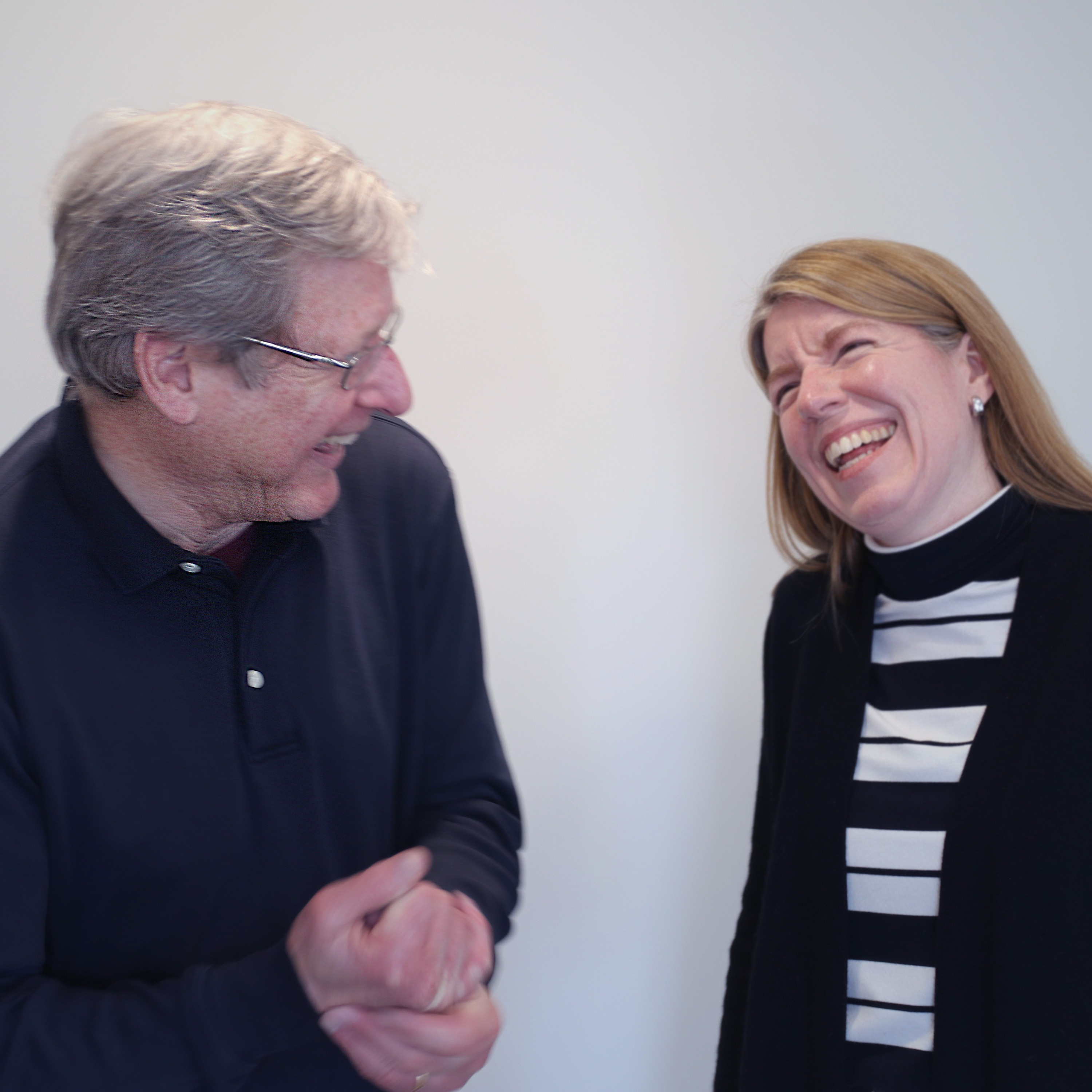
    Whether or not you’ve been exposed to the virus, the COVID-19 pandemic impacts everyone’s sense of well-being. Three scholars in the field of global mental health look at the various ways loss, fear, anxiety—and on top of it, a massive global recession—weigh on the mental well-being of different groups. And they anticipate a surge in demand for mental health services as a result of the pandemic.

  • #2
    Apr 14, 2020 · 42 min

    Brexited! (with Jeffry Frieden and Christina Davis)
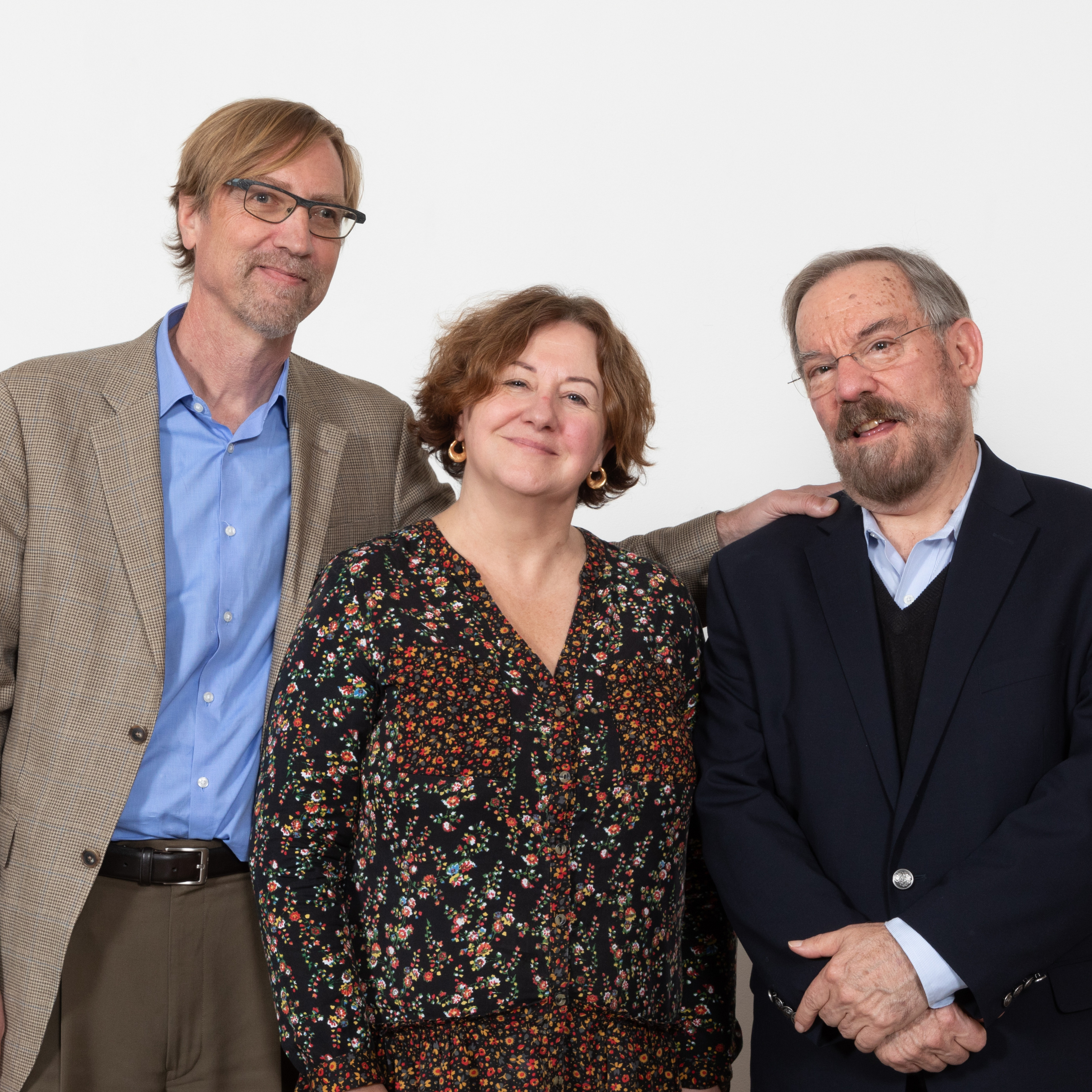
    It was a momentous day for the UK. The United Kingdom finally exited the European Union on January 31, 2020. So what happens next, and should we care? Our guests both demystify the impact of Brexit and explain the purpose of the European Union in ways you have never understood it before.

  • #1
    Jan 30, 2020 · 49 min

    Inequality in the US and Europe (with Michèle Lamont, Peter A. Hall, and Paul Pierson)

    Despite the decline in global poverty rates over the past five or six decades, the gap between the rich and the poor continues to grow ever wider, especially in the industrialized West. Three scholars—Michèle Lamont, Peter A. Hall, and Paul Pierson—discuss how housing and education systems can actually reinforce inequality, and who in our society is seen as “deserving” of getting help, or not, and how that has changed over time.

Showing 1–20 of 20 episodes