Skip to content
Artwork for Engineering Enablement by DX

Engineering Enablement by DX

DX

The show focused on developer productivity and the teams and leaders dedicated to improving it. Each episode features in-depth interviews with Platform and DevEx teams, along with the latest research and approaches for measuring developer productivity. Presented by DX (getdx.com), the developer intelligence platform designed by researchers.

Play
  • 24 episodes
  • fortnightly
  • Avg 39 min
  • English
Counted on this page — what you have heard stays on this device, so it is not something the list can be paged by.
  • June 8 · 43 min

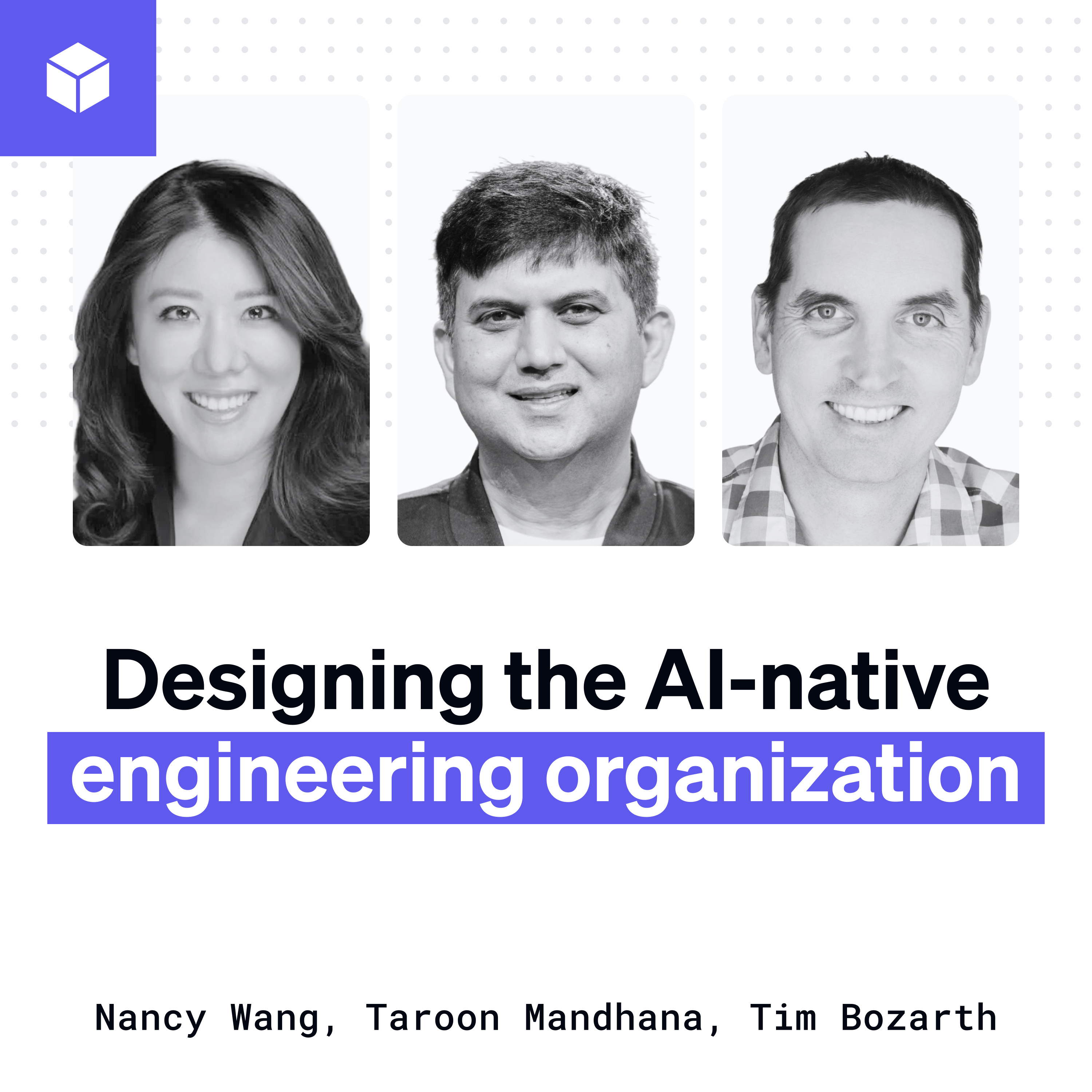
    Designing the AI‑native engineering organization with 1Password, Microsoft and Atlassian

    Abi Noda is joined live at DX Annual by three engineering leaders shaping AI adoption at scale: Tim Bozarth, Corporate Vice President in Microsoft’s CoreAI division; Nancy Wang, CTO of 1Password; and Taroon Mandhana, CTO of AI and Teamwork at Atlassian. Together, they discuss how AI is changing engineering organizations, from team structures and planning cycles to hiring, governance, and measurement. The panel explores how the profile of a great engineer is evolving, why smaller cross-functional teams are becoming more effective, and what happens when product managers, designers, and customer support teams start contributing code. They also share why they are encouraging AI adoption through enablement, training, and local champions rather than mandates, and how AI is shifting more of the software development lifecycle toward planning and validation. Finally, they discuss where human judgment remains essential, how to measure adoption and manage token usage, and how to connect AI investments to business outcomes while preserving room for experimentation and learning. Where to find Nancy Wang: • LinkedIn: https://www.linkedin.com/in/wangnancy Where to find Taroon Mandhana: • LinkedIn: https://www.linkedin.com/in/taroonm Where to find Tim Bozarth: • LinkedIn: https://www.linkedin.com/in/tbozarth Where to find Abi Noda: • LinkedIn: https://www.linkedin.com/in/abinoda In this episode, we cover: (00:00) Intro (01:08) Introducing the panelists (02:16) AI’s impact on engineering team structures and planning cycles (05:00) How the role of the engineer is changing and what makes a great engineer (10:11) The opportunities and challenges of non-engineers writing code (15:26) Encouraging AI adoption without mandating it (21:25) What an AI-native SDLC looks like and why human judgment still matters (30:56) Measuring AI adoption, token usage, and ROI (37:06) How to tie AI investments to business outcomes Referenced: • DX Core 4 Productivity Framework • Microsoft • 1Password • Atlassian • Jira • Confluence • Loom • Rovo • Amazon Operating Cadence - Working Backwards
  • April 10 · 50 min

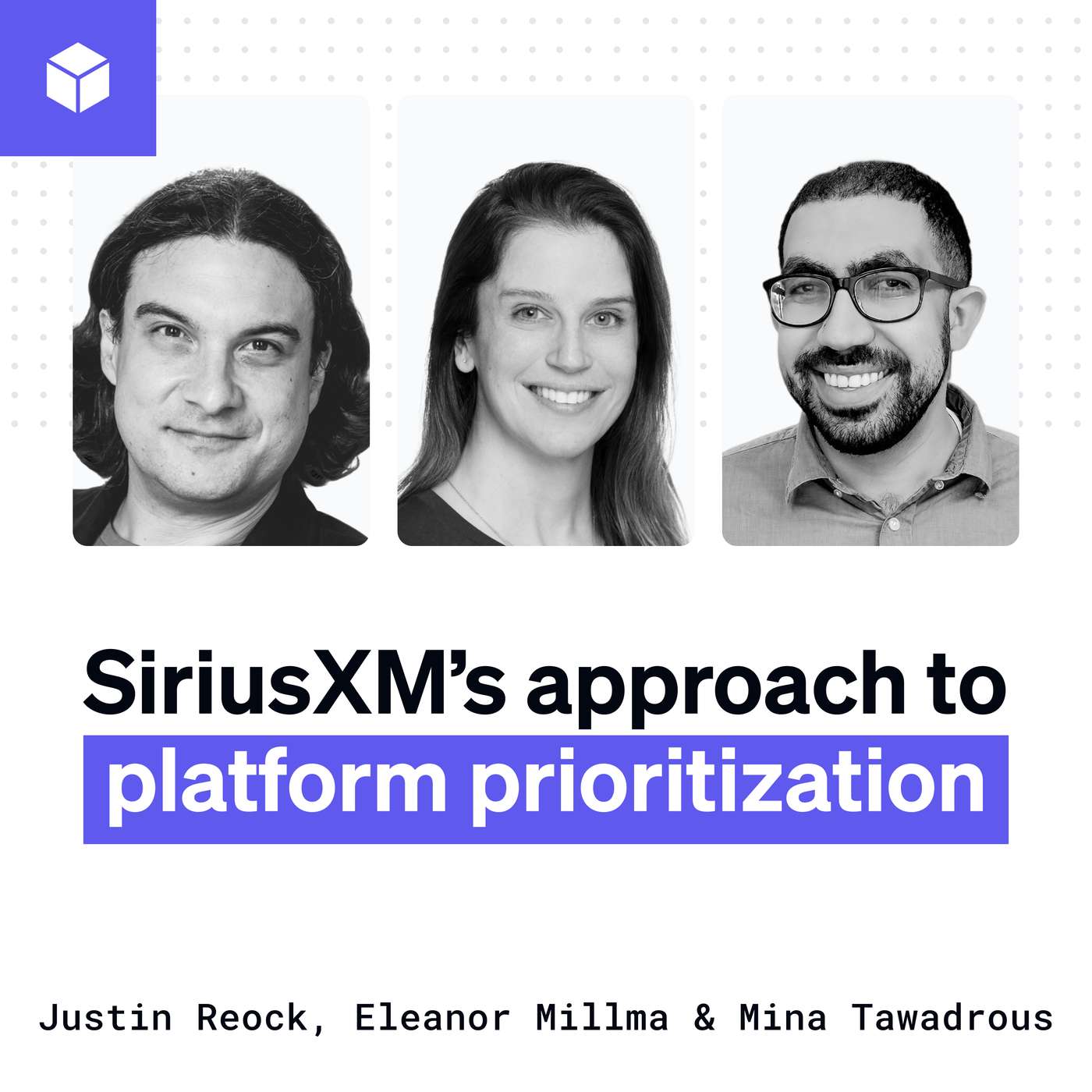
    Assumptions as code: SiriusXM’s approach to platform prioritization

    Eleanor Millman, Senior Staff Product Manager, and Mina Tawadrous, Associate Director of Platform Engineering at SiriusXM, join host Justin Reock to discuss how platform teams can scale prioritization without relying on revenue. They share how SiriusXM moved beyond RICE to build a custom framework for internal platforms, using weighted factors like developer speed, reliability, cost, and trust to guide decisions across teams. The episode also explores their concept of “assumptions as code,” in which teams store and reuse assumptions in a central repository to reduce misalignment and improve decision-making, with AI helping to surface and validate those assumptions. They close with how this system is shaping SiriusXM’s 2026 prioritization approach and what it signals about a broader shift toward builder-driven product development. Where to find Eleanor Millman: • LinkedIn: https://www.linkedin.com/in/eleanor-millman-98b10350 Where to find Mina Tawadrous: • LinkedIn: https://www.linkedin.com/in/mina-tawadrous Where to find Justin Reock: • LinkedIn: https://www.linkedin.com/in/justinreock In this episode, we cover: (00:00) Intro (01:17) Mina’s role and path into platform engineering (02:03) Eleanor’s background and shift into product (03:15) Scaling prioritization across platform engineering teams (05:41) Aligning platform priorities with stakeholders (09:08) Evolving RICE into a platform-specific prioritization framework (11:33) Iterating on the prioritization framework over time (16:57) How the framework, data, and conversations drive alignment (19:06) Storing assumptions as code in a central repository (26:47) Resolving assumption conflicts with user interviews (30:47) How stored assumptions integrate with AI workflows (35:30) Standard mode and different user personas (37:20) The industry shift towards builders (41:04) The challenges of platform engineering (43:36) How SiriusXM is prioritizing in 2026 Referenced: • Measuring AI code assistants and agents • SiriusXM • VMware • How SiriusXM revamped their platform and developer experience • RICE Scoring Model | Prioritization Method Overview • The evaporating cloud: A tool for resolving workplace conflict

  • April 3 · 38 min

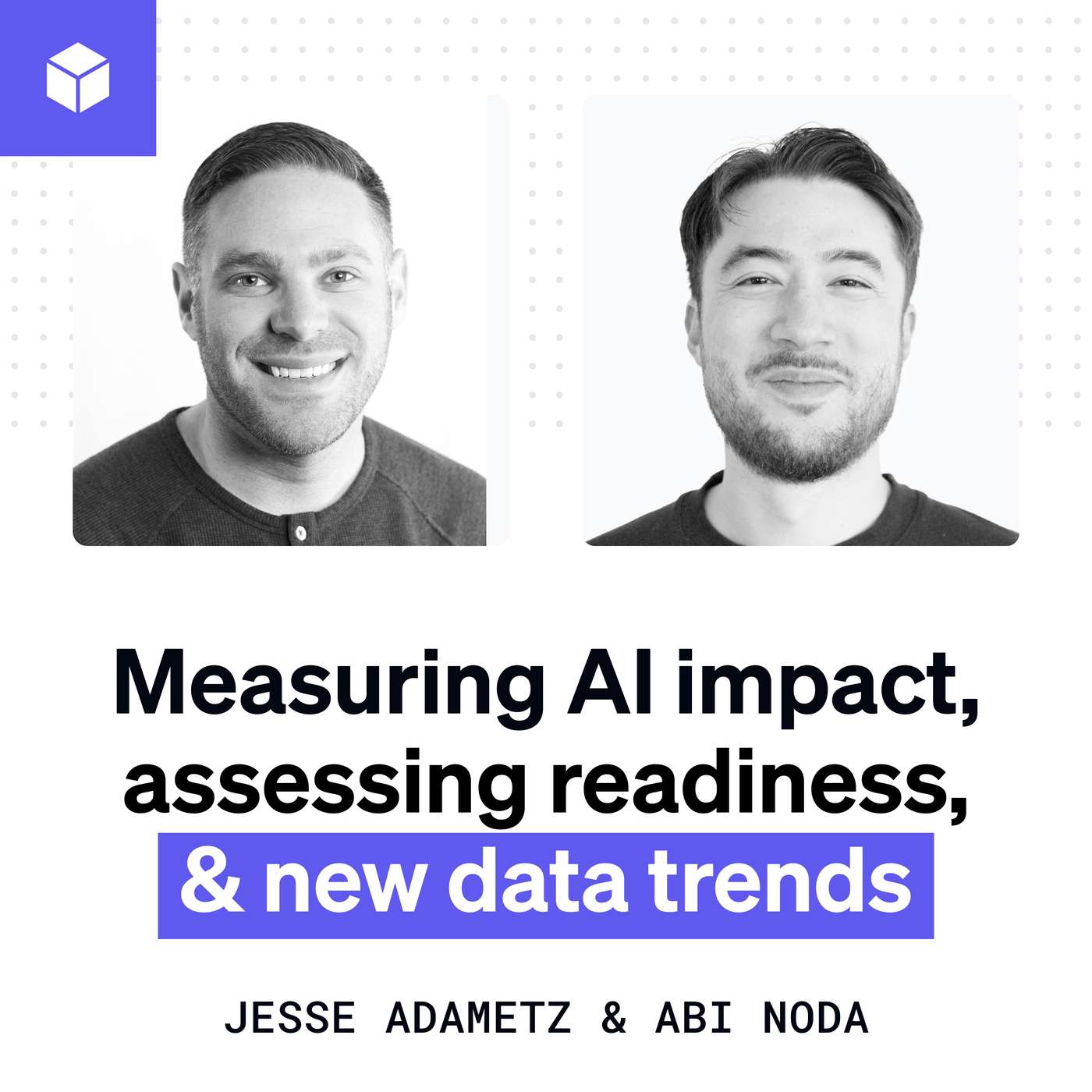
    Measuring AI impact, assessing readiness, and new data trends

    In this episode of Engineering Enablement, Jesse Adametz joins Abi Noda, this time to host. Together, they explore how AI is showing up across the SDLC, not just in code generation, and how it is shifting bottlenecks across the development process. They unpack what “AI readiness” actually means in practice, and why it often comes down to developer experience fundamentals like documentation, environments, and feedback loops. They also discuss why enablement matters more than tool choice, how teams are thinking about measuring ROI, and what changes as background agents become more common. Finally, they explore how the role of the engineer may evolve, the open questions teams are still grappling with, and the challenges of non-engineers contributing to codebases. Where to find Jesse Adametz: • LinkedIn: https://www.linkedin.com/in/jesseadametz • X: https://x.com/jesseadametz • Website: https://www.jesseadametz.com/ Where to find Abi Noda: • LinkedIn: https://www.linkedin.com/in/abinoda In this episode, we cover: (00:00) Intro (02:12) Where AI is showing up across the SDLC (05:53) AI readiness and its link to developer experience (08:23) Why enablement, education, and experimentation matter more than tool choice (13:05) The case for a dedicated enablement team (14:50) Measuring AI ROI: challenges and tradeoffs (19:46) Background agents and token spend (24:12) Measuring agent output with PR throughput (26:58) How the engineer role might change (31:01) Specs and documentation in the age of AI (33:11) Non-engineers writing code (35:30) What’s changing in the SDLC and open questions Referenced: • Measuring AI code assistants and agents • Lessons from Twilio’s multi-year platform consolidation • The Phoenix Project: A Novel About IT, DevOps, and Helping Your Business Win • How Claude remembers your project - Claude Code Docs • specIsJustCode : r/ProgrammerHumor

  • February 6 · 39 min

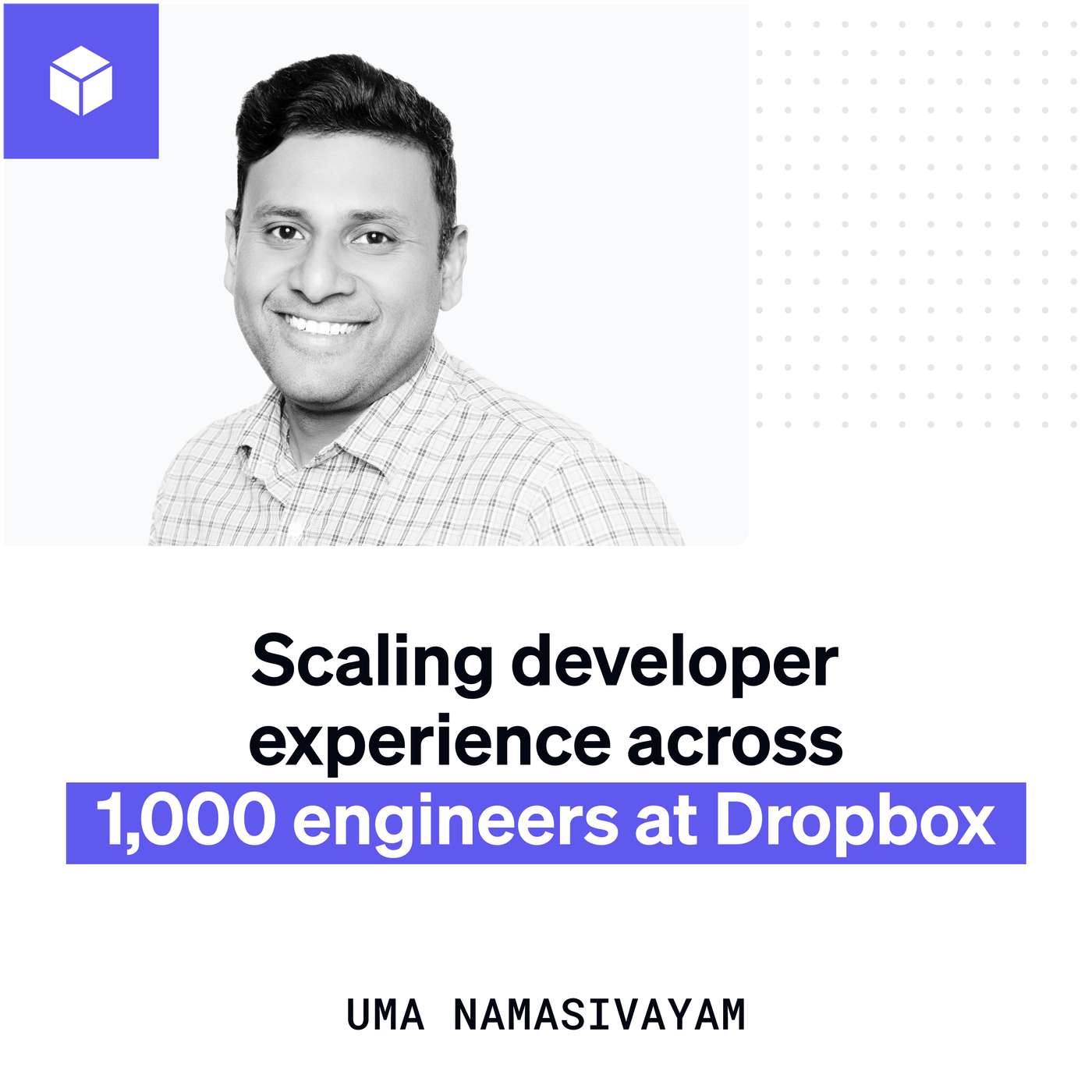
    Scaling developer experience across 1,000 engineers at Dropbox

    Developer productivity is often framed as a tooling initiative or a morale issue. At scale, it’s a more complex socio-technical systems challenge that spans engineering foundations, leadership alignment, organizational structure, and culture. In this episode, Laura Tacho sits down with Uma Namasivayam, Senior Director, Engineering Productivity at Dropbox, to discuss how the company approaches developer experience across an organization of nearly 1,000 engineers. Uma explains why productivity must be treated as a business problem, how executive alignment enables sustained progress, and what it means to run developer experience like a product. The conversation also explores the intersection of AI and developer experience. Uma shares how Dropbox prepared its engineering systems to support AI adoption, why daily AI use depends more on habits than access, and how the company evaluates build-versus-buy decisions as AI tools struggle to scale in large environments. The episode concludes with a candid discussion of the open questions facing engineering leaders today: how to understand where AI-driven capacity actually goes, and how to connect improvements in developer experience to meaningful business outcomes in 2026. Where to find Uma Namasivayam: • LinkedIn: https://www.linkedin.com/in/unamasivayam Where to find Laura Tacho: • LinkedIn: https://www.linkedin.com/in/lauratacho/ • X: https://x.com/rhein_wein • Website: https://lauratacho.com/ • Laura’s course (Measuring Engineering Performance and AI Impact) https://lauratacho.com/developer-productivity-metrics-course In this episode, we cover: (00:00) Intro (00:45) Dropbox’s engineering org (01:59) Why developer productivity is a business problem (04:08) The role of executive sponsorship in developer productivity (06:02) How DX’s Core Four framework created a shared language (08:13) Treating developer experience as a product (11:30) How Dropbox prioritizes developer experience work (14:20) The challenge of tying developer experience to business outcomes (16:38) How AI and developer experience intersect at Dropbox (18:35) The prerequisites for AI adoption to accelerate work (20:26) How Dropbox encourages daily AI use (23:12) AI use beyond code completion (25:00) Managing AI tool demand at scale (27:56) Early results from Dropbox’s AI efforts (30:05) Progress on developer experience at Dropbox (32:55) Advice for organizations investing in developer experience (34:25) Capacity tradeoffs for developer experience (35:59) The unanswered questions around AI and capacity in 2026 Referenced: • DX Core 4 Productivity Framework • Dropbox.com

Showing 21–24 of 24 episodes