Skip to content
Artwork for Don't Just Read the Abstract
Health & FitnessScienceTechnology

Don't Just Read the Abstract

Richard Buka

Want to stay up-to-date on the very latest developments in medical haematology? Don't have the time or skills to critically appraise important papers? Join Pip and Rich, two haematology doctors on a journey of learning and discovery. They will discuss seminal trials, critically appraising papers and interview authors and subject experts.


This podcast helps you to go beyond the abstract, delving deep into the methods, results, sub-analyses, and implications. Interviews with authors gives a real-life perspective on the running of a clinical trial allowing explanations of why they did what they did and good honest discussion on limitations and how they might do it differently next time.


Hosted on Acast. See acast.com/privacy for more information.

Play
  • 20 episodes
  • monthly
  • Avg 55 min
  • English
  • S1 · E34
    August 2 · 1 hr 2 min

    C-TRACT: does venous stenting make a difference in post-thrombotic syndrome?

    In this episode, Pip and Rich discuss the C-TRACT trial: Vedantham et al. Endovascular Therapy for Post-Thrombotic Syndrome — A Randomized Trial. 2026 N Engl J Med 2026;394:2293-2304 C-TRACT (Chronic Venous Thrombosis: Relief with Adjunctive Catheter-Directed Therapy) was a phase 3, publicly funded, multicentre, open-label, assessor-blinded RCT published in NEJM that randomised 225 patients with moderate-to-severe post-thrombotic syndrome (PTS) and imaging-confirmed iliac-vein obstruction to endovascular therapy (iliac-vein stenting + enhanced antithrombotic therapy) plus standard care versus standard care alone. Key Results At 6 months, the endovascular group had a statistically significant reduction in PTS severity by the Venous Clinical Severity Score (VCSS: 8.1 vs. 10.0, adjusted difference −2.0 points; P=0.001). Quality-of-life scores also improved with a 14.5-point improvement in venous disease–specific QoL (VEINES-QOL) and a 6.1-point improvement in the SF-36 physical component summary with the intervention. However, bleeding was significantly higher in the intervention group (11.6% vs. 3.6%; P=0.03). In the episode, Pip and Rich discuss key critical appraisal points including: Modest primary endpoint difference. The 2-point VCSS difference, while statistically significant, is relatively small on a 0–30 scale. The clinical meaningfulness of this difference at the individual patient level is debatable, though the authors argue that many patients shifted to lower severity categories. Open-label design. The trial was open-label, which is a significant limitation for patient-reported outcomes like quality of life. While the primary outcome (VCSS) was assessed by blinded evaluators, the large QoL differences (which are the most compelling results) are susceptible to expectation and performance bias - a limitation the authors themselves acknowledge. Short follow-up. Results are reported at only 6 months. Stent patency, durability of benefit, and long-term safety (including stent-related complications and the consequences of enhanced antithrombotic therapy) remain unknown. The relevance of enhanced antithrombotic therapy which confounds the intervention. The endovascular arm received both stenting and additional antithrombotic therapy, making it impossible to disentangle the contribution of each component and likely explaining the higher bleeding rate. Generalisability. The trial was limited to patients with iliac-vein obstruction and moderate-to-severe PTS, a specific subset of the broader PTS population. Results should not be extrapolated to milder disease or non-iliac obstruction. Hosted on Acast. See acast.com/privacy for more information.

  • S1 · E33
    June 23 · 1 hr 9 min

    Is emicizumab finished? The FRONTIER2 trial of the novel bispecific antibody, denecimig (Mim8) for haemophilia A

    On this episode, Pip and Rich discuss the FRONTIER2, the phase 3 trial of Mim8 (denecimig) for prophylaxis in haemophilia A with or without inhibitors. They review the study design, efficacy and safety results, and consider where Mim8 may fit into the rapidly evolving haemophilia treatment landscape. They also explore the key unanswered question: does Mim8 offer any meaningful clinical advantage over emicizumab, or is its main benefit greater convenience through fixed-volume administration? Hosted on Acast. See acast.com/privacy for more information.

  • S1 · E30
    February 27 · 1 hr 1 min

    ENERGIZE: Mitapivat in thalassaemia

    Following its recent US FDA approval, on this episode, Pip and Rich discuss mitapivat, an allosteric activator of red-cell pyruvate kinase. They focus on ENERGIZE, a randomised controlled trial of mitapivat vs placebo (2:1) randomisation in people living with transfusion dependent thalassaemia. It met its primary endpoint of achieving significantly more patients reaching a haemoglobin rise of at least 1 g/L. However, Pip and Rich discuss the relevance of this surrogate endpoint as well as the small effects on fatigue and quality of life. Taher et al. Mitapivat in adults with non-transfusion-dependent α-thalassaemia or β-thalassaemia (ENERGIZE): a phase 3, international, randomised, double-blind, placebo-controlled trial. Lancet. 2025 Jul 5;406(10498):33-42. doi: 10.1016/S0140-6736(25)00635-X. Hosted on Acast. See acast.com/privacy for more information.

  • S1 · E29
    February 10 · 1 hr 2 min

    Ianalumab for ITP: VAYHIT2
    Pip and Rich discuss the VAYHIT2 trial, recently published in NEJM, of eltromobopag + ianalumab + vs eltrombopag + placebo

  • S1 · E25
    Nov 13, 2025 · 1 hr 5 min

    Rebalancing haemostasis with marstacimab - an discussion about the BASIS trial

    On this episode, Pip and Rich discuss the BASIS trial which investigated the efficacy of the rebalancing agent marstacimab in people living with haemophilia. Marstacimab is an inhibitor of tissue factor pathway inhibitor (TFPI) and works by tipping the balance of clotting towards coagulation and away from bleeding. The trial showed that marstacimab works but is not randomised and there are some very interesting critical appraisal points in here even if you are not hugely interested in haemophilia. Matino et al. Marstacimab prophylaxis in hemophilia A/B without inhibitors: results from the phase 3 BASIS trial. Blood (2025) 146 (14): 1654–1663. Want a free monthly newsletter on medical haematology? Sign up at www.dontjustreadtheabstract.com. Hosted on Acast. See acast.com/privacy for more information.

  • S1 · E19
    Jul 6, 2025 · 52 min

    LUNA3: Rilzabrutinib for ITP

    A discussion of the evidence supporting the use of the BTK inhibitor, Rilzabrutinib, in immune thrombocytopenia

  • S1 · E18
    Jun 12, 2025 · 55 min

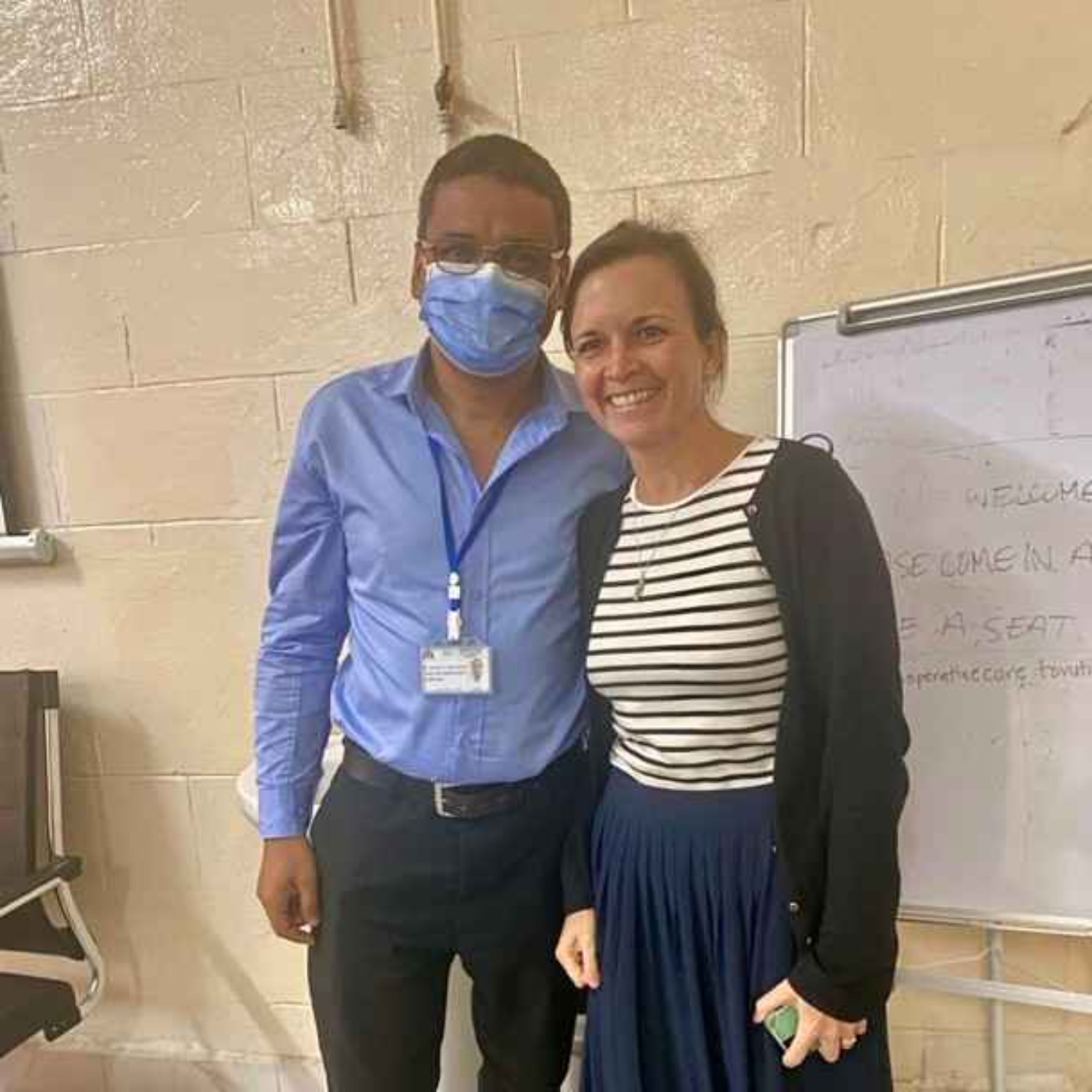
    Haematology in The Gambia with Dr Megan Kell

    Pip and Rich interview Dr Megan Kell, Chair of the BSH Global SIG about her time working as one of only two haematologists in the West African nation of The Gambia

Showing 1–20 of 20 episodes