Skip to content
Artwork for CyberCode Academy
CyberCode Academy · July 26 · 19 min

Course 40 - Web Scraping with Python | Episode 16: Mastering Data Extraction with Beautiful Soup

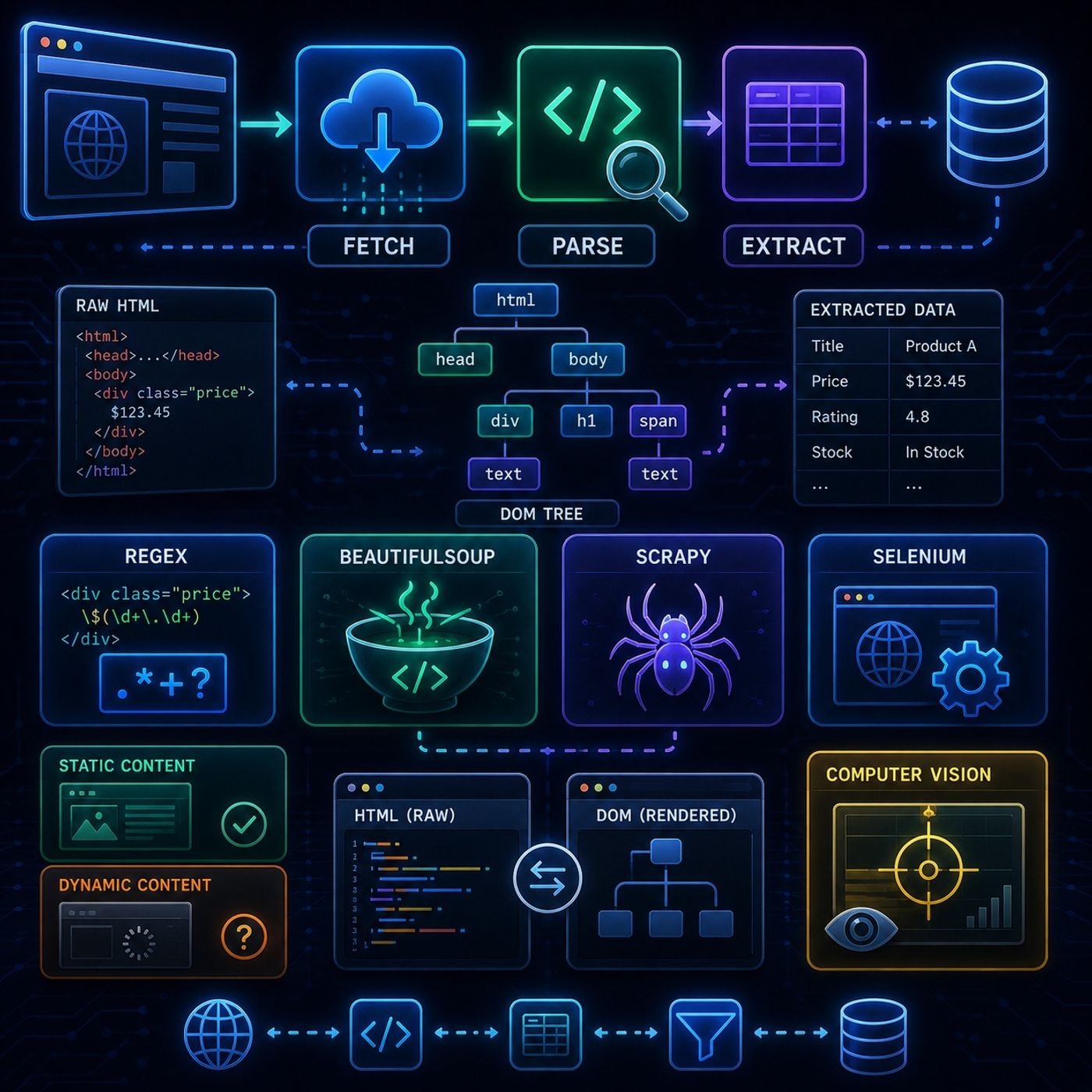
In this lesson, you’ll learn about: how web scraping works end-to-end, why fetching and parsing are the two core stages, and how different tools like Regex, BeautifulSoup, and Scrapy compare in real-world data extraction1. What is Web Scraping?🔹 Core IdeaWeb scraping = automated data extraction from websitesInstead of manually copying data, a program: Visits a page Reads the HTML Extracts structured information 2. Two-Phase Scraping Workflow🔹 Overall PipelinePhase 1: Fetching Content Send HTTP request (GET) Receive HTML response Store raw page content Tools: Requests urllib httplib2 Phase 2: Parsing & Extraction Analyze HTML structure Extract required data Clean results 3. Regex vs Structured Parsers🔹 Regular ExpressionsRegex: Works on text patterns Fast but fragile Breaks easily on messy HTML 👉 Key Insight HTML is not flat text—it’s structured data4. BeautifulSoup (Structure-Aware Parsing)🔹 Why It Works BetterBeautifulSoup: Understands HTML tree structure Fixes broken markup Lets you navigate elements easily 🔹 Key AdvantageInstead of guessing text patterns:👉 you navigate the DOM like a tree5. HTML vs DOM ParsingTypeDescriptionHTML parsingRaw server outputDOM parsingRendered browser structure🔹 Important Difference HTML = static snapshot DOM = live, updated by JavaScript 6. Static vs Dynamic Content🔹 Static Pages Easy to scrape No JavaScript required BeautifulSoup works well 🔹 Dynamic Pages Content generated by JavaScript Requires browser rendering Tools: Selenium Scrapy Headless browsers 👉 Key Insight If data appears after page load → you need a browser engine7. Advanced Tools Overview🔹 Scrapy (Industrial Tool) Built for scale Handles crawling + pipelines Used for production systems 🔹 Selenium Controls real browser Handles JavaScript Slower but powerful 🔹 Computer Vision Scraping (Sikuli) Reads screen pixels Works without HTML Used when UI has no accessible structure 8. Mental ModelThink of scraping as: 📥 Fetch → download the page 🧠 Parse → understand structure 🎯 Extract → get useful data Final TakeawayWeb scraping is not just “copying data”—it’s a structured pipeline:👉 fetch → parse → extract → transformAnd the tool you choose depends on one question:Is the data static HTML or dynamically generated?That single decision determines everything else. You can listen and download our episodes for free on more than 10 different platforms: https://linktr.ee/cybercode_academy

0:00-19:11

transcript

No transcript — this publisher did not publish one.

show notes

In this lesson, you’ll learn about: how web scraping works end-to-end, why fetching and parsing are the two core stages, and how different tools like Regex, BeautifulSoup, and Scrapy compare in real-world data extraction1. What is Web Scraping?🔹 Core IdeaWeb scraping = automated data extraction from websitesInstead of manually copying data, a program:
  • Visits a page
  • Reads the HTML
  • Extracts structured information
2. Two-Phase Scraping Workflow🔹 Overall PipelinePhase 1: Fetching Content
  • Send HTTP request (GET)
  • Receive HTML response
  • Store raw page content
Tools:
  • Requests
  • urllib
  • httplib2
Phase 2: Parsing & Extraction
  • Analyze HTML structure
  • Extract required data
  • Clean results
3. Regex vs Structured Parsers🔹 Regular ExpressionsRegex:
  • Works on text patterns
  • Fast but fragile
  • Breaks easily on messy HTML
👉 Key Insight
HTML is not flat text—it’s structured data4. BeautifulSoup (Structure-Aware Parsing)🔹 Why It Works BetterBeautifulSoup:
  • Understands HTML tree structure
  • Fixes broken markup
  • Lets you navigate elements easily
🔹 Key AdvantageInstead of guessing text patterns:👉 you navigate the DOM like a tree5. HTML vs DOM ParsingTypeDescriptionHTML parsingRaw server outputDOM parsingRendered browser structure🔹 Important Difference
  • HTML = static snapshot
  • DOM = live, updated by JavaScript
6. Static vs Dynamic Content🔹 Static Pages
  • Easy to scrape
  • No JavaScript required
  • BeautifulSoup works well
🔹 Dynamic Pages
  • Content generated by JavaScript
  • Requires browser rendering
Tools:
  • Selenium
  • Scrapy
  • Headless browsers
👉 Key Insight
If data appears after page load → you need a browser engine7. Advanced Tools Overview🔹 Scrapy (Industrial Tool)
  • Built for scale
  • Handles crawling + pipelines
  • Used for production systems
🔹 Selenium
  • Controls real browser
  • Handles JavaScript
  • Slower but powerful
🔹 Computer Vision Scraping (Sikuli)
  • Reads screen pixels
  • Works without HTML
  • Used when UI has no accessible structure
8. Mental ModelThink of scraping as:
  • 📥 Fetch → download the page
  • 🧠 Parse → understand structure
  • 🎯 Extract → get useful data
Final TakeawayWeb scraping is not just “copying data”—it’s a structured pipeline:👉 fetch → parse → extract → transformAnd the tool you choose depends on one question:Is the data static HTML or dynamically generated?That single decision determines everything else.

You can listen and download our episodes for free on more than 10 different platforms:
https://linktr.ee/cybercode_academy
links1