Skip to content
Artwork for Cleo Abram
TechnologyScienceEducation

Cleo Abram

Cleo Abram

Video journalist making optimistic tech explainers. Huge If True.

Instagram: https://www.instagram.com/cleoabram
TikTok: https://www.tiktok.com/@cleoabram
Twitter: https://twitter.com/cleoabram

If you'd like to sponsor a Huge If True episode, reach out at the email below.

If you're looking for my bio, here it is:
Cleo Abram is a video journalist who produces Huge If True, an optimistic show about science and technology. Huge If True is an antidote to the doom and gloom, helping a wide audience see better futures they can help build. In each episode, Cleo dives deep into one innovation that could shape the future. She has explored humanoid robots at Boston Dynamics, supersonic planes at NASA, quantum computers at IBM, the Large Hadron Collider at CERN, and more. Previously, Cleo was a video producer at Vox and directed for Explained on Netflix. She was the host of Vox’s first ever daily show, Answered, as well as co-host of Vox’s YouTube Originals show, Glad You Asked.

Links:
Instagram: https://www.instagram.com/cleoabram/
TikTok: https://www.tiktok.com/@cleoabram
Twitter: https://twitter.com/cleoabram

Made by a listener who resonates deeply with Cleo Abram's work, so it can travel with you on walks, drives and quiet nights. An unofficial tribute, not affiliated with Cleo Abram — all rights remain theirs. If you're the creator, we'd love to hear from you.

Play
  • 67 episodes
  • daily
  • Avg 26 min
  • English
Counted on this page — what you have heard stays on this device, so it is not something the list can be paged by.
  • Yesterday · 23 min

    The Craziest Experiment Humans Have Ever Built

    This machine found something scientists thought was impossible… If you want to talk to Mico, go to this link: https://bit.ly/CleoAbram-Copilot In the middle of the desert, miles from any city, are two HUGE concrete tubes. They’re part of a giant machine running the most precise experiment humans have ever built… Each tube is 4 kilometers long, and inside there’s a big metal pipe. And at the end of each pipe, scientists place some of the smoooooothest mirrors ever made. And then they fire a powerful laser that gets split down each tube, bouncing it back and forth… building up more and more power… until… they bring those beams back together… to discover something that just 100 years ago scientists thought was impossible to find! Finding it took hundreds of scientists and over a billion dollars. But what did we find?? And what’s the cutting edge we’re finding NOW that makes those scientists want to build… AN EVEN BIGGER ONE? Let me show you… Chapters 00:00 What's the most precise experiment humans have built? 01:41 How do we know what’s out in the universe? 02:33 What if two stars collide? 03:41 What are gravitational waves? 6:34 What's inside the concrete tubes in the desert? 5:50 How did they build the Laser Interferometer Gravitational-Wave Observatory? 07:42 How does the laser experiment work? 09:20 What's the LIGO dance? 11:14 What are the most reflective mirrors in the world? 14:02 What happened when they turned on the laser machine? 15:17 Did we detect gravitational waves? 16:16 Can we manipulate gravity? 17:44 :) You can find me on Instagram here: https://www.instagram.com/cleoabram On TikTok here: https://www.tiktok.com/@cleoabram Or on Twitter here: https://twitter.com/cleoabram Bio: Cleo Abram is an Emmy-nominated independent video journalist. On her show, HUGE* If True, Cleo explores complex technology topics with rigor and optimism, helping her audience understand the world around them and see positive futures they can help build. Before going independent, Cleo was a video producer for Vox. She wrote and directed the Coding and Diamonds episodes of Vox’s Netflix show, Explained. She produced videos for Vox’s popular YouTube channel, was the host and senior producer of Vox’s first ever daily show, Answered, and was co-host and producer of Vox’s YouTube Originals show, Glad You Asked. Additional reading and watching: - LIGO: https://www.ligo.caltech.edu/page/learn-more - Paper on First Gravitational Wave Detection: https://arxiv.org/abs/1602.03837 - Einstein's Theory of Gravitation: https://www.cfa.harvard.edu/research/science-field/einsteins-theory-gravitation - Advancements to LIGO: Quantum Squeezing: https://www.ligo.caltech.edu/news/ligo20231023 - Advanced LIGO Documentary “LIGO”: https://www.youtube.com/watch?v=dX4vCNi544w - Caltech, “LIGO: The First Observation of Gravitational Waves”: https://youtu.be/wrqbfT8qcBc?si=39S3-hcXpU6Dwiyg - Physics Girl, “I Visited the First Gravitational Wave Detector! LIGO | STELLAR”: https://youtu.be/jtp71NT0GNg?si=6BUilmCISXlwN8qr - Veritasium, “The Absurdity of Detecting Gravitational Waves”: https://youtu.be/iphcyNWFD10?si=DFZYSAIyW90oIoNe - Caltech “How Squeezing Light Reduces Uncertainty in LIGO's Measurements”: https://youtu.be/q5lnamXhnfI?si=QrbgPVHwkYs1CEip Vox: https://www.vox.com/authors/cleo-abram IMDb: https://www.imdb.com/name/nm10108242/ Gear I use: Camera: Sony A7SIII Lens: Sony 16–35 mm F2.8 GM Audio: Sennheiser SK AVX and Zoom H4N Pro Music: Musicbed, Tom Fox Follow along for more episodes of HUGE* If True: https://www.youtube.com/cleoabram?sub_confirmation=1 — Hey, welcome to the joke down low! What did Gravity say to Light? Nothing, it just waved! Find a way to use “wave” in a comment to let me know you’re a real one who made it to the end of the description :) Learn more about your ad choices. Visit megaphone.fm/adchoices

  • Yesterday · 15 min

    Fracking for Clean Energy (wait, what?)

    ... Not the story I was expecting. Subscribe to see the next episode: https://www.youtube.com/cleoabram?sub_confirmation=1 Fracking made it possible to get and burn much, much more oil and natural gas. To do it, companies drill into rock deep beneath the Earth's surface and pump in fluid at high enough pressure to crack that rock open, allowing the trapped oil and gas to escape into their pipes. But the fossil fuels they released have directly contributed to climate change, and we're all now paying the price. But here's the hopeful twist: It turns out that this technology - the same one perfected to squeeze every drop of dirty fossil fuels out of the earth - might be the key to unlocking an even bigger source of energy. One that's actually... clean. This video explains how fracking is now being used in geothermal to get more clean energy out of the ground, in the hope of moving away from fossil fuels. Along the way, we'll meet Professor Mukul Sharma, aka the "Frack King," and longtime energy reporter David Roberts. Oh, and my parents (thanks, Mom and Dad!). Chapters: 00:00 What is fracking for oil and gas? 01:15 Does fracking pollute water? 03:20 Does fracking cause earthquakes? 04:43 What is geothermal energy? 06:54 What is enhanced geothermal? 07:54 How much energy comes from geothermal? 09:05 Is enhanced geothermal safe? 10:03 Why do we need fracking for geothermal? Be featured in an episode - upload questions for me to answer! https://www.dropbox.com/request/Edocsb2kErpueQ7F9T1Q I tell different stories in different places: You can find me on TikTok here for short, fun explainers: https://www.tiktok.com/@cleoabram You can find me on Instagram here for more personal stories: https://www.instagram.com/cleoabram You can find me on Twitter here for thoughts and curated news: https://twitter.com/cleoabram Bio: Cleo Abram is an Emmy-nominated video producer and journalist. Cleo produces detailed explainer stories about technology and economics. She wrote the Coding and Diamonds episodes of Vox’s Netflix show, Explained, was the host and a senior producer of Vox’s first ever daily show, Answered, as well as a host and producer of Vox’s YouTube Originals show, Glad You Asked. She now makes her own independent show, Huge If True. Each episode takes on one big technology innovation or idea, explains what it is, and helps people imagine the ways it could improve the world we live in by answering one simple question: If this works, what could go right? Sources and additional reading: - “Hydraulic Fracturing for Oil and Gas: Impacts from the Hydraulic Fracturing Water Cycle on Drinking Water Resources in the United States,” US Environmental Protection Agency: https://www.epa.gov/hfstudy - “Studies link earthquakes to fracking in the Central and Eastern US,” Seismological Society of America: https://www.sciencedaily.com/releases/2019/04/190426110601.htm - “Millimeter-Wave Technology Demonstration for Geothermal Direct Energy Drilling,” US Advanced Research Projects Agency–Energy: https://www.arpa-e.energy.gov/technologies/projects/millimeter-wave-technology-demonstration-geothermal-direct-energy-drilling - “Enhanced Geothermal Energy,” US Department of Energy: https://www.energy.gov/eere/geothermal/enhanced-geothermal-systems-0 - “Geothermal energy is poised for a big breakout,” David Roberts, Vox: https://www.vox.com/energy-and-environment/2020/10/21/21515461/renewable-energy-geothermal-egs-ags-supercritical - “Underground Oil Deposits,” HowStuffWorks: https://science.howstuffworks.com/environmental/energy/underground-oil-deposits.htm - “Electricity Mix,” Our World In Data: https://ourworldindata.org/electricity-mix Vox: https://www.vox.com/authors/cleo-abram IMDb: https://www.imdb.com/name/nm10108242/ Gear I use: Camera: Sony A7SIII Lens: Sony 16–35 mm F2.8 GM Audio: Sennheiser SK AVX and Zoom H4N Pro Music: M Learn more about your ad choices. Visit megaphone.fm/adchoices

  • Yesterday · 21 min

    Why This Olympic Sport Bothers Physicists

    This is the craziest Olympic sport by far. Trust me. This episode is #sponsored by @NBCSports @YouTube #WinterOlympics Every four years, people lose their minds over one Olympic sport. They make fun of it! But the more I learned about it, the more obsessed I got… and I realized that all these people making fun? They’re getting this totally wrong. This is the coolest Olympic sport by far. The sport I’m talking about is… CURLING. From stones so unique they all have to come from one tiny island, to a tech doping scandal nobody wants to talk about. It’s a game with strategy so complicated it’s called “chess on ice”. And a physics mystery that’s gone unsolved for over a century that could one day help us design robots for space. And that’s just the start… Trust me, you don’t know enough about Curling…YET. So I’m going to take you onto the ice at the Olympic Trials… to show you what everyone’s missing and why Curling is the Olympic sport you should be watching. Chapters 00:00 What's the most fascinating sport at the Winter Olympics? 01:40 How do you play curling? 02:57 Why are curling stones so crazy? 04:46 Why is curling chess on ice? 05:48 Why do they sweep in curling? 08:18 What is Broomgate? 10:11 How do curling stones defy physics? 11:58 What is the science of rubbing? 15:16 Why do people make fun of curling? 15:56 :) You can find me on Instagram here: https://www.instagram.com/cleoabram On TikTok here: https://www.tiktok.com/@cleoabram Or on Twitter here: https://twitter.com/cleoabram Bio: Cleo Abram is an Emmy-nominated independent video journalist. On her show, HUGE* If True, Cleo explores complex technology topics with rigor and optimism, helping her audience understand the world around them and see positive futures they can help build. Before going independent, Cleo was a video producer for Vox. She wrote and directed the Coding and Diamonds episodes of Vox’s Netflix show, Explained. She produced videos for Vox’s popular YouTube channel, was the host and senior producer of Vox’s first ever daily show, Answered, and was co-host and producer of Vox’s YouTube Originals show, Glad You Asked. Additional reading and watching: - Curling clubs near NYC: https://licurling.org/, https://ardsleycurling.com/ Special thanks to Long Island Curling and Ardsley Curling for all of their support in the prep and research of this episode! -World Curling: https://worldcurling.org/ -“History of the Game” https://www.scottishcurling.org/curling-history/history-of-the-game/ -“What is Curling?” https://www.stlouiscurlingclub.org/index.php/try-curling/about-curling - Curling Clips YouTube Channel: https://www.youtube.com/@CurlingClips - “Study of curling mechanism by precision kinematic measurements of curling stone’s motion” https://pmc.ncbi.nlm.nih.gov/articles/PMC9440934/ - “The slippery science of Olympic curling: we still don’t know how it works” https://www.unsw.edu.au/newsroom/news/2022/02/the-slippery-science-of-olympic-curling--we-still-dont-know-how-, - Original study: https://babel.hathitrust.org/cgi/pt?id=inu.30000112841493&seq=657 - “Why all Olympic curling stones come from a Scottish island” https://www.bbc.com/news/av/uk-scotland-68699328, - Kays Scotland https://www.kaysscotland.com/ - “PHOTO ESSAY: Scottish island Ailsa Craig is the granite source for Olympic curling stones” https://apnews.com/photo-essay/olympics-curling-island-ailsa-craig-scotland-photos-90cc3742fe35b63b87755ad126942c42 -“Ailsa Craig” https://science.nasa.gov/earth/earth-observatory/ailsa-craig-91856/ -World Curling “Around the House: Operation Ailsa Craig” https://www.youtube.com/watch?v=hPMe-pElwho -Glossary on curling terms: https://www.olympics.com/en/news/glossary-of-curling, Vox: https://www.vox.com/authors/cleo-abram IMDb: https://www.imdb.com/name/nm10108242/ Gear I use: Camera: Sony A7SIII Lens: Sony 16–35 mm F2.8 GM Audio: Learn more about your ad choices. Visit megaphone.fm/adchoices

  • Monday · 11 min

    Metformin, the Big New "Anti-Aging" Drug, Explained

    So, uh... does it work? Subscribe to see the next episode! Metformin is an old, cheap drug used to help control blood sugar in people with diabetes. Now, it’s back in the news because some people - particularly wealthy people - are using it for possible anti-aging effects. That’s right. One of the most popular ways rich people are trying to live longer isn’t some million dollar cryo-something experiment, but a pill that costs pennies that's already on the market. So, the big question is: Does it work? To find out, I interviewed the lead researcher on the biggest study of metformin for anti-aging, Dr. Nir Barzilai. The answer he gives me? Well, it’s complicated. Note: I do not take metformin, nor am I advocating anyone else should. Please don't get medical advice from a youtube video! The purpose of this video is to explain the research that exists, explore what it tells us about aging in general, and discuss the effort Dr. Barzilai is leading to learn more. 00:00 What is metformin? 00:53 What is aging? 01:46 Can we slow aging? 02:27 Does metformin work for anti aging? 03:40 How does metformin work? 04:37 What is the TAME Trial? 05:46 Should I take metformin? 07:31 Why slow aging? Be featured in an episode - upload questions for me to answer! https://www.dropbox.com/request/Edocsb2kErpueQ7F9T1Q I tell different stories in different places: You can find me on TikTok here for short, fun explainers: https://www.tiktok.com/@cleoabram You can find me on Instagram here for more personal stories: https://www.instagram.com/cleoabram You can find me on Twitter here for thoughts and curated news: https://twitter.com/cleoabram Bio: Cleo Abram is an Emmy-nominated video producer and journalist. Cleo produces detailed explainer stories about technology and economics. She wrote the Coding and Diamonds episodes of Vox’s Netflix show, Explained, was the host and a senior producer of Vox’s first ever daily show, Answered, as well as a host and producer of Vox’s YouTube Originals show, Glad You Asked. She now makes her own independent show, Huge If True. Each episode takes on one big technology innovation or idea, explains what it is, and helps people imagine the ways it could improve the world we live in by answering one simple question: If this works, what could go right? Sources and additional reading: - TAME Trial FAQ https://www.afar.org/tame-trial - Dr. Nir Barzilai, Institute for Aging Research at the Albert Einstein College of Medicine, Faculty Profile https://einsteinmed.edu/faculty/484/nir-barzilai/ - “A beginner's guide to longevity research,” Laura Deming https://www.ldeming.com/longevityfaq - “Aging and the border between health and disease,” European Respiratory Journal https://erj.ersjournals.com/content/44/5/1332 - “Can people with type 2 diabetes live longer than those without? A comparison of mortality in people initiated with metformin or sulphonylurea monotherapy and matched, non-diabetic control,” Diabetes, Obesity, and Metabolism https://dom-pubs.onlinelibrary.wiley.com/doi/10.1111/dom.12354 - “A Critical Review of the Evidence That Metformin Is a Putative Anti-Aging Drug That Enhances Healthspan and Extends Lifespan,” Frontiers in Endocrinology https://www.frontiersin.org/articles/10.3389/fendo.2021.718942/full - “Metformin, a historical overview,” European Association for the Study of Diabetes https://link.springer.com/article/10.1007/s00125-017-4318-z - “Metformin improves healthspan and lifespan in mice,” Nature Communications https://www.nature.com/articles/ncomms3192 - “Metformin Retards Aging in C. elegans by Altering Microbial Folate and Methionine Metabolism,” Cell https://www.cell.com/cell/fulltext/S0092-8674(13)00267-5?_returnURL=https%3A%2F%2Flinkinghub.elsevier.com%2Fretrieve%2Fpii%2FS0092867413002675%3Fshowall%3Dtrue - “Cancer,” Our World In Data https://ourworldindata.org/cancer - “Forget Learn more about your ad choices. Visit megaphone.fm/adchoices

  • Monday · 24 min

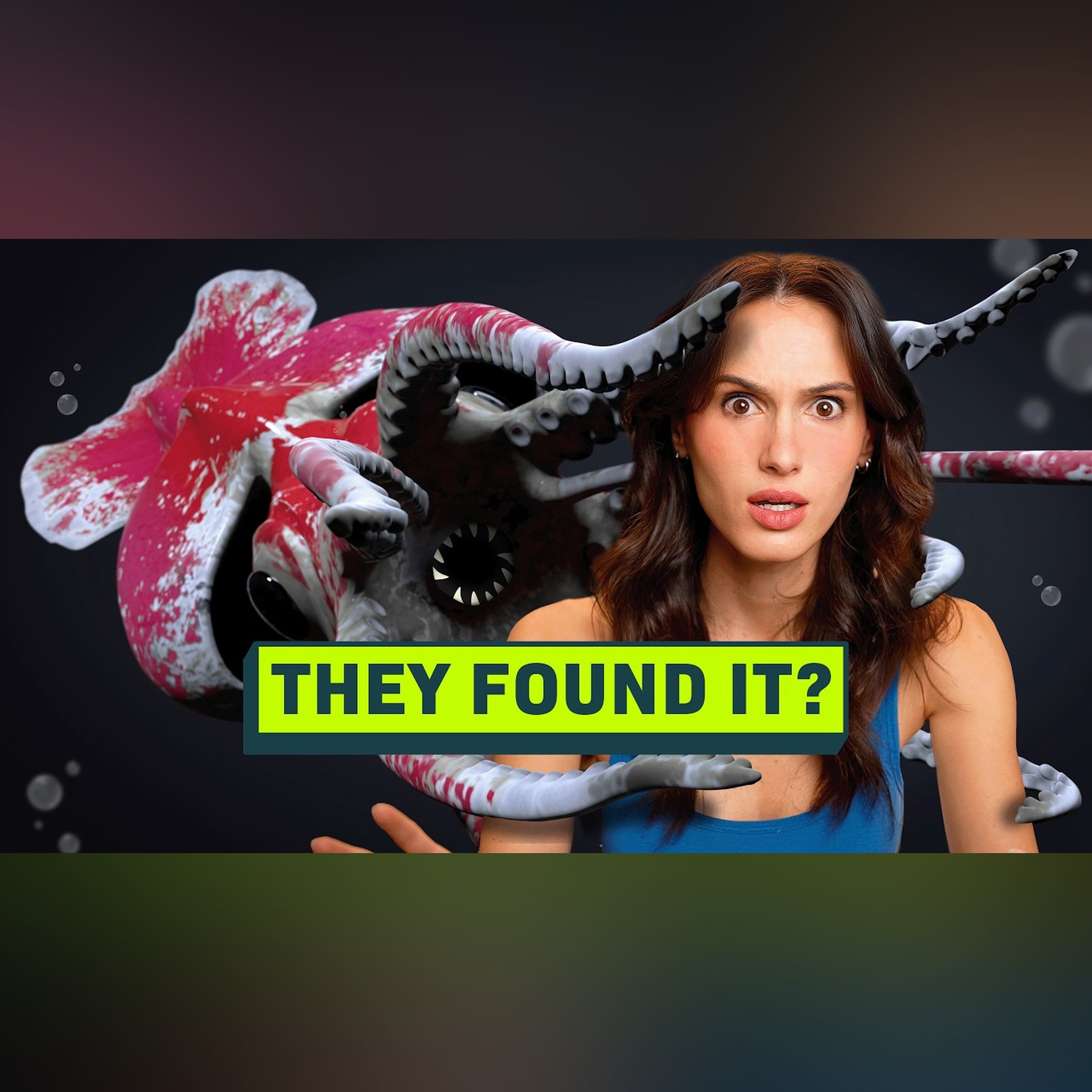
    The New Hunt for the Colossal Squid

    The deeper you go, the weirder it gets... Visit http://mercury.com to join over 200 thousand entrepreneurs who love Mercury. Gigantic, monstrous, beautiful creatures thrive in the cold dark depths of our oceans. Until now though, most of our discoveries have just required decades of work for the chance to just get… lucky. Now, there’s a NEW WAY to discover the animals hidden in the deepest oceans. And all you need is a drop of water… In this video, come with us as we dive into our deepest oceans. Together we’ll see what’s hiding there, explore how we discover new animals today, and reveal the shocking new tech that is unlocking a new age in deep ocean discovery. Huge if true! Mercury Note: Mercury is a financial technology company, not an FDIC-insured bank. Banking services provided through Choice Financial Group and Column N.A., Members FDIC. Chapters 00:00 What did they find in the deep ocean? 03:16 What animals are hiding in the twilight zone? 05:29 How do we find giant monsters in the deep? 06:43 What else is still hiding in the abyss? 07:42: Why do they get so BIG? 10:20 What can a drop of water tell us? 11:28 How does eDNA work? 12:24 Can we find the colossal squid? 15:03 What about totally unknown species?? 16:19 What’s the new frontier of ocean discovery? 17:04 Why is this huge if true? 18:00 :) https://creativecommons.org/licenses/by-nc-sa/4.0/ You can find me on Instagram here: https://www.instagram.com/cleoabram On TikTok here: https://www.tiktok.com/@cleoabram Or on Twitter here: https://twitter.com/cleoabram Bio: Cleo Abram is an Emmy-nominated independent video journalist. On her show, HUGE* If True, Cleo explores complex technology topics with rigor and optimism, helping her audience understand the world around them and see positive futures they can help build. Before going independent, Cleo was a video producer for Vox. She wrote and directed the Coding and Diamonds episodes of Vox’s Netflix show, Explained. She produced videos for Vox’s popular YouTube channel, was the host and senior producer of Vox’s first ever daily show, Answered, and was co-host and producer of Vox’s YouTube Originals show, Glad You Asked. Additional reading and watching: - NOAA's eDNA Fact Sheet: https://oceanexplorer.noaa.gov/wp-content/uploads/2020/07/environmental-DNA-fact-sheet.pdf - Monterey Bay Aquarium Research Institute: https://www.mbari.org/know-your-ocean/what-is-environmental-dna-edna/ - How eDNA technology is changing the game for protecting ocean species: https://www.theguardian.com/environment/2023/jun/12/this-will-finally-lift-the-veil-how-edna-can-see-the-oceans-hidden-life - Tracking Down Ocean Species On the Go Using eDNA: https://ocean.si.edu/ocean-life/invertebrates/tracking-down-ocean-species-go-using-edna#:~:text=A%20drop%20of%20the%20prepared,previously%20run%20via%20the%20internet. - New DNA tool 'changes everything in marine science: https://www.nationalgeographic.com/environment/article/edna-environmental-dna-counts-fish-changes-marine-science - DNA left by ocean animals provides rare glimpse of marine ecosystems, Stanford researchers say: https://news.stanford.edu/stories/2017/06/dna-left-ocean-animals-provides-rare-glimpse-marine-ecosystem - Exploring Deepwater Ecosystems with eDNA: https://www.youtube.com/watch?v=5gSSLigCl8Y - eDNA in the Twilight zone: https://www.youtube.com/watch?v=B2djwE5-SG8 - eDNA: How Scientists See Hidden Animals: https://www.youtube.com/watch?v=N8m8SLQZX0Q - How we can detect pretty much anything: https://youtu.be/bdwU_ZPk1cY?si=CMe19bv49U2PcBrP - The Wild: Eily Andruszkiewicz Allan: The magic of eDNA https://www.kuow.org/stories/eily-andruszkiewicz-allan-the-magic-of-edna - NOAA's Ocean Omics: https://oceanexplorer.noaa.gov/noaa-omics/ - Ocean Census: https://oceancensus.org/ - 1OceanFoundation: https://www.1ocean.org/news/the-untold-story-of-mediterranean Learn more about your ad choices. Visit megaphone.fm/adchoices

  • Monday · 15 min

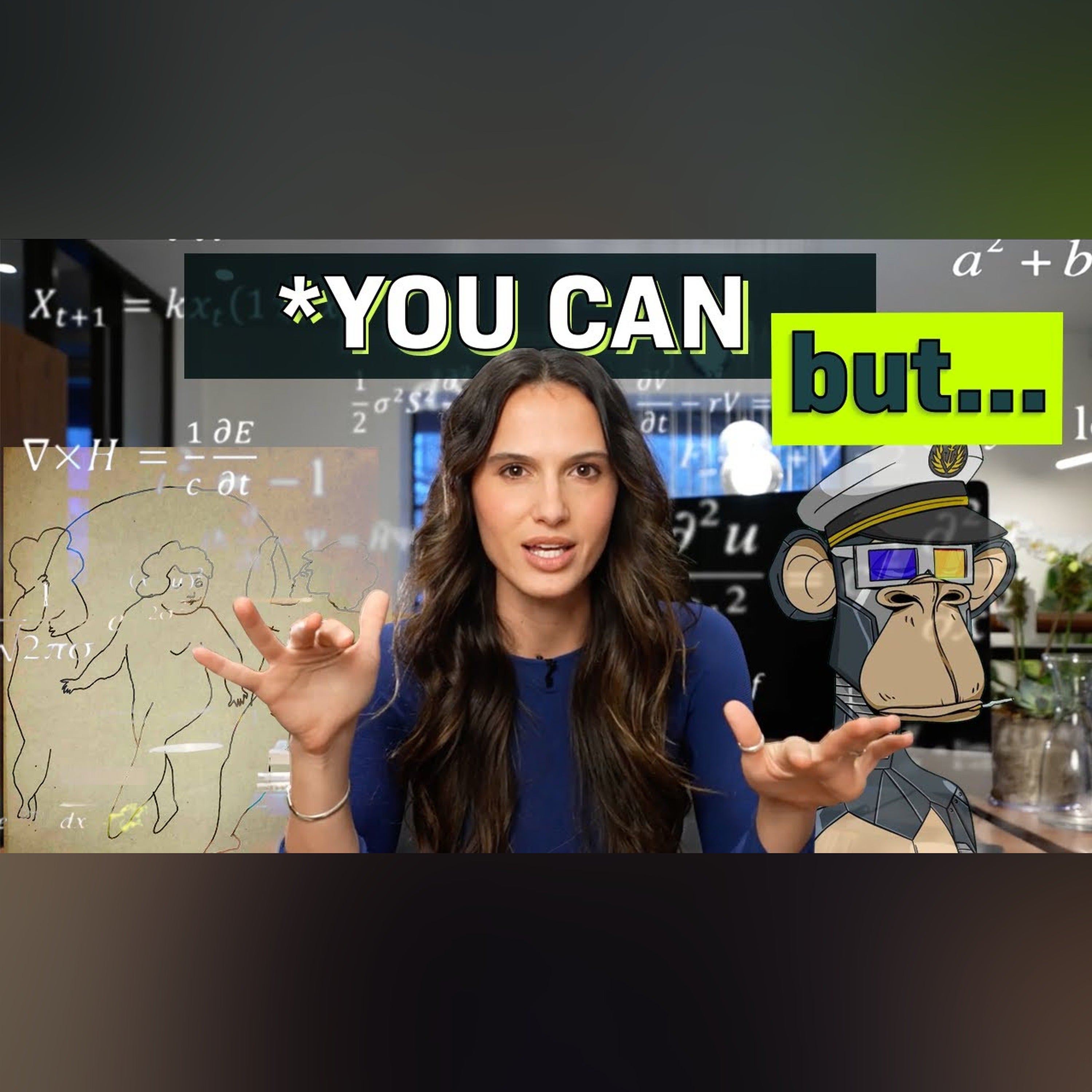
    Why You Can't Just Screenshot an NFT

    How can a JPEG cost money? Subscribe to see the next episode: https://www.youtube.com/cleoabram?sub_confirmation=1 The biggest question I hear about NFTs is: “Why can’t I just screenshot that?” Or, put another way, why does a digital image that can be copied have any value? The answer, it turns out, isn’t in an explainer about blockchain technology (you’re welcome). The answer to why NFTs have any value is hiding in the art market that came before them. Because NFTs are weird, but it turns out art is already even weirder. To really understand NFTs, we have to zoom out a bit, and talk about the incredibly strange way we value art to begin with. And that story starts not with crypto, but with a fight at an art auction in 1973… This video explains why a JPEG can cost money, and how expensive art led to NFTs. Along the way, I get help from two incredible experts: David Galperin, head of contemporary art for the Americas at Sotheby’s, and Alexis Ohanian, founder of Reddit and investor. David tells me about how the Scull Sale in 1973 exploded the art market forever, how Andy Warhol gave his silk screens to appropriation artist Elaine Sturtevant so she could copy his prints, and how Sol LeWitt’s wall drawings go for millions but the value is in “the certificate, not the drawing.” Alexis gives me a tour of his NFT collection (!), shows me the Cryptopunk (Serenapunk!) he gave to his wife Serena Williams, and explains how this technology has become a new medium for artists looking to the future. Together, we explore the big questions people are asking about NFTs and how the art world has grappled with those same questions for decades: What is value? Where does it come from? What is too much, for too little? 00:00 Why do people buy NFTs? 01:04 How are NFTs like contemporary art? 03:41 Why is art so expensive? 05:10 Is art just money laundering? 06:07 Why do people buy NFTs? 07:41 Are NFTs just a link to an image? 08:47 Why do NFTs matter? 10:24 How do I do sponsorships? Be featured in an episode - upload questions for me to answer! https://www.dropbox.com/request/Edocsb2kErpueQ7F9T1Q I tell different stories in different places: You can find me on TikTok here for short, fun explainers: https://www.tiktok.com/@cleoabram You can find me on Instagram here for more personal stories: https://www.instagram.com/cleoabram You can find me on Twitter here for thoughts and curated news: https://twitter.com/cleoabram Bio: Cleo Abram is an Emmy-nominated video producer and journalist. Cleo produces detailed explainer stories about technology and economics. She wrote the Coding and Diamonds episodes of Vox’s Netflix show, Explained, was the host and a senior producer of Vox’s first ever daily show, Answered, as well as a host and producer of Vox’s YouTube Originals show, Glad You Asked. She now makes her own independent show, Huge If True. Each episode takes on one big technology innovation or idea, explains what it is, and helps people imagine the ways it could improve the world we live in by answering one simple question: If this works, what could go right? Sources and additional reading: - “The $12 Million Stuffed Shark: The Curious Economics of Contemporary Art,” Don Thompson https://us.macmillan.com/books/9780230620599/the12millionstuffedshark - “The Price of Everything” https://www.youtube.com/watch?v=iejpS_PpPJk&ab_channel=HBO - “Museum of Forgeries,” MSCHF ​​https://moforgeries.org/ - “Scull's U.S. Art Brings Record $2 Million,” New York Times, 1973 https://timesmachine.nytimes.com/timesmachine/1973/10/19/93293442.html?pageNumber=57 - “Screenshotting NFTS” Know Your Meme https://knowyourmeme.com/memes/screenshotting-nfts - “The Story of Contemporary Art,” Tony Godfrey https://mitpress.mit.edu/books/story-contemporary-art - “look what i made for you” GB ‘Doc’ Burford https://docseuss.medium.com/look-what-i-made-for-you-appare Learn more about your ad choices. Visit megaphone.fm/adchoices

  • Monday · 1 hr 6 min

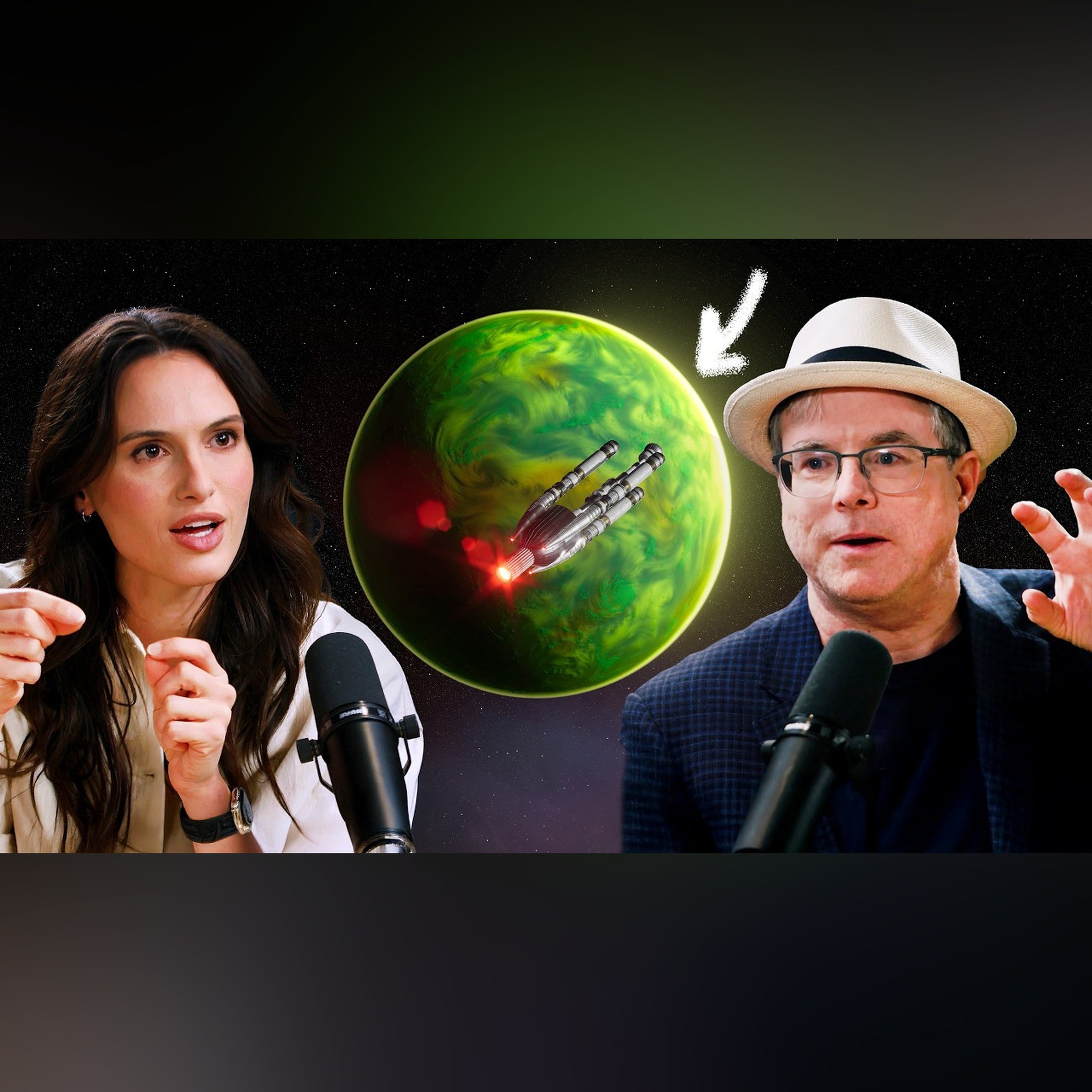
    I Wrote a NEW Sci-Fi with Project Hail Mary Author Andy Weir

    This wasn't in the book... Andy is one of the most popular science fiction writers alive today. He also wrote The Martian. What’s special about his work is how real his fake stories are. He showed me the secret spreadsheets he uses to calculate the science in his writing (including my favorite, “wrong math”). The reason that matters is that fiction can help you see the real world more clearly. Sci-fi is “huge if true”! This show is about real science and tech, but we’ve done a little sci fi to explain complex things. So I wanted to learn from Andy. In this conversation, we go deep inside Andy’s fictional worlds to see how exactly he makes them so real… And we play out a BRAND NEW sci fi story together in real time… Welcome to HUGE* Conversations. Chapters 00:00 Who is Andy Weir? 03:10: The world’s largest meteorite 06:04 Andy Weir’s secret spreadsheets 10:04 How Rocky became Rocky 13:02 Where Rocky’s story really began 15:07 What didn’t make it into the book for Project Hail Mary 17:22 How to create a true alien 19:25 Rocky’s body v. your body 23:38 Our new sci-fi story 27:23 How to tell if a planet has alien life 31:23 The biggest question if we do find aliens 36:48 How do you talk to a new alien species 41:16 The biggest changes in The Martian 44:55 The secret sauce of HUGE* and Project Hail Mary 48:15 Does sci-fi influence science 51:17 Andy’s new book 51:42 The biggest sci-fi changes in real life 54:54 The optimistic future Andy sees coming 57:35 What Andy Weir wants to be remembered for 58:42 Sneak peek at our next video! 58:53 :) You can find me on Instagram here: https://www.instagram.com/cleoabram On TikTok here: https://www.tiktok.com/@cleoabram Or on Twitter here: https://twitter.com/cleoabram Bio: Cleo Abram is an Emmy-nominated independent video journalist. On her show, HUGE* If True, Cleo explores complex technology topics with rigor and optimism, helping her audience understand the world around them and see positive futures they can help build. Before going independent, Cleo was a video producer for Vox. She wrote and directed the Coding and Diamonds episodes of Vox’s Netflix show, Explained. She produced videos for Vox’s popular YouTube channel, was the host and senior producer of Vox’s first ever daily show, Answered, and was co-host and producer of Vox’s YouTube Originals show, Glad You Asked. Additional reading and watching: - Novels by Andy Weir: Project Hail Mary, The Martian, Artemis - "The Egg", a short story by Andy Weir - Webpage with details of Eridian biology https://www.galactanet.com/eridian/ - Interviews with Andy Weir: - The Talking Room with Adam Savage https://www.youtube.com/watch?v=5SemyzKgaUU - Penguin Random House https://www.youtube.com/watch?v=16bKLuAZvyw - Dr. Becky: https://youtu.be/JOgwM941nV4?si=MnS-VdLFJ_GcbShR - Re: Thinking with Adam Grant https://podcasts.apple.com/us/podcast/worklife-with-adam-grant/id1346314086?i=1000607234826 - Lecture at Lawrence Livermore National Laboratory: http://youtube.com/watch?v=2tfh6OUUYUw - Paper, "What Changed when Andy Weir's The Martian Got Edited?" by Ketzan and Schoch https://dh2017.adho.org/abstracts/317/317.pdf - NASA's Exoplanet Exploration Program https://science.nasa.gov/astrophysics/programs/exep/ Vox: https://www.vox.com/authors/cleo-abram IMDb: https://www.imdb.com/name/nm10108242/ Gear I use: Camera: Sony A7SIII Lens: Sony 16–35 mm F2.8 GM Audio: Sennheiser SK AVX and Zoom H4N Pro Music: Musicbed, Tom Fox Follow along for more episodes of HUGE* If True: https://www.youtube.com/cleoabram?sub_confirmation=1 — Hey, welcome to the joke down low! What do you give an alien when they’re upset? Some space. Find a way to use “space” in a comment to let me know you’re a real one who made it to the end of the description :) Learn more about your ad choices. Visit megaphone.fm/adchoices
  • Monday · 20 min

    Why Elon Musk is Really Building Starlink

    Your internet isn't in space. It's in the ocean. But that might change, and here's why. Subscribe to see more optimistic technology stories! Elon Musk tweeted that Starlink satellite internet service is now available in Ukraine. What does that really mean? Why is it important? And if it’s a big new thing that the internet is in space then… where was it before? In this video, I dive deep into how your internet gets to you right now, why Elon Musk wants to put it in space, and why it all matters. We’re in the middle of the Internet Space Race. It’s not just Elon with Starlink and SpaceX, it's also Jeff Bezos with Project Kuiper… oh and don’t forget Richard Branson with OneWeb. Why do all these billionaires want to put your internet in space? So much so that they’re willing to put millions of dollars on the line, weather geomagnetic storms, and launch thousands of satellites into orbit, all in an attempt to change the way millions of people get their (your!) internet. But this is more than just a fight between billionaires. It’s a fight for the future of the internet. It’s an effort to get connected the billions of people who still, in 2022, don’t have access to high speed internet - or can’t afford the cost given the way it’s being provided today. This is a story about ambition, connection, and a WHOLE LOT of crazy cool engineering. I show 3 maps in this video that you might enjoy exploring for yourself: - Submarine cable map: https://www.submarinecablemap.com/ - Share of the population using the internet: https://ourworldindata.org/grapher/share-of-individuals-using-the-internet - Starlink satellite map: https://satellitemap.space/ Chapters: 00:00 The Internet Space Race has begun 01:15 How does the internet work? 05:03 Why put the internet in space? 10:37 How does Starlink work? Be featured in an episode - upload questions for me to answer: https://www.dropbox.com/request/Edocsb2kErpueQ7F9T1Q I tell different stories in different places: You can find me on TikTok here for short, fun tech explainers: https://www.tiktok.com/@cleoabram You can find me on Instagram here for more personal stories: https://www.instagram.com/cleoabram You can find me on Twitter here for thoughts, threads and curated news: https://twitter.com/cleoabram Bio: Cleo Abram is an Emmy-nominated video producer and journalist. Cleo produces detailed explainer stories about technology and economics. She wrote the Coding and Diamonds episodes of Vox’s Netflix show, Explained, was the host and a senior producer of Vox’s first ever daily show, Answered, as well as a host and producer of Vox’s YouTube Originals show, Glad You Asked. She now makes her own independent show, Huge If True. Each episode takes on one big technology innovation or idea, explains what it is, and helps people imagine the ways it could improve the world we live in by answering one simple question: If this works, what could go right? Sources I read/watched for this video and think you might enjoy: - “Why SpaceX is Making Starlink,” Real Engineering https://www.youtube.com/watch?v=giQ8xEWjnBs&t=108s&ab_channel=RealEngineering - “Gaming on STARLINK!!” Linus Tech Tips https://www.youtube.com/watch?v=Fh1a2K9ZgNA&t=207s&ab_channel=LinusTechTips - “What Elon Musk's 42,000 Satellites Could Do To Earth,” Tech Insider https://www.youtube.com/watch?v=Aw3R-4UC4wI&t=165s&ab_channel=TechInsider - “Why Starlink is crucial for SpaceX’s success,” CNBC https://www.youtube.com/watch?v=GambrByc01A&t=1010s&ab_channel=CNBC - “Starlink explained - why SpaceX needs 42,000 satellites,” Undecided with Matt Ferrell https://www.youtube.com/watch?v=tuFS0zOwyBg&t=182s&ab_channel=UndecidedwithMattFerrell - “It’s time for a new approach for mapping broadband data to better serve Americans,” Microsoft https://blogs.microsoft.com/on-the-issues/2019/04/08/its-time-for-a-new-approach-for-mapping-broadband Learn more about your ad choices. Visit megaphone.fm/adchoices
  • Monday · 1 hr 12 min

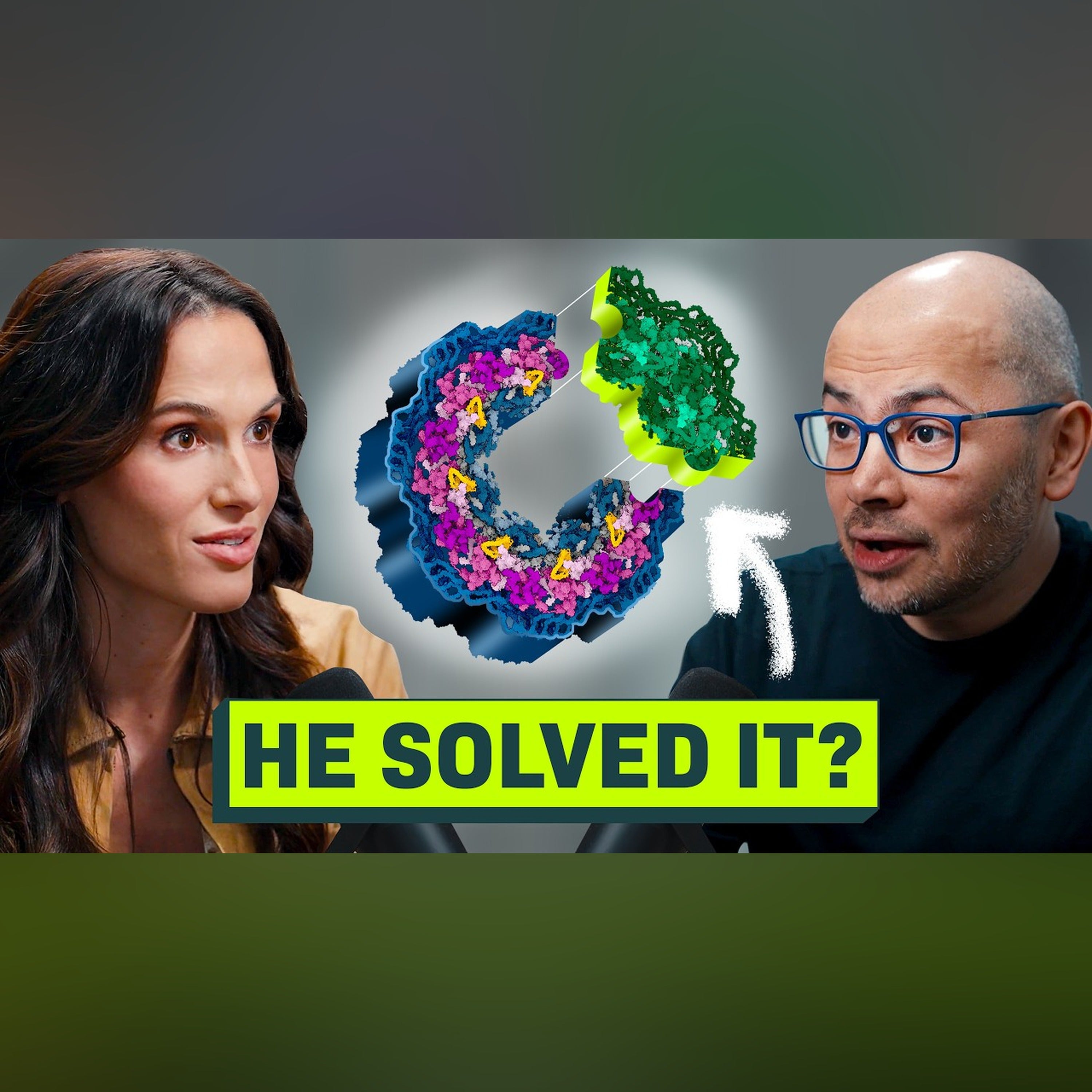
    The Hardest Problem AI Ever Solved, with Google DeepMind CEO

    He solved “the most important unsolved problem in science”… If you need more optimistic science and tech stories, subscribe to support HUGE*! Demis Hassabis is a Nobel Prize winner and CEO of Google DeepMind. He is one of the most important people alive on what is quickly becoming the biggest technological advance of our lifetime. Because the biggest way AI is going to impact your life, you can’t see. It’s not a chatbot or an image generator. It’s the tools he and his team are building that are invisible to you – in new drug design, nuclear fusion, natural disasters detection, quantum computers. So who Demis is and what he chooses to build matters a lot. And he’s fascinating… He’s a childhood chess prodigy who at 17 turned down a reportedly million dollar job offer from a gaming company to go to college instead, and then get a PhD in neuroscience. He founded his company DeepMind with a mission to “solve intelligence” – starting with beating video games. He sold that company to Google specifically because they promised to let DeepMind focus on scientific research. But as this has turned into the most intense technological battle in recent history, Demis is now in charge of much much more. He’s now behind basically everything Google does in AI. He’s making decisions that affect your life and millions of other lives every single day. So what is he planning to do with all that power? My goal is to show you the future Demis Hassabis wants to build, so you can decide for yourself what you think of it. Welcome to HUGE* Conversations. This interview was recorded on March 5, 2026 in London. Chapters 00:00 The AI most likely to save your life 02:04 Who is the man behind Google’s AI? 03:58 The 50-year mystery AI just solved 06:15 The moment that changed everything 12:30 Why every future drug will use AI 16:47 The cutting edge of drug discovery now 19:13 How DNA-editing and AI work together 21:52 "I would have left AI in the lab longer" 25:39 The "Code Red" that changed google 29:16 Move 37: When AI got creative 34:24 Why true intelligence is so hard 37:22 From zero to world champion in 24 hours 43:09 How militaries should use AI 45:40 AI risks nobody talks about 50:13 What humans can do that AI can’t 55:17 The sci-fi future Demis imagines 58:17 What Demis Hassabis wants his legacy to be 1:00:14 How to get "superpowers" with AI 1:01:56 How to prepare for AI 1:04:59 :) You can find me on Instagram here: https://www.instagram.com/cleoabram On TikTok here: https://www.tiktok.com/@cleoabram Or on Twitter here: https://twitter.com/cleoabram Bio: Cleo Abram is an Emmy-nominated independent video journalist. On her show, HUGE* If True, Cleo explores complex technology topics with rigor and optimism, helping her audience understand the world around them and see positive futures they can help build. Before going independent, Cleo was a video producer for Vox. She wrote and directed the Coding and Diamonds episodes of Vox’s Netflix show, Explained. She produced videos for Vox’s popular YouTube channel, was the host and senior producer of Vox’s first ever daily show, Answered, and was co-host and producer of Vox’s YouTube Originals show, Glad You Asked. Additional reading and watching: - The Thinking Game (documentary) : https://www.youtube.com/watch?v=d95J8yzvjbQ - AlphaGo - The Movie (documentary): https://www.youtube.com/watch?v=WXuK6gekU1Y&t=3159s - Veritasium's "AlphaFold - The Most Useful Thing AI Has Ever Done": https://www.youtube.com/watch?v=P_fHJIYENdI&list=WL&index=5&t=74s - Google DeepMind: The Podcast, "The future of intelligence | Demis Hassabis": https://www.youtube.com/watch?v=PqVbypvxDto&t=120s - AlphaGenome Announcement: https://deepmind.google/blog/alphagenome-ai-for-better-understanding-the-genome/ - AlphaFold paper in Nature: https://www.nature.com/articles/s41586-021-03819-2 - Isomorphic Labs: https://www Learn more about your ad choices. Visit megaphone.fm/adchoices
  • Monday · 12 min

    The Big Misconception About Clean Energy

    … I’ve been thinking about energy use all wrong. Subscribe to support Huge If True, an optimistic tech show. As long as most of our energy still comes from fossil fuels, we’re in kind of a trap. Using less energy is our only real option to slow climate change. So most of us have heard only one message throughout our lives: “Conserve energy. Because terrible things will happen if we don’t.” That’s true. But I now think of it as “the stick” of climate communication - the way to get people to care about climate change based on fear and desperation. I think it’s time to talk about “the carrot” - the way to get people to work toward clean energy based on hope and audacious ambition. This video explains why, with help from my former colleague at Vox, Matt Yglesias. As renewable energy continues to get cheaper, as more and more clean energy technologies become more viable, we have an opportunity to look ahead toward a better future. What would you do with abundant clean energy? Chapters: 00:00 We’re thinking about energy wrong 01:17 The stick: climate change 02:25 Why you’re taught to conserve energy 03:23 Why we should use more clean energy 04:36 The carrot: energy abundance 05:38 Why poor countries need more energy 06:39 Why everyone needs more energy Be featured in an episode - upload questions for me to answer! https://www.dropbox.com/request/Edocsb2kErpueQ7F9T1Q I tell different stories in different places: You can find me on TikTok here for short, fun tech explainers: https://www.tiktok.com/@cleoabram You can find me on Instagram here for more personal stories: https://www.instagram.com/cleoabram You can find me on Twitter here for thoughts, threads and curated news: https://twitter.com/cleoabram Bio: Cleo Abram is an Emmy-nominated video producer and journalist. Cleo produces detailed explainer stories about technology and economics. She wrote the Coding and Diamonds episodes of Vox’s Netflix show, Explained, was the host and a senior producer of Vox’s first ever daily show, Answered, as well as a host and producer of Vox’s YouTube Originals show, Glad You Asked. She now makes her own independent show, Huge If True. Each episode takes on one big technology innovation or idea, explains what it is, and helps people imagine the ways it could improve the world we live in by answering one simple question: If this works, what could go right? Sources and additional reading: - “The case for more energy,” Matt Yglesias, Slow Boring: https://www.slowboring.com/p/energy-abundance - “The world’s energy problem,” Our World In Data: https://ourworldindata.org/worlds-energy-problem - “How Americans see climate change and the environment in 7 charts,” Pew Research Center: https://www.pewresearch.org/fact-tank/2020/04/21/how-americans-see-climate-change-and-the-environment-in-7-charts/ - “How to drive fossil fuels out of the US economy, quickly,” Vox: https://www.vox.com/energy-and-environment/21349200/climate-change-fossil-fuels-rewiring-america-electrify - “Energy: Key Charts,” Our World In Data: https://ourworldindata.org/energy-key-charts - “Why nuclear plants are shutting down,” Vox (previous episode I produced on clean energy dynamics): https://www.youtube.com/watch?v=KC7YD98HixM&t=274s&ab_channel=Vox Vox: https://www.vox.com/authors/cleo-abram IMDb: https://www.imdb.com/name/nm10108242/ Gear I use: Camera: Sony A7SIII Lens: Sony 16–35 mm F2.8 GM Audio: Sennheiser SK AVX and Zoom H4N Pro Music: Musicbed Follow along for more episodes of Huge If True: https://www.youtube.com/cleoabram?sub_confirmation=1 — Welcome to the joke down low (an idea 100% in reference to Answer In Progress’ awesome “joke below the fold” - I always scroll down to see them and always wanted to do this myself too): What do wind turbines think of renewable energy? They’re big fans. Find a way to use the word “fan” in a comment to let me k Learn more about your ad choices. Visit megaphone.fm/adchoices
  • Monday · 52 min

    Jony Ive Shows The Real Process Behind the Ferrari Luce

    The first all electric Ferrari, the Ferrari Luce, isn't what you think... (feat. Apple legend Jony Ive and Ferrari Chief Designer Flavio Manzoni) For more optimistic science and tech stories, subscribe to HUGE*! You’re about to see the first ever all electric Ferrari. A car Ferrari said they’d never make, that will probably be the most controversial car they’ve ever made. Above all, it will definitely be a massive risk – new tech and new design that will impact all of us, whether or not we ever drive a Ferrari. I’m at a secret track in Italy to get a first look before it launches. And talk to the two people most responsible for it: Apple legend Jony Ive who showed me the crazy details inside this car. And Ferrari Chief Designer Flavio Manzoni who told me the real reason they made it, and why it matters – for Ferrari, electric cars, and you and me. Welcome to HUGE* Conversations. This HUGE* Conversation was recorded on April 29, 2026 in Balocco, Italy. Chapters: 00:00 What is the Ferrari Luce? 1:28 What does the first electric Ferrari look like? 3:28 Why did Ferrari say "never" to electric cars? 5:30 Will all cars be electric by 2035? 7:52 Why is this car already controversial? 10:20 What did Jony Ive learn from 20 years of the iPhone? 12:09 Why does this car matter if I won’t buy a Ferrari? 14:11 How much does the Ferrari Luce cost? 14:40 How fast is the Ferrari Luce? 15:28 What does the inside of the car look like? 17:18 Does the Ferrari Luce have fake engine sound? 18:30 Why did Jony Ive add more buttons and fewer screens? 21:25 What are the secret books Jony Ive wrote Ferrari? 23:18 Does Jony Ive regret the iPhone? 25:56 What would Steve Jobs say? 27:21 Why did Ferrari hire Jony Ive? 28:38 What shocked Flavio Manzoni about the Ferrari Luce? 30:38 Why make such a big car? 31:50 How do you make an electric Ferrari feel alive? 33:12 Is this the future of Ferrari? 35:56 What’s next for Ferrari? 38:11 How did they build the Ferrari Luce? 40:00 What would Enzo Ferrari say? 41:55 What do the world’s most famous designers want their legacy to be? You can find me on Instagram here: https://www.instagram.com/cleoabram On TikTok here: https://www.tiktok.com/@cleoabram Or on Twitter here: https://twitter.com/cleoabram Bio: Cleo Abram is an Emmy-nominated independent video journalist. On her show, HUGE* If True, Cleo explores complex technology topics with rigor and optimism, helping her audience understand the world around them and see positive futures they can help build. Before going independent, Cleo was a video producer for Vox. She wrote and directed the Coding and Diamonds episodes of Vox’s Netflix show, Explained. She produced videos for Vox’s popular YouTube channel, was the host and senior producer of Vox’s first ever daily show, Answered, and was co-host and producer of Vox’s YouTube Originals show, Glad You Asked. Additional reading and watching (Nicole or Justin?) Great multi-decade study on Ferrary by Worldly Partners: https://worldlypartners.com/wp-content/uploads/2026/04/Ferrari.pdf Awesome deep dive into Ferrari history by the Acquired pod: https://www.acquired.fm/episodes/ferrari More on Ferrari economics by the Wall Street Journal: https://www.wsj.com/articles/the-wild-economics-behind-ferraris-domination-of-the-luxury-car-market-8427dff0 Origin story of the Ferrari Luce: https://www.youtube.com/watch?v=1s2WW-99GtI&t=11s Design details of the Ferrari Luce: https://www.youtube.com/watch?v=BhVjIw9cv_4&t=37s How Ferrari built the Luce: https://www.youtube.com/watch?v=c_67jy3OqqQ&t=84s Deep dive into the process behind the Ferrari Luce by Jordon Golson: https://www.prndlcars.com/p/what-they-copied-ferrari-luce-jony-ive More on the interior by Jony Ive with Jordon Golson: https://www.youtube.com/watch?v=6Wv1btxCjVE Vox: https://www.vox.com/authors/cleo-abram IMDb: https://www.imdb.com/name/nm10108242 Learn more about your ad choices. Visit megaphone.fm/adchoices

  • Monday · 26 min

    Would You Use An Artificial Womb? (I Would)

    Artificial wombs are coming. That's a good thing. Subscribe to support Huge If True: https://www.youtube.com/cleoabram?sub_confirmation=1 Artificial wombs are the stuff of science fiction, the scary kind. I think of The Matrix, when Neo wakes up in the real world, covered in goo. But in recent years, researchers have taken enormous leaps in helping embryos survive and grow outside a uterus. Artificial wombs are becoming more science, less fiction. Any conversation about this topic gets heated, fast. Some people HATE the idea of an artificial womb. They feel that this technology could be used in terrible ways, like to control how people have kids or breed babies. Or that pregnancy is an important, special connection that we can never replicate with technology. Or that it’s a useless distraction, because there’s way more important stuff we should be investing in right now to make life easier for parents (parental leave, affordable childcare) and in the US at least, we don’t. But others LOVE the idea. They feel that artificial wombs could help reduce the risks of pregnancy, and point out that more than 800 women die from childbirth around the world every day. Or that pregnancy holds women back, with data showing the wage gap is borne mostly by mothers. Or simply that bearing children is painful, an argument all on its own. At the start of this episode, I feel genuinely conflicted. But halfway through, something happens that gives me a much-needed perspective shift. In this video, we dive deep into artificial wombs, with help from leading researcher Dr. Jacob Hanna. We explore how close we really are on artificial wombs now, how they work, why they’re so controversial - and why I realized I’d totally use one. Chapters: 00:00 Artificial wombs are coming 1:42 What is an artificial womb? 2:58 How close are we to artificial wombs? 4:06 Why are artificial wombs controversial? 6:42 Why we need artificial womb research now 9:42 My big perspective shift 12:19 What to expect from surgery 14:53 I get surgery 16:30 Why we need artificial wombs 18:48 The artificial womb moonshot Be featured in an episode - upload questions for me to answer! https://www.dropbox.com/request/Edocsb2kErpueQ7F9T1Q I tell different stories in different places: You can find me on TikTok here for short, fun tech explainers: https://www.tiktok.com/@cleoabram You can find me on Instagram here for more personal stories: https://www.instagram.com/cleoabram You can find me on Twitter here for thoughts, threads and curated news: https://twitter.com/cleoabram Bio: Cleo Abram is an Emmy-nominated video producer and journalist. Cleo produces detailed explainer stories about technology and economics. She wrote the Coding and Diamonds episodes of Vox’s Netflix show, Explained, was the host and a senior producer of Vox’s first ever daily show, Answered, as well as a host and producer of Vox’s YouTube Originals show, Glad You Asked. She now makes her own independent show, Huge If True. Each episode takes on one big technology innovation or idea, explains what it is, and helps people imagine the ways it could improve the world we live in by answering one simple question: If this works, what could go right? Sources and additional reading: - The twitter fight that inspired this episode: https://twitter.com/VitalikButerin/status/1483491180906045440 - Dr. Hanna and his team’s research, “Ex utero mouse embryogenesis from pre-gastrulation to late organogenesis,” Nature 2021 https://www.nature.com/articles/s41586-021-03416-3 - “Maternal Mortality,” Our World In Data https://ourworldindata.org/maternal-mortality - “The true cause of the gender wage gap,” Vox ​​https://www.vox.com/2018/2/19/17018380/gender-wage-gap-childcare-penalty - Organ transplant data, US Dept of Health and Human Services https://optn.transplant.hrsa.gov/data/ - “Experimenting With Test-Tube Babies Learn more about your ad choices. Visit megaphone.fm/adchoices
  • Monday · 21 min

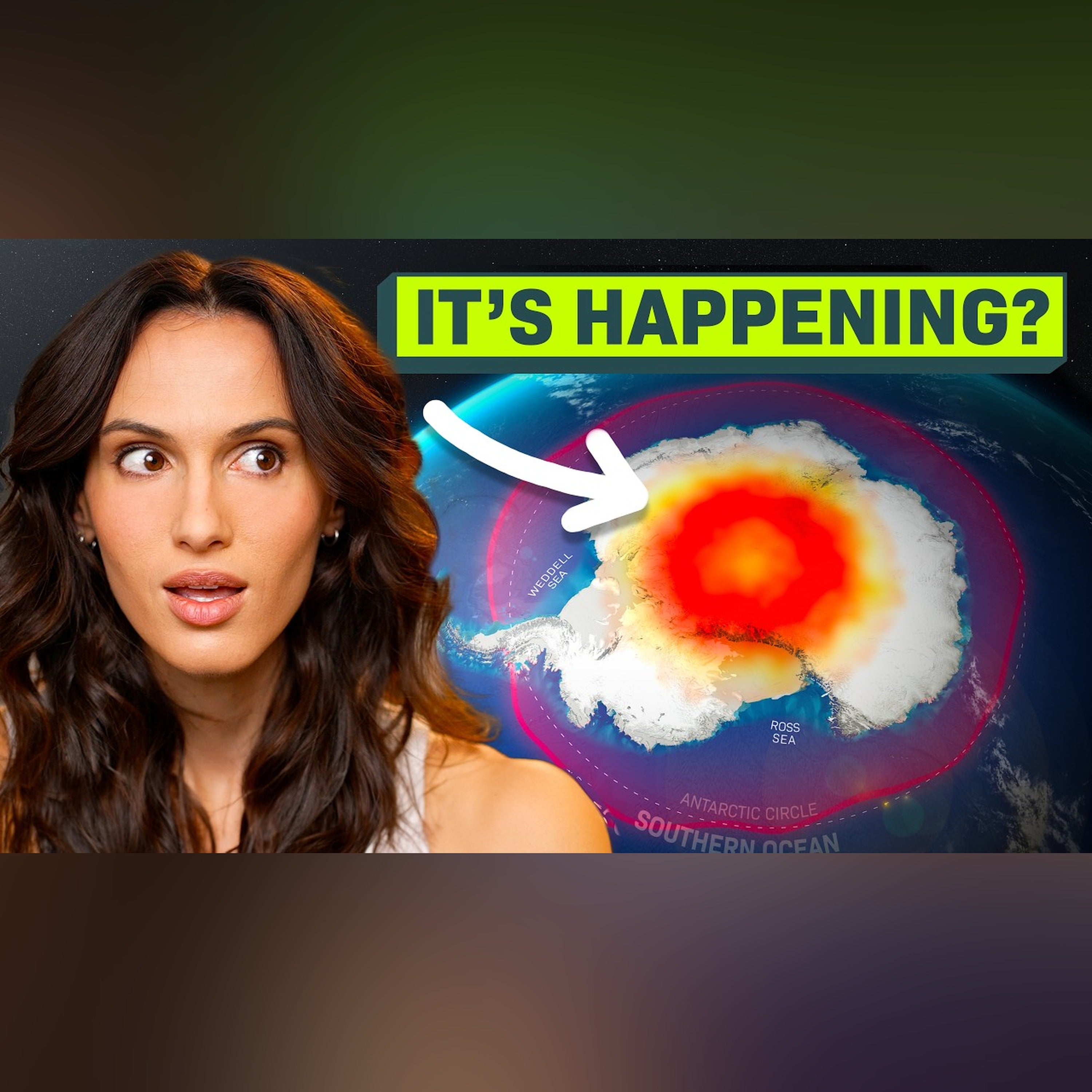
    Something’s Happening to the Ozone Hole

    This is ANTARCTICA. And in 1985, it became the center of a global crisis… Directly over Antarctica, high up in the stratosphere was a massive hole. And if we hadn’t done anything about it, today, we’d be living in an alternate world. By now, a hole would be forming over the North Pole as well. By 2040, the “hole” would be over the entire planet. By 2065, skin cancer rates would be soaring. Kids wouldn’t play outside much anymore… But that’s NOT the world we’re living in! In fact, you’ve probably stopped hearing this story altogether. That wasn’t by accident. It was a choice. Two choices, both of which dramatically changed the course of human history for the better. So let me show you how that happened and what's about to happen next. Because it turns out, the little sliver at the bottom of the map is actually the center of everything/our whole planet. And you need to see this now, because scientists say we need to make the next big choice. Visit http://mercury.com to join over 300 thousand entrepreneurs who love Mercury. Mercury is a financial technology company, not an FDIC-insured bank. Banking services provided through Choice Financial Group and Column N.A., Members FDIC. Chapters 00:00 What happened to the ozone hole? 02:22 How do you get to Antarctica? 05:06 What is the ozone layer? 07:16 Who owns Antarctica? 08:47 Is Antarctica the center of the planet? 09:32 How much ice is in Antarctica? 10:24 Is that a penguin?! 10:35 What is the Antarctic Treaty? 11:25 What caused the ozone hole? 12:12 How did we fix the ozone hole? 13:33 What are the Blue Rivers? 14:23 What's happening to the ice in Antarctica? 15:05 What’s the next big choice? 16:06 :) Special thanks to Dr. Steven Chown, Rebecca Warne and all of the amazing guides from the White Desert Foundation leading Science Week . You can find me on Instagram here: https://www.instagram.com/cleoabram On TikTok here: https://www.tiktok.com/@cleoabram Or on Twitter here: https://twitter.com/cleoabram Bio: Cleo Abram is an Emmy-nominated independent video journalist. On her show, HUGE* If True, Cleo explores complex technology topics with rigor and optimism, helping her audience understand the world around them and see positive futures they can help build. Before going independent, Cleo was a video producer for Vox. She wrote and directed the Coding and Diamonds episodes of Vox’s Netflix show, Explained. She produced videos for Vox’s popular YouTube channel, was the host and senior producer of Vox’s first ever daily show, Answered, and was co-host and producer of Vox’s YouTube Originals show, Glad You Asked. Additional reading and watching: More videos on the ozone hole and Antarctica: - Our previous HUGE* episode, “What’s Hidden Under Antarctica?” https://youtu.be/XfGEMCb6BQU?si=QAI_OwQ4K4EdAwkO - “Why You Don’t Hear About the Ozone Layer Anymore”, Vox https://youtu.be/CaLOiGEDPJQ?si=oc8RRdtmyA0Za0Z8 - “What If All of Antarctica's Ice Suddenly Melted?”, What If https://youtu.be/HesXeHI0vEU?si=VaHHp4FXj4cMoAuY - “What I Saw In Antarctica”, StarTalk https://youtu.be/pxUNoGzPjHw?si=cq4_NOmAhXhk1W7H For more on the Ozone Hole and recent research: - https://news.mit.edu/2026/scientists-find-ozone-depletion-began-decades-before-ozone-hole-discovery-0629 - https://science.nasa.gov/climate-change/faq/is-the-ozone-hole-causing-climate-change/ - https://ourworldindata.org/ozone-layer-context - https://www.rgs.org/about-us/our-work/latest-news/commemorating-40-years-since-discovery-of-ozone-hole - https://www.sciencehistory.org/education/scientific-biographies/susan-solomon/ - https://ourworldindata.org/data-insights/emissions-of-substances-that-deplete-the-ozone-layer-have-fallen-by-more-than-99-since-1989 NASA prediction models: - https://science.nasa.gov/earth/earth-observatory/the-world-we-avoided-by-protecting-the-ozone-layer/ - https://science Learn more about your ad choices. Visit megaphone.fm/adchoices
  • Monday · 15 min

    This Gene-Edited Tree Captures More CO2. Should We Plant It?

    These trees have been genetically modified to capture more carbon. Should we use them? Subscribe to support optimistic science and tech journalism! You may have heard that the United States Supreme Court recently weakened the power of the Environmental Protection Agency (EPA) to regulate emissions. That decision harms our ability to fight climate change. In this video, I look for hope in a new research effort - but it's important that new science be paired with regulation. As Mr Beast put it in this video, "we're going to need all the help we can get." Recently, I visited a greenhouse full of super trees. Over the past few decades, genetic engineering has given us the power to manipulate living things - crops, animals, even humans. At the same time, we’ve been unable to adequately slow climate change. The trees I saw are an effort to use one to help the other, led by a group of researchers at a company called Living Carbon. If it works, it could strengthen one of our best allies in this fight. Hold on though, easier said than done. In this video, we go behind the scenes with one big, ambitious project. We explore the major challenges to getting this right, and the reasons planting trees has become controversial in the fight against climate change. Along the way, I visit Living Carbon’s lab and greenhouse, and interview CEO Maddie Hall and CTO Patrick Mellor. The really HUGE idea here isn’t so much about these plants as it is about us. It’s the idea that sometime soon, humanity is going to need to take on a responsibility no species has ever had before: To deliberately, continuously regulate the atmosphere of a planet on behalf of every living thing on it. And we need to decide: How much do we change other species to do it? Chapters: 00:00 What are supertrees? 01:44 How do you edit tree genes? 02:26 What’s different about these trees? 03:45 Do these trees really suck in more CO2? 04:18 Thank you Masterworks! 05:24 Why not just plant more trees? 06:44 Why is planting trees controversial? 07:57 What about invasive species? 09:24 What do supertrees look like? 10:19 What’s next for Living Carbon? 11:00 What’s the HUGE* vision here? 12:05 Credits Be featured in an episode - upload questions for me to answer! https://www.dropbox.com/request/Edocsb2kErpueQ7F9T1Q You can find me on TikTok here for short, fun tech explainers: https://www.tiktok.com/@cleoabram You can find me on Instagram here for more personal stories: https://www.instagram.com/cleoabram You can find me on Twitter here for thoughts, threads and curated news: https://twitter.com/cleoabram Bio: Cleo Abram is an Emmy-nominated independent video journalist. On her show, Huge If True, Cleo explores complex technology topics with rigor and optimism, helping her audience understand the world around them and see positive futures they can help build. Before going independent, Cleo was a video producer for Vox. She wrote and directed the Coding and Diamonds episodes of Vox’s Netflix show, Explained. She produced videos for Vox’s popular YouTube channel, was the host and senior producer of Vox’s first ever daily show, Answered, and was co-host and producer of Vox’s YouTube Originals show, Glad You Asked. Vox: https://www.vox.com/authors/cleo-abram IMDb: https://www.imdb.com/name/nm10108242/ Additional reading and watching: - “If We Plant 1 TRILLION Trees Can We Stop Climate Change?” Be Smart https://youtu.be/PX1Rc0xlUpk - “These ‘supertrees’ are engineered to capture more carbon” Fast Company https://www.fastcompany.com/90646232/these-supertrees-are-engineered-to-capture-more-carbon - “Photosynthesis Enhanced Trees Grow Faster and Capture More Carbon” Living Carbon https://www.livingcarbon.com/post/photosynthesis-enhanced-trees-grow-faster-and-capture-more-carbon - “Enhanced photosynthetic efficiency for increased carbon assimilation and woody biomass production Learn more about your ad choices. Visit megaphone.fm/adchoices

  • Monday · 21 min

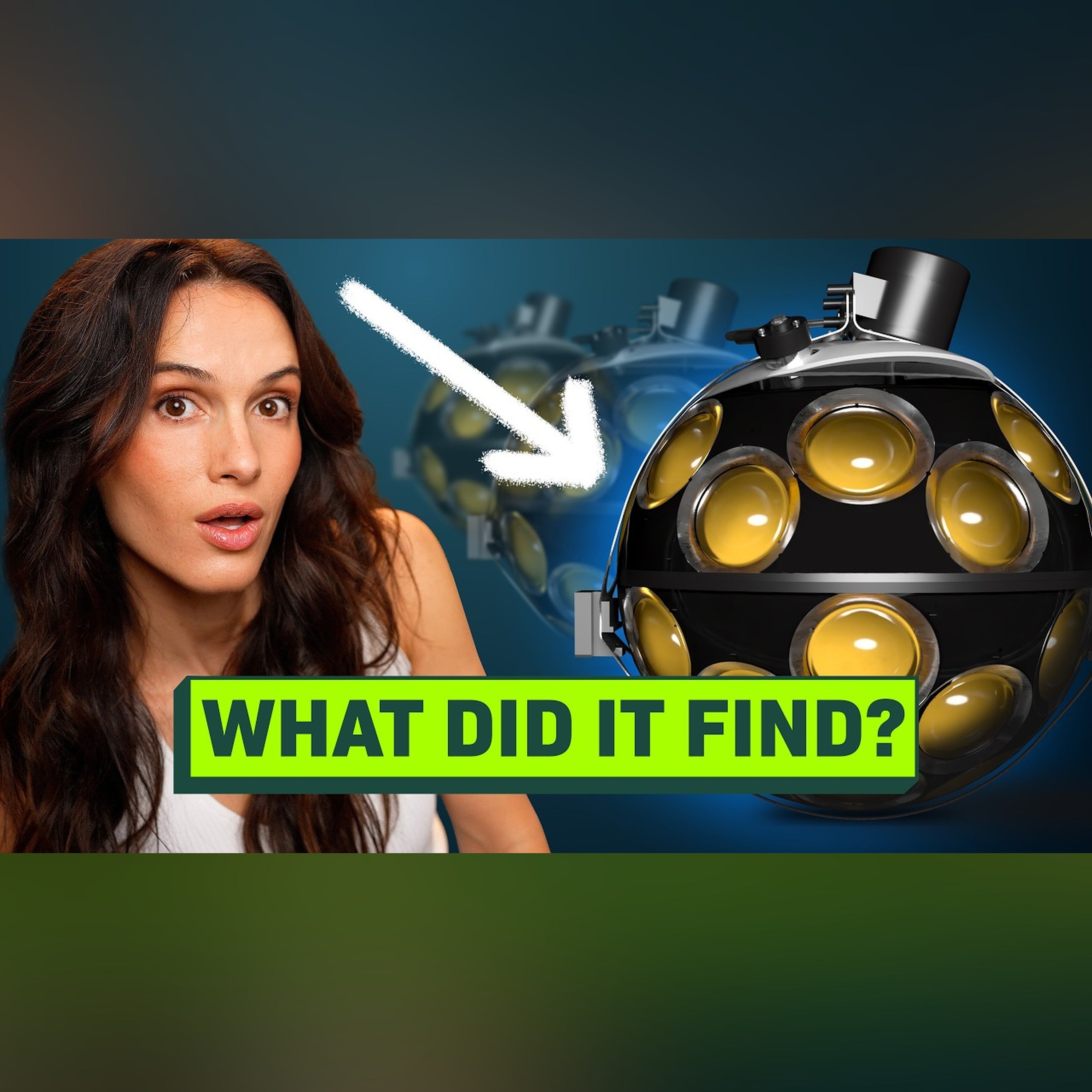
    The Massive Machine Hidden in the Deep Ocean

    Off the coast of Sicily, there’s a massive underwater machine. It looks like a forest of floating spheres… And on the surface, hidden in an abandoned winery, a computer watches them and waits. And in 2023, they saw something… Something WAY smaller than an electron tore through that forest, setting off a signal nearly 30x more powerful than anything like it we’ve seen before, which means something HUGE must have happened way out in space. This crazy experiment is not alone! Down in Antarctica, buried deep in the ice, are over 5000 more of these mysterious spheres. Together, these two machines – called KM3net and Ice Cube – are part of a massive global effort to give us a brand new way to find and look inside the biggest, most extreme, cosmic events in our universe. But to do it, they need to catch the most elusive particle in all of physics. And in this episode of HUGE* If True, we’re going to show you how… This episode was made possible by AT and T, the official connectivity partner of HUGE* If True. Chapters: 00:00 What's the machine hidden under the sea? 02:40 What is a neutrino? 03:24 How do we know what's out in the universe? 06:06 How do you catch a neutrino? 08:08 Why can’t we see neutrinos? 11:42 How do you know you’ve detected a neutrino? 12:27 What’s hiding underneath Antarctica? 13:08 What have we discovered with neutrinos? 14:44 What don’t we know yet? 15:03 Why is this HUGE* If True? 15:44 :) You can find me on Instagram here: https://www.instagram.com/cleoabram On TikTok here: https://www.tiktok.com/@cleoabram Or on Twitter here: https://twitter.com/cleoabram Bio: Cleo Abram is an Emmy-nominated independent video journalist. On her show, HUGE* If True, Cleo explores complex technology topics with rigor and optimism, helping her audience understand the world around them and see positive futures they can help build. Before going independent, Cleo was a video producer for Vox. She wrote and directed the Coding and Diamonds episodes of Vox’s Netflix show, Explained. She produced videos for Vox’s popular YouTube channel, was the host and senior producer of Vox’s first ever daily show, Answered, and was co-host and producer of Vox’s YouTube Originals show, Glad You Asked. Additional reading and watching: - Astro[sound]bites: Episode 108: 2000 Meters under the Mediterranean: https://podcasts.apple.com/us/podcast/episode-108-2000-meters-under-the-mediterranean/id1485957691?i=1000715791463&l=es-MX - Dan Hooper’s Podcast “Why This Universe”: https://podcasts.apple.com/us/podcast/why-this-universe/id1523312400 - IceCube and KM3NeT’s YouTube channels: https://www.youtube.com/user/KM3NeTneutrino https://www.youtube.com/c/IceCubeNeutrino - PhysicsGirl: My first science video in 3 years: https://www.youtube.com/watch?v=B3m3AMRlYfc - Video from Space: “Highest energy neutrinos ever observed detected deep in Mediterranean Sea” https://www.youtube.com/watch?v=WdxoVeIq31k - TED-Ed: Why neutrinos matter - Sílvia Bravo Gallart https://youtu.be/nkydJXigkRE?si=Bi4CPBLu3pKhy39X - KM3NeT: https://www.km3net.org/ - IceCube: https://icecube.wisc.edu/ - IceCubeGen2: https://icecube-gen2.wisc.edu/ - Cosmogenic candidate lights up KM3NeT: https://cerncourier.com/a/cosmogenic-candidate-lights-up-km3net/ - Observation of an ultra-high-energy cosmic neutrino with KM3NeT: https://www.nature.com/articles/s41586-024-08543-1 - Multimessenger observations of a flaring blazar coincident with high-energy neutrino IceCube-170922A https://www.science.org/doi/10.1126/science.aat1378 Evidence for neutrino emission from the nearby active galaxy NGC 1068 https://www.science.org/doi/10.1126/science.abg3395 Special thanks to: - INFN - Pasquale Migliozzi - Marco Circella (for all the incredible archive from KM3NeT) - Alin Ilioni (for 3D Models) - Annarita Margiotta - Tommaso Chiarusi - Carlos Maximiliano Mollo (for the tour Learn more about your ad choices. Visit megaphone.fm/adchoices

  • Monday · 47 min

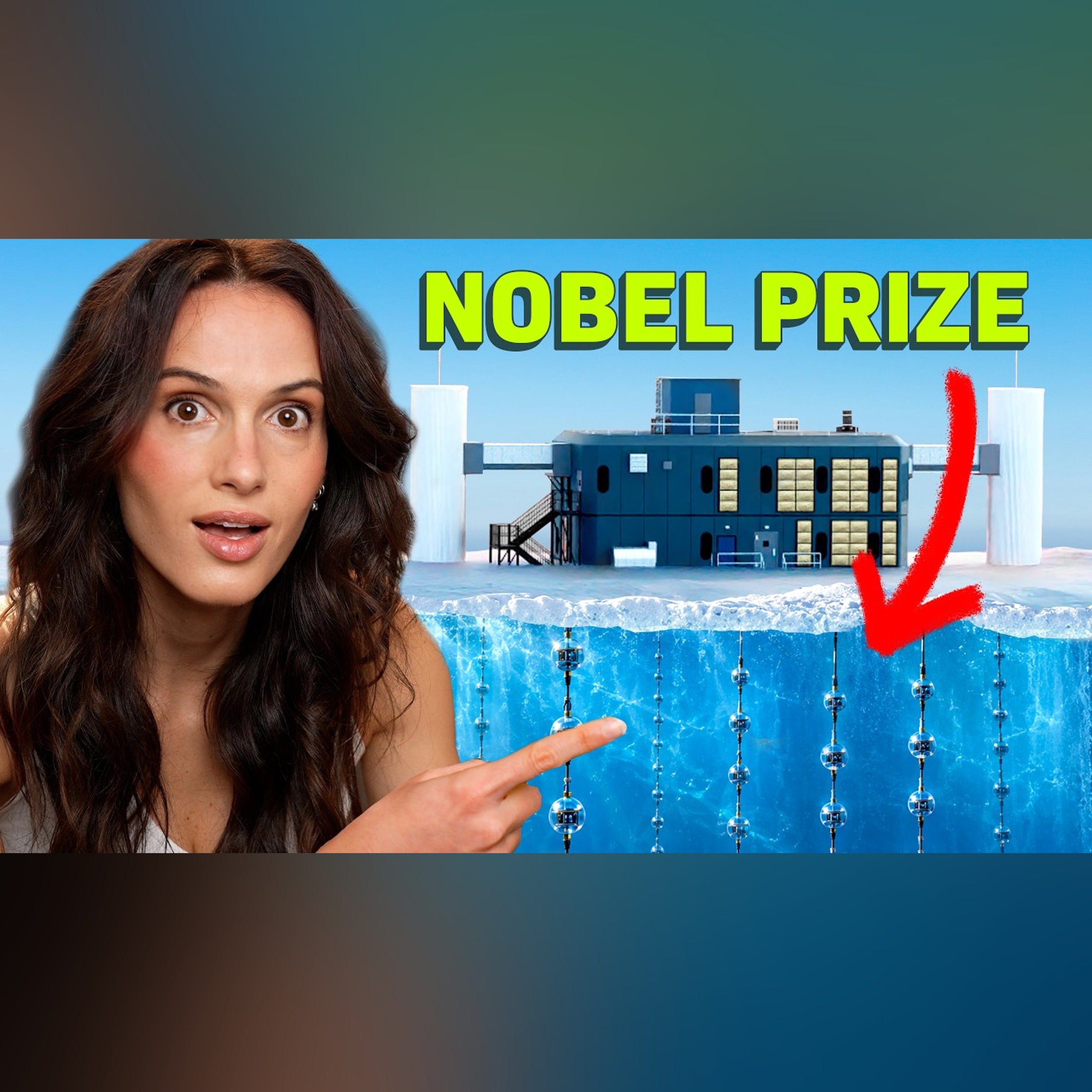
    The Gigantic Machine Deep Under Antarctica

    Imagine building a machine the size of a small mountain then burying it over a kilometer deep under the ice in Antarctica. That's what Dr. Francis Halzen really did. And it’s why he just won the 2026 Nobel Prize in Physics. Because with that machine, we’re uncovering one of the greatest mysteries in our universe… In this video, we take you deep into the ice to discover what his machine, IceCube, really does, how they built it, and what's coming NEXT... Filmed on location at the Wisconsin IceCube Particle Astrophysics Center (WIPAC) at the University of Wisconsin-Madison. Grand Theft Auto VI from Rockstar Games. The biggest, most immersive evolution of the series yet. Out Now on PlayStation 5 and Xbox Series X|S. https://www.rockstargames.com/VI/editions Chapters: 00:00 He just won the Nobel Prize 02:19 A huge machine under Antarctica 04:36 What does it see? 07:07 Why study this? 08:22 How does this help us see the universe? 10:09 How did they get this idea? 11:38 Why building IceCube so hard 13:28 What was AMANDA? 14:50 Why is Antarctic ice so special? 16:36 How does an IceCube sensor work? 17:46 How many sensors are under the ice? 18:50 How did they get it down there? 20:49 What are cosmic rays? 23:34 Why does IceCube need to be so big? 24:48 What did IceCube find in 2013? 29:15 Why does this discovery matter? 33:19 What’s next for IceCube? 34:41 How IceCube nearly failed 35:48 Can IceCube detect a supernova? 37:08 What does Francis Halzen want to be remembered for? 39:10 :) You can find me on Instagram here: https://www.instagram.com/cleoabram On TikTok here: https://www.tiktok.com/@cleoabram Or on Twitter here: https://twitter.com/cleoabram Bio: Cleo Abram is an Emmy-nominated independent video journalist. On her show, HUGE* If True, Cleo explores complex technology topics with rigor and optimism, helping her audience understand the world around them and see positive futures they can help build. Before going independent, Cleo was a video producer for Vox. She wrote and directed the Coding and Diamonds episodes of Vox’s Netflix show, Explained. She produced videos for Vox’s popular YouTube channel, was the host and senior producer of Vox’s first ever daily show, Answered, and was co-host and producer of Vox’s YouTube Originals show, Glad You Asked. Additional Reading and Watching: For more from IceCube: - https://icecube.wisc.edu/ - IceCube-Gen2: https://icecube-gen2.wisc.edu/ - https://www.youtube.com/@IceCubeNeutrino Papers and more coverage: - NASA GCN, IceCube mission page: https://gcn.nasa.gov/missions/icecube - Physical Review Letters, "First Observation of PeV-Energy Neutrinos with IceCube": https://journals.aps.org/prl/abstract/10.1103/PhysRevLett.111.021103 - Science, "Evidence for High-Energy Extraterrestrial Neutrinos at the IceCube Detector": https://www.science.org/doi/10.1126/science.1242856 - IceCube, "IceCube pushes neutrinos to the forefront of astronomy": https://icecube.wisc.edu/news/press-releases/2013/11/icecube-pushes-neutrinos-to-forefront-of-astronomy/ - IceCube, "IceCube awarded the 2013 Breakthrough of the Year": https://icecube.wisc.edu/news/awards/2013/12/icecube-awarded-2013-breakthrough-of-year/ - Science, "Multimessenger observations of a flaring blazar coincident with high-energy neutrino IceCube-170922A": https://www.science.org/doi/10.1126/science.aat1378 - NPR, "A 4 Billion Light-Year Journey Ends At The South Pole": https://www.kunc.org/npr-news/2018-07-12/a-4-billion-light-year-journey-ends-at-the-south-pole - National Geographic, "Origin of Mystery Space Radiation Finally Found": https://www.nationalgeographic.com/science/article/news-cosmic-rays-neutrinos-icecube-blazars-astronomy-space - Physics World, "Cosmic neutrino points back to blazar driven by supermassive black hole": https://physicsworld.com/a/cosmic-neutrino-points-back-to-blazar-driven-by-supermassive-black-ho Learn more about your ad choices. Visit megaphone.fm/adchoices
  • Monday · 25 min

    What's Hidden Under Antarctica?

    Something's hiding below the ice in Antarctica…. For optimistic science and tech stories, subscribe! In 1970, a team of Soviet scientists started drilling. For 28 years, they kept going… until after nearly 4,000 meters… they suddenly stopped. Because they’d found something unimaginable: Liquid water. A secret lake, down below all this ice, that had been completely sealed off from the rest of the world for 15 million years. How? And… is there something alive in there? Creatures that have been evolving separately from the rest of the planet for 15 million years? Scientists started searching for more of these secret lakes, and as they did, they realized there is way more going on under Antarctica than we ever thought. I needed to know the truth about Earth’s most remote continent. So I've come all the way to Antarctica to show you what's really happening down below this ice. And exactly what they discovered when they finally broke inside… Chapters: 00:00 What’s hiding under Antarctica? 01:50 How thick is the ice in Antarctica? 2:30 What if you dig a hole into Antarctica? 4:13 What’s inside a crevasse? 4:56 How do we know what’s under the ice? 6:24 What if you go deeper? 07: 18 How old is the ice under Antarctica? 10:33 Why are there lakes under Antarctica's ice? 13:31 How can we study the subglacial lakes? 15:19 Did we find new life under Antarctica? 16:52 Can research in Antarctica help us find aliens in space? 17:41 What don’t we know? 18:12 What's next? 18:22 :) Special thanks to Dr. Steven Chown, Rebecca Warne and all of the amazing guides from the White Desert Foundation leading Science Week . You can find me on Instagram here: https://www.instagram.com/cleoabram On TikTok here: https://www.tiktok.com/@cleoabram Or on Twitter here: https://twitter.com/cleoabram Bio: Cleo Abram is an Emmy-nominated independent video journalist. On her show, HUGE* If True, Cleo explores complex technology topics with rigor and optimism, helping her audience understand the world around them and see positive futures they can help build. Before going independent, Cleo was a video producer for Vox. She wrote and directed the Coding and Diamonds episodes of Vox’s Netflix show, Explained. She produced videos for Vox’s popular YouTube channel, was the host and senior producer of Vox’s first ever daily show, Answered, and was co-host and producer of Vox’s YouTube Originals show, Glad You Asked. Additional reading and watching: - History on the drilling into Lake Vostok: https://www.cambridge.org/core/journals/annals-of-glaciology/article/deep-drilling-at-vostok-station-antarctica-history-and-recent-events/8DA18E684DD19E80E7D02F2FBD2DFA26 - Drilling into Lake Ellsworth: https://www.smithsonianmag.com/smart-news/antarcticas-subglacial-lake-ellsworth-will-keep-its-secrets-for-now-75/ - WISSARD (Lake Whillans) drilling project: https://www.montana.edu/priscu/research/current/wissard-summary.html, https://astrobiology.nasa.gov/news/antarcticas-subglacial-lakes-support-prospects-for-life-on-icy-moons/ - SALSA (Lake Mercer) drilling project: https://today.ucsd.edu/story/researchers-extract-first-layered-lake-sediment-sample-from-subglacial-antarctica. - Beyond EPICA and Million year Ice Core Projects: https://www.beyondepica.eu/en/, https://www.antarctica.gov.au/science/climate-processes-and-change/antarctic-palaeoclimate/million-year-ice-core/ - Bedmap data from the British Antarctic Survey: https://bedmap.scar.org/ - The Polar Regions: https://nsidc.org/home, https://www.antarctica.gov.au/about-antarctica/ - Helen Fricker’s work + NASA’s ICESat tools: https://icesat-2.gsfc.nasa.gov/, https://today.ucsd.edu/story/uc-san-diego-led-science-team-selected-for-nasa-satellite-mission, https://www.science.org/doi/10.1126/science.1136897 - John Priscu's research on the Lake Vostok’s accretion ice: https://www.science.org/doi/10.1126/ Learn more about your ad choices. Visit megaphone.fm/adchoices
  • Monday · 12 min

    Can My Dog Live 80 Years?

    The real science of puppy aging Subscribe to support optimistic science and tech videos! Meet Thor. He’s a 10-pound Australian Shepherd and, objectively, the cutest dog to ever live (except yours, of course). Thor is 8 years old, which means that he is likely about halfway through his life. I on the other hand am probably about a third of the way through mine. I hate that math. It seems cruel that we live so much longer than our best friends. What can we do to help dogs live longer? That’s where this video begins. Along the way, my research took me on a journey to better understand what aging is, human and dog longevity research, how dogs and humans age differently, and why “dog years” aren't real. I met Celine Halioua, founder of a company called Loyal, which is conducting large-scale dog longevity research. And I spent some quality time with Thor. But the best part of this video is that YOU submitted your dog videos and photos! This video is dedicated to your dogs: Poppy, Cleo (oh, hey!), Alexa, Pickles, Bree, Tuffy, Whitey, Dakota, Callan, Annie, Lonzo, Belle, Momo, Nelson, Yolie, Achilles, Yondu, Jasper, Ginny, Arya, Goldie, Macho, Mochi, Bombon, Pepe, Cheeseburger (omg), Ellie, Hagrid, Leia, Mosley, Chillie, Mery, Azure, Data, Luna, Dobby, Ketch, Sem, Hershey, Kobe, Penny, Ari, Lou, Browser, Molly, Pia, Jack, Pocky, Alphonse, Banjo, Sandy, Simba, Maha, Chip, Titus, Dougal, Apollo, Lucky, Mister, Mouse, King, Meda, Yoshi, Bacon, Mia, Sherry, and Macy. We love you. (Please let me know if you submitted but don’t see your dog’s name here! I’ll add them.) Chapters: 00:00 How can I help my dog live longer? 01:11 What are dog years? 02:29 How do you measure aging? 03:15 The methylation “aging clock” 04:10 Why small dogs live longer 05:22 Making all dogs live longer 06:49 How to help my dog live longer now 07:43 Ode to our best friends Be featured in an episode - upload questions for me to answer! https://www.dropbox.com/request/Edocsb2kErpueQ7F9T1Q I tell different stories in different places: You can find me on TikTok here for short, fun tech explainers: https://www.tiktok.com/@cleoabram You can find me on Instagram here for more personal stories: https://www.instagram.com/cleoabram You can find me on Twitter here for thoughts, threads and curated news: https://twitter.com/cleoabram Bio: Cleo Abram is an Emmy-nominated video producer and journalist. Cleo produces detailed explainer stories about technology and economics. She wrote the Coding and Diamonds episodes of Vox’s Netflix show, Explained, was the host and a senior producer of Vox’s first ever daily show, Answered, as well as a host and producer of Vox’s YouTube Originals show, Glad You Asked. She now makes her own independent show, Huge If True. Each episode takes on one big technology innovation or idea, explains what it is, and helps people imagine the ways it could improve the world we live in by answering one simple question: If this works, what could go right? Sources and additional reading: - “The Seven-Year Glitch,” WSJ https://www.wsj.com/articles/SB121997338176882143 - “Quantitative translation of dog-to-human aging by conserved remodeling of epigenetic networks” https://www.biorxiv.org/content/10.1101/829192v2 - “What the aging field needs,” Celine Halioua https://www.celinehh.com/aging-field - “Why do dogs get old? Some theories of aging” https://skeptvet.com/Blog/2021/02/why-do-dogs-get-old-some-basic-theories-of-aging/ - “Dogs are great models for aging biology” https://blog.loyalfordogs.com/dogs-are-great-models-for-aging-biology/ Vox: https://www.vox.com/authors/cleo-abram IMDb: https://www.imdb.com/name/nm10108242/ Gear I use: Camera: Sony A7SIII Lens: Sony 16–35 mm F2.8 GM Audio: Sennheiser SK AVX and Zoom H4N Pro Music: Musicbed Follow along for more episodes of Huge If True: https://www.youtube.com/cleoabram?sub_confirmation=1 Learn more about your ad choices. Visit megaphone.fm/adchoices
  • Monday · 21 min

    The $1 Trillion Problem Diamonds Can Solve

    Most people think of diamonds as expensive jewelry, or maybe as super-hard drills. But everyone’s missing the coolest story here… We’ve built giant machines that can recreate the conditions inside our planet. And found new ways to make diamonds way cheaper, now unlocking the hidden potential of this super material. People are sending diamonds into space, adding them to massive computers, and using them to help solve one of the biggest technological problems we’re about to face. This is about pushing the limits of material science to benefit all of us. So in this video, we’re getting rare access inside a lab where they make diamonds to see how they actually do it… And we’re gonna shrink down inside your computer to show you why diamonds are not what you think. Chapters: 00:00 Diamonds are not what you think 01:38 Where do natural diamonds come from? 02:17 Why are diamonds so hard? 03:48 What's a diamond's secret superpower? 05:09 Why does my computer get so hot? 05:50 How small is a transistor? 06:43 What's the limitation of transistors? 10:32 Who grew a diamond first? 11:49 How do you grow a diamond now? 13:39 Are natural diamonds better than lab grown? 14:24 How could diamonds be used next? 15:21 Why are engineers so excited about diamonds? 16:28 :) You can find me on Instagram here: https://www.instagram.com/cleoabram On TikTok here: https://www.tiktok.com/@cleoabram Or on Twitter here: https://twitter.com/cleoabram Bio: Cleo Abram is an Emmy-nominated independent video journalist. On her show, HUGE* If True, Cleo explores complex technology topics with rigor and optimism, helping her audience understand the world around them and see positive futures they can help build. Before going independent, Cleo was a video producer for Vox. She wrote and directed the Coding and Diamonds episodes of Vox’s Netflix show, Explained. She produced videos for Vox’s popular YouTube channel, was the host and senior producer of Vox’s first ever daily show, Answered, and was co-host and producer of Vox’s YouTube Originals show, Glad You Asked. Additional reading and watching: - IEEE, Dr, Chowdhury, Diamond Blankets Will Keep Future Chips Cool: https://spectrum.ieee.org/diamond-thermal-conductivity - Akash Systems Diamond Cooling: https://akashsystems.com/technology - The Diamond Makers by Robert M. Hazen - "How Diamonds May Be Key in Making Microchips Faster" (Wall Street Journal): https://www.youtube.com/watch?v=ZImf2IMl6DI - "How to Make a Real Diamond" (JerryRigEverything): https://www.youtube.com/watch?v=6o5RprIJmfA - "The Heat Wall AI Can't Climb" (Tiff In Tech): https://www.youtube.com/watch?v=otUeXLF6tUw - "The quantum world of diamonds" (Nature): https://www.youtube.com/watch?v=VCT0wDLyvSs - LattiSpec: https://lattispec.com/ - DARPA Ultra Wide Bandgap Semiconductor Program - How To Make A Diamond, JerryRigEverything https://youtu.be/6o5RprIJmfA?si=xLu6VpyQKlA62yCY - The 300-Year Quest to Make Real Diamonds in a Lab, Be Smart https://youtu.be/8ieWJq0MaXw?si=ST6P--N0kDmKSbrA Special thanks to: - Robert Basnett, CEO and Dr. William Holber, President and CTO of Plasmability - Prof. Srabanti Chowdhury of Stanford University - Pamit Surana, Co-Founder and CCO of Akash Systems - Liz Chatelain, Co-Founder of LattiSpec - Dr. Wuyi Yang and Dr. Evan Smith at the GIA - Dr Daniel Twitchen, Chief Technologist at Element Six (https://e6.com) - Dr. Samuel Graham, Jr., Dean of the Clark School of Engineering, University of Maryland - Prof. Alastair Stacey from Princeton Plasma Physics Laboratory - John Ciraldo, CTO and Brittany Lewis, CCO of WD Advanced Materials Vox: https://www.vox.com/authors/cleo-abram IMDb: https://www.imdb.com/name/nm10108242/ Gear I use: Camera: Sony A7SIII Lens: Sony 16–35 mm F2.8 GM Audio: Sennheiser SK AVX and Zoom H4N Pro Music: Musicbed, Tom Fox Follow along for more episodes of HUGE* If True: Learn more about your ad choices. Visit megaphone.fm/adchoices
  • Monday · 17 min

    Formula 1, Explained for Rookies

    F1 isn’t just a car race. It’s a science experiment. Subscribe to support optimistic tech stories! You’ve been hearing about F1 too, right? Formula 1 is skyrocketing in popularity in the US, driven in part by the Netflix series Drive To Survive. In this video, we’ll break down exactly what you need to know to keep up with this crazy, expensive sport everyone’s suddenly obsessed with. But we’ll also take a deeper look at the big (HUGE*!) question here, which is: Why do this? Why pour so much money, so many bright minds, so much technological effort into F1… into entertainment? The answer is in what we get in return. Formula 1 is much more than a car race. It’s a space program, for the road. Chapters: 00:00 Why is F1 so popular right now? 01:32 Is F1 worth it? 02:09 WTF is F1? 04:15 How does an F1 race work? 04:57 How does F1 scoring work? 05:36 How does an F1 car work? 07:39 What does an F1 team cost? 08:44 Do F1 teams make money? 09:40 Is F1 wasteful? 10:15 Why is F1 a science experiment? 11:23 Does F1 tech help road cars… really? 13:12 What is the future of F1? 13:56 Help :) Important note (because I never want you to be confused about whether something is sponsored): The Mercedes F1 Team did not pay me or give me a ticket to the Miami Grand Prix. They did however let me into their garage, for which I am very grateful! I’m a huge fan! Thanks to Johnny Harris for helping me shape this story early on, and to Toni Cowan-Brown for taking the time to look at a cut of this video. It means a lot to be supported by fellow producers! Be featured in an episode - upload questions for me to answer! https://www.dropbox.com/request/Edocsb2kErpueQ7F9T1Q You can find me on TikTok here for short, fun tech explainers: https://www.tiktok.com/@cleoabram You can find me on Instagram here for more personal stories: https://www.instagram.com/cleoabram You can find me on Twitter here for thoughts, threads and curated news: https://twitter.com/cleoabram Bio: Cleo Abram is an Emmy-nominated independent video journalist. On her show, Huge If True, Cleo explores complex technology topics with rigor and optimism, helping her audience understand the world around them and see positive futures they can help build. Before going independent, Cleo was a video producer for Vox. She wrote and directed the Coding and Diamonds episodes of Vox’s Netflix show, Explained. She produced videos for Vox’s popular YouTube channel, was the host and senior producer of Vox’s first ever daily show, Answered, and was co-host and producer of Vox’s YouTube Originals show, Glad You Asked. Additional reading and watching: - My absolute favorite newsletter on F1, Engine Failure by Lily Herman: https://tinyurl.com/3dccc5fa - “F1 - the plane that never takes off,” with Toni Cowan-Brown and Benedict Evans: https://another-podcast.simplecast.com/episodes/f1-the-plane-that-never-takes-off - “F1 Aerodynamics: The Basics” by Chain Bear (LOVE this channel) https://youtu.be/ZFEzMKYjShc - “F1 Drivers Explain F1,” from F1 https://youtu.be/twAlqtvVMdc - “How a Formula 1 Race Car Works” by Animagraffs https://youtu.be/V7707zEX9X4 - “The Insane Logistics of F1,” by Wendover Productions https://youtu.be/6OLVFa8YRfM - “Why F1 Banned Their Best Car,” by Donut Media (highly recommend this channel!) https://youtu.be/NBWfnOhc34I - “How to Make F1 Sounds,” by Matt Chambers :) https://youtu.be/I_jDJvfYEgA Vox: https://www.vox.com/authors/cleo-abram IMDb: https://www.imdb.com/name/nm10108242/ Gear I use: Camera: Sony A7SIII Lens: Sony 16–35 mm F2.8 GM Audio: Sennheiser SK AVX and Zoom H4N Pro Music: Musicbed Follow along for more episodes of Huge If True: https://www.youtube.com/cleoabram?sub_confirmation=1 — Welcome to the joke down low (an idea 100% in reference to Answer In Progress’ awesome “joke below the fold” - I always scroll down to see them and always wanted to do Learn more about your ad choices. Visit megaphone.fm/adchoices
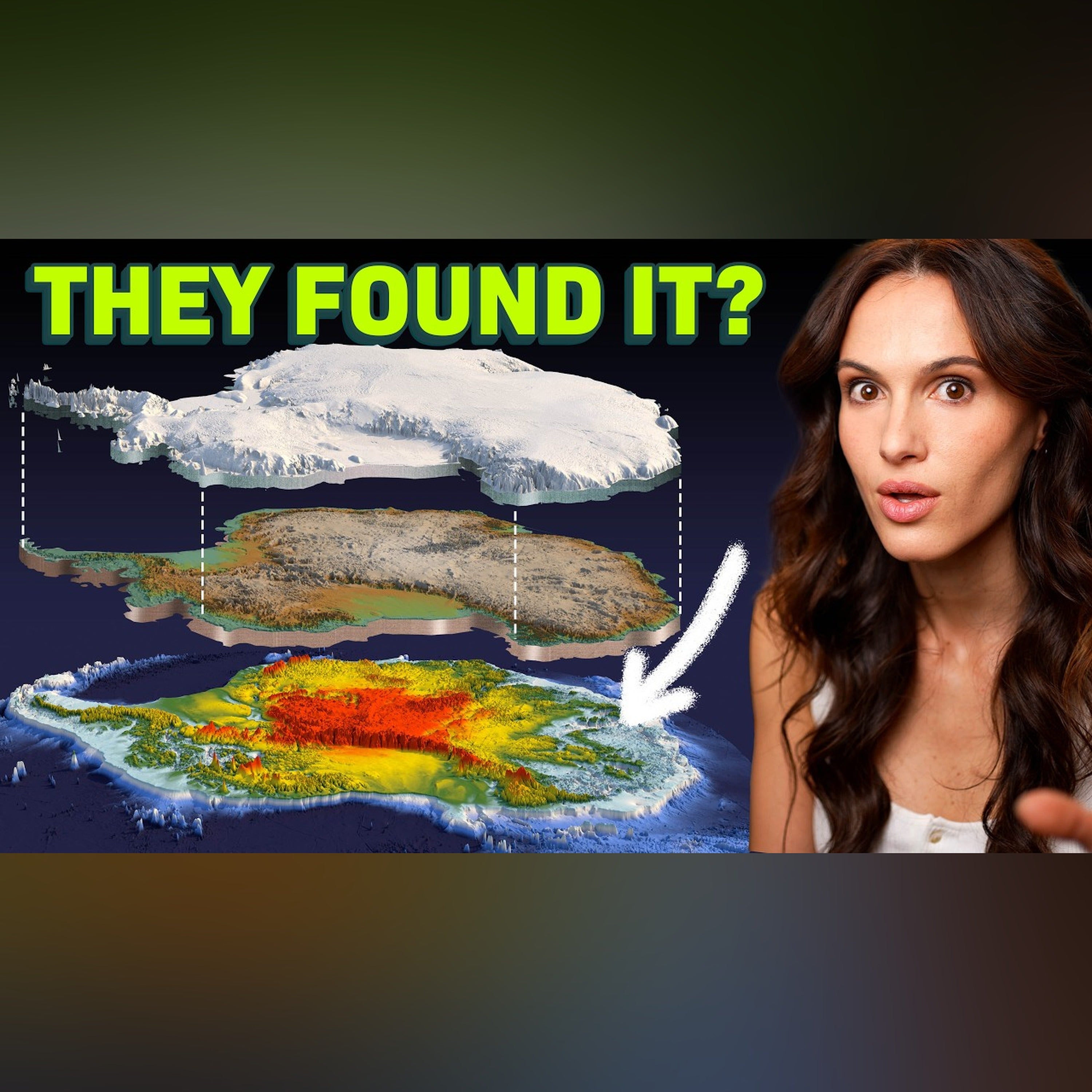
Showing 21–40 of 67 episodes