Skip to content
Artwork for Cities Reimagined
EducationScience

Cities Reimagined

Johannes Riegler

Cities Reimagined is a podcast about the ideas, people and places that are reshaping urban life. It was born out of a simple realisation: too often, the real stories behind urban change go untold. Cities Reimagined opens up space for deeper conversations, where facts meet stories, and policy meets the personal.

Join us as we uncover the stories, that challenge the status quo of “doing” urbanism by proving ideas and actions for reshaping our cities.

Don't be shy to get in touch with feedback, wishes and your stories by sending an email to johannes@anthropocene.city or via LinkedIn.

Play
  • 22 episodes
  • Avg 43 min
  • English
Counted on this page — what you have heard stays on this device, so it is not something the list can be paged by.
  • September 21 · 36 min

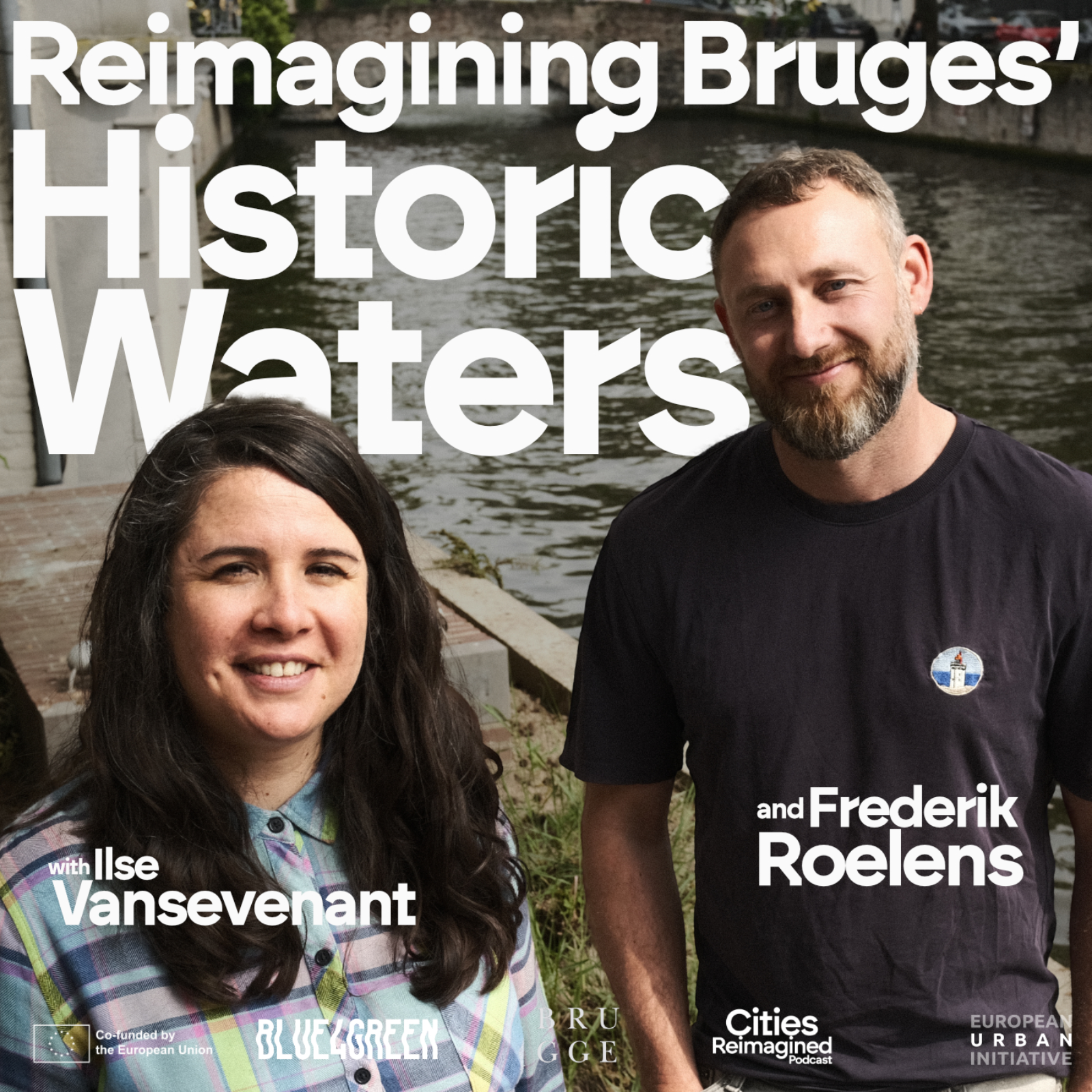
    Reimagining Bruges' Historic Waters - with Ilse Vansevenant and Frederik Roelens

    What happens when a city looks beneath its streets for answers to the climate crisis? Bruges may be famous for its canals, but water did much more than create the city’s postcard views. It helped turn medieval Bruges into one of Europe’s largest and most internationally connected cities. Beneath today’s streets, parts of that historic water system still survive. Ancient pipes continue to carry water. Medieval wells are rediscovered during construction work. One was found when the city tried to plant a tree. Could this forgotten infrastructure help Bruges prepare for drought, heavy rainfall and a changing climate? For this episode, I sit beside the canals with Ilse Vansevenant and city archaeologist Frederic Roelens from the City of Bruges. Tourist boats pass as we explore a water story spanning more than 700 years. We talk about the network that once supplied “medieval Manhattan” with fresh water, why residents knew exactly which well provided the best water for peas or tea, and how one of these wells could soon help people water their plants again. But this is not only a story about the past. Ilse explains how sensors are helping the city understand groundwater, water quality and the needs of individual trees. Together, we explore what happens when archaeology, climate adaptation and new technology meet. In this episode: How can a seemingly water-rich city prepare for both drought and flooding? What can Bruges’ medieval water infrastructure teach us about climate resilience? Could ancient underground water pipes be brought back into use? How can sensors reveal when individual trees need water? How can archaeology become an opportunity for urban innovation? Why are citizen ownership and experimentation essential for living with water? Find out more: Blue4Green on Portico Blue4Green and the City of Bruges on the European Urban Initiative website Read: A new chapter in Bruges’ water identity with Blue4Green Listen to the previous Cities Reimagined episode from Bruges Explore all Cities Reimagined episodes Subscribe to the anthropocene.city newsletter Blue4Green is an Innovative Action funded by the European Urban Initiative.

    • Transcript
    • Chapters
  • September 15 · 36 min

    Reimagining Urban Places - with Vivian Doumpa

    What turns a space into a place? Vivian is an urban planner, geographer and board member of Placemaking Europe. For her, placemaking is more than activating a square or adding colourful furniture. It is a mindset that brings communities, public authorities and professionals together to rethink how shared places are used, experienced and cared for. What happens when a city turns back towards the water? And what do we lose when public space becomes too controlled, too polished or too predictable? With Vivian, I talk about Thessaloniki’s rediscovered waterfront, hidden water beneath Athens and why a little friction and chaos might actually be good for urban life. We also get into the bigger questions: climate change, privatisation, democracy and the pressure on the people trying to change cities. Because placemaking is not only about transforming places. It is also about how we relate to them, to each other and to ourselves. IN THIS EPISODE: • Why placemaking is about more than attractive public spaces • How cities can reconnect people with water and nature • Why friction and messiness are part of healthy urban life • How public space supports participation and democracy • Why placemakers also need places of care Links Learn more about Placemaking Europe Connect with Vivian Doumpa on LinkedIn Read Vivian’s profile at Placemaking Europe CITIES REIMAGINED Cities Reimagined explores the ideas, people and places reshaping urban life. Find the podcast and previous episodes: https://www.anthropocene.city/podcast/ Follow Cities Reimagined on Instagram: https://www.instagram.com/citiesreimagined/ Want new episodes, urban stories and updates from anthropocene.city in your inbox? Subscribe to the newsletter: https://preview.mailerlite.io/forms/574810/173951455095424303/share

    • Transcript
    • Chapters
  • September 1 · 40 min

    Reimaginning Urban Swimming - with Sander Belmans, Barbara Enckels and An Schepers

    Reimagining urban swimming What does it take to transform a former industrial dock into a place where people can safely swim? In this episode of Cities Reimagined, Johannes visits the Keerdok in Mechelen, Belgium. Once dominated by warehouses, parking and industrial activity, the area is being transformed into a new urban neighbourhood that opens the city towards the water as part of the 'Water as the Source of Urban Public Space' Innovative Action funded by the European Urban Initiatives. He speaks with Sander Belmans from De Vlaamse Waterweg and An Schepers and Barbara Enckels from the City of Mechelen about the long process behind the city’s open-water swimming zone. After five years of temporary experiments, Mechelen is now preparing a permanent swimming facility at the Keerdok. The new design will combine swimming infrastructure, public space, shade, greenery and floating habitats for animals and plants. Listen to the episode here: 🎧 Spotify: [LINK] 🎧 Apple Podcasts: [LINK] ▶️ YouTube: [LINK] In this episode: ● How can cities make open-water swimming possible when the rules are not yet ready? ● How can swimming, shipping, biodiversity and public space coexist in the same waterway? ● What does it take to transform an industrial dock into a place where people want to swim? ● How can cities build a culture of safe and inclusive open-water swimming? ● How can cities overcome cultural barriers to open-water swimming? ● How can swimming areas work for different ages, abilities and user groups? Previous Cities Reimagined episodes from Mechelen Reimagining Mechelen, Parts 1 and 2 Explore how Mechelen is reconnecting people, public space and nature along the River Dijle, including how the city is experimenting with giving nature a voice in urban development. Nature’s comeback to Mechelen A conversation with city ecologist Michiel Van Mele and Maarten De Jonge about biodiversity, water quality and the return of nature to the Binnendijle. Learn more Discover WATSUPS on Portico Find articles, podcast episodes, project stories and lessons from Mechelen’s journey to reconnect people, animals and plants with the river. Visit the WATSUPS project page on the European Urban Initiative website Learn more about the project, its partnership and its ambition to develop water as an accessible and inclusive form of public space. WATSUPS, Water as the Source of Urban Public Space, is an Innovative Action supported by the European Urban Initiative and a New European Bauhaus demonstrator.

    • Transcript
    • Chapters
  • August 25 · 2 min

    Still Reimagining: Introducing Season 4

    Season 4 of Cities Reimagined will drop next week. Join me on the journey as we explore everything from urban swimming to medieval infrastructures, from Turkey to Canada. Make sure to subscribe to Cities Reimagined to not miss an episode and get connected to Johannes on LInkedIn: https://www.linkedin.com/in/johannes-riegler/

    • Transcript
  • March 5 · 50 min

    Reimagining Cities Beyond Sustainability - with Indy Johar and Caroline Paulick-Thiel

    In August 2025, Johannes sat down with Caroline Paulick-Thiel and Indy Johar deep in the Austrian Alps. During the European Forum Alpbach they discussed nothing less than the future of European (urban) civilisation. Looking for a way to make sense of the daily news, current geopolitical shifts, climate catastrophe, and general what feels like insanity around the world? Then, this is an episode you cannot afford to miss. If you like the episode, make sure to subscribe to Cities Reimagined or drop Johannes a line on LinkedIn or at johannes@anthropocene.city . In this episode: Why Europe, in between authoritarian superpowers, can lead the way to new societies. Why this is a post-war-like moment for Europe, demanding structural rebuilding. Why we need to rewire the metabolism of everything. How to reimagine urban economies for a secure Europe. Why we need more honesty in the scope of the current crises. How to embrace insanity and what knowledge our bodies hold. Caroline is a Berlin-based strategic designer and public policy expert, specialising in transformative innovation within the public sector. She is the Director and Co-founder of Politics for Tomorrow, an organisation dedicated to democratising systems change and fostering responsible public innovation. With a background in Design and Public Policy, she focuses on developing participatory processes and innovative frameworks to address complex public challenges. Indy is a London-based architect, social innovator, and serial entrepreneur. He is best known as the co-founder of 00 (Project00.cc) and Dark Matter Labs, organisations focused on systemic change, urban innovation, and sustainable urbanisation. Indy is also a Senior Innovation Associate with the Young Foundation and a Visiting Professor at the University of Sheffield.

    • Transcript
  • January 26 · 40 min

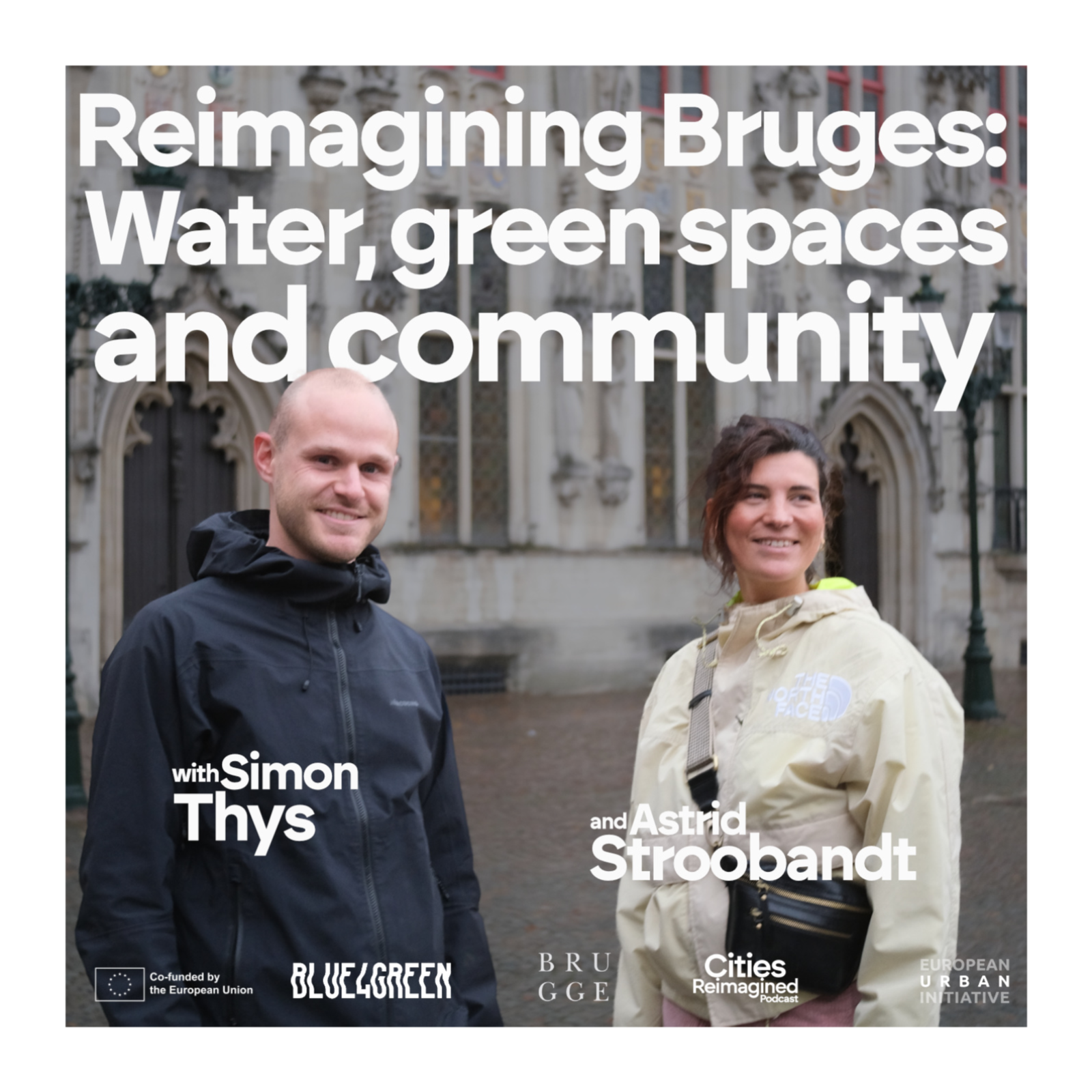
    Reimagining Bruges: Water, green spaces and community

    If you have ever been to Bruges, or seen it in films or photos, chances are you have noticed at least one of the following: canals, swans, water, tourist boats. What often goes unnoticed is that Bruges, and the wider region of Flanders in Belgium, regularly suffers from droughts. In this episode, we meet Astrid Stroobandt from the City of Bruges and Simon Thys from the non-profit organisation Waterland, who are currently running the Blue4Green project, an Innovative Action funded by the European Urban Initiative. Astrid and Simon explain how the project aims to change the city’s relationship with water in multiple ways, and how children’s dreams can inspire change just as much as data and technological innovation. We also hear how the city is experimenting with medieval infrastructure as water buffers, and how green and blue algae are cutting summer fun short. If you would like to find out more about the project, have a look at the links below, connect with Astrid, Simon and Johannes on LinkedIn and follow Blue4Green on Portico. · European Urban Initiatives: https://www.urban-initiative.eu · Portico - Gateway to urban learning: https://portico.urban-initiative.eu · Article: From smart sensors to medieval cultural heritage: A new chapter in Bruges' water identity with Blue4Green · Article: A hot summer’s wake-up call to the City of Bruges: A blue-green algae crisis and what comes next

    • Transcript
  • January 12 · 54 min

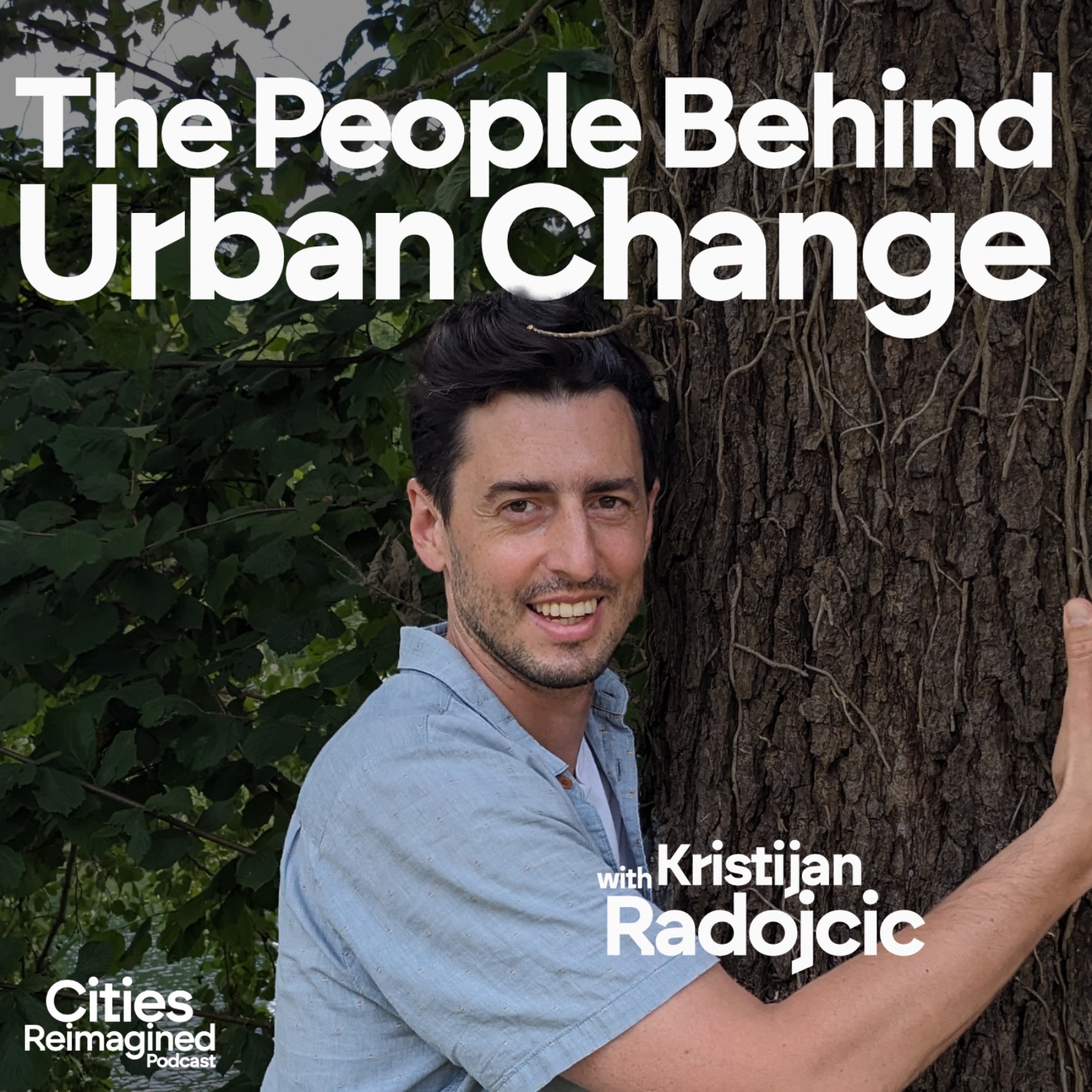
    The People Behind Urban Change - with Kristijan Radojcic

    I have to start with an apology. To the guest of this episode, Kristijan Radojcic. After we had this conversation in a wild hotel room with tacky wallpaper in Wroclaw, Poland, the raw version of the recording was sitting unedited on my notebook for much too long. Finally, I am more than happy to share this episode with you, where Kris takes on a deep dive into his childhood in Slovenia and how a trip to Southeast Asia changed everything. If you are around urban EU programmes, you might have bumped into Kris on various occasions as he is working with URBACT, a programme that helps cities to develop an integrated set of actions for sustainable change. He and his family live in Paris. Connect with Kristijan and Johannes on LinkedIn and take a look at URBACT. In this episode: How did growing up in 1980s Ljubljana shape everyday urban life? How do music and architecture intersect in shaping cities and communities? How can encounters beyond Europe reshape ideas of sustainable urbanism? How do European cities learn from each other in practice, not theory? How do paradox economies shape our societies? Why does neighbourhood-level community matter for urban resilience?

    • Transcript
  • Oct 11, 2025 · 37 min

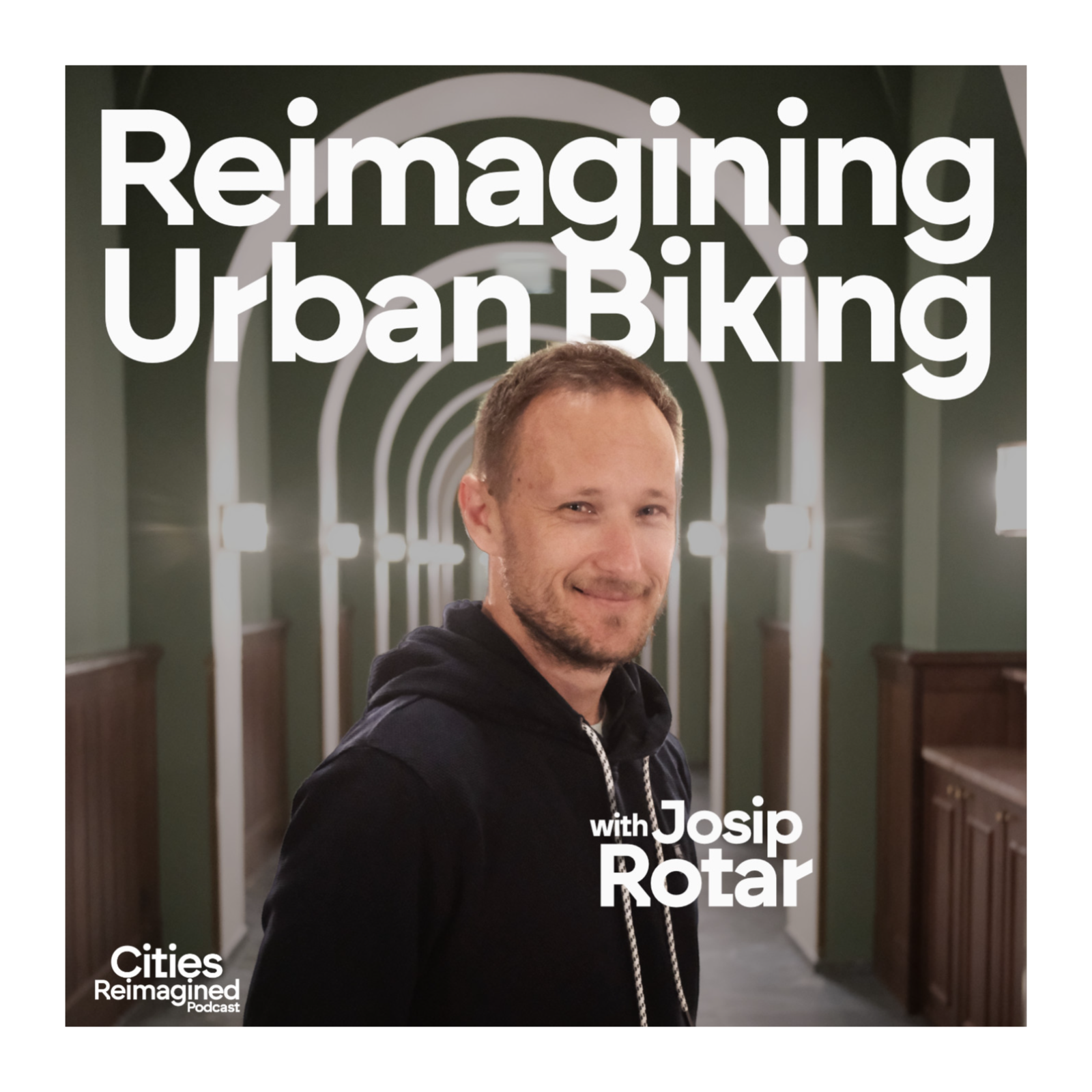
    Reimagining Urban Biking - with Josip Rotar

    Do you remember the first time you learned how to ride a bike? Chances are that you do, and if you kept on kicking those pedals, you might have some fond memories about the (daily) adventures with your bicycle. But… although biking ticks almost all boxes when it comes to urban sustainability, health, livability, affordability and accessibility, our cities still do not unfold the full potential of how urban biking can make our neighbourhoods better places. My guest today, Josip Rotar from the Maribor Cycling Network, is one of those who pushed for change in the city. Find out how advocacy for urban biking led Josip to take a political role and why urban biking is competing with the SUV of your neighbourhood (or your own?). Find out more about Josip and the Maribor Cycling Network here. Josip and the Maribor Cycling Network was part of the first round of Driving Urban Transition’s Urban Doers Community. We recorded this conversation just before the ACT NOW Mayor’s Conference in Vienna.

    • Transcript
  • Sep 29, 2025 · 50 min

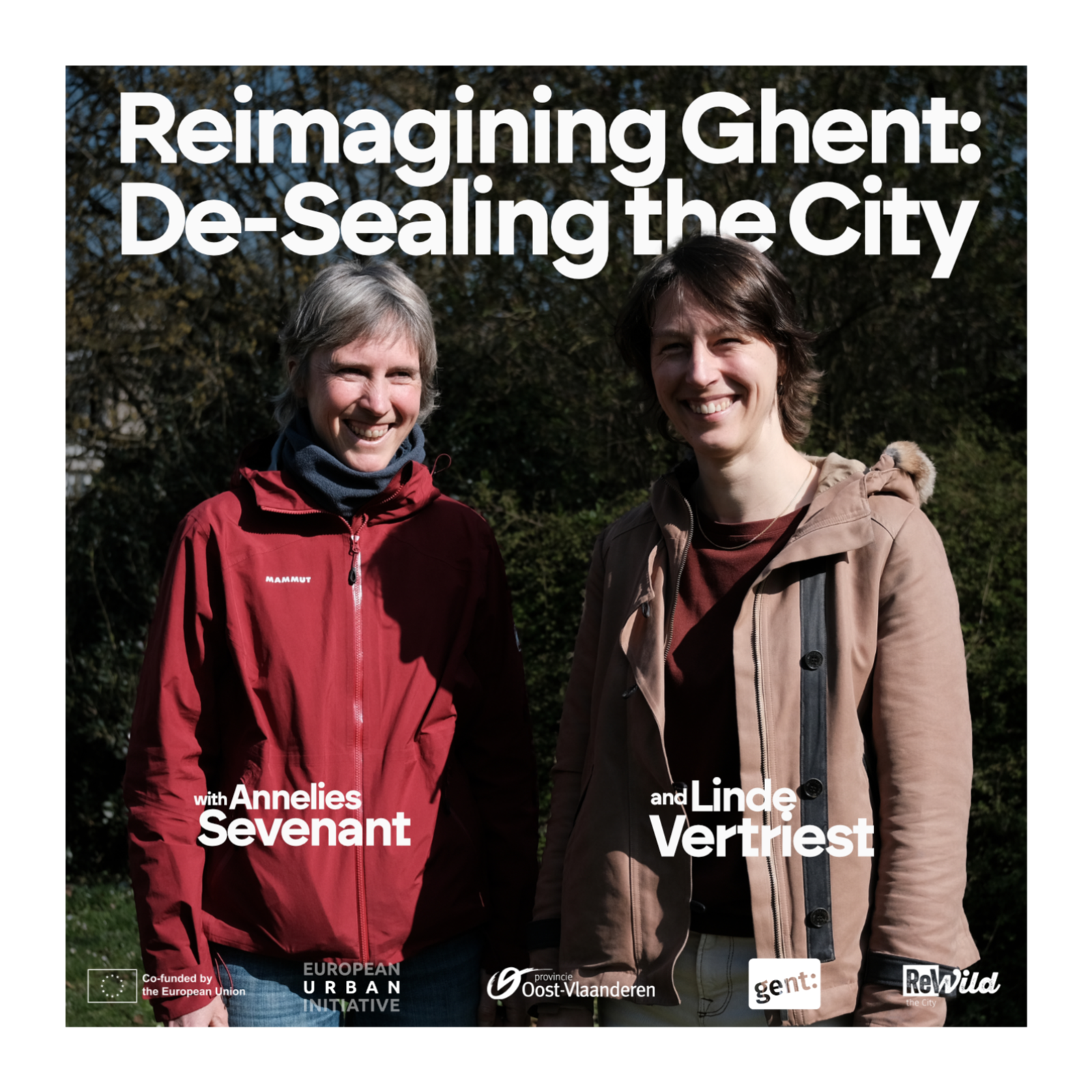
    Reimagining Ghent: De-sealing the City

    Urban rewilding is more than planting trees. It’s about reshaping cities by de-sealing land and inviting nature back in. In this episode, we head to Ghent to explore REWILD, a bold project funded by the European Urban Initiative that breaks up concrete, engages residents, and creates space for ecosystems. With Linde Vertriest and Annelies Sevenant, we talk about the barriers and challenges and touch upon the 1 Mio dollar question: what does it take to rewild a city? 🔗 www.rewildthecity.eu 🔗 Read more: Where the pavement ends. Can Ghent become a truly rewilded city? 🔗 Rewild is an European Urban Initiative Innovative Action: https://www.urban-initiative.eu

    • Transcript
  • Aug 26, 2025 · 42 min

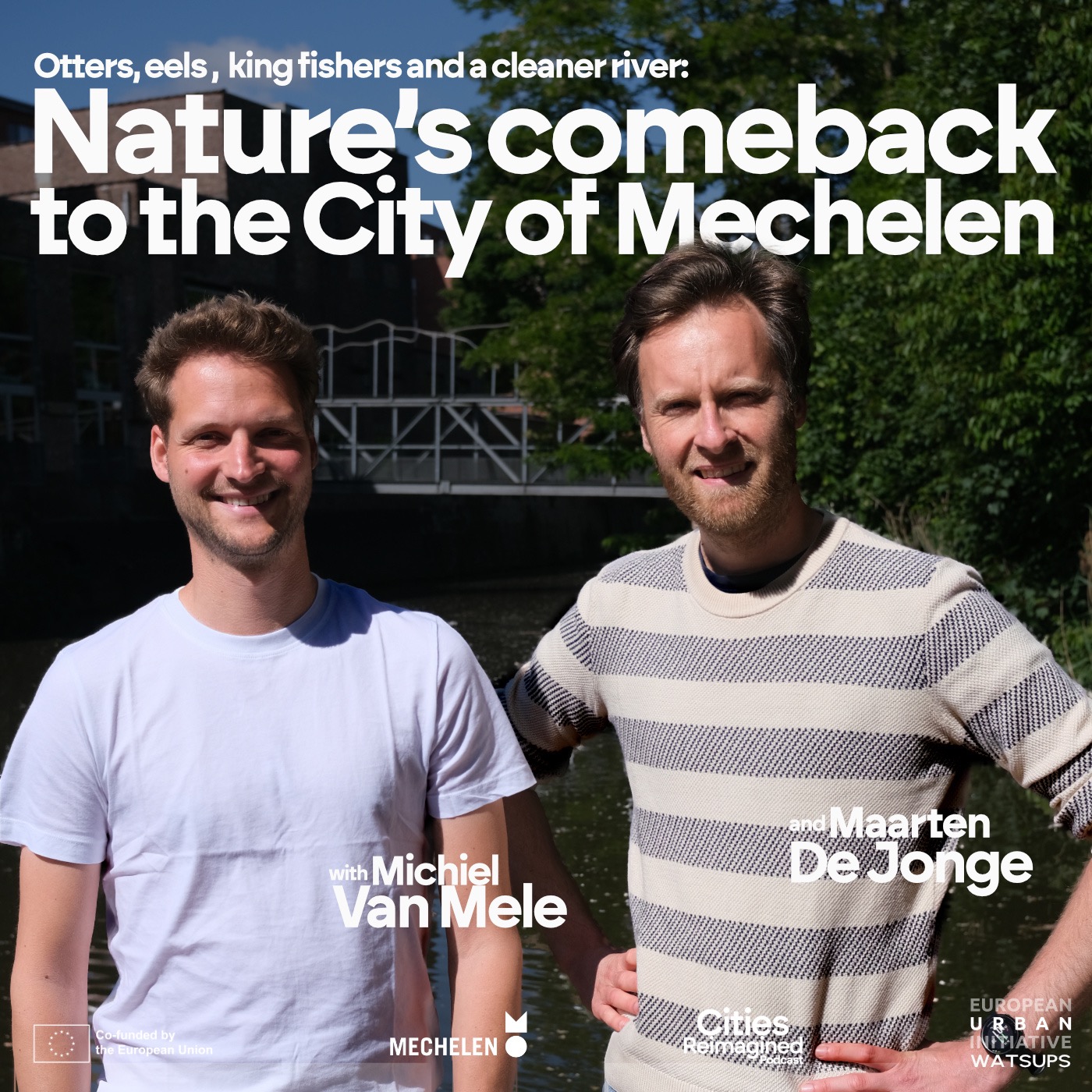
    Nature's comeback to Mechelen - with Michiel Van Mele and Maarten De Jonge

    Today we go back to the City of Mechelen, to find out how nature is making a comeback in Mechelen’s old town, why that is not only good for house sparrow, eels, and otters but for everyone living and working in the city and how residents are part of the journey for cleaner water, more biodiversity and green in the city. Healthy rivers and rich ecosystems cool our cities, filter our air, and offer places for both people and wildlife to thrive. Yet, for decades, urban waterways have been neglected, covered, or polluted, breaking the vital link between cities and nature. We have Michiel van Mele who is the City Ecologiest of Mechelen and Marteen de Jonge who is the head of the lab department of the Flanders Environmental Agency on the show. Tune in to find out more... This episode is part of the Johannes' work with the City of Mechelen's WATSUPS project, a New European Bauhaus demonstrator. WATSUPS is an Innovation Action funded by the European Urban Initiatives. More information here: European Urban Initiative WATSUPS - Water as the Source of Urban Public Spaces project In case you missed it: To dig in deeper into the amazing work of Mechelen's, you might want to give these past episodes a listen. Reimagining Mechelen Pt. 1 - Water as the Source of Urban Public Space with Nicole La Iacona Reimagining Mechelen Pt. 2 - Nature as a Stakeholder in the Revival of the River Dijle with Mark Van der Veken

    • Transcript
    • Chapters
  • Jul 23, 2025 · 47 min

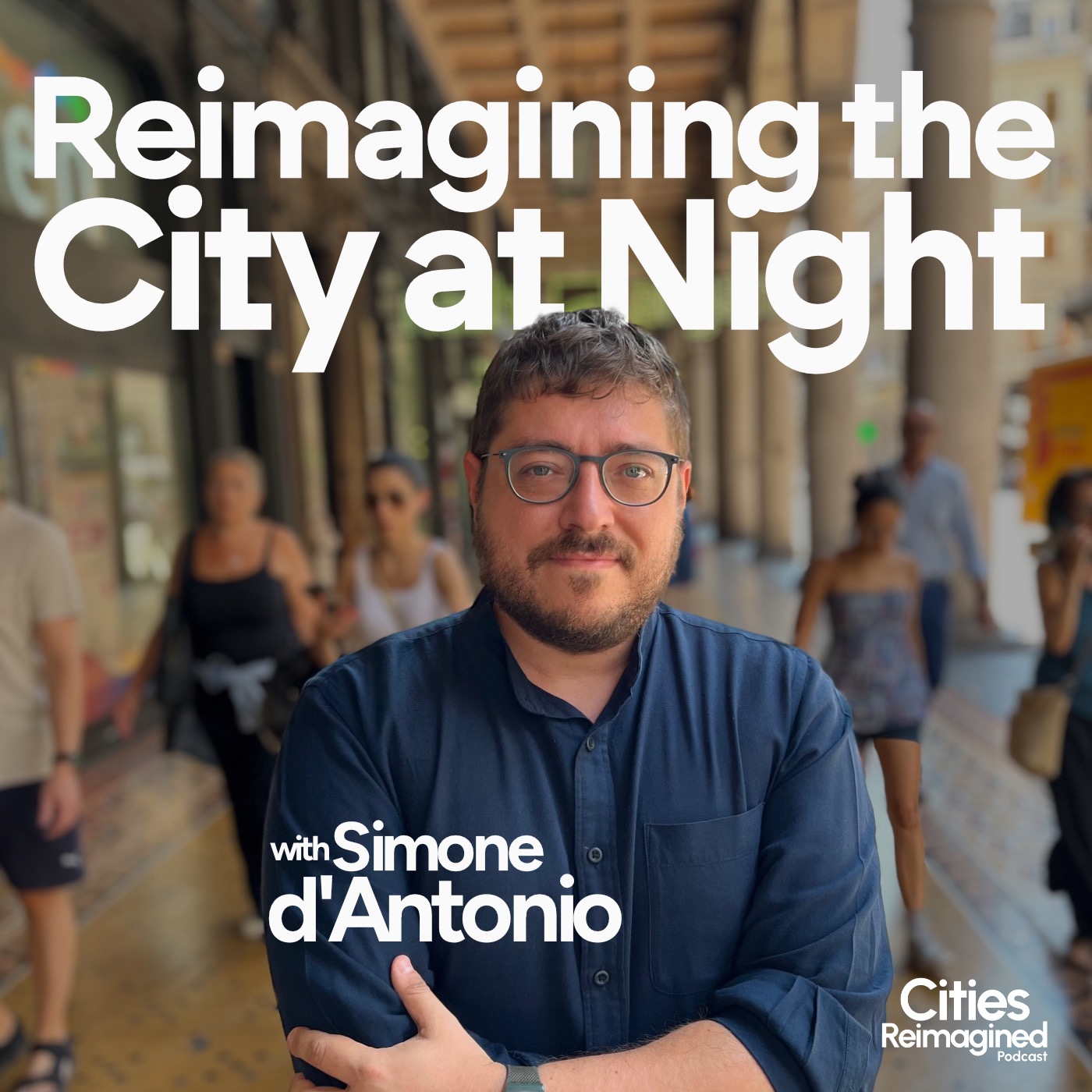
    Reimagining the City at Night - with Simone d'Antonio

    Have you ever felt how different cities feel, look, and smell at night? How everything is seems to be so different than during the day… having organised punk rock concerts and worked in a club myself during my teenage and student years, I had many touchpoints with the nighttime economy from early on. You might think now of all the clubs and bars… yes, they are part of that, but there is much more to it: workers in culture, logistics, health care, communication, and many more. In today’s episode, I FINALLY have Simone d’Antonio on the show. Simone is based in Rome, Italy, and you may have come across Simone’s name at some point. Because he’s a familiar face in urban innovation circles, both in Europe and worldwide. Currently, he is working with 10 cities on their nighttime policies and activities (find out more about the Cities After Dark URBACT Network here), and it was high time to connect online In our conversation, he convinced me that working on nighttime policies is more than hanging out in bars… Tune in to find out why the night doesn’t only belong to lovers, as Patti Smith once claimed, but to everyone. Tune in to find out: What if the night-time economy was about care, culture, and community, not just clubs and bars Why cities at night are fighting a quiet war against the sofa and the apps on your phone Why the right to the city should be a 24/7 thing Why Naples might be the northernmost city of the Global South How urban nightlife differs depending on cultures, geographies and climates.

    • Transcript
  • Jun 10, 2025 · 51 min

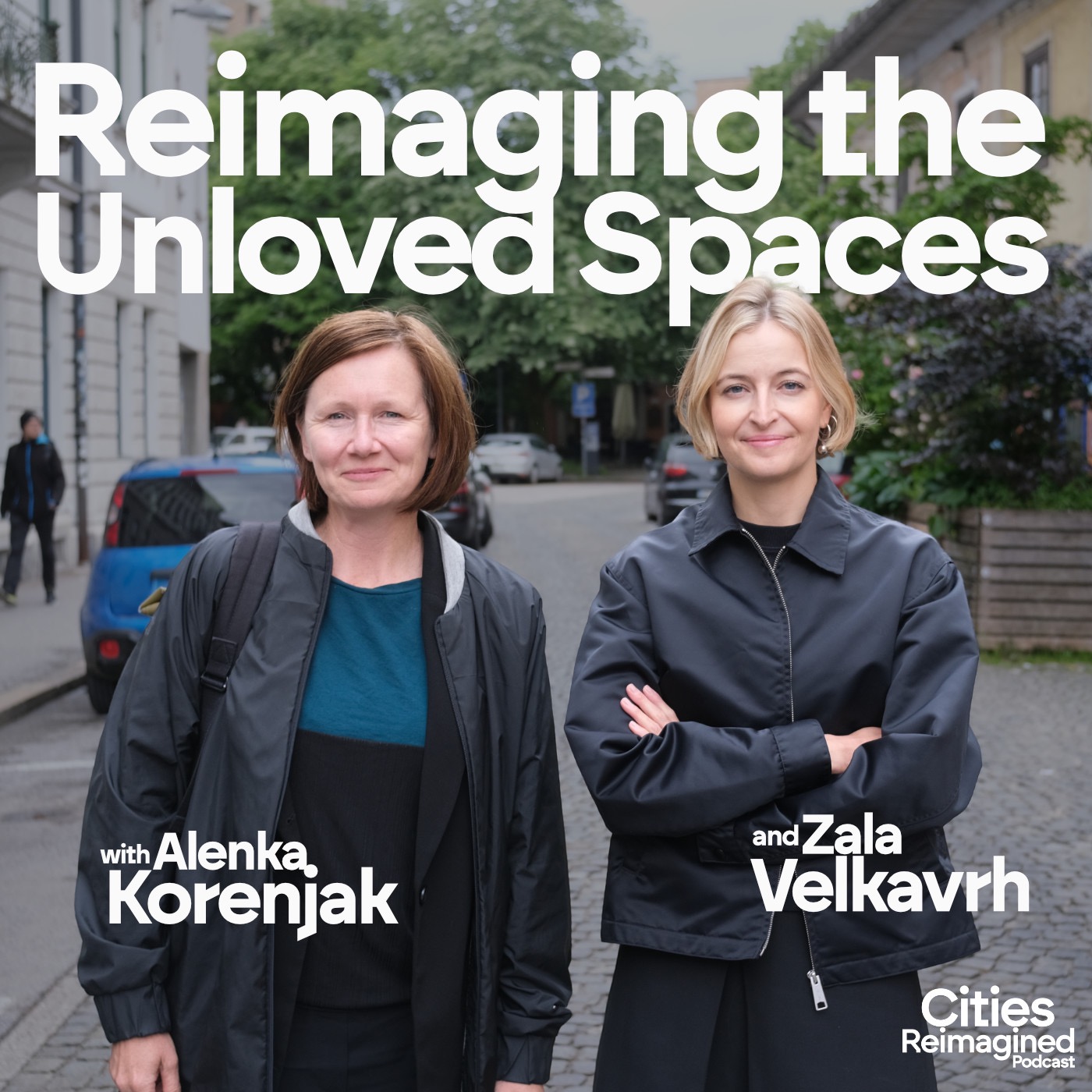
    Reimagining the 'Unloved' Spaces - with Alenka Korenjak & Zala Velkavrh

    Almost every city has them - spaces and places that feel like they’re waiting. Waiting to be reawakened, reimagined, and reconnected to the people around them. Too often, though, that reawakening follows a predictable script: maximise economic return, build apartments, squeeze in shops, add a parking lot. Little thought is given to anything beyond profit. That’s exactly why I loved hearing Alenka Korenjak and Zala Velkavrh from Prostorož (a not-for-profit urban design agency from Ljubljana/Slovenia) speak about “unloved” places - because it shifts the lens. It’s not just about return on investment, but about how people relate to space, how public life can be cultivated, and how cities can become more liveable, more layered, more human. So when I spent a few weeks in Klagenfurt, it was high time to jump over the Karawanken Mountains to Ljubljana and visit the Prostorož studio in person on a Friday afternoon in May 2025. Further info: More on Prostorož: https://www.prostoroz.org Alenka, Zala and Johannes on LinkedIn Cities Reimagined on Instagram: https://www.instagram.com/citiesreimagined/ The book I mentioned in the show: Vocabularies for an Urbanising Planet: Theory Buidling through Comparison - https://birkhauser.com/en/book/9783035623031

    • Transcript
  • May 20, 2025 · 50 min

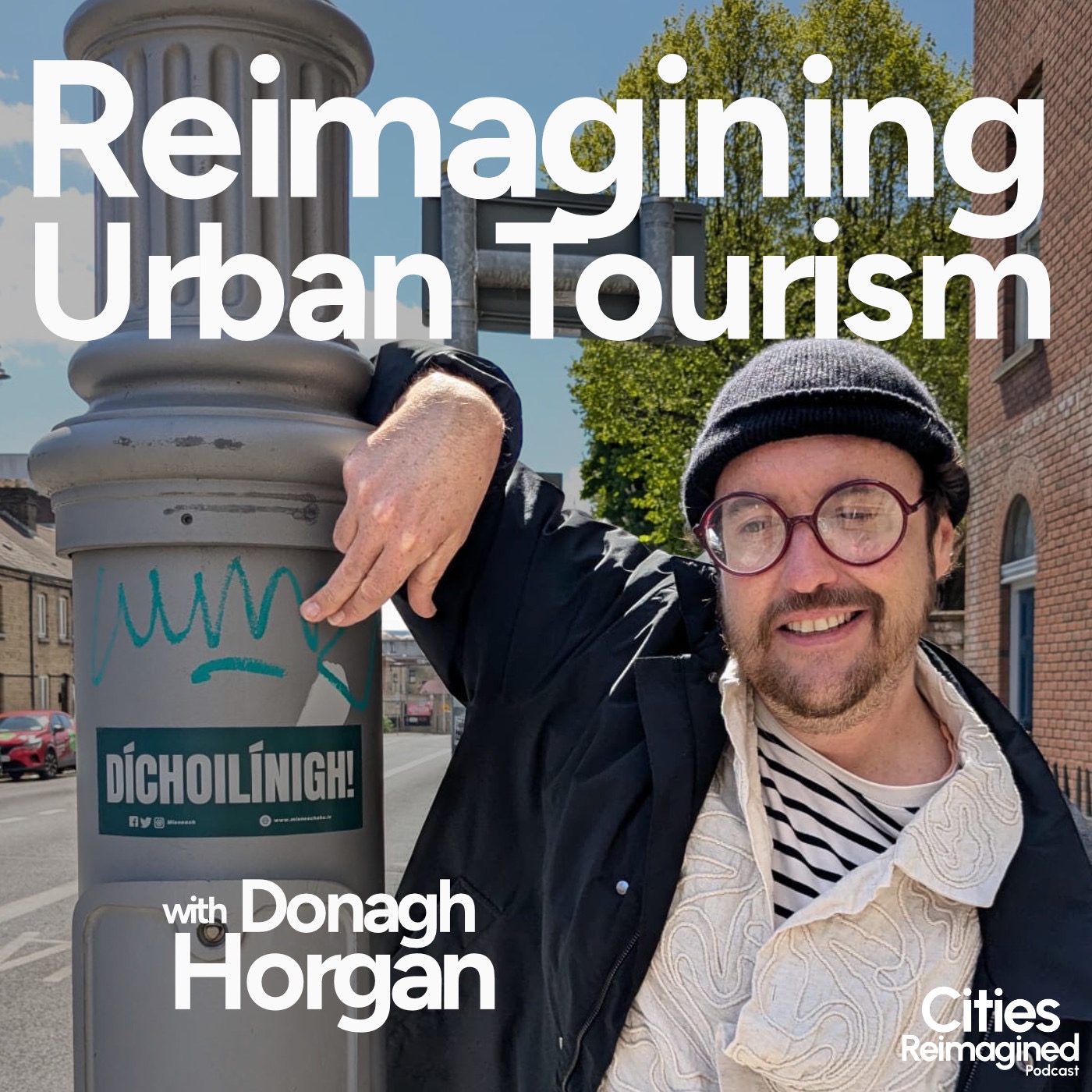
    Reimagining Urban Tourism - with Donagh Horgan

    Hi and welcome back to the first episode of season 3 of the Cities Reimagined Podcast. To kick things off, I’m joined by Donagh Horgan — a social designer, researcher, and all-round urban thinker who’s doing some pretty exciting work at the intersection of placemaking and tourism. Donagh is based between Ireland and the Netherlands, where he leads the Urban Leisure & Tourism Lab at Inholland University. He’s also a lecturer at Erasmus University Rotterdam and works with cities around the world to make them more inclusive, creative, and resilient. In this episode, we dive into the changing role of tourism in our cities. Urban tourism exploded after the 2008 financial crisis — bringing in money, but also creating real tensions: rising rents, disappearing housing, and a sense of alienation for many local communities. Together with Donagh, we explore how regenerative tourism might offer a way forward — one that puts local people, stories, and places at the centre. We talk about reimagining tourism as something that can give back rather than just take, and how we might start thinking about cities as ecosystems again, rather than playgrounds for capital. Donagh popped by my apartment while in Vienna and we had a great conversation — I hope you enjoy listening as much as I enjoyed recording it.

    • Transcript
    • Chapters
  • May 4, 2025 · 4 min

    Still reimagining: Introducing season 3

    Soon after I started the Cities Reimagined podcast 18 months ago, it became a tool for learning, exchange, and inspiration through deep conversations. Now we’re heading into Season 3. Episodes for season 3 are in full production. Want to find out what’s in store? Tune in to the season trailer to hear more about the upcoming content and why deep conversations with people driving change in cities are more important than ever. In the coming weeks and months, we’ll go to Ljubljana 🇸🇮, Ghent 🇧🇪, Mechelen, Bruges, and more. We’ll cover topics such as urban tourism 🧳, the urban night-time economy 🌃, biodiversity and water quality 🐝💧, rewilding streets and schoolyards 🌱, and much more. Subscribe to the show to not miss an episode, follow us on Instagram to see more background content, reach out to me on LinkedIn or send me an email at johannes@anthropocene.city.

    • Transcript
  • Jan 7, 2025 · 1 hr 8 min

    Reimagining Urban Education - with Yvonne Franz and Stefan De Corte

    Hardly any cities-related university programme gained so much attention over the last 15 years as the 4CITIES Masters in Urban Studies. For good reason. Over the two years, the students study at six universities in four different cities: Brussels, Vienna, Copenhagen and Madrid – with many many occasional visits to other cities in between. 4CITIES is located at the intersection of academia, activism, professional practice and urban exploration. I had the privilege of being part of the second cohort of 4CITIES from 2009 to 2011… and it was a life-changing experience for me. With the 4CITIES programme coming to an end in September 2025, it was a good moment in time to sit down with two people who have been part of making 4CITIES possible since the beginning: Yvonne Franz, Senior Lecturer from the University of Vienna and Stefan de Corte, administrative coordinator at the Vrije Universiteit Brussels. Whether are one of hundreds 4CITIES alumni from around the world, involved in teaching and setting up urban-related programmes at your university or just want to find out why madness plays an important role in setting up such a programme, this episode is for you. In this episode: · Why a Eurocentric perspective on urban studies is not enough · How the 4CITIES Master in Urban Studies changed the system from within · Why a comprehensive set of skill between disciplines is needed applying urban knowledge(s) · How the 4CITIES Master in Urban Studies shaped careers of former students but also of staff and teachers · How moving to (at least) four cities within 2 years teaches invaluable life lessons More information: - Follow Cities Reimagined on Instagram: https://www.instagram.com/citiesreimagined/ - https://www.4cities.eu - Yvonne on LinkedIn: https://www.linkedin.com/in/franz-yvonne-8449913a/ - Send Johannes an email: johannes@anthropocene.city Photos by Daniel Dutkowski (Yvonne) and Hadrien Durei (Stefan).

    • Transcript
  • Nov 15, 2024 · 31 min

    Reimagining Mechelen Pt. 2 - Nature as a Stakeholder in the Revival of the River Dijle with Mark Van der Veken

    Have you ever wondered how to give nature a voice in urban development? The City of Mechelen in Belgium does exactly that while reimagining the connection between water, public spaces, animals, plants and people. In these two episodes of the Cities Reimagined Podcast we zoom in to reshape your understanding of how the interests of more-than-human inhabitants can be taken up in urban transformation projects. This is part one out of two exploring the work done by the WATSUPS project. Click here for part one where we look at the background of the City of Mechelen’s ambition to reconnect to the water. In this episode: · Why a river should be understood as an actor/stakeholder in urban transformation · How empathy towards nature is essential for co-creating urban biodiversity · How to organise a citizen panel that ensures that the voices of nature are heard in urban transformation projects · How taking into account the voices of nature requires empathy, knowledge and “mildness” · How Mechelen’s Citizen Assembly developed over 120 recommendations for enhancing nature along the river Dijle More and more cities are reimagining their connection to their rivers, ponds and other water bodies. Whereas historically, cities have turned their back to the water as it was used primarily for economic purposes, in the 21st century, this perception has significantly shifted: Water in cities is a source of livability and sustainability. The City of Mechelen has been taking a groundbreaking approach to reconnect its inhabitants (humans, animals and plants) to the water. As part of the “Water as the Source of Urban Public Spaces” (in short: WATSUPS - funded by the European Urban Initiative and running from 2024 to 2027) Mechelen is going to radically reshape the face of the city along the River Dijle while ensuring everyone has access to the water while making the more-than-human perspective a leading principle of the transformation. WATSUPS demonstrates how the spirit and principles of the New European Bauhaus can be translated into local, innovative actions. Listen in to the two Cities Reimagined episodes where we explore how Mechelen is giving back the river Dijle to all inhabitants: human and more-than-human. More information and materials mentioned in the podcast: · European Urban Initiative: https://www.urban-initiative.eu · Portico - The Gateway to Urban Learning: https://portico.urban-initiative.eu · WATSUPS - Article: Beautiful, Sustainable, Together: Reimagining Mechelen’s Relationship with Water, Biodiversity in Urban Public Space while Tackling Gentrification

    • Transcript
  • Nov 8, 2024 · 27 min

    Reimagining Mechelen Pt. 1 - Water as the Source of Urban Public Space with Nicole La Iacona

    Water as the Source of Urban Public Space Have you ever wondered how to give nature a voice in urban development? The City of Mechelen in Belgium does exactly that while reimagining the connection between water, public spaces, animals, plants and people. In two episodes of the Cities Reimagined Podcast we zoom in to reshape your understanding of how the interests of more-than-human inhabitants can be taken up in urban transformation projects. This is part one out of two exploring the work done by the WATSUPS project. Click here for part two (coming soon) where we talk about the voices of nature and the experiences of the citizen panel in WATSUPS. More and more cities are reimagining their connection to their rivers, ponds and other water bodies. Whereas historically, cities have turned their back to the water as it was used primarily for economic purposes, in the 21st century, this perception has significantly shifted: Water in cities is a source of livability and sustainability. The City of Mechelen has been taking a groundbreaking approach to reconnect its inhabitants (humans, animals and plants) to the water. As part of the “Water as the Source of Urban Public Spaces” (in short: WATSUPS - funded by the European Urban Initiative and running from 2024 to 2027) Mechelen is going to radically reshape the face of the city along the River Dijle while ensuring everyone has access to the water while making the more-than-human perspective a leading principle of the transformation. WATSUPS demonstrates how the spirit and principles of the New European Bauhaus can be translated into local, innovative actions. Listen in to the two Cities Reimagined episodes where we explore how Mechelen is giving back the River Dijle to all inhabitants: human and more-than-human. In this episode · How the City of Mechelen is giving back the River Dijle to its inhabitants... · How public administration needs to seek compromises between interests... · Why being a civil servant is the most difficult job there is... · How including artists in co-creation/participation processes might lead to a cultural shift... · How fun and a positive energy are key to innovation... More information and materials mentioned in the podcast: · European Urban Initiative: https://www.urban-initiative.eu/ · Portico - The Gateway to Urban Learning: https://portico.urban-initiative.eu · WATSUPS - Article: Beautiful, Sustainable, Together: Reimagining Mechelen’s Relationship with Water, Biodiversity in Urban Public Space while Tackling Gentrification

    • Transcript
  • Apr 3, 2024 · 1 hr 11 min

    Season Finale: Godzilla's Fury for Reimagining Cities with Jonas Bylund and Johannes Riegler

    Here it is, the finale of the first season of the Cities Reimagined podcast and it is nothing shy of (plot) twists, secrets coming to light and what is to be expected for the way forward for the show, me personally and for Anthropocene.City: an idea I developed with today’s guest Jonas Bylund which is taking shape. Besides being a good friend and former year-long colleague, Jonas a researcher at KTH, the Royal Institute of Technology in Stockholm, Sweden. Tune into this episode to hear about… 🕵️ Unravelling Urban Mysteries in all corners of urban life with Anthropocene.City: From Godzilla friendships to reimagining cityscapes for all. 🔧 Embrace Do It Yourself Urbanism and how a 'naive' stance leads to groundbreaking urban insights. We're talking DIY empowerment, the wisdom of action, and the art of reflection. 🦖 The Journey to Urban Wisdom: What are urban transitions with a dose of love and care and what does it have to do with Godzilla or a dusty mountain bike? 🐉 Preview of Season 2: As we close this season, we tease the next chapter: a blend of mysteries, inspiration, and innovative urban connections. 🪕 A special Godzilla remix of the Cities Reimagined intro music. When I started developing the first concept for Cities Reimagined 10 months ago, I did not imagine the feedback I received until now. Thanks to everyone who reached out, listened to the show, gave feedback and helped me along the journey! Honestly, thank you. It is what makes this work worthwhile. For saying hello, reaching out with (cooperation) requests and anything at all, please send me an email: johannes@anthropocene.city . Cities Reimagined will take a break from here and is planned to return in September/October 2024. In the meantime, I will be busy working with the City of Mechelen (Belgium) on a European Urban Initiative project alongside the blue-green corridor river Dyle which will connect people, water and nature, kicking-off Anthropocene.City and my ‘regular’ job working with the Management Board of the Driving Urban Transitions Partnership.

    • Transcript
  • Mar 7, 2024 · 59 min

    Reimagining Urban Food in UK and Brazil with Chiara Tornaghi and Marcella Arruda

    As the importance of city foods is growing, this episode of Cities Reimagined is all about the transformative potential of healthy and delicious (urban) cuisine We are jumping back and forth between the favelas of the metropolis of Sāo Paulo, Brazil 🇧🇷 and the allotment gardens in Leeds, in the UK 🇬🇧 and will explore how cities are redefining their foodscapes for a sustainable future. Today’s guests are Marcella Arruda, an urbanist and permaculture designer and CEO of The City Needs You Institute [Instituto A Cidade Precisa de Você] from Sāo Paulo. Chiara Tornaghi. a critical human geographer and scholar-activist at Coventry University, with a focus on Political ecology, agroecology and politics of spaces from Leeds, Be prepared to hear aspects of urban food you might have not considered before: 🍌 What stroganoff made of banana peals has to do with the favelas of São Paulo 🔍 Why the invisible production of food in cities is a reflection of a broken relationship to the planet 🥬 How agroecological inspires us to integrate aspects of sustainability, biodiversity, ecological balance and community resilience on the topic of food. 🇧🇷 How Marcella’s NGO A Cicade Precisa De Você works with farmers on informal land in the favela of Brasilandia. 🍲 How urban food can contribute to addressing the rising food poverty and what the difference between the UK and Brazil is More information: Marcella’s NGO Instituto A Cidade Precisa de Você: https://www.acidadeprecisa.org/english The Urbanising in Place Project we talk about: http://urbanisinginplace.org Video on ECOCIDADES in São Paulo: https://youtu.be/_d4DvOWw5f8?si=-IuVUQx1kxM7JHmK Agroecological Urbanism: https://www.agroecologicalurbanism.org Landed Community Kitchen: https://www.agroecologicalurbanism.org/building-blocks/landed-community-kitchen This is the last thematic episode of season 1 of Cities Reimagined. Up next is the season finale, where the truth comes out, cliffhangers are being built for season 2 and… and… where Jonas Bylund and I will have a good time summing up what happened so far and bringing that into a 🦖 godzilla context. Stay tuned. If you like the content of Cities Reimagined, please consider subscribing to the channel, rate the show, follow us on Instagram for background stories or get connected to Johannes via LinkedIn or email (johannes@anthropocene.city).

    • Transcript
  • Feb 6, 2024 · 49 min

    Reimagining Abandoned Urban Spaces into Cultural Centers with Tiffany Fukuma

    This week’s guest on Cities Reimagined is Tiffany Fukuma, Managing Director of Trans Europe Halles, a network of over 160 alternative cultural centres across 40 countries which all have one in common: they reinterpret neglected and underused spaces such as factory and military buildings, commercial spaces, parking lots etc. for grassroots cultural activities. In this episode, we talk about... 🏭… how alternative cultural centres are creating new usages and identities of buildings and spaces ✨… why the trust of local administrations in the creativity of the residents will generate more exciting cities. 🪙… how city administration increasingly recognises that small-scale funding of resident-driven initiatives leads to more robust long-term transformation. 🌳… how repurposing existing buildings is essential for making cities sustainable and livable. 🗺️ … how Tiffany’s background in organising punk rock shows in squats, working in embassies and city administration in Japan, Canada and France led to managing Trans Europe Halles. Cultural centres and initiatives repurposing abandoned spaces are crucial for reimagining cities. They are dynamic spaces that foster creativity, community engagement, and social cohesion. They are experimental spaces, reinterpreting buildings and shifting the function of spaces. They develop new identities by reinterpreting the built environment and cultural heritage of cities and neighbourhoods. More info: Johannes on LinkedIn Cities Reimagined: www.anthropocene.city/podcast Trans Europe Halles: https://teh.net

    • Transcript
Showing 1–20 of 22 episodes