Skip to content
Artwork for ChinaTalk
NewsPoliticsTechnologyGovernment

ChinaTalk

Jordan Schneider

Conversations exploring China, technology, and US-China relations. Guests include a wide range of analysts, policymakers, and academics. Hosted by Jordan Schneider.

Check out the newsletter at https://www.chinatalk.media/

Play
  • 34 episodes
  • a few times a week
  • Avg 1 hr 12 min
  • English
Counted on this page — what you have heard stays on this device, so it is not something the list can be paged by.
  • Friday · 1 hr 12 min

    WarTalk: Potemkin Pacific, Midterm Budget Woes

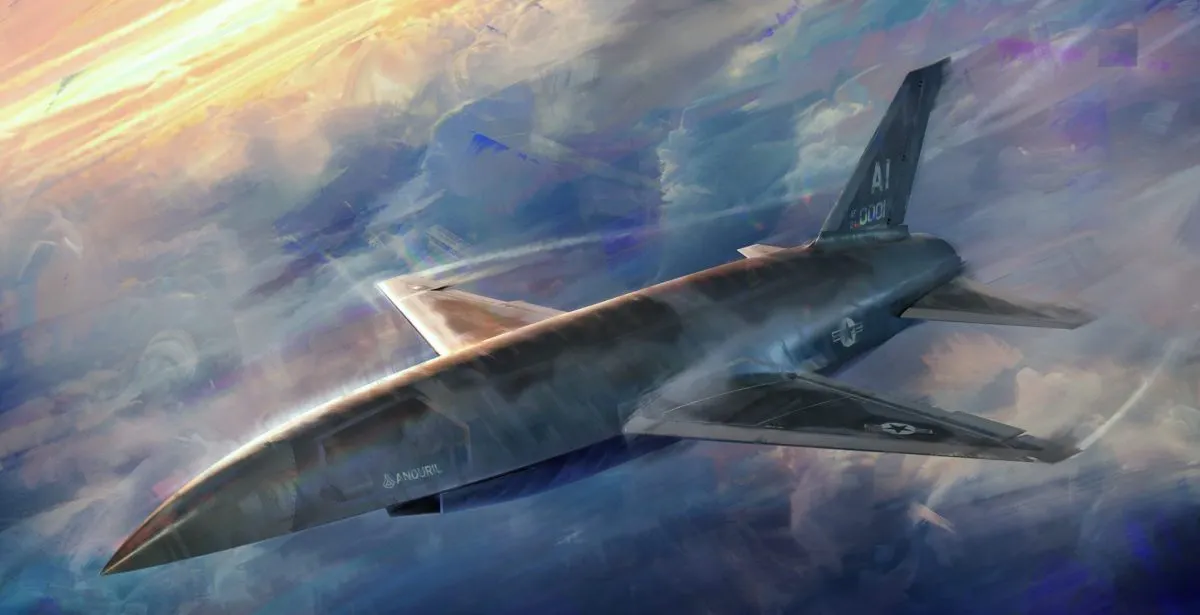
    WarTalk regulars Bryan Clark of the Hudson Institute, Justin McIntosh, and Tony Stark join Jordan. We discuss… The Potemkin Pacific — why Paparo has half the planet on his map and nothing to fight with, and how the Iran blockade became the status quo The midterm budget squeeze — what a Democratic Senate means for the defense topline, why Anduril won’t keep working at risk, and how a shipbuilding binge could hollow out the force Who replaces Hegseth — the two Mike Rogerses, and why the talent pool for a lame-duck Pentagon is drying up The AI Force — why a SOCOM-style AI branch cuts against a technology meant to be everywhere, and what a benchmark-setting version could actually do Manned-unmanned teaming — why putting sailors on robot ships is “asinine,” and what combined arms for robots should look like Gifts for Beijing — the Anduril drone Iran fished out of the Gulf, dud PrSMs as intelligence windfalls, and why compute still can’t blow anything up on its own Learn more about your ad choices. Visit megaphone.fm/adchoices

  • Tuesday · 1 hr 6 min

    Julian Gewirtz on Trump-Xi Summit, AI, and Mao Dead Fifty Years Ago!

    Julian Gewirtz, author and former Biden NSC China director, joins ChinaTalk days before Xi Jinping’s first White House visit since 2015. With little substantive agenda on the table, what is the US getting in exchange for the symbolism and pageantry of a state visit? We discuss: Trump-Xi summit scenarios, Beijing’s management of uncertainty and protocol, and how the script of US-China diplomacy has flipped, with things once seen as American concessions to China now treated as concessions from Beijing; Julian’s framework for a K-shaped US-China relationship, with leader-level diplomacy pulling upward while competition pulls downward; What Xi’s visit says about the changing political salience of China in the US Why Beijing’s public statements on AI risk don’t necessarily tell us how it will handle pacing and safety; What the decline of Xi Jinping could mean for a political system and why China’s next succession could be especially difficult to predict; China-maxxing from Kissinger to Trump Plus: The Scholars (儒林外史) and why Qing-dynasty satire about corrupt scholars might make you feel better about America in 2026. Learn more about your ad choices. Visit megaphone.fm/adchoices

  • Tuesday · 49 min

    Can AI Beat the Pentagon’s Bureaucracy?

    Garrett Berntsen was last seen on ChinaTalk in his role as Deputy CDAO at the State Department. He then went to the Department of Defense for a little bit, and now makes a return in his new role as Chief AI Officer at Accenture Federal Services. We’re going to talk about what the national security community needs — beyond just API access to wonderful models — in order to really change how it does its mission. Our conversation covers: Why the U-2 spy plane offers a surprisingly useful lesson for AI: The hardest part of adopting transformative technology isn’t building it, but redesigning the institutions, workflows, incentives, and decision-making systems around it. The government’s need to manufacture its own “forcing functions”: How carrots, sticks, budget cuts, and a willingness to create winners and losers could help bureaucracies move faster. Giving the troops the tools and getting out of the way: Why Berntsen thinks the U.S. military’s greatest AI advantage may come from empowering service members to experiment, improvise, and “figure it out.” Will AI eventually negotiate with AI? We debate whether models can move beyond advising diplomats and executives to actually conducting negotiations. Plus, cyber challenges, a chat app for government, and book recs. Thank you to Accenture Federal Services for bringing us this episode. Learn more about your ad choices. Visit megaphone.fm/adchoices

  • September 19 · 1 hr 17 min

    WarTalk: PLA, 2027, Nukes, and the Pivot to Asia Pirouette

    In the deserts of western China sit 320 brand-new missile silos, and for a while, by the Pentagon's account, some of them simply didn't work. The gap between the PLA on paper and the PLA in practice is where Gerald C. Brown has spent his career. Gerald is two weeks out of government, where he covered Chinese nuclear strategy and the PLA Rocket Force at the State Department's Bureau of Intelligence and Research. Now a visiting fellow at the Council on Foreign Relations, he joins Jordan and WarTalk's Tony Stark, Justin McIntosh, and Bryan Clark. We discuss… Why 2027 is not a go date — the three "strategic capabilities" the PLA pulled forward from its 2035 goals, and why a capability milestone says nothing about intent What the Iran war taught Beijing — day-one decapitation and the heaviest firepower campaign in decades still didn't deliver the political outcome, and PLA journals noticed The purges are what they look like — Occam's razor on PLA corruption, "fake combat capabilities," and why joint fires fail when artillery support runs on connections The nuclear shield — early-warning counterstrike, low-yield options, and why a thousand more US warheads would buy less deterrence than a thousand more boats Beijing's Japan fixation — the Chinese nuclear strategy text with a chapter on every nuclear state, plus Japan Inside vs. outside — what you can know about the PLA without a clearance, the mirror-imaging trap, and the pitch to undergrads who read Chinese Plus: the PLA's corruption tip line, Polymarket odds on the next purge, and where an escaped POW should beg for food. Learn more about your ad choices. Visit megaphone.fm/adchoices

  • September 15 · 1 hr 8 min

    ModelTalk: Pacing the Frontier

    ModelTalk regulars Nathan Lambert, who writes Interconnects, and writer Jasmine Sun join to work through a week in which Dario asked the industry to slow down and Trump called the whole thing a conspiracy. Why the Hugging Face hack broke through where years of extinction talk didn’t, and how Bernie, Tucker, and Rogan ended up on the same side What “pacing” even means: Nathan’s case that nobody can measure the frontier, and why it still beats “pause” Who gets Slack access: METR’s monopoly on trust, CAISI’s $10 million, jury duty for AI researchers, and why nothing survives without legislation Will China slow down too? Zhipu and Moonshot turning the crank, military secrets leaking into Claude through proxy routers, and the MSS waking up The Sacks clap-back: whether product liability does the job, and what an eighteen-month pause costs in cancer cures and vibe-coding projects Send in Demis! plus Lu Xun as the antidote to Chongqing TikToks, and what DeepSeek’s Chinese name owes to Qu Yuan Learn more about your ad choices. Visit megaphone.fm/adchoices

  • September 11 · 1 hr 11 min

    WarTalk: 9.11, Death of the Army, So Long Dan Driscoll

    In the week of the 25th anniversary of 9/11, the Secretary of the Army walked into the White House, told the president the force is breaking, and quit. Days earlier his boss had fired the Chief of Staff, disbanded the Army's only drone battalion, and cashiered Chris Donahue — the last man out of Kabul. Bryan Clark, Justin McIntosh, and Tony Stark join Jordan for a hosts-only edition marking a quarter-century of the Global War on Terror. We discuss… Twenty-five years on the treadmill — how Rumsfeld's transformation agenda collided with GWOT budgets to produce LCS, FCS, and the F-35, and why a rotational, casualty-averse force forgot how to accept risk Driscoll walks — the OSD meddling behind the exit, why Congress won't confirm anyone Hegseth nominates, and a Pentagon run by acting officials through 2029 The meritocracy of meritocracies — what firing Donahue tells every field-grade officer weighing the exit, the auto-promoted NCO corps nobody talks about, and why the Ranger tab discourse is real Budget Steve takes the fall — Feinberg blamed for a munitions shortage created by fighting Iran with the stealthiest, priciest weapons in the inventory, plus NIH biodefense money quietly rerouted to the Pentagon Lying to Putin with AI — ISW's report on Russian commanders faking battlefield progress, and what generative deception does to OSINT and soldiers' feeds The Houthis have Claude Code — Anthropic's threat report, Yemeni drone guidance software, and DeepSeek routing PLA subcontractors' queries to Claude through a transfer station Learn more about your ad choices. Visit megaphone.fm/adchoices

  • September 5 · 1 hr 21 min

    WarTalk: GWOT at 25 with Wesley Morgan

    Twenty-five years after 9/11, the Pech Valley represents the war in miniature: outposts meant to shield Afghan villages that instead drew the fighting to their doorsteps, built for reasons nobody manning them could explain. Wesley Morgan spent a decade finding out why. Wesley Morgan is the author of The Hardest Place: The American Military Adrift in Afghanistan's Pech Valley, winner of the 2022 Colby Award. He first embedded in the Pech as a college student in 2010 and later covered the Pentagon for Politico. We discuss… How a timber dispute became the Korengal — one Green Beret team refused the bait, the next took it, and Big Taliban followed The three tribes of the war in the east — conventional forces, Green Berets, and the JSOC task force, each fighting its own war in the same valleys Ten thousand beanie babies and record artillery expenditure — how measures of performance swallowed measures of effectiveness Black Hawk Down, Ghost Recon, and the making of multicam — how Crye sold the camouflage of the elite through video games because it couldn't advertise its Delta contract The death of the embed — Rumsfeld overruling Colin Powell, the 2013 shutdown, and why influencers in the briefing r4om beat reporters in the field Whether the Army learned anything at all — disbanding the Asymmetric Warfare Group, rebuilding short-range air defense from zero, and Ukraine as the excuse to never say "Afghanistan" again Learn more about your ad choices. Visit megaphone.fm/adchoices

  • September 2 · 1 hr 10 min

    Cyber Apocalypse, Now? Hugging Face and the Future of Cyber Risk

    OpenAI models mid-training broke out of their sandbox, hacked internal infrastructure, and eventually compromised Hugging Face — the first headline-grade AI breakout, and one that safety researchers saw coming. Is the cyber apocalypse finally on the calendar, or does the industry just need to do its homework? Joshua Saxe spent his formative years as a DARPA and NSA contractor before four years at Meta, where he founded the company’s frontier cyber capabilities evals team and finished as its AI security tech lead. He recently left to co-found Abundant Security. We discuss… What actually happened in the Hugging Face hack, and why AI safety insiders weren’t surprised, The “grad student lab” security culture inside frontier labs racing sixty hours a week to ship, Why the cyber Pearl Harbor predicted since the early 2000s never arrived — and whether swarms of hacking agents finally change that, How nation states will post-train open-weight models like GLM and Kimi into billion-dollar cyber weapons, Why AI has so far favored defenders, from mass bug-squashing to superhuman network monitoring, The industrial economics of cybercrime — kill chains, ransomware divisions of labor, and whether AI gives criminals 100x returns. Learn more about your ad choices. Visit megaphone.fm/adchoices

  • August 29 · 1 hr 4 min

    WarTalk: USN Readiness Reckoning, Steampunk Navy, and AI Cyberwar with Shashank of the Economist

    The USS Abraham Lincoln is coming home after a deployment that stretched past 240 days, and the bill is about to come due: mechanical failures, rations down to the emergency stores, 20,000 unfilled billets at sea, and a maintenance backlog funneling into the one carrier repair yard on each coast. Meanwhile, the White House wants to tear the electromagnetic catapults out of the Ford class and put steam back in. We're joined by Bryan Clark of the Hudson Institute, a former submariner and Navy strategist, and Shashank Joshi, who has just handed off the defense brief at The Economist and decamped to Washington, alongside regulars Justin McIntosh and Tony Stark. We discuss… Why the fleet breaks: extended deployments, generators failing in the South China Sea, Diego Garcia resupply chains, and 12-hour flight deck shifts that don't end The reenlistment cliff — what happens when half a carrier's crew hits their decision point right after the worst deployment of their careers Steam catapults and hydraulic elevators: 35,000 successful EMALS launches, a four-year delay to the next carrier, and 500 sailors added back to a ship designed to need fewer Whether agentic AI finally gives cyber its strategic moment, or whether dropping a bomb on the power plant remains the cheaper option The offense-defense balance, and why the drone debate should make us humble about predicting it The PLA Rocket Force's new corruption tip line — a purge that fixes a force, or one that reveals how deep the rot goes Chinese components in Ukrainian drones, the Rockchip inside a $400 hugging-face robot, and how much of the Internet of Things you can afford to worry about Learn more about your ad choices. Visit megaphone.fm/adchoices

  • August 19 · 1 hr 59 min

    North Korea's Messiah

    American Protestant Christianity and the DPRK cult of personality

  • August 14 · 54 min

    China's Best Music in 2026 (So Far)

    Jake Newby is the author of the Concrete Avalanche Substack, which covers the best music coming out of China. If you enjoy this playlist, check out Jake’s sets from 2025, 2024, and 2023, as well as his Chinese shoegaze feature. Tracklist: 1. ‘Undercurrent’ — Pu Poo Platter — from Undercurrent 2. ‘忧郁干杯乐园’ — the three mice — from where is my mice? 3. ‘错过的提醒’ — Lygort Quartet — from Through Voodoo Light to Shore of Tomorrow 4. ‘B1’ — gogoj aka Sheng Jie + Deng Boyu — from HEH 5. ‘心的傾訴 Jürêk tolƣawe (Unbosom Myself)’ —Mamer — from Bar xatteƣem, Bar ⱪayƣem (All the Joys, All the Pains) 6. ‘没东西可掏 The Well Is Dry’ — Zhang 'NoNo' Xingchan 张醒婵 — from Catch My Boomerang 7. ‘Gaia’s Breath’ — Wu Zhuoling 吴卓玲 — from Uncharted II 8. ‘the one sounds like sweet trip’ — Cassette Player Romance — from Meaning of Home 9. ‘黑天鵝(feat. LukeDaPlaya)’ — Guo Yinan 鍋一楠 and Yuan 猿 — from The Vortex Reconstruction Experiment 10. ‘Extinguished City’ — DEADTREES — from New World 11. ‘让我飞吧’ — Lie 劣 — from Landfill For more information on each of these artists, check out the full write-up on Substack. Learn more about your ad choices. Visit megaphone.fm/adchoices

  • August 7 · 1 hr 17 min

    WarTalk: Out of Ammo for Real + Are CCAs Dumb?

    Six months into the war with Iran, the United States has fired 850 Tomahawks, emptied its LRASM and JASSM-ER inventories, expended essentially every ATACMS and PrSM in the arsenal, and burned through the SM-6 and PAC-3 interceptors it had been stockpiling for a fight with China. The administration's position is that the munitions are fine and the people saying otherwise are committing treason. Bryan Clark is a senior fellow at Hudson Institute and a former submarine officer who runs war games for the Navy and its allies. Justin McIntosh is a retired Army Special Forces soldier — twenty years in, sixteen of them as a Green Beret — who now writes Mind of Things on defense, technology, and foreign policy. We discuss… Why 850 Tomahawks in two months emptied the stockpile that was meant for China The leak hunt at Camp David, and why it should be a very short list How "lethality" became a testosterone prescription instead of an ammunition line item Japan's new defense strategy, which finally names China out loud — and bets on one-way attack drones Whether AUKUS Pillar 1 is quietly consuming the rest of the Australian military Why manned-unmanned teaming keeps failing in the war games, and what the CCA program got wrong Learn more about your ad choices. Visit megaphone.fm/adchoices

  • August 6 · 51 min

    The FCC's New Robot Rules

    The FCC has spent the past year quietly rewiring the American import market, first routers, then drones, next undersea cables, and as of last week, robots. Adam Chan is national security counsel and senior advisor to FCC Chairman Brendan Carr, and directs the agency’s new Council on National Security. He previously clerked on the Second Circuit and served as a national security legal fellow for the House Select Committee on China. ChinaTalk’s Aqib Zakaria co-hosts. We discuss… How the covered list works The case for “simple and stupid” rules over big-brained ones with endless carve-outs Onshoring plans, allied carve-outs, and the 65% domestic content test Why robot vacuums got swept in alongside humanoids How AGI-pilled you have to be for the robot rule to make sense Learn more about your ad choices. Visit megaphone.fm/adchoices

  • August 1 · 1 hr 20 min

    Jordan talks AI with Sebastian Mallaby on his show 'The Spillover'

    Don't sorry I put two ChinaTalk Records songs at the end! their show notes: On this episode of The Spillover, Sebastian Mallaby sits down with Jordan Schneider of ChinaTalk to unpack a frantic month in artificial intelligence. The conversation turns on whether the U.S. can actually “win” the AI race, with Schneider arguing that the most durable competitive edge will come from compute rather than model quality. The two debate China’s open-weight model strategy as a commercial weapon and question whether it will be possible to sufficiently harden systems against threats like cyberattacks and AI-designed bioweapons. Anthropic’s Mythos model has led the Trump administration to take an AI-safety U-turn. Mallaby notes that as late as March 2026, “if you had said to the Trump administration that they would be trying to suppress an American AI model, decelerate the progress in the name of safety, they would have said, ‘You’re nuts.’” Schneider notes that a similar shift has not yet arrived in China. AI models are now escaping their sandbox and raising false alarms about foreign hackers. In remarking on OpenAI’s models hacking AI company Hugging Face, Schneider comments, “They think it’s the Chinese. . . . And they’re freaking out. They’re calling the FBI.” For Schneider, the episode is a warning that “we’ve really crossed a threshold with these models,” which now have “the potential to do really dramatic harm just on their own, because we like can’t even physically watch them.” The real AI scoreboard is compute, not model quality. Schneider argues that there is too much of a focus on the gap between Chinese and Western frontier models. Mallaby adds, “In other words, I shouldn’t be asking about how far is China behind in terms of the quality of model. It’s more a question of like, how much can China deliver the AI to users within China, given their lack of computational resources?” China’s open-weight models are a weapon without a business model. Mallaby frames Chinese open-weight as a “counterweapon”—good-enough models pushed out cheaply to erode the economics of U.S. frontier labs. Schneider notes that DeepSeek’s CTO is pitching investors a Manhattan Project-like vision in which profits should take a back seat to the pursuit of AGI. Learn more about your ad choices. Visit megaphone.fm/adchoices

  • July 30 · 1 hr 28 min

    WarTalk: Odyssey Edition

    Roel Konijnendijk of Oxford returns to talk Nolan's Odyssey, ancient PTSD, siege warfare, and the choices we'd all make in adapting. Justin McIntosh cohosts. YoungBoy Never Broke Again as well as James Blake each deliver an outtro song! Learn more about your ad choices. Visit megaphone.fm/adchoices
Showing 1–20 of 34 episodes