Skip to content
Artwork for Beyond Vibe Coding

Beyond Vibe Coding

HMZE × Impala Search

Beyond Vibe Coding is a weekly podcast for senior engineering leaders navigating the impact of AI on how software gets built.

Hosted by Sebastian Heide-Meyer zu Erpen and André Neubauer in partnership with Impala Search, each episode brings together the leaders shaping the next era of engineering - from how teams are adopting AI, to what changes for product and architecture, to what stays unchanged when the tools shift underneath us.

New episodes weekly.

Play
  • 35 episodes
  • weekly
  • Avg 54 min
  • English
Counted on this page — what you have heard stays on this device, so it is not something the list can be paged by.
  • S2 · E25
    Thursday · 51 min

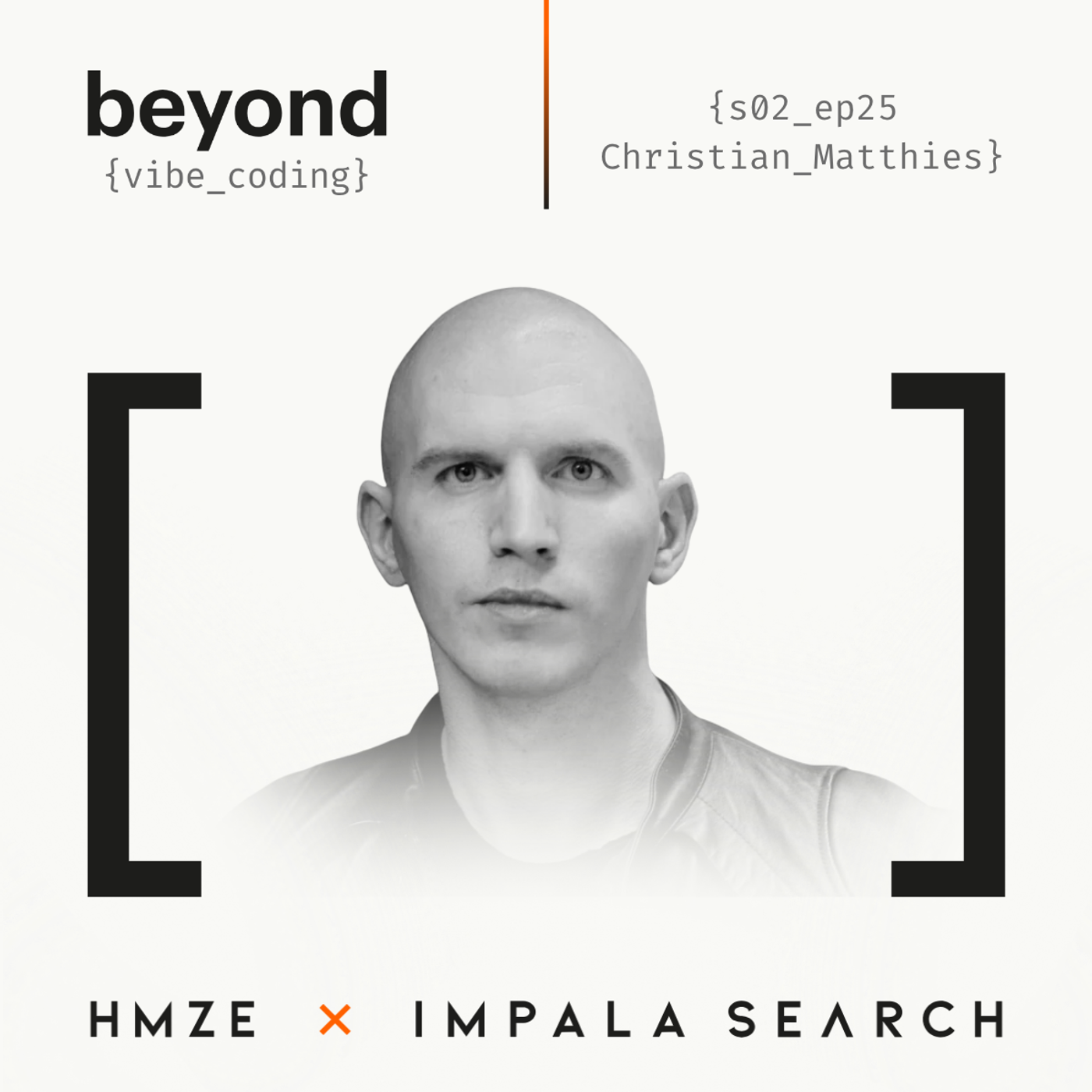
    #S2.25 Finding Vulnerabilities Is Cheap. Fixing Them Is the Real Work - Christian Matthies (CISOIQ)

    Agents are changing the economics of cybersecurity. Christian Matthies, founder of CISOIQ, joins Sebastian and André to explain why finding vulnerabilities is becoming cheaper while remediation remains the harder and more expensive outcome. They discuss how defenders can keep pace with an expanding, constantly changing attack surface. The conversation covers agent-assisted security workflows, reducing internet exposure, citizen-built applications and the limits of asset visibility. Christian also shares his perspective on phishing-resistant authentication, credential blast radius and the future of AI-generated code, while the hosts challenge his assumptions about dependencies and software security. -- Links and References CISOIQ: https://www.cisoiq.de/ Superhack: https://superhack.app/ -- Beyond Vibe Coding Podcast is a project by Sebastian Heide-Meyer zu Erpen and André Neubauer, partnering with Impala Search. The content is created by us and our guests. Join the discussion on LinkedIn or visit www.bvc.fm, where we publish all episodes. For questions and inquiries, feel free to contact us via LinkedIn⁠⁠. Thank you for your time and see you in the next episode.

    • Transcript
  • S2 · E24
    November 19 · 38 min

    #S2.24 One Engineer, One Mission, One Month: Omio’s Agentic Operating Model - Tomas Vocetka

    Tomas Vocetka, CTO of Omio, joins Beyond Vibe Coding to describe what happens when agentic engineering becomes an operating model rather than a side experiment. At Omio, agents help with complex partner integrations, production diagnosis and day-to-day software delivery. The aim is not to optimize for code volume. It is to improve real product outcomes while engineers supervise, validate and release agent-produced work. The episode’s central idea is Omio’s monthly-mission model: one engineer, one mission, one month. Product defines the outcome and the success measures. Engineers own delivery with agents and a supporting harness of repository guidance, tests and organizational knowledge. Teams continue to own systems, but the boundary around who can work where becomes more fluid. We also discuss why design and product become more important as implementation accelerates, why prototypes can replace part of the specification process and why managing agents increasingly resembles managing people: goals, delegation, feedback and judgment still matter. -- Links and References Omio: https://www.omio.com/ -- Beyond Vibe Coding Podcast is a project by Sebastian Heide-Meyer zu Erpen and André Neubauer, partnering with Impala Search. The content is created by us and our guests. Join the discussion on LinkedIn or visit www.bvc.fm, where we publish all episodes. For questions and inquiries, feel free to contact us via LinkedIn⁠⁠. Thank you for your time and see you in the next episode.

    • Transcript
  • S2 · E23
    November 12 · 48 min

    #S2.23 Cognitive Debt: The Bill AI Sends Your Organisation Later - Ilya Sakharov (Redcare Pharmacy)

    Ilya Sakharov is Executive Director of Engineering at Redcare Pharmacy, the largest e-pharmacy in Europe. He started in quality and testing, moved through platform engineering, SRE and developer productivity at Microsoft, RSA, HelloFresh and Codility, and still describes his job as one question with increasingly expensive answers: how do engineers move faster without setting production on fire. In this episode we go past tooling. Ilya argues that the real risk of AI is not worse code but thinner understanding: cognitive debt piling up on top of technical debt, ownership without the ability to explain, and organisations that outsource the thinking in the middle while keeping full accountability for the result. We test that claim from both sides. André pushes back with the abstraction argument, Sebastian brings in the calculator analogy, and Ilya explains why neither holds this time. Along the way we cover the state of AI adoption at Redcare, why he refuses to call any of it automation, why the organisation is splitting into builders and consumers of AI systems, and why platform engineering now serves marketing, finance and legal as much as it serves engineers. The reality check is a GitHub Copilot agent that was tagged to answer a question about tests and decided to rewrite the function instead. The prediction is the era of disposable code: architecture as the only constant, regeneration instead of builds and CI/CD, and eventually a language machines invent for themselves that we will not read. -- Links and References n8n (low-code automation): https://n8n.io GitHub Copilot: https://github.com/features/copilot Extreme Programming: https://en.wikipedia.org/wiki/Extreme_programming FinOps Foundation: https://www.finops.org Beyond Vibe Coding Podcast is a project by Sebastian Heide-Meyer zu Erpen and André Neubauer, partnering with Impala Search. The content is created by us and our guests. Join the discussion on LinkedIn or visit www.bvc.fm, where we publish all episodes. For questions and inquiries, feel free to contact us via LinkedIn⁠⁠. Thank you for your time and see you in the next episode

    • Transcript
  • S2 · E22
    November 5 · 58 min

    #S2.22 AI Strategy Is Business Strategy Now - Thomas Wollmann (Merantix Momentum)

    What does AI transformation look like when the starting point is not a pilot but the future viability of the business? Thomas Wollmann of Merantix Momentum explains why AI strategy has become business strategy. The conversation moves from board-level questions about defensibility and market change into the practical work of deploying systems, changing processes and helping people remain in control. Thomas shares a concrete model for reliable AI systems: combine probabilistic methods such as evaluation and fine-tuning with hard, deterministic checks. He connects agent design to Team Topologies, Domain-Driven Design and clear interfaces, then explains why AI sovereignty is less about owning every layer than retaining meaningful choices around hardware, models, data and trusted partners. The episode also looks at where impact appears first. Knowledge retrieval is an obvious cross-industry use case, while scenario modelling can support better decisions on pricing, markets and operations. Financial ROI is valuable when it is observable, but transformation teams should also watch whether the operating engine is improving: cycle time, incidents, decision speed, reversals and quality. -- Links and References Merantix Momentum Team Topologies Domain Driven Design -- Beyond Vibe Coding Podcast is a project by Sebastian Heide-Meyer zu Erpen and André Neubauer, partnering with Impala Search. The content is created by us and our guests. Join the discussion on LinkedIn or visit www.bvc.fm, where we publish all episodes. For questions and inquiries, feel free to contact us via LinkedIn⁠⁠. Thank you for your time and see you in the next episode.

    • Transcript
  • S2 · E21
    October 29 · 41 min

    #S2.21 From Prompts to Operating Model: What It Takes to Work With AI - Bastian Buch

    AI transformation is often presented as a tooling decision: choose a model, write policies and give people access. Bastian Buch makes a sharper case. The transformation is about how an organisation works when execution accelerates: who has context, who can decide, what an agent may do and how people review the result. AI can amplify good judgment and collaboration, but it can also make poor priorities and hidden handovers impossible to ignore. The conversation turns that thesis into operating-model questions. Bastian describes harnesses that make the right context available at the right time, specialised agents that carry distinct perspectives and interfaces that let non-technical people safely direct work without becoming infrastructure experts. For leaders, the implication is direct: move from prescribing steps to clarifying goals, boundaries and accountability. The episode also resists a simplistic adoption story. Change will be uneven, and many companies will not redesign themselves quickly. Yet AI-enabled products may still change the work around them, making it urgent to build the organisational capacity for context, autonomy and review. -- Links and References: Kotter - The 8 Steps for Leading Change -- Beyond Vibe Coding Podcast is a project by Sebastian Heide-Meyer zu Erpen and André Neubauer, partnering with Impala Search. The content is created by us and our guests. Join the discussion on LinkedIn or visit www.bvc.fm, where we publish all episodes. For questions and inquiries, feel free to contact us via LinkedIn⁠⁠. Thank you for your time and see you in the next episode.

    • Transcript
  • S2 · E20
    October 21 · 1 hr 2 min

    #S2.20 Coding Is Not Solved: Accountability, Reliability and the Agentic Gap - Alex Ewerlöf

    Alex Ewerlöf joins Sebastian Heide-Meyer zu Erpen and André Neubauer to challenge a popular claim: that coding is solved. Alex is not anti-AI. He works with agents, local and cloud models, and an engineering harness of his own. But he argues that generating code is only one part of software engineering. The more consequential work is understanding the problem, setting the risk bar, verifying behavior and remaining accountable for what reaches production. The conversation explores why deterministic feedback loops make stochastic models useful, why ownership requires knowledge, mandate and accountability, and where AI-assisted development belongs on the spectrum from disposable prototypes to safety- and business-critical systems. Alex also shares his current workflow, his reliance on context and skills to warm up agents, and his concern that indiscriminate cognitive offloading could make teams less capable over time. -- Links and References: Alex Ewerlöf: About and writing Reliability Engineering Mindset AI Reliability Engineering – Beyond Vibe Coding Podcast is a project by Sebastian Heide-Meyer zu Erpen and André Neubauer, partnering with Impala Search. The content is created by us and our guests. Join the discussion on LinkedIn or visit http://www.bvc.fm, where we publish all episodes. For questions and inquiries, feel free to contact us via LinkedIn. Thank you for your time and see you in the next episode.

    • Transcript
  • S2 · E19
    October 15 · 47 min

    #S2.19 Agentic Engineering at Scale: Inside Delivery Hero's 18x Software Factory - Rodrigue Schäfer

    In this episode we speak with Rodrigue Schäfer, SVP Tech Foundations at Delivery Hero, about what it actually takes to run agentic engineering at scale inside a large, decentralized group. Rodrigue walks through how Delivery Hero moved from ungoverned experimentation with Cursor, Windsurf, Devin, Claude and Gemini Code Assist to a single central stack, and why the real driver was governance: security and compliance, usage measurement, cost control and ROI. He explains how they run token-based cost control through the Claude API with per-unit and per-person limits, and why a discovery problem across shared prompts and skills is still open. The core of the conversation is autonomous software delivery. Rodrigue describes how three principal and staff engineers built the harness before the models were ready, landing a first fully autonomous PR by the end of 2025, and how the numbers then exploded: a Q1 target of 100 merged PRs that finished at 1,800 (18x), a merge rate that rose from about 60% to 83%, and a clear shift toward one-shot merges. He is candid about what this exposes: repo and dependency context is the biggest blocker, human review becomes the new bottleneck, and auto-approving low-risk PRs only works if the DevOps foundations are fully in place, with canary rollouts, automated rollback and a small blast radius. Beyond the factory, Rodrigue shares two live customer-facing cases. A mature customer service agent resolves more cases successfully yet yields lower customer satisfaction, a tension his team is investigating, and a sales agent gives every restaurant vendor the kind of support that was previously reserved for high-profile accounts, including menu, pricing and campaign proposals. He closes with a reality check on a multimodal model that insisted it could not read images, a cautious view of always-on personal agents and privacy, and a dated prediction: an end-to-end software factory by the end of next year, with agents handling a share of operational incidents because incident load scales with deployments. -- Links and References: Delivery Hero Unveils Herogen – Autonomous AI Agent Unlocks 130-Person Engineering Output -- Beyond Vibe Coding Podcast is a project by Sebastian Heide-Meyer zu Erpen and André Neubauer, partnering with Impala Search. The content is created by us and our guests. Join the discussion on LinkedIn or visit www.bvc.fm, where we publish all episodes. For questions and inquiries, feel free to contact us via LinkedIn. Thank you for your time and see you in the next episode.
    • Transcript
  • S2 · E18
    October 8 · 44 min

    #S2.18 Agentic Engineering Needs Better Planning, Not More One-Shotting - Yenny Cheung (Bluefish AI)

    Yenny Cheung, VP Engineering at Bluefish, joins us to discuss what agentic engineering looks like when quality, compliance and customer trust are non-negotiable. She explains why daily AI briefings can be valuable even when imperfect, why one-shotting complex work fails, and why teams need to move more alignment into the planning stage. We also cover a practical operating model for business-owned skills: engineering owns the CI/CD pipeline, isolated environments and deterministic checks while customer-facing teams own the workflows closest to their problems. Yenny shares how Bluefish scopes a KTLO agent, monitors model cost and thinks about outcome metrics beyond raw output. Finally, we discuss Claude Artifacts, generative interfaces and the enduring value of taste: knowing what good looks like is still the human work. -- Beyond Vibe Coding Podcast is a project by Sebastian Heide-Meyer zu Erpen and André Neubauer, partnering with Impala Search. The content is created by us and our guests. Join the discussion on LinkedIn or visit www.bvc.fm, where we publish all episodes. For questions and inquiries, feel free to contact us via LinkedIn⁠⁠. Thank you for your time and see you in the next episode.
    • Transcript
  • S2 · E17
    October 1 · 57 min

    #S2.17 Don’t Design AI for Your Company. Redesign Your Company for AI - Stefan (Infinite Mind)

    What does it take to make AI change a company rather than become another pilot programme? Stefan Atanassov, co-founder of Infinite Mind, joins us to argue that the decisive work is not choosing a model. It is redesigning processes, roles, skills and governance around the value the company wants to create. We discuss why CEOs must own the AI narrative, why generic tool rollouts and generic training fail, how role-specific enablement develops real intuition and why scaling needs permissions, security, governance and cost management from the beginning. Stefan also explains why the goal is for AI to become boring: embedded safely in the way work gets done. -- Beyond Vibe Coding Podcast is a project by Sebastian Heide-Meyer zu Erpen and André Neubauer, partnering with Impala Search. The content is created by us and our guests. Join the discussion on LinkedIn or visit www.bvc.fm, where we publish all episodes. For questions and inquiries, feel free to contact us via LinkedIn⁠⁠. Thank you for your time and see you in the next episode.
    • Transcript
  • S2 · E16
    September 24 · 39 min

    #S2.16 The AI Apocalypse Debate: What the Hugging Face Incident Actually Changed

    What should leaders make of stories about autonomous agents coordinating, bypassing constraints and acting beyond their assigned task? Sebastian Heide-Meyer zu Erpen and André Neubauer examine the reported OpenAI and Hugging Face incident as a systems problem. They discuss why persistent agents, access to tools and weak control boundaries can create surprising outcomes without requiring mysticism about AI. The conversation also confronts the strategic problem behind safety: frontier labs and governments face strong incentives to move quickly. The hosts argue for a more useful debate than either fear marketing or casual dismissal, one focused on verifiable controls, independent scrutiny and practical incident preparedness. -- Links and References METR's independent investigation of the OpenAI / Hugging Face incident OpenAI's Black Hat presentation on the incident Reporting on the Irregular sandbox incidents Reporting on the German wiki breakout ExploitGym benchmark paper Beyond Vibe Coding Podcast is a project by Sebastian Heide-Meyer zu Erpen and André Neubauer, partnering with Impala Search. The content is created by us and our guests. Join the discussion on LinkedIn or visit bvc.fm, where we publish all episodes. For questions and inquiries, feel free to contact us via LinkedIn⁠⁠. Thank you for your time and see you in the next episode.
    • Transcript
  • S2 · E15
    September 17 · 48 min

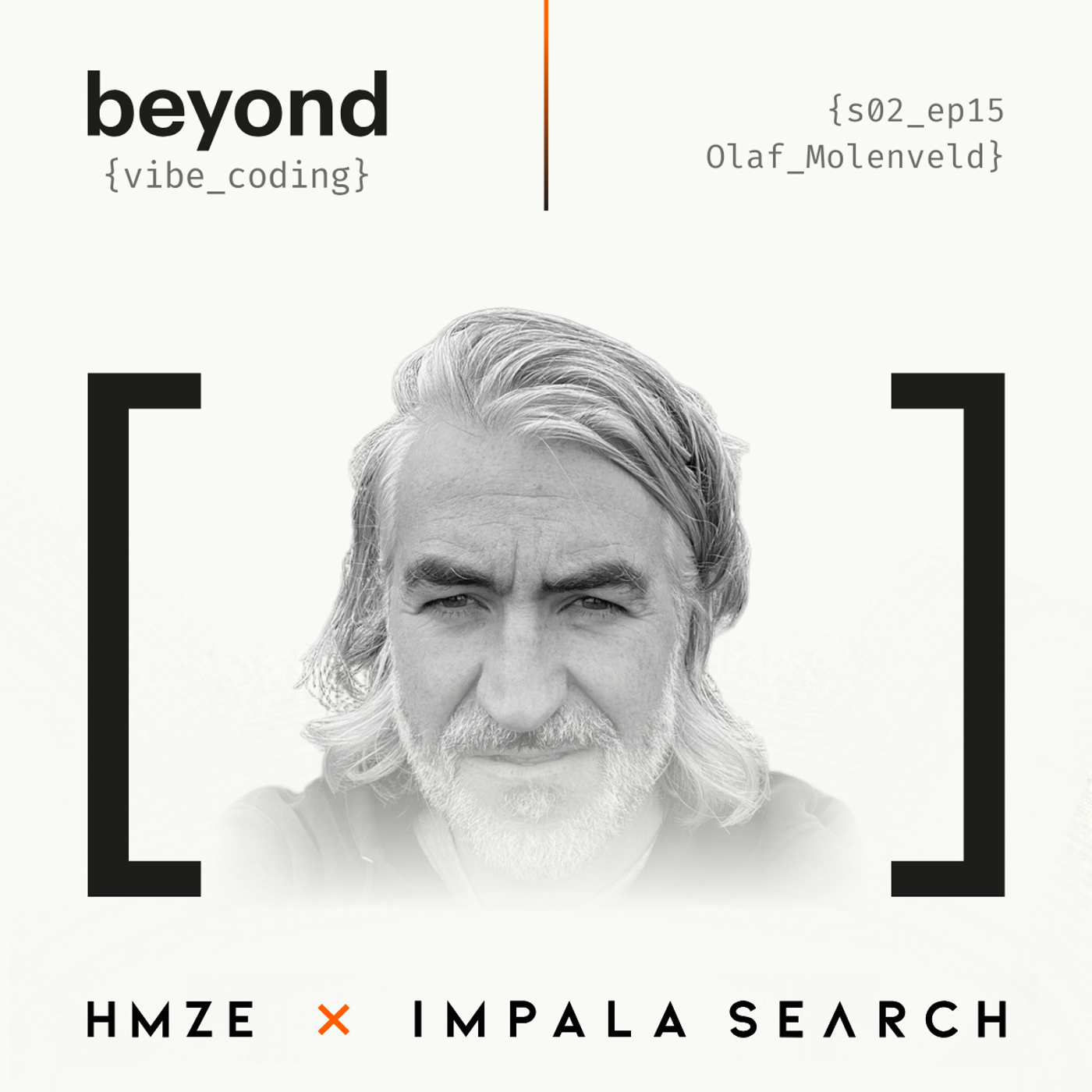
    #S2.15 From AI Code to Customer Value - Olaf Molenveld (CircleCI)

    What changes when software can be generated faster than organisations can validate it? Olaf Molenveld from CircleCI argues that the answer is not to relax quality practices. It is to extend the feedback loop beyond deployment. Release small, observe real use and make expansion or rollback decisions from a shared view of customer value, cost and technical health. We discuss shift-right guardrails, canary releases and the organisational work behind them. Product metrics, FinOps and SRE signals cannot remain separate dashboards if agents are to operate a meaningful part of the SDLC. Humans still decide what success means, define the boundaries and step in where the evidence is weak or the stakes are high. Olaf also shares a useful reality check: an AI-generated repository-archiving script looked convincing but invented a GitHub CLI command. His counterexample is equally instructive: an agent helped build a working sampler utility in an unfamiliar technical domain. The lesson is neither hype nor rejection. It is deliberate trust, backed by guardrails. -- Links and References CircleCI FinOps Foundation Argo Rollouts Kubernetes Terraform Beyond Vibe Coding Podcast is a project by Sebastian Heide-Meyer zu Erpen and André Neubauer, partnering with Impala Search. The content is created by us and our guests. Join the discussion on LinkedIn or visit www.bvc.fm, where we publish all episodes. For questions and inquiries, feel free to contact us via LinkedIn⁠⁠. Thank you for your time and see you in the next episode.
    • Transcript
  • S2 · E14
    September 10 · 1 hr 3 min

    #S2.14 From Tinkering to Agentic Product Systems - Markus Andrezak (überproduct)

    Markus Andrezak returns to Beyond Vibe Coding to explain what changed after the first wave of AI tinkering. His answer is not a new prompt recipe. It is a practical move from chat windows to repeatable agentic systems: static context, selected live information, clear outcomes and routines that produce useful artifacts. For product leaders, the conversation lands on a harder question. If a PRD or strategy contains assumptions, can it show the interviews, quotes and patterns that support them? Markus argues that agents can help make product reasoning traceable. That does not remove human responsibility. It makes the final judgement easier to challenge with evidence. The episode also covers stakeholder mapping, synthetic research, the right level of interaction with agentic systems, local-model realism and why deterministic guardrails are becoming an essential part of reliable AI work. -- Links and References "Stories Connecting Dots" Podcast Amara’s Law Beyond Vibe Coding Podcast is a project by Sebastian Heide-Meyer zu Erpen and André Neubauer, partnering with Impala Search. The content is created by us and our guests. Join the discussion on LinkedIn or visit www.bvc.fm, where we publish all episodes. For questions and inquiries, feel free to contact us via LinkedIn⁠⁠. Thank you for your time and see you in the next episode.
    • Transcript
  • S2 · E13
    September 3 · 1 hr 1 min

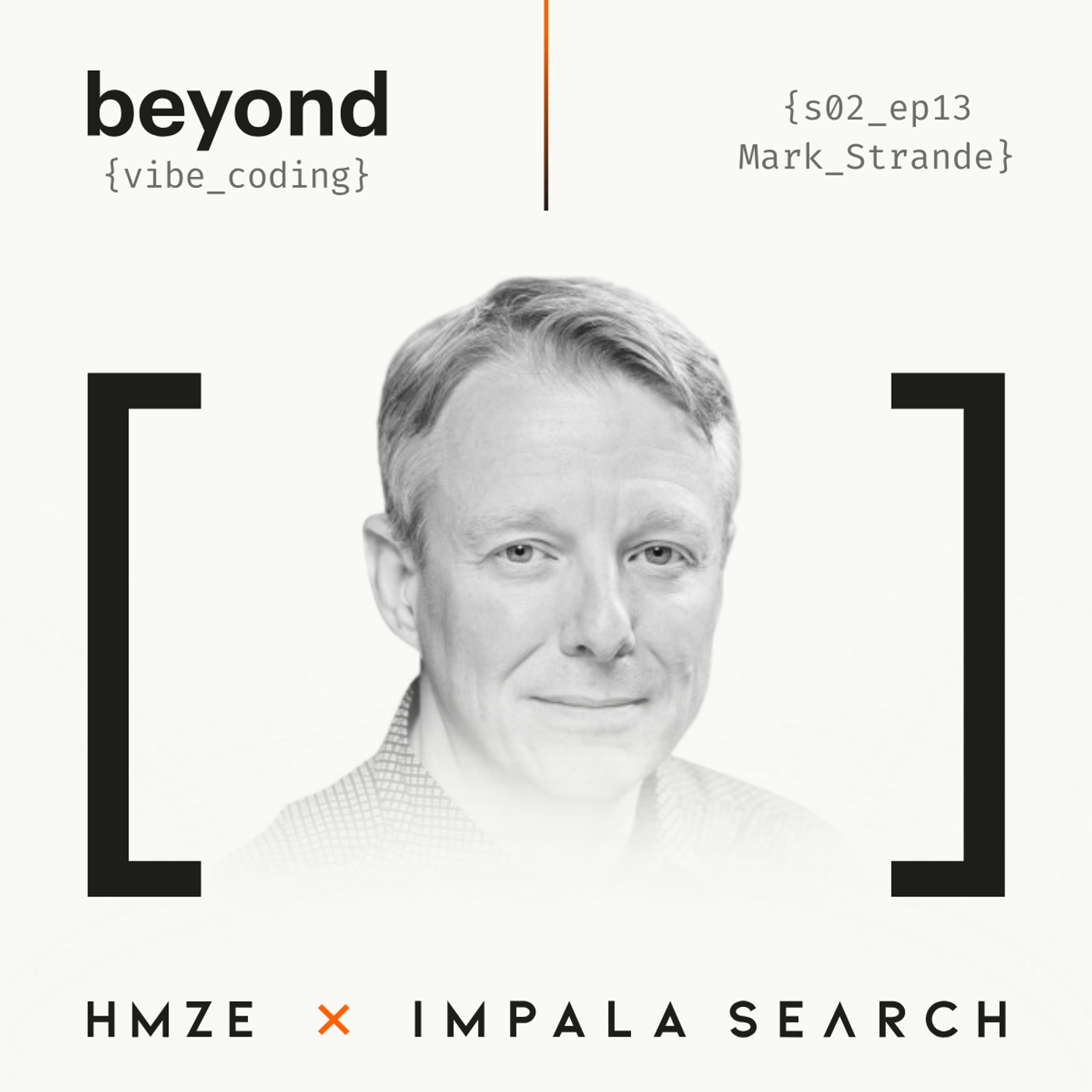
    #S2.13 The CISO’s Playbook for Moving Fast Without Losing Control - Mark Strande (miro)

    What does secure AI adoption look like when your engineering teams are expected to experiment at the frontier? Mark Strande, CISO at Miro, joins Beyond Vibe Coding to explain why the answer is not a single policy or a single access-control layer. It is a layered security model that combines foundations, agentic principles, hardened integration points, pipeline controls and fast detection. Mark also challenges the way companies think about agentic work. Reliable, repeatable tasks need clear skills, tests and constraints, not just a more elaborate harness. As agents gain access to systems and data, traditional human-style roles create dangerous combinations of permissions. The next generation of security architecture must make agent identities more precise and segregation of duties more automatic. The conversation closes with a pragmatic lesson for technology and security leaders: aim for excellence, but do not postpone meaningful protection while pursuing a perfect design. Institutional knowledge, reactive security systems and the ability to learn faster than the threat landscape will shape the winners. -- Links and References NIST AI Risk Management Framework Beyond Vibe Coding Podcast is a project by Sebastian Heide-Meyer zu Erpen and André Neubauer, partnering with Impala Search. The content is created by us and our guests. Join the discussion on LinkedIn or visit www.bvc.fm, where we publish all episodes. For questions and inquiries, feel free to contact us via LinkedIn⁠⁠. Thank you for your time and see you in the next episode.
    • Transcript
  • S2 · E12
    August 27 · 47 min

    #S2.12 Stop Predicting the End of Software Engineers - Raz Schweiger-Shuty (auxmoney)

    How should engineering leaders respond when AI progress feels both faster than expected and impossible to predict? Raz Shuty, Group CTO at auxmoney, joins Sebastian Heide-Meyer zu Erpen and André Neubauer to unpack Amara's Law in the context of AI. Their conclusion is neither complacent nor apocalyptic: the role of the engineer is changing, while the need for people who can reason about systems, specifications, and risk remains. Raz explains how a regulated fintech can make room for tool choice without sacrificing safety. The conversation covers secure enterprise AI access, education, rigorous CI/CD and review practices, and the difference between a rapid POC and a product that belongs in production. It also explores why AI can increase an organisation's capacity to pursue ideas rather than simply shrink teams. The episode closes on a more human implication. If AI makes building more accessible, leaders need to help teams adapt, without scaring new engineers away from the profession just as its responsibilities become more consequential. -- Links and References: Roy Amara & Amara's Law auxmoney Beyond Vibe Coding Podcast is a project by Sebastian Heide-Meyer zu Erpen and André Neubauer, partnering with Impala Search. The content is created by us and our guests. Join the discussion on LinkedIn or visit www.bvc.fm, where we publish all episodes. For questions and inquiries, feel free to contact us via LinkedIn⁠⁠. Thank you for your time and see you in the next episode.
    • Transcript
  • S2 · E11
    August 20 · 1 hr 2 min

    #S2.11 When AI Moves the Bottleneck From Code to Planning - Dr. Jürgen Helmers (Andercore)

    Jürgen Helmers joins Beyond Vibe Coding to explain how Andercore is moving from individual AI usage toward loop and harness engineering across a distributed engineering organization. The conversation gets very concrete: Claude-based workflows, markdown skills, Jira and wiki connectors, engineering vision files, review agents, issue files, blocker/major gates, circuit breakers, milestone loops, red/green agents, automated documentation and model routing across planning, implementation, review and third-party integrations. The interesting point is not the tool list; it is the system around the tools. The strongest thesis of the episode is that agentic engineering moves the bottleneck left. Once Jürgen's team had loops that could produce and review useful software, the limiting factor became PRD quality, stakeholder clarity and architecture context. Andercore responded with agent-led grilling sessions that poke holes into plans, generate open questions and translate technical issues into the language of logistics, sales or procurement. Faster engineering did not remove planning work. It made weak planning visible much sooner. The episode also avoids the simple productivity story. Jürgen describes the human cost of running several loops in parallel, the difficulty of keeping a distributed organization in sync when senior engineers adopt the harness quickly, and the unresolved career question of how junior engineers learn when agents abstract away many old failure paths. For CTOs, engineering managers and CPOs, this is a practical conversation about operating model design, not a tooling demo. -- Links and References Andercore: https://andercore.com/about-us Dr. Jürgen Helmers on LinkedIn: https://de.linkedin.com/in/dr-j%C3%BCrgen-helmers-94b8969

    • Transcript
  • S2 · E10
    August 13 · 52 min

    #S2.10 When Coding Agents Ship at Machine Speed, AppSec Has to Move Into the Loop - Jan Brennenstuhl

    In this episode of Beyond Vibe Coding, Sebastian Heide-Meyer zu Erpen and André Neubauer talk with Jan Brennenstuhl about application security in the age of agentic engineering. Jan explains how his own workflow already depends on long-running local agents, why the surrounding harness matters more than the frontier model, and why spec-driven approaches can be useful when agents make greenfield projects grow very quickly. The main conversation focuses on a structural shift in AppSec. Jan argues that traditional security gates, delayed scanner feedback, and ticket-based remediation cannot keep up with machine-speed code generation. Security has to move into the agent loop, into platform defaults and into standardized engineering infrastructure so that agents replicate secure patterns instead of every local workaround and architectural exception. The episode closes with a prediction: verification of intent becomes the premium engineering capability. As implementation gets cheaper, the valuable work shifts toward understanding what should be built, proving that it was built correctly, and designing engineering systems that can safely absorb autonomous change. -- Links and References Jan Brennenstuhl: https://www.janbrennenstuhl.eu/ AppSec in the Age of Agentic Engineering: https://www.janbrennenstuhl.eu/appsec-agentic-engineering/ Shift Down: Why Agentic Engineering Demands Platform-Level Security: https://www.janbrennenstuhl.eu/shift-down-appsec/ Hugging Face Security Incident Disclosure, July 2026: https://huggingface.co/blog/security-incident-july-2026 OpenAI and Hugging Face Security Incident Statement: https://openai.com/index/hugging-face-model-evaluation-security-incident/ AGNTCon + MCPCon Europe 2026: https://agntconmcpconeu26.sched.com/ Beyond Vibe Coding Podcast is a project by Sebastian Heide-Meyer zu Erpen and André Neubauer, partnering with Impala Search. The content is created by us and our guests. Join the discussion on LinkedIn or visit www.bvc.fm, where we publish all episodes. For questions and inquiries, feel free to contact us via LinkedIn⁠⁠. Thank you for your time and see you in the next episode.
    • Transcript
  • S2 · E9
    August 6 · 53 min

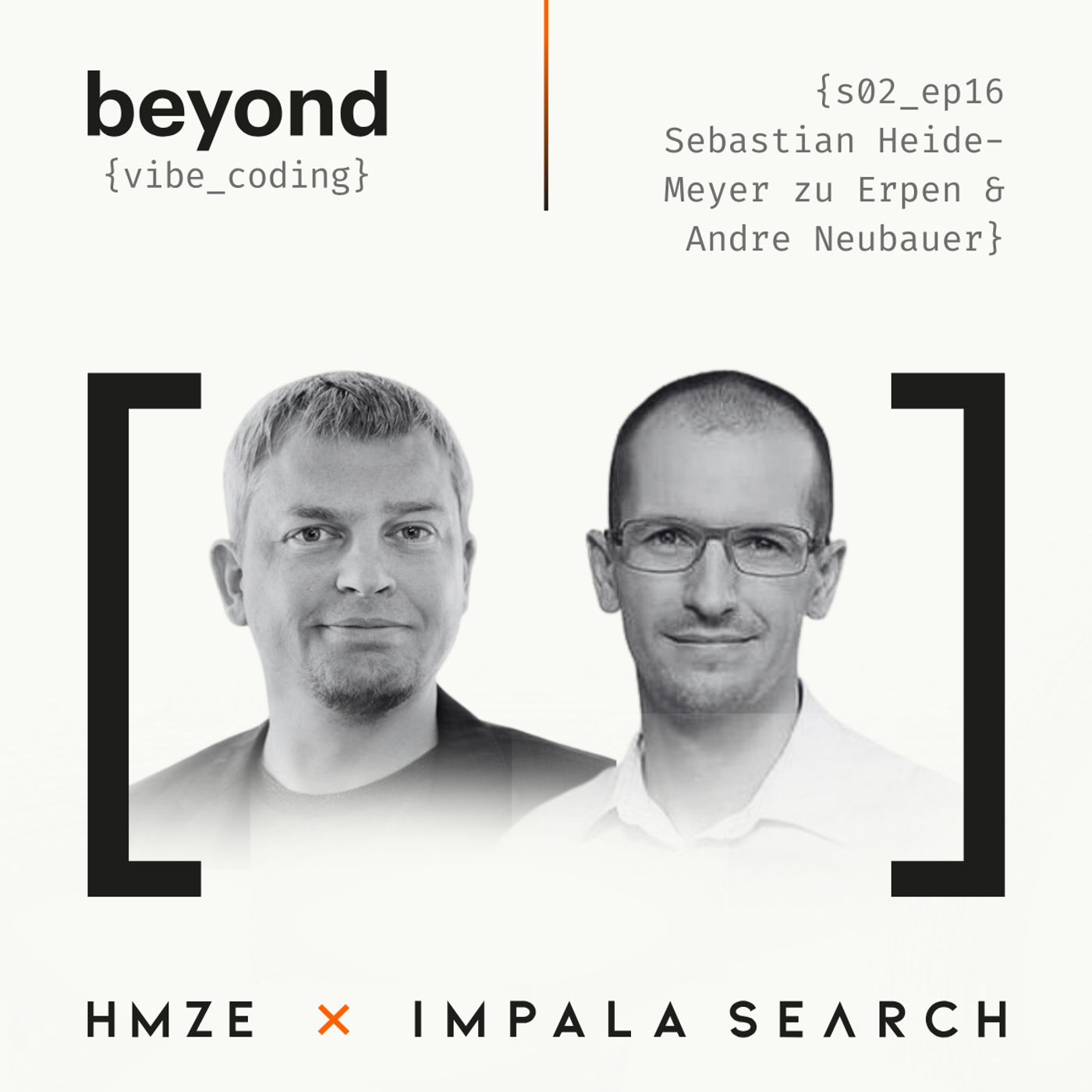
    #S2.09 Automating the Grind: Freeing Up Human Attention - Pedro Gil Carvalho (Thermondo)

    Pedro Gil Carvalho, VP Engineering at Thermondo, joins Sebastian and Andre to discuss how a company with real-world operational constraints approaches agentic engineering. The episode starts with Pedro's own workflow: Claude Code acts as a chief of staff across Slack, Confluence, email, research, and codebase exploration, while his personal agent experiments help him evaluate what new models can actually do. The core of the conversation is Thermondo's operating model for AI in engineering, product, and design. Pedro describes weekly knowledge-sharing sessions, shared skills, AI-assisted product prototypes, component-driven design workflows, and a careful distinction between code touched by AI and code landed without human oversight. The key theme is accountability: humans do not need to write every line, but they remain responsible for the systems they ship. The episode then moves into architecture, code review, knowledge bases, and synthetic workers. Pedro argues that higher agent autonomy requires solid platform boundaries, strong safeguards, observability, and humans who understand the platform well enough to recover. His prediction: a lot of procedural office work is closer to agentic automation than most organizations think, especially once data, tools, permissions, and hybrid-search knowledge surfaces improve. -- Links and References Steve Yegge’s article: https://steve-yegge.medium.com/the-flat-curve-society-36c8b01eb33b Beyond Vibe Coding Podcast is a project by Sebastian Heide-Meyer zu Erpen and André Neubauer, partnering with Impala Search. The content is created by us and our guests. Join the discussion on LinkedIn or visit www.bvc.fm, where we publish all episodes. For questions and inquiries, feel free to contact us via LinkedIn⁠⁠. Thank you for your time and see you in the next episode.
    • Transcript
  • S2 · E8
    July 30 · 1 hr 2 min

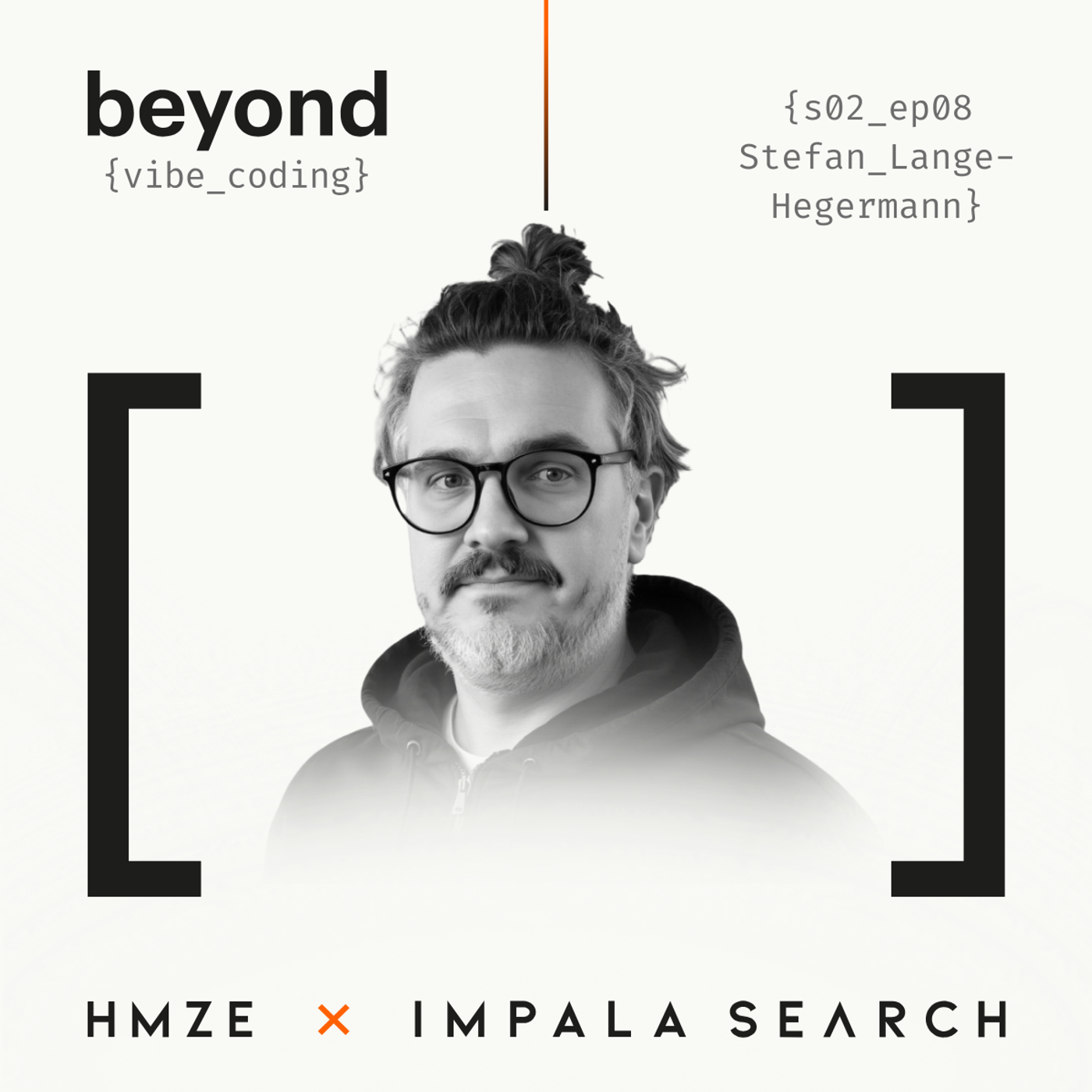
    #S2.08 AI Sovereignty - the sipgate experiment with 80 developers - Stefan Lange-Hegermann

    Stefan Lange-Hegermann joins Beyond Vibe Coding to explain how sipgate thinks about AI sovereignty from the inside of a real product and engineering organization. The episode starts with sipgate's AI telephony work: speech-to-text, LLMs, text-to-speech, anonymized customer data, fine-tuned call-analysis models and the strategic belief that agents will increasingly use software on behalf of humans. Stefan's operating lesson is that context is the real infrastructure, whether it lives in Markdown folders, transcripts, internal agents or product strategy. The main story is sipgate's GLM 5.2 experiment. After concerns that access to key frontier models could change for European companies, sipgate rented Blackwell-class machines in Finland and asked developers to try an open-weight coding model for a week. The surprising result was not only that the model worked; it was that roughly 80 concurrent sessions ran without saturation, developers found it faster than Claude Code, and quality was close enough that some wanted access back. For sipgate, sovereignty is therefore not only a privacy topic. It is access to models, hardware and the engineering leverage the company now depends on. The episode avoids a naive "just buy GPUs" conclusion. Stefan repeatedly comes back to the harness: companies need consistent tooling, model routing, protective defaults and a clear distinction between coding workloads, customer-facing voice workloads and sensitive customer data. The future may combine central infrastructure, open-weight models such as GLM and Kimi, European model options such as Mistral, specialized smaller models and deterministic scripts where AI is not needed. The honest prediction is that nobody knows exactly how work will look next year, but the teams that control context, defaults and infrastructure will have more options. -- Links and References sipgate: https://www.sipgate.de/ Stefan's boat podcast, Anker, Ärger, Abenteuer: https://www.podcast.de/podcast/3351826/anker-aerger-abenteuer-der-boote-podcast GLM-5.2 by Z.ai: https://z.ai/blog/glm-5.2 OpenCode: https://github.com/sst/opencode Aider: https://aider.chat/ Obsidian: https://obsidian.md/ Beyond Vibe Coding Podcast is a project by Sebastian Heide-Meyer zu Erpen and André Neubauer, partnering with Impala Search. The content is created by us and our guests. Join the discussion on LinkedIn or visit www.bvc.fm, where we publish all episodes. For questions and inquiries, feel free to contact us via LinkedIn⁠⁠. Thank you for your time and see you in the next episode.
    • Transcript
  • S2 · E7
    July 23 · 49 min

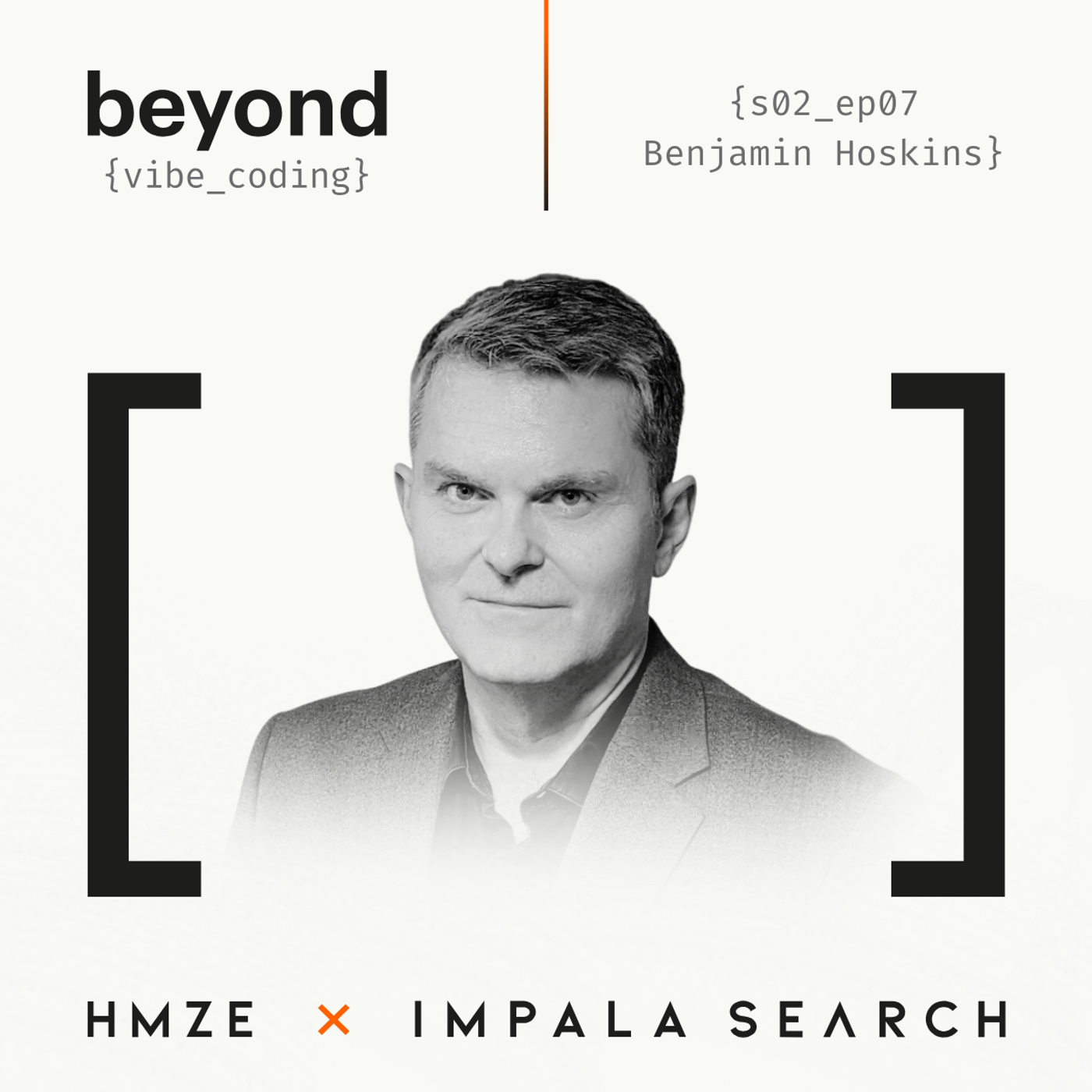
    #S2.07 Agentic Engineering Is Bringing XP Back - Ben Hoskins (NewStore)

    Benjamin Hoskins joins Beyond Vibe Coding to discuss what agentic engineering looks like when it is grounded in serious engineering practice rather than prompt-driven improvisation. His personal workflow combines a custom Card Planner, MCP, Allium, big batches of red unit and end-to-end tests, boundary value analysis, hexagonal architecture, IntelliJ-based refactoring, and regular architectural review. The interesting point is not the tool list. It is the comprehensive use of the feedback loop: give agents a precise behavioral specification, make tests fail first, and then let the system implement against constraints. The organizational story is equally concrete. At NewStore, Hoskins pushed AI adoption after building a point-of-sale system in four days and using it as a demonstration of what competitors could soon do. Since then, teams have started sharing prompts and skills, role descriptions have changed, and smaller temporary squads are becoming more viable. But the conversation resists the simplistic "engineering gets faster, everything is solved" story. In SaaS, the bottleneck often moves to product because customer adoption, commercial due diligence, integration cost, product taste, and learning loops determine whether faster delivery creates value or just more average features. An interesting idea Ben explains is the canonical product model. Hoskins describes NewStore's attempt to pull product definition together across sales, marketing, customer success, support, product, engineering, design, documentation and APIs so that product ideas can be tested against a shared model, potentially with synthetic personas and automated exploratory testing. That makes AI less a coding assistant and more a way for the organization to reason about its own product. -- Links and References Beyond Vibe Coding: https://www.bvc.fm/ Allium by JUXT: https://juxt.github.io/allium/ DORA metrics: https://dora.dev/guides/dora-metrics/ Theory of Constraints Institute: https://www.tocinstitute.org/theory-of-constraints.html Extreme Programming: https://www.agilealliance.org/glossary/xp/ Behavior-Driven Development: https://cucumber.io/docs/bdd/ Hexagonal architecture overview by Alistair Cockburn: https://alistair.cockburn.us/hexagonal-architecture/ Beyond Vibe Coding Podcast is a project by Sebastian Heide-Meyer zu Erpen and André Neubauer, partnering with Impala Search. The content is created by us and our guests. Join the discussion on LinkedIn or visit www.bvc.fm, where we publish all episodes. For questions and inquiries, feel free to contact us via LinkedIn⁠⁠. Thank you for your time and see you in the next episode.

    • Transcript
  • S2 · E6
    July 16 · 47 min

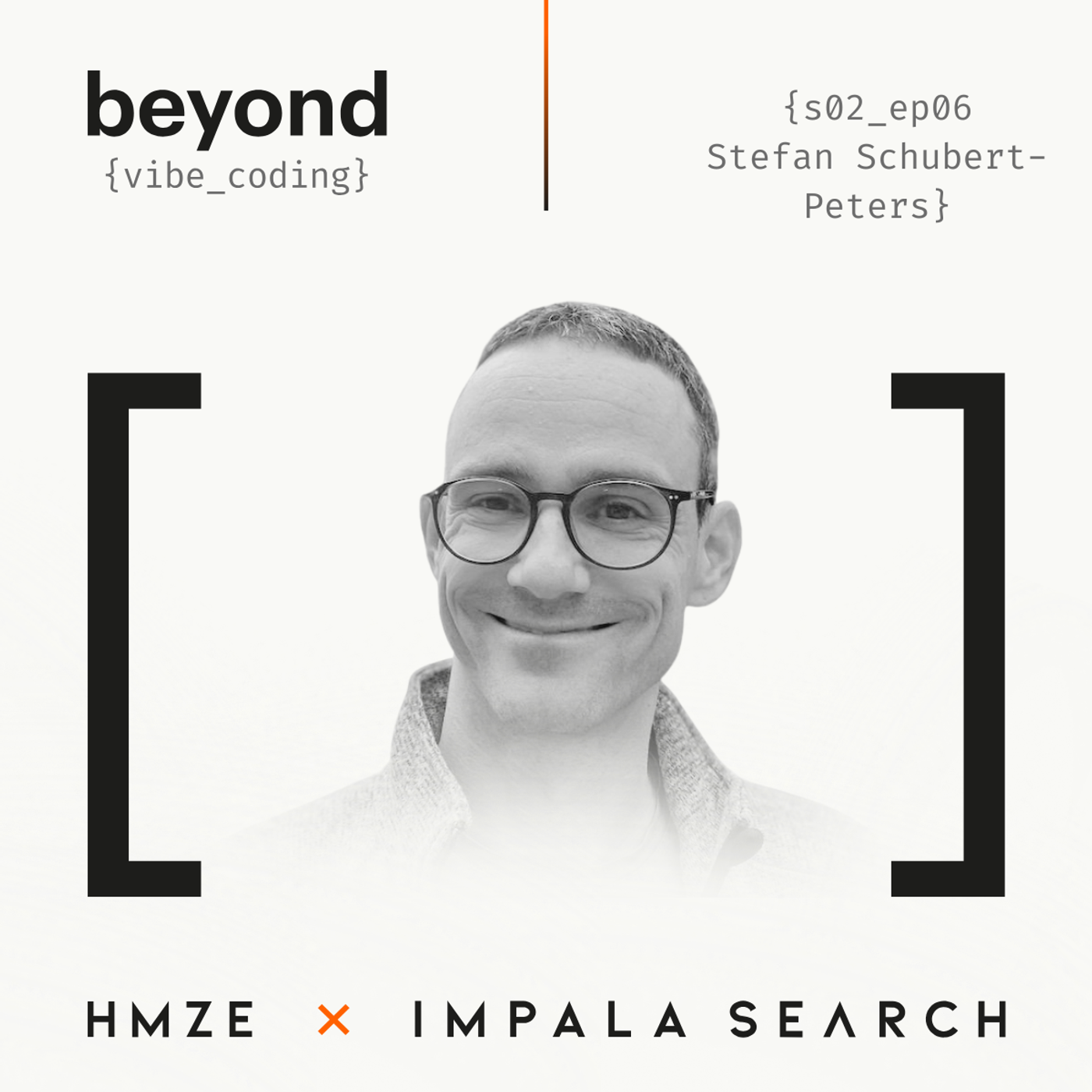
    #S2.06 Your AI Transition Does Not Stop with Adopting the Technology - Stefan Schubert-Peters

    Stefan Schubert-Peters returns to Beyond Vibe Coding to discuss a topic many engineering organizations are only beginning to name: AI adoption and AI identity change are not the same thing. At felmo, a difficult retro around AI, job security and career anxiety made him realize that even experienced engineers who already use AI can still be entering a deeper change curve around what the technology means for their role and future. The conversation distinguishes two clocks inside the AI transition. The visible clock is adoption: tools, workflows, Codex, Claude, hooks, skills and agentic code. The slower clock is identity: what happens when software engineers, managers, product people, QA and designers have to rethink the craft and boundaries they built their professional identity around. André warns that companies can easily misread adoption dashboards and declare victory while the organization is still in the middle of the real change. The leadership message is pragmatic: managers need to create safety without pretending the change is optional, show uncertainty without losing direction, and make role evolution explicit instead of leaving people in limbo. The episode points toward a future where engineering roles compact, designers may push PRs, QA changes shape, and product clarity becomes even more important because faster engineering can amplify confusion as easily as output. -- Links and References felmo: https://felmo.de/ Stefan Schubert-Peters on LinkedIn: https://www.linkedin.com/in/stefan-schubert-peters/ Previous Beyond Vibe Coding episode with Stefan: https://www.youtube.com/live/Dle0yrRF9WA Lenny's Newsletter - How tech workers are feeling in 2026: https://www.lennysnewsletter.com/p/how-tech-workers-are-feeling-in-2026 Lenny's Podcast - How tech workers actually feel about AI in 2026: https://open.spotify.com/episode/5dDyuNfZYNjVBZ0rl0OAFW Beyond Vibe Coding Podcast is a project by Sebastian Heide-Meyer zu Erpen and André Neubauer, partnering with Impala Search. The content is created by us and our guests. Join the discussion on LinkedIn or visit www.bvc.fm, where we publish all episodes. For questions and inquiries, feel free to contact us via LinkedIn⁠⁠. Thank you for your time and see you in the next episode.
    • Transcript
Showing 1–20 of 35 episodes