Skip to content
Artwork for Beyond UX Design
ArtsDesign

Beyond UX Design

Jeremy Miller

Beyond UX Design’s mission is to give you the tools you need to be a truly effective UX designer by diving into the soft skills they won’t be teaching you in school or a boot camp. These soft skills are critical for your success as a UX professional.

Play
  • 33 episodes
  • weekly
  • Avg 30 min
  • English
Counted on this page — what you have heard stays on this device, so it is not something the list can be paged by.
  • #148
    May 15 · 54 min

    Yes, And... Now What? Improv Lessons for Navigating the Actual Job with Nikki Anderson

    Your tools are solid. Your process is tight. But when a stakeholder pushes back, a workshop goes sideways, or a PM challenges your work, none of that matters. What matters is how you respond. Nikki Anderson joins me to talk about improv, structured play, and how to stay sharp when the messy stuff hits. What if the most important skill in your UX career has nothing to do with design? Nikki Anderson is a UX research consultant, founder of Drop-In Research, and one of those rare people who can draw a straight line between improv comedy and stakeholder management, and actually make it land. She started doing improv around the same time she got into UX research, originally to overcome a lifelong fear of speaking on the spot. What she found was that the principles she was learning on stage translated almost perfectly into the conference room. In this conversation, we get into the specific places where UX professionals tend to flail, and it's not where most people think. It's not the research plan or the prototype. It's the high-stakes meeting where everything's riding on one presentation. It's the design critique that spirals into defensiveness. It's the moment a stakeholder blames you for something and your fight-or-flight kicks in before your brain does. Nikki breaks down how improv—and specifically the "yes, and" mindset—isn't about blind agreement. It's about accepting reality, staying curious, and choosing to investigate rather than argue. We also get into structured play, the idea that creativity doesn't just need freedom, it needs a container. Nikki makes the case that the most productive meetings, critiques, and workshops aren't the loose, open-ended ones. They're the ones with clear intention, playground rules, and maybe a little "draw a duck" warm-up before anyone starts giving feedback. If you've ever felt like the soft skills side of this job was something you were just supposed to figure out on your own, this one's for you. Listen in. Topics: • 04:00 - Nikki's improv origin story. • 07:12 - Where UX professionals flail: the high-stakes meeting trap. • 10:30 - The skepticism around "yes, and" — and what it actually means. • 13:50 - Structured play and why it matters at work. • 16:20 - Ambiguity and mismatched expectations: improv as a tool for dealing with them on the fly. • 17:21 - Live stakeholder blame scenario: the "yes, and + investigate" approach in action. • 22:45 - Applying improv to design critiques. • 23:31 - Renaming critiques, setting playground rules, and warm-up exercises. • 30:45 - Using improv to handle unexpected process changes. • 31:30 - Accepting reality: the "yes" before the question. • 35:55 - The control/no-control exercise for individual contributors. • 38:10 - Creativity needs structure, not just freedom. • 44:05 - Closing thoughts: take an improv class; nothing is an emergency. Helpful Links: • Connect with Nikki on LinkedIn • Subscribe to the User Research Strategist — Thanks for listening! We hope you dug today’s episode. If you liked what you heard, be sure to like and subscribe wherever you listen to podcasts! And if you really enjoyed today’s episode, why don’t you leave a five-star review? Or tell some friends! It will help us out a ton. If you haven’t already, sign up for our email list. We won’t spam you. Pinky swear. • ⁠⁠⁠Get a FREE audiobook AND support the show⁠⁠⁠ • ⁠⁠⁠Support the show on Patreon⁠⁠ ⁠⁠⁠⁠⁠• ⁠⁠⁠Check out show transcripts⁠⁠⁠ • ⁠⁠⁠Check out our website⁠⁠⁠ • ⁠⁠⁠Subscribe on Apple Podcasts⁠⁠⁠ • ⁠⁠⁠Subscribe on Spotify⁠⁠ ⁠⁠⁠⁠⁠• ⁠⁠⁠Subscribe on YouTube⁠⁠⁠ • ⁠⁠⁠Subscribe on Stitcher⁠

  • May 8 · 12 min

    The Frequency Illusion: You Just Noticed It, but it Was Always There

    Your brain doesn't show you everything around you — it shows you what it's been told to look for. In this episode of the Cognition Catalog, we break down the frequency illusion and how this quirk of attention can quietly warp how product teams spot trends, prioritize problems, and build roadmaps. What if the trend your team keeps talking about isn't actually a trend — and your brain has been quietly manufacturing evidence for it this whole time? The frequency illusion is one of those cognitive biases that feels like insight right up until it isn't. You learn a new term, you spot a new pattern, and suddenly it seems like it's everywhere: in your product, in your competitors' apps, in research you've been staring at for weeks. The information was always there. Your attention just finally got the memo. In this episode of the Cognition Catalog, I break down how the frequency illusion works, where it came from (including the surprisingly colorful backstory behind the Baader-Meinhof phenomenon), and why it doesn't stop at UI patterns. The same mechanism that makes you see skeleton loaders everywhere after one design review is the same one that inflates a single customer complaint into what feels like a five-alarm fire on your roadmap. The tricky part? It feels exactly like professional growth. And when an entire team gets primed on the same idea at the same time, that individual bias can scale into something much harder to catch. If you want to get better at separating what you're noticing from what's actually happening, this episode is for you. Topics: • 03:00 - The Inter story: how a LinkedIn post changed everything I saw. • 04:00 - What the frequency illusion actually is. • 04:30 - The Baader-Meinhof phenomenon and how it got its name. • 05:00 - Arnold Zwicky coins "the frequency illusion" in 2005. • 05:30 - Selective attention and confirmation bias: the two engines behind it. • 06:30 - The recency illusion and how it compounds the problem. • 07:00 - How the frequency illusion shows up in design critiques.• 08:30 - What to actually do about it: attention is not neutral. • 08:50 - Watch for shared attention bias on your team. • 09:20 - Don't let air time substitute for evidence. • 09:45 - Create deliberate distance between discovery and decision. • 10:15 - Surface what you're not seeing. • 11:00 - Closing thoughts and listener question. — Thanks for listening! We hope you dug today’s episode. If you liked what you heard, be sure to like and subscribe wherever you listen to podcasts! And if you really enjoyed today’s episode, why don’t you leave a five-star review? Or tell some friends! It will help us out a ton. If you haven’t already, sign up for our email list. We won’t spam you. Pinky swear. • ⁠⁠Get a FREE audiobook AND support the show⁠⁠ • ⁠⁠Support the show on Patreon⁠ ⁠⁠⁠• ⁠⁠Check out show transcripts⁠⁠ • ⁠⁠Check out our website⁠⁠ • ⁠⁠Subscribe on Apple Podcasts⁠⁠ • ⁠⁠Subscribe on Spotify⁠ ⁠⁠⁠• ⁠⁠Subscribe on YouTube⁠⁠ • ⁠⁠Subscribe on Stitcher

  • #149
    May 1 · 1 hr 8 min

    The Execution Trap Nobody Warns You About with Cat Lo

    Cat Lo spent 20 years learning that execution excellence can actually hold you back. After burning out at Amazon doing beautiful work that nobody noticed, she distilled her hard-won lessons into five tenets, a framework that helped her shape billion-dollar opportunities and drive $218 million in impact. What if the very thing that made you a great designer is the reason you’re being left out of the decisions that matter most? Cat Lo’s career has taken a path most designers don’t follow, starting with a bus ticket to New York City and no job waiting, through agency work, entrepreneurship, and eventually to Amazon, where she designs how millions of new products find their first customers. She didn’t take the traditional route from corporate to “I need freedom.” She went the other direction, deliberately. And that choice gave her a perspective on craft, scale, and influence that’s pretty hard to find in most design conversations. In this episode, Cat breaks down why execution excellence, the thing that gets you hired and earns you trust, can quietly become a trap. The better you get at delivering, the more delivery lands on your plate. And the more delivery on your plate, the less you’re involved in deciding what gets built in the first place. The result is a framework of five tenets she uses every day: find the smallest testable truth, let customer data be the tiebreaker, ship to learn rather than waiting for perfection, align on the problem, not the solution, and look for the invisible problems nobody else is paying attention to. Cat also walks us through a real example from her work at Amazon — a $7.8 billion market opportunity hiding in plain sight that most people had written off as not important enough to solve. It’s a masterclass in how individual contributors without direct authority can still shape strategy, build conviction, and make work impossible to ignore. If you’ve ever felt like you’re doing great work that just isn’t landing, this one is for you. Go give it a listen. Topics: • 03:27 - Cat’s Origin story: a bus ticket, $20, and no job waiting in New York City. • 05:08 - Career arc: fine arts → art director → entrepreneurship → Amazon. • 07:41 - Your skills are knobs, not switches. Learn when to turn each one up or down. • 10:07 - Every company speaks a different design language; you have to learn to speak theirs. • 14:17 - How to handle vague direction: match your response to the altitude of the ask. • 18:00 - Tenet 1: find the smallest testable truth before going wide. • 25:52 - Tenet 2: customer truth is the only real tiebreaker when opinions are flying. • 30:36 -Tenet 3: achievable now beats perfect later. Ship to learn, not to finish. • 37:33 - Tenet 4: alignment means agreeing on the problem, not the solution. • 41:00 - The brand name generator story and the $7.8B opportunity nobody was solving. • 48:00 - Tenet 5: look around the corner for the invisible problems no one’s been assigned. • 53:15 - How to build influence without authority: state your opinion clearly and stay flexible. • 01:04:05 - Where to find Cat: faangforcorporate.com. Helpful Links: • Connect with Cat on LinkedIn • Subscribe to FAANG Boss — Thanks for listening! We hope you dug today’s episode. If you liked what you heard, be sure to like and subscribe wherever you listen to podcasts! And if you really enjoyed today’s episode, why don’t you leave a five-star review? Or tell some friends! It will help us out a ton. If you haven’t already, sign up for our email list. We won’t spam you. Pinky swear. • ⁠⁠Get a FREE audiobook AND support the show⁠⁠ • ⁠⁠Support the show on Patreon⁠ ⁠⁠⁠• ⁠⁠Check out show transcripts⁠⁠ • ⁠⁠Check out our website⁠⁠ • ⁠⁠Subscribe on Apple Podcasts⁠⁠ • ⁠⁠Subscribe on Spotify⁠ ⁠⁠⁠• ⁠⁠Subscribe on YouTube⁠⁠ • ⁠⁠Subscribe on Stitcher

  • April 23 · 14 min

    Survivorship Bias: Success Theater and the Data You Never See

    We've built our careers on case studies, portfolios, and success stories, but what if we're only ever seeing a fraction of the full picture? This week, we dig into survivorship bias and how it quietly shapes the decisions your product team makes every day. What if every case study and "here's how we did it" success story you've ever learned from was missing the most important part of the story? Every startup founder story sounds the same. Crazy idea. Doubters everywhere. Bet on themselves. Changed everything. It's a great narrative, but it's a narrative written entirely by the people who made it through. For every founder who ignored the critics and won, thousands did the exact same thing and quietly disappeared. It may sound like pessimism, but that's the math we've been ignoring. This week's Cognition Catalog episode breaks down survivorship bias: why we instinctively focus on the outcomes we can see while the failures stay invisible. It shows up everywhere; in the startup mythology we've absorbed, in the portfolios we scroll through on LinkedIn, and in the way product teams anchor their planning on the projects that shipped rather than the ones that got quietly shelved. The good news is that this isn't a bias you're stuck with. There are practical ways to build better habits into how your team makes decisions, and it starts by asking a different question. Give this one a listen if you've ever wondered why your career feels like it doesn't quite measure up to everyone else's highlight reel. Topics: • 00:00 - The startup founder myth and why we only hear from the survivors. • 01:23 - Welcome to the Cognition Catalog. • 02:45 - The small business failure numbers that most people never talk about. • 04:23 - What survivorship bias actually is and why it matters. • 04:35 - Why portfolio case studies only show the work that succeeded. • 05:35 - Why your career probably looks worse than everyone else's, and why that's an illusion.• 08:16 - How the college dropout mythology turns exceptions into templates. • 08:40 - How survivorship bias quietly shapes product team decisions. • 09:02 - Why your active user research is a filtered sample. • 09:28 - How survivorship bias shows up in team culture. • 10:09 - Five practical ways to fight survivorship bias on your team. • 12:11 - The one question you should always be asking about success stories. — Thanks for listening! We hope you dug today’s episode. If you liked what you heard, be sure to like and subscribe wherever you listen to podcasts! And if you really enjoyed today’s episode, why don’t you leave a five-star review? Or tell some friends! It will help us out a ton. If you haven’t already, sign up for our email list. We won’t spam you. Pinky swear. • ⁠Get a FREE audiobook AND support the show⁠ • ⁠Support the show on Patreon ⁠• ⁠Check out show transcripts⁠ • ⁠Check out our website⁠ • ⁠Subscribe on Apple Podcasts⁠ • ⁠Subscribe on Spotify ⁠• ⁠Subscribe on YouTube⁠ • ⁠Subscribe on Stitcher

    • Transcript
  • #146
    March 31 · 42 min

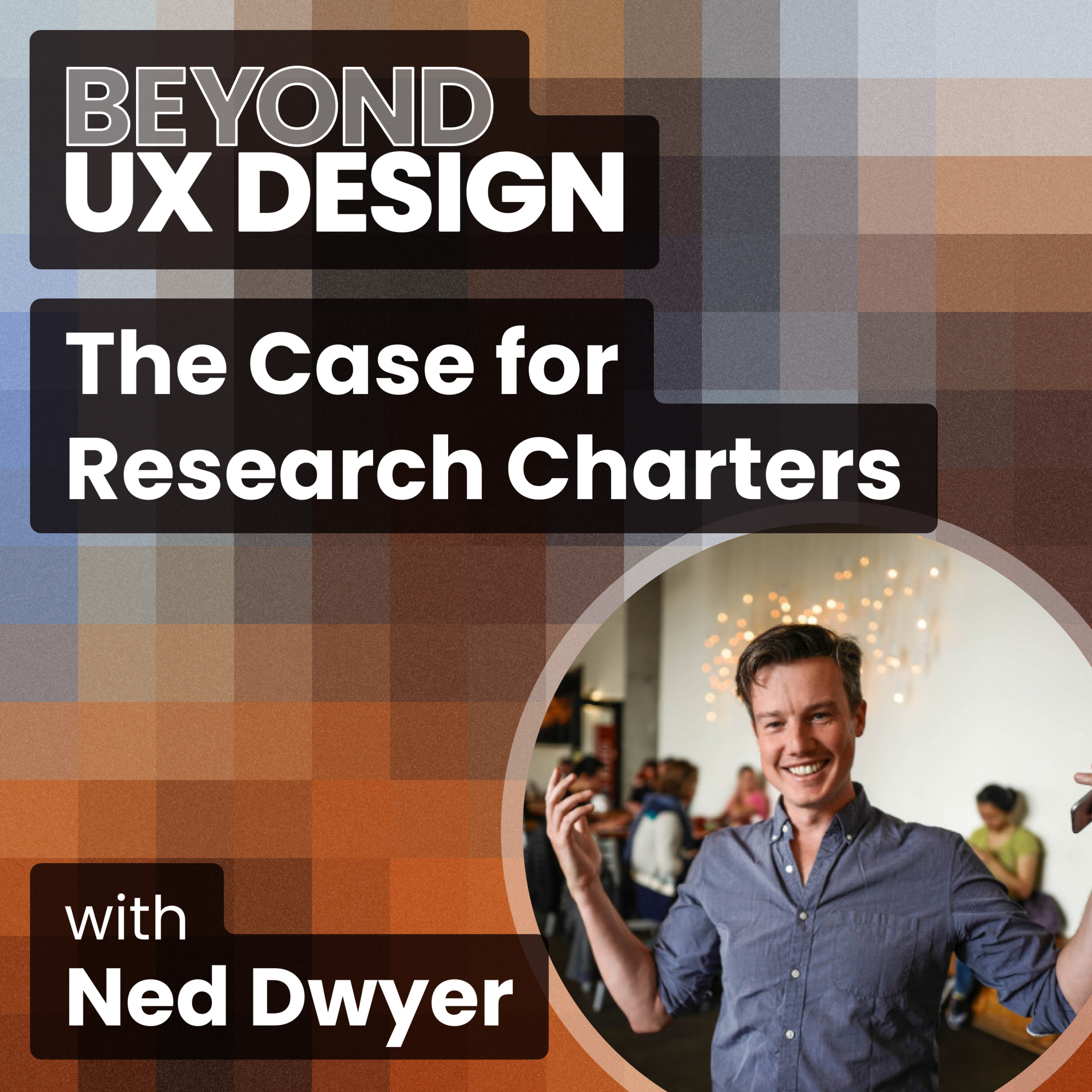
    Democratize Without Destroying: The Case for Research Charters with Ned Dwyer

    AI is making it easier than ever to run research, but faster doesn't always mean better. In this episode, we dig into what it really means to democratize research responsibly, and why your team probably needs a charter before someone does something they can't take back. Your team is already running research without you. So the real question is: are you going to help them do it well, or just hope for the best? Ned Dwyer is the co-founder and CEO of Great Question, an all-in-one UX research platform built to bring research to everyone in an organization. Not just the people with "researcher" in their title. He's spent years thinking about how teams can democratize access to customer insights without turning research into a free-for-all, and his talk at UX Con is what first put him on my radar. In this conversation, we dig into one of the more divisive topics in our industry right now: research democratization. Ned makes a pretty compelling case that it's not the all-or-nothing argument a lot of people make it out to be. It's a spectrum, and where your organization should land on that spectrum depends on who you're researching, what decisions are being made, and how much risk is on the table. We also get into AI's role in all of this, from AI-moderated interviews to synthesized insights, and where teams tend to get themselves into trouble when they hand over too much to the machine without any real governance in place. The thing I found most useful in this conversation is Ned's concept of a democratization charter, a practical framework for defining who should be doing what kind of research, with which populations, and under what guardrails. It's something I honestly hadn't thought much about before meeting Ned, and I think it's one of the most actionable ideas we've talked about on the show. If your team is already using AI research tools (and let's be honest, they probably are), this conversation is worth your time. Topics: • 01:45 - Ned's origin story and why he built Great Question • 04:10 - The pressure to move fast, and what gets lost when speed wins • 06:11 - The 80/20 rule: how to use AI without publishing slop • 09:45 - Democratization is a spectrum, not a binary • 12:35 - Where guardrails matter most: vulnerable populations and one-way-door decisions • 13:12 - The case for a democratization charter • 19:00 - AI moderation demystified: closer to a talking survey than a human interviewer • 23:00 - Ned's GoDaddy confession: how rogue research goes wrong • 27:00 - Participant fatigue and insight overload: the new risks AI introduces • 31:45 - Rogue research will happen regardless... your job is to make it safer • 43:28 - The Will Smith spaghetti analogy and where AI tools are headed — Thanks for listening! We hope you dug today’s episode. If you liked what you heard, be sure to like and subscribe wherever you listen to podcasts! And if you really enjoyed today’s episode, why don’t you leave a five-star review? Or tell some friends! It will help us out a ton. If you haven’t already, sign up for our email list. We won’t spam you. Pinky swear. • ⁠⁠⁠⁠⁠⁠⁠⁠Get a FREE audiobook AND support the show⁠⁠⁠⁠⁠⁠⁠⁠ • ⁠⁠⁠⁠⁠⁠⁠⁠Support the show on Patreon⁠⁠⁠⁠⁠⁠⁠⁠ • ⁠⁠⁠⁠⁠⁠⁠⁠Check out show transcripts⁠⁠⁠⁠⁠⁠⁠⁠ • ⁠⁠⁠⁠⁠⁠⁠⁠Check out our website⁠⁠⁠⁠⁠⁠⁠⁠ • ⁠⁠⁠⁠⁠⁠⁠⁠Subscribe on Apple Podcasts⁠⁠⁠⁠⁠⁠⁠⁠ • ⁠⁠⁠⁠⁠⁠⁠⁠Subscribe on Spotify⁠⁠⁠⁠⁠⁠⁠⁠ • ⁠⁠⁠⁠⁠⁠⁠⁠Subscribe on YouTube⁠⁠⁠⁠⁠⁠⁠⁠ • ⁠⁠⁠⁠⁠⁠⁠⁠Subscribe on Stitcher

    • Transcript
  • #19
    March 19 · 13 min

    Expectation Bias: Your Prediction Is Showing

    Have you ever walked out of a usability session completely confident in your findings, only to ship something that quietly missed the mark? What if the signal was there the whole time, and your brain just decided it wasn't worth logging? This week on the Cognition Catalog, we tackle The Expectation Bias. This bias shapes what you notice before you've even decided what to think about it. Your brain has already generated a prediction before the first participant clicks a button or a teammate presents their work, and that prediction quietly shapes what registers as a signal and what gets explained away before you've made a single conscious decision about what any of it actually means. We get into the science behind why this happens, and trace the research back to psychologist Robert Rosenthal's work in the early 1960s. His experiments, including the landmark Pygmalion in the Classroom study with Lenore Jacobson, showed that expectations don't just color our perceptions; they can actually change outcomes. That's a sobering thought when you consider how many design decisions are built on research we assumed was neutral. We also dig into where this plays out on real teams: in usability sessions where hesitations get logged as "minor," in design reviews where leadership-championed features get a generous read while quietly doubted projects get interrogated at every turn, and in how we evaluate colleagues whose reputations have already done the evaluating for us. If any of that sounds familiar, this episode offers five concrete habits to help you catch the filter before it's already done its job. Give it a listen. Topics: • 00:00 - Perception is prediction • 02:04 - A UX research cautionary tale • 03:23 - Defining expectation bias • 03:42 - Prediction errors explained • 04:31 - Pygmalion effect origins • 06:03 - Expectation vs confirmation • 06:30 - How it warps team decisions • 08:31 - Habits to reduce bias • 10:47 - Wrap up and next steps — Thanks for listening! We hope you dug today’s episode. If you liked what you heard, be sure to like and subscribe wherever you listen to podcasts! And if you really enjoyed today’s episode, why don’t you leave a five-star review? Or tell some friends! It will help us out a ton. If you haven’t already, sign up for our email list. We won’t spam you. Pinky swear. • Get a FREE audiobook AND support the show • Support the show on Patreon • Check out show transcripts • Check out our website • Subscribe on Apple Podcasts • Subscribe on Spotify • Subscribe on YouTube • Subscribe on Stitcher
    • Transcript
  • #145
    March 12 · 1 hr 6 min

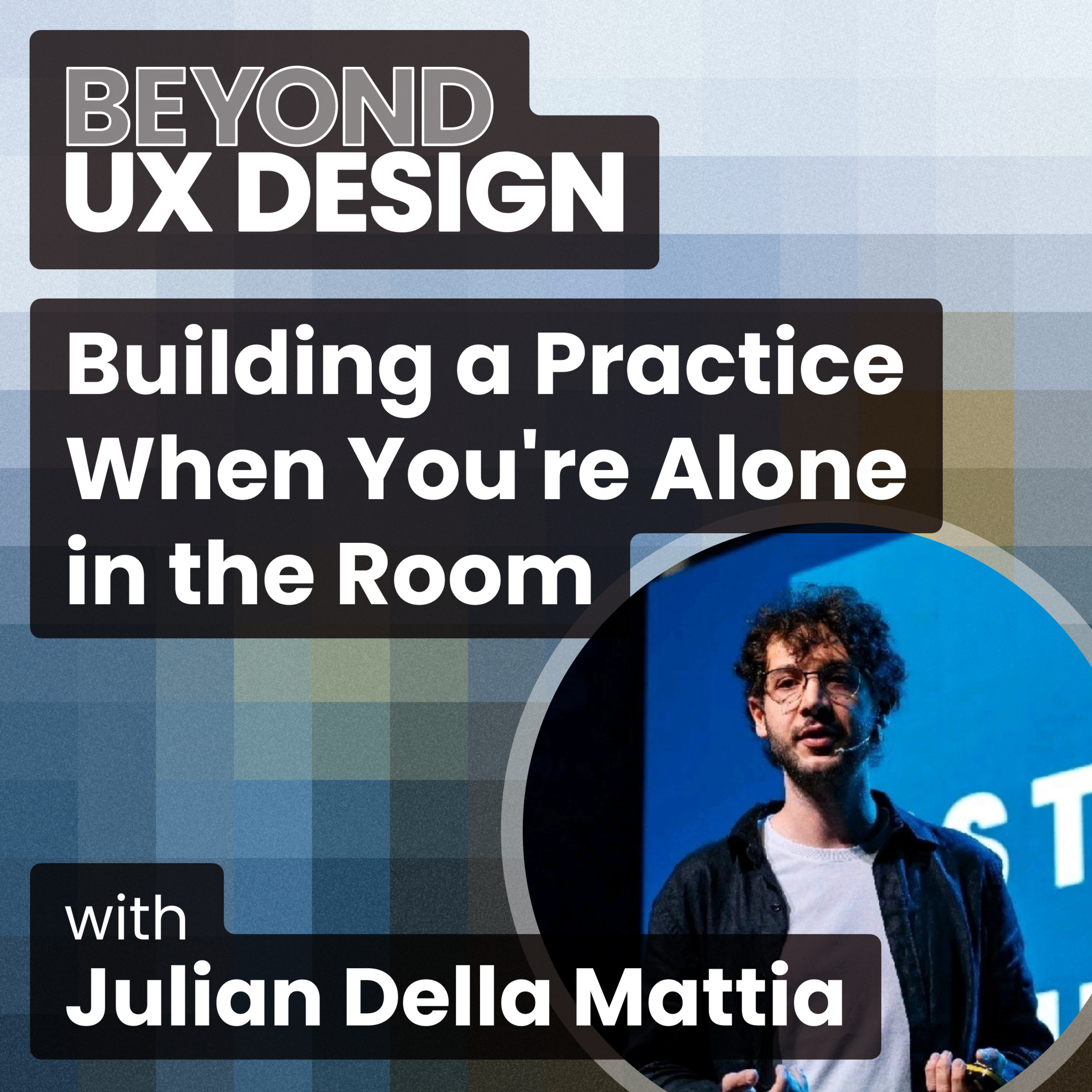
    Party of One: Building a Practice When You're Alone in the Room with Julian Della Mattia

    What does it actually take to be the first, or only, designer or researcher on a team? Spoiler: it’s not just about doing great work. This week, we get into the unglamorous, under-discussed side of the solo role: building systems, managing up, and earning trust before you’ve even shipped anything. What happens when you’re really good at the craft, but nobody around you understands what you do, why it matters, or how to support you? Julian Della Mattia has spent his career doing one of the hardest things in UX: showing up first. As a researcher who has repeatedly been the founding or solo practitioner inside organizations, Julian has learned, mostly the hard way, that being great at research is only a fraction of the actual job. He’s also the host of Finders to Builders, a podcast built specifically for researchers navigating this exact challenge. In this conversation, we dig into what Julian calls the “finder to builder” mindset shift: moving from someone who just surfaces insights to someone who builds the infrastructure, earns the trust, and creates the conditions for research (and design) to actually matter inside an organization. We talk about how to manage up when your manager doesn’t fully understand your work, how to know when your efforts are starting to gain traction, and what the invisible job description of a solo or founding designer really looks like. If you’ve ever landed a solo design or research role and felt the gap between what you prepared for and what the job actually demanded, this one’s for you. Julian brings a grounded, practical perspective that goes well beyond frameworks, because, as he puts it, in this context, frameworks rarely fly out of the box. Hit play. Helpful Links: • Connect with Julian on LinkedIn • Follow Julian’s Substack • Finders to Builders Podcast Topics: • 02:25 – Meet Julian Della Mattia • 03:48 – From PM to first researcher • 06:06 – Agency advice for juniors • 10:54 – Accidental in-house research role • 14:28 – Finder to builder mindset • 18:51 – Time triage and playmaker mode • 24:53 – Invisible work and org dynamics • 27:49 – Managing up and selling research • 32:23 – Signals and metrics that it’s working • 36:48 – Measuring research impact • 38:35 – Skip the framework trap • 39:02 – Managing up tactics • 40:16 – Aligning with business goals • 43:37 – Just ask your boss • 44:43 – When to start hiring • 46:32 – Recap and teamwork • 48:37 – Parting advice for firsts • 60:39 – Where to find Julian — Thanks for listening! We hope you dug today’s episode. If you liked what you heard, be sure to like and subscribe wherever you listen to podcasts! And if you really enjoyed today’s episode, why don’t you leave a five-star review? Or tell some friends! It will help us out a ton. If you haven’t already, sign up for our email list. We won’t spam you. Pinky swear. • ⁠⁠⁠⁠⁠⁠⁠Get a FREE audiobook AND support the show⁠⁠⁠⁠⁠⁠⁠ • ⁠⁠⁠⁠⁠⁠⁠Support the show on Patreon⁠⁠⁠⁠⁠⁠⁠ • ⁠⁠⁠⁠⁠⁠⁠Check out show transcripts⁠⁠⁠⁠⁠⁠⁠ • ⁠⁠⁠⁠⁠⁠⁠Check out our website⁠⁠⁠⁠⁠⁠⁠ • ⁠⁠⁠⁠⁠⁠⁠Subscribe on Apple Podcasts⁠⁠⁠⁠⁠⁠⁠ • ⁠⁠⁠⁠⁠⁠⁠Subscribe on Spotify⁠⁠⁠⁠⁠⁠⁠ • ⁠⁠⁠⁠⁠⁠⁠Subscribe on YouTube⁠⁠⁠⁠⁠⁠⁠ • ⁠⁠⁠⁠⁠⁠⁠Subscribe on Stitcher

    • Transcript
  • #18
    March 5 · 12 min

    Anecdotal Fallacy: A Data Point of One Is Not Evidence

    Why does one vivid customer story outweigh months of research? This week on the Cognition Catalog, we break down the anecdotal fallacy — our tendency to let a single experience override real evidence. Learn why stories hijack decisions, how this shows up on product teams, and what you can do about it. Have you ever watched weeks of solid research get sidelined by one person saying, "Yeah, but I talked to a customer who hated it"? We've all been in that meeting. The team has done the work—research is solid, the data points in a clear direction—and then someone shares a single story that shifts the entire conversation. A stakeholder mentions one piece of feedback from a sales call, or an engineer pushes back on a technology choice because of a bad experience three jobs ago. Suddenly, the energy in the room changes, and the data fades into the background. That's the anecdotal fallacy at work, and it's one of the quietest ways teams get pulled off course. In this episode of the Cognition Catalog, I'm breaking down why our brains are wired to favor stories over statistics, and how this bias shows up constantly on product teams, from design critiques to sprint planning to roadmap discussions. We'll look at the research behind why personal narratives outperform aggregate data in persuasion (hint: it's not because people reject evidence, it's because stories are just easier to process and remember). And we'll talk about the HiPPO effect — when the highest paid person's opinion carries disproportionate weight simply because of who's telling the story. But here's the thing... the goal isn't to eliminate anecdotes. Stories surface edge cases, highlight blind spots, and humanize insights. The key is learning to treat them as hypotheses, not proof. I'm sharing five practical takeaways your team can start using right away to keep one person's experience from becoming the whole team's strategy. Give it a listen. Topics: • 01:50 - When one story derails the team • 03:49 - What the Anecdotal Fallacy is • 04:21 - Why stories feel true • 06:03 - How it hurts our team • 07:36 - Fixes and team habits — Thanks for listening! We hope you dug today’s episode. If you liked what you heard, be sure to like and subscribe wherever you listen to podcasts! And if you really enjoyed today’s episode, why don’t you leave a five-star review? Or tell some friends! It will help us out a ton. If you haven’t already, sign up for our email list. We won’t spam you. Pinky swear. • ⁠⁠⁠⁠⁠⁠⁠Get a FREE audiobook AND support the show⁠⁠⁠⁠⁠⁠⁠ • ⁠⁠⁠⁠⁠⁠⁠Support the show on Patreon⁠⁠⁠⁠⁠⁠⁠ • ⁠⁠⁠⁠⁠⁠⁠Check out show transcripts⁠⁠⁠⁠⁠⁠⁠ • ⁠⁠⁠⁠⁠⁠⁠Check out our website⁠⁠⁠⁠⁠⁠⁠ • ⁠⁠⁠⁠⁠⁠⁠Subscribe on Apple Podcasts⁠⁠⁠⁠⁠⁠⁠ • ⁠⁠⁠⁠⁠⁠⁠Subscribe on Spotify⁠⁠⁠⁠⁠⁠⁠ • ⁠⁠⁠⁠⁠⁠⁠Subscribe on YouTube⁠⁠⁠⁠⁠⁠⁠ • ⁠⁠⁠⁠⁠⁠⁠Subscribe on Stitcher

    • Transcript
  • February 27 · 49 min

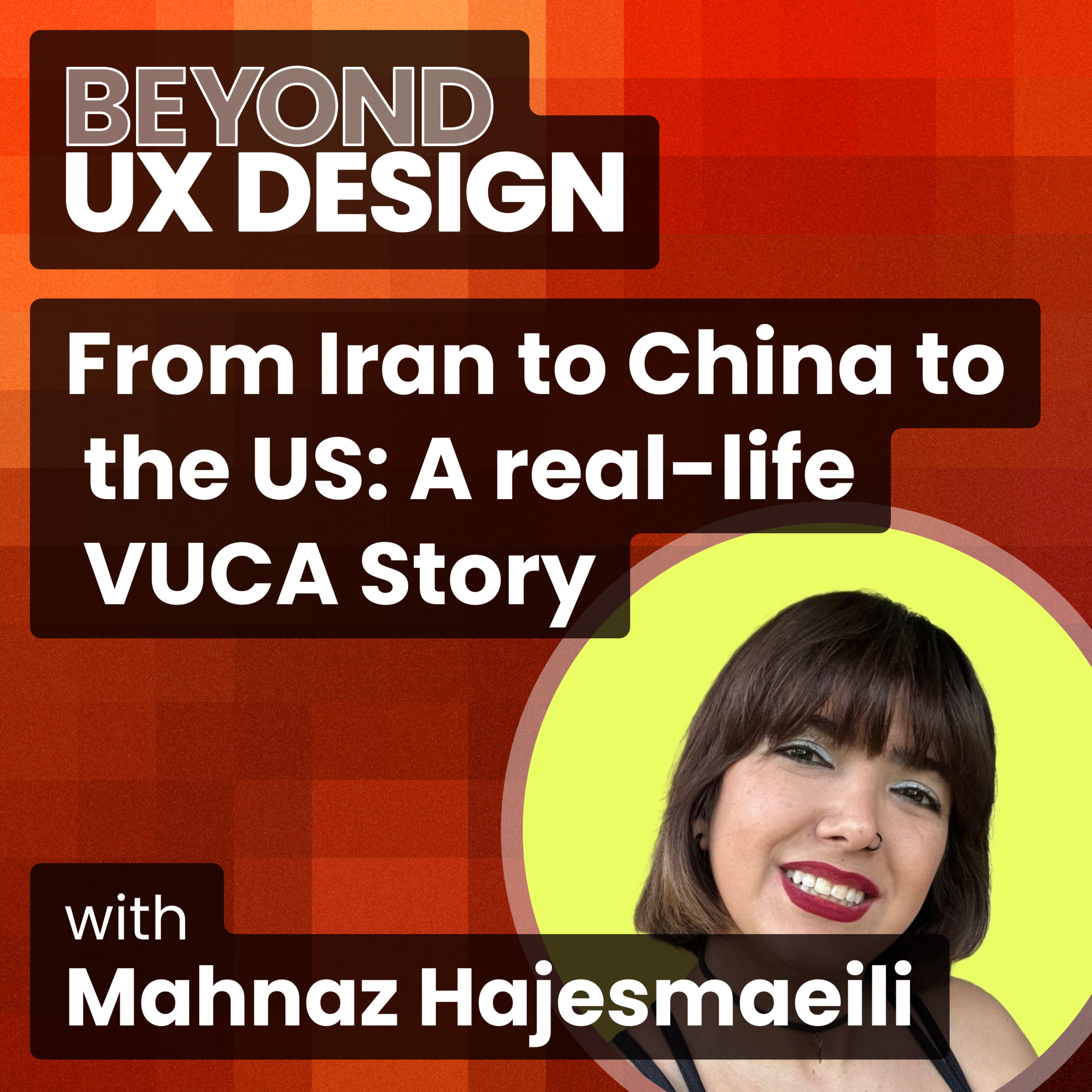
    From Iran to China to the US: A real-life VUCA Story with Mahnaz Hajesmaeili

    Mahnaz has lived with volatility, uncertainty, complexity, and ambiguity in ways most product teams never will. In this episode, we talk about what happens when VUCA isn’t theoretical, how to avoid becoming an order taker, and how courage, empathy, and initiative can reshape your role as a designer. What if the volatility, uncertainty, complexity, and ambiguity you’re facing at work feel overwhelming only because you’ve never had to live through it in your everyday life? I throw the word VUCA around like it’s a trendy framework. Volatility. Uncertainty. Complexity. Ambiguity. But for Mahnaz Hajesmaeili, those aren’t abstract concepts; they’re lived experience. Originally from Iran, before becoming a product designer, she built a life in China, knowing she could never fully belong there. When COVID hit, borders closed, savings ran out, and the life she had carefully constructed disappeared almost overnight. She returned to Iran, started over, taught herself UX, and eventually rebuilt her career in the United States. That’s not “roadmap volatility.” That’s real volatility. This week, I chat with Mahnaz to explore how living through that level of instability reshaped her approach to work. Why rejected designs don’t shake her. Why unclear strategy doesn’t rattle her and why she doesn’t default to being an order taker. If you’ve ever felt overwhelmed by shifting priorities or frustrated by leaders who “don’t know what they want,” this episode offers perspective—and practical lessons. Give it a listen. It might change how you define uncertainty. Helpful Links: • Connect with Mahnaz on LinkedIn — Thanks for listening! We hope you dug today’s episode. If you liked what you heard, be sure to like and subscribe wherever you listen to podcasts! And if you really enjoyed today’s episode, why don’t you leave a five-star review? Or tell some friends! It will help us out a ton. If you haven’t already, sign up for our email list. We won’t spam you. Pinky swear. • ⁠⁠⁠⁠⁠⁠⁠Get a FREE audiobook AND support the show⁠⁠⁠⁠⁠⁠⁠ • ⁠⁠⁠⁠⁠⁠⁠Support the show on Patreon⁠⁠⁠⁠⁠⁠⁠ • ⁠⁠⁠⁠⁠⁠⁠Check out show transcripts⁠⁠⁠⁠⁠⁠⁠ • ⁠⁠⁠⁠⁠⁠⁠Check out our website⁠⁠⁠⁠⁠⁠⁠ • ⁠⁠⁠⁠⁠⁠⁠Subscribe on Apple Podcasts⁠⁠⁠⁠⁠⁠⁠ • ⁠⁠⁠⁠⁠⁠⁠Subscribe on Spotify⁠⁠⁠⁠⁠⁠⁠ • ⁠⁠⁠⁠⁠⁠⁠Subscribe on YouTube⁠⁠⁠⁠⁠⁠⁠ • ⁠⁠⁠⁠⁠⁠⁠Subscribe on Stitcher

    • Transcript
  • #17
    January 23 · 12 min

    The Testing Effect: Why nodding along doesn’t mean alignment

    You can have clear meetings, clean decks, and unanimous nods and still walk away misaligned. In this episode of the Cognition Catalog, we break down the testing effect and why teams confuse exposure with learning. We’ll look at how recall, not agreement, is what actually creates alignment. If everyone was in the same meeting… why does everyone remember it differently? You’ve probably experienced this before: a meeting ends with clear action items, apparent alignment, and a general sense that things are settled, only for confusion to resurface weeks later. Different assumptions. Different memories. Same meeting. This episode unpacks why that gap happens and why alignment without recall is basically an illusion. This week, we walk through the testing effect and how it explains a common team failure mode: mistaking discussion, documentation, and agreement for learning. From onboarding to retrospectives to roadmap reviews, teams overload people with information and assume that exposure equals understanding. It doesn’t. Without retrieval, memory fades, rationales drift, and alignment quietly decays. We’ll also look at what it actually takes to apply the testing effect at work, without quizzes or formal tests. Simple changes to how meetings end, how onboarding is structured, and how teams normalize recall can reduce rework, friction, and those “wait, when did that change?” moments. If you want decisions to stick, this episode is for you. Topics: • 00:00 - Introduction: The Meeting Dilemma • 01:35 - The Illusion of Learning in Teams • 03:48 - Understanding the Testing Effect • 07:43 - Applying the Testing Effect in Teams To explore more about the Testing Effect, don’t miss the full article @ ⁠⁠⁠cognitioncatalog.com⁠⁠⁠ — Thanks for listening! We hope you dug today’s episode. If you liked what you heard, be sure to like and subscribe wherever you listen to podcasts! And if you really enjoyed today’s episode, why don’t you leave a five-star review? Or tell some friends! It will help us out a ton. If you haven’t already, sign up for our email list. We won’t spam you. Pinky swear. • ⁠⁠⁠⁠⁠⁠⁠⁠⁠⁠⁠⁠⁠⁠⁠⁠Get a FREE audiobook AND support the show⁠⁠⁠⁠⁠⁠⁠⁠⁠⁠⁠⁠⁠⁠⁠⁠ • ⁠⁠⁠⁠⁠⁠⁠⁠⁠⁠⁠⁠⁠⁠⁠⁠Support the show on Patreon⁠⁠⁠⁠⁠⁠⁠⁠⁠⁠⁠⁠⁠⁠⁠⁠ • ⁠⁠⁠⁠⁠⁠⁠⁠⁠⁠⁠⁠⁠⁠⁠⁠Check out show transcripts⁠⁠⁠⁠⁠⁠⁠⁠⁠⁠⁠⁠⁠⁠⁠⁠ • ⁠⁠⁠⁠⁠⁠⁠⁠⁠⁠⁠⁠⁠⁠⁠⁠Check out our website⁠⁠⁠⁠⁠⁠⁠⁠⁠⁠⁠⁠⁠⁠⁠⁠ • ⁠⁠⁠⁠⁠⁠⁠⁠⁠⁠⁠⁠⁠⁠⁠⁠Subscribe on Apple Podcasts⁠⁠⁠⁠⁠⁠⁠⁠⁠⁠⁠⁠⁠⁠⁠⁠ • ⁠⁠⁠⁠⁠⁠⁠⁠⁠⁠⁠⁠⁠⁠⁠⁠Subscribe on Spotify⁠⁠⁠⁠⁠⁠⁠⁠⁠⁠⁠⁠⁠⁠⁠ ⁠⁠⁠⁠⁠⁠⁠⁠⁠⁠⁠⁠⁠⁠⁠⁠⁠⁠⁠⁠⁠⁠⁠⁠⁠⁠⁠⁠⁠⁠⁠• ⁠⁠⁠⁠⁠⁠⁠⁠⁠⁠⁠⁠⁠⁠⁠⁠Subscribe on YouTube⁠⁠⁠⁠⁠⁠⁠⁠⁠⁠⁠⁠⁠⁠⁠ ⁠⁠⁠⁠⁠⁠⁠⁠⁠⁠⁠⁠⁠⁠⁠⁠⁠⁠⁠⁠⁠⁠⁠⁠⁠⁠⁠⁠⁠⁠⁠• ⁠⁠⁠⁠⁠⁠⁠⁠⁠⁠⁠⁠⁠⁠⁠⁠Subscribe on Stitcher⁠⁠⁠

    • Transcript
  • #143
    January 15 · 57 min

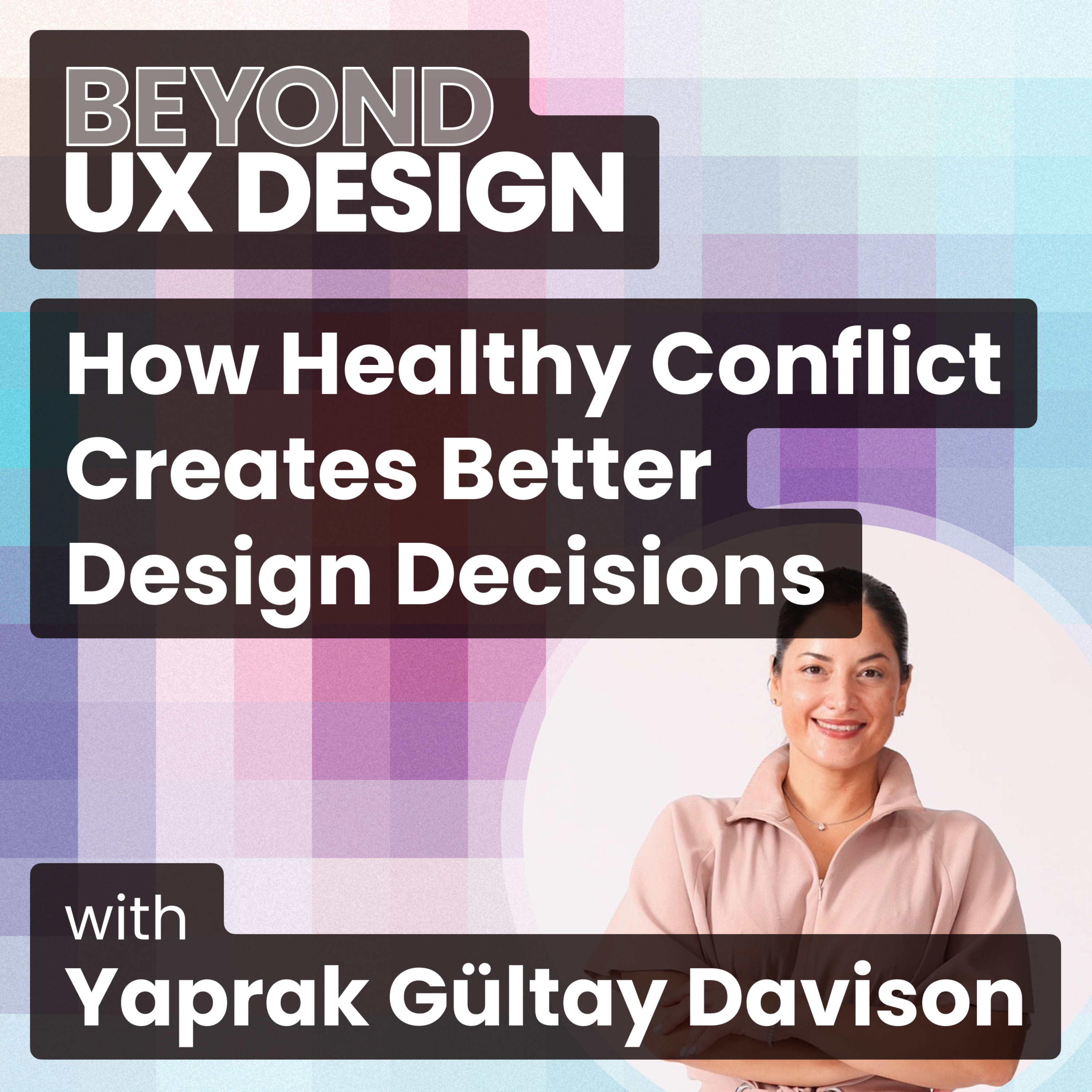
    How Healthy Conflict Creates Better Design Decisions With Yaprak Gültay Davison

    Most teams treat conflict as something to avoid. In this episode, I sit down with Yaprak Gültay Davison to talk about why that instinct backfires. We explore how healthy disagreement builds trust, improves decision-making, and helps teams move faster... without blowing things up. What if the tension you’re trying to avoid at work is actually the thing your team needs most? Most design teams say they value collaboration, empathy, and alignment, but rarely talk about disagreement. In this conversation, I sat down with Yaprak Davison, Head of Design at Goodnotes and former design leader at Spotify, to unpack why conflict isn’t a threat to good teams. It’s often the foundation of trust. Yaprak shares how designers are trained to optimize for harmony, and how that instinct can quietly erode clarity, slow teams down, and lead to decisions being made without the right people in the room. We talk about the real signals of unaddressed conflict—delayed replies, passive agreement, quiet misalignment—and why silence often causes more damage than open disagreement ever could. We also dig into what it actually looks like to lead through conflict: naming tension early, separating facts from the stories we tell ourselves, and turning disagreement into a co-design moment rather than a power struggle. If you’ve ever felt stuck “keeping the peace” while things quietly fall apart, this episode will change how you think about conflict and your role in it. Helpful Links: • Connect with Yaprak on LinkedIn • Subscribe to “Leadership as Craft” Topics: • 02:49 – Diving into Conflict in Teams • 03:18 – Guest Introduction: YRA Davidson • 04:25 – The Role of Conflict in Design • 05:45 – Managing Conflict in Design Teams • 11:31 – Coaching and Cultural Differences • 22:21 – Building Trust Through Conflict • 25:21 – Scaling Teams and Systems • 30:53 – Exploring the Concept of Followership • 32:31 – Leadership as a Team Sport • 33:40 – Balancing Leadership and Craft • 35:43 – Building High-Performing Remote Teams • 39:40 – Handling Remote Conflict • 41:46 – Personal Insights and Advice • 52:51 – Final Thoughts and Resources — Thanks for listening! We hope you dug today’s episode. If you liked what you heard, be sure to like and subscribe wherever you listen to podcasts! And if you really enjoyed today’s episode, why don’t you leave a five-star review? Or tell some friends! It will help us out a ton. If you haven’t already, sign up for our email list. We won’t spam you. Pinky swear. • ⁠⁠⁠⁠⁠⁠Get a FREE audiobook AND support the show⁠⁠⁠⁠⁠⁠ • ⁠⁠⁠⁠⁠⁠Support the show on Patreon⁠⁠⁠⁠⁠⁠ • ⁠⁠⁠⁠⁠⁠Check out show transcripts⁠⁠⁠⁠⁠⁠ • ⁠⁠⁠⁠⁠⁠Check out our website⁠⁠⁠⁠⁠⁠ • ⁠⁠⁠⁠⁠⁠Subscribe on Apple Podcasts⁠⁠⁠⁠⁠⁠ • ⁠⁠⁠⁠⁠⁠Subscribe on Spotify⁠⁠⁠⁠⁠⁠ • ⁠⁠⁠⁠⁠⁠Subscribe on YouTube⁠⁠⁠⁠⁠⁠ • ⁠⁠⁠⁠⁠⁠Subscribe on Stitcher

    • Transcript
  • #142
    January 8 · 1 hr 1 min

    The Hidden Cost of Being the Dependable Designer With Vivianne Castillo

    Design was supposed to be creative work. For a lot of designers, it’s turned into endurance. In this episode, I’m joined by Vivianne Castillo to unpack how corporate design culture quietly rewards burnout, why endurance gets mistaken for professionalism, and how designers can start reclaiming creativity, agency, and choice. What if the behaviors that made you successful in design are the same ones slowly disconnecting you from yourself? Design culture loves to celebrate resilience, but too often what’s really being rewarded is endurance: tolerating vague feedback, late pivots, constant urgency, and emotional labor without complaint. In this conversation, Vivianne Castillo shares why so many designers feel drained, disconnected, and quietly shrinking inside roles that were supposed to be creative and human-centered. Vivianne draws on her background in trauma counseling, psychology, and design to explain how corporate UX environments often reward unhealed coping patterns—people-pleasing, hyper-vigilance, over-responsibility, and self-silencing—while calling it “professionalism.” The work still gets done, praise still comes, but the cost is creativity, curiosity, and a sense of agency. We also talk about what it actually looks like to take that agency back. Not through dramatic exits or rage-quitting, but through small, intentional experiments: setting boundaries, asking better questions, redefining security, and exploring entrepreneurial paths without burning everything down. If your design job feels more like survival than creation, this episode is for you. Topics: • 04:57 – Vivian’s Journey • 07:16 – The Toxicity in UX Culture • 19:14 – Reclaiming Agency as Designers • 29:20 – Unhealed Patterns in the Workplace • 31:13 – Understanding Corporate Culture and Personal Responsibility • 32:01 – Self-Silencing and Professionalism • 32:30 – Endurance vs. Resilience • 33:04 – Updating Unhealed Behaviors • 35:34 – Navigating Toxic Workplaces • 37:14 – The Illusion of Job Security • 43:09 – Entrepreneurship as a Healing Experience • 43:37 – The Walkout Event for UX Professionals Helpful Links: • Connect with Vivianne on LinkedIn • Join the Walkout — Thanks for listening! We hope you dug today’s episode. If you liked what you heard, be sure to like and subscribe wherever you listen to podcasts! And if you really enjoyed today’s episode, why don’t you leave a five-star review? Or tell some friends! It will help us out a ton. If you haven’t already, sign up for our email list. We won’t spam you. Pinky swear. • ⁠⁠⁠⁠⁠Get a FREE audiobook AND support the show⁠⁠⁠⁠⁠ • ⁠⁠⁠⁠⁠Support the show on Patreon⁠⁠⁠⁠⁠ • ⁠⁠⁠⁠⁠Check out show transcripts⁠⁠⁠⁠⁠ • ⁠⁠⁠⁠⁠Check out our website⁠⁠⁠⁠⁠ • ⁠⁠⁠⁠⁠Subscribe on Apple Podcasts⁠⁠⁠⁠⁠ • ⁠⁠⁠⁠⁠Subscribe on Spotify⁠⁠⁠⁠⁠ • ⁠⁠⁠⁠⁠Subscribe on YouTube⁠⁠⁠⁠⁠ • ⁠⁠⁠⁠⁠Subscribe on Stitcher

    • Transcript
  • #141
    Dec 19, 2025 · 1 hr 14 min

    What hundreds of designer interviews reveal about growth with Jayneil Dalal

    We love talking about growth mindset, but curiosity without action doesn’t move your career forward. In this episode, Jayneil Dalal shares what he’s learned from interviewing hundreds of designers—and why the people who actually ship, share, and care about craft are the ones who keep growing. What if the fastest way to grow your career isn’t asking for a promotion—but becoming the designer everyone trusts? In this episode, I sit down with Jayneil Dalal to talk less about career ladders and more about what actually earns trust inside organizations. After interviewing hundreds of designers on Design MBA and Sneak Peek, Jayneil has seen the same patterns repeat across teams, companies, and seniority levels. The designers who advance aren’t the loudest or the most credentialed. They’re the ones who care deeply about their work—clean files, thoughtful handoffs, clear communication, and sharing what they learn with others. No one tells them to do this. They do it because they give a damn, and that care compounds into credibility. We also unpack the idea of “internal brand,” why chasing credit often backfires, and how being generous with your knowledge can quietly change team culture. If you’ve ever felt invisible at work or unsure how to stand out without self-promotion, this conversation reframes what influence really looks like. Topics: • 04:54 - Early Curiosity and Interviewing Journey • 06:17 - The Birth of a Podcast Idea • 07:23 - Launching Design MBA • 09:53 - The Value of Execution • 12:21 - Challenges and Realizations • 15:36 - Content Creation and Audience Fit • 19:35 - Learning from Top Designers • 22:49 - The Importance of Craft and Mentorship • 38:04 - Advocating for Yourself • 41:58 - Navigating Internal Branding • 46:34 - The Importance of Communication Skills • 48:10 - Balancing Multiple Projects • 51:36 - Effective Use of AI in Design • 53:21 - Public Speaking and Presentation Tips — Thanks for listening! We hope you dug today’s episode. If you liked what you heard, be sure to like and subscribe wherever you listen to podcasts! And if you really enjoyed today’s episode, why don’t you leave a five-star review? Or tell some friends! It will help us out a ton. If you haven’t already, sign up for our email list. We won’t spam you. Pinky swear. • ⁠⁠⁠⁠Get a FREE audiobook AND support the show⁠⁠⁠⁠ • ⁠⁠⁠⁠Support the show on Patreon⁠⁠⁠⁠ • ⁠⁠⁠⁠Check out show transcripts⁠⁠⁠⁠ • ⁠⁠⁠⁠Check out our website⁠⁠⁠⁠ • ⁠⁠⁠⁠Subscribe on Apple Podcasts⁠⁠⁠⁠ • ⁠⁠⁠⁠Subscribe on Spotify⁠⁠⁠⁠ • ⁠⁠⁠⁠Subscribe on YouTube⁠⁠⁠⁠ • ⁠⁠⁠⁠Subscribe on Stitcher

    • Transcript
Showing 21–33 of 33 episodes