Skip to content
Artwork for Austin Next
TechnologyBusinessManagement

Austin Next

Jason Scharf

Austin is building the new tech, cultural, and intellectual stack. The region is a living laboratory to answer a single question: How do you build a global innovation superpower?

Host Jason Scharf dissects innovation from the individual to the ecosystem. From the soundstage to the data center to the fab, we decode the mechanics of Austin's innovation ecosystem.

As Atoms, Bits, and Intelligence converge, we explore how Hard Tech scale, digital velocity, and creative density collide. This is an audit of the future. We map the physics of the flywheel so builders and investors can navigate the chaos.

Play
  • 21 episodes
  • Avg 1 hr 2 min
  • English
Counted on this page — what you have heard stays on this device, so it is not something the list can be paged by.
  • #184
    Wednesday · 56 min

    The Future Is Actually Starting to Happen | Andrew Côté, Deep Tech Week

    I had been thinking Austin needed some kind of frontier-tech week when Andrew Côté announced that he was bringing Deep Tech Week here. I reached out almost immediately, and now I’m helping build it. That gave us the excuse for this conversation, but the rabbit hole went much deeper. We are living through a moment when things that recently belonged mostly to science fiction are becoming companies and products you can actually encounter in the physical world. That is where Andrew’s perspective gets especially useful. He has moved from engineering physics and fusion into shaping what is essentially a storytelling platform around the people trying to make these futures real. Austin is becoming one of the places where that transition is unusually tactile, where the imagined future is starting to become something you can walk into, touch, and build. Agenda 0:00 Austin’s takeoff and cowboy futurism 10:00 Where physics meets economics 17:12 Industry, AI and abundant energy 28:18 The geography of deep tech 33:29 Underwriting hard tech 39:21 Ambition and the sci-fi future 46:47 Austin’s factories and permission 53:53 Orbit, beamlines and what comes next Come to Austin Deep Tech Week The week opens with a hardware showcase at The American Housing Corp on September 21. The Factory Crawl runs September 22–24, with stops including ICON, Neurophos and Emerald Cloud Lab. We close with a nuclear-powered party at the Aalo Atomics factory on September 25. Explore the full schedule and register Guest Bio & Links Andrew Côté: X, Writing, Deep Tech Week Andrew Côté is an engineering physicist that went from designing superconducting magnets for nuclear fusion to running deep tech week. ------------------- Austin Next Links: Website, X/Twitter, YouTube, LinkedIn Ecosystem Metacognition Substack

  • #183
    September 10 · 56 min

    The Army Is Adapting to the New Speed of War | Matt Willis, Army FUZE

    The battlefield is changing faster than the systems built to supply it. Matt Willis runs Army FUZE, a roughly $750M portfolio built to get new technology into soldiers’ hands faster. The deeper question is what an institution as large as the Army has to change when technology cycles collapse from years to weeks. That means accepting more failure up front, shortening the distance between a problem and a decision, getting real-world feedback before a product is fully baked, and building a system that can keep adjusting as the technology and the mission keep moving. The question now is whether those changes are durable enough to let the Army operate at unprecedented speed, or whether bureaucratic inertia eventually pulls it back toward the old model. Agenda 0:00 The new speed of war 7:51 Speed, risk, and the 80% solution 17:23 Soldiers, marketplaces, and feedback 22:22 The tech stack and commercial innovation 29:10 New requirements and industrial capacity 35:32 Open systems and Operation Jailbreak 41:32 Manufacturing and the capital stack 46:33 Austin and the defense innovation map 52:57 Soldier founders and access to innovation 57:13 AI, augmented soldiers, and what’s next Guest Links and Bio Matt Willis US Army PIT: Website, LinkedIn US Army xTech, US Army SBIR/STTR Dr. Matt Willis serves as the Director of Army FUZE, leading the Army’s portfolio of private sector engagements through prize competitions (xTech), the Army Small Business Innovation Research (SBIR) and Small Business Technology Transfer (STTR) programs, the Technology Maturation Initiative (TMI) program, and the Manufacturing Technology (ManTech) program, comprising over $750 million in annual research and development investments. Previously, Dr. Willis served as the Army Director for Laboratory Management at the Office of the Assistant Secretary of the Army for Acquisition, Logistics, and Technology (ASA(ALT)) and held various positions across the Army and the Office of the Secretary of Defense. Dr. Willis earned a Bachelor of Science in Chemical Engineering from Cornell University and both a Master of Science and Ph.D. in Chemical Engineering from the University of Illinois Urbana-Champaign. ------------------- Austin Next Links: Website, X/Twitter, YouTube, LinkedIn Ecosystem Metacognition Substack
  • #182
    July 16 · 58 min

    What This Unlikely Deal Shows About New Austin | Max Cunningham (Sesh) & Jake Medwell (8VC)

    Sesh looks like a consumer brand. 8VC looks like the last fund that would back it. That mismatch is the fastest way to see what Austin is becoming. Sesh founder Max Cunningham and 8VC's Jake Medwell start with the logic that makes the deal make sense. Sesh holds a legal moat most competitors can't cross for years, and it earns software-like margins on a physical product. From there the conversation opens into a bigger question about where ambitious companies belong, and why more of them are choosing a city that now draws the founders and families betting on that future. Agenda 00:00 What Sesh is 06:05 Why 8VC backed a nicotine company 10:44 Regulatory timing and the six-year door 16:37 Software margins and owning the factory 22:01 Who buys this and why the market is growing 29:27 Why some companies need SF and others do not 34:32 What Austin talent looks like now 42:10 The Elon spillover and the coming IPO wave 48:37 Raising kids in the AI age 55:07 Safety, schools, and what comes next Guest Links Sesh: Max Cunningham, Website, X, Instagram 8VC: Jake Medwell, Website, X ------------------- Austin Next Links: Website, X/Twitter, YouTube, LinkedIn Ecosystem Metacognition Substack
  • #181
    June 30 · 40 min

    Live from Hack Club Stasis: The Teenage Hardware Frontier Lands in Austin

    A custom board that ran two thousand dollars five years ago now costs fifteen and ships in two weeks. That collapse is why a hundred teenagers flew to Austin to build in the physical world instead of code in the digital. The organization behind it is Zach Latta's Hack Club, the hackathon was created by seventeen-year-old Meghana Madiraju, and Blake Liberman of 021 Ventures is why it happened in Austin. The conversation ranges from how that collapse happened to what teenagers do with the agency it hands them, and turns sharper on what threatens it. Underneath the optimism is a real question about who controls the tools of creation, code, energy, and hardware. The Agenda 00:00 What Hack Club Stasis Is 06:28 How Hack Club actually works 13:01 Why hardware, why now 18:05 The case against the credential machine 24:11 Agency and the pressure myth 29:33 What's actually worth building 34:38 Open source is quietly closing Guest Links Hack Club 021 Ventures ------------------- Austin Next Links: Website, X/Twitter, YouTube, LinkedIn Ecosystem Metacognition Substack
  • #180
    June 18 · 1 hr 12 min

    Love Conquers Fear: The Last Barrier to Abundance Is Our Own Fear | Brett Hurt

    Brett Hurt returns to Austin Next for the fourth time, more than any guest in the show's history, to argue that the hardest problem in front of us is psychological. Abundance is already on a clear technological path, and the thing most likely to stop us is the fear center we carried off the savannah. He walks through the four technologies he calls the Superfecta: AI, robotics, quantum computing, and brain-computer interfaces, and why they land together rather than in sequence. The stakes are the Great Filter and to make it through to abundance or destroy ourselves. His book lands June 23, and this conversation is the argument it rests on. Agenda 0:00 Love is hard, fear is hijacked 10:21 Cooked food and broken business models 18:04 Mocktails, birth rates, and Bhutan 25:52 Moonshots and the James Webb sublime 30:42 Why aliens would be benevolent 36:13 The Superfecta changes everything 41:52 Capitalism, Chad, and abundance 51:40 Old Austin, wizards, and prophets 58:33 The nuclear math nobody wants 1:02:37 How the podcast made him hopeful 1:11:09 Open source wins the next hinge Guest Bio & Links Brett Hurt: X, LinkedIn, Love Conquers Fear Podcast Love Conquers Fear: Humanity, AI, and the Age of Abundance for All Brett Hurt is a serial tech entrepreneur, investor, and author. He works at the intersection of AI, leadership, and human values focusing on how society can harness exponential technologies with courage, ethics, and unity. Hurt most recently co-founded and led data-dot-world, which was acquired by ServiceNow on July 7, 2025. He previously co-founded Bazaarvoice (unicorn IPO) and Coremetrics (acquired by IBM). He also co-leads Hurt Family Investments, which is in 150 startups (12 unicorns) and 50 VC funds. He was named Austin’s Best CEO (Legacy Award) and is also an Aspen Institute Henry Crown Fellow. Through his Love Conquers Fear holding company, platform, and podcast, Hurt explores how AI and emerging technologies can either amplify fear or help create broad-based human flourishing to eventually reach the Age of Abundance for All. Based in Austin, he’s the author of three books and host of the Love Conquers Fear podcast, which has 60 episodes and counting. ------------------- Austin Next Links: Website, X/Twitter, YouTube, LinkedIn Ecosystem Metacognition Substack
  • #179
    June 11 · 1 hr 15 min

    Austin: From Counterculture to Culture | Karen Blashek, Austin Home Magazine

    Austin's counterculture is still the ethos. The next chapter is what gets built on top of it. Karen Blashek, the editor-in-chief of Austin Home Magazine, took over a 21-year-old design publication with no editorial background and turned it into one of the city's most consequential platforms for naming what's already happening. We ask why Austin's design talent operates one neighborhood away from its tech talent and neither knows the other exists. What the city is telling people and the cultural infrastructure need to make it all compound: storytellers, convening spaces, named districts, and a patronage layer. Agenda 0:00 Austin Home as civic editing 4:22 Why Austin lives outside 15:04 Block parties and Old Sixth 21:02 Personality vs. values 27:07 Ground floors as infrastructure 32:10 The public space czar idea 37:01 Why Austin is a design capital 41:01 Naming districts that exist 45:07 Three roles every ecosystem needs 53:37 If you don't tell the story, someone else will 58:08 The patronage gap 1:03:37 Rising stars, the talent leak 1:09:50 Tech and culture flywheel 1:15:40 Naming what's already here Guest Bio and Links Karen Blashek Austin Home Magazine Groundup Ideas Cities and Ambition by Paul Graham The City That Lingers by Ryan Puzycki Tokyo is Reinventing the Downtown by Making More Than One by Richard Florida Karen Zabarsky Blashek is Editor-in-Chief of Austin Home Magazine, a Hearst publication covering the intersection of architecture, interiors, development, and culture in one of America’s fastest-evolving cities. She is also the founder of Ground Up, a creative studio for the built environment. Before returning to her native Texas, Blashek spent 13 years in New York where she led design for Kushner, one of the country's largest real estate developers with projects nationwide. ------------------- Austin Next Links: Website, X/Twitter, YouTube, LinkedIn Ecosystem Metacognition Substack
  • #178
    May 21 · 1 hr 4 min

    Revisited: How Specificity in Vertical AI Rewrites Industries | Nick Tippmann, TipTop VC

    Updated re-release. A year ago we left one question unresolved. Where do foundational AI models end and where do the applications begin? Nick Tippmann returns in a fresh epilogue. A year on, the tension has only sharpened. Specificity is the differentiator when inches matter. Nick Tippmann, founding partner of TipTop VC, explains how vertical AI is rewriting the software industry by going deeper instead of wider. From the transition beyond SaaS to the gray zone between foundational models and high-stakes applications, we get into how vertical AI can transform laggard industries and why Austin might lead the race. The Agenda 00:00 Defining vertical AI 05:07 Where general AI fails 09:36 Vertical AI software, not just chatbots 16:44 Pricing logic after the seat model 24:04 Underwriting at pre-seed and seed 27:20 Capital intensity and seed-strapping 36:48 TAM analysis and the Frontiers Market example 41:46 OpenAI's Instacart hire and the gray zone 45:55 Austin as a vertical AI hub 58:21 Epilogue: Where the models end and applications begin Guest Links and Bios Nick Tippmann, TipTop VC Nick Tippmann is the Founder and Managing Partner of TipTop Ventures, an early-stage venture fund focused on Vertical AI. Before becoming an investor, Nick spent nearly a decade as a founding team member and CMO at Greenlight Guru, where he helped scale the company from zero to category leader with more than 250 employees, tens of millions in ARR, and a nine-figure investment from JMI Equity. An operator turned investor, Nick now partners with founders building industry-specific AI and software businesses, bringing hands-on experience in go-to-market strategy, scaling, community building, fundraising, and company development. He has also been an active angel investor since 2021, with more than 100 startup investments. ------------------- Austin Next Links: Website, X/Twitter, YouTube, LinkedIn Ecosystem Metacognition Substack
  • #177
    April 29 · 1 hr 11 min

    What Building in Austin Actually Feels Like Right Now | Will Johnson & Alex Cohen

    This was not the episode we planned. Will Johnson, founder and CEO of Gyde, and Alex Cohen, founder and CEO of Hello Patient, came on to talk about innovation in the business of health. Instead it became our off the record conversations, but behind the microphone. An unfiltered field report on what it actually feels like to build a startup in Austin right now. The talent math, hunting for mid-size office space, the venture culture, Austin vs Miami, the press gap, and the political friction. All of it from two founders who chose this city, are hiring here, and are naming what needs to change because they want it to work. Agenda 0:00 Why Alex and Will chose Austin 5:17 The engineering talent gap 14:10 Who gets hired and the conference hustle 20:58 Miami, Palantir, and competing for wins 26:02 What SF's venture culture has that Austin is still building 32:58 Operator density problem and the office gap 41:05 Why selling to Main Street works better from Austin 50:16 More storytellers needed 59:16 SXSW's decline 1:05:18 King of Austin for a day Guest Links and Bios Alex Cohen: X/Twitter, LinkedIn, Hello Patient Will Johnson: X/Twitter, LinkedIn, Gyde ------------------- Austin Next Links: Website, X/Twitter, YouTube, LinkedIn Ecosystem Metacognition Substack
  • #176
    April 23 · 1 hr 12 min

    The First Thing Built on the Moon Will Come from Austin | Jason Ballard & Will Hurd, ICON

    ICON has been telling the same story since 2018. Humanity has a construction problem that solving for regulations and supply-demand incentives alone won't fix. We need fundamentally new ways to build. Jason Ballard, ICON's founder and CEO, and Will Hurd, the former CIA officer, congressman, and OpenAI board member who just joined as President of ICON Prime, came on to lay out what happens when a non-consensus thesis held for eight years starts to materialize in the real world. The conversation cuts across the full stack, housing, AI, robotics, labor, reindustrialization, and space. The through-line is Ballard's argument that breakthrough technologies are never narrow, that building the technology for a moon base solves the housing and building crisis on Earth. Agenda 0:00 What ICON is building and why shelter is broken 6:40 The regulation stack and ICON as a technology company 11:40 Customer shapes, business model, and the innovation stack 17:10 AI, ChatGPT from the inside, and the case for optimism 23:40 The spoons-and-ditches fallacy and Hurd's regulation inversion 30:30 What is ICON Prime and the barracks crisis 36:40 Military construction, Afghanistan, and expeditionary printing 42:40 The moon base, Olympus, and in-situ resource utilization 49:40 Eight years of the same thesis and software's limit 56:40 Austin's talent gravity and the ICON diaspora 1:00:40 The moon in our lifetime 1:04:40 National security, espionage, and Austin as a target 1:08:40 Laser on the moon, 2028 Previous ICON Episode with Evan Loomis Guest Links & Bio Jason Ballard: X/Twitter Will Hurd: LinkedIn ICON: Website, ICON Prime, X/Twitter, LinkedIn, YouTube Jason Ballard Jason Ballard has dedicated his life to working on big problems in service to humanity, most recently and notably as the co-founder and CEO of ICON, the construction technologies company using construction-scale 3D printing to tackle the global housing crisis and prepare to build on other worlds. ICON has been named one of the "Most Innovative Companies in the World" by Fast Company and recently profiled on CBS’s 60 MINUTES. Raising $451 million to date in funding, ICON has delivered communities of resilient 3D-printed homes at high-speed and lower cost in the U.S. and internationally and forged partnerships with world-renowned architects, builders and housing organizations missionally aligned to shift the paradigm of homebuilding. In fall 2022, ICON was awarded $57.2 million from NASA to develop a lunar surface construction system that will target humanity’s first-ever construction on another planetary body. In 2019, Ballard was awarded the Austin Under 40 Award in the Technology category. In 2021, Ballard was named to TIME100 Next as one of the emerging leaders shaping the future as well as Newsweek’s America's Greatest Disruptors: Visionaries and Innovators Who Are Changing the World. Prior to co-founding ICON, Ballard served as CEO of an eco-friendly home upgrade company that normalized sustainable and healthy approaches to home improvement. Before becoming an entrepreneur, Ballard worked at a homeless shelter, in various roles in sustainable building, and as an environmental consultant for ACRT. Ballard is a GLG Social Impact Fellow and served on the Carbon War Room / Rocky Mountain Institute Energy Think Tank. Ballard hails from East Texas and studied conservation biology at Texas A&M University. He also completed a masters program in Space Resources at Colorado School of Mines in 2022. He enjoys astronomy, ultrarunning, chess, comic books, and outdoor activities when he has free time. He resides in Austin, TX with his four children. Will Hurd The Honorable Will Hurd is a former CIA officer and congressman whose career spans intelligence, cybersecurity, artificial intelligence policy, and public service. He currently serves as Division President of ICON Prime, a space and defense tech company and will lead ICON Prime's strategy and government partnerships as the company scales its robotic construction technology across the national security enterprise and beyond Earth. He is also the author of American Reboot: An Idealist Guide to Getting Big Things Done. Hurd brings deep expertise at the intersection of technology, national security, and governance to his board roles and ongoing policy work. Hurd began his career serving overseas in the CIA, where he worked to prevent attacks on the United States and disrupt efforts to smuggle nuclear materials into the country. He later held roles at Crumpton Group and FusionX, helping defend critical infrastructure from cyber threats. In 2014, he was elected to the U.S. House of Representatives, representing Texas’s 23rd District, where he served three terms and played a key role in shaping technology and national security policy. Following his time in Congress, Hurd held leadership roles at Allen & Company and CHAOS Industries. He also previously served on the boards of In-Q-Tel and OpenAI. He currently serves on the board of directors for Personal.AI, The Aerospace Corporation, the Council on Foreign Relations, and advisory boards of Palo Alto Networks and the Center for European Policy Analysis. A San Antonio native, Will received a BS in Computer Science from Texas A&M University. ------------------- Austin Next Links: Website, X/Twitter, YouTube, LinkedIn Ecosystem Metacognition Substack
  • #175
    April 15 · 1 hr 12 min

    Reinventing School Is Accelerating Austin's Talent Flywheel | Joe Liemandt, Alpha School

    Joe Liemandt built Trilogy, recruited 2,000 Ivy League graduates to Austin, and is now running what he considers the higher-leverage version of the same play, K-12 education. Our host, Jason Scharf, brings a perspective no other interviewer has. He is an Alpha School parent, and he uses that to ask the questions no one else has put to Liemandt. What happens when the app breaks mid-rollout, why diagnostic scores terrify new parents, and whether the motivation model survives past year one. But the bigger story is what Alpha and Austin's growing cluster of experimental schools are doing to the city itself. Families are relocating for schools that do not exist anywhere else. This education frontier is pulling learning scientists, game designers, and startup educators onto the same flywheel. The talent gravity is compounding in two complementary directions. The parents moving in are building and funding Austin's unicorns, and the kids coming out of these schools are the next generation of founders and operators. Agenda 0:00 Intro and the Alpha School model 5:44 Good AI versus bad AI in the classroom 11:43 Diagnostic shock and what gifted students miss 16:04 Motivation and life skills versus vocational skills 21:08 Students making real money with AI tools 23:39 Hiring guides at $100K 26:34 The selection effect and founding families 31:51 Running a school like a startup 36:07 Iterating in public 42:27 Motivational models that actually work 47:01 Teaching kids to fail 49:33 Austin as the education capital 55:02 Education as the 20-year talent pipeline 57:52 Millionaires in high school 1:04:37 What college becomes next Guest Links & Bio Joe Liemandt, Alpha School Joe Liemandt is principal at Alpha School, a growing nationwide network of K-12 schools dedicated to creating self-driven learners. Using TimeBack™, an AI-driven education OS, Alpha students master academics in two hours per day, allowing them to spend their afternoons developing essential life skills, including leadership, teamwork, and entrepreneurship. His goal is to improve education for 1 billion students over the next 20 years. In the 1990s, Mr. Liemandt dropped out of Stanford to found Trilogy, where he developed the first AI product to achieve $1 billion in revenue. He brings decades of experience in AI and technology to transforming K-12 education. ------------------- Austin Next Links: Website, X/Twitter, YouTube, LinkedIn Ecosystem Metacognition Substack

  • #174
    March 24 · 51 min

    We're Living Through the Cyberpunk Era of War | Jim Rebesco, CEO, Striveworks

    Directed energy weapons, autonomous drones, and combat AI agents are not just real. They are deployed. Jim Rebesco, cofounder and CEO of Striveworks, breaks down what's driving this moment, and the second and third-order effects most people aren't tracking yet. AI can't be bolted onto legacy systems and expected to perform. It demands a blank sheet of paper. New design philosophy, new economics, new operational infrastructure. The old model of pitching a PowerPoint and billing for development is already crumbling. What replaces it is being built right now. Agenda 0:00 We're already living in the cyberpunk era of war 5:34 When do you trust an agent with your credit card 14:04 The blank sheet of paper and the F-16 19:34 From Wall Street algorithms to battlefield AI 24:34 What Gen Alpha already takes for granted 32:34 When science fiction becomes reality 38:34 The $500 drone and the new economics of defense 45:34 The trust stack and the agentic AI revolution Guest Links & Bio Jim Rebesco: LinkedIn Striveworks: Website Striveworks Raises Growth Capital Led By Washington Harbour Partners Dr. Jim Rebesco is CEO and a co-founder of Striveworks, an artificial intelligence company focused on the deployment of AI/ML models at scale. He is a board member for Sayari Labs, a leading financial intelligence company, and has served as a consulting member of the Army Science Board. Prior to founding Striveworks, Dr. Rebesco worked at Virtu Financial, a leading electronic market-making firm, where he led trading and data science teams as a partner in the firm. He was instrumental in building Virtu's capabilities from the beginning in data science and analytics and played a critical role in the firm's IPO in 2015. Dr. Rebesco has been engaged with the Federal Reserve Board, elements within the Department of Defense, the United States Military Academy, and others as a recognized subject matter expert in both Al and its applications to various industries, including finance and national defense. Dr. Rebesco earned his B.S. in Physics from the California Institute of Technology and his PhD in computational neuroscience from Northwestern University. ------------------- Austin Next Links: Website, X/Twitter, YouTube, LinkedIn Ecosystem Metacognition Substack
  • #173
    March 18 · 1 hr 2 min

    Innovation Ecosystems Are Inherited | Nait Jones

    The hype that landed on Austin in 2021 was correct and at the same time ahead of the curve. Nait Jones, serial founder and former a16z partner who arrived in Silicon Valley in 2011 at the Web 2 moment and moved to Austin during the pandemic, argues that the fundamentals have now caught up Jones traces what he calls a spiritual succession. A direct genealogy from Arthur Rock's invention of venture capital through Fairchild, Intel, Dell, and UT research into the current generation of robotics, defense, and energy infrastructure concentrated within a 200-mile radius. The city's defensible moat is where intelligence meets the physical world, the hardware and the software built as one. The result will look nothing like what came before it. Agenda 0:00 Intro + Silicon Valley 2011 and the Web 2 Gold Rush 9:17 How The Social Network Changed the Talent Pipeline 11:16 Inside the a16z Partner Meeting 14:48 Spiritual Succession from Arthur Rock to Austin 18:06 The 2021 Hype Was Real, Just Early 20:26 California and Delaware's Self-Inflicted Wounds 23:43 The 200-Mile Radius 26:26 Permission to Build and the Sunlight Metaphor 30:20 Foundational Models Belong to SF 34:48 Third Places and Connective Tissue 42:29 The Storytelling Gap 45:44 Six-Month Vesting in the AI Era 49:04 Seedance, Suno, and the Creation-Consumption Collapse 54:59 The Barbell of Synthetic Media and Analog Craft 59:27 Copyright, IP, and the Entertainment Layer Cake Guest Links Nait Jones: X, LinkedIn Adtwin: Website, LinkedIn ------------------- Austin Next Links: Website, X/Twitter, YouTube, LinkedIn Ecosystem Metacognition Substack
  • #172
    March 11 · 1 hr 12 min

    The Western Canon in the Age of Vibe Coding | Carlos Carvalho, President, University of Austin

    American universities stopped optimizing for students a long time ago. The University of Austin was built as a direct counter to that failure. Carlos Carvalho, its president, brings a statistician's precision to the diagnosis, tracing the causal chain from dropped standards to credential collapse while building an institution with no tuition and no government money, staking its survival entirely on student outcomes 20 years out. The conversation moves from the financial architecture of a university, through a curriculum that starts with Plato before it touches Python, to the deeper question of what a university owes a civilization in the age of AI and whether Austin is the right place to answer it. Agenda 0:00 Intro + Three Years In 9:42 The $300M Bet 15:42 The Conglomerate Problem 21:42 Western Canon First 28:42 What AI Changes About Teaching 34:42 The Bastrop Lab 41:42 UATX in the Austin Ecosystem 48:42 Atoms vs Bits in Texas 53:42 American Exceptionalism as Mission 59:42 The Hit Pieces 1:06:42 The UCSD Math Collapse 1:11:42 Grade Inflation as Decay 1:14:42 AI and the Soul Problem Guest Bio Carlos Carvalho is the President of the University of Austin. Prior to taking on this role, he spent 15 years as a professor at the University of Texas at Austin’s McCombs School of Business, where he held the La Quinta Centennial Professorship and founded the Salem Center for Policy. A native of Brazil, Dr. Carvalho earned his doctorate in statistics from Duke University and has also taught at the University of Chicago Booth School of Business. His research focuses on Bayesian statistics in complex, high-dimensional problems with applications ranging from economics to genetics to public policy. At UATX, he is leading a bold effort to build a new university that stands for American principles and academic excellence. Guest Links University of Austin: Website, Substack, Instagram, X, LinkedIn ------------------- Austin Next Links: Website, X/Twitter, YouTube, LinkedIn Ecosystem Metacognition Substack
  • #171
    February 19 · 47 min

    Bootstrap vs. VC: Speed Costs Control | Rob Taylor, Silverton Partners

    The decision to bootstrap a business or raise venture capital is not just financial. It is physics. You are choosing which system to operate within, which rules will govern your company, and whose incentives will shape your options at every inflection point. Rob Taylor has lived both realities. He spent years building venture-backed companies, raising millions in institutional capital. His brother Chris bootstrapped a company for 20 years and owned nearly 100% at exit. They sold their companies the same year and ended up in roughly the same place financially. The question is what do you optimize for, and the nature of that question is changing daily in the age of AI. Recorded live at Red Fridge Society. The Agenda 0:00 Intro + Defining Bootstrap vs. VC 7:23 Is Your Business VC-Backable 11:54 The Ecosystem You Gain with Institutional Capital 15:03 The Ownership Curve 20:36 Control and Governance 26:24 Disruption in the AI Era 32:41 How Fund Size Shapes Investment Behavior 37:43 The Bootstrap-VC Overlap 40:54 Choosing Your Partner 45:14 The Incremental Approach to Raising Guest Links Rob Taylor: LinkedIn, Silverton Partners Red Fridge Society ------------------- Austin Next Links: Website, X/Twitter, YouTube, LinkedIn Ecosystem Metacognition Substack
  • #170
    January 21 · 51 min

    Patient Capital in the Age of the $10B Seed | Brian Smith, S3 Ventures

    The current venture market is defined by a dangerous decoupling of capital from reality. While the industry chases $10B seed valuations and trillion-dollar infrastructure bets, Brian Smith and S3 Ventures are executing a "Discipline Arbitrage." They argue that the real returns in AI will not come from the massive CapEx spenders, but from the application layer that solves boring, regulated, enterprise problems. This episode audits the structural risks of the current AI wave and explains why staying as a small fund may be the ultimate competitive advantage. Agenda 01:30 Cisco Moment & 28 Bellagios 06:31 Applications First, Agents Next 19:06 2021 Bubble vs 2025 Reality 32:55 Defining Patient Capital 44:09 Strategic Advantage of Small Funds 53:03 Return to Atoms Guest Links Brian Smith, S3 Ventures (Website, X, LinkedIn) ------------------- Austin Next Links: Website, X/Twitter, YouTube, LinkedIn Ecosystem Metacognition Substack
  • #169
    January 14 · 1 hr 7 min

    The Semiconductor Moment for the Mind

    The market is mispricing the human brain. Some Investors view Brain-Computer Interfaces (BCI) and other neurotech as the next iteration of the medical device, a slightly better stent or a more advanced catheter. This is a category error. As Matt Angle (Paradromics) and Connor Glass (Phantom Neuro) articulate its not a product, its the next modem. The parallel is the internet in 1993. We are moving from a low-bandwidth, text-based era of biology into a streaming, high-fidelity era. This shift requires a convergence of disciplines, Material science, analog engineering, and machine learning, mirroring the semiconductor boom of the 1960s. Austin, with its unique trinity of industrial scale, software speed, and risk-tolerance, has emerged as the global command center for this revolution The Agenda: 0:00 - Intro 02:48 - Electrical Input and Output of the Body 08:13 - Navigating the Valley of Death via DARPA 16:54 - Moral Hazard of Regulatory Caution 23:45 - BCI as the Next Internet 37:51 - Capital Stack and the Platform Shift 50:31 - Declaring Austin the Global Neurotech Capital 55:23 - Convergence of Semiconductor Disciplines Guest Links Matt Angle: LinkedIn, Paradromics (Website, X, LinkedIn) Connor Glass: LinkedIn, Phantom Neuro (Website, X, LinkedIn) ------------------- Austin Next Links: Website, X/Twitter, YouTube, LinkedIn Ecosystem Metacognition Substack
  • #168
    Dec 10, 2025 · 1 hr 3 min

    Combat as the Minimum Viable Product | Cix Liv, REK

    Cix Liv challenges the Silicon Valley consensus that humanoid robots belong in the warehouse or the battlefield. By explicitly rejecting the “Terminator” military arbitrage and the “Jetsons” domestic servant model, REK validates a new thesis: entertainment is the only sector where the reliability is acceptable and economically viable. The discussion dissects the unit economics of robot combat, the “context window” required for mainstream sport adoption, and why American “lawyer culture” is fundamentally losing the hardware war to Chinese “engineering culture” explored in Dan Wang’s Breakneck This is a forensic look at building “Real Steel” without government grants or safe software margins. The Agenda: 00:00 - Beta Testing Robot Roadshows 05:06 - Defining the Real Steel Concept 07:14 - "Context Window" of Violence vs. eSports 16:59 - State of Bipedal Balance & Chinese Hardware 26:02 - Robot Soldier vs Real Steel Decision 33:01 - B2B SaaS Brain Drain 37:01 - Unit Economics: Reliability Arbitrage 45:04 - Tech Stack of Tele-Operation 52:07 - Dan Wang’s Breakneck Thesis: Engineer China vs Lawyer US 57:37 - Bringing Detroit to Texas Guest Links REK: Website, X, Instagram, LinkedIn Follow Cix: X, LinkedIn ------------------- Austin Next Links: Website, X/Twitter, YouTube, LinkedIn Ecosystem Metacognition Substack
  • #167
    Dec 3, 2025 · 51 min

    Is The Venture Capital Model Broken? | Andrew Romans, 7BC

    The venture capital model of the last two decades, characterized by the "30-minute rule" and the race to a quick IPO, is obsolete. We are witnessing a fundamental decoupling of capital from geography and a restructuring of how liquidity is manufactured. In this episode, Andrew Romans of 7BC Venture Capital argues that we have entered a new era where geopolitical friction is forcing a renaissance in hard tech, hedge funds have permanently altered the growth stage, and the "Series A" playbook has been rewritten by the realities of a market where companies stay private indefinitely. Highlights 01:05 Why 30 Firms Control the Market 09:49 "Stay Private Forever" & The Secondary Market 19:51 Geopolitics, Supply Chains, & Defense Tech 30:30 Hedge Fund Tourists & Founder-Led VCs 37:11 The Death of the "30-Minute Rule" 47:35 Beyond "Silicon Hills" Guest Links Andrew Romans: LinkedIn, X 7BC Venture Capital Fireside with a VC: Apple, Spotify, YouTube ------------------- Austin Next Links: Website, X/Twitter, YouTube, LinkedIn Ecosystem Metacognition Substack
  • #166
    Oct 1, 2025 · 1 hr 23 min

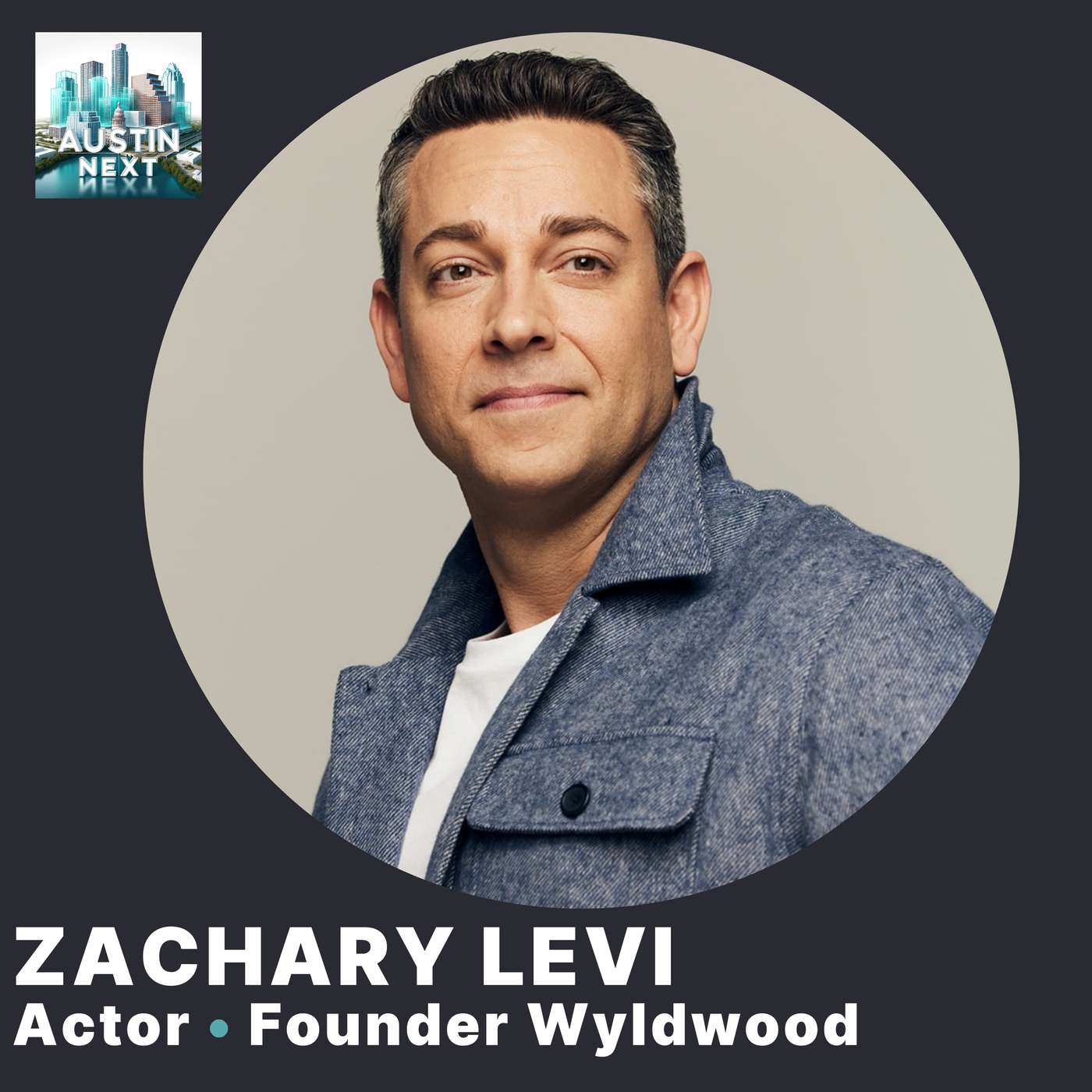
    Zachary Levi | Can Austin Build an Ark for Human Creativity?

    How do we nurture and protect the most human endeavors of creation and discovery? Zachary Levi joins us to discuss calling, technology, and a creative Ark in Austin. We move from one’s life mission to concrete plans for land and film incentives. The central question of our time is whether we ride the AI tsunami or get swept under it. Highlights 00:00 Opening and Zachary Levi’s journey to Austin 05:53 Calling vs discovery 13:48 Build the ark and fix Hollywood 25:13 Community, work, and purpose 30:20 Why Bastrop for Wyldwood 38:05 Austin’s energy and first principles 46:57 Film incentives and ROI 54:00 AI reshapes studio vs creatives 1:10:40 Purpose through creation and discovery 1:19:07 What’s Next Austin? Guest Bio ZACHARY LEVI has proven himself a triple threat- he is an accomplished actor, singer, and dancer that was displayed with his Tony- nominated performance for “Best Leading Actor in a Musical” in the critically praised Broadway production, SHE LOVES ME. In August 2024, Zachary starred in HAROLD & THE PURPLE CRAYON for Sony, based on the wildly popular children’s book written by Crockett Johnson. He will next star in both MGM/Amazon’s SARAH’S OIL as well as Joe Carnahan’s real-life survivor thriller, NOT WITHOUT HOPE. Zac is also set to appear in HOTEL TEHRAN, a new thriller from writer-director, Guy Moshe. In March 2023, Levi reprised his role as Shazam! in the Warner Bros. DC franchise, SHAZAM! FURY OF THE GODS. Directed by David F. Sandberg, this was the follow-up to the first installment, SHAZAM! which held the #1 spot at the box office for weeks following its April 2019 release. In 2021, Zachary portrayed iconic NFL MVP and Hall of Fame quarterback, Kurt Warner in AMERICAN UNDERDOG for Lionsgate directed by Andrew and Jon Erwin. Zac will return with the Erwin brothers for another Lionsgate film THE UNBREAKABLE BOY, based on the true story of the most inspiring boy who touched and changed the lives of those around him in theaters February 21, 2025. In a fan favorite recurring role, Levi took home a SAG Award for “Best Ensemble in a Comedy Series” for season two and three of Amazon Studios’ Emmy winning series, THE MARVELOUS MRS. MAISEL. The first season of the show won six Primetime Emmys, two Golden Globes, as well as a Peabody Award and two Critics’ Choice Awards. The second season won one Golden Globe, three Screen Actor Guild Awards, one PGA Award, two Broadcast Film Critics Association Awards, one Critics Choice TV Award, and TV Program of the Year at the AFI Awards. Additional previous film credits include: CHICKEN RUN: DAWN OF THE NUGGET; TEDDY’S CHRISTMAS; APOLLO 10 ½: A SPACE AGE CHILDHOOD; THOR: THE DARK WORLD; ALVIN & THE CHIPMUNKS: THE SQUEAKQUEL; and TANGLED. The song “I See the Light,” written for TANGLED (performed by Levi & Mandy Moore) was nominated that year for an Oscar and Golden Globe for Best Original Song. The pair performed the duet at the 83rd Annual Academy Awards ceremony. “I See the Light” also won the Grammy Award for “Best Song Written for Visual Media” at the 54th Grammy Awards. Levi is best known for his fan favorite performance as Chuck Bartowski in the hit NBC series, CHUCK. Other previous TV credits include the Netflix mini-series ALIAS GRACE & HEROES REBORN. In June 2022, Levi made his author debut with his memoir, RADICAL LOVE: LEARNING TO ACCEPT YOURSELF AND OTHERS, which shares his emotional journey through a lifetime of crippling anxiety and depression to find joy, gratitude, and ultimate purpose Guest Links Zachary Levi: X, Instagram Wyldwood ------------------- Austin Next Links: Website, X/Twitter, YouTube, LinkedIn Ecosystem Metacognition Substack

  • #165
    Sep 24, 2025 · 57 min

    Is Austin a Music Incubator? | Terry Lickona, Austin City Limits

    Austin exports culture the way it exports tech. Terry Lickona, longtime executive producer of Austin City Limits, argues Austin is a music incubator, not the music industry, and that’s a feature. We map venues, economics, the tech crossover, and what keeps the scene original. Highlights 01:12 Austin Music Today: vibrant, original, authentic. 06:49 Streaming’s role, why touring pays. 11:30 Arena bookings, pricing, club spend 18:30 Venue design and experience 25:55 Music districts and competition for your dollar 36:25 How ACL books talent and stays eclectic. 44:31 The “Live Music Capital” narrative and exports. 53:25 AI in music: Tool vs crutch 58:55 What’s Next Austin? Guest Bio Since 1978, Terry Lickona has been the producer, now executive producer, of "Austin City Limits." Celebrating 38 years on PBS, ACL is the longest-running popular music series in American television history. In 2003, the President of the United States awarded ACL the National Medal of Arts, the nation's highest honor for artistic excellence. In 2012, ACL received a rare institutional Peabody Award for excellence and outstanding achievement. Terry has also produced other specials and series for public television, cable, domestic and foreign syndication, home video, and DVD - over 800 programs, with artists ranging from Ray Charles and Johnny Cash to Juanes, Coldplay and Neil Young to Willie Nelson, Arcade Fire, Radiohead and Pearl Jam. October 2012 also marks the 11th anniversary of the Austin City Limits Music Festival, one of the most successful music festivals in the country. In 2011 Austin City Limits Live at The Moody Theater opened its doors in downtown Austin as a world class live performance venue combined with a state of the art studio soundstage. Lickona has been the co-producer of the Grammy Awards Show on CBS since 2012. He served as Chairman of the Board of Trustees of the National Academy of Recording Arts and Sciences from 2005-2006. He also currently serves on the Board of the Latin Recording Academy. A native of Poughkeepsie, New York, he has lived in Austin, Texas since 1974. Guest Links Austin City Limits: Website, YouTube, Facebook, Instagram, X ------------------- Austin Next Links: Website, X/Twitter, YouTube, LinkedIn Ecosystem Metacognition Substack
Showing 1–20 of 21 episodes