Skip to content
Artwork for Art's Open Door
ArtsReligion & Spirituality

Art's Open Door

Merideth Hite Estevez

This is a podcast about naming and noticing beauty, but really, it’s about remembering how to be human. Because at the end of the day, the real work of art is the person you’re becoming. Art is an open door to experiencing divine love in everyday life. Let’s walk through it together.

www.artsopendoor.com
Play
  • 3 episodes
  • Avg 13 min
  • English
  • S1 · E2
    Friday · 19 min

    No use being more spiritual than God

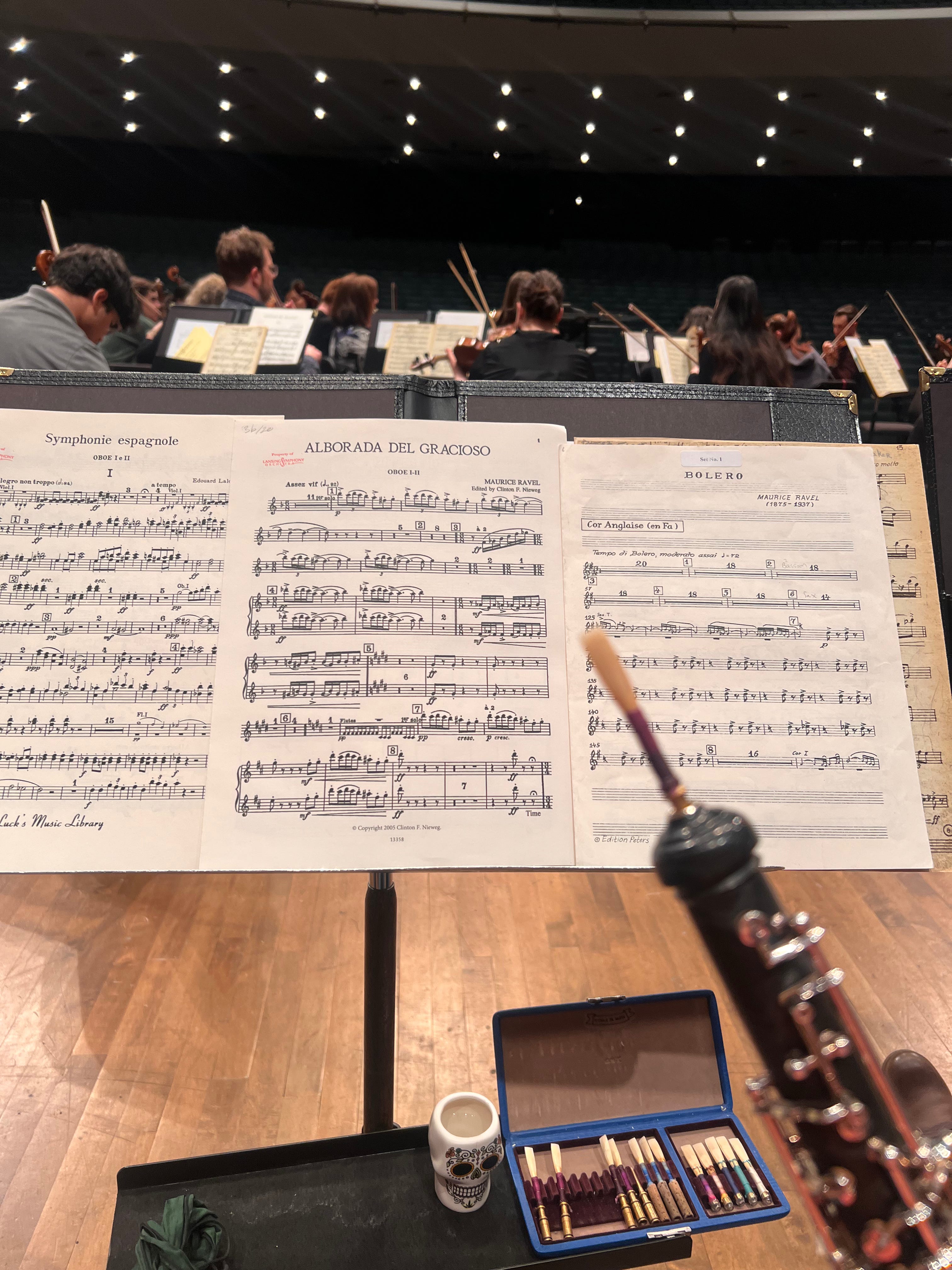
    Besides the fact that many people aren’t sure how to spell it, being an oboist isn’t so bad. There is no e, for the record. I’ve played this persnickety, temperamental woodwind since I was 14. My origin story isn’t super romantic: I joined band late because I was a cheerleader and there were already too many clarinets. Based on some patchy math over almost 30 years, I estimate I’ve spent more than 27,000 hours with this instrument. We have our good days and our bad days, but here in this phase of my career, I dare say I feel at home with her. As much oboe as I’ve played, some days can still be humbling. I’m preparing for a full-length recital later this year—the marathon of oboe-ing. Getting back into peak shape takes a little longer now that I’m no longer 20. Plus, I spent the summer in book tour mode: speaking, traveling, and momming. I’m still learning how to be an oboist who’s also an author… or an author who’s also an oboist? But I know how many hours it takes to feel “one” with the instrument again—those tiny muscles in my face nimble and strong, my fingers never second-guessing, the air meeting the reed with joy (instead of pain or mild panic). At one point this summer, I found myself in a dark movie theater with my children. Nowhere is the oboe more on display than in a great film soundtrack, especially at the movie’s most poignant moments. As far as I was from feeling in shape on the instrument that day, I sat in my sticky chair, and, to my surprise, I didn’t just hear the oboist spinning a melody over the strings—I felt the notes in my body. The F at the top of the staff has a certain buzzy brightness; I can feel it vibrating right at the top of my nose. (Strangely enough, this note also makes the filaments in some lightbulbs rattle in practice rooms—if you know, you know.) High C is bright white and naked. First-space treble clef F is a block of sound, thicker but stretchy like taffy. And the low C vibrates against my teeth; I can feel my jaw open as I describe it. I had spent the summer writing, speaking, and parenting, but in that cool theater, as that oboist sang to me, my ears heard and my body remembered. According to people who know, only about 0.01% of the population has absolute (or perfect) pitch. That was never me, as hard as I tried. But what I realized in that theater was, even when I wasn’t in intense oboe mode, even though it wasn’t perfect, somewhere over the last 30 years, I had developed relative pitch. For years, I’d been jealous of my peers, pulling notes out of the air and mastering music theory with eyes closed. At some point during school, I just gave up trying to hear like I had perfect pitch and got busy trying to play my instrument. What I didn’t realize until now is that when we focus fully and submit to the process, creating can become a full-body experience. I realized this summer that perfect or relative pitch, hearing music in these deeper ways, isn’t just an intellectual trick in your ears. It’s also something that can be for your whole self. After all these years with this instrument, recognizing the notes on the oboe, really hearing them, means feeling the height of my tongue, the rattle behind the bridge of my nose, the resistance of the reed against my breath. In ear-training and harmony class, I was bending my ears to discern fifths from fourths. My teacher would play the bassline louder on purpose for us melody junkies who could hear nothing besides the top voice. During those early years of trying to master the oboe, I was also, per usual, trying to master my faith in God. Away from home for the first time, I pulled C.S. Lewis’s Mere Christianity off a bookstore shelf. I think I went searching in Lewis for some theory of God —theology, yes, but something more than that—some process I could submit myself to, some key that would explain the whole map, something to make me feel a little less lost and afraid. I remember I was sitting in a salon chair getting my haircut when I first read these words: “There is no good trying to be more spiritual than God. God never meant man to be a purely spiritual creature. That is why He uses material things like bread and wine to put the new life into us. We may think this rather crude and unspiritual. God does not: He invented eating. He likes matter. He invented it.” The plastic cape felt warm, my face flushed. It hit me: God wasn’t just after absolute (or relative!) perfection; he was after my senses, he was after me. Taste and see. My prayer rises like incense. The sheep know the Shepherd’s voice. When Paul writes in Romans about offering our bodies as a living sacrifice, the Greek word he uses for bodies—sōmata—refers explicitly to our physical, material existence. Our breath, vocal cords, muscles, and ears. Salvation (from the Latin for "healing") isn’t an abstract head thing; it’s a body thing. What realizing I had relative pitch taught me—inspired me—to do was to see all of life as ear training. That long tones are a means to an end—a practice that will, in the long run, help me feel stronger and more agile, so that I can experience the whole-body joy of singing through my instrument. And so it is with faith. The process is the point—each hour becomes a way that God is pursuing, chasing, honing some inner and outer Love in me. God isn’t only asking for our discipline or obedience; He’s inviting us into relationship, to give ourselves over to the process so He can ever-so-slowly tune our ears to truly hear. But we can’t be after these things themselves any more than I could will myself into having perfect pitch. Any and all gifts are the byproduct, the result of submission and listening, and of perfect grace. Hours with the instrument in your hand aren’t servitude; they’re relationship, communion. Just like music, I believe God wants our faith and our trust in Him to be a full-body experience, not just your intellect or your heart but your body, your breath, your pinky finger, your tapping toe, your whole self.  And so you might be asking, what does that look like to have a fully embodied faith? A couple of ideas I'm having now: * Savoring words in prayer * Being honest and open, vocalizing our comfort and discomfort to God * Kneading the bread * Squeezing the tube of paint * Feeling the rosin or the reed shavings in our fingers * Paying attention to the air * Delighting in matter because God invented it Maybe you are worried that you don’t have 24,000 hours to dedicate to any practice. Maybe you wonder what the point even is, since you’re too late and not talented enough. But creative focus and C.S. Lewis remind us that all we need is a human body to receive or accept God’s goodness for us; that we are literally made for it. Imperfect and distracted, prone to wander, but maybe just willing enough to show up at the desk. What if spiritual and creative practice aren’t abstract theories we memorize or master, but a full-body recognition of grace, revealed through thousands of quiet, daily “long tones” with the One who made us? The Gallery Today’s work of art that stopped me in my tracks is a piece of music I have long loved, “On the Nature of Daylight” by Max Richter. You may remember this one from an episode of Artists for Joy over the summer; my friend and Broadway actress, Jennafer Newbeery Peery, said this piece of music was a spiritual gateway for her. A live version showed up in my feed this week: a short clip of the artist performing at NPR’s Tiny Desk Concert, and so naturally I had to watch the whole thing. Apparently, Google tells me that “On the Nature of Daylight” is currently one of the most famous licensed pieces of music in movies and television. I have it on one of my walking playlists. It’s built on a slow, unfolding cycle of string instruments—violins, cellos, double bass—sustained over several minutes. What makes this piece so breathtaking isn’t complex musical acrobatics. It’s the weight and texture of the sound, the very physical friction of a horsehair bow pulling across the rosin on the string. The cello resonates deep within my chest; it’s like a somatic long tone. When I relistened today, I’m reminded that beauty doesn’t always come from complexity or high-concept ideas. Sometimes the most profound art comes from holding a single note long enough, letting it resonate in a room. Richter says in the video that music gives him space to think about big problems. At the same time, his music invites us beyond our analytical, overthinking minds and grounds us back in our bodies. Liturgy for the Living Today’s show, hopefully, invites you not just to collect beautiful ideas in your head—but to embody them. Which brings us to our final segment, this week’s Liturgy of the Living, an analog practice inviting you to be human, a work of art created and sustained by God. I’m calling this week’s "The Daily Long Tone." In music, a long tone is the simplest practice imaginable, and yet, one of the most difficult. It’s not about flapping your fingers or expressing yourself through some dramatic solo. Long tones require you to submit to the process at its most basic level: take a breath, play a note, and hold it for as long as your air lasts. Notice how you begin and how you end. Listen for resonance. Feel the vibration in your hands and teeth. It’s not about flash; it’s about getting comfortable with being present with the sound. This week, if you’re a musician, your invitation is to practice your long tones! If you're not, choose one tiny, physical “long tone” in your everyday life—something that takes no more than five minutes, uses your hands or senses, and requires zero performance or perfection. It could be holding a hot cup of coffee with both hands for three full minutes, dropping your shoulders, and feeling the heat against your palms. Or a mini centering prayer or meditation session: set a timer for a few minutes and repeat a word or phrase to fix your mind on. Let your thoughts fall away and consent to God’s presence. It could be stepping outside without your phone, closing your eyes, and listening until you can identify three distinct layers of sound around you. If you’re a visual artist, sit at your desk, take a pen to real paper, and draw simple, continuous loops without lifting your hand until your breath slows. Whatever it is, drop into your body. Notice the weight, the texture, the air in your lungs. Remind yourself: God likes matter. You are a physical creature, made to experience beauty right here in this sensory world. Announcing: The Fall into Focus Challenge If you feel something deep within you long for an exhale at the thought of a practice like this—if you’re craving a season of moving out of your head and back into your body—I want to invite you to go deeper with us this autumn. Starting October 5 on Artists for Joy Patreon, we are launching a 30ish-day challenge called Fall into Focus. So many of us enter this season feeling scattered, overwhelmed by the thought that there are only 90 or so days left in the year, or disconnected from the quiet delight of making art. Fall into Focus isn’t about adding another deadline or mental task to your to-do list or forcing yourself to produce something great. It’s a 30-day invitation to treat your creative life as a spiritual practice—a daily “long tone” that grounds you in presence, play, and quiet faith. For those in our Studio Tier on Patreon, we’ll be walking this 30ish-day journey together with dedicated support, gentle prompts, and real companionship (including our Voxer community space where we can share voice notes, reflection, and encouragement in real time). If you want to join us for the Fall into Focus challenge, click here to learn more and join the Studio Tier on Patreon. (It comes with lots of other great perks, by the way!) Whether you join the 30-day challenge or simply practice your single “long tone” today, my prayer for you this week is that you allow yourself to be wherever you are and know that you’re not alone there. There’s no use being more spiritual than God. Our Maker made us human, and God loves us that way. Until next time, friends. Go in peace. Get full access to Art's Open Door at www.artsopendoor.com/subscribe
  • September 18 · 20 min

    Threshold paralysis

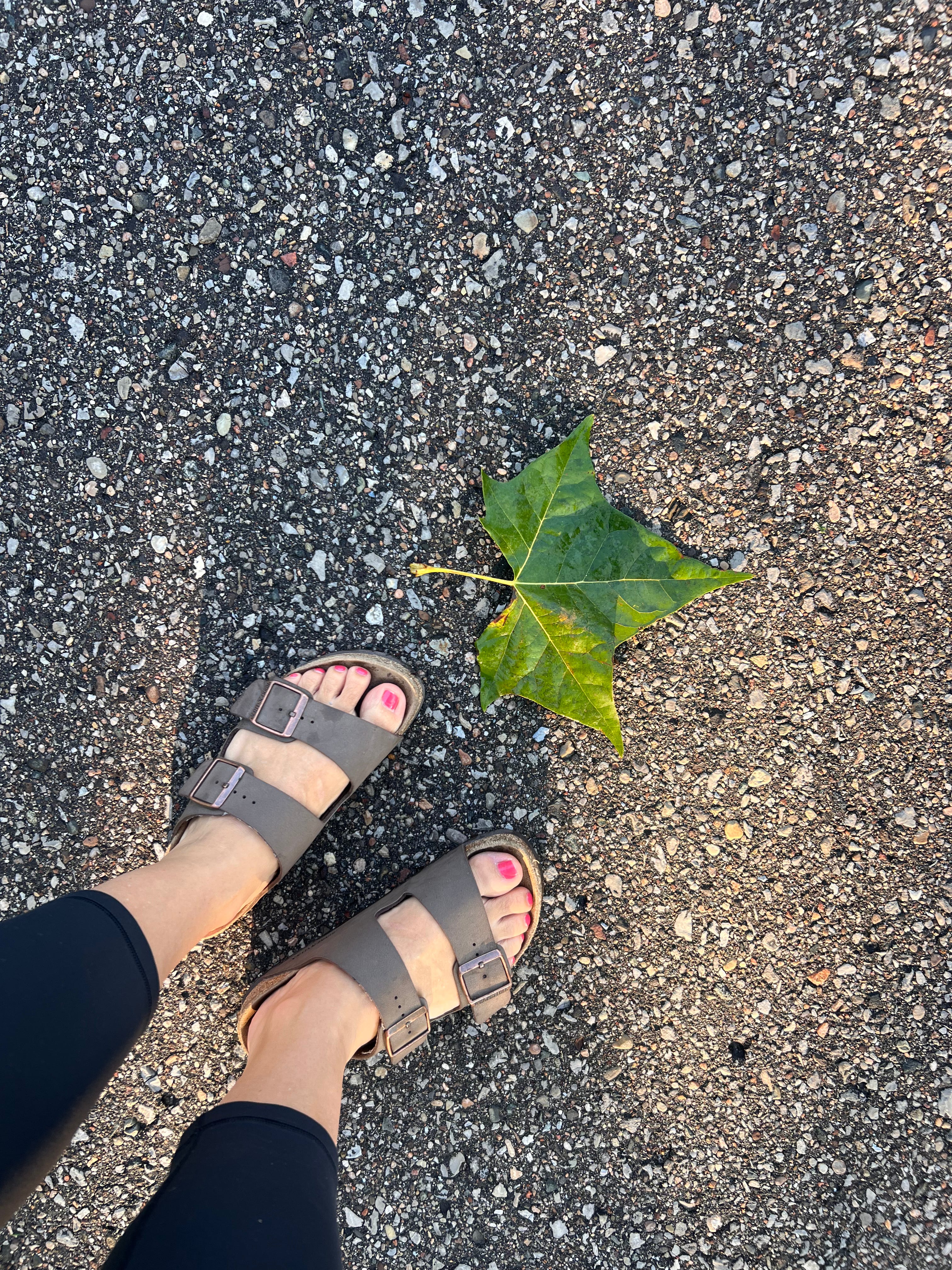
    Welcome to Art’s Open Door. I’m Merideth: oboist, author, creative coach, and a fellow traveler on this messy, human road. I believe the real work of art is the person you are becoming right in the middle of your chaotic life, and that beauty is an open door to divine love. Today is episode 1 (!) of the new podcast version of this here newsletter, and I’m excited you’re here. If you enjoy it, could you take a moment to heart, comment, and/or share with someone who needs this type of space? I’d appreciate it. You can listen to the pod right here on Substack on Apple Podcasts or Spotify. Thanks again for being here. Instead of writing, I took a walk in the rain this morning. I was prepared in case the skies opened during my daily 1.8-mile loop in my neighborhood, although I hoped it would hold off for my hair’s sake. I’ve felt this pull to walk this same path every day in this season of life like I feel the urge to reach for a snack or sleep when it’s time—a deep bodily need for nourishment, instead of a daily to-do. I usually write before I walk, but today, in spite of the rain, I put on my hoodie and started out. There are trees I’ve befriended on this path; inside one the other day, I saw a full-bellied chipmunk who’d taken residence in a dead trunk. There was a standoff: she waiting at the entrance and staring me down with suspicion, me trying not to move too suddenly and scare her away. On my walk, mostly it’s suburban concrete, manicured lawns, children waiting for the bus, people walking their dogs. But there’s this one 100-yard stretch that is dirt road, almost completely covered with trees, where I rarely see anyone. It’s at the end of my loop, and so sometimes, if I don’t have a full 35 minutes to walk, I go backward and walk the dirt part twice. The young people say “touch grass” when they feel the need to ground themselves, and I don’t know; for me, it’s touching dirt. About six weeks from now, it’ll be my boots that will come home muddy, but I’m delighting in the days I have left to return to my doorstep in my trusty, dusty Birkenstocks and muddy toes. I listen to the daily lectionary on the Pray As You Go podcast, turn on some of my favorite music when that’s over, but mostly I just let my feet and mind wander. I let whoever God would have me pray for come to mind. If you’ve ever received a text from me around 8:30 AM, you know it was you. But mostly I just marvel at the wonders of this world, let God speak in spite of all the inner noise, even in—maybe especially in—the rain. I’ve written three other versions of this opening, by the way. Those two paragraphs arrived this morning as I sat down to finalize this essay, this post, this episode—can we call it a love letter instead? All the other words, which I had shaken up and squeezed out like one of those near-empty cans of whipped cream, they were all wrong. Do you ever do that? You go to take a step forward and do a thing you really want to do, create something you’ve always dreamt of making, or do something you’ve prepared for, and no matter how hard you try, no matter how hard you shake and tap and jostle that can, it is empty. (My kids had pancakes with whipped cream this morning and that sad sound that the spray bottle makes when empty was visceral and mocking me, I tell ya.) I have coaching clients who prepare for years to launch their Substack or create their business. To record their album or write their book. They have it all planned out in their heads. Many of them have completed manuscripts in their desks as I write this. The starting line appears beneath their feet, and they can’t seem to move. Maybe they are paralyzed with options, or they start second-guessing everything, but even though they are closer than ever to their dream, they can’t get past the threshold; they can’t walk through to the other side. I realized rather poetically this morning, as I stood at my own kind of starting line, that I had written three different versions of this first episode—two of them here on my computer, one or more in my head—and that I was afraid, too. And so picture me on the dirt road, my favorite place to think, instead of in my writing chair. I went there to move myself forward, and God invited me to slow down. I turned my face up and let the drizzle baptize me. These felt like the right words with which to begin. I’ve always loved words. Not just putting them in order, but everything about them—their meaning and history, even the way they look. I remember as a very young kid, looking at the word M-U-S-I-C, when I was just learning how to spell, and being grateful that music started with an “M” like my name. Like we were somehow already linked: Music and Meri. (That was my nickname as a child.) I had a lot to learn—heck, I could barely spell M-U-S-I-C, much less read notes—but it was almost like I knew this art form and I were friends already. Like a character who meets a mysterious stranger in Act I, the melodies, however simply understood at age four—Music and Meri—they were kindred. Now, little Meri didn’t know Greek etymology, but I know now that the English word music is connected to the word muse. So even in its earliest meaning, there was this whisper of inspiration from a higher source, embedded right there in the word itself. If you know even a little of my story, you know that, here in Act II (or is it Act III?), my relationship with music continues to evolve. But I can still say, almost 40 years from when I remember naming that Music starts with M like Meri, I still feel bound and connected to her. I’m realizing more and more that it wasn’t a friend I was meeting, but a part of myself, a part of God, a gift that God gave me, a portal through which God reached into my heart—a gift I had to choose, in each day of my life since, to accept or not. As a coach and workshop facilitator who writes about art and music, over the years I’ve collected hundreds of stories at this point about people’s relationship to words—especially the word Art. With a capital A. It brings memories of cruel teachers, feelings of inadequacy and fear, something indefinable or untouchable and confusing, a fickle friend (or villain?) that wears a beret and a handlebar mustache. The word art comes from the Latin ars, which is connected to skilled labor. While the word "music" has its origin in its connection to the divine, art does not. There it is—the lie we tell ourselves: only those with skills can be artisans or artists. If one can’t read music, then one can’t call themself a musician. As a member of the “elite” artist bunch, with years of training in my art form, I have been guilty of perpetuating these mindsets, out of protection or arrogance, fear of being named obsolete, a response to a declining cultural relevance—maybe, yes, probably. But believing that Art was only for the trained and skilled and “good enough” has done the little girl whose name started with M real harm. It encouraged her to believe the gift, this part of her that came from God, was not given without conditions—that there was something to strive for, to earn. And so what better place to begin, here on episode one of the podcast, than to remind you that every day is a work of art, and Art with a capital A.R.T. is for everyone. That you are an artist. That you were created by Being itself, whose very first act was making beautiful things, ordering the chaos—with skill, to be sure, but first and foremost with a beauty that is born of Love. These things aren’t so easy to believe, I know. And so, in my latest book, Art Is How God Loves Us, I took the liberty of redefining Art once and for all. Instead of the elite, the technical, the gatekept, it has become, in this act of my life, an acronym for something that God embedded into creation: Atoms Responding to Transcendence. If creation is the most loving thing God does, then each act of creation since means that every living thing—and even dead things (yes, it is a miracle)—holds within them the power of new life, resurrection, transcendence. The natural and human-made parts of the world shimmer and tremble with creative potential, set in motion by an Artist God. And so being an artist means being open to naming and noticing the beauty happening right in front of you: hearing the sun, moon, and stars of the French countryside in every oboe reed; letting the Latin jazz rhythms my husband plays on the drumset in the garage take me to Brazil and Spain to hear a language of longing and loss that I can somehow understand; standing in the rain on a dirt road as the seasons change and letting it wash away the cynicism and fear at what I perceive as the starting line. We know that it rains because clouds become heavy with condensation and the jet stream, etc., etc. But as it ran down my nose this morning, even science became A.R.T.—atoms responding to transcendence. That rain fell for me, an outpouring of Love from my Creator, an open door to deeper trust and grace upon grace. And so, as we begin here at Art’s Open Door, as you undoubtedly stand on the threshold of some invitation from God to befriend a part of yourself you were tempted to discount for lack of skill or fear of failure... as you wait for proof of concept or the shame of your mishaps to dissipate... as you wait and wait and write and rewrite, looking for the right way to begin... as you stand at the beginning of a new idea, I hope you’ll see it not as a starting line, but a door that is already open. I hope you’ll name every drop of rain a resurrection. That this world, each and every one of its atoms, is in the midst of responding to their Creator’s Love. And that includes you, by the way. Beauty and even dissonance are an opening, a portal to the divine—to something that includes us, but doesn’t depend on our abilities. Not on our goodness, but on God’s. I say in the intro for the show that this is a podcast about naming and noticing beauty, but it is also about remembering how to be human, because the one leads into the other, how to let the atoms within you—the love that you were made with—respond to that original Love. To walk through A.R.T.’s open door is to believe you are a beloved work of art yourself. It is choosing to participate in the image of an Artist God who lives within you, listening for that knocking, and stepping across the threshold, fears and all. Because being an artist—and being a human—isn’t a race to win or a skill to earn. It is a gift we accept, and a life we live into. What if the door was already open? And what if what you’re supposed to do next will not be made clear until you step through? The Gallery Each week, alongside our reflection, I want to share a quote, a poem, or a piece of art that stopped me in my tracks—a little evidence of atoms responding to transcendence out in the wild. This week, as we talk about threshold paralysis and the fear of beginning, we lost one of our great patron saints of seeing. Annie Dillard passed away this week at the age of 81. If you don’t know her work, she was a Pulitzer Prize-winning author, essayist, and naturalist who spent her life teaching us how to truly pay attention to the natural world and the spiritual magic hidden inside it. In her classic book, The Writing Life, she gave artists the ultimate permission slip against holding back. One of the things I know about writing is this: spend it all, shoot it, play it, lose it, all, right away, every time. Do not hoard what seems good for a later place in the book or for another book; give it, give it all, give it now. The impulse to save something good for a better place later is the signal to spend it now. Something more will arise for later, something better. These things fill from behind, from beneath, like well water. Similarly, the impulse to keep to yourself what you have learned is not only shameful, it is destructive. Anything you do not give freely and abundantly becomes lost to you. You open your safe and find ashes.” Annie Dillard, “The Writing Life” When we are paralyzed at the starting line, the impulse is to save ourselves. We are tempted to hoard our ideas, wait for the perfect timing, keep our best energy until we feel “skilled enough” or “ready.” But Dillard reminds us that the creative well doesn’t dry up when you use it. In fact, it’s the opposite. When you spend it all right now, on this dirt road, in this moment, before you feel ready—you can trust that more will arise. What a gift. I’m grateful for her life, her words, and this reminder that there will be enough. Liturgies for the Living I always want to leave you with something practical—an invitation to step into what we’ve talked about today. This final section of the show is what I am calling Liturgies for the Living. The word liturgy comes from Ancient Greek and means “the work of the people.” And so these simple, analog practices are here to invite you to practice being human—a work of art created and sustained by God. Wherever you are right now—whether you are walking on a wet dirt road, sitting in traffic, or standing at a starting line of your own making—I invite you to take a slow, deep breath. Look around and notice one small thing that you might be taking for granted. For me this morning, it was a raindrop on my nose. For you, could it be the air in your lungs? The roof over your head? The color of the sky, the warmth of a mug in your hands? Now let your mind enter into its creation. How was it made? Remember whatever science you may recall from middle school, and sit with whatever wonder or questions arise. Let your shoulders drop. Unclench your jaw. You do not need to earn this day. You do not have to prove your worth to the One who made you, or to anyone else for that matter. You can step forward into whatever work you are called to, knowing that God will provide everything you need. If you’ve been waiting for a sign to begin, this is it. The design of each raindrop or ray of sunlight is proof that atoms are already responding to the Love that spoke you into existence. Being an artist, just like being human, isn’t something we earn—it is a gift we accept. So, receive the gift of being made. Receive the grace there is in being human. Until next time, friends. Go in peace. What did you notice in this simple practice? I’d love to hear in the comments! Get full access to Art's Open Door at www.artsopendoor.com/subscribe

  • September 10 · 2 min

    Introducing Art’s Open Door Podcast ✨

    If you’ve been reading Art’s Open Door here on Substack, you know this space has always been about making room for the sacred, slow, and human parts of our lives. Today, I’m so excited to open that door just a little wider and introduce a brand new way for us to continue the conversation: Art’s Open Door, the podcast. I want to live in a world that values people and poems, not just machines. In my newest book, Art Is How God Loves Us, I wrote about my favorite ancient Greek word, poiema, which describes a work of art crafted by hand. It’s where we get our word "poem." In the Apostle Paul’s letter to the Ephesians, he writes that we are God’s handiwork, God’s poiema. He could have chosen another Greek word to describe something made: techne—a tool, something useful. Techne is where we get our word technology. At the click of a button, we can generate a sonnet, predict the weather, or synthesize human knowledge into a single paragraph. But in our race toward efficiency, I often feel like we’re losing touch with what actually makes us human: our bodies, our vulnerabilities, our beautifully slow, imperfect lives. What to Expect on the Show What if this world could be one that values poems more than machines? A world that sees our humanity not as a glitch to overcome, but a work of art still being crafted by our Maker? On the show you’ll get: * Audio Essays: I’ll be sharing my own writing, reflections on beauty, and practical wisdom for the creative journey. * Guest Conversations: Warm, honest interviews with artists, thinkers, and makers who are practicing what it means to live human-centered lives. * Music & Poetry: Moments to pause, listen, and let your spirit be restored through the sacred beauty of created things. Every Friday, we’ll explore how art and beauty are open doors to divine love, inviting us to choose incarnation over information. Step Through the Door I hope you’ll play the trailer above to take a breath and listen in. If you’re subscribed here, you’ll get each episode in your inbox. Art’s Open Door Podcast will also be available on Apple Podcasts and Spotify, too. (It takes a beat for those to populate when a show is new, so hang tight if they’re not there right away. I’ll update those links when I have them!) For now, press play above and let me know what you think. To my longtime readers, thank you for making this such a rich and encouraging place to land as I create this new container for conversation and community. Do you know someone in your life who would enjoy this kinda thing? I’d be honored if you’d tag or share the subscription link with them. As we start this new chapter, I’d love to hear from you: Where in your life are you feeling called to choose the slow, human beauty of a “poem” over the speed of a “machine”? Get full access to Art's Open Door at www.artsopendoor.com/subscribe

Showing 1–3 of 3 episodes