Skip to content
Artwork for Animals with Aimee
Kids & FamilyPets & AnimalsEducation for Kids

Animals with Aimee

Animals with Aimee

Welcome to Animals with Aimee! ๐Ÿฆ๐Ÿ”ฌ

Are you looking for high-quality, screen-free entertainment that your kids will actually beg for? Animals with Aimee is a fun, fact-filled science podcast designed to turn everyday car rides, afternoon quiet times, and homeschool lessons into wild, scientific adventures!

Hosted by Aimee, each bite-sized episode introduces junior biologists to the most fascinating creatures on Earth. From calculating the physics of an Archerfishโ€™s water pistol to exploring the microscopic survival skills of the Tardigrade, we break down complex concepts like biology, physics, and ecology into kid-friendly lessons.

Perfect for:

Parents seeking engaging, guilt-free entertainment that replaces screen time with active learning.

Homeschooling Families looking for fun, NGSS-aligned elementary science content.

Teachers who want exciting audio lessons for their classrooms.

Keep the Adventure Going!
The fun doesn't stop when the audio ends. Visit animalswithaimee.com to join the Animal Lovers Club. Members unlock a vault of premium educational resources, including:

๐Ÿ–จ๏ธ Daily printable companion worksheets, coloring pages, and quizzes

๐ŸŽง 100% ad-free listening

๐ŸŽ‰ Exclusive on-air birthday shout-outs

Remember, animals are specialโ€”just like you! Grab your gear, hit play, and let's start exploring! ๐Ÿ’š

Play
  • 28 episodes
  • daily
  • Avg 8 min
  • English

Support the show

Goes straight to the publisher. podnod takes nothing.

Counted on this page โ€” what you have heard stays on this device, so it is not something the list can be paged by.
  • #61
    Yesterday ยท 10 min

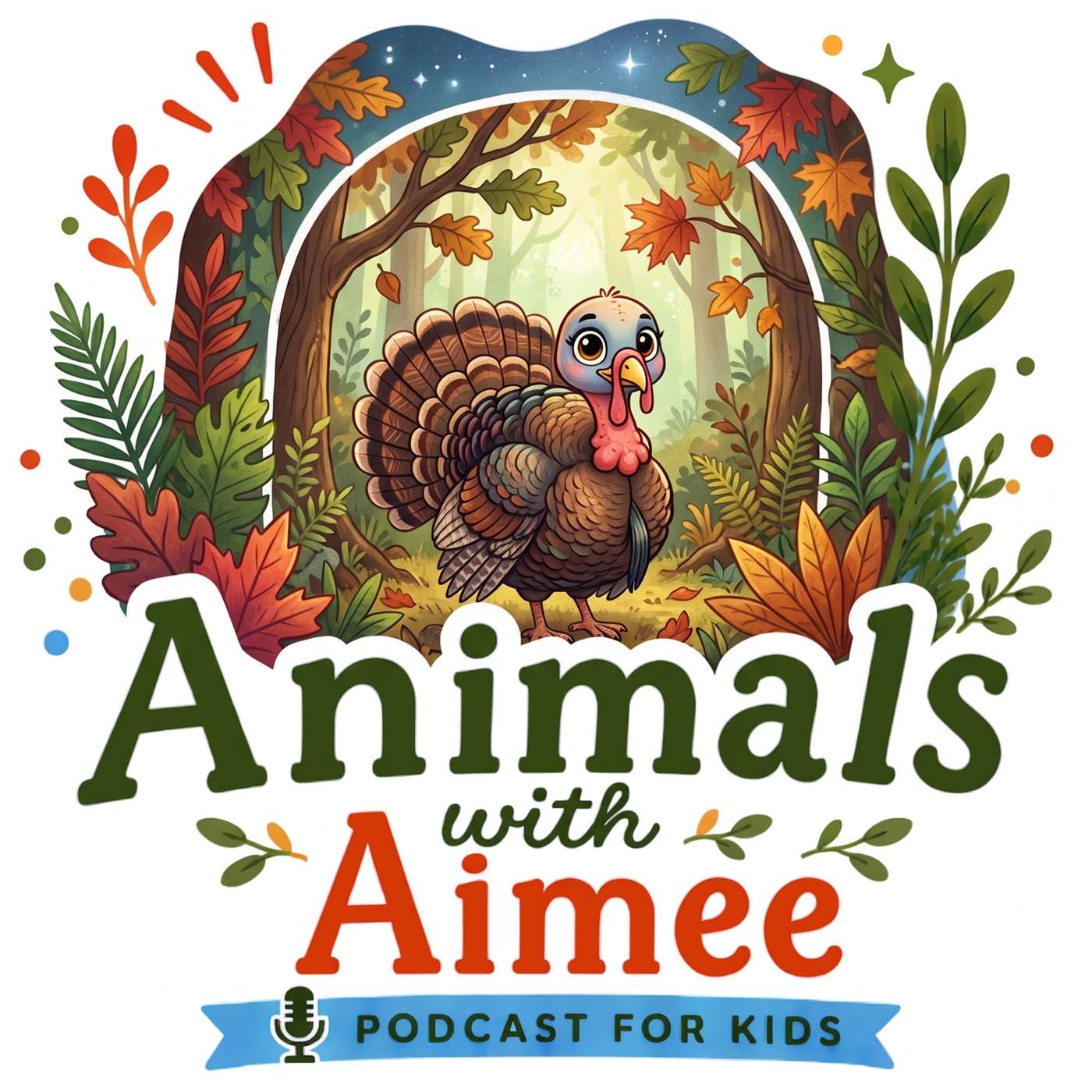
    Wild Turkeys: The Colorful Gobblers of the Forest

    Wild Turkeys: The Colorful Gobblers of the Forest! ๐Ÿฆƒ | Animals with Aimee Grab your hiking boots, explorers! ๐Ÿฅพ Today, Aimee is searching under tall trees, along sunny forest edges, and across open woodland fields to meet the largest game bird in North Americaโ€”the amazing, chatty Wild Turkey! Don't let their big bodies fool youโ€”these woodland wonders are full of surprises! From shimmering, iridescent feathers that glow in copper, green, and gold to fleshy snoods and wattles that change color when they get excited, Wild Turkeys know how to put on a show. โœจ In this episode, we discover how they sprint at 25 miles per hour, fly up into high tree branches to sleep safely at night, and use a powerful gobble that echoes over a mile away! ๐ŸŒณ๐Ÿ”Š Plus, put on your thinking caps for the Wild Wisdom Challenge ๐Ÿง  and get ready for some fowl-weather laughs with our Wild Jokes ๐Ÿ˜‚! Listen to learn: What a snood, wattle, and caruncle are (and why they change between red, blue, and white!) ๐Ÿ”ด๐Ÿ”ต How wild turkeys can fly in short bursts up to 55 miles per hour ๐Ÿ’จ Why their monocular vision gives them a 270-degree view of the forest ๐Ÿ‘€ Why only male turkeys (toms) gobble, while females (hens) use clucks, purrs, and yelps ๐ŸŽถ Conservation Corner ๐ŸŒ Conservation Status: Wild Turkeys are currently listed as Least Concern by the IUCN Red Listโ€”making them one of North America's greatest wildlife conservation comeback stories! How You Can Help: Support the National Wild Turkey Federation (NWTF), a nonprofit dedicated to the conservation of the wild turkey and the preservation of healthy forest and woodland habitats. You can make a donation to support their work at nwtf.org ๐Ÿ’š. Don't forget to rate and follow Animals with Aimee for notifications about our new episodes! Join the Adventure! Grown-ups, help your kids explore even more by joining Aimeeโ€™s Animal Lovers Club at animalswithaimee.com for daily worksheets, ad-free listening, and exclusive Birthday Shout-outs ๐ŸŽˆ! Want to suggest our next animal? Send Aimee an email at aimee@animalswithaimee.com ๐Ÿ’Œ. โ˜… Support this podcast on Patreon โ˜…

    • Transcript
  • #60
    Wednesday ยท 8 min

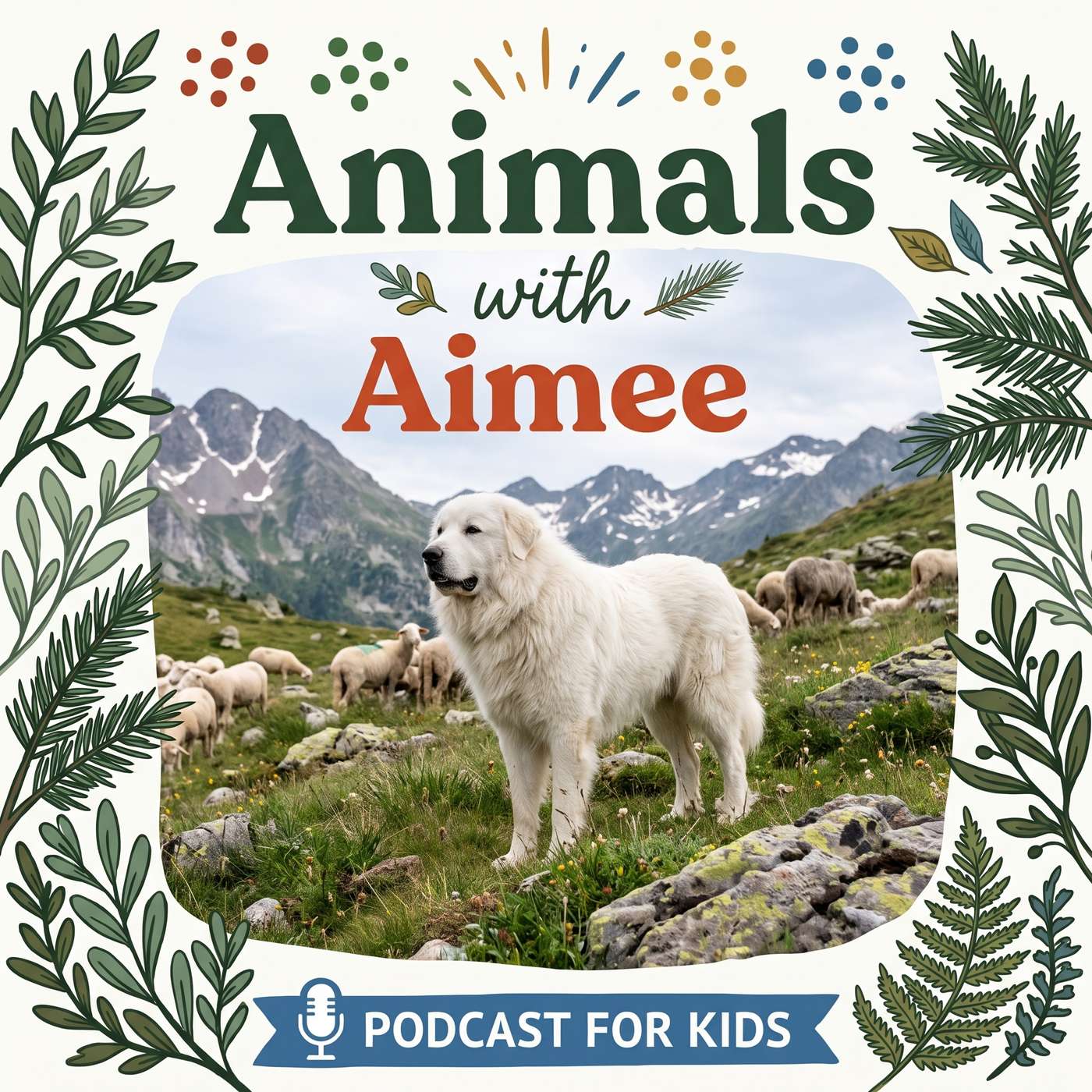
    Great Pyrenees: The Gentle Giant of the Mountains

    Great Pyrenees: The Fluffy Mountain Guardian! ๐Ÿ”๏ธ๐Ÿถ | Animals with Aimee Grab your snow boots and winter coats, explorers! โ„๏ธ Today, Aimee is hiking high up into the snowy Pyrenees Mountains between France and Spain to meet a gentle giant with a heart of goldโ€”the magnificent Great Pyrenees! Did you know this big, fluffy white dog was bred to protect flocks of sheep from wolves and bears all by itself? ๐Ÿ‘ In this episode, we discover how their thick, weatherproof double coats keep them cozy in freezing blizzards, why they have extra toes called "double dewclaws" for gripping steep, rocky trails, and why these nocturnal guardians stay awake at night to keep their families safe! ๐ŸŒ™๐Ÿพ Plus, put on your thinking caps for the Wild Wisdom Challenge ๐Ÿง  and get ready for some paw-some laughs with our Wild Jokes ๐Ÿ˜‚! Listen to learn: Why Great Pyrenees are famous "Livestock Guardian Dogs" who make independent decisions ๐Ÿ‘ How their snowy white fur helps them blend right in with their sheep flocks โ˜๏ธ How their booming bark acts as a gentle warning to scare away predators ๐Ÿ”Š Why being brave, patient, and gentle makes us the best kind of protectors โœจ Conservation Corner ๐ŸŒ Conservation Status: As a domesticated dog breed, the Great Pyrenees is Not Evaluated by the IUCN Red List, though many of these gentle giants need rescue homes when families aren't prepared for their large size and protective instincts. How You Can Help: Support National Great Pyrenees Rescue (NGPR), a nonprofit dedicated to rescuing, rehabilitating, and finding loving forever homes for Great Pyrenees dogs in need. You can make a donation to support their work at nationalpyr.org ๐Ÿ’š. Don't forget to rate and follow Animals with Aimee for notifications about our new episodes! Join the Adventure! Grown-ups, help your kids explore even more by joining Aimeeโ€™s Animal Lovers Club at animalswithaimee.com for daily worksheets, ad-free listening, and exclusive Birthday Shout-outs ๐ŸŽˆ! Want to suggest our next animal? Send Aimee an email at aimee@animalswithaimee.com ๐Ÿ’Œ. โ˜… Support this podcast on Patreon โ˜…

    • Transcript
  • #59
    Tuesday ยท 9 min

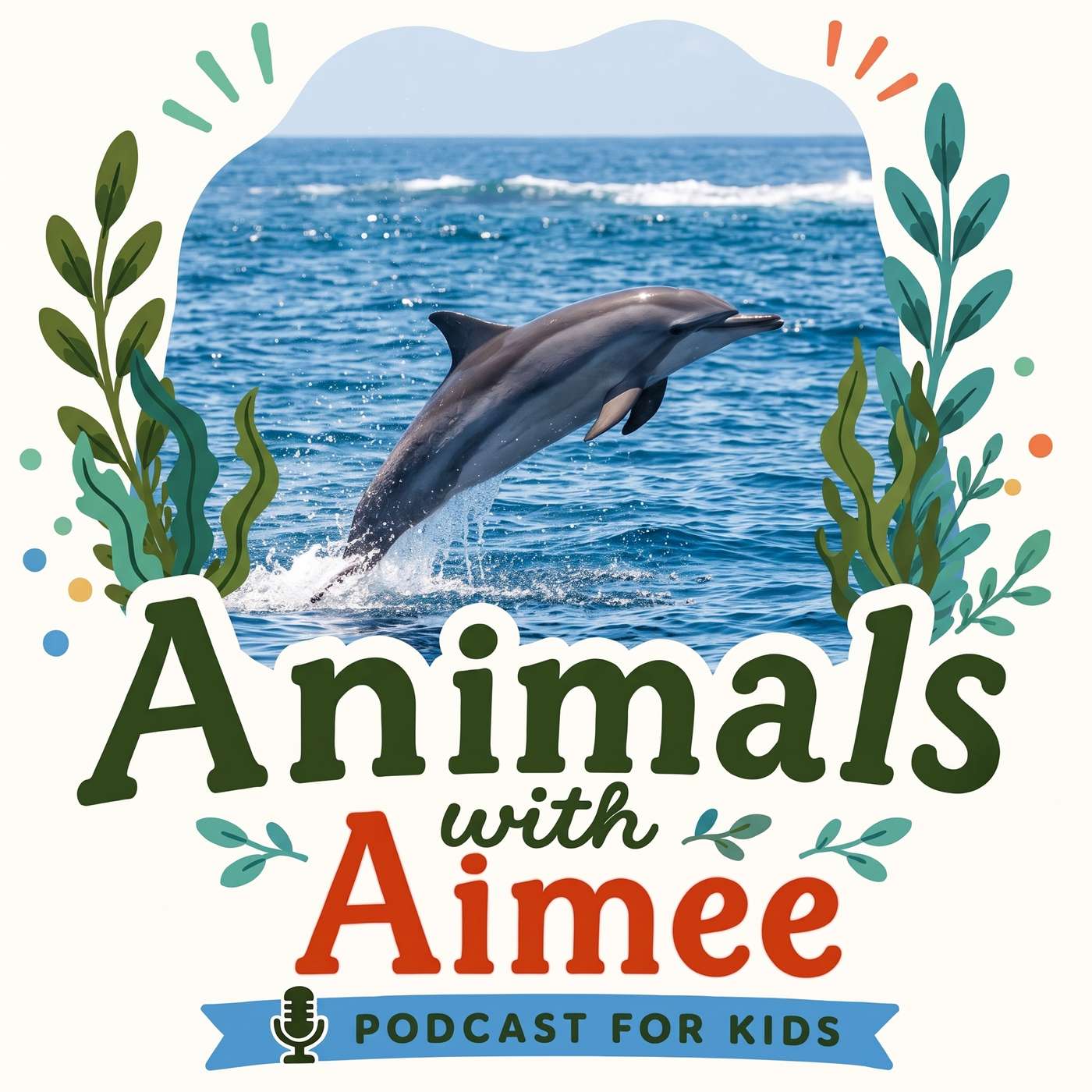
    Spinner Dolphin: The Acrobat of the Ocean

    Spinner Dolphin: The Acrobat of the Ocean! ๐Ÿฌ | Animals with Aimee Grab your life jackets, sunhats, and marine binoculars, explorers! โ›ต Today, Aimee is sailing out into warm, tropical waters to meet one of the most high-flying, athletic swimmers in the seaโ€”the unstoppable Spinner Dolphin! Did you know a single Spinner Dolphin can leap up to 10 feet out of the water and complete seven full spins in less than a second? ๐ŸŒŠ๐ŸŒ€ In this episode, we dive into the mind-blowing world of these marine mammals to discover how they "see" in the dark using echolocation, why they rest in shallow bays by day and hunt in the deep ocean by night, and how they sleep with one half of their brain wide awake! Plus, put on your thinking caps for the Wild Wisdom Challenge ๐Ÿง  and get ready for some flipper-flapping laughs with our Dolphin-Tastic Jokes ๐Ÿ˜‚! Listen to learn: Why spinning through the air helps knock off pesky parasites and send messages to friends ๐Ÿคธ How dolphins use a forehead organ called the "Melon" to create 3D sound maps of the ocean ๐Ÿ”Š What it's like to live in massive "super-pods" of over a thousand dolphins using unique Signature Whistles ๐ŸŽถ How keeping a playful spirit and supporting our team helps us leap over any obstacle โœจ Conservation Corner ๐ŸŒ Conservation Status: Spinner Dolphins are currently listed as Least Concern globally by the IUCN Red List, though some local populations face ongoing threats from fishing nets, ocean pollution, and human disturbance in their daytime resting bays. How You Can Help: Support Whale and Dolphin Conservation (WDC), a global nonprofit dedicated to protecting whales, dolphins, and their ocean habitats. You can make a donation to support their work at whales.org/donate ๐Ÿ’™. Don't forget to rate and follow Animals with Aimee for notifications about our new episodes! Join the Adventure! Grown-ups, help your kids explore even more by joining Aimeeโ€™s Animal Lovers Club at animalswithaimee.com for daily worksheets, ad-free listening, and exclusive Birthday Shout-outs ๐ŸŽˆ! Want to suggest our next animal? Send Aimee an email at aimee@animalswithaimee.com ๐Ÿ’Œ. โ˜… Support this podcast on Patreon โ˜…

    • Transcript
  • #58
    Monday ยท 8 min

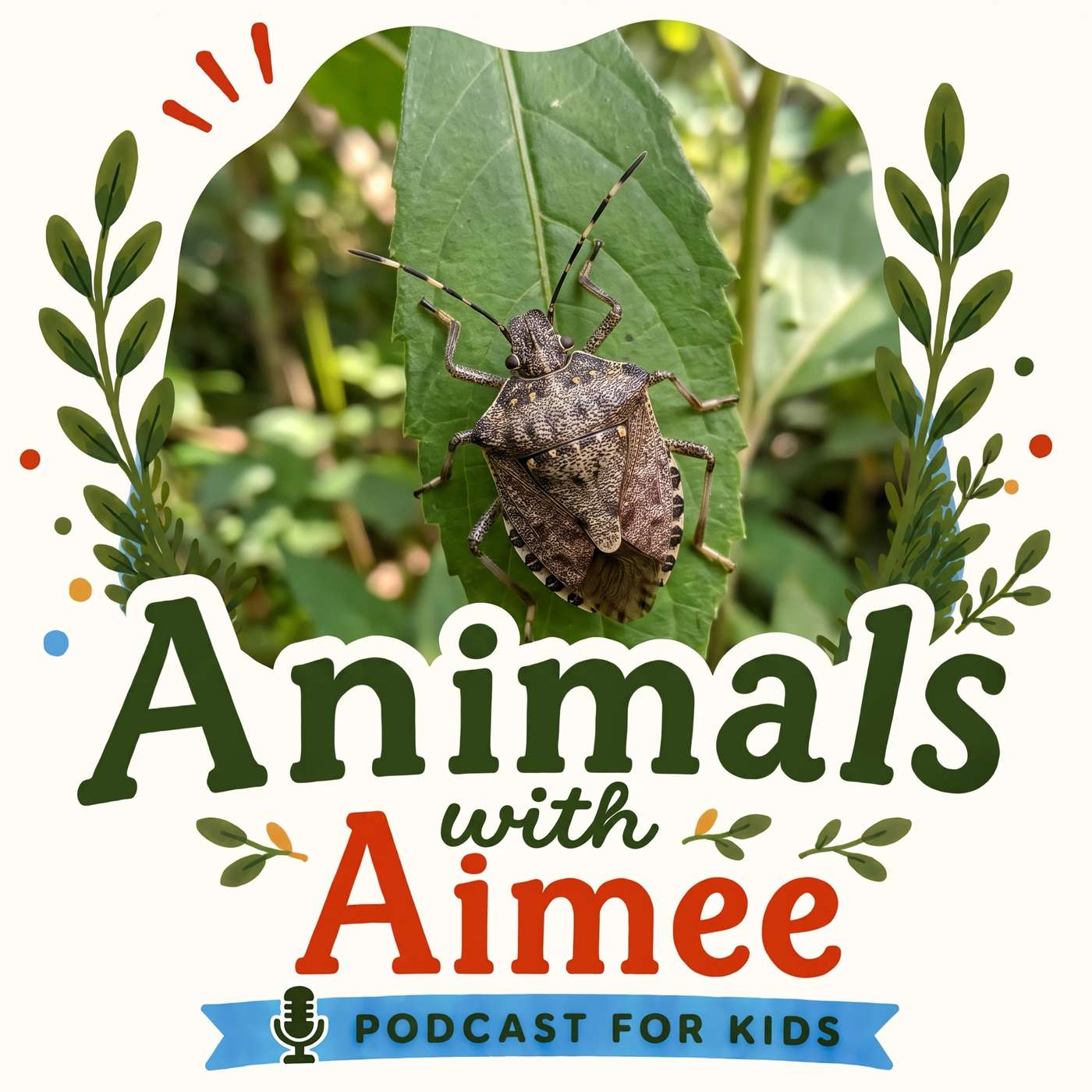
    Stink Bug: The Shield-Shaped Stink Bomb

    Stink Bug: The Shield-Shaped Stink Bomb! ๐Ÿ›ก๏ธ | Animals with Aimee Grab your magnifying glasses and check under the window screens, explorers! ๐Ÿ”Ž Today, Aimee is searching along sunny plant leaves to meet a tiny backyard insect shaped like a medieval knight's shieldโ€”the amazing, smelly Stink Bug! Why do these little bugs have such a stinky reputation? When they feel scared or squished, special scent glands release a foul odor to warn hungry birds, spiders, and lizards that they taste terrible! ๐Ÿฆจ In this episode, we discover how stink bugs sip plant juices like a tiny smoothie using a built-in straw called a proboscis, why they sneak into warm cracks and homes for a winter nap called diapause, and how they send secret song messages by vibrating plant stems! ๐ŸŒฟ๐ŸŽถ Plus, put on your thinking caps for the Wild Wisdom Challenge ๐Ÿง  and get ready for some funky laughs with our Wild Jokes ๐Ÿ˜‚! Listen to learn: Why stink bugs are called "shield bugs" thanks to their tough, triangular exoskeletons ๐Ÿ›ก๏ธ How they survive freezing winters by slowing down their bodies during diapause โ„๏ธ Why they don't bite or sting humans, even when startled ๐Ÿ™… How even the smelliest backyard neighbors are gentle, fascinating members of the animal kingdom โœจ Conservation Corner ๐ŸŒ Conservation Status: Most stink bug species are widespread and Not Evaluated or listed as Least Concern by the IUCN Red List, though protecting native insect diversity and healthy backyard ecosystems is essential for keeping nature in balance. How You Can Help: Support the National Wildlife Federation, which works to protect wildlife and restore native backyard and forest habitats. You can make a donation to support their work at nwf.org/donate ๐Ÿ’š. Join the Adventure! Grown-ups, help your kids explore even more by joining Aimeeโ€™s Animal Lovers Club at animalswithaimee.com for daily worksheets, ad-free listening, and exclusive Birthday Shout-outs ๐ŸŽˆ! Want to suggest our next animal? Send Aimee an email at aimee@animalswithaimee.com ๐Ÿ’Œ. Don't forget to rate and follow Animals with Aimee for notifications about our new episodes! โ˜… Support this podcast on Patreon โ˜…

    • Transcript
  • #57
    Sunday ยท 9 min

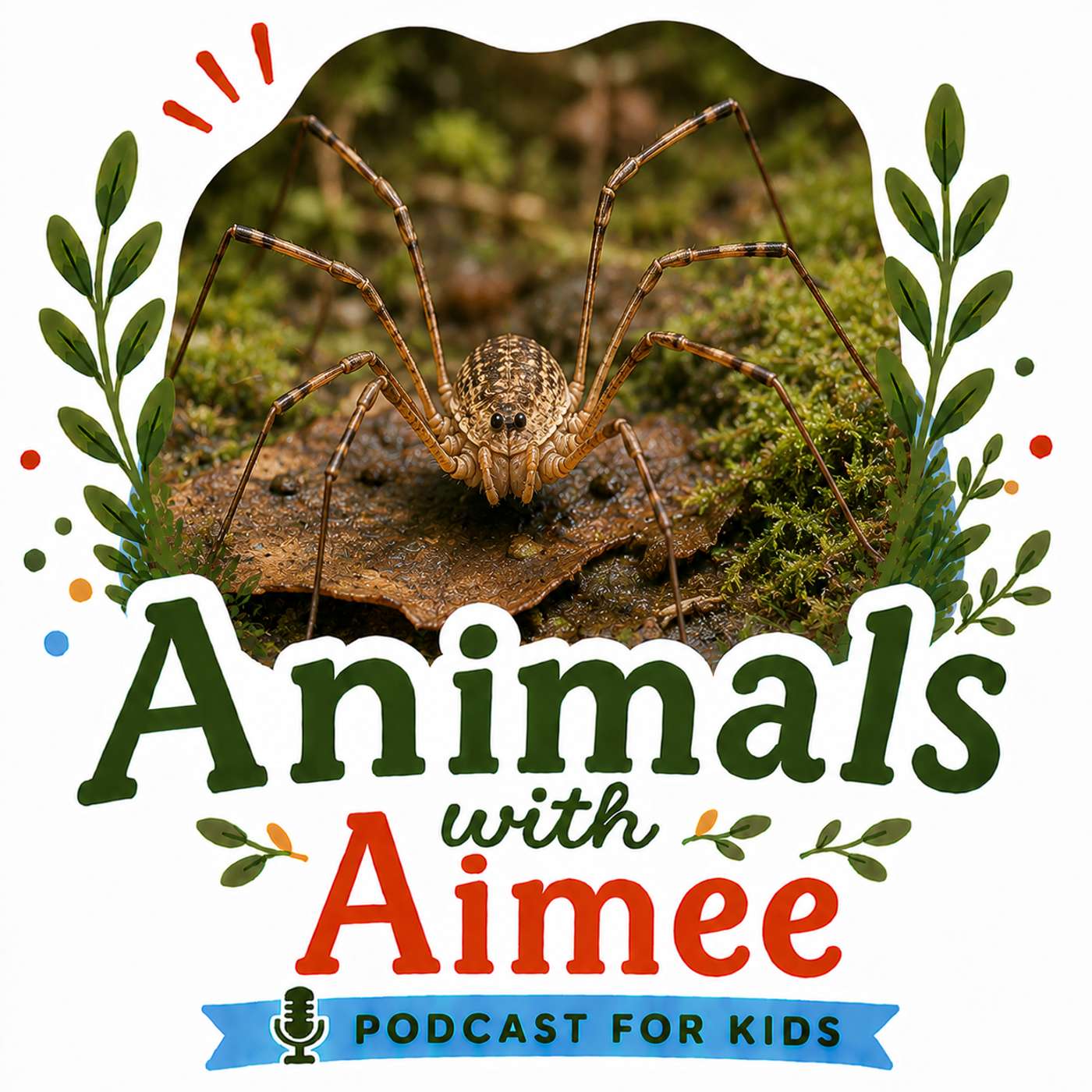
    Harvestman: The Leggy Wanderer

    Harvestman: Not Actually a Spider! ๐Ÿ•ท๏ธ | Animals with Aimee Grab your magnifying glasses and head out to the backyard, explorers! ๐Ÿ” Today, Aimee is taking a closer look at a super spindly, eight-legged creature you might know as a "daddy longlegs"โ€”the fascinating Harvestman! Wait a minute... if it has eight legs, isn't it a spider? Nope! While harvestmen are arachnids (just like spiders and scorpions), they belong to their very own group called Opiliones. In this episode, we bust the biggest myths about these gentle backyard buddiesโ€”including why they don't spin webs, why they have zero venom, and how their single, oval-shaped body sets them apart from true spiders! ๐ŸŒฟ Plus, put on your thinking caps for the Wild Wisdom Challenge ๐Ÿง  and get ready for some leg-slapping laughs with our Wild Jokes ๐Ÿ˜‚! Listen to learn: How to tell the difference between a harvestman and a spider ๐Ÿ‘€ Why harvestmen can't regrow a leg if they lose one ๐Ÿฆต What these omnivorous scavengers like to munch on in gardens and leaf litter ๐Ÿ‚ Why looking a little closer helps us appreciate even the spookiest-looking neighbors โœจ Conservation Corner ๐ŸŒ Conservation Status: Most common harvestmen are widespread and Not Evaluated by the IUCN Red List, though some rare, cave-dwelling speciesโ€”like the Bone Cave Harvestman in Texasโ€”are listed as Endangered due to habitat loss. How You Can Help: Support the Xerces Society for Invertebrate Conservation, a nonprofit dedicated to protecting invertebrates and their habitats worldwide. You can make a donation to support their work at xerces.org/donate ๐Ÿ’š. Don't forget to rate and follow Animals with Aimee for notifications about our new episodes! Join the Adventure! Grown-ups, help your kids explore even more by joining Aimeeโ€™s Animal Lovers Club at animalswithaimee.com for daily worksheets, ad-free listening, and exclusive Birthday Shout-outs ๐ŸŽˆ! Want to suggest our next animal? Send Aimee an email at aimee@animalswithaimee.com ๐Ÿ’Œ. โ˜… Support this podcast on Patreon โ˜…

    • Transcript
  • #56
    Saturday ยท 8 min

    Jerboa: The Desert Bouncer

    Jerboa: The Desert Bouncer! ๐Ÿœ๏ธ | Animals with Aimee Grab your water bottles and sun hats, explorers! โ˜€๏ธ This week, Aimee is trekking across the scorching, sandy dunes of the Sahara Desert to meet a tiny, springy creature that looks like a miniature kangarooโ€”the unstoppable Jerboa! How does a tiny desert rodent outsmart hungry predators like owls, vipers, and fennec foxes? By bouncing! ๐Ÿฆ˜ With hind legs four times longer than its tiny front arms, the Jerboa can leap up to ten feet in a single bound. In this episode, we discover how its long, tufted tail works like a boat rudder to zig-zag mid-air, how it survives the blistering desert heat without ever drinking a drop of water, and why its huge ears act like radar dishes in the pitch-black night! ๐ŸŒ™๐Ÿ‘‚ Plus, put on your thinking caps for the Wild Wisdom Challenge ๐Ÿง  and get ready for some desert giggles with our Wild Jokes ๐Ÿ˜‚! Listen to learn: What "bipedal" and "saltatorial" movement mean ๐Ÿพ How Jerboas plug their cool underground burrows with soil to beat the daytime heat ๐Ÿ•ณ๏ธ How they get all the moisture they need from seeds, roots, and insects ๐ŸŒฑ Why big leaps and a little creativity can help us overcome any obstacle โœจ Join the Adventure! Grown-ups, help your kids explore even more by joining Aimeeโ€™s Animal Lovers Club at animalswithaimee.com for daily worksheets, ad-free listening, and exclusive Birthday Shout-outs ๐ŸŽˆ! โ˜… Support this podcast on Patreon โ˜… Want to suggest our next animal? Send Aimee an email at aimee@animalswithaimee.com ๐Ÿ’Œ. Don't forget to rate and follow Animals with Aimee for notifications about our new episodes! Help the Jerboa While many Jerboa species are listed as Least Concern IUCN Red List, others such as the five-toed pygmy jerboa and thick-tailed pygmy jerboa are threatened, and species like the long-eared jerboa face ongoing habitat pressure and research gaps. To support conservation efforts of the Jerboa, consider donating to the Zoological Society of London's Edge of Existence program. Thank you for listening!

    • Transcript
  • #55
    November 20 ยท 8 min

    Mudskipper: The Fin Walker

    Mudskipper: The Fin Walker! ๐ŸŸ | Animals with Aimee Grab your mud boots, explorersโ€”today Aimee is diving (or rather, skipping!) into the muddy, murky world of one of the most unique creatures on Earth: the incredible Mudskipper! Have you ever heard of a fish that can walk on land, climb trees, and breathe air? ๐ŸŒณ These truly amphibious fish spend up to 90% of their daily lives out of the water, using their strong, muscular pectoral fins like arms to crawl and skip across the mud in a move called "crutching"! In this episode, we explore how they carry trapped water in their gill chambers like reverse scuba tanks, why they roll their periscope-like eyes into water-filled cups to keep them wet, and how they dig deep underground burrows using their mouths like little shovels! ๐Ÿคฟ๐Ÿ‘€ Plus, put on your thinking caps for the Wild Wisdom Challenge ๐Ÿง  and get ready for some fishy, mud-tastic laughs with our Wild Jokes ๐Ÿ˜‚! Listen to learn: How Mudskippers breathe oxygen directly through their moist skin ๐Ÿ’ง Why their bulging eyes give them a 360-degree view of coastal mudflats and mangrove swamps ๐ŸŒฟ How they use subterranean burrows to hide from predators and lay their eggs ๐Ÿ•ณ๏ธ Why adaptability, curiosity, and stepping out of our comfort zones help us explore new worlds โœจ Join the Adventure! Grown-ups, help your kids explore even more by joining Aimeeโ€™s Animal Lovers Club at animalswithaimee.com for daily worksheets, ad-free listening, and exclusive Birthday Shout-outs ๐ŸŽˆ! โ˜… Support this podcast on Patreon โ˜… Don't forget to rate and follow Animals with Aimee for notifications about our new episodes! Want to suggest our next animal? Send Aimee an email at aimee@animalswithaimee.com ๐Ÿ’Œ. Help the Mudskipper If you want to support conservation efforts for the Mudskipper, consider a donation to KYMA Sea and Conservation Research.

    • Transcript
  • #54
    November 19 ยท 8 min

    Wombat: The Underground Bulldozer of Australia

    Wombat: The Underground Bulldozer of Australia! ๐Ÿฆ˜ | Animals with Aimee Grab your sunhats and hiking boots, explorers! ๐Ÿฅพ This week, Aimee is heading down under to the grassy hills and eucalyptus woodlands of Australia to meet a sturdy, burrow-building creature with a super unique superpowerโ€”the unstoppable Wombat! Did you know these furry little bulldozers are marsupials with a brilliant twist? Their pouches face backward to keep rocks and dirt out while mama wombats dig massive underground tunnel systems! ๐Ÿ•ณ๏ธ In this episode, we learn how their shovel-like claws break through tough roots, how they use a thick plate of cartilage on their backsides to block predators, and the hilarious reason they are the only animals in the world with cube-shaped poop! ๐ŸงŠ๐Ÿ’ฉ Plus, put on your thinking caps for the Wild Wisdom Challenge ๐Ÿง  and get ready for some wombat-tastic laughs with our Wild Jokes ๐Ÿ˜‚! Listen to learn: Why wombats are nocturnal and "crepuscular" ๐ŸŒ™ How their continuously growing front teeth help them excavate burrows up to 100 feet long ๐Ÿฆท Why their square-shaped droppings sit perfectly on top of rocks to mark their territory without rolling away ๐Ÿชจ How being sturdy, grounded, and hard-working helps us overcome any obstacle ๐Ÿ’ช Want to suggest our next animal? Send Aimee an email at aimee@animalswithaimee.com ๐Ÿ’Œ. Help the Wombat The Northern Hairy-nosed Wombat (Lasiorhinus krefftii) is Critically Endangered (IUCN and Australian legislation), with a small global wild population around 400โ€“450 individuals in protected Queensland reserves. If you would like to support conservation efforts for the Wombat, consider donating to The Wombat Foundation. Don't forget to rate and follow Animals with Aimee for notifications about our new episodes! Join the Adventure! Grown-ups, help your kids explore even more by joining Aimeeโ€™s Animal Lovers Club at animalswithaimee.com for daily worksheets, ad-free listening, and exclusive Birthday Shout-outs ๐ŸŽˆ! โ˜… Support this podcast on Patreon โ˜…

    • Transcript
  • #53
    November 18 ยท 9 min

    Honduran White Bat: Rainforest Tent Builder

    Honduran White Bat: Rainforest Tent Builder! ๐Ÿฆ‡ Grab your rain boots and explorer hats, explorers! ๐ŸŒง๏ธ This week, Aimee is traveling deep into the lush, warm rainforests of Central America to meet a tiny animal that looks just like a fluffy white marshmallowโ€”the extraordinary Honduran White Bat! How does such a tiny creature stay safe in a massive jungle? By building its very own tent! ๐Ÿ•๏ธ These master leaf architects use their tiny, sharp teeth to bite the veins of giant Heliconia leaves until the sides fold down into a cozy V-shaped home. In this episode, we learn how their bright white fur magically glows green in the sunlight to camouflage them from predators, why their love of figs helps grow the rainforest canopy, and how they use soft "whispering" echolocation to stay perfectly hidden! Plus, put on your thinking caps for the Wild Wisdom Challenge ๐Ÿง  and get ready for some batty laughs with our Wild Jokes ๐Ÿ˜‚! Listen to learn: Why Honduran White Bats are smaller than a golf ball and weigh less than a single coin ๐Ÿช™ How they huddle together in cozy family groups called "harems" to stay warm in tropical downpours ๐ŸŒง๏ธ What makes them crucial "frugivores" in the rainforest ecosystem ๐Ÿฅญ How even the smallest animals can be amazing architects and jungle protectors ๐Ÿ—๏ธ Want to suggest our next animal? Send Aimee an email at aimee@animalswithaimee.com ๐Ÿ’Œ. Help the Honduran White Bat The Honduran White Bat (Ectophylla alba) is currently listed as Near Threatened (NT) on the IUCN Red List. To help support the conservation of the Honduran White Bat, consider donating to the Wildlife Conservation Society who work with local Indigenous Miskito communities in La Mosquitia (such as the Warunta region) to monitor populations. Thank you for listening! Don't forget to rate and follow Animals with Aimee for notifications about our new episodes! Join the Adventure! Grown-ups, help your kids explore even more by joining Aimeeโ€™s Animal Lovers Club at animalswithaimee.com for daily worksheets, ad-free listening, and exclusive Birthday Shout-outs ๐ŸŽˆ! โ˜… Support this podcast on Patreon โ˜…

    • Transcript
  • #52
    November 17 ยท 9 min

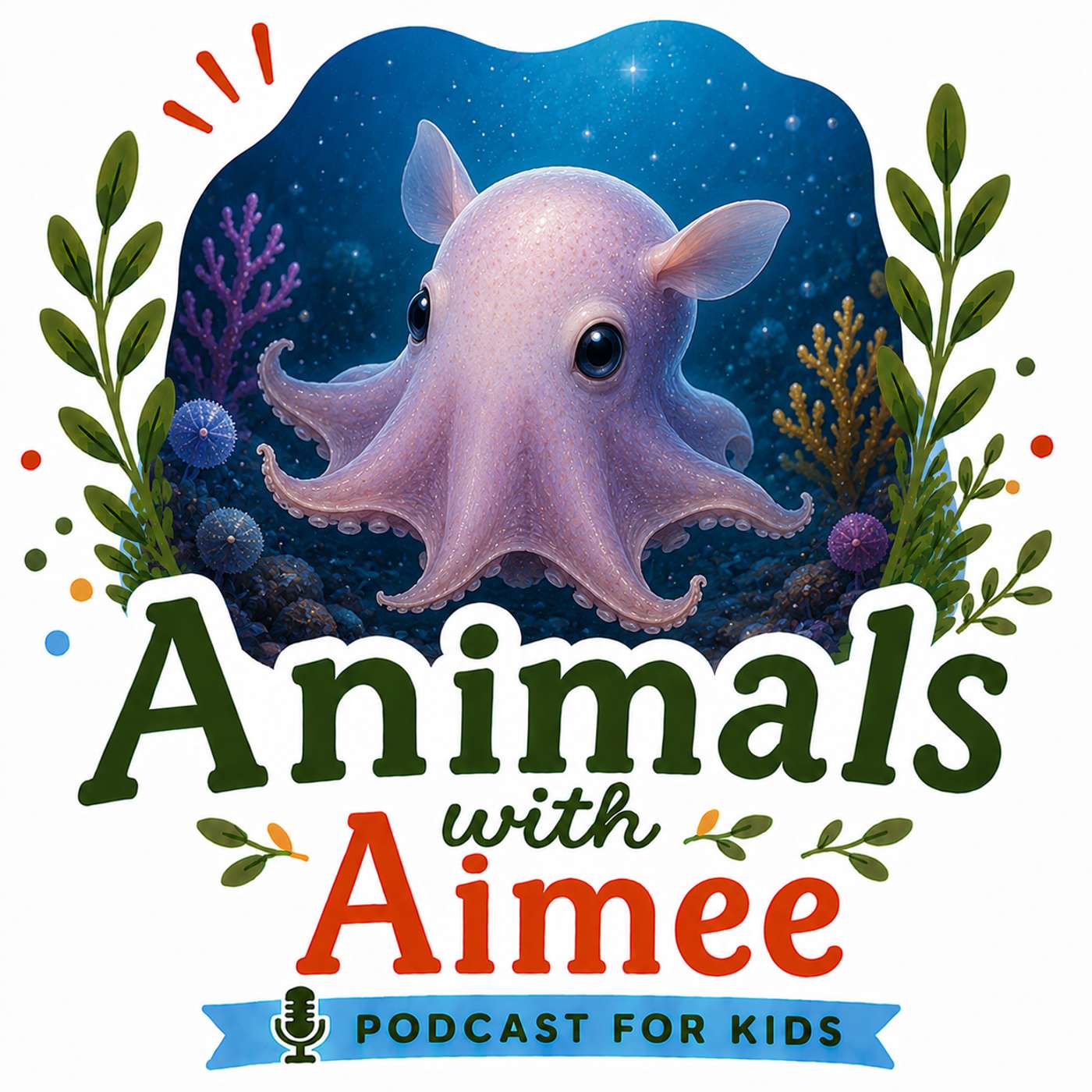
    Dumbo Octopus: The Octopus with Ears

    Dumbo Octopus: The Octopus with Ears! ๐Ÿ™ Grab your diving masks and put on your flippers, explorers, because today Aimee is taking a super deep dive to the bottom of the sea to meet one of the cutest, squishiest, and most unique creatures in the entire oceanโ€”the incredible Dumbo Octopus! Have you ever seen an octopus with ears? ๐Ÿ˜ The Dumbo Octopus gets its name from its big, flappy fins that look just like elephant ears, allowing it to glide and "fly" through the pitch-black freezing water thousands of meters below the surface. In this episode, we shine our deep-sea headlights on this tiny marvel to learn why it doesn't need an ink sac to hide, how it opens its webbed arms like a floating umbrella, and how it uses special funnel jet propulsion to zoom around! Plus, put on your thinking caps for the Wild Wisdom Challenge ๐Ÿง  and get ready for some ten-tickle giggles with our Wild Jokes ๐Ÿ˜‚! Listen to learn: How the Dumbo Octopus survives extreme water pressure 3,000 to 4,000 meters down ๐ŸŒŠ Why it swallows its deep-sea food completely whole ๐Ÿฆ How it flashes glowing bioluminescent lights to confuse predators โœจ Why embracing our special traits and being unique is wonderful ๐ŸŒŸ Join the Adventure! Grown-ups, help your kids explore even more by joining Aimeeโ€™s Animal Lovers Club at animalswithaimee.com for daily worksheets, ad-free listening, and Birthday Shout-outs ๐ŸŽˆ! Want to suggest our next animal? Send Aimee an email at aimee@animalswithaimee.com ๐Ÿ’Œ. โ˜… Support this podcast on Patreon โ˜… Help the Dumbo Octopus If you want to support the conservation of the Dumbo Octopus's precious ocean habitat, consider donating to Oceana. Thank you for listening! Don't forget to rate and follow Animals with Aimee for notifications about our new episodes!

    • Transcript
  • #51
    November 16 ยท 8 min

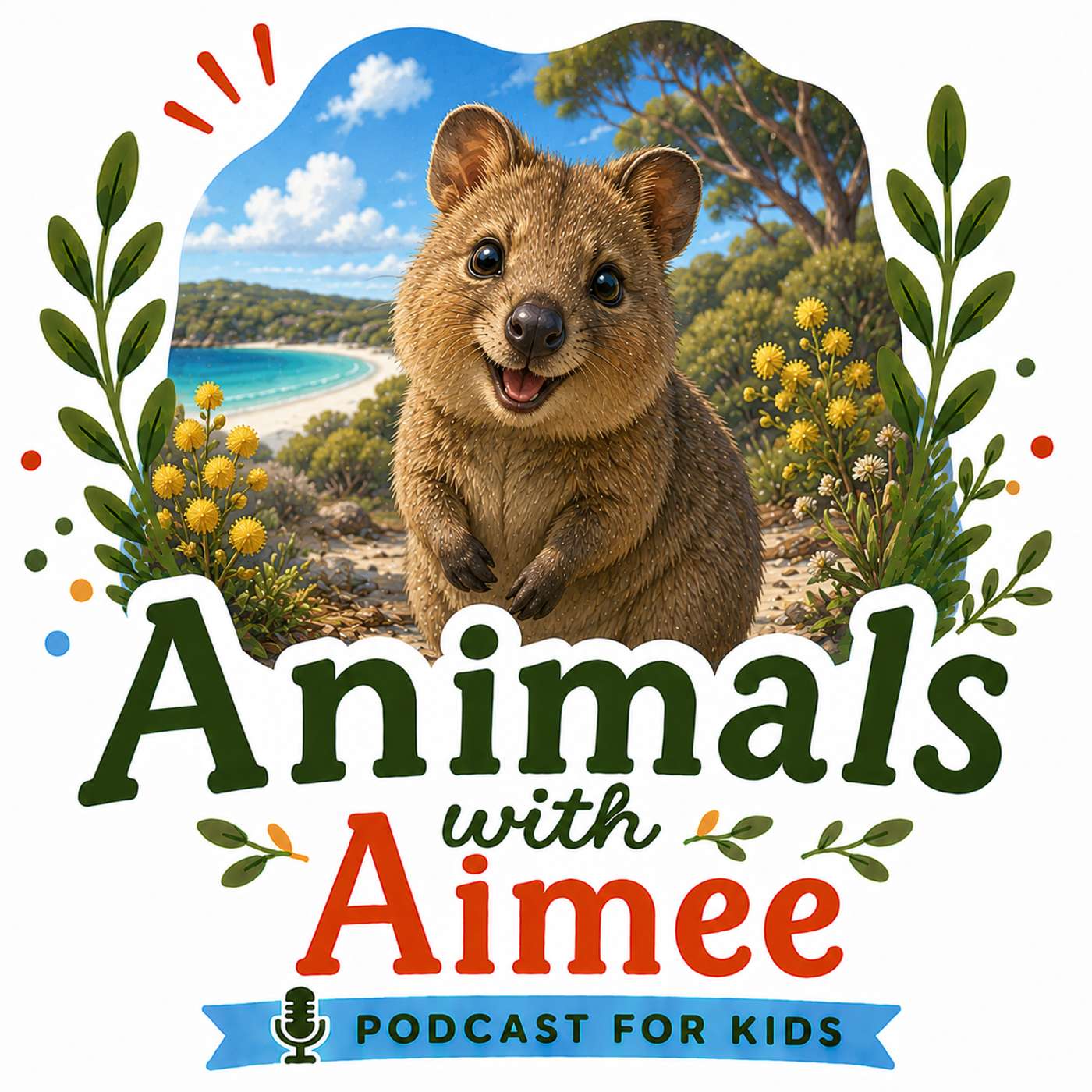
    Quokka: The Happiest Animal on Earth

    Quokka: The Happiest Animal on Earth! ๐Ÿจ | Animals with Aimee Grab your sunhats and binoculars, explorers! ๐ŸŒด This week, Aimee is hopping across the Indian Ocean to Rottnest Island in Western Australia to meet the cute, curious, and unstoppable Quokka! ๐Ÿฆ˜ Have you ever wondered why Quokkas are famous for being the "world's happiest animals"? That iconic selfie-ready smile is actually a clever trick to help them pant and cool down in the hot Australian sun โ˜€๏ธ. In this episode, we dive into fascinating facts about these tiny macropods, including their unique plant-eating habits ๐ŸŒฟ, surprising tree-climbing skills ๐ŸŒณ, and how they safely store fat in their thick tails for balance and survival. Plus, put on your thinking caps to test your knowledge in our Wild Wisdom Challenge ๐Ÿง  and laugh out loud with some brand-new quokka-tastic jokes ๐Ÿ˜‚! Listen to learn: Why Quokkas are cousins to kangaroos and wallabies ๐Ÿฆ˜ What it means to be a nocturnal "ruminant" ๐ŸŒ™ How their trusting nature makes them so friendly to humans ๐Ÿค Why spreading joy and a positive smile can brighten anyone's day โœจ Help the Quokka The Quokka (Setonix brachyurus) is officially listed as Vulnerable on the IUCN Red List of Threatened Species. If you would like to support Quokka conservation efforts, consider a donation to the Rottnest Foundation. Thank you for listening! Don't forget to rate and follow Animals with Aimee for notifications about our new episodes! Join Aimee's Animal Lovers Club for activity sheets, birthday shout-outs, and more!Join the Adventure! Grown-ups, help your kids explore even more by joining Aimeeโ€™s Animal Lovers Club at animalswithaimee.com for daily worksheets, ad-free listening, and exclusive Birthday Shout-outs ๐ŸŽˆ! โ˜… Support this podcast on Patreon โ˜…

    • Transcript
  • #50
    November 14 ยท 8 min

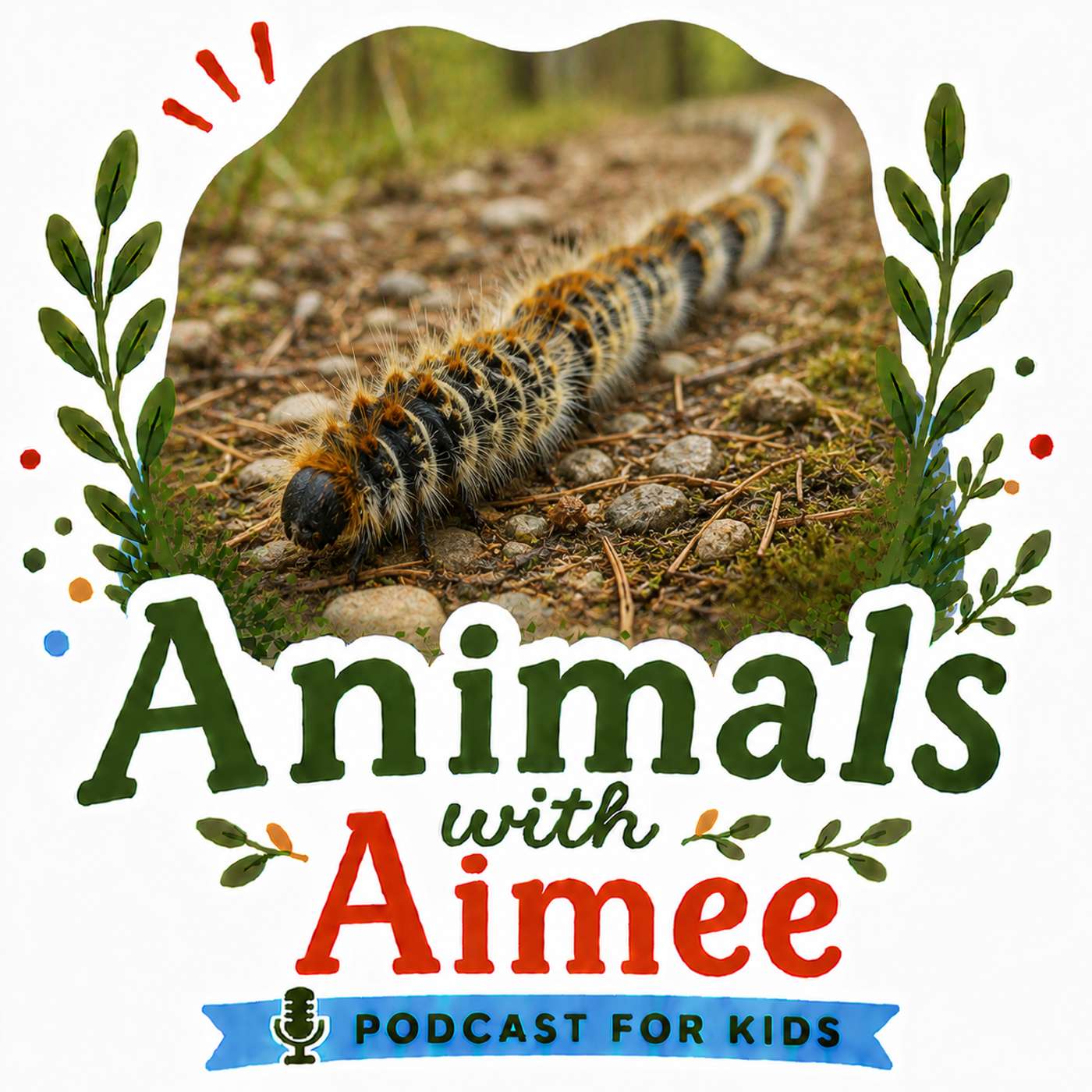
    Processionary Caterpillar: The Parade Leader of the Pines

    ๐Ÿ›๐ŸŒฒ Grab your hiking boots and warm jackets, explorers! This week, we are trekking through the sunlit pine forests of southern Europe and the Mediterranean to find a tiny insect that loves to march in a perfect, single-file line: the parade-loving Processionary Caterpillar. Join Aimee to learn all about this fuzzy herbivore and its unique processional behavior. We will discover how they use silk threads and scent trails to stay connected, why their microscopic hairs act as a powerful defensive armor, and how they build communal silk nests to stay warm in the winter. Stick around until the end for the Wild Wisdom Challenge and some fun caterpillar jokes! Grown-ups: Help your kids explore even more by joining Aimeeโ€™s Animal Lovers Club at animalswithaimee.com for daily worksheets, ad-free listening, and Birthday Shout-outs! To help study and protect insects like the Processionary Caterpillar, consider contributing to the Entomological Society of America. Thank you for listening! Don't forget to rate and follow Animals with Aimee for notifications about our new episodes! Join Aimee's Animal Lovers Club for activity sheets, birthday shout-outs, and more! โ˜… Support this podcast on Patreon โ˜…

    • Transcript
  • #49
    November 13 ยท 7 min

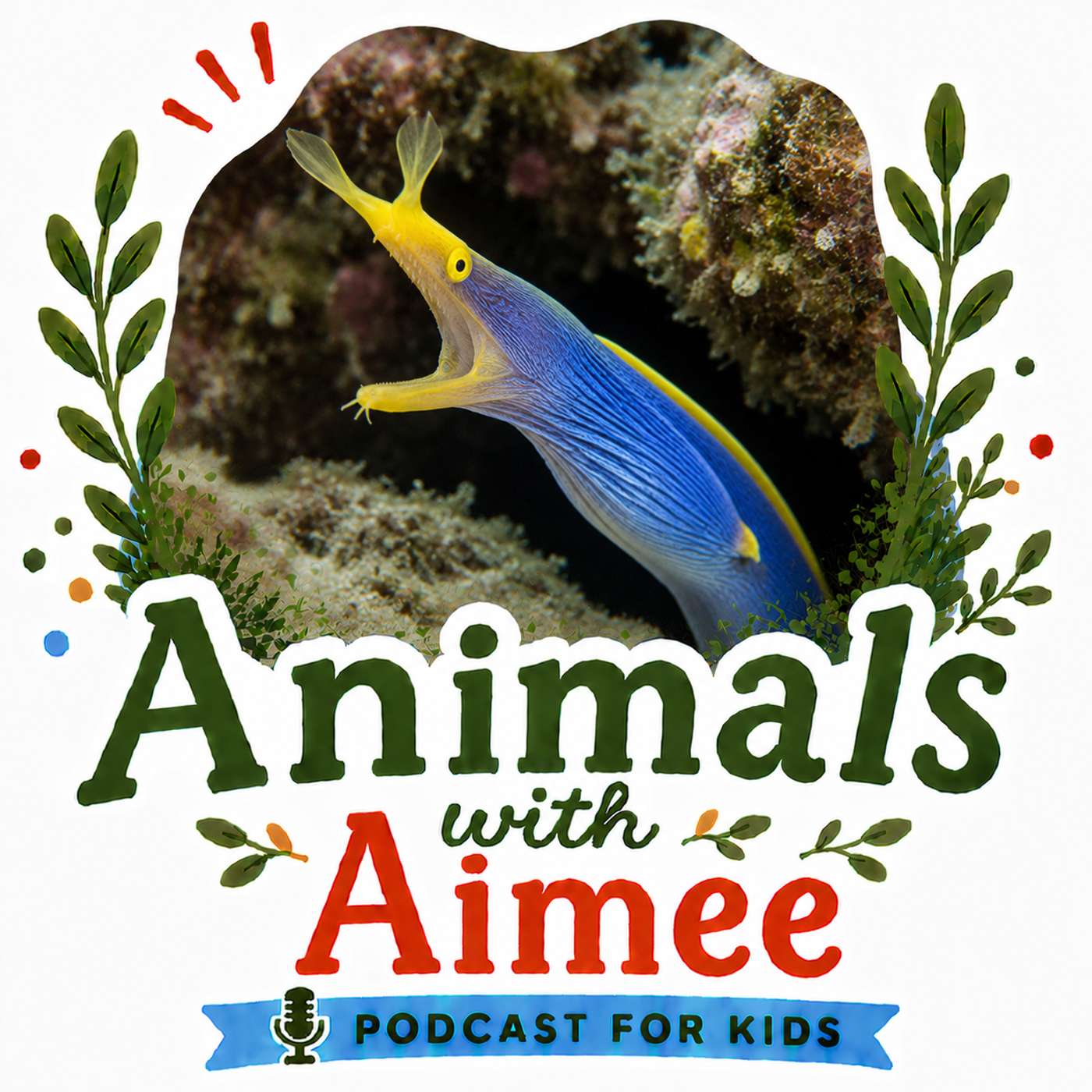
    Ribbon Eel: The Living Ribbon of the Reef

    Grab your snorkel and fins, explorers! This week, we are diving deep into the warm, tropical waters of the Indo-Pacific coral reefs to find a dazzling sea creature that sways in the ocean currents like a bright silk ribbon: the colorful, slithery Ribbon Eel. Join Aimee to learn all about this amazing carnivore and its incredible life cycle. We will discover how the Ribbon Eel undergoes a dramatic color-changing metamorphosis as it grows, why it always keeps its mouth wide open to breathe, and how its delicate, fan-like nostrils act as underwater scent sensors to hunt prey. Stick around until the end for the Wild Wisdom Challenge and some eel-y funny jokes! Grown-ups: Help your kids explore even more by joining Aimeeโ€™s Animal Lovers Club at animalswithaimee.com for daily worksheets, ad-free listening, and Birthday Shout-outs! If you are interested in helping to protect the Ribbon Eel's precious ocean habitat, consider donating to Oceana Thank you for listening! Don't forget to rate and follow Animals with Aimee for notifications about our new episodes! Join Aimee's Animal Lovers Club for activity sheets, birthday shout-outs, and more! โ˜… Support this podcast on Patreon โ˜…

    • Transcript
  • #48
    November 12 ยท 7 min

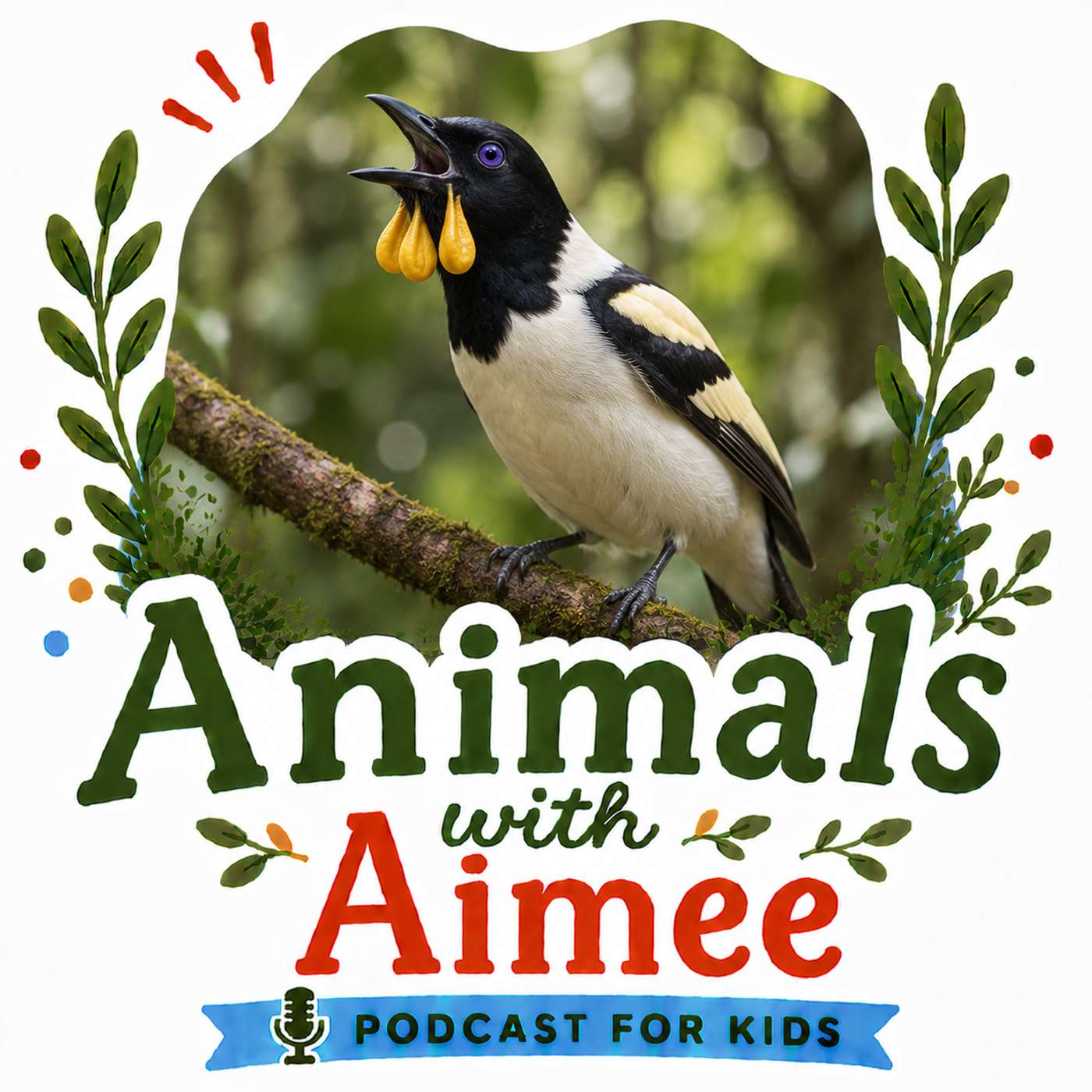
    Three-Wattled Bellbird: The Forest's Loudest Bell

    The Three-Wattled Bellbird: The Forest's Loudest Bell Grab your binoculars, explorers! This week, we are trekking deep into the misty mountain forests of Central America to meet the wild, wonderful, and booming Three-Wattled Bellbird. Join Aimee to learn all about this fascinating frugivore and its three worm-like wattles. We will discover how its ear-piercing "BONK" call makes it one of the loudest birds in the world, how they act as living tree-planters through seed dispersal, and why these birds have to go to "music class" just to learn their own songs. Stick around until the end for the Wild Wisdom Challenge and some high-flying jokes! Help support the conservation efforts for the Three-Wattled Bellbird in Costa Rica by donating to Amigos of Costa Rica Thank you for listening! Don't forget to rate and follow Animals with Aimee for notifications about our new episodes! Join Aimee's Animal Lovers Club for activity sheets, birthday shout-outs, and more! โ˜… Support this podcast on Patreon โ˜…

  • #42
    June 6 ยท 8 min

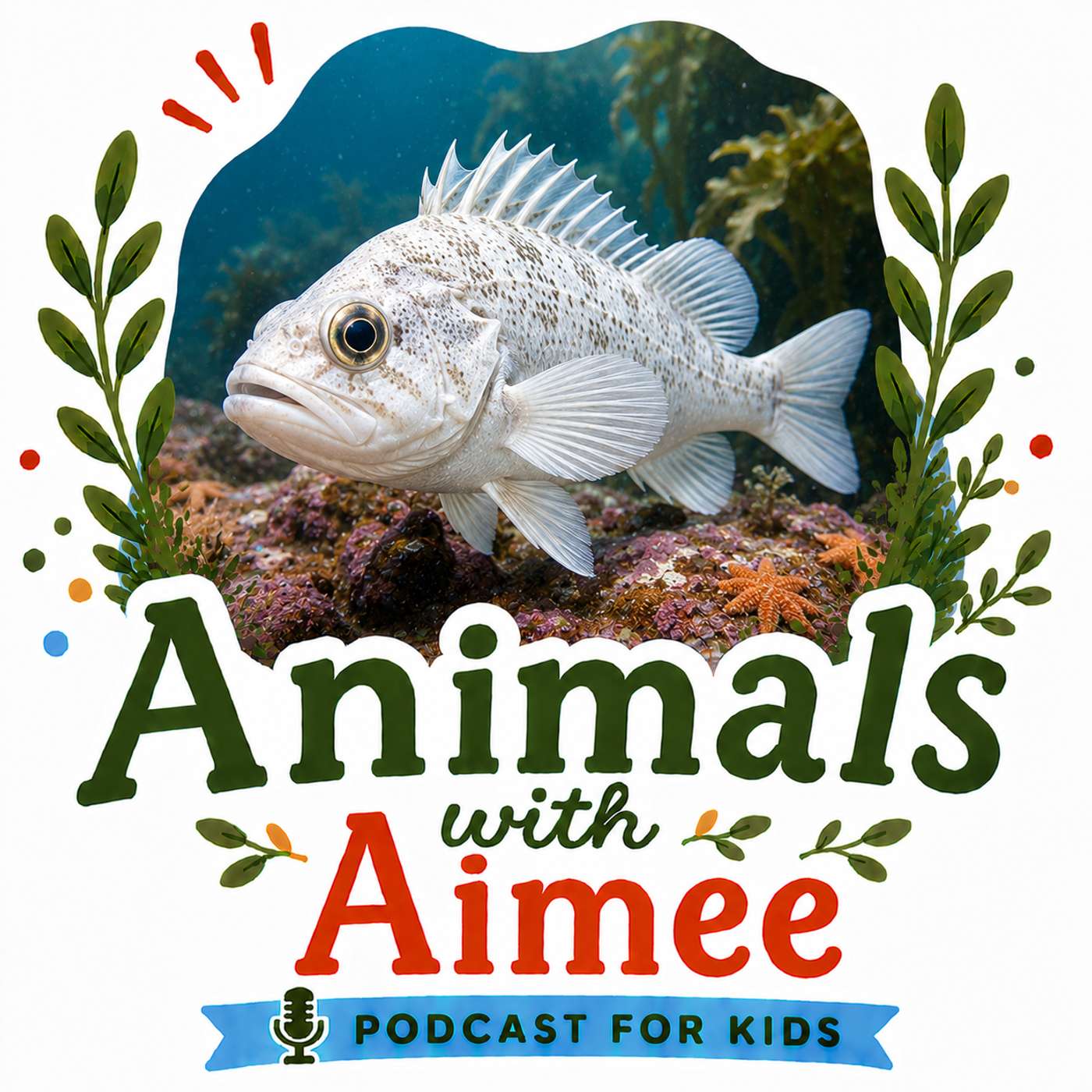
    White Rockfish: The Kelp Forest Ghost

    Grab your scuba gear and fire up your submarines, explorers! ๐Ÿคฟ๐Ÿ›ฅ๏ธ Today on Animals with Aimee, we are diving deep into the chilly, kelp-filled waters of the Pacific Ocean ๐ŸŒŠ to find a fish that is the ultimate master of underwater hide-and-seek! Meet the stealthy, the spiky, the camouflaged White Rockfish! ๐Ÿชจ In this deep-sea episode, junior marine biologists will uncover the wild science behind this amazing ocean survivor: ๐Ÿฅท Rocky Reef Ninjas: Discover how the White Rockfish uses its mottled, pale coloring to blend perfectly into the rocks and sandy ocean floor! They are amazing "Ambush Predators" who wait perfectly still for a tasty snack to swim right past them. ๐Ÿฆ โณ Underwater Grandpas: Did you know that rockfish are some of the longest-living fish in the entire ocean? We'll explore the wild science of their super-slow aging and how some rockfish species can live to be over 100 years old! ๐ŸŽ‚ ๐Ÿ›ก๏ธ Spiky Armor: Find out how they protect themselves from hungry sharks and seals! They have a row of sharp, sturdy spines running right down their backs that act like a built-in suit of armor. โš”๏ธ ๐ŸŽˆ The Swim Bladder: Learn about a special balloon-like organ inside their bodies called a "Swim Bladder" that helps them float and perfectly control their buoyancy in the deep, heavy water! ๐Ÿก Itโ€™s a spectacular underwater adventure that proves the best way to survive in the deep sea is to be a master of disguise! ๐ŸŒŸ Support the White Rockfish: The White Rockfish has not yet been globally evaluated or formally listed as endangered. If you want to support the restoration of the world's oceans, consider donating to Oceana. Thank you for listening! Don't forget to rate and follow Animals with Aimee for notifications about our new episodes! Join Aimee's Animal Lovers Club for activity sheets, birthday shout-outs, and more! โ˜… Support this podcast on Patreon โ˜…

    • Transcript
  • #41
    June 5 ยท 8 min

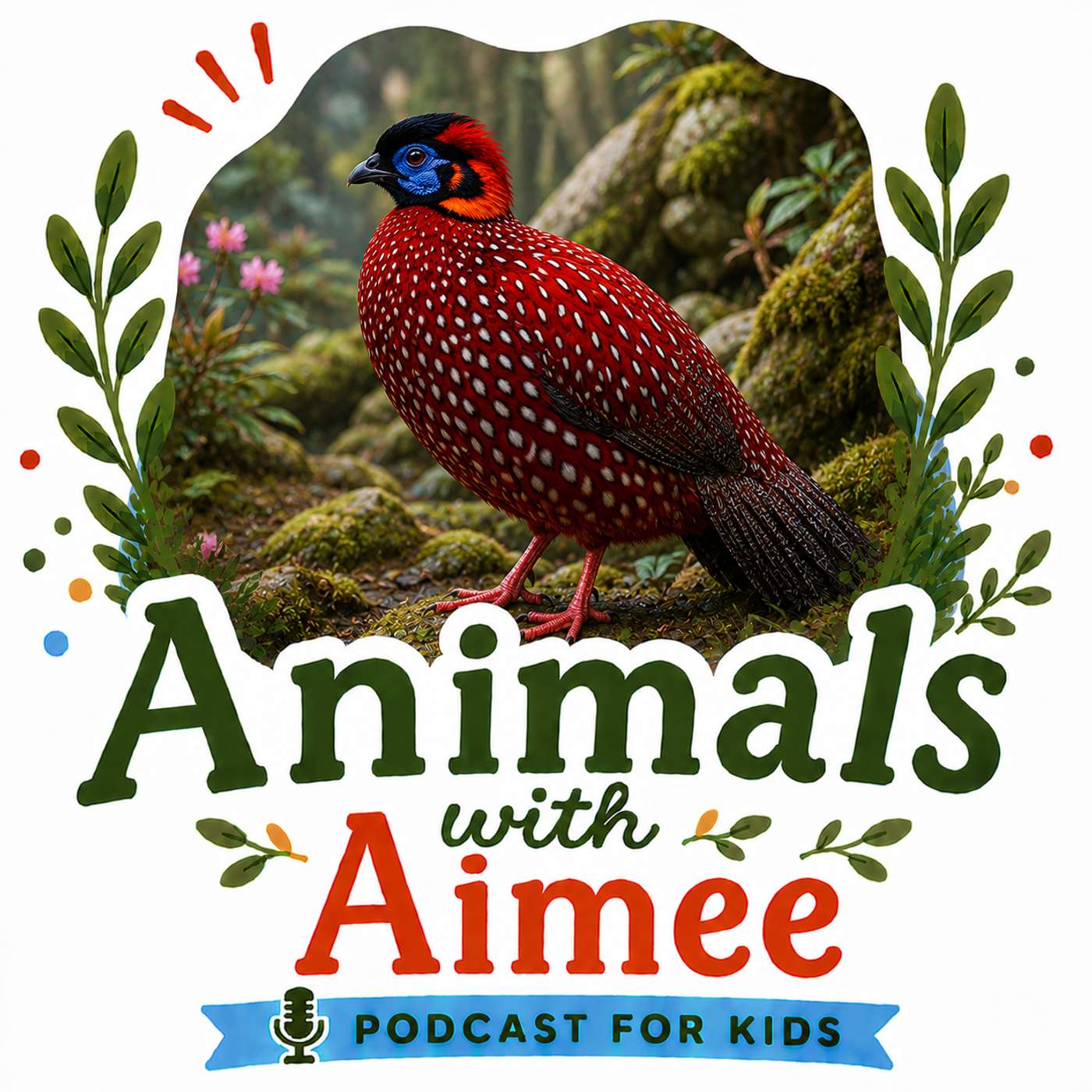
    Blood Pheasant: The Himalayan Snow Runner

    Grab your snow boots and your warmest mittens, explorers! ๐Ÿฅพโ„๏ธ Today on Animals with Aimee, we are hiking high into the snowy, freezing peaks of the Himalayan Mountains ๐Ÿ”๏ธ to find a beautiful bird that looks like it was painted with a brush! Meet the hardy, the speedy, the crimson-feathered Blood Pheasant! โค๏ธ In this high-altitude episode, junior ornithologists will uncover the wild science behind this amazing mountain survivor: ๐ŸŽจ Painted Feathers: Discover how they got their very dramatic name! We'll learn all about the bright, brilliant red streaks splashed across their chests and faces that make them look like beautiful, living paintings against the white snow. ๐Ÿ”๏ธ High-Altitude Hikers: Find out how these tough little birds survive in the freezing, thin air of the highest mountains on Earth! We'll explore how their thick, fluffy feathers act like the perfect built-in winter coats. ๐Ÿงฅ ๐Ÿƒ The Snowy Sprinter: Did you know they prefer running over flying? Learn how their strong legs and specialized feet help them sprint across the icy ground and dig through the deep snow to find tasty seeds and moss! ๐ŸŒฑ ๐Ÿ‘จโ€๐Ÿ‘ฉโ€๐Ÿ‘งโ€๐Ÿ‘ฆ Feathered Flocks: We'll discover how they stick together in big family groups called "flocks" during the freezing winter months to share body heat and keep each other safe from sneaky mountain predators! ๐ŸฆŠ Itโ€™s a spectacular snowy adventure that proves you can be bright and beautiful even in the freezing cold! โ„๏ธ Support Blood Pheasants Blood Pheasants range across the remote eastern Himalayas (India, Nepal, Bhutan, and China) and are currently categorized as Least Concern, direct financial support is generally channeled through broad-scale pheasant and upland habitat preservation rather than localized, emergency species funds. If you would like to support Pheasants, consider a donation to the World Pheasant Association. Thank you for listening! Don't forget to rate and follow Animals with Aimee for notifications about our new episodes! Join Aimee's Animal Lovers Club for activity sheets, birthday shout-outs, and more! โ˜… Support this podcast on Patreon โ˜…

    • Transcript
  • #40
    June 4 ยท 8 min

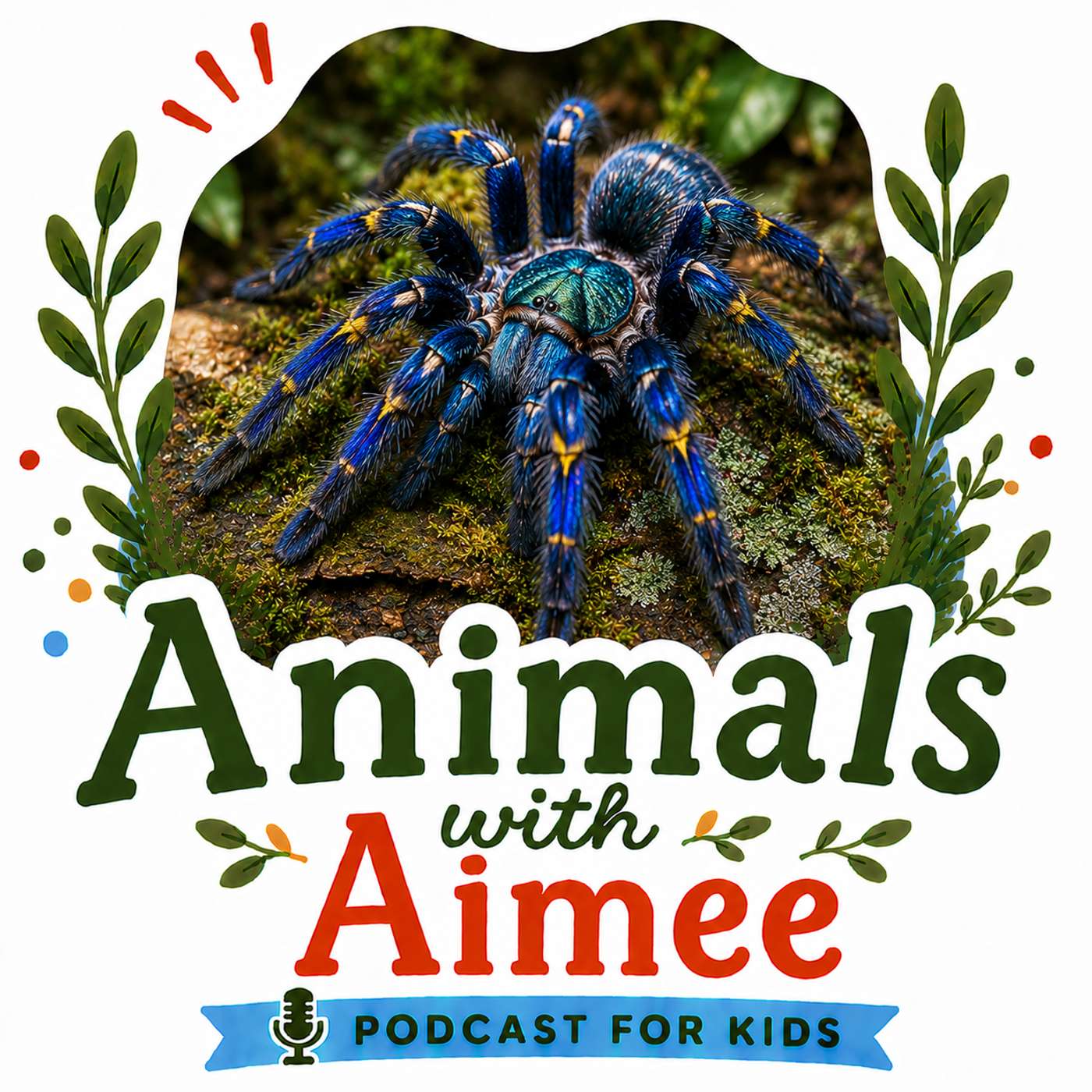
    Brazilian Jewel Tarantula: The Secret Treehouse Builder

    Grab your magnifying glasses and your jungle gear, explorers! ๐Ÿ”๐ŸŒฟ Today on Animals with Aimee, we are trekking into the deep, green rainforests of Brazil ๐Ÿ‡ง๐Ÿ‡ท to find a spider that looks less like a creepy-crawly and more like a sparkling, metallic treasure! Meet the colorful, the clever, the dazzling Brazilian Jewel Tarantula! โœจ In this sparkling episode, junior arachnologists will uncover the wild science behind this amazing tree-dwelling spider: ๐Ÿ’Ž The Living Rainbow: Discover the science behind their incredible metallic pink, green, and blue colors! We'll learn why these dazzling, jewel-like colors actually help them camouflage in the colorful shadows of the rainforest. ๐ŸŒณ Secret Treehouse Builders: Did you know these tarantulas don't live on the dirt? We'll explore how they are "Arboreal" (tree-dwelling) and use their special grippy feet to build amazing little homes high up in the branches! ๐Ÿฅท The Bark Ninja: Find out how they construct clever, hidden trapdoors out of perfectly matched tree bark and sticky silk. When a tasty bug walks by, they pop out like a jack-in-the-box to catch their dinner! ๐Ÿชฒ ๐Ÿ•ธ๏ธ Sensory Silk: Learn how they lay out special silk tripwires outside their trapdoors to feel the tiny vibrations of approaching insects without even having to use their eyes! ๐ŸŽถ Itโ€™s a spectacular jungle adventure that proves spiders can be both beautiful and brilliant builders! ๐ŸŒŸ Save the Brazilian Jewel Tarantula The Brazilian Jewel Tarantula is endemic to the shrinking Atlantic Forest biome. Supporting large-scale habitat protection organizations like Rainforest Trust helps secure and restore the specific native forests this species relies on. Thank you for listening! Don't forget to rate and follow Animals with Aimee for notifications about our new episodes! Join Aimee's Animal Lovers Club for activity sheets, birthday shout-outs, and more! โ˜… Support this podcast on Patreon โ˜…

    • Transcript
  • #39
    June 3 ยท 7 min

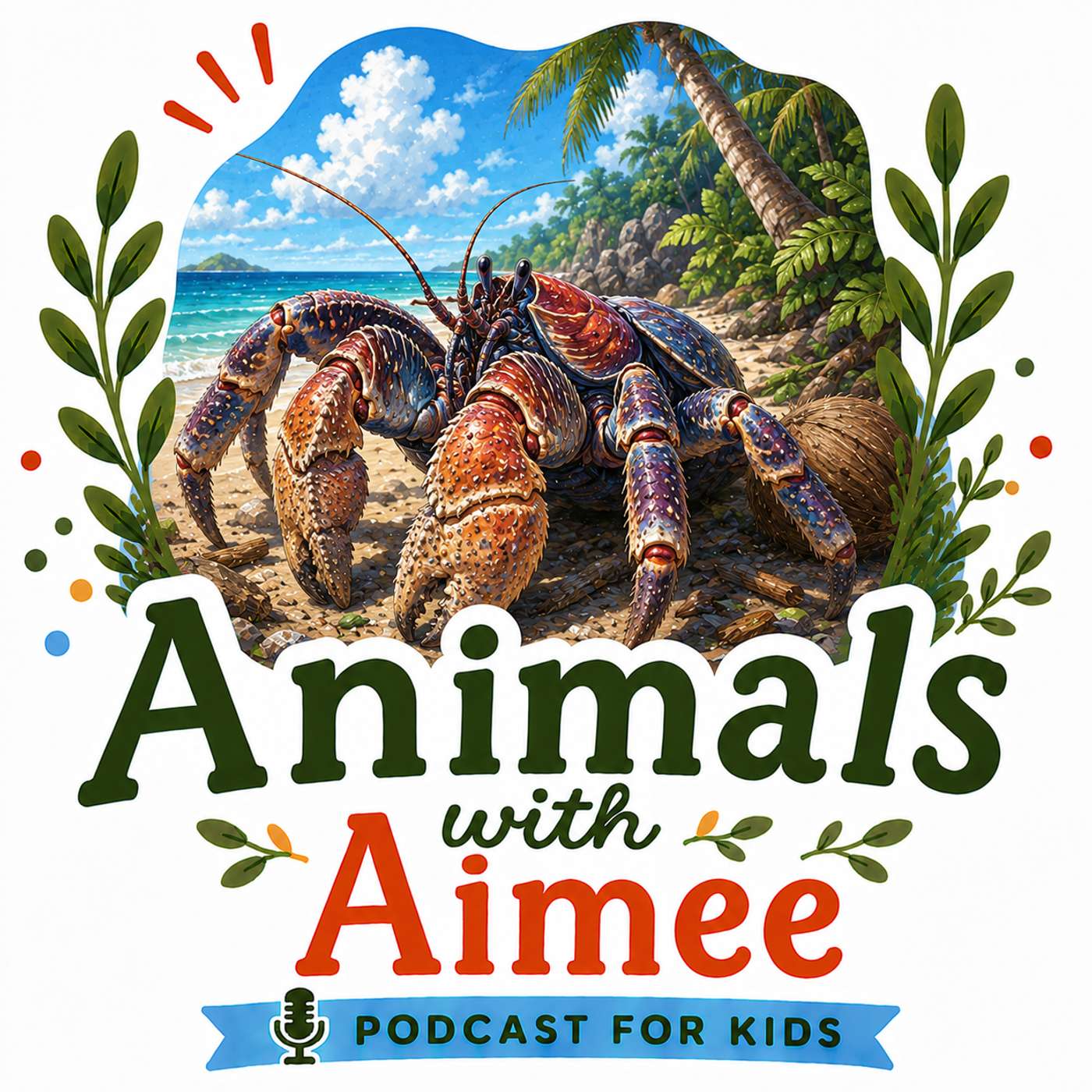
    Coconut Crab: The Island Heavyweight

    Grab your sunscreen and your sturdiest boots, explorers! ๐Ÿฅพโ˜€๏ธ We are traveling to tropical islands in the Indian and Pacific Oceans to meet a creature that looks like it stepped right out of a prehistoric monster movie! ๐Ÿ๏ธ๐Ÿฆ– Today on Animals with Aimee, we are talking about the massive, armored, and colossal Coconut Crab (also known as Birgus latro)! ๐Ÿฆ€ In this heavyweight episode, junior biologists will uncover the wild science behind the largest land-living arthropod in the entire world: ๐Ÿ๏ธ Island Giants: Discover how these massive crabs can grow up to 3 feet wide from leg to leg and weigh as much as a bowling ball! ๐ŸŽณ Because they are so heavy, they cannot swim; if they stay underwater for too long, they will actually drown. Instead, they live inside deep burrows lined with soft coconut husks to keep themselves safe from the hot tropical sun. โ˜€๏ธ ๐Ÿฅฅ The Mightiest Pinchers: Find out how they got their name by climbing palm trees to knock down coconuts! ๐ŸŒด We'll learn how the tightly packed muscle fibers inside their Exoskeleton act like biological hydraulic pressers to generate a crushing force stronger than the bite of most land predators! ๐Ÿ’ฅ ๐Ÿซ Specialized Breathing: How does a crab live entirely on land? They have a unique organ called a Branchiostegal Lung that absorbs oxygen directly from the air! It only works if it stays wet, so the crab uses its smaller back legs to scoop up moisture and damp down the inside of its breathing chamber. ๐Ÿ’ง ๐Ÿ‘ƒ Super Sniffers & Robbers: Learn how they use special Sensilla organs on their antennae to catch the scent of a cracked coconut or rotting fruit from miles away, using the exact same brain pathways as insects! ๐Ÿœ We'll also find out why their opportunistic Omnivorous diet and powerful noses lead them to steal pots, pans, and silverware from campsites, earning them the nickname the "Robber Crab"! ๐Ÿ•๏ธ๐Ÿณ It is a true heavyweight champion adventure you won't want to miss! ๐ŸฅŠs Save the Coconut Crab: The Coconut Crab (Birgus latro) is listed as Vulnerable on the IUCN Red List of Threatened Species. The species faces severe population declines across much of its range due to overharvesting for food, coastal habitat loss from urbanization, and introduced predators. To help support the conservation of Coconut Crabs, consider donating to Island Conservation. Thank you for listening! Don't forget to rate and follow Animals with Aimee for notifications about our new episodes! Join Aimee's Animal Lovers Club for FREE activity sheets, birthday shout-outs, and more! โ˜… Support this podcast on Patreon โ˜…

    • Transcript
  • #38
    May 20 ยท 7 min

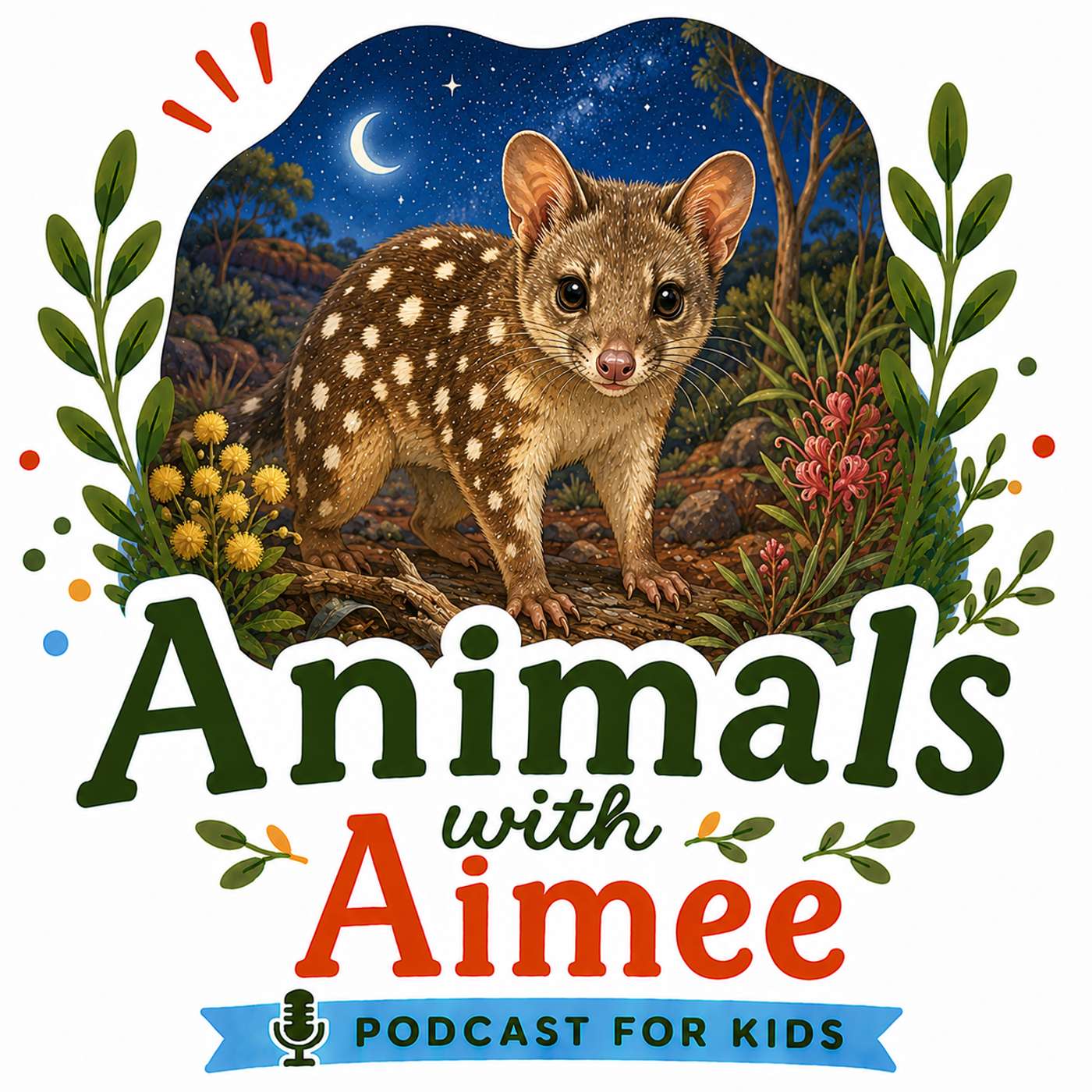
    Chuditch: The Star-Covered Hunter

    Episode Title: Chuditch: The Star-Covered Hunter ๐ŸŒŒ๐Ÿพ Grab your flashlights and your hiking boots, explorers! ๐Ÿ”ฆ๐Ÿฅพ Today on Animals with Aimee, we are trekking into the eucalyptus forests of Western Australia ๐Ÿ‡ฆ๐Ÿ‡บ to find a fierce little predator that looks like it's covered in tiny, glowing stars! โœจ Meet the spotted, the sneaky, the star-covered Chuditch! (Also known as the Western Quoll!) ๐Ÿพ In this nighttime adventure, junior zoologists will uncover the wild science behind this amazing marsupial: ๐ŸŒŒ Starry Camouflage: Discover how their beautiful brown fur and bright white spots act as perfect camouflage, helping them blend right into the dappled moonlight of the forest floor! ๐Ÿฆ˜ Pouch-Wearing Predators: Did you know they are marsupials just like kangaroos? We'll learn how Chuditch moms carry their tiny, jellybean-sized babies in a special pouch on their tummies to keep them safe while they hunt! ๐Ÿฅท Midnight Ninjas: Find out how these stealthy hunters use their sharp claws and long, balancing tails to climb high into the branches in the pitch dark. ๐ŸŒณ ๐ŸฆŽ Fierce Foragers: Don't let their cute faces fool you! We'll explore how they use their sharp little teeth to hunt for giant bugs, lizards, and even small birds! ๐Ÿชฒ Itโ€™s a spectacular Australian safari that proves the fiercest hunters sometimes come in the cutest, star-spotted packages! ๐ŸŒŸ Thank you for listening! How to help the Chuditch: The chuditch, also known as the western quoll, is officially listed as Vulnerable nationally under Australia's EPBC Act and is similarly ranked under International Union for Conservation of Nature (IUCN) criteria. If you would like to support the conservation efforts of the Chuditch, consider donating to the Australian Wildlife Conservancy. Don't forget to rate and follow Animals with Aimee for notifications about our new episodes! Join Aimee's Animal Lovers Club for activity sheets, birthday shout-outs, and more! โ˜… Support this podcast on Patreon โ˜…

    • Transcript
  • #37
    May 19 ยท 8 min

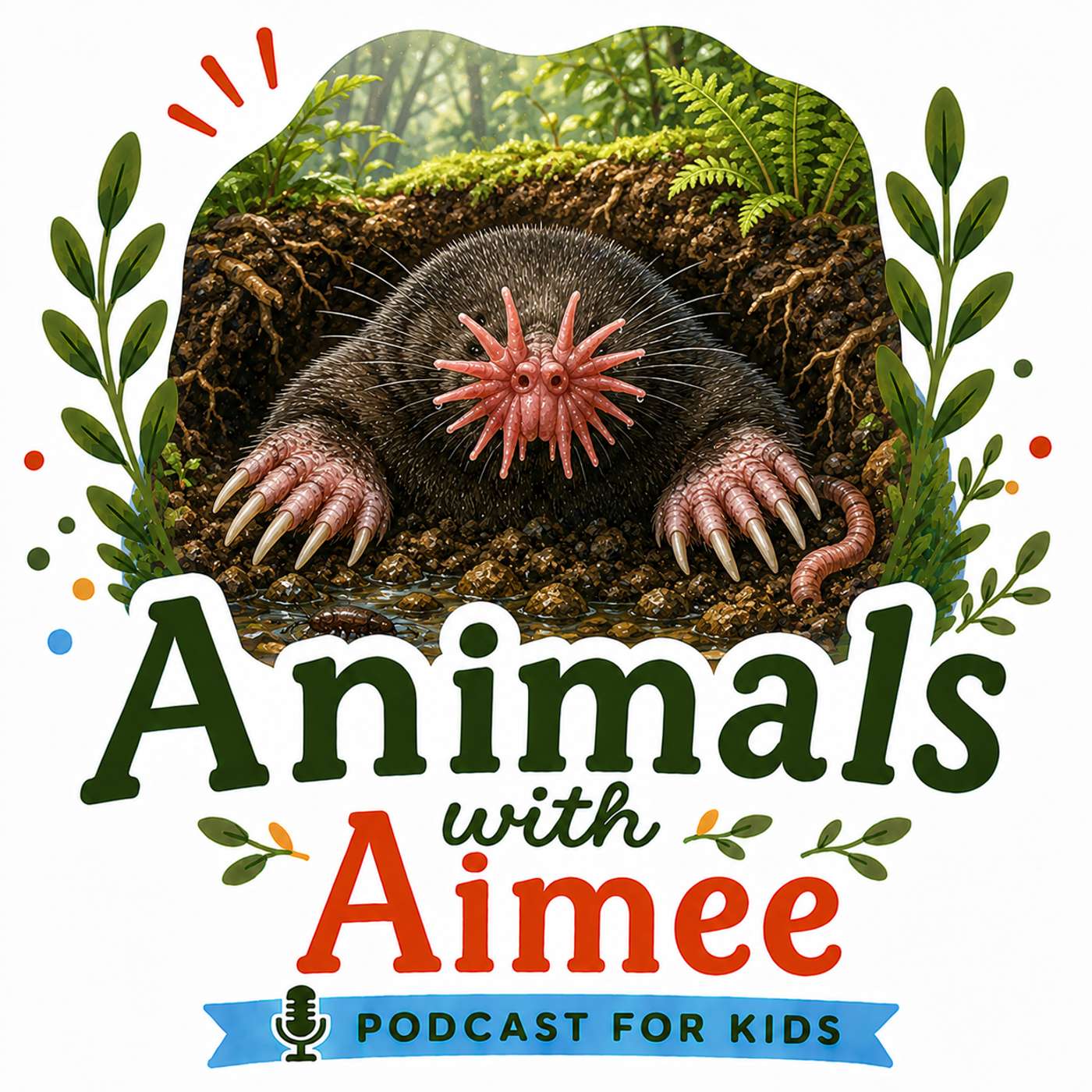
    Star-Nosed Mole: The Underground Alien

    Episode Title: Star-Nosed Mole: The Underground Alien ๐Ÿ‘ฝ๐ŸŒฑ Grab your headlamps and your gardening gloves, explorers! ๐Ÿ”ฆ๐Ÿงค Today on Animals with Aimee, we are digging deep into the damp, muddy soil of North America ๐ŸŒŽ to find a creature with the weirdest, wildest nose in the entire animal kingdom! Meet the muddy, the speedy, the alien-like Star-Nosed Mole! โœจ In this underground episode, junior zoologists will uncover the wild science behind this fascinating subterranean marvel: ๐Ÿ‘ฝ The Star of the Show: Discover the secrets of their incredible nose! It features 22 pink, fleshy tentacles covered in thousands of tiny, super-sensitive touch receptors called "Eimer's Organs" that help them "see" their way through the pitch-black dirt! โšก World's Fastest Snacker: Learn how this amazing mole can find, catch, and swallow a tasty bug in less than a quarter of a secondโ€”making it the absolute fastest eater of any mammal on Earth! ๐Ÿชฑ ๐Ÿซง Underwater Sniffing: Find out the weird science behind how they can actually smell underwater! We will learn how they blow tiny air bubbles onto objects and sniff them back in to catch the scent of yummy aquatic snacks. ๐Ÿ’ง ๐Ÿพ Built-In Shovels: Did you know their huge, clawed front paws face backward to help them perfectly "swim" and carve their way through the heavy earth? ๐Ÿšœ Thank you for listening! If you would like to help the Star-Nosed Mole, consider donating to a local wildlife rehabilitation center in your state. Don't forget to rate and follow Animals with Aimee for notifications about our new episodes! Join Aimee's Animal Lovers Club for activity sheets, birthday shout-outs, and more! โ˜… Support this podcast on Patreon โ˜…

    • Transcript
Showing 1โ€“20 of 28 episodes